Bronx rapper, Fyütch, released a new song, “Black Women in History,” highlighting the strengths of powerful Black women on Martin Luther King Jr. Day.
photo from Fyütch.com
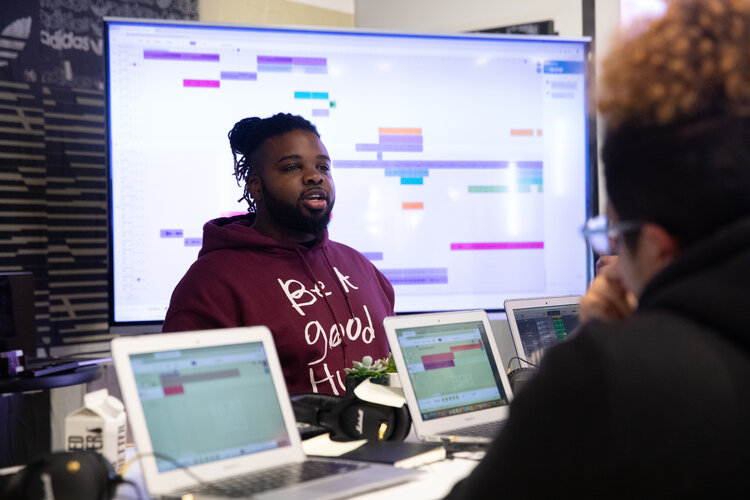
Fyütch is a social justice musician who uses hip-hop and visual storytelling to educate upcoming generations. He directs music and poetry workshops for K-12 students, college students and corporations. He makes music with the intent of spreading positivity through messages about fatherhood, spirituality and love.
His distant relative, Fannie Lou Hamer, and other overlooked Black women inspired the song. The lack of representation for Black women in history was apparent when he was growing up. He only recalled learning about Harriet Tubman and Rosa Parks. Fyütch felt compelled to tell their stories and in order to honor their accomplishments; he made “Black Women in History”.
It acknowledges Black women who have made history in the past and who are currently making history in the present. It began with Civil Rights Leader, Fannie Lou Hamer, who helped Black people register to vote despite voter suppression. He mentions more Black women who have fought against voter suppression such as J Frankie Pierce who also made a school for Black girls in the 1920s; and currently, Stacey Abrams and Felicia Davis. Shirley Chisolm, the first Black woman elected to Congress, and Kamala Harris, the first woman to be elected Vice President of the United States were noted for making history as political figures.
The song reveals Claudette Colvin, who was 15-years-old when she refused to give up her seat on the bus, and Ida B Wells who refused to give up her seat years before Rosa Parks. Fyütch also commemorates Black women who have made history in the medical field such as Rebecca Crumpler, who is the first Black woman to get a medical degree along with Jane Hinton and Alfreda Webb, who were the first Black veterinarians. The last impactful Black woman named in the song is Dr. Kizzmekia “Kizzy” Corbett who recently helped create the COVID-19 vaccine.
The song doesn’t only recognize Black women in history, it features two Black women musicians. Rissi Palmer and Cheri Moon, from the children’s music band Snooknuk, collaborated with Fyütch to bring the song to life. Palmer made history as the first Black woman in 20 years to reach the Billboard country charts. Her radio show on Apple Music called Color Me Country, honors the contributions of BIPOC country singers. Cheri Moon focuses on raising social awareness for children through family music and has collaborated with Missy Elliot and Timbaland.
“Black Women in History” gives thanks and gratitude to Black women that have made an impact, by standing up for what they believe in and for being the firsts, despite the struggles they have gone through.
Governors Ball Music Festival announced it’s 2021 dates tentatively scheduling its 2021 edition for September 24-26. The festival generally takes place in June but is optimistically hoping by September that COVID-19 will be under wraps enough for the festival to take place.
The Governors Ball is a widely known and loved festival that takes place in Randall’s Island in New York City. Usually it has an attendance of sound 150,000 people and takes across four stages and over 70 acts. There is also a food program that is part of the festivities and it features the City’s best eats and highlights its incredible culinary diversity. It also hosts visual art, beverages, art installations, statues, high flying inflatables, and pop up performances.
Organizers of the festival released a statement saying that, “We’ve decided to move the 2021 show to a time of year that is both more realistic and safer for all and while there are still question marks and unknowns in the World, rest assured that we are working closely with City and State authorities to ensure that the next Gov Ball will be a safe and amazing experience. We’ll be back to our regular June dates starting in 2022.”
There isn’t a lot of information on the 2021 version of Governors Ball but there is some on their website. The lineup will not be the same lineup as the cancelled 2020 festival lineup. They haven’t announced who is on the lineup yet but have dropped a hint saying, “The lineup will be brand new! (Note: this is not a hint).” They are also saying the festival will return to it;s normal June dates in 2022. People who I held onto their tickets from the 2020 festival, but I can no longer make the new 2021 dates. Can I get a refund by requesting a refund for their ticket purchase but they must do so by Wednesday, January 27th at 11:59:59pm EST. If the festival doesn’t end up being feasible because of COVID-19 all tickets will be available for a refund.
The hope is with vaccines rolling out and many experts predicting a return to live music events in the Fall the festival will be able to take place in September. For more information on the Governors Ball and it’s new dates visit their website.
In 1971, the Grateful Dead performed at The Capitol Theatre in Port Chester over six nights – February 18, 19, 20, 21, 23, and 24. Billy Strings will present The Deja Vu Experience on FANS and The Relix Channel on those same nights, 50 years later, with a six-night livestream.
With a nod to those historic shows, Billy Strings will perform on these same dates as the Grateful Dead did, adding an aire of deja vu to the run of streams, in hopes of tapping into the musicianship and fearlessness that the Dead did 50 years ago.
Much like the Dead, Billy Strings has the potential to unlock the improvisational boundaries of music and psychedelia in a familiar yet unique way.
During the 1971 shows, the Grateful Dead conducted ESP Experiments, prompting Deadheads in the audience to focus on imagery shown by the band and telepathically send the imagery to a test subject.
The Deja Vu Experiment is aiming to similarly tap into a sense of clairvoyance and togetherness by asking the streaming audience to use their minds to collectively “see” and send imagery to special guest receivers.
Concerts in the age of streaming beg fans to transport their mind; to feel connected to a live performance when we cannot physically be together. This experiment is not scientifically backed, rather, a hypothesis that the collective mind has the power to tap into extrasensory perception and manifest connection.
After being out-of-print and unavailable online for nearly three decades, the Mommyheads’ innovative and experimental 1992 sophomore release, Coming Into Beauty, has been remastered for physical and digital formats.
The remastered edition of Coming Into Beauty will be available digitally on February 12, 2021. On the album, the Mommyheads fused rich melodies with avant-garde techniques, making for a one-of-a-kind listening experience, covering uncharted indie pop territory.
The album defies cohesion and plays more like an early Frank Zappa record in its playful photo-book sprawl. Album opener “Wedding Day” melds breezy, gorgeous fingerpicking with harmonies both angular and angelic at once, all whilst Elk belts a surrealistic semi-story about the crushing weight of marriage and boyish passion. “I Started Breathing” is arguably the album’s focal point. The tune gently strides along the spare ukulele and rattling percussion, boasting chord changes that have more in common with Brazilian pop and bossanova records than anything indie.
Pairing the druggy, melancholy Brooklynite romance (“and your friends they went to see the Dead / and they left you at home to work instead”) with frayed Bouzouki-laden choruses, the song is an understated achievement of pop invention. It’s both authentically strange and heartbreakingly sweet; unsettling and lulling.
Coming Into Beauty remains the most potent document of the Mommyheads at their most unhinged and daring. Fans of both experimental records and melodically-rich pop alike will find the album’s enigmatic nature fascinating and infinitely rewarding.
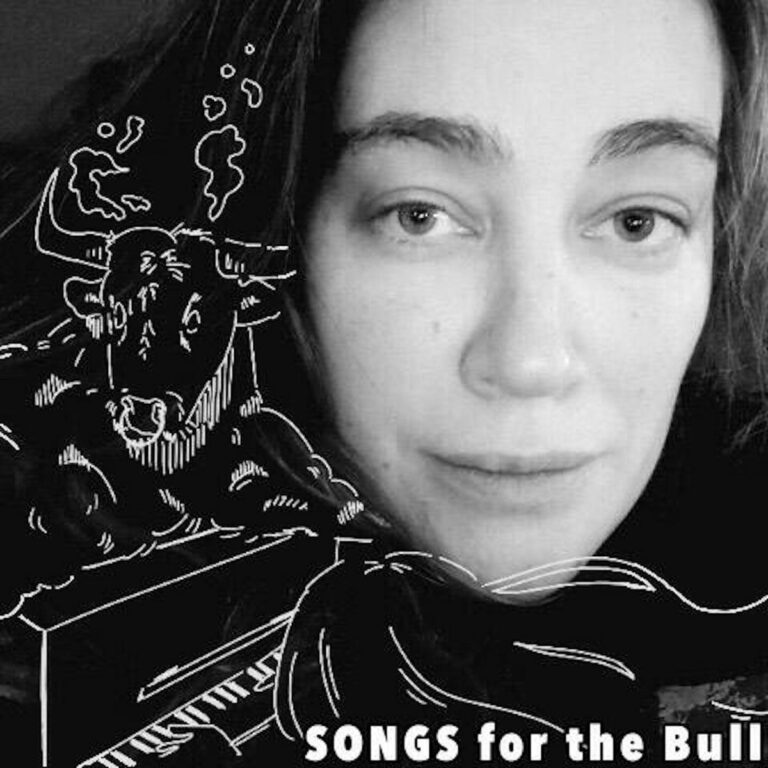
Julianne Mason is a Queens singer/songwriter on the brink of her forth album to be released Friday, January 15 on all streaming platforms. Songs for the Bull is and eight-track spearhead effort by Mason who acted as the albums sole writer, vocalist, and pianist, while also co-producing the release. The organic tenure of her keys passes you by like a spring breeze. It’s a heartfelt effort to harden.
Songs for the Bull album art by Zoe Wickham.
The pandemic only highlights a constant struggle for artist alike. Mason was nostalgic, with a mind full of a wanderlust that was not satisfied. As a result, Julianne found herself depressed, isolated and unemployed during quarantine. Musicians speak outwardly to avoid getting lost in these feelings. Simply put, she wrote songs to stay sane. Isn’t that what we all do. Firstly, Songs for the Bull acts as the antiseptic, washing our wounds.
Songs for the Bull is a collection of songs about the regret and loneliness that result from living a series of relationships in your mind instead of having the courage to experience intimacy in real life.
Julianne Mason took retreat in a safe haven to begin recording piano for this album, back home in Iowa. As things came together, she returned to NYC and over and intense couple of rehearsals and a ten hour recording session, Songs for the Bull bloomed. A throw back to 8-track exposes a warmth from the band, and home-like somber, recorded in her living room.
The title track “Paradise Weather” rises in like a winter sun. An underlying hum makes way for a swaying-triplet percussion as the 8-track reels. Julianne piano is soft and syncopated. Constant dissonance in her voice and piano pair with he song’s dis-harmonious lyrics: “So you take me forward, much to my displeasure. So you take me forward, to paradise weather.”
The album sways in its gloom and hopefulness. It is not a jaunting hunt for rebellion against sorrow, but rather a tip of your hat towards it. The album cast glimmer of light on a rather somber reality and forced isolation. With this intense recording session and 8-track ode, it will be even more wholesome to walk alongside this album from start to finish.
Followup track, “I Wait For You,” is a melodic tip-toe with the utmost sentiment. Drummer Shannon Minor take to the brushes, while Colin Leads delicately companies alongside each key stroke. Sutble creeks of Mason’s piano bench creep in. The sounds are intoxicating and contrast the once busy streets of the City.
Like a garden every time. This organism that invades my mind. Reminds my worry reminds my stubbornness. That the quiet night can caress.
Taxi, building, rain and breeze. City sidewalk, city symphony Ocean of people, waves of activity. Speak right now consciously And I’m lucky, lucky yet To hear these sounds of gentleness. Lucky that I still have this sensitivity Sensitivity to infinity.
The record was produced by Julianne Mason, Brendan Picone, and Daniel Crane. Songs for the Bull was mixed by Brendan Picone, mastered by Phil Petrie.
Yesterday Julianne Mason performed a live pre-release highlighting Songs for the Bull‘s debut.
‘Live for Lon,’ a three-hour event celebrating the live of Jam scene figure Lon Conscious, will stream on Saturday, January 16, from 6:30-9:30PM. Since his sudden passing in November 2020, public figures in the community such as Trey Anastasio, The Capitol Theatre and Twiddle have given him public shoutouts.
Streaming from Long Island’s Baked Shrimp Facebook page, ‘Live for Lon’ will feature videos dedicated to Lon Conscious by artists such as Mihali, Brandon Taz Niederauer, Andy Frasco, KRIS, Grubby Bean, and more. Baked Shrimp will close out the stream with a real-time live performance. All donations will benefit the White Light Foundation.
Lon with Twiddle
Lon Conscious was a major supporter of the jamband scene, and massive figure in the Twiddle community, where he ran the group #twiddlenation with fellow fan Eddie Schectman. He traveled around the country for Twiddle. In addition he traveled and promoted for Baked Shrimp, and was uncle to their drummer, Jager. Conscious worked the merch booth at Madison Square Garden, one way so many people got to know him.
Lon with Brandon Taz Niederauer
‘Live for Lon’ will be a special night to remember. The occasion is designed for fans, friends family, who need a release of energy during these difficult times.
Lon with Dopapod’s Rob Compa
During one of the intermissions on Saturday, the stream will display a segment dedicated to pictures and videos fans have taken of Lon and/or with Lon. Fans are encouraged to submit content by emailing bakedshrimpmusic@gmail.com. Images can be sent via direct message to Baked Shrimp‘s Facebook page. These submissions may also appear in various parts of the stream. Please aim to submit content by end of the day Wednesday, January 13.
Howard Johnson, renowned tuba player, founder of the original Saturday Night Live Band and a musical mainstay of New York’s jazz community for more than half a century, has died at age 79. A muse to Charles Mingus, Gil Evans, and Carla Bley, Johnson was an inspiration to multiple generations of players.
photo by Nancy Olewine
Johnson died at home in New York on Monday, Jan. 11 following a long illness, according to his longtime partner, Nancy Olewine.
An accomplished player, composer, arranger and raconteur, Howard gigged on tuba, baritone saxophone, bass clarinet, flugelhorn, electric bass and pennywhistle. For more than 50 years he was an important fixture in multiple scenes, moving fluidly among genres. In addition to working with a litany of NEA jazz masters including Quincy Jones, Dizzy Gillespie, Gil Evans, Charlie Haden, Carla Bley, Jack DeJohnette, and Randy Weston, Johnson also played with pop and rock icons such as John Lennon, Paul Simon, James Taylor, Carly Simon, Taj Mahal, Levon Helm and scores of others.
Johnson played an important role in forming and shaping the sound of the Saturday Night Live band during the show’s first five years, 1975-1980. Donning an Egyptian headdress or nurses’ uniform in some of the most beloved early sketches featuring Steve Martin and Lily Tomlin, his weekly SNL appearances lent Howard visibility rare for a jazz musician or in-demand sideman.
He appeared in Martin Scorsese’s 1978 documentary The Last Waltz, was featured in a Miller Lite beer commercial in 1984, and made a Sesame Street appearance with James Taylor (in the decades since, it wasn’t uncommon for excited kids to point at Howard and shout “Jelly Man Kelly!”)
Howard would leave SNL, telling musical director Howard Shore that having a too-steady job leads to complacency, resulting in bad music. Musicians in that situation “start defending their turf, they start feeling like they have something to lose, and they keep narrowing and narrowing their perspective. I don’t want to get caught up in stuff like that.” In several interviews, Johnson recalled Shore’s reply: “Well, if you feel that way about it, then you’re the man for the job. Get me a bunch of other troublemakers like you and we’ll have a great band.”
Complacency was never a possibility for Johnson. In fact, from his earliest years in New York, the breadth of his capabilities led some critics and audiences to believe there must be more than one Howard Johnson: It was just too hard to imagine that in an often highly compartmentalized music scene that the same guy could be appearing with the avant-gardist Archie Shepp, hard-swinging drummer Buddy Rich, and sitting in with bluesman B.B. King.
In fact, Johnson crossed paths with legendary guitarist Jimi Hendrix at a B.B. King gig. He and fellow tubist Bob Stewart took their instruments up to Ungano’s [an Upper West Side club] to jam with B.B. King. Just the presence of that much low brass was enough to cause a stir, and right before they went on, Jimi Hendrix arrived with a group of women. The audience was distracted, buzzing and cracking jokes, not knowing what to expect from a couple of tuba players.
Howard and Bob took to the stage, one on either side of B.B., and showed everyone they know their way around the blues. Though there were no mics, they made themselves heard, with power to spare. Afterward, Jimi sought out Howard to congratulate him, saying, “You brothers just did the god-damnedest shit I ever heard! Ain’t nobody laughin’ now!”
Johnson appeared on hundreds of recordings spanning Gato Barbieri, McCoy Tyner, Muddy Waters, Roswell Rudd, Phoebe Snow, David Sanborn and Freddie Hubbard. He backed vocalists as diverse as Ray Charles, Marvin Gaye, Ella Fitzgerald, Yoko Ono and Albert King. Johnson can be heard on many movie soundtracks, especially those of Spike Lee; he spent several years with the NDR Big Band in Hamburg; and released four albums as a leader, including three with his multi-tuba brass choir Gravity.
While he played an arsenal of instruments, the tuba was his greatest love.
photo by Albie Mitchell
A tuba can be thunderous, it can be a rough-and-tumble instrument. People don’t think of it as anything delicate. I never thought there was anything the tuba couldn’t do, and I’ve been pretty satisfied with what I can do with a tuba.
By 2006, when New York Times critic Nate Chinen declared Howard Johnson “the figure most responsible for the tuba’s current status as a full-fledged jazz voice,” the life’s work of the multi- instrumentalist had been in progress for more than four decades. Johnson burned with the fire of bass-clef innovation since well before 1963, when he took an offhand remark from Eric Dolphy as a call to action to move to New York.
As a teen, Howard had discovered that he could push the tuba’s range to previously unheard heights—more than six octaves—surpassing the trombone on the high end and edging into trumpet territory. In a 2000 interview, Johnson noted that he was motivated to excel by a pecking order among high school band members, with those who took private lessons outranking those who learned at school, and the self-taught—like Howard—at the bottom.
When one of the private students asked him how high the tuba could go, “I was very embarrassed that I didn’t know,” he recalled. Thus, he began to experiment, noticing some of the highest notes were “very pretty; they sounded like they had kind of a French horn quality. So I added that new octave to my warm-ups.” He was surprised to discover that none of his bandmates could play anywhere near that high. “At that point, I’d probably been playing about six or eight weeks. I was highly motivated. I didn’t want to look like a fool,” Johnson said. “It was at that point that I decided not to let anybody tell me what the limitations were of the tuba or of the music.”
He was never a novelty act who would occasionally blast notes into the stratosphere to excite an audience. Rather, he played melody lines and solos fluidly and fluently, maintaining tonal integrity and feeling. Though there was no existing repertoire in the early 1960s for his then-groundbreaking low-brass range, once in the Big Apple Johnson caught the ear—and piqued the imagination—of Charles Mingus.
The iconic bassist/composer wrote adventurous parts for him in such a high register that “even trombonists wouldn’t welcome seeing those notes on the page,” Johnson recalled in 2017, for the liner notes of Testimony, his last release fronting his multi-tuba band Gravity.
Johnson became the muse of other composers, including Carla Bley and Gil Evans, establishing relationships lasting decades. Howard almost had a second encounter with Hendrix, in a project with the great Gil Evans, who had made plans to record with Hendrix and told Howard Johnson he wanted him in the studio, too. Unfortunately, Jimi didn’t live long enough to make the gig. But Howard eventually got to have his say on one of Jimi’s greatest tunes, “Voodoo Chile,” on Gil Evans’ recordings, and was also known to play a lovely, tender version of “Little Wing” on pennywhistle.
Tuba players are challenged by the standard Johnson set. He believed the tuba is capable of a virtually unlimited sonic and emotional range, based on a player’s abilities. By demonstrating his skills, Howard single-handedly moved the instrument out of its traditional place in the rhythm sections of large ensembles into featured roles in small bands. Recognizing his impact on the tuba’s changing role in music, in 2008 the instrument-maker Meinl Weston released the HoJo Gravity Series tuba, designed to the player’s specifications.
Johnson influenced musicians by expanding their ideas of the possibilities of the instrument, and demonstrated enormous generosity of spirit, mentoring tuba players, past, present and future. He influenced jazz (and pop) composers and arrangers by bringing a heretofore ignored instrument to the front line of soloists, and changed jazz overall by altering the direction of how jazz used the bass clef—no more oom-pah-pah, but pure linear bop, swing and rock phrasing that could stand on its own against any other “typical” jazz solo instrument.
At a time when jazz-rock fusion was gaining traction, Johnson opened up the music without diluting the tradition, performing with an unwavering jazz sensibility as a founding member of the Saturday Night Live band. His writing, arranging and playing captured the attention and imagination of such pop culture icons as John Lennon, Paul Simon, Levon Helm and Taj Mahal; Johnson never dumbed it down, never resorted to spoon-feeding anyone “Jazz 101” level music. He has always been “The Real Thing,” as Taj Mahal dubbed the 1971 CD that debuted Johnson’s innovative multi-tuba brass choir, Gravity.
Even as he approached his 75th birthday, Johnson declared that he still had the fire in his belly to solo, to increase awareness of the versatility of often-underutilized horns, and to continue to have his say on the definitive way to play them. After the music master no longer made a practice of hoisting the 20-plus pound instrument to his lips—his last gigs were in 2017—he continued to feel he had much to offer as a mentor and advisor.
There’s a wonderful accessibility to Howard Johnson’s artistry. Whether playing a standard from a Broadway show, taking the lead on Hendrix’s “Voodoo Chile” with the Gil Evans Orchestra, or evoking early R&B beats on Don Pullen’s “Big Alice” with Gravity, his music could get under your skin and quicken your steps for days to come.
Howard’s talent, determination, and no-limits viewpoint were irreplaceable ingredients in his recipe for artistic fulfillment and professional success, and his music will continue to inspire for years to come.
Howard Johnson is survived by his longtime life partner, Nancy Olewine; his daughter, musician Nedra Johnson; and two sisters, Teri Nichols and Connie Armstrong. He was predeceased by his son, David Johnson, a musician and artist, in 2011. A memorial service will be held in 2021.
In lieu of flowers or other tributes, it was Howard’s wish that to honor his memory and support his legacy as a master of the bass clef, memorial donations be made to benefit The Howard Johnson Tuba Jazz Program Fund at Penn State.
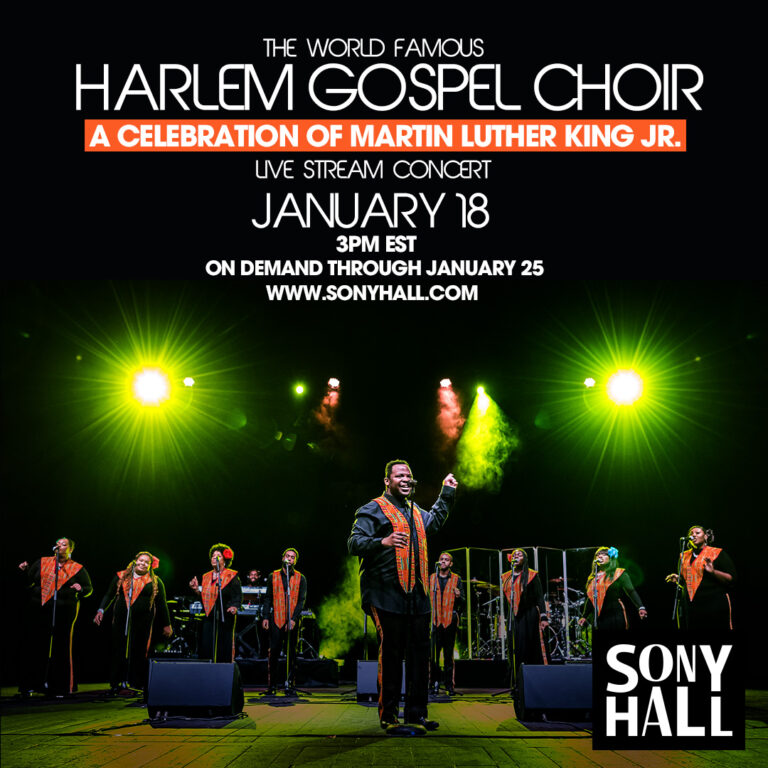
Harlem Gospel Choir is known for their contemporary gospel sound with a touch of jazz and blues They announced their upcoming performance at Sony Hall in New York City, right around the corner from Times Square. The show will broadcast via live-stream from Sony Hall on January 18, 2021 at 3PM.
The Harlem Gospel Choir has been performing for over two decades and are known for being one of America’s premier gospel choirs. They are deeply rooted in the history of the African-American slave trade. It’s widely known that black gospel music can be traced back to the 1700’s, when African slaves were brought to America against their will. Eventually their unique African musical heritage was combined with Christianity to create the gospel sound that is widely known today. The Harlem Gospel Choir presents the modern gospel classics as performed in the black churches of Harlem today.
Sony Hall is a multi-genre live venue located in the heart of New York City. It’s known as a one-of-a-kind concert hall which is enhanced by Sony technology to provide people with an one of a kind entertainment experience. The venue was established in 2018 and is owned and operated by Blue Note Entertainment Group. It has standing room for 1,000 people or seating capacity for 500 people and a full service restaurant and bar. Sony technology 360 Reality Audio, 4K Remote Cameras, and Headphones that support the 360 Reality Audio.
This special performance is being done in celebration of Martin Luther King Jr. and according to the Choir, “It will be a very special show with new material, and a few surprises.” The performance will take place live on January 18, 2021 at 3PM and will be available with the access code until January 25, 2021 at 11:59PM EST. Access to the virtual stream code is $25. People interested in purchasing a ticket can do so here.
For more information the Harlem Gospel Choir and their Sony Hall performance, visit their website.
NYS Music’s Best of 2020 series concludes with a look at the best Tours and Drive-In shows of a year we’d all like to forget. When the music industry shut down in mid-March, it was sudden and continues to last into 2021. Few bands got to go on a ‘real’ tour, given there were roughly 11 weeks in which to tour, and the coldest months of the year, at that. Still, a few bands went out on a Winter 2020 tour, making stops in New York State and surrounding areas. Be sure to check out the best Streams, Covers and Jams.
photo by JD Cohen
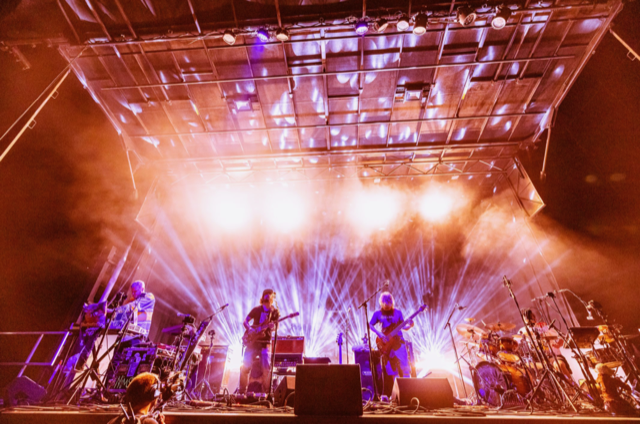
Goose announced shows in Williamsburg for late January, 2020, and immediately added a second, and smaller third show, due to demand. Their shows at The Music Hall of Williamsburg were two of the best of their tour.
One band, Twiddle, celebrated their 15th year as a band with a Roots Tour of their own, streaming the multi-week event that looked at the venues they got their start in across Vermont, wonderfully recalled by Ryan Dempsey. In addition to these shows, Twiddle performed at multiple Drive-In shows across the Northeast, including New Jersey and Essex Junction, VT.
All that after a cross-country tour running from January through early March. The band had an impressive 2020, performing shows in Colorado to start 2020 with “Somewhere on the Mountain” in Frisco, CO and connecting with platform LiveXLive for their July Roots Tour.
photo by Dave Decrescente
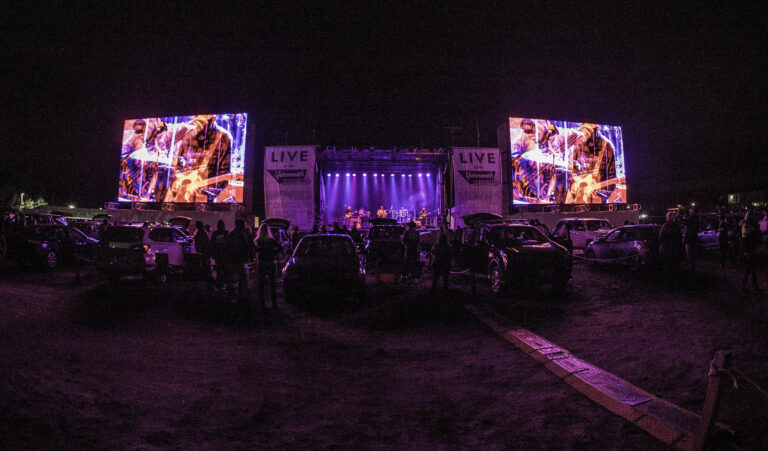
When it came to Drive-Ins, there were quite a few across the Northeast – Drive-in-Live in Swanzey, NH, Jericho Drive-In in Glenmont, NY, South Farms in Morris Farms, CT, Fingerlakes Drive-In in Auburn, NY, Silver Lake Drive-In in Perry, NY and Radial Park in Astoria, Queens.
Live at the Drive, featuring Buffalo’s Aqueous, was one of the first and the most successful series, with three weekends between Lockport’s Transit Drive-in and Perry Silver Lake Drive-In. Buffalo Iron Works produced the shows, with Josh Holtzman and Grace Vesneske’s new company Twenty6 Productions garnering credit for putting on shows that set a standard for socially distanced shows that were safe, well-run and comfortable for fans and staff alike.
photo by Paul Citone
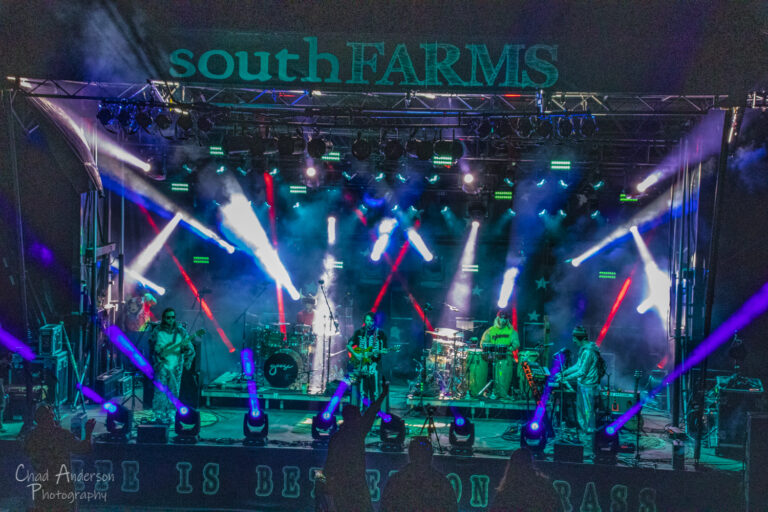
Goose also hosted numerous Drive-Ins across the Northeast and even ventured safely to Ohio, North Carolina and Maryland, as well as Swanzey and South Farms. Located in Morris, CT, South Farms was centrally located to the Hudson Valley from Albany to NYC, Western Massachusetts and Connecticut itself. As such, Goose, moe., Warren Haynes, Grace Potter, Allman Betts Band, Dark Star Orchestra, Citizen Cope and even comedian Bill Burr. Due to a recent Zoning Board ruling, South Farms won’t have live music for the time being, but they made some memorable moment in the time they were able to, in a key location in the Northeast.
photo by Chad Anderson
moe. and Disco Biscuits each hit the new Drive-In circuit, streaming online and giving fans thirsty for live music the remedy they sought. Shows in Yarmouth, MA became regular stops, with both bands heading to Cape Cod in October. Lafayette Apple Festival Grounds, just south of Syracuse, brought in Dirty Heads and Disco Biscuits, the latter of which performed three nights, culminating their Drive-In shows with a Halloween show and an audience well-prepared for the cold and mud but still got down to dance.
What will come in 2021? Drive-In concerts will surely be a regular feature starting in the Spring, until the pandemic is under control, the population is inoculated with the vaccine, and venues are able to manage crowds of slowly increasing size. Will Drive-In concerts be here to stay? The collective effort to stem the spread of COVID-19 this year and into 2022 will determine the speed at which we can return to having live music back to where it was in early March of 2020.
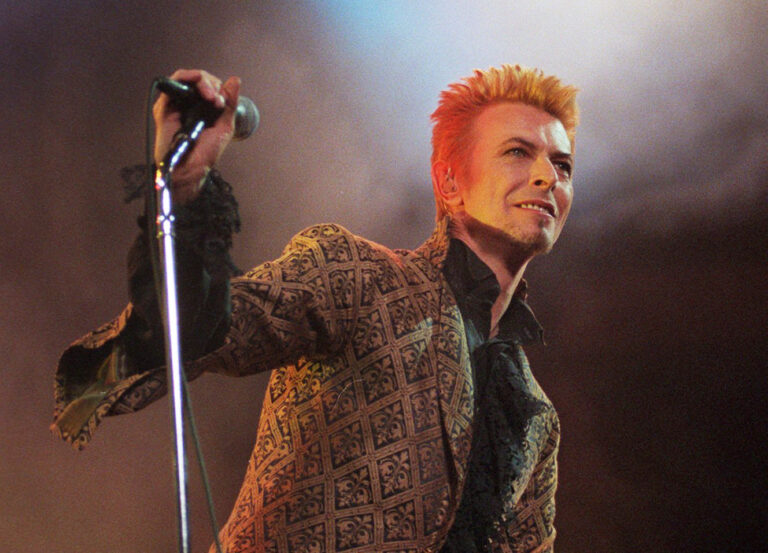
In 1997, David Bowie threw himself a 50th birthday party at Madison Square Garden and invited an A-list of friends to join him on stage. Billed as ‘David Bowie and Friends: A Very Special Birthday Concert,’ Bowie’s life of music was highlighted with special guests throughout the night.
Bowie was also about to release his 20th album, Earthling, a month later, and would perform a handful of songs from the album throughout the night, including the show opener “Little Wonder.” Following “This Heart’s Filthy Lesson,” Bowie informed the crowd, “Good evening. We’re your rock band for the night. We’re going to get partyfied.”
The sold-out show was also filmed for a pay-per-view TV special, and was later issued on DVD, with proceeds from both concert and broadcast benefiting Save the Children.
Bowie said early in the evening, “I have no idea where I’m going from here, but I promise I won’t bore you.” Along with new material, Bowie played 24 songs throughout the night, including “I’m Afraid of Americans,” “The Jean Genie,” and “Heroes,” but passed on 80s hits “China Girl,” “Let’s Dance” and “Modern Love.” The ever lively Bowie told the New York Daily News:
I wouldn’t have expected to have such an appetite for life at this point. I had assumed, like romantic poetic heroes, that I would burn it all out. But nothing has been quenched. I’m still feeling fiery.
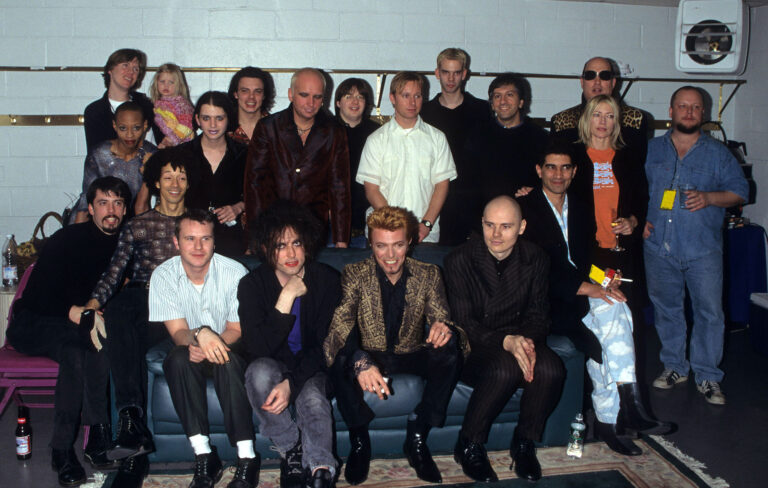
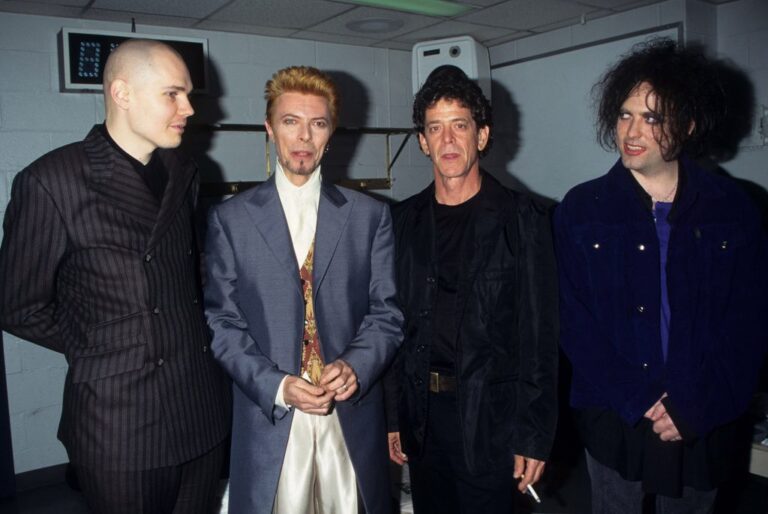
And those special guests? Bowie was joined by The Pixies’ Frank Black, The Cure’s Robert Smith, Foo Fighters, Sonic Youth, Smashing Pumpkins’ Billy Corgan, and close friend and New Yorker, Lou Reed.
Thurston Moore, Kim Gordon, Dave Grohl, Robert Smith, David Bowie, Billy Corgan, Pat Smear, Kim Gordon and guests (Photo by Kevin Mazur Archive/WireImage)
Bowie’s backing band that night included Staten Island’s Reeves Gabrels on guitars and Mike Garson on keyboards, who helped in a reimagined version of “The Man Who Sold The World” with a sedate reggae tone.
The highlight of the night came in the first encore, when Bowie was joined by Lou Reed, who performed “Queen Bitch” and three of Reed’s own songs from his Velvet Underground days, “I’m Waiting for the Man,” “Dirty Boulevard” and “White Light/White Heat.”
photo by Kevin Mazur
Following “Moonage Daydream,” Bowie returned to the stage for a second encore, with Billy Corgan from Smashing Pumpkins joining Bowie for “All the Young Dudes” and “The Jean Genie.” This proved to be a treat for Corgan, who told Lisa Robinson of the New York Post, “When I was 10 years old, growing up in the Midwest, I bought David’s Ziggy Stardust album. I really believed he was an alien. I always have been a fan, and still am a fan.”
(Bowie) kept one eye firmly on the future. Instead of serving up dewey-eyed rehashes of sounds from eras dead and gone, Bowie – aided by an ornery mix of musical friends – shook classic numbers to their core. He also devoted roughly one-third of the show to recent and brand new material.
After the show, according to thinwhiteduke.net, a post-concert dinner was hosted by David Bowie and his wife Iman at the downtown space of Julian Schnabel (who had recently directed Bowie as Andy Warhol in Basquiat. Joining Bowie and Iman were a Beck, Moby, Courtney Love, Prince, Charlie Sexton, Fred Schneider, Matt Dillon, Matthew Modine, Jeffrey Wright, Christopher Walken, Michael Wincott, Donna Karan and Naomi Campbell.
Setlist: Little Wonder, The Hearts Filthy Lesson, Scary Monsters (And Super Creeps),* Fashion*, Telling Lies, Hallo Spaceboy^, Seven Years in Tibet@, The Man Who Sold the World, The Last Thing You Should Do%, Quicksand%, Battle for Britain (The Letter) , The Voyeur of Utter Destruction (As Beauty), I’m Afraid of Americans$, Looking for Satellites , Under Pressure, Heroes
Encore: Queen Bitch**, I’m Waiting for the Man**, Dirty Boulevard.**, White Light/White Heat**, Moonage Daydream
Encore2: Band intros, Happy Birthday#, All the Young Dudes+, The Jean Genie+, Space Oddity
*with Frank Black ^ with Foo Fighters @ with Dave Grohl % with Robert Smith $ with Sonic Youth # with Gail Ann Dorsey ** with Lou Reed + with Billy Corgan