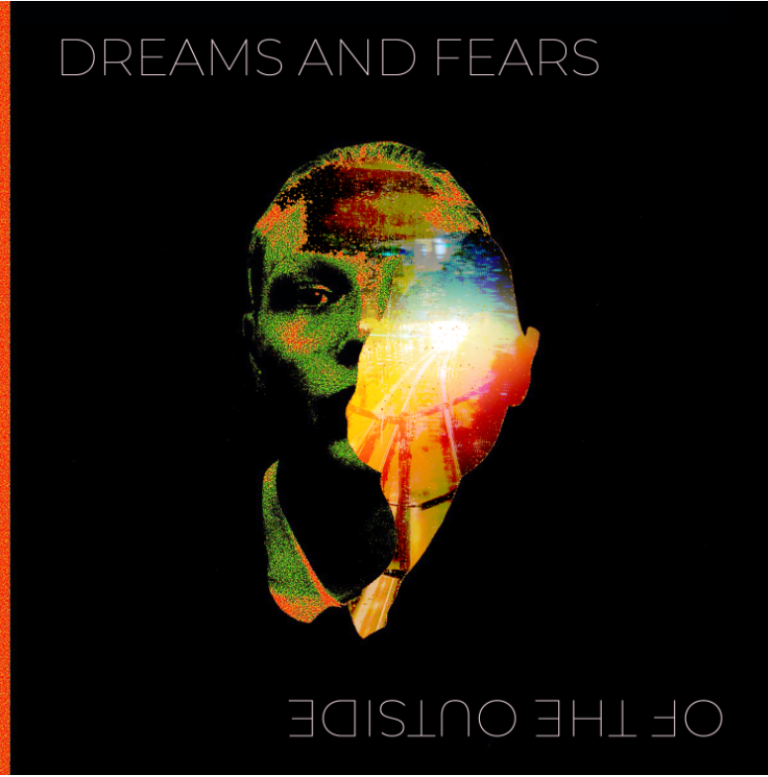
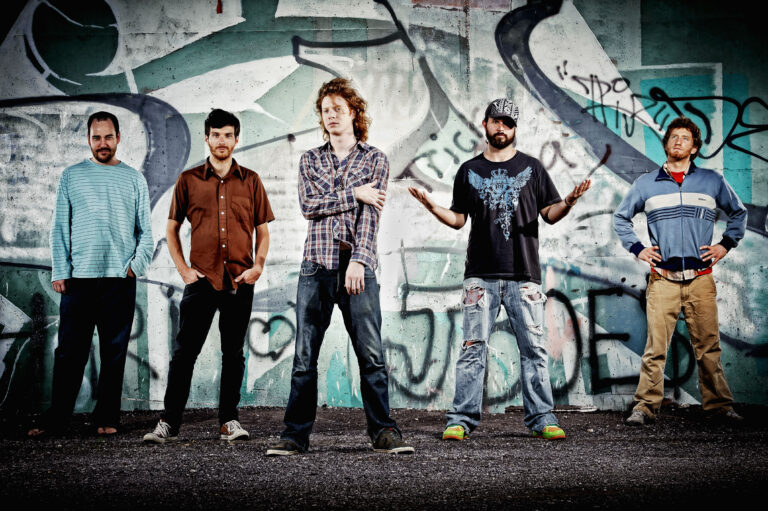
FRANK, a Brooklyn based group made up of Christian Linsey (drums and percussion, vocals), Billy Ziff (bass) and Scott Porter (guitar, vocals). On April 23, FRANK released their most recent piece of their already great discography. The title, Dreams and Fears of the Outside, is a perfect reflection of where we are now.
With the opening lyrics, “Things will never be the same now, somehow everything’s the same” FRANK puts forth their most eclectic album to date by changing everything while keeping their unique style intact. With a collection of folksy, lyrically driven tunes and funky dance numbers, this latest release offers something that everyone can enjoy. For that matter, this album is loaded with really unique songs that flow nicely into one another.
The album opens with “The Confusion”. This acoustic track builds brilliantly throughout and transitions into an incredibly danceable song, “New York (How I Feel)”. The group finds their groove here before moving on to a song that sounds like it could be right from The Big Pink. Big credit to the band for being able to span such a vast gamut of styles through the first half of the album. Though each song is so different, there is a cohesiveness to the atmosphere of the record.
The bass goes wild on “Namaste” as the drums groove with a spry pep. The energy picks as the anthemic “Can You Hear Me Now?” injects a bit of a Neil Young with guitarist Scott Porter’s dirty yet wonderfully melodic vocals. “Big Sur” is a great downtempo song with lush harmonies and a really harrowing guitar part that hovers like a cloud above the song. “Have a Good Time” is a beautifully written song. It has everything you want from a Rolling Stones influenced vibe. It still maintains the characteristic heavy drums and renegade guitar that FRANK has been putting on display throughout the record.
The last couple songs are a nice come down from the meaty middle of this release. “Today” is a perfect bookend for the album to pair with the opening track. This whole work is a pleasure to listen to, and as guitarist Scott Porter puts it, “The record is like calling a friend.” While each song oozes influence from past artists, FRANK does a spectacular job of making each tune their own. From top to bottom, there is not a song that you should skip. There is plenty of replay value. Keep on the lookout for more from this group. While they are split between the Catskills and NYC area currently, they are still able to release gems like this while apart. Stream the album and access all streaming platforms here. Check out their YouTube, Instagram and Facebook for more info.
Key Tracks: New York (How I Feel), Have a Good Time, Today
Spring has arrived, and Brooklyn’s PEAK bring with them fresh dates and the world looking ahead to Summer 2021.
For the first announcement in what will be a big year for the band, they’ll release their forthcoming full-length sophomore album, Choppy Water, in September, with a the Brooklyn, NY-based quartet will be hosting an album release show at the Knitting Factory on September 10 (at full capacity), with a support acts to be named very soon.
PEAK Summer 2021 TOUR DATES:
May 30 Yasgur’s May Meltdown, Bethel, NY (PEAK headline Friday) June 17 Stella Blues, New Haven, CT July 10 Electric Haze, Worcester, MA July 17 Snug’s Bar, New Paltz, NY July 23 B.R.Y.A.C. Bridgeport, CT August 26 Tellus 360, Lancaster, PA August 27 Altered State Distellery Erie, PA September 10 ALBUM RELEASE SHOW Knitting Factory, Brooklyn, NY
Watch PEAK perform “Vanishing Skies,” live from the Studio.
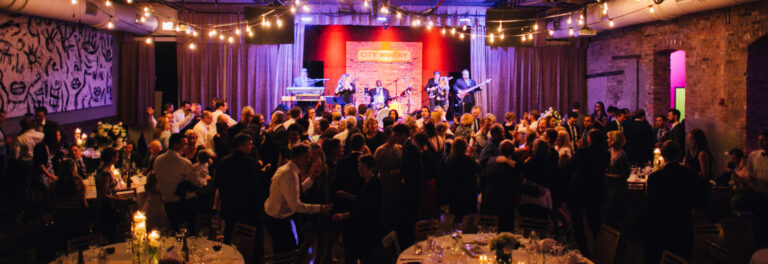
City Winery Hudson Valley in Montgomery, NY, has announced their Concerts in the Vineyard Series, starting on June 6.
After live music shows were put on pause because of the pandemic and since the summer is quickly approaching, City Winery is excited for the series. It will take place outdoors, on the lawn of the Hudson Valley location, 20 minutes west of Newburgh.
With COVID-19 still being around, City Winery Hudson Valley will be following protocols such as social distancing and mask-wearing. For people to attend the concerts, they must either be fully vaccinated– meaning the day of your event is 14 days after receiving the total amount of doses– or produce a negative PCR test. Pods are available for general admission and VIP packages. Tickets are now on sale and more information is available on their website.
Rock-and-roll memoirs are a hit-or-miss proposition. For every surprisingly thoughtful offering (think Keith Richards’ Life or The Real Frank Zappa Book), there are a dozen that are nothing more than reams of gossip penned by the bystanders to greatness for a quick buck – the disgruntled roadies, groupies, ex-managers and -spouses and cast-off band members. And even when they are authored by the musos themselves, they sometimes play up the sex and drugs and sacrifice a deeper discourse on the musicmaking, all in the pursuit of publicity and profit.
This brand of memoir proves two things. First off that the recall of many rockers is not to be trusted. This may be due to the substances they abused and/or their desire to rewrite history for a greater share of the spotlight. Second is that a shocking number of your favorites may be extraordinary musicians but not very deep thinkers, about the world around them and the society their work impacts.
Fear not because the new book from Jonathan Taplin, The Magic Years: Scenes from a Rock-and-Roll Life, is a true gem of this genre. It’s a tome that transcends memoir to stand as one of the most clear headed critiques of the broad, quick changing American cultural revolution, from the socially-conscious folk era of early ‘60s to the democracy/artist battering digital world of today.
Taplin’s extraordinary journey made him an active participant in many of the major cultural waves of the past half century. He had a maddening sense of being in the right place at the right time so many times. But he also had the gifts to be a collaborator vital to the success of a multitude of the greats in their finest moments.
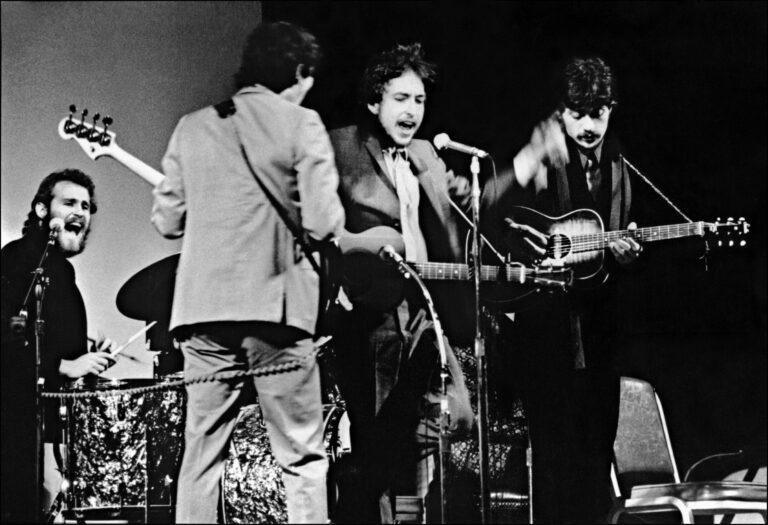
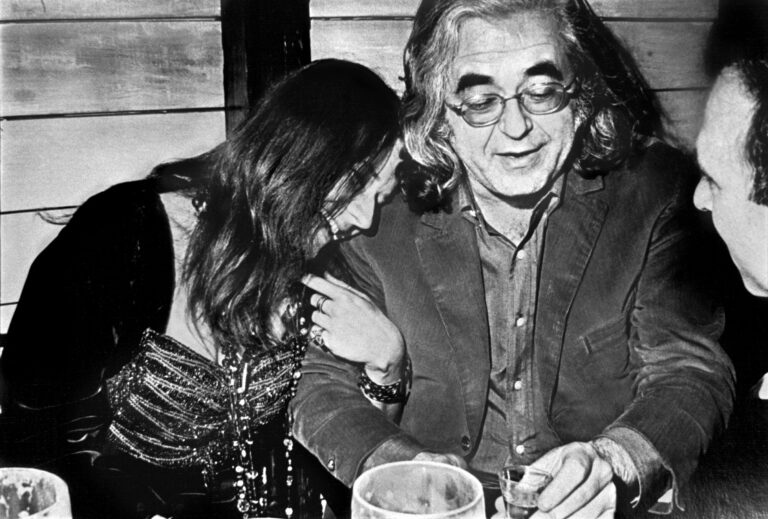
Taplin got his start in the summer before college working for legendary manager Albert Grossman. He rapidly ascended from glorified gopher for Grossman’s early folk artists like the Jim Kweskin Jug Band to become tour manager and creative confidant for Bob Dylan, The Band, Judy Collins and more. Along the way, he witnessed Dylan going electric at Newport, the birth of the legendary Basement Tapes at Big Pink, Joplin, Hendrix and Otis Redding’s star-marking turns at Monterey Pop, Woodstock ’69, The Isle of Wight Festival, The Concert for Bangladesh and The Rolling Thunder Review to name but a few.
In the ‘70s, Taplin became a producer of major films like Scorsese’s Mean Streets and The Last Waltz, To Die For and Wim Wenders’ Until the End of the World. By the ‘80s, he was an executive at Merrill Lynch spearheading mergers and acquisitions for media giants like Viacom. In the ‘90s, he launched the internet’s first video-on-demand service. And in the new millennium, he has served as an astute critic of the impact technology and tech monopolies are having on culture, the livelihood of artists and democracy itself. In 2017, he authored what be the defining work in the arena, Move Fast and Break Things: How Facebook, Google and Amazon Cornered Culture and Undermined Democracy.
Those looking for backstage rock anecdotes and gossip will not be disappointed in Taplin’s book. He provides some new details on Dylan’s electric debut at Newport and how a turn from weed to angel dust undermined Joe Cocker and his Mad Dogs & Englishmen tour. There’s also funny tales of how a hypnotist was needed to coax a seriously ailing Robbie Robertson on stage for The Band’s Fillmore debut and how they launched a napping Garth Hudson on a weightless flight on their tour jet.
Taplin also reveals how the idea for the Concert for Bangladesh was hatched when George Harrison spent a night at his house in Woodstock, and his role at production manager for rock’s first big fundraising concert. You also get a bird’s-eye view of the Rolling Stones at their most dysfunctional – on the French Riviera keeping vampire hours while laboring over Exile on Main Street. In this chapter, Taplin declined the opportunity to be tour manager but was the catalyst for rescuing renowned photographer Robert Frank from a life on welfare in Nova Scotia. He suggested the Stones bring Frank aboard to create the immortal album cover, then they decided to hire him to shoot the ill-fated 1972 tour documentary, C***sucker Blues (something so raunchy it still hasn’t officially seen the light of day). Also of note is how he helped save The Last Waltz by having his team use then cutting-edge digital technology to erase the cocaine rock poking in and out of Neil Young’s nose during his performance of “Helpless!”
In his early days, Taplin was a true believer in the voting and civil rights movements, and in musicians as important messengers to further social justice causes. When rock began losing its political edge, when hedonism won over idealism, he jumped ship into film. He violated the first rule of producing by using own money to bankroll Martin Scorsese’ first acclaimed feature, Mean Streets. Between 1974 and 1996, he would produce 12 feature films including Gus Van Zant’s To Die For with Nicole Kidman and Until the End of the World, Wim Wender’s prescient 5-hour sci-fi epic about technology addiction.
What really sets The Magic Years apart is Taplin’s meta view and understanding of so many movements – in the arts, politics and how we have arrived at the tech monopolies of today, ones that are literally starving artists. He shows the link between Dylan and The Band’s experimental innovations plied in the basement of Big Pink with the birth of bebop, when Dizzy Gillespie and Charlie Parker created a new form of jazz in private afterhours jams in Harlem. He connects A – Z to show how the medicine show gave birth to R&B then rock, and how the mob infiltrated the early music business to launder its monies and gave birth to major media conglomerates. Also how the ‘80s Wall Street innovation, the creation of junk bonds, fueled the growth of monopolies and the right wing media complex that threatens democracy.
The Magic Years is both a rock memoir and a work of cultural criticism from a key player, someone who watched a nation turn from idealism to nihilism, from the worship of artists to tech tycoons, ones who are compromising the financial well-being of musicians and other creators and democracy itself. In the remarkable final chapter, Taplin offers a clear-eyed roadmap of how we got here and makes a convincing case for art’s power to deliver us from “passionless detachment” and rekindle our humanism and belief in what can be.
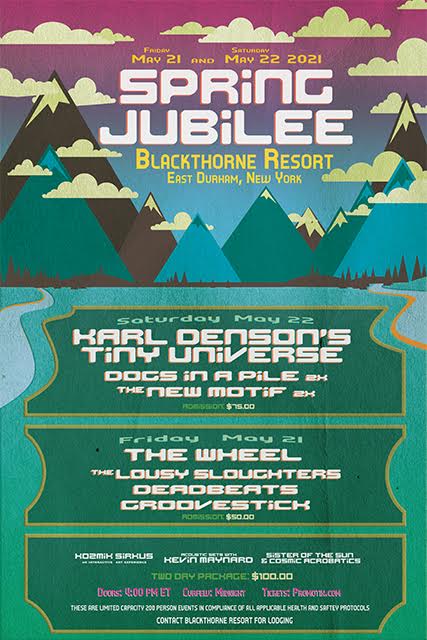
Tickets are currently on sale for both one day and two day passes. The event has limited capacity due to the pandemic with only 200 tickets available for each day. While camping and lodging is available through Blackthorne Resort, it is not included with the ticket. Spring Jubilee will be following protocols such as mask wearing to reduce the spread of COVID-19.
Bard SummerScape is back in New York’s Hudson Valley with an adventurous lineup of live performances from July 8th through August 15th of 2021.
Staged for limited in-person audiences, the 2021 season presents the 31st Bard Music Festival, “Nadia Boulanger and Her World,” which pays tribute to one of the most important female figures in classical music history; the first fully staged American production of King Arthur (Le roi Arthus), the only opera by Boulanger’s compatriot and near-contemporary Ernest Chausson; the world premiere of I was waiting for the echo of a better day, a major new dance commission from Bard’s Fisher Center Choreographer-in-Residence Pam Tanowitz and Sphinx Medal of Excellence-winning composer Jessie Montgomery.
Also featured are Most Happy in Concert, comprising songs from Frank Loesser’s The Most Happy Fella, directed by Tony nominee Daniel Fish; “Black Roots Summer,” a two-weekend celebration of Black roots music curated by Michael Mwenso and Jono Gasparro; and a newly commissioned concert from longtime SummerScape favorite Mx. Justin Vivian Bond.
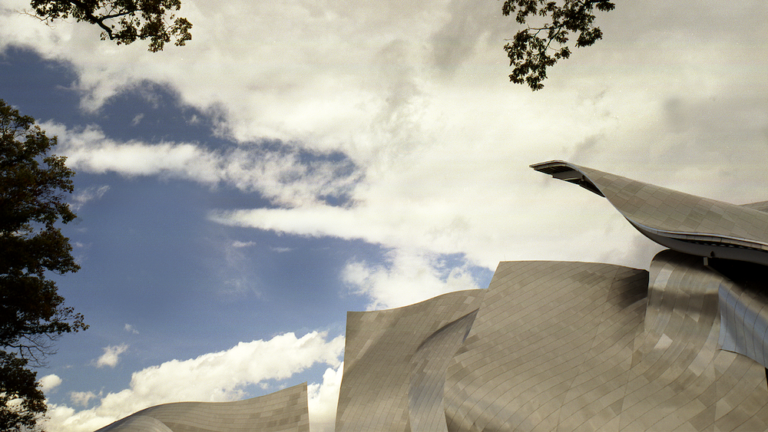
All programs will be staged between July 8 and August 15 in both the Frank Gehry-designed Fisher Center and outdoors at Bard’s Montgomery Place campus, a designated National Historic Landmark set amid rolling lawns, woodlands and gardens against the spectacular backdrop of the Catskill Mountains. Select programs will also be livestreamed at UPSTREAMING, the Fisher Center’s virtual stage.
Gideon Lester, Artistic Director of the Fisher Center at Bard College, explains:
This summer’s festival includes new works by artists who have deep and evolving relationships with the Fisher Center. We are also thrilled to be presenting several artists for the first time, including some we’ve collaborated with over the past year as part of our continuing journey toward becoming a more equitable and inclusive organization. After the uncertainty and isolation of the pandemic, the coming months will offer particularly joyous and meaningful opportunities for all these artists to return to rehearsal and performance again, inviting audiences to join them on voyages of creation and discovery.
The health and safety of Bard’s audiences, artists and staff are of paramount importance. All SummerScape productions will be presented in adherence with strict COVID protocols and in accordance with CDC and NY State guidance and regulations. Learn more about SummerScape 2021 health and safety protocols here.
Bard SummerScape 2021 – highlights by genre
Music: 31st Bard Music Festival, “Nadia Boulanger and Her World”
Founded by co-artistic director Leon Botstein, it is the Bard Music Festival – “a highlight of the musical year” (Wall Street Journal) – that provides the creative inspiration for SummerScape. The first woman to come into Bard’s festival spotlight, Nadia Boulanger (1887–1979) was a true musical polymath.
A prize-winning composer, peerless composition teacher and trailblazing conductor, organist and scholar, she is “arguably … the most important woman in the history of classical music” (BBC Music magazine).
Through the prism of her life and career, “Nadia Boulanger and Her World” offers an illuminating series of concerts, pre-concert talks and panel discussions over the final two weekends of SummerScape.
On August 6–8, Weekend One explores Music in Paris in the first half of the 20th century, and on August 13–15, Weekend Two addresses The 20th-Century Legacy of Nadia Boulanger. Twelve concert programs spaced over the two weekends explore such themes as Paris as the epitome of chic, the crosscurrents of influence between France and America, and the relationship between French Catholicism and spirituality.
The festival will present examples of Boulanger’s own, little-known oeuvre alongside music by her teachers and mentors, including Gabriel Fauré, Louis Vierne and Charles Marie Widor; her Parisian contemporaries, like Claude Debussy, Olivier Messiaen, Francis Poulenc, Maurice Ravel, Erik Satie and expats George Gershwin, Cole Porter and Igor Stravinsky; her male students, including Jean Françaix, Astor Piazzolla, and illustrious Americans Marc Blitzstein, Elliott Carter, Aaron Copland, Philip Glass, Walter Piston and Virgil Thomson; her female students, like Marcelle de Manziarly, Thea Musgrave, Julia Perry and Louise Talma; other women composers, Germaine Tailleferre and Lili Boulanger, Nadia’s celebrated sister, among them; and some of the bygone composers whose music she vociferously championed, like Monteverdi, Bach and Brahms.
Finally, two thought-provoking panel discussions will be supplemented by informative pre-concert talks to illuminate each concert’s themes. As the Los Angeles Times writes, Bard offers “the summer’s most stimulating music festival.”
Opera: Ernest Chausson’s King Arthur (first fully staged American production)
Musical America observes: “Bard’s annual opera has become an indispensable part of the summer operatic landscape.” Of an earlier generation than the Boulanger sisters, Ernest Chausson (1855–99) played a pivotal part in the development of French late-Romanticism. Set to his own libretto, Chausson’s sole completed opera, King Arthur (Le roi Arthus, 1886–95) depicts the tragic love triangle between the mythological English king, his wife Guinevere and his trusted knight Lancelot. Despite having enjoyed recent revivals in Edinburgh and Paris, the opera has yet to be seen on the American stage.
With its rich lyricism, ravishing harmonies and otherworldly final chorus, however, it has won many advocates. In King Arthur, Gramophone affirms, “passion is often white-hot; the orchestration is opulent; and there are … passages of sheer beauty.”
Marking the opera’s long overdue first fully staged American presentation, Bard’s new production will be directed by Princess Grace Award-winner Louisa Proske, Founding Co-Artistic Director of Heartbeat Opera and designated Associate Artistic Director and Resident Director of Germany’s Halle Opera.
Singing the title role will be baritone Norman Garrett, who made his Metropolitan Opera debut in last season’s Porgy and Bess after winning top prizes in more than a dozen international vocal competitions. He will be joined by Grammy Award-winning mezzo-soprano Sasha Cooke as Guinevere under the baton of Leon Botstein, who previously led the opera both on a Telarc recording with the BBC Symphony Orchestra and in a 2001 concert performance with the American Symphony Orchestra at Lincoln Center.
That performance was hailed as “one of the best Leon Botstein and the American Symphony have given together,” showing Chausson’s score to be “sumptuous, majestic, brilliant in its fanfare moments and often powerful” (Paul Griffiths, New York Times). King Arthur will run for four performances in the Fisher Center’s Sosnoff Theater on July 25, 28 and 30 and August 1.
Dance: world premiere of I was waiting for the echo of a better day by Pam Tanowitz and Jessie Montgomery
SummerScape has long produced and premiered significant dance productions, including commissions from choreographers Ronald K. Brown, Trisha Brown, Lucinda Childs, Bill T. Jones, John Heginbotham and Mark Morris. SummerScape 2021 opens with the world premiere of I was waiting for the echo of a better day, a new commission from Pam Tanowitz, the Fisher Center’s inaugural Choreographer-in-Residence, in collaboration with Jessie Montgomery, next Composer-in-Residence of the Chicago Symphony, whose honors include the ASCAP Foundation’s Leonard Bernstein Award.
Set to new arrangements of Montgomery’s chamber music, which has been called “turbulent, wildly colorful and exploding with life” (Washington Post), along with material from her collaboration with Eleonore Oppenheim, big dog little dog, this large-scale work marks Tanowitz’s first return to SummerScape since the resounding success of her ballet Four Quartets.
A Fisher Center commission, Four Quartets was named “Best Dance Production of 2018” by the New York Times, which pronounced it “the greatest creation of dance theater so far this century.”
Performed with live musical accompaniment from artists including Montgomery on violin and Oppenheim on double bass, I was waiting for the echo of a better day will premiere in three performances on July 8, 9 and 10 against the glorious backdrop of the Hudson River and Catskill Mountains, using the historical parkland of Montgomery Place as inspiration.
Concerts on the Stage at Montgomery Place: Most Happy in Concert
The legendary composer-songwriter behind Guys and Dolls and How to Succeed in Business Without Really Trying, Frank Loesser accrued a string of honors including an Oscar, multiple Tony Awards and a Pulitzer Prize. Featuring some of his most soaring lyricism, his classic 1956 show, The Most Happy Fella, “is one of the greatest musicals ever. Or one of the greatest operas. Hell, it’s just great,” declares New York magazine.
Loesser’s songs take center stage in Most Happy in Concert, a setting of his ebullient songs for a cast of seven female and non-binary vocalists with a 13-piece instrumental ensemble. Originally developed for a full production in SummerScape 2020, this meditation on our longing for human connection, made only more poignant by the isolation of the past year, will now be presented as a concert under the summer sunset.
Helming the concert is director Daniel Fish, whose revelatory, Tony Award-winning revival of Oklahoma! debuted at SummerScape 2015 before traveling to St. Ann’s Warehouse in Brooklyn and then to Broadway, where it scored the director his first Tony nomination. Most Happy in Concert will take place in three performances on August 5, 6 and 7 on the Stage at Montgomery Place.
Concerts on the Stage at Montgomery Place: Black Roots Summer
Bard celebrates the uplifting spirit of Black roots music over two weekends this July, with Black Roots Summer, presented in association with Electric Root and curated by jazz vocalist Michael Mwenso, the London-raised Sierra Leone native whose mentors include James Brown and Wynton Marsalis, and Jono Gasparro, former curator of Ginny’s Supper Club in Harlem.
Both weekends take place on the Stage at Montgomery Place, where Mwenso and the Shakes give two performances of their set “Love Will Be the Only Way” on July 23 and 24. Fronted by Mwenso himself, the Harlem-based Shakes hail from destinations ranging from Madagascar, South Africa and France to Hawaii and Jamaica. Taking listeners on a journey through the kaleidoscope of Black ancestral diasporic music and traditions, by way of Fats Waller, Muddy Waters, James Brown and other musical legends, the Shakes’ international blend of jazz and blues has been called “intense, prowling and ebullient” (New York Times).
Next, on July 29, Mwenso leads a lineup of special guest vocalists in “Genius Mother Mary”: A Sonic Retrospective of Mary Lou Williams. A Black woman in the male-dominated field of jazz, Grammy-nominated American pianist, arranger and composer Mary Lou Williams (1910–81) wrote hundreds of compositions and arrangements, some of them for Duke Ellington and Benny Goodman, as well as making more than a hundred recordings and serving as a friend, mentor and teacher to Thelonious Monk, Charlie Parker, Miles Davis, Dizzy Gillespie and many more.
As NPR put it, it was Williams who “mastered the language of swing and pushed the genre towards more expansive, experimental sounds.”
Finally, on July 30 and 31, the hills come alive with The Sound of (Black) Music, when Bard presents “Edelweiss,” “My Favorite Things,” “Do-Re-Mi” and other favorite songs from Rodgers and Hammerstein’s beloved final musical, as reimagined through an Afrofuturistic lens by the 20-plus BIPOC vocalists and instrumentalists assembled by Mwenso and Gasparro.
Concerts on the Stage at Montgomery Place: Mx. Justin Vivian Bond
A longtime SummerScape favorite, Mx. Justin Vivian Bond has been heralded as “the greatest cabaret artist of this generation” (New Yorker). The recipient of an Obie, a Bessie and a Tony nomination, they return to Bard this season for three performances of a new concert specially commissioned for Montgomery Place, in the picturesque setting of the Stage at Montgomery Place on July 15, 16 and 17.
SummerScape tickets
All tickets go on sale on June 2. The Box Office can be reached by telephone at (845) 758-7900, on Mondays through Fridays at 11am–4pm EST, or by email at boxoffice@bard.edu. Tickets are also available 24/7 on Bard’s website at fishercenter.bard.edu.
The 2021 SummerScape season is made possible in part through the generous support of Jeanne Donovan Fisher, the Martin and Toni Sosnoff Foundation, the Advisory Boards of the Fisher Center at Bard and Bard Music Festival, and Fisher Center members, as well as grants from the National Endowment for the Arts and the New York State Council on the Arts with the support of Governor Andrew M. Cuomo and the New York State Legislature.
Commissioning and development support for the Stage at Montgomery Place provided by the Fisher Center’s Artistic Innovation Fund, with lead support from Rebecca Gold and S. Asher Gelman.
Commissioning funds for I was waiting for the echo of a better day are provided by Jay Franke and David Herro.
Bard SummerScape 2021: Key dates
July 8–10 Dance: I was waiting for the echo of a better day by Pam Tanowitz and Jessie Montgomery (world premiere)
July 15–17 Concerts on the Stage at Montgomery Place: Mx. Justin Vivian Bond
July 23 & 24 Concerts on the Stage at Montgomery Place: Black Roots Summer, Weekend One
July 25–August 1 Opera: Chausson’s King Arthur (first fully staged American production)
July 29–31 Concerts on the Stage at Montgomery Place: Black Roots Summer, Weekend Two
August 5–7 Concerts on the Stage at Montgomery Place: Most Happy in Concert
August 6–8 Bard Music Festival, Weekend One: Music in Paris
August 13–15 Bard Music Festival, Weekend Two: The 20th-Century Legacy of Nadia Boulanger
Grey Fox Bluegrass Festival and the Ziontific Music Festival are postponing their events until 2022.
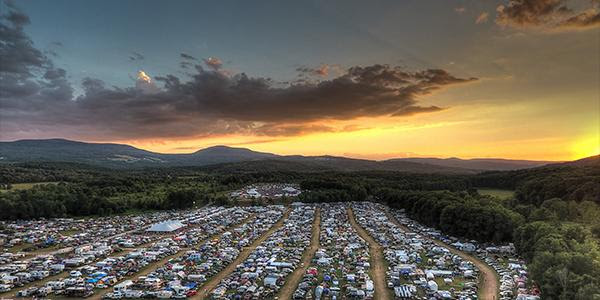
Grey Fox Bluegrass Festival, Oak Hill, NY. Photo Credit: Alan Hamilton
Both Grey Fox and Ziontific seek to prioritize the safety and well-being of everyone attending. Moving the festivals to next summer allows more time to counteract the negative consequences of the pandemic.
Grey Fox Bluegrass Festival will take place July 14-17, 2022. The Grey Fox Staff is hoping to get beyond COVID-19 with extended vaccinations, social distancing, and standard health regulations. Updates for Grey Fox 2022 will be on their website as well as other social media pages.
Last year, the team and artists joined together to create a virtual Spirit of Grey Fox 2020. Fans and musicians were able to come together to raise $25,000 for the IBMA Trust Fun for COVID-19 Relief. With this generosity and spirit of the community, the momentum pushes forward as live shows become a reality again.
Similarly, the Ziontific 10th-year celebration is postponed to June 2022. All 2020 tickets and glamping packages automatically roll over to 2022. However, anyone looking for a refund can do so by contacting Ziontific by May 19, 2021.
While fans eagerly wait for the festivities, a ZTFamily Facebook Group is open to help bring everyone together. Feel free to share Ziontific throwback photos, videos, or even write about memories there.
On April 1, Bard College announced a transformational $500 million endowment from philanthropist and long-time Bard supporter George Soros.
This challenge grant — among the largest ever made to higher education in the United States — will facilitate and strengthen Bard’s exemplary educational and social initiatives, establish the College’s most substantial endowment ever, and set the stage for a $1 billion endowment drive.
In response to Mr. Soros’s generous challenge grant, Bard announced it has raised an additional $250 million from supporters, including trustees, alumni/ae, and friends, and will raise another $250 million over the next five years.
Mr. Soros’s visionary support of Bard’s role as one of two founding partners of the new Open Society University Network, a global network of educational institutions created with the Central European University in partnership with Mr. Soros’s Open Society Foundations, has permitted the College to expand and strengthen the College’s pathbreaking network of domestic and international partnerships.
“Bard has had an outsized impact, setting the standard in liberal arts education in prisons, in high school age students, and in the arts and in its international work,” said Mr. Soros.
Bard College is widely recognized for its excellence in undergraduate education and rigorous liberal arts curriculum, its emphasis on the arts, and civic engagement.
This endowment pledge from Mr. Soros, along with Bard’s matching contributions, will endow the College’s full array of student financial aid, faculty, and programs; enable the College to sustain its mission and to grow its international profile; and begin its endowment drive with $750 million.
For more information about Bard College, visit bard.edu.
This is the first article in the series “Made in New York,” a historical examination of the music history of each of New York’s 62 counties. First up – Orange County.
Welcome to Orange County, New York! This stretch of land is the first county in the United States to be named Orange and it shares this name with seven others throughout the country. Located between the Hudson and Delaware Rivers, this area which was first named in 1683 is full of natural and historical wonders.
The county’s highest elevation is located at Schunemunk Mountain and its lowest point is at the mighty Hudson River. The Wallkill River National Refuge is home to the smallest turtle in New York and this is just up the road from the Black Dirt Region in Southern Orange County, which accounts for half of the onions grown in New York State. Additionally, the black dirt here has an uncanny ability to preserve the past and more mastodon bones have been uncovered in this area than anywhere else on Earth.
Some of the history in this area is well-known by all, but this county has a surprising amount of it, some of which many people may not be aware. West Point Military Academy, which opened in 1802, is the oldest such school in the U.S. and the first section of the Appalachian Trail was created at Bear Mountain and opened in 1923. But interestingly, Orange County is home to the oldest tree and the oldest carbon-dated human settlement in America.
Orange County has its share of “firsts” as well. It has been home to the first cattle ranch and the first butter factory in America and also the world’s first homeopathic mental hospital. And who can forget America’s first liquid propelled airmail rocket flight which occurred at Greenwood Lake in 1936.
This county has a few more facts that just need to be shared. Stewart International Airport has a runway long enough to designate it as an emergency landing site for the now-defunct space shuttle. Brotherhood Winery is the oldest continuously operating winery in the country and Storm King Art Center is the largest sculpture park in the country. And finally, cream cheese was first mass-produced in Chester, NY and despite being made in New York, they named their product ‘Philadelphia Cream Cheese’ and through clever marketing, got its name because the Pennsylvania city was known for quality dairy farming.
But you didn’t come to NYS Music to learn about cheese and turtles; you’re here to learn about what Orange County has to offer to the music community.
The Ritz Theater in Newburgh is one of the most famous musical venues in the county and has been graced by performances from Ella Fitzgerald, Louis Prima and a then unknown singer named Frank Sinatra. It also, famously, is the venue where Lucille Ball made her on-stage debut and it was also the first time she performed with Desi Arnaz. On the other side of the county, Port Jarvis used to be the home of the State Theater. In its last year of operation, the venue featured both Anthrax and Metallica.
SONY DSC
In between these two cities, Middletown is home to the Paramount Theater which was added to the State & National Register of Historic Places in 2002. This venue has seen Johnny Cash, Joan Jett, Jefferson Starship and Blue Oyster Cult play for sold out audiences. And while we can’t touch on every venue in the county, one final notable haunt is the BSP Lounge in Kingston. This place was a featured location during King Gizzard and the Lizard Wizard’s second U.S. Tour in 2014.
There are plenty of musicians who have called Orange County their home. Let’s take a look at the many bands and artists from the area.
Willie “The Lion” Smith
17th February 1939: American jazz musician Willie ‘The Lion’ Smith playing the piano and singing at a ‘Friday Club’ jam session, organized by Eddie Condon and ad-men P. Smith and E. Anderson, at the Park Lane Hotel, New York City. (Photo by Charles Peterson/Hulton Archive/Getty Images)
Jazz music wouldn’t be the same if it weren’t for one particular resident of Orange County. Willie “The Lion” Smith was born in Goshen, NY in 1893. In his younger years, he discovered his mothers broken down organ in the basement and she taught him all of the melodies she knew, despite the instrument missing most of its keys. He started playing music at local clubs as he got older and one day he discovered a newspaper advertisement for Marshall & Wendell’s piano store in Albany with a contest to guess how many dots were printed in their ad. After winning the contest, an upright piano was delivered to his house and he continued to play various rags that he learned in those clubs.
In his late teens, he was finally playing in NYC and Atlantic City before serving in World War 1 where his reported bravery as a gunner earned him the nickname “The Lion.” He was back playing clubs in NYC by 1919 and not only made his first record a year later but helped develop a new piano style that is now known as “stride.” That record in 1920, called Crazy Blues, recorded with a singer named Mamie Smith, is generally regarded as the first recording of the blues.
During this time, Smith became a mentor for many up-and-coming musicians, most notably Duke Ellington. Duke was once quoted saying, “Willie The Lion was the greatest influence of all the great jazz piano players who have come along. He has a beat that stays in the mind.”
Orange County celebrates Willie “The Lion” Smith Day on September 18.
The Kalin Twins
Hal and Herbie Kalin were born in Port Jervis on February 16, 1934. Although they wouldn’t become stars until their late 20’s, their first “performance” together was at the town’s Christmas party when they were both five years old. At the age of 18, Hal was drafted into the U.S. Army and he and his brother kept in contact during his service, sharing songs they had written and writing about future plans to make it big in the music industry.
The twins were signed to the Decca Records label after Hal’s return and although their first songs failed to chart, they did appear on the Milt Grant Show and performed live. It wasn’t until searching through a bunch of demo tapes from writers that they discovered the song “When,” which they thought would be a hit. Released as a B-side on their single “Three O’Clock Thrill,” “When” eventually peaked at #5 on the Hot 100 charts and made it to #1 on the UK Singles chart and also #1 on the US R&B chart. They weren’t one-hit-wonders though as they had a number of other charting tracks including “Forget Me Not,” which reached #12 on the Hot 100.
Pardison Fontaine
Jorden Thorpe, better known as Pardison Fontaine, was born in Newburgh, NY in 1989. At an early age, he started rapping on his Talkboy and decided during his college years to drop out and commit fully to his hip-hop aspirations. He first gained acclaim with his 2013 song, “Oyyy” from his debut mixtape titled ‘Not Supposed to Be Here’ and filmed the music video for the track in his hometown. This song caught the attention of Cardi B and Pardison has since contributed as a songwriter to her for numerous songs, most famously her single “Bodak Yellow.”
Cardi was also featured on Pardison’s breakout hit “Backin It Up,” which hit #40 on the Billboard Hot 100 chart and has garnered over 166 million views on YouTube. Pardi has co-wrote with Kanye West on more than half of the songs on Kanye’s 2018 album, Ye, including “Violent Crimes” and “Ghost Town.” In addition to these, Pardison co-wrote the track “South of the Border” on Ed Sheeran’s No.6 Collaborations Project.
Pardison still represents his roots in Newburgh and loves giving back to the community. He has donated jerseys to the local Newburgh Steelers football team, participated in a turkey drive and also a bookbag giveaway to help local school children. His new album, Under8ed, was released in November of 2019 which he has described as “the story of my city.”
pErFect ThYroID
Throughout the 90s, one band in particular made waves throughout the Hudson Valley with its new brand of musical fusion, fun live shows and of course, it’s infamous Skunk logo. Hailing from Orange and Ulster County, Perfect Thyroid was formed in 1991 and while its lineup changed throughout the years, the band originally consisted of brothers Chris and Bill Hanson, Chris Snykus, Jaf Farkas, Shawn Rice and Jen Polcari. Combining the ska, funk and punk, reggae and jazz genres into their musical stylings, Thyroid became well known for calling this new sound “Skunk”.
PT toured full-time for over 20 years and put out 5 albums during that time, including “Musical Barnacles,” which Alternative Press selected as a “Ska-Punk Essential Album.” They were also featured on the soundtrack for the 1998 Disney movie, Meet The Deedles. Throughout the tenure over the last 2 decades, they’ve had a plethora of incredible musicians join them in studio and on stage, including Dean Jones, Joe Cuchelo, Jason Foster, Mike Bove, Jon Stern, Sam Lapidus, Sean McLaughlin, Ben Acrish and Goshen’s own Shane Kirsch.
While the band has still played occasional shows throughout the last decade, most of the current lineup can also been seen in another area band called The Big Shoe. The members of Perfect Thyroid continue to call the Hudson Valley their home and will always be a shining example of what bands from New York State bring to live music scene.
William Fullerton Jr
William was born in Newburgh in 1854 and was the only son of William Fullerton, a famous New York lawyer. At age 17, he published‘Silver Strains’ which is now located in the Library of Congress. He left for Europe to study music in Germany and ended up living in London where he published a number of popular compositions that were dedicated to members of the Royal family. During his time in London, he lived with a famous painter and stage designer named Percy Anderson and these two would go on to have success with the opera named ‘Lady of the Locket.’ Following this, he set to work with Anderson on another light opera titled ‘Waldemar: Robber of the Rhine’ before succumbing to tuberculosis in 1888. While many of his works have been lost to history, ‘Spanish Serenade’ still exists online and can be heard below.
Dubois Alsdorf
Newburgh has a rich history of music and dance over the last century and a half, and that is thanks to the Alsdorf Dance Academy. Dubois Alsdorf was born in Wallkill, NY in 1827 to parents George and Catherine. At an early age, he showed a talent for music which he received from his father George and his parents sent him to New York City to begin an apprenticeship. Studying under famed orchestra leader and composer William Alpo, Dubois learned from Alpo’s musical experiences playing with Francis Johnson. Johnson was the first American musician to tour Europe and introduced the U.S. to the idea of open-air concerts, which had a lasting impression on Dubois. After his apprenticeship, Dubois formed one of the first regional brass bands, the Alsdorf Band, which according to the Historical Society of Newburgh Bay and the Highlands, made their debut on the Courthouse steps of Newburgh in 1849.
Alsdorf also began his own orchestra which played in prominent vacation spots like Lake George and Saratoga Springs and locally for dance classes, which gave him the opportunity to learn dance instruction. This set the stage for him to open the Alsdorf Dance Academy, whose first location was in Newburgh’s own United States Hotel. The school was soon teaching dance to the people of Newburgh and Orange County alike and this history of dance education continued as his three sons followed in his footsteps. Charles, Simon and Ulysses Alsdorf taught at the Dance Academy at 93 Liberty Street in Newburgh, which featured a grand ballroom and rooftop garden for public performances. The first soiree at the Alsdorf Academy took place in 1849, but the Dubois family continued this tradition for nearly a century, teaching Newburghers dance and music for generations.
The Heavy Pets
The Heavy Pets are considered a Florida-based band through and through, but their roots run deep in Orange County. Guitarists Jeff Lloyd and Mike Garulli as well as Bassist Joe Dupell became friends while going to high school in Goshen, NY and formed a band named Anthem before starting the first iteration of The Heavy Pets. College sadly got in the way of music, but once that was done, Dupell invited Lloyd down to visit him in Florida. Shortly after his arrival, Garulli came down as well, setting the stage for The Heavy Pets to reform.
Their first show in South Florida occurred in 2005 and the next few years were nothing short of exceptional for the band. In a 2006 contest to select a local band to play the Langerado Music Festival in Florida, The Heavy Pets beat out 350 other bands and were on the same lineup as The Flaming Lips, The Disco Biscuits and Robert Randolph. Two months later they were selected as the “Unsigned Band of the Week” by High Times Magazine. The following year, they put out their first album, Whale, and have released seven additional albums since then.
While the band’s lineup has changed slightly over the years, their love for playing live shows and especially music festivals has not. The Heavy Pets have played more than a dozen different festivals and over 1,000 live shows since 2005 and have even held their own fest, Pet Zoo, three times in Pennsylvania and New Jersey.
Corey Glover
Corey Glover, best known for his work with Living Colour and also for touring with Galactic wasn’t born in Orange County, but he re-located there in the last decade. While you may recognize his face from the movie Platoon, Glover’s voice is known the world over from Living Colour’s hit 1988 song “Cult of Personality.” Glover has also been in such bands as SKAndalous All-Stars and Vice and has even toured as a vocalist with the “A Bowie Celebration” Alumni Tour.
During the beginning of the last decade, Glover started playing with a number of jam bands. He sang with Robert Randolph as well as Soulive for a number of shows and also toured as a vocalist with Galactic from 2011-2014 after seeing them at Irving Plaza in NYC and joining them on stage at that show. He is still touring with Living Colour and most recently started two new bands. He started Ultraphonix with Dokken guitarist George Lynch and a metal project called Disciples of Verity with former members from Negative Sky and God Forbid.
So there you have it. Orange County has, without a doubt, a rich heritage of musicians and venues and an impressive amount of history surrounding it. From rock to hip-hop, the Hudson River to the Delaware River and the Philadelphia Cream Cheese company to the country’s first rocket-propelled airmail test. The contributions from the residents in this county can’t be glossed over and it’ll be a standard that you’ll find throughout our series on the Counties within New York State. Next up, CortlandCounty!
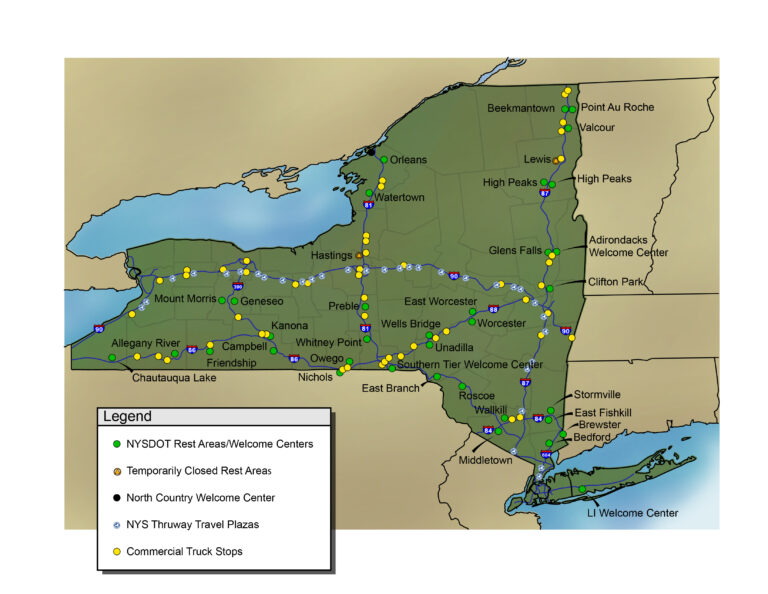
Coming this summer to rest stops along Interstates 81, 84, 86, 87, 88 and 90, New Yorkers and other travelers can discover new bands and artists thanks to the State Division of Tourism sponsoring the “Rest Stop Pop Up NY” Thruway Concert Series.
At the state’s Welcome Centers, multiple bands will be featured throughout the day, offering a small but distanced festival feel. Service Areas along I-90 and I-87 will feature top rock and jam acts performing on stages set up in parking lots, starting at 10am and going until 10pm.
moe. will give a nod to their New York roots by make appearances at rest stops near Buffalo, Utica and Albany. And provided their drummer can catch a ride, The Assortment of Crayons will reunite at the Plattekill rest stop on I-87 North.
Heading along I-88 and I-81, a broad selection of bluegrass and metal bands will perform at the more rustic rest areas located on these comparatively lesser traveled highways. Meanwhile, I-84 will feature singer-songwriters from the Hudson Valley at each of the four rest stops. Don’t miss July 4 with Don McLean at the Brewster Rest Area.
I-86, the state’s newest highway, will feature Buffalo’s Organ Fairchild. Much like the band, I-86 was years in the making and brings together many great parts of the state in one solid collective.
The new ‘Text Break’ stops will feature acoustic performances only, with requests taken by texting your song request to 38262. There will be no shows along I-495 on Long Island.
When the State Division of Tourism was asked what could go wrong with these Pop Ups, a representative admitted there would be some issues.
For one, there’s only so much parking, and while we will allow you to park on the grass for that true festival feel, some folks may need to park on the side of the road and walk into the festival. This state has a great history of parking cars and walking miles to see music, whether it’s the original Woodstock festival, Summer Jam 1973, or The Clifford Ball. We want to give people the real music experience, including, but not limited to, fatigue and mild exhaustion upon arrival at your destination.
Judith McCarty, State Division of Tourism
McCarty also discussed safety measures, saying “Of course people will socially distance. And if they don’t we hope they’re spending money and we feel that trade off is worth the risk.”
Alcohol will not be sold at any Thruway Rest Stop, per usual, but CBD vendors will be on hand for to provide attendees with an energetic natural high. “We strongly encourage CBD use. Please don’t drink and drive. That would make us look really, really bad,” said McCarty.
The State Division of Tourism feels that the Rest Stop Pop Up concert series will encourage travel across the state, and also allow travelers to learn about the history that happened here.
Additionally, toll money will be used to help balance the state budget.
Thank you for reading. This was an April Fools article, published on April 1, 2021.