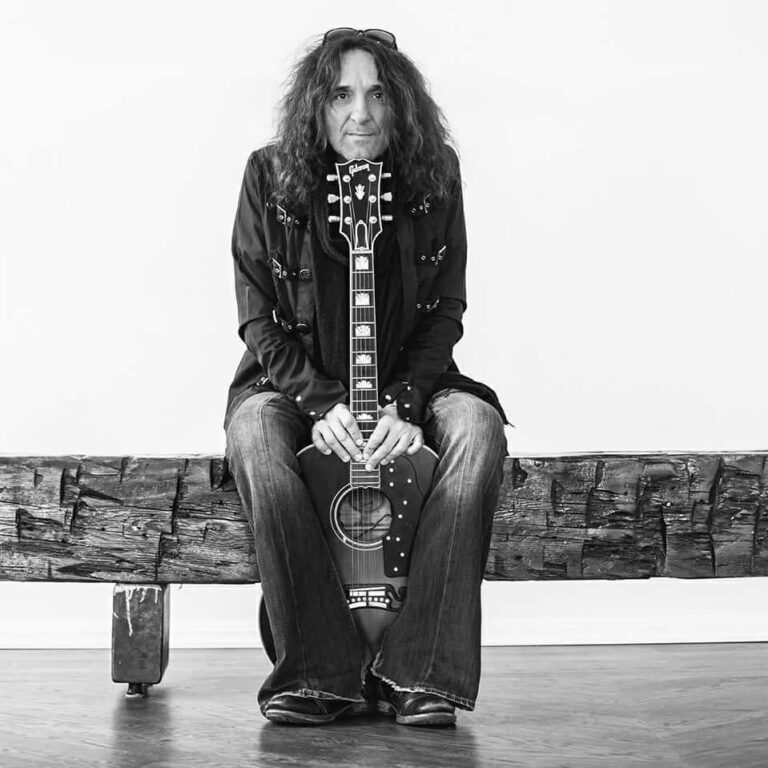
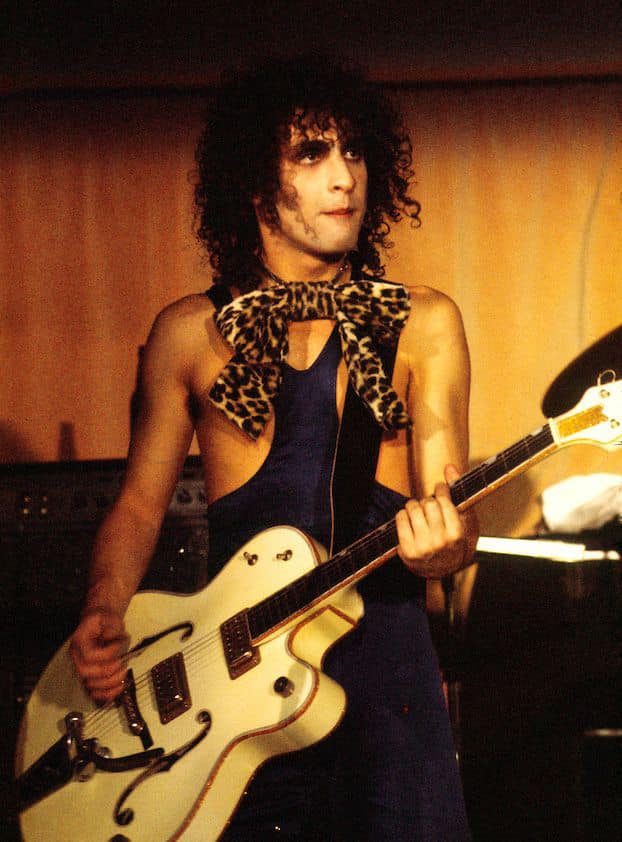
The rock world lost a star this week. Rochester native Phil Naro succumbed to a battle with cancer on Sunday night. The rocker of international fame was best known as the vocalist for Talas, where he played alongside Billy Sheehan. On hearing of Naro’s passing, Sheehan shared the following on Twitter:
Phil Naro. One of the finest human beings I have ever known. I’m deeply saddened to report his passing. He fought a valiant battle till the end, and inspired all who knew him to stay positive and keep going against all odds. God bless you, Phil. Rest in peace dear friend.
Manager Bruce Pilato also shared a post on Facebook:
“It is with great sadness that we must announce the passing of our son, father, friend and musician Phillip Sampognaro, known professionally as Phil Naro. Phil fought a valiant battle against cancer over the last few years but left this earth last night surrounded by his family and closest friends.”
Naro got his start in music in his hometown of Rochester, but joining Buffalo-based Talas skyrocketed his professional career. He went on to launch a successful solo career and performed with top ’80s hard rock bands including, Yngwie Malmsteen, Anthrax, White Lion, Quiet Riot, and Iron Maiden.
He partnered with other internationally-known artists to form supergroup The Platinum Rock All-Stars in 2016. After a reunion tour with Talas in 2019, he poured his energies into a solo album, A Life in Song, which is yet unreleased.
In addition to his extensive body of recorded works, his legacy lives on through his sons, John and James, who have inherited his passion for music.
With every song I sing, I want to touch people’s hearts— let them feel the passion I have for music.
Tony Markellis, a Saratoga Springs resident for more than four decades, and co-founding member of Trey Anastasio Band, has died. Markellis’ death was noted in a Facebook post by his nephew Cory Markellis. The cause of death has not been shared.
Tony with Trey Anastasio Band, February 19, 2011, Palace Theatre, Albany
Born in Helena, Montana, Tony began playing bass in third grade and never looked back. Living in Saratoga Springs for 45 years, as a bassist, he had a wide range. Over his 47-year career, he played blues, folk, jazz, rock, country and bluegrass with musicians including Anastasio, Paul Butterfield, The Mamas & the Papas, Johnny Shines, David Bromberg, David Amram, Paul Siebel, Rosalie Sorrels, Eric Von Schmidt, Ellen McIlwaine, Mary McCaslin, Railbird, Jo Henley, Russ Lawton, Ray Paczkowski, Jennifer Hartswick, Natalie Cressman, James Casey, and Floodwood.
Tony was a founding member of the groundbreaking Vermont-based jazz fusion group Kilimanjaro, as well as the Unknown Blues Band featuring Big Joe Burrell. At the 2017 Grand Point North Festival, Anastasio revealed that Tony was the reason he eventually decided to go to UVM.
I went into this bar, I had just gotten off the plane, I was 18-years-old. Hunt’s, this used to be a great club and I went in and I saw this band that to this day I would say is my favorite band of all time. I was completely floored by the musicianship and the coolness and that was the moment that I wanted to move to Burlington was when I saw these guys. And of course, that band was Big Joe And The Unknown Blues Band.
Trey Anastasio
Tony was the first member brought on for Trey’s solo project, which began with 8 Foot Flourescent Tubes, evolved into a trio with drummer Russ Lawton, who Tony suggested to Trey, and eventually into a 7-10 piece band over the course of 2001 through today. He was part of Anastasio’s introspective 2019 album and band, Ghosts of the Forest. Markellis would also help develop songs with Anastasio for the Broadway musical, Hands on a Hardbody.
Tony gained fans once again during the Beacon Jams in the Fall of 2020, where his presence, humor and bass playing anchored an incredible run of 8 weeks of musicianship. “You can spatchcock just about anything” went from a backstage comment by Tony to Trey, to an onstage banter and meme among fans.
photo by Jake Silco
Tom Mitchell, whose first record was produced by Tony in 1976, said on Facebook, “He was the bass player that made everyone sound better.”
Markellis leaves behind a legacy that includes co-writing Phish staples “Sand,” “First Tube” and “Gotta Jibboo,” the latter of which he would join Phish for at Saratoga Performing Arts Center on June 20, 2010. At the final show of Trey Anastasio Band’s inaugural summer tour on August 5, 2001 at SPAC, Trey held up a sign that said “We’re on Tony Tour,” a photo of which Tony proudly displays on his website.
More recently, Markellis published a book of short stories, titled Life…Real & Imagined, published by Vermont’s Shires Press. He very recently contributed to Marcus Rezak’s album Truth in Sound, released on April 30, 2021, on Color Red Music.
Trey Anastasio shared his thoughts on his friends and bandmate on social media.
Tony Markellis passed away yesterday. He was a truly remarkable human being. He was kind and had a sweetness to his personality, and he was the baddest bass player I’ve ever heard. I loved Tony, and I always will. I’m having a hard time processing this. Tony was the heartbeat to so much of my life, and to the lives of so many others. He played bass for my first dance with Sue at our wedding. We wrote First Tube and Sand together, and played so many years, so many memories. I was very lucky to have had a very long phone conversation with Tony only a few days ago. We talked for almost two hours. We caught up on family, friends, and funny pandemic thoughts. It wasn’t often that we talked on the phone like that. I had no idea it would be our last conversation. Now it feels like it happened for a reason. I’m so grateful today for those hours, and for all of the years together. Tony, we’ll all miss you. Thank you for the gifts you brought to all of us. RIP my friend.
Shock G, founder of West-coast hip hop group, Digital Underground, has passed away. Best known for the group’s breakthrough hit “The Humpty Dance” and his entertainingly provocative alter ego “Humpty Hump,” Shock G — born, Gregory Jacobs — also achieved belated notoriety for mentoring a young Tupac Shakur and co-producing his debut album 2Pacalypse Now.
According to his father, Edward Racker, Shock G was found dead in a Tampa, FL hotel room. The cause of death was unclear. He was 57 years old.
Born in Far Rockaway, Queens in 1963, Shock G would move to Tampa in 1980, back north to Queens, then return to Tampa where he worked as a radio DJ. From there, he headed west to Los Angeles and later Oakland, where he worked at a music store. It was there that he connected with Jimi “Chopmaster J” Dright from Berkeley, and Tampa hip-hop radio deejay Kenneth “Kenny-K” Waters to form Digital Underground in 1987. The hip-hop group made their mark with their hit single “The Humpty Dance,” which featured the prosthetic nose wearing Shock G rapping as his alter ego “Humpty Hump.”
Playing a key role in the rise of West Coast hip hop, Digital Underground was influenced by funk bands of the 1970s, and frequently sampled in their music. A distinct contrast to gangster rap, the unique style of Shock G and jam-session vibe to albums made Digital Underground a stand out group of the era. George Clinton would go on to co-produce “The Humpty Dance.”
In 1991, Tupac Shakur would link up with Digital Underground, going from dancer to roadie to band member. Tupac’s 1993 breakout single “I Get Around” was produced by Shock G, who also worked with Dr. Dre and Prince.
Shock G, Tupac and Digital Underground would appear in the 1991 Dan Ackroyd comedy, Nothing But Trouble, in a memorable court room scene that included a performance of “Same Song.”
A talented and versatile entertainer, Shock G was a jack-of-all-trades. He played drums and the keyboard, produced his own records, choreographed his own videos and was wildly entertaining on stage. Digital Underground’s rowdy live shows became a staple of the group’s appeal. The increased entertainment value that came with Shock G’s ingenuity allowed up-and-coming entertainers a chance to showcase their talent.
Here we see a young Tupac Shakur performing live on the Arsenio Hall Show alongside Shock G during the height of the group’s popularity.
Shock G’s genius wasn’t just in his production or his rapping abilities, He marketed the group and their debut album, Sex Packets, with several grandiose tales that added mystique and made fans wonder just what in the hell was going to be on this album. Claiming in an interview that the name of the album came from a sex pill that led to orgasms as soon as a capsule was placed on the tongue. Though fans and the media were left to decipher whether Shock G was pulling on over on them, it is clear in hindsight that he had a firm understanding of the entertainment industry and what would get the group over the hump.
Tributes were shared on Twitter from Shock G’s peers and fans.
RIP Shock G, psychedelic rap pioneer, one of the 1st & best to translate funk into hip-hop. A high concept genius, who discovered 2Pac & invented sex packets. Our Groucho Mark: raunchy, hilarious & weird. Burger King bathrooms would never be the same. Humpty Hump lives forever 🥸 pic.twitter.com/F3rJtlDdh2
Rest In Peace Shock G. Also known as Humpty Hump. Also known as the frontman of the legendary group Digital Underground. Brought the world 2Pac, and produced his hits “I Get Around,” “So Many Tears” and many more. Pivotal artist & producer. Thank you for everything. 💔 pic.twitter.com/Ua2Nq4vY3z
An iconic song title and hook from a rapper whose career was made off of distinction. From his voice, to his aesthetic, to his simultaneously vulnerable and gangster persona, DMX was going to give you his all, his true self. You were to be witness to the amazing highs and the, at-times, embarrassing lows. The lead single from 2003’s Cradle 2 the Grave (starring DMX) soundtrack is more than just a catchy tune. Has any other rap lyric embodied an artist quite so well?
As the world mourns the loss of one of hip hop’s grittiest, raw and complex characters, it’s important to remember that DMX’s premature death does not put a sour note on the full life that he lived. He said it himself, in his very last aired interview — an appearance on Noreaga’s Drink Champs podcast — ‘X declares, “If I was to drop dead right now, my last thought would be: ‘I’ve lived a good life.”
This DMX vs Jay-Z freestyle battle still one of the most legendary moments in hip hop
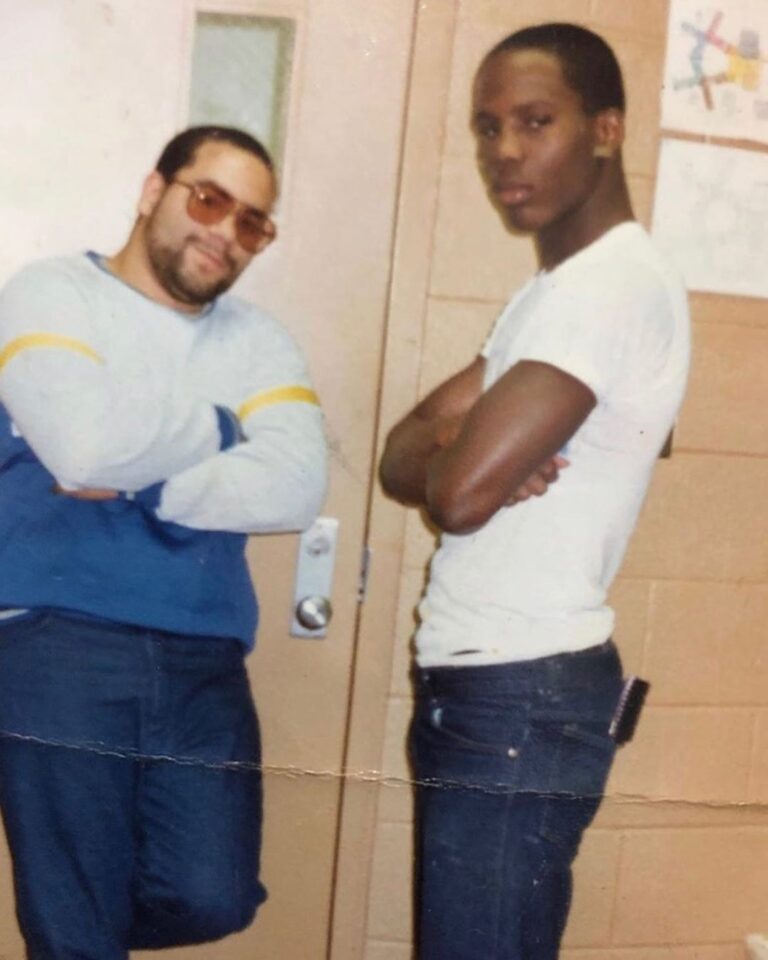
After all, his journey began in the project buildings of Yonkers, NY, having to grow up with a non-existent father and a violently abusive mother. ‘X — born Earl Simmons — spent spurts of his childhood in group homes, where he honed his skills within the budding genre of hip hop. It was during early adolescence that DMX met Ready Ron, an influential figure in his development as a rapper, and the man X claimed is responsible for birthing the addiction that kept a stronghold on him throughout most of his adult life.
Based on his turbulent childhood and a criminal record (that began in adolescence), DMX is one of the few artists who could claim the oft-used adage that hip hop saved their life. Where else can one go from group homes and detention centers to releasing two number 1 albums in the same year? In fact , DMX’s first five studio albums debuted at number 1 on the Billboard charts.
Although the one known as Dark Man X had done a complete 180 with his life, fame and riches only exasperated who he truly was. And at his core, DMX was a troubled individual. Despite his success, he hadn’t gotten his addictions under control, a fatal trait that eventually cost him his life.
So while he was starring in blockbuster films and performing in front of an excess of 200,000 people, he was still succumbing to his vices, with a rap sheet that might be longer than his lyric sheet. In a fall 2019 GQ magazine interview, DMX once stated,
“Before I really had a life, jail was a playground. I’d be like, ‘I’m going to jail and have fun.’ Jail used to be fun.”
It seems as though he carried that mentality throughout his time as a famous entertainer, with substance abuse issues a clear factor in his life as he had been arrested for various and repeating offenses including: possessions of cocaine, driving while intoxicated, driving with a suspended license, animal cruelty, failure to pay child support, among others. His offenses are equally puzzling and impressive. You would think after a few DUI arrests, one would get a driver, especially someone of DMX’s stature. Yet, his blatant disregard for the law revealed his truly detached nature from life and consequence, a characteristic found in many addicts. Notwithstanding, it revealed something else, ‘X was gon’ give it to the man as well, even if it was to his own detriment.
What’s dangerous about fame and success is that it doesn’t necessarily mean you’re living life righteously, it just means the masses resonate with the persona and content being packaged to them. For DMX his personal downfalls helped make him the superstar that he was. In a smoke and mirrors industry, his authenticity was never to be questioned, as he laid it all on his records, never shying away from the demons that constantly kept him in the headlines.
That’s what makes his death such a tough pill to swallow. When someone shares as much of themselves as DMX did, you can’t help but care about their wellness. Before this tragic turn of events, there were reports of an upcoming album and a re-invigorated DMX.
Nevertheless, it is better to rejoice in the life that DMX got to live, rather than his death. For he gave us everything he had. He has been on the opposite ends of the spectrum, reaching highs that most wouldn’t dare dream of, to experiencing lows that many can’t even imagine. In that sense, DMX lived a complete life, as he truly gave us all he had.
On March 28, the music world, and the Hudson Valley’s close knit community of music makers, lost another great one, Malcolm Cecil. The much-traveled musician, producer and Grammy-winning engineer passed away after a long illness in Malden-on-Hudson, where he had lived and continued his work for the past two decades.
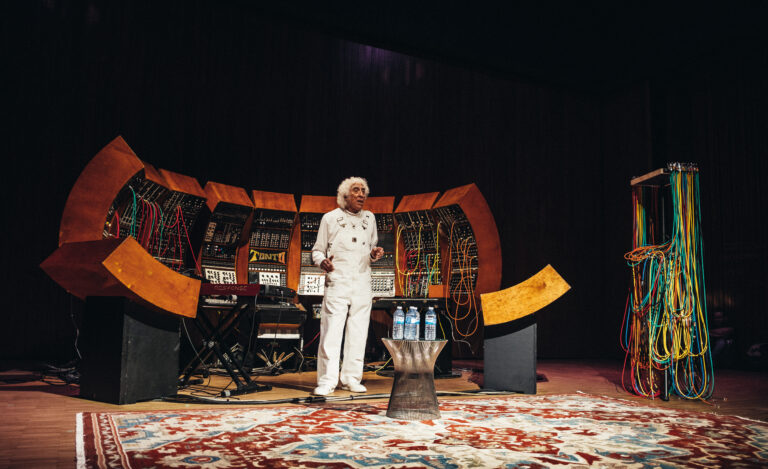
Though Cecil was a man of many hats he is perhaps best known as the co-creator of TONTO, the world’s largest analog synthesizer. This room-sized amalgamation of a variety of synths and sound processors would become the musical bedrock for the dozens of albums he helped produce. Most notable are Stevie Wonder’s revered quartet of classics from the 70s, Music of My Mind, Talking Book, Innervisions and Fulfillingness’ First Finale.
credit: Sebastian Buzzalino/National Music Centre
Born 84 years ago in London, Cecil seemed predestined for a career in music. According to a 2007 profile by Peter Aaron in Chronogram, Cecil’s American grandfather was a movie organist in Times Square theaters, while his mother played violin, piano and accordion in a gypsy band that his father managed. After an aborted attempt at piano, Cecil switched over to bass and ultimately became a much in-demand player.
Cecil would go on to stints in the BBC Orchestra and the house band at Ronnie Scott’s, London’s leading jazz club, where he performed behind luminaries like Rahsaan Roland Kirk, Stan Getz and Herbie Mann. Cecil also co-founded Blues Incorporated with Alexis Korner, the ensemble where the young Mick Jagger, Keith Richards, Charlie Watts and other rock stars-to-be got their first taste of stage experience.
A ham radio enthusiast in his youth, Malcolm’s acumen in electronics grew when he served as a radio technician in the Royal Airforce. While stationed in Newcastle, he got together with The Animals and Hendrix’s manager-to-be, Michael Jeffries, and opened a jazz club called The Downbeat, which he wisely outfitted with recording gear. Seeking to get a contract for The Animals, Jeffries asked Cecil if he could demo a rehearsal by the rockers in the club’s off-hours, which he did on his trusty Revox according to TapeOp. This demo contained the proto-version of “House of the Rising Sun” which earned them their record deal, a #1 hit and global fame.
After a detour to South Africa, Cecil ended up in the U.S. in the late 60s. The bassist toured with several jazz artists before taking a job maintaining equipment at Mediasound, a busy Manhattan recording studio where he would meet his partner in technology and music production, Bob Margouleff.
Margouleff had bought one of the early Moog series IIIc synthesizers and teamed up with the more technically adept Cecil to expand upon it, combining a variety synths from Moog and ARP with an array of custom modules, processors and controllers from a Russian composer and Jimi Hendrix’s guitar tech.
In the end, it was a six-foot tall, 300-square foot sound-making monster, one which the duo used to conjure a galaxy of spacey and downright funky sonics. They cheekily dubbed it TONTO, for The Original New Timbral Orchestra. And after a chance meeting with his old acquaintance Herbie Mann, Cecil scored a record deal with the flautist’s Embryo label. In 1971, they released their hugely influential debut album, Zero Time, as the equally cheekily named Tonto’s Expanding Headband.
Zero Time was a revelation to music makers, and none more so than Stevie Wonder. One day Wonder turned up at Mediasound (in a pistachio colored jumpsuit) with a copy of the album under his arm seeking a demonstration. After a quick tour of TONTO, he immediately booked a session with the duo. Over the course of a single weekend, they produced a remarkable 17 songs. Wonder then had TONTO moved to Jimi Hendrix’s Electric Lady Studios and the trio would collaborate there over the next four years on soulful innovations that would remake the sound of popular music. Together, they co-produced the classic quartet of Wonder’s best loved albums, containing songs like “Superstition,” “Higher Ground,” “Living for the City,” “You and I” and many more. Cecil not only helped Wonder dial up the sounds heard in his imagination, but often performed them on the discs.
In 1975, Malcolm Cecil and Margouleff would split, with Cecil purchasing TONTO outright and continuing its expansion, as both an instrument and a sonic spice dusted onto rock, R&B, jazz and experimental idioms.
Cecil would go on to produce and provide his engineering expertise to a stunning number of acts in the following three decades. These included The Isley Brothers, Steven Stills, Weather Report, Minnie Riperton, Randy Newman, James Taylor, Jeff Beck, The Jackson Five, Little Feat, Steve Hillage, Dave Mason, The Doobie Brothers, Mandrill, Quincy Jones, Bobby Womack, Joan Baez and more.
One of Cecil’s longest lasting collaborations was with soul poet/proto-rapper Gil Scott-Heron. Cecil produced several of Scott-Heron’s acclaimed albums beginning with 1980 in its title year, which featured Gil and his musical partner Brian Jackson in the studio with TONTO on its front and back covers, through to 1994’s Spirits.
TONTO came with Cecil when he moved to the Hudson Valley, with a couple of notable detours. These included a stay at Devo founder Mark Mothersbaugh’s Mutato Studios, where he used TONTO to create the music for the Rugrats animated series in the mid-1990s. Aaron’s article includes an interesting description of TONTO’s humble home in Cecil’s backyard shed in quiet Malden. In order to preserve this one of a kind piece of musical history, Cecil sold TONTO to The National Music Centre in Calgary, Canada in 2013. The museum completed a full restoration in 2018 and today offers it for music production services.
With his move to the Hudson Valley, Cecil continued his recording work with TONTO, creating the lush New Age-y sounds on his album Radiance, and in other partnerships, including one with Russian violinist Valeri Glava as Superstrings. Cecil also returned to his first musical love, acoustic bass, playing regular jazz gigs at cozy Hudson Valley clubs like the Colony Woodstock.
I first met Malcolm Cecil at such a gig. This was in October 2019, when we were both playing our respective sets on the sidewalk as a part of the outdoor ShoutOut Saugerties Music Day. The woman who organized this community attraction was Cecil’s neighbor, Isabel Soffer. She is an internationally known curator and live event producer, co-founder and director of globalFEST, the pre-eminent annual showcase for World Music in the U.S. She had been working for the past two years with Malcolm on various projects.
As is all too often the case in the music business, Cecil did not acquire or continue to receive great wealth from his tireless creative efforts. According to several sources, Cecil was not a participant in royalties from some of his best known works.
In mid-November 2020, Soffer called me to see if I might volunteer my day job skills, as a publicist, to help her and Malcolm get some new projects off the ground. Naturally, I jumped at the chance to meet and talk with a musician I had revered since I was 13 years of age, when I first heard Zero Time on WNEW-FM in NYC.
As with TONTO, part of his desire was to preserve and have others benefit from his legacy. Malcolm Cecil maintained a huge archive of recordings, correspondence, photographs, videos, recording equipment, session notes and other artifacts from his six decades in music, ones that are important artifacts from some of the most vital chapters of 20th Century music. As he got on in years, he was hoping to find a proper home for this massive archive.
Also on his mind was a possible 50th Anniversary release of a Zero Time/Tonto’s Expanding Headband boxed set, with unreleased tracks and other goodies. There was also discussion of tribute album featuring notable musicians and helmed by a star producer.
Malcolm was also taking steps to prepare a biography, a unique one to be told in the voice of TONTO. It would be machine telling of his adventures in sound and in-studio with many of the most talented names in music. Another neighbor, a Vanity Fair writer, was urging Malcolm to tell his tales in the form of a podcast they would co-produce.
Cecil was also well on the way to finalizing a series of projects around two giants, Muhammed Ali and Gil Scott-Heron, ones that might still come to fruition with the proper support. He was planning to combine the music from his Radiance album with spoken word from a lecture by Ali for an album to be released in June 3, 2021, the 15th Anniversary of the champion’s death. With Gil, there were three discreet projects in the works, a re-release of The Mind of Gil Scott-Heron, a piece he wrote on the day John Lennon died called “Third Person,” and a music/poetry project with Scott-Heron’s daughter Gia.
As 2022 would be the 50th Anniversary of the release of the first of his Stevie Wonder collaboration, Music of My Mind, Malcolm Cecil was looking forward to celebrating the landmark with his own new music inspired by the event.
Two short weeks after I spent a few hours with Malcolm hearing his plans and remarkable stories, I heard he was hospitalized. Our work stopped for the moment, in hopes that Malcolm might rally and continue his work.
But even with his passing, Soffer is encouraged. She is hoping the many who loved and admired Malcolm Cecil and his work will come together to bring some of these final projects to life.
Mark Morales, known as Prince Markie Dee and a founding member of hip-hop/ rap group The Fat Boys, passed away at 52 years old, just one day before his birthday, on February 18, 2021. AllHipHop reported Prince Markie Dee had died from congestive heart failure after suffering “distressing” health issues.
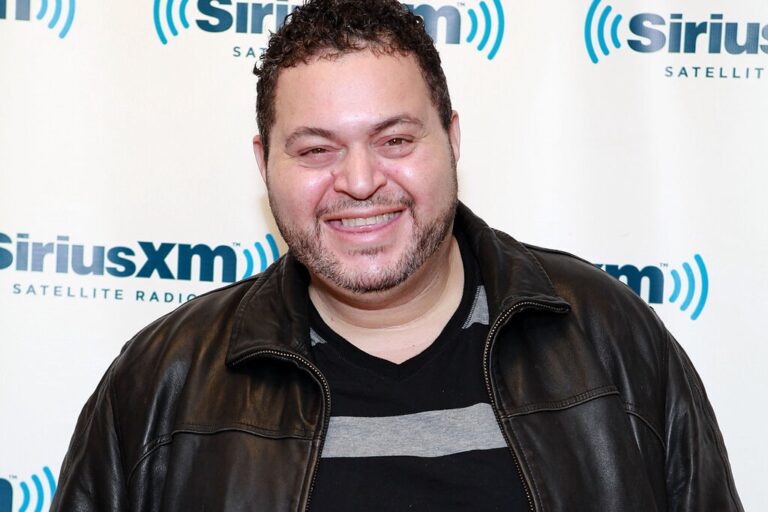
Mark Anthony Morales also hosted “The Prince Markie Dee Show” on LL Cool J’s Rock the Bells channel on SiriusXM radio.Credit…Robin Marchant/Getty Images
Mark Morales was born on February 19, 1968 in Brooklyn. He formed the band called ‘Disco 3′ with Darren Robinson and Damon Wimbley in the early 1980s. After they won a talent contest at Radio City Music Hall in 1983 the group signed a contract with the show’s promoter. They eventually ended up rename themselves the Fat Boys in reference to their weight under their promoter at the time’s recommendation.
The Fat Boys went on to release seven albums, three of which were gold certified and one reaching platinum status. They had hit songs like “Jail House Rap,” “Can You Feel It,” and “The Fat Boys Are Back” and brought beatboxing into the spotlight. The trio even appeared in a few films including “Disorderlies” “Krush Groove” and “Knights of the City.” They ended up breaking up in the early 1990s. Band member Darren Robinson died in 1995 at age 28 after falling off of a chair while rapping for friends and lost consciousness.
Morales started work as a songwriter and producer for Uptown Records, collaborating with Father MC and Mary J. Blige after the group disbanded. According to The New York Timesarticle “He helped write and produce Ms. Blige’s 1992 breakout hit “Real Love” and worked on her debut album, What’s the 411? He also worked on songs and remixes for Destiny’s Child, Mariah Carey and others.” Later in his life, Morales became a radio personality based in Florida. He started back in 2008 to 2010, serving as the afternoon drive radio host/DJ at 103.5 The Beat WMIB radio in Miami, Florida. He also ended up working at WEDR 99.1 FM and the Rock the Bells station of Sirius XM which he hosted his show The Prince Markie Dee Show.
https://youtu.be/cvqxIDmEw_c
Prince Markie Dee aka Mark Morales will be missed by the music community. We mourn his loss and send our condolences to his family and friends.
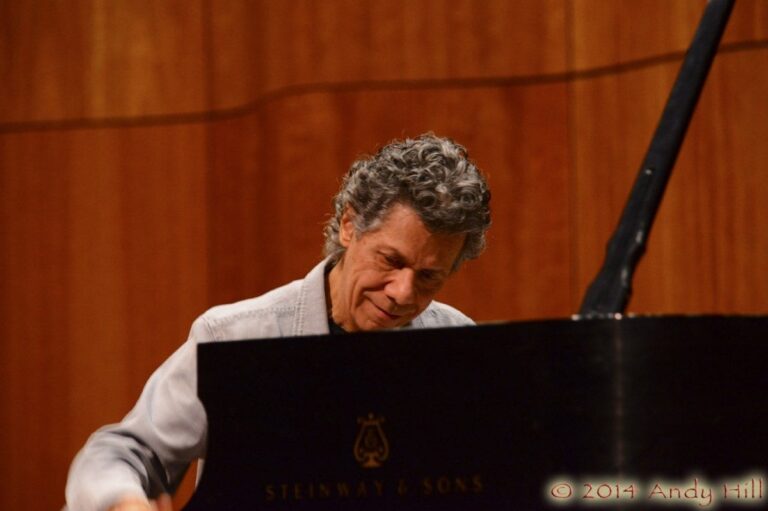
Chick Corea, a legend behind the keys, who fused jazz piano with numerous styles of music, has died. He was an innovator of jazz-rock fusion in the 1970s. Corea died at his home in Tampa, FL on Tuesday at the age of 79.
photo by Andy Hill
Best known for playing acoustic piano, Corea had a crispness to his sound, one that was easily identifiable, regardless of the genre. Whether he played classical, jazz, Latin or funk, Corea broke new ground throughout his career, especially with Return to Forever, his best-known band.
Corea played with Miles Davis and Herbie Hancock, met Stevie Wonder in the early 1970s at The Bitter End in New York City, and recorded an album with banjo virtuoso Bela Fleck, a testament to his dexterity as a musician. Additionally, Chick would use the strings inside the piano as a percussion instrument, influenced from his early years playing drums as a child. Corea also collaborated with Gary Burton, Pat Metheny, Al Di Meola, Christian McBride, a small sampling of an extensive list of musical peers.
photo by Andy Hill
Chick Corea wrote “Spain,” “500 Miles High,” “La Fiesta,” “Armando’s Rhumba” and “Windows,” all of which have become jazz standards. Corea was nominated for 60 Grammy Awards, taking home 23 over the course of his career.
Born Armando Anthony “Chick” Corea on June 12, 1941 in Chelsea, MA, he was introduced to piano by his father, a jazz trumpeter. In high school he performed in New York City, before attending music school at Columbia University and Juilliard, both of which he stayed at for only a short time. Corea remained in NYC to begin his music career.
Corea lived in Cambria Heights, Queens at 114-73 227th Street, and can be found on The Queens Jazz Trail Map, which was created as a part of Flushing Town Hall‘s Queens Jazz Trail Tour.
Corea’s technical facility on the piano was unparalleled and astonishing. He played together with other greats like Cab Calloway, Mongo Santamaria, Willie Bobo, Blue Mitchell, Herbie Mann, and Stan Getz, and he recorded with Donald Byrd and Dizzy Gillespie.
In 1967 he accompanied Sarah Vaughan with Miroslav Vitous and drummer Roy Hanes and in 1968 replaced pianist Herbie Hancock to play in The Miles Davis Band with bassist Ron Carter, saxophonist Wayne Shorter, and drummer Tony Williams — one of the best jazz ensembles of all time. He can be heard on Miles Davis’ iconic album “Bitches Brew.”
He formed Return To Forever and The Elektric Band, two groups that were on the cutting edge of the jazz fusion era that performed some intricate and memorable music. Corea was one of jazz’s great pioneers, helping to establish the synthesizer in fusion jazz. He received the NEA’s Jazz Master endowment in 2006.
https://www.youtube.com/watch?v=-R3RqcVKVB0
The family of Chick Corea shared the following statement on his Facebook page:
It is with great sadness we announce that on February 9th, Chick Corea passed away at the age of 79, from a rare form of cancer which was only discovered very recently.
Throughout his life and career, Chick relished in the freedom and the fun to be had in creating something new, and in playing the games that artists do.
He was a beloved husband, father and grandfather, and a great mentor and friend to so many. Through his body of work and the decades he spent touring the world, he touched and inspired the lives of millions.
Though he would be the first to say that his music said more than words ever could, he nevertheless had this message for all those he knew and loved, and for all those who loved him:
“I want to thank all of those along my journey who have helped keep the music fires burning bright. It is my hope that those who have an inkling to play, write, perform or otherwise, do so. If not for yourself then for the rest of us. It’s not only that the world needs more artists, it’s also just a lot of fun. “And to my amazing musician friends who have been like family to me as long as I’ve known you: It has been a blessing and an honor learning from and playing with all of you. My mission has always been to bring the joy of creating anywhere I could, and to have done so with all the artists that I admire so dearly—this has been the richness of my life.”
Chick’s family will of course appreciate their privacy during this difficult time of loss.
It’s always been my mission to keep the music fires burning bright for myself, my family and friends and people everywhere. It’s the reason why I continue to travel and play. I think it helps bring the quality of the environment up a notch – helps remind us who we really are and that life can be creative and therefore pleasurable.
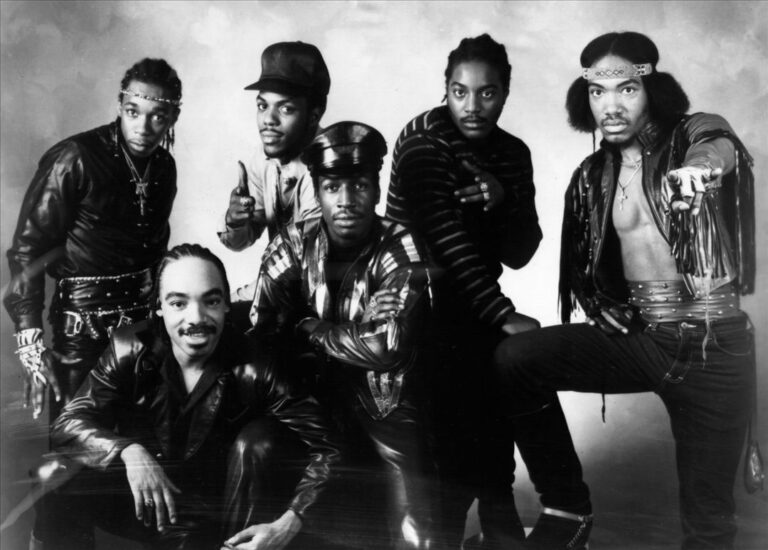
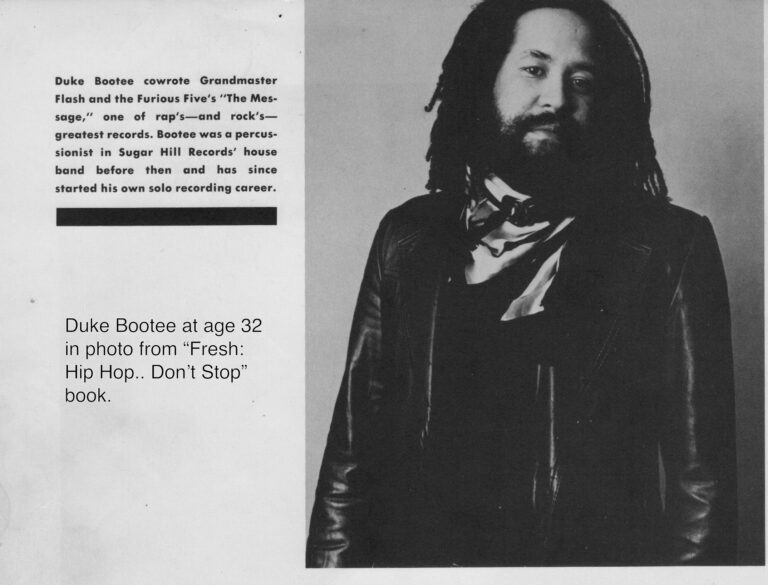
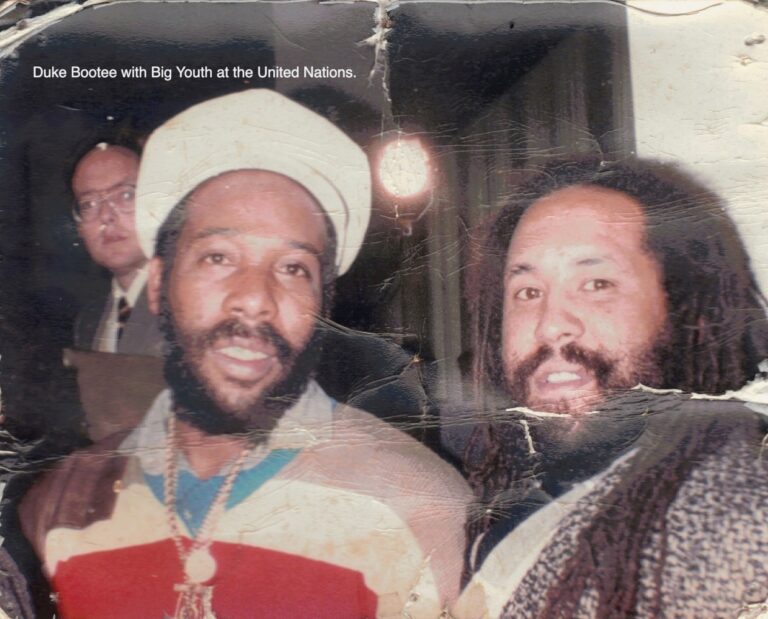
Hip Hop Legend, Edward Fletcher, known professionally as, Duke Bootee, has passed away from what has been described as “congestive heart failure.” The New Jersey native is recognized for helping pioneer consciousness and social-political messages within hip hop music, with his most famous credit being the composer of Grandmaster Flash and the Furious Five’s groundbreaking record, “The Message.”
The year was 1982 and Fletcher – a band member for Sugar Hill Records house band – had written and produced the track that would go on to revolutionize the hip hop genre. At the time, rap music was composed of mostly party tracks, mainly anthemic records. The record known as “The Message,” was original titled “The Jungle” by Duke Bootee and a demo presented to Grandmaster Flash and the Furious Five, who were not ecstatic about recording the song. They felt it was too serious, wanting to mimic the sound of Sugar Hill Gang’s party song, “Rapper’s Delight.” Melle Mel was eventually convinced to record the song by label executive, Sylvia Robinson. “The Message” went on to become a turning point in rap music.
The 1980’s were a time of great turbulence within Black communities as this singular effort and its subsequent popularity was the gateway to other rappers exploring the struggles of their neighborhoods through their music.
“The neighborhood I was living in, the things I saw — it was like a jungle sometimes in Elizabeth, New Jersey. Even though we lived in a nice area, I’d sit in the living room and watch things happening across the street in the park. The lyrics were sort of cinematic: I tried to hold a message up to society,” Fletcher revealed to The Guardian in 2013.
The record’s themes of poverty, social and economic problems and overall inner-city struggle was a turning point in rap music. It legitimized the genre when it was thought of as a fad by skeptics.
After recording a singular album and starting up a label, Fletcher spent his waning years away from the music industry. He spent time teaching and being with his family. He was 69 years old.
New York Dolls’ rhythm guitarists, Sylvain Sylvain died Wednesday after a two and a half year battle with cancer. On January 14, an official statement was released on his Facebook page.
As we mourn his loss, the statement quickly leans to celebrate his vast accomplishments. “While we grieve his loss, we know that he is finally at peace and out of pain. Please crank up his music, light a candle, say a prayer and let’s send this beautiful doll on his way.”
Egypt born Sylvain Mizrahi, was born on Valentine’s Day, 1951. He fled to New York with his family, living Buffalo and Queens. Syl went to high school in Queens, along with lead guitarist Johnny Thunders and drummer Billy Murcia.
Sylvain Sylvain was so punk, he, along with the Dolls, paved the way before punk-rock was punk-rock. New York Dolls founded in 1971, 50 years ago. Syl and the Dolls heavily influenced the underground movement. They were labeled as “one of the most influential rock bands of the last 20 years,” by British writer Colin Larkin (Encyclopedia of Popular Music). The Dolls went on to influence punk and rock icons that are common place in our music library, including the Sex Pistols, the Ramones and Kiss.
Patti Smith Group’s guitarist, Lenny Kaye, tipped his hat to Syl in the social media statement. “They [original Dolls] became a quasar in the rock firmament; embodying trash, glam, garage-to-punk, the ambisexual affirmation of music played louder.”
Sylvain’s role in the band was as lynchpin, keeping the revolving satellites of his bandmates in precision. Though he tried valiantly to keep the band going, in the end the Dolls’ moral fable overwhelmed them, not before seeding an influence that would engender many rock generations yet to come.
Lenny Kaye – American Guitarist, Composer
Despite this feat the band lacked commercial success. One thing that remains true, Sylvain Sylvain was apart of New York history. He embodied punk, fashion and influenced New York style.
The New York Dolls heralded the future, made it easy to dance to. From the time I first saw their poster appear on the wall of Village Oldies in 1972… the New York Dolls were the heated core of this music we hail, the band that makes you want to form a band. Syl never stopped. In his solo lifeline, he was welcomed all over the world, from England to Japan, but most of all the rock dens of New York City…
Still Syl. His corkscrew curls, tireless bounce, exulting in living his dream, asking the crowd to sing along, and so we will. His twin names, mirrored, becomes us. Thank you Sylvain x 2, for your heart, belief, and the way you whacked that E chord. Sleep Baby Doll.
One of the most notable music producers of the 20th century, Phil Spector, has died. Spector had been serving a 19-year prison sentence for the murder of Lana Clarkson, for which he was convicted in 2009. He died of natural causes in the California Health Care Facility, state prison authorities announced Sunday.
Born Harvey Philip Spector on December 26, 1939 in New York City, Spector’s family moved to Los Angeles in 1953, a few years after his father committed suicide.
Spector had number one records in three consecutive decades – 1950s, 1960s and 1970s, and had his first hit song while in high school with The Teddy Bears, “To Know Him is To Love Him.”
Soon after Spector would produce a wide range of hits – The Righteous Brothers “You Lost that Lovin’ Feeling,” “Unchained Melody,” “You’re My Soul and Inspiration,” The Ronettes’ “Be My Baby,” and The Crystals’ “He’s a Rebel,” among others.
Spector had a long association with The Beatles, producing their final album, Let It Be, and tracks “The Long and Winding Road” and “Get Back,” as well as the title track. He continued to work with John Lennon, producing solo work “Instant Karma” and “Imagine,” and George Harrison’s All Things Must Pass and 1971’s The Concert for Bangladesh.
A producer as well as creative director, Spector wrote or chose material for musicians, supervised arrangements, conducted vocalists and session musicians, and mastered all phases of the recording process. Spector would pave the way for genres of art rock, dream pop, shoegaze and noise music.
In addition to a litany of producer credits, Spector is credited with developing the “Wall of Sound” technique, which involved overdubbing scores of musicians for a fuller sound. The effect creator a “roar,” which Spector one described as “a Wagnerian approach to rock’n’roll: little symphonies for the kids.”
He last produced an album in 1980, with The Ramones’ End Of The Century. Spector was inducted into the Rock and Roll Hall of Fame in 1989. Of note, Spector played a cocaine dealer in the 1969 cross-country drama “Easy Rider” and appeared on the 1960s sitcom “I Dream of Jeannie.”
According to the Phil Spector biography “Wall of Pain,” he sometimes kept a gun on the studio recording console, fired a shot during an acrimonious recording session with John Lennon and pressed a pistol barrel to singer Leonard Cohen’s neck.
Spector has been in California State prison for the 2003 murder of actress Lana Clarkson. Spector said Clarkson’s death was an “accidental suicide” and that she “kissed the gun.” His first trial ended in a hung jury, but was later convicted of second-degree murder in 2009.
According to the California Department of Corrections and Rehabilitation, “Inmate Phillip Spector was pronounced deceased of natural causes at 6:35 p.m. on Saturday, January 16, 2021, at an outside hospital. His official cause of death will be determined by the medical examiner in the San Joaquin County Sheriff’s Office.”