Trevor George Smith Jr., better known by his stage name, Busta Rhymes, celebrates his 49th birthday today.
Born in Brooklyn in 1972, Busta Rhymes later moved with his family to Uniondale, Long Island where he and fellow MCs’ Charlie Brown, Dinco D, and others formed the hip hop group Leaders of The New School who released their first album, A Future Without a Past, in 1991.
It wasn’t until 1995 when Busta’s solo career kicked off. With the release of his debut album, The Coming in 1996 which was highly praised by the hip hop community at the time. Lead singles such as “Woo Hah!! Got You all in Check” ( which was later remixed featuring Ol’ Dirty Bastard) brought Busta Rhymes into the public eye, securing a #8 spot on the Billboard Hot 100.
Busta’s work carried into the 21st century, collaborating with famed hip hop producer Dr. Dre on his fifth studio album Genesis released in 2001. Instead of making a quiet exit from the scene like other MCs from the golden era of hip hop, Busta stayed relevant by continuing to work and collaborate with trending artists of the 2000s.
Continuing to keep the music interesting in 2020, Busta Rhymes delivered his 9th studio album Extinction Level Event 2: The Wrath of God which featured the single “Look Over Your Shoulders’ ft. Kendrick Lamar. For hip hop enthusiasts, “Look Over Your Shoulders” might be the perfect balance of old-school meeting new-school, and it never sounded so good.
2021 marks the 25th anniversary of Busta Rhymes’s debut full-length album, The Coming, which recently received a deluxe reissue.
Raising Hell, the third album from Run-DMC, remains the turning point at which hip-hop crashed through mainstream barriers and never left. Featuring the crossover smash “Walk This Way,” the 1986 blockbuster still sounds like a revolution unfolding in real time.
Up until Raising Hell, the rap juggernaut we know as Run-DMC was still in its building and breaking-down-doors phase. In 1986 that changed, and in a dramatic way. With their third long-player, the group had reached the mountaintop. It was the record that proved hip-hop wasn’t a fad.
Raising Hell marked an important and significant new era for the group working with another innovator, Rick Rubin (and co-produced by Reverend Run’s brother, Russell Simmons), they began to fully transition not only their own sound but the sound of the entire genre. Less live playing and a slicker, tighter sonic attack.
Of course, “Walk This Way,” which hit #4 on Billboard pop charts, saw the group team up with Aerosmith, with a music video that cemented Run-DMC as MTV idols, and both groups riding its wave to new heights.
Beyond “Walk This Way,” the album is full to the hilt with undeniable classic singles such as “You Be Illin,” “It’s Tricky,” “Peter Piper” and “My Adidas,” and no filler.
With hard-rock riffs, turntable scratching, itchy rhythms, hit singles, the trio’s invigorating raps and inseparable chemistry, Raising Hell signaled a new era for rap music, and a point of no-turning-back for the entire genre.
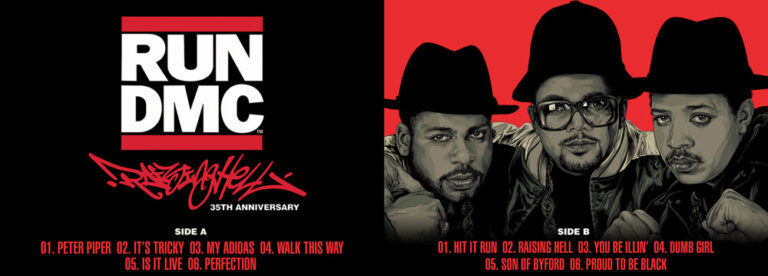
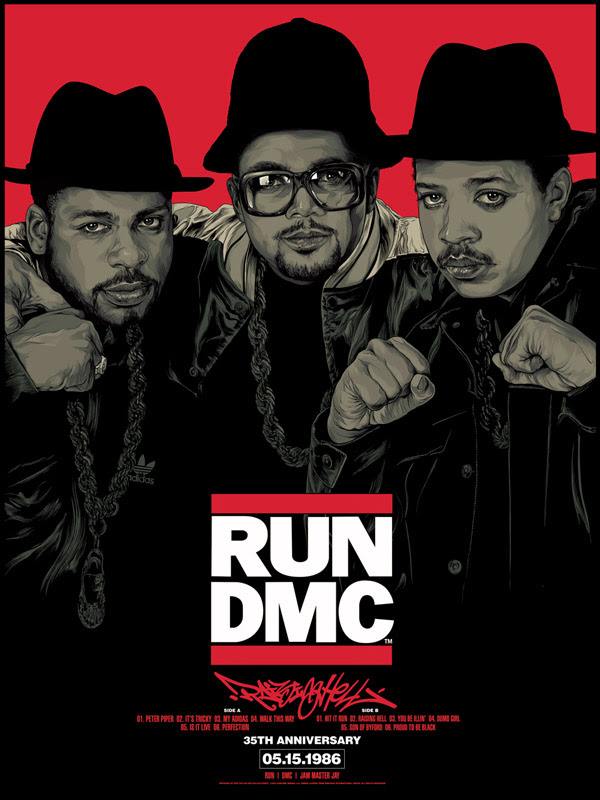
To commemorate the beginning of the Golden Era of hip-hop and the 35th anniversary of Raising Hell, artist Ken Taylor has created a limited edition poster, who cites his love for Run-DMC, saying “I grew up listening to Run-DMC so for me this was both a lot of fun and a great honour!”
Measuring 18″ x 24″ in an edition of 235, this 5 color screenprint is printed on French Cougar White paper and hand numbered, with a holographic sticker for authenticity. Each print costs $85, with framing options available as well.
The poster is available here at 2pm ET on Thursday, May 20.
The drill music scene has a certain connotation attached to it. The kind the public is accustomed to is violence laden, with expectations of braggadocious laced money talk. It’s been that way from the beginning and while we have seen success stories, there have been far more casualties of the antagonizing and deadly sub-genre.
Enter Jellz, the Brooklyn-bred emcee who embarked on his musical journey just over a year ago.
I don’t think drill has to be just violence. There’s a different part of the streets that isn’t tied to violence and that’s fast money. That’s more my speed. I think that it may deter some people, but not everyone. As an artist, I’m just trying to get the fans that like my style and aren’t looking for me to be someone else. Plus, I wouldn’t even consider myself a drill artist, I have so many vibes that I’m waiting to show, drill is just the outlet.
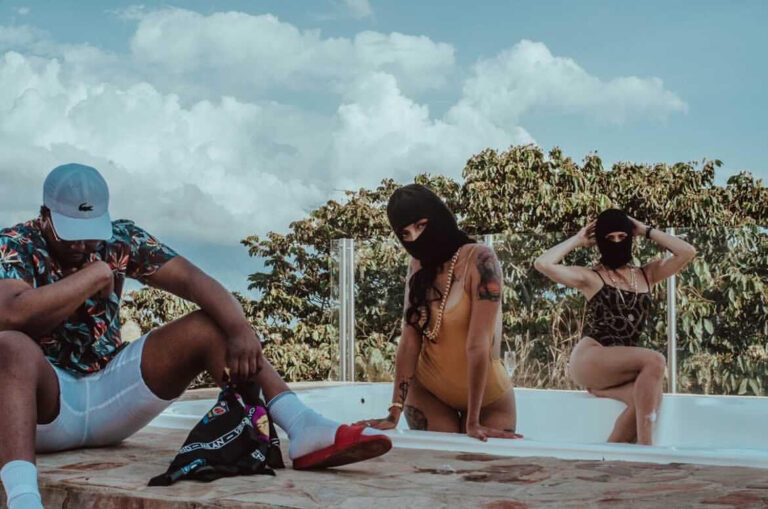
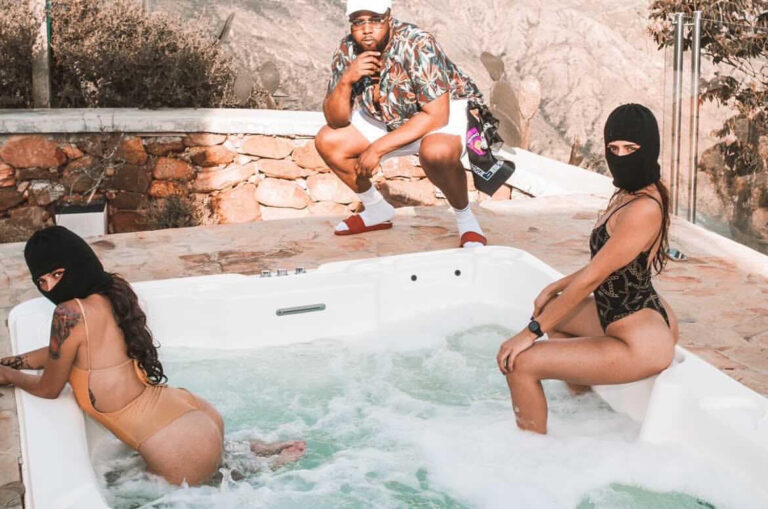
Shot while on vacation in Los Santos, Colombia, the music video for “Ghost (Freestyle)” sees the up-and-coming rapper bring much more flair than the drill scene is accustomed to. Drill rap music videos are often shot on location, in the neighborhoods where the artists have familiarized themselves with. Of course, many of those records are diss tracks or namedrop gangs who operate out of those areas. With no such ties, the Bedstuy-bred Jellz sees this as an opportunity to showcase his own vision as an artist.
I think that like everything else, anything that’s over done [or] repetitive gets boring. So, I wanted to switch up the scenery. How many up-and-coming artists are traveling on vacations to rollout a single and make videos there? Not too many. In order to separate yourself, you have to be a little different.
The “Bulls**t” rapper presents himself with a Jefe-like persona, as he spends the music video surrounded by local women in bathing suits and ski masks, insinuating promiscuity and danger. Jellz then proceeds to list the avenues in which he makes money, possibly making history as the first drill record where the artist admits to having worked a job.
Stuff like 20 in a box, did a like 30 on the stocks, don’t forget I had a job, if I make a M off rap I’m movin’ wock.
He accentuates his fast-money style of drill rap several times during the 1:48 video, rapping,
I really get to the money but hang with some demons, lurking, scheming, searching, fiending, they’ll do you for no reason.
And
We ain’t gotta hug a block, we ain’t gotta touch a rock.
If Jellz’s style of rap doesn’t put him at an advantage, his quality of work and transparency might just do the trick.
For the videos I shot in Colombia, I actually just went on a trip and decided to record a video there honestly. I just needed a vacation at that point, and I wanted to mix business and fun, so I did 2 videos out there. I don’t think it puts me at a crazy advantage, but visuals are important , so I do want to give the best quality that I can.
As much as violence and warfare sell, so too do tales of frivolous expenditures, when mixed with Jellz’s showmanship and earnestness, it may result in a very promising future.
If you’re a fan of pop-trap melodies with hard-hitting production, then “No Breaks” might be your song of the Summer. With pop being one of the most overcrowded, oversaturated genres, it’s easy for artists to be lost in the jumble of three-chord, autotuned melodies. Noah XO is making sure to be an exception, showing up to the game with quick, catchy melodic tunes that are sure to inspire listeners to join along in the chaotic mood swing of a ride that is Noah XO’s music.
“No Brakes is a special song for me, I wrote the chorus within 15 minutes of downloading the beat and the rest was history,” said Noah XO about his new song “No Brakes.”
Hailing from Saratoga Springs, Noah XO (real name Patrick Hayes) came up in the metal and hard rock scene, spending time in three distinct metal bands throughout Upstate New York. Hayes first started making melodic pop trap tunes under the name of Young Cobain, however, he soon changed his stage name to Noah XO to avoid controversy.
“I felt changing my name was the best way to turn a new leaf for me and my career,” says Hayes.
Throughout his musical career, Hayes’ tastes gradually shifted and progressed to a more melancholic pop-driven sound in the vein of crossover artists such as Post Malone and Juice WRLD.
This isn’t to say that Hayes lost his touch for the edge and immersive styles of alternative and metal. While listening to Noah XOs new song, “No Brakes”, you can expect to hear verses sprinkled with metallic undertones and punchy, catchy pop-punk-inspired hooks.
Founders Entertainment has announced the lineup for the 2021 edition of Governors Ball Music Festival. The NYC-based festival celebrates its 10th Anniversary and is set to take place Friday, September 24 through Sunday, September 26 at the Citi Field complex in Queens.
Working in close consultation with the City of New York, the festival will follow all state and federal guidelines mandated at the time of the event. The festival will mark the milestone with an incredible lineup of 60+ performing artists including Billie Eilish, Post Malone, A$AP ROCKY, J Balvin, DaBaby, Megan Thee Stallion, RÜFÜS DU SOL, Ellie Goulding, Leon Bridges, 21 Savage, Young Thug, Portugal. The Man., Burna Boy, Future Islands, Phoebe Bridgers, Jamie XX, Carly Rae Jepsen, Big Thief, Bleachers, and many more.
The 2021 Governors Ball Music Festival will celebrate the return of live music, and 2021 also marks the 10th anniversary of the festival, a major milestone for an event that originated as a shared pipe-dream between New Yorkers in their early 20s who wanted to see their city play host to a music festival on par with the world’s best live music events.
As more New Yorkers become vaccinated by the day, we’re proud to support arts and culture and welcome back Governors Ball and their fantastic lineup, including New York City’s own Princess Nokia, A$AP Rocky, and King Princess, among others
Bill de Blasio, Mayor
In 2021 Governors Ball will be moving to the Citi Field complex in Queens, NY, a site with incredible accessibility via multiple transportation options, including the MTA’s 7 train line, the LIRR, and limited parking for attendees who choose to drive to the event. The festival venue will be modeled upon the one of a kind 360° layout featured at the fan favorite and also Founders Entertainment produced The Meadows Music and Arts Festival
Three-day and single day General Admission and VIP tickets will be available to All Ages via GovBall.com beginning Thursday, May 6 at 12:00 PM ET.
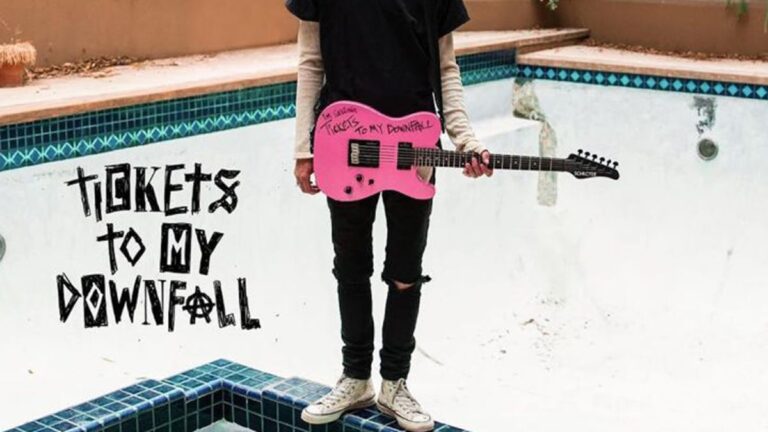
Kicking off on September 9th in Minneapolis, MN, Machine Gun Kelly will embark on a tour of the country. MGK will feature his latest hit album Tickets To My Downfall at venues for the first time since release, including fan favorites such as “Bloody Valentine” and “My Ex’s Best Friend.”
Starting Tuesday, April 27, tickets are available for pre-sale, then going on sale to the public by Friday, April 30. Everything regarding ticket sales can be found through MGK’s website, as well as the national tour dates and locations.
On September 13, Machine Gun Kelly will perform live at Central Park SummerStage, the only show of the tour to take place in New York.
The tour across the United States will come to a close on December 18, in the artist’s hometown of Cleveland, Ohio, at the Rocket Mortgage Fieldhouse.
Machine Gun Kelly’s “Tickets to My Downfall” 2021 Tour will include performances from special guests such as carolesdaughter, jxdn, and KennyHoopla.
Shock G, founder of West-coast hip hop group, Digital Underground, has passed away. Best known for the group’s breakthrough hit “The Humpty Dance” and his entertainingly provocative alter ego “Humpty Hump,” Shock G — born, Gregory Jacobs — also achieved belated notoriety for mentoring a young Tupac Shakur and co-producing his debut album 2Pacalypse Now.
According to his father, Edward Racker, Shock G was found dead in a Tampa, FL hotel room. The cause of death was unclear. He was 57 years old.
Born in Far Rockaway, Queens in 1963, Shock G would move to Tampa in 1980, back north to Queens, then return to Tampa where he worked as a radio DJ. From there, he headed west to Los Angeles and later Oakland, where he worked at a music store. It was there that he connected with Jimi “Chopmaster J” Dright from Berkeley, and Tampa hip-hop radio deejay Kenneth “Kenny-K” Waters to form Digital Underground in 1987. The hip-hop group made their mark with their hit single “The Humpty Dance,” which featured the prosthetic nose wearing Shock G rapping as his alter ego “Humpty Hump.”
Playing a key role in the rise of West Coast hip hop, Digital Underground was influenced by funk bands of the 1970s, and frequently sampled in their music. A distinct contrast to gangster rap, the unique style of Shock G and jam-session vibe to albums made Digital Underground a stand out group of the era. George Clinton would go on to co-produce “The Humpty Dance.”
In 1991, Tupac Shakur would link up with Digital Underground, going from dancer to roadie to band member. Tupac’s 1993 breakout single “I Get Around” was produced by Shock G, who also worked with Dr. Dre and Prince.
Shock G, Tupac and Digital Underground would appear in the 1991 Dan Ackroyd comedy, Nothing But Trouble, in a memorable court room scene that included a performance of “Same Song.”
A talented and versatile entertainer, Shock G was a jack-of-all-trades. He played drums and the keyboard, produced his own records, choreographed his own videos and was wildly entertaining on stage. Digital Underground’s rowdy live shows became a staple of the group’s appeal. The increased entertainment value that came with Shock G’s ingenuity allowed up-and-coming entertainers a chance to showcase their talent.
Here we see a young Tupac Shakur performing live on the Arsenio Hall Show alongside Shock G during the height of the group’s popularity.
Shock G’s genius wasn’t just in his production or his rapping abilities, He marketed the group and their debut album, Sex Packets, with several grandiose tales that added mystique and made fans wonder just what in the hell was going to be on this album. Claiming in an interview that the name of the album came from a sex pill that led to orgasms as soon as a capsule was placed on the tongue. Though fans and the media were left to decipher whether Shock G was pulling on over on them, it is clear in hindsight that he had a firm understanding of the entertainment industry and what would get the group over the hump.
Tributes were shared on Twitter from Shock G’s peers and fans.
RIP Shock G, psychedelic rap pioneer, one of the 1st & best to translate funk into hip-hop. A high concept genius, who discovered 2Pac & invented sex packets. Our Groucho Mark: raunchy, hilarious & weird. Burger King bathrooms would never be the same. Humpty Hump lives forever 🥸 pic.twitter.com/F3rJtlDdh2
Rest In Peace Shock G. Also known as Humpty Hump. Also known as the frontman of the legendary group Digital Underground. Brought the world 2Pac, and produced his hits “I Get Around,” “So Many Tears” and many more. Pivotal artist & producer. Thank you for everything. 💔 pic.twitter.com/Ua2Nq4vY3z
The official plans for the memorial services for DMX have been announced. Arrangements for the event were revealed in an Instagram post from the deceased rapper’s official page, revealing plans for two separate ceremonies.
A “Celebration of Life Memorial” is scheduled for Saturday, April 24 at 4 pm, with a “Homegoing Celebration” planned for the following day at 2:30 pm. The former reportedly will be held at Brooklyn’s Barclays Center.
https://youtu.be/N9i8Usa21o8
The general public will be able to live stream both events with Saturday’s “Celebration of Life Memorial” set to stream live on Youtube with the “Homegoing Celebration” to air and stream on BET.
Attendance to both events will be restricted to only close friends and family.
DMX passed away on April 9, 2021 in New York after suffering from a heart attack. He was 50 years old.
The rapper’s death was met with an overwhelming response from fans and peers of the Grammy-nominated emcee, with both groups testifying to the rapper’s overwhelming influence in the world of hip hop and beyond. From his raw, grimy, and heart-felt delivery, to his complicated yet authentic public persona, DMX lived his life publicly representing the struggles of those from inner-cities. This weekend, fans of the hip-hop legend will be able to pay their final respects.
In our current social-political climate, marijuana use and the much celebrated 4/20 are no longer stigmatized. For what has always been recognized as a happy-go-lucky psychedelic, possession of marijuana had always carried serious implications, with consequences ranging from a felony to even serious jail time, even for something as small as a dime bag. However, with hip hop being an outlet for the disenfranchised to voice their frustrations, rap and marijuana have always maintained a symbiotic relationship.
As a matter of fact, the parallels between the two are obvious, with the merits of both being lauded by the public, despite higher forces turning their nose up and refusing to give each its proper due. Take for instance that despite its popularity within pop culture and beyond, marijuana didn’t begin its march towards legalization until 1996, when California voters passed Proposition 215, legalizing medical marijuana in the state. Notably, hip hop shares a similar story of adversity. In fact, The genre’s official birth date has been accepted as August 11, 1973, and in ensuing years, proceeded to spread.
Hip Hop’s Plight
Especially with artists like Kurtis Blow, the Beastie Boys, and Run-DMC pioneering the genre and selling millions of records along the way, it was clear that hip hop — even in its infantry — resonated with the consumers and yet, continued to be shunned at major award shows. In fact, the first Grammy wasn’t awarded to a hip hop artist until 1989 (to Will Smith and DJ Jazzy Jeff) in a non-televised portion of the ceremony. The category for “Best Rap Album” wasn’t awarded until 1995 and even then, only rappers that maintained a pristine image were recognized for their efforts (This eventually led to Jay-Z boycotting the 1999 Grammy Awards for not having DMX among the nominations, despite releasing two platinum albums the prior year).
And so, the two chugged along on their way to widespread acceptance. Hip hop artists continued to sing (or rap) the praises of weed in all its forms, while marijuana returned the favor by acting as anesthesia towards the hardships that rappers (most of whom hailed from impoverished and violence-stricken communities) faced. In the ensuing years, each respective entity has made headway in the search for acceptance. Hip hop is now the world’s most popular genre and marijuana is legally accessible in 17 states and decriminalized in another 13.
Best of Hip Hop and Marijuana
While the concurrent rise in popularity and general acknowledgment is no coincidence. Safe to say, hip hop’s influence within pop culture is rampant, and surely played a role in the legality of marijuana throughout the country. As marijuana sales are now legally profitable, hip-hop artists have continued the association. Moreover, rap stars the likes of Xzibit, Snoop Dogg, Master P have all invested in or started their own marijuana dispensaries.
So, on 4/20, honoring the prolonged, fruitful and complicated history between hip hop and marijuana, here are 20 rap songs that celebrate the drug and its usage. Even if those in positions of power have been quick to assert it’s flaws and slow to acknowledge its benefits.
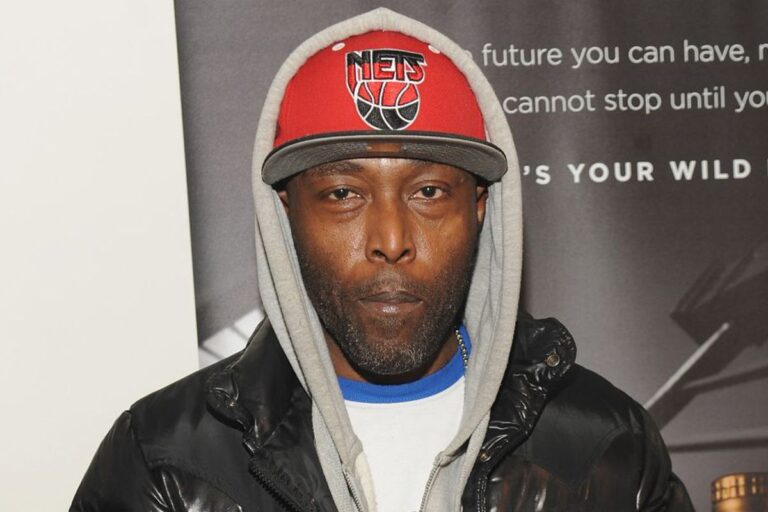
Less than one week after posting a concerning tribute video to DMX from a hospital bed of his own, rapper, Black Rob, has passed away, with speculation of the cause of death being kidney failure.
photo via Getty Images
Much like DMX’s passing, Black Rob’s death is another blow to hip hop, continuing a run of premature casualties of once famed rappers. It was only April 11 that a bed-stricken Rob looked worse for the wear in an Instagram video posted to his account, in which he paid his respects to DMX
“I don’t know, the pain is crazy, man. It’s helping me out though, it’s making me realize I got a lot to go,” he said. “I feel everything about X. X was positive. Love to X,” the former Bad Boy Records emcee shared as he struggled for words.
That video began speculation amongst fans about the state of the Harlem emcee’s health, with concerns being raised over his feeble appearance and his faint sounding voice. In another video posted to Instagram the “Whoa” rapper shared that he was out of the hospital and shed light on his recent health concerns,
“Oh man, I’ve been dealing with this for five years. Four strokes … I don’t know what to tell you man. Shit is crazy. The shit is hard,” he said. “I don’t got no house to live in — except maybe an apartment. Me and my man be trying to get together. I’m telling you man, this shit is strange. It’s hard, you know what I’m saying?”
He continued,
“I don’t know what the people want to do, what the people going to say. I need some rest, man. Really, man. I need some rest. My side is killing me.”
Amidst the rising interest in Black Rob’s condition, producer, Mike Zombie, set up a GoFundMe account with a goal of $50,000 to help Rob “find a home, pay for medical help & stability during these trying times.”
Sadly, it was all for naught, as Rob succumbed to his reported kidney issues on April 16, with the news of his passing being shared by friend and former Bad Boy Records label-mate, Mark Curry.
Curry announced Rob’s death in two videos posted to his Instagram account, and Variety later confirmed his passing through additional sources.
“I don’t know where to begin this,” “But I thank everybody for the donations. Rob passed away about an hour ago.”
In a second video, Curry revealed that he was with the rapper when he died.
“Rest in peace to my brother. I was there with him. I was there with him,” Curry said.
https://youtu.be/Xpn2rj2HZJY
There was an outpouring of love from fellow entertainers as well as rappers, as Rob’s brief but successful run as a successful mainstream artist left him revered and loved.
Black Rob had a clean heart in a dirty game. I’m hurting I wish I got to speak to him one last time at least. Don’t tell the world how much you care about a person tell the person how much you care about them while they are accepting what the world has to offer. 🤲🏾