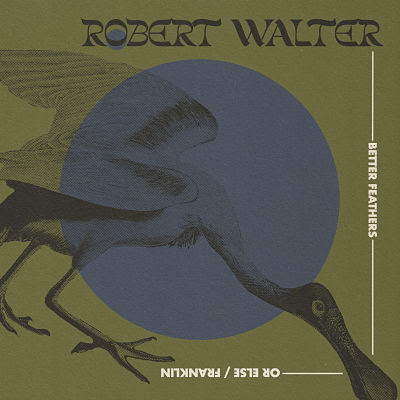
Robert Walter shares “Or Else” and “Franklin,” the first two songs from his Better Feathers series, in which the acclaimed keyboardist rolls out six new “digital 45s” via Royal Potato Family. Each release will feature two singles for a total of 12 tracks to be issued from now through October.
Rather than making the more obvious quiet, introspective music, the focus instead turned to my nostalgia for sweaty bars and crowded dance floors. Somewhere during the process, tracks began floating back and forth to friends like Stanton Moore (Galactic), Craig Brodhead (Turkuaz), Chris Stillwell (The Greyboy Allstars), Jake Najor, John Kimock and Mike Gordon (Phish) to add their own parts remotely.
Robert Walter
Written and recorded entirely from home during quarantine in 2020 and 2021, Robert immersed himself in the writing and recording process as a way to remain creative and fend off boredom while faced with a year of no live shows. According to Walter, the title Better Feathers comes from the idea of birds molting — shedding their old, worn-out feathers for new, better ones.
“Or Else,” is the first of the two tracks released in the series. The song features Robert Walter‘s frequent collaborator, New Orleans drummer Stanton Moore and Turkuaz guitarist Craig Brodhead. “It was influenced by early ’80s dance records by artists like Grace Jones and Chic,” says Walter. The clean melody is inspired by dub melodica explorations and the breakthrough work of Augustus Pablo to create “pure topical funk and summer vibes.” The tune was the first track Walter wrote and curated for the sessions.
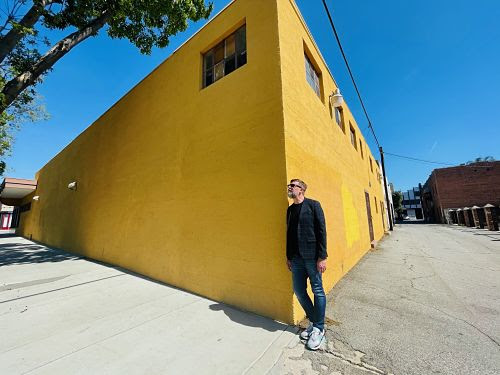
Robert Walter – Photo by Julia Mordaunt
It was time to shift gears and think of the situation as a positive and not a negative; an unexpected abundance of time to emerge with something of value… The music is influenced by the methods. In the absence of working with a group, the focus turned to overdubbing layers of sound. Inspirations were found by digging into late 70s NYC dance music, dub reggae, archaic blues, Krautrock, jazz, and funk.
Robert Walter on his creative process during COVID-19 quarantining
The “b-side” is “Franklin” named after Walter‘s elementary school alongside memories of his younger self. Once again, Stanton Moore joins on drums, adding an especially spare and funky beat.
Photo by Rene Huemer via robertwalter.com
There was a certain time during the mid-’70s where it seemed like everything in pop culture was funky. Saturday morning cartoons, television commercials, and most of the music on the radio had absorbed (and sometimes bastardized) the sounds of James Brown, Sly Stone, and the Jackson 5
Robert Walker
Robert Walter’s BetterFeathers Digital 45 Release Schedule
The Better Feathers series continues in late July with the release of “Saucerman” featuring Phish bassist Mike Gordon and “Devices of Similar Size” with Stanton Moore once again on drums. Find the schedule below:
"Saucermen" (w/ Mike Gordon)
"Devices Of Similar Size" (w/ Stanton Moore)
Release Date: July 21, 2021

"Bloodstar" (w/ Craig Brodhead)
"Better Feathers" (w/ Stanton Moore)
Release Date: August 18, 2021

"Security" (w/ John Kimock)
"It's Not What's"
Release Date: September 1, 2021

"Wet From The Press" (w/ Jake Najor)
"Feeder, Doctor, Talker" (w/ Jake Najor & Chris Stillwell)
Release Date: September 22, 2021

"Hellhound" (w/ Chris Stillwell)
"Loomis"
Release Date: October 27, 2021
Until then, isten to and share “Franklin” and “Or Else” below on his Spotify as well as other streaming services accessible HERE
To celebrate the 4th of July in 1989, the Grateful Dead decided to heed the advice of their song “Truckin’” and return to Buffalo. By now, it was near tradition for the band to celebrate our nation’s independence with summer tour shows in the Northeast. Starting with a show at the same venue, Rich Stadium, for a 4th of July gig in 1986, the Dead followed this up with another one in 1987 in Foxboro, MA.
In classic Grateful Dead style, for 1989, they mixed it back up, with a summer run of shows that began at Foxboro two days prior and landed back in Buffalo on the 4th. It’s a well-crafted and enjoyable show that sees the band in fine form, all fully engaged, cohesive, and perhaps most importantly, healthy. In 2005, it was officially released on DVD, with an accompanying CD soundtrack, appropriately titled Truckin’ Up To Buffalo. Although, oddly, the title track never makes an appearance tonight.
For an opener, the Dead bring out an old faithful in “Bertha” that sparks the ignition at Rich Stadium this evening. Jerry Garcia adding a little extra “4th of July” mustard to the lyrics and the band easily toying with the reentry at one point only enliven the crowd further. This is succeeded by “Greatest Story Ever Told,” with fellow guitarist Bob Weir taking over the controls, admirably backed up, as usual, by Brent Mydland both vocally and instrumentally on electric piano. In the pivotal three-spot tonight, the band reverts back to another old standby, their signature take on the folk classic “Cold Rain And Snow.”
Weir then tags back in for another cover tune. This time it’s the band’s take on “Walkin’ Blues,” an old blues standard that was reintroduced to their live shows a few years prior. A lively Hammond organ solo from Mydland that’s supplanted by slick work from Weir on guitar along with his signature vocal stylings highlight this one. Garcia seems to take great delight in playing the “Row Jimmy” that follows, as made evident by the smiles that accompany two poignant guitar solos and a flawless vocal delivery. It’s a beautiful rendition from an era of the band’s history that produced a lot of them.
The Dead then go back to their vaunted bag of “covers,” this time going with a choice version of the Bob Dylan-penned “When I Paint My Masterpiece.”
The Dead go back even further for the next song, “Stagger Lee,” their electricized cover of another folk song that dates back to the early 20th century. To close out the rest of the first, they return to their immense catalog of original material, starting with “Looks Like Rain.” Weir tackles the emotional vocals with ease while Garcia tacks on some more transcendent guitar fills for good measure. A rowdy “Deal,” accentuated by more frenetic work from Garcia on the fret board, then caps off the first set, with the Rich Stadium crowd vociferously making their appreciation known.
To ring in the second set for Buffalo’s 4th of July celebration in 1989, the Grateful Dead rip into an immaculate “Touch Of Grey.” The pulsating bass line deployed by Phil Lesh that doesn’t quit and more nimble guitar play from Garcia gets the communal engine revved backed up again in a big way.
After a quick pause, “Man Smart (Woman Smarter)” keeps the line moving. Brent Mydland steals the show on this one, lending both his signature raspy singing tone and some dazzling work on the organ that flavor the song perfectly. The Dead then go back into the earlier pages of the songbook again and slow things down a touch with “Ship Of Fools.” Some exquisite rhythm guitar play from Weir and fully engaged vocals on Garcia’s end seem to give this “Ship” a little extra edge to it.
But instead of a full stop afterwards, the Dead effortlessly slink into an instrumental section of “Playin’ In The Band” before taking it out for one verse, merely serving as a reprise. Perhaps remembering they opened the previous show with PITB two days ago at the Foxboro show, the proverbial ripcord is deployed and the band effortlessly shifts gear into a different classic, “Terrapin Station.”
Like it’s done so many times before, the percussive heavy outro of “Terrapin” slowly gets consumed by drummers Bill Kreutzmann and Mickey Hart and the “Drums” portion of the evening ensues. They leave no stone unturned, unleashing an impressive arsenal of percussive agents from around the world, including an electronic-sounding steel drum and an African talking drum.
Some heavy duty kaleidoscopic imagery accompanies their playing on the video, as the rest of the band begins to reenter the fray for the “Space” portion. Eventually, a familiar tone breaks through, a quasi-trumpet sound, courtesy of one of Garcia’s many guitar filters. This paves the way for the delicate “I Will Take You Home,” sung passionately as always by Mydland, that’s juxtaposed wonderfully with the scorching take of “All Along The Watchtower” that follows.
The end of the second set wraps with another couple of tried and true Grateful Dead live staples. “Morning Dew” allows Garcia to drop a few more staggering guitar solos, which he does with ease in conjunction with some truly inspired and emotional singing. “Not Fade Away” then gets the rest of the band, and the Buffalo faithful, singing together one last time to close out the set.
The crowd continues to serenade the band through the encore break which ends once “U.S. Blues” emerges, a fitting closure to this 4th of July show, and just like they had done three years ago as well.
Both full audio and video of this vintage Dead show can be found below. Happy birthday, America!
Grateful Dead Rich Stadium – Buffalo, NY July 4th, 1989
Set 1: Bertha > Greatest Story Ever Told, Cold Rain And Snow, Walkin’ Blues, Row Jimmy, When I Paint My Masterpiece, Stagger Lee, Looks Like Rain > Deal
Set 2: Touch Of Grey, Man Smart (Woman Smarter), Ship Of Fools > Playin’ In The Band Reprise > Terrapin Station > Drums > Space > I Will Take You Home > All Along The Watchtower > Morning Dew, Not Fade Away
With his 2004 book, Elevator Music, Joseph Lanza laid out a lovingly comprehensive history of the much-maligned, mood-altering musical genre also known as Easy-Listening. Lanza’s treatise was ballsy in that it made the entirely logical connection between the background music pumped into shopping malls, restaurants and, yes, elevators, and the soothing experiments of ambient artists like Brian Eno and The Orb. Now with Easy-Listening Acid Trip, Lanza is digging deeper into a very specific niche of moodsong. He is showing how the psychedelia-informed hits of The Beatles, Donovan, The Rolling Stones, The Doors, Procol Harum, Jefferson Airplane and others inspired easy-listening arrangers to reinterpret them as instrumentals that were sometimes more surreal than the originals.
But first, a quick primer on easy-listening music. Easy-Listening was a style most popular in the ‘50s – ‘70s, when large orchestras recorded lush instrumental versions of the vocal standards of the ‘30s and ‘40s and, ultimately, the hits of the day. The most obvious trademark was their soaring string sections. It was something that gave name to some of the idiom’s most popular artists, like the 101 Strings and the Percy Faith Strings, which also launched one of the most popular formats on FM radio.
Lanza’s Easy-Listening Acid Trip is a journey through the countless reimagings of psychedelic pop standards by the swamis of orchestral schmaltz – from Mantovani and Henry Mancini to Ray Coniff and Jackie Gleason (yes, the mucho excitable guy from The Honeymooners TV show).
Lanza kicks-off with a chapter providing a pocket history of easy-listening and a delineation between the two types of psychedelic music: the concise whimsical, effects-laden pop songs (ones which ready-made for good moodsong remakes) and the aggressive, jamming of bands like the Grateful Dead (that were not). The author then dedicates individual chapters to the different psych tentpole that arrangers took to reimagining. This includes St. Pepper’s Lonely Hearts Club Band, “A Whiter Shade of Pale,” “Light My Fire,” The Lemon Piper’s “Green Tambourine,” Donovan’s slew of mystic hits and the musical Hair. There’s also a chapter dedicated to that brief shining moment in 1968 when easy-listening artists like Paul Mauriat and Mason Williams scored chart-topping hits with their own originals, “Love Is Blue” and “Classical Gas.” Lanza also shows how the exotica instruments and arrangements of easy-listening ultimately infiltrated original rock on string heavy offerings like Love’s orch-pop masterpiece, Forever Changes, and The Left Banke’s “baroque pop” hit “Walk Away Renee.
Lanza spends a good deal of time on the Hollyridge Strings, Capitol Records’ own studio orchestra. They waxed well over a dozen “Songbook” albums smoothing out the hits of their psych-minded label mates, The Beatles and The Beach Boys, which included haunting versions of “Strawberry Fields Forever,” “I am The Walrus” and “Good Vibrations” to name a few. He also tells how the otherwise hard rocking Lemon Pipers came to record psych-pop’s most confectious song, “Green Tambourine,” and the saga behind 13 easy-listening versions, from the likes of Trombones Unlimited, Mariano and the Unbelievables and even Lawrence Welk.
Read (and YouTube your ears through) 16 elevator-informed versions of “Light My Fire,” most of which took the lead from the bossa nova flavored cover by guitarist/singer Jose Feliciano rather than the original. Lanza also details the 21 lush interpretations of Scott McKenzie’s “San Francisco (Be Sure to Wear Flowers in Your Hair)” by 101 Strings, Big Ben Hawaiian (cool steel guitar on this one!), Italy’s Caravelli and his Magnificent Strings, Living Guitars and more.
My favorite chapter is “A Wail of Illusion.” This explores how the sitar/raga fad came to hugely color easy-listening. This started right after Beatle George introduced the Indian stringed instrument into pop with the 1965 recording of “Norwegian Wood (The Bird Has Flown).”
Two men, English session guitarist Big Jim Sullivan and American Vinnie Bell, were responsible for the finest (and I mean that!) sitar-driven covers around. Big Jim left a lucrative recording and TV gig with crooner Tom Jones to record the album Sitar Beat (1967), then coronate himself Lord Sitar on the self-titled follow-up. On them, Sullivan adds an Eastern twang to covers of psychedelic pop stands like “A Whiter Shade of Pale,” Donovan’s “Sunshine Superman,” “I am the Walrus” and “Eleanor Rigby.”
Brooklyn-born Vinnie Bell was not only a monster session guitarist but an inventor, who played an important role in the creation of the Danelectro 12-string electric and the Coral Electric Sitar, still the choice of prog musicians like Yes’ Steve Howe. His 1967 album, Pop Goes the Electric Sitar also covers “Eleanor Rigby” and Bell would also lend his sitar talents to other artists’ covers of “Lucy in the Sky with Diamonds” and “Within You, Without You.” More widely known are his sitar star turns on chart-toppers hits The Lemon Pipers’ “Green Tambourine,” B.J. Thomas’ “Hooked on a Feeling,” Redbone’s “Come and Get Your Love,” Freda Payne’s “Band of Gold” and The Box Tops “Cry Like a Baby”.
Lanza also serves up numerous hilarious anecdotes. One regards how just weeks after the Strawberry Alarm Clock released their hit, “Incense and Peppermints,” Muzak recorded an instrumental version by Charles Grean and His Orchestra, one that kept the electric guitar but re-contoured the tune with harps, horns, flutes, a tambourine, and other effects for offices, supermarkets, and of course, elevators. My favorite tale may be from 1989. This is when gonzo rocker Ted Nugent made an offer/publicity stunt to buy Muzak for $10 million, with a promise to wipe out its entire library of master tapes. Muzak responded by recording an odiously fey version of his psychedelic whirlwind, “Journey to the Center of Your Mind,” with woodwinds and a sonic meadow of strings replacing his screaming guitar. Point and set, Muzak!
If you are a musician who wants to learn more, especially about arranging, you should check out this genre, with Lanza’s two great books serving as your guide.
You think easy-listening is not worth your time?
Maybe John Lennon can change your mind.
In the early ‘70s, Lennon disparagingly called his partner Paul McCartney’s solo work “Muzak.” But by 1980, in one of his final interviews, he was humming a different tune.
When asked about his favorite listening choices at the time, Lennon said: “Muzak or classical. I don’t purchase records. When I was a housewife, I just had Muzak on, background music, because it relaxes you.”
If it’s good enough for him, it should be good enough for you.
On Saturday, June 26, 2021, it was game/set/match with Eggy and Pigeons Playing Ping Pong at Westville Music Bowl.
Eggy came to play, dressed as tennis players who jogged a lap around the floor of the Bowl. Once onstage, the group ripped off their breakaway pants as seen below. For a band from New Haven, this was a huge show for them, especially since Dani Battat (keys/vocals) was brought to Westville to watch tennis matches as a kid,
Pigeons continued their hot streak of live performances, closing their first set with Springsteenâs “Born to Run” inside of “King Kong.” Guitarist and Connecticut local Tim Palmieri joined the band in the second set for a cover of Hendrix’ “Fire.”
Pigeons Playing Ping Pong Setlist
Set 1: Henrietta > Lost In Line, Somethinâ For Ya > Time To Ride, Sorcerer, Poseidon, Sail On, King Kong > Born To Run > King Kong Set 2: In The Bubble, Lowdown, Ocean Flows, Sunny Day, Fire*, Kiwi > Burning Up My Time Encore: Offshoot * w/ Tim Palmieri (Kung Fu , soon to be Lotus) on guitar
The 2021 New York State Blues Fest, a free concert at the State Fairgrounds in Syracuse over Thursday June 24 till Saturday June 26 in Chevy Court. Downtown Syracuse’s Clinton Square hosted Dumpstaphunk at the last Blues Fest held in June 2019.
Artists included Larkin Poe, Robert Randolph & The Family Band, The Fabulous Thunderbirds, Carolyn Wonderland, Vanessa Collier, Ghost Town Blues Band, Ray Fuller & The Bluesrockers The Gabe Stillman Band, The Ripcords, Miller & The Other Sinners, Diana Jacobs Blues Band Jane Zell & The Zelltones Colin Aberdeen & Max Eyle Hot Dogs & Gin Chris Merkley, Mark Nanni and Ryan Holweger.
County Executive Ryan McMahon helped kick things off on Thursday for one of the Northeast’s largest free festivals. Southern Pennsylvania power trio Gabe Stillman Band and Robert Randolph and the Family Band opened the first sounds at Chevy Court in over a year, with Stillman Band performing a great cover of Bill Withers “Friend of Mine.”
Robert Randolph and The Family Band helped bring the State Fair experience to all in attendance. The family band has Lenesha Randolph on vocals, Ray Ray Holloman on guitar Stevie Ray Ladson On Bass, and Rochester native Levi Bennett on drums.
Stevie Ray Ladson, Lenesha Randolph, Robert Randolph
The group periodically changed instruments during their soul set performance. Lenesha Randolph was quoted “It was great to be out in the land of the living. Such a great time, thank you guys for welcoming us.”
Local Solvay saxophone player Dunham Hall got the call at 5:30 to join Randolph’s set at 7PM. He showed up and laid down saxophone for an extended cover of Sly and The Family’s Stones “Thank You (Falletinme Be Mice Elf) Again”.
Levi Bennett Ray Ray HollomonnRobert Randolph Lenesha Randolph
Robert Randolph spoke with NYS Music at the Jus Sum Jazz lounge following his show:
Matthew Romano: It’s good to have you guys back in New York State performing live. What memories come to mind when you play Upstate?
Robert Randolph: It’s crazy how many iconic shows have happened up here. One of the first shows I played with The Word was at a small club in Syracuse in 2000. The Word is playing at Tipitina’s at Jazz fest in New Orleans this year. It’s a vibe.
MR: This jazz club has a New Orleans vibe to it.
RR: Yea I like it. It’s reminds me of a modern day juke joint.
MR: What shows have you attended in New York State that made an impact?
RR: The first Phish show I saw was at Madison Square Garden. I remember it was a blast but it also humbles you. It’s one of these things where It all becomes special. I go to the Dicks shows in Colorado too.
MR: What shows of your own are on the horizon in New York State In 2021?
RR: I’m playing with The Word at Levon Helm Studios in Woodstock. That’s gonna be special, def come check that out.
Robert will be performing at the Gorge Amphitheater with Dumpstaphunk and Dave Matthews Band Labor Day weekend when live music continues at the Fairgrounds.
Vanessa Collier from Dallas took on a James Brown-like stage presence on Friday night at the Fairgrounds. She was out front counting on the one in between playing funky arrangements on lead saxophone.
The Fabulous Thunderbirds from Austin TX helped keep that legendary blues smoke going to close the night. Attendees in the crowd reflected on Stevie Ray Vaughn’s New York State Fair performance in 1986. The Austin, TX guitarist played “The Sky is Crying” while the rain came down upon the old grandstands. Vaughn and Double Trouble walked a tightrope at Miller Court in 1989 as well.
Saturday afternoon’s set by The Ghost Town Blues Band from Memphis was definitely channeling older spirits. Gregg Allman’s chilling composition “Whipping Post” was taken on by the ensemble. Matt Isbel’s whiskey gravel soaked vocals helped resurrect Allman’s sound. Trombonist Suavo Jones traded notes off Cedric Taylor’s howling B3 Hammond to boot.
Perhaps this was a nod to the 50th anniversary of the Allman Brothers Band closing the Fillmore East. Their final performance on June 27, 1971 found the Allmans playing until 8AM. 2016 NYS Blues Fest artist Butch Trucks reflected “I remember Duane (Allman) walking in front of dragging his guitar while i was sitting there completely burned and he said “Damn its just like leaving church”
Suavo Jones
Rebecca and Megan Lovell from Georgia performed as part of Larkin Poe to close the weekends music. They are descendants of tortured artist and genius Edgar Allan Poe. The duo and their band treated the crowd to songs off their 2020 album’s “Self Made Man” and “Kindred Spirits.”
The title tracks lyrics resonated on the blues soaked audience “I was down and out, now I’m up again When I roll the dice, everybody wins Like a cannonball, moving down the track, Baby’s on her way, she ain’t coming back”
New York Blues Fest has made its way back across the land helping ease everybody’s same old blues on a different day.
Alan Evans, a prolific musician from Buffalo, has just released a new album Love & Truth, with Crushed Velvet and the Velveteers, which he claims as his guitar player alter ego. The album is released by Vintage League Music, one of Evans’ endeavors that reflects his passion for Soul & Funk music.
Alan Evans is the multi-instrumentalist and co-founder of acclaimed band Soulive, that has been performing together since 1999. In Crushed Velvet and the Velveteers, Evans is able to focus on his guitar personality rather than being a drummer like in Soulive. His astounding talent is apparent in the new album Love & Truth, which evokes the classic 60s and 70s Soul & Funk sound of Memphis, Chicago, Detroit, and NYC.
The album features an all star line-up of acclaimed guest vocalists including Kim Dawson (Pimps of Joytime, Matador Soul Sounds), Saundra Williams (Sharon Jones & The Dap-Kings, Saun & Starr), Lyle Divinsky (The Motet), Yanick (After Funk) and Brother GoodLove (Aztec Sun). Evans handles guitar, bass and drums with guests such as Darby Wolf & Neal Evans on keys and the horn section from the BT ALC Big Band.
Love & Truth is an album of outstanding musicianship, powerhouse vocal performances but most of all classic songwriting which oozes authentic soul. It encompasses quality funk music that is a blessing to all ears. The smooth guitar lines mixed with the classic drum rhythms makes it an unforgettable album guaranteed to soothe the soul. It blends a retro sound with a modern sensibility, strong songwriting and powerhouse vocals.
Love & Truth from Crushed Velvet and the Velveteers is available now at all good record stores, all digital streaming platforms and via the Vintage League Music.
Motörhead are one of the great metal bands of legend, with a long history of playing multiple gigs throughout the State dating back to their first US tour in 1981: New York City, Poughkeepsie, Rochester, Syracuse, Buffalo – these cities saw numerous Motörhead gigs in the years the band toured America. Not Albany.
Oddly, this 2000 gig at Northern Lights remains the only headline show Motörhead ever played in the Albany/Saratoga area, EVER, in 40 years of being a band, almost 35 years of touring America. I don’t count Poughkeepsie in that – 1.5 hours south of Albany, a much smaller city, yet they first played there in 1981 on the ‘Ace of Spades’ tour opening for Ozzy, played again in ’83 headlining with Robbo, and played The Chance and Mid-Hudson Civic Center many, many times since.
Lemmy and the boys played lots of times, in little, backwater Poughkeepsie, but they’ve hardly ever played in the much bigger Albany area (the only other times were opening for Ozzy at SPAC in ’92 – Mikkey Dee’s first-ever gig with Motörhead – and more recently at Glens Falls with Megadeth and SPAC with Slayer, both in 2012). Albany was rarely blessed with Motörhead. You almost always had to road-trip.
Anyway, this was a cool bill. Speedealer opened (original name: REO Speedealer, until the classic rock band threatened suit), a band I’ve seen a few times, with Fu Manchu and (several times) The Supersuckers. Good band, noisy and punky, and they were good this night.
The Supersuckers, one of my favorite bands, played next. At the time they were pushing the fantastic ‘Evil Powers of Rock’n’Roll’ album, one of their best. I’d discovered them around the time of their ‘Sacrilicious’ album, but this was the first time (of many) I’d seen them. This was still the ‘classic’ Eddie/Rontrose/Thunder/Dancing Eagle lineup, and they crushed. Played like 15 songs in 40 minutes, one after the other, short, fast, no-nonsense real punk-metal-rock with a few funny stage raps from Eddie.
I don’t know why more metal fans don’t worship this band. It was a well-balanced set, mixing new ‘Evil Powers’ songs (the set-opening title track, “Santa Rita High”, “I Want the Drugs”, “Gone Gamblin”), with some older blazers (“Beat to Shit”, “Doublewide”, “She’s My Bitch”, “Creepy Jackalope Eye”, “Mudhead”), a few covers (WILLIE NELSON’s “Bloody Mary Morning” and “Whiskey River”, and a tease of THIN LIZZY’s “Cowboy Song”) before the concluding Satanic headbanging glory of “Born with a Tail”. Fantastic band, killer opening set.
Nashville Pussy followed. Liked the ‘Double Live Gonzo’-inspired name, fun album titles like ‘Let Them Eat Pussy’ and their fuck-off attitude, but the music never caught me. So, never really a fan of this band, don’t dig the vocals, but I remember they did play AC/DC’s “Kicked In The Teeth”, which is a great cover choice, and everyone who was there remembers clearly inebriated bassist Corey Parks’ boobs repeatedly falling out of her tank top. Other than that: eh.
Motörhead of course then went on and conquered all. My recall is that the place was not anywhere near empty, but not packed to the rafters either. Maybe this is why Motörhead never play headline gigs here.
This was the ‘We Are Motörhead’ tour, a great album. The title track is one of my favorite Motörhead songs and a great opening number. In 2000 they were still playing a fair amount of ‘newer’ (i.e. post-1990) Motörhead songs, whereas by the end in 2015 they’d gone to the majority of the set being Fast Eddie-era stuff, which of course is some of the most classic metal ever, but leaves aside some great stuff. The cool ‘deep album’ track for the show was “Dead Men Tell No Tales”, but they played many post-Eddie songs (a roaring “I’m So Bad (Baby I Don’t Care)”, “Over Your Shoulder”, “Civil War”, “Born to Raise Hell”, “Stay Out of Jail”, “Sacrifice”, “Going to Brazil”), plus a slew of neck-snapping expected classics: “Bomber” and “No Class” early on, “Dead Men” and an all-conquering “Orgasmatron” mid-set, and the face-removing “Iron Fist” and “Killed by Death” to conclude the regular set, with “Ace of Spades” and “Overkill”, as always the usual encore songs. It was LOUD. Lemmy presided over all like the undisputed king of volume and unassailable cool he was. He is missed. All hail the late, great Lem, and the almighty Motörhead.
Setlists
Supersuckers – Evil Powers of Rock’n’Roll, Santa Rita High, Luck, Beat To Shit, I Want The Drugs, Doublewide, Creepy Jackalope Eye, Mudhead, Gone Gamblin’, She’s My Bitch, How To Maximize Your Kill Count, Bloody Mary Morning, Whiskey River, Born With a Tail
Nashville Pussy: Struttin’ Cock, Piece of Ass, Wrong Side of a Gun, 5 Minutes to Live, High as Hell, Shoot First and Run Like Hell, She’s Got the Drugs, Go to Hell, Kicked in the Teeth, I’m the Man, Go Motherfucker Go
Motörhead: We Are Motörhead, Bomber, No Class, I’m So Bad (Baby I Don’t Care), Over Your Shoulder, Civil War, Metropolis, God Save The Queen, Born To Raise Hell, Stay Out Of Jail, Dead Men Tells No Tales, Sacrifice/Drum Solo, Orgasmatron, Going To Brazil, Iron Fist, Killed By Death, Ace of Spades, Overkill
On June 24, members of the American Symphony Orchestra played Opus 40 in Woodstock. Winds Among Trees, a wind instrument sextet brought a new layer to experiencing the sculpture park. Both shared a story of creative survival amidst destruction, which made it the perfect time and place for the convergence to occur.
The sextet blending in the shadows
Senses Alive
Bright light, contrasting stone and stunning landscapes made for the perfect atmosphere. Placing the band strategically on the artwork itself, allowed for an elevated way of experiencing both the art and the music.
A welcomed visual obstruction
Ornate hedges and seemingly innocuous smaller sculptures partially obstructed nearly every view the music and the monolith. Senses were heightened as participants were compelled to be more present, and listening with a more focused ear and eye. As the post-solstice afternoon progressed, the sun started to blare into the eyes of the audience, which made viewers feel like they were part of a progressive performance art piece.
Enjoying the experience
Rare Music, Rare Location
The contrasting stone with all of the afternoon’s light made all the of the artist’s intentions clear. The monolith’s sun dial- like beacon of love was built on an old bluestone quarry after the land had been destroyed by construction.
Beautiful works like this achieved though years of manual labor.
The music played by the sextet was extremely rare in that it is not often played or performed, but also in the idea of it being chosen by the musicians. During shutdown, when all sought-after cultural celebrations of art and music were closed, members of the American Symphony Orchestra were given an interesting assignment. Captains were chosen to enlist a team to learn a collection of rare music.
A beautiful venu
This is not common and the idea to perform these collections in different interesting venues made this even more thoughtful. Being able to have creative control as well as the project and accountability hopefully helped some through the incredibly trying time.
Music stands excited they non longer have to socially distance
Visitors to Opus 40 took away a feeling of gratitude. They felt music in a unique environment during a new beginning for our society.
Setlist: Serenade for 2 Clarinets, 2 Bassoons, and 2 Horns (Matyas Seiber), Sextet No. 1 in Eb (F.H.J. Castil-Blaze), Sextet (Harald Genzmer), Adagio and Rondo (Carl Maria von Weber)
Setlist via americansymphony.org
To see more of what the ASO has done over shutdown, visit their website.
These are old school music lovers. The obsessive Boomers who spent way too much of their youth flipping through tons of heavy vinyl, the literal and figurative. In used record and department stores. At yard sales, stoop sales and flea markets. In church basements and Goodwill and Salvation Army stores. Anywhere an obscure gem could be unearthed for less than the price of a cup of Joe or can of Tab (the original diet soda introduced in 1963, just ask your grandmother). Along the way, they developed wrists of mighty girth from all the light-speed musical flipping, much the same way today’s generation has thumbs overdeveloped from swiping through the limitless universe of sounds on Spotify, Pandora and the like and hook-ups on Tinder.
Now a duo of these music obsessives and a host of their friends have put together a book about their most memorable finds. With a reading and some deep listening, it will give you a doctorate degree in the deep cut music that matters most. These are the hidden gems of doo-wop, sunshine pop, psychedelia, progressive rock, soul, early metal and proto-punk, ones that are left out of rock’s big history books.
The White Label Promo Preservation Society: 100 Flop Albums You Ought to Know is a delicious new deep dive written and compiled by Sal Maida, NYC-born bassist for Roxy Music, Sparks and ‘70s power pop combo Milk ‘n’ Cookies, and veteran rock journo and A&R exec Mitchell Cohen. The duo recruited for their “society” a gang of esteemed music obsessives – musicians, label executives and journalists –who chose favorite albums from the ‘60s and ‘70s to rave about. The only criterion was that the albums never made the top 100 on Billboard’s LP Top 200.
As Sal and Mitchell write in the book’s introduction: “These are the albums you might not read about, except here. No one needs to tell you why Pet Sounds, Revolver or Blonde On Blonde are essential parts of any decent record collection or guide you towards classics – or even somewhat lesser efforts – by the Rolling Stones, Chuck Berry or the Jimi Hendrix Experience. Or which Pink Floyd album is indispensable (hint: the debut; you can stop right there). Although we have strong opinions about pantheon artists like Led Zeppelin and Marvin Gaye and are happy to share those views with anyone within earshot, that isn’t what The White Label Promo Preservation Society: 100 Flop Albums You Ought to Know is about. We aren’t here to challenge or endorse rock orthodoxy. Neither is the mission to, once again, assert the brilliance of Skip Spence’s Oar, of such artists as Nick Drake, Big Star and the Velvet Underground, whose influence, despite the lack of any commercial success in their time, has been thoroughly – one might even say exhaustively – documented elsewhere.”
To help tell this story, Sal and Mitchell called upon an impressive team of two dozen guest essayists. They include Patti Smith Group guitarist and writer Lenny Kaye, producer Russ Titelman, scenester/singer Bebe Buell, journalists Jim Farber, Peter Keepnews, Ira Robbins and Mike Stax, Sonic Youth’s Steve Shelley, NYC’s chameleon chanteuse Tammy Faye Starlite and many more.
What you will find here? Stories like how with Evie Sands made one of the most confident and accomplished albums by a female singer-songwriter, Any Way That You Want Me, two years before Carole King waxed her 1971 platinum-selling masterpiece, Tapestry. You’ll also hear how county crossover star Bobbie Gentry followed up her monster single “Ode to Billie Joe” and the LP of that title, with a haunting, mysterious concept album that defies description and still surprises with listens today. In all likelihood you will be introduced to the quirky New York folk-rock duo of Bunky & Jake, to the art-rock of Ars Nova, and to the entrancing psych-pop of Blossom Toes. Georgie Fame, Joe South, the Hollies, Jackie DeShannon, The Impressions, the Everly Brothers and Nico all pop up here, often in ways you might not expect. This is a book for everyone who has gravitated to used record stores, garage sales and flea markets and is willing to take a risk in on something simply based on the cover pic, the liner notes or the vibe/impulse to take it home.
As with his bass playing, Maida has a wonderful flow and emotional drive with his words. In The White Label Promo Preservation Society: 100 Flop Albums You Ought to Know, he demonstrates his authority and love for the deep cuts of British pop and American psyche like The Hollies’ Here! Here!, the Brian Auger and Julie Driscoll’s Open, The Bonniwell Music Machine, Curt Boettcher and The Millenium’s Begin, the debut by the Jeff Lynne-led Idle Race and Tomorrow’s self-titled debut. Cohen’s contributions span the stylistic gamut from the vocalese of DJ Murray the K’s Gassers for Submarine Race Watchers comp, the folk treasures in Tim Hardin’s debut and the off-beat pop of Lovin’ Spoonful guitarist Zal Yanovsky’s obscure debut, Alive and Well in Argentina. Cohen also tackles the progressive soul of The Impressions’ The Young Mods’ Forgotten Story, the sharp twang of Merle Haggard’s Pride In What I Am and Laura Nyro’s Eli and the Thirteenth Confession, with some smart comparisons to the work of another R&B inspired tri-state NY collective, The Rascals.
The work of the many “society” contributors also sparkles, with musical knowledge and a resonance of the emotion these ofttimes unknown offerings still trigger in them.
Sonic Youth’s Steve Shelley provides a heartfelt tribute to the lasting impact of the hard-to-find 1966 bossa nova classic Os Afro Sambas by Baden Powell and Vinicius De Moraes, while drummer/reissue maven Pat Thomas reintroduces Seize the Time, an obscure 1969 disc by Black Panther Elaine Brown which chronicled the movement in song. One of the most fun is bassist Eva Gardner’s (Cher, Pink, Moby) recollections of her father Kim’s work at bassist for legendary British mod poppers The Creation and The Birds.
Proving my own worth as a rock anorak, I was familiar with a good deal of the artists covered, while maybe not the particular discs upon which the writers chose to expound. There were a few fab exceptions that I had no idea of, ones that sent me scrolling through YouTube and Wikipedia to discover .
Jim Farber, an excellent music writer who traffics in elevating obscurities these days for the New York Times and The Guardian, explores the spirituality laced folk of Rachel Faro’s 1974 album, Refugees. It’s a should’ve been classic of the Blue-era Joni Mitchell idiom, one produced by John Simon (The Band, Van Morrison) for an artist who disappeared by the end of the decade. Journalist Jim Allen raves on the one album recorded by Paul Siebel, a popular Greenwich Village folkie, 1971’s Jack-Knife Gypsy. Paul was a great songwriter and performer who called it quits after this one offering.
An album cover I encountered repeatedly in ‘70s but never listen to, Baby Huey’s Living Legend, gets the proper praise from Cohen. Produced and with three songs by Curtis Mayfield, it featured the powerhouse 400-pound singer fronting a full throttle band of session aces (Leon Russell), a band compared to James Brown’s JBs meets the Vanilla Fudge. After a blitz of press, Huey’s story ends sadly with an overdose before his album is released. His tune “Hard Times” lives on as a sample in the works of rappers like Ice Cube and A Tribe Called Quest. Well worth many listens.
There were just a couple of puzzling entries in the book. Mega-producer Russ Titelman (Randy Newman, James Taylor) wisely chose Judee Sill’s self-titled 1971 debut, one featuring the classic “Jesus Was A Crossmaker.” But he only goes on for a few short paragraphs about it and the singer’s star-crossed life and career. Songwriting ace Marshall Crenshaw takes on an unexpected choice, Soft Machine’s decidedly avant-garde, self-titled 1969 debut. After complaining about the garbage sounding drums, bass, and a Lowrey organ played with fuzz through a Marshall stack and ear-splitting jamming, Crenshaw somehow concludes about how much he loves it. I might have preferred he discuss something that had a more logical impact on his work, but perhaps, that really isn’t the spirit of the book and his contribution.
If that’s not enough for you, the book concludes with Sal and Mitch’s recommendations of 150 more great albums that failed to crack the charts. Their suggestions include artists like Irma Thomas, Alan Price, the Sir Douglas Quintet, Kaleidoscope, Spooky Tooth, Taste, Jack Bruce, Grapefruit, The Move and more.
I had the pleasure of tackling The White Label Promo Preservation Society: 100 Flop Albums You Ought to Know on long a cross-country drive. Like me, it is one you will want to spend a lot of time with. With open ears, open mind and a long drill down the YouTube wormhole, it will help you discover a boat load of astoundingly cool retro sounds, ones whose impact can last a lifetime, just like they have for these intrepid vinyl scavengers.
Danger Ken! released their 10 track debut album, Up is Down, on May 7th. Aside from a few guest appearances on certain tracks, drums, keys, guitar, bass and vocals are a product of the album’s creator. A multi-talented instrumentalist and composer local to New York, it appears Dan Gerken’s musical alias, a play on his own name, is just as clever and catchy as his new music.
The opening song, Lagoon (Intro), creates an air of mystery as we unravel what’s to come. Free of lyrics, the song invites the listener to relish in the evolving peaceful synthesizers in the background. By contrast, the intro is followed by Jubilate which pushes back our preconceived notions about the album as a whole. Expanding instrumentation, Jubilate, accompanied by guest Andrew Chamberlaine (Mister F,Timbre Coup) brings a punchy retro-sounding electric guitar and pumping drums to get you moving.
Once lyrics emerge in the third track of the album, Astral Traveler, accompanied by guest instrumentalist Dave Berger (Groovestick), its evident no track is alike on this album that keeps you on your toes, switching from tracelike to groovy all in a matter of seconds. Through the diverse discography, there are staples to the album the listener can count on: catchy electric guitar lines, experimental ethereal synthesizer backgrounds, and unique layered vocals.
The psychedelic cover embodies the range of emotions the lister is drawn to feel while listening to this ever-changing musical soundscape. My ears were constantly attuned to the minute changes in instrumentation. While seemingly minimalistic standing on their own, individual loops placed over top one another allowed for a repetitive yet diverse music range across songs.
My personal favorite track, Time to Go, had notes parallel to 80s synthesizer and electric guitar parts with contrasting rock-like vocals bringing a 90s element. The cross-generational track’s beautiful smooth evolution of instrumentation, experimenting with both tempo and timbre, was both catchy and peaceful. The perfect song for a cross-country solo road trip or backyard concert, I was completely entranced, particularly by the thread of electric guitar that wove in and out of the piece.
A self proclaimed “byproduct of being home a lot the last year and having the studio here for the first time in my life,” Gerken’s vocals are passionate and personal, inviting experimental rock into an intimate atmosphere. I highly recommend giving it a listen, and feel confident in saying between the diverse genre shifts within the album, there is bound to be a favorite for everyone.
Streaming on Bandcamp and Spotify, the album is just waiting to be checked out!