The new album by The Tragically Hip, Saskadelphia, is a compilation of songs recorded by the band back in 1990. Recorded in New Orleans in an old mansion that looms over the neighborhood called Vieux Carré, better known as the French Quarter.
Saskadelphia album cover
The Canadian band that has gathered a large following over the years no longer put out new music after the sad death of their front man, Gord Downie. But the band is happy that they were able to put out a ‘new’ album for all of their fans.
With the only exception of ‘Montreal-Live’- you are able to feel the soul of New Orleans come out whether it be strong vocals or the instrumentals that seem to have a southern twist to them. This entire album comes out in perfect time for the summer one that can be played in the car with windows down and playing the drums on the steering wheel while listening to it.
Songs that stand out are “Ouch” and “Just As Well” that have vocals that could fit any country instrumental but are instead met with a harder rock sound that make them unique and frankly better than a lot of other bands. Then it transitions to “Reformed Baptist Blues” that keeps the country undertone but has a heavy classic rock sound.
Just two songs in, “Not Necessary,” is the best song on the album. This song brings back the angst of the early ’90s and late ’80s to now. This song could not only follow along with the trend of playing it in the car on a summer’s day but also could easily be the end to any classic high school movie.
The Tragically Hip’s album Saskadelphia is not only a blast from the past but has turned into a pleasant surprise that will be being played by all fans and hopefully some non-fans alike.
Key Tracks: Ouch, Not Necessary, Reformed Baptist Blues
First Generation, born in America, and sitting in the back of her Iranian parent’s car, coasting through Northern Virginia as they all sing along to “How can you mend a Broken Heart” by the Bee Gees.
Moments like these are when Susan Darvishi started to feel connected with the music that surrounded her. And with her debut album 14th and 4th, releasign on May 26th, she is able to take her relationship with music and tell the stories of the past five years living in New York City on 14th and 4th, before moving out to California.
Susan Darvishi
Of the album’s eight songs, she is able to cover five years of emotions from living in the constantly loud pumping heart of New York City. Whether it is falling in love in the city (“Polaroid” or “Dance With You”), keeping with girl code and internal struggles with heart break (“Him” and “No Choice”), or the bitter sweet goodbyes you have to make in order to start a new chapter (“New Salvation” and “Drift Away”), Davishi is able to tell her stories beautifully through songs on this album.
Darvishi’s strong voice pairs appreciably well with the beats, giving most of her songs a fun upbeat electronic pop sound to them. That is said with the exception of “No Choice” and “Drift Away” where she is able to pull away from her other songs and use a slower electric sound to really show off her strong vocals and meaningful lyrics.
From her “love [of] Latin music, I listen to in my free time” and then the “Persian music I listen to with my family” she says “sometimes those two blend. They love fast beats.” These influences of music can especially be heard in songs such as “Him” that is a very upbeat song with almost a Persian music sound to it.
This album has a very good mix between upbeat songs that make you want to get up and dance to songs that give you time to reflect on some of your past chapters. Her sound is with similar likes to artists such as Robyn and the sky seems to be the limit for her musical career.
The stories from her songs about her time in NYC still feel as though they are about a time in your life and manage to still be very relatable. Since she left her job in NYC to pursue her career in music right before covid hit she hasn’t been able to perform live but she is just as excited as her listeners for her to start performing on stage in front of a covid free audience.
In May 1971, when Paul McCartney teamed with his wife Linda for his second solo album, Ram, the critics greeted the occasion with guns drawn.
To many fans and music journos, McCartney was viewed as “the man who broke up the Beatles” (he wasn’t, of course; it was John who first asked for “a divorce”). At that juncture, he was also at odds with his brother Beatles over management, so they weren’t inclined to say anything nice about him or his music, especially with all their bank accounts frozen due to the legal machinations. And while Lennon took the PR offensive early and did many interviews to spin history, including the book-length “Lennon Remembers” in Rolling Stone, McCartney was hidden away in Scotland literally inventing the D.I.Y. rock aesthetic with his debut album, McCartney. The majority of his follow-up, credited to Paul and Linda McCartney equally no less (take that John and Yoko!), was largely recorded in two sessions in New York City with session players and the New York Philharmonic.
While the delightfully eclectic Ram received the full production values missing on his handcrafted debut, and while it topped the album charts and yielded a number-one single with “Uncle Albert/Admiral Halsey,” it was savaged in the press.
The Village Voice called it “a bad record,” NME “unrelieved tedium” and Playboy accused McCartney of “substituting facility for any real substance.” Rolling Stone’s Jon Landau called it “incredibly inconsequential” and “monumentally irrelevant.”
Now keep in mind that Rolling Stone was totally in Lennon’s corner at this juncture, all for the access that sold issues. It was recently revealed that magazine founder Jann Wenner went as far as having a critic rewrite his initially glowing review of McCartney’s solo debut into a pan, all to please Lennon. And let’s face it, Rolling Stone has an absurdly long history of getting it all wrong – of panning a multitude of masterpiece albums in its initial reviews. That includes everything from Jimi Hendrix’s Are You Experienced?, the debut discs of Led Zeppelin and Black Sabbath to Neil Young’s Harvest and Nirvana’s Nevermind.
As time went by, Ram slowly became noticed for what it is, maybe Paul’s best solo album after Band on the Run, by critics and especially a younger generation of indie-minded musicians. With its 2012 reissue, it’s reevaluation to an ahead-of-its-time classic was complete, with raves in outlets like Pitchfork, Mojo, AllMusic and the like. Music vlogger Elliot Roberts has put the sentiment, that the McCartneys may have created “the indie pop genre” with the disc, into a much-viewed video on YouTube.
The latest evidence of the quirky album’s mighty appeal, especially to younger musicians who weren’t even born at the time of its release, is the drop-dead spectacular new tribute album, RAM ON: The 50th Anniversary Tribute to Paul & Linda McCartney’s RAM (Spirit of Unicorn Music, distributed by Cherry Red Records).
RAM ON is the brainchild of powerhouse L.A. multi-instrumentalist/producer Fernando Perdomo and Denny Seiwell, the drummer on the original album and many of the biggest hits of Macca’s band, Wings, including “My Love” and “Live and Let Die.”
After Seiwell received McCartney’s blessing via text, the duo gathered together over 100 musicians to make it a reality. Veteran guitarist David Spinozza and trumpeter Marvin Stamm returned to recreate their parts from the original sessions – on the off-album single “Another Day” and “Uncle Albert/Admiral Halsey” respectively. Elton John guitarist Davey Johnstone, bass ace Will Lee of The Fab Faux, Carnie Wilson (Wilson Phillips), Dan Rothchild (Heart, Sheryl Crow), Pat Sansone (Wilco), Joey Santiago (Pixies), Eric Dover (Jellyfish), Durga McBroom (Pink Floyd), Dave Depper (Death Cab for Cutie) are just some of the contributors.
Unlike some tributes which favor radical reinvention, RAM ON works to stay close to the feel, sound and fun-loving spirit of the original. To keep true to the groove, the duo began by first tracking Seiwell’s drum parts as he played along to the original album, on a kit including the original snare drum used in the 1970/71 sessions. Guitarist Spinozza also used his original axe on the remake of “Another Day.”
In recreating all the musical textures on this slyly sophisticated release, Perdomo and Seiwell went with organic sounds, with period instruments like the Wurlitzer Electric Piano, Fender Rhodes and surely a bevy of vintage guitars vs. their sampled counterparts. The playing, engineering and mastering here is all first-rate. It’s like turning the Instagram sharpen tool onto an old family photo to reveal more delicious detail in your past. Perdomo’s skill at bringing a new sheen to vintage sounds was earlier evidenced in his contributions to Echo In the Canyon, the 2019 Netflix musical documentary on the LA/Laurel Canyon music scene of the ‘60s.
Ram was one of rock’s most stylistically diverse albums at the time of its release. It mixes the quaint ukulele folk of “Ram On,” with screaming rockers like “Monkberry Moon Delight,” the acoustic blues of “3 Legs” with fully orchestrated suites like “Back Seat of My Car” and “Uncle Albert/Admiral Halsey.”
High praise should go to the many lead vocalists who had the task of trying to match the many voices of Paul McCartney at his peak, from the gentle crooner to the tonsil-ripping rocker.
Wilco’s Pat Sansone nails the vocal vibe on “Ram On,” while Nick Bertling recreates all the musical fabric of this seemingly accidental sounding masterpiece, from the reverb piano arpeggios of the opening to its footstomp rhythm and ukulele strums. Timmy Sean comports himself with the proper vocal gusto on both “Smile Away,” which features a slide guitar solo from Elton’s string man Davey Johnstone, and especially on the extra manic “Monkberry Moon Delight.” The latter is one of highlights of both the original and this tribute disc. Dan Rothchild also hits the nail on the head in his duo of lead vox on the. album opener “Too Many People” and “Heart of the Country.”
Paul was definitely deep into the ganja at the time he penned these incomprehensible lyrics, the kind of madcap nonsense (that’s a compliment, folks) for which Pink Floyd’s acid waylaid founder Syd Barrett is so revered. This track, and so many on this album, just capture an army of musicians having fun, pursuing simple, communal sonic joys rather than trying to make the grand artist statement. Beach Boys’ offspring Carnie Wilson and Rob Bonfiglio do a great job on “Long Haired Lady,” while someone called The Dirty Diamond (?) and Durga McBroom, Pink Floyd’s recent femme fatale tour vocalist, nail the dirty blues of “3 Legs.”
Perdomo and Seiwell do take subtle liberties with the orchestrations as heard in “Uncle Albert/Admiral Halsey.” The intro on the tribute features some beautiful vibraphone chording, something that sounds as if it was lifted from “Pet Sounds”-era Beach Boys. It made me go back to the original album to find that it wasn’t there in Macca’s version. This is one of many smart little additions from the tribute’s producers that make the listening experience so rewarding.
The secret spice of Ram, and much of the Wings’ output for that matter, is the background vocals by Linda McCartney. No less an authority than the curmudgeonly Pete Townsend has praised her contributions. It’s a sometimes wavery, sometimes pitchy but always honest and human sound which, if stripped from the album, might’ve cost it a key ingredient in its appeal. In retrospect, Linda’s voice is a sonic signature that gives Ram and Wings a truly unique character. Imagine “Whiter Shade of Pale” without the organ, “Strawberry Fields Forever” without the mellotron, and you see what Linda’s absence might mean.
Lauren Leigh, Emily Zuzick, Beatrix Coyle, Jody Quine, Cyndi Trissel, Cait Brennan, Marisol Koss are among the vocalists called upon to perform Linda’s parts. The background vocals are expertly arranged throughout and include more than a dozen voices on tracks like “Monkberry Moon Delight.”
In addition to wrangling this cast of 100, Perdomo wears many hats instrumentally, playing many of the acoustic and electric guitar and some keyboard parts.
RAM ON will make more people realize just how great and groundbreaking Paul and Linda’s initially maligned 1971 offering is.
For the variety of sounds, its performances and sheer reckless joy, it should be placed among his and the Beatles’ best. It is an album made by a man who was done with making grand lyrical statements or politicking through sound, at least for the moment. And the way he worked, his ability to do things from personal joy and not to please or outdo the Beatles’ myth is something that may indeed have served as a kind of template for the indie pop sound. Sure it was shoegazing, a reflection of his commitment to his relationship, family and the simple joys of life and love in the country, but it was five-star. Word from Seiwell, who remains close to Paul, is that he is pleased with the result of Perdomo and his old drummer’s efforts.
That should be enough for you to check it out, don’t you think?
KeyTracks: Monkberry Moon Delight, Ram On, Uncle Albert/Admiral Halsey”
For more, check out this recent interview with Seiwell and Perdomo with Elliot Roberts on his podcast
Oliver Wood has released, Always Smilin’ a compilation of songs recorded over the past couple years. The frontman of The Wood Brothers didn’t head into this solo project with the intent to create an album. It just grew organically from sessions held with friends, old and new. The list of collaborators reads like a who’s who of contemporary roots music: Chris Long, Jano Rix, Susan Tedeschi, Phil Cook, John Medeski, Tyler Greenwall, Phil Madeira, Aaron Lipp, and Carsie Blanton.
The album’s name, Always Smilin’, comes from the lines of the opening track from Oliver Wood, “Kindness.” The folk ditty highlights Wood’s knack for turning a phrase, as he croons in his distinguished soulful voice:
I know a man He’s always smilin’ I said how do you do it Do you lean into it?
Despite the upbeat tempo, it’s not a happy-go-lucky song. It’s about the indelible capacity of the human spirit to find hope in the face of adversity. The rest of the album follows suit, leaning into that propensity for seeking out hope, often through communing with kin or faith in spirituality.
Although an album made like this from random sessions with a variety of people could sound like a modge-podge, Wood’s deep-seated values seem to be the thread that holds it all together.
The music and melodies meander playfully across genres – folk, country, and even a couple gospel covers (“The Battle is Over (But the War Goes On)” and “Climbing High Mountains (Tryin’ To Get Home)”). There’s an easy-going freeness that flowed organically from creating without a destination in mind. The journey takes the listener through a soundscape created by this handful of musicians, masters of their craft, as they do what they enjoy doing best.
And that joy shines through. That feeling is infectious. The album will leave you smilin’.
Key Tracks: Kindness, Fine Line, Soul of This Town
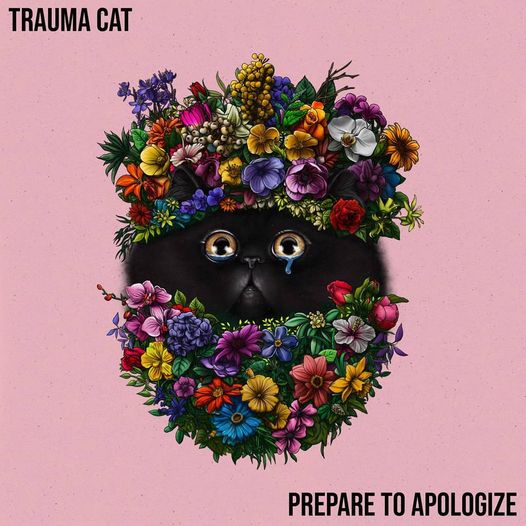
From the post-industrial hellscape of Syracuse, New York comes Trauma Cat, who have delivered to the world their first full length LP entitled Prepare to Apologize which was released in April 2021. This irreverent and ecclectic gem that was co-produced by the band and the elusive St. Julian P. Dingusand, sports 15 tracks (3 tracks including “Joshua,” “Fire in the Jail,” and “Freaks with Wings” are re-issued singles) that span rock genres that include pop, alternative, electronica, and prog rock.
The band has cheekily branded their special brand of musicial gumbo on their website, “Though critics speculate on the band’s true origin and the meaning of their existence, Trauma Cat are widely credited as the founders of “cuck rock,” an indeterminate school of music indebted to incessant apology and shameless cross-genre appropriation. Others have described Trauma Cat’s sound as “uncomfortable art rock,” and their politics as “alt-wrong.”
The Trauma Cat roster is comprised of the musically talented and fashion forward Ralph Kojig (guitar and vocals), Roman Pando (bass and vocals), and Rutger DiBoyere (drums). Together they comprise a wonderfully creative power trio that has been successful in creating a personau that is reminicent of a combination of punk pioneers Devo and Saturday morning cartoon favorites Josie and the Pussycats. The glorious result of this concoction is the band’s demonstrable irreverance and hilarious comedic take on the music biz, and yet despite this silliness, they have created an enjoyable record and that is fun, fresh and creative.
Trauma Cat has released the following “documentary” to introduce listener’s to their own distinct brand of “Cuck Rock” and to “apologize for their new LP.”
https://www.youtube.com/watch?v=y7DSttG7mx8
The record starts off with title track “Prepare to Apologize,” which is initially a short verbal rant between members Kojig and Pando, that leads into a short but sonically pleasing acapella number. The track seamlessly transitions into the second song on the LP “Indivisible,” reminiscent in musical style to a mash up of Rage Against the Machine and Tool. Heavy on bass and sporting great vocals that are both provided by Kojig, “Indivisible” illustrates why Trauma Cat won the 2021 Syracuse Area Music Award for Best New Artist.
Prepare to Apologize’s third track is “Trauma Cat.” This is a fun and upbeat tune that has all the makings of the band’s offical theme song if they ever decide to create their own must see reality TV series (look out Kardashians). Kojig provides just the right amount of heavy guitar and along with DiBoyere percussion this track will get the listener’s blood pumping.
Another highlight on the record is fourth track “Joshua”, which was originally released as a single by the band back in November of 2020. Trauma Cat deftly released a remarkably professional music video for “Joshua” that was animated and directed by El Salvadorian sensation Lincktendo back in January 2021. Lyrically the song describes a daliance into bisexuality that ends up in a bad breakup which then ultimately ruins a friendship. “Joshua” is a strong tune with loads of pop sensibility which makes it ideal for radio play. It features songwriter Kojig’s hypnotic chorus, “It came over me like a wave”, which is a catchy and memorable hook that will stay with listeners.
“Fire In The Jail” is the eleventh song on Prepare To Apologize. This anti-social anthem promtoes dissent against the world’s demanding vapid conformity. Breaking out of the prision of these imposed expectations. Kojig sings, “I just can’t believe that these people…content to live like sheep following the crowd.” Living on your own terms without worrying about other people’s perceptions an expectations is the core message of this rebellious song, which utilizes a good amount of vibrato on guitar and reverb on Pando’s vocal to evoke a distopian landscape.
Although this trio of self-depricating muscians does not take itself too seriously, the musical craftsmanship and production value of Trauma Cat’s debute LP shows passion and commitment that these Jester’s of “Cuck Rock” have for their craft. Prepare To Apologize is a great album that hopefully will be the first of many that these denzians of musicial mayhem produce for an ever increasingly bleak world that is crying out for more mirth and humor.
Key Tracks: Joshua, Trauma Cat, Lob A Grenade, Fire In The Jail
Jeremy Hilliard has released Long Lives: A Collection of Home Demos that represent the first incarnation of songs that are later worked out and performed by his band PEAK.
Hilliard stresses these are home demos and are very rough around the edges, originally not intended for release. Hilliard recorded them using only an outdated version of Logic Pro X, one 58 mic, one electric and one acoustic guitar, and a little 1.5 octave keyboard. A testament to the raw tracks, he spent no more than a session recording each one. These demos are released ahead of the new PEAK album, due out this September.
About half of the songs on here I’ve been carrying with me for ten years or more, and the other half is from recent writing. These are songs that are super chill and Americana in style, falling outside the usual material I end up presenting to the band. They also seem to be a bit more personal in nature. In fact, I realized recently there’s a full song cycle here, and I engaged Beth to sing the harmony vocals on a lot of these to help finish them, especially as we have lived them all together.
Jeremy Hilliard, PEAK
Enjoy this 35 minute collection of demos from Hilliard, with “extremely homemade” video slideshows. Follow Jeremy Hilliard on Facebook.
Tracklist: Shot In The Dark, Long Lives, While The Days Go On Back Home, Pahrumpadise, Low-Down Fahrenheit Frostburg Blues, The Wind and the Rain, Soulard Wedding, Four Forces, Morning In Brooklyn, Blue Parkway
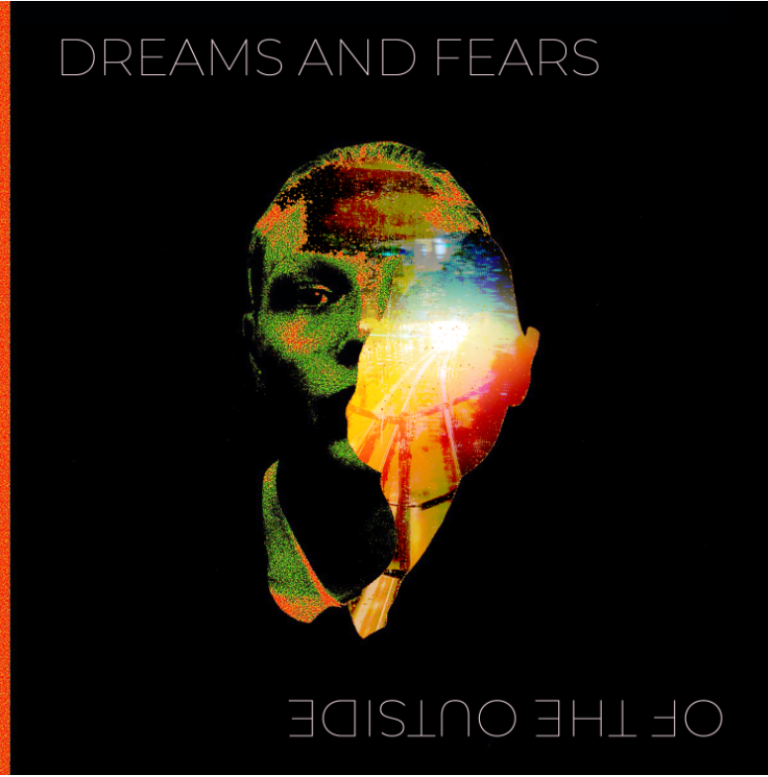
FRANK, a Brooklyn based group made up of Christian Linsey (drums and percussion, vocals), Billy Ziff (bass) and Scott Porter (guitar, vocals). On April 23, FRANK released their most recent piece of their already great discography. The title, Dreams and Fears of the Outside, is a perfect reflection of where we are now.
With the opening lyrics, “Things will never be the same now, somehow everything’s the same” FRANK puts forth their most eclectic album to date by changing everything while keeping their unique style intact. With a collection of folksy, lyrically driven tunes and funky dance numbers, this latest release offers something that everyone can enjoy. For that matter, this album is loaded with really unique songs that flow nicely into one another.
The album opens with “The Confusion”. This acoustic track builds brilliantly throughout and transitions into an incredibly danceable song, “New York (How I Feel)”. The group finds their groove here before moving on to a song that sounds like it could be right from The Big Pink. Big credit to the band for being able to span such a vast gamut of styles through the first half of the album. Though each song is so different, there is a cohesiveness to the atmosphere of the record.
The bass goes wild on “Namaste” as the drums groove with a spry pep. The energy picks as the anthemic “Can You Hear Me Now?” injects a bit of a Neil Young with guitarist Scott Porter’s dirty yet wonderfully melodic vocals. “Big Sur” is a great downtempo song with lush harmonies and a really harrowing guitar part that hovers like a cloud above the song. “Have a Good Time” is a beautifully written song. It has everything you want from a Rolling Stones influenced vibe. It still maintains the characteristic heavy drums and renegade guitar that FRANK has been putting on display throughout the record.
The last couple songs are a nice come down from the meaty middle of this release. “Today” is a perfect bookend for the album to pair with the opening track. This whole work is a pleasure to listen to, and as guitarist Scott Porter puts it, “The record is like calling a friend.” While each song oozes influence from past artists, FRANK does a spectacular job of making each tune their own. From top to bottom, there is not a song that you should skip. There is plenty of replay value. Keep on the lookout for more from this group. While they are split between the Catskills and NYC area currently, they are still able to release gems like this while apart. Stream the album and access all streaming platforms here. Check out their YouTube, Instagram and Facebook for more info.
Key Tracks: New York (How I Feel), Have a Good Time, Today
Russ Lawton and Ray Paczkowski ended 2020 with an eight week residency in New York City as part of the wonderful cast for Trey Anastasio’s Beacon Jams. Outside of TAB, the duo operate as the highly funky Afrobeat-influenced group Soule Monde.
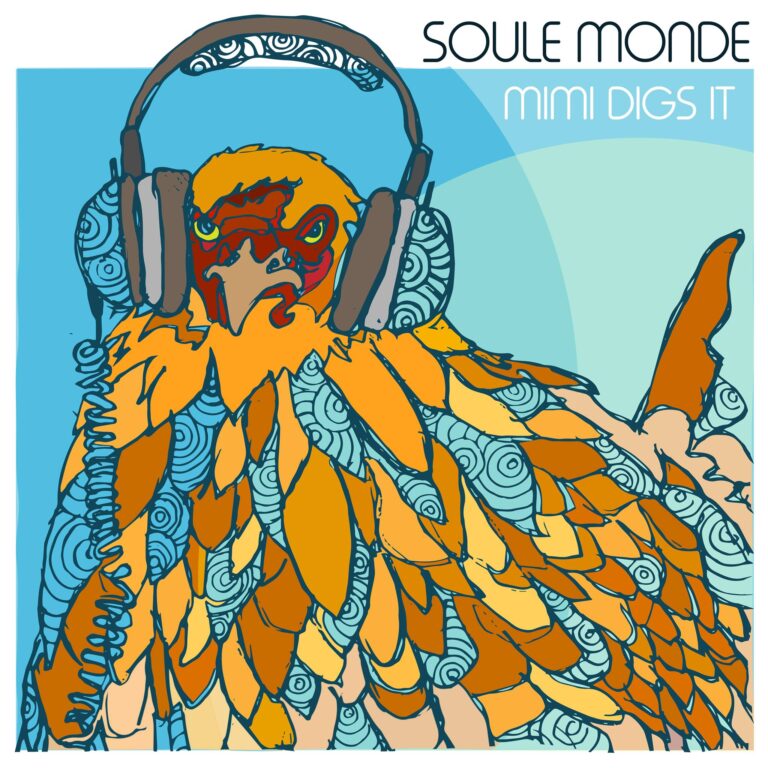
They started 2021 ablaze, rehearsing before going into the studio for their fourth album release Mimi Digs It. The eight-track album digs an even deeper trench of grooves. The landscape of the recording comes from Central Vermont’s Sugarhouse Sound Studio on Mad River Road in Waitsfield.
Mimi Digs It is simple: Russ on the Gold Gretsch drum kit and Ray on Wurlitzer, Clavinet, and howling B3 Hammond organ. After just three days, the material was sent to Concrete Sound in Brooklyn for the finishing touches. For more insight on the new album the dynamic duo took some time in between a new session at Sugarhouse to speak with NYS Music for a lunchtime chat.
Matthew Romano: Hey guys. Thanks for taking the time to speak with us today.
Ray Paczkowski: Hey it’s Ray.
Russ Lawton: We’re open. We’re here for the afternoon rehearsing and appreciate your interest for the interview.
MR: I was able to listen to the new album this week on a road trip from Key West to New York State.
RL: Oh cool, yea its got that cruising kind of vibe to it.
MR: Biggest question on this project’s recording since it sounds so off-the-cuff is how much of this is improvisation and how much is composition?
RP: There’s composition and basically Russ will come up with a beat or I’ll come up with a melody or some chord progression and we put it together. We do the parts and sections of the songs. But then on any given night it can totally change… it can go in any direction. So when we went in the studio we kind of had a sense of how the structure should be. Then we would improvise.
RL: The perfect example of composition improv is the song “Gateway Drug.” It’s got the two sections and breaks down the middle. After we recorded that, we should have had a little bit of an idea. But that’s totally what we just did that day. It will probably never be that same way again. Ya know what I mean?
MR: Absolutely. This kind of music sounds so soulful in the moment that it can’t be recreated for what you’re feeling at the time. If that’s what ends up on tape then so be it.
RP: Yea its actually a beautiful thing.
RL: I think about “Tinyland.” It was the last thing we worked on before we went into the studio. Matter of fact, one of the sections was two days before and when Ray came up with that organ line in the beginning we were in the control room like, yea use that. It stays in my head everyday now (laughter).
MR: I wanted to ask you about your influences on Soule Monde’s sound but you guys are already in a unique category with a drummer/keyboard duo like this. Do any artists stick out?
RP: It’s pretty much straight my music. What I’m feeling. I would say as far as influences, that it’s more “the sound” players get. Not so much what they’re playing. Although, Someone like Jimmy Smith, those guys… Thelonius Monk, it’s amazing. They have their own melodic harmonic concepts going on. But really what I listen for is “the sound” that they’re getting. Like with Jimmy Smith, the sound of his organ. I had the privilege to open for him years ago and snuck up to his gear after soundcheck and was looking at all the settings. That’s what I’m interested in. “The sound” that comes out of that machine in a way.
MR: Funny you mention Monk. I passed along the Monks Tips for a Gig to Trey, Russ, and Tony at the Beacon Jams. Tony was quoted about your playing Ray. “He’s brilliant. I mean his playing is unlike anybody, he’s kind of playing like Monk in a rock setting that nobody does and he makes it work.”
May 2011: Ray, Russ, and Tony covering Monk
RP: (Laughter) Oh that was you? Ok alright.
RL: (Laughter) Yeah that’s great.
MR: Yea, Ray you turned me on to Brian Blade with Chick Corea and Christian McBride at Beacon Jams. They ended up winning the Grammy for Best Jazz Instrumental Album this year. I was able to speak with Steve Gadd last month about his work with Chick Corea and he mentioned a story about Chick jumping behind drums to work something out. Have you ever jumped behind the kit Ray?
RP: I don’t play drums at all but I’ll have sort of a basic kind of rhythmic idea. Like “CC’s Dream,” that song. I hear this sort of reggae thing but I wouldn’t even know what to call it, but I hear this rhythm in my head. I show Russ the rudimentary and he took it from there and made it into something cool.
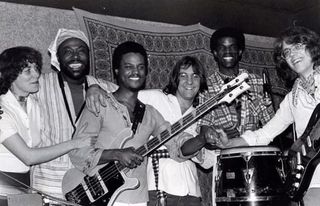
RL: It’s called collaborating. No matter what it takes to get the idea across because sometimes you don’t totally know what is in somebody’s head. I played with these African percussionists for a long time and man we would put this stuff together. Talking about influences that’s on a lot of Soule Monde still is this band I was in, Lofty’s Zzebra. Afrobeat sound mixed with a rock edge influence. But even with me, certain snare things, I’m like yea that’s John Bonham. Even the first song “Tinyland” my daughter said sounds like Bonham in the beginning. Also, Art Blakey kind of sounds are an influence. I got to see him one time which was amazing.
Lofty’s Zzebra
MR: Is it safe to say this album compared to previous ones has a little bit more straight funk grooves over Afrobeat?
RP: Yea this seems more of a funk base. There’s a tune called “Ollie ’88” we worked hard on for a long time. That kind of informed some of the rhythms on this album. But I think you’re right. Ya know in the past, “Take My Hand” and “Mina” were definitely more Afrobeat-based.
MR: How about the funky title track “Mimi Digs It”? Wasn’t it inspired by one of your chickens, Ray?
RP: Yea when we were rehearsing for the recording. We have a bunch of chickens here, one in particular named Mimi. Ya know it gets loud in the barn when we play and all of the chickens would run away except for Mimi. Ya know I think maybe she was deaf or something (laughter). She would like to get up on the keyboards and were like, “Oh Mimi Digs it” and that became the name of the track and then the record.
MR: Could have also been a nod to Mimi Fishman who was a great artist.
Mimi Fishman Art, Eggplant Diner Syracuse
RP: I’m waiting for Jon Fishman to call and say, “What are you making a record about my mother?” Yea our friend Pappy Biondo from the band Cabinet did the cover art for the album.
RL: Yea he’s a good friend of ours that lives in Vermont. He did our album cover for our last Christmas song too.
MR: I was able to get through on the Beacon Jam streams to revisit an infamous Trey Anastasio Band show from Utica’s Stanley Theater in October of 2002. The crowd was rocking to the beat of the humanity and plaster fell from the balcony. Trey, Tony and Cyro spoke on it. What do you remember about that infamous gig?
RP: We were watching it from the stage and, ya know, started commenting, “Man, that balcony is really moving!” The local fire marshal is always at a show. Then Trey’s like, “You see that balcony moving!?” And then he calls, if I remember right, “Sand.” Ya know because it was gonna be a heavy groove and then the fire marshal came on stage “No No No!”
RL: The fire marshal is like can you play something more mellower? We’re like “no” (laughter).
MR: I know you guys were in the middle of “Mr. Completely” before it all came to a halt and went acoustic. Did a fire marshal also come on stage for Valentine’s Day in Red Bank, New Jersey 2010 during “Sand” as well that prompted the house lights on mid-jam to a quick conga line by you guys through the crowd back to the stage?
RP: No that was because someone pulled the alarm. They were ejecting someone and he grabbed the fire alarm on the way out
MR: What is it about “Sand” that is the ultimate groove to get everyone in the house moving?
The best way to listen to the band’s new record is from their Vinyl option that includes a signed copy and even a batch of Ray’s homemade syrup from his farm. The duo will play live to start the Summer concert series in 2021 at Sugarhouse where they recorded the album on May 29. Make the trip to Central Vermont and watch these guys lay it down for yourself. You can grab tickets here.
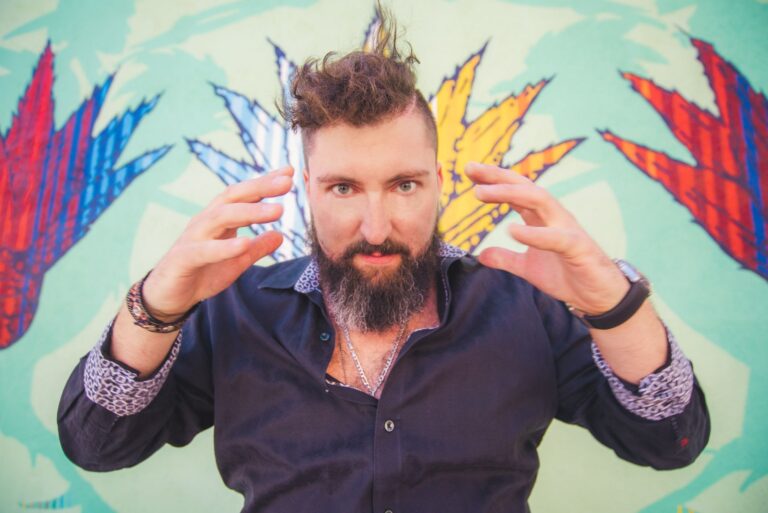
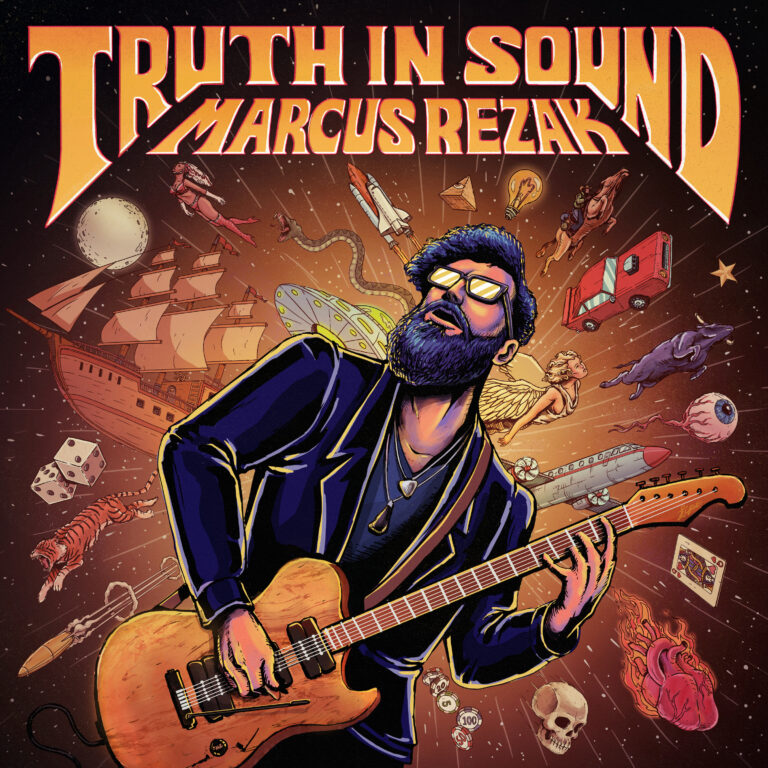
Guitarist Marcus Rezak has teamed up with members of Trey Anastasio Band for his latest EP, Truth in Sound. Approaching the album with a songwriter and story-telling mindset, Rezak wrote, recorded, and produced Truth in Sound over the course of 2020, in the hopes of creating an album that has the power to heal through both music and lyric, hence, Truth in Sound.
After a Shred is Dead show at Nectar’s in November 2019, Rezak discovered a newfound musical chemistry with Russ Lawton that needed to escalate beyond the one-off performance. Rezak invited Lawton and his TAB colleagues to record new material that he had been writing, and they enthusiastically obliged.
I first met the Trey Band guys at a Shred is Dead show I played in Burlington and was thrilled that they enthusiastically obliged my invitation to be a part of this record. It was a very natural feeling coming together and playing in the studio, almost as if we had been playing together for years. All the guys are unique in their style when together which creates a one-of-a-kind synergy, plus they are super warm and kind humans.
Marcus Rezak
Truth in Sound was recorded at Tank Recording Studio in Burlington, VT and engineered by studio owner/operator Ben Collette, who has served as an audio engineer for Trey Anastasio and Phish since 2004. The band took the energy sparked by the initial Shred is Dead performance and transferred it into four tracks with Rezak’s preparation and eloquent compositions. All of the guitar tracks and mixing were done by Joe Hettinga of Third Coast Recording Company.
While the album displays the same fierce jams and guitar shredding that his debut Gateway to the Galaxy emitted into the universe, Rezak’s focus on Truth in Sound is showcasing heartfelt lyrics and musical healing to mirror his experiences since his initial release. During the challenges of COVID-19, he felt compelled to uplift and fill in where depression and confusion had become a part of so many people’s everyday lives. In those initial lockdown months, renegade-style drive-up concerts were some of the only ways to keep music present for both musicians and music lovers alike. He saw a new purpose while observing his music keep those isolated in good company and helping release some endorphins.
The final outcome of this record truly encapsulates a time in my life, through a sound, that I hope brings healing, joy, and excitement to those with open ears.
Marcus Rezak
Truth in Sound features Russ Lawton, Tony Markellis, and Ray Paczkowski from the Trey Anastasio Band, plus Kalyan Pathak on world percussion and tabla. The album’s first single “Light of the Moon” is a true story about people of the night connecting through their love of music, celebrating cathartically in the light of the moon reveling in dance, joy, and memories. The late Tony Markellis lays down a one-of-a-kind strut on the bass and Pathak’s percussion work adds an element of global music flavors with his tabla work during the solo section and expressive nuance on chimes, congas, shekere.
“Borderline” is another true story about modern love and the primal connection humans can have with one another, drawing inspiration from the compassion humans uncontrollably have to want to heal the unfortunate trauma of others. “Leaving” details traveling musicians’ life on the road, with a psychedelic jam accompanying the journey. The instrumental track “Glitter Pillow” is a magnum opus of progressive rock, funk, and jazz, with a ’70s harmonic vibe propelling into a mystical minor improv section that builds and compounds into fierce energy from the entire band. Visit Rezak’s Bandcamp to pick up the album.
New York City in the 1980s was a creative caldron where anything could happen. Painting, graffiti, performance and emergent video art, film, dance, theater and music of every conceivable genre were blending into one another, often in unprecedented ways. In the arts, and maybe music first and foremost, boundaries were not for division but blurring and breaking to make the wholly new. So when Philip Glass, the esteemed minimalist composer, teamed with The Raybeats, the neo-surf guitar super combo, it was the kind of collision of seeming opposites that made perfect sense in these freewheeling times.
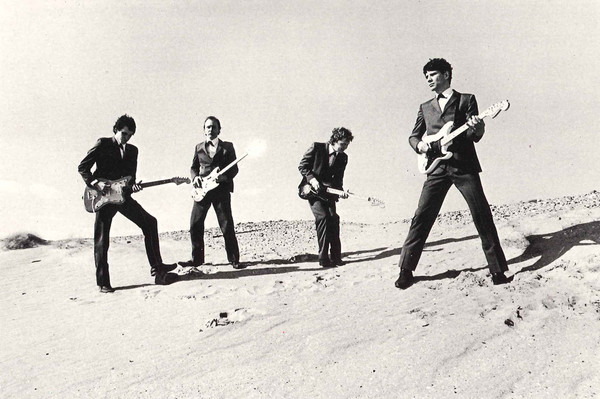
The Raybeats formed in 1979 out of the ashes of the legendary New York no-wavers, The Contortions. The band’s bassist George Scott and drummer Don Christensen joined with guitarist/keyboardist/sax man Pat Irwin (8-Eyed Spy and later the B52s) and guitarist Jody Harris (Golden Palominos and an original member of The Contortions featured on the seminal No New York compilation produced by Brian Eno). When Scott died of a drug overdose in 1980, he was replaced by Danny Amis. Amis would later go on to form the groundbreaking, masked surf guitar band, Los Straitjackets.
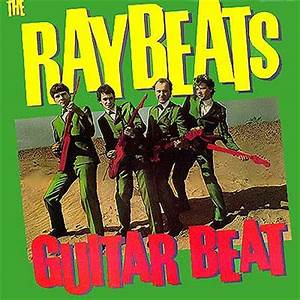
The Raybeats sound was an artsy update on the gutsy guitar instrumentals of fuzz pioneer Link Wray and the twangy surf of Dick Dale. Added to this were copious amounts of space age bachelor pad swank and spy movie mysterioso, along with Stax/Volt grooves and, of course, the experimental noise/skronk of no-wave. It was a high-energy, eminently danceable brew, one that made The Raybeats a popular touring band on the underground rock circuit. With Amis, they recorded an EP Roping Wild Bears (1981) and the acclaimed full-length album, Guitar Beat (1982). After his departure, they waxed just one more album, It’s Only A Movie!, before disbanding in 1984.
The Raybeats went into SoHo’s Greene Street Recording on June 4 – 5, 1982, with Philip Glass, his pianist of choice Michael Riesman and co-producer Kurt Munkasi. None of the parties really knew what to expect according to Irwin. And the world would not hear the fruits of their collaboration until 31 years later, when Glass released the seven tracks on CD in 2013, on his Orange Mountain Music label.
Philly and NYC based label Ramp Local is now putting out the first-ever vinyl pressing of this incredible collection, called The Lost Philip Glass Sessions, just in time for Record Store Day, June 12. The vinyl package includes new cover art and an insert, with liner notes by Pat Irwin and rare archival photos.
The disc kicks off with “Jack the Ripper,” a cover of the classic instrumental recorded by Link Wray of “Rumble” fame. As with many of the offerings here, the tune is anchored by a pounding jungle beat, with some nice retro slapback delay. It also boasts thick sheets of dreamy feedback from Jody Harris to complement Irwin’s heavily-reverbed, deep toned melody guitar.
“Pack of Camels” is one of the tunes that gets a more obvious Glassian treatment. This is snake charmer music, an Eastern modal dance groove with oodles of reverbed melody guitars and spooky Lena Lovich/Laurie Anderson-like vocal accents by Dora Ohrenstein.
According to Irwin’s liner notes, “Black Beach” was intended to recreate the experience of riding Coney Island’s famed roller coaster, the Cyclone. Drummer Christensen had the idea of recording the sounds of the Cyclone and the screams of the riders for use as a drum break, a thought that ended up on the cutting room floor. The B section of has the most obvious Glassian flavor on the album – a hypnotic swirl of interlocking keyboard figures played by Michael Riesman, a longtime member of The Philip Glass Ensemble.
“The Sad Little Caper” features a five-note melodic figure, a baritone guitar counter melody and a cavernous ambience that brings to mind a James Bond flick. Add to this spooky keyboard answers arranged by Glass. These are reminiscent of P-Funker Bernie Worrell’s contributions to Stop Making Sense-era Talking Heads.
The most no-wave flavored piece of the album, “I Do Just What I Want,” comes from a 1985 session at the Living Room, Glass’ studio in TriBeCa. Dirty tenor sax growls, slip slidey fuzz bass and a four-on-the-floor surf beat propel the piece, which features a vocal refrain of the title and punchy orchestral synth hits.
“1.2 Girls” and “Hoodlum Priest” both come from sessions at Surf Sounds begun in 1983. The former owes a ton to the jungle rhythms of Gary Glitter’s 1972 hit, “Rock-n-Roll Pt. 2.” A stomping beat, more tenor growl and a bit of vocals singing the title, one that purportedly was swiped from a tabloid headline. “Hoodlum Priest” begins with the sound of thunderstorm captured outside the studio. More cool spy vibes to a dark funk beat, with lush stereo pans of the bitey guitars – acoustic, electric and a bit of backwards psychedelia.
Like Guitar Beat, this disc proves that The Raybeats were the real deal. They were true sonic minded guitar innovators, working in a punk era that minimized any guitaring that seemed to showcase chops, anything beyond three chords, a grimace and a grunt. Though their career was short-lived, their influence was lasting, with the neo-surf they pioneered in their recordings and in the further works of its members when they dispersed. The meeting with Glass produced some real magic here. It is guitar art of the highest order, one that proves that this quartet was on the level of the critic revered Tom Verlaine/Richard Lloyd-helmed Television.
If you like this disc, you should also check out the exceptionally creative, lo-fi masterpiece Escape, a duo disc made on a budget of $7 (for tape) by Raybeat Jody Harris and Robert Quine of Voidoids and Lou Reed fame. Irwin has been keeping great instrumental guitar art alive via his long stint with The B52s, his contributions to soundtracks like The Rugrats and, most recently, his great PI Power Trio. You can hear what he’s been up to on their debut EP The Walk or at live performances at downtown NYC venues like the Treehouse at 2A. Recommended Tracks: Jack The Ripper, The Sad Little Caper and Pack of Camels