On Sunday, November 7, ONCO Fermentations in Tully, New York hosted a benefit of music and activities to celebrate the dedication of a new town road, “Hazel’s Way,” in support of Hazels Hope Foundation. This brand new town of Tully street located off Meetinghouse road across from ONCO was named “Hazel’s Way” in honor of thirteen year old Cazenovian Hazel Shaw, who passed in April from a rare ninth chromosome disorder.
The event raised over $3000 for Hazel’s Hope & families of children with special needs. A fashion with compassion idea that keeps on growing.
Hazel knew how to walk but wasn’t able to tell her body how to do it and she knew what she wanted to say but the words didn’t always come out. From her wheelchair and communication device Hazel’s love for art flourished during her days.
Her finger paintings inspired her Aunt Debby Martin to incorporate Hazel’s art work into scarves. Debbie Martin fashions added the Hazel & Friends line to her collection in 2014. It utilizes the designs of children with disabilities on scarves to raise funds to build playgrounds and support genetic research towards “Hazel’s Hope.”
Hazel & Friends scarf
Hazel enjoyed her life by spending time with her sisters Pearl & Mabel, enjoying dance parties, musicals, and fireworks. The seasonably sunny Sunday had all the elements Hazel loved. Her smiling spirit could be felt shining on all those enjoying the benefit. No fireworks but local Labrador Mountain hang gliders could be seen in the skies above ONCO throughout the day.
Syracuse musician Joe Altier performed a few moving songs for the ceremony on his piano. It helped launch the full crowd into the day’s festivities.
Central New York rockers Jess Novak and Cait Devin performed a special acoustic matinee set from 4 PM till 6 PM. Some tiny dancers in the crowd also helped on their tambourines. Jess Novak joined on violin during Cait Devins’ acoustic set for a jam on the Allman Brothers Band classic “Whipping Post,” Cait definitely helped put her own vibe on this legendary song.
Jess Novak tapped her foot tambourine along with the the tiny dancers in the crowd for a cover of Tedeschi Trucks Band soul refresher “Anyhow.” Jess put her own spin after looping the guitar rhythm for a Larry Campbell-like fiddle solo on the violin before ending the tune. The duo really channeled these southern artists’ sound and their own material in the Southern Tier on Sunday.
On Sunday, November 28, Jess Novak and her band will hop down Route 20 through the tier to Meires Creek in Cazenovia for their new Thousand Lives album release party. The Jess Novak Band continues the tour in support of the album as they return to ONCO Fermentations on December 4.
ONCO will also be bringing local talent Biggs & Young on Friday November 12 and a special Thanksgiving Eve party with The Shylocks. After the holiday, The Vectors are set to rock on November 26.
ONCO is one of Central New York’s best new music venues, offering live music weekly in its “cozy warehouse-style” tasting room or outside in the beer garden when seasonally allowed. A new 3400 square foot Back Space area is under construction for hosting larger groups and music acts. It currently serves as a raw but inviting overflow space and features indoor games such as cornhole and foosball while under construction.
ONCO offers a rotating taplist of 12 house brewed beers along with NYS wine and hard ciders. Starting November 4 and running all Fall and Winter ONCO is partnering with Spinner Culinary LLC and Naan Ya’ Business food truck to pair simple exciting food to your ONCO cold beverage tasting experience.
ONCO is just off I-81 twenty five minutes south of Syracuse and just 18 minutes north of Cortland. Arrive by car, bicycle, or snowmobile (ONCO is a Tully Trailblazer’s trail head). Just minutes from Song Mountain, Labrador Hollow, and other outdoor activities, ONCO is a welcome addition to Southern Onondaga County, offering a relaxed vibe to go with great music, food, and of course, beer. #Tullyrocks
Make no mistake. Don LaSala is not Conrad Hilton and he’s not in it for the money. Since 1998, LaSala and his wife Sue have been the owners and loving caretakers of one of the holy sites of rock history, the humble salmon-colored house in West Saugerties, N.Y. known as Big Pink. From early 1967 – 1968, Big Pink and its makeshift basement recording facility served as the woodshed where Bob Dylan and The Band created a cache of classic songs that would forever redirect the course of popular music.
photo by William A. Loeb
Since 2014, the LaSalas have been enabling fans to enjoy weekend and longer retreats at this fabled house and its many peaceful, woodsy acres. It’s one that remains virtually unchanged since the days when The Band lived and worked there. This includes the rosy sided exterior immortalized on the cover of The Band’s 1968 debut, Music from Big Pink, along with its Atomic-era kitchen and appliances, its living, dining, bedrooms and, of course, its famous subterranean music space. The LaSalas have added to the authentic retro vibe by curating many period artifacts throughout. These include a 1966 local phone book, a Bakelite rotary telephone in basic black and a vintage typewriter, just like the one Dylan used to fire off lyrics. The mood is also set with classic photos of Dylan and The Band taken here and around Woodstock by its most famous local lensman Elliot Landy.
The story of Big Pink commences in February 1967, when The Band’s bassist Rick Danko rented the house where he would cohabitate with bandmates Garth Hudson and Richard Manuel. Danko. The trio were working with their guitarist Robbie Robertson, who secured a home close by with his soon-to-be wife Dominique, on Dylan’s film of their 1966 tour together, “Eat The Document.” Dylan had been sidelined from touring by a July 1966 motorcycle accident leaving his manager Albert Goldman’s house in adjacent Bearsville. Now, he was playing the seemingly retired family man/country squire/filmmaker, while quietly forging ahead with what would be his most productive year ever as a songwriter.
According to a conversation LaSala had with Danko, Dylan would arrive at Big Pink around 9 am each morning, right after dropping his daughter Maria off at school. He would then make a pot of coffee, roll a joint, smoke a few cigarettes and write lyrics, on yellow legal pads and/or his trusty typewriter, all while sitting at the living room table gazing out a picture window at the mountains in the distance. When Danko, Hudson and Manuel arose at around 11 am, he would make another pot of coffee for the boys and the arriving Robertson. They would then head down to the basement and try out the new songs just written by Dylan or fool with covers of old traditional chestnuts like “Kickin’ My Dog Around.” Keyboardist Hudson engineered the recordings using two stereo mixers and a tape recorder borrowed from Dylan’s manager and microphones on loan from folk trio Peter, Paul and Mary. The magic was committed to reel upon reel of 1/4” Scotch or Shamrock tape.
In the late afternoon, the two coupled guys, Dylan and Robertson, would head home. The remaining trio would then either head into the town of Woodstock to party or bring the party home. The routine with Dylan reportedly went on from May – October 1967. Eventually drummer Levon Helm would return from the South and move in and the band would continue to work at Big Pink through January 1968, crafting and polishing the songs that would appear on the debut album named in honor of their home/studio.
Some of the 30 new Dylan originals recorded would first see light of day on a 14-song demo tape. It was circulated in October 1967 by his publishing company, Dwarf Music, to hopefully generate income from covers by other artists. They included some of the most celebrated songs of his career including “I Shall Be Released,” “This Wheel’s on Fire” co-written by Danko, “Quinn the Eskimo (The Mighty Quinn),” “Tears of Rage” co-written with Manuel and “You Ain’t Goin’ Nowhere.” Seven of these unreleased versions were included on the double-disc The Great White Wonder, the first rock bootleg album illegally issued in July 1969. Some of these would ultimately end up on the first official release, 1975’s oft maligned The Basement Tapes on Columbia Records. Note that the cramped basement in the album’s cover photo is not Big Pink at all; it’s from a YMCA in Los Angeles. And some of the tracks featured are not from Big Pink or are The Band recordings sans Dylan.
photo by William A. Loeb
The story of how the LaSalas came to own Big Pink is rather traditional, one reflected in the great migration to the Hudson Valley we see taking place today in Covid-19 times.
“After almost a decade working in the music business in San Francisco, we moved back East and rented a placed in Westchester to help with my family’s real estate management business,” says Don LaSala. “Suburbia was a real culture shock. My wife grew up in the Northern Adirondacks and I had been coming up here a lot in the 1980s, when I was working as a live production manager for NRBQ, most of whom lived right in Saugerties. We always loved their area and hoped to one day, maybe, get a place here, but that was still a distant dream.”
One day, a friend in Woodstock, Mike Densmore, called me up and said there’s a tiny ad in the local classifieds saying — ‘Famous Rock-n-Roll House for Sale by Owner’. We thought, ‘What the hell? Why don’t we just take a look at it to see what it’s like inside?’ We were just curious like fans are today. But we weren’t really looking at the time and, in our wildest fantasies, we didn’t think we’d ever come to own it.
Don LaSala
LaSala, who is also a guitarist/songwriter, hit it off with the bass playing owner, Mike Amitan, who urged him to consider buying it, even though he didn’t think he could muster the $149,000 asking price. Two weeks later, the New York Times ran a huge story saying that the house had been sold to a consortium of investors. But this deal and several others would fall through before LaSala raised the funds and closed on the house in April 1998.
photo by William A. Loeb
From 1998 – 2014, Big Pink was the LaSala’s primary residence thought they spent part of each week at their downstate rental working for the family business. Its fabled basement became the clubhouse where band Don plays in, The Hooligan Band, would write, rehearse and record, just like Dylan and The Band. Playing together since 1978, The Hooligan Band have released two albums recorded in the famous basement, including Basement Hooligan – Live Recordings ’08 & ’10 and Hooligan in the Pink. LaSala has also released a handful of solo offerings recorded at Big Pink including 2011’s Home Brew. It has also continued to be the site of Big Pink Socials, where LaSala and other local musicians like Robin the Hammer, Julia Nichols, Avalon Peacock, Justin Love, Denise Parent and The Hooligans would party, play and record.
“At the time we bought Big Pink, Dylan was pretty much out of the public eye,” continues LaSala. “He was coming off his religious period, Dylan and the Dead, his acoustic albums and he hadn’t quite hit his renaissance with Time Out of Mind.”
With the critical mass of Internet connectivity in the early 2000s, more and more people started finding their way up the ¼ mile dirt road from Stoll Road in West Saugerties to Big Pink. Fans themselves, the LaSalas were always gracious when encountering visitors, sharing trivia and letting them take a few exterior photos.
photo by William A. Loeb
But the real explosion of interest came with the 2014 release of The Bootleg Series Vol. 11: The Basement Tapes Complete, a lush box set containing 138 tracks, 117 previously unissued, from Dylan and The Band’s 1967 home recordings, the vast majority from Big Pink. This was followed by The New Basement Tapes, a British-American supergroup including My Morning Jacket’s Jim James, Elvis Costello, Marcus Mumford, Taylor Goldsmith of Dawes and Rhiannon Giddens put together by producer T Bone Burnett. Also in 2014, the group recorded Lost on the River: The New Basement Tapes, an album of tunes based on newly uncovered lyrics handwritten by Bob Dylan in 1967 during his period at Big Pink. The collaboration was chronicled in the documentary Lost Songs: The Basement Tapes Continued. This included reenactments with young actors of Dylan and The Band’s at work filmed right in Big Pink’s basement.
These events drew more fans and many reporters to the site. This included a Rolling Stone Magazine video crew who documented The Band’s keyboard wizard Garth Hudson’s emotional return to the house after 47 years.
This renewed spotlight coincided with the emergence of vacation rental sites like AirBnB and VRBO. By that time, the LaSala’s lived at another home in Woodstock, but Don continued to use Big Pink as his musical space and hang.
“Over the years, I learned I couldn’t stop the fans, so I decided I might as well just let them have it,” laughs LaSala. “Owning this place, I always wanted to do justice to the history – to the fans who love this place and have a deep emotional connection to the creativity that unfolded here.”
Practicality was also an issue. “It cost a good deal to maintain this old house,” continues LaSala. “Even though we endeavored to keep it unchanged, there were still many costs like putting in a new heating and cooling system, roof and, of course, yearly property taxes. But we wanted to stay true to the legacy and not do something tacky for the almighty dollar.”
The LaSalas started slowly opening up Big Pink to guests in 2015. “It’s sort of an unofficial artists’ residency in my mind,” adds LaSala. “People come here from all over the world. The majority seem to be creatives – musicians, painters, photographers and writers who want to have the kind of creative meditation, the productive retreat it provided for The Band and Dylan. Many are older folks who grew up on the music. But increasingly it’s drawing younger people, ones for whom the music created here is a requisite listening experience.”
“With three bedrooms and two baths, the place can comfortably accommodate 5 – 6 people,” observes LaSala. “So, groups are using it for reunions, to bring together friends, family and creative collaborators from faraway places. It’s not only about the house itself, but the nature surrounding it – the peace and creativity that springs forth from the solitude and raw natural beauty. Many come here to write, paint, and like Dylan and The Band, make music.”
photo by William A. Loeb
The LaSalas recommend a minimum three-night stay though some visitors stay longer. The wicked Woodstock winters mean that Big Pink is only available from mid-April to early November, on dates when LaSala and company are not making music. Full details, including videos and photos, can be found at their rental site on VRBO.
Visitors have free rein of Big Pink’s upper levels and outer patio but not, strictly speaking, the famous basement.
“It’s my private rehearsal space with own gear, so guests just can’t come and go as they please and everyone seems to understand this,” adds LaSala. “What I will do is schedule a time to give an informal tour, where I tell them the full story of Big Pink and all the creative magic that happened here. To keep people focused on the present, I discourage them taking too many photos. It’s something I even do with my friends at my Big Pink Socials. I want them to stay in the present moment, and to have this Big Pink experience live in their memories and imaginations.”
photo by William A. Loeb
The fans who have found their way to Big Pink have shared some amazing new info with LaSala; some verified, some not.
“It’s known that George Harrison visited here when he came to Woodstock and stayed with Dylan at his place in Byrdcliffe, Woodstock’s famous art colony,” recalls LaSala. “It’s also believed that he brought Eric Clapton here too. According to one British expert who visited, it’s believed George played The Band and Bob some songs he wanted to run by the Beatles like ‘While My Guitar Gently Weeps’ and ‘All Things Must Pass.’ And that, that another time, he and Eric rehearsed in the basement and played an early version of ‘Badge.’ In both cases, they were running them by Dylan and The Band to see if they were any good! Like Big Pink itself, these are misty legends that really spark your imagination.”
With the emergence of Covid-19 in March 2020, the LaSalas suspended their rentals until Spring 2021. Since then, they have taken all the necessary precautions, even installing a pricey air filtration system.
With winter coming in, Big Pink will just have to live in your imagination at least until next Spring, when the LaSalas plan on opening its doors once again to discerning and respectful visitors.
“Until that time,” concludes LaSala with a Dylanesque quip and smile, “I’ll be in the basement mixing up the medicine, medicine of the musical kind, of course!
NEO Project crushed their set at The Upstairs on Friday, October 22 in Ithaca. NEO Project is a professional six piece, high energy dance band rooted in funky R&B grooves, Afro Cuban/Caribbean rhythms & jazzy, bluesy soul music. The members are music professors, a former Motown sideman and soul practitioners with years of experience.
Their eclectic repertoire will get you body movin’ with new arrangements of established hits and irresistible original party grooves. NEO Project reimagines some of the best funk, jazz and soul music out there, always delivering a powerful dose of deep pocket grooves supporting soulful melodies & juicy improvisation.
This band grooves hard as they weave irresistible R&B rhythms around Afro-Cuban & world beat syncopations. And they do it all on their toes as they re-shape their arrangements on the fly, vibing off the energy of their audiences.
Friday at the Upstairs NEO Project laid down the energy of the ’90s New York club culture. They covered “Groove is in the Heart” by Deee-Lite. The song came from a fan letter Deee-Lite sent with a demo to Bootsy Collins. The original track featured Bootsy Collins on bass, Maceo Parker on saxophone, and Fred Wesley on trombone, as well as a young Q Tip on backing vocals. The song made its way to the 1990 scene as a radio hit.
Drummer Adam Deitch from the funk band Lettuce told NYS Music this summer a similar experience with Bootsy Collins. Bootsy’s Instagram story featured a clip of him snapping his fingers whispering “keep that funk alive…keep that funk alive.” This inspired Deitch to sample the message. From here he immediately laid down a drum beat to Bootsy’s vocal tempo. The rest of Lettuce got in on the session and it was sent to Bootsy’s camp. He replied with delight and his signature bass line & vocals to boot that finished the collaboration.
NEO Project stands on the same “Shaky Ground” as many other live New York performances. When Bob Weir of the Grateful Dead played Syracuse Landmark Theater in November 2018, his wolf pack trio covered “Standing on Shaky Ground” by The Temptations which is co written by Eddie Hazel of Funkadelic, “ever since you put me down.”
When Tony Hall of legendary New Orleans band Dumpstaphunk played the 2019 New York State Blues festival he made his way to Funk N Waffles after the performance. Tony and Drummer Deven Trusclair were able to to sit in with the house band for “Shaky Ground” as well. NEO Project brought the same energy with their take on the classic throwing some Stevie Wonder Halloween Superstition spirit at the end.
The NEO Project kept the audience on the same beat, all stopping on the 1 and ending on time to close the show Friday. The Upstairs crowd all fell in line like Thriller.
NEO Project Touring Act: Elly Holiday: Vocals, Jimbo – lead vocals, Prof. John White – keyboards & vocals, Franklin Henry Jr. – 5 string electric bass, Mike McCoy – drums, Dwight Carroll – guitar & vocals,
NEO Project – The Upstairs Venue, Ithaca, NY – October 22, 2021
10:30pm
Gentle Thoughts/Lovely Day 106 G Ji Dw/El Herbie Hancock /Bill Withers
I Was Made To Love Her 076 Db El/Ji Dw Stevie Wonder
Come Together 090 C- Ji/El Dw The Beatles
Tennessee Whiskey 067 A/C Ji/El Chris Stapleton
Stir It Up/3 Lil’ Birds/Bend Low 176 A Dw/Ji El Bob Marley
Make Me Feel 115 E El Ji/Dw Janelle Monae
Fire 124 A Ji/El Bruce Springsteen, Des’ree
Higher Ground 127 E El Stevie Wonder
11:30pm
Brown Eyed Girl 152 Ab Ji Van Morrison
Valerie 106 Eb El Amy Winehouse
Ain’t Too Proud To Beg 115 Bb Ji The Temptations
Crazy In Love 095 F El Ji Beyonce
Seven Nation Army 112 E Ji Jack White
Groove Is In The Heart 121 G El Deee-Lite
I Got You (I Feel Good) JB 144 Bb James Brown
Uptown Funk 115 D- El Ji/Dw Bruno Mars
12:25am
Addams Family Theme 126 Bb Ji All
Killing Me Softly With His Song 093 E- El The Fugees
Shaky Ground/Superstition 094 E Ji/El Temptations/Stevie Wonder
The Turning Stone Resort Casino Showroom in Verona is undergoing an electrifying renovation in anticipation of the return of live events. Turning Stone surveyed 30,000 guests and found that the majority of guests simply cannot wait to attend live music events post-COVID.
The results are especially exciting for Turning Stone as it is an award-winning destination for live entertainment in the state of New York.
After surveying more than 30,000 guests, Turning Stone found that 92% of respondents miss attending live entertainment and events, 76% are looking for live events in intimate venues (less than 1,000 people), 73% are eager to attend live events again, and 65% are willing to travel more than 120 miles to attend live events.
Turning Point recently announced that it is unveiling a series of multi-million dollar renovations across the resort, focusing on a significant overhaul of The Showroom. The Showroom will become much more modernized and will create an all-new intimate environment for live events.
Specific features of the new Showroom include: a state-of-the-art sound system that will provide perfect acoustics for every performance genre; new contemporary design, featuring dark mahogany woods and shades of deep purples and violets; more than 650 premium stadium-style seats; and an all-new bar in the newly added atrium.
Benny Mardones at Turning Stone Showroom
“These survey results are very encouraging as they indicate our guests are eager to attend live performances again, which we know is also a significant driver of tourism in our region,” said Oneida Indian Nation Representative and Oneida Nation Enterprises CEO Ray Halbritter. “This is also great news for the local music scene in Central New York. We take great pride in showcasing local talent in our venues and introducing our guests who come from all over the county to the best our region has to offer.”
The Showroom construction will be completed before September, when live entertainment will resume at Turning Stone. Shows being hosted here will be announced shortly. Get ready for a music-filled fall at Turning Stone!
In continuation of NYS Music’s series celebrating the Harlem Renaissance in its centennial years, it is important to highlight the Cotton Club which was instrumental in displaying Black talent.
Before it was the Cotton Club, the venue was owned by the first Black heavyweight boxing champion, Jack Johnson. It was called the Club Deluxe, a nightclub with 400 seats in 1920. It was located in the core part of Harlem, at 142nd Street and Lenox Avenue. About two years later in 1922, Owen “Owney” Madden, a leading figure of the underworld, purchased the venue while doing time in Sing Sing Prison. Under his leadership, the Cotton Club developed and expanded into a venue with 700 seats. The venue gained fame through radio broadcasts on a national level.
The Cotton Club was founded during the prohibition era, a time when selling alcohol was illegal. Madden used the club to sell his beer despite the restrictions. The club temporarily closed in 1925 due to the illegal sales but quickly reopened with no issues. After the reopening, a man named Herman Stark took over.
Black Performers for White Audience
In alignment with the time period, Cotton Club was a whites-only establishment, however, the performers and staff were Black. The Black staff members weren’t allowed to mingle with the all white-audience. The girls in the chorus were required to be tan or of a light complexion, tall, and under 21 years old and presented in scantily clad and revealing attire. The requirements for the male performers were less restricting and their skin tones were more diverse. After finishing the shows, the performers convened in the basement in the building next to the club.
Overall the Cotton Club reproduced stereotypical imagery of Black people which dehumanized them. Oftentimes the performers were portrayed as savages in the jungle or with themes of being on a plantation. While the conditions of their work was compromising and not ideal, the high profile clientele that they attracted resulted in high wages.
The venue’s theme of a white audience consuming Black talent, launched the careers of many legendary Black musicians. In 1927, famous jazz composer and bandleader, Duke Ellington, took the Cotton Club to another level. Ellington’s band became the house band, and they were expected to produce “jungle music”. His first revue was titled “Rhythmania” and featured jazz singer, Adelaide Hall, who also recorded several songs with Ellington during that time; including their hit “Creole Love Call”. During his time at the Cotton Club, he recorded over 100 compositions and experimented with creating arrangements. Just like radio broadcasts helped the venue gain attention, it did the same for Ellington and his work.
In 1931, jazz singer and bandleader Cab Calloway’s orchestra replaced Ellington’s as the house band. They began with their Brown Sugar revue and continued to make more contributions to the Cotton Club’s success. In 1933, Lena Horne began her professional career as a chorus girl and was a part of the Cotton Club Parade. Many other musicians have found success and have grown at the Cotton Club including Louis Armstrong, Dorothy Dandridge,Sammy Davis Jr., The Nicholas Brothers, Ethel Waters and more. Jimmie Lunceford’s band replaced Calloway’s in 1934, which was the same year of the highest grossing show at the Cotton Club, called “The Cotton Club Parade 1934.”
From Harlem to Broadway and Beyond
Due to race riots, the venue closed in 1936 and the location changed when it reopened. There were complaints and threats of boycotting because of the segregation that was upheld there. When the Cotton Club reopened, the newer site was in the Broadway Theatre District, specifically at Broadway and 48th St. In the same year, Calloway returned for the opening night and headed a roster of over 100 performers. Stark paid tap dancer Bill “Bojangles’ ‘ Robinson $3500 a week which was the highest amount that a Black performer was paid on Broadway and the highest any nightclub performer had been paid.
The Cotton Club closed indefinitely in 1940 from issues spanning from rises in rent and investigations looking into tax evasion from nightclub owners. Since its closing, variations of the site have opened around the country including Las Vegas, Chicago, California and more. According to Harlem World Magazine, in the late 1970s, a new Cotton Club opened in Harlem on 125th Street. The name is the same and it also revolved around jazz, however it was not made in affiliation with the original.
Bardavon Presents has announced it will reopen this August after being closed for 14 months during the COVID-19 pandemic. Four new shows will join a number of previously scheduled performances postponed and rescheduled in 2020. More shows and available sales will be announced in the coming weeks.
Erected in 1868 by British immigrant James Collingwood, the Collingwood Opera House featured a plethora of various performances throughout the 19th and 20th centuries. In 1923, the opera house became known as The Bardavon. Since then, the building continues to serve as a focal point for the performing arts, evolving and thriving throughout the years.
Upcoming Shows For Reopening
The following four shows will go on sale to Bardavon members on Tuesday, June 8 at 11am, and to the general public on Friday, June 11 at 11am:
Trombone Shorty & Orleans Avenue – Sunday, August 22 at 7pm at UPAC: Multi-instrumentalist Troy “Trombone Shorty” Andrews brings his R&B, rock, rap, and funk brass band to UPAC for the very first time. Tickets start at $50.
Dispatch (Acoustic) – Saturday, September 25 at 8pm at Bardavon: One of the country’s most successful indie/roots bands, Dispatch, brings its politically progressive acoustic rock to the Bardavon for an intimate show. Tickets start at $45.
David Sedaris – Saturday, October 16 at 8pm at Bardavon: Sedaris returns to the Bardavon to read stories spanning his remarkable career followed by a Q&A and book signing. All Tickets $49.
Words & Music: An intimate evening with Patti Smith – Saturday, November 13 at 8pm at UPAC: Pioneering artist and punk icon Patti Smith performs a set of original spoken-word stories from her life, interspersed with songs, and will take questions from the audience. Tickets start at $49.
The four shows above join the following performances postponed in 2020 that are on sale now at Bardavon.org
Brit Floyd Aug 29 at UPAC Frankie Valli & the Four Seasons Oct 24 at UPAC Mavericks Dec 18 at UPAC Celtic Woman March 20 at UPAC Stomp May 26 at UPAC
The East Village of Manhattan has been home to immigrants, the working class, Beatniks, hippies and artists over the last 300 years. Originally home to the Lenape tribe before the arrival of Europeans, the East Village today is comprised of Alphabet City (the setting for the musical RENT), Ukrainian Village and the Bowery (home to CBGB). In the early to mid-20th century, it would be home to Jewish gangsters and Dixieland jazz at the famed Stuyvesant Casino.
The name Stuyvesant has roots in America dating back to the 17th century, with the arrival of the Dutch in New York Harbor in 1624. Peter Stuyvesant would serve as Governor in Chief of Amsterdam in New Netherland, later named New York after surrendering the city to the British in 1664.
While he was effective with trade in New Amsterdam and created a sense of law and order for a diverse colony, Stuyvesant was intolerant of full religious freedom in the colony. In 1657 he refused to allow Lutherans the right to organize a church, and later refused to allow the permanent settlement of Jewish refugees from Dutch Brazil in New Amsterdam, joining Jewish traders already there.
Ultimately, directors of the Dutch West India Company needed to pressure Stuyvesant to allow Jewish immigrants to stay in the colony as long as their community was self-supporting. Still, Stuyvesant and the company would not allow them to build a synagogue, leading them to worship at a private house instead.
The name Stuyvesant would end up having a negative connotation, as he did few favors in his life to gain support of those he was placed in charge of. Upon turning over New Amsterdam to Britain after no one would defend the city, his name was tarnished. He would eventually settle on a farm, a bouwerie, until his death in 1672.
Two and a half centuries later, the name Stuyvesant would be fading as a surname, but was the given name of an East Village casino with a rich 20th century history.
140-142 Second Avenue are indicated by the red arrow, and 138 Second Avenue is indicated by the orange one. Image via VillagePreservation.org
The Bowery attracted Irish and German immigrants starting in the 1850s, Poles and Ukrainians arrived in the 1880s, and by the early 1900s, Italians and Eastern European Jews arrived.
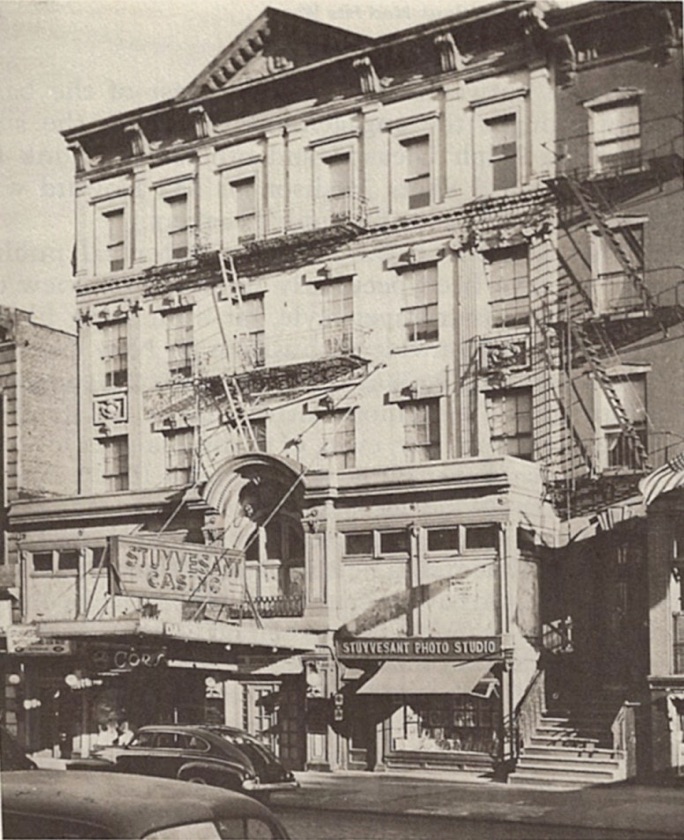
Originally a German YMCA beginning in 1881, the building was a pair of late federal-style houses, dating back to around 1830 when the area was known as “Little Germany.” The building stayed intact and in its original form, with sloped peaked roofs and dormers at the top, meaning the YMCA had not changed much of the exterior, and perhaps the interior as well.
Around the late 1800s, this area of Manhattan’s Lower East Side became the center of Jewish life in America. Crowded and culturally vibrant, a rise in crime would lead to gangs forming by the end of the century. Second Avenue was a main road, bustling with theaters, cafes, nickelodeons, bars, and vaudeville houses, making the region a draw beyond its residents.
Stuyvesant Casino
In 1910, Stuyvesant Casino opened at 140-142 2nd Avenue, owned and operated by Gerson Schmidt, an Eastern Europe immigrant from Galicia (now located in Ukraine). This stretch of 2nd Avenue encompassed part of Stuyvesant’s farm, and thus the name was given to the business.
The Stuyvesant Casino offered sumptous food, dazzling decor, and a first-class house band. High rollers and hitmen were among the clientele, particularly Big Jack Zelig, head of the Eastman Gang after the death of “Kid Twist” Max Zwerbach, in 1908.
Big Jack Zelig
During a party on December 2, 1911, Zelig lured a drunk “Julie” Morrello, an Italian gangster called “one of the most notorious gun and knife fighters on the east side, to Stuyvesant Casino. Around 1am, the lights went out and four shots rang out. As the lights flickered on moments later, Morrello was lying prone on the dance floor, filled with bullets.
In post-World War I New York City, Stuyvesant Casino would be a notorious hangout for Jewish gangsters, but by World War II, the venue became known for music producing the hits.
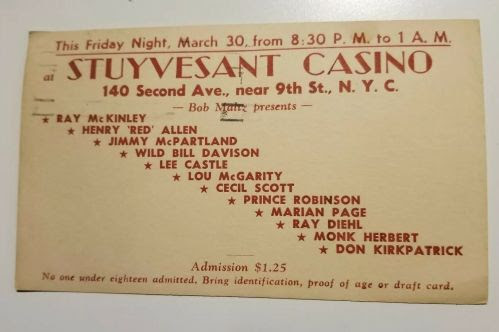
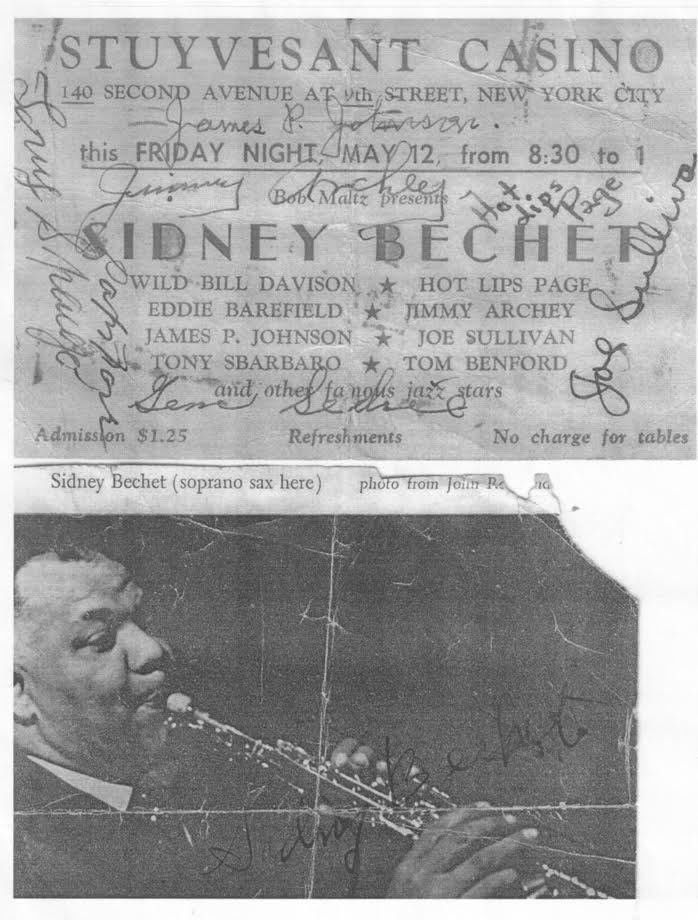
In the 1940s and into the 1950s, Stuyvesant Casino became a popular destination thanks to the arrival of New Orleans and Dixieland jazz artists. Big names such as Sidney Bechet, Wild Bill Davison, Rex Stewart, James P. Johnson, Georgie Lewis, Joe Sullivan, the great Bunk Johnson, and the Conrad Janis Tailgate Jazz Band could be heard for the low cost of $1.25.
Owner Gerson Schmidt was at one point encouraged by the Stuyvesant’s head waiter to allow a band consisting of his three sons to perform at the Casino. The three Perelmuth Brothers – Pinchas (violin/vocals), Michoyl (piano) and Sender (bass) – were a hit, leading to partygoer and movie theater impresario Samuel Lionel “Roxie” Rothafel, to discover Pinchas’ voice and recognize his potential. When Roxie asked why he was only singing in a “mere catering hall,” Perelmuth responded, “I would love to be an opera singer, but don’t have the money for a vocal coach.”
Opera legend Jan Peerce got his start at Stuyvesant Casino as a child
Roxie would take Pinchas under his wing and helped him get his break, helping him study voice and making his name among the opera elite of New York City. Perelmuth would make his debut at the Metropolitan Opera in 1933, under a new name, Jan Peerce. He would make his Broadway debut in 1971 in Fiddler on the Roof, a far distance for the son of Russian immigrants to travel from the Lower East Side.
As noted in the book The Jews of Capitol Hill, Gerson had a son, Mordechai, who married Myra Bank, the daughter of Galician immigrants. The two would have a son, Lawrence Jack Smith, a Democrat from Florida who served five terms in the House of Representatives from 1983-1993. Smith, whose parents ran catering establishments in the New York kosher catering scene, would work for their business and at Stuyvesant Casino from an early age.
When the Dixieland jazz made its way north, Gerson’s Stuyvesant Casino was the natural stop for an eclectic melting pot of music. Saxophone great Steve Lacy hung around the Casino as a teenager was exposed to early Dixieland Jazz greats, some of whom he would join there on a regular basis, including Henry Red Allen, Pee Wee Russell, Buck Clayton, and his teacher, Cecil Scott.
New Orleans bandleader Bunk Johnson would frequently perform at Stuyvesant Casino, occasionally joined by Louisiana-born bluesman Huddie “Leadbelly” Ledbetter, who lived on nearby East 10th Street. Trumpeter Hot Lips Page recorded a version of the 1924 classic “When My Sugar Walks Down the Street” at the Casino, and would later open rival venue Birdland with Charlie Parker, who lived nearby on Avenue B, in 1949.
Portrait of Bunk Johnson, Leadbelly, George Lewis, and Alcide Pavageau, Stuyvesant Casino, New York, N.Y., ca. June 1946
Robert Thompson, a Dixieland drummer known for his group The Red Onion Jazz Band, recalled Bob Maltz as an organizer of jam sessions at Stuyvesant Casino that attracted well paid world class musicians. The Red Onion Jazz Band served as legendary Dixieland revivalists, borrowing the name from Clarence Williams’ traditional New Orleans supergroup Red Onion Jazz Babies, which included Sidney Bechet and Louis Armstrong playing together for the first time in studio.
via Jazz Lives
The Red Onion Jazz Band would perform into the 1960s, just as folk music made its way through Greenwich Village. In the Traditionwould bring together folk musicians by way of Dave Van Ronk and his Prestige label, along with jazz musicians for a unique album. Vocalist Natalie Lamb would perform with The Red Onion Jazz Band and in 1972, married Thompson. A few years later, the group’s long-time trombonist, Dick Dreiwitz and his wife Barbara – a Hunter College alumnus who switched from French horn to tuba so she could play Dixieland jazz – would welcome a son, Dave. Now the bassist for Ween and Joe Russo’s Almost Dead, Dave Dreiwitz continues a tradition forged in the East Village confines of Stuyvesant Casino. The Red Onion Jazz Band would continue to perform until Thompson’s death in 2010.
From: A Pictural History of Jazz by Keepnews and Brauer. L to R, Buster Bailey, Vic Dickenson,Wilbur deParis, Omer Simeon, Hot Lips Page, Rex Stewart.
A first hand account of Stuyvesant Casino from Mr. Madison Arnold, as shared with Jazz Lives:
I was one of the steady jazz loving week-end customers at the Central Plaza and Stuyvesant Casino from around 1950 to 1952 and got these post cards weekly. This is the only one I kept. I started when I was still in Erasmus Hall H.S. (they didn’t card in those days). My favorites were Bechet & Wild Bill but I loved them all. Among my memories: I helped Pops Foster put his bass in a cab one night and we went to the Riviera on Sheridan Sq., Red Allen pulled me up on stage once and we sang “The Saints Go Marching In” together. I became friendly with Baby Dodds and invited him over for dinner one evening to our apartment in Brooklyn. I also visited his place in Harlem. I have a Xmas card he sent me, written, I think, by his lady friend as I don’t think he could write. My personal Louis Armstrong stories are even better! (at least to me). He was a wonderful guy.
Mr. Madison Arnold
An autographed show promo from Stuyvesant Casino
By the mid-1950s, due in part to restrictive immigration laws and a rise in crime and building abandonment, Stuyvesant Casino would close its doors. A home for Eastern European refugees since the late 1800s, new immigrants from Poland and Ukraine headed to the East Village for an escape from communism in the mid-20th century, in addition to Puerto Ricans who had U.S. citizenship.
Stuyvesant Casino also contained the Ukrainian National Home, a community center that opened in 1958, an effect of the change in neighborhood demographics. Offering cultural and social services to the East Village’s Ukrainian population, an area now known as Ukrainian Village, the “Ukie Nat” hosted a diverse array of artists in the 1980s including Elvis Costello, New Order, and the Misfits, as well as balalaika music filling the Ukrainian Home Restaurant.
New Order would perform their first American show at Ukrainian National Home, testing out new material that built off Joy Division’s sound. During the 80s post-punk era, synth-based freestyle and electro could be heard at downtown clubs – a melding of white, Latino and Black artists who were mixing in the same area where punk rock inspired New Order’s early sounds.
Looking back on Stuyvesant Casino’s heyday, jazz music from beyond New York would find a home in this region of the city that so many others had sought refuge in for centuries prior. Home to Germans, Jews, African-Americans, Ukrainians and many more, the area at 140-142 Second Avenue has been a bustling center of cultural diffusion and artistic growth for nearly two centuries, and continues to be so today. The original Stuyvesant Casino building burned down in 1985.
In January 2023, Ev Grieve shared news that during renovations at 132 Second Ave, a flyer for Stuyvesant Casino was found on a pole, decaying but clearly showing an event on a Saturday night.
photo by Kevin Goodman
As we close out this look at Stuyvesant Casino, listen to a WMGM broadcast from Friday, March 14, 1952, via Jazz Lives, featuring Master of Ceremonies Aime Gauvin, joined by Jimmy McPartland (cornet), Ziggy Elmer (trombone), Bud Freeman (tenor saxophone), Bob Wilber (clarinet), Kenny Kersey (piano) and Don Lamond/George Wettling (drums). They perform a medley including “Saints, “Lady Be Good,” “Coquette,” and “The World is Waiting for the Sunrise.”
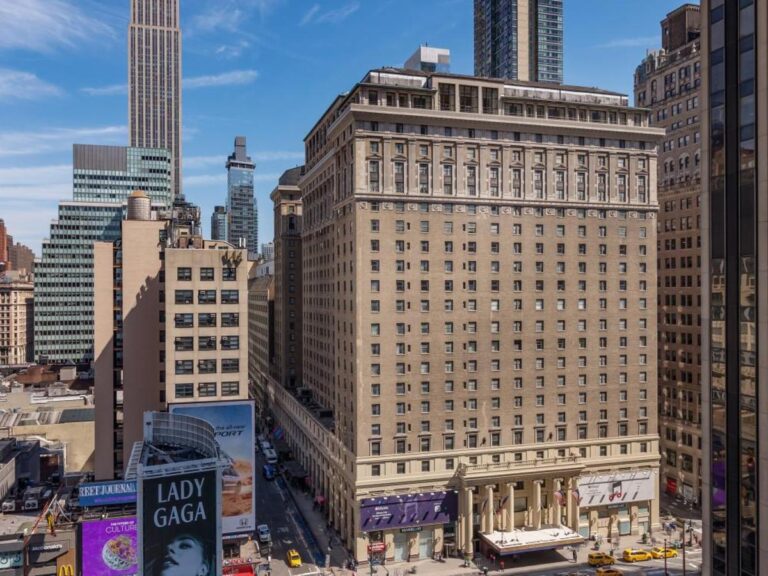
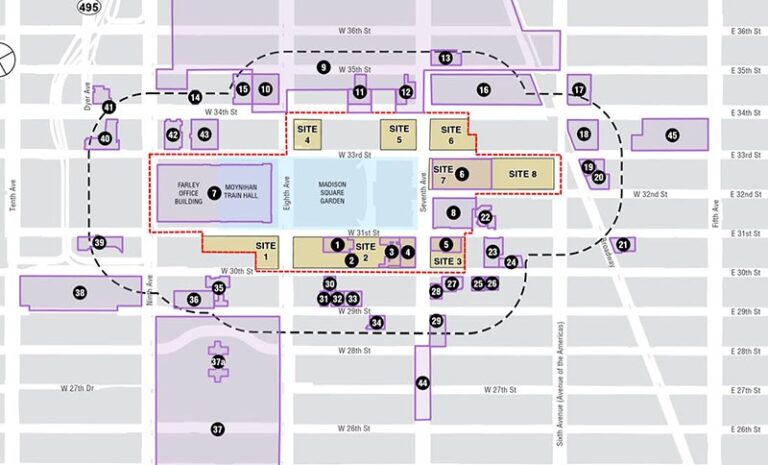
An iconic location in mid-town Manhattan is closing its doors for good. The Hotel Pennsylvania will not reopen, succumbing to this past year’s lack of business and years of narrowly avoiding the chopping block. The fourth largest hotel in New York City was well situated, right across from Madison Square Garden and Penn Station, making it a natural and affordable stop for travelers and concert goers alike.
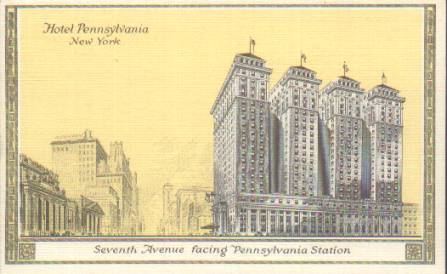
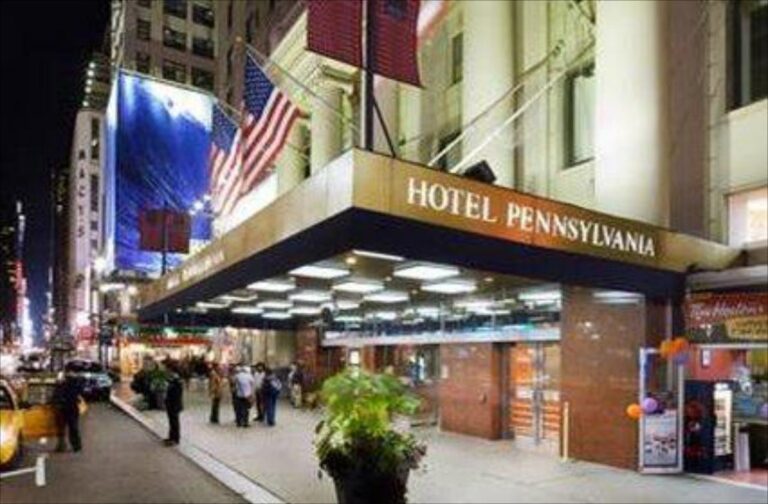
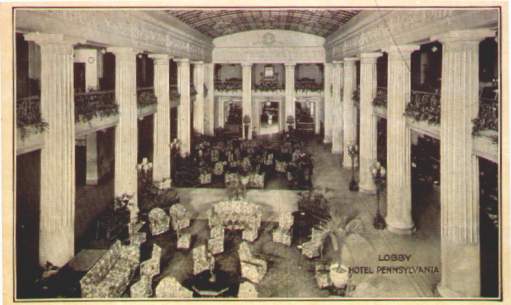
Located on 7th Avenue between 32nd and 33rd, and built by the Pennsylvania Railroad under the operatation of Ellsworth Statler, The Hotel Pennsylvania first opened on January 25, 1919. Original Pennsylvania Station designer William Symmes Richardson was the architect of the well-situated hotel. The hotel would undergo a few name changes, including Hotel Statler (1949), The Statler Hilton (1958), New York Statler (1979) New York Penta (1983) and finally Hotel Pennsylvania, beginning in 1991. If there was a centennial celebration, it was muted, but earned.
Hotel Penn has had its share of criticisms in recent years, being perpetually under renovation in the last decade, and not living up to the glory years of the mid-20th century. There were rumors it was haunted, the elevators would sometimes not open entirely on your floor, or need a moment before ascending from the lobby. But amid any issue with Hotel Pennsylvania, the location and history could not be beat.
Full disclosure: I’ve stayed at Hotel Penn at least 40 nights, dating back to December 2005. I’ve heard all the complaints of Hotel Penn, and while some are justified, it always felt like this Grand Hotel got a bad rap. I never had a bad stay, or encountered the issues that people complain about. You look for a 3-star hotel in mid-town, you have to accept what a 3-star hotel brings to the table.
The Music
There is a fair amount of history in this huge hotel, most notably The Glenn Miller Orchestra’s “Pennsylvania 6-5000.” Until early May 2021, you could call 212-PE6-5000, and hear the refrain from “Pennsylvania 6-5000” before connecting to an operator. It was, until this month, the longest continuous use of a phone number in New York. From the moment you called the hotel, music and history was inviting you in.
Jack Albin Orchestra held a long term engagement at Hotel Pennsylvania in the early 1930s, often led by vocalist Bill Coty. Despite being popular in his day, little is known of Albin, although he did record for many labels, including Hotel Pennsylvania Music. “You’re The One,” recorded in 1930 features vocalist Paul Hagan. Hagen recorded with several bands including Ben Bernie’s groups, Bill Moore’s Syncopators, and Fred Culley and his Royal York Hotel Orchestra.
In 1930’s and 40’s, the Café Rouge at Hotel Pennsylvania was one of the most popular nightclubs in New York City. Home to Big Bands at the height of their heyday, including Glenn Miller Orchestra, Duke Ellington, The Dorsey Brothers, Woody Herman, Count Basie, and The Andrews Sisters, among others. The Café Rouge was connected to the NBC Red Network (the NBC Radio Network after 1942) which brought the music from the hotel and Café to captive audiences across the country.
In November 1939, bandleader Artie Shaw, who had a long-term engagement at Café Rouge left the bandstand between sets. Shaw decided he had had his share of the band business amid his success over the past two years, and quit his band on the spot. Shaw’s principal orchestrator from 1937–39, Jerry Gray, was hired by Glenn Miller as a staff arranger when Shaw deserted the band.
In the pre-war 1940s, the Glenn Miller Orchestra had multiple long-term bookings in the room, corresponding with the time of Miller’s highest profile as a bandleader. Broadcasting from The Café Rouge, some performances were recorded by RCA Victor. During the time of Miller’s residency at Hotel Pennsylvania, Gray wrote “Pennsylvania 6-5000,” with lyrics by Carl Sigman, a song that would become iconic alongside the hotel.
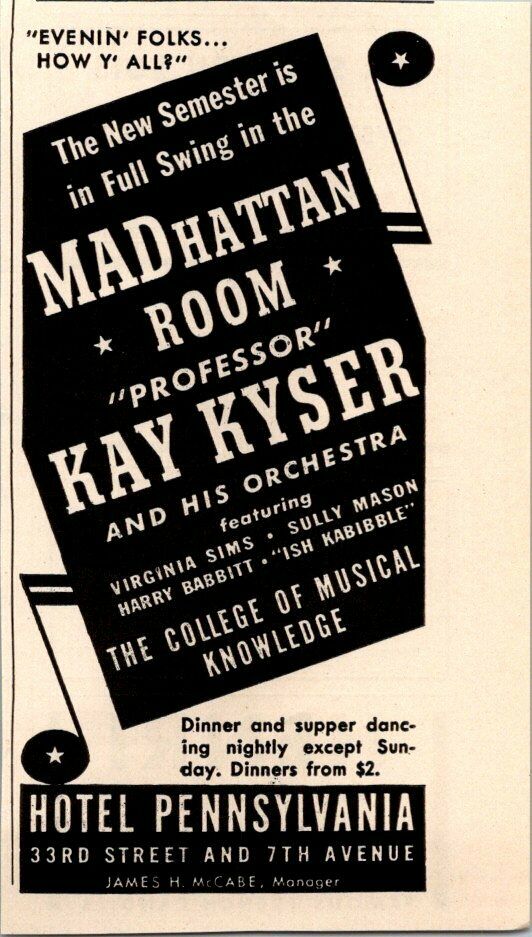
Other notable musicians to perform at Hotel Pennsylvania include Benny Goodman‘s famous orchestra including Harry James, Ziggy Elman and Gene Krupa, who broadcast from the hotel’s Madhattan Room in 1937. Les Brown‘s band, with vocalist Doris Day, would introduce “Sentimental Journey” at The Café Rouge in November 1944.
Present Day
The era of music at Hotel Pennsylvania would seemingly cease by the 1950s, with limited evidence of music performances at the hotel. The Café Rouge would be severed from the hotel at an unknown time, having a standalone address on 32nd street. By 2014, The Café Rouge was converted into an indoor basketball court known as Terminal 23. The original interior decor remains intact, with a fountain, beamed ceiling and other architectural details remain.
As for the hotel itself, Vornado CEO Steven Roth, who owns the property, said of the hotel in a letter to shareholders, “while it may have been a grande dame in its time, it is decades past its glory and sell-by date.” In an effort to revitalize the area as the Empire Station Complex, meaning that more than a city block, including Hotel Penn, will soon be razed to make way for PENN15.
With no protection that comes with Historic Landmark status, beginning with a denial in 2010 by the New York City Landmarks Preservation Commission to designate Café Rouge as a landmark, the Hotel Penn as a whole has likewise not been saved by the status that prevents facing the wrecking ball.
Architect Richard Cameron, contests the grounds on which developers seek to demolish what was at one time the largest hotel in the world. Using the history of old Penn Station, which met a similar fate, Cameron said:
We used to have the greatest train station in the world right across the street, literally right across the street, and sadly for me I was too young – when I got to New York it was already gone. The language that was used to destroy that station is the exact same language Steve Roth is using today to argue to destroy this; it’s tired, it’s old, it’s dirty, can’t be reused. We need something new. Everybody admits that what happened across the street was one of the worst crimes in terms of architectural legacy that ever happened in this country. We’re about to commit the exact same crime right here with the Hotel Pennsylvania.
The proposed layout of PENN15 and surrounding area around Hotel Pennsylvania.
Staying at Hotel Pennsylvania
While there was music ingrained within Hotel Pennsylvania, there was of course music across the street at Madison Square Garden, making the location prime for crowds arriving for concerts and events, while looking for the easiest location to stumble back to afterwards. Bands that thrived on multi-night runs – the Grateful Dead and Phish, among others – meant Hotel Penn was often fully booked, offering a proximate and affordable rate for travelers and fans on a budget. This is precisely how I ended up staying there over December 30, 2004 through January 1, 2005. The Hammerstein Ballroom was a short walk for the Disco Biscuits’ New Years Eve show that year, and made for great late night revelry with many fans staying there or just popping by to celebrate the New Year as so many had in decades prior.
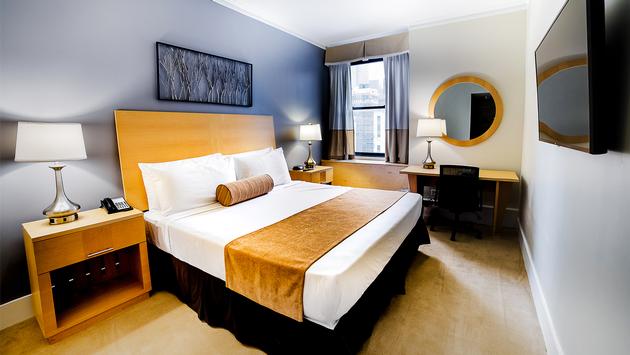
Upon arrival, check-in could be the longest line in the world at any time of day, or the shortest. Your keys would work when you got to the room, then not when you returned from a show. The valet doors, well outdated, were a nice historical touch. Rooms varied in size – people were much shorter and smaller when the hotel was built – so you might find the confines of a two-bed room tighter than modern hotels.
Even remodeled rooms at Hotel Penn were still small compared to modern hotels.
Hotel Pennsylvania was dog friendly too, serving as the official hotel for Westminster Kennel Club Dog Show, held annually at Madison Square Garden. Being able to bring a dog to the hotel can be helpful to some travelers, and the courtesy extended by the staff with regards to pets was top notch. The support for Westminster in providing the closest location possible for pets in New York City is noteworthy in itself.
A Personal Story
Having stayed there and willingly accepted the 3-star-ness of the hotel, I looked to Hotel Penn as the perfect location for a PhanArt show. Despite New York City being one of the most expensive cities in the country, Hotel Penn was able to provide an affordable location for these event, the only option beyond venues such as the now closed American Beauty on 30th street. The Gold Room provided well for five PhanArt shows beginning in January 2016, a rare find in a town where the cost to rent out a space for an art exhibit is cost prohibitive without major financial backing. For a group of Phish-inspired artists, Hotel Penn provided a home that the streets and lack of vacant lots in Manhattan could not.
In 2019, after much encouragement from past successes, the hotel brought the event to the 18th floor, which allowed for even more artists to take part, in addition to yoga sessions and providing a meeting place for fans, friends and groups. The staff worked with the artists as professionally as any other, and gave me more reason to look at Hotel Penn as having no more than a faded glory in need of a polishing.
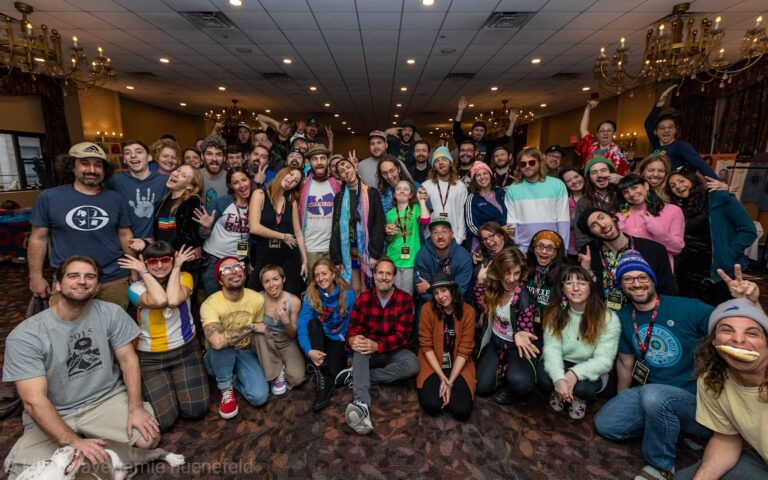
The artists and team behind the December 30, 2019 PhanArt Show at Hotel Penn. Photo by Jamie Huenefeld.
The history of Hotel Pennsylvania may be overshadowed by the past few decades where it fell farther from its glory days, but the history from within should not fade away as the hotel meets its doom.
Maybe it sounds a bit funny When I’m away from my honey Here’s what I do with my money Pennsylvania Six, Five Thousand
Central Park is not only the continent’s first public park, but arguably the most iconic. Artists have traveled from across the globe inspired to paint, play and write about the 843 acres of beauty.
The sacred space is surrounded by world-renowned music venues, museums, and galleries. Harlem’s home for R&B and soul, the Apollo Theater, sits just 15 blocks north of the park while Carnegie Hall attracts world-class orchestral talent just two blocks south of it (slightly northeast of Radio City Music Hall). Rock aficionados frequent the Beacon Theatre on West 72nd street to the west of the park while sophisticated symphony-enthusiasts admire the NY Philharmonic at Lincoln Center. Hugging Central Park on the east, art-lovers marvel at the rotating and static exhibits on Museum Mile and photographers snap photos of New York’s impressive architecture.
It would be hard to imagine one of the world’s most culturally blended cities without a gathering place for people to connect with nature and community. And some of the most memorable gatherings in the early to mid-twentieth century occurred at Sheep Meadow between West 66th and 69th streets. To bookmark the tumultuous 1970’s in the drug-infused, crime-filled, disco and punk era, James Taylor played the last big concert at Sheep Meadow in front of a quarter-million people. After Sheep Meadow closed its grass to tarps, blankets and bare feet, large concerts were given a new space on the Great Lawn located mid-park between 79th and 85th street.
They don’t call it the Great Lawn for nothing. Some of the largest crowds in recorded history packed the 55-acre plot of land to “be a part of it” as Frank Sinatra would say. Maybe it’s the park’s natural setting that makes it so appealing for concert goers or it could be the central hub, but many performances in the ‘80s created a sense of hope and peace during some of the roughest years. While the NY Times called 1980, “the worst year of crime in the city’s history,” music provided a momentary lapse of chaos. In June 1980, an estimated 200,000 spectators on the Great Lawn welcomed Pavarotti and then two months later, Elton John entertained 400,000 fans.
The following September, Simon & Garfunkel reunited for their first live performance in 11 years as a duo. The free benefit concert supporting the nonprofit Central Park Conservancy was expecting around 300,000 guests, but an estimated half a million people showed up for the legendary reunion. After opening with “Mrs. Robinson” and “Homeward Bound,” Simon commented, “Well, it’s great to do a neighborhood concert,” and thanked the police, the fire department, the park administration. The subsequent live album recorded that night went on to peak at number six on the Billboard 200 chart in 1982 and was positively received by music critics and worldwide fans of NYC-based folk.
https://www.youtube.com/watch?v=5OegZZNPsKA
While the magic created that night in Central Park between the future Rock and Roll Hall of Famers sparked a world tour the following spring, the relationship between the two musicians was creatively impossible to maintain, so they decided to call it quits before ever releasing a reunion album. On the positive side, their benefit concert to support the park’s restoration and maintenance plans was reimagined by other artists on the Great Lawn for decades to come.
Another major Great Lawn milestone took place in June of 1982 as part of the “No Nukes” movement. Central Park’s Rally for Nuclear Disarmament was held on June 12, 1982, and invited chart-topping musical guests including Bruce Springsteen, Linda Ronstadt, James Taylor and Jackson Browne to play in front of an estimated crowd of 750,000. Four years later, in July 1986, a record-breaking 800,000 people were reported at the New York Philharmonic and U.S. Marine Band joint concert to celebrate the restoration and reopening of the Statue of Liberty.
In April 1990, another massive crowd of three-quarters of a million packed Central Park for Earth Day. The musical guests were the B-52’s, Hall & Oates and Eddie Brickell. That same year, the Central Park Conservancy’s SummerStage concert series was moved to Rumsey Playfield, located just off the East 69th and 5th Avenue entrance to Central Park. While not as big as the massive Great Lawn and Sheep Meadow gatherings, the SummerStage has brought world-class acts to the area for over three decades, promoting everything from Central Park preservation, Greenpeace, voter awareness and social justice.
Paul Simon returned in 1991 to a giant crowd on the lawn, but every attendance record for a single artist was destroyed by Garth Brooks in 1997 for a show better known as “Garthstock” due to the giant turnout in a city not known for country music. Dave Matthews Band would bring the free benefit show back to the Great Lawn in 2003 to support music and art education in the NYC public school system, drawing an estimated 85,000. Matthews greeted the crowd saying, “So nice to run into you in the park here, the greatest park in the world, and the greatest city in the world.”
The Black Eye Peas filled the Great Lawn in 2011 for yet another benefit concert raising over $4 million for the Robin Hood Foundation. In 2019, nearly $1 billion was raised during the Global Citizens Festival supported by headliners: Queen + Adam Lambert, Pharrell Williams, Alicia Keys, OneRepublic, H.E.R., and Carole King. The city’s incredible fundraising ability is only as powerful as the people that support the events — artists, promoters, attendees. Concerts on the Great Lawn are not only legendary due to the phenomenal performances in the epic “green lung” of the country’s largest city, but many of the concerts have transcended music and focused on the greater impact of people helping people.
What’s so special about Central Park is that you don’t have to be one of the hundreds of thousands to enjoy a memorable live music experience in Central Park. The grounds are full of talented performers from all over the world, and the magic of New York’s most iconic park is that you never know who you’ll run into playing in the paths and park entrances.
If you happened to be in the park during 2013’s installment of Jazz and Colors (a Peter Shapiro sponsored event), you might have run into an impromptu jazzy set with a touch of psychedelia. Bassist Phil Lesh, guitarist Eric Krasno, and drummer Joe Russo dropped their equipment on a random path and started playing to a crowd of zero, then a few dozen, then a few hundred. It’s moments like these that accentuate the excitement of being in the park on a fall afternoon.
Just this past September, as the leaves began to turn during a global pandemic, you might have run into Phish’s Trey Anastasio playing solo acoustic in support of the Parks Foundation’s SummerStage Jubilee. When asked the energy of a quarantined city, Anastasio remarked, “Yes, it’s weird walking through Times Square right now, but Times Square was tourists. But if you go into residential neighborhoods, I mean listen, it’s the greatest city in the world…always has been.”
Albany has many venues, but for more than a decade, there has not been a mid-sized music venue for bands to ‘graduate’ to once they prove themselves capable of filling clubs, including The Hollow, Parish Public House, Pauly’s Hotel and various area clubs and bars. If your band can sell out any of these rooms, the next logical stop is either Putnam Place in Saratoga Springs, or wait until you’ve built yourself up enough to return to The Egg, Upstate Concert Hall or open up at The Palace for a larger act. This has created a gap for artists from and playing in the Capital District, one that is bridged by the arrival of Lark Hall.
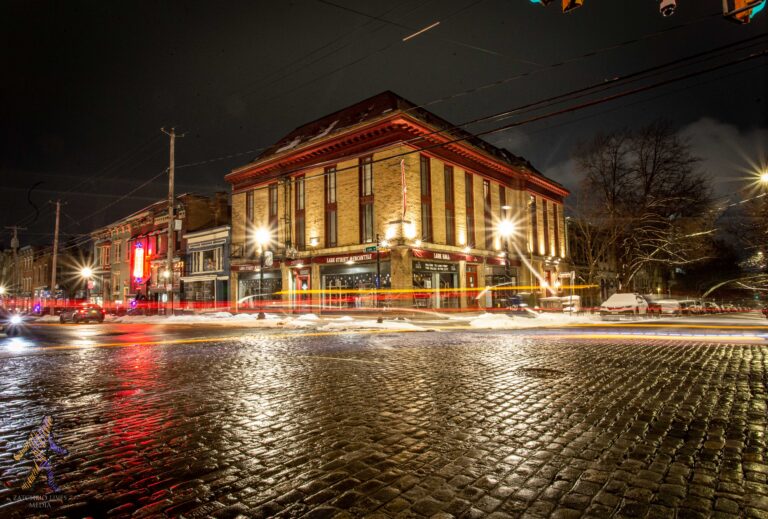
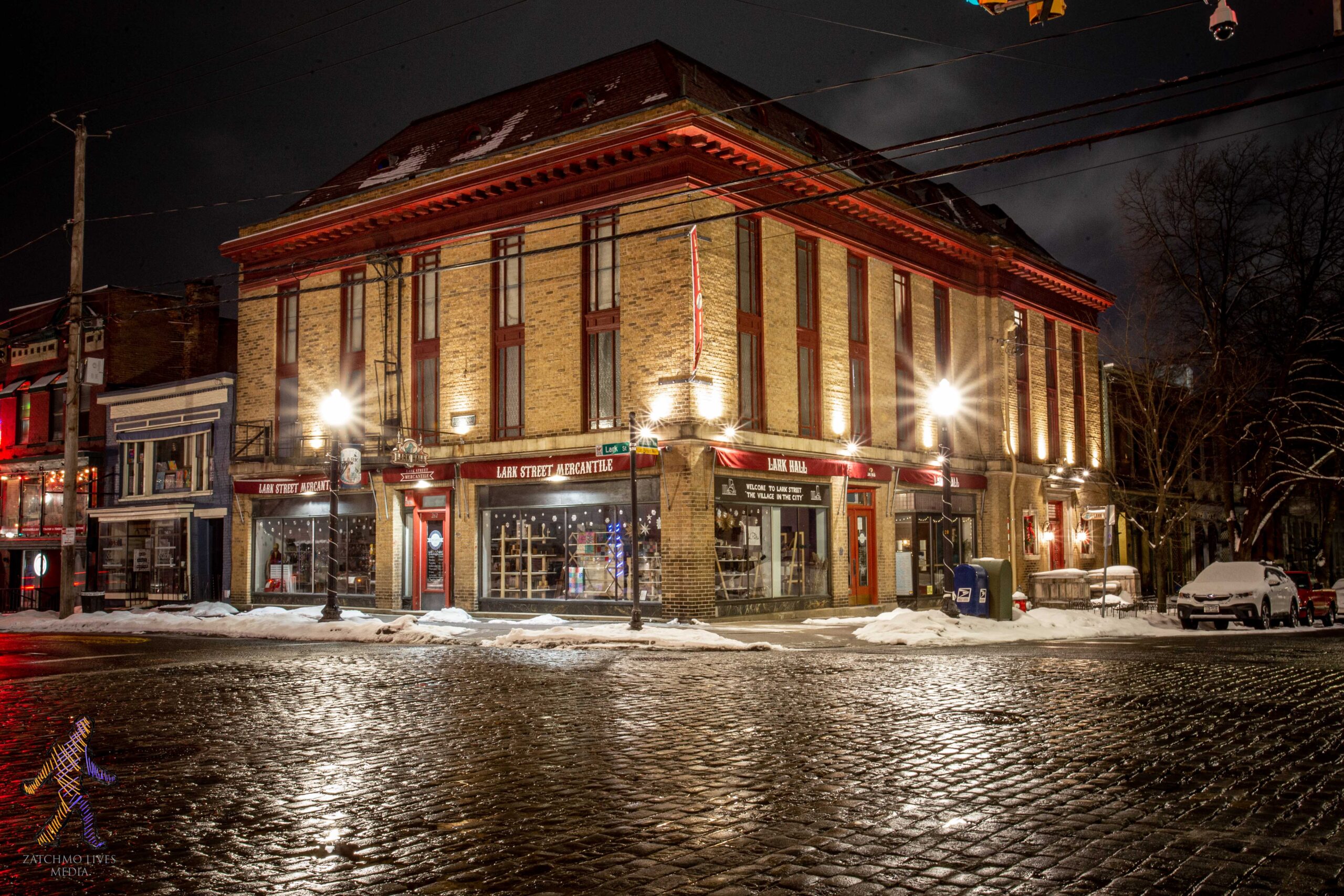
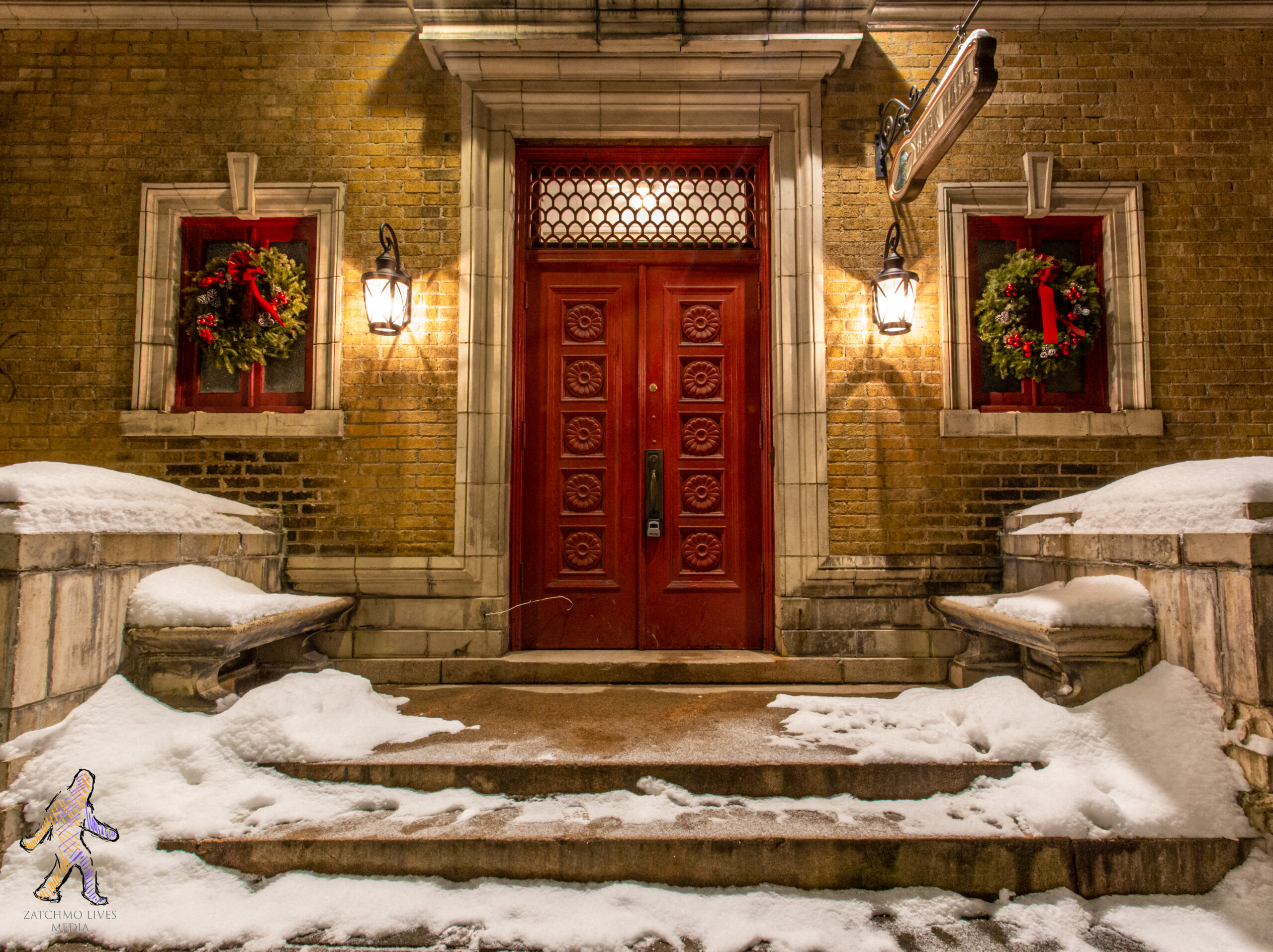
Lark Hall, Albany, NY – photo by Zach Culver
With a room for shows, weddings, events and gatherings, Lark Hall will be more than just a music venue holding events on the side.
Using pieces of history from across the Capital Region, Lark Hall draws on local heritage as they prepare to bring a 300-450 capacity multi-purpose venue to Albany’s Center Square neighborhood.
NYS Music got an exclusive first look at Lark Hall, Albany newest music venue, right in the heart of town.
History in the heart of Albany
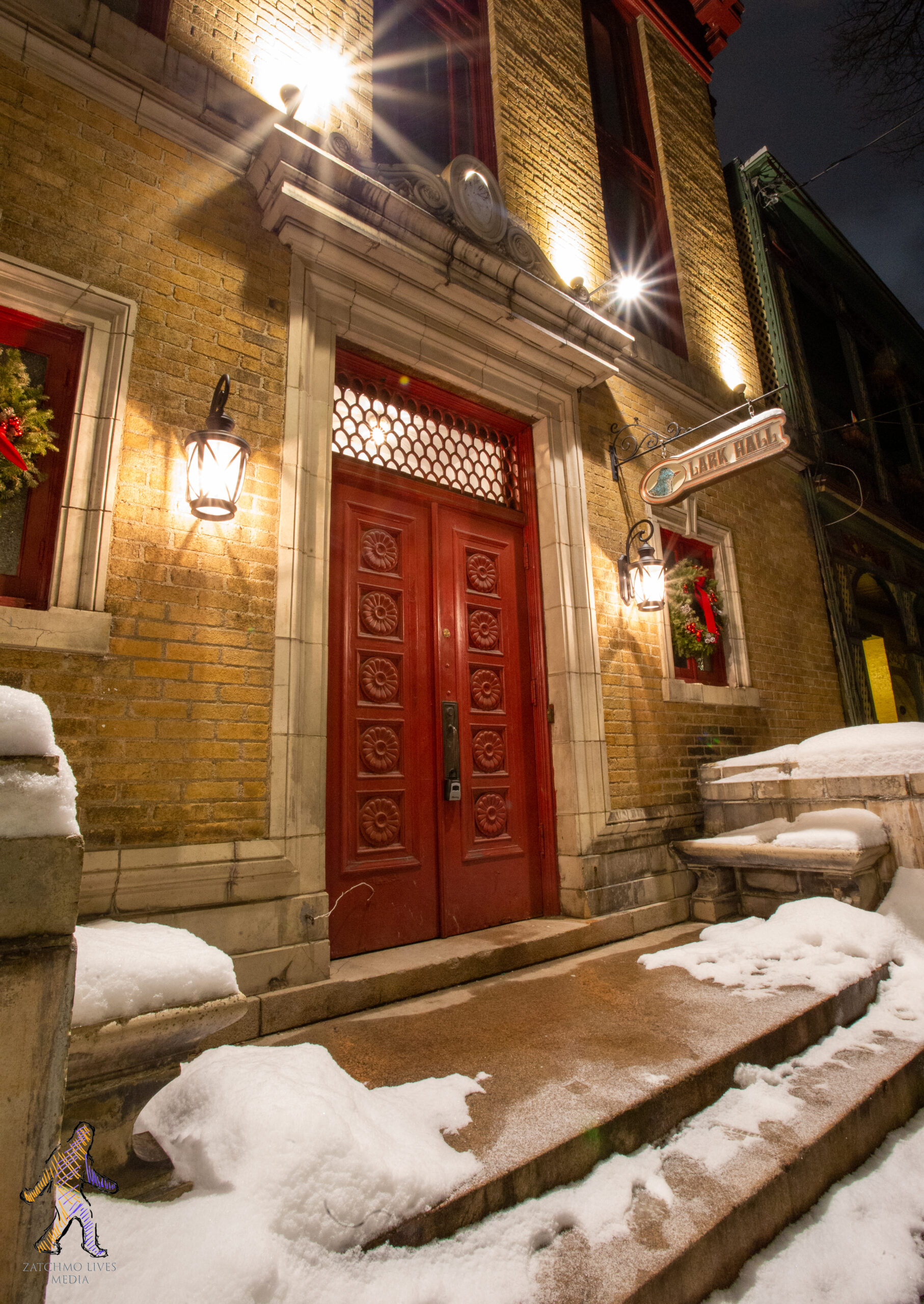
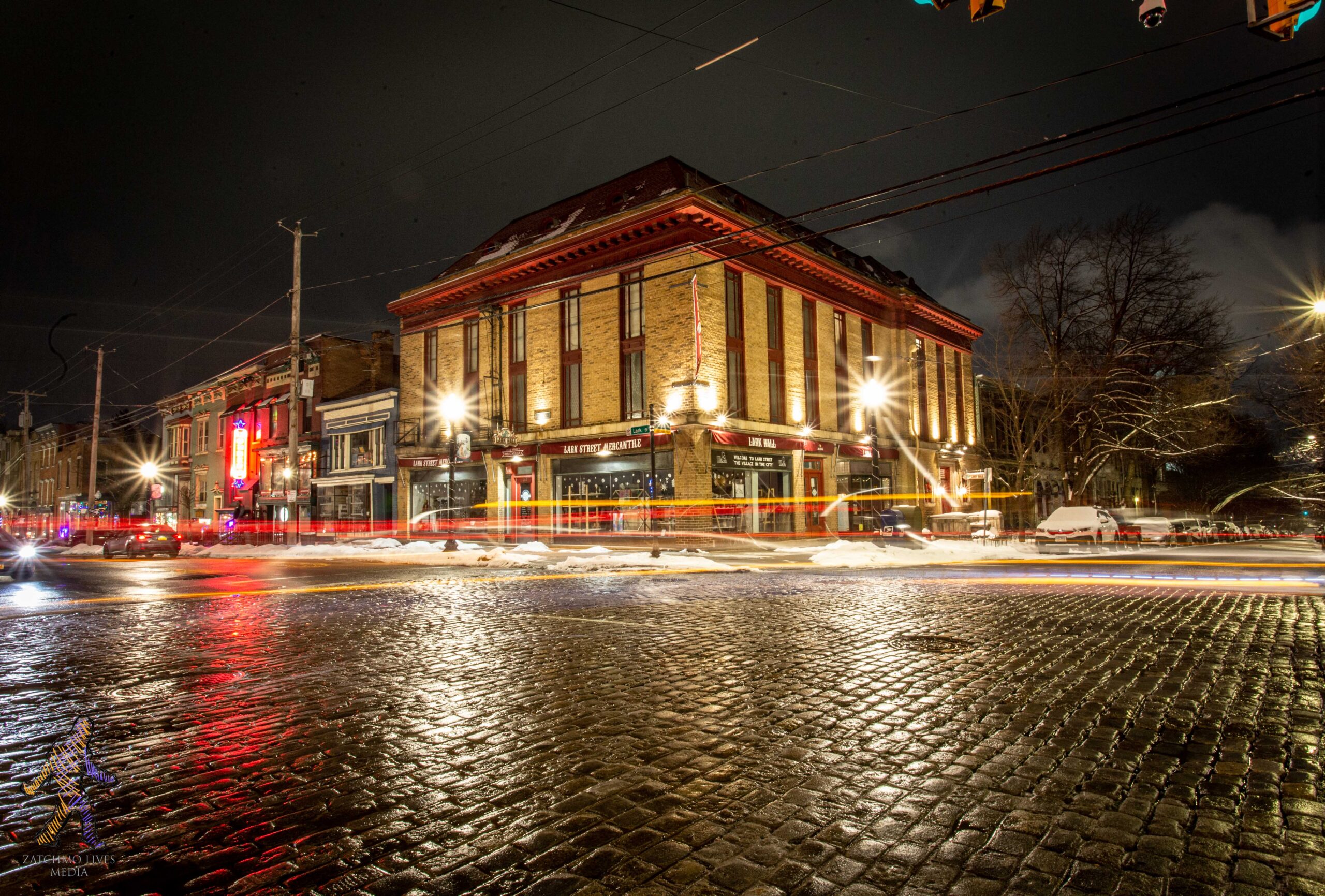
Lark Hall has a long history of being operated and owned by women, including the current iteration of the venue with Lark Street Yoga on the ground floor. In 1916, the corner of Lark and Hudson Ave was the starting location for the 48th Annual Suffrage Convention, where 600 delegates were expected. From across the state, supporters including Margaret Hinchey, Jane Olcott, Vira Whitehouse and Leonora O’Reilly were in attendance.
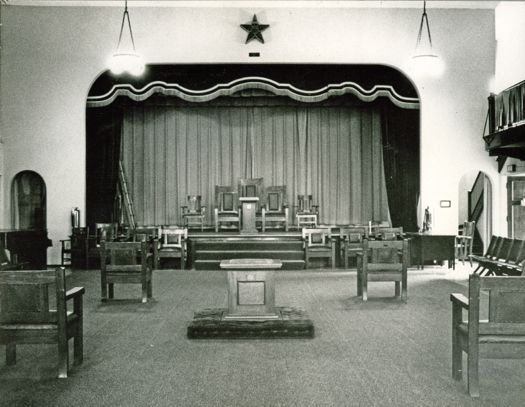
Constructed by women, for women, it initially served as a chapter house for the Daughters of the Eastern Star, the female equivalent to Free Masons. A building that took less than six months to build hosted the 1916 state suffrage convention as one of its first events – a year later the 19th amendment, guaranteeing women the right to vote, would be passed by the Albany legislature, located a short 12 minute walk away.
The hall would serve as a community asset in Center Square, with Red Cross bandage packets assembled by volunteers during World War I, providing food for neighbors during the Great Depression, or holding vigils for husbands, brothers and sons during World War II. USO events were held, as well as cotillions and school dances heading into post-war America; at one of these events, TV and radio personality and Albany native Andy Rooney met his wife here at a dance. The father of Rock n Roll, Chuck Berry, traveled to Albany and played Lark Hall, along with many others over the years.
photo courtesy of Lark Hall
Purchased by eba Center for Dance & Fitness in 1977, the Hall shifted to be a focal point for the arts, dance and performance for over 40 years, until closing in 2017. Justin and Jenn Miller saw the history of the location and outbid others to take over ownership of the historic venue.
We bought it with a vision to both restore the building’s natural beauty and maintain it as a community and performing arts venue. We’re also fortunate to be home to Lark Street Yoga and Lark Street Mercantile, both of which contribute to Lark Street’s vibrancy and sense of place.
Jenn Miller, owner, Lark Street Yoga
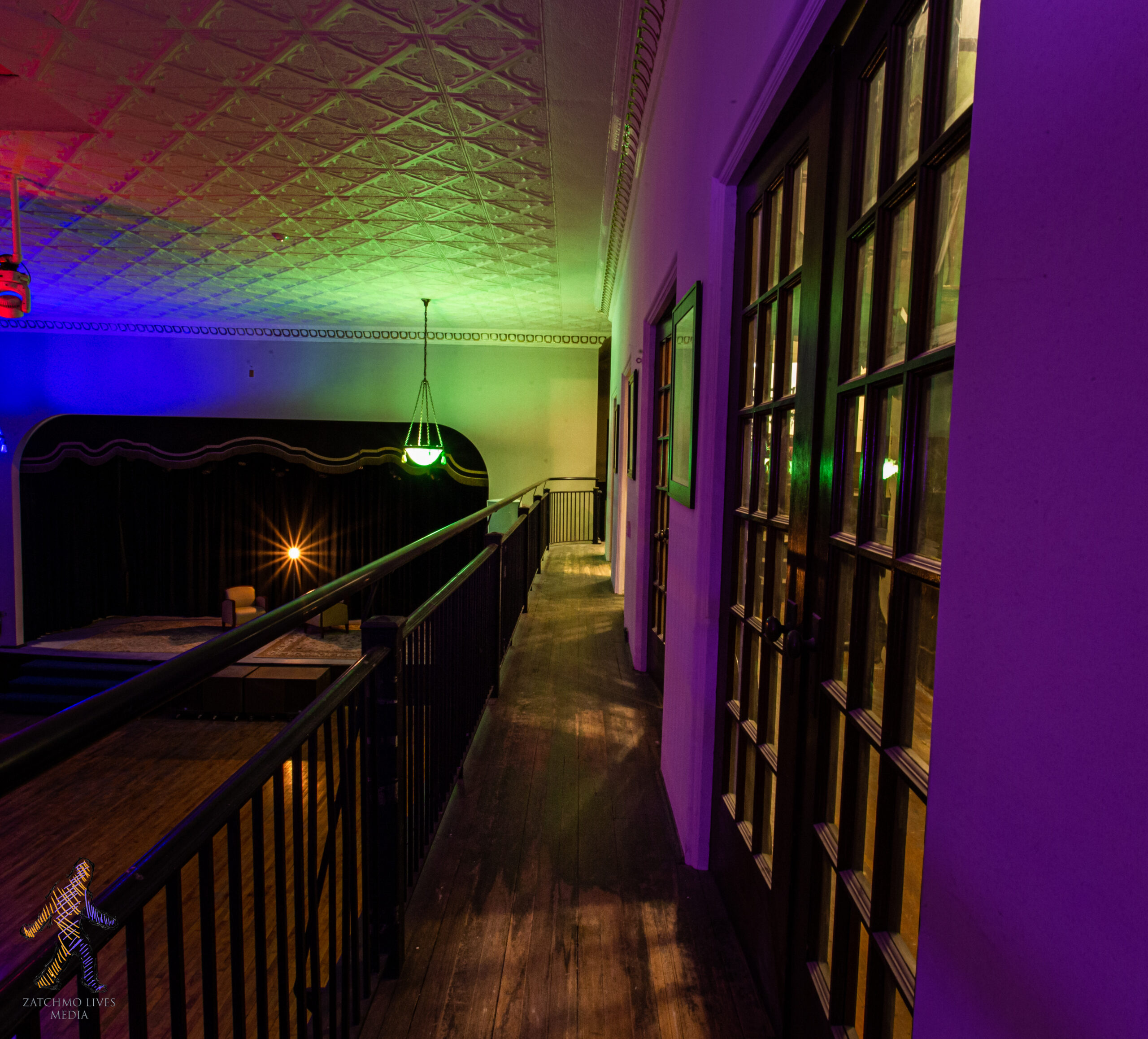
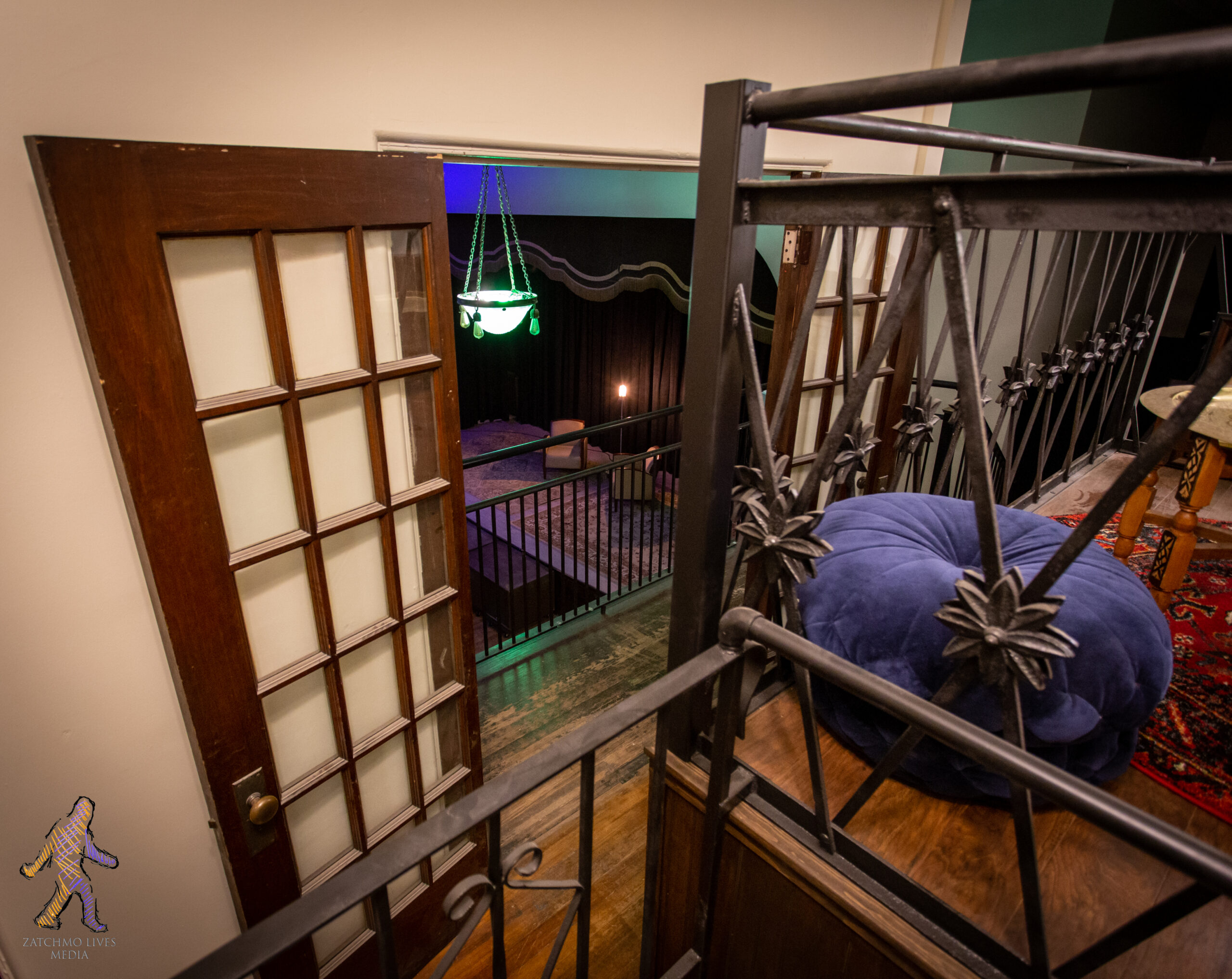
Locally sourced materials found a second life in the century-plus old building, including the original curtain bunting behind the stage that matches the age of the building.
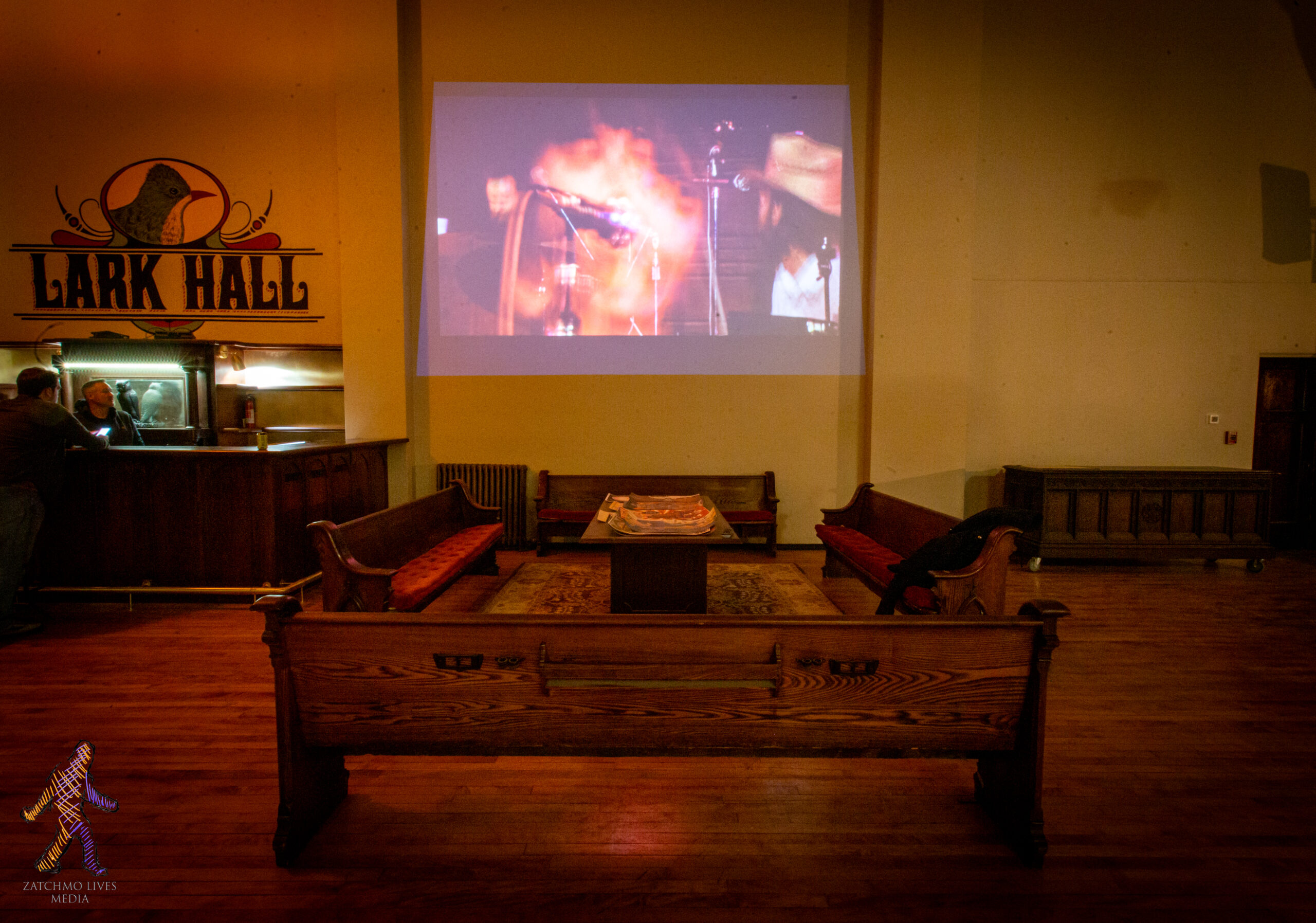
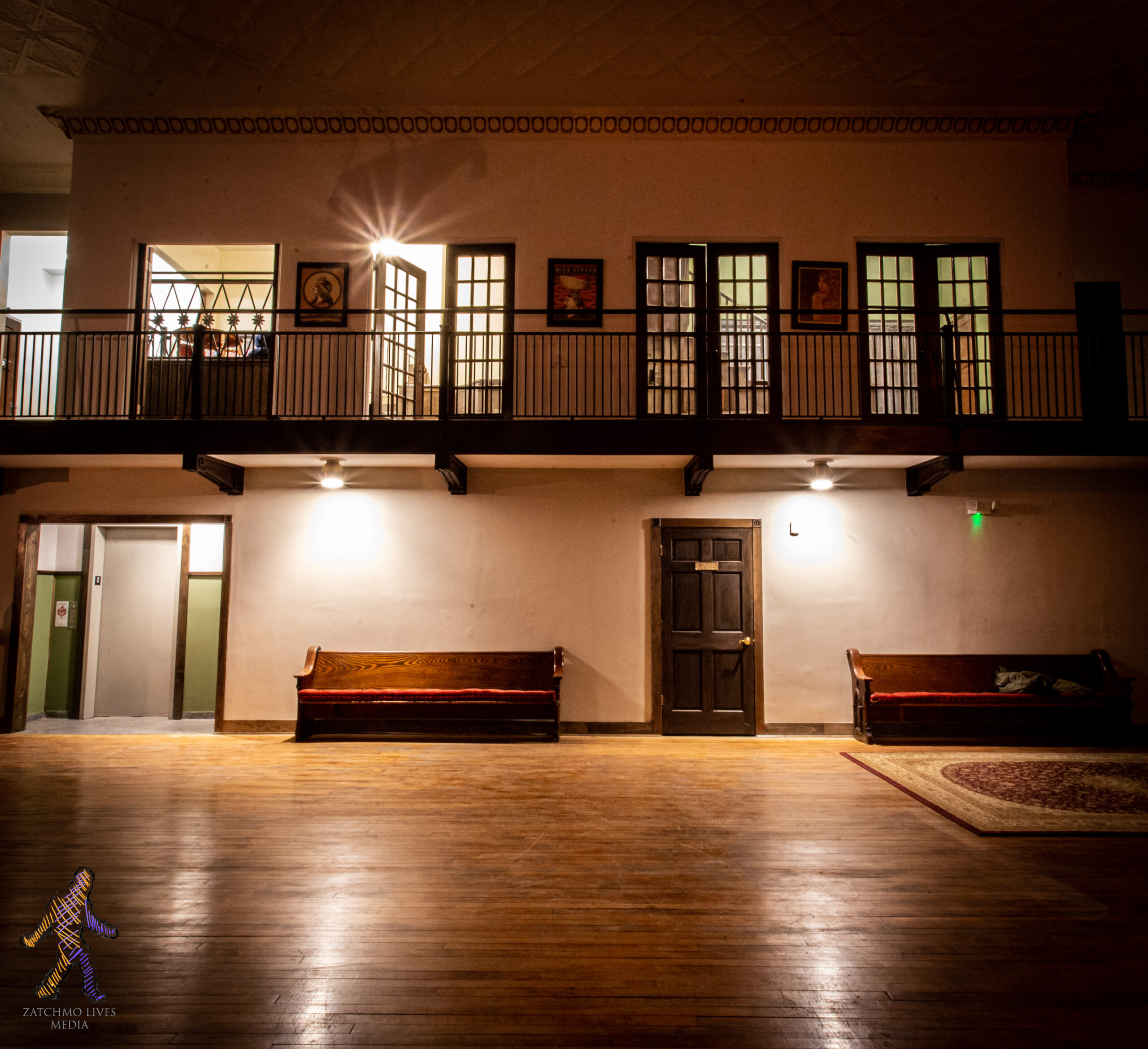
Part of the decor added over summer 2020 includes church pews from First Presbyterian on 15th street in Watervliet. The pews serve as seating that will eventually ring the room, and for now serve as ways to socially distance limited audiences in the room. Additional pews were repurposed and made into the bar.
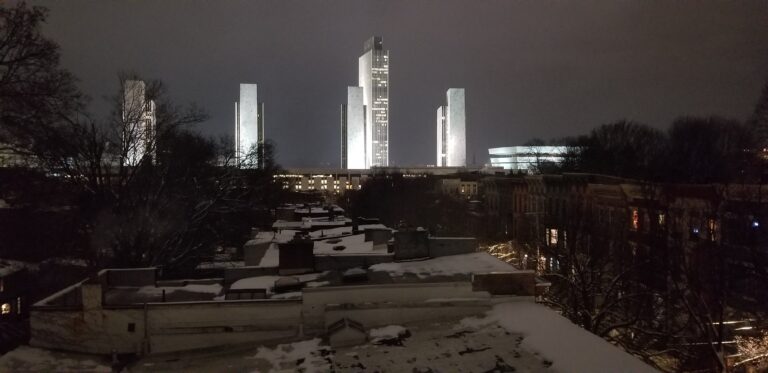
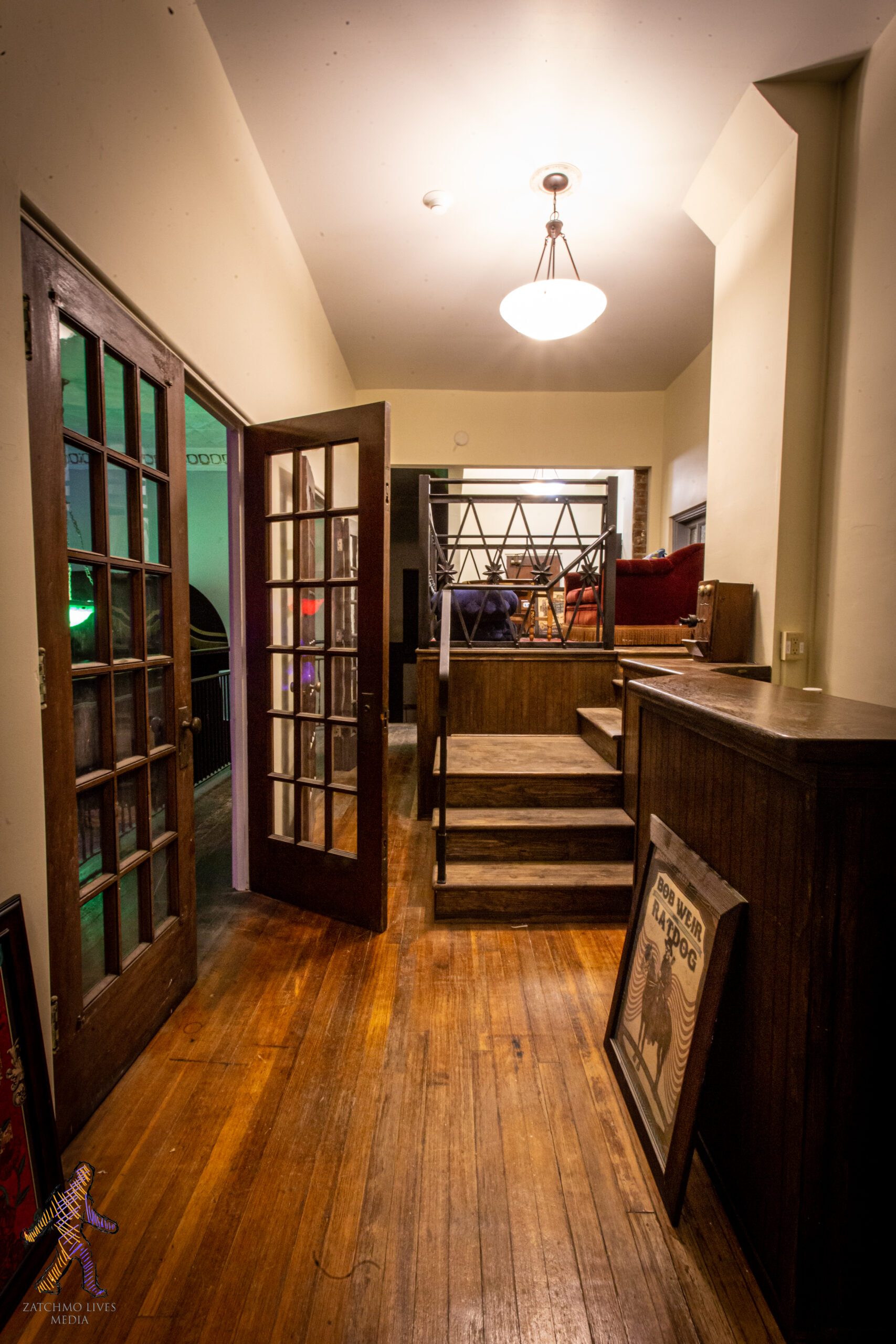
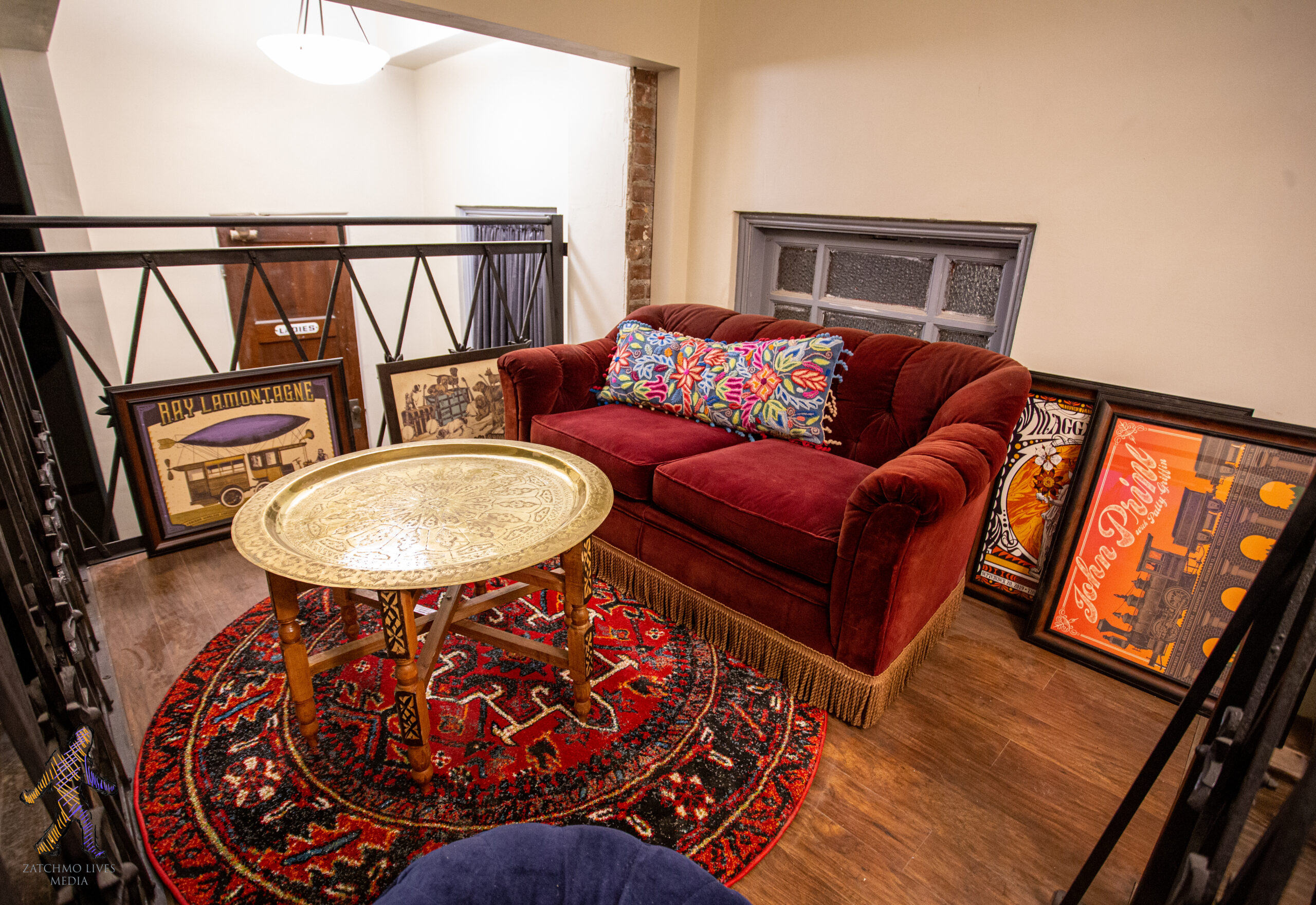
The Millers upcycled the fence from their first home for a kitchen island in the residency upstairs, and framed concert prints from their personal collection pepper the venue on all available wall space. The decor in the bathrooms features brass fixtures and Moroccan tile, and a fully furnished Green Room / Apartment on the third floor will allow bands ample room to stretch out before a show, or a place to stay during an extended residency. Views of the Empire State Plaza from the third floor bring a sense of proximity to a town affectionately known as ‘Smallbany.’
Looking East towards the Empire State Plaza
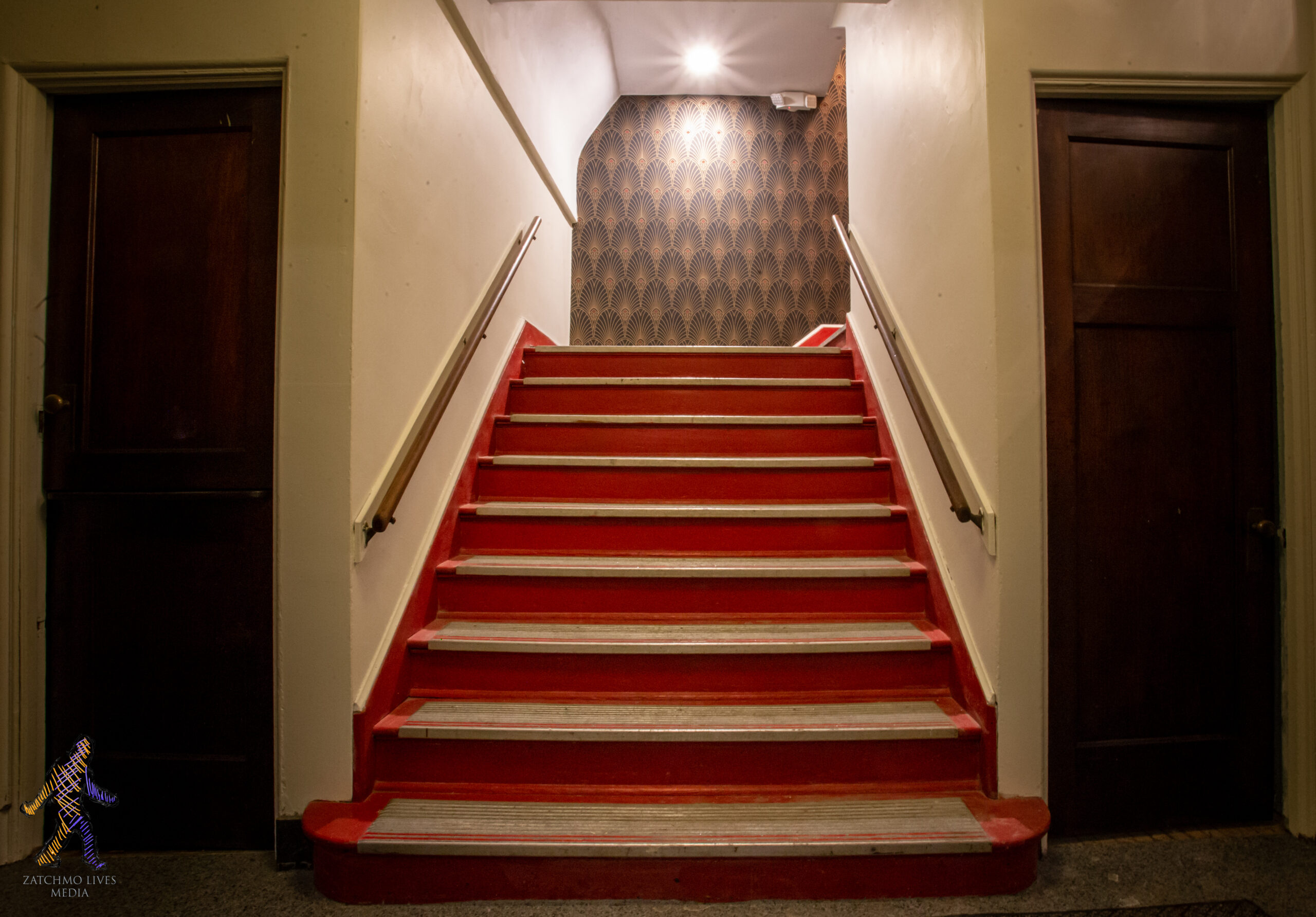
There are of course some changes that were made to the building. Plenty of fresh paint on the walls and wood stain on the bar and trim, as well as art deco wallpaper reminiscent of HBO’s Boardwalk Empire. 22 foot long/46 foot wide heavy gray curtains opposite the stage double as a buffer to allow limited sound to Lark Street and cover the windows, making the room intimate upon arrival. A VIP booth upstairs stage left is designed for 5-6 people, offering a direct view of the stage as well as a private bar. Add in a long overdue elevator and the building is ready for 21st Century crowds in 2021.
Having purchased the building in March 2018 and opening Lark Street Yoga in September that year, the Millers bring business experience and their fervent music fandom to Lark Hall. A venue run by fans, for fans has immense potential, and has already welcomed audiences virtually with Window Sessions in summer 2020, and the new Practice Sessions, which kicked off on March 4 with Glass Pony.
Music has always been a shared bond and connection since the first time we met and started dating. Traveling to see live music together has always been our favorite pursuit and escape – and over the years we’ve been fortunate to check off a long bucket list of seeing shows at legendary venues big and small – from Red Rocks in Morrison, Colorado to Preservation Hall in New Orleans.
Early in our relationship, and while moving into a new home, we both found our old boxes of concert tickets and memorabilia, and as we went through the piles of mementos, we realized we had been at dozens of the same shows and festivals before we’d met. Our musical paths had eventually connected at the right time and we’re now incredibly blessed to pour this passion into our shared vision for Lark Hall.
Justin Miller
More than just a music venue
Yet with all the history within the walls, Lark Hall will not just be a music venue. The Millers plan to utilize the ample space for meetings, weddings, private shows and birthday parties. The venue’s cabaret license will allow for music and events to start as early as Noon, 7 days a week, with shows going as late as 11pm Sunday-Wednesday, and until 2am Thursday – Saturday.
Any event, music or otherwise, will have the benefit of Lark Hall’s state of the art sound, lighting and projection system.
Lark Hall, Albany, NY – photo by Zach Culver
Lighting in the hall features the original fixtures, including five original chandeliers with Edison light bulbs hanging in the room, providing an array of colors to illuminate the room. Kirk Lyons of Lyons Den Entertainment serves as sound and light engineer for Lark Hall, and set up the room so the light rig blends into the ceiling and offers an unobstructed view of the concert. State of the art sound is set up throughout the room, making any event – music or otherwise – capable of having sound on par with the best music venues in the area.
We wanted to make Lark Hall a world class sounding room so I called in a favor from my friend Stan Denis, a Danley Sound Labs dealer. The type of speaker used in the mid-high cabinets is a point-source system that makes it so the sound is almost exactly the same in every seat. Ken Mark of Adirondack Scenic helped us with the giant curtains against the back wall. They are designed to help dampen the audio reflections in the room.
As far as the lighting design goes, I wanted something simple yet effective. I didn’t want to change the intimacy of the small theater feel, but needed to add that bright LED ‘wow.’
Kirk Lyons, Lark Hall sound and lighting director
Stan Denis of Denis Entertainment Group advised the Millers on their labor of love, and speaks to their commitment to making Lark Hall a success.
So many people who get into this business get hardened very quickly because they are trying to survive as they are growing their company. and they start to lean on artists and support crews and people in a way that is counterintuitive to getting creative art. Justin and Jenn are so passionate about music and the music scene, as well as the quality of the shows they want to produce. They’ve been asking the right questions since the beginning, with regard to creating the best experience for bands and audiences alike.
Stan Denis
For the full scope of what Lark Hall offers, take a walkthrough tour from Mirth Films.
Neighborhood
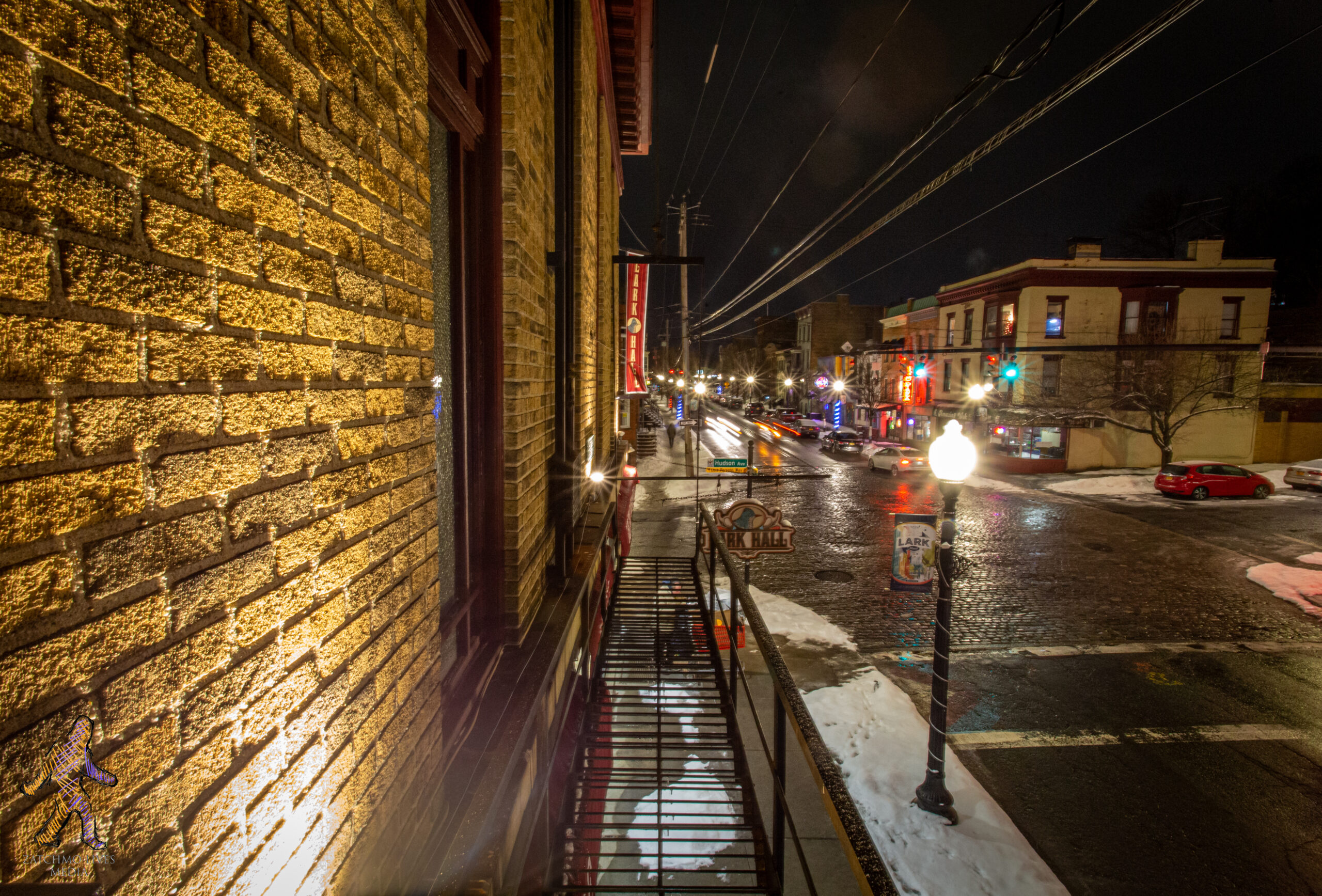
Center Square, the neighborhood surrounding Lark Street, is the heart of Albany, a mini Greenwich Village to call our own. Bars, restaurants, small independent businesses, tattoo shops, and bodegas are found in between brownstones and apartments that date back to the late 19th Century.
Local businesses are on board with Lark Hall’s arrival, knowing that patrons will be making an evening of a show or event at the new venue. Early arrivals can dine at any number of restaurants on Lark or Madison Avenue, and those wishing to extend the night have plenty of bars to choose from.
Historically music has been a huge part of the fabric of our historic and fabled Lark Street. The opening of Lark Hall heralds the return of the street’s heartbeat and will no doubt bring countless new generations to the street.
Savoy Taproom first brought live music back to Lark Street in early 2016. Lark Hall builds on the foundation we laid by bringing a concert venue to the street, which will bring people – people who will shop, drink and dine on Lark Street.
Jason Pierce, owner, Savoy Taproom
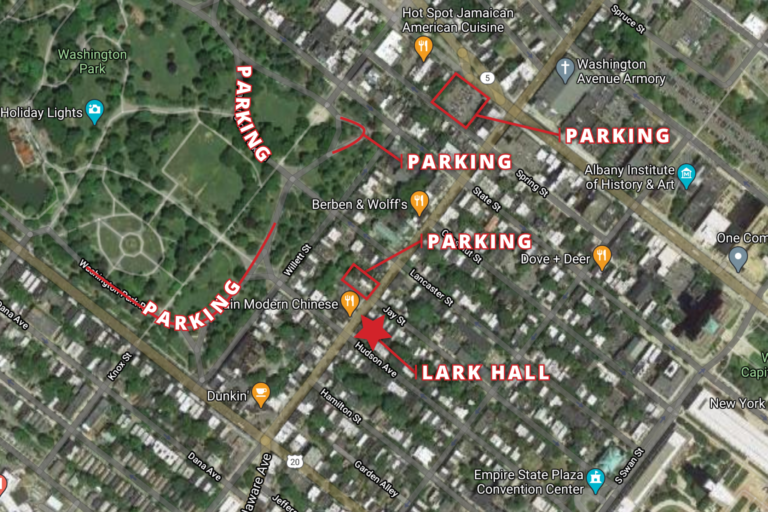
One thing that Lark Street may seem to lack but has quite a bit of, is parking. For those driving to a show, there is the 60-space Trinity Church lot only 50 feet away, and a 200 car lot next to 204 Washington Ave. And of course, there is Washington Park, with ample spaces to park at anytime of day. Considering the distance to walk for shows at The Egg, or at Crossgates Mall, the setting and available parking for Lark Hall is comparable, if not better.
With more parking available than you may realize, the arrival of Lark Hall means local restaurants and bars will benefit from early arrivals and late revelers, tying the community together and giving the neighborhood a centerpiece. Carpooling and ride share are of course options for getting there, as well as the CDTA #13, which stops right outside Lark Hall and runs until late in the evening.
A handy map for parking near Lark Hall (and all of Lark Street)
Since taking over the property at the corner of Lark and Hudson (also the name of their two cats), The Millers and their team worked hard throughout the COVID-19 pandemic, making all needed renovations, and officially opening up in May 2021. Now, with the addition of The Eleven, the venue expands to welcome music lovers on two floors to a fresh vibe on Lark Street.