Author: Joseph Dugan

  • Chautauqua Symphony Orchestra Announces 2021 Season

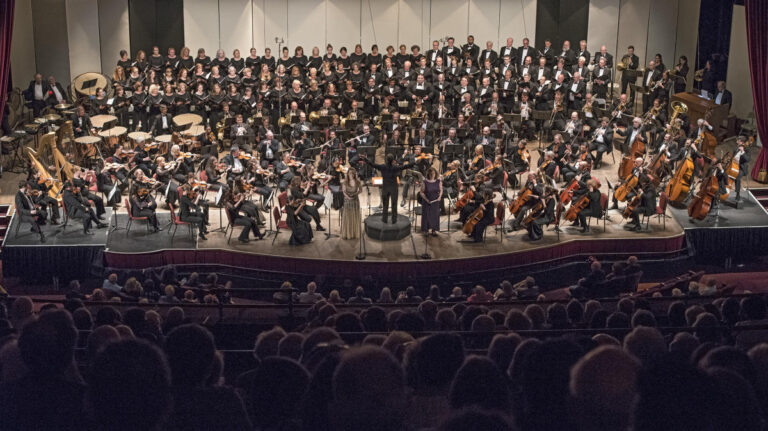
    The Chautauqua Institution announced the upcoming season for the Chautauqua Symphony Orchestra (CSO). Under Principal Conductor Rossen Milanov, the CSO will offer 14 performances between July 10 and August 14.

    Plans for the CSO’s 2021 season will incorporate necessary changes and procedures to ensure the health and safety of all. Performances will often feature a smaller ensemble, with all musicians distanced and non-wind and -brass players masked.

    “Planning for the upcoming season has been challenging but also wholly invigorating — dreaming of how we can make the most of our circumstances and deliver concert experiences that will surprise and delight,” Milanov said. “I’m elated to return to Chautauqua and the Amphitheater, and to take the stage with my incredibly gifted orchestra colleagues to make beautiful music for our wonderful audience.” 

    The CSO’s 2021 season begins on July 10 with a performance of Beethoven’s Fourth Symphony and a work by composer and pianist Gabriela Lena Frank, “Elegía Andina,” that she says “is one of my first written-down compositions to explore what it means to be of several ethnic persuasions, of several minds.” The closing concert on Aug. 14, with Principal Pops Conductor Stuart Chafetz, will feature returning vocalist Capathia Jenkins performing selections made famous by the inimitable Ella Fitzgerald.

    Other season highlights include frequent Chautauqua collaborator,  Wynton Marsalis, on July 28 and two movie-nights with orchestral accompaniment, “The Nightmare Before Christmas” and 1991’s “Beauty and the Beast”.

    2021 will also feature the return of the Chautauqua Diversity Fellows to the Institution grounds. The program began as an expansion of the Cincinnati Symphony Orchestra and University of Cincinnati College-Conservatory of Music’s (CCM) groundbreaking Diversity Fellowship Program for pre-professional underrepresented musicians. 2021 will feature four fellows from the Cincinnati Diversity Fellowship Program and one Fellow from the Sphinx Organization, the pivotal organization dedicated to transforming lives through the power of diversity in the arts.

    All Chautauqua Symphony Orchestra performances are included with the Traditional Gate Pass (TGP). TGP holders will have first access to reserved seating, approximately two weeks prior to the start of each week. Remaining tickets will then be available for sale to Grounds Access Pass (GAP) holders and the general public on a space-available basis approximately one week prior to the start of each week.

  • Chautauqua Institution and Musicians Reach Agreement

    The Chautauqua Institution announced a new agreement with resident Chautauqua Symphony Orchestra musicians. The agreement extends the current Collective Bargaining Agreement through September 2021, but makes some important adjustments that provide for flexibility and creativity in planning the ensemble’s 2021 season.   

    Chautauqua Institution

    “I am pleased and grateful we have been able to reach an agreement that will serve both our patrons and CSO musicians during the 2021 season as we all look forward to an enriching and soul-nourishing 2021 Summer Assembly,” said Michael E. Hill, president of Chautauqua Institution.  

    Performances will occur Weeks Three through Seven of Chautauqua’s nine-week Summer Assembly, and will often feature a smaller ensemble, with all musicians distanced and non-wind and -brass players masked. Guest soloists will be limited in 2021, but the repertoire will be designed to showcase the members of the CSO. 

    “This hope-filled news allows us to immediately work together to create a season that balances safe practices and bold performances,” said Deborah Sunya Moore, interim senior vice president and chief program officer for Chautauqua.

    Chautauqua Institution
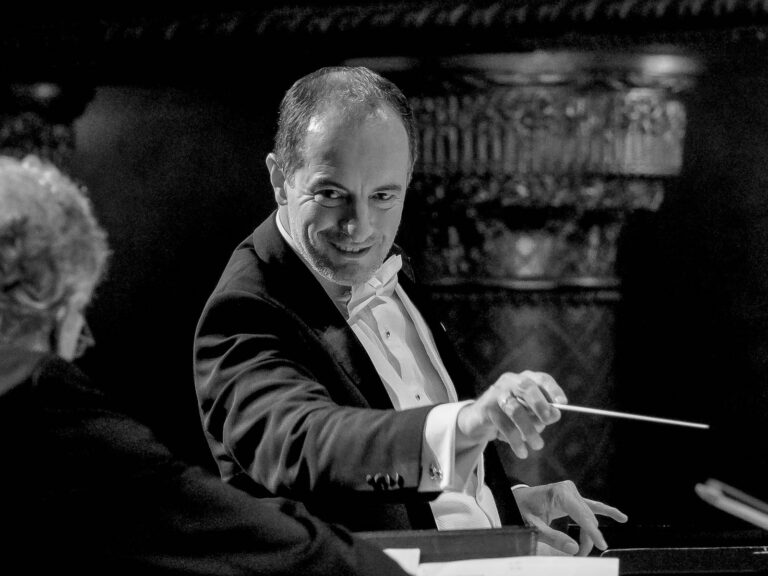
    Photo of Rossen Milanov

    “While these are not our ideal planning circumstances, this season does offer us an opportunity to experiment and innovate,” said Rossen Milanov, CSO music director. “We’re excited about the opportunities in 2021 to feature the virtuosity within this amazing orchestra. Most of all, we’re grateful to be planning to play together again in front of our beloved Chautauqua audience.” 

    The limitations presented by health and safety procedures provide an opportunity to highlight a diverse range of composers and compositions, in keeping with a commitment to both tradition and innovation. As an example, the CSO’s opening night will feature Beethoven’s Symphony No. 4 and Gabriela Lena Frank’s Elegía Andina.

    CSO member Leslie Linn, trumpet, served as chair of the musicians’ negotiations committee.  

    “As we prepare for the upcoming season at Chautauqua, we are grateful to have an opportunity to be back together, in-person, to perform for the Chautauqua community, filling the void that has existed for all of us since in-person performing ceased due to the pandemic,” said Linn. “The musicians of the Chautauqua Symphony Orchestra are excited to have this agreement in place. We thank the Institution for working with us over many months to reach this agreement and are eager to return to Chautauqua and the audience we love.”  

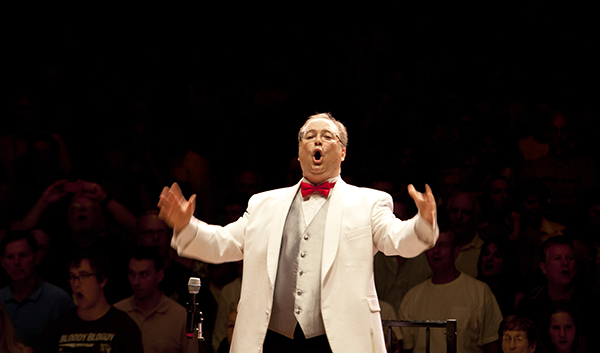
    Milanov will share the Amphitheater podium in 2021 with Stuart Chafetz, the CSO’s longtime principal timpanist, who was named the ensemble’s first-ever principal pops conductor in November 2019. With the cancelation of the 2020 season, 2021 will be Chafetz’s first with his new title, though he has long served as a go-to conductor for CSO pops concerts. 

    Chautauqua Institution
    Stuart Chafetz leads the The Chautauqua Symphony Orchestra in an Independence Day celebration in 2012.

    In addition to the CSO schedule, 2021 patrons will enjoy the Music School Festival Orchestra on Monday evenings Weeks One through Four, with a special additional performance on Saturday, July 3, keeping symphonic music as the centerpiece of Chautauqua’s Independence Day celebration.

    The Chautauqua Institution has a rich history of musical variety. With symphony, opera, jazz, theater, dance, visual arts and a renowned music school, Chautauqua produces an “ecstatic mix” of programming that can be found only at major organizations. This mix of arts and culture has defined the Chautauqua Institution for over a decade.

  • Albany Symphony Wins Second GRAMMY Award

    This past Sunday, the 63rd Annual GRAMMY Awards announced their winners which included the Albany Symphony. The ASO, conducted by David Alan Miller, won the Best Classical Instrumental Solo for Christopher Theofanidis‘ Concerto for Viola and Chamber Orchestra

    Albany Symphony Grammy

    The Concerto for Viola and Chamber Orchestra was originally written for Kim Kashkashian. She sent Theofanidis a collection of Navajo poems that were wildly different in character, but had in common a supernatural sense of nature and an extremely evocative vocabulary. Each of the four movements is serious in sentiment, in turns lyrical and dramatic. Theofanidis wrote this work during the tragedy and turmoil of 9/11, starting the piece before and finishing it afterward, and was influenced by being in midtown Manhattan that day.  

    Albany Symphony Grammy
    Portrait of Theofanidis

    This is the second GRAMMY win for the Albany Symphony. The first came in 2013 for John Corigliano’s Conjurer with world-famous percussionist Dame Evelyn Glennie

    For a full list of winners of the 63 Annual GRAMMY Awards visit their website.

    https://www.youtube.com/watch?v=XjSHRVOSNdI

  • Albany Symphony Orchestra Showcases Rarely Performed Brahms

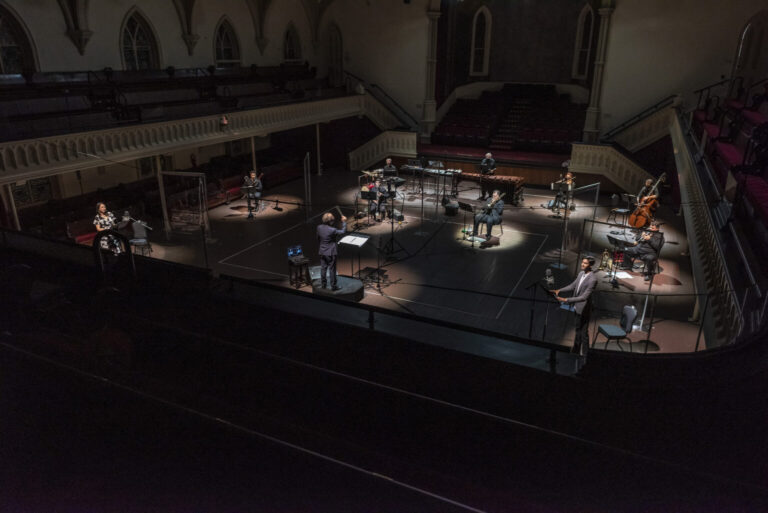
    On February 13, the Albany Symphony Orchestra performed three works: Sir William Walton’s Facade: An Entertainment, Tyson Davis’s Distances, and Serenade in D, op. 11, by Johannes Brahms. The concert was streamed virtually from Universal Preservation Hall in Saratoga Springs.

    Albany Symphony Orchestra Brahms

    William Walton was a British composer known for his instrumental writing, and was nominated for two Academy Awards in the 1940’s. He was inspired by a friend’s poem to write Facade. It started as a piece just for speaker and six instruments, but Walton later expanded it to an orchestra. The ASO did well on this piece. The speaker, Lucy Fitz Gibbon, navigated the tricky passages and was able to shine.

    The next piece performed by Albany Symphony Orchestra was Distances. It was composed by Tyson Davis. Davis, 21, a young but talented composer. He entered the UNC School of the Arts, studying with Lawrence Dillon. Later, he wrote for Eighth Blackbird, the Attacca String Quartet, and UNCSA Symphony Orchestra. He worked with the National Youth Orchestra to premiere a work that was commissioned by the American Embassy in Berlin to commemorate the 30th anniversary of the fall of the Berlin Wall.

    Albany Symphony Orchestra Brahms

    Written after the start of the COVID-19 pandemic, Davis wanted to explore themes of emotions and anxieties that the “New World Order” of a pandemic have caused. To do this, he left the piece with ambiguity and lingering passages.

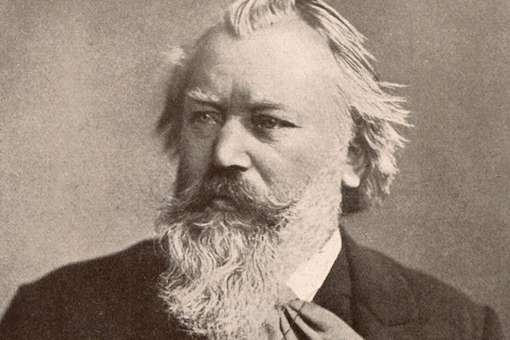
    Brahms was a dominant composer of the nineteenth century; he was not revolutionary in terms of structural change, but he wrote beautiful, sweeping melodies. The Serenade was his first work for a “larger” group (originally eight people). The piece usually contains six movements, but the ASO opted instead for a rarity. Instead of those six, the ASO played four. Symphonies are traditionally four movements, not six, so the ASO played movements 1, 3, 4, and 6. With these four, it encapsulates what a traditional symphony is: a faster first movement, a slow second, a minuet or scherzo third, and a fast finale.

    Albany Symphony Orchestra Brahms

    Brahms originally cast the work in four movements. Like so many of Brahms’ early efforts, that original form suggests a young composer wrestling with specter of the greatest of all symphonists, Beethoven, and trying to create a first symphony. The other movements were added later to create the Serenade.

    Overall, the Walton was phenomenal, especially with the addition of Gibbon. If I had to describe Davis’s piece in one word, it would be, emotional. The piece evokes emotions that everyone is feeling. The symphonic arrangement gave better understanding of an earlier Brahms symphony.

  • Misty Blues Join Universal Preservation Hall for Virtual Concert

    Universal Preservation Hall will present a live-streamed concert of Misty Blues on February 12 at 8 p.m. This serves as a celebration of their 10th album, None More Blue, and over two decades together.

    Misty Blues

    After the performance of their new album, the band will perform the “Queens of the Blues” soundtrack as a Black History Month celebration. The Queens of the Blues movie shows the lives of four African-American female blues artists: Bessie Smith, Big Mama Thornton, Ruth Brown, and Koko Taylor. All four of these women made an undeniable impact on blues, jazz, and popular music throughout the twentieth century and beyond.

    All compositions on None More Blue were written during the pandemic and show the connections the band was able to maintain despite a remote environment. The album release date is February 14.

    misty blues

    Misty Blues, led by lead singer/band founder Gina Coleman, was a 2019 International Blues Challenge finalist. The band has performed original and traditional blues with hints of jazz, soul, funk and tent revival gospel since 1999. They have recorded and shared the stage with Charles Neville and opened for contemporary blues artists like Tab Benoit, John Primer, Albert Cummings and Michael Powers. The band recently earned an Independent Blues Music Award nomination for the best contemporary blues song. The band’s original recordings have wide radio airplay in the U.S. and U.K. 

    Tickets for Misty Blues are $20 and go on sale at 10 a.m. Friday (1/15) at Universal Preservation Hall.
  • Saratoga’s Opera-To-Go will Continue Virtually in Schools

    Due to the COVID-19 pandemic, Opera Saratoga announced that their OPERA-TO-GO tour will continue virtually. The company’s in-school program will continue to provide a unique arts education experience to the students of the Capital District. The new program will feature the world premiere of “The Selfish Giant,” a one-act opera based on Oscar Wilde’s short story, written by Brazilian-American composer Clarice Assad and librettist Lila Palmer. It was commissioned by the American Lyric Theater specifically for younger audiences.

    Opera Saratoga has re-envisioned the OPERA-TO-GO program as a digital initiative over the past six months. It is available for free to educators for their students. The program will be ready for schools in late February, and is comprised of the following elements:

    opera to go

    “For over 20 years, Opera Saratoga has offered its OPERA-TO-GO touring program to elementary schools in February and March each winter,” said Artistic and General Director Lawrence Edelson. “While we love visiting schools and introducing children to opera, proceeding with an in-person tour this winter and spring would not only be impractical, but also irresponsible. Safety must come first. However, we are still committed to providing access to the performing arts to students as well as robust arts education resources to educators – whether they are teaching virtually, in person, or in some combination of the two.”

    Opera Saratoga is creating a series of short video lessons on opera, aligned to New York State Common Core Standards in Music, Theater, Visual Arts, and English/Literature at grade levels from K-5, as well as the National Social Emotional Learning Standards. For each grade level, there will be a series of six videos, each 10 to 15 minutes in length, available for use in class, or for at-home viewing. Each video is accompanied by a comprehensive teacher’s guide that includes details of the alignment to State standards, and grade appropriate follow-up activities for students.

    Opera Saratoga is making a professional audio recording of the new opera “The Selfish Giant.” This recording will be fully integrated into the digital curriculum, providing opportunities to explore subjects including adaptation (how a short story becomes an opera), the role of the librettist, the role of the composer, collaboration, how words and music come together to create sung theater, the textual and musical “building blocks” of opera, and how opera is produced on stage.

    Using the recording, students will have the opportunity to make their own film versions of “The Selfish Giant” by creating art that reflects the story and music. A scene-by-scene breakdown of the dramatic action of the opera will be provided to each class participating in the program, along with very clear, grade appropriate instructions. Students will be assigned specific moments of the opera to illustrate in a manner appropriate to their age/grade level, through drawing, painting, collage, or digital photography.

    Opera Saratoga will then create films of “The Selfish Giant,” synching the recording of the opera to the art created by the students that bring each scene to life. Each school or class will have the opportunity to create their own versions of the film. In the spring, these videos will be completed and made available to share with family members as well as on each school’s website and social media channels. Opera Saratoga will create an online library of student-created films of the opera, which will be hosted on the company’s website. 

    Educators who are interested in offering this program to their students in Kindergarten through Grade 5 should register no later than January 22.

    Opera Saratoga is able to provide free access to the entire video lesson series with educational support materials for all teachers and all schools. However, as the company does have limited capacity to create the opera-video projects, this portion of the program will be limited to schools in Saratoga, Warren, Washington, Essex, Albany, Rensselaer, and Schenectady counties, and will be limited to the first 50 schools or classes that register for the program.