Author: Alain Clerine

  • Biz Markie: Hip Hop’s Lovable Unsung Hero


    We lost one of hip hop’s pioneering crossover stars on Friday, July 16. Hailed as the “Clown Prince of hip hop,” Biz Markie — born Marcel Theo Hall — was renowned for his witty story-telling, distinctive lisp, self-deprecating-ly humorous lyrics and for innovating many trends that are prevalent in hip hop today. 

    A New York native, Biz was born on April 8, 1964 in Harlem and raised on Long Island. Already known around the neighborhood as “Markie,” his stage name was inspired by the first hip hop tape he ever heard, as he says in a 2019 feature for the Washington Post.

    My name, Biz, comes from the first hip-hop tape I heard. It was ’77, ’78, from the L Brothers. Grand Wizard Theodore was the DJ, and the rappers was Kevvy Kev, Master Rob and Busy Bee Starski. I loved Busy Bee. Busy Bee just stuck with me. My name used to be Bizzy B Markie, and after a while I put the Biz with the Markie. My nickname in my neighborhood was Markie.

    Being able to witness hip hop’s primitive years quickly shaped a career path for the young Biz. An avid beatboxer and DJ, he honed his skills in Manhattan nightclubs. During the era where hip hop stars had to be all-around performers, his rhyming was the weakest part of his skillset. 

    That is until he began his apprenticeship under the renowned Queens hip hop collective, The Juice Crew. 

    When I felt that I was good enough, I went to Marley Marl’s house and sat on his stoop every day until he noticed me, and that’s how I got my start,

    Biz Markie

    From there, he released an EP produced by Marley Marl of the juice crew and he began featuring on their records as well as performing at colleges in the Virginia-Philadelphia-D.C.-Maryland areas, where he began to make a name for himself.  

    biz markie

    The source of his everlasting relevance, though, comes from his 1989 smash Billboard hit “Just a Friend,” from his sophomore album The Biz Never Sleeps. It’s a love record where Biz tells the story of his relationship with a woman who denies being involved with anyone else, referring to the party in question as “just a friend.” That is until Biz indulges in his suspicions and visits her school, only to find her kissing another man. 

    The music video showcased Biz’s creativity, with his hilarious Mozart costume and impression the highlight. Biz remained true to himself despite the increasingly serious hip hop scene. 

    The record’s distinctive piano keys are interpolated from the 1968 song “(You) Got What I Need,” recorded by Freddie Scott and written by Kenny Gamble and Leon Huff. But, what truly set the record ablaze was biz’s off-key and inspired bellows about failed love. 

    “Just a Friend” hit 9th on the Billboard charts, and was certified platinum less than a year after its release. It was later ranked 81st on VH1’s 100 Greatest One-Hit Wonders in 2000, and number 100 on VH1’s 100 Greatest Songs of Hip Hop in 2008.

    Writing in The New York Times, the critic, Kelefa Sanneh, called Biz Markie “the father of modern bad singing” and wrote:

    His bellowed plea — wildly out of tune, and totally unforgettable — sounded like something concocted after a day of romantic disappointments and a night of heavy drinking.

    An unlikely hit-record, Biz’s crooning should be recognized as a landmark moment in hip hop. Rappers singing on records was unprecedented and it defied logic that such discordant wails would be sonically pleasing, yet one of hip hop’s landmark moments wasn’t supposed to happen that way

    A lot of people didn’t like the record at the beginning. They would say, “Biz is trying to sing? Aw, the record is wack.” But I wasn’t supposed to sing the [chorus]. I asked people to sing the part, and nobody showed up at the studio, so I did it myself. 

    Although he never reached the same commercial success, he kept making history. His 1991 album, I Need a Haircut made the rounds under more controversial circumstances. Biz and his label were sued by representatives of the Irish singer-songwriter Gilbert O’Sullivan, who said eight bars of his 1972 hit “Alone Again (Naturally)” were sampled without permission on Biz Markie’s “Alone Again.” 

    A judge ruled in favor of the plaintiff and ordered for $250,000 in damages to be paid out and barring further distribution of the album. That ruling would help set a precedent in the music industry by requiring that even small chunks of sampled music — a cornerstone of hip-hop aesthetics and studio production — be approved in advance. A market for sampling clearance took hold, which remains a key part of the economics behind hip-hop.

    It’s beautiful because it means all eyes ain’t on me, so when I pop up they appreciate everything they see. It’s like the McRib sandwich. It’s like the flowers outside that turn white on the bushes. It comes around when it’s getting ready to be springtime. You appreciate it, Biz said of his role as one of hip hop’s unsung heroes.  

    He returned in 1993 with, All Samples Cleared!, but it would be his last project on a major label. While some try to diminish his stature within history by labeling him as a one-hit-wonder, his sustained cultural relevance is a testament to his talent and innovation and the general appreciation that fans have for him by keeping his likeness alive. 

    The weirdest thing about my fame is that when I’m thinking that it’s almost over it just sparks back up. I made “Just a Friend” in ’89. Some people’s records die — it sprouts up. Now it’s 30 years later and it’s sprouted up again in commercials. They’re not letting me die. The public, the fans, they like me around.

    Biz Markie
    https://twitter.com/timmhotep/status/1416245151496916992?s=20
  • The Roots ‘Do You Want More?!!!??!’ Deluxe Edition Out Now

    The album that solidified Neo-Soul/Hip Hop outfit, The Roots, as a force in the hip hop realm is being redistributed. Considered a staple of the Jazz-rap subgenre, Do You Want More?!!!??!, achieved cult-like status despite not selling an immense amount of units. The group’s major-label debut was released over 26 years ago on January, 17 1995 and didn’t reach Gold status until 2015, over 20 years later. 

    Nonetheless, the album’s merits are never to be questioned. In an era of machismo and increasingly violent tales in hip hop, the Philadelphia bred ensemble managed to entrench themselves in music history in their own way. Their blend of live instrumentation, story-telling along with the introspective and technically proficient lyrics of Black Thought and Malik B. made them a first of their kind. 

    https://youtube.com/watch?v=uROfXQML7NY

    Led once again by, MC Tariq “Black Thought” Trotter and drummer Ahmir “Questlove” Thompson, the Philadelphia rap crew are going back to where it began with a 3LP, 4LP and a digital deluxe collection of Do You Want More?!!!??! to be released on June 25, 2021 via Geffen/Ume records. 

    This deluxe edition draws from the original recordings and features 18 bonus tracks curated by Questlove, ranging from unreleased records to songs that have never made it to streaming platforms. The 3LP deluxe vinyl edition features five bonus tracks — “Proceed II Feat. Roy Ayers”, “Proceed III”, “Proceed IV (AJ Shine Mix)”, “Proceed V (Beatminerz Mix),” along with five remixes of “Silent Treatment,” with the “Street Mix” made available for streaming before the project’s release.

    The Roots Do You Want More

    Also included, is a 24-page booklet featuring images taken by Mpozi Tolbert, essays by Questlove and Black Thought as well as track-by-track commentary. The 4LP edition features all of the above plus another additional eight bonus tracks; “In Your Dreams Kid (I’m Every MC),” “The Ultimate (Original ’94 Version),” “……(dot dot dot…on & on),” “Pffat Time,” “Swept Away (Original Draft),” “It’s Coming,“”Lazy Afternoon (Alternate Version),” and two remix versions of “Distortion To Static.” 

    By way of their innovative and breakthrough blend of hip hop and other black genres, The Roots have cemented themselves as an important part of rap’s evolution, distinguising themselves as the first true hip hop band. Their success as artists have also spawned other opportunities. They also serve as the house band on The Tonight Show Starring Jimmy Fallon and held the same role on Late Night with Jimmy Fallon from 2009 to 2014. 

    The Roots Do You Want More

    With the deluxe edition of Do You Want More?!!!??!, a classic album is revisited. While it can be a risk to dabble with an album held to such prestige, fans should have trust in the group’s combined musical connaissance. 

    The deluxe version of Do You Want More?!!!??! can be streamed here.

  • Bread, Ribs, Hundred Dollar Bills: Remembering Prodigy

    In an industry filled with chicanery, few have been as authentic as the late Prodigy. Born, Albert Johnson, the diminutive emcee experienced enough for several lifetimes, always staying true to himself, or in his own words, “keeping it thoro.”

    As a rapper, Prodigy was known for his opening bars that would set the tone. Encapsulating an entire record with his first couple of lines. In that sense, his upbringing served a similar purpose, setting the tone for what became an oft-dangerous career and an even more lawless life. 

    Hailing from Hempstead, New York in Long Island, Prodigy’s musical feel had been cultivated from an early age. His grandfather, Budd Johnson, was a saxophonist who worked extensively with the likes of; Dizzy Gillepsie, Quincy Jones and Duke Ellington. His grand-uncle, Keg Johnson, was a trombonist who played with Louis Armstrong and Cab Calloway.

    The musical lineage carried on with his parents as his mother, Frances Johnson, was an original member of pioneering 1960’s girl group, The Crystals. And his father, Budd Johnson Jr., was a member of a doo-wop music group called, The Chanters. 

    Additionally, Prodigy’s paternal grandmother, Bernice Johnson, operated a successful dance school in her Jamaica, Queens backyard, where he spent a bulk of his childhood. A young Prodigy was honed in musical arts at an early age and was hardened by a diagnosis of sickle cell anemia, a chronic blood disease found primarily in people of African descent, which often resulted in long hospital stints. 

    In a Vibe Magazine interview preceding the release of his solo debut, H.N.I.C., prodigy shared a glimpse of his battle with the fatal disease:

    The sickle-cell got me where doctors said I couldn’t play sports, I couldn’t overexert myself…I been going to the hospital since I was born, about 10 times a year, for about a week or two each time. I don’t know, man, some psychological sh*t goes down. I be all doped up for weeks. Morphine, Demerol—a whole bunch of drugs.

    Despite a cultured upbringing, Prodigy’s condition and his nuclear family’s real life struggles kept him conscious of the harsh realities of the outside world. 

    My pops did a lot of stupid sh*t, man,” Prodigy revealed. “One time the n***a took me to rob a jewelry store. I was like, 5. He didn’t give a f**k, though. He was like, ‘This is my son. He can see everything I do.’ I love him for that. Even though it might not be right, so what? That was my pops!

    Even though his roots were in Hempstead and Lefrak City, Queensbridge became part of Prodigy’s identity. That’s where most of his friends were from (including Havoc, the other half of Mobb Deep) and where he spent much of his time. 

    Prodigy (left) Havoc (right)

    As he became invested in the street life, the determination to make it as a rapper grew tenfold. A 16-year-old Prodigy tasted minor success with an uncredited guest-verse on the Hi-Five record “Too Young,” which was featured on the Boyz’ N The Hood soundtrack. 

    From there, the Mobb Deep story reads like a feature presentation. From waiting outside of the Def Jam records offices in hopes that someone would listen to their demo — where Havoc not only brought a gun but managed to shoot someone — to world tours, platinum selling albums (and flops), Prodigy remained “thoro” in every sense of the made-up word. 

    In many ways, his life in the streets shaped the way he acted, talked and what he rapped about. 

    Everybody sold drugs. It made me stop caring about school and start caring about how I looked. I started acting up even more after school to prove to my friends in the hood that I was still cool. I was a crazy little kid. I blame sickle- cell and my father.

    When he was embroiled in a rap beef with Jay – Z, he didn’t spend much-time trading diss records, instead he and his crew ran up on Jay – Z, according to his autobiography, My Infamous Life:

    I walked over to my people. ‘Where’s Jay-Z?’ I asked, surveying the shadows of Justin’s. ‘I don’t see him.’ So we lined the front door of Justin’s on both sides. We weren’t going to let Jay-Z leave without dealing with us first. ‘P, we’re gonna beat the lips off Jay’s face [as] soon as we see him,’ Godfather, Nitty, and Nitty’s cousin Kiko all assured me. Kiko had a gun and he wanted to shoot Jay.

    ‘No! It’s not that serious,’ I said. ‘We’re just gonna beat him up. Don’t pull that gun out.’ Through the crowd, I saw Jay and Jermaine walking with three bodyguards towards us. Jermaine Dupri was aware of my beef with him and was visibly shook, started speed walking with his bodyguard when he saw me. He quickly hightailed it out the door. Jay-Z spotted us lined up against the door waiting for him. Then from about two yards away, he extended his hand to shake mine.

    ‘It ain’t no beef,’ Jay said. ‘It’s just music, man. No drama.’

    Prodigy is cut from the cloth of “if you said it then you lived it.” That’s why he admittedly was not embarrassed when Jay put up a picture of a 12-year-old Prodigy dressed in a Michael Jackson getup on the titantron, during his Summer Jam set in 2001, in an attempt to humiliate him.

    In his mind, Michael Jackson was the biggest act in the world at the time and everyone was a fan of him, there was no shame in that (he also rumors that Ashanti, who was a student at his grandmother’s dance studio where the picture hung, is the one who delivered the image to his adversaries). In an ironic twist, Jay – Z was applauded for being able to get Michael Jackson to make an appearance at the very same edition SummerJam! Further proving Prodigy’s point, but the industry doesn’t view the world like he does. 

    The best way to summarize Prodigy’s makeup as a man, is to look at the reason behind his three-year prison sentence. After getting pulled over for an illegal U-turn, police searched his SUV, found a gun and took him in for investigation. Except, these cops didn’t care about the gun. They were the “hip hop police” and were more interested in his relationship with 50 Cent, to whom Prodigy and Havoc were signed to at the time. They tried making a deal with him that would keep him from serving any time, but Prodigy provided no information. They became desperate and one of the officers asked, “Between us, maybe you can drop a gun in a 50’s car and help us get him.” 

    In October, 2007, he was convicted for possession of an illegal firearm, halting his career and all business dealings he had in the works.

    Of course not all bad things are for naught. It was during this time that Prodigy penned his autobiography and gained considerable knowledge of self and began to transform himself into more of a spiritual being, believing in the presence of abstract entities. How else could he have made it this far? 

    The H.N.I.C. didn’t live much longer as he passed away on June, 20 2017, due to complications of his sickle cell anemia. Fans of his can find comfort in knowing that Prodigy was one of if not the realest rapper and that he wasn’t all industry like his more commercially successful counterparts.

    When hip hop went full glitz and glamour during the “shiny suit era,” of the late 1990’s and early 2000’s, Prodigy doubled down and recorded his solo debut. He put out even more gutter street music, filled with violence and more vivid tales of guns, drugs and murders, because that’s what was really happening. His appeal to a major-label subsequently plateaued and Prodigy spent much of his later years releasing music through independent labels. 

    Ultimately, he would be proud to know that his life was captured in the opening line from one of his most memorable records. Because he really did “break bread, ribs and hundred dollar bills.”

    Tupac, Ja Rule—a whole bunch of people talk about pain. “And Tupac, he even said some sh*t about my sickle-cell [on his song ‘Hit ‘Em Up’], so that inspired me to make a real song to show n***as what pain is.

  • Skyzoo releases latest project ‘All The Brilliant Things’

    The latest effort from Brooklyn rapper Skyzoo is now available for consumption. Released under Mello Music Group (which has released albums with the likes of: Ghostface Killah, Joel Ortiz, Pete Rock & Apollo Brown), the 14-track, 56-minute album is a reflection of the socio-economic impacts of modern-day gentrification within inner-city neighborhoods. 

    Skyzoo, born Gregory Skyler Taylor, brings a full-circle perspective to the listener. Growing up during one of the peaks for crime in New York City, he can reference the good and bad between the two eras. From the lawlessness and the heightened sense of self that the 1990’s brought, the changing of the guard in the mid-aughts where being “gangster” gave way to “backpack rap” and being openly nerdy, to present-day, where the culmination of the previous epochs have helped shape our current social-political climate. 

    My music has always been a combination of a few things: storytelling, motive, and reflection. I tell stories that speak on the motives of those I grew up with and why they’re such, and then reflect on how those things impacted us all, both my inner circle and subconsciously, the listener.

    A long-serving and accomplished artist, Skyzoo has been releasing music since the early 2000s. Gaining notoriety for his solo work as well as collaborations with the likes of: 9th Wonder, Wale, Ghostface Killah, Pharoahe Monche, Black Thought, Dr. Dre, Spike Lee, amongst others. He gained further recognition after being featured on the soundtracks for basketball videos games NBA 2K11 and NBA 2K12.

    Skyzoo
    Dr, Dre (Left) Skyzoo (Right)

    All The Brilliant Things is the veteran emcee’s first project since his 2020 EP Milestones and his first album since 2019’s Retropolitan, but has been in the works for over three years.  

     The idea was to truly try and tackle the realities of gentrification, and this new era of cultural appropriation, commonly known as ‘culture vulturing.’ The way they intertwine with one another, parallel at times, and how us as the residents of our long standing homes and creatures of these cultures have been stripped of it, or at times let it happen, and even in some cases sadly helped it happen, all for what we assumed was our best interest. The irony of it all is, despite how it all makes us feel in hindsight, one would have to admit that the orchestration of it was truly brilliant. Brutal, and heinous, but somehow pretty brilliant. Hence the title of the album.

    You can now purchase, add and favorite Skyzoo’s All The Brilliant Things at your preferred DSP.

  • Neighborhood Heroes: Stack Bundles

    The trappings of inner-city life are evident in many of those who have had to experience it. To the end that growing up in or near a housing project can lead to many tumultuous situations. The terrain of public housing is a breeding ground for congregation. Factor in the extreme poverty, and public housing projects have become hubs for all kinds of illegal drug and gang activities. 

    Stack Bundles and Max B
    Stack Bundles (left) and Max B (right)

    It doesn’t take much to falter in those conditions and for some, making it out without succumbing to the influences of the streets can feel like walking in quicksand. With that in mind, when someone has a chance to escape the repetitive cycle of implodement, there are contrasting feelings and behaviors from peers. Some live vicariously through the impending defect-ee, while it breeds contempt within others. 

    Such was the case for up-and-coming rap star, Stack Bundles. Hailing from Redfern Houses in Far Rockaway, Queens, one of the most dangerous housing projects in New York, where death had become the norm, according to the New York Times.

    Mourning the murdered has become a familiar routine at the Redfern Houses in Far Rockaway, Queens. First there are the makeshift memorials, with flowers and candles and a smattering of personal items. Then, the dead often get more permanent epitaphs scrawled on the walls of the apartment house they called home.

    Who Was Stack Bundles?

    Stack Bundles
    Jim Jones (left) and Stack Bundled (right)

    Born Rayquon Elliott, the slain rapper had made a name for himself with his “compelling raps, magnetic personality, and unique fashion sense.” Which gave him the attention of Dipset general, Jim Jones. Along came ByrdGang (Jones’ crew) affiliation and a prominent feature on Jim Jones’ “Weatherman,” with Lil Wayne. 

    The record’s success meant Stack Bundles had enough gravitas to go on tour with Lil Wayne, where he began to cultivate relationships with Wayne and other important figures in the music industry. Moreover, he already had strong ties with Jones, Wayne, DJ Clue, Lupe Fiasco and Funk Flex, amongst others. It seemed as though a record deal and a major-label debut was inevitable. 

    Unfortunately, not every rags-to-riches tale comes to fruition and on June 11, 2007, a 24-year-old Stack Bundles was fatally shot as he was heading into his apartment building in the morning’s wee hours. In detail, Stack spent the night out with friends at a Manhattan nightclub, he was approached by an unknown number of assailants and shot in his head and neck as he entered his building, according to relatives and acquaintances.   

    Per routine, Stack’s friends and family celebrated his life with a small memorial outside of his building, with candles, copies of his CD’s and a White Castle bag from the fatal night he killed.

    All in all, Stack Bundles is a Far Rockaway legend. However, his legend serves as a harrowing reminder that no matter how close one is to making it out, the drawbacks of the inner-city wait for no one. 

  • MVW, Valee and Lex Luger Come Together for “Still Do”

    East Coast meets the Midwest on the Lex Luger assisted banger featuring Chicago rapper, Valee. From Staten Island bred, classical music composer, MVW (Michael Vincent Waller), the two-minute long record is the second single released from his upcoming project, Classic$ (the first hip-hop project from Michael Vincent Waller after releasing three classical albums). With “Still Do” following the Shanique Marie and Lex Luger assisted, “Survey Says.”

    A sui generis collaboration, MVW is recognized in the classical world for his portrayal of  “melodic classicism.” Something that this record subtly and blatantly emphasizes. 

    On the vision behind his upcoming project, MVW explains,

    My core intention on Classic$ is to get classical music into hip-hop without dissolving either. It’s about allowing the production and samples to breathe organically. We’re not simply trying to add orchestral heavy strings. Instead, we’re relying on dark and episodic chamberal moments, which fit naturally. I hope people are like, I didn’t know classical music could be so funky. I can’t believe trap [music] is so sensuous and beautiful.

    Still Do Valee
    Michael Vincent Waller

    “Still Do,” is rich in production. It begins with a sensual violin solo which loops throughout before light strings and a thumping drum track starts the record. Light keys are sprinkled throughout the loop and Valee echoes his rhymes of a luxurious life, with trap and classical genres working together symbiotically. 

    Still do, get the guap we still do. B*tch want to hit up 90210 to shop we still do. 

    The production on the song just spoke to me, Valee says of the record. I knew I had to do something different and use a brand new flow for it.

    Still Do Valee
    Valee

    On Classic$, MVW also recruits multi-platinum producer Lex Luger (known for his extravagant sounding orchestral beats and unique use of ihats to open records), whose work with the likes of Rick Ross, Kanye West, Waka Flocka Flame amongst others have made him world renowned. 

    The two have co-produced multiple records for the album as they have unlocked a bridge between their two worlds. 

    Still Do Valee
    Lex Luger on the beat

     I want to take the same attention to detail associated with classical and chamber music and apply it to one of the most viable, listenable, and casual genres, i.e. trap, explains MVW.

    It’s got freshness and energy, but there are a whole bunch of nuances and details you don’t typically hear in modern rap. I’m trying to take the best of both worlds. 

  • “Exodus,” Posthumous Album from DMX, Released

    The anticipated posthumous album — Exodus — from recently deceased rap legend, DMX, has arrived. Executive produced by longtime collaborator and friend — Swizz Beats — the 13-track project features a myriad of prominent entertainers past and present.

    DMX Exodus

    The likes of Jay – Z, Alicia Keys, Nas, Snoop Dogg, Lil Wayne, Usher, the Lox and Swizz Beats himself all grace the album, giving it a nostalgic feel as DMX’s former contemporaries share the stage with him one last time. And while the rumored Pop Smoke record didn’t make the final cut, there is still fresh energy from the likes of Memphis-bred, Moneybagg Yo and Griselda trio, Conway the Machine, Westside Gunn and Benny the Butcher. 

    While DMX confirmed an upcoming album several months before his death, the record’s prominence grew after the rapper’s untimely passing at age 50, after suffering from a heart attack on April 2. With his death not being confirmed until a week later, it gave fans a chance to appreciate DMX’s unique contributions to the genre of hip hop. From his raw and grizzly delivery, to his brutally honest dissertations on his battles with addiction and his troubled upbringing. 

    Alas, his fans can rejoice in the fact that DMX gave his all on his final effort.

    It’s not an album that was pieced together after he passed, revealed Swizz Beats. We had plans to do a two-month cleansing and workout [program] before we came with the album. He was going to rebrand himself with new photos of him looking the best that he could look … But unfortunately we didn’t get to that part.

    Exodus may also serve as closure for supporters of the oft-embattled rap legend. DMX lived a troubled life, and after superstardom, he began to make headlines for his legal troubles and his addictions as often as he did for his music. 

    I can at least listen to a song now without breaking down. I’m making it look strong, but I’m crushed, I’m destroyed, I’m hurt. But I had to pull this through for him and his family and for his legacy, shared Swizz Beats.  

    With a near decade-long hiatus in between albums, ‘X took time to get clean and refocused and after his Verzuz battle with Snoop Dogg, he was humbled and excited to know that he still held a place in the  fans heart. On Exodus, we hear — for maybe the last time — what a focused and motivated DMX sounds like.

    https://youtu.be/RG4TRTbENnE

  • Brooklyn Rapper Jellz Looks to Put a Scare in the Rap Game With “Ghost”

    The drill music scene has a certain connotation attached to it. The kind the public is accustomed to is violence laden, with expectations of braggadocious laced money talk. It’s been that way from the beginning and while we have seen success stories, there have been far more casualties of the antagonizing and deadly sub-genre. 

    Enter Jellz, the Brooklyn-bred emcee who embarked on his musical journey just over a year ago. 

    I don’t think drill has to be just violence. There’s a different part of the streets that isn’t tied to violence and that’s fast money. That’s more my speed. I think that it may deter some people, but not everyone. As an artist, I’m just trying to get the fans that like my style and aren’t looking for me to be someone else. Plus, I wouldn’t even consider myself a drill artist, I have so many vibes that I’m waiting to show, drill is just the outlet.

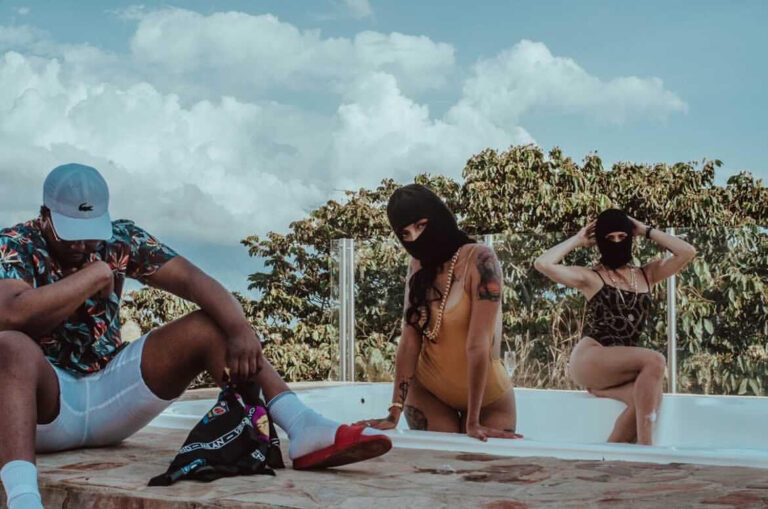
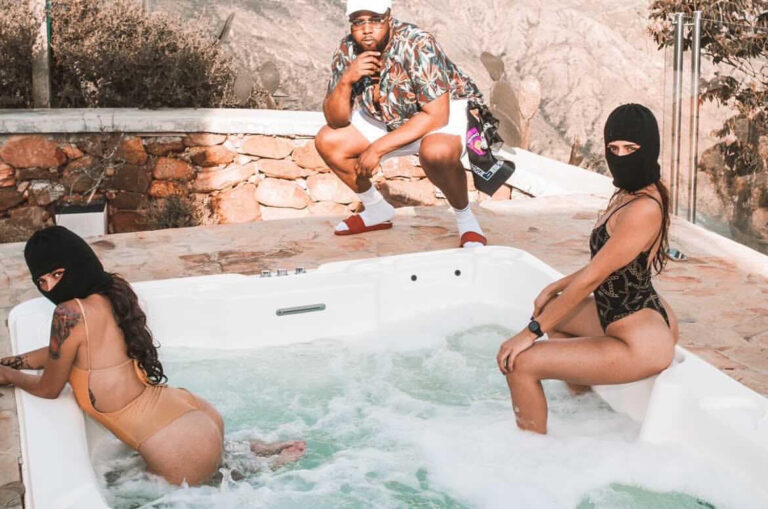
    Shot while on vacation in Los Santos, Colombia, the music video for “Ghost (Freestyle)” sees the up-and-coming rapper bring much more flair than the drill scene is accustomed to. Drill rap music videos are often shot on location, in the neighborhoods where the artists have familiarized themselves with. Of course, many of those records are diss tracks or namedrop gangs who operate out of those areas. With no such ties, the Bedstuy-bred Jellz sees this as an opportunity to showcase his own vision as an artist. 

    I think that like everything else, anything that’s over done [or] repetitive gets boring. So, I wanted to switch up the scenery. How many up-and-coming artists are traveling on vacations to rollout a single  and make videos there? Not too many. In order to separate yourself, you have to be a little different.

    The “Bulls**t” rapper presents himself with a Jefe-like persona, as he spends the music video surrounded by local women in bathing suits and ski masks, insinuating promiscuity and danger. Jellz then proceeds to list the avenues in which he makes money, possibly making history as the first drill record where the artist admits to having worked a job. 

    jellz

    Stuff like 20 in a box, did a like 30 on the stocks, don’t forget I had a job, if I make a M off rap I’m movin’ wock.

    He accentuates his fast-money style of drill rap several times during the 1:48 video, rapping,

    I really get to the money but hang with some demons, lurking, scheming, searching, fiending, they’ll do you for no reason.

    And 

    We ain’t gotta hug a block, we ain’t gotta touch a rock.

    jellz

    If Jellz’s style of rap doesn’t put him at an advantage, his quality of work and transparency might just do the trick. 

    For the videos I shot in Colombia, I actually just went on a trip and decided to record a video there honestly. I just needed a vacation at that point, and I wanted to mix business and fun, so I did 2 videos out there. I don’t think it puts me at a crazy advantage, but visuals are important , so I do want to give the best quality that I can.

    As much as violence and warfare sell, so too do tales of frivolous expenditures, when mixed with Jellz’s showmanship and earnestness, it may result in a very promising future. 

  • Memorial Services for DMX Announced: Where you can Watch

    The official plans for the memorial services for DMX have been announced. Arrangements for the event were revealed in an Instagram post from the deceased rapper’s official page, revealing plans for two separate ceremonies. 

    A “Celebration of Life Memorial” is scheduled for Saturday, April 24 at 4 pm, with a “Homegoing Celebration” planned for the following day at 2:30 pm. The former reportedly will be held at Brooklyn’s Barclays Center. 

    https://youtu.be/N9i8Usa21o8

    The general public will be able to live stream both events with Saturday’s “Celebration of Life Memorial” set to stream live on Youtube with the “Homegoing Celebration” to air and stream on BET. 

    Attendance to both events will be restricted to only close friends and family. 

    DMX passed away on April 9, 2021 in New York after suffering from a heart attack. He was 50 years old.

    The rapper’s death was met with an overwhelming response from fans and peers of the Grammy-nominated emcee, with both groups testifying to the rapper’s overwhelming influence in the world of hip hop and beyond. From his raw, grimy, and heart-felt delivery, to his complicated yet authentic public persona, DMX lived his life publicly representing the struggles of those from inner-cities. This weekend, fans of the hip-hop legend will be able to pay their final respects. 

  • Hip Hop and Marijuana – a Complicated and Evolving Relationship

    In our current social-political climate, marijuana use and the much celebrated 4/20 are no longer stigmatized. For what has always been recognized as a happy-go-lucky psychedelic, possession of marijuana had always carried serious implications, with consequences ranging from a felony to even serious jail time, even for something as small as a dime bag. However, with hip hop being an outlet for the disenfranchised to voice their frustrations, rap and marijuana have always maintained a symbiotic relationship. 

    4/20 marijuana hip hop

    As a matter of fact, the parallels between the two are obvious, with the merits of both being lauded by the public, despite higher forces turning their nose up and refusing to give each its proper due. Take for instance that despite its popularity within pop culture and beyond, marijuana didn’t begin its march towards legalization until 1996, when California voters passed Proposition 215, legalizing medical marijuana in the state. Notably, hip hop shares a similar story of adversity. In fact, The genre’s official birth date has been accepted as August 11, 1973, and in ensuing years, proceeded to spread.

    Hip Hop’s Plight

    Especially with artists like Kurtis Blow, the Beastie Boys, and Run-DMC pioneering the genre and selling millions of records along the way, it was clear that hip hop — even in its infantry — resonated with the consumers and yet, continued to be shunned at major award shows. In fact, the first Grammy wasn’t awarded to a hip hop artist until 1989 (to Will Smith and DJ Jazzy Jeff) in a non-televised portion of the ceremony. The category for “Best Rap Album” wasn’t awarded until 1995 and even then, only rappers that maintained a pristine image were recognized for their efforts (This eventually led to Jay-Z boycotting the 1999 Grammy Awards for not having DMX among the nominations, despite releasing two platinum albums the prior year). 

    4/20 marijuana hip hop

    And so, the two chugged along on their way to widespread acceptance. Hip hop artists continued to sing (or rap) the praises of weed in all its forms, while marijuana returned the favor by acting as anesthesia towards the hardships that rappers (most of whom hailed from impoverished and violence-stricken communities) faced. In the ensuing years, each respective entity has made headway in the search for acceptance. Hip hop is now the world’s most popular genre and marijuana is legally accessible in 17 states and decriminalized in another 13. 

    Best of Hip Hop and Marijuana

    While the concurrent rise in popularity and general acknowledgment is no coincidence. Safe to say, hip hop’s influence within pop culture is rampant, and surely played a role in the legality of marijuana throughout the country. As marijuana sales are now legally profitable, hip-hop artists have continued the association. Moreover, rap stars the likes of Xzibit, Snoop Dogg, Master P have all invested in or started their own marijuana dispensaries.

    So, on 4/20, honoring the prolonged, fruitful and complicated history between hip hop and marijuana, here are 20 rap songs that celebrate the drug and its usage. Even if those in positions of power have been quick to assert it’s flaws and slow to acknowledge its benefits. 

    Luniz – I Got 5 On It

    Styles P – Good Times

    Devin The Dude – Doobie Asthray

    Snoop Dogg & Whiz Khalifa – Young, Wild and Free

    D’Angelo – Brown Sugar

    Jhene Aiko – Sativa

    Method Man & Redman – How High

    DRAM – Broccoli

    Young Thug – Stoner

    50 Cent – High All The Time

    Snoop Dogg – Gin And Juice

    Wiz Khalifa – The Bluff

    Wiz Khalifa – On My Level

    Kid Cudi – Day ‘N Nite

    Chance The Rapper – Smoke Break

    Wiz Khalifa – Bake Sale

    Rick Ross – Super High

    Lil Wayne – Cali Dro

    4/20