Tag: sheryl crow

  • On this day in 2001, stars unite for “America: A Tribute to Heroes”

    Ten days after the 9/11 terrorist attacks, living legends and new artists came together for a primetime benefit concert, “America: A Tribute to Heroes.” The star-studded lineup included Bruce Springsteen, Stevie Wonder, U2, Billy Joel, Céline Dion, and Willie Nelson.

    Executive produced by Tenth Planet Productions’ Joel Gallen, “A Tribute to Heroes” was simulcast across all major networks commercial-free. The September 21 concert won the 2002 Primetime Emmy Award for an Outstanding Variety Special, with many artists channeling the somber energy into the best performances of their careers. The telethon portion of “A Tribute to Heroes” raised over $150 million for 9/11 victims and their families, specifically police officers and firefighters. Years later, networks repeated the concert-telethon model for Hurricanes Katrina and Sandy and the 2010 Haiti Earthquake.
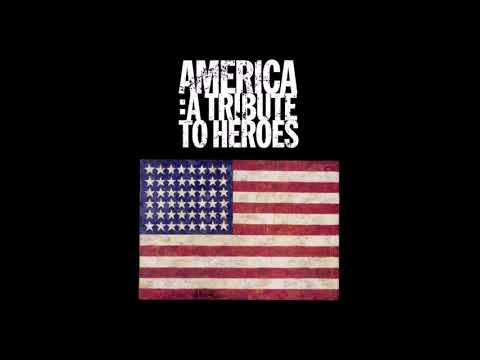
    America A Tribute to Heroes

    The concert was filmed live in New York, Los Angeles, and London, with British and Canadian artists supporting their American peers. At each venue, the stage was decorated with hundreds of candles. Bruce Springsteen opened the show with the then-unreleased song “My City of Ruins,” playing guitar and harmonica. With the E Street Band, he introduced it as “a prayer for our fallen brothers and sisters.” The following year, the five-minute track closed out Springsteen’s 9/11-inspired album The Rising.

    Stevie Wonder then performed “Love’s in Need of Love Today,” the opening track of Songs in the Key of Life, with gospel sextet Take 6.

    U2 performed “Peace on Earth” and “Walk On” from London with Natalie Imbruglia and Dave Stewart. “Peace on Earth” was inspired by the 1998 Omagh car bombing, but took on new meaning after 9/11. For the performance, Bono changed the original lyrics from “I’m sick of hearing again and again that there’s gonna be peace on Earth” to “I’m sick of hearing again and again that there’s never gonna be peace on Earth.”

    Billy Joel had the most hopeful performance of the night, singing and playing “New York State of Mind.” Rather than dwelling on tragedy, he expressed New Yorker pride and even smiled throughout his performance. Joel never officially released “New York State of Mind” as a single, but due to its popularity with fans it’s often mistaken as one.

    In addition to the night’s abundance of established acts, then-new artists Alicia Keys and Enrique Iglesias took the stage. Keys performed a cover of “Someday We’ll All Be Free” by Donny Hathaway, beginning with a piano riff reminiscent of her future 2003 song “Diary.”

    Enrique Iglesias had just broken out two years earlier in 1999 with “Bailamos,” but his signature hit would go on to become “Hero,” which he publicly performed for the first time that night. Radio DJs later mixed the song with audio from police, firefighters, and civilians, adding to the song’s popularity.

    Iglesias wasn’t the only artist to sing a song called “Hero.” A few numbers later, Mariah Carey sang the just-as-famous song of the same name off her 1993 album Music Box. A New Yorker herself, Carey’s performance was more subdued than past renditions but characteristic of the night’s solemn energy.

    The event also included some country artists. Faith Hill performed “There Will Come a Day” from her 2001 album Breathe with a backing gospel choir, and the Dixie Chicks (now The Chicks) performed the poignant “I Believe In Love.”

    “America A Tribute to Heroes” ended on a patriotic note, with Céline Dion singing “God Bless America” and Willie Nelson leading the Los Angeles performers and speakers in a grand finale of “America the Beautiful.” Dion later released her cover as a single, and performed it again at the Super Bowl XXXVII in 2003. Céline Dion and Neil Young were the night’s only Canadian performers.

    Other performers included Neil Young, Tom Petty, Sheryl Crow, Bon Jovi, Sting, Dave Matthews, and Paul Simon. Most major genres were well-represented: multiple pop, rock, country, folk, and soul artists were on the setlist, and despite their thematic similarities for the occasion, they were diverse in sound.

    The success of “America: A Tribute to Heroes” prompted two more 9/11 tribute concerts a month later: the similarly diverse “Concert For New York City” in Madison Square Garden, and the pop-focused Michael Jackson-led “United We Stand.” In 2004, Rolling Stone named the 9/11 concerts “one of the 50 moments that changed rock,” and it’s easy to see why—despite the tragic circumstances that brought the artists together, many were on top of their game.

  • Woodstock 99 Revisited

    21 years ago this weekend, the festival calamity known as Woodstock 99 took place at Griffiss Air Force Base in Rome, NY. If you know anything about Woodstock 99, you likely know about the festival-ending fires and mild rioting that took place in the concert grounds, built out of a weekend of frustration with festival pricing and lack of an adequate infrastructure.

    Over Friday and Saturday, the festival seemed to be your typical late 20th century festival – bands playing mostly on schedule, an amalgam of various groups of music lovers, basic amenities and little in terms of technological infrastructure. This was a time where cell phones were a luxury item and resembled Zack Morris’ brick phone.

    via Getty Images

    There was the giant plywood wall that surrounded the grounds, which gave you a feeling of being trapped inside, with only two or three entry points where you’d be searched at security’s leisure. Once inside, prices were high, even by today’s standards. Four dollars for a bottle of water, eight dollars for a hamburger, nine dollars for a cheeseburger, ten dollars for a chicken sandwich and twelve bucks for a small personal pizza. If you were lucky, you found a lemonade stand where the drinks cost only two dollars, but if you wanted alcohol, you had to drink it in the beer garden, which was devoid of shade or quality sound, and put you in a direct line of fire from people slinging mud through the chain link fence.

    woodstock99

    The musical lineup was as solid as it could be for 1999. In alphabetical order, you’d be able to catch Bush, Chemical Brothers, Creed, Sheryl Crow, Dave Matthews Band, DMX, Everlast, Guster, Ice Cube, Korn, Jewel, Limp Bizkit, Live, Los Lobos, Megadeth, Metallica, moe., Alanis Morissette, Willie Nelson, The Offspring, Rage Against the Machine, Red Hot Chili Peppers, Rusted Root, Sugar Ray and The Tragically Hip, among many others

    Two stages that were a long, long walk from each other separated the acts. If you wanted to see someone on the West Stage, you’d be sacrificing a great deal at the East Stage, and vice versa. The schedule was staggered, but surely this could have been organized better. At least moe. got a set.

    Governor George Pataki is rumored to have said of the Woodstock weekend,

    “It seems to me the whole reason Woodstock ’99 failed was because of the kids. Kids from all over came to Rome and had no sense of authority, and did not care about anyone but themselves. The promoters should be held to blame, but also the irresponsible people who attended. It seems a strange contradiction. The week before Woodstock 99, 120,000 people gathered in Oswego, New York to see the rock band Phish. The event was in more cramped quarters, and was just as hot, and to my understanding no major problems were reported. Maybe if people behaved like they did at the Phish event this wouldn’t have happened.”

    Pharmer’s Almanac, Volume 6

    While Pataki’s remarks are off by around 90,000 ‘Camp Oswego‘ attendees, it does highlight the weekend prior where similar conditions of oppressive heat and humidity did not lead to the same circumstances as they did in Rome from July 22-25. How can two festivals, 80 minutes apart, be so diametrically opposite? You’d have to factor in an audience from mixed walks of life, many of whom may not have been to a multi-day music festival prior to this, and festival promoters who came up short in every single area – from bathrooms to food, safety to water, and layout to operations.

    Skip ahead to Sunday, July 25, and on the main East Stage, you’d catch Al Green, Willie Nelson, Brian Setzer Orchestra, Everlast, Elvis Costello, Jewel, Creed, and Red Hot Chili Peppers. Genre-wise, in order, you could catch gospel/soul, country, swing, rap, rock, pop, ‘hard’ rock and pure rock ‘n’ roll from the Chili Peppers. Quite a variety to see in one day.

    woodstock99

    Long lines at the limited vendors that had food to serve coupled with very long lines for water, overflowing portos and litter seemingly everywhere, finally hit a tipping point. Add in the aforementioned oppressive heat and humidity plus a complete lack of shade, and a powder keg was ready to burst. The plywood fence around the venue was already being torn down casually throughout the day by concert-goers taking out their frustrations, which led to more seeking a piece of memorabilia.

    During the day, in an odd bit of cosmic irony, anti-gun violence group Pax (now the Center to Prevent Youth Violence), distributed candles to those who stopped by their booth during the day. The original intent was for a candlelight vigil during “Under the Bridge,” but instead some used the candles to start bonfires, and when coupled with the thousands of empty water bottles that littered the East Stage field, there was plenty of fuel to light the grounds on fire from stage to stage.

    At some point towards the end of the Chili Peppers set, the audio tower caught fire, and the fire department had to be called in. The festival was over thankfully, and many had left during the day, but for the thousands needing to vacate the grounds while emergency personnel were arriving, the scenario had to be frightening. CBS News reported:

    The three-day concert climaxed into a frenzy about a quarter mile from the main stage when several concertgoers set fire to twelve parked tractor-trailers.

    Several people pulled cases of soda and merchandise from the trucks and fed the flames with debris. Others toppled light stands and speaker towers, while another group tried to destroy a radio station truck.

    via CBS News

    As a result of Woodstock 99, it would be a number of years before a festival with pop bands reaching a broad audience would take place. Jam festivals were already on the rise, and while the lineup for Bonnaroo 2019 looks little like that of Bonnaroo 2002, the key to the festival formula was in building a lineup for a defined audience, not gathering an audience towards a known lineup.

    And while Woodstock 50 never even got off the ground and Woodstock 99 was a stain on music festival history, the original and even the 1994 edition bear the torch for a name still synonymous with peace, music and love.

    The nine-episode podcast Break Stuff: The Story of Woodstock 99 from The Ringer gives a detailed breakdown of the festival. Listen here.

  • The Jazz Foundation of America Partners With Relix for Online Benefit Concert

    The Jazz Foundation of America has partnered with music publication Relix to produce an online concert on May 14 at 8 PM ET, dubbed #TheNewGig. Hosted by actor/producer Keegan-Michael Key, the lineup will include; Elvis Costello, Sheryl Crow, Jon Batiste, Ivan Neville, Angelique Kidjo, Robert Cray, Stanley Jordan and more. Performances are expected to be new and will be pre-produced prior to air time. Drummer Steve Jordan will serve as the concert’s musical director.

    Relix publisher Peter Shapiro said in the press release: “We are honored to be collaborating with the Jazz Foundation of America to host #TheNewGig on Relix’s YouTube platform. Jazz and blues lie at the foundation of everything, really, and it is at the core of the music that we feature everyday on our websites, in our magazine, and on our social platforms. As part of giving back, it’s a privilege to host this very special event.

    In addition, the stream will feature performances by Herbie Hancock, Patti Smith, Brittany Howard and more who performed at the organization’s annual fundraiser ‘A Great Night in Harlem’. Many celebrities including Danny Glover, Bruce Willis and Mark Ruffin are set to make appearances during the music fundraiser. 

    Monies raised from the online concert will benefit the COVID-19 Musicians’ Emergency Fund. Established in March of this year, the emergency fund is geared towards helping musicians and their families affected by the pandemic by offering funding to cover basic living expenses. 

    “An entire community of artists who survive month-to-month have gone from standstill to freefall, financially speaking, but their music has continued to give us solace and comfort in quarantine,” said Joe Petrucelli, Executive Director of the JFA in the press release. “Support for #TheNewGig and the COVID-19 Musicians’ Emergency Fund offers them direct assistance and creates a sense of solidarity and hope in a time of despair and uncertainty.”

    To tune into the #TheNewGig, head to the Relix YouTube Channel on May 14 at 8 PM ET, with a 10 PM ET rebroadcast. For more information, visit Jazzfoundation.org.

    the jazz foundation of america

Built in Breakdance