For all the horrors the COVID-19 quarantine has wrought, it has given us one nice thing – oodles of downtime that we can spend listening to music, ad infinitum. So rather than getting emotionally played by non-stop news, why not invest this bounty of break time luxuriating, in bulk, in one of most maligned fruits of 60s and 70s popular music? The Side-Long Epic.
Perhaps it was the soporific drugs consumed or the lack of concentration-breaking diversions like Facebook, YouTube and the iPhone? Or maybe the booming economy, where young people emerged from college with zero debt, apartments that rented for a little more than the cost of a Starbucks’ Venti and, therefore, more free time to devote to sex, drugs and music appreciation in mass quantities?
While there were a few in the rock idiom before it, the Golden Era of the Side-Long Epic ran from about 1968 to 1975. And its greatest practitioners? The so-called Prog rockers, of course. These were musos who may have started in the world of the 2:40 single, but who prided themselves on continued growth and evolution. Here was the giant canvas upon which they could indulge their grandest whims. They could showcase their hard-earned instrumental chops, familiarity with offbeat time signatures and the great classical and jazz composers. There was also exotic world and new electronic music technology to explore, as well as fantasy/sci-fi and esoteric spiritual literature, in meisterwerkes that just had to eat up a whole side of vinyl, if not more.
I offer the suggestions below with some qualifiers. A few of these are not quite fully side-long pieces, as proggers have an annoying habit of throwing brief pieces on right before or after their epics (I’m talking to you Genesis!). My definition of Prog is broad and progressive. Some named might be turned off, being tattooed with such a brand. Surely, some of the most popular favorites are not featured in my subjective roster. But please, dig them, and give them a spin.
As the immortal psychedelic pitchman, Timothy Leary, advised: Turn On, Tune In and Drop Out into these long and wonderfully strange trips.
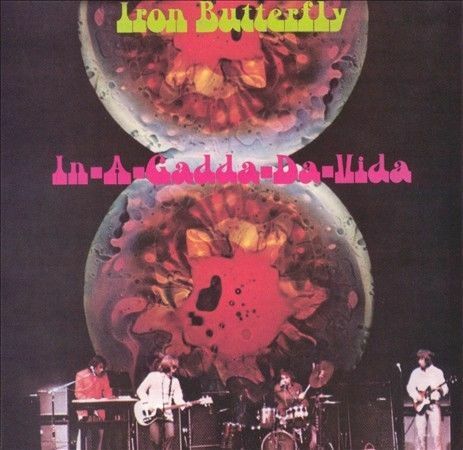
Iron Butterfly “In-A-Gadda-Da-Vida” – Not the first side-long rock epic or pure prog but certainly the one that put the idiom on the map, at 17-plus minutes, selling 30 million copies since its release in 1968. Writer/singer Doug Ingle’s organ intro and theme imparts a very prog-Anglican church vibe, not surprising as his dad Lloyd was a church organist. Long portions are devoted to an organ solo, a fuzzy wah lead and sometimes requisite of the side-longer, a big-assed drum solo. Reportedly written after Ingle consumed a gallon of wine, it was meant to be “In the Garden of Eden,” but his slurs made it otherwise when his drummer, Ron Bushy, attempted to write down the lyrics. Recorded not in the Butterfly’s native California, but at Ultrasonic Studios in Hempstead, Long Island, with the master take being the run-through recorded as the band waited for the late-arriving producer.
A stone cold classic to chill to, with renewed cred as a sample in tunes by hip-hop stars like Nas in his “Hip-Hop is Dead.” Another bit of NYS music trivia: the band was supposed to play Woodstock, but got stuck at LaGuardia Airport.
Procol Harum “In Held ‘Twas I” – The first true prog opus takes up nearly all of Side Two of Procol’s second album, reportedly Sly Stallone’s favorite, 1968’s “Shine On Brightly.” Its five movements chronicling nothing less than a search for the meaning of life (“Life is like a beanstalk, isn’t it?” says the Dalai Lama at one point). There’s the monk-y ohms and droning strings of its opening moving to a Russian classical style piano movement with poetic recitation by band’s obtuse lyricist Keith Reid, then a circus music jaunt. “The Autumn of My Madness” showcases the band’s organist Matthew Fisher at his “Whiter Shade of Pale” best. The “Look to Your Soul” and graduation march-like “Grand Finale” movements boast some of the wailingest work guitarist Robin Trower ever committed to tape. This is musical mountain climbing, brilliantly reprised live, with a full orchestra and choir, on their 1972 disc with The Edmonton Symphony Orchestra.”
Pink Floyd “Echoes” – The full flowering of Floyd Mach 2, sans songsmith Syd Barrett, at their musical architect best, from their 1971 album, Meddle. A product of intense improvisation and experimentation which kicks off with a minimalist piano “ping,” produced by sending the signal through a swirling Leslie speaker and Binson tape echo. Swirling guitars then a vocal section with lyrics about an “albatross overhead” (very prog). Seven minutes in, it settles into a driving beat, setting the stage for David Gilmour’s fuzzy neighing guitars, floating in deep space with outer worldly orchestral sounds. Its accomplished not with synths, but by Gilmore rubbing his bottleneck against the strings of his heavily processed Strat – real “2001” stuff. More undersea ping piano before the return to the song’s lyrical head, before sliding off into space. A staple of live performances since 1971, captured beautifully amongst ancient Roman ruins in their 1972 film, “Live at Pompeii.”
Focus “Eruption” – The greatest prog band you never heard the truest side of – if you only know “Hocus Pocus,” a yodel-filled session afterthought that defined shred with the sizzling solos of their godly guitarist Jan Akkerman, a prank that became their biggest chart hit. Named “Best Guitarist in the World” by Melody Maker over Clapton, Beck etc. in 1973, Akkerman is as at home with the classics, and a lute, as he is with burning blues rock, psychedelia and jazz. Largely penned the Dutch quartet’s classical trained keyboardist and flautist Thijs Van Leer, the 23-minute epic is a telling of the Greek myth of Orpheus and Euridice, with themes “lifted” from classical masters like Monteverdi and Bartok, a bit which they performed live but couldn’t on the recording due to copyright issues. Highlights are Akkerman’s volume swell violin guitar on the theme, his stinging lyrical playing on the slow ballad, “Tommy,” which moves into his rapid-fire modal jamming on “The Bridge.” A flute theme segues into the Gregorian chant of “Dayglow,” before a very musical solo from drummer Pierre Van de Linden. The epic returns to the theme before a fade with an unusual bit of freeform percussion fireworks. The second side of their 1972 disc “Focus II/Moving Waves,” the band returned to the side-long epic with 1974’s Bach-infused “Hamburger Concerto.”
Yes “Close to the Edge” – Side one of the popular prog band’s fifth album, four dreamy movements that clock in at close to 19 minutes, with lyrics inspired by Hermann Hesse’s Siddhartha. A quiet kickoff of running water, birds and wind chimes leads into frenetic stop-time jamming before the first vocal passage. The third movement, “I Get Up, I Get Down,” is the longest and best-known, with harmony vocals patterned on leader/singer Jon Anderson faves, The Beach Boys and The Association, and a massive organ passage from keyboard whiz Rick Wakeman.More furious riffing before a return to theme and fade back into the nature sounds. Yes kept getting bigger with the outrageous four-sided 1974 concept album, “Tales from the Topographic Ocean” being their nadir. This one may be their best and purest.
Kraftwerk “Autobahn” – The 22-plus minutes of this 1974 track are recreate the feeling (and repetitive monotony) of driving on one of Germany’s no speed limit motorways. From the beginning sound effects of a key in the ignition to the vocoder vocal theme parodying The Beach Boys (“fun, fun fun on ze Autobahn”), it unfolds like a flower. A cornerstone in minimalist electronica, it was created using early monophonic synths like the Minimoog and custom-built electronic percussion pads, but also traditional instruments including the flute, violin and guitars. The Sgt. Pepper of Krautrock went Top 20, in a single edit, around the world.
Frank Zappa “Little House I Used to Live In” – Not your classic prog, but one almost side-long piece that moves through a multitude of moods and features the best of early Zappa, from his precise chamber classical and music concrete to furious free-blowing and snappy audience banter. The nearly 19-minute piece, a combination of live and studio pieces from the 1970 disc “Burnt Weeny Sandwich,” commences with a lush Schoenberg-inspired piano composition before marching off into the energetic theme from “Holiday In Berlin.” The highlight is the truly burning electric violin solo by Don “Sugarcane” Harris, one of many bits on the album recorded during the sessions for Zappa’s proto-fusion masterpiece, “Hot Rats.” A great two-handed piano solo by Don Preston, a reprise from Harris and his violin. More luscious chamber classical, bicycle percussion and oboe, a rare organ solo by Frank, then a war of words with an audience member recorded live in London. Early Zappa at his finest.
Miles Davis “Agharta” & “Pangaea” – Get out your pistols, but I say Miles was prog in the truest sense, an artist who never stopped evolving through decades. After marrying the saucy 19-year old singer Betty Mabry, Miles first started wearing psychedelic jumpers, fringed leather vests and wraparound shades. Then he infused his music with some Sly and Hendrix and invented jazz fusion with the 1970 album, Bitches Brew. While this album’s side-longer “Pharoah’s Dance” possesses all the deep grooves, virtuoso soloing and dramatic ebb and flow one could want, Miles’ most risky and lengthy plunge into the long electric grooves came with the 1973 – 75 band featuring the noise/psycho-funk/shred of guitarist, Pete Cosey. The double albums, Pangaea and Agharta, captured this band on evening and afternoon shows recorded on February 1, 1975 in Osaka, right before Miles hung up his trumpet for years. Basically they are one long performance, so take your pick of sides to dreamy away in. It’s African beat industrial electronica bebop, with Miles pushing the pulse and players with wah wah trumpet jabs and breakdowns where his dissonant organ screams out alone in the silence. Guitarist Reggie Lucas provides non-stop wah funk, while Sonny Fortune rips off feverish solos on his sax and flute. Cosey takes his guitar and table of stomp boxes, many homemade, to other worlds, the post-Hendrix world of psychedelic funk/noise/shred, while drummers Al Foster and Mtume, and Motown refugee bassist Michael Henderson, pray to the gods that they can hold it all together.
Need More? Try These……
Genesis “Supper’s Ready” (22 minutes, seven parts of a good versus evil battle with an apocalypse in 9/8 time!) Rush “2112” (Sci-fi epic inspired by Ayn Rand!), Can “Yoo Doo Right” (20 minute edit of a 6 hour extravaganza), Tangerine Dream “Phaedra” (Early Krautrock at its most expansive), Yes “Gates of Delirium” (Based on Tolstoy’s “War and Peace”), The Allman Brothers Band “Whipping Post” and “Mountain Jam” (Deep-Fried American Prog – Blues County Jazz Fusion at its finest), Grateful Dead “Dark Star” (23 minutes of superior noodle from 1969’s “Live/Dead”), Jethro Tull “Thick As A Brick” (A gag concept album inspired by the comedy of Monty Python across two sides of vinyl), and ELP “Tarkus” (21 minute, seven part epic about a cybernetic fighting half tank/half armadillo!)