Tag: jazz at lincoln center

  • Watch the George Floyd-inspired “The Ultimate Litmus” featuring Wynton Marsalis

    The election may be over, but the people and causes that pushed for change are still making their voices heard. “The Ultimate Litmus” was written by Carlos Henriquez and Jenny Hersch, in response to the protests sparked by the May 25 death of George Floyd. The pair have produced an accompanying music video for the song, featuring Jazz at Lincoln Center Managing and Artistic Director Wynton Marsalis on both vocals and trumpet.

    https://www.youtube.com/watch?v=H5N6FCNN8X4

    Hersch says of the song,

    I wrote a verse of poetry on June 2. It just poured out. On June 9, I wrote verses two and three. I have poetic thoughts but I don’t often write them down. Carlos Henriquez (bassist and arranger, Jazz at Lincoln Center Orchestra) and I have worked on several projects together over the past few years involving music for kids. I sent him the lyrics and asked him to write a brass band arrangement.

    Jenny Hersch

    Using a New Orleans street sound seemed to be the best choice given the circumstances behind the lyrics, with emotion and energy being simultaneously expressed.

    I gave the vocals a try in a rhythmic spoken-word style over Carlos’s MIDI file and immediately called Bryan R. Smith, a photographer friend in NYC to ask for the use of the protest pictures he took in New York, Washington D.C. and Minnesota. Carlos then called Dwight Adams (trumpet), Jeffrey Miller (trombone), Ibanda Ruhumbika (tuba) and Ali Jackson (percussion) to record their parts from home.

    Jenny Hersch

    With the track laid down, Carlos played a rough audio mix of “The Ultimate Litmus” for Wynton Marsalis in early September. Marsalis was moved by the project and offered to recorded the vocal track and a trumpet solo, which he did in early October.
    the ultimate litmus
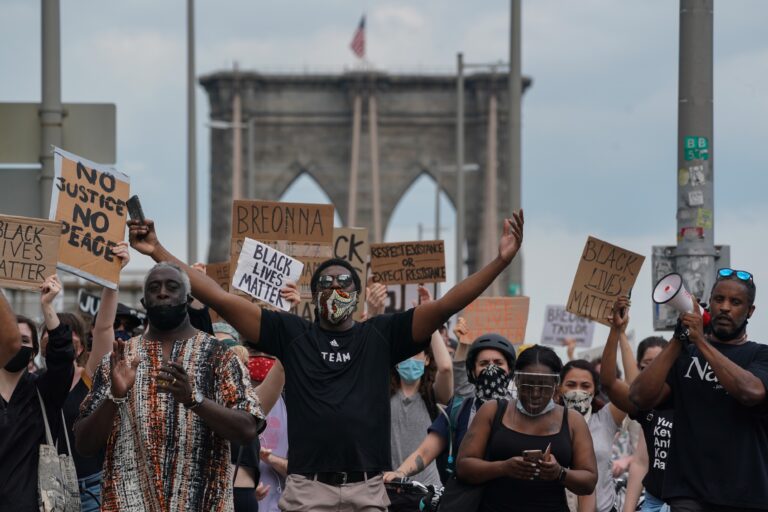
    Protesters walk across the Brooklyn Bridge into Manhattan during a demonstration over the death of George Floyd by a Minneapolis police officer on June 6, 2020 in New York. Photo by Bryan Smith

    The video was assembled by a team of recent Berklee College graduate Alex Leiva (sound) and Shannon Magnaldi (video), a recent Massachusetts College of Art grad. “The Ultimate Litmus” features Dwight Adams and Wynton Marsalis on trumpet, Jeffery Miller (trombone), Ibanda Ruhumbika (tuba), and Ali Jackson (percussion).

    Lyrics for The Ultimate Litmus, by Jenny Hersch

    A bottomless pit of pandemonium
    A breaking point?
    A tipping point?
    No quick fix outcome

    A state of being?
    A state of mind?
    Is it an absence of mind?
    Where is the presence of mind?

    Confusion …. Delusion
    No illusions
    No stop gap brawl
    In it for the long haul

    A faction reaction
    No abstraction
    Identity …. Integrity
    Conformity …. Community

    Relationships based on tolerance not trust?
    Is it them or is it US?

    Protest
    No contest
    24    7
    With no rest

    Pros and cons
    A long list at best
    Overwhelmed by stress
    In need of a life vest

    Constitution …. Restitution
    Persecution …. Absolution
    Abusers …. Accusers
    For the foreseeable future

    Civic values
    Civic virtue
    Reeling …. kneeling
    Rail against the curfew

    Fleet of feet
    Running from a browbeat
    Bias
    Is a one way street

    Who will bear witness
    The ultimate litmus
    A test of wills
    What values instilled

    No justice
    No peace
    May wonders
    NEVER cease

    ACTION
    Is gaining traction
    Words are not enough
    Need satisfaction

    Lines of questioning
    Is what we’re expecting
    Fear of the unknown
    Will compassion be shown

    What is the hold up
    We’re all thunderstruck
    No sit down strike
    Throngs are running amok

    Painted into a corner
    No clear path forward
    Blurred on the periphery
    The slope is very slippery

    Tears are to be expected
    We’re so disconnected
    Celebrate our differences
    While honoring our preferences

    Human rights
    Are bona fide
    Like clockwork
    Like predicting the tides

    400 years
    Of victimization
    We need a DO-OVER
    In this nation
  • Elmo Makes Lincoln Center Debut on ‘A Swingin’ Sesame Street Celebration’

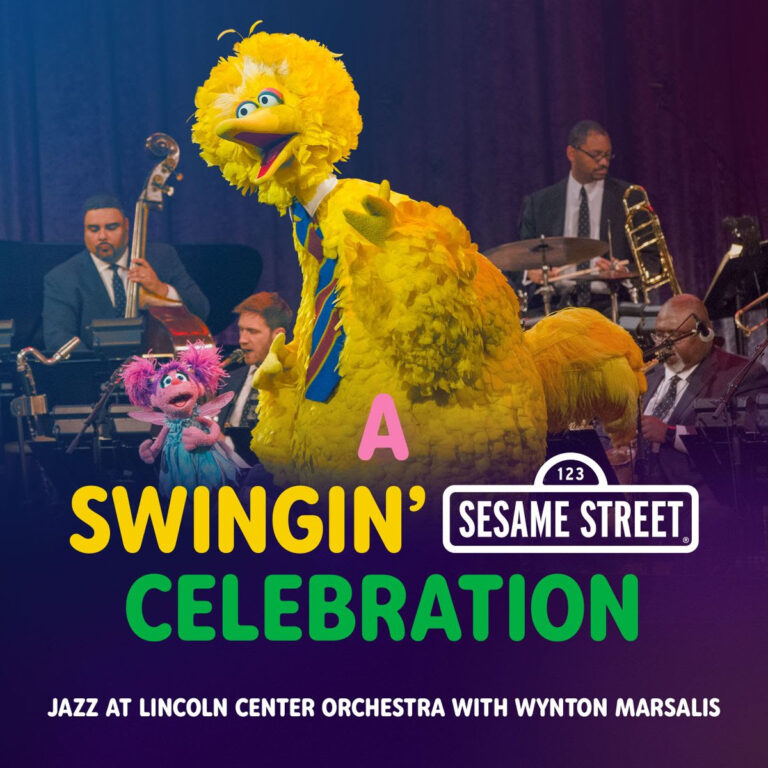
    Jazz at Lincoln Center makes music for all ages–even toddlers. On October 30 at 9PM EST, Jazz at Lincoln Center Presents: A Swingin’ Sesame Street Celebration will debut on national PBS stations.

    sesame street

    The hour-long special will feature the Jazz at Lincoln Center Orchestra with Wynton Marsalis along with Elmo, Bert & Ernie, Big Bird, Herry Monster, Grover, Oscar the Grouch, The Count, Abby, Hoots the Owl, and Rosita.

    sesame street
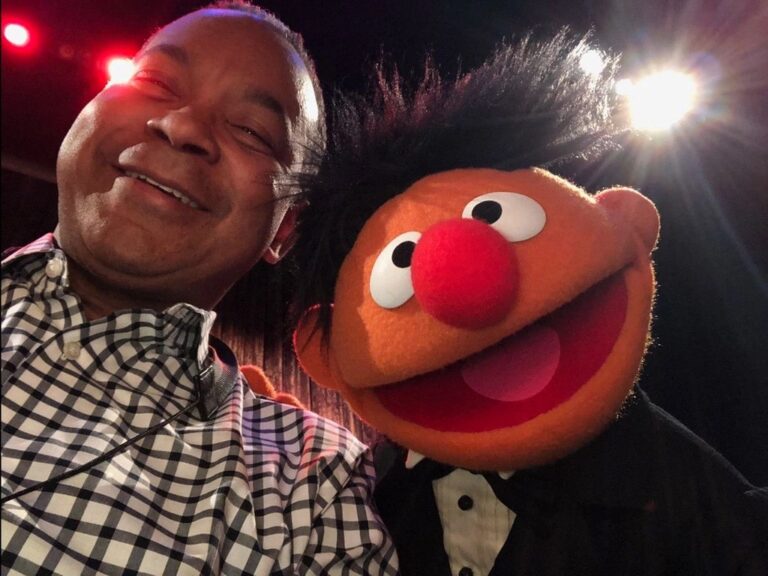
    Wynton Marsalis and Ernie

    The orchestra takes Sesame Street favorites like “Rubber Duckie,” “I Don’t Want to Live on the Moon,” and “People in Your Neighborhood” and re-imagines them for the stage. On October 30, PBS will premier the Sesame Street gang singing these classics to a sold out audience.

    Since 1969, Sesame Street has introduced young children to music and culture. Jazz legends like Dizzy Gillespie, Herbie Hancock, and Mary Lou Williams all performed on the show. Kenny Rampton, member of the Jazz at Lincoln Center Orchestra, plays in Sesame Street’s house band.

    In this special, Wynton Marsalis meets back up with the familiar the Children’s Television Workshop characters after visiting them on the show in 1991 and 1998.

    A Swingin’ Sesame Street Orchestra is funded by Sesame Workshop, the nonprofit organization behind the show. The performance is a part of Jazz at Lincoln Center’s educational and diverse programs that hope to ensure that younger generations appreciate jazz in the future.

    Jazz at Lincoln Center’s other educational programs, such as Swing University, WeBop, Essentially Ellington, and Middle School Jazz Academy are available online at jazz.org. They aim to show jazz as a metaphor for democracy and freedom.

    Paying tribute to Sesame Street’s New York roots, as of May 1, 2019, sunny days can be found every day at the intersection of West 63rd Street and Broadway. Honoring the show’s 50th anniversary, New York City gave Sesame Street its own real intersection.

    Jazz great Wynton Marsalis has been a frequent guest on Sesame Street—and now, to celebrate the 50th anniversary of the landmark series, he’s returning the favor. On A Swingin’ Sesame Street Celebration, Marsalis and the Jazz at Lincoln Center Orchestra host the gang in the “House of Swing” for a big band salute to a very special show.

  • Wynton Marsalis seizes attention with ‘The Ever Fonky Lowdown’

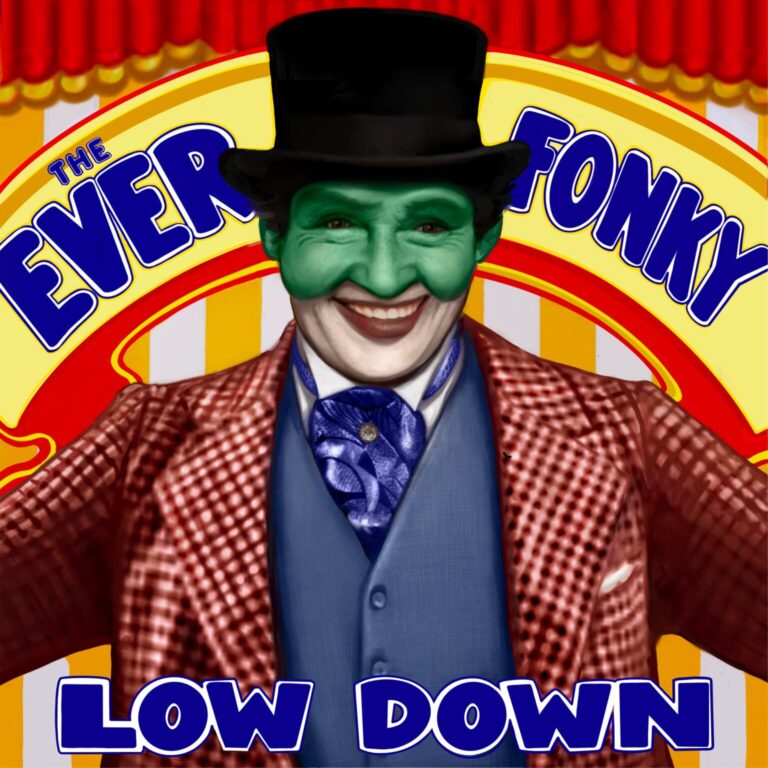
    This past week Blue Engine Records released The Ever Fonky Lowdown, Wynton Marsalis’ latest extended composition, a groundbreaking, satirical look at democratic freedom, abuse of power, racism, and cultural corruption.

    The Ever Fonky Lowdown
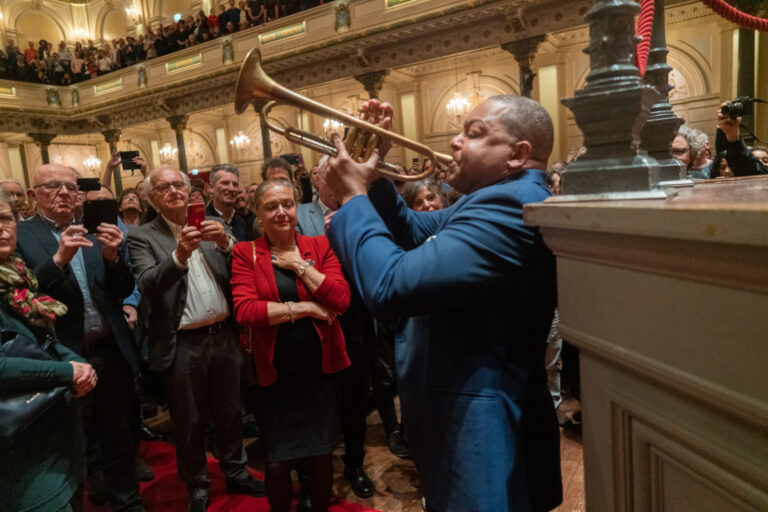
    Photo by Luigi Beverelli. 2/17/20

    Some of jazz legend Mynton Marsalis’ best work of the last four decades has been influenced by socio-cultural and political issues. In 1985, his Black Codes (From the Underground) won a Grammy, in 1996, Blood on the Fields became the first jazz piece ever to win a Pultzier Prize, All Rise was performed by Symphonic Orchestras all across the world in 2002, and in 2007, From the Plantation to the Penitentiary was said to “[reveal] some important truth about this country with a lot of anger and heart.” It seems only fitting that now, during this historical time of national protest, Wynton Marsalis release a new work that reflects on these human rights issues.

    The Ever Fonky Lowdown directly addresses the racism, deception, and greed that clouds the country’s chances of human rights for all and pushes us further away from democracy. It was written in 2018 to combat human suffering and exploitation on the universal scale, but is now, in 2020, more topical than ever. The album’s narrator, “Mr. Game,” says it himself: “We are here tonight, but this is an international hustle. It has played out many times across time and space and is not specific to any language or race. It takes on different flavors according to people’s taste, but always ends up in the same old place.” These issues have been happening to countless all throughout history, and it is time to strip away the distractions to attack the injustice’s sources directly.

    https://www.youtube.com/watch?v=IurvhGqimkY

    The Orchestra singers act like a narrative Greek chorus and call upon several different forms of jazz, Gospel, American folk, swing, New Orleans funk, and more. The celebratory music is its own character and satirically expresses the joy with which humans hurt one another. The 53 track piece is both entertaining and thought provoking.

    “Usually I research and learn a lot of new material for longer pieces. For this one, I went with music and mythology that I have lived. From the music my father and great New Orleans drummer and composer James Black played in the 60’s, to the funk we played in the 70’s, to the modern jazz we have been blessed to play, teach and shape over these last decades, The Ever Fonky Lowdown is an antidote to the poisonous (and largely unquestioned) cultural mythology that continues to infect our general quality of life.”

    Wynton Marsalis
    The Ever Fonky Lowdown

    Marsalis wants the listener to question what is shown to him: the propaganda, media, and populism. He encourages all to look beyond what is shown to us and find our immediate reality and work to improve it. Essentially, The Ever Fonky Lowdown asks, ‘Where do we go from here?’ Marsalis answers:

    “There’s no real answer on the Left or the Right. The solution lies outside of the game. But, we have to rise above our position on the board to get a broader view…..and then decide individually, if we have the will to fight for a collectively better country (or world) populated with ‘others’. It boils down to the basic question of predation vs. symbiosis—do we want to help one another or exploit each other?”

    Wynton Marsalis

    The Ever Funky Lowdown is available now for streaming or purchasing, and a 2018 live performance is on Facebook.

  • Watch: Jazz at Chautauqua featuring Wynton Marsalis, Becky Kilgore and more

    Jazz at Chautauqua is held periodically and in 2016 hosted Wynton Marsalis and Jazz at Lincoln Center during one week of the nine-week long program.

    Located in southwestern New York, near the Pennsylvania border, Chautauqua Lake is home to the Chautauqua Institution. There, a blend of arts programming, educational and religious opportunities and recreational activities are available to those who visit the grounds during the year.

    The Institution, originally the Chautauqua Lake Sunday School Assembly, was founded in 1874 as an educational experiment in out-of-school, vacation learning. It was successful and broadened almost immediately beyond courses for Sunday school teachers to include academic subjects, music, art and physical education.

    On September 21, 2012, a late-night set with Duke Heitger’s Swing Band at Jazz at Chautauqua featured the amazing voice of singer Rebecca Kilgore. Performing worldwide at jazz festivals, jazz parties, and on jazz cruises, Kilgore has been a frequent guest on National Public Radio’s ‘Fresh Air’ with Terry Gross, has appeared on ‘A Prairie Home Companion,’ and with Michael Feinstein at Carnegie Hall.

    Here is Rebecca Kilgore with Dan Block (tenor saxophone), Rossano Sportiello (piano), Frank Tate (string bass) and Pete Siers (drums) performing “I’m Thru with Love” at Jazz at Chautauqua weekend in 2011

    The Rebecca Kilgore Quartet (formerly known as BED) was a popular favorite on the jazz festival circuit: with Eddie Erickson (guitar/banjo/voice), Dan Barrett (trombone), and Joel Forbes (bass). Writer Bucky Pizzarelli says of Kilgore, “If Benny Goodman were alive today, he’d hire Becky to sing in his band.”

    The next night, September 22, Becky performed “It’s Always You” with Keith Ingham. The 1941 Jimmy Van Heusen/Johnny Burke song from The Road to Zanzibar, was originally sung by Bing Crosby and Dorothy Lamour. Other members of Kilgore’s band include Dan Barrett (trombone), Dan Block (alto saxophone), Scott Robinson (tenor saxophone), Mike Greensill (piano), Howard Alden (guitar), Kerry Lewis (string bass) and Bill Ransom (drums).

    And from September 2009, here are Duke Heitger, Andy Schumm, Dan Barrett, Scott Robinson, Bob Reitmeier, Ehud Asherie, Marty Grosz, Frank Tate, and Pete Siers swinging around on “Linger Awhile.”

    From Jazz at Chautauqua in September 2009, featuring the late Tom Pletcher (cornet), Dan Barrett (trombone), Bob Reitmeier (clarinet), the late Jim Dapogny (piano), Frank Tate (string bass) and Pete Siers (drums). 

    From 2014 Jazz at Chautauqau, Kurt Weill performs a gorgeous “September Song” with a trio of Dan Levinson (tenor saxophone), Bob Havens (trombone), and Keith Ingham (piano).

    h/t Jazz Lives

  • Jazz at Lincoln Center asks ‘Everybody Wear They Mask’ in latest single

    The message that Jazz at Lincoln Center Orchestra with Wynton Marsalis’ is sending in their new single doesn’t mince words. “Everybody Wear They Mask” was composed by Marsalis and recorded at orchestra members’ homes in New York, New Jersey, Illinois, Georgia, Texas, and Iowa during quarantine.

    The song is the band’s call for everyone to do their civic duty and use face coverings in public to prevent the spread of COVID-19. And for those who don’t want to wear a mask, the song has a slightly more pointed message: “Why you gotta be like that?”

    Please, wear a mask.

    Some of jazz legend Mynton Marsalis’ best work of the last four decades has been influenced by socio-cultural and political issues. In 1985, his Black Codes (From the Underground) won a Grammy, in 1996, Blood on the Fields became the first jazz piece ever to win a Pultzier Prize, All Rise was performed by Symphonic Orchestras all across the world in 2002, and in 2007, From the Plantation to the Penitentiary was said to “[reveal] some important truth about this country with a lot of anger and heart.” It seems only fitting that now, during this historical time of national protest, Wynton Marsalis release a new work that reflects on these human rights issues.

    The Ever Fonky Lowdown” directly addresses the racism, deception, and greed that clouds the country’s chances of human rights for all and pushes us further away from democracy. It was written in 2018 to combat human suffering and exploitation on the universal scale, but is now, in 2020, more topical than ever. The album’s narrator, “Mr. Game,” says it himself: “We are here tonight, but this is an international hustle. It has played out many times across time and space and is not specific to any language or race. It takes on different flavors according to people’s taste, but always ends up in the same old place.” These issues have been happening to countless all throughout history, and it is time to strip away the distractions to attack the injustice’s sources directly.

  • Jazz at Lincoln Center Streams Ellington’s “Black, Brown, and Beige”

    Blue Engine Records, Jazz at Lincoln Center’s music label, has released Black, Brown, and Beige, their first release dedicated entirely to famous jazz composer Duke Ellington.

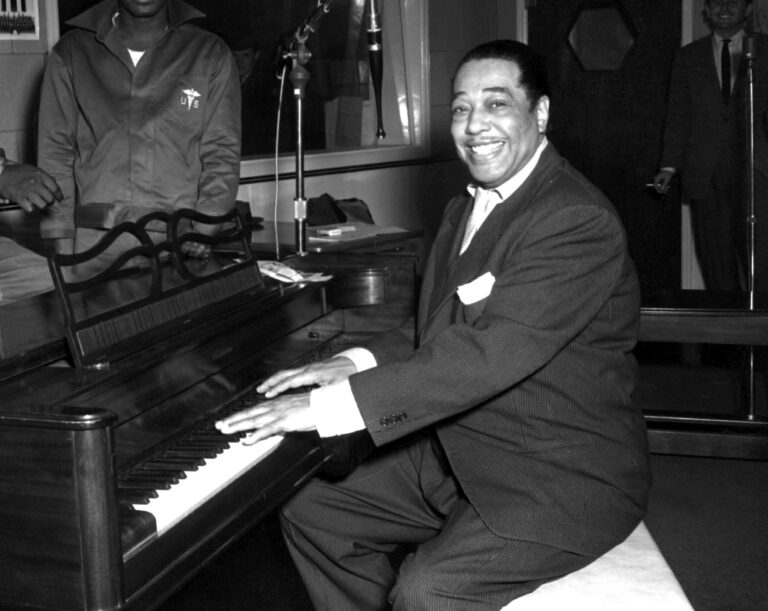
    Photo from Wikimedia Commons Public Domain

    Jazz at Lincoln Center’s in-house recording label, Blue Engine records’ Black Brown and Beige is a recording of a live Rose Theater performance in 2018 by the Jazz at Lincoln Center Orchestra. Wynton Marsalis, the center’s managing and artistic director, says: “Black, Brown and Beige sits alone in the history of jazz. It covers a mosaic of not just Afro-American but of American styles of music.” 

    Born in 1899, Duke Ellington was a master jazz composer and musician for several decades and was an important figure during the Harlem Renaissance. He thought of his music not only as jazz but also “beyond category,” and he wrote pieces that influenced American music for the greater part of a century. He led the best-known orchestral jazz group of all time. Composer Percy Grainger even wrote that “The three greatest composers who ever lived are Bach, Delius and Duke Ellington.” 

    Black, Brown, and Beige, which includes nine tracks in total, originally debuted at Carnegie Hall in 1943 while Ellington was still alive. Elliot called it  “a parallel to the history of the Negro in America.” It is a notable work in both African-American history as well as that of all American orchestral compositions.

    Jazz at Lincoln Center is happy to release a present-day recording of the piece that does Elliot’s greatest work justice and makes it digitally available to countless people today. Blue Engine Records’ mission is to feature both past and present works that make up an entire canon of music to bring old and new fans of jazz together.