Tag: #harlemrenaissance

  • Louis Armstrong: Pioneer of Jazz

    On August 4, 1901, Louis Armstrong was born in New Orleans. Until the age of five, Armstrong’s grandmother was his caregiver. At the age of six, he attended the Fisk School for Boys, an all black school in New Orleans. While performing odd jobs for the Karnoffsky family, Armstrong heard the early sounds of jazz from King Oliver.

    Louis Armstrong

    Armstrong and the Karnoffskys bonded over their discrimination. Armstrong faced the obvious racial discrimination, but the Karnoffskys, a Jewish houselhold, also faced discrimination by “other white folks.”

    In his early career, Armstrong performed on riverboats along the Mississippi River. This gave him more musical experience, particularly regarding reading music. He improved him trumpet playing, creating his own style and personality.

    Chicago

    In 1922, he moved to Chicago by invitation of King Oliver. Although race relations were poor, the city was flourishing and Armstrong was bale to find a job. The band, headed by Oliver, soon became one of the most influential bands in Chicago. Armstrong was able to live luxuriously in Chicago. Armstrong made his first recordings with Oliver for Gennett Records.
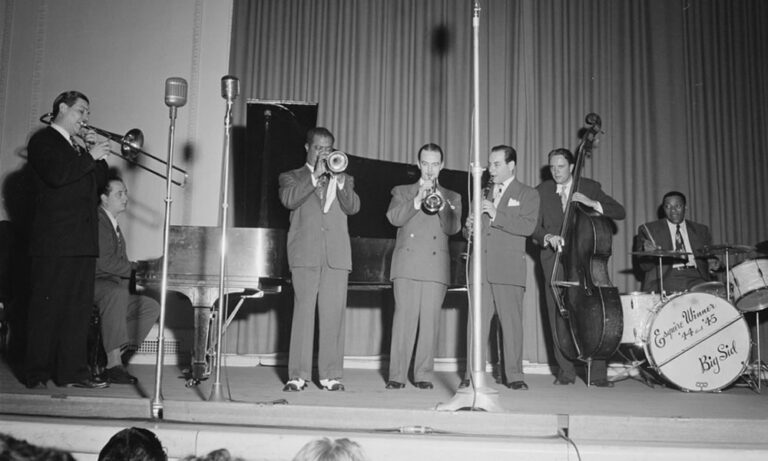
    Louis Armstrong

    Louis Armstrong’s second wife, Lil Hardin Armstrong, wanted him to develop his own style apart from Oliver. Her influence eventually undermined Armstrong’s relationship with his mentor, especially concerning his salary and additional money that Oliver held back from Armstrong and other band members.

    New York

    Armstrong and Oliver parted ways in 1924. Soon after, Armstrong received an invitation to travel to New York and join the Fletcher Henderson Orchestra, the best African-American band at the time. Armstrong adapted to the tightly controlled style of Henderson, playing trumpet and experimenting with the trombone. The other members were affected by Armstrong’s emotional style. His act included singing and telling tales of New Orleans characters, especially preachers.

    During this period, Armstrong made numerous recordings with Clarence Williams, Ma Rainey, Bessie Smith, and Alberta Hunter. Additionally, Duke Ellington‘s orchestra went to the Roseland Ballroom to catch Armstrong’s performances.

    Return to Chicago

    In 1925, Armstrong returned to Chicago. He joined his wife’s band, the Lil Hardin Armstrong Band, but also created the Hot Five. This group included Kid Ory, Johnny Dodds, Johnny St. Cyr, Armstrong, and Lil Armstrong. Over the next year, the group recorded twenty four records. Armstrong’s recordings of “Weather Bird” and “West End Blues” remain today as some of the most famous and influential improvisations.

    He began to scat sing (improvised vocal jazz using nonsensical words) and was among the first to record it, on the Hot Five recording “Heebie Jeebies” in 1926. The recording was so popular that the group became the most famous jazz band in the United States, even though they had not performed live to any great extent. Young musicians across the country, black or white, were turned on by Armstrong’s new type of jazz.

    After separating from Lil, Armstrong started to play at the Sunset Café for Al Capone’s associate Joe Glaser in the Carroll Dickerson Orchestra, with Earl Hineson piano, which was renamed Louis Armstrong and his Stompers, though Hines was the music director and Glaser managed the orchestra. Hines and Armstrong became fast friends and successful collaborators. It was at the Sunset Café that Armstrong accompanied singer Adelaide Hall. It was during Hall’s tenure at the venue that she experimented, developed and expanded her use and art of Scat singing with Armstrong’s guidance and encouragement

    Back to New York

    Armstrong returned to New York in 1929, playing in the pit orchestra for a musical with Fats Waller. He also made a cameo appearance as a vocalist, regularly stealing the show with his rendition of “Ain’t Misbehavin’”. His version of the song became his biggest selling record to date.

    He soon began working at Connie’s Inn in Harlem, the rival to the Cotton Club. He also continued recording, performing many of Hoagy Carmichael‘s music with “Stardust” becoming the most successful. As with his trumpet playing, Armstrong’s vocal innovations served as a foundation stone for the art of jazz vocal interpretation. His resonant, velvety lower-register tone and bubbling cadences on sides such as “Lazy River” exerted a huge influence on younger white singers such as Bing Crosby.

    Throughout the 1920’s, Louis Armstrong played a major impact on the Harlem Renaissance. His impact on the Renaissance influenced other major figures such as Langston Hughes. Within Hughes’ writings, he created many books which held the central idea of jazz and recognition to Armstrong as one of the most important person to be part of the new found love of their culture.

    Jazz Revival

    After spending many years on the road, Armstrong settled permanently in Queens, New York in 1943 in contentment with his fourth wife, Lucille. After spending many years on the road, Armstrong settled permanently in Queens, New York in 1943 in contentment with his fourth wife, Lucille.
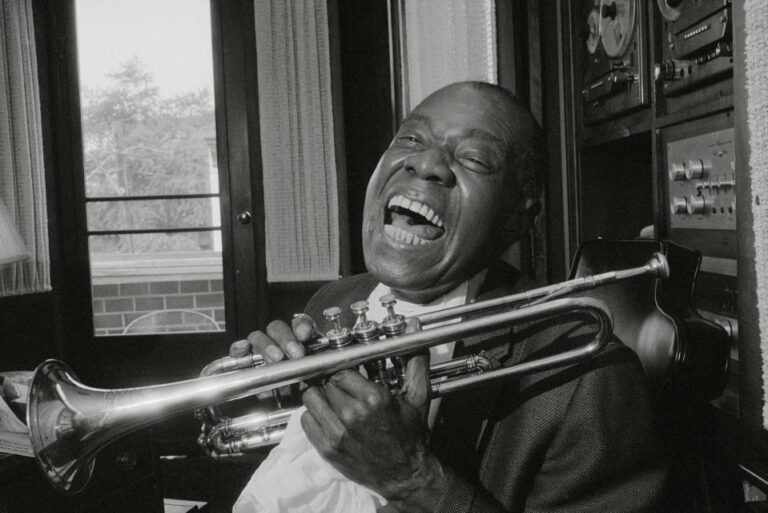
    Louis Armstrong

    During the 1940s, Armstrong performed at the famed second Cavalcade of Jazz concert held at Wrigley Field in Los Angeles with Lionel Hampton’s band. Following a highly successful small-group jazz concert at New York Town Hall, Armstrong’s manager established a six-piece traditional jazz group featuring Armstrong with Jack Teagarden, Earl Hines and other top swing and Dixieland musicians. Armstrong’s manager named the group Louis Armstrong and His All Stars.

    Around the World

    By the 1950s, Armstrong became a widely beloved American icon and cultural ambassador. Around the world, he had a fervent following. However, there was an obvious generational gap between Armstrong and younger jazz artists like Miles Davis and Sonny Rollins. The younger generation viewed Armstrong and his act as outdated.

    In 1948, Armstrong heard Suzy Delair sing “C’est is bon” at the Nice Jazz Festival. He loved the song and recorded his own in 1950. This became a worldwide success. In the 1960’s, he toured Ghana and Nigeria.

    After leaving Decca Records, Armstrong became a freelance artist, but continued touring. This was an intense schedule, but Armstrong had to rest in 1959 when he suffered a heart attack in Italy.

    In 1964, after over two years without setting foot in a studio, he recorded his biggest-selling record, “Hello, Dolly!”, originally sung by Carol Channing. Armstrong’s version remained on the Hot 100 for 22 weeks, longer than any other record produced that year, and went to No. 1 making him, at 62 years, 9 months and 5 days, the oldest person ever to accomplish that feat. In the process, he dislodged the Beatles from the No. 1 position they had occupied for 14 consecutive weeks with three different songs.

    In March of 1971, Armstrong went against his doctor and played a two week engagement at the Waldorf-Astoria’s Empire room that ended in a heart attack. He was released from the hospital in May, and quickly resumed practicing his trumpet playing. Still hoping to get back on the road, Armstrong died of a heart attack in his sleep on July 6, 1971, a month before his 70th birthday. His honorary pallbearers included Bing Crosby, Ella Fitzgerald, Dizzy Gillespie, Count Basie, Frank Sinatra, Ed Sullivan, and Johnny Carson.

    Awards and Legacy

    Armstrong was posthumously awarded the Grammy Lifetime Achievement Award in 1972. Twelve of Armstrong’s songs have been inducted into the Grammy Hall of Fame. He is a member of the Down Beat Jazz Hall of Fame (1952), Hollywood Walk of Fame (1960), Big Band and Jazz Hall of Fame (1978), Ertegun Jazz Hall of Fame (2004), Rock and Roll Hall of Fame (1990), Louisiana Music Hall of Fame (2007), and the Long Island Music Hall of Fame (2007).

    Louis Armstrong

    New Orleans’ main airport was renamed Louis Armstrong New Orleans International Airport. In 2002, Armstrong had recordings preserved in the United States National Recording Registry. The U.S. Open’s former main stadium was named the Louis Armstrong Stadium since he lived nearby.

    Though Armstrong is widely recognized as a pioneer of scat singing, Ethel Waters precedes his scatting. Billie Holiday said that she always wanted Bessie Smith‘s ‘big’ sound and Armstrong’s feeling in her singing. Other major jazz musicians like Duke Ellington have praised Armstrong through strong testimonials. 
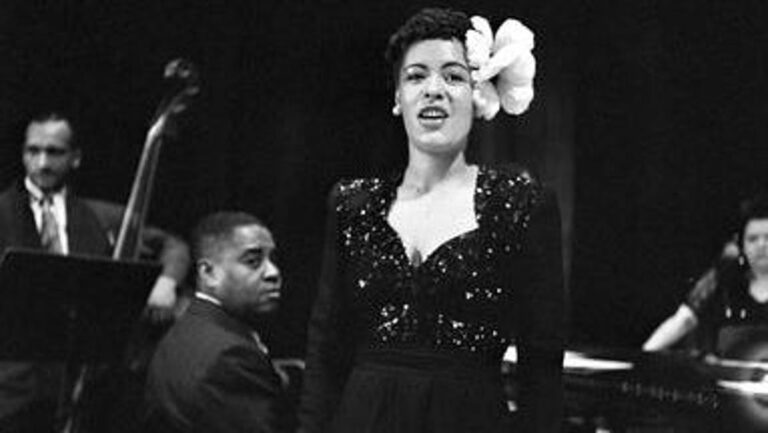
  • Billie Holiday: Improving the Improv

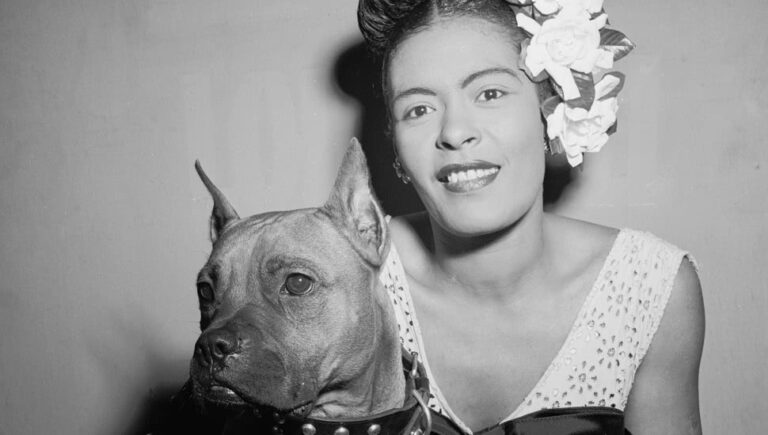
    Eleanora Fagan was born on April 7, 1915 in Philadelphia. As a child, she started going by Billie Holiday, Billie from Billie Dove and Holiday from her dad. She began listening to records by Louis Armstrong and Bessie Smith. Her mother Sadie cleaned houses, but could not make a living, so moved to New York City.

    Billie Holiday

    As a teenager, Holiday began singing in nightclubs. She teamed up with saxophonist Kenneth Hollan, performing at numerous clubs in Harlem. In 1932, Holiday replaced Monette Moore at a club where John Hammond, a producer, heard her and signed her to a record. At the age of 18, she made her first recording with Benny Goodman.

    The Depression Era

    In 1935, Holiday recorded pop tunes with Teddy Wilson. Holiday was allowed to improvise; her improvisation of the melodies to fit the emotion was revolutionary. Their first collaboration, “What a Little Moonlight Can Do” became Holiday’s ‘claim to fame’.

    Holiday soon achieved the title of big-band vocalist with Count Basie. She was able to choose her own songs, often opting to portray herself as a woman unlucky in love. “Summertime” a hit from Gershwin‘s Porgy and Bess became a hit for Holiday. Basie soon accepted Holiday’w involvement in the band, saying “When she rehearsed with the band, it was really just a matter of getting her tunes like she wanted them, because she knew how she wanted to sound and you couldn’t tell her what to do.”

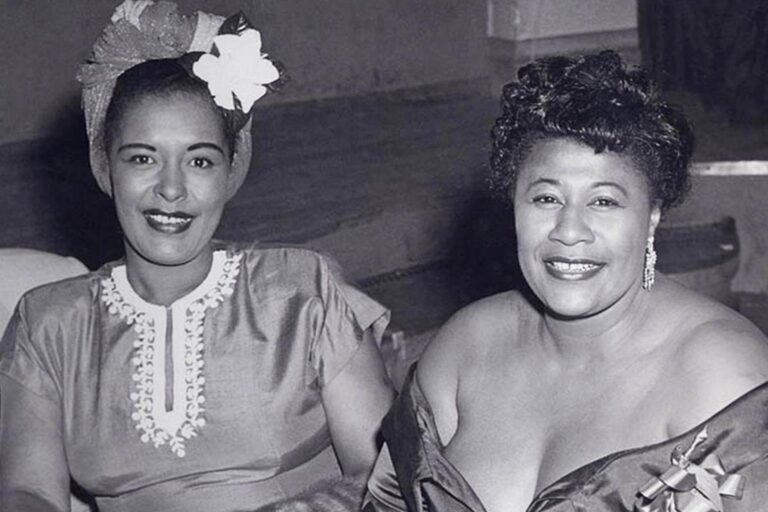
    Soon, Holiday found herself in competition with Ella Fitzgerald, the singer for the Chick Webb Band, the direct competitor of Count Basie’s. On January 16, 1938, Basie and Webb’s bands had a battle at the Savoy Ballroom. Metronome magazine declared Webb the winner while DownBeat magazine pronounced Basie the winner.

    Billie Holiday

    Holiday left Basie in 1938 and was picked up by Artie Shaw. This put her in a unique situation in that she was a black woman singing in a white orchestra in the segregated South. With Shaw, Holiday achieved notoriety, but could not sing as often as with Basie. Additionally, Shaw was pressured to hire a white singer with whom Holiday had to share time. In November 1938, Holiday was asked to take a service elevator at the Lincoln Hotel which may have caused her to leave the group soon after.

    Columbia and Commodore

    Holiday was recording for Columbia Records and when she was introduced to “Strange Fruit,” a poem about lynching. She performed it in 1939 with trepidation, later saying the song reminded her of her father’s death. He was denied medical treatment due to racial prejudice.

    For her performance of “Strange Fruit” at the Café Society, she had waiters silence the crowd when the song began. During the song’s long introduction, the lights dimmed and all movement had to cease. As Holiday began singing, only a small spotlight illuminated her face. On the final note, all lights went out, and when they came back on, Holiday was gone. Columbia Records found the subject matter too sensitive to record, so Holiday recorded it with Commodore Records. The song remained in Holiday’s repertoire for twenty years.

    Commercial Success

    Holiday got into an argument with her mother Sadie that ended in the daughter storming out, shouting, “God bless the child that’s got his own.” She then wrote “God Bless the Child,” her most popular and most covered record.

    Billie Holiday

    In 1942, Holiday recorded “Trav’lin Light” with Paul Whitman for Capitol Records, reaching number 23 on pop charts and number 1 on R&B charts. Holiday signed with Decca Records in 1944, recording “Lover Man”, another hit. In September 1946, Holiday began her only major film, New Orleans, in which she starred opposite Louis Armstrong and Woody Herman. Plagued by racism and McCarthyism, producer Jules Levey and script writer Herbert Biberman were pressed to lessen Holiday’s and Armstrong’s roles to avoid the impression that black people created jazz.

    On May 16, 1947, Holiday was arrested for possession of narcotics. During the trial, she heard that her lawyer would not come to the trial to represent her. Dehydrated and unable to hold down food, she pleaded guilty and asked to be sent to the hospital. She was sentenced to Alderson Federal Prison Camp in West Virginia. The drug possession conviction caused her to lose her New York City Cabaret Card, preventing her working anywhere that sold alcohol’ so she performed in concert venues and theaters.

    After her release in 1948, her manager, Ed Fishman, thought she should sing a comeback concert at Carnegie Hall. On March 27, Holiday played Carnegie Hall to a sold out crowd. A record number of tickets were sold in advance, a feat made more impressive since she did not have a current hit record. Holiday was again arrested on January 22, 1949 in San Francisco. That October, she recorded “Crazy He Calls Me”.

    https://www.youtube.com/watch?v=Z_1LfT1MvzI

    The loss of her Cabaret Card hurt Holiday financially. This problem worsened when Holiday’s records went out of print in the 1950s. She seldom received royalties in her later years. In 1958, she received a royalty of only $11.

    By the 1950s, Holiday’s drug abuse, drinking, and relationships with abusive men caused her health to deteriorate. She appeared on the ABC reality series The Comeback Story to discuss attempts to overcome her misfortunes. Her later recordings showed the effects of declining health on her voice, as it grew coarse and no longer projected its former vibrancy.

    In early 1959, Holiday was diagnosed with cirrhosis. She stopped drinking on doctor’s orders, but soon relapsed. She quickly lost 20 pounds. On May 31, 1959, Holiday was taken to Metropolitan Hospital in New York for liver disease and heart disease. The Federal Bureau of Narcotics had been targeting Holiday for the last twenty years. As she lay dying, they raided her hospital room, placing Holiday under police guard. Holiday died on July 15, 1959 at 3:10 a.m. due to heart failure caused by cirrhosis of the liver.

    Billie Holiday

    Legacy, Awards, and Accomplishments

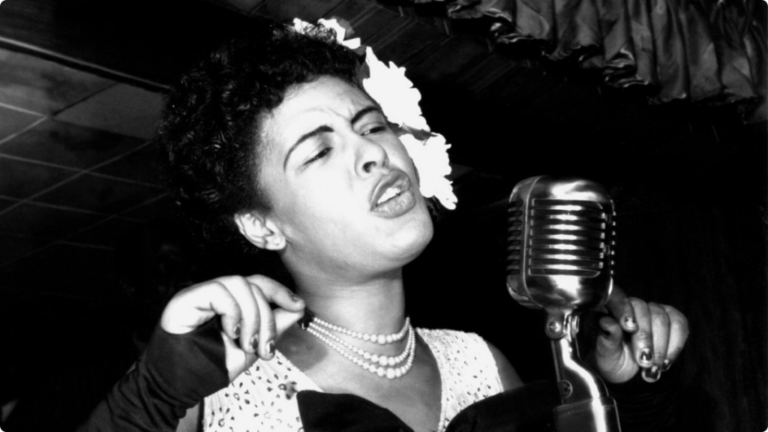
    Holiday’s improvisation made up for a lack of training and was quoted saying that she wanted her voice to sound like an instrument. Frank Sinatra called her “the greatest single musical influence on me.”

    Billie Holiday and eight of her recordings have posthumously been inducted into the Grammy Hall of Fame. Holiday received a Grammy Lifetime Achievement Award (1987). “Strange Fruit” is also listed in the National Recording Registry by the Library of Congress. Four of her albums were awarded the Grammy for Best Historical Album. She is a member of the ASCAP Jazz Wall of Fame (1997), Rock and Roll Hall of Fame (2000), and the Ertegun Jazz Hall of Fame (2004).

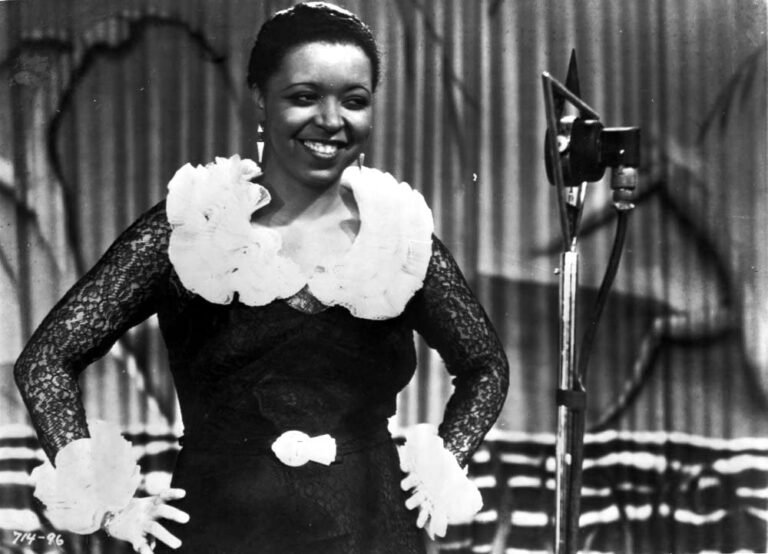
  • Harlem Renaissance: Ethel Waters Breaking Barriers

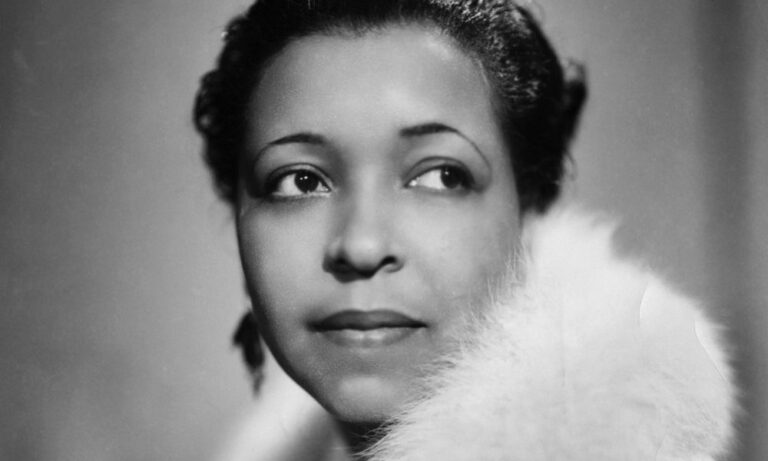
    Ethel Waters was born on October 31, 1896 in Chester, Pennsylvania. She was raised in poverty by her grandmother as well as two aunts and an uncle. When asked about her childhood, Waters once said “I never was a child. I never was cuddled, or liked, or understood by my family.” On her 17th birthday, she attended a costume party and sang two songs. Her performance impressed the audience so much that someone immediately offered her a job in Baltimore.

    Ethel Waters

    Baltimore

    When offered the job at the Lincoln Theatre in Baltimore, she received $10 per week, nearly double what she was making before. Even with her success, she fell on hard times and joined a carnival of freight cars going to Chicago. Soon after, she headed to Atlanta where she worked at the same club as Bessie Smith. Smith demanded that Waters not compete with blues songs, and Waters agreed to sing ballads and popular songs.

    Harlem

    Waters moved to Harlem in 1919, getting her first job at Edmond’s Cellar, a club that specialized in popular ballads. When she arrived in Harlem, female blues singers were becoming more and more powerful. She became the fifth black woman to make a record, originally joining Cardinal Records, but later switched to Black Swan.

    At Black Swan, she was accompanied by Fletcher Henderson. Over the next two years, Waters became the highest paid black recording artist at the time. In 1924, Paramount bought Black Swan and Waters stayed for the year.

    https://www.youtube.com/watch?v=tJBI2E_6lFA

    She switched to Columbia in 1925 and began working with Pearl Wright. She continued touring, joining with Earl Dancer in what was colloquially called “white time,” the Keith Vaudeville Circuit, performing for white audiences. In Chicago, they earned an unheard of $1,250. Later, in 1926, Waters recorded “I’m Coming Virginia” which was a hit partially due to her performing it on Broadway. In 1929, Waters and Wright arranged “Am I Blue?” which became a hit and later her signature song.

    Film, Theater, and Television

    In 1933, Waters appeared in a satirical all-Black film, “Rufus Jones for President”, featuring future star Sammy Davis Jr.. She went on to star at the Cotton Club. Later that year, she stared in the successful Broadway musical, “As Thousands Cheer”.

    Waters held three jobs: in “As Thousands Cheer”, as a singer for Jack Denny & His Orchestra on a national radio program, and in nightclubs. Due to these three jobs, she became the highest-paid performer on Broadway. Even with her success she still had difficulty finding work.

    Ethel Waters

    Waters moved to Los Angeles in 1942 to appear in “Cairo”. That same year, she starred in “Cabin in the Sky”. In the latter, Waters sang the Academy Award nominated “Happiness is Just a Thing Called Joe”.

    In 1939 Waters became the first African American to star in her own television show,  The Ethel Waters Show, a 15-minute variety special. She was nominated for an Academy Award for Best Supporting Actress for the film “Pinky”.

    In 1950, Waters won the New York Drama Critics Circle Award for her performance in “The Member of the Wedding”. Later that year, she became the first Black actress to star in a television series with “Beulah”.

    Awards and Accomplishments

    Her recording of “Stormy Weather” was listed in the National Recording Registry in 2003. She became a member of the Gospel Music Hall of Fame (1983). In 2004, she received a star on the Hollywood Walk of Fame. Additionally, three of her recordings have been inducted into the Grammy Hall of Fame: “Dinah” (1998), “Stormy Weather” (2003), and “Am I Blue?” (2007).

    https://www.youtube.com/watch?v=_QbeNSatFFo