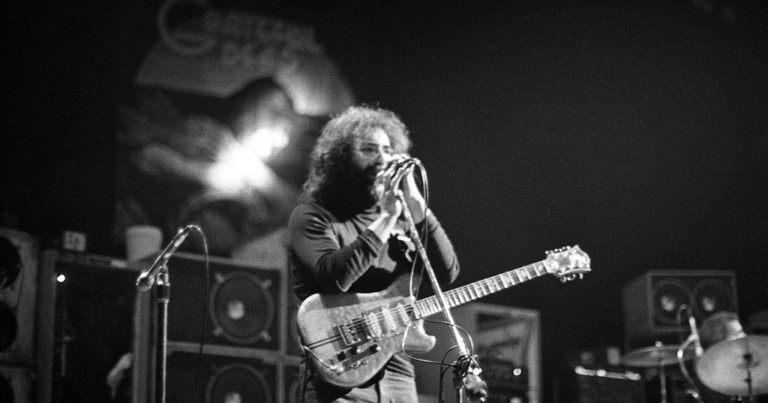
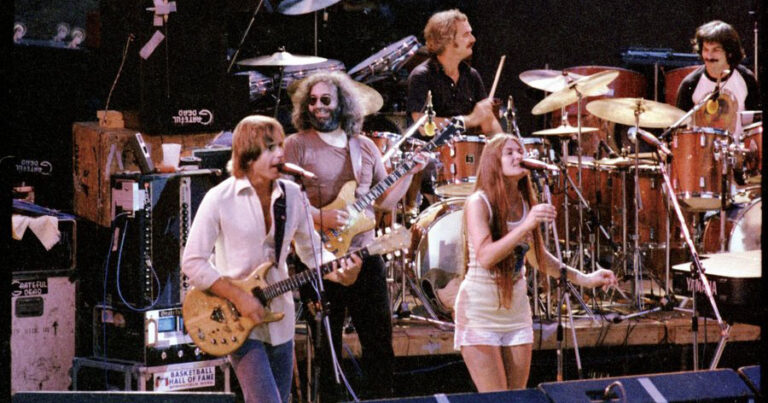
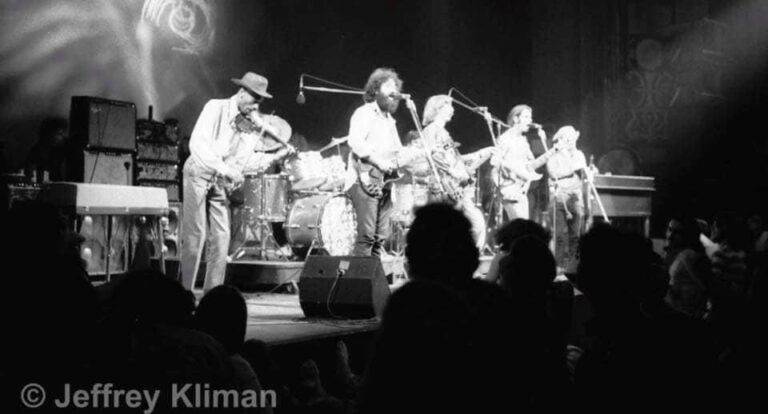
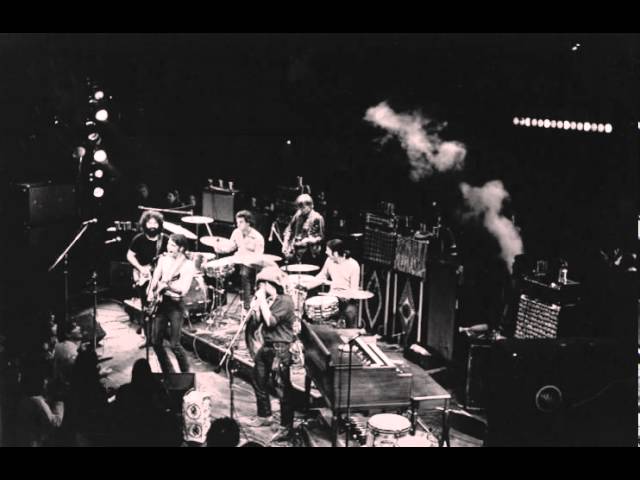
The Grateful Dead’s 2021 Dave’s Picks have been announced, and includes a show from September 1973 at Nassau Coliseum in Uniondale, which features the first ever version of “Let it Grow.”
This show has been a long time coming in the Dead’s archival release series, as September 8, and the night before, were the first run of live shows the Dead played following the previous month recording Wake of the Flood at the Plant Studio in Sausalito, CA. Once the band was finished mixing the next record, they hit the road for the first leg of Fall Tour 1973 with a pair of sold out shows at the home of the New York Islanders.
David Lemieux said of the release:
I first started working for the Grateful Dead in 1999, and was fortunate to work alongside Dick Latvala, who became my friend and mentor, I was turned on to 9/8/73 by Dick. He spoke so eloquently of this terrific show, certain that it would be released on CD some day as part of the Dick’s Picks series. In Dick’s own words, during a rundown of his thoughts on 1973 Grateful Dead, he said “That takes us up to the September run. Well right away 9/8/73 sticks out begging for attention. Even the night before (9/7/73) had fairly thrilling versions of “TLEO,””Jack Straw,””PITB,” “WRS->Let it Grow.”
There is not a weak moment from “Truckin’” through the ending tune “Sugar Magnolia.” Even as good as this night must sound, the following night things really explode. I really can’t put my finger on it because from the songlist, there is nothing apparently compelling. Well, you guys will soon find out what I mean, since I intend to release this one whenever the time is right.”
This show is a fantastic example of the Dead being fully firing on all cylinders. The September 7 show also features exceptional music, and almost two hours of that show are included in the Dave’s Picks Vol. 38, including “Bird Song” and “Playing In The Band.”
Dave’s Picks volumes sell out quickly and are only on sale four times a year. Last year’s shows included 10/29/77, 6/23/74, 4/20/84, and 3/26&/87. Order your 2021 Dave’s Picks here.
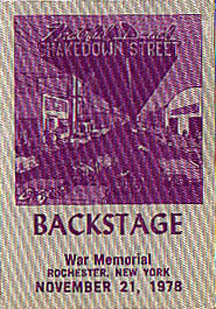
Western New York has always provided safe haven for the Grateful Dead and among their more popular stops in the region is Rochester, specifically the War Memorial. The band would play 15 known gigs in the Flower City during their historic touring career. Ten of them would be in this building. Unfortunately, the later part of this 1978 tour had to be cut short due to an ailing Jerry Garcia. But there were certainly heaters to be had before then, this show among them.
After an opening roar of electric guitars, the show begins in earnest with “Promised Land,” a popular Chuck Berry cover. Keith Godchaux plays some inspired keys on this one behind the guitar play and makes his presence felt early. Afterwards comes the first of three “Take A Step Back” announcements from Bob Weir, looking out for the “bug-eyed” folks in the front row. Once that’s accomplished, the instrumental into of “They Love Each Other” kicks in with Jerry Garcia manning the vocals. Unfortunately, some feedback issues mar this one a little bit early on. It’s salvaged though with a delightful Garcia solo and the continued strong play of Godchaux on keys.
Following an extended tuning break, the band bursts into “Cassidy,” with Donna Jean Godchaux now added to the vocal mix. It’s is a tidy yet superb version with the whole band in full synchronicity. This lays the foundation that’s topped with another poignant Garcia solo.
Choosing not to run with this momentum, another tuning break follows which seems to fuel the rabid audience even further. Out of this, “Dire Wolf” rears its head. Garcia’s vocals seem to improve a little on this one from earlier in the show before he infuses it with his traditional guitar licks.
Then comes round two of “Take A Step Back.” This time Weir’s pleas for the people on the floor to move back as much as they can is accompanied by a spattering of “Finiculi Finicula” from the band. Afterwards, Weir stays on the mic for lead vocals and leads the band through their Western classic, “Me And My Uncle.” They waste literally no time at its conclusion before launching into a raging “Big River,” thanks to an ultra-seamless transition they’ve perfected for these songs.
Things then slow down a bit with the relaxed pace of the “Row Jimmy” that follows. Jerry and Donna Jean’s vocals eventually merge nicely in this delicate yet fairly straight forward version. Afterwards, it’s Weir’s turn once again as he leads the Dead through “New Minglewood Blues.” Believe it or not, the five-show gap between its last performance was actually a fairly large one for this first set standard. Another opening set regular, “Loser,” follows before one last notable segue closes things out. A raucous “Jack Straw” that’s fueled by some blistering Garcia-supplied guitar licks towards the end. Before the last “wine” is even finished being sung, “Deal” starts up instantly. This concludes a first set that’s fairly standard in terms of song selection, but executed to near perfection.
The second set begins with one last plea from Weir to everyone on the floor to move back as much as possible. Then the Dead are off and running with “Bertha.” This longtime first set staple had now shifted to a regular spot in the second one in 1978. Starting with this tour and well into 1979, it was featured in the second set each time. And it was followed every time by a cover of The Rascals’ “Good Lovin’.” Tonight would be no different. While it may not have the same cachet as other traditional song pairings, “Bertha” > “Good Lovin’” was a verified couple from the middle of 1977 until late 1979, appearing next to each other every time played.
Jerry Garcia then leads the group through “Stagger Lee,” a cover of a traditional folk song about the murder of Billy Lyons by “Stag” Lee Shelton in 1985. Lloyd Price would later find fame with it thanks to his 1959 recording that topped the charts. After this rather atypical beginning to the second set, things begin to take a more familiar turn. “Estimated Prophet” sees Weir’s wailing vocals paired with Donna Jean’s harmonies that give it a nice touch. But the highlight is the tail end that sees Garcia gradually escalate a mesmerizing sequence through his guitar’s signature tone for this song. Bassist Phil Lesh is also heavily involved as the jam progresses.
Then, somewhat suddenly, Garcia pivots and begins strumming the opening rhythms to “Eyes Of The World.” This version is vintage 1978, with Garcia again taking lead and navigating the rest of the band through this beautifully crisp and funky rendition.
As the “Eyes” jam slowly peters out, The Rhythm Devils then take things over. Drummers Bill Kreutzmann and Mickey Hart get their moment in the sun with an all out 10-minute percussive assault in the traditional “Drums” section. The ecstatic War Memorial crowd and their approval can be heard loudly throughout.
After a brief “Space” section, the beginning of “Not Fade Away” starts in almost comical fashion with Garcia coming in extremely late on the beginning vocal section. It gets cleaned up nicely though and eventually stretches out into a full-fledged jam that melodiously stretches well past the ten-minute mark. Weir’s frenetic rhythm guitar play back Garcia wonderfully before the jam devolves into a slower pace and “Black Peter” appears. This, too, extends nicely with a patient and deliberate pace that’s peppered with more brilliant Garcia guitar fills.
The show maintains its vague theme of some odd song placements with a “Truckin’” that closes out the second set. The Rochester crowd once again noticeably voices their approval after the “New York’s got the ways and means” line as well as the nod to Buffalo.
In true Chuck Berry “bookending” fashion, the show ends with another cover of his, a quick romp through “Johnny B. Goode.” This puts the finishing touches on the fourth of ten overall shows the Grateful Dead played at the Rochester War Memorial.
Grateful Dead – War Memorial, Rochester, NY 11/21/78
I: Promised Land, They Love Each Other, Cassidy, Dire Wolf, Me & My Uncle> Big River, Row Jimmy, Minglewood Blues, Loser, Jack Straw, Deal II: Bertha> Good Lovin’, Stagger Lee, Estimated Prophet> Eyes Of The World> Drums> Space> Not Fade Away> Black Peter> Truckin’ E: Johnny B. Goode
One of the better Grateful Dead shows at the Fillmore East was aided by its surprise attack. Allegedly, two nights before at the same venue, Grace Slick, on behalf of Bill Graham, announced an impromptu “pop-up” show with Jefferson Airplane and the Dead at the same venue that would take place just days later. Since Slick was still pregnant at the time, Jefferson Airplane wound up being replaced as the opener by Hot Tuna. The New Riders of the Purple Sage played an opening set as well as was customary for this tour.
There’s also some previous controversy surrounding this show. For years, it’s been misidentified as an 11/23/70 show at the Anderson Theater in New York City. After a Bill Graham introduction, the band is off and running immediately with a “Casey Jones” that ably motors down the tracks. Next, Bob Weir leads them through the traditional first set stalwart of “Me and My Uncle.”
Oddly, the house PA seems to cut in after this with a recording of Elton John’s take on “Honkey Tonk Women.” This leads into a a cut version “Friend of the Devil.” Despite this lapse, Garcia’s vocals sound pristine in the recording and the band is on point. Then, after essentially a “no huddle” transition, a short yet crisp version of “Cold Rain and Snow” takes place. Afterwards, Pigpen finally gets to take lead for a while as he leads the Dead through a cover of Slim Harpo’s blue standard “I’m A King Bee.” The opening harmonica solo and later interludes between that and guitar solos stretch this one out into a healthy, bluesy jam.
Another classic first set pairing ensues with “China Cat Sunflower,” eventually joined by its traditional partner, “I Know You Rider.” A seemingly quick transition jam later sees the band in full vocal harmony on this spirited take of yet another classic blues cover.
At this point, a special guest joins them on stage in the form of Traffic’s Steve Winwood. The blues sentiment that had been previously established seems to carry right over to the cover of Otis Redding’s “Hard To Handle” that follows. Once again, Pigpen lends his signature vocal prowess to this classic Dead cover. Winwood’s backing on Pigpen’s Hammond organ is immediately felt and can be heard throughout. This one gets into a serious jam with Pigpen taking a backseat and Winwood soloing on top of the groove. Then came the relatively new “Big Railroad Blues,” yet another cover, written by Noah Lewis of Cannon’s Jug Stompers that dates all the way back to 1928.
Right after, the heavily percussive intro of “Not Fade Away” begins with. Chris Wood and Jim Capaldi of Traffic join the band on a half-hearted attempt at the vocals. This eventually evolves into a deep, drum-led jam. More splendid Winwood outbursts later lead into “Goin’ Down The Road Feelin’ Bad” with Garcia and Weir reassuming command. Surprisingly, at its conclusion, this shifts right back into one more quick take of “Not Fade Away,” albeit this time with Weir confidently taking the lead on vocals.
After more than three minutes of a break between songs, Weir once again takes lead on the “Mama Tried” that follows. This is followed by one of the better two-song sequences of the evening. The relatively fresh “Truckin’,” debuted only months earlier at the Fillmore West, follows. Hot Tuna’s Will Scarlet adds a touch of harmonica to this one. Another percussive laden jam follows that seamlessly steers itself into a mesmerizing version of “The Other One.”
The jam that ensues gets spacey midway through before settling back into its normal progression. This is followed with the unofficial encore of “Uncle John’s Band” with more early harmonica fills from Will Scarlet – a near acoustic version until the drums kick in. It’s still fairly new song at this time, but this version is flawless as it continues to build its reputation. This put the cap on the Dead’s “surprise” Fillmore East gig.
If the Grateful Dead had an East Coast base outside of New York City, odds are it would be at The Capitol Theater in Port Chester. By November of 1970, the Dead had already done two previous runs at The Cap earlier in the year. This would be the third one and the show they would play here this year. This would be no typical show though. Tonight, they would be joined by fellow West Coast troubadours the New Riders of the Purple Sage. Along with a full acoustic opening set, the last Capitol Theater show of the year certainly leaves a mark.
A knowledgeable crowd greets the show opening “Dire Wolf” with approval. The second verse seems to trip Garcia up a little but he makes up for it with a bit of an extended instrumental bridge. A true acoustic and relaxed version of “I Know You Rider” follows. This one is played on its own, with no “China Cat Sunflower” lead in, and at about half its typical speed, if not slower. Garcia takes the helm on vocals and leads the rest of the band through a really interesting take on this Dead staple that has the audience clapping along in time at parts.
Bob Weir then takes the lead on vocals and leads the group through the relatively new-at-the-time “Dark Hollow,” which debuted earlier in the year at New York City’s Fillmore East. After some bizarre group banter about Godzilla, it’s Garcia’s turn once again for “Rosalie McFall.” This was another new number at the time, also debuted only months earlier at the Fillmore East. The band does their best to steer around some feedback issues for this little bluegrass jaunt that’s ideal for an acoustic set.
The (new) hits keep coming, courtesy of Weir-led “El Paso,” only the seventh one ever. Performances number five and six took place the prior two evenings at The Capitol Theater. Afterwards, Pigpen finally gets a chance to lead and sings the last ever performance of the American Beauty gem “Operator.” Short harp solo – short time left with band? Another Beauty cut, “Ripple,” follows this, with the audience instantly engaged. And it would be a Beauty trilogy with the acoustic “Friend of the Devil” that followed. It certainly made sense from a promotional standpoint. The seminal Grateful Dead album was released exactly one week ago. It would later peak at No. 30 on Billboard’s Pop Albums chart.
A boisterous cover of The Everly Brothers’ “Wake Up Little Susie” then follows, with even more additional audience “percussion.” It’s the last time the Dead would ever play this one in a live setting. The opening acoustic set then comes to a close with another Dead classic that was still a relatively new song at the time, “Uncle John’s Band.” This officially has the Capitol Theater crown whipped up into a frenzy before Garcia mentions they’ll be back shortly with the New Riders.
For the second set, the New Riders of the Purple Sage delivered their unique brand of acid-washed country and rock tunes. At this point in time, Garcia and Mickey Hart are still involved in the band along with its co-founders David Nelson and John “Marmaduke” Dawson. Jerry plays the pedal steel guitar throughout and adds some beautiful interludes on “All I Ever Wanted.” “Fair Chance To Know” also has a “Teach The Children Well” feel to it, likely due to the aforementioned pedal steel and the same man playing it on each. “Cecilia,” though not the Simon & Garfunkel cover, features some legitimate yodeling. But the set does end with a cover, a rollicking take on The Rolling Stones’ “Honkey Tonk Women.” It’s a lively set that adds a totally different dimension to a Grateful Dead show and certainly worth a listen.
Afterwards, the Dead come out swinging with a “Morning Dew” third set opener. They slowly glide through the composed section to an appreciative Cap crowd with Garcia’s dynamic vocals seeing it through. It’s a wonderfully patient and patiently evolving “Dew.” After things settled dow a bit, Weir takes over for a run through of “Me and My Uncle.”
This is followed by the one and only live performance of “Mystery Train” with Garcia on vocals, resembling a NRPS song in nature. Then it’s right back to an early cover of Chuck Berry’s “Around and Around,” the first time the Dead would play this longtime crowd pleaser. More rarities would ensue with “New Orleans,” only the second of four ever played. Still led by Weir on vocals, this ambles into “Searchin’,” the first of the only two ever played, with Pigpen reassuming vocal lead duties.
A Bob Dylan cover on the back end of this elicits yet another positive crowd reaction and the Northern California troubadours are off and running again with “It’s All Over Now, Baby Blue,” with Garcia, once again, re-establishing lead vocal duties. Dylan covers were certainly no stranger to the band at this point. But this would be the last “Baby Blue” performed in nearly 20 years.
“Casey Jones” with yet another Cap Theater clap-a-long follows, another song tested earlier the last few nights. Speaking of “new” songs, the Dead would then roll out a song that would soon become synonymous with second sets, “Truckin’.” This Dead staple had only been debuted a few months earlier at the Fillmore West in San Francisco. This was another one the band decdided to “test run” the previous few nights at The Cap. It’s safe to say, by Sunday, they had this instant classic worked out.
The instant the fledgling “Truckin’” comes to a close, the longtime Dead classic “Dark Star” wastes no time in starting up. It would also return at their next show at the fabled Port Chester venue, 2/18/71. This one gets way dark and spooky, rewarding the folks that have stuck around for this long for some visual and aural trickery.
“The Main Ten,” is an incredible look at an instrumental version of the early renderings of a Grateful Dead classic. It’s a primordial and slower version of “Playin’ In The Band” before it ever came to fruition. This would be the last ever “beta” version of it before it would fully bloom into the first official PITB ever at this very same venue slightly more than three months later in February of 1971.
Amazingly, this seems to trigger a particularly early closing sequence. An early drums fakeout segues into “Not Fade Away” and the Port Chester crowd is alive. After some impressive interplay, the jam soon lends itself to NFA’s running mate, “Goin’ Down The Road Feelin’ Bad,” another new song at the time that was just starting to develop as a show closer. Eventually, this steers itself back into “Not Fade Away,” and a close to this thunderous late second set sequence.
One last abbreviated “Drums” sequence leads to the last song and de facto closer this evening, a rendition of The Rascals’ “Good Lovin’” that sees Pigpen get one last chance to lead an ecstatic Capitol Theater crowd through one last cover. Another “Drums” sequence serves as one last percussive explosion before “Good Lovin’” eventually rounds back into form, capping off the last Grateful Dead show in Port Chester for 1971.
Grateful Dead w/ New Riders of the Purple Sage Capitol Theater – Port Chester, NY 11/8/70
Set 1: Dire Wolf, I Know You Rider, Dark Hollow, Rosalie McFall, El Paso, Operator, Ripple, Friend Of The Devil, Wake Up Little Susie, Uncle John’s Band
Set 2: Six Days On The Road, Superman, Whatcha Gonna Do, Glendale Train, All I Ever Wanted, Fair Chance To Know, Portland Woman, Cecilia, Truck Drivin’ Man, Last Lonely Eagle, Louisiana Lady, Honky Tonk Women
Set 3: Morning Dew, Me And My Uncle, Mystery Train > My Babe, Around And Around, New Orleans > Searchin’, It’s All Over Now, Baby Blue, Casey Jones, Truckin’ > Dark Star > Dancing In The Street, Drums > Not Fade Away > Goin’ Down The Road Feelin’ Bad > Not Fade Away > Drums > Good Lovin’ > Drums > Good Lovin’
The Bardavon Opera House has announced a 50th anniversary celebration of Loaded by legendary rock band The Velvet Underground. Streaming free on Youtube November 15th at 8 p.m., the set includes curated commentary by Bardavon’s Stephen LaMarca with Chris Silva, Michael Nickerson and others.
Formed in 1964 singer/guitarist Lou Reed, multi-instrumentalist John Cale, guitarist Sterling Morrison, and drummer Angus MacLise, The Velvet Underground’s sound pushed the envelope by introducing rock to something sexier and with more grit. Although having a sound way beyond their time, a unlikely benefactor helped skyrocket the group to success.
At the end of 1965 pop art icon Andy Warhol saw the band at a club and quickly as sold.Warhol assumed management of the group and incorporated them into his mixed-media/performance art ensemble, the Exploding Plastic Inevitable. By spring 1966, Warhol was producing their debut album. Besides album sales never reflected such, The Velvet Undergound’s is still revered as one of the best rock bands of all time.
Featuring original performances from Loaded by The Velvet Underground, created especially for the Bardavon:
“Who Loves the Sun” – Tracy Bonham w/ Kevin Salem
“Sweet Jane” – Simi Stone
“Rock & Roll” – Steve Wynn from Dream Syndicate
“Cool it Down” – Lost Leaders
“New Age” – Leah Hennessey from Hennessey
“Head held High” – Deerhoof
“Lonesome Cowboy Bill” – John Doe from X
“I Found a Reason” – Matthew Logan Vasquez of Delta Spirit
“Train Round the Bend” – Satellite Mode
“Oh! Sweet Nuthin’” – Harmony Rockets w/ members of Mercury Rev, Psychedelic Furs and Hugo Largo
Session outtake: Ocean – Shana Falana
Bardavon’s streaming series became an important way for the opera house’s to stay connected to music fans during Covid-19. Archived albums currently available for viewing on their Youtube channel include; Bob Dylan’s ‘Highway 61’, Grateful Dead’s ‘American Beauty’, Hudson Valley Philharmonic, Randy Fleischer and HVP Virtual Concert Hall #1.
A portion of all donations from this streaming series will benefit People’s Place in Kingston & Dutchess Outreach in Poughkeepsie
Filmmaker Payne Lindsay and podcast company Tenderfoot TV have announced a new podcast called “Dead and Gone.” The true crime podcast’s first two episodes will debut October 15. It will be available on all podcast platforms in partnership with Cadence13.
Listeners will tune in as unsolved cases of fans of iconic jam band the Grateful Dead are investigated. Hosting the show will be Jake Brennan, who also hosts the podcast “Disgraceland.” Lindsay will handle much of the podcast’s behind-the-scenes work including research and is co-founder of Tenderfoot TV.
Lindsey and Brennan ran into few unsettling surprises while investigating the cold cases that span the course of five decades.
Filmaker Payne Lindsey said of the series:
“I knew we would encounter surprises throughout this investigation because of the strange coincidences, mysterious circumstances and rock and roll at the center of it all… but I never predicted to come across such a tragic case with so many unanswered questions. Many of these cases have not been thoroughly examined until now, and our goal is to uncover the truth about what really happened that night so justice is served.”
One such case is the murders of Mary Regina Gioia and Gregory Allen Kniffin, two Grateful Dead-obsessed Berkeley residents. The pair were found beaten and shot to death in the San Francisco Bay Area in 1986.
At the time of the murders, a black man named Ralph International Thomas was found guilty and sentenced to death. After a A “mysterious tip from a fellow Dead Head” it allegedly could be a wrongful accusation. According to the press release “lack of evidence and conflicting witness testimonies” could prove Thomas’ innocence. Lindsey and Brennan credit this tip for the catalyst behind the podcast.
Beyond the double murder of Gioia and Kniffin, listeners will also dive into the darkness surrounding the band. Included will be tales of the band’s subversive past, the predators among the concert goers, and more.
“I’ve studied the history and culture of the band for years, and I think people will be surprised to find that there is a darkness at the core of the Grateful Dead’s music and that darkness is present throughout the band’s history. It has manifested in song and in real life and many of the band’s fans have fallen victim to it. This darkness and the violence and mystery it’s spawned runs contrary to the good intentions of the band and the Grateful Dead’s image of peace, love, good times and music, and that contrast makes for fascinating storytelling.”
Jake Brennan, Co-Found of Double Elvis Productions
Listen to the trailer here and be sure to catch new episodes weekly on all platforms. For more information subscribe here.
The Grateful Dead‘s 1983 fall tour saw the band playing a slew of shows in the Northeast in October. After two shows at Madison Square Garden the week before, and two more at the Hartford Civic Center, the Dead made their way Upstate and paid a visit to Lake Placid and the Olympic Center.
Only a few years ago, this venue housed one of the greatest upsets in sports history thanks to the “Miracle On Ice” in the 1980 Winter Olympics. Now it was the Dead’s turn to leave their mark on the place. This would be the only show in Lake Placid the band would ever play. Fans dubbed the tour stop as the ‘Special Olympics for Jerry’s Kids at Lake Acid,’ and where the opportunity presented itself, covered up the ‘PL’ in ‘Placid’ at every sign to the journey to the Olympic Town for added effect.
Most Grateful Dead shows are known for fun first sets that set the mood before things “take off” in the second one. This may be one of the few shows that goes against that notion thanks to such a powerful opening set. Some early warm up tones of “Sugaree” can be heard before the band launches into the real things. Garcia leads the way with some blistering guitar licks with the rest of the band just trying to keep up. It results in a near 17-minute version that’s arguably one of the best jams of the night – rare for an opener.
This opening burst of energy reemerges in the “Little Red Rooster” that picks up soon afterwards. With sublime bluesy licks provided by Garcia on guitar, Bob Weir’s customary growling vocals and beautiful organ fills from Brent Mydland, this one is a true group effort. A steadily building jam that slowly grows in intensity makes this a memorable “Rooster” that stretches past the nine-minute mark.
Things then slow down a tad with the “Friend of the Devil” that comes next, played in its slower tempo. Afterwards, Weir reassumes vocal duties and leads the band through a standard run through of “My Brother Esau.”
But that frenetic energy displayed in the opening 1-2 punch doesn’t seem to reemerge until the jam that arises from “Bird Song.” With more intricate guitar work laid down by Garcia, this one takes after its namesake and soars. An appreciative crowd make their feelings well known at the end of this one.
There’s no let up in the rest of the set. Weir belts out the lyrics to a quick but powerful “Hell In A Bucket” that includes a brief “Mustang Sally” quote towards the end. At its conclusion, Garcia immediately drops the opening guitar lick to “Deal” and the band is off and running again. The high octane, extended jam that results from this one stretches this “Deal” well past the ten-minute make and serves as an appropriate closer to an absolutely fiery opening set.
While the second set may not offer up as much firepower as its predecessor, there are some memorable moments to be sure. “Touch of Grey,” a newer song at the time that would later propel the Dead to a new level of stardom, begins the set. Despite some brief feedback issues, it gets a nice hand from the crowd when all is said and done.
“Samson and Delilah” produces more high energy interplay between band members, with bassist Phil Lesh making his presence clearly felt on this one. Then comes a bust out of sorts in “To Lay Me Down,” the first one played in 82 shows. Though it shows little signs of rust as more poignant guitar work and delicate vocals from Garcia pepper this one throughout.
Despite some early fumbling of the lyrics in the “Terrapin Station” that comes later, the band makes up for it with a beautifully patient and well executed version. The heavily percussive outro jam then bleeds right into the beginning of the traditional “Drums” segment, like it has so many times.
After some heavy noodling from Garcia in “Space,” showcasing all sorts of guitar effects, “The Wheel” slowly emerges. The revved up Lake Placid crowd is audibly charged up for this one. Allegedly, crowd members in both the concourse and lower bowl linked arms and danced arm in arm around the arena during this one. What a sight that must have been.
The second set comes to a close with a couple of longtime covers that the Dead have perfected by now. “Goin’ Down The Road Feelin’ Bad” sees the crowd getting into it once more, vigorously clapping along in time. This is followed up by The Rascals’ “Good Lovin’,” giving Garcia one last chance to lay down some impressive guitar solos. And Bob Weir’s Pigepn-esque “rap” at the end sends the crowd into a frenzy.
One more cover choice ends this one. Perhaps in a nod to John Lennon’s birthday which is October 9th, the Dead trot out The Beatles’ “Revolution” for the encore. It almost sounds like a slower version of “Deal” at first. And with that, the band’s lone performance in Lake Placid was complete. This was no “Miracle” though, just another Grateful Dead show.
Grateful Dead Olympic Center – Lake Placid, NY 10/17/83
Set 1: Sugaree> Little Red Rooster, Friend Of The Devil, My Brother Esau, Bird Song, Hell In A Bucket> Deal Set 2: Touch Of Grey> Samson & Delilah, To Lay Me Down, Women Are Smarter, Terrapin Station> Drums> Space> The Wheel> I Need A Miracle> Goin’ Down The Road> Good Lovin’ Encore: Revolution
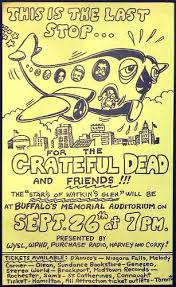
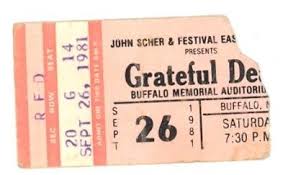
During an incredibly busy year for the band, the Grateful Dead did carve out a little time for Buffalo and Upstate New York in the fall of 1981. After a thorough summer run at mainly Midwest and West Coast Venues, there were a handful of East Coast shows scheduled in the end of September. Immediately afterwards, they would be off to Europe again, their second jaunt over there this year.
These few shows would serve as more than adequate tune-ups. On September 26, the Dead would play Buffalo Auditorium for the fifth and final time, serving as an end to an era of sorts. For the remainder of their shows in the Queen City, cavernous Rich Stadium and its 80,000 seats would serve as host.
A somewhat sluggish “Shakedown Street” starts the show and seems to rely on the certainly palpable crowd energy for momentum. If anything, this recording paints a vivid picture of the effusive Upstate fervor that’s present early. The crowd almost seems to get even louder each time they’re told to “Tell me this town ain’t got no heart.” Before you know it, they easily stretch it past the ten-minute mark with a typically funky groove in tow.
After a brief lull, the first set energy seems to pick back up with a thunderous version of “Cassidy” that’s spearheaded by the harmonies of Bob Weir and Brent Mydland. This carries right over to a raucous “Jack-a-Roe” with some splendid fills from Mydland on electric keys.
The “Ramble On Rose” that later follows gets furious at points with a clearly vibrant Garcia manning the lead vocals effortlessly. Mydland again makes his presence very much felt with some more intimate keyboard fills. There’s a fairly quick transition to “Looks Like Rain” that has now firmly established the first set pattern of Garcia and Weir going back and forth on lead vocals. Seems to be Jerry – Bob switching back and forth throughout the first set with lead vocals. The crowd once again audibly gets back into it with some rhythmic clapping prior to the apex of “Rain.”
The vibrant first set vibe fueled by the rather “percussive” audience this evening continues right on into and through the “Brown Eyed Women” that follows. Garcia, once again, rises through the crowd of sound and delivers an ebullient guitar solo early on that fuels the remainder of the tune.
Weir once again takes the vocal baton from Garcia as the band continues to burst full steam ahead with a somewhat aggressive “Let It Grow” that fits in perfectly in this late early set position. The rhythms equally supplied by the dual guitars and vocals on this one are a true first set highlight.
Weir holds onto and keeps running with the baton as the second set begins with an exuberant “Playing In The Band” that seems to literally piggyback on the end of the first set’s emotions. An early excitable jam leads into some blissful Garcia-supplied guitar licks before it explodes into a full group effort. Some pure, joyous tones lead right up to the beginnings of “Bertha,” somehow marking the last one of only four East Coast performances n 1981 for this live Dead staple.
Upon its finish, the band wastes no time in launching into an epic “Estimated Prophet” with all the Bob Weir-led vocal bells and whistles. The Buffalo audience sounds enraptured as the band eases through one of their classic second set standards.
However, instead of easing into an ambient or “Space”-type section immediately afterwards, the familiar rhythmic guitar into of “Goin’ Down The Road Feeling Bad” picks up and the room is off and running again. Normally placed later in a second set, this slots in perfectly earlier in this set as the Dead’s version of an American folk classic maintains the high standards of this show.
After typical “Drums” and “Space ” segments, the slow, rhythmic start of “Not Fade Away” starts up, signaling the beginning of the final hurrah for this final indoor Buffalo show. This one doesn’t get a chance to stretch too far as it quickly peters out and dissolves into the beginning of a poignant “Morning Dew” that gets the crowd back on its collective feet.
Afterwards, the band collectively toys around with the “Playin’ In The Band” theme before settling into a brief reprise. Normally, this would be more than enough to end the set but “One More Saturday Night” takes care of that as Weir leads the group through one last rockin’ number to end the set.
stubs via Bob Migden
This being Chuck Berry’s birthday, a quick dedication from Weir precedes the fitting “Johnny B. Goode” encore. And with that, the Dead’s last indoor show in Buffalo comes to a close. The next time they would come through town, five years later in 1986, Rich Stadium would take over hosting duties.
For a full listen to all Buffalo and The Grateful Dead had to offer this evening: click here.
Grateful Dead Buffalo Auditorium – Buffalo, NY 9/26/81
Set 1: Shakedown Street, CC Rider, They Love Each Other, Cassidy, Jack-A-Roe, On The Road Again, Ramble On Rose-> Looks Like Rain, Brown Eyed Women-> Let It Grow-> Don’t Ease Me In
Set 2: Playin’ In The Band->Bertha->Estimated Prophet->Goin’ Down The Road Feeling Bad->Drums->Space->Not Fade Away->Morning Dew->Playin’ In The Band (reprise)->One More Saturday Night
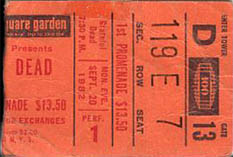
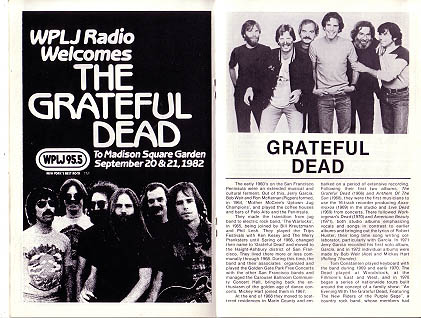
By 1982, The Grateful Dead’s relationship with the State of New York had been firmly established. It began with a free show at Tompkins Square Park in 1967. Now, the band had graduated to regular gigs at Madison Square Garden, The World’s Most Famous Arena. Monday, September 20, 1982 would be part of their third run at The Garden, after playing there initially in 1979 and a brief two-show stay in 1981. The Brent Mydland era was now in full swing and this show from 38 years ago sees the band relaxed and fully cohesive as the Grateful Dead at MSG deliver another knockout New York performance.
A spunky “Shakedown Street” gets things started off on the right foot. The band wastes no time getting into a nice groove and Mydland’s backing vocals spice this one up nicely.
Guitarists Jerry Garcia and Bob Weir take turns leading the way on vocals through pristine versions of “Candyman” and “El Paso,” respectively, with the rest of the band sounding fully engaged. Afterwards, the recent revival of “Dupree’s Diamond Blues” continued. A month earlier, the Dead dusted off this oldie but goodie after a four-year layoff. Garcia’s vocals seem to have an almost echo-y feel to them on this one before he nails the corresponding guitar solos.
Mydland’s signature raspy vocals accompany more beautiful Garcia-supplied guitar licks on the bluesy “Never Trust A Woman” that follows. The first set later ends with a couple of new tunes. Weir quickly mentions something about “remembering all the words this time” before they launch into “Throwin’ Stones.” This would be only the third one ever played after making its debut earlier in the fall tour. It’s an aggressive rendition as Weir certainly remembers the words and then some. But instead of the traditional outro jam the Dead would later develop for it, they pivot immediately to a rousing “Keep Your Day Job” that closes the set.
Things rev back up immediately with the “Scarlet Begonias” that opens up the second set. It features some delightful interplay between Garcia and Mydland on keys. With a pounding rhythm generated from bassist Phil Lesh, the jam eventually meanders a little bit before the familiar tones of “Fire On The Mountain” come through.
The mid-set “Terrapin Station” that later follows has a very mellow feel to it early on. The composed section drifts off into near silence before eventually picking back up. Later in the set, emerging from the confines of “Space,” is another Dead specialty – the “Spanish Jam.” It’s a brief but infectious instrumental section that’s influenced by the theme to Miles Davis’ “Solea” from his Sketches Of Spain album. This more than aptly serves as the bridge to “Truckin’.”
There would be no “Truckin’” jam tonight though. Instead, the band does another collective pivot of sorts and hurls into “The Other One.” It’s a quick but powerful version that sees Weir almost toying with the lyrics.
After a customary joyous run through of “Sugar Magnolia” to close out the second set, the Dead decide to end things with yet another new number. This is also only the third ever performance of “Touch Of Grey,” a song that would later become synonymous with the band and their lone commercial “hit.” One more show at The Garden would follow the next evening as the Dead continue to make their presence felt in The Empire State.
Grateful Dead – Madison Square Garden 9/20/82
Set 1: Shakedown Street > New Minglewood Blues, Candyman > El Paso, Dupree’s Diamond Blues, It’s All Over Now, Never Trust A Woman, Row Jimmy, Throwing Stones > Keep Your Day Job
Set 2: Scarlet Begonias > Fire On The Mountain, Women Are Smarter, Terrapin Station > Drums > Space > Spanish Jam > Truckin’ > The Other One > Stella Blue > Sugar Magnolia
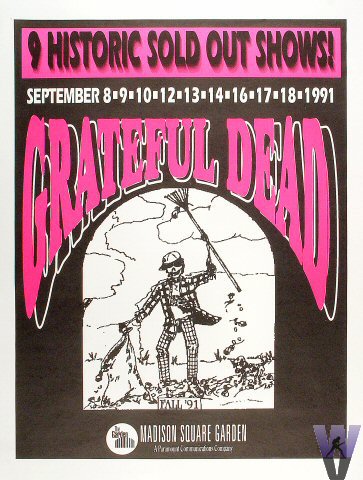
Today, we celebrate the anniversary of a Grateful Dead show at the most iconic of all New York music venues: Madison Square Garden. The Dead were certainly no strangers to this room by 1991. They had been playing the Midtown Mecca since 1979 and loved taking extended stays there. Fittingly, this show would be number five of a nine-show run at The Garden.
1991 was still very much a transitional time in the band’s history. Vince Welnick had only joined the band a year earlier and Bruce Hornsby was still making regular appearances. This show would be no different. And while this one may not be designated with a “legendary” status in the record books, there are certainly moments that shine.
To put it nicely, whether its the recording or the performance itself, the “Touch of Grey” opener is fairly mangled. Guitarist Jerry Garcia doesn’t seem to realize his part until a full verse passes first and the rest goes downhill from there. Fellow guitarist Bob Weir then takes over and directs “Wang Dang Doodle” afterwards that has a couple of inspired Garcia licks towards the end that seem to wake him up a little. With the band seemingly picking up on this, it carries right through the ensuing “Peggy-O” where Garcia continues to shine and brushes off some of the earlier mishaps.
The first set doesn’t seem to really take off until “Althea” which features more delicate guitar licks from Garcia that’s finally accompanied by a vocal performance to match. “When I Paint My Masterpiece” follows nicely with the always lovely accordion fills supplied by Hornsby. The first set closes with a triumphant “Bird Song” that soars for more than 14 minutes with both Welnick and Hornsby, along with the rest of the band, on top of their respective game.
After a rather nondescript Weir-led “Victim Or The Crime” to open the second set, things escalate quickly with a rousing “Scarlet Begonias” where the intensity of an MSG show is very much audible. The seamless segue into its traditional pairing with “Fire On The Mountain’ is vintage Dead and one of the definitive bright spots of this show.
Another valid complaint for this show may be the extended “Drums” > “Space” sequence that follows. While it does feature a few moments of fun, psychedelic mayhem, it also drifts off completely at parts and takes up almost 28 minutes of the second set.
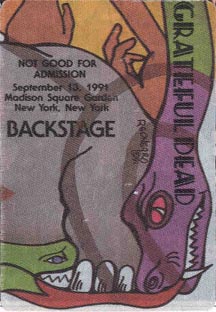
Grateful Dead 9/13/91 Madison Square Garden
Garcia brings a little of the “Space” along with him in the beginning sections of “The Other One” that follow before falling into its signature pattern. This brings about another inspired jam with all seven legs of the band acting as one cohesive unit while Weir belts out the lyrics he penned for this song years ago.
The second set ends with a joyous “Throwing Stones” that features both Weir and Garcia with some passionate singing. A somewhat abrupt cut to “Not Fade Away” follows that gives the band one last chance to stretch out and jam.
Grateful Dead 9/13/91 Madison Square Garden – New York, NY
Set 1: Touch of Grey, Wang Dang Doodle, Peggy-O, Big River > Cumberland Blues, Althea, When I Paint My Masterpiece, Bird Song
Set 2: Victim Or The Crime, Scarlet Begonias > Fire On The Mountain > Drums > Space > The Other One > Stella Blue > Throwing Stones > Not Fade Away