On March 12, all Broadway theaters went dark due to the coronavirus pandemic. Theaters hoped on opening this January, but the shutdown has been extended through at least May 30, 2021.
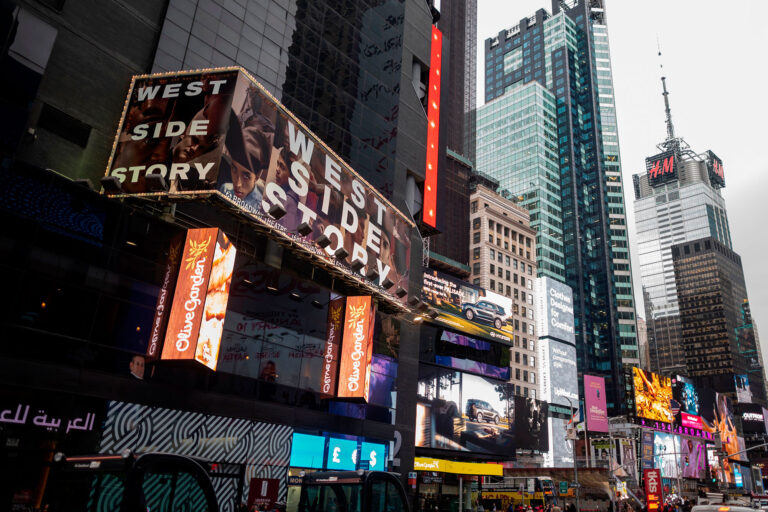
A poster on Times Square advertises West Side Story at the Broadway Theater on February 7, 2020 in New York City. – Westside Story is returning to Broadway for the first time in more than a decade, directed by Belgian Ivo Van Hove. (Photo by Johannes EISELE / AFP) (Photo by JOHANNES EISELE/AFP via Getty Images)
On October 9, The Broadway League announced that Broadway will remain dark until next Summer. This shutdown is the longest ever in Broadway’s history. If theaters open as planned next May, shows will have been closed for 444 days, keeping thousands out of work for more than a year.
“With nearly 97,000 workers who rely on Broadway for their livelihood and an annual economic impact of $14.8 billion to the city, our membership is committed to re-opening as soon as conditions permit us to do so. We are working tirelessly with multiple partners on sustaining the industry once we raise our curtains again.”
Charlotte St. Martin, President of the Broadway League
Before the shutdown, 31 productions were running on Broadway, including 8 new shows in previews. 8 additional shows were in rehearsals with plans to open last spring. Hangmen, Who’s Afraid of Virginia Woolf?, and Disney’s Frozen struggled greatly and closed permanently. Shows like Hugh Jackman and Sutton Foster’s revival of The Music Man, American Buffalo, and The Minutes postponed their opening dates. The Music Man announced plans to open on February 10, 2022.
Photo by Kate Glicksberg
Needless to say, the Broadway community’s fans and workers are heartbroken. The Broadway League announced that although the current opening date is May 30, individual production’s reopening dates may differ. The League suggests that “theatregoers holding tickets for dates through May 30, 2021 should contact their point of purchase for details about exchanges and refunds.”
Amid this crisis, fans can still look forward to the 2020 Tony Awards. The show will be presented virtually, and the nominees for each category will be announced October 15.
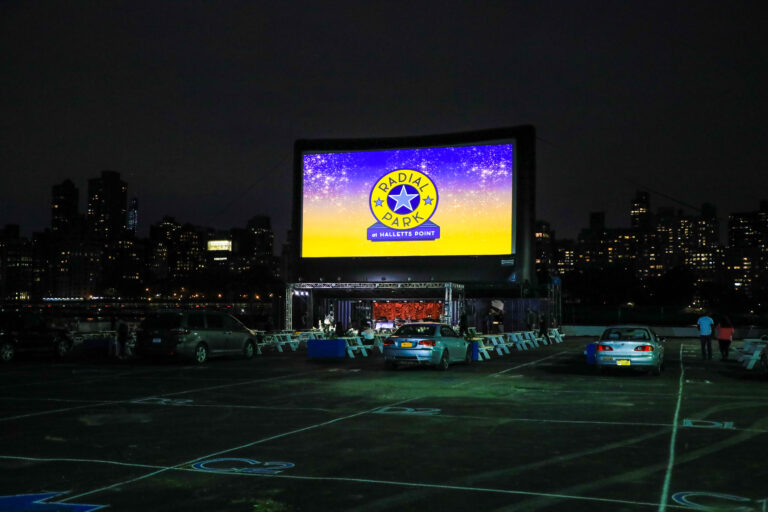
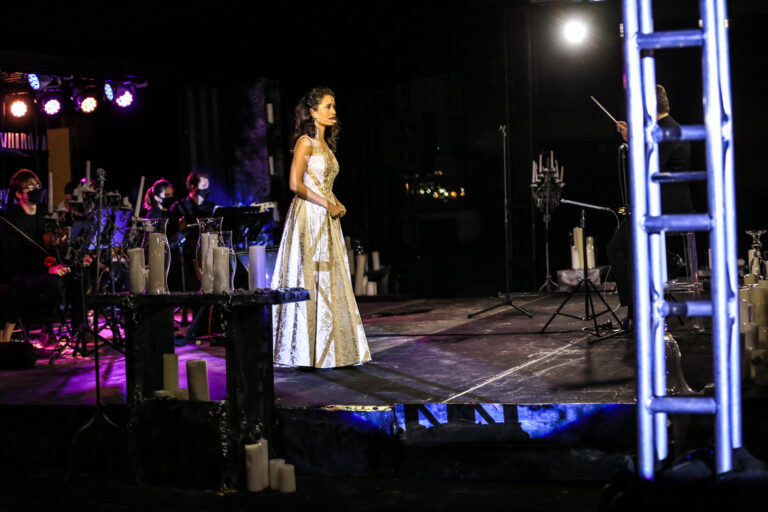
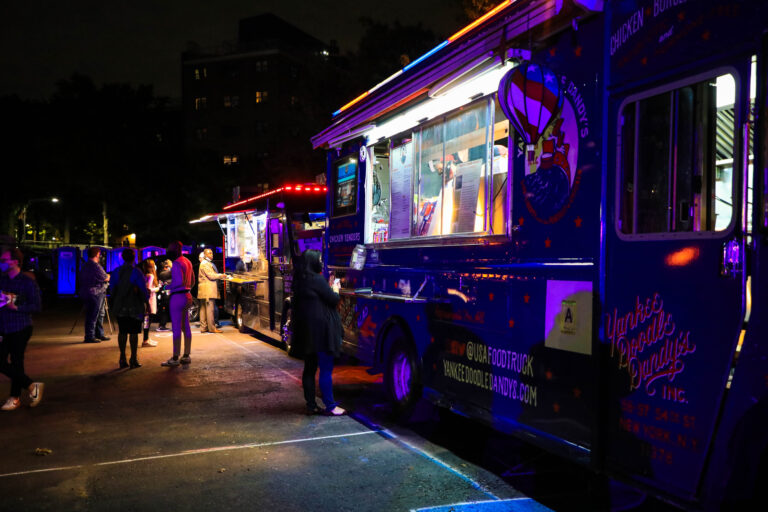
Starting this month, Hallets Point Play has begun to offer Broadway experiences, from big screen movies to full scale live productions. Radial Park’s first show, a live production of Andrew Lloyd Webber’s Phantom of the Opera, officially opened this month. An 11-piece orchestra brings this show to life along with talented actors Ali Ewoldt (Les Miserables National Tour and Broadway, The Phantom of the Opera Broadway, and The King and I Regional Tour and Broadway) and Derrick Davis (The Phantom of the Opera National Tour, The Lion King National Tour). Ice cold beverages and movie theater snacks are available.
Radial Park is taking extreme measures in order to maintain their guests’ safety. All have their temperature checked upon entry, and can choose a glow in the dark wristband to make others aware of his or her comfort level: green bracelets for go, yellow for being cautious, and red to tell others not to come near. Fans can enjoy the show from their own cars, but those without vehicles are welcome to rent a socially-distanced picnic table complete with a boombox for audio. There are COVID “lifeguards” on duty all night to ensure that everyone practices social distancing.
Ali Ewoldt as Christine in Phantom. Photo by Tricia Baron.
“The Durst Organization is thrilled to host such a creative concept from Stark Productions,” said Helena Rose Durst, Principal at The Durst Organization. “Radial Park will provide a unique live entertainment experience that we are all craving during these difficult times, but in a safe and responsible way.” The Durst Organization also holds 20 tickets each performance for Astoria Houses residents. A portion of sales goes to Friends of Hallets Point, a nonprofit organization that improves the community life and beauty of Hallets Point.
“As the saying goes, ‘The show must go on!’” commented Jeremy Shepard, Stark Production Group Founder and President. “We are thrilled to be able to be presenting Broadway at the drive-in and are grateful to our partners, Friends of Halletts Point and the Durst Organization, for making it all possible.” Radial Park is personal to Shepard, and he hopes that it can help lighten New Yorkers’ spirits during quarantine. “I chose Broadway because it has been a part of my life for the last 10 years,” he says. “It seems a shame it is shut down when we all need it the most. Can’t wait to see you at Broadway at the drive-in!”
Starting this weekend, a full screening of Purple Rain will run until October 25. Audiences will watch the film along with nine live numbers performed by the Radial Park Band, American Idol Finalist Aaron Marcellus, Broadway’s Nick Rashad, and Burroughs and Grammy award nominee, Lenesha “Sister” Randolf.
Tickets are available for Phantom of the Opera and Purple Rain now. Prices are per car (up to 5 people) or per picnic table (up to 4). Sign up for Radial Park’s mailing list and don’t miss news and exclusive offers.
I jumped on an opportunity last year: I worked around New York City on stage crew as a stagehand and production assistant. On show nights, I wore all black. I set up electronics, speakers, lights, and stages for artists big and small. I hustled as one of thousands of production assistants who make live shows possible as part of stage crews.
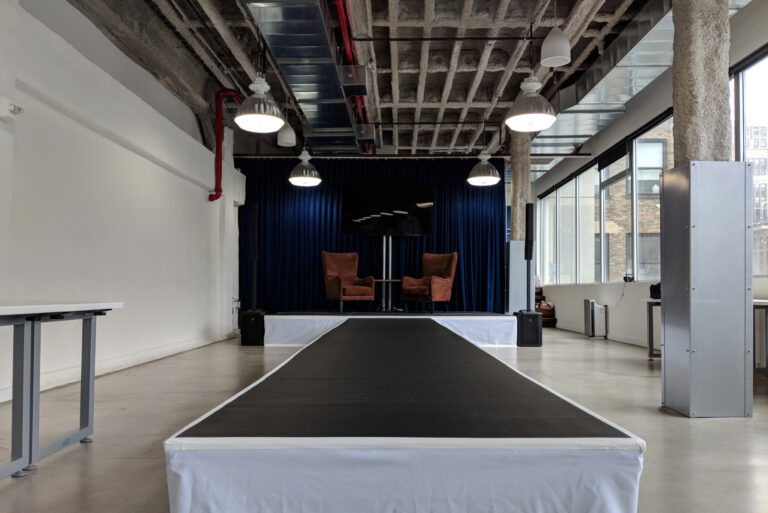
An empty stage waits in Midtown, Manhattan. Photo by Zach Hitt.
In March of 2020, a confirmed COVID-19 case infected Westchester. That changed everything. Now in August, many more cases and many businesses remain closed. Those that have reopened endure significant operating restrictions. Most industries have a lot less money in their cash register. Some businesses have gone belly up.
No live music for a while, either. Fans know this. Eliot Byron knows this. Byron began rigging live shows 25 years ago. serving on the stage crews of the IATSC Local One in NYC and as the Crew Chief of Capitol Theatre in Port Chester.
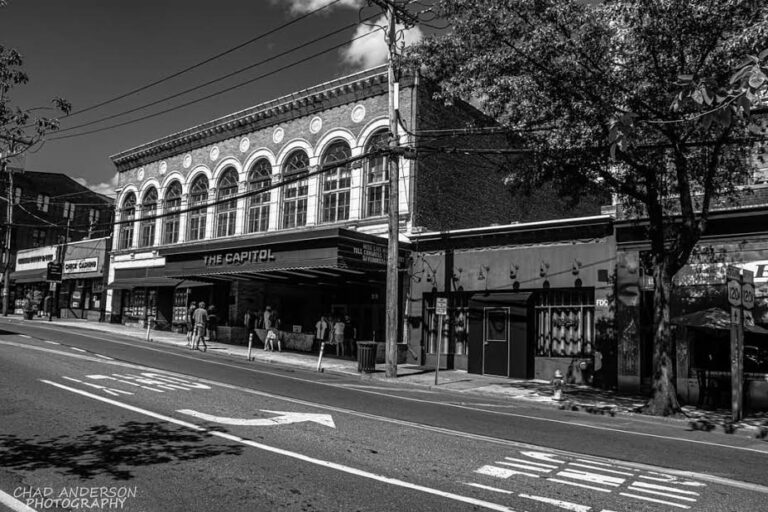
The Capital Theatre. Photo by Chad Anderson.
Just a few train stops north of Westchester, Port Chester shows came to a halt in March — as well as the rest of New York, under the orders of Governor Andrew Cuomo.
“We had a live event [in March]…but they started getting calls and decided not to do it. That was the first indication that we weren’t gonna see live shows for a while” says Byron.
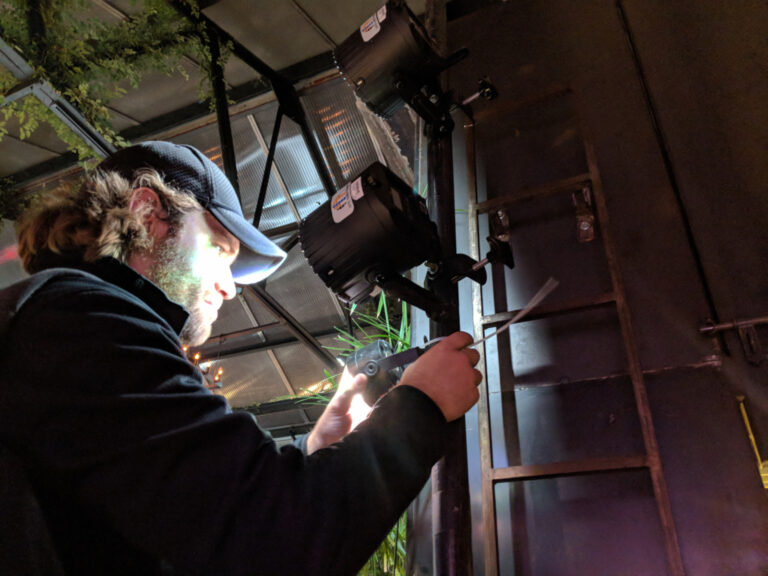
A Stagehand assembles and tests lights. Photo by Zach Hitt
Lights, Camera, Action…
The quarantine disappointed fans and live stage crews alike. But a stagehand’s job is comparable to a goalie. A majority of the time, it’s thankless, difficult work that goes unnoticed if executed correctly. But stagehands are the first to take the blame when things go wrong. “The artist [needs a crew]…that safely unloads trucks in a timely manner. You can’t just grab random guys off the street to do this, either. We are the manpower that gets these shows in and out in a safe, efficient process,” Byron explains.
Byron tells me that stage hands often take part in setting up the stage, lights, and sound, connecting the artist’s equipment with the venue’s electronic set up. It’s neither simple nor easy. And if the government or the industry doesn’t provide financial help soon, crew chiefs like Byron will be tasked with hiring and training all new crews who have less familiarity with the equipment, and less experience. “If this goes on for a long time without some kind of incentive to keep people in the industry, then we’ll be tasked with training a whole new set of people to perform a very, very specialized task,” says Byron. The lasting effect could have extreme ramifications for not only the live music industry, but surrounding businesses like bars, nightclubs, restaurants, and attractions, all of whose sales increase during live shows.
Give the people what they want?
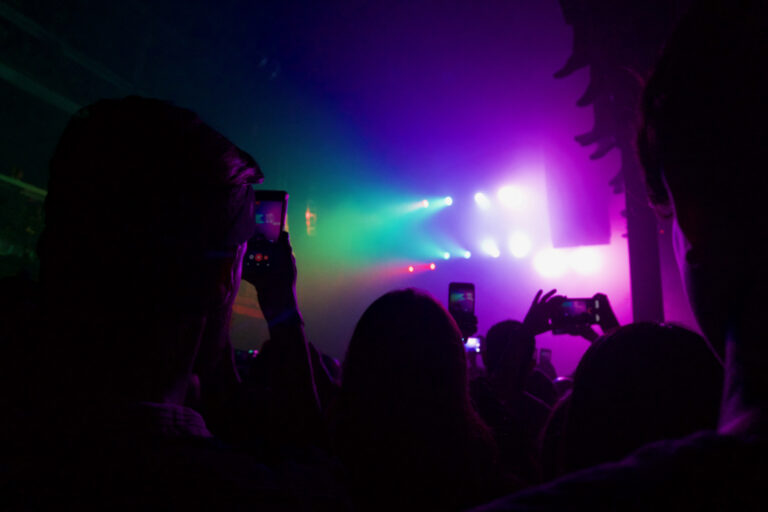
Fans of The Neighbourhood gather at Terminal 5 in Manhattan for a concert. Photo by Zach Hitt.
Frequent attendees of live music have voiced their concern on social media and in public. Some people want economies to reopen immediately, while others have shared concerns of spreading the COVID-19 virus. But while these fans have the safety of their homes and many have other jobs to return to, stage crews will likely be the last group of people to restart their employment. “We were the first to be shut down and we’ll be the last to go back to work,” says Byron.
Who are those guys backstage?
While many people understand that putting on a live show is a team effort, many do not understand the role of a stage crew. And to add confusion, major touring bands have their own road crew, or “roadies,” that differ from stage crew. A road crew is a team of technicians that travels with the performer to assist the artist with the equipment they bring, such as guitars or drums. Stage crews function as a bridge between the artist’s equipment, and the venue’s, such as the speaker system, lights, and sound mixers. In order for a show’s success, the two teams have to work together.
In most venues, especially larger ones, an event employs a team of specialists to lay tracks for a performance. This includes building a heavy stage, lifting bulky speakers, and hoisting enormous light shows to extreme heights. Falls, injuries, and series harm all sit and wait for the first sight of a shaky team or wavering leadership.
Different Vans, Different Plans
Some stage hands moonlight as roadies for touring artists. I met Luis “Lou” Rodriguez working on stage and A/V gigs around NYC. Rodriguez’ professionalism cannot be overstated. Along with local A/V gigs, he started working as the monitor engineer for Big Sean in 2015. Rodriguez takes responsibility for the sound heard by the artists in the stage monitors. He’s carved several big name notches on his stage belt, including The Bronx’s Cardi B, Chicago’s Common, and Yo Gotti from Memphis.
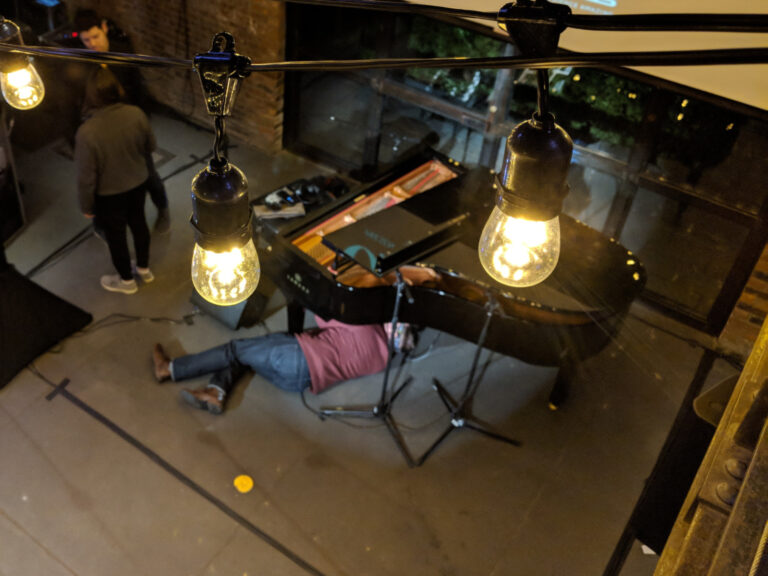
A roadie fixes the sustain pedal on a grand piano prior to a Jojo and Jordan XL show in Queens, NY.
Photo by Zach Hitt
Help Wanted
Nowadays, stage techs and roadies struggle in the same predicament: finding work. Since it is not easy to switch careers, many of those who used to lift heavy speakers and lights now depend on the kindness of tax dollars and crowdfunding to make ends meet. “There are crew members who have not gotten ahead of this. There are no shows, so that means no income for us. But we still have lives to lead,” says Rodriguez. “Everything around the house has gotten tighter.”
While the American government sent out a $1,200 check to adult citizens two months ago, a statistically low number of people live in areas where this covers more than one month of rent. An additional $600 sporadically made its way to certain qualifying individuals, but this has not alleviated the struggle, especially considering that most stage hands live in major cities where rent and medical bills can swiftly pile, Rodriguez tells me.
Will we see live shows again soon?
Different experts have shared opinions on when major US industries such as shows and sports will reopen to the public. While Dr. Anthony Fauci, a reputable infectious disease specialist, has repeatedly warned that the US should stay seated until we have a vaccine. Others propose middle ground: a plan to reopen. Either way, the day that hundreds of people can stand close together in the same room is undetermined.
“There’s no set day,” Rodriguez says. “In Europe, they’re trying a few things out. They’re holding some festivals while social distancing, so the audio set up [and my job] pretty much stays the same.”
Ending one song and starting another
Even if the US reopens, many people and venues fell behind on bills long ago. For this reason, several groups have proposed petitions for government intervention and assistance. A UK protest, themed “Red Alert,” saw many venues shine red lights outside as stage techs walked through the streets with equipment cases, according to a report by The BBC. The uproar has walked hand in hand with organizations like NIVA, or National Independent Venue Association to lobby for bills like The Save Our Stages Act, a bill which proposes $10 Billion Dollars in funding venues and stage crews during the financial burden of the COVID-19 outbreak. New York Senator Charles Schumer co-sponsored the bill.
Either way, the stage hand and roadie are both important parts of the live music industry, and the economy at large. Without them, we don’t have live shows. And without live shows, our economy sees less stimulation as live shows directly impact their surrounding environments negatively. This means a noticeable decline in sales for bars, nightclubs, and more. “I don’t know if it’s financially viable to put on the shows without an audience. They still have the paperwork, the utility, the taxes. There’s all the employees, stage crew, bartenders, security. How long can they last?” Byron considers.
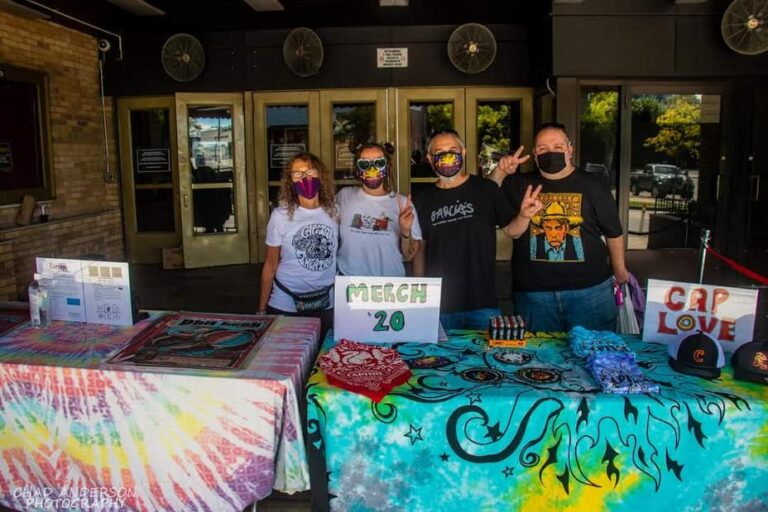
People selling merchandise outside The Capital Theatre. Photo by Chad Anderson.
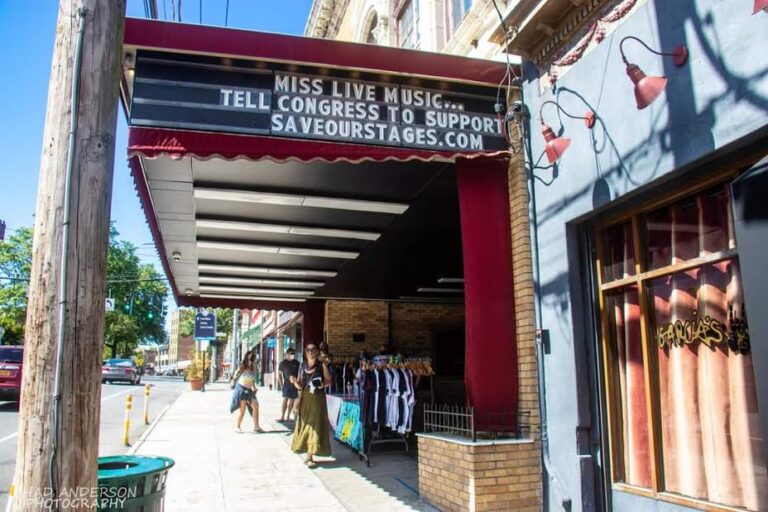
For The Capital Theatre, owned by Peter Shapiro, efforts to keep the venue open included an outdoor merchandise sale featuring hats, masks, and posters. Additionally, the sign outside the building directs those who love live music to call Congress and support SaveOurStages.
The sign outside The Capital Theatre. Photo by Chad Anderson.
What Can We Do for the Stage Crew?
The public must call upon political leaders to pass new legislation in order to help stage hands, roadies, and concert venues. You can read more about Save Our Stages by visiting their website, SaveOurStages.com.
But even with some solutions proposed, unanswered questions about live shows still linger pending a major change, like a vaccine, Byron notes. “Planning a tour is tenuous. Who is gonna ensure the tour? Who is responsible if the artist gets sick and misses a couple days?”
The same could be said about a stage crew: what will they do when they still aren’t allowed to work and the government’s assistance dries up?
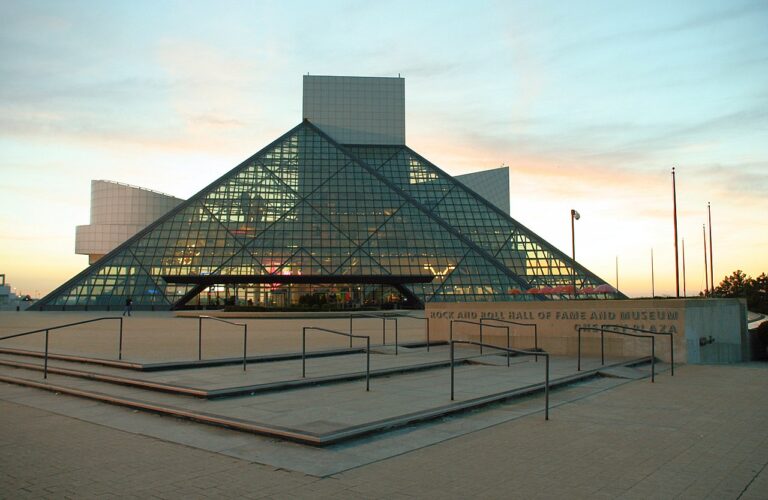
Because of the threat of the COVID-19, the Rock & Roll Hall of Fame is replacing its 35th annual Induction Ceremony with an HBO special honoring the inductees. The special will air on November 7, 2020 at 8PM EST on HBO and HBO Max.
Photo courtesy of Wikimedia Commons.
This year, the 35th Induction Ceremony was supposed to take place on May 2 in Cleveland and make history by being the first Induction broadcast live. To ensure the safety of their fans and inductees, however, the Rock & Roll Hall of Fame will instead create a special program to give the Inductees their earned respect. The show will tell “the stories of their incredible contributions to music and impact on a generation of artists that followed them,” says Rock & Roll Hall of Fame Foundation Chairman John Sykes. It will include archived content, acceptance speeches, interviews, and more. Next year, the 36th Induction Ceremony will be moved to the fall and return to Cleveland. After that, the Ceremony will take place every other year in Cleveland.
Even though they can’t have a proper Ceremony, the Rock & Roll Hall of fame is still giving fans ways to honor the Inductees. Their museum is back open and safely following all recommended guidelines from Ohio Governor DeWine, the CDC, public health officials, and infectious disease experts. Advance tickets must be purchased online and the museum requires temperature checks, masks, social distancing, limited capacity, and other safety precautions to ensure the health of their visitors. Early hours are available for at-risk guests, some essential workers, and Rock Hall members. The museum will open a 2020 Inductee Exhibit on August 14. If you can’t make it in person, you can still listen to the Inductees’ curated playlists on Spotify.
The exclusive Induction Ceremony will air on HBO and HBO Max on Saturday, November 7 at 8.
On Saturday, July 18, Bardavon Presents will stream the first Hudson Valley Philharmonic Virtual Concert Hall for free. The performance is curated by HVP Maestro Randall Craig Fleischer and will showcase favorite pieces performed by the talented HVP musicians.
As Bardavon is not sure when audiences will be able to gather together once again due to the Coronavirus pandemic, they are streaming virtual performances on YouTube for fans to enjoy from home. The HVP Virtual Concert Hall #1 will stream on July 18 at 8PM and will feature the following pieces along with commentary from Fleischer:
Reinhold Glière, 8 Pieces, Op.39, Scherzo, Performed by Madeline Fayette, Cello, and Abi Fayette, Violin
Reinhold Glière, 8 Pieces, Op.39, Berceuse, Performed by Madeline Fayette, Cello, and Abi Fayette, Violin
Gioachino Rossini, The Barber of Seville Overture, arr. for two flutes, Performed by Marcia Gates, Flute, and Jill Sokol, Flute
J.S. Bach, French Suite No. 2, Allemande, Performed by Elizabeth Handman, Viola
J.S. Bach, French Suite No. 2, Courande, Performed by Elizabeth Handman, Viola
Jay Ungar, Ashokan Farewell, Performed by Frances Duffy, Harp
Bela Bartok, Romanian Folk Dances, Allegro Moderato, Performed by Rachel Handman, Violin
Donna Doyle, “Cave of the Heart”, Performed by Gregory K. Williams, Viola
Gioachino Rossini, William Tell Overture, English Horn solo, Performed by Joel Evans, English Horn
Hatikva (trad.), Performed by Harvey Feldman, Bassoon
Subscribe to Bardavon Presents on YouTube so you don’t miss this or their upcoming shows planned for July through November. Bardavon is still selling tickets online for future events and updates their ticket holders on the status of the scheduled events.
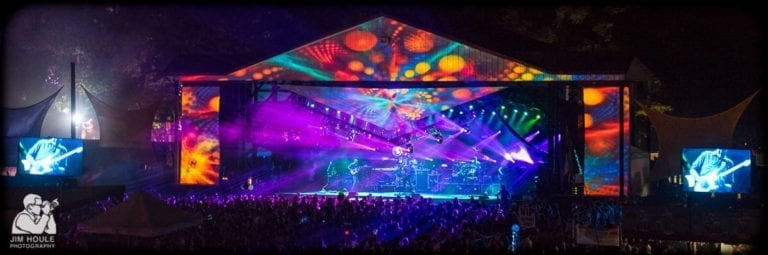
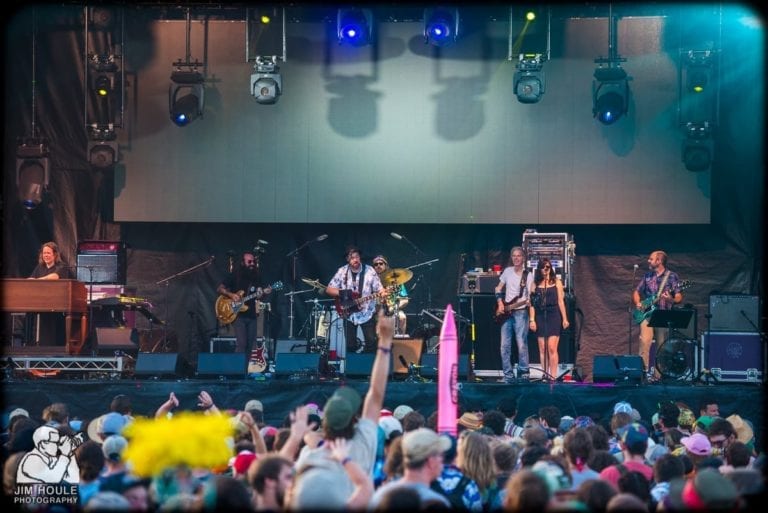
After the recent spike in Coronavirus cases, the Summer Camp Music Festival has decided to postpone their 20th anniversary concert to Memorial Day weekend 2021.
For the past 19 years, the Summer Camp Music Festival in Illinois has been held on Memorial Day weekend to kick off summer with a bang. Because of the Coronavirus pandemic, this year’s festival was postponed. Although organizers and staff hoped that it could take place later this summer, the festival has been pushed back to Memorial Day weekend 2021 as Illinois will not be in Phase 5 of the reopening process this August and therefore cannot safely hold the concert. Ian Goldbreg, founder of the Summer Camp music festival, states that the staff holds “the health and safety of you, our fans, and our dedicated staff as our number one concern.”
Despite this setback, plans for next year’s festival are already in the works. While some artists are “still working out details,” the majority of this summer’s lineup has confirmed that they will perform at the 20th anniversary festival in 2021. Additionally, all tickets for this year’s festival will roll over and be good for 2021. If you cannot make it next year, refunds will be available starting on July 13 and ending on July 30, 2020.
Although it has been a very difficult decision, Goldberg comments: “I felt I was acting in the best interest of the many people who dedicate their lives to this event every year, knowing all along I would never put those lives in jeopardy if the situation did not prove to allow for a safe event.” The festival is great for all music fans, with crowd favorites moe. and Umphrey’s McGee headlining. The 2020 lineup was supposed to include other artists like Ween, Joe Russo’s Almost Dead, Billy Strings, Rezz, STS9, Tipper, and more.
Fans of the festival wait for it to come back “even bigger and better” on May 28-30, 2021. Until then, check out NYSMusic’s coverage of the festival’s recent years: 2019, 2018, and 2017.
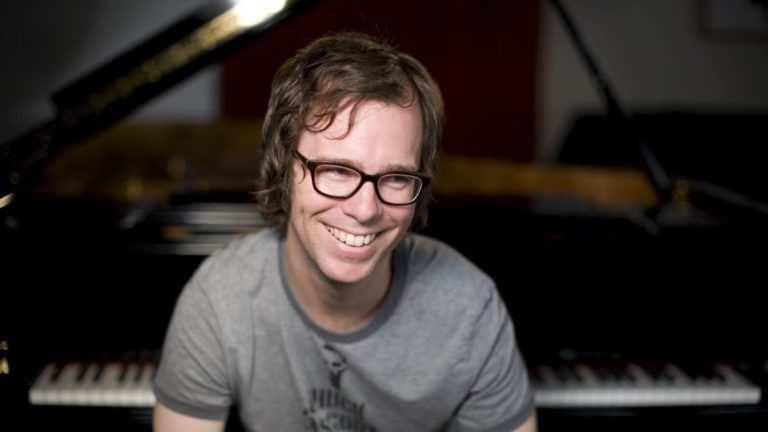
In response to the first six months of this “rollercoaster year,” Ben Folds has written a new single “2020.”
The song expresses Folds’ take on 2020. “We seem to be currently reliving and cramming a number of historically tumultuous years into one,” he says. “For a moment it was all about the 1918 pandemic. Then we began seeing hints of the Great Depression before flipping the calendar forward to the Civil Rights protests of the 1960’s. Running beneath this is the feeling that we’re in the Cold War, while seeing elements that brought us to the Civil War rearing their head, making us wonder if we’ve learned a damn thing at all.”
At the start of this year, Folds was on an orchestral tour of Australia. However, it was cancelled due to the pandemic, and is set to continue in 2021 along with his US tour. Since quarantine, Folds has been working on his next album, the sequel to his 2019 New York Times best selling memoir A Dream About Lightning Bugs, and other new creative projects.
Folds notes that the current sense of accelerated time is not only “personally disorienting,” but “also artistically disorienting.” The single is about that, how so much seems to happen each day that topics can be “out of date or even inappropriate by noon.” “2020” touches on the fact that this year seems like several past years crammed into one.
Despite today’s stress, Folds optimistically hopes for a better 2021 to come. “2020” is available for streaming now.