Tag: CARES Act

  • The new Stimulus Deal Includes $15 billion for Live Venues, Independent Movie Theaters and Cultural Institutions

    The new stimulus deal approved by Congress will include $15 billion of aid for live venues, independent movie theaters and cultural institutions. The entire stimulus bill will include $900 billion in aid in its entirety including expanded coverage to the self employed, “gig” workers and others in nontraditional situations applying for unemployment. The Senate voted on December 21, 2020 and passed the stimulus bill as well. The stimulus deal will now just have to be sent to the President before finally officially passing.
    Stimulus Deal
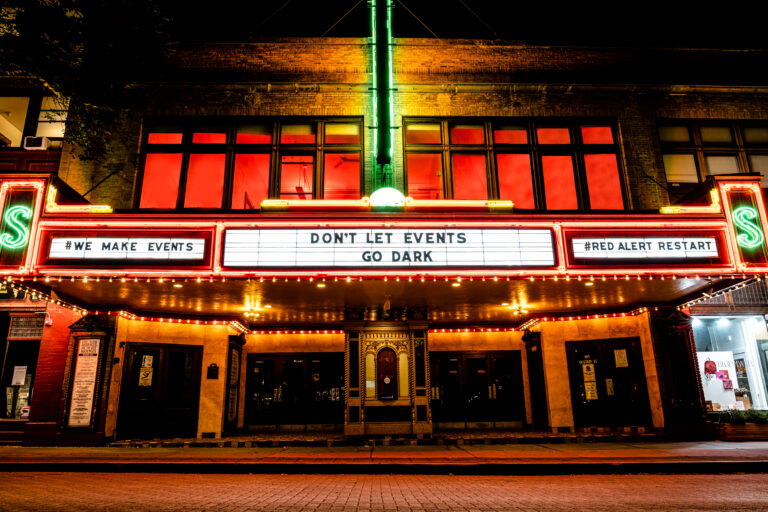
    The State Theater of Ithaca lit up in red during the “Red Alert” demonstration in support of Save Our Stages.

    The stimulus bill has been in the works for a long time with the last aid package for American citizens and businesses being passed back in March. The CARES Act was a $2.2 trillion economic stimulus bill passed by the 116th U.S. Congress and signed into law by the President on March 27, 2020 and served as a stimulus package. Since then there has been very little aid and with the end of the year quickly approaching this deal could serve as the much needed aid people and businesses need during these trying times. 

    The $15 billion in the deal being allocated for live venues, independent movie theaters and cultural institutions will make a huge impact on the entertainment industry. One of the big pushes behind this aid came from the Save Our Stages campaign and act put forward by the Nation Independent Venue Association. NIVA represents more than 3,000 independent venues and promoters in all 50 states and Washington, D.C. The Save Our Stages became a bill and was cosponsored in the Senate by Amy Klobuchar (D-Mn.) and John Cornyn (R-Tx.). 

    The Town Ballroom located in Buffalo, NY posted on their Facebook page about Congress passing the stimulus bill saying, “HEY! We did it!! THANK YOU to everyone that wrote to congress and supported NIVA – National Independent Venue Association in trying to land the Save Our Stages act in the COVID-19 Relief Bill. Because of all your help, we were able to ensure that Venues and Employees will be supported through this economic crisis.Thank you to Senator Chuck SchumerRep. Brian Higgins Kristin Gillibrand for pushing this through. Thank you to everyone that has stayed patient with us these past very very long months. We will be back. Stay tuned!”
    Stimulus Deal
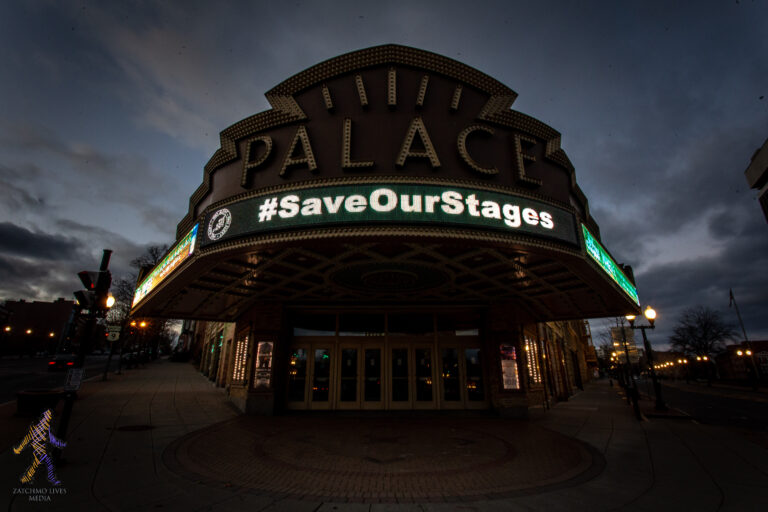
    The Palace Theatre in Albany NY, displaying support for Save Our Stages.

    Dayna Frank, Owner & CEO of First Avenue Productions and Board President of NIVA spoke on the new stimulus deal saying, “We’re thrilled that Congress has heard the call of shuttered independent venues across the country and provided us a crucial lifeline by including the Save Our Stages Act in the COVID-19 Relief Bill. We’re also incredibly grateful that this bill provides Pandemic Unemployment Assistance which will help the millions of people who lost their jobs through no fault of their own during this economic crisis. We urge swift passage of this legislation, which will assist those in the greatest need and ensure the music lives on for generations to come,” in a press release shared by NIVA.

    The Capital Theatre located in Port Chester, NY chimed in on their Facebook page sharing the Forbes article on Congress passing the stimulus bill saying, “Congrats  NIVA – National Independent Venue Association on this massive accomplishment! Congress has finally agreed on a new COVID-19 relief bill that includes $15 billion in funding for independent theaters and concert venues that have been shuttered due to the pandemic. Extraordinary team effort by everyone involved. #SaveOurStages”

    According to Variety’s article there are several statistics which NIVA has put forward that show that 90% of the country’s independent venues will close within weeks without federal aid. It also states that musicians on average derive between 70% and 90% of their income from live performance which has been virtually nonexistent and impossible since mid-March apart from live-stream performances. 
    Stimulus Deal
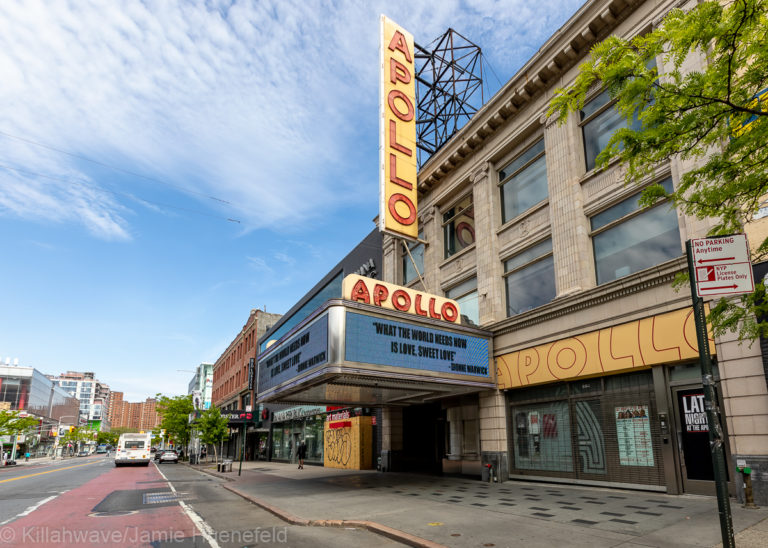
    The Apollo Theater in Manhattan NY.

    They also shed light on the fact that economic activity, particularly in small towns, is connected to concert venues as shown according to a Chicago study. Every dollar spent at a venue generates $12 in revenue for surrounding or connected businesses like restaurants for instance where people go out to eat before or after a show or stay the night in a local hotel. 

    Speaking on the floor of the Senate Minority Leader Chuck Schumer released a statement of the aid package saying, “I’m especially pleased this this bill will provide money for bars and restaurants, and $15 billion in SPA grants for theater operators and small venue operators through the Save Our Stages Act. These venues are so important to my state and so many other states across the country. They are the lifeblood of our communities. They were the first to close and will be the last to open. This bill gives them a fighting chance.”
    Stimulus Deal
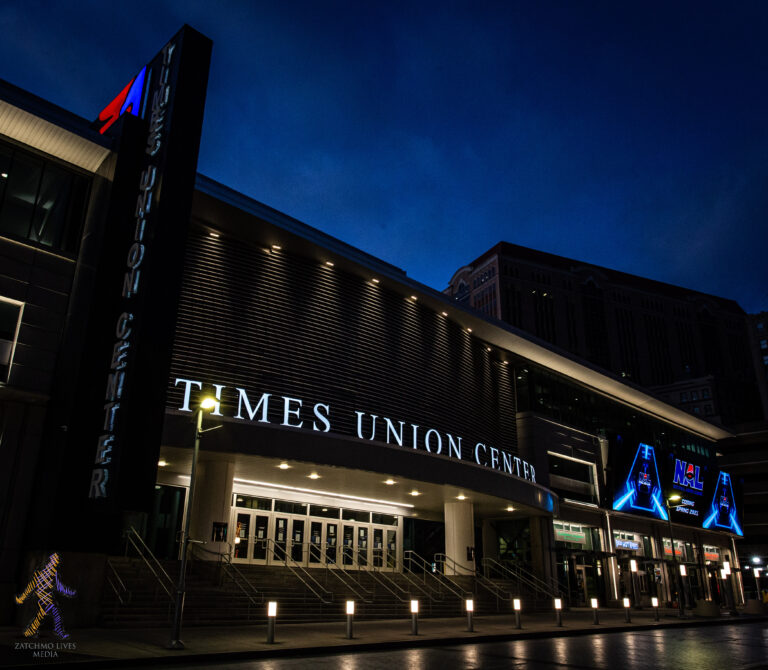
    The Times Union Center in Albany, NY.

    One of the other interesting parts of this stimulus package is in the expanded coverage to the self employed, “gig” workers and others in nontraditional situations applying for unemployment which will now allow musicians and independent managers, promotors, sound technicians, and etcetera in particular to apply for unemployment. There will also be an additional $300 per week for some unemployment recipients. 

    For more information on What’s Included In The $900 Billion Stimulus Deal read the HuffPost article.
  • NYIVA Releases Data on the Dire State of Independent Live Venues in New York

    NYIVA, also known as the New York Independent Venue Association, released data on the dire state of independent live venues throughout New York due to COVID-19. The information was released on October 25, 2020 and includes how many respondents, the amount of months before business will be forced to close permanently, the monthly relief needed, and the amount of debt accrued by them already. 

    The information is based on responses from NYIVA’s members comprising a majority of the music and comedy venues within the state. Currently, independent venues across New York State have accrued and estimated $105 million in debt at a rate of $15 million per month. Of the 68 respondents (representing approximately 1/3 of the industry), more than half have stated they will close for good within the next 90 days, even with the state’s eviction moratorium in place due to the pandemic. 

    Three of the 68 respondents say they will be forced to close in less than a month. One says they will be forced to close in a month. 18 say they will be forced to close within two months. 15 will be forced to close within three months. Six will be forced to close within four months. The respondents would need $5,155,015 monthly to stay afloat. They are currently in $20,073,835 of debt due to the pandemic. 

    NYIVA’s co-chair Jen Lyon explains the difficulties businesses will having trying to come back with the amount of debt they have accrued saying, “Paying this back, even without interest, will eat into most if not all of our members’ businesses profits for the next five years — and that’s if they aren’t forced by the weight of their debt to fold before that. New York stands on the precipice of losing the critical cultural and economic institutions that make up our vibrant live performance communities as well as significant tourism revenue for the state. This is not sustainable. We need help now.”

     New York state has received $5 billion in Coronavirus Relief Funds (CRF) from March 30 till now. Currently New York independent venues are looking for a mere 1.5% ($75 million) of the state CRF allocation to save New York’s music and comedy clubs in order to stay afloat until a national aid package is passed. Independent venues haven’t received nearly as much aid as they need to stay afloat. Hopefully the CARES act with the addition of Save Our Stages will be passed soon and help protect independent venues from shutting down.

    For more information on the survey details visit NYIVA’s website.

  • Save Our Stages Act Added to the Heroes Act in the House of Representatives Relief Bill

    The Save Our Stages Act was added to the House of Representatives-revised  relief bill on September 28, 2020. The addition of the Save Our Stages will make it so the Heroes Act will allocate ten billion dollars for independent venues impacted by Coronavirus.

    Save Our Stages Heroes Act

    The ten billion dollars that would go to independent venues, producers, promoters and talent representatives will be able to be used to cover things like rent, mortgages, utilities, insurance and other expenses that these businesses are in during the ongoing pandemic. The hope is that these grants will help keep the entertainment industry afloat during these unprecedented times if the Heroes Act is passed. 

    If the Heroes Act gets passed and signed into law it will include another round of stimulus checks to American families, as well as a second round of Paycheck Protection Program loans for businesses particularly impacted like the restaurant and live entertainment industries. The 2,500-page bill will would be a lump sum of $2.2 trillion in grants 

    According to the Rolling Stone article on the addition of the Save Our Stages to the relief bill most venues weren’t able to “take advantage of the Paycheck Protection Program loans for small businesses contained in the CARES Act that passed in March.” The main issue with the CARES Act for venues in particular is that the main thing it provided was loan forgiveness if businesses spent 75% of said loan on their payroll. Unfortunately, these venues were/are mostly closed down due to regulations on live entertainment during the pandemic and therefore have few to no employees which makes payroll loan forgiveness unhelpful unfortunately.

    The original Save Our Stages Act was introduced to the Senate by John Cornyn and Amy Klobuchar. Save Our Stages gained a significant amount of public support as well as support in both the House and the Senate.

    For more information on the updated Heroes Act read the one page summary here.  

  • Newly formed Union of Musicians calls for extension of CARES Act benefits

    Across the country, hundreds in a union of musicians have signed on to a letter with demands for the next COVID-19 relief package. Included in these demands are an extension of CARES Act unemployment benefits through the remainder of 2020, in addition to rent cancellation, the extension of benefits to all people regardless of immigration status, Medicare for all, and more.

    Artist including Sammus, Downtown Boys, Algiers, Damon & Naomi, Eve 6, Potty Mouth, DJ Haram, Riobamba, Guy Picciotto, Speedy Ortiz, Alice Bag, and many others have signed the letter, which can be viewed here.

    While the first CARES Act extended unemployment to some musicians and other self-employed workers, the payment of those benefits has been an inconsistent state-by-state process, and many workers stand to lose their benefits before this crisis is over. Music workers rightfully are demanding immediate access to the full benefits of the first CARES package, and making it clear they must be available until at least the end of 2020. Concerts and festivals will likely be one of the last things to reopen, and so music workers are facing a long period of zero or limited income. The letter’s demands are in line with other entertainment organization policies, including IATSE, and the AFL-CIO Department of Professional Employees

    “Musicians and all gig workers are struggling hard right now.” said statement co-organizer Joey La Neve DeFrancesco. “Rent is due, bills are due, debt is piling up, and many of us still haven’t gotten any financial support. We need more immediately if we’re going to survive.” 

    Buffalo’s Donny Frauenhofer (Intrepid Travelers, DF3, THE TRUTH) said of the petition and newly formed Union of Musician and Allied Workers:

    I think it’s a great idea and there’s no better time than now. Times of extreme hardship can actually yield some of the best community accomplishments because people are forced to band together to survive, and musicians are going to have to do that.

    Something I’ve always thought needed to be addressed was how often you get these individuals working in the music industry that project these politically progressive and altruistic attitudes, and then turn around and behind the curtain manipulate artists into playing for less than they’re worth, or even for free. I don’t know how a musician or a music fan could oppose this – Musicians rights are worker rights, and its long overdue that we hold people in our industry accountable to that.

    The organization behind the letter is the new labor group Union of Musicians and Allied Workers (UMAW). The group was formed by a committee of dozens of musicians in response to the dire circumstances facing musicians amid the COVID crisis. Beyond COVID related demands, the organization seeks to address issues facing musicians such as streaming payments, mechanical royalties, relationships between musicians and venues and record labels, and more. The group’s mission statement says it also seeks to “use our strength as music workers to join in the broader struggles of our fellow workers across the globe.” UMAW asks musicians to join the group and to share their labor concerns in the music industry. 

    “By aligning our demands with the stability, health, and upliftment of all workers, working musicians strengthen broader workers’ struggles,” explained co-organizer Josephine Shetty, who performs as Kohinoorgasm. 

    While other musician labor groups exist, UMAW says it seeks to broadly include all music workers, including musicians, DJs, producers, crew members, etc., and to fight for justice in the music industry, as well as to join workers across the country in fighting for a better society.

    UMAW’s letter also demands that benefits be made available to all workers, including undocumented people. Portugal, for instance, has initiated such a system of benefits that treats certain migrants as full residents. The statement also urges a rent cancelation, to save both workers and music venues and arts organizations, and the funding of the Post Office, which is essential for artists shipping merchandise. 

    The letter is a follow up to a statement from music workers in March, which now has over 1000 signatures. 

Built in Breakdance