With the recent murders of African-American men and women like George Floyd and Breonna Taylor, several BIPOC Broadway workers–actors and crew members alike–have begun to speak out against the racism which plagues Broadway and other theatre communities all across the country. Many, like writer and actor Griffin Matthews, have expressed that they are tired of the relentless racism which exists on Broadway, and reform is on the way.
Even in the time of this global halt, the Broadway Advocacy Coalition will hold a three-part forum for the African-American members of the Broadway community. The forum will be held over three days: June 10, 11, and 12.
Day one is dedicated to healing, where all will be welcome to share any experience in which they have been forced to deal with racism in the theatre industry. Day one is intended to be a safe space of only African-American people. Day two is for listening; African-American industry professionals will tell their experiences and look towards breaking the bias held in white allies and encouraging those allies to look inward and examine this bias. Day three, which is an extension of day two, is centered around accountability. Broadway’s inherently racist building blocks will be examined, and the group will discuss building a better Broadway which is truly more inclusive.
This forum is not only to be a means of support for countless African-American Broadway workers, but will hopefully force Broadway to begin to recognize its roots in racism and rebuild the system in a more honest way. Registration for each online event is available now.
Since commencing his professional career in the early 80s, Gary Lucas has done about just about everything you could do with a guitar, beginning with his stint as guitarist for Captain Beefheart, followed by his songwriting and performance partnership with Jeff Buckley, and collaborations with dozens of notables just beginning with the likes of Lou Reed, Leonard Bernstein, John Zorn, Joan Osborne, Patti Smith and Iggy Pop.
A rarity who is equally adept at acoustic and the most tripped out electric, in idioms from traditional folk, Delta blues to pop, psychedelic, classical, world musics and the most avant jazz, Lucas has rightly earned the highest accolades from cognoscenti like The New Yorker (“the thinking man’s guitar hero”) and The New York Times (“Guitarist of 1,000 Ideas”). Even after 40 years and 30+ albums, Gary continues to be one of the busiest musicians going. He has toured over 40 countries, very often as a solo artist, unleashing spellbinding performances in small clubs to performing with symphonies in huge halls to creating live soundtracks to the projections of silent era film classics like “The Golem.”
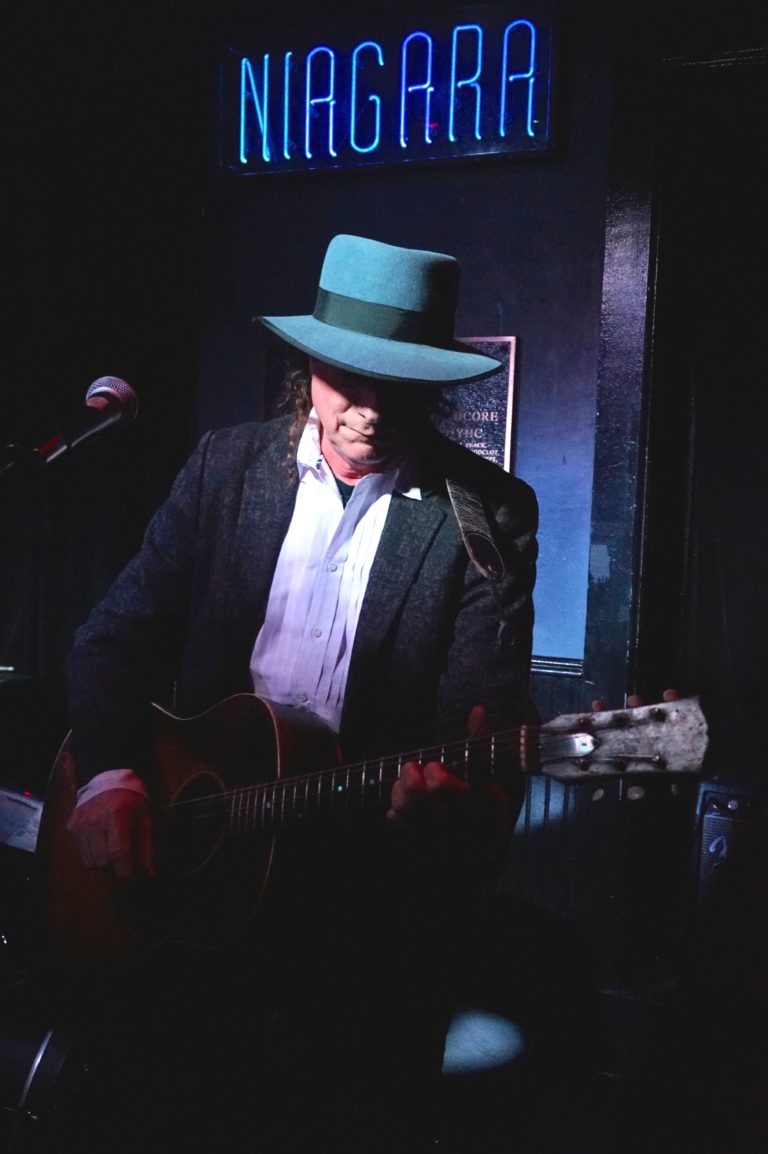
photo by Brad Balfour
As per usual, Gary had a very busy year planned when Covid-19 slammed on the brakes, including a new 2-CD retrospective, tour dates in 10 countries and, of course, more collaborations with unique artistic partners, here and abroad.
When Covid came to crush the live performance business, Gary did was he does best; he improvised and created great art, and a place of comfort for his fans from around the globe, on a shoestring budget. On March 19, he inaugurated a series of three-times weekly concerts streaming live solo acoustic concerts on his Facebook page from his Greenwich Village apartment, with a diverse playlist, including tributes to his two biggest partnerships, with Beefheart and Buckley. Here’s how he did it:
Sal Cataldi: First off, what had you had planned in the way of live work that got cancelled as a result of the Covid-19 crisis and quarantine?
Gary Lucas: I had an album coming out on May 1, a Best Of double CD on the Knitting Factory label titled The Essential Gary Lucas, covering 40 years of music-making from Captain Beefheart to Jeff Buckley and Beyond—with shows booked in NYC, London, France, Italy, and Finland in support of the release. Now the album release has been postponed to early September and I naturally had to postpone the live shows till such times. Too bad as the album package itself by Steve Byram and liner notes by Glenn Kenny is a thing of beauty, and I think people would enjoy it, particularly during this very difficult period. But the way things are going, early September may prove just as problematic a time to release an album and tour as it is now– who knows? We shall see what we shall see, que sera sera and so forth.
SC: You’ve probably been one of the busiest musicians when it comes to live streams. When did you decide to take the plunge? How many have you had thus far and how long do you see continuing at this point?
GL: I’ve done about 30 half-hour solo concerts streaming live on my Facebook page every Tuesday Thursday and Saturday at 3pm EST since lockdown mid-March. And I’ve archived them here. I only missed two—once because my iPhone melted down the morning of the show and I had to scramble to get a replacement (an iPhone 11) for the next show. Then this week, because of observing Blackout Tuesday in the music biz in support of the worldwide protests against racism. I was inspired initially to begin by the example of my friend and collaborator Ada Pasternak, who does these kind of shows frequently on Facebook from her family house in Connecticut with her parents and siblings–they are great.
SC: How has the audience grown through since your debut streaming performance? How do you interact with them? Is it actually more interactive on some level than a live performance?
GL: It depends really—the streams always get thousands of views, people all over the world share them. I’ve had Facebook Messenger feedback from Australia, where one fan gets up at 5 am to watch my shows live each time I play, plus fans giving me shout-outs in Russia, Ukraine, Greece, Turkey, Morocco, Israel, South Africa, all over Europe of course, Cuba (where it’s very difficult to get internet access), Canada, Japan, Burma, Thailand… There are tons of viewers. I also talk to them directly after the shows on Facebook Messenger for about half an hour, and they also Messenger me whenever they like over Facebook to ask questions, sharing some of their work with me, and showing support. It’s more interactive in a way than a live performance actually —it’s different though. Nothing beats having a living audience in the room with you while playing and getting their feedback in real-time and in one-on-one exchanges after a live gig, I have to say, streaming is more like you’re hurling your music, throwing the thunderbolts into the ether— very strange and disembodied—and you never know who might be watching. The fans do comment while I’m playing but I am unable to read them while playing as it distracts from my focus. I do detect a stream of hearts throughout rising on the screen of my iPhone image as I play, which is a good feeling!
SC: What are the technical particulars involved in your streaming performances, in getting a good image and sound? Any big glitches?
GL: I just prop my phone up on my windowsill and hit Live Video on the iPhone at 3pm, and away we go! No other interface involved. The camera and the mic in the iPhone 11 are very good for these kind of seat of the pants performances, which are mainly acoustic or just playing electric through a small amp. I don’t bother with pedals for these streaming shows—this gives me tremendous freedom to switch between my guitars at will depending on my mood at the time.
SC: You seem to be doing a lot of thematic performances, retrospectives on your work with Captain Beefheart and Jeff Buckley for instance. How do come up with what you play, is it very pre-meditated or seat of the parts?
GL: A little bit of both actually. With my Jeff tribute, it started as me wanting to pay homage to Jeff, specifically to mark the 23rd anniversary of his tragic passing on May 29.
SC: Obviously live work is a significant part of your revenue earned as a musician. How has this impacted you and are able to make up some of the difference with donations via PayPal?
GL: Yes I have, some fans have been extremely generous and have contributed to my virtual tip-jar multiple times. It’s been a help but not enough to fully replace the typical income from my live shows. On the other hand, it’s been steady work. It’s given me some relief from the constant pressure of having to constantly line up new shows out of town on my calendar, which have to be decent paying gigs, in any case– I won’t play any old gig at this stage of the game, certainly not a door gig.
SC: On the cancelled gigs, how many have been rescheduled and are you now rebooking tours?
GL: Not yet, as no venues anywhere have truly re-opened at this point, to the best of my knowledge (and I keep checking with agents around the world). This is going to be a problem for awhile I reckon, as how can clubs and venues stay in business if they are forced to cut their attendance policy in half in order to satisfy social distancing requirements? Every time it seems the curve is flattening somewhere there are new spikes, and now with the recent mass protests in the streets…I am trying not to think about this too much, I’m just keeping on keeping on at this point with my live streaming concerts until this is hopefully sorted.
SC: You’re kind of unusual among guitarist with your acumen on both acoustic and electric. Tell us a little about your influences and how you have grown to do some pretty eclectic things like live music for the scores of classic films like The Golem and Spanish Dracula?
GL: I grew up loving all sorts of music, from Top 40 radio to English progressive rock to free jazz and, of course, American folk and blues. I loved all the same guitarists back in the day that everyone else usually cites, but I especially I loved the crazier psychedelic players such as Syd Barrett, all the guitarists with Captain Beefheart over the years, and also the English folk-blues virtuosos like Bert Jansch. America country blues master Skip James is maybe my favorite all-time guitarist. I got into live scoring of films going back to my love of cinema, especially fantasy and horror cinema, from earliest childhood. I used to show 8mm silent horror films to my friends and neighbors in the basement of our house growing up on Syracuse (and charge a nickel for the privilege). It was a short step from that to accompanying films, which I began doing in 1989 on a commission from BAM and New Music America to do something different with my music and another art form. I brought in my childhood friend Walter Horn on keyboards and we jointly composed the score for “The Golem,” which we debuted at the Museum of the Moving Image in Astoria as a duo. I figured out a way to do the score solo after some initial and very well received performances, and toured in 20 countries with the film solo. Since then I’ve gone on to compose at least a dozen more live solo guitar scores and perform them at cinemas and music and film festivals all over the world. My last live gig before lockdown was up at Cornell University in Ithaca NY with “The Golem”, which was extremely well received.
SC: You’re probably one of the busiest guy in guitardom, when it comes to recording? What are some the recent and forthcoming records you are most excited about?
GL: I love the recent release on Knitting Factory of The World of Captain Beefheart album, which I recorded with soul legend Nona Hendryx (Labelle) and Jesse Krakow, Jordan Shapiro and Richard Dworkin. Nona really brought something new to the proceedings in terms of being able to cover the more r&b side of the Van Vliet oeuvre, as well as very capably plunging into the Deep End of Beefheart’s most outré material. And I love the last album released before lockdown, “The Complete Jeff Buckley and Gary Lucas Songbook” on the Italian Esordisco label, which I recorded with Italian vocalist The Niro (Davide Combusti) and producer/ multi-instrumentalist Francesco Arpino. The album contains new studio versions of all the 12 songs I co-wrote with Jeff, 5 songs of which never got any official release before. The album was voted Album of the Year in Classic Rock Italia. I have two more albums ready for release with my Chinese pop trio featuring Mainland Chinese singer and erhu virtuoso Feifei Yang and Jason Candler on sax—we do some covers of Dylan and Leonard Cohen in Mandarin, which sound really fresh. I also have a new acoustic EP recorded in France before Xmas with a young French -Moroccan singer, Yass Boud, which sounds amazing—there’s also an EP in the works with a young Dutch acoustic bassist and vocalist Peter Willems to be recorded in Holland this summer. Plus a second Pearly Clouds album is in the works to be recorded in Budapest—this is my for lack of a better description psychedelic Hungarian folk trio featuring Toni Dezso on sax and traditional Hungarian folk vocalist Eniko Szabo. And I’m currently working on finishing songs for a new Gods and Monsters album featuring my longtime band of Billy Ficca (Television) drums, Ernie Brooks (Modern Lovers) on bass, and Jason Candler (Hungry March Band) on sax. There’s other stuff being planned too. I try and stay busy always.
SC: As for your retrospective, what was impact you wanted to make with this collection? Was it hard to choose these tracks over a 40-year career?
GL: I am very excited about this double CD retrospective of course. Besides containing what I consider the cream of my recorded output, it also contains some rare and unreleased tracks. Hopefully, it should provide a good overview of my work across the 30-plus albums I’ve released over the years for folks who might know my own work except for one thing only, for instance my work with Captain Beefheart, or with Jeff Buckley. It’s designed to be a good introduction to my music for folks who don’t know my work at all. Hopefully it will expand my fanbase, secure more live gigs if we ever get out of lockdown (I love to tour!), and win more appreciation for my own music in the world at large—isn’t that what most artist’s want? I’m not an Art for Art’s sake kind of guy. My music was designed to be user-friendly without following the trends of the moment. And I don’t look down on fans; I love and appreciate my fans. And, yes, it was damn hard to make the album’s selections. I kept switching and substituting tracks–until finally I said that’s it. Making that selection was like asking a mother with a very large brood of kids to choose her favorite children.
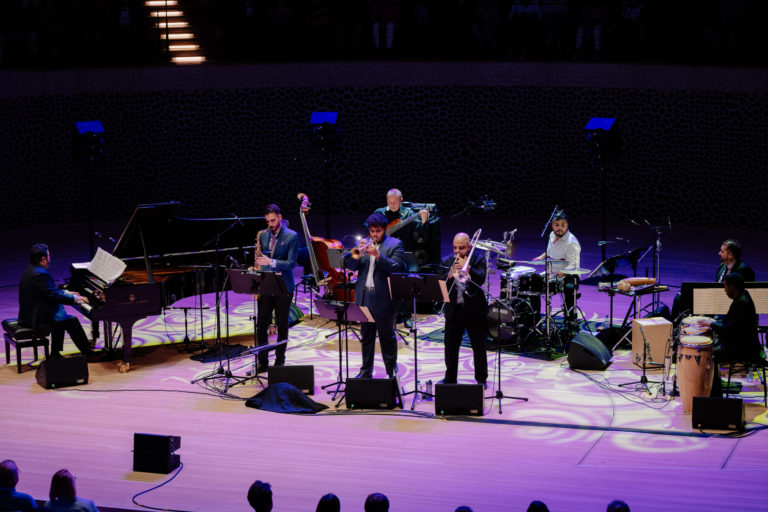
With a successful phase one of their crowdfunding campaign reached, Grammy winning pianist/composer Arturo O’Farrill and nonprofit the Afro Latin Jazz Alliance (ALJA), have announced that they will be raising the bar by setting the goal to $100,000 for phase two.
The $30,000 was able to provide 100 artists with grants. These grants are all part of the ALJA Emergency Artist Fund initiative in response to the economic hardships faced by New York and New Jersey artists after the start of the Coronavirus Pandemic.
Open to all residents of New York and New Jersey, the fund prioritizes the Afro Latin and Latin Jazz communities in both states. All donations go 100% to providing monetary relief for a community who were hit hard since the pandemic started. Donations can be here.
Marietta Ulacia, Executive Director of Afro Latin Jazz Alliance gave this statement; “It’s during challenging times like the ones we are now living in that our community excels in its strength, compassion, and ability to come together for the benefit of all. Today, with the current crisis created by COVID-19, we ask for your generous support to help our community of musicians, teaching artists, and the artistic community at large. No amount is too small. Your donation will make a difference!”
In addition to ongoing fundraising, ALJA was also excited to announce a partnership with the New York City venue Birdland that will bring a new online audience engagement including an exclusive weekly concert featuring Arturo O’Farrill and the Afro Latin Jazz Orchestra. “Virtual Birdland” brings 18 artists together, performing from the comfort of their own homes. More information and a complete schedule can be found on Birdland’s website.
With over 40 years of jazz training and experience, Mexico native Arturo O’Farrill has long played a role in promoting the important musical traditions of Afro Latin Jazz. He founded the Afro Latin Jazz Orchestra in 2002 bringing the sound global. The non-profit Afro Latin Jazz Alliance (ALJA) followed five years later in 2007 to efforts to use performance and education programs to promote Afro Latin Jazz.
It’s been 25 years since we last heard from Bill and Ted, who performed “God Gave Rock and Roll To You” in front of the world, thus leading to world peace. Now they’re middle-aged dads and are on a mission once again to be excellent to each other, and to party on. Keanu Reeves and Alex Winter return this summer in Bill and Ted 3: Face the Music with the new trailer debuting today.
The plot of the film focuses on Bill and Ted, who are back in San Dimas, CA, yet still have to fulfill their destiny by writing a hit song.
It looks like time-travel is once again on tap, as well as a visit to hell to meet Death, played by William Sadler, reprising his most excellent role from 1991’s Bill and Ted’s Bogus Journey. The release date is not yet set due to COVID-19 but we can most likely look for a late summer/early fall release.
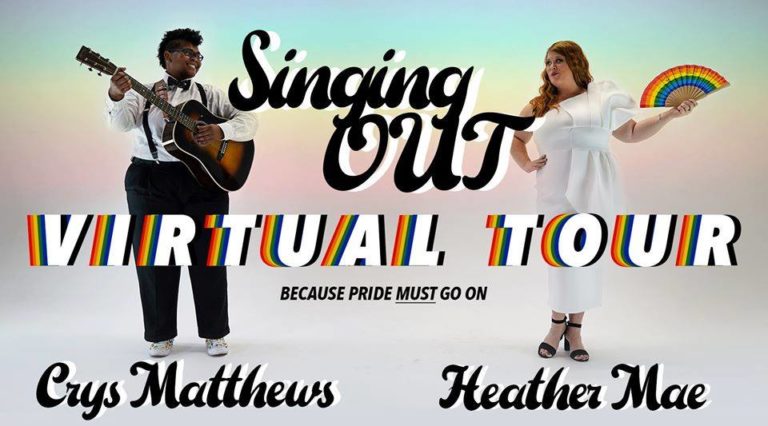
Caffe Lena is presenting a live-stream performance out of Saratoga Springs featuring Heather Mae and Crys Matthews with their “Singing OUT” Pride Tour. The performance will take place on June 12 from 8:30 PM – 11:30 PM.
Heather Mae who has been called “the queer Adele” while Crys Matthews has been called “the Woody Guthrie of our generation” and the two of them together make a unique and beautiful sound. They hope with this sound to make celebrating Pride during this difficult time of social distancing and fun and interactive environment. They create this interactive aspect of their show by having people come dressed in Pride gear and hosting sing alongs, games, and giveaways.
Their motto is that Pride must go on. They hope that this celebration will mirror that with giving LGBTQ+ people and their allies a way to gather to lift one another up despite COVID-19 and that people will be able to and bask in the power and beauty of their resilient community.
https://youtu.be/XFzgolN8nHE
Tickets are $15 and are available on their side door website. For more information please visit their Facebook Event Page.
Jon Batiste, bandleader of “The Late Show with Stephen Colbert,” led a musical march through NYC in support of the Black Lives Matter protests. The musical march took place on June 6 at 1PM in Union Square. The protest was peaceful and musical in nature.
Batiste is a notable jazz musician on top of being the bandleader of The Late Show with Stephen Colbert. Batiste has his band Stay Human and also serves as the Music Director of The Atlantic and the Creative Director of the National Jazz Museum in Harlem. He was nominated for “Saint James Infirmary Blues” in the Best American Roots Performance category in 2018 in the Grammy Awards.
Jon Batiste advertised the event on his Twitter saying, “This is our response to the deep rooted systemic injustice we have yet to fix, a fact made abundantly clear by the public execution of another black person. This is a movement that exists because I believe the power of art & music is divine.”
This is our response to the deep rooted systemic injustice we have yet to fix, a fact made abundantly clear by the public execution of another black person. This is a movement that exists because I believe the power of art & music is divine. RSVP here: https://t.co/PrtD5I6J3Apic.twitter.com/upLFTRxiXG
The musical march started at Union Square and went all the way to Washington Square Park. Batiste explained to CNN’s Bill Weir that this protest was bringing people together over a common outrage and that there are things people need to start doing. He said, “Look at what we are doing. We’re using music to bring people together of all races, of all genders, for Black lives. We have to get to protests and we have to get to voting. 100 million people did not vote in the last election. We’re battling three candidates Donald Trump, Joe Biden and apathy.”
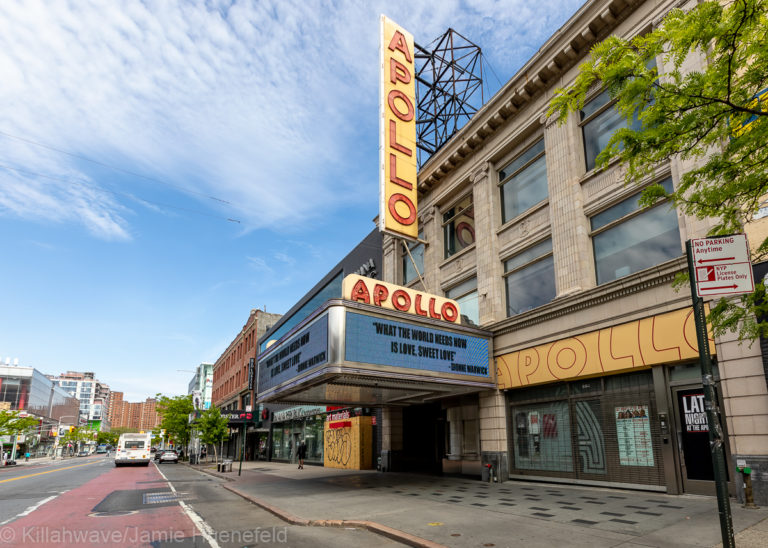
There are 41 theaters on Broadway and they each have one thing in common: none are owned by African-Americans. The Apollo Theater, located on 125th street in Harlem, opened its doors to the public in 1914 and has been a vibrant piece of New York’s history and culture ever since. Many jazz, R&B, and soul legends began their paths to fame at the Apollo theater’s famous amateur nights. The theater has been both a state and city landmark since 1983 and still remains an important part of New York theater to this day. Despite this, it is not considered a Broadway theater.
photo by Jamie Huenefeld
The only thing which distinguishes Broadway from Off-Broadway is the number of a theater’s seats. All Broadway theaters must have 500 seats or more; theaters with 99-499 seats are deemed Off-Broadway. The Apollo Theater has 1,506 seats.
A petition to make the Apollo Theater a Broadway theater has been attracting attention in the past few days. If it were a Broadway theater, yhe Apollo would be eligible for Tony Awards and become involved in Tony nominations. As the Apollo Theater works to represent the cultural diversity of New York City, many believe that more BIPOC actors and team members would be nominated for Tony awards were the theater given leeway in the nominations.
The Apollo Theater is currently closed with no events scheduled through June 30.
The Relix Roadie Lounge has announced a new digital hub that will help support people in the music industry during these trying times. The hub was created in partnership with LD Systems, Robe Lighting, Backline, and Fender. The Relix Roadie Lounge was first implemented at Newport Folk Festival, Austin City Limits, SXSW and LOCKN’ Festival in 2019.
The digital hub will supply news, special offers, resources in a broader terms, and mental health resources for artists, crew members, and other industry professionals. The Relix Roadie Lounge is hoping that this digital hub will be able to give these hard-working people opportunities to win premier gear and exclusive product opportunities on top of connecting people with reliable outlets.
Josh Rowe who is the director of Relix’s Roadie Lounge program explained the reasons behind this hub creation saying, “With the current status of the music industry, we realize things are tough. We’ve banded together with our partners to bring the Roadie Lounge to you. We’ve put together a collection of useful information, resources, product specials, and contests for your time off the road.”
There’s a lot of news about musicians being out of work but there hasn’t been a lot of resources put out there that’s focusing on the behind the scenes workers. This hub tries to recognize how crew members and artists are the foundation of the live music industry. Festivals, concerts, and live music wouldn’t be possible without the endless work done behind the scenes.
For more information please visit The Relix Roadie Lounge’s website.
Osiris Media announced their PAST, PRESENT, FUTURE, LIVE! podcast revolving around the artist’s journey through interviews and live performances. The podcast will debut on June 9 across streaming platforms like Apple Podcasts, Spotify, and etc.
The podcast will explore artists’ first music lesson to the first paid gig. It will investigate their early inspirations, creative process, what’s driving them towards the future, and everything in between. Executive Producer Adam Caplan said, “We wanted to create a show that taps into the power and spontaneity of musical discovery beyond a typical interview.”
The first season will drop new episodes every Tuesday. They will also release a video of each live performance which will be available on the Osiris website and YouTube. An accompanying curated playlist chronicling the music and artists mentioned in each episode will also be available on the Osiris site and on Spotify.
The podcast will include guest appearances from Eric Krasno, Rhett Miller, Marco Benevento, Ted Leo, and many more. The first episode will feature Eric Krasno, the second will feature Rhett Miller, the third will feature Marco Benevento, and the fourth will feature Ted Leo and more episodes and their guests will be announced later on.
For more information on the PAST, PRESENT, FUTURE, LIVE! podcast visit Osiris’s website.
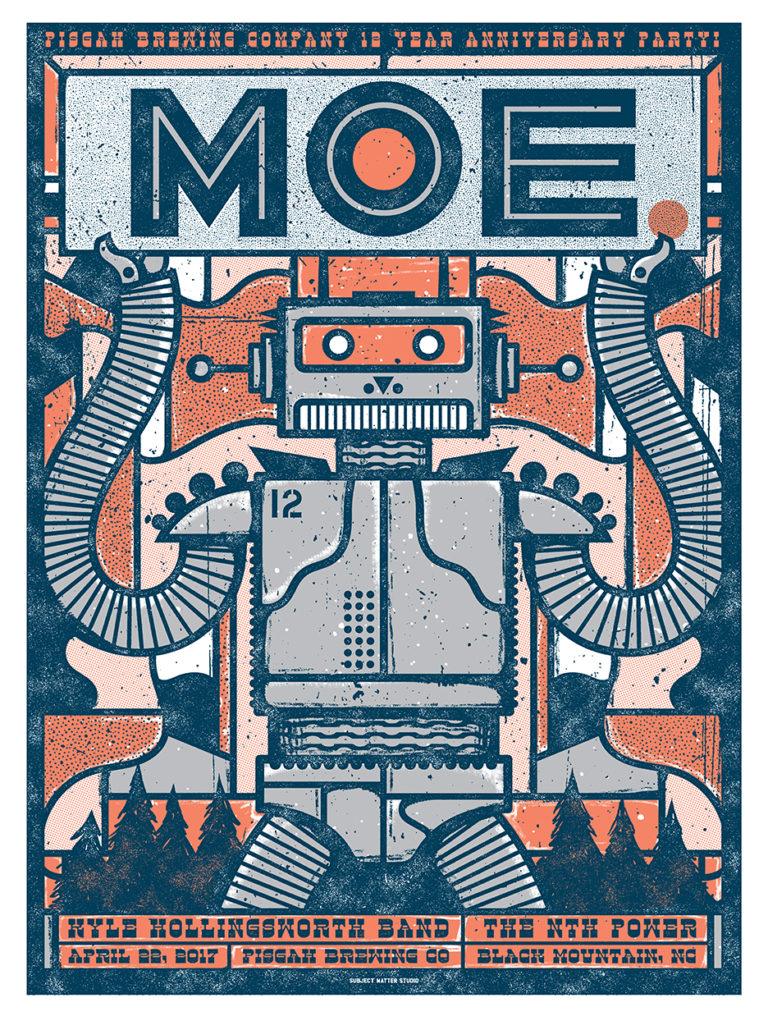
For tonight’s moe.ron Monday on Nugs.TV, the band goes back to their April 22, 2017 show at Pisgah Brewing Company in Black Mountain, North Carolina. moe. also recently announced the upcoming digital release of their new album This is not, We are, with select songs now available for streaming.
Set 1: Okayalright > Wormwood, Not Coming Down, Seat Of My Pants > Sensory Deprivation Bank, Prestige Worldwide, St. Augustine Set 2: Big World > Ricky Marten > Hi and Lo > Bullet > Kyle’s Song, Opium, Silver Sun Encore: Captain America
All funds received during the webcast will be donated to the NAACP. Tune in here at 8pm on Monday, and watch last week’s installment below.