Blog

  • Woodstock 99 Revisited

    21 years ago this weekend, the festival calamity known as Woodstock 99 took place at Griffiss Air Force Base in Rome, NY. If you know anything about Woodstock 99, you likely know about the festival-ending fires and mild rioting that took place in the concert grounds, built out of a weekend of frustration with festival pricing and lack of an adequate infrastructure.

    Over Friday and Saturday, the festival seemed to be your typical late 20th century festival – bands playing mostly on schedule, an amalgam of various groups of music lovers, basic amenities and little in terms of technological infrastructure. This was a time where cell phones were a luxury item and resembled Zack Morris’ brick phone.

    via Getty Images

    There was the giant plywood wall that surrounded the grounds, which gave you a feeling of being trapped inside, with only two or three entry points where you’d be searched at security’s leisure. Once inside, prices were high, even by today’s standards. Four dollars for a bottle of water, eight dollars for a hamburger, nine dollars for a cheeseburger, ten dollars for a chicken sandwich and twelve bucks for a small personal pizza. If you were lucky, you found a lemonade stand where the drinks cost only two dollars, but if you wanted alcohol, you had to drink it in the beer garden, which was devoid of shade or quality sound, and put you in a direct line of fire from people slinging mud through the chain link fence.

    woodstock99

    The musical lineup was as solid as it could be for 1999. In alphabetical order, you’d be able to catch Bush, Chemical Brothers, Creed, Sheryl Crow, Dave Matthews Band, DMX, Everlast, Guster, Ice Cube, Korn, Jewel, Limp Bizkit, Live, Los Lobos, Megadeth, Metallica, moe., Alanis Morissette, Willie Nelson, The Offspring, Rage Against the Machine, Red Hot Chili Peppers, Rusted Root, Sugar Ray and The Tragically Hip, among many others

    Two stages that were a long, long walk from each other separated the acts. If you wanted to see someone on the West Stage, you’d be sacrificing a great deal at the East Stage, and vice versa. The schedule was staggered, but surely this could have been organized better. At least moe. got a set.

    Governor George Pataki is rumored to have said of the Woodstock weekend,

    “It seems to me the whole reason Woodstock ’99 failed was because of the kids. Kids from all over came to Rome and had no sense of authority, and did not care about anyone but themselves. The promoters should be held to blame, but also the irresponsible people who attended. It seems a strange contradiction. The week before Woodstock 99, 120,000 people gathered in Oswego, New York to see the rock band Phish. The event was in more cramped quarters, and was just as hot, and to my understanding no major problems were reported. Maybe if people behaved like they did at the Phish event this wouldn’t have happened.”

    Pharmer’s Almanac, Volume 6

    While Pataki’s remarks are off by around 90,000 ‘Camp Oswego‘ attendees, it does highlight the weekend prior where similar conditions of oppressive heat and humidity did not lead to the same circumstances as they did in Rome from July 22-25. How can two festivals, 80 minutes apart, be so diametrically opposite? You’d have to factor in an audience from mixed walks of life, many of whom may not have been to a multi-day music festival prior to this, and festival promoters who came up short in every single area – from bathrooms to food, safety to water, and layout to operations.

    Skip ahead to Sunday, July 25, and on the main East Stage, you’d catch Al Green, Willie Nelson, Brian Setzer Orchestra, Everlast, Elvis Costello, Jewel, Creed, and Red Hot Chili Peppers. Genre-wise, in order, you could catch gospel/soul, country, swing, rap, rock, pop, ‘hard’ rock and pure rock ‘n’ roll from the Chili Peppers. Quite a variety to see in one day.

    woodstock99

    Long lines at the limited vendors that had food to serve coupled with very long lines for water, overflowing portos and litter seemingly everywhere, finally hit a tipping point. Add in the aforementioned oppressive heat and humidity plus a complete lack of shade, and a powder keg was ready to burst. The plywood fence around the venue was already being torn down casually throughout the day by concert-goers taking out their frustrations, which led to more seeking a piece of memorabilia.

    During the day, in an odd bit of cosmic irony, anti-gun violence group Pax (now the Center to Prevent Youth Violence), distributed candles to those who stopped by their booth during the day. The original intent was for a candlelight vigil during “Under the Bridge,” but instead some used the candles to start bonfires, and when coupled with the thousands of empty water bottles that littered the East Stage field, there was plenty of fuel to light the grounds on fire from stage to stage.

    At some point towards the end of the Chili Peppers set, the audio tower caught fire, and the fire department had to be called in. The festival was over thankfully, and many had left during the day, but for the thousands needing to vacate the grounds while emergency personnel were arriving, the scenario had to be frightening. CBS News reported:

    The three-day concert climaxed into a frenzy about a quarter mile from the main stage when several concertgoers set fire to twelve parked tractor-trailers.

    Several people pulled cases of soda and merchandise from the trucks and fed the flames with debris. Others toppled light stands and speaker towers, while another group tried to destroy a radio station truck.

    via CBS News

    As a result of Woodstock 99, it would be a number of years before a festival with pop bands reaching a broad audience would take place. Jam festivals were already on the rise, and while the lineup for Bonnaroo 2019 looks little like that of Bonnaroo 2002, the key to the festival formula was in building a lineup for a defined audience, not gathering an audience towards a known lineup.

    And while Woodstock 50 never even got off the ground and Woodstock 99 was a stain on music festival history, the original and even the 1994 edition bear the torch for a name still synonymous with peace, music and love.

    The nine-episode podcast Break Stuff: The Story of Woodstock 99 from The Ringer gives a detailed breakdown of the festival. Listen here.
  • Flashback: Iron Maiden frontman Bruce Dickinson rocks Saratoga Winners with Kings of the Sun

    An original review of this show was written for BUZZ Magazine in July of 1990 and can be found below.

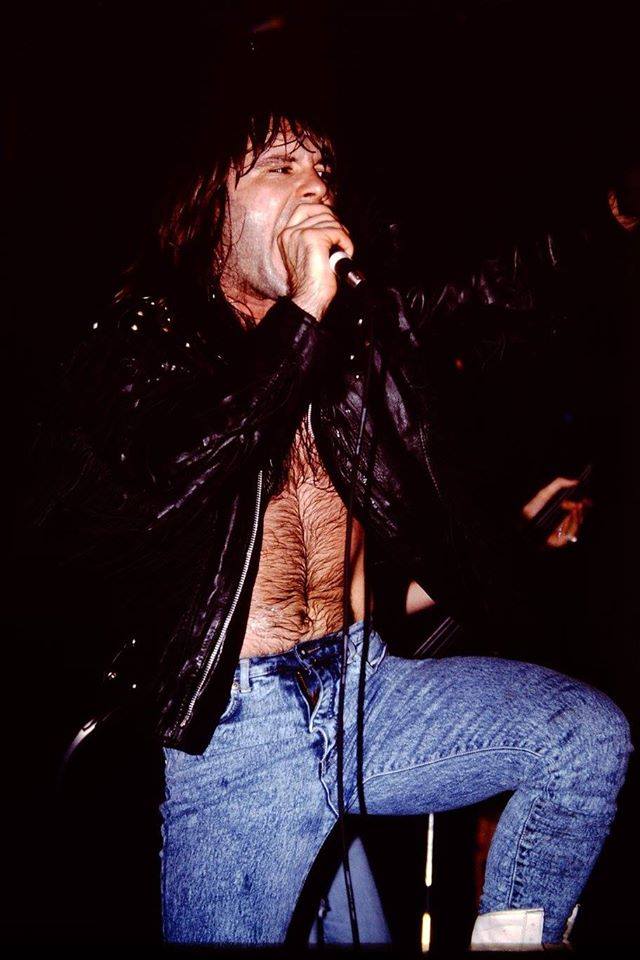
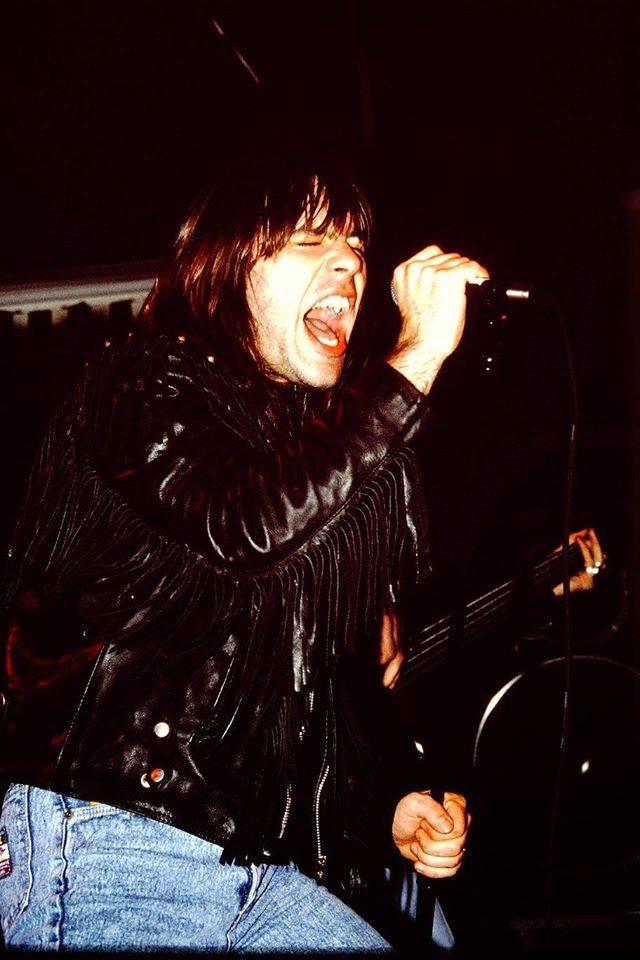
    It was 30 years ago tonight, on Wednesday, July 25, 1990, that Iron Maiden front-man Bruce Dickinson and Kings of the Sun took the stage at the legendary Saratoga Winners in Latham, just outside of Albany.

    bruce dickinson
    Bruce Dickinson, Saratoga Winners, Latham, NY, July 25, 1990, picture by Mark Kurtzne

    This bill also played The Chance in Poughkeepsie, on July 20, 1990. Dickinson was on a break from Iron Maiden, promoting his debut Tattooed Millionaire solo LP.  It wasn’t a bad record, although not on par with his better Maiden stuff. He didn’t play any Maiden, unless you count “Bring Your Daughter To the Slaughter,” which at that point was still a Dickinson solo track from a soundtrack; Maiden wouldn’t do record it until their next album.

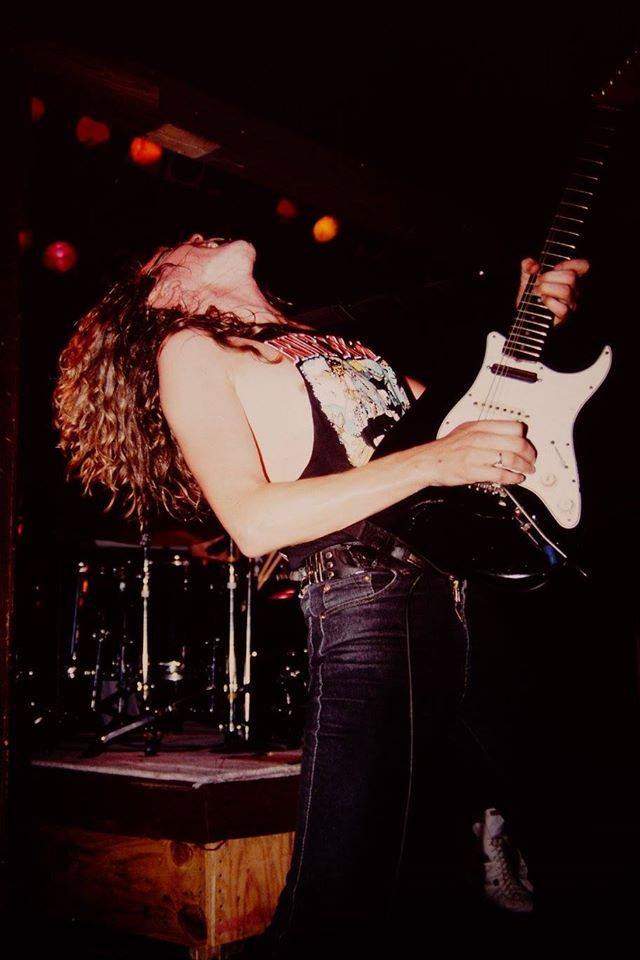
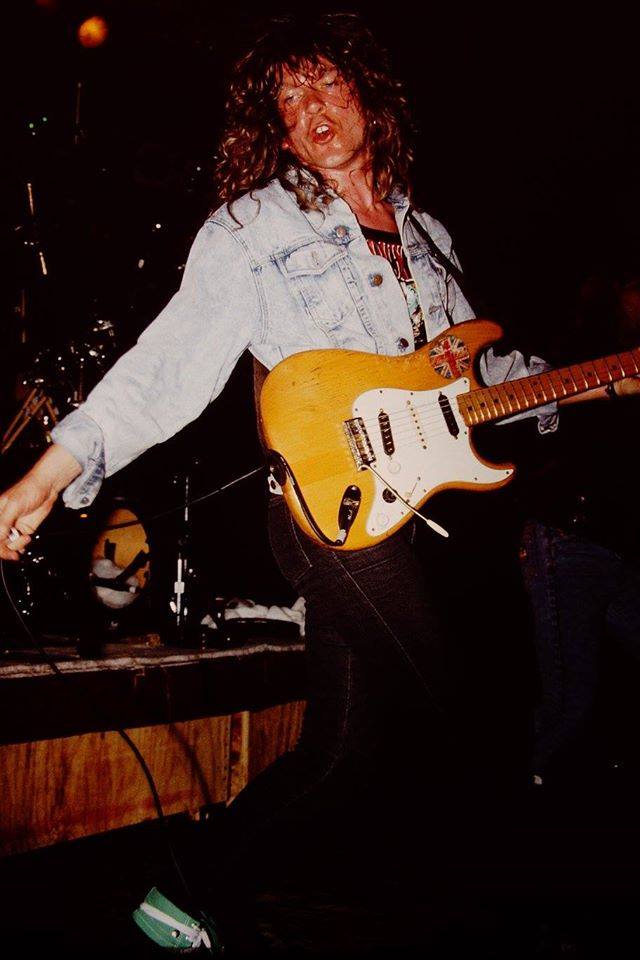
    Janick Gers, Saratoga Winners, Latham, NY, July 25, 1990, picture by Mark Kurtzner

    However, Dickinson opened the show with his pre-Iron Maiden band Samson’s “Riding With The Angels,” which rocked, and played a bunch of solo songs and covers. Good shows, both packed, mostly with Iron Maiden fans, and a ton of Iron Maiden t-shirts.

    janick gers
    Janick Gers, Saratoga Winners, Latham, NY, July 25, 1990, picture by Mark Kurtzner

    Dickinson’s guitarist this night was Janick Gers, who at the time was the former guitarist from Gillian, the early 80s metal band led by Deep Purple member Ian Gillan. He had also been in a new wave of British Heavy Metal band called White Spirit – as a fan of both of those bands, I was excited to see him, and he played great.  But soon enough he could become far more well-known when he replaced Adrian Smith in Iron Maiden.

    Bruce dickinson
    Bruce Dickinson, Saratoga Winners, Latham, NY, July 25, 1990, picture by Mark Kurtzner

    The opening band, Kings of The Sun, were great at one show, kind of crap at the other. They were from Australia, a band led by a couple of brothers, playing good heavy rock ’n’ roll in the vein of AC/DC, on the heels of a pretty solid self-titled album out at the time.

  • J. Cole Drops Two New Singles And Announces New Album

    J. Cole dropped two singles following a string of Instagram Story posts hinting towards an upcoming release. The singles are the first confirmed tracks on the southern rappers upcoming album, The Fall Off.

    On Wednesday night, J. Cole made an Instagram post announcing the upcoming release of “The Climb Back“, produced by Cole, and “Lion King On Ice“, production arranged again by Cole aided by T-Minus and Jetson. The Fall Off will be Coles first solo project since 2018’s KOD.

    https://www.instagram.com/p/CC6mFLeFC02/?utm_source=ig_embed

    The first of the two singles, “The Climb Back” has J. Cole performing in his pocket, spitting bar after bar over a sparkling piano melody and a high-pitched vocal sample leaving plenty of room for Cole to switch up his flow which he finds himself doing several times. The song is missing a strong hook however, the understated vocals Cole croons out serve towards the emotional potency of the track.

    The second track released, “Lion King on Ice” is a J. Cole track by the numbers. Cole is again operating in his comfort zone; with an stripped back trap instrumental beat featuring similar pitched vocal sampling present in “The Climb Back”, Cole is able to ride the beat comfortably verse after verse.

    Cole has made it clear that he has an album coming on the way. However, he is seemingly under little pressure to release the album because he has also made it clear he has no planned release date for the album.

    For more information visit J. Cole’s website.

  • Joe Bonamassa Releases Revamped Classic “Colour and Shape”

    With a dramatic entry into the world of blues opening for B.B. King in Rochester at the age of 12, Joe Bonamassa has carved out a place in blues history for himself which spans a decades-long career that has produced 15 solo albums, 11 of which reached #1 on the Billboard Blues Charts.

    Twenty years ago the first of those albums A New Day Yesterday was released and the fan-favorite track “Colour and Shape” was introduced to the world. Now with a more evolved style listeners can experience Joe Bonamassa’s artistry all over again with the 2020 release of “Colour and Shape”.

    Coming August 7 via J&R Adventures, Bonamassa will be releasing a revamped version of his debut album A New Day Yesterday with both new vocals and mixing remastered by long-time producer Kevin Shirley. Listeners can pre-order the album now.

    This revamped album will include not only six of Bonamassa’s original tracks but also six cover songs from historically renowned blues and rock artists. The cherry on top is that three never before heard bonus songs will be added, produced by Stevie Van Zandt for Bonamassa.

    To get live updates of Bonamassa’s new exploits be sure to visit his website, Youtube channel, Facebook, Twitter, and Instagram, as well as checking out Keeping the Blues Alive Foundation, a charity established to support musicians and the musical arts.

  • Interview: Sarah Pinsker, Novelist and Indie Rocker who predicted our Quarantined, Concert-Less Future in “A Song for a New Day”

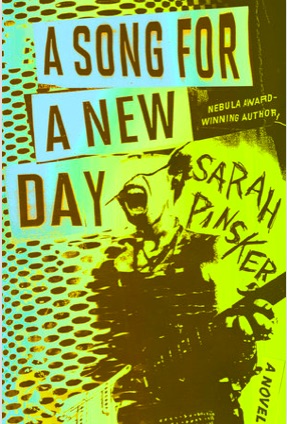
    If anyone can lay claim to the title of “Rock and Roll Nostradamus,” it’s Sarah Pinsker. Born in New York City and a present-day driver of the fertile culture scene in hip Baltimore, Pinsker is a true multi-hyphenate. First off, she’s a singer/songwriter who has released a number of noteworthy albums with her band, Stalking Horses.  More prominently, she can now lay claim to being the hottest rising star in the world of science fiction, whose eerily prescient debut novel, A Song for A New Day, just won the milieu’s highest honor, The Nebula Award, putting her in the company of legends like Isaac Asimov, Arthur C. Clarke, Ursula Le Guin, William Gibson and Neil Gaiman.

    I stumbled across Pinsker’s book right as it came out in September 2019, drawn by the cool cover art, her background as a musician and its seemingly far-off but maybe too near premise, one steeped in the world of indie music making, technology and, one of my guilty pleasures, future dystopia! 

    Sarah Pinsker

    In Pinsker’s novel, a deadly virus/pandemic unleashed by a terror attack that brings society to its knees.  All public gatherings are prohibited for two decades, and everyone hunkers down quarantined in their homes, working and entertaining themselves via VR-equipped hoodies, and receiving most of their necessaries via drone from one mega corp.  As gatherings are banned, so, too, are live musical performances.  But, don’t worry, there are still shows, not in crowded bar and venues but streamed hologram performances of only the most visually appealing of acts coming from the HQ of mega promoter, StreamHoloLive, straight into your hoodie.

    Starting to sound familiar yet?

    Pinsker’s novel revolves around two women.  First is Luce Cannon, an emerging indie artist on the cusp of a big mainstream breakthrough when the virus takes down the world (best character name for a rocker ever, right?). Then there is Rosemary Laws, a 20-something woman who doesn’t remember the time before the fictional quarantine who becomes a roving A&R person for StreamHoloLive.  Her mission? To infiltrate the small underground network of clubs that still run live shows, illegally and until they are busted, to find new talent to holo-stream. 

    Musicians will love this book because it’s written by one of her own. Pinsker is someone who brings spot-on descriptions to the power of a kick drum, a power chord and the day-to-day lives of musicians, especially those who are scuffling to create and survive in both the old IRL and the new post-performance world.   

    How did Pinsker go from indie rocker to sci-fi darling?  What commonalities does she see in her two creative lives?  NYS Music gave Pinsker the chance to elaborate in the following Q&A.

    Sarah Pinsker
    Author and musician Sarah Pinsker

    Sal Cataldi: I understand your debut novel, A Song for A New Day, is an elaboration of a novelette you wrote five years back.  What, from what you have witnessed as a musician and as someone who reads the headlines, made you conjure such a premise?

    Sarah Pinsker: My memory of the seed for the initial novelette was that I had passed the “Our Lady of the Highways” shrine on I-95 again, and I was thinking about all of my touring friends who had written songs based on that lovely title. I think I had “Our Lady of the Open Road” before I had a story, and then I started thinking about a band on the road long after everyone else had exited that life, and what would have put a stop to it. I worked backward from there, thinking about the things that might be societal roadblocks, and the technological advances that would reinforce the changes. 

    SC:  How does it feel to be the woman who predicted our socially distanced, outlawed gathering present? How did it feel when you started to see this fantasy of yours beginning to come true in headlines?

    SP: Most near fiction SF writers I know don’t set out to be predictive, so it’s a dubious celebration.  I’d wanted to talk about things I *didn’t* want to see come true, and head them off at the pass. When people ask how I got so close in my “predictions,” it just feels like common sense to me. Humans are sadly predictable.

    It’s been frustrating to see people say that my book is anti-social distancing. It doesn’t glorify flouting restrictions on gatherings during a pandemic; the problem in the book is that the country stays that way long after the threats are gone. I think there are opportunities right now to create a new and better normal, but we also have to do active work to make sure that we still have music and arts and venues when all of this is past.

    SC: How much of you is in the Luce character?

    SP:  Hers is an easy voice for me to write, but she’s not me. She’s an amalgam of a whole bunch of musicians I adore. I guess the part of her that’s me is the way she feels on stage; I took that from my own experience. And I guess I tend to be skeptical of new technologies.

    SC:  Sounds like you’re a diehard DIY indie musician.  What’s the worst part of the corporate music business that is in this book, and actually just out in the world as a musician.  Seems like MTV on steroids, with the accent on looks.

    SP: I think I’d spoil the book in saying what I think are the worst parts of the corporate music business I wrote. If you look at what’s happening right now, the corporate venues will get loans, the arenas will make it, but the small clubs are drowning. Big musicians are doing fine, but the indies who depend on touring are struggling, as are the musicians who play senior centers and restaurants and libraries, and the people who run sound, the roadies and techs, the indie venue owners and staff… Some of my friends are doing online shows with tip jars, which is actually an opportunity to reach their largest audiences ever, but I can still easily see that access getting throttled. There are already corporations looking to take advantage of this situation, even while musicians try to do their best to survive. In the best of times it’s difficult to make a living at music, and it doesn’t need to be that way, but the system is set up to elevate a very small percentage of the musicians out there and not necessarily to make access easier for all.  

    SC: Now that we are in the midst of a streaming music present, what do you think about it?  Any artists that particularly inspire you in what they are doing in the medium?  Like your character, do you lament the loss of live performance?

    SP:  Right at this moment, I am extremely grateful for the musicians who are streaming shows (and the theaters, and the museums, and the national park cams…) It’s not like in my book, in that we are still in the moment where this is necessary and appreciated. I like clicking into a show and seeing people I know are also there in the comments. I like sitting on my porch at sunset and listening to musicians I adore. 

    There’s a folk musician named Susan Werner who has been playing Sunday night shows online. Sometimes she invites friends, sometimes she has a theme, but she’s always been good at mixing a fun stage presence and quick wit with her songs. She often has a sponsor or a charity getting some of the money, and donations/tip jar are encouraged but not mandatory.

    A lot of folk and acoustic musicians are doing similar things. Rufus Wainwright was doing a song a day in his bathrobe — I haven’t checked in a few weeks to see if he’s still going. LEA, thisislea on most sites, is a DC-area musician who always did cool community-oriented stuff. I played at an album release of hers a few years ago, where she invited people to play a song of theirs that was in conversation with a song of hers, and then she would play the connected song. She’s done some virtual choir stuff since this started. I’ve seen some Baltimore bands like Gingerwitch and Manners Manners and Santa Librada do triple bills online where each band does a set, and at the end gives you the address to find the next set. And I know a couple of venues here have offered to open for a band to record a show without an audience. 

    So yes, I think musicians are making the best of it, and while I lament the loss of live performance where I’m in the room where it happens, these shows are still special and appreciated. They feel intimate, and I love seeing some of these performers that I haven’t had a chance to see in a long time, either because schedules don’t align, or they haven’t been touring in my area. 

    SC:  Which came first, your music or your writing career?   Tell us a bit about both, and how they inform each other.

    SP:  Career-wise, music, though I had written and submitted short stories for publication before that. They’re both forms of storytelling to me, with their own advantages and disadvantages and tropes to explore. In my twenties my stories got shorter and shorter, and I found myself telling stories in song form. I loved the immediacy of playing, and the collaborative nature of performance; even when you’re on stage alone, you’re engaged in a conversation with your audience. I can’t say why I switched horses back to fiction at the moment I did. I struggle a little with doing both at the same time, so my music has suffered for my success in fiction. I have a fourth album completed that I really need to get out into the world, but that just feels like too much.

    SC:  Who are your three big inspirations in each of these areas? 

    SP:  I hate answering those questions, because I always feel like for every name I mention, there are a hundred more. In fiction, I guess I’d say Ursula K. Le Guin, Octavia Butler, and Karen Joy Fowler, in terms of the way reading their fiction makes me want to up my game. In music? Argh. Um, I’ll just name one. My friend SONiA, from the band disappear fear, has been my model for what an ethical life in music looks like from the beginning. She’s a wonderful songwriter, a dynamic performer, and she’s comfortable with a band or solo and with adapting songs to both.

    SC: You just received the Nebula Award for the book, which is the highest honor in science fiction.  Did you at all expect it?  What does it mean to your future as a writer?  Are you the first musician/writer to win?

    SP: I didn’t actually expect to win the Nebula. There were amazing books on the list, and I had assumed that one of those books was going to win. Getting onto finalist lists is always a tremendous honor in itself, and I don’t think it’s ever healthy to assume the top honor is yours, so I like to choose a book to root for that isn’t my own. That way, I’m happy if they win and surprised if I do. I think there have actually been other musicians who have won — Nicola Griffith and Catherine Asaro, among others, I believe.

    SC:  As an expert prognosticator and musician, what do you think the future holds for indie musicians and live music venues?  Will this ever go back to what it was, or will there be a new normal based somewhat on what you created?

    SP: I’m not an expert prognosticator, but I think what the future holds will very much depend on what we do right now. We should be helping venues pay their rent while they are closed, so they still exist when this is over. We should be giving basic income to everyone to encourage people who can stay home to stay home and allow those who can’t to do their jobs more safely. If we do those things now, we’ll have venues when this moment is over. 

    I do think there’s a lot we can learn from this, and there are things I’d like to see in a new normal. 

    There’s an accessibility in this moment: people who use wheelchairs and couldn’t get down the steps into basement venues get to see bands. Ditto people who couldn’t afford big ticket prices or didn’t have a way to get to a show, or didn’t have childcare, or whose health is too fragile even when we’re not in a pandemic to risk being in a crowd. We can definitely come back to a mix of both if we choose to. 

    We can encourage seeking out smaller bands, who may be playing to smaller crowds, rather than giant stadiums. We can normalize staying home when you’re sick, and we can normalize wearing a mask in a crowd if that’s what it takes to bring back live music. Music is about community, and we can continue to forefront that community-mindedness. But above all, we need to help musicians and techs and venues weather this with actual financial help, as they have in other countries. I’d rather wait longer in order to come back safely than rush it and risk the health of everyone involved, no matter how much I’d like to go to shows again. 

  • Fingerlakes Drive-In to host to Pigeons Playing Ping Pong in August

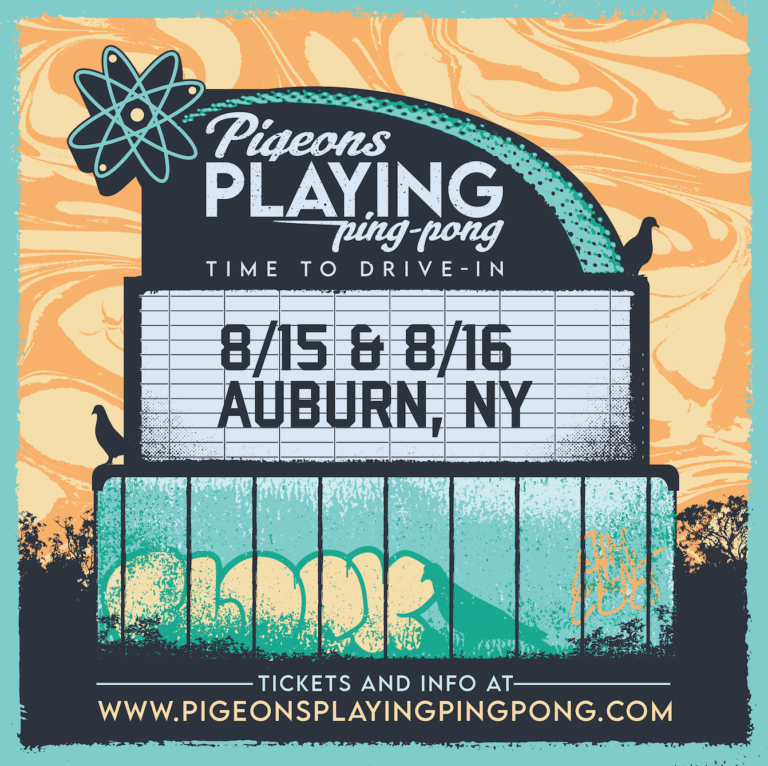
    Central New York is blessed with another Drive-In concert this summer, as funky bunch Pigeons Playing Ping Pong will perform at Fingerlakes Drive-in on Friday and Saturday, August 15-16.

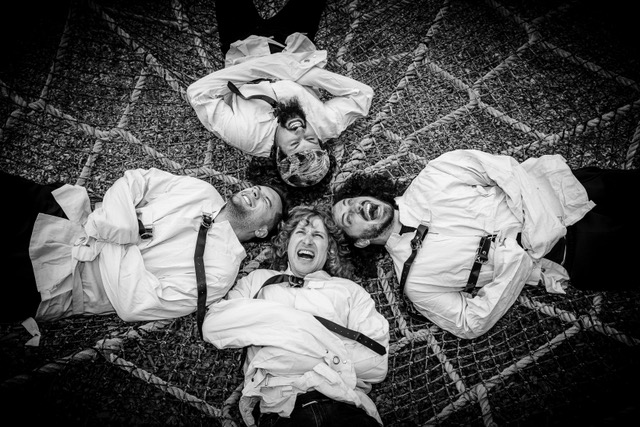
    pigeons drive-in

    “Time To Drive-In” will offer fans the opportunity to safely enjoy a true live music event while following social distancing guidelines. A car pass provides a parking space for a standard passenger vehicle and entry for a maximum of four people per vehicle. Concertgoers will be able to enjoy two full sets, each night, with full concert production, in a socially distant manner.

    PPPP

    Fingerlakes Drive-In is a classic drive-in that opened on July 15, 1947, and is the oldest operating Drive-In theatre in New York State. Tickets are now on sale at through Creative Concerts.

  • Karolina Rose Releases Music Video for Power Anthem “Runaway Angels”

    NYC-based alt-pop artist Karolina Rose has released the music video to her new single “Runaway Angels,” a deeply personal place of experience from the nomadic artist, split between NYC, Los Angeles, and Europe.   

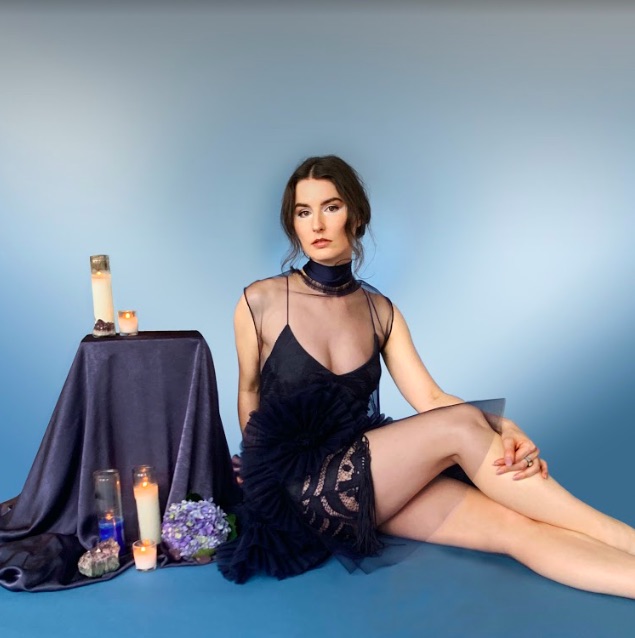
    Karolina Rose

    Rose’s previous singles include the glittery upbeat rhythms of “Greytopia” and the dusky grooves in “Objection.” “Runaway Angels” is the latest installment of Karolina’s versatile brand of ‘noir rose pop’ and step three in her visual EP project.

    Speaking about “Runaway Angles,” Karolina explains: 

    Runaway Angels is more ballet-inspired with a graceful, haunting feeling. It balances between this place of healing and a place of hell—running from a dark, painful abyss of memories that mostly only come up while you’re dreaming. I started releasing the EP last year and these last two songs were quite personal to me. I took some months off on a sort of spiritual journey to look within and do some healing; Runaway Angels helped me process a part of my life that was really difficult for me. It’s euphoric to exercise this part of me out and share it. The chorus was written in my apartment and the rest of it was finished on a vacation during the thick of the #metoo movement. I wrote parts in the middle of the night and tweaked it on the beach with a mini Taylor I had with me and my laptop.      

    Karolina Rose’s compelling track inspires listeners in an empowering way while on their own journeys of finding love and healing.

    https://soundcloud.com/karolinarose/
  • Taylor Swift Announces Surprise New Album “Folklore”

    Taylor Swift announced her new album, Folklore, to be released at midnight on July 24. This comes as a surprise to virtually everyone: no one, including her fanbase (the Swifties) who are known for their outlandish conspiracy theories, expected the move, and nothing leaked ahead of time. Folklore is arriving less than a year after Taylor Swift’s last album Lover, breaking her schedule of releasing an album every two to three years.

    Although her last three efforts have been fully pop, Folklore appears to be taking a more acoustic direction. Whereas Lover’s color scheme was pastel pink and blue with fantastical Wonka-esque music videos, all of Folklore’s visuals are black-and-white. The album’s only featured artist is Bon Iver on the song “Exile,” and Aaron Dessner of The National co-wrote 11 out of 16 songs.

    Taylor Swift previously explored a stripped-back folk sound on “Safe and Sound,” her single with The Civil Wars for the first Hunger Games soundtrack in 2012, as well as on her album Red released later that year. Fans have begged for a Stevie Nicks or Joni Mitchell-inspired album for years, and they may have finally gotten their wish. While not a New York native, Taylor Swift moved to the city before the release of 1989 in 2014. That album’s opening song was “Welcome To New York,” and she revisited the city on Lover’s “Cornelia Street” and “Daylight.”

    While Folklore hasn’t had an accompanying lead single announcement, Taylor Swift is releasing a music video for the song “Cardigan” alongside the album. There are eight collectible CD and vinyl covers in total, reminiscent of the four different diaries she released alongside Lover last year.

    Taylor Swifts’s last six albums, including Red and 1989, all debuted at #1 on the Billboard 200 chart. This time around, she’s facing competition from longtime rival Kanye West, who’s also releasing an album this week called Donda: With Child. Folklore has already sold 250,000 copies in China, and time will tell if she continues her #1 streak in the U.S.

    For more information visit Taylor Swift’s website.

  • Falling Water Wonders “When Will We Be Saved”

    Falling Water have release “When Will We Be Saved,” their first single since 2014. Led by Long Islander Mark Rechler, the rock band wrote and recorded the song from a distance while in quarantine. The lyrics are about navigating chaos, specifically through the current pandemic, and dealing with feelings of anxiety and loneliness.

    Clocking in at nearly four and a half minutes, “When Will We Be Saved” is an anthemic power ballad. Despite its conception in quarantine, it sounds engineered for lighter-waving at a physical concert. Its backup singers, busy instrumentation, and dramatic lyrics also evoke a number from a rock opera. While the song has a lot going on, its standout is the piano, which has a solo at the halfway point.  The song’s lyrics begin rather pessimistic, but the band ultimately comes to terms with the new circumstances. “Now the angel of death, well she’s having a feast / changes are forced by this ominous beast” becomes “I’m gonna kick back and let it all go” in the outro.

    “‘When Will We Be Saved’ is a true quarantine song,” said singer-songwriter and pianist Mark Rechler in a press release. “My whole life is trying to keep up with my to-do list, get stuff done, complete tasks. I have often said out loud, ‘If we could only get a time out for a month to catch up on all these projects, everything would be fine.’ Well, like a bad Twilight Zone, that gift was granted. During the first two months of quarantine, I found myself riddled with anxiety, exhaustion, and much fear […] ‘When Will We Be Saved’ is more about isolation and finding your best self in that quiet, lonely world.”

    50% of the song’s profits will go to the PLUS1 COVID-19 Relief Fund. PLUS1 works with nonprofits such as Sweet Relief, Center for Disaster Philanthropy, World Central Kitchen, Partners In Health, and Trans Lifeline to support vulnerable communities. So far, the band has achieved over $8,500 of their $10,000 goal. Other artists who have partnered with PLUS1 include Arcade Fire, The National, St. Vincent, and CHVRCHES.

    Falling Water plans to release their next full-length album in 2020. Stream “When Will We Be Saved” here:

  • “Save Our Stages” Act Introduced by Senators to Help Struggling Venues During COVID-19

    Senators John Cornyn of Texas and Amy Klobuchar of Minnesota introduced a relief bill known as “Save Our Stages” on July 22. The bill will support struggling venues during COVID-19 pandemic. If approved, the bill will provide six months of financial support to small independent music venues through the Small Business Administration.

    The bill was announced via a press release from Klobuchar. The proposed bill would help keep these venues afloat so they can pay their employees and help preserve the critical economic sector they provide for communities across America. The proposed plan would provide small venues with amounts less than 45% of a business’ operation costs from 2019 or $12 million depending on the venue’s revenue. The bill states estimates of $9 billion in losses if ticket sales can not resume until 2021 in the music industry. “Small live music and entertainment venues have been hard-hit during the coronavirus pandemic, with 90 percent of venue owners, promoters, and bookers reporting they are at risk of closing without additional financial assistance” the press release states. This program would be similar to the previous small Business Administration grants through the Paycheck Protection Plan but focus on small independent venues. The proposed funding could be used by recipients for rent, utilities, mortgage obligations, PPE procurement, payments to contractors, regular maintenance, administrative costs, taxes, operating leases, and capital expenditures related to meeting state, local, or federal social distancing guidelines. The bill is trying to get $10 billion in SBA grants.

    The bill comes on the coattails of the “Restart Act” which focused on businesses with high overhead and no revenue during the pandemic which included venues but wasn’t specifically about them. Senators Cornyn and Klobuchar felt the need for a bill that focused on venues in particular. “Minnesota’s concert halls, theatres and places of entertainment, like First Avenue in Minneapolis, where Prince famously performed, have inspired generations with the best of local music, art and education,” Senator Klobuchar said in a statement.  She explained that, “This legislation would help ensure that small entertainment venues can continue to operate and serve our communities for generations to come.” Senator Cornyn echoched these feelings saying that, “Texas is home to a number of historic and world-class small entertainment venues, many of which remain shuttered after being the first businesses to close. The culture around Texas dance halls and live music has shaped generations, and this legislation would give them the resources to reopen their doors and continue educating and inspiring Texans beyond the coronavirus pandemic.”

    The “Save Our Stages” act is supported by the National Independent Venue Association (NIVA). NIVA has an action campaign with a prewritten letter to legislators that people can fill out supporting the “Save Our Stages Act.” The prewritten letter explained the need for the bill saying, “Venues are experiencing upwards of 90% revenue loss and will be closed well into 2021 due to safety concerns posed by large gatherings. Without support from Congress, 90% of NIVA’s independent venues across America say they will be forced to close their doors forever.This would also take a toll on our local economy. Independent music venues are economic multipliers, community builders, and beloved institutions.” The letter can be found here.

    For more information visit the Save Our Stages website and read the press release here.