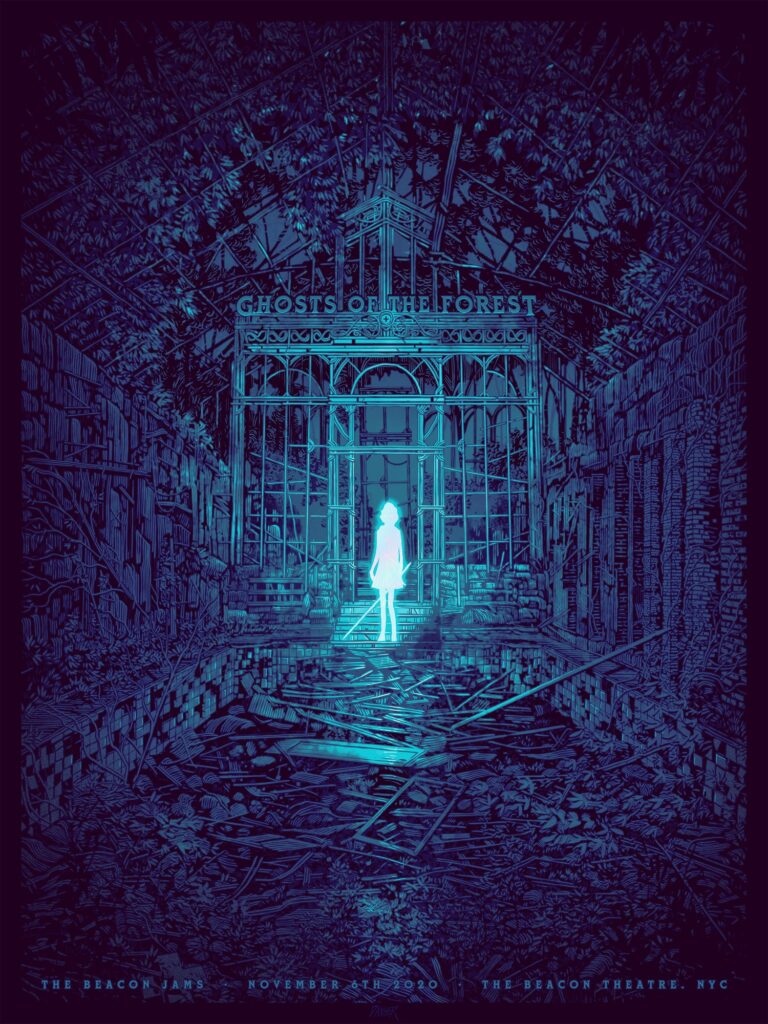
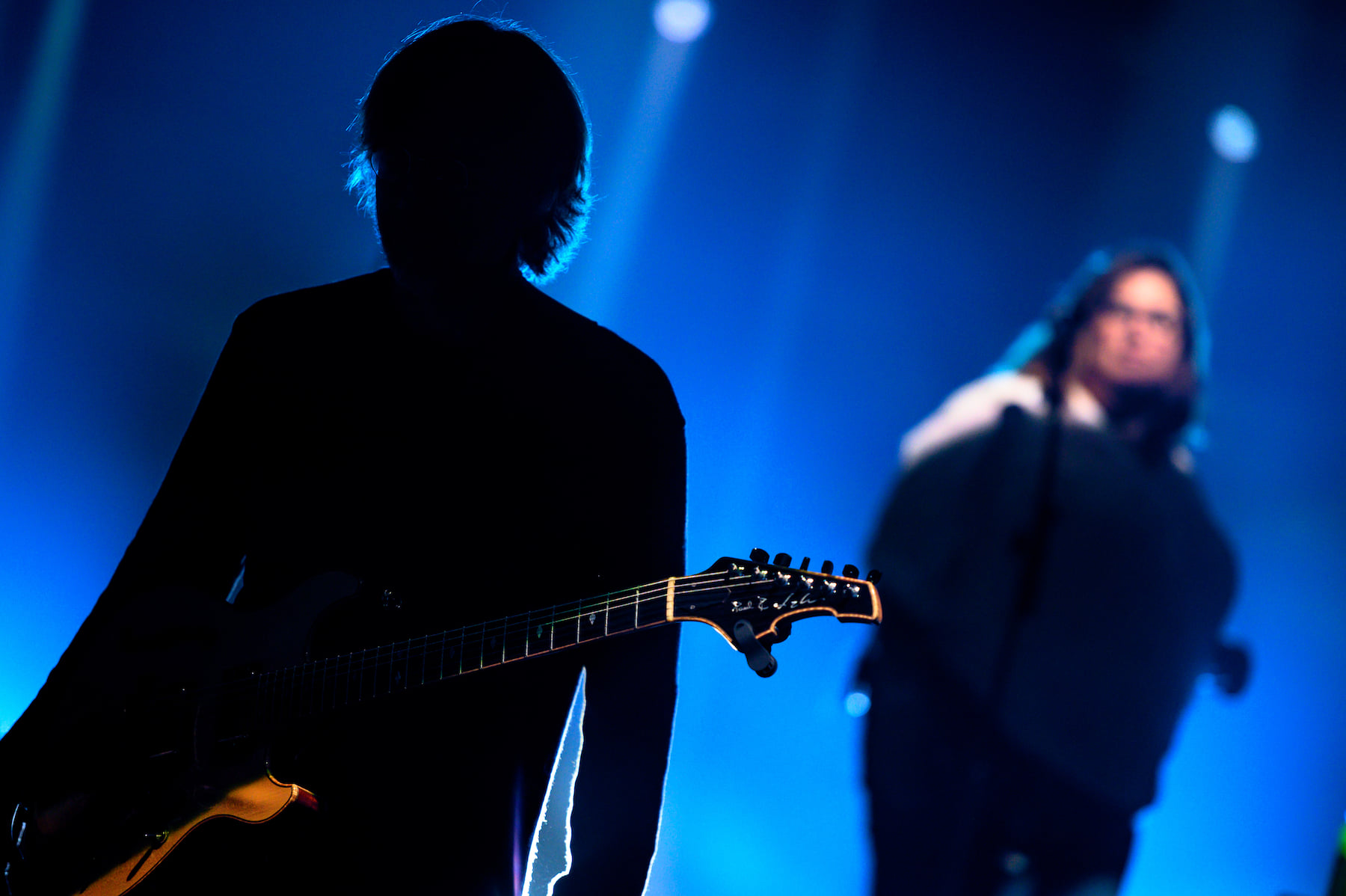
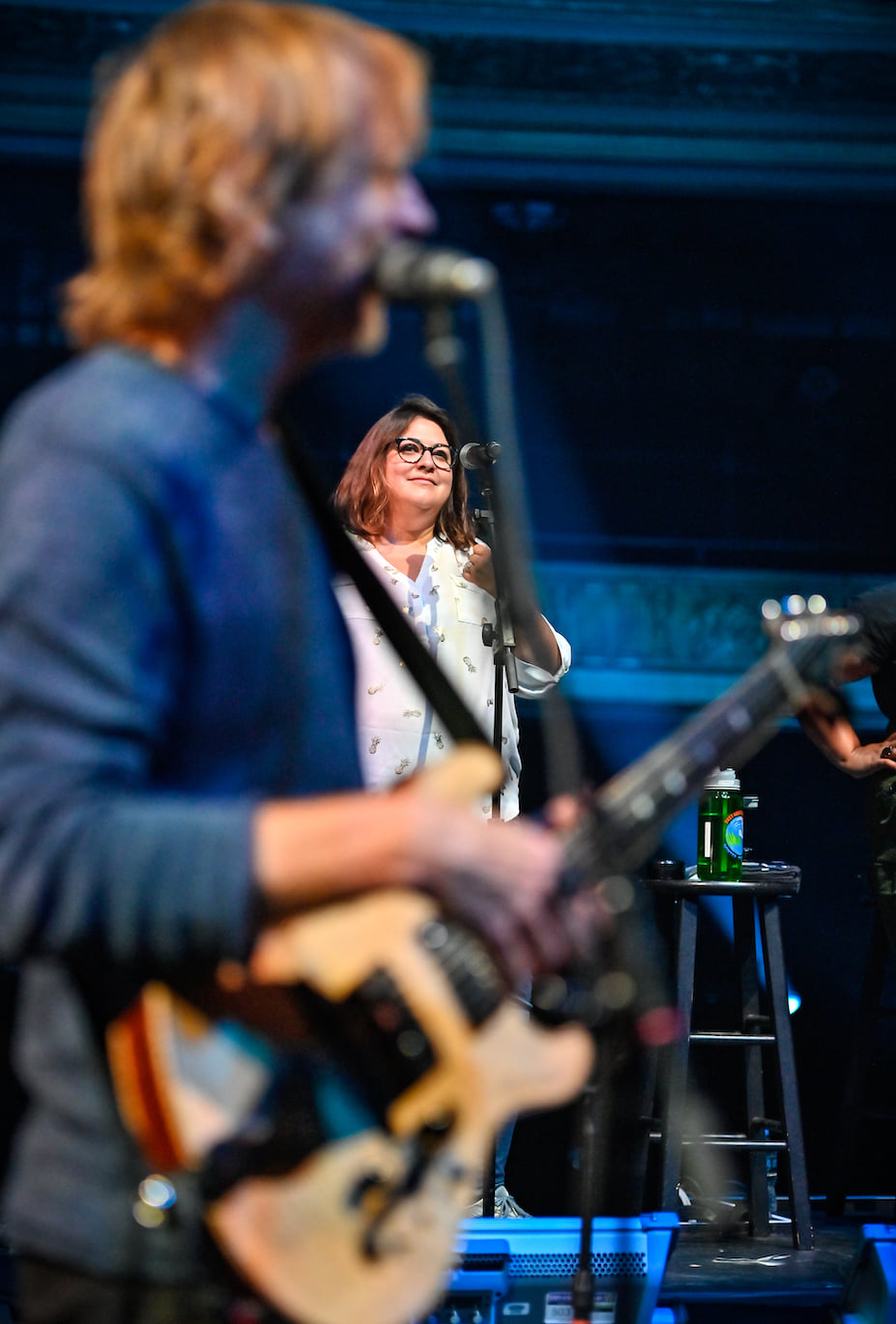
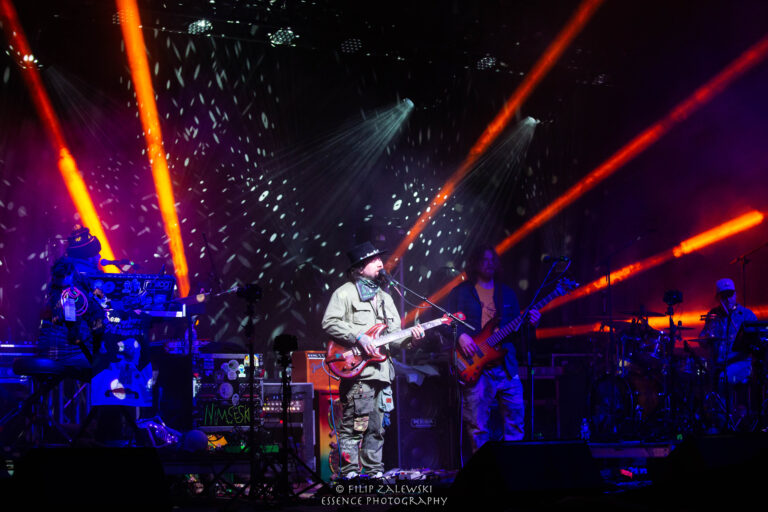
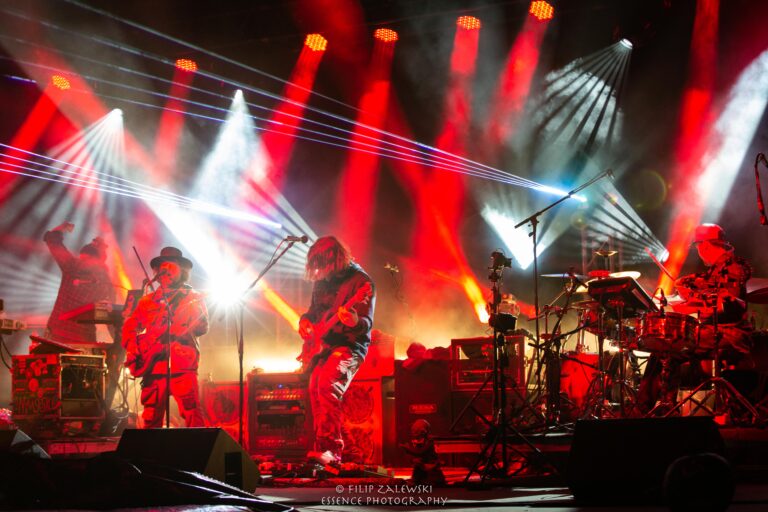
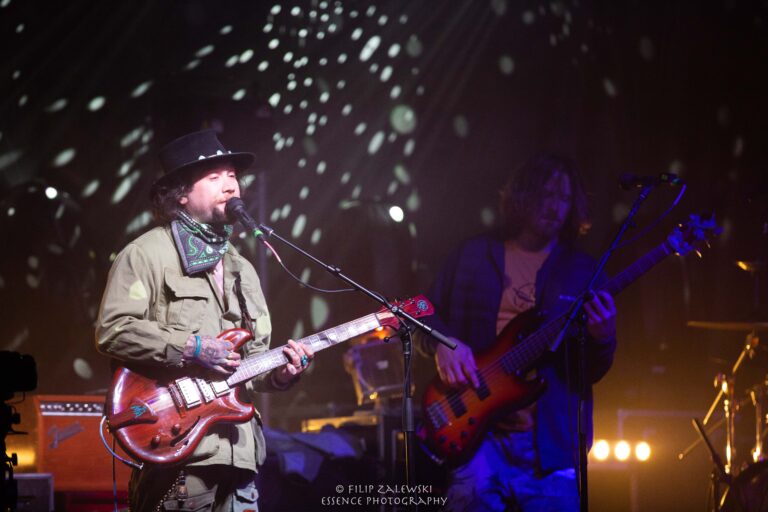
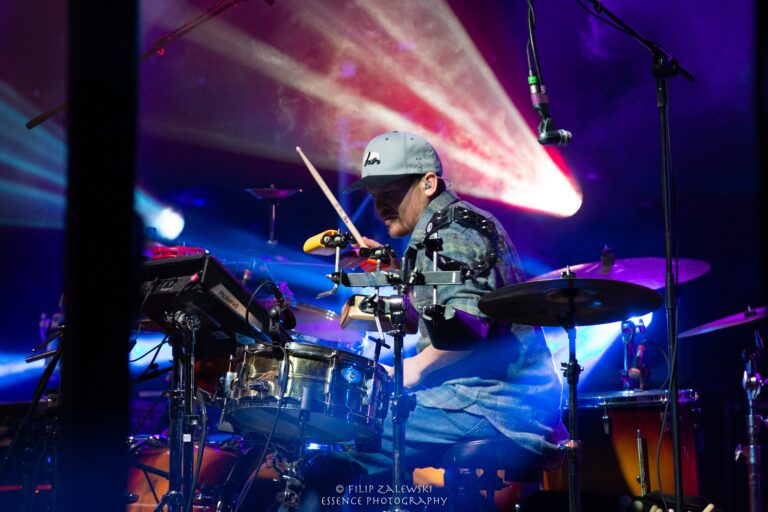
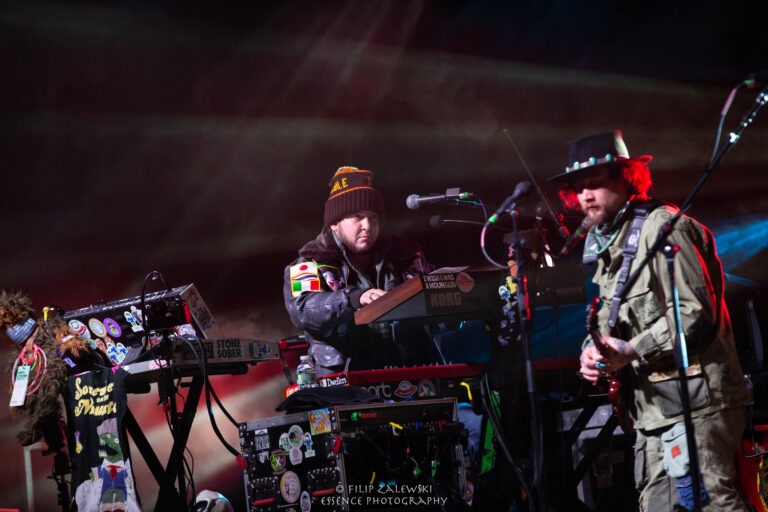
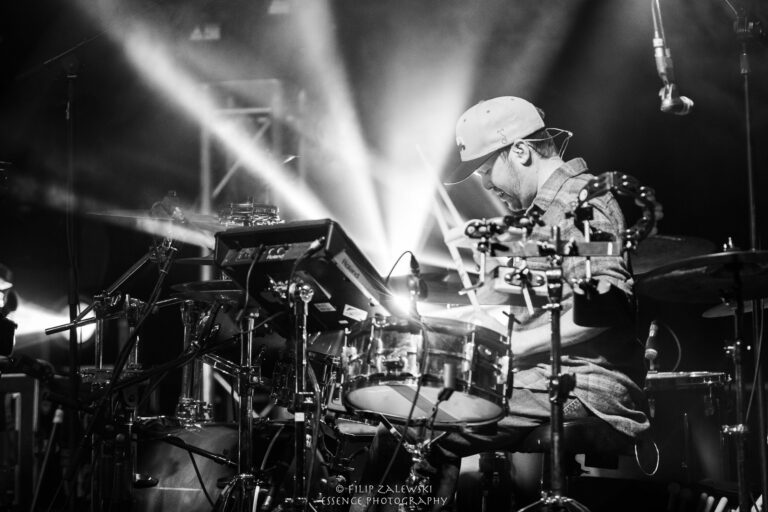
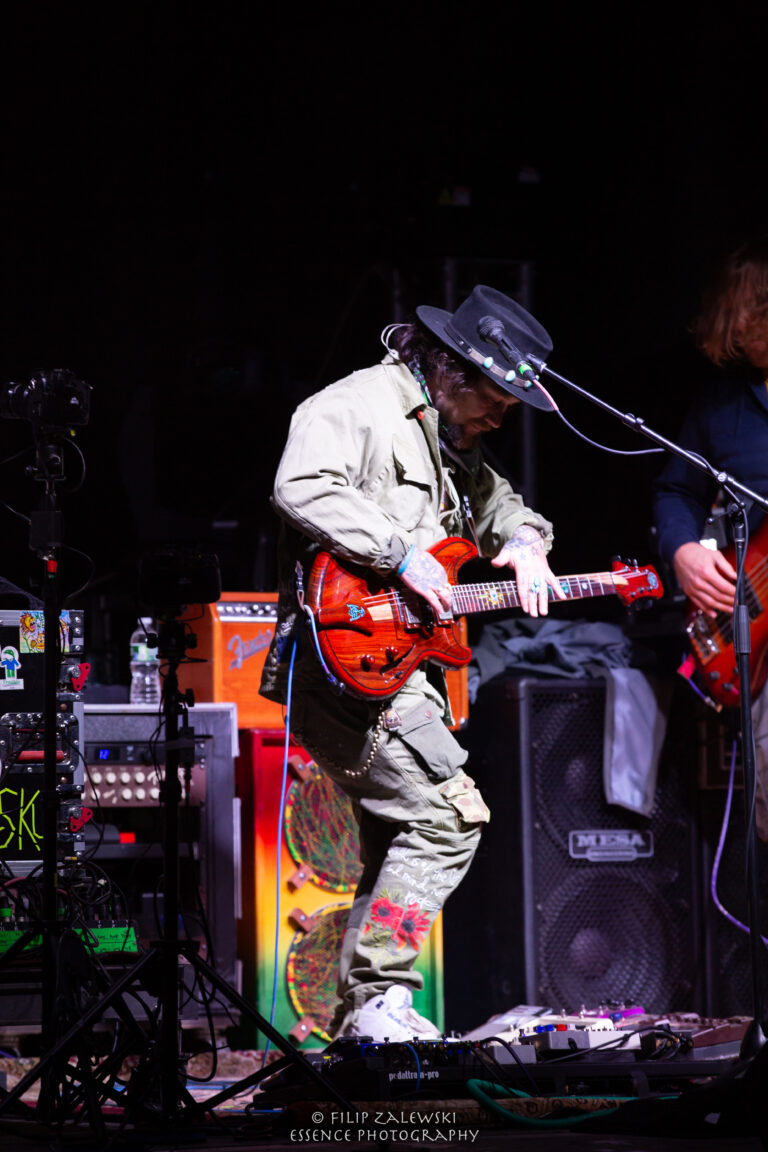
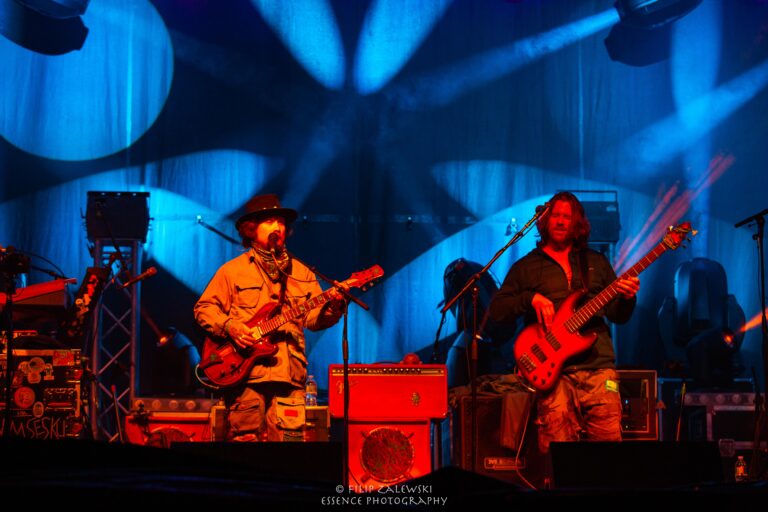
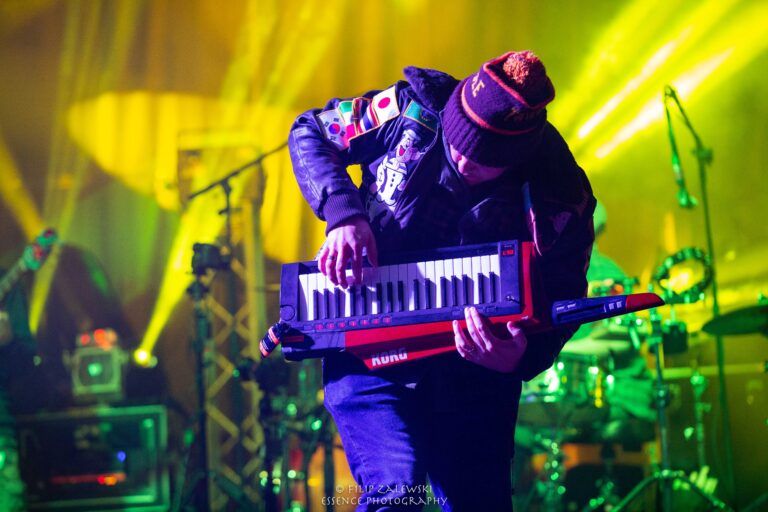
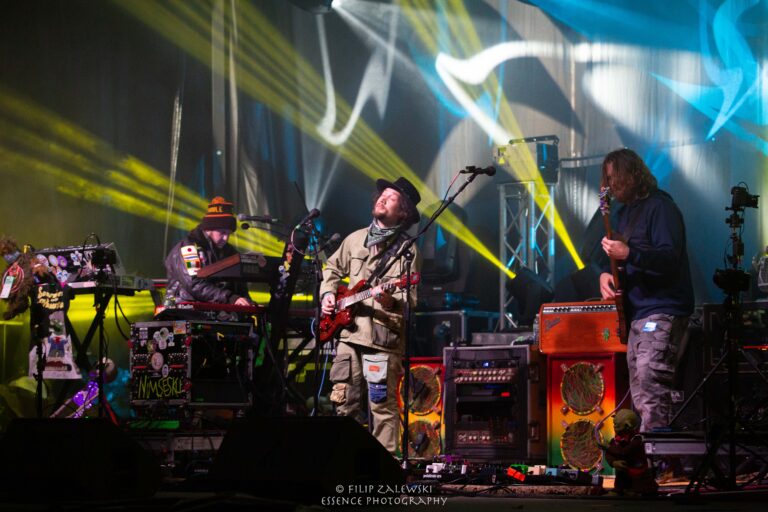
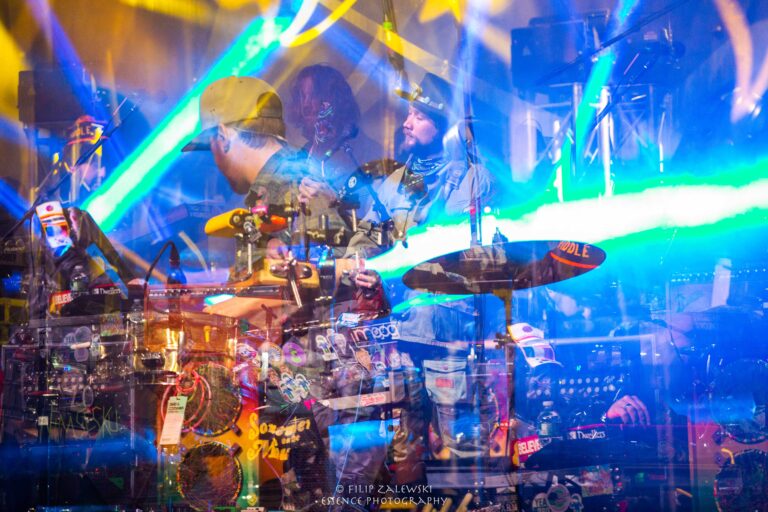
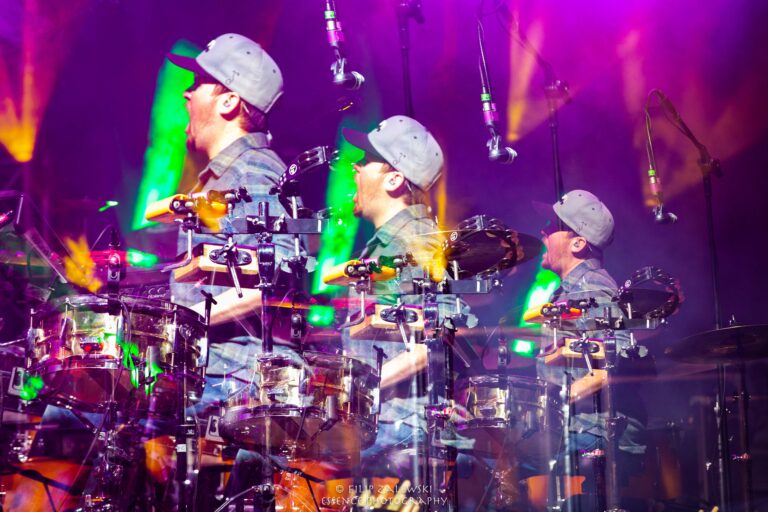
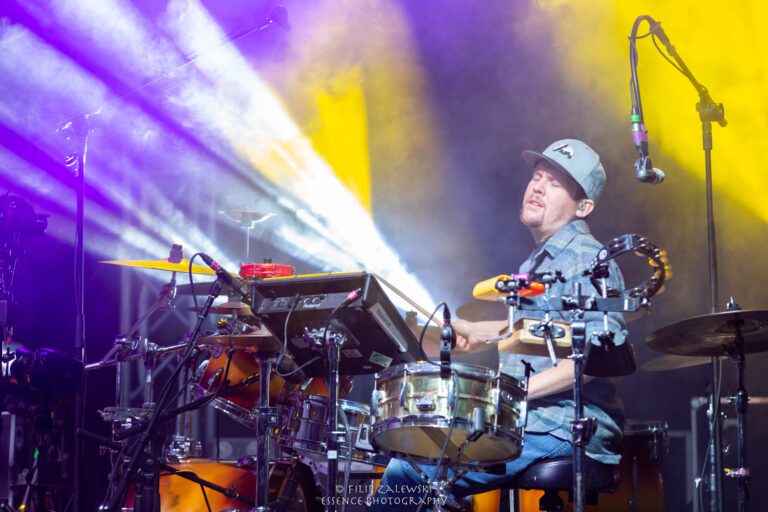
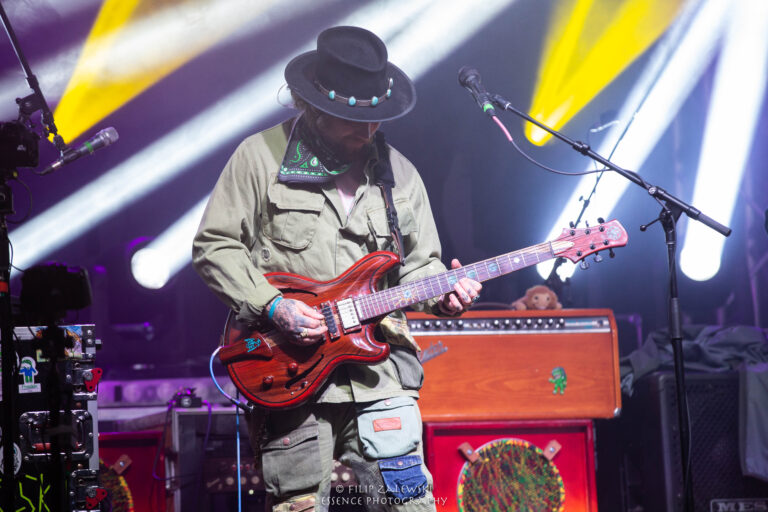
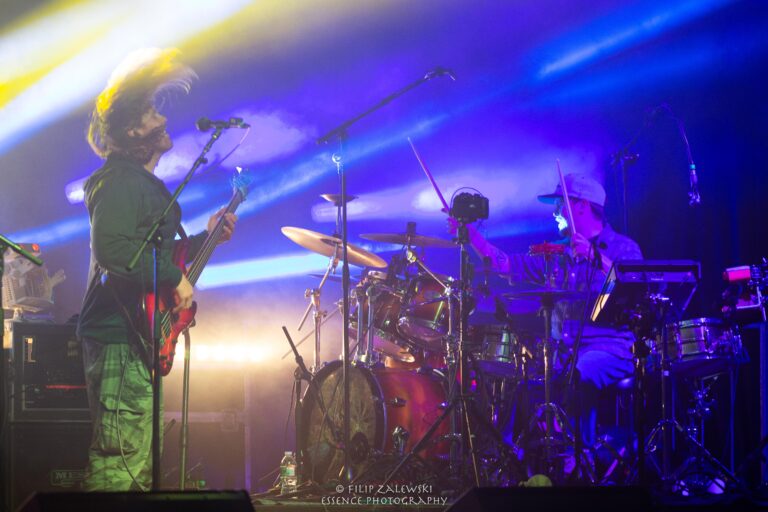
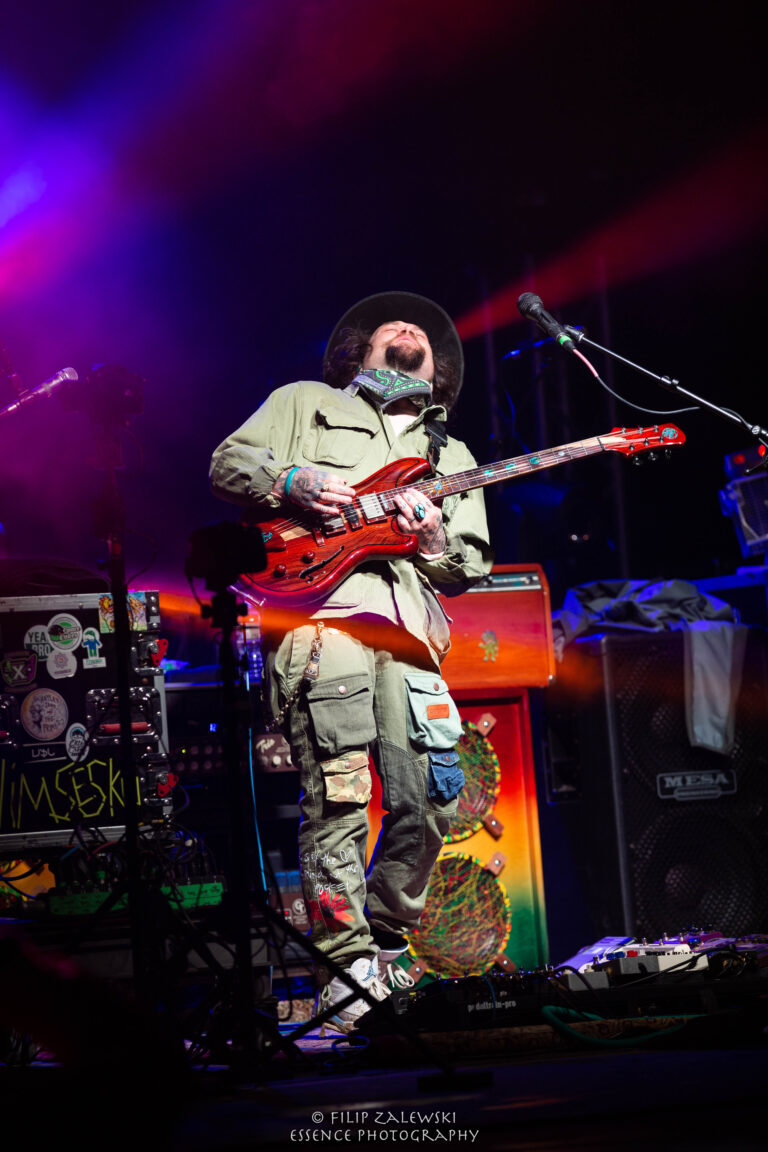
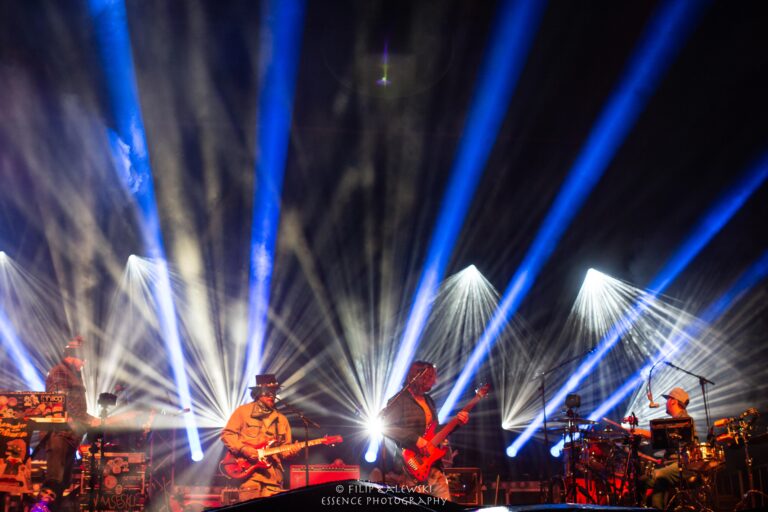
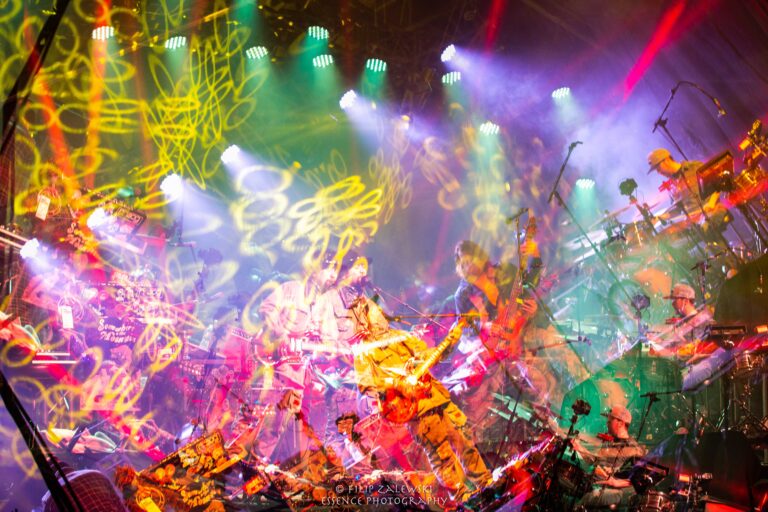
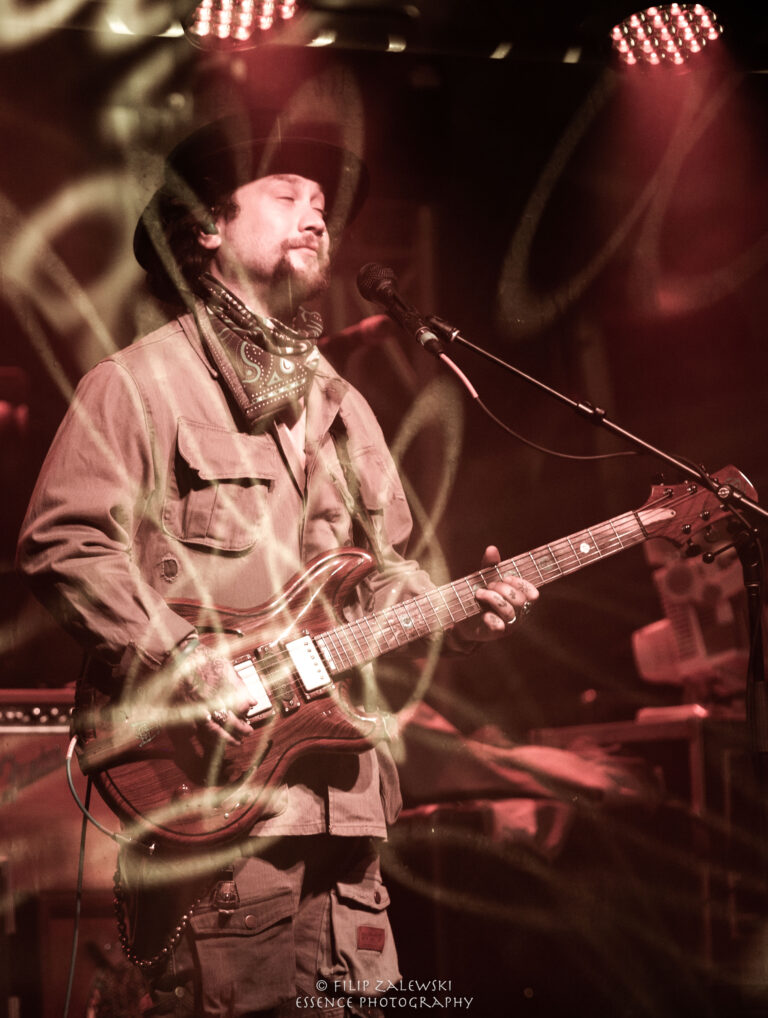
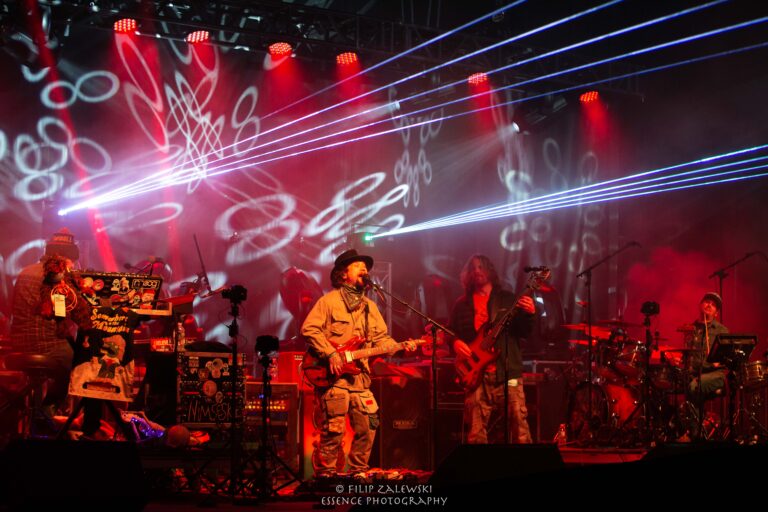
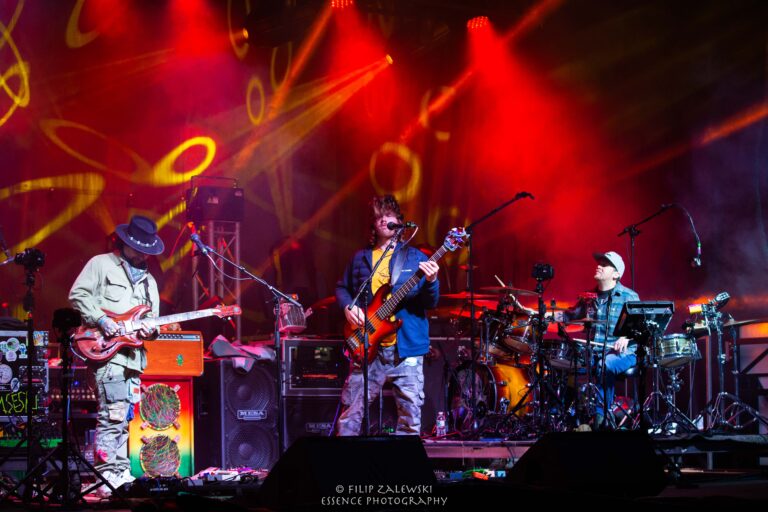
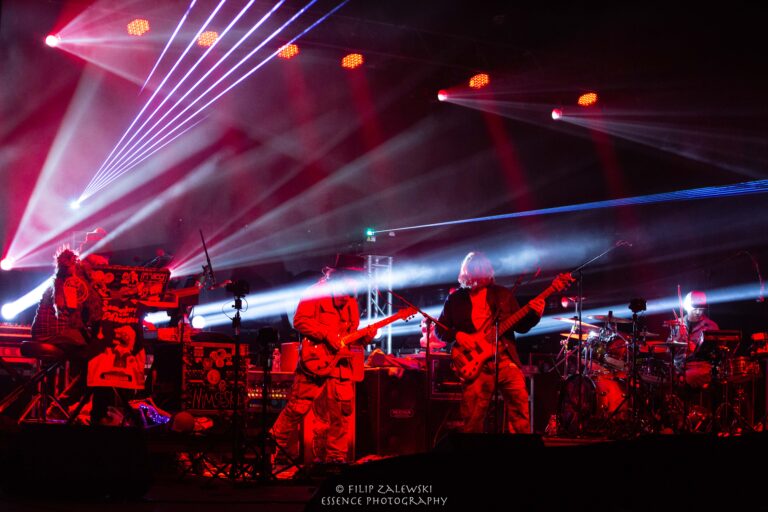
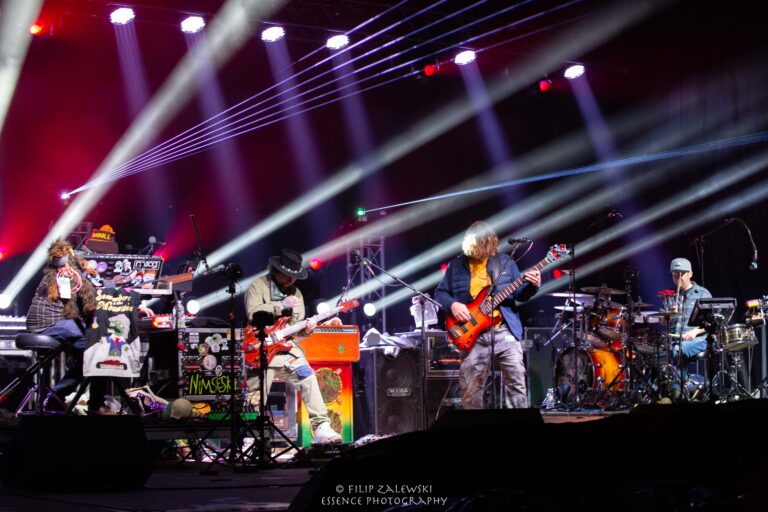
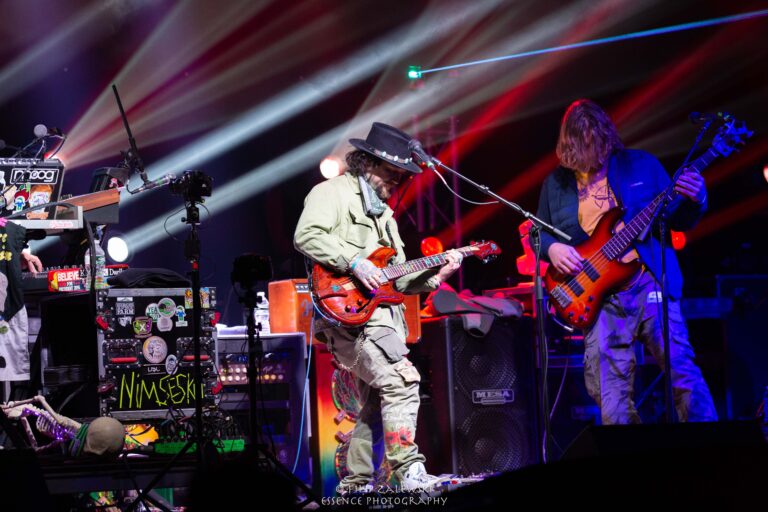
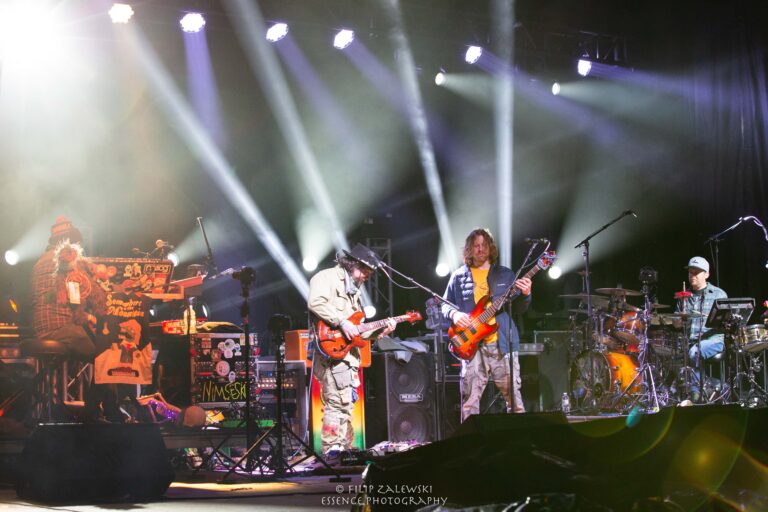
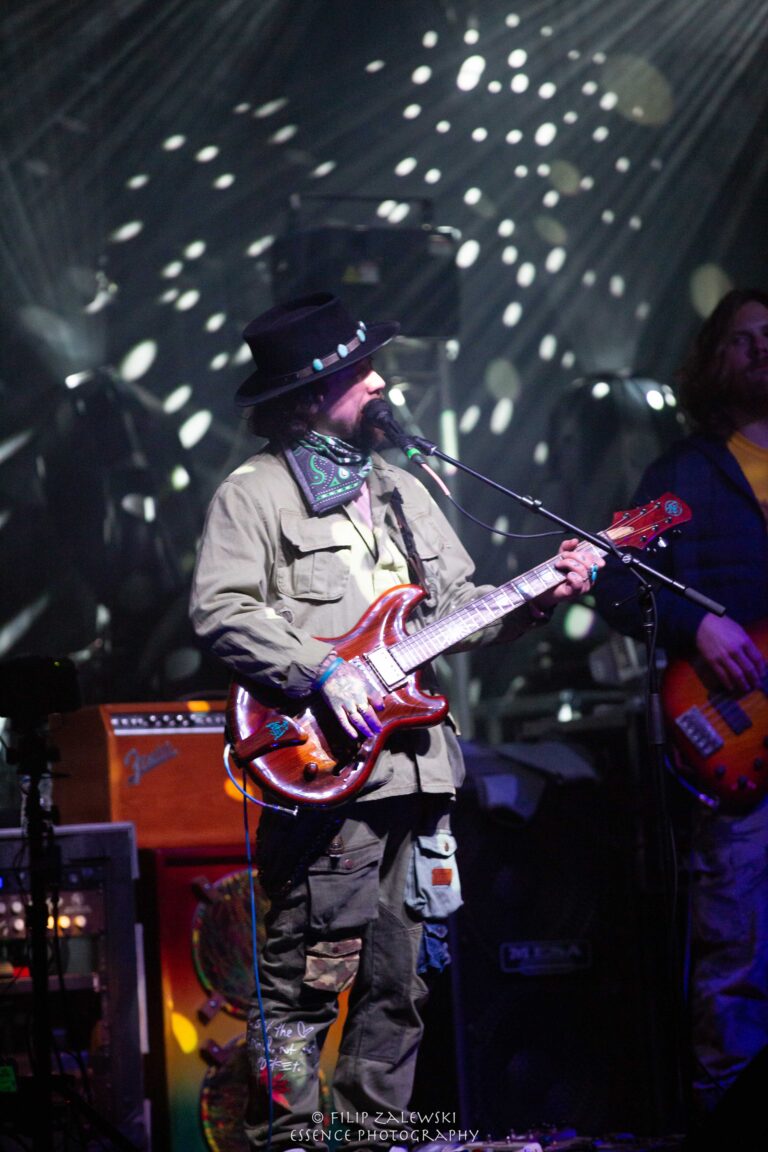
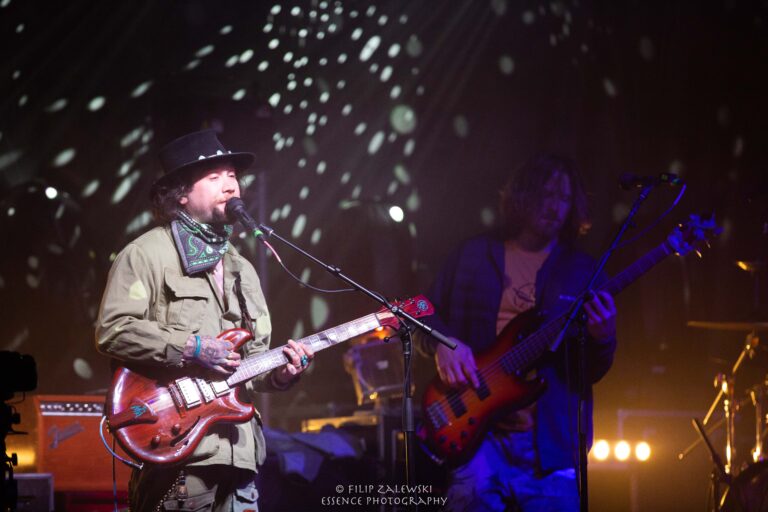
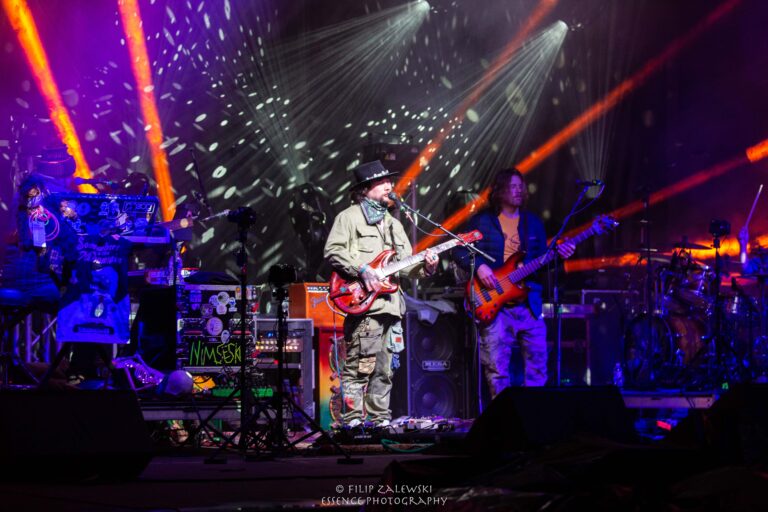
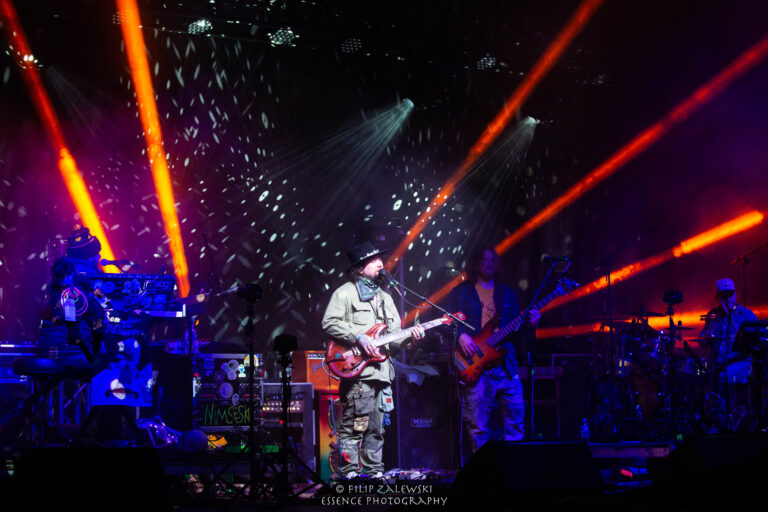
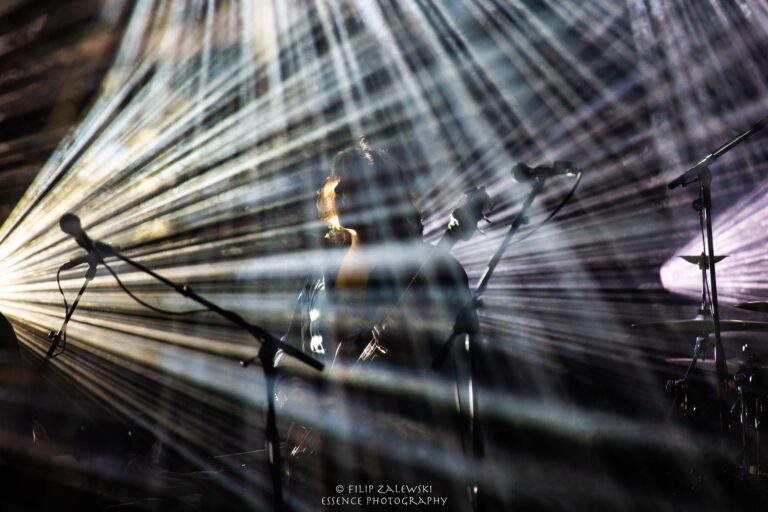
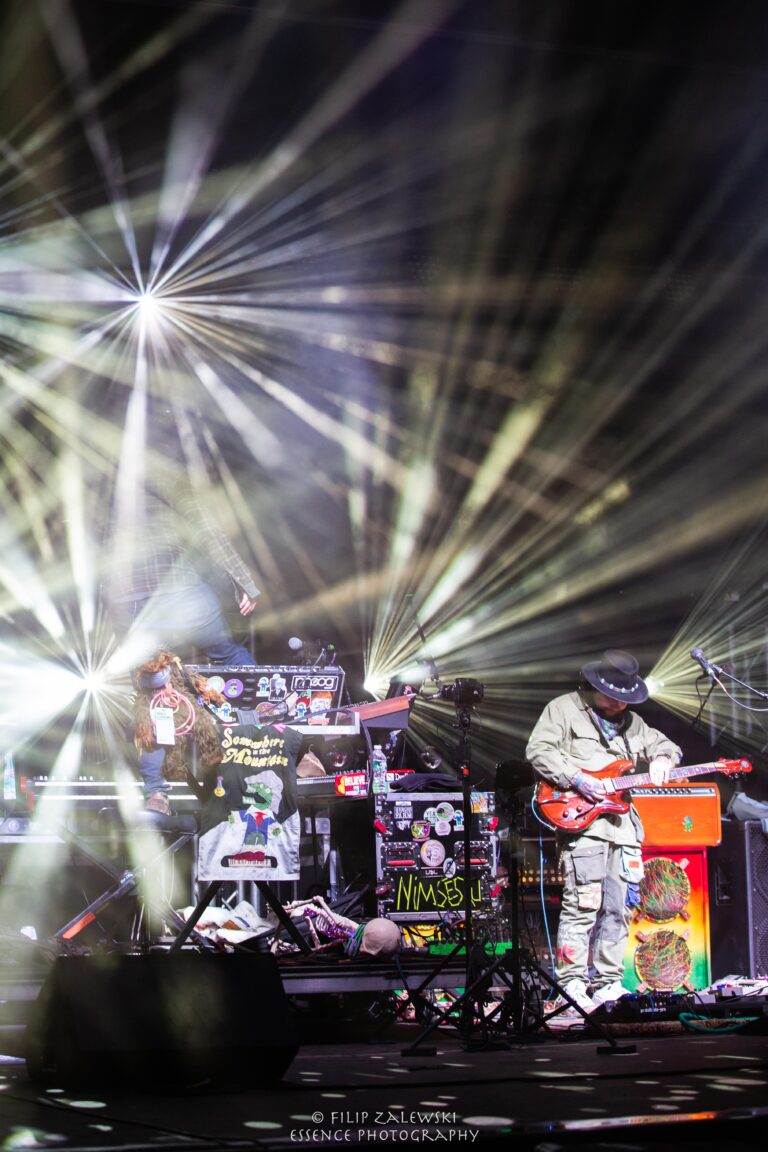
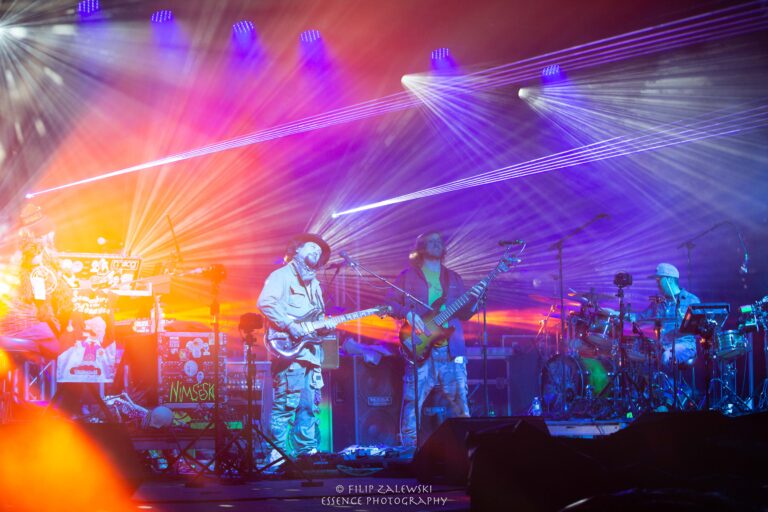
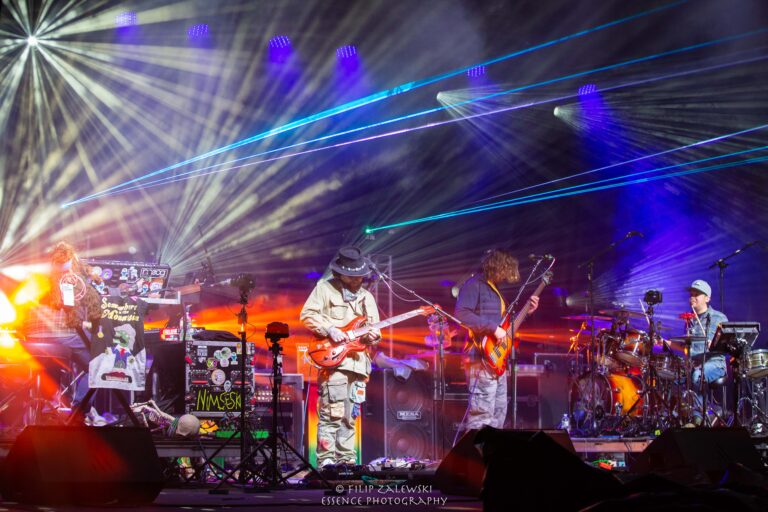
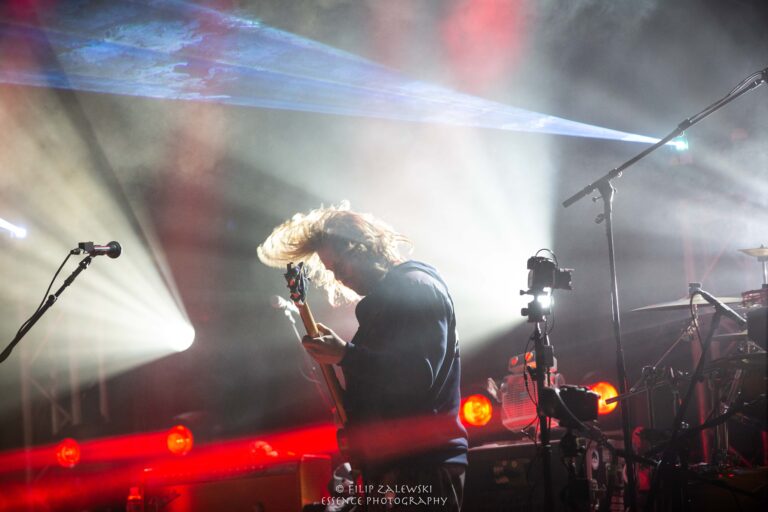
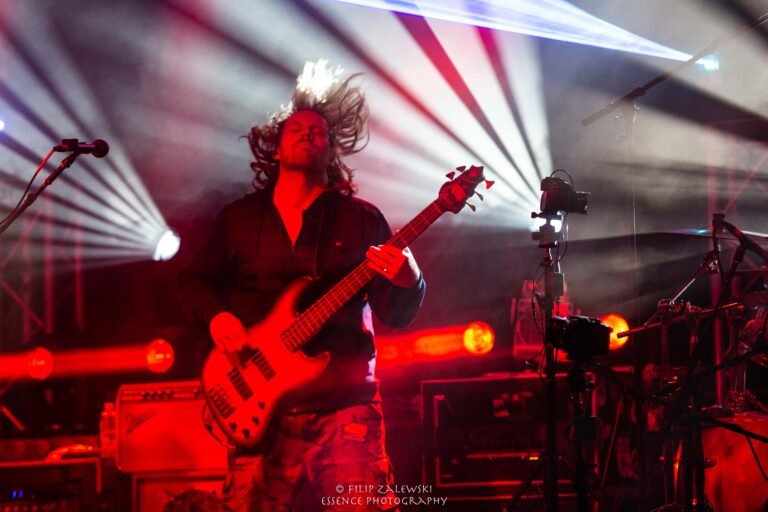
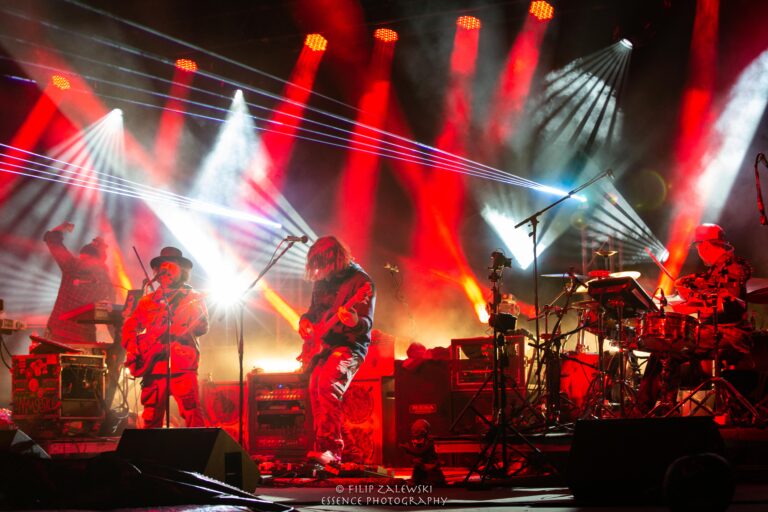
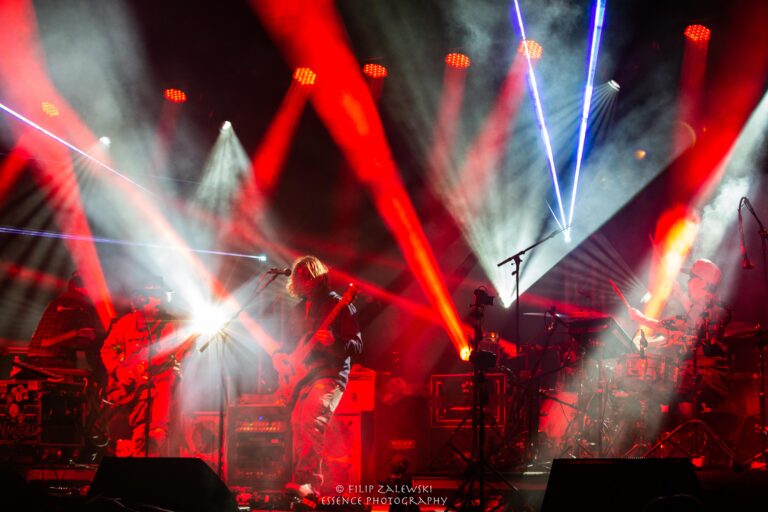
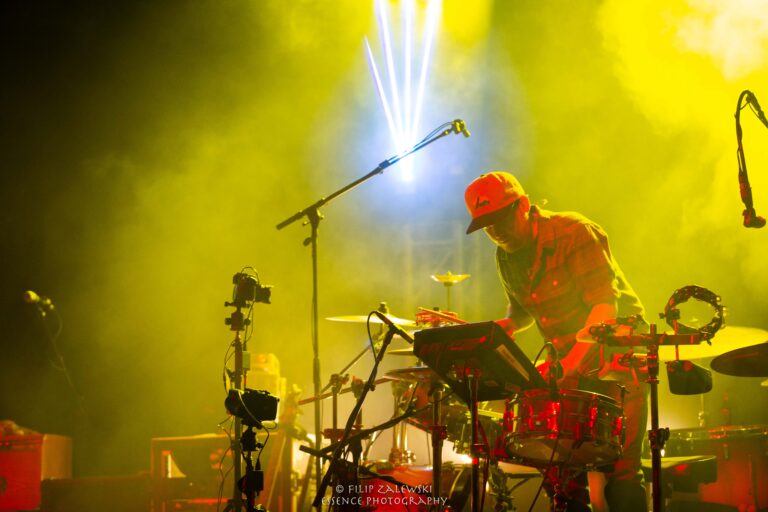
The fifth performance of Trey Anastasio‘s eight-week residency at New York City’s Beacon Theatre took the exact form of one of his many recent side projects. From the opening zoom to the stage that soon showed backup singers and a different looking drummer, it was clear early on that tonight would finally be a variation of the core lineup from the first four weeks of The Beacon Jams. Tonight, Trey took his Ghosts of the Forest side project out for its first run in well over a year. If there was any rust on it, it was minimal.
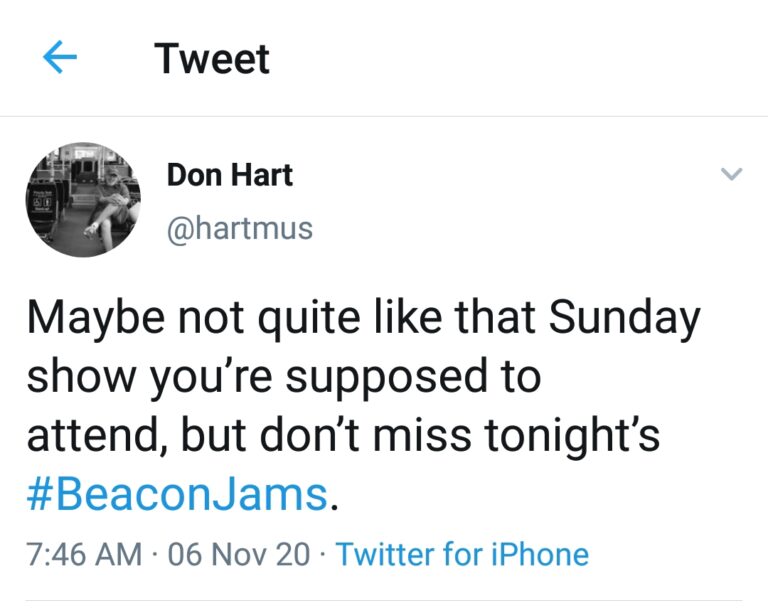
Expectations for this evening started getting a little hyped up early on Friday, thanks to a nondescript Twitter post from Don Hart, Trey’s longtime orchestral and arrangement collaborator. A warning shot like this will rarely go unnoticed within the Phish community.
Immediately, hopes ran high with some sort of orchestral configuration of a Phish song or multiple songs. Perhaps an updated version of “Times Turns Elastic” or an elaborate run through of “You Enjoy Myself”? Apparently, per Trey, Mr. Hart was was still composing arrangements for this evening right up until 20 minutes before showtime, so anything was fair game.
Instead of traditional Phish canon, tonight’s orchestration was directed to one of the more recent Anastasio solo efforts, his Ghosts of the Forest album that was performed a handful of times in early 2019. It’s a complete album with more than 20 songs in all, written by Anastasio in the emotional wake stemming from the death of one his longtime friends, Chris Cottrell.
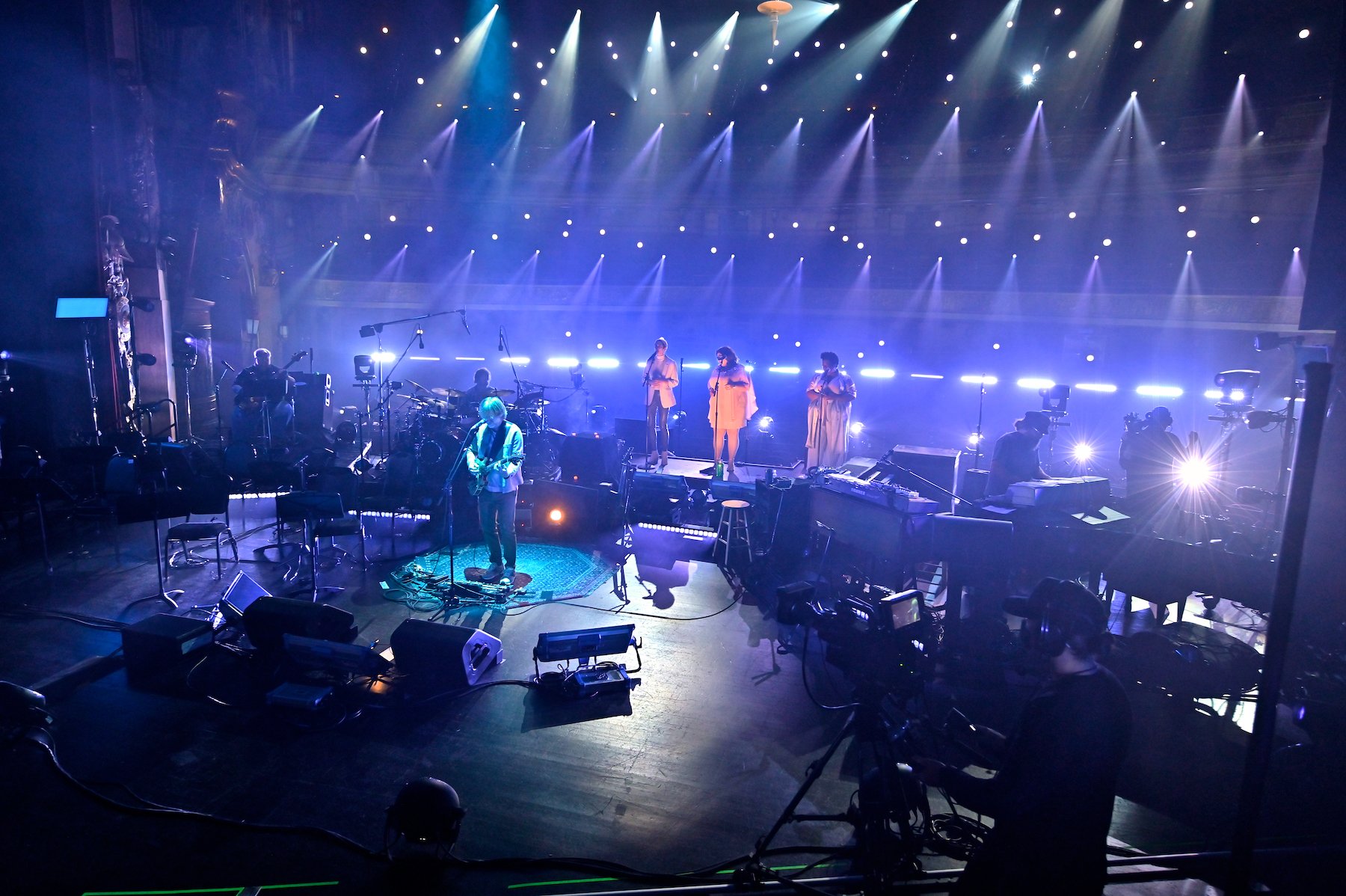
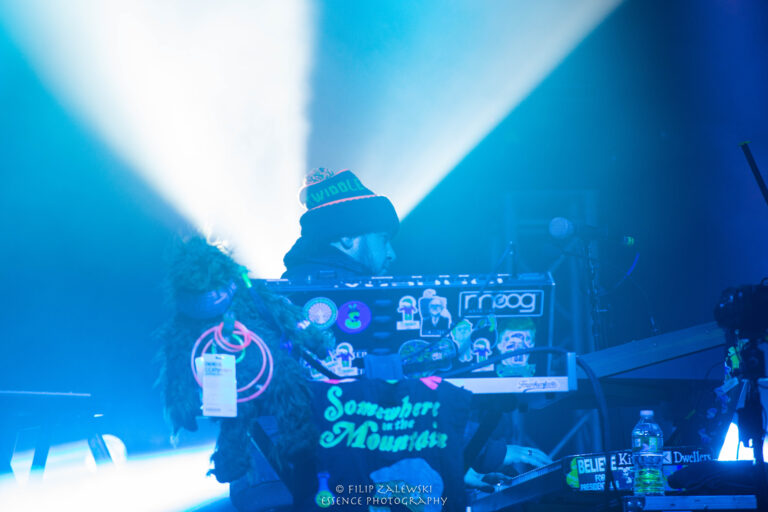
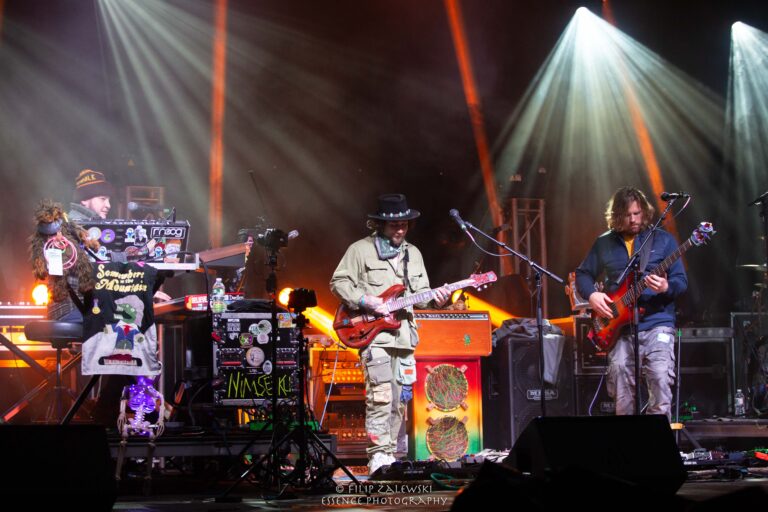
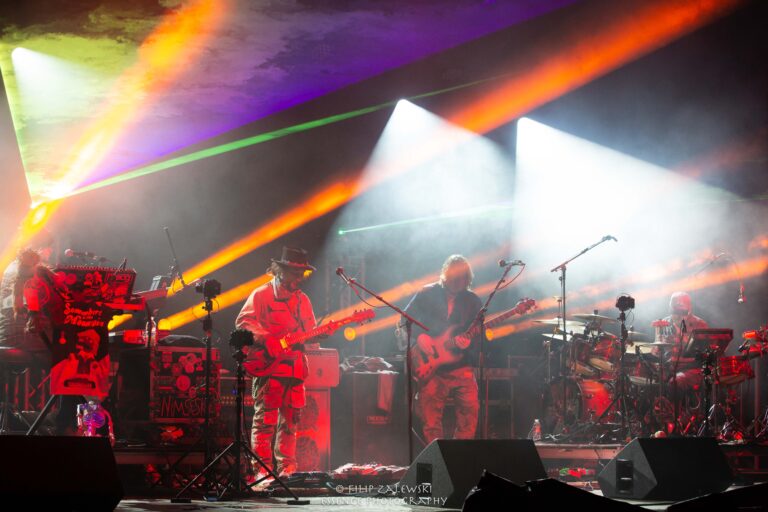
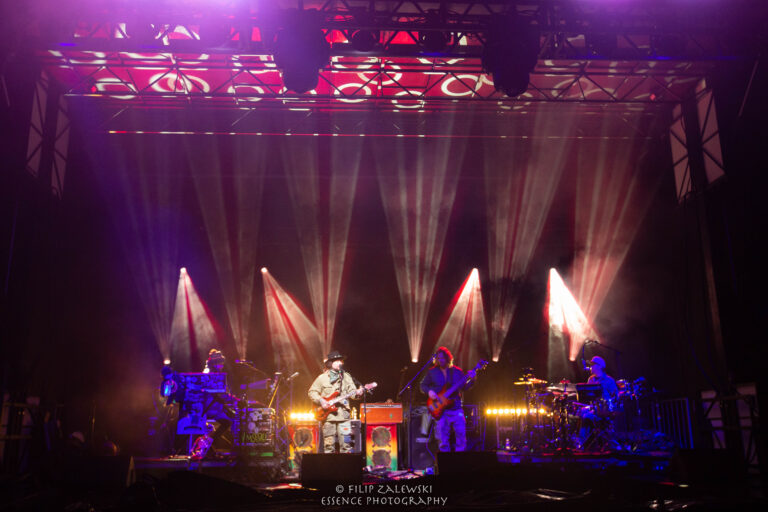
The opening zoom in to the stage immediately revealed a different lineup tonight. There were three backup singers visibly present: Celisse Henderson and Jennifer Hartswick, both from the original GOTF format, as well as “newcomer” Jo Lampert. The other distinct difference was a scruffy-haired Jon Fishman behind the drum kit this evening instead of Russ Lawton who manned it the first four nights. Together, with other Beacon Jam mainstays like Tony Markelis on bass and Ray Paczkowski on keys, this completed tonight’s GOTF ensemble.
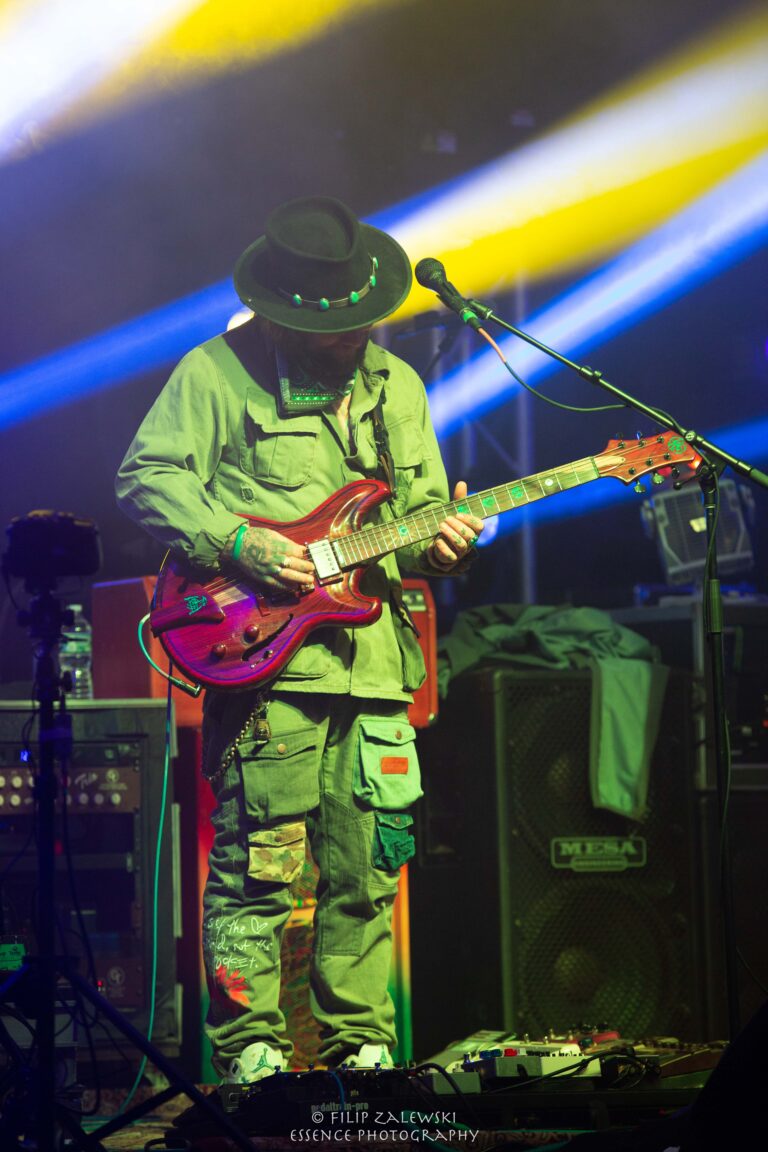
With the “new” Ghosts of the Forest lineup established, they wasted no time in going into the outfit’s namesake song. Even though this was only the band and camera crew onstage, the fog and echo effects that accompanied this one were crowd-ready. “Drift While You’re Sleeping” followed, with the backup singers directing the the bulk of the vocal effects this time. Another sophisticated reverb effect introduced the reggae-ish breakdown sequence and it was clear early on nothing was being held back production-wise.
After this impressive opening sequence, Trey took the time for a quick round of band introductions, including one for Fishman, aka “some guy he picked up hitchhiking,” as well as new backup singer Jo Lampert. Trey made sure to remind folks that Lampert not only served as a clone in Phish’s New Year’s show at MSG last year, but also as one of the backup singers for their Ziggy Stardust musical costume from Halloween 2016. So she was certainly no stranger.
It wouldn’t be a “Beacon Jam” without some sort of spatchcock reference and that’s exactly what led into into the next GOTF song, “Friend.” Instead of the traditional four-piece Rescue Squad Strings that had accompanied Trey the previous weeks, this one would be “spatchcocked” into a fuller and doubly richer eight-piece ensemble Trey’s lead solo sounded even richer with the backing of the additional strings on this one.
photo by Jake Silco
After a quick shoutout to the Phish Chicks Facebook group, the backup signers returned and then it was right into “Sightless Escape,” complete with a “No Men In No Man’s Land” tease and a monstrous vocal breakdown from Celisse at the end. Afterwards, Anastasio honestly confided they were “having too much fun” tonight. “Halfway Home” featured a slowly building and ascending jam topped off with another Trey solo and sterling backup vocal harmony. After this, it was a quick switch to the acoustic guitar for “If Again” which sounds like it could be the uptempo cousin of “The Inlaw Josie Wales.”
Trey then took the time to give personal introductions to all eight members of tonight’s Rescue Squad Strings, including one whose friend formerly dated Jon Fishman. The strings added a wonderfully delicate touch to “In Long Lines” as well as “There’s A Path Above.” Afterwards, Trey thanked and mentioned Don Hart’s involvement, confirming arrangements were being completed right up to the last minute. Naturally, this somehow digressed to another spatchcock reference that ended with Trey telling Fish he plays a song quite regularly about this, “Split Open and Melt.” This led into one of the few GOTF numbers that’s seeped into the Phish repertoire, an electric “About To Run” with no strings or singes, just another ferocious Anastasio solo, capped off with an election and a “running for office” pun.
“The Green Truth” saw the backup singers return in a big way as they seemed to dominate the tail end of this one. “Beneath a Sea of Stars Parts 1 & 2” followed and featured a nice, drawn out opening sequence with Fishman taking lead on drums for a while. “The lights are flashing” line seemed to nod to the simple yet highly effective combination of flashing house lights and the minimal light rig used onstage. The Rescue Squad Strings then re-entered before “Mint Siren Dream.” This delicate little number saw Trey in full crooner mode, using only the microphone to sing while being supported by the strings and timely fills from Ray on keys.
“Stumble Into Flight” featured more lively play from Paczkowski, that meshed with a distinct echo effect from Trey and powerful backing vocals to produce a notable jam that contained a “Pigtail” quote at one point. Immediately afterwards, with no hesitation, “Ruby Waves” started up, giving this two-song section of the evening a distinct Phish taste. Although no Alpine Valley version, this “Ruby Wavs” got plenty deep and developed another intriguing jam that grew organically, sounding by far the closest to anything purely Phish from “The Beacon James” so far, including the still impressive lighting display.
The strings ambled back on stage for “Shadows Thrown By Fire,” a brief instrumental number with the backup singers adding airy vocals atop. “Wider” was another highlight of the evening, with heavy bass play from Markelis early on bass and a catchy “Gonna get wider when I die” lyric. More strong play on the clav and organ from Ray added to a bit of an extended jam.
Trey then gave the chat room one more nod, and noted that up to $400K in donations have been made to date towards The Divided Sky Fund. This elicited more heartfelt thanks with Anastasio advising a site for the proposed rehabilitation house has been found, and it’s on track to open in late 2021.
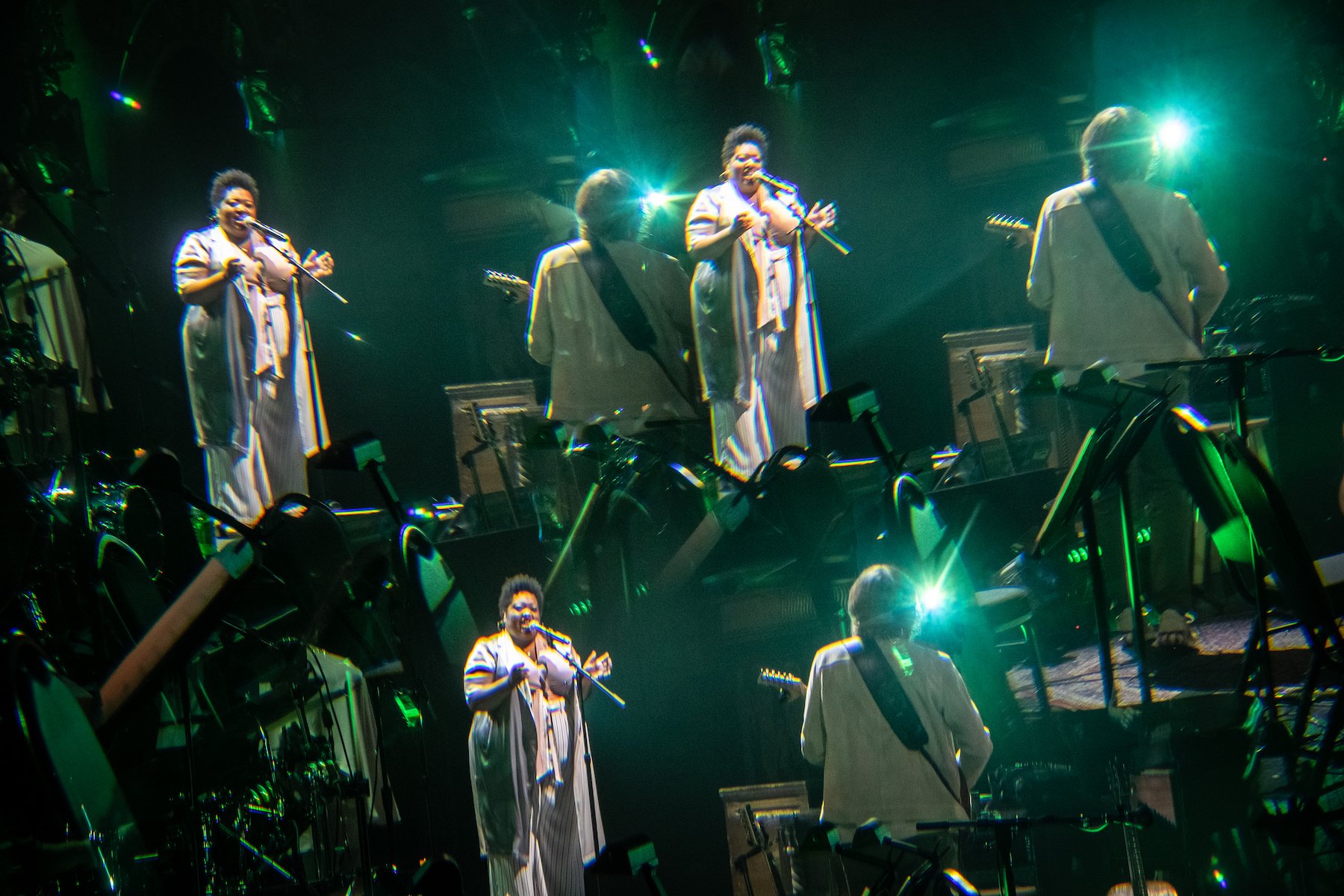
photo by Jake Silco
The strings returned once more for “Life Beyond The Dream,” an appropriate song to follow talk of a rehab house with its “don’t give up hope” lyrics. As expected, the string ensemble took this song to another level in a dazzling display of orchestration towards the end. “In This Bubble” followed, with its wishful “going home” lyrics and a melody once again driven by the backup singers who were all in great form all night. This immediately transitioned to the end of the “Sea of Stars” suite with “Beneath a Sea of Stars Part 3 (blue)” that was appropriately heavy on all available shades of blue house lights.
This effectively ended the set. The encore began with another spooky, echoey effect that bled into the beginning of the hauntingly somber “Brief Time,” with Trey again on acoustic. “Pieces of the Machine” with more “Ghosts of the Forest” vocal teases finished things for the evening – a complete performance of Ghosts of the Forest exactly as it had been played in its handful of performances earlier last year. Or, in other words, just another Friday night at The Beacon for Trey.
photo by Jake Silco
Trey Anastasio “Beacon Jams” Beacon Theatre – New York City, NY 11/6/20
Set: Ghosts of the Forest > Drift While You’re Sleeping, Friend [1], Sightless Escape, Halfway Home > If Again, In Long Lines [1], There’s a Path Above [1], About to Run, The Green Truth, Beneath a Sea of Stars Parts 1 & 2 [1] > Mint Siren Dream [1], Stumble Into Flight > Ruby Waves, Shadows Thrown By Fire [1], Wider, A Life Beyond The Dream [1], In This Bubble > Beneath a Sea of Stars Part 3 (blue)
Encore: Brief Time [1], Pieces in the Machine
Notes: [1] With The Rescue Squad Strings : Katie Kresek, Maxim Moston, Phil Payton, and Mary Jo Stilp on violin, Monica Davis and Rachel Golub on viola, and Eleanor Norton and Anja Wood on cello
Of the many fabled rappers that have hailed from Brooklyn, AZ might be the most overlooked. When great Brooklyn emcees are the topic, the usual suspects are The Notorious B.I.G., Jay- Z, Big daddy Kane, amongst others. Rarely is AZ ever brought up and that is seemingly how he prefers it, having given himself the moniker “AZ Quiet Money.”
AZ — whose rise to notoriety came from his classic guest-verse on Nas’ magnum opus debut-LP, Illmatic — has mastered a rare skill in a profession that is filled with ubiquity and hubris. The art of playing the background and biting your time. It also helps that as a famed lyricist, AZ has laurels to rest on.
Which is why it comes as no surprise to see the “Sugar Hill” rapper tease the sequel to his platinum-selling debut, Doe or Die,on his own accord. In an Instagram post which features a teenage picture of AZ and Nas, the caption reads “We been cooking up since 94 & We still cooking.,, Doe or Die 2 Coming soon!”
Although talks of a sequel to his debut can be traced as far back as 2015 (the album’s twentieth anniversary), there seems to be a re-invigoration from the “Mo Money, Mo Murder” rapper, having released a new record — “Found My Niche” — and an accompanying music video earlier this year.
A return album would be AZ’s first since 2009’s, Legendary. The “Firm” rapper (along with close associate, Nas) has gained a reputation for a specific style of rap. While gangster and mafioso Hip Hop ruled the mid-1990’s, AZ’s claim to fame was that while he was from the areas where great dangers lied, his records weren’t always in first person and oftentimes portrayed stories from the neighborhood. In addition, AZ’s knowledge of self and higher learning has always made him a favorite among hip hop connoisseurs, making a possible release to Doe or Die 2,much anticipated.
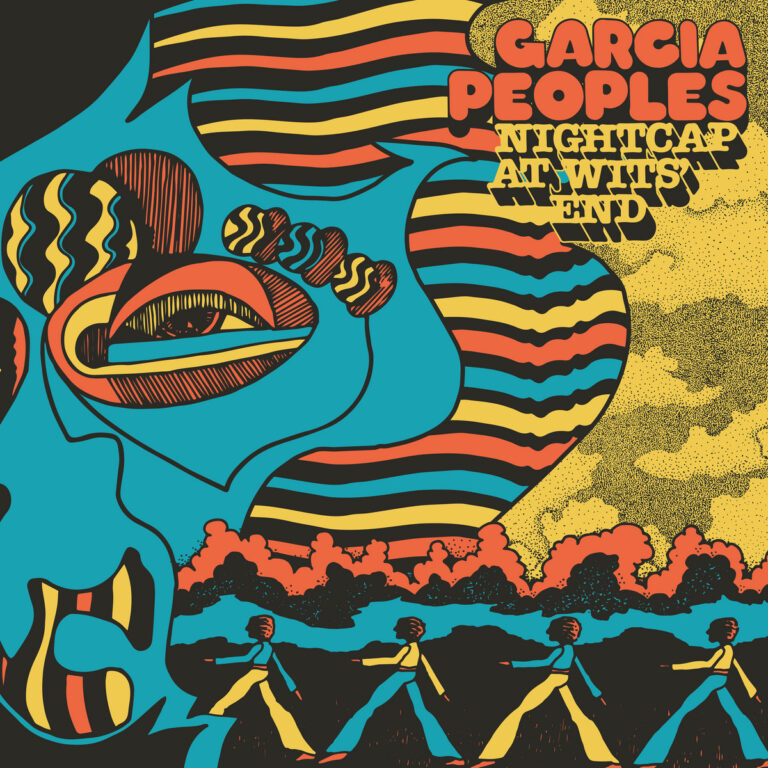
Nightcap at Wits’ End has been out for a month, and the buzz behind Garcia Peoples latest release is well justified. Named one of the fall’s most anticipated albums by Uproxx, and “their most focused and engaging work to date” by AllMusic has put the New Jersey band on the radar of Rolling Stone and live music afficianados in New York City. The group’s grand psychedelic sound and penchant for improv when live carries through on Nightcap at Wits’ End, an ambitious effort that delivers from start to finish.
Artwork by D.Norsen
There is an actual Wits End Tavern on the NY/NJ border in Unionville, NY near Black Dirt Studios where Garcia Peoples recorded their last two albums, Cosmic Cash and One Step Behind. The nightcap offered on their new release is more than a pre-bedtime listen – the experimental weirdness of “Fire of the Now” and the early Genesis mixed with psychedelia of “Gliding Through” are meant to provoke the listener early on into continuing the journey of Nightcap at Wits’ End.
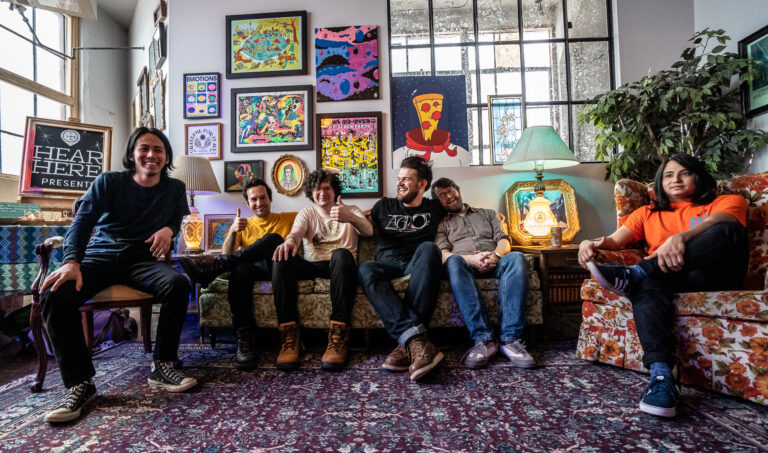
Tom Malach and Danny Arakaki formed the band in New Jersey, slowly solidifying the lineup with Danny’s brother Cesar (drums) and Derek Spaldo (bass) joining the two guitarists in mid-2016. Having since relocated to New York, they have added Pat Gubler (keys) and Andy Cush (bass) with Spaldo shifting to vocals and guitar, making a trio of guitarists at the center of Garcia Peoples‘ sound. Nightcap is the first time the six have recorded together in the studio, the result being a transference of the live experience to the studio album.
In discussing Nightcap with NYS Music, Spaldo revisited One Step Behind, with its 30-minute title track making for a one of a kind album.
One Step Behind is certainly a unique type of record – primarily one long piece of music with multiple movements. We’ve played that entire piece live, even drawing it out to about 50 minutes of non-stop music. But Nightcap at Wits’ End feels like a solid snapshot of “here’s what you might get at a Garcia Peoples show”: high energy, hard-rocking tunes, with a tempting taste of our improvisational flair.
I like to think of Nightcap as the record where all six of us let our musicianship really soar in a “balls to the wall” kind of way. When we were recording it, there was a strong sense of being in the groove. There was even an improvisational nature in the way that the songs were created. We really put a lot of ourselves into the making of it.
Derek Spaldo, Garcia Peoples
Nightcap is indeed a full album where the musicianship shines, particularly on the second side, where one finds songs interconnected as they flow from one to the next. This effort mirrors the live experience of seeing Garcia Peoples, while offering early Pink Floyd influences heard on “Crown of Thought” and the seamless segue into the 1:36 of “Sound Controls Time.”
Drawing on 1960s era psychedelic music frames Nightcap, and influences the band without emulating them outright.
Blossom Toes, Jefferson Airplane, The Turtles, and Mighty Baby are some bands that come to mind. Our whole ethos of having super open-ended jamming, taking things way out sonically, is certainly inspired by the late 60s psychedelic movement.
Though from a songwriting POV, I feel that our collective inspiration works more as an accumulation of influences that seep into our creativity through osmosis. I wouldn’t necessarily say that we deliberately set out to imitate our influences. Though having a common frame of reference is always useful in the development stage when trying to convey what the vibe of a song should feel like, what the arrangements should be like, etc.
Derek Spaldo, Garcia Peoples
A majority of Nightcap at Wits’ End was recorded earlier in 2019, just after finishing a tour, adding to the comfort in switching from the road to the studio.
Most of the basic tracks were recorded with the six of us playing live in the room together, so there is that kinetic interplay that one can hear on the record. I think recording as live as possible is the best way to go for us; the way we play off each other is so in-the-moment and essential.
Derek Spaldo, Garcia Peoples
Whether you catch the Doors vibe of “Altered Place,” find yourself lost in the seven-minute acoustic-prog journey “Painting a Vision that Carries,” or fall into “(Our Life Could be your Van)” – harboring a long spacey beginning that picks up steam, traveling through valleys on an instrumental vision quest – Nightcap at Wits’ End is an album that puts Garcia Peoples in the spotlight and on a pedestal as we patiently look forward to what comes next.
With the May premiere of Laurel Canyon, its two-part series dedicated to the California rock of the ‘60s and ‘70s, EPIX proved it might just be TV’s best new source for music documentaries. With its latest effort, By Whatever Means Necessary: The Times of Godfather of Harlem, EPIX is heading East and uptown. The mission here is to spotlight the many musicians and the musical genres they birthed, from soul, funk and jazz to boogaloo and proto-rap, that helped inspire social change during the turbulent 60s, in New York City’s most culturally percolating neighborhood.
This four-part series is the counterpart to Godfather of Harlem, the acclaimed period drama featuring Forest Whitaker and Giancarlo Esposito. This Emmy Award-winning series follows the story of Bumpy Johnson, the notorious Harlem gangster who sought his own version of economic empowerment against the Italian mob, in an era when Black men and women had little power or choices for upward mobility. The action of the series spans the decade and is fueled by a soundtrack featuring the best of this very best era of Black music.
The fascinating story of this golden era is told in interviews with musicians like Martha Reeves, Gladys Knight, Herbie Hancock, Carlos Alomar, Nile Rogers, A$AP Ferg, Chika, Gary Bartz and Joe Bataan, along with the activists who were there pushing forward the drive for civil rights like Al Sharpton. It also contains a remarkable bounty of rarely-seen archival footage, of interviews and live performances by giants like John Coltrane, James Brown, Gil Scott-Heron and many more.
NYS Music speaks here with Keith McQuirter, the series’ Executive Producer and Director about what viewers can expect with the premiere of this series, November 8 at 10 pm ET/PT.
Sal Cataldi: The EPIX dramatic series for which your documentaries are a companion, Godfather of Harlem, is set in the ‘60s in NYC, a time and place of incredible change and musical innovation. Why was music so interweaved with and reflective of the currents of that particular time and place, the civil rights movement and the like?
Keith McQuirter: What drew me to do this series was to examine how music was used as a force for good in the fight for civil rights. There is a long history of Black protest and empowerment music and our series looks at the years, from 1960 – 1969, from the point-of-view of Harlem residents. The scripted series, Godfather of Harlem, is really a civil rights story, told in the criminal underworld. Our series focuses on an entirely different palate – how music impacted culture and politics, and how culture and politics impacted the music. It allows audiences to see the national story of the Black freedom struggle through the personalities, music and activism coming out of Harlem.
Harlem was a very political place in the ‘60s. Many black families fled the south due to racial terrorism and sought better economic opportunities, only to be face racism, discrimination, limited opportunity and segregated schools in the New York City. You had dueling philosophies of Malcolm X and Martin Luther King Jr. and the megawatt influence of Adam Clayton Powell Jr, who was both a Baptist minister and congressman representing the neighborhood. You had the Garveyites, the Black Panthers, the Young Lords and some many others in the fight for civil rights. Not everyone agreed on the approach, but they all agreed that it was time for a change. The freedom songs coming out of the Black church, the jazz of John Coltrane, Charlie Mingus, Max Roach and even Chubby Checker’s Twist spoke to power and change. Our series brings it all together through interviews with eyewitnesses, luminaries and archival that gives a unique look at this part of Black history and culture that is rarely ever told.
SC: The first episode spotlights The Apollo Theater, with comments from performers like Martha Reeves of Martha and the Vandellas and Gladys Knight, and even actor Giancarlo Esposito, one the stars of Godfather of Harlem who saw performances there as a child. What are some of the more interesting things you uncovered about the Apollo in your interviews and research?
KM: The Apollo Theater has been a cultural bedrock in Harlem and America for decades. If you wanted to be a star on the national stage, performing at the Apollo was a rite of passage for many artists. So all the greats performed on the Apollo stage. We spoke with Martha Reeves and Gladys Knight, who told us about her first time performing at the Apollo at a very young age. Both she and Martha talked about how nervous they were because the Apollo audience is known to be a tough crowd. If you get booed off, you might get a tomato thrown at you or other unpleasant things. It was interesting to learn the origin stories of these two legends.
But there is a lesser known story that I appreciated. In the late 1960’s, the Apollo Theater had a mentorship program, where they developed and groomed underprivileged, musically talented teens to be professional entertainers. The teens formed a band under the direction of the theater called Listen My Brother, in which 17-year-old Luther Vandross was a member. We interviewed Carlos Alomar of David Bowie Band fame and Robin Clark, both members of the band. They met as teens during the Apollo program and married before their 20th birthdays. Fifty years later, they are still married! It’s a truly musical love story. Their homework was to go upstairs and watch the Supremes and the Temptations — study their grooming, choreography, stage presence and incorporate it into their rehearsals and their own performances. Can you imagine that type of education? Robin Clark shared about how one day Aretha Franklin came down to the basement where they were rehearsing and talked to the teens about the music business. Robin said she couldn’t believe her idol casually made a surprise visit to their rehearsal. Its apparent that the education and mentorship paid off because both Robin Clark and Carlos Alomar have had illustrious careers in the music business for decades.
SC: The series illustrates how jazz, and especially the new breed of free jazz musicians, were reflecting the civil rights movement. How did the works like John Coltrane’s “Alabama” and Max Roach’s “Freedom Now Suite” energize the drive for equality?
KM: John Coltrane’s “Alabama” is a haunting elegy for the four little girls who died in the Birmingham church bombing in 1963, that was recorded just two months after the tragedy, when grief still weighed heavily on people’s hearts. Coltrane modeled the piece after Martin Luther King’s eulogy to the four girls that was delivered three days after the bombing. The saxophone begins in a tone and cadence of profound mourning, and gradually gains complexity and intensity, expressing the steady resolve to continue the struggle against racist brutality. The message in Coltrane’s piece remains relevant today, with racially-motivated violence still threatening the lives of Black people.
I also interviewed Warren Smith the legendary percussionist, who played with so many greats like Miles David, Aretha Franklin, Janis Joplin, Nina Simone and Max Roach. He says that Coltrane was unafraid to express his emotions in ways that were new at that time. He inspired Smith and others to fully lay into their instruments to express their anger and to say something meaningful.
This was in contrast to when most pop music at that time still avoided addressing political and racial issues, in an explicit way. Many jazz artists were fearless about expressing Black rage and resistance through their music. Jazz was the perfect vehicle for conveying the message of resistance, since the genre is deeply rooted in the historical Black experience. So, Max Roach’s “Freedom Now Suite” was a celebration of emancipation and the years of struggle that followed the end of slavery.
The incredible vocalist Abbey Lincoln expressed the anxiety and anticipation of emancipation against a frenetic avant-garde rhythm section. Roach said in an archival interview we found that, “We could never finish the song because we don’t really know how it feels to be free.” We also interviewed jazz saxophonist Gary Bartz, who played with Roach on the “Freedom Now Suite” and he remembers when he found out that the record was banned in South Africa – clear evidence that music could be a weapon for change.
SC: Curtis Mayfield was especially important, as a musical messenger, a sort of pop music poet of the struggle. What was it about him that connected so strongly with the movement and which resonates today?
KM: Curtis Mayfield had come up in doo wop music, collaborating with his old friends from Chicago’s Cabrini Green housing projects. As an artist, he understood the power of music to uplift and empower. He focused on building a viable music career and began to write songs that sent an implicit message of hope to young Black people hungry for change. His song, “It’s All Right,” speaks directly to the young people:
“When you wake up early in the morning, feeling sad like so many of us do, Hold a little soul, and make life your goal, and surely something’s got to come to you. And you’ve got to say, It’s all right…”
The song launched Mayfield’s career and his band, The Impressions, and it captured the spirit of resistance and hope that characterized the beginning of the decade. He later released “Keep on Pushing” capturing the civil rights movement determination for change. There were many artists providing the soundtrack to the civil rights era, but Mayfield is prominent because his music always deliver the message of empowerment.
By the end of the decade, his music had come a long, long way. His lyrics had become explicitly political, and his sound was funkier and more soulful. He released “(Don’t Worry) If There’s Hell Below, We’re All Going To Go” where he calls out the courts and the police as political actors, talks about the drug epidemic and pollution and how all of this decay and corruption is going to bring us all to our downfall. This message juxtaposed to Richard Nixon’s who was just elected president by an overwhelming white conversative calling for law and order and a return to the old America. It all sounds incredibly familiar.
SC: James Brown is another giant highlight in the series, especially the role he played in black pride, in actually changing the racial terminology from “Negro” to “Black” with his anthem “Say It Loud, I’m Black and I’m Proud.” How powerful an impact did this song have in the community?
KM: In the late 60’s, James Brown released an unexpected anthem, “Say it Loud (I’m Black and Proud).” This song made James Brown one of the most prominent performers to celebrate Black identity. Ever since his historic live album recorded at Harlem’s Apollo Theater in the early 60’s, Brown had personified unadulterated, unapologetic blackness. But his lyrics had always avoided politics, and his personal style still reflected an earlier time – especially his hair, which he kept in a carefully-maintained pompadour. By the time this came out, Brown cut his hair and sported an Afro in message with the changing time.
Brown later complained that “Say It Loud” ultimately cost him record sales, radio play and bookings at white clubs; but, at the moment it came out, it was an instant hit. Brown’s words were also taken up by activists across the country, who were marching in a never-ending series of protests – against the war in Vietnam, inferior schools, irresponsible landlords, unfair practices, and all the other problems the community still faced. His music fueled Black resistance and allowed Black folks to freely celebrate themselves and their culture with pride.
SC: How did The Last Poets and Gil Scott-Heron, the pioneers of the fusion of poetry into music, impact their times and ours today?
KM: In our series, we interview Felipe Luciano who talks about his trajectory into revolutionary culture. He was a kid who grew up in Spanish Harlem of Puerto Rican origin, but he consider East Harlem his homeland – not just his birthplace, but the place that made him who is today.
Luciano says that he felt lost when he got out of prison in 1966, but he found his purpose when he met other young Nuyoricans who were developing a radical new political consciousness, inspired by their Black friends engaged in the freedom struggle. He had studied Puerto Rican history while in prison, read the writings of Pedro Albizu Campos, trying to understand why his parents’ generation gave up on statehood and accepted the humiliation of being ‘colonized’ by the U.S.
Activism gave him hope. He was excited by the emergence of the Black Panther Party for Self Defense on the West Coast, and the bold call for Black Power from Stokely Carmichael, a New York-raised activist of Trinidadian origin. He decided it was time for Latin people to work for radical change too. When he heard about the opening of a New York chapter of the Young Lords, a Puerto Rican organization modeled on the Black Panthers, he got involved immediately.
So by the time Luciano became a member of The Last Poets in the late 60’s, he was already a leader in the Young Lords and was a revolutionary. When you hear the music of The Last Poets, accompanied by African-inspired Congo drums, it make sense they were so incredibly free to express themselves, in ways most people just didn’t at that time. They spoke truth to power, but also they just spoke truth, often in incendiary ways, but it freed people to be able to express themselves without barriers or shame.
In an interview, the jazz saxophonist Gary Bartz said it was like a secret language that he and others understood deeply, but not everyone could relate. Hip Hop can be that way too, in that it is specific to a group or even a neighborhood and is not always inclusionary. Luciano believed poetry was just as important as marching in the streets. You see this same reverence for lyrics in young artists today – Kendrick Lamar, CHIKA, Janelle Monae and so many others — they are reflecting the times, giving empowerment and allowing us to be free to be ourselves. The Last Poets showed us freedom of expression in words, and its fitting that they have the designation as being called “The Fathers of Hip Hop.”
SC: The series doesn’t just focus on Black artists but the Latinos of Harlem who forged their own kind of music of celebration and liberation. Tell us about some of them, especially the pioneers of boogaloo?
KM: East Harlem, nicknamed ‘El Barrio,’ became the capital of Puerto Rican culture in the mainland U.S. And although Puerto Ricans became American citizens in 1917, in the U.S. they were still seen as foreigners.
In the ‘60s Spanish-speaking migrants were the majority of the neighborhood’s population, but many of them struggled with poverty, unemployment, and racial discrimination. The language barrier made it difficult to find decent, well-paid jobs, or navigate government agencies. This generation found comfort in the music from back home, and bandleaders like Tito Puente and Tito Rodriguez reigned supreme at the city’s biggest Latin club, the Palladium Ballroom in midtown.
Miguel “Mickey” Melendez, an East Harlem resident, and a member of the Young Lords who we interviewed in the series, spoke about the American-born children of Puerto Rican migrants were growing up as Harlem teenagers, and their day-to-day experiences – and the music they loved – were completely different from those of their parents. These kids went to school with African-American classmates, hung out with African-American friends and neighbors, and danced to doo-wop, soul, and R & B. They would create a new genre of music that gave voice to the intersection of Black and Latin culture — boogaloo, the soul of El Barrio.
Denise Oliver-Velez, another member of the Young Lords, talks about Joe Cuba’s “Bang Bang,” a song, composed spontaneously at a ‘Black dance’ night at the Palm Gardens Ballroom, was one of the first boogaloo songs to launch the craze that swept New York, and then the world of Latin music. It combined English and Spanglish lyrics with an R & B rhythm on timbales and melodic piano, and immediately inspired a wave-style dance. Within weeks, the Joe Cuba Sextet recorded and released “Bang Bang” as a single, and it became one of the most successful Latin recordings to cross over to mixed audiences, selling over a million copies.
When Joe Bataan got out of prison, he tells the story about how desperate he was to achieve his dream of becoming a musician. He had the reputation of being a gangster at that time and would sneak into a local school to play the piano. One day, he discovered a group of musicians using ‘his’ practice space, so he stuck a knife in the piano and told them that from then on, they would be his band. He wanted to make a name for himself and hoped that music would save him from the cycle of gang violence and incarceration.
After a debut recording that went nowhere, Bataan’s first hit was a boogaloo cover of the Curtis Mayfield ballad “Gypsy Woman,” spiced up with Latin percussion and an irresistible hook. All the band members were shouting “She smokes!”. Bataan remembers how, in 1966 and 1967, you could hear boogaloo echoing throughout the neighborhood – and how proud he was, coming from the streets, to representing his neighborhood in a way everyone could celebrate.
For Felipe Luciano, Boogaloo was more than just party music. It was an expression of Nuyorican identity, giving voice to their generation’s rage against the discrimination their parents had faced, and demonstrating their deep connection to the Black struggle. In its own way, boogaloo was a music of defiance against ghetto life and the elusiveness of the American dream.
SC: The series contains so much remarkable archival footage that is largely unseen. What are some of your own favorite moments of the musicians on film that you unearthed?
KM: For a nerd like myself, archival research is a fascinating, deep dive exploration that can take you on many adventures. Finding archival of Max Roach and Abbey Lincoln performing “Driva’ Man” and “Triptyh: Prayer / Protest / Peace”from the “Freedom Now Suite” is like finding gold. I could not stop watching it over and over again.
I also enjoyed unearthing Apollo performances from Martha and Vandellas and other Motown acts. To see these entertainers as teenagers in archival footage, who I’ve known my whole life to be legends and then getting to interview them too, it was just incredible. Artists like Herbie Hancock and Gladys Knight are of my parent’s generation, so their music was always a part of the soundtrack of my life.
I really love the archival we found of the Last Poets performing “Hey Now” and “Jibero, My Pretty N****. “ New York indie filmmaker Herbert Danska filmed them on a Harlem rooftop for his film Right On! A film that screened at the Director Fortnight in the 1970 at the Cannes Film Festival. It shows three Black men on a rooftop – Felipe Luciano, David Nelson and Gylan Kain – with a percussive accompaniment performing poetry. It’s rough, raw, and a bit strange. It’s truly great stuff.
SC: The ‘60s were a pretty special time, an era where music really helped, as Giancarlo Esposito says in the series, becoming “the force that gave the people strength.” Do you think music has the same impact today?
KM: Every time I visit a Baptist church and sing those old songs that my grandparents and great grandparent sang, I feel uplifted, and some of those songs have been around for hundreds of years.
Music is healing, empowering and motivating. It reenforces the stories of our lives and reflects our dreams, hopes and ambitions. Music is culture. And, culture is inherently political. This year has seen a proliferation of protest music by known and unknown artists. It’s a tradition that has been passed down generationally and young people are making it their own, especially through the use of social media. Most of the musicians I spoke to for this series have expressed how inspired they are by activism happening today in music. The work from the ‘60’s civil rights movement never ended because we still are facing police brutality in our communities, disparities in healthcare, massive incarceration and gun violence – we have so much work to do. The musicians have a role in providing us and generations of activist to follow soundtracks that empowers, uplift, affirms our identity and our humanity.
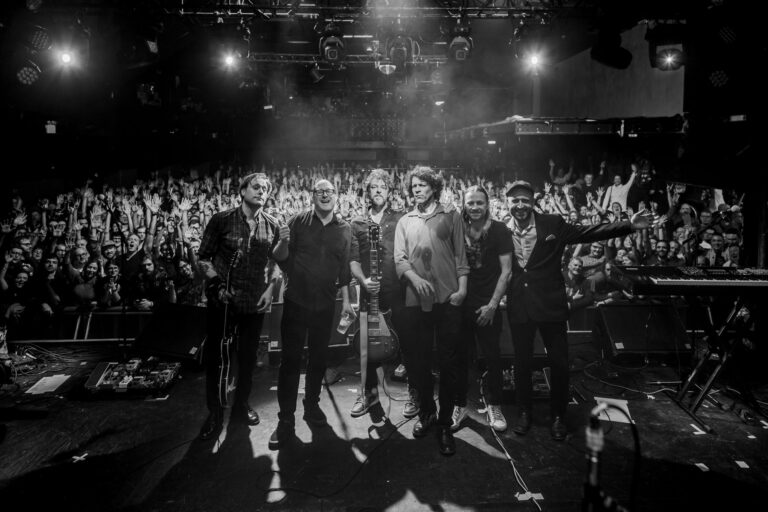
The Hold Steady will host their annual Massive Nights 2020 livestream celebration on December 3-5. Brooklyn Bowl will livestream the event to showcase The Hold Steady’s music and allow viewers to enjoy the show from the comfort of their own homes. Music kicks off on December 3 and 4 at 9 p.m. and on December 5 at 5 p.m.
The Hold Steady plan to celebrate the 10th anniversary of their fifth studio album, Heaven Is Whenever with a special double-album reissue set to release on November 27. The limited-edition vinyl and CD of Heaven Is Whenever Deluxe Edition will include nine unreleased bonus songs and liner notes by Drive-By Truckers co-founder and singer/songwriter/guitarist Patterson Hood. As a bonus, the digital version of the deluxe album will include six unreleased songs. Fans can pre-order the limited-edition album on the THS website.
Photo by Lee Allen Photography
On May 4, 2010, The Hold Steady released Heaven Is Whenever. making it their first release since the departure of keyboardist Franz Nicolay on January 20, 2010. The album debuted in the top 5 on Billboard’s “Top Alternative Albums” chart and made a top 10 debut on Billboard’s “Top Rock Albums.”
Everyone seems to have an opinion about our fifth album. Here in 2020, we’re very proud of Heaven Is Whenever. It’s the sound of a band pushing through difficult times by making music about that very struggle. It acknowledges suffering as part of human life. And with all the extra songs that we recorded beyond the album tracks, it’s a testament to the band’s willingness to show up and try to work through uncertainty. Happy 10 years to Heaven Is Whenever
Long Island group, Crash the Calm, have released their debut single, “Devils,” from their upcoming sophomore album, A Town Named Nowhere.
Crash the Calm entered the scene in December 2014, and released their debut single “Holes.” It was considered their demo at the time, and was followed by the band signing to indie label, Downport Records. They eventually recorded their debut album, How’ve You Been?, at VuDu Studios with Nick Starrantino, Dom Nastasi & Mike Watts. They also released an EP in 2018, titled Split. It was recorded with Anthony Lopardo and Ray Marte at Westfall Studios.
The band have played in many shows locally and across the East Coast. They have opened up for and shared the stage with bands such as Pianos Become the Teeth, Save Face, Capstan, Elder Brother, Belmont, Bay Faction, Head North, Heart Attack Man, Kayak Jones, The Republic of Wolves, bloom., Gatherers, Stories Untold, and the Sparrows. Crash Calm have also had stadium experience in Queens and opened up at the Citi Field in Flushing, NY.
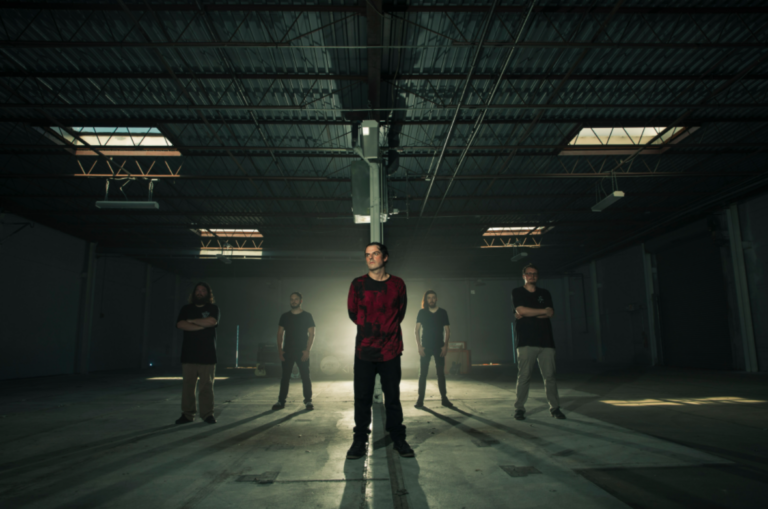
Following the EP, a third of the five members left for personal reasons. Remaining members, Brian Dowling and Patrick Smith, had almost lost hope for the band. However, an idea blossomed from the moment, and the concept for their second album, A Town Named Nowhere was soon in the works.
The album is centered on the fictional town of “Nowhere,” which captures the different perspectives of the townspeople. Each perspective must resolve and contain their own inner struggle, in addition to the rampant dust storms and destined economic ruin they inevitably face. The record wants people to find their way through life-altering experiences and restore situations that seem beyond repair.
The concept of “Nowhere” came to guitarists Brian Dowling (also a singer) and Patrick Smith when they felt at a place where their only option was to rebuild from nothing. They went to the studio to record the album in 2019 with new members Dan LeBrun (Guitar), Johnny Pots (Drums) and Dave Van Nostrand (Bass). They recorded their 2nd LP with Anthony Lopardo and Ray Marte of Westfall Studios, which was a familiar ground for the band.
Their first single, “Devils,” is also accompanied by a dark lyric video, visualising the experiences of the Dust Bowl era. Crash the Calm have been juvenated for their upcoming release, and will tour once health conditions permit. In the meantime, the band plans for a number of music videos and digital performances to support the album. Their new single is available on Spotify, Apple Music, and Bandcamp.
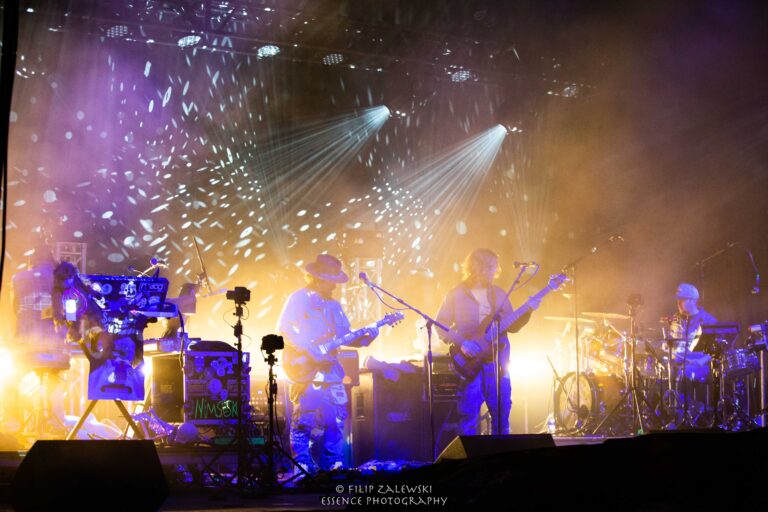
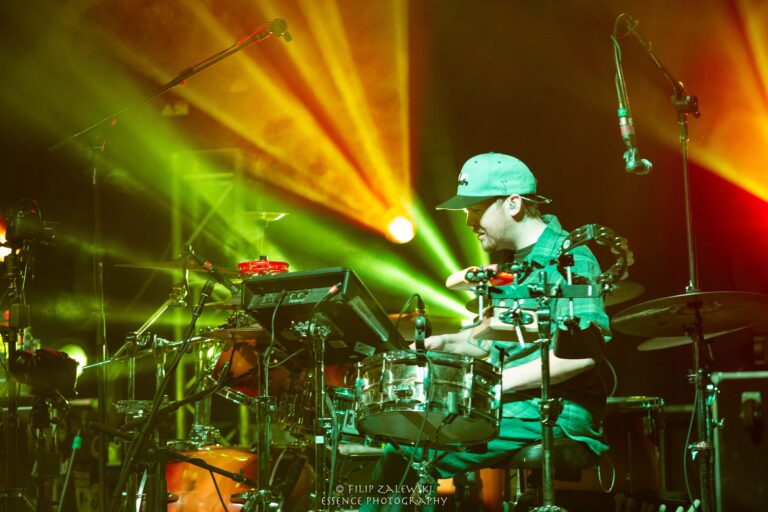
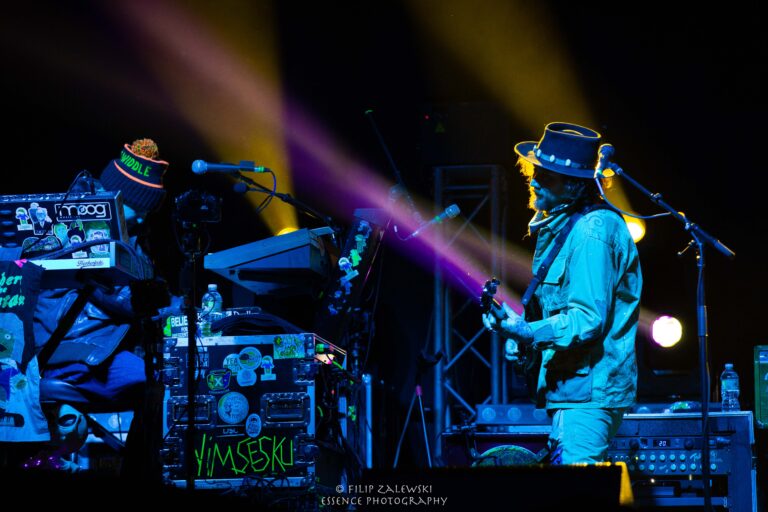
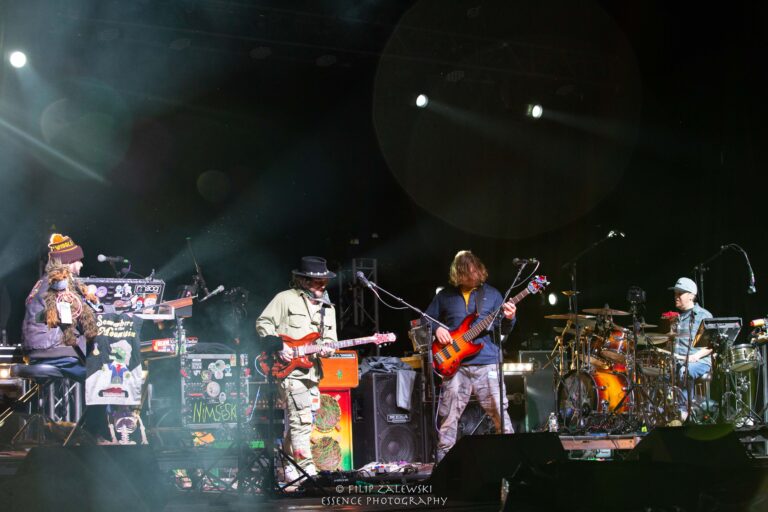
It was the night after Halloween in Sussex, NJ. All who dared to traverse the wind and rain were met with a field of mud and fans. Twiddle got New Jersey Slipping’ brought the heat to their last drive-in show, this past Sunday November 1 at the Sussex County Fairgrounds. This show featured high energy and dynamic jams throughout both sets. Highlights included a monstrous Gatsby The Great > Slippin’ In The Kitchen > Gatsby The Great in the first set, an incredible Cabbage Face in the second set, and a roaring Juggernaut encore.
Twiddle at the Sussex Fairgrounds Drive In
The line of cars leading up to the show looked intimidating, but cars were being moved to their spots quickly and with ease. Social distancing was enforced and masks were widespread, minimal panic. Goes to show that live music events, even though reminiscent of a futuristic, dystopian, post apocalyptic scenario… can be done safely and successfully.
Lights by Herm Lights
It was raining all day and some at the show. After the sun went down it felt freezing. During a wet, cold night like this it’s vital that the band ‘bring the heat’ to get the crowd moving. In a situation like that, if the music is slow and not captivating people will leave because it’s uncomfortable to stand outside. But if it’s thumping and everyone’s dancing, you bet they’re going to stay.
Ryan Dempsey takes a rare keytar solo
Twiddle brought it. Dynamic, bass heavy, shredding, face melting goodness, no kumbaya sing songy b.s… Okay maybe one “When it Rains It Pours,” but that one’s so catchy and appropriate for the night that we’ll let it slide.
We’re not in Vermont anymore
The first set started out with Polluted Beauty, some positivity to lift the spirits and get the crowd going. Then the monstrous Gatsby The Great >Slippin’ In The Kitchen > Gatsby The Great which took up most of the first set, weaving in and out of intricate grooves. “Syncopated Healing” closed up the killer first set.
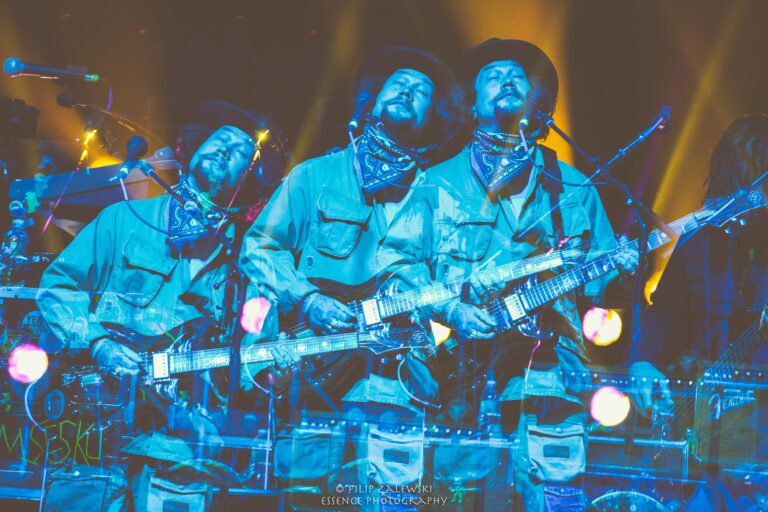
Mihali x3
Set two featured the popular “When It Rains It Pours,” a monstrous “Cabbage Face,” and “Frankenfoote” to close up the set. Set two featured a wider variety of songs and grooves. Ryan Dempsey took a key-tar solo, got up on his chair to play with his foot, and threw a pumpkin at the crowd which masterfully bounced on the rail and missed anyone around.
Brook Jordan shining
Twiddle put on an incredible show; their fans were screaming for more. They return with a hard rocking “Juggernaut” encore to close up the show.
Twiddle New Jersey “Juggernaut” encore
My car neighbors mentioned they’ve seen Twiddle twice before and it got me thinking: I’ve been spoiled to see and shoot this band all around the states for over five years now. And I must say that I’ve always like the band, but after this show I think I’m a true fan.
You gotta like apples, man
Twiddle at Sussex County Fairgrounds 11/1/20
Set 1:
Polluted Beauty
Gatsby The Great >Slippin’ In The Kitchen > Gatsby The Great
Musicians For Musicians Founder Sohrab Saadat Ladjevardi is the personification of the activist-musician. He’s got the high-energy, super creative foreign import that keeps New York City’s melting pot, eternally percolating.
Born to Iranian parents in Switzerland, Sohrab came to New York in 2008, after living 20+ years in Japan. While there, he honed both his uniquely singular style on the saxophone, while also becoming a 6th–dan master of the samurai sword art of Kendo.
Today, Sohrab is a force not only for the music of his SoSaLa ensemble, but for his tireless advocacy for all music-makers.
In 2015 he founded Musicians For Musicians (MFM), in New York City. MFM is a non-profit dedicated to the realization that: music is a true profession, musicians need to unite if they are ever to be treated fairly and compensated well for their efforts, in live performance and recording.
Through workshops, Meet Ups, a resource rich website, lobbying efforts, Zoom conferences and much more, Musicians For Musicians is helping artists from all genres empower themselves to change the status quo. The group is growing quickly with the addition of a chapter in the Hudson Valley and a forthcoming one in San Francisco. MFM has attracted luminaries like jazz greats Billy Harper, Joe Lovano and David Liebman, Dr. Cornel West and, most recently, The Who’s Roger Daltrey as Board Members and vocal advocate.
Here, we talk to Sohrab about this important work and his latest musical project, a new SoSaLa CD titled Nu World Trashed.
Sal Cataldi: What is MusiciansforMusicians.org? When did you found it and what is its main mission?
Sohrab Saadat Ladjevardi: Musicians For Musicians (MFM) is a 501(c)(6)non-profit musicians’ rights organization which I established in 2015. MFM seeks to elevate the work of all musicians to the level of a true profession, one recognized and appropriately rewarded by society. It’s a membership organization and an association of professional musicians with the right to lobby that exists, alongside but separate from, groups like the American Federation of Musicians.
SC: Networking and education seem to be big parts of the organization. Tell us a little bit about what you do in this area, in terms of your workshops, newsletter and recently launched podcast series.
SSL: During Covid-19, it’s essential that we musicians keep sight of what’s most important in our lives: music! Musical activities, many of which are social, have been dramatically curtailed. There are emotional and financial issues, and the politicization of the virus itself, many of the resources on which we depend have been severely cut back.
We are helping by continuing to run educational ZOOM Webinars with guest speakers in lieu of live events, such as the Online Music Marketing webinar we held in September, while also advising members regarding Unemployment Benefits and other resources available to them. MFM continues its twice-monthly podcast, MFM SPEAKS OUT, with episodes featuring interviews with musicians on their work and the issues that impact them, along with our on-line magazine DooBeeDooBeeDoo NY and via social media. We continue to reach out to pro musicians’ rights politicians and collaborate with other musicians’ rights organizations to improve creators’ lives via legislation.
SC: Your mantra is that musicians have to be treated as professionals, compensated for their talents and time, in live situations and in recordings. Is this situation improving or getting worse? What can be done to fix it?
SSL: Unfortunately, our community is fragmented and we have difficulties to organizing. MFM’s goal is to unite musicians, and musicians of all genres are welcome to join. Unity means real power. Numbers only speak. At the end of the day, we know that the only real way to protect our rights is through legislation. For protecting ourselves against any kind of exploitation of our work, we need to know the business side of making music and have the courage to speak out in an organized form.
The public needs to hear from the musicians themselves that “music has value.” For each work we do, we must be compensated fairly. Musicians must stop playing for free or for donations. MFM is trying to reach out to younger musicians, especially those who tend to play for free, without acknowledging that they’re devaluing their music.
So, answering your question whether the situation for professional musicians will improve or is getting worse, my answer is very simple and short. It depends on the musicians themselves, whether they are willing to do some soul searching, change their attitude towards music and “making music.”
SC: It seems you preach independence and self-help for musicians. How can we do a better job in this area, with musicians helping each other, bookers, journalists etc?
SSL: I’m just talking about facts based on experience and observations made by me, a professional musician and MFM’s president. As musicians, we shouldn’t care about bookers, journalists, etc; we should think of ourselves first. Find out how we can empower ourselves with knowledge and wisdom as a group and as business league. MFM wants to revolutionize musicians’ thinking. Give them some self-respect back. It’s time to do some soul searching…
We should work out a concept and strategy together, how to deal with club owners, bookers, agents, labels, publishers, etc. Becoming equal partners in the forthcoming negotiations. Make them understand that they must compensate musicians fairly. Accept our own contracts with our terms. Musicians don’t depend on them; they depend on us. We bring the food to their table. Musicians are essential workers, essential as doctors and nurses. Music is essential to people’s lives!
SC: With luminaries like Dr. Cornel West, sax greats Dave Liebman and Joe Lovano, legendary jazz man Billy Harper, you have a bunch of heavyweight participants and advisors. How are they active in the organization?
SSL: Yes, we’re lucky to have these heavyweights in our organization. Like any non-profit organization, MFM has three groups running the show: the Membership, the Board of Directors and the Advisory Committee. It’s a very democratic-socialistic organization. All three groups are equal when it comes to making decisions and voting. It’s an organic and active organization.
MFM’s Board includes Billy Harper and the Advisory Committee members consists of educator and activist Dr. Cornel West, Grammy-Award winner Arturo O’Farrill, jazz maestros David Liebman and Joe Lovano, and others with rock, classical and world music backgrounds. All of them have a lot of knowledge, expertise and experience which they share with the organization.
Since 2016, many of them have run workshops and talk events. Billy Harper and I, for example, started the monthly MFM Public Musicians Meet Ups. Board member Roger Blanc has organized mixers at the Zinc Bar. Ken Hatfield, who is a musician’s rights expert, reports regularly about the development of copyright laws and musician’s rights issues in general. Then we have members who are qualified in their respective fields. One of them is Adam Reifsteck, who ran a workshop last year and a recent Zoom Webinar speaking about marketing on Facebook. Another is Dauwoud Kringle, who is a driving force behind our DooBeeDooBeeDoo online magazine and podcast, a great Ethno-jazz electronica musician with his Gods Unruly Friends ensemble. Depending on the topics, we also invited experts from outside to educate our membership. All workshops and talk events are documented on video and uploaded on the membership platform.
Speaking of Dr. West, he has a special position in MFM. He will be our “public bull horn” after the November election. He strongly believes in a musician’s social-political role in society, because he calls them “the avant-garde of the artists.” What he’s saying is that if musicians can get their shit together, the whole artist community, including painters, writers, dancers, and many other artists, will profit from it. So, we musicians have got some heavy responsibility on our shoulders.
SC: With COVID, it seems everyone is moving up to the Hudson Valley! You have a chapter up there. Tell us a little about its history and where you see more chapters developing and your upcoming fundraiser.
SSL: I don’t know whether everyone is moving to the Hudson Valley, but what I have known, for a while, is that many working musicians live in the Hudson Valley, and many of them, world class musicians. One of them joined MFM in March 2019, legendary jazz saxophonist Joe Lovano. But my real interest to reach out to the Hudson Valley musicians started when Kingston’s guitarist/band leader (future350 Nu Bossa Quartet) and music activist Stephen Johnson joined in January 2019. He joined because he strongly believed that the Hudson Valley community needed an organization which would care and speak for them. After MFM Board approval, it was established in October 2019. Since then, several musician joined and he organized Meet Ups and Zoom calls. Joe Lovano actually brought his horn to open up one of those meetings.
SC: Any new chapters planned?
SSL: I think San Francisco could be the next one, because we have two members from there. One of them is Mario Guarneri, who runs two musician non-profit organizations: Jazz In The Neighborhood and Independent Musicians Alliance (IMA). IMA is very active in fighting for musician’s rights in that city. Both of our organizations have many things in common.
One big initiative is our first MFM fundraiser,which started October 20 and will run through November 20. It is a great opportunity for MFM to reach out to its members and musicians outside of MFM with the idea that musicians should help each other out first, before they ask for support from outside sources.
Yes, we’re going through an uncontrollable pandemic, but still we should care for each other with whatever money you can spare. I wasn’t sure whether this will work and whether the membership would participate in this fundraiser. Fortunately, it’s working thus far! We’ve collected more than $1000 in the first week, which is super. And most of those contributions came from the membership.
Special thanks must go to MFM members themselves. First off, Keith Levenson, music director and conductor of The Who, and recording engineer Michael Walsh who created a fundraiser video featuring Roger Daltrey of The Who, Dr. Cornel West, Arturo O’Farrill and many other MFM members. The video describes beautifully what MFM stands for.
SC: Tell us a little bit about your life and when and how you first got involved in music. And what musicians most inspired you.
SSL: Iwas born to Iranian parents in Switzerland in 1953. They soon moved to Hamburg, Germany where I grew up. Early piano lessons ended abruptly, after my teacher couldn’t stand my style of playing! In the late 60s and early 70s, I played the drums and flamenco guitar. In 1974, I moved toJapan to study martial arts, eventually settling on Kendo, Japanese swordsmanship. After years of study and achievement in Kendo, I began to think about applying that philosophy, discipline and hard work to music.
In 1979, I bought a saxophone, and six months later, I played my first gig in Osaka. A year later, I played at the Montreux Jazz Festival. Between 1979 until my departure to New York in 2008, I had developed as a professional musician, making a name from myself in the Japanese indie scene. I toured and recorded in Japan, Europe, Hong Kong and the U.S. with my bands and released a couple of CDs. In 1987, I started my indie label Kampai Records and, in 1993, my own music company POP BIZ Ltd. In 2008, I closed that company and moved, with my wife, from Tokyo to New York. I started my career in NYC as a street musician and “jammer/gigger.”
In 2011, I formed the inter-continental collective, free jazz/world music group SoSaLa in NYC.
In the same year, I released my first CD “SoSaLa Nu World Trash” on my own label, called DooBeeDoo Records. The CD was very well received. People liked how I blended my melancholic melodies with those of my native Iran, fueled by improvisation, with lo-fi electronics, the diverse instruments made for an ambient and psychedelic take on World Music. I have also worked with Malian pop star Salif Keita, jazz legend Ornette Coleman and Morocco’s Bachir Attar and the Master Musicians of Jajouka. I became a U.S. Citizen in 2013, then, in 2015, founded MFM.
SC: I understand you have a new album coming out with your SoSaLa and that it features a guest spot by Dr. West?
SSL: Yes, a new SoSaLa CD titled “Nu World Trashed” on DooBeeDoo Records and published by DooBeeDoo Worldwide Music. It will be a limited edition of 300 CDs distributed by CD Baby.
The CD Baby release is planned for beginning of December, but, before that release date, I’ll offer it to my fans as a Collector’s Item signed by me with a high-end price of $50. Why? Because I don’t want to sell it for $5, $10 or $15. My music has more value. I don’t want to adjust to the market which will devalue my CD later. Retailers, such as Amazon, will lower my CD price, for sure. People who buy CDs from Amazon strongly believe that music should be cheap or even free. So, I’m going to sell my CD primarily from my website (https://www.Sohrab.info) before the CD Baby release date. The leftovers will be sold at the retail price of $30. I hope my price policy will succeed and inspire my members to follow in my footsteps.
The album features nine tracks, with five originals. Two of them were recorded live with my New York music project SoSaLa and the other three with various fellow musicians. The other four tracks are a collaboration with two German producers: Berlin’s Genetic Drugs (three tracks) and Konstanz’ Hubl Greiner and his buddy, the New York keyboard Paul Amrod.
This is the first time that I released a CD of this kind. Usually, all my previous released CDs were recorded with my band of that time. Usually in a composed improvised format. But this time, it’s a compilation of 80 percent improvised instrumental music and two tracks with vocals. I’ve never done this kind of album before. The nine ‘nu world trashy’ electronic-nu jazzy-desert blues-oriental-ambient tracks are meant to have the listeners “to sit down, forget real time and let them do some soul searching.”
It’s a concept album with a social-political-cultural message first expressing, musically, anger, especially the track Enough Is Enough. That’s a protest song against NYC’s premier jazz clubs featuring Dr. Cornel West which comes with a video that I hope will become our “hit!” It’s an electronic-African Beat protest song. Though Dr. West is featured only for around 11 seconds, his passionate voice radiates positive energy and expresses perfectly what the song was about. Of it, he said: “I’m blessed to be on it and to groove with the grand artists who made this song! It is soulful, powerful and political! I love it!”
Mystical Full Moon Hymn for Ornette Coleman is dedicated to my mentor, Ornette Coleman, who was the first musician in New York loving the sound of my horn. He told me I was “the freest sax player in rock music.” That and my advocacy efforts to unite musicians through MFM are the things I am most proud of.
Jim Brickman, a Grammy-nominated songwriter and pianist, will perform his “Comfort & Joy at Home 2020” Virtual Tour on December 13, at 8:00 p.m. Although the pandemic has affected in-person performances, Jim Brickman is continuing his tradition of providing a front-row experience to a holiday celebration. The virtual performance will include the opportunity for fans to sing, clap and laugh along with Jim Brickman while supporting local theatres, like Proctors Theatre, at the same time. The virtual tour will start on November 29 and end on December 23, while supporting musical venues all over the country.
Ticket prices will start at $40 with some packages including an interactive Zoom Room, virtual meet and greets, and Christmas gifts delivered to your door. A portion of each ticket purchased for the “Comfort & Joy at Home 2020” Virtual Tour will benefit Proctors Theatre, which is located in Schenectady, NY who has partnered to provide the virtual experience. Proctors Theatre was one of many New York music venues that have faced financial hardships due to the cancellation of live performances because of the COVID-19 pandemic.
Jim Brickman has already amassed quite a bit of success throughout his career. He has two Grammy nominations to go along with earning 22 “Number #1 Albums” and 33 “Top Radio Singles” in the “Billboard Magazine.” He also has collaborated with musicians such as Michael Bolton, Kenny Rogers, Olivia Newton-John, Lady Antebellum, and more. In addition to music, Brickman has written three best-selling books and is in the 22nd season of hosting his syndicated radio show “The Jim Brickman Show.” His latest creative avenue in 2020 is the “Brickman Bedtime Story” podcast that can be heard on Pandora, Apple, Spotify, and iHeartRadio Podcasts. Fans can prepare for the holiday season by pre-ordering Brickman’s new album “Soothe Christmas” on his website.
Layafette Apple Festival, just south of Syracuse, will enter 2021 as a regular stop for touring bands as we ride out the COVID-19 pandemic, and assuredly should continue to be a destination for live music moving forward. Over October 29-31, The Disco Biscuits performed to large crowds in Lafayette who were hungry for the often imitated, never duplicated release that live music provides, and in doing so put an exclamation point on the Northeast Drive-In season.
Having performed in Syracuse on Halloween in 2015 at Crouse Hinds Hall, and again last year in November at SI Hall at the State Fairgrounds, The Disco Biscuits are regulars across New York State. They’ve hosted their Camp Bisco Music Festival numerous times between Van Etten, Hunter and Mariaville over 2005-2013, and make regular stops at The Capitol Theatre in Port Chester, among other venues.
photo by Dave Decrescente
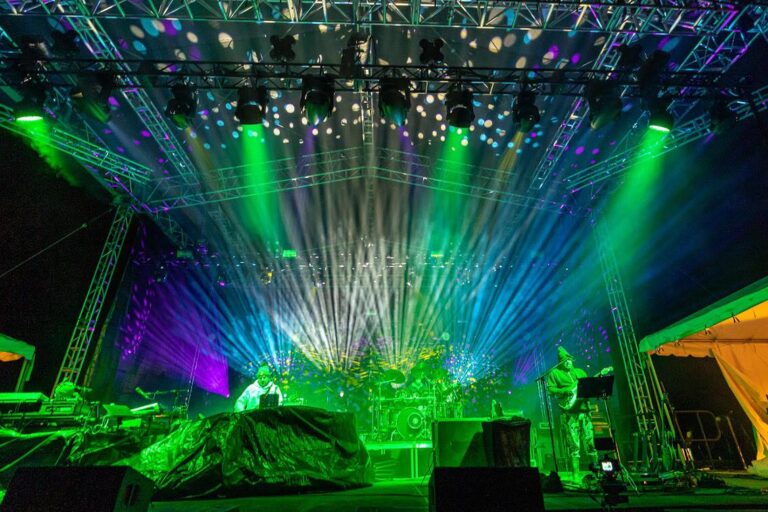
Even with the rain that pounded the grounds on Thursday night, the staff assisted fans if they got stuck and took necessary measures to ensure a smooth entry and egress from the grounds. The crowd did their part two by following the lead of the staff, abiding by basic social distancing norms and remaining confined to their assigned spots for the evening.
But being ‘confined’ to your car area has its perks. The physical space around your vehicle is greater than you might find perched up in the crowd at a music festival, and with limited interference from others. While at a festival, you have the spatial boundaries to dance and enjoy the performance, but others are close by so your volume and limbic movements are limited by comparison, or at least contrained to social norms and appropriate levels of touching.
During COVID-19 times, touching is limited just to your personal bubble, and within your space at an event such as the Disco Biscuits, or Dirty Heads a week earlier, you have an immense amount of freedom to dance with unbridled abandon and exuberance, having only a thin tape of elastic and the proximity to your car and spot-mates keeping you confined. Even at temperatures hovering around freezing, there were major benefits to the layout of these Drive-In shows.
https://www.youtube.com/watch?v=77sA9org5T4
Thursday night’s performance was marred by an intense amount of rain, which led to the stream on CouchTour.TV to be lost – although they quickly replaced the stream with footage from Drive-In shows earlier in October. The night started out wet, and led to a shortened first set. The crashing of rain and its deafening sound brought out a fitting “Magellan” with a “Widow in the Rain” bustout mixed in between.
Disco Biscuits, Lafayette, NY – Thursday, October 29, 2020
Set 1: 7-11-> Lunar Pursuit-> Minions-> Miracles Set 2: World is Spinning, Magellan-> Gangster-> Helicopters (inverted)-> Widow in the Rain-> Magellan Encore: Frog Legs
https://www.youtube.com/watch?v=tUsDCZ9GmPY
On Friday night, the band waited until 7:45pm to take the stage, allowing for all to have sufficient time to enter the muddy grounds and safely arrive in their spot. The first set lasted roughly an hour, and featured one of the new songs performed last fall in Syracuse, “Freebis Slinky.” Entering into set two, “Highwire” kicked things into high gear, while a late set “Pimp Blue Rikki” gave was to rising star of the Biscuits’ catalog, “Clocks.”
Disco Biscuits, Lafayette, NY – Friday, October 30, 2020
Set 1: Portal to an Empty Head, Freebis Slinky-> Rock Candy-> Grass is Green (inverted)-> Rock Candy Set 2: Highwire-> Astronaut-> Crickets-> Mindless Dribble-> Pimp Blue Rikki, Clocks Encore: Station
photo by Dave Decrescente
One thing that is amplified in the Drive-In setting is behavior that would otherwise be incidental at a normal show. Case in point, leaving a show before the encore. Normally, you would just excuse yourself, walk out of the venue without issue, and there’s a little more space for everyone else to enjoy the encore. This happens, rarely with cause for event, and is a forgettable exchange at best.
But at a Drive-In show, the counterpart to leaving early is a bit more engaging with your neighbors than just ducking out to beat the crowd. Provided there is no medical emergency, the act of starting your car, turning on headlights and beginning to drive out while others nearby are still enjoying the show is rude and, when weather is mixed in, can be dangerous and obnoxious. If not a venue policy, the general norm of not leaving until the show is fully over should be considered for all Drive-In shows, for safety and general courtesy of all who paid top dollar for these limited live music experiences.
photo by Dave Decrescente
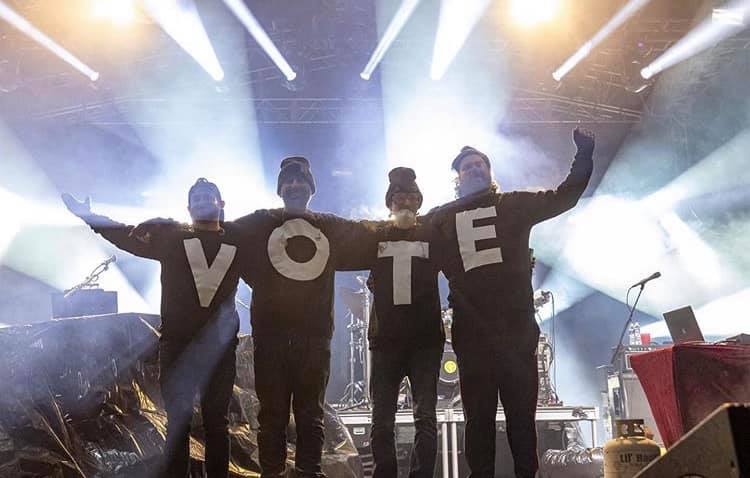
Halloween found the band walking out wearing sweatshirts that bore V, O, T and E, making it clear what their message was this Halloween – let’s get down, then on Tuesday, let’s get down to business and vote.
“Rockafella” launched the first set into the night, giving way to an unfinished “Little Betty Boop,” which led into a large “Morph Dusseldorf” sandwich, layered with a tease of the James Bond theme (in honor of Sean Connery, who died earlier that day), “Feeling Twisted” and a thorough “Abraxas.” After an incredibly lengthy set break, the band returned with “Save the Robots,” taking a patient stroll through the composition’s open space, leading to an extensive, tension building pause where the band got spooky, before finally dropping back into the jam, spawning an eruption throughout the audience.
photo by Dave Decrescente
A monstrous “Orch Theme” arose with the ominous synth out of the year-old “Running Into the Night,” which did the heavy lifting in following the top notch “Robots” and kept the set flowing from jam to jam. An inverted “Humuhumunukunukuapua’a” surfaced before diving down into a nasty “The Great Abyss” before returning to “Running Into the Night.”
For an encore, Gary Numan’s “Cars” was the most fitting song of the weekend, if not the whole run of Drive-In shows. The first cover of the song in over 10 years, “Cars” let the band stretch their legs in the New Wave classic, before shifting into the semi-rare “Naeba” and back into “Cars,” a perfect encore choice after a high energy second set, keeping up the dance vibe all throughout. With post-show music of Poolside’s “Harvest Moon,” the crowd carefully made their way out of the grounds and off into the night.
Disco Biscuits, Lafayette, NY – Saturday, October 31, 2020
Set 1: Rockafella, Little Betty Boop (unfinished)-> Morph Dusseldorf-> Feeling Twisted-> Abraxas (unfinished)-> Morph Dusseldorf Set 2: Save the Robots, Running into the Night-> Orch Theme-> Humuhumunukunukuapua’a (inverted)-> The Great Abyss-> Running into the Night Encore: Cars-> Naeba (inverted)-> Cars
https://www.youtube.com/watch?v=1uz8BpvENlg
Hopefully this isn’t the last Disco Biscuits show of the year, but it likely won’t be the last at Lafayette Apple Festival. We look forward to 2021 mixing Drive-In shows with the return of live music to the venues across New York and the rest of the country.