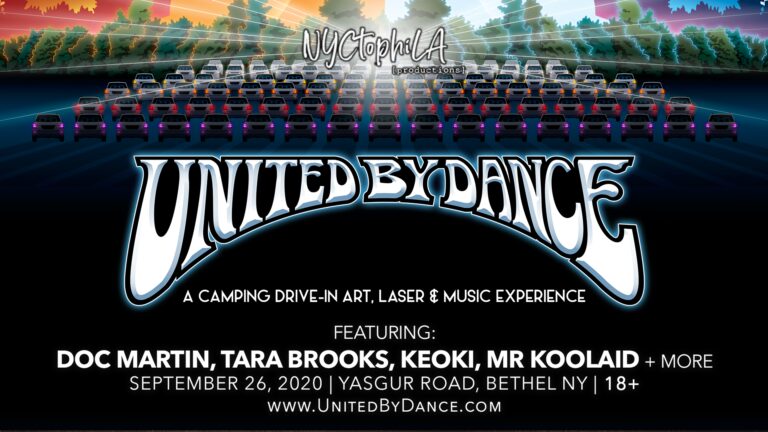
United By Dance: A Camping, Art, Music, and Drive-In Event is set for Sept. 26 from 4:00 p.m.-9:00 a.m. at Yasgur Farm in Bethel, NY. The festival will start in the daytime and continue into the night with an overnight camping option for guests. With safety protocols in effect, fans can camp in their car or rent a camping plot to enjoy a sunrise filled with music.
The Drive-In event will take place at the same location as the historic Woodstock Festival, with a maximum capacity of 600 guests and 150 car parking slots. In addition to music, attendees will have access to art installations, food, and merch vendors. Attendees can expect a laser show later in the night as well. The lineup for the United by Dance event includes music from house, techno, and tech-house artists.
Fans can purchase tickets for the United By Dance Drive-In here. United by Dance will enforce CDC guidelines including social distancing with marked walkways and car parking spots marked 6 feet apart. Attendees must wear their masks when they leave their designated car spot. United By Dance plans to use their events to provide a sense of unity through music, art, and dance by welcoming everyone with no restrictions.
We had to be aware and cautious about all the regulations. The new norm has made us adapt and find new options, but has also allowed us more of an opportunity to create diverse events like our drive-in.
At noon on August 17, 1969, the crowd at Woodstock had dwindled slightly, but roughly 90% of attendees responded favorably to Hugh Romney (best known as Wavy Gravy) who woke the crowd up, saying:
Good morning! What we have in mind is breakfast in bed for 400,000. Now, it’s gonna be good food and we’re going to get it to you. It’s not just the Hog Farm, either. It’s everybody. We’re all feedin’ each other. We must be in heaven, man! There’s always a little bit of heaven in a disaster area.
Now there’s a guy up there – some hamburger guy – that had his stand burned down last night. But he’s still got a little stuff left, and for you people that still believe capitalism isn’t that weird, you might help him out and buy a couple hamburgers.
The Hog Farm then distributed plates of cold mush, while a hippie known as Muskrat, read the front page of the Sunday New York Times to “the hippest brunch this side of Fifth Avenue.”
The first two days of Woodstock had the appearances of a tremendous success, especially for fans and observers. The unsung heroes working the show were dealing with any issue that came to them – rain, mud, delays, making sure food and clean water were available, and keeping the show running.
Sunday though, there were the inevitable issues that arise from a three day music festival. Bathrooms were overflowing, and fans were taking to cornfields and the backyards of locals in Bethel to relieve themselves. There were emergency medical issues that needed to be addressed, but roads were blocked. Helicopters attempted to airlift those in the greatest need, but lack of fuel made it difficult to get them to the proper hospital. A helicopter at Grossinger’s was on site at Yasgur’s within 10 minutes of a call to handle a victim of alcohol poisoning.
Joe Cocker kicked the day off at 2pm with a career-defining performance. Woodstock promoter Artie Kornfeld is reported by Spitz to have ‘humped a motorcycle in time to “Delta Lady,” and wept uncontrollably into his arm.
This is just great! Outta sight! Oh man, look what we’ve done, look what we’ve done. This is forever
But the joy was shortlived. A huge storm barrelled towards the festival grounds, and stage was covered in tarps as Cocker and his band retreated. Having yelled into the microphone for everyone to get away from the towers, John Morris changed his tone and approached the rain differently, saying to the crowd, “If you think really hard enough, maybe we can stop this rain!” A chant of “No rain, No rain, No rain” started in the crowd and built up, to the point where even though the stage itself was sliding in the mud, but fans were dancing in the rain and playing in the mud, the iconic imagery associated with Woodstock still today.
While the storm blew through in 20 minutes, the stage that had slid six inches downhill was restrained so the show could continue. Max Yasgur, the landowner who hosted a few hundred thousand hippies that weekend, was asked by Mel Lawrence and Michael Lang to say a few words to the crowd. Eagerly, Yasgur, who reveled in how nice and police the kids were, took to the stage with encouragement from Lawrence and Lang. Master of Ceremonies Chip Monck introduced Yasgur to the crowd saying “This is the man whose farm we’re on – Mr. Max Yasgur.” Monck stepped back and let Yasgur addressed the crowd, saying:
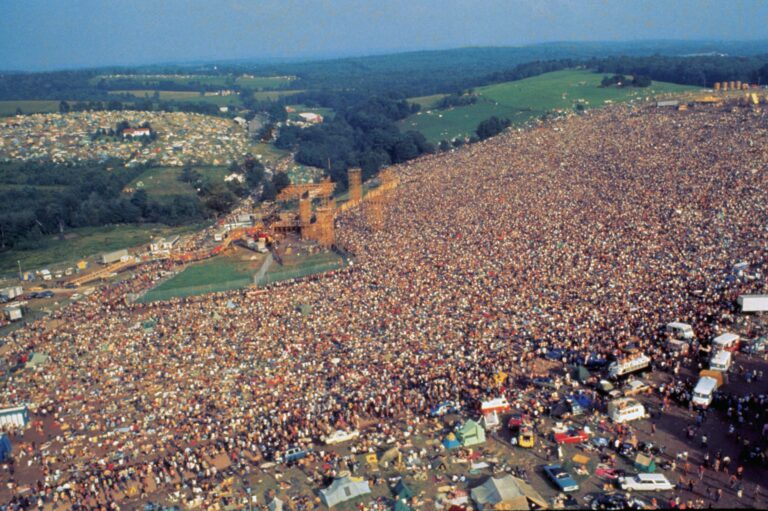
I’m a farmer. I don’t know how to speak to twenty people at one time let alone a crowd like this. This is the largest group of people ever assembled in one place, but I think you people have proven something to the world – that a half a million kids can get together and have three days of fun and music and have nothing but fun and music. And I god bless you for it!
Music would restart around 5pm with Country Joe & the Fish (the only act to perform twice that weekend) and Ten Years Later followed at 8pm. Crosby, Stills, Nash & Young left the stage at 6AM, and Sha Na Na followed. Jimi Hendrix would not take the stage until 8:30AM Monday morning, performing to only 30,000 who were determined to stick it out. The historic “Star Spangled Banner,” followed by “Taps,” would cement his place, and Woodstock’s, in music history.
Watch a performance from the nine artists who performed at Woodstock on August 17 and well into the morning of August 18, 1969
Joe Cocker
https://www.youtube.com/watch?v=tfLyK2DVVUU
Country Joe & The Fish
Ten Years After
Johnny Winter
Blood Sweat and Tears
Crosby, Stills, Nash & Young
https://www.youtube.com/watch?v=-azgwfnZu7c
Paul Butterfield Blues Band
https://www.youtube.com/watch?v=WibfUfVpfAI
Sha Na Na
Jimi Hendrix
https://www.youtube.com/watch?v=MFLy8eGtSYo
Watch performances from every Woodstock artist with our full playlist
It has been over fifty years since the Woodstock Music & Art Festival made its mark in history from August 15-18, 1969 in Bethel, NY, and one year since the festival marked its golden anniversary. The Museum at Bethel Woods displayed a special exhibit throughout the year of Woodstock photographs and artifacts and hosted a weekend of music in their pavilion and throughout their grounds where the historic festival was held.
Throughout that weekend in 2019, Bethel Woods had a meeting spot for 1969 festival attendees at the top of the hill where the original festival was held. There, I was introduced to Lisa Law who, upon noticing my camera, was quick to say, “Here, do you want to take my picture?” We only had a brief introduction at that time with all the hustle and bustle of the festivities that day
Lisa Law is an accomplished photographer and videographer who considers herself to be a historian/documentarian with her camera, capturing candid moments as they happen. In the last five decades she has shot iconic portraits of now legendary musicians (sometimes at major moments in music history) and documented social/cultural changes and the lives and society of indigenous people, through both still and video photography. Her documentary film and book by the same name, Flashing On The Sixties, features her images and videos from that era. More than 200 of her images are also on exhibit in the Smithsonian Museum.
As a member of the Hog Farm Commune (which included Wavy Gravy), she was part of the group flown from Los Angeles to New York to provide the “security” for Woodstock. At the festival, Law was responsible for setting up the Hog Farm kitchen and getting food ready for the festival-goers who wanted it. Even with all of this, she managed to weave in her photography and videography to capture the arrival of the crowds and other scenes at the festival.
Shortly after the conclusion of the 50th anniversary weekend at Bethel Woods, I caught up with Lisa in the Town of Woodstock to hear more of her story. Starting with her early days with a camera, she brings us through her experiences behind the lens over the years, including recent works with establishing a museum in Yelapa, Mexico. Her experience at Woodstock is only a portion of a much greater story.
Lisa Law, showing her photo of Tom Law setting up a teepee before the start of the 1969 Woodstock Music & Art Festival
Steve Malinski: What drew you to photography? What got you into picking up a camera for the first time?
Lisa Law: Well, my father was a 16 millimeter [film] man. He used to make movies of wild boar hunts in Mexico, fishing in Guaymas, the garment industry demonstrations in North Hollywood. So, he was always making movies on 16 millimeter. Besides being a furrier and father of three, he joined the Navy in the second world war. He gave me a little Brownie when I was probably six and I’d go around shooting, you know, kids follow what their parents do. So, I would go around shooting my girlfriends and swimming in the swimming pool. I love horses. I was a horse person – I had my horse in the backyard and a swimming pool in the backyard. I used to go riding at Griffith Park.Griffith Park is where the Greek Theater is. There’s a mountain there. And you have to go around like this to get to the valley. Laurel Canyon is up on top. Mulholland’s on top, and Topanga goes over.
So, the thing about me is that I was always a person who kept their negatives. A lot of people don’t keep their negatives, so I have all the negatives of everything I ever shot. So I was shooting my life story with this little Brownie, and then at the age 15 I moved to San Francisco to live with my aunt. I shot everything there too. And then I went to the College of Marin and I started working for the manager of the Kingston Trio. He was a photographer and gave me a Honeywell Pentax.
I took two classes one in City College in San Francisco and one in College of Marin in portraiture. That’s when I learned to really crop in the camera. Whereas before I didn’t know how to do that, but I was already good at shooting what I was interested in. And I am instantaneous. When I shoot, I see something and I shoot. A lot of photographers wait, la la la, say “smile,” all this stuff, right? I wasn’t like that, I just shot immediately. For example, so I just shot a conversation I had earlier today. She didn’t see me doing it.
I started shooting for Frank Werber, Kingston Trio, Sons of Chaplin, [history trend] and I got some backstage passes to The Beatles. And I shot Sonny and Cher backstage. I went to the Cow Palace, saw The Beatles. And I shot Peter Paul and Mary at a concert and that’s how I ran into their road manager [Tom Law] and ended up marrying him. So we knew everybody on the West Coast and the East Coast in the music business, basically because there weren’t too many people at that point. And so I was shooting Peter, Paul and Mary. And then when I was working for Frank Werber over in Sausalito, there was the Trident Restaurant. It had mostly jazz on the weekends at night.
Well, I heard this other group in Berkeley, called Brazil 65. And I said, “Frank, you gotta get this group. They’re fantastic. And it would be good on a Sunday afternoon. Over on the deck your restaurant on the water there on Sausalito.” And because Sausalito is very popular town, a lot of tourists go there and shop and boat and sailing and everything. So he said, “No, no, no.” And I said “come on you just trust me.” So that’s where the Brazil 65 got their name, basically was playing at the Trident. That’s when they became popular – Sérgio Mendes. Bill Evans played there. You know, it was really great. So I was shooting all the music I could possibly shoot and because I met Tom Law at the Peter Paul and Mary concert and Berkeley, I then moved down to LA. And he had bought a castle with his brother {John Philip Law, the actor] in the Los Feliz area [in LA].
Bob Dylan… because Albert Grossman was Bob Dylan’s manager… He knew Bob and Bob wanted come out to LA to hang out for a while and he rented some rooms from Tom in this castle. And that’s when I shot my famous pictures of Bob at The Castle, because he was staying there and I was living there and he would sit down at the dining room table I would just keep my camera out, start shooting.
The Velvet Underground stayed at the house too, Lou Reed. Andy Warhol came over, I shot them at The Trip. And my pictures are used more than anybody’s from that gig.
Andy Warhol did his screen tests (I guess they’re called) of these people that hung out at the factory with him and he projected them behind the Velvet Underground. So as you’re watching Lou Reed play with his band you’re seeing these videos of the same people, but it was like a screen test projected from the back. As the concerts happening, you’re seeing the projection of Andy Warhol’s screen tests. But other people photographed it too. But they strobed [flashed] it. And because I was then shooting with a Nikon and a fixed lens I was able to get really sharp shots with the projected images of the same people playing doing their screen tests behind, and I was very artistic, was the only time that Andy Warhol did that type of projection behind the group. It was called Andy Warhol and The Velvet Underground, and they only played three nights, and I shot them the first night because they were staying in Tom’s house.
Well, those pictures, if you look at all the books on the Velvet Underground, those are the pictures they used because I was the only one shooting at that time, that was shooting really good pictures. The other people were strobing which just gave a white background.
SM: When you’re in these close settings with Bob Dylan and Lou Reed, did you ever get a sense of shyness or intimidation when you’re taking pictures of them?
LL: Well, Bob kind of made me feel kind of weird. He wasn’t that…friendly? We were friends, but I was his masseuse and cook too. But I’d be sitting there and I have my camera shooting away and he’s sitting there and once in a while, he’d like make a face or something.
So, I was shooting as much as I possibly could. But I probably could have shot more. And I didn’t say, “Okay, stand there I’m going to take your portrait.” I just shot whatever was happening. That’s what I’m known for, is shooting at the moment that something’s happening. But that’s setting up a shot. I take group shots now. I’ll take whole group shots of bands, then I’ll set them all up. And I’ll shoot families and get everybody together. When I was shooting for my book Flashing on the Sixties, most of those pictures are very candid shots. Like Cher backstage at the Cow Palace with Sonny. David Crosby getting ready to go on that same event at the Cow Palace. I shot the Byrds at Hollywood High School in concert. I shot John Lennon running behind the stage with his guitar when the girls are chasing him. And when Dylan was staying at The Castle with us, we went down to the Whiskey a Go Go and saw Otis Redding.
When I was sitting at a table with Bob Dylan, Tom, and a bunch of friends, I just jumped up and went up to the stage and started shooting. Well, Otis was bouncing all over the place. Half the pictures were out of focus because it was too dark. But I was able to get like three or four really good ones. Those were then used by Atlantic Records as his promo shot and album cover after he died.
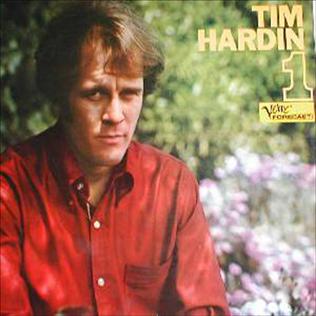
So with Tim Hardin, I shot his first cover and last cover. I shot him behind The Castle in the garden. Then he went to Verve Records, he said he need an album cover. So I went to Verve, and they used it. So I knew how to get to Capitol Records and how to get to Verve Records and Atlantic Records and they used them as their promo shots or album covers.
Album cover of Tim Hardin 1, photographed by Lisa Law
After we moved to Mexico and then back to LA, we went to the Haight Ashbury. So I documented the Haight Ashbury, the human being atmosphere. The Streets of the Haight. Monterey Pop….at Monterey Pop I had a little puppy that I had to feed with a bottle because the mother couldn’t be him. So I missed out shooting Otis Redding and Janis Joplin because I’m holding this baby puppy. I never considered myself a photographer. So, it didn’t matter, just took care of the little puppy dog.
SM: So at that point was photography just a hobby for you? At what point did it to turn into more of a career over hobby?
LL: It was after I divorced my husband in 1978. So all the way up to 1978, even Monterey Pop….that was just documenting my life. I’m very good at documenting my life.
So when I moved to New Mexico, and I’d started shooting the Hog Farm and Ken Kesey and the buses. Then I would print them up and leave them in their office and I was getting to be known as a historian.
When we went to Woodstock…Of course, I shot us getting on the plane [in LA], waiting in the airport, putting the tee pee poles and tee pee on the plane. I didn’t shoot in the plane, which is weird. And it’s probably because I had my two-year-old with me and she was sitting on my lap and I probably didn’t do it because of that. I didn’t shoot one picture inside that plane. But when we got off the plane, as soon as we came around the corner from where you get off… all these cameras were there. And the lights, cameras, rolling and rolling! They sent a jumbo jet to pick us up, empty. Who does that? Do you know how much that costs?
SM: Let’s see, in 1969 dollars….
LL: Expensive. But the airline probably donated it. So the press, they said, “Ah, we hear you’re the security.” Wavy [Gravy] says, “Well, do you feel secure? Yes? Well then it must be working.” “What are you going to use for riot control?” “Seltzer bottles and lemon pies!” So we then got on buses, and we went to the site and the last picture on that first roll [of film] was of my husband putting up the tee pee. So that was the last black and white then I changed to slides (Kodachrome).
But also when I went into town to get the food, I got a camera and some film, and I shot Super 8 . Because I shot Super 8, I was able to document behind the scenes. The same way I document with a still camera, but now with a movie. Because of that all my footage is being used now in every single one of those documentaries you’re seeing on TV, they know who to come to. And a new one that just came out from by Bohemian Films, The Festival That Rocked the World is the new one that just came out and not the American Experience from PBS. It’s a whole other one. It’s I think the best one. It has footage and vocals and stuff like that have never been seen before. It’s got a lot of my footage and me talking about everything. Because I have so much information about the Hog Farm and everything and I’m so talkative. They really liked it, liked working with me. I’ve gotten used to doing it. Before I couldn’t even speak – when my when my book came out and they interviewed me on the radio and I could barely speak.
Lisa Law, with a figurine of Wavy Gravy, at Bethel Woods Aug. 2019
SM: When you were actually at Woodstock, you were running one of the kitchens?
LL: Yes, there was only one kitchen, basically. Our kitchen, the Hog Farm kitchen. There were two but one of them was for serving us while we are setting up everything and the other one was for serving the crowds. I helped design that one, the kitchen and the five food booths that had 10 lines. So, I went and got $3,000 from John Morris and while I was shopping, they were building the kitchen and the serving booths. When I got back they were just finishing that.
So as soon as we got our pots out of the boxes, we started cooking. And I went and took a flatbed truck and went to a farm next door and I said, “I’ll take this row, that row, and that row.” Now that footage of me saying that was filmed by the [Bethel Woods] museum, they did an interview with me. So they used that footage of me saying that in one of their exhibits. When I went to see it recently, I leaned back in the beanbag and then I would talk and the other people around me. They would go “what?” and I’d say, “Well, that’s me over there! That’s me over there!” “That’s you?!” they’d respond. And I would narrate it for them. They liked it. So anyway, that’s what I did. I went and got all the vegetables from farmers locally. And it was August so they had a lot of it. So we’re cooking bulgur wheat and then I bring all that food and then the volunteers would chop it up, stick it in the pot to cook. And so people were waiting in that line. If you were hungry, you could eat. You did never go hungry at Woodstock.
SM: Even with a crowd that large?
LL: I had half the food leftover.
We were cooking non-stop, and people were in line. There were 25 to 30 people per line and there were 10 lines and it was just going: serving, serving, cooking, serving, serving. I bought 160,000 paper plates. I kind of knew what was gonna happen and when I went to town I got another three thousand. I spent $6,000 of their money to buy the stainless steel pots, to buy the cleavers, to buy the trash cans to mix the muesli in. To this day I still have the two cleavers and the stainless steel pot. One’s at my daughter’s show in Santa Fe. She’s got an exhibit up right now. She did a whole thing called “Hail Hail Rock and Roll: Happy 50th Woodstock!”
SM: Was the scene when you arrived at Yasgur’s Farm after travelling up from JFK different than what you expected?
LL: Well, when I got there they were already serving 100 people. The first group arrived by bus and they already set up a kitchen with plywood and two by fours and plastic. This was happening maybe a few weeks before the festival. They were already making the free stage, the little kitchen, and they had brought food with them. And they were they were cooking what they had with them, and [Max] Yasgur had yogurt, milk, eggs. He was selling stuff to us from his farm, and he had brought water and milk trucks over.
And they were fixing a LOT of food. I mean, big plates of food for everybody. Because they were being fed, everybody helped. We needed something done, we’d put them to work. Because otherwise I’m not gonna sit around doing nothing. They all helped. So we had different groups that came in and helped. And then the [crowds] started arriving and I had looked around and I said, “You know, this is gonna be bigger than we think it is.”
And that’s when I went to town and I spent that money. When I went in to get the money from John Morris, I said, “These people are going to starve if we don’t feed ’em.” And the concessions that were up on the hill? Those pointed roof ones… They were out of food the first day. There was no way to get more food because there was no way to get anywhere.
It was solid people and solid cars. And in my footage I stood right in the middle of them coming in. I just stood right there. And today I still shoot that kind of shot during parades and marches. I just stand [still]. And they walk around me. And you can see their faces and chanting in their signs and I shoot demonstrations like that.
SM: How did you find the time to take all of the photos and footage in between making sure the kitchen was up and running?
LL: Because I shoot on the run, I’m always shooting. Like I just finished visiting today and I’ve already shot 100 pictures; I should actually shoot you, too. And I shot at lunch today and shot portraits without even anybody really knowing I was doing it, that’s how I get away with murder. Unfortunately, you know, these ones aren’t as sharp, they’re in focus but they’re just not – they’re pixelated more with the phone. I hope [these cameras] get better. And then next i-Camera. I should be shooting with a camera. But I like to be more candid. If you have a full camera, it’s more intimidating than a phone.
SM: That’s my problem when taking photos. Everyone sees you with this big camera and they’re suddenly aware of your presence and their expression goes from candid to… not natural.
LL: Right. So I was shooting at the Woodstock event at the museum [Arlo Guthrie] and I was sitting there and I turned around and the sun was still shining. And all these kids are dancing like crazy and I get to snap them because that’s where the action is. It’s these people happy, dancing, celebrating. So I think probably I’ve shot over 1,000 pictures the last three days [at the 50th anniversary] and a bunch of the people came to my exhibit [at The Stray Cat].
SM: What was the lasting effect of Woodstock? Did it change your perspective on photography or have a major impact on your life?
LL: Well, what it did show me is that I have to shoot more because I looked at other people’s photographs that were up in the museum – all of those photographers and their best pictures from Woodstock. There are pictures in there of the food booths up on top of the hill and in front of the stage. When I was shooting the movie, I wasn’t shooting much of the stills. So when I consider it, I did a horrible job of shooting my stuff. But I did get some. If you look at my show, you will you will see some good pictures of Wavy coming in and the aerial shots [from a helicopter] and cooking shots and stuff like that. I could have shot 10 times as much. But I didn’t. I did get the movie, which is being used a lot by every single documentary filmmaker. They’re using it, but I didn’t shoot enough stills. And if I was really smart, I would have gotten a bigger camera and really shot the heck out of this year’s anniversary. But I figured that, at 76, do I need to take all those pictures? Because I’m still sitting in my office with thousands of pictures that nobody’s ever seen. So you have to think about that. Do you just keep shooting? Or do you slow down a little bit? Now, I also have Woodstock Three [1999] – and Two [1994] – nobody’s ever seen my Woodstock Three pictures. I’ve documented the heck out of Woodstock Three, for People magazine. I have an entire shop of Woodstock Three, never been seen. So I have all these rooms, slides, and proof sheets, pictures that nobody’s ever seen before. And so that makes me feel bad that I want to share everything that I’ve taken. That’s why I take pictures, it’s for sharing. That’s why people look at pictures. It’s because they want to see what you saw, what happened. And it’s very important – photographer’s work is very, very important because you could tell somebody about what happened but you can’t really describe it unless you show them an image. A photograph is worth 1,000 words, right? So I feel that I owe it to society to be able to share that.
About four years ago, I did a show in Yelapa, Mexico. I didn’t want to bring it home because it belongs down there. So I built a museum to house the pictures. [El Museo de Historia at Arte y Cultura de Yelapa]
There was an old building that used to have a sheriff’s office. We fixed up the sheriff’s office, we fixed up the plaza and we built the museum. I have 108 pictures on the walls. It took five months to build. I was the builder. I was the curator. And then I went and got tables full of artifacts, then I had to write up all the wording go with each one of those things. So there we are cutting the ribbon on the opening day, which was my birthday, March 8, [2019], alongside the guy who gave me his crew to build it the woman with the funding, and all my government people. There were a lot of compliments. I wanted to show the people what Yelapa was like back before there was electricity and plumbing.
We spent a lot of time getting the museum ready. Five months, five days a week.
Lisa Law (center) at the ribbon cutting for El Museo de Historia at Arte y Cultura de Yelapa. Courtesy Lisa Law/Santa Fe Reporter
SM: Back to Woodstock, do you think the 50th anniversary weekend was the celebration that everyone kind of hoped for?
LL: For the people that paid for their ticket and got their passes and came all the way up there to do that? They were very happy. And the ones that went over to Gerald’s [nearby gathering], those guys were happy. Okay, but it wasn’t like a Michael Lang thing. And Michael Lang’s things are too big and too corporate; nine never work. [Woodstock] Two and Three did not work. They did not work. Right. Okay. What happened here was very strict over the at the museum, and kind of loose over at Gerald’s. It worked, because there were two different ones. 100,000 people didn’t show up. Maybe 16,000 over at the museum [Bethel Woods] and 200 or so over at Gerald’s.
Well, this was the big 50th anniversary. Well, Michael Lang was invited to that. They gave him a house near Yasgur’s Farm. And he and Henry [Diltz] and and Bill Hanley and all those guys hung out in that house. So Michael Lang got to celebrate Woodstock, even though he couldn’t put on his event. They brought him over to be at their event to celebrate with those people who celebrate Woodstock every year. That was great for Michael Lang.
Friday left the crowd exhausted, but looking for more. A motionless field was peppered with life around 8AM, hippies making friends with neighbors as they awoke, ahead of the second day of Woodstock.
According to Robert Spitz’s Barefoot in Babylon, Director of Operations Mel Lawrence, would wake the crowd up with a rousing “GGOOOOOD MOOOR-NINGGG” followed by:
Sorry about that. Let’s try that one again. Good Morning. Thank You. Listen, last night was incredible, and we just wanted to let you know that everything’s okay. No hassles. We’re going to have another groovy day today and into the night and tomorrow.
I just need your help with one small favor. We’re going to pass out these bags now so that we can keep our home clean. We’ll hand them out to those of you on this side of the bowl, and I’d appreciate it if all of you over there will toss your junk in and pass the bag on until it gets over to the other side of the field. Some of the guys from the Peace Service Corps will pick them up over there and get rid of that stuff for tyou.
We’ve gotta keep this place liveable so we can prove to the rest of the world that we can make it to together in peace and comfort. And we’re gonna do it too.
Mel Lawrence, with intermittent cheers from a quickly awoken crowd.
A day of heavy-hitters would perform on Saturday, including The Who, Grateful Dead, Jefferson Airplane, Janis Joplin, Creedence Clearwater Revival and Santana among them.
Santana’s appearance has always been regarded as one of the highlights of the festival. According to Spitz, with 92′ heat and 97% humidity, the bowl had turned into a sauna, and emotions, fueled by boredom from early performances from Quill, Country Joe McDonald, John Sebastian, and Keef Hartley Band, were heating up. Santana jolted the crowd to their feet, making his mark on the festival and providing an electrifying bridge to the rest of that day’s performers.
The Who would not perform until 3:30AM on Sunday, playing well into the morning. The set was famously interrupted by activist Abbie Hoffman who stormed the stage to say:
This festival is meaningless as long as John Sinclair’s rotting in prison!
Abbie Hoffman at Woodstock
Hoffman was dispatched from the stage by Pete Townshend, who used his guitar to escort Hoffman into the photographer’s pit.
Jefferson Airplane hit the stage at 8:30AM on Sunday, with a set that paralleed the exhausted corowd. Much of the audience was passed out even as the hits “Volunteers” and “Somebody to Love” rounded out the set. At 10AM on Sunday, the music would take a break, for a few hours.
Watch performances from 13 of the 14 artists who performed at Woodstock on August 15, 1969.
Quill
https://www.youtube.com/watch?v=nfH18WqJuY8
Country Joe McDonald
John B. Sebastian
https://www.youtube.com/watch?v=XnsB4Ck__OE
Keef Hartley Band
Allegedly, Hartleyâs manager demanded payment up front for the rights to record or film the band. Thus, they were never included in any Woodstock footage until 2019, when the full Woodstock set was released.
Even now, 51 years to the day, the performance by Grateful Dead at the legendary Woodstock Music Festival still leaves a mark. Although, for a variety of reasons, it’s a mark that the band and any eyewitnesses that evening may not wish to remember fondly. Weather, electrical and all the other ever-sprouting issues that arose during Woodstock all played factors that resulted in what many deem a less than memorable performance put forth by the Western newcomers that many had heard of but few had seen before.
Due to scheduling issues and incessant rain, the band’s set on August 16, 1969 had already been pushed back from Saturday late afternoon to a 10:30 pm start time. By then, rain and the resulting mud had conquered the Bethel, NY festival grounds. The giant throng of spectators splayed across the hillside were getting soaked and restless waiting for the next act to start. Up until this point, the Grateful Dead were still only a band “on the rise” that was very much new to an East Coast crowd, by and large.
The inauspicious start began when the band’s notoriously heavy gear caused the rotating stage that was being used to sink completely into the mud – something they had warned the event staff about beforehand. Phil Lesh’s bass monitor was somehow picking up the on-site helicopter’s radio signal. And the Dead’s sound technician, Owsley “Bear” Stanley, was making alterations to what he considered an inadequate in-house PA system. It resulted in him improperly grounding the stage equipment and giving new meaning to the term “electric rock.”
Band members recall feeling a “light tingle” whenever they would touch their instruments. This all culminated with a now famous story about guitarist Bob Weir being thrown across the stage, supposedly during the “Saint Stephen” that began the show.
It was raining toads when we played. The rain was part of our nightmare. The other part was our sound man, who decided that the ground situation on the stage was all wrong. It took him about two hours to change it, which held up the show. He finally got it set the way he wanted it, but every time I touched my instrument, I got a shock. The stage was wet, and the electricity was coming through me. I was conducting! Touching my guitar and the microphone was nearly fatal. There was a great big blue spark about the size of a baseball, and I got lifted off my feet and sent back eight or 10 feet to my amplifier.
~ Bob Weir, Rolling Stone interview
Audio recordings only contain the first two minutes of the opening number, likely a result of this mishap. Things immediately lighten up a little afterwards with “Mama Tried,” a Merle Haggard song that the Dead had started covering earlier that year.
The awkward start-and-stop rhythm of the show then rears its ugly head again thanks to another ten minutes of delay in order to deal with the sound setup. A “spirited” Ken Babbs from the Merry Pranksters takes to the MC role during this part of the show as he tries his best to entertain a crowd of hippies growing increasingly damp and restless. This also gives Country Joe McDonald the chance to pop up onstage and warn everyone about the “green acid” that was going around.
After all the sound issues are resolved, the band launches into a moody “Dark Star” that serves as one of the musical highlights of the night. The near 20-minute rendition stretches out and descends into near ambience before rounding back into form. It features wonderful fills and textures provided by early keys player Tom Constanten who seems to be turned up abnormally high in this recording.
Once the “Dark Star” burned out, the band trotted out another new number with “High Time” – a sentiment that was no doubt shared by many this evening. Garcia’s vocals come through aptly but this isn’t exactly a song to get a crowd up and dancing. The slow, drab composition seemed to be reflective of the current atmosphere.
The band seems to cut their losses and ends theit set with a “Turn On Your Lovelight” that stretches out to almost 40 minutes. However,it starts with even more mayhem thanks to another “spirited” individual who jumps on stage and exclaims to everyone about “seeing the sun rise over the lake” and a “third Coast.” All this while the band is quietly playing the instrumental open to the song underneath it all.
While it does seem to finally inject some life into the set, not even a Pigpen rap would be enough to save this show. The extensive jam meanders and shifts from pscychedelia to blues and back with little direction in between. It marked the end of a set that had high hopes at first but falls flat in its delivery thanks to the weather, sound issues, lucid ramblings from MCs and stage crashers alike, and one of the guitarists getting visibly electrocuted on stage.
Grateful Dead Woodstock Music Festival Bethel, NY 8/16/69 St. Stephen (cut), Mama Tried -> High Time (false start), Dark Star ->High Time, Turn On Your Love Light
Bethel Woods Center for the Arts, a non-profit organization which works to provide all with rich and diverse art through performances as well as education, has announced it has cancelled its annual Pavilion season.
Photo courtesy of Bethel Woods Center for the Arts.
Since 2004, Bethel Woods Center for the Arts has been holding Summer concerts at its outdoor pavilion. The performances would continue even under horrible circumstances: through “torrential rain, lightning, and squalls of wind,” Chief executive Eric Frances says. However, due to the continued threat of the Coronavirus pandemic, the Pavillion stage would not open this year. This year’s set was supposed to include artists such as Bob Dylan, James Taylor, Norah Jones, and the Black Crowes.
Although not all concert dates have been rescheduled yet, some have announced plans to perform in 2021. Frances announces that Bethel Woods is still “[looking] to provide alternative programming throughout this year” by “utilizing [their] amazing venue in a responsible manner” even in this time of uncertainty. Bethel Woods is looking forward to being able to open their museum exhibits, the event gallery, and their outdoor augmented reality tour as soon as it is safe to do so.
Photo courtesy of Bethel Woods Center for the Arts.
As Bethel Woods Center for the Arts is a 501(3)c non-profit organization, all of their revenue comes though ticket sales and donations. Because their Summer sets are cancelled, Bethel Woods could be in financial trouble. To encourage otters to participate, its Board of Trustees has graciously offered to match each each donation which is given to Bethel to increase finances.
In the video in which Frances announces this unhappy news, he delivers and important message to the public: with the upcoming 51st anniversary of Woodstock, its original message of the “strength in unifying for peace” is crucial for everyone to remember right now. It is more important than ever to remember that “we are one.”
Folk singer James Taylor today postpones his co-headlining tour with Jackson Browne from summer 2020 to summer 2021 due to the current COVID-19 crisis. Taylor said regarding the news:
“Disappointing as it is to have to reschedule these shows, our first tour together, James/Jackson and I look forward with intense excitement to next spring when, hopefully, we’ll finally get to set this thing in motion,” the musicians said in a joint statement. “We were hoping to reschedule the tour a bit sooner but the experts we consulted have advised waiting for a full year. We thank you all for your patience and understanding and are really encouraged by the majority of you who are holding onto your tickets. We WILL honor them.”
While tickets for 2020 will be honored at all shows, if you cannot attend you are eligible for a refund from the point of purchase.
(Rescheduled) James Taylor and Jackson Browne Summer 2021 tourdates
May 14, 2021 – New Orleans, LA – Smoothie King Center
May 15, 2021 – Houston, TX – Toyota Center
May 17, 2021 – Ft. Worth, TX – Dickies Arena
May 20, 2021 – Salt Lake City, UT – Maverik Center
May 21, 2021 – Boise, ID – ExtraMile Arena
May 23, 2021 – Tacoma, WA – Tacoma Dome
May 24, 2021 – Portland, OR – Moda Center
May 26, 2021 – San Francisco, CA – Chase Center
May 28, 2021 – Anaheim, CA – Honda Center
May 29, 2021 – San Diego, CA – Pechanga Arena
June 9, 2021 – Chicago, IL – United Center
June 11, 2021 – Cuyahoga Falls, OH – Blossom Music Center
June 12, 2021 – Clarkston, MI – DTE Entergy Center
June 14, 2021 – Dayton, OH – Nutter Center
June 15, 2021 – Charleston, WV – Charleston Coliseum
June 17, 2021 – Pittsburgh, PA – PPG Paints Arena
June 23, 2021 – Roanoke, VA – Berglund Center Coliseum
June 25, 2021 – Louisville, KY – KFC Yum! Center
June 26, 2021 – Memphis, TN – FedExForum
June 28, 2021 – Nashville, TN – Bridgestone Arena
June 29, 2021 – Atlanta, GA – Infinite Energy Center
July 4, 2021 – Lenox, MA – Tanglewood(James Taylor and his all-star band)
July 7, 2021 – Holmdel, NJ – PNC Bank Arts Center
July 9, 2021 – Camden, NJ – BB&T Center
July 10, 2021 – Wantagh, NY – Northwell Health @ Jones Beach
James Taylor released American Standard on February 28, his first release since 2015’s Before This World. On the new album, Taylor infuses new sounds and fresh meaning into timeless works of art, reimagining some of the most beloved songs of the 20th century and making them completely his own.
Taylor says of American Standard, “I’ve always had songs I grew up with that I remember really well, that were part of the family record collection – and I had a sense of how to approach, so it was a natural to put American Standard together,” explained Taylor. “In terms of how [the songs] were performed and recorded before, we paid attention to the chords and melody, but we were interested in doing something new, and in bringing something new to it, we’ve reinterpreted the songs, that’s what makes it worth doing.”
The lead single “Teach Me Tonight” was released alongside the album announcement.
Phish frontman Trey Anastasio will perform 10 shows from late May into early June across the Northeast and into the Midwest. Trey Anastasio Band will headline nine of the dates, and will then share the bill with Jason Isbell & The 400 Unit at Constellation Brands-Marvin Sands PAC in Canandaigua. Tickets are on sale Friday, February 21 at Trey.com/tour.
Trey recently performed at The Capitol Theatre in Port Chester in January, and will perform at Tanglewood in June with the Boston Pops.
https://www.youtube.com/watch?v=hS8ajag-DJ8
Trey Anastasio Band Summer Tour
May 22 – MECU Pavilion – Baltimore, MD
May 23 – Stone Pony Summerstage – Asbury Park, NJ
May 24 – Stone Pony Summerstage – Asbury Park, NJ
May 26 – The Strand – Providence, RI
May 28 – Thompson’s Point – Portland, ME
May 29 – Mountain Jam – Bethel, NY
May 30 – Constellation Brands-Marvin Sands PAC – Canandaigua, NY*
June 2 – Royal Oak Music Theatre – Royal Oak, MI
June 5 – Stage AE – Pittsburgh, PA
June 6 – Jacob’s Pavilion at Nautica – Cleveland, OH
The Band’s Levon Helm would celebrate his 80th birthday on May 26, and the late drummer will be remembered with four performances by the Midnight Ramble Band during May. With three shows on May 8, 9 and 15 taking place at the drummer’s Woodstock studio, a final performance on May 30 will take place at Mountain Jam Festival in Bethel.
Helm, who passed away in 2012 due to cancer at age 71, will be celebrated by an all-star cast, including Jackie Greene on May 8, Nicki Bluhm on May 9 and Daniel Norgren on May 15.