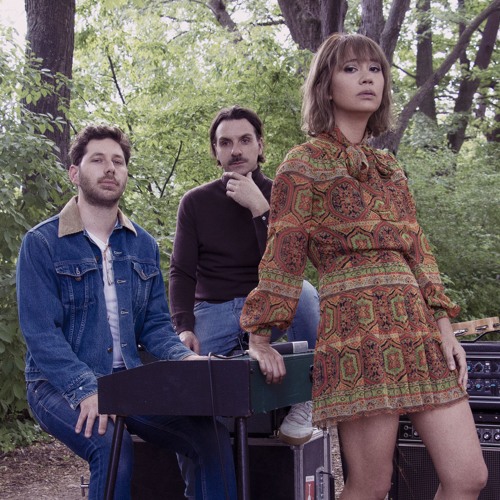
Le Couleur, an alternative pop group from Montreal comprised of vocalist, Laurence Giroux-Do, bassist Patrick Gosselin, and drummer Steeven Choudinard, has released their latest album Concorde. Despite COVID-19 cancelling numerous live performance schedules and release dates, that has not stopped Le Couleur from expressing fine work; Concorde is a well-tuned, melodic, and soothing album.
When performing live, Philippe Beaudin joins on percussion and Francis Do Monte plays guitar and keyboards. For their new show, they recently changed and showcased their new formation, consisting of six musicians in total. The French-Canadian group had put out EPs in 2013 and 2015, before finally releasing their critically acclaimed debut album P.O.P. in 2016. Le Couleur’s synth-pop sound is filled with intricate melodies, tight basslines, and the album is a very enjoyable listen for indie pop listeners and recent live performances at home are just as nice to listen to. Amid the pandemic, they have recorded home performances in place of in-person events. Interested readers can find these in-home performances on YouTube.
Concorde is named after an outdated airliner model that had a notable incident in 2000 when a fuel tank explosion on an Air France flight killed all onboard. The airliner would go out of service in 2003. Prior to the disastrous effect of the Concorde flight, it was positively perceived for its sleek design, and allowed faster flights in comparison to other airline models. The group was inspired by the ups and downs of the Concorde timeline along with the airliner’s symbolism. The Concorde’s sleek design represents that sexy, idealistic image of the carrier. The crash and its eventual retirement mark the “macabre” side that Le Couleur.
Key Tracks: Concorde, Comme une fin du Monde, Train de Minuit,
Ryan Guay of Street Pharmacy and Giant Panda Guerilla Dub Squad‘s James Searl have unveiled a passion project collaborative track titled “They Don’t Give A $$$$.” Released July 2, both artists spoke to NYS Music about the inspiration and writing process of “They Don’t Give A $$$$” as well as the experience of working together on the track.
Thomas Lent: What would you say was the inspiration behind “They Don’t Give a Fuck”?
Ryan Guay: I had written that chorus in the months before the pandemic and James and I had been in discussion on getting together and collaborating on a song that talked about how the corporate elite sort of use manipulation and tactics to make more money and fill their pockets, and it doesn’t really help anybody but themselves. I thought it would be a really unique chorus to say “they don’t give a fuck” but say it in a way that reflects more what they are actually doing. They don’t want to give up anything to anyone and they will do anything in order to make that happen. So that’s where the initial inspiration for that chorus came from and I sent it in an iPhone memo to James and James and I started writing back and forth with ideas over the phone and I think that’s where James,
James Searl: Yeah, that’s totally right and one of the cool things about collaborating with another artist on a song is that I think to start with, ya know if you go into the office at like 8:30 a.m. and like we put up a vision board or something and we’re gonna put out a perfect song but in my way. It’s conversational which is how music is, and Ryan and I, we met each other fairly recently. In the past couple of years. We’ve had some nice conversations just about all the things we relate to together and all the things we have in common especially growing up so close to each other but also divided by a national boundary. I feel like this chorus kept making its way into the conversation and what we were talking about things that like, Ryan, forgive me I think you studied history in school?
RG: Yes, I studied history
JS: I studied international relations and we have just like the same interests but different knowledge. We would be telling people different things and be like, “Ya they really don’t give a fuck”. Not only was it the chorus that Ryan had sent to me but it would always keep coming up in our conversations and I feel like that’s a really fun loop to get into creatively was like, it’s a natural, how they bring it all together, especially as musicians in this time, I think it can get a little bit cliché to say, “Oh we’re writing a song that’s relevant to this time”. I think as an artist, it’s our responsibility to kind of talk about what’s always been happening, and until that goes out of style its always going to be in style. It’s not that it’s like for this time or for that time but for all time and talking about the indigenous situation in both the United States and in Canada or Black Lives Matter, it’s just, the common denominator is always that theirs this very rich, mostly white, mostly male, very small population that’s kind of…I wouldn’t say pulling the strings necessarily, but taking advantage of the divisiveness especially. I think another thing that one particular circumstance Ryan had called me and said “hey they’re coming down the street and there’s all of these white supremacy signs being held and all of these alt-right people looking respectable; they don’t look like neo-Nazis like we’re used to seeing, they’re wearing nice shirts and kakis”
TL: Yeah, they changed their image after Charlottesville
JS: They did and Ryan was like “I’ve never seen this in Canada before” and it was just funny (it wasn’t funny) but he was earnestly, very concerned. He went and talked to the leader of the right-wing group that was talking about getting rid of immigrants and everything and it was just so wild to be seeing this happening in the States and in Canada. When we were growing up, the first song I wrote in a band was called “A Groove To Kick a Nazis Ass Too” and it was all about not being racist and it was cool to be against that when we were younger so it’s hard to believe that this is a trending thing with young men who would be in our similar positions now. It’s just, “How did this catch on?” I would say that it has a lot to do with how the song came together.
RG: That happened in January of 2019 in the dead of winter. These guys were putting up signs on the corner of the street in my hometown of 50,000 people, signs that were encouraging people to kick the immigrants out of Canada. “Not my Canada,” stuff like that. I’ve never seen anything like that before, ever, and the first person I messaged and sent a picture too of this occurrence was James. Because we talked about this boiling point in the United States and I never saw it, I never expected that. They had their polo shirts and they’re eating their double-doubles, just “smiling and waving” The next minute they were putting signs up near my rental property. I live in the basement of one. I rent housing to international students and they were putting signs up on these lawns marking where international students lived saying, “Kick them out”. I had never seen anything like it.
TL: With the ending of the visa program, they have basically done that at this point
RG: That’s exactly what they did.
JS: My wife is a professor and every professor is up in arms because it’s cruel to the students involved and it’s dumb, it just doesn’t make any sense. It’s clearly racist and it’s part of the xenophobic atmosphere that’s in politics right now. Another thing is that when you come across it now, these young men now are reading…oh, why can’t I think of anybody’s name?
TL: Evola? Marcus Aurelius is often interpreted as one of their heroes.
JS: Ben Shapiro! When they read Ben Shapiro or even just Jordan Peterson. Whatever powers that be that are trying to pit you against these immigrants, they don’t give a fuck about you. Like these young MAGA guys in their hats. I remember a couple of years ago these young white boys with their MAGA hats came to the front of the stage and know every word to every song so it’s kinda like they’re fans but they know that they’re trolling us and it’s just like, I don’t know why you guys are bringing this attention to yourself. The people that you are supporting, they don’t give a fuck about you. They’re not going to share when it comes time for that. All of the things that we heard before when it comes time for you to reach out to help, there is not gonna be anybody there. Ya know, you can’t eat money and the indigenous people have told us this my whole life. Be wary of these people that are trying to ruin the environment and turn a blind eye to it. In the end they’re trying to kill all of us and they’ll kill all of you too. They don’t care.
RG: Yeah, I’m metis and I’ve got family members that grew up on a reserve and, you know, colonial imperialism is….
TL: I’m sorry, can I interrupt? You said you were metis – can you explain what that is?
RG: Metis means I’m mixed blood, I have some indigenous background.
LT: Thank you for the clarification.
RG: Yeah, yeah no problem. So yeah, as you know, colonial imperialism is somewhat of a dirty word. The Christianization of indigenous people, you know, is really a disguise for the economic motive of imperialism of exploited resources. You know, that’s Canada’s terrible, dirty secret, really. This attempt to, quote-unquote, assimilate indigenous people openly has left a gaping wound in the culture and indigenous people are, you know, marginalized most in our country. The last residential school closed in 1996, it’s not that long ago. I think a lot of people have this perception that Canada is all hunky-dory, but it’s not, especially when it comes to the treatment of indigenous people and I know that from firsthand experience. We have the pipeline/railroad controversy clip in the first part of the music video, the Wet’suwet’en controversy. It’s a four hundred and sixteen-mile pipeline they protested going through their land for reasons and I’m not sure if you’re familiar with this, but in Canada, almost all the indigenous problems, almost all of the First Nations in Canada and its allies formed a massive national railroad blockade in protest. To stop the trade and they stopped, the C. N. for a month. Around when the coronavirus actually started to take shape. The RCMP, which is equivalent to U.S. federal police were created for the purpose of controlling the indigenous population in the eighteen hundreds. So they were sent in to do what they were apparently meant to do in stopping the blockade and if the coronavirus didn’t happen they would probably have gotten a lot more got international attention, but that’s what the significance of the whole clip is.
TL: After finding your inspiration, how would you describe the writing process for “They don’t give a $$$$?”
RG: Okay, I’ll start with that one James. I pounded out the chorus on an acoustic guitar and just repeated it over and over and over again so I could remember it. I wasn’t near anywhere to recording and it became something. It has been an ongoing theme in our conversations. It always comes back to that. So. I think when music, sometimes theirs just something divine about it. You know, you are the vessel that music is coming through, and that lyric, melody, just came out and it didn’t change at all. I just sent it to James and said. “Hey, James what do you think of this?” And then James right away was sending me lyrics. He was inspired by it and I was inspired by what he was sending me. So then I got into a computer and started to produce it and send him some ideas with an electric guitar just some drum tracks on-we did it for the most part electronically. This was in 2019 in the winter/fall when we started to send these ideas back and forth. I remember standing in line somewhere in the mall and James sent me a great idea for what became the second half of that verse. The second half of the second verse. And I just felt that we had something of serious significance because he was able to take my hook and make it mean something. You can say they don’t give a fuck about you and you know it could be like. Who is it? What does that mean? But James is able to channel that marriage of lyrics and melody to put it together to support the thesis statement. To be fair James drove a very far distance to make this happen.
JS: Ya I drove up to Welland Ontario which is ya know a beautiful place. I wanted to go see where Ryan is from and where Street Pharmacy does their work because since we’ve gotten to know each other it’s like finding old friends that you knew were there but you didn’t know where. So Welland was like a very familiar feeling place. It is only 20-30 minutes over the border from Buffalo. So it’s almost exactly where I’m from. And ya I just went there and I brought my base with me and Ryan had the drums and some guitars went down. I sat down and I played the bass line. The drummer Ivan was also there so it was cool to feel the vibe of the drummer in the room with me while I was playing. It felt very electric to finally sit down. When I figured out what the baseline was going to be I was very excited. That’s not always the situation when you’re with your band. Maybe when you’re alone or just with the producer. This was like with we’re making something fresh, and it was the first time we’ve done that. Ryan, as we were getting on the phone- and it was like the middle of the conference call that I realized he was extremely talented and capable and was engineering everything. He has a special touch and I love the way he mixes these things and makes them sound good.
That was also very inspiring sonically alone. And then just working on the sonics of the tune. I actually wrote like a book with different verses for the song over time and then on that trip I think I was a little bit exhausted, traveling, just like living my life, which is like trying to balance a lot of things that one time and I didn’t end up getting to lay down the vocals on that trip. I really liked the verses that I had but we kinda delayed the track and then it came time to be like “Hey I think we should really put this together this is a message that people would really like us to sing” ya know were just artists putting music out there but WE want to say it. That’s another part of being an artist. It was the first time that I ever sat in my basement at night and wrote some lyrics, recorded it, and send it to Ryan and Adam to use that track, as a point of pride for myself, to say that “I’m good, we can do this” and I don’t have to leave my house during the quarantine. I can lay down my vocals for Ryan who is in Welland and we can make a song and we can put it out. Like this is using the tools that we have to our advantage. That’s like kind of how it all came together.
RG: Ya there was a lot of exchanging of material over the internet because the coronavirus made it almost impossible to meet and then the borders closed. So we just used it to the best of our ability. There were a lot of other people involved. My friend Mike who plays in a band called Silverstein was very helpful in getting some of the sounds. He was located here and I was sending the files to him in the latter stages. Our friend Adam was on the track and was really happy with the vocals. I think this is one of the first time James engineered his vocals.
JS: Ya it was my first time engineering something that normally someone else would do all the time. The thing that keeps me going is working with people who really know how to engineer their sound and be able to engineer my sound as well. For Adam to think that it was useable-
RG: He (Adam Tune) was really impressed. He’s got a good ear for being able to tell when things are right. And that’s really hard, a lot of people who attempt to engineer, they don’t use their ears. They more or less watch the meters as opposed to listening to the track. A lot of times that’s what people are just starting out do but James’s ear is fantastic. His ability in the studio to capture the moment and put it into a file and record it, especially with his bass tone and his vocal tonality, it was really inspiring for me as an engineer and a producer to be able to pull those takes out fo someone and it was like “WOW let’s try to do some other cool things”. I think at the end we tried some other, Tom Morello Esq, octave, whammy pedal type things with the base where James is going up and down a full octave. It’s almost like a bass solo at the end. That was the most fun part of the process for me, ya know this is something I forgot to mention too. The person who introduced us, who I think wants to remain nameless, came down from Buffalo to meet us and he hand introduced us. I think James has a story about that. It was really cool for him to see the idea that he something that he had sort of an idea, being a fan of Street Pharmacy and then approach me at a show and say “You really need to work with this band their great”. I said “Ok” and the same thing happened to James and it ended up working out.
TL: It sounds like you guys really enjoy collaborating together. Can listeners expect more collaborations?
JS: That’s the hope, ya we certainty want to do that.
RG: Definitely. When you get together in a room with somebody and – I write commercial songs for a living under another name and another company- so I’ve done a lot of co-writing sessions and sessions for corporations and it can be difficult. But James and I have this instant, I think it comes from friendship so, we’re interested in the same things. I don’t think Rochester is too dissimilar from Welland. Because I’m so close to the border I grew up on a lot of American 90’s Alt-Rock, early 90’s late 80’s stuff, and American Punk. James had that background as well, with both of us playing in reggae-oriented bands now and ya know we listen to the same music. 90’s golden age hip-hop, Reggae, Dance hall, and also listening to 90’s alt-rock got us to this place where we can speak the same language. We can play something and be like, “Ya I know what that is it’s giving me a Helmet vibe” and James going “Wow you know Helmet I don’t know anybody who knows Helmet!”. We can talk like that without even really needing to speak. I’m really happy about that, that’s the best thing for me that’s come out of this experience other than having a song that’s very meaningful and I hope that it can help people open their eyes to the seriousness of the situation.
The Daniel Hersog O Canada Jazz Orchestra has released their first digital music video, featuring the Canadian National Anthem “O Canada.” The video’s release comes just in time for Canada‘s July 1 Independence Day.
Daniel Hersog‘s 17-piece ensemble formed in response to the Coronavirus Pandemic. The group is comprised of Juno Award winners, Canadian jazz stars and a recipient of the Order of Canada. All 10 Canadian Providences are represented among these musicians that have come together to support each other during trying times.
Daniel Hersog, hailing from Vancouver, British Columbia, has quickly become a vital Jazz player as a trumpeter, composer and arranger. Hersog is currently receiving significant airplay, and international media attention for his newly released album Night Devoid of Stars released through Cellar Music Label.
Photo by Victor Diaz Lamich/Courtesy of Festival International de Jazz de Montreal
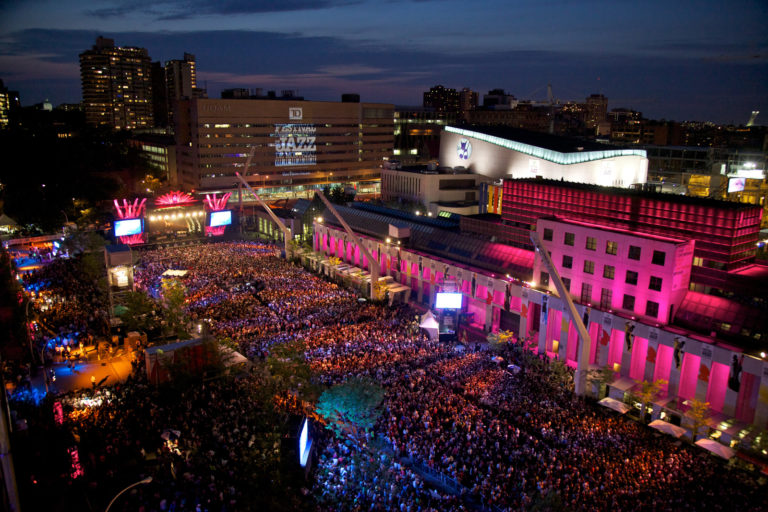
Le Festival International de Jazz de Montréal is an annual event and draws millions of visitors to the city of Québec each Summer. It holds the Guiness World Record for largest jazz festival. Unfortunately, the festival cannot be held in person this year; however, recordings of live performances will be available for free online. Thanks to support from TD Bank Group and Rio Tinto as well as public partnerships with the Government of Canada, the Government of Québec, and the City of Montréal, the Montréal Jazz Festival will reach more than ever before.
In order to keep everything up to the Festival’s standards, all performances will be filmed with high-quality production value in a specially made studio in Montreal’s L’Astral catered specifically for these online performances. Director Maxime Théoret-Bissonnette will manage these recordings and ensure that they will be of the highest quality. These live recordings will be free to view for anyone anywhere, making the Festival more accessible than it has ever been. If you can’t catch the performances live, they will be available for free on demand afterwards as well.
The Festival will kick off on Canadian Multicultural Day, June 27, with a lineup that will showcase Canada’s rich and diverse talent. The show will begin with the Apéros SAQ, a mix of live performances from some of the Festival’s favorite artists. Up next are the Sessions TD and Rhymes Rio Tinto, sessions that will be enjoyable for all fans. The Festival will also showcase recordings of performances from past Festivals. The opening night will finish with the Fin de Soirée Loto-Québec, a virtual party for everyone who wants to join.
Photo courtesy of Festival International de Jazz de Montreal
The Festival will continue for three more days and wraps up on June 30. Although the full schedule has yet to be announced, the lineup includes the top local luminaries and artists of the city. Some notable performers who will be featured are Charlotte Cardin, Jean-Michael Blais, The Barr Brothers, Dominique Fils-Aimée, Elisapie, Jordan Officer, and many more.
The Festival’s General Manager Jacques K. Primeau expresses that it is extremely important for the Festival’s team “to bring the jazz Festival to the people.” He also expressed that the Festival “is thrilled to be able to offer an innovative solution to get the music out to the fans” even with such difficult challenges.
The Festival is only taking place thanks to the leadership of Primeau and Laurent Saulnier, the Festival’s team, the artists, and the Festival’s generous sponsors. Primeau remarks that “#JazzTogether is truly a community and a family affair” even in the hardest of times.
Iconic rockers, The Rolling Stones, have announced a North American Tour for 2020. The slate of performances are scheduled this spring, beginning on May 8 in San Diego, California and concluding on July 9, at Raymond James Stadium in Tampa, FL.
This latest leg is a continuation of their widely popular “No Filter” tour – marking their seventh consecutive decade on the road. With no more than six performances scheduled each month, the Grammy Lifetime Achievement Award winners will focus on major arenas. Beginning on the West Coast at the SDCCU stadium, they will perform throughout the Midwest, the Southwest and the Northeast and Canada.
Tickets for the North American Tour will be made available on February 14. Early registration for tickets can be made on their official website.
A list of tour dates can be found below.
May 8 – SDCCU Stadium – San Diego, CA
May 12 – BC Place – Vancouver, BC
May 16 – U.S. Bank Stadium – Minneapolis, MN
May 20 – Nissan Stadium – Nashville, TN
May 24 – Circuit of the America – Austin, TX
May 29 – Cotton Bowl – Dallas, TX
Jun. 6 – New Era Field – Orchard Park, NY
Jun. 10 – Ford Field – Detroit MI
Jun. 14 – Papa John’s Cardinal Stadium – Louisville, KY
Jun. 19 – FirstEnergy Stadium – Cleveland, OH
Jun. 23 – Heinz Field – Pittsburgh, PA
Jun. 27 – The Dome at America’s Center – St, Louis, MO
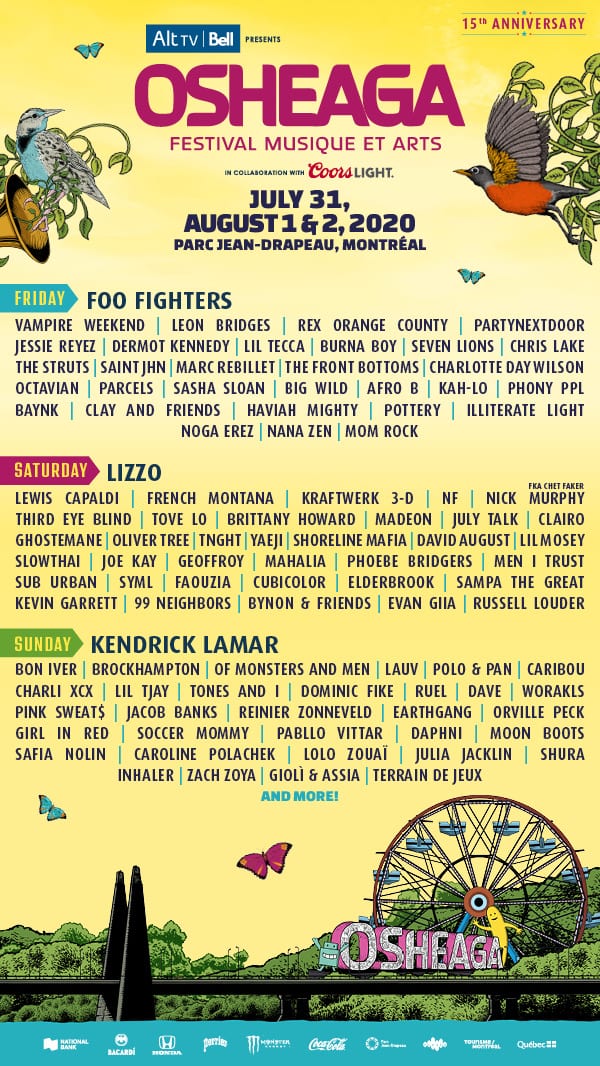
OSHEAGA Music and Arts Festival has announced its 2020 music lineup. Held from July 31 to August 2 at Parc Jean Drapeau in Montréal, this year’s festival is brought to you by Bell Alt TV and Coors Light. To celebrate 15 years of Canada’s premiere music and arts festival, megastars Foo Fighters, Lizzo and Kendrick Lamar will be joining over 100 other artists on the side-by-side festival stages.
OSHEAGA is hosted on an set of islands overlooking the Montreal skyline. Joining the music acts will be art installations and various local culinary options that locals and fans from across the globe can enjoy.
This year the OSHEAGA Festival is partnering with PLUS1 to donate $1 from every pass sold to the Evenko Foundation Program. Evenko brings extracurricular music and art classes to 260 high school students at nine Montréal high schools. Passes for the festival are on sale now starting at $252.65 and can be purchased here. Check out the full lineup poster below.