Live music fans can now take an online adventure in music with the Vermont Department of Tourism and Marketing’s new free virtual event series, “Forevergreen: A Vermont Adventure In Music.” The newly established virtual concert series presents music fans with Vermont’s endless capacity for adventure and a roster of artists who have an affinity for the Green Mountain State.
Produced by Higher Ground Presents, Forevergreen’s five-part virtual concert series will feature local Vermont musicians as well as regional and national acts live from quintessentially “Vermont” stages like South Burlington’s Higher Ground as well as a some of the state’s most iconic ski resorts. The event series will see performances from Taj Mahal, Twiddle, Lucius, Susan Tedeschi and Derek Trucks, Grace Potter, Chris Thile and Aoife O’Donovan, and more. For the full event schedule, head here.
All episodes of Forevergreen will stream live for free on the Vermont Tourism YouTube and Facebook channels at 7 p.m. ET. Watch the official teaser trailer of the event series below. More info can be found here.
December 26 – Taj Mahal, Twiddle, Kat Wright
December 30 – Lucius, Ryan Miller, Will Keeper
January 2 – Susan Tedeschi and Derek Trucks, Grace Potter, Dwight and Nicole
January 9 – Chris Thile and Aoife O’Donovan, Neko Case, Mikahely
January 16 – The Avett Brothers, Noah Kahan, The High Breaks
Talking Heads will receive a Lifetime Achievement Award at the Grammy Awards show on January 31, 2021. The award celebrates performers who have made outstanding contributions of artistic significance to the field of recording.
Forming in NYC in 1975, Talking Heads had an immense career, spanning 16 years and influencing countless bands in the rock and jam scenes, extending their reach well beyond their lifetime, among them Phish, Widespread Panic, Arcade Fire, LCD Soundsystem and many more.
The accolade from the Recording Academy is particularly noteworthy, given that Talking Heads never received a Grammy Award. They were nominated twice – once in 1984 for Best Rock Performance by a Duo or Group for “Burning Down the House,” and again in 1988 for Best Concept Music Video, “Storytelling Giants.”
Those looking for Talking Heads to perform, pandemic aside, can recall the last official Talking Heads performance, which took place at the band’s 2002 Rock and Roll Hall of Fame induction. It is unlikely this award will spark a reunion, one that Byrne has not been in favor of for many years (a lifetime even).
In addition to the 2021 Lifetime Achievement, Special Merit gramophones honorees include Tejano music legend Selena and female rap group Salt-N-Pepa, as well as Grandmaster Flash & The Furious Five, opera singer Marilyn Horne, and late jazz great Lionel Hampton.
The 2021 Grammy Awards are set to take place Sunday, January 31, 2021 with Trevor Noah of The Daily Show as host.
Revisit Talking Heads performance at Saratoga Performing Arts Center on August 5, 1983.
The group included founding members David Byrne (vocals, guitar), Chris Franz (Drums), Tina Weymouth (Bass), and Jerry Harrison (Keyboards) in addition to a number of added musicians who come and go when needed to supplement the bands theatrical performance. One of these musicians just happens to be magic keyboard man Bernie Worrell of ‘P-Funk’ fame. For those fans who love the 1984 concert film ‘Stop Making Sense’, this live recording makes a fitting addendum to that document, which also chronicles the 83 tour in support of the LP Speaking In Tongues.
Guitarist Leslie West, heavy metal pioneer and Mountain frontman, has died at age 75. With hits including “Mississippi Queen” and “Theme From An Imaginary Western,” West established an indelible voice and guitar tone that remains legendary to this day. A press release reports the cause of death to be cardiac arrest.
West was born Leslie Weinstein in Queens, and attended Forest Hills High School, which was also attended by The Ramones, Burt Bacharach and Paul Simon. West first emerged on the scene as a member of The Vagrant, and a few years later he and Felix Pappalardi formed Mountain. The iconic guitarist, vocalist, songwriter and storyteller leaves a legacy that is celebrated by peers and fans across the world.
Mountain was one of the performers at the original Woodstock in August, 1969, and later formed West, Bruce and Laing with Mountain drummer Corky Laing and Cream’s Jack Bruce. In, 1971 West contributed to The Who’s Who’s Next sessions in NYC, performances that can be heard on the album’s 1995 and 2003 reissues.
Alongside his significant contribution to pop culture as the face of Mountain, West appeared in films Family Honor (1973) and The Money Pit (1986). He was a regular guest on the Howard Stern Show, and over the course of decades remained a periodic visitor alongside enjoying a decades-long friendship with the talk show host.
photo by Rob Teller
West was inducted in to the Long Island Music Hall of Fame in 2006, and appeared on dozens of other recordings from a vast universe of artists. Samples of his performances lived a secondary life on the masters of a who’s who of hip-hop and rap stars.
The guitarist is renowned for helping popularize the Gibson Les Paul Jr. model with P-90 pick-ups to create a tone that is undisputedly his own. More recently, he enjoyed a long relationship with Dean Guitars, releasing several signature models.
Leslie West is survived by his wife Jenni, whom he married on stage after Mountain’s performance at the Woodstock 40th Anniversary concert in Bethel, NY on August 15, 2009. He is also survived by his brother Larry and nephew Max.
From 1964 through today, few artists have left a more significant mark on music as we know it. Guitarists across the globe together will unite in sadness as the world says goodbye to a true original.
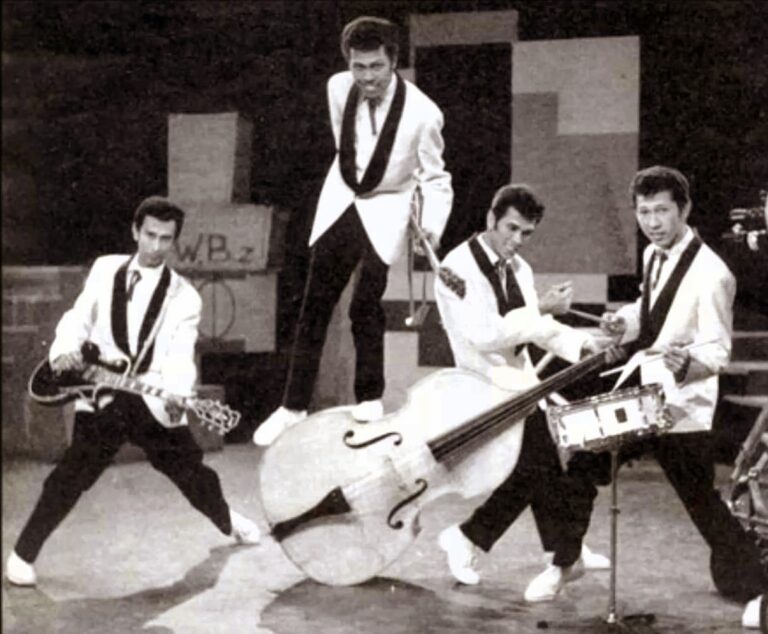
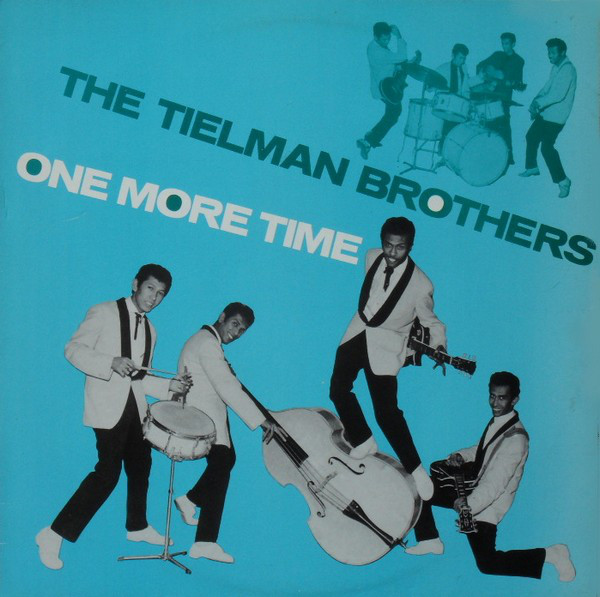
The late, great Edward Van Halen wasn’t the first musician of Indonesian descent to set the world ablaze with his fiery guitar work. That honor goes to The Tielman Brothers, a quartet of Indonesian immigrants to Van Halen’s native Holland, who helped pioneer a new musical genre in the early years of rock-n-roll. It was a fusion of exotic world and American musics – a high energy, theatrical and largely instrumental guitar-driven variety played by Indonesian immigrants to the Netherlands dubbed Indorock. Although it was big in continental Europe for a time, Indorock has remained virtually unknown in the world beyond.
Tielman’s story begins in 1945 in Surabaya, Indonesia, then a Dutch colony. That was when four brothers – Andy, Reggy, Loulou, Ponthon and their sister Jane – were inspired to start performing traditional folks songs and dances at parties by their musically-inclined father, Herman. Within a year and half, they were on tour as The Timor Rhythm Brothers, playing the music and dances of their homeland with costumes and even war-like rituals employing spears and swords. The musical style they played, kroncong, was a fusion of traditional Indonesian music with Portuguese fado and saudade, sounds that came to these islands when European explorers arrived, with their guitars, in the 16th Century.
All that changed in 1951 when the Tielman’s heard the hillbilly rock of “Guitar Boogie” by Arthur Smith. In search of a harder, more American sound like Smith’s, they moved brother Loulou over to the kit drum set. They eventually began to add covers of hits by Les Paul, Elvis, Chuck Berry, Fats Domino and Gene Vincent to their act – all propelled by the ferocious guitar licks and versatile vocals of Andy Tielman.
The Tielman’s joined the wave of more than 300,000 Indonesians who would emigrate to Holland. They brought spice to its culture, cuisine (the famed rice buffet, Rijsttafel) and music. In 1957, the family relocated to Breda, Netherlands where they began playing as The Four T’s. Their big break came in 1958 when they secured a gig in the Hawaiian section of the Dutch pavilion at the World’s Fair in Brussels. Hawaiian music was becoming a global sensation at that time. Naturally, it became another ingredient in their fast-expanding polyglot musical brew, along with a little country & western, rockabilly and their native folk.
The World’s Fair crowds were blown away by their frenetic brand of rock-n-roll. It was a roar of volume and energy complimented with showy antics like tossing their guitars, playing them with their teeth, their toes, behind their backs and heads, and upside down – all without missing a note or beat. It was Hendrix’s bag of tricks, minus the burning guitar, ten years before Monterey Pop. Their electrifying act quickly garnered bookings far and wide, including some in Hamburg’s notorious Reeperbaum red light district, commencing two years before the Beatles’ first stint.
A year later, they would finally be performing as The Tielman Brothers, in Holland and mostly frequently Germany. The year also saw the release their debut single, “Rock Little Baby of Mine,” widely considered the first-ever Dutch rock-n-roll record. Around the same time, brothers Andy and Reggy started playing their signature Gibson Les Pauls. It was something that would influence a host of European guitar heroes-to-be including Jan Akkerman. The blistering technician who led Holland’s most internationally successful Indorock band, Focus of “Hocus Pocus” fame, Akkerman got turned on to the Tielman’s and their Les Pauls at age 12, while watching a performance on German TV.
“Andy’s white Les Paul was cool, but seeing Reggy playing his Black Beauty, I knew that was my guitar and I would have to have one someday,” says Akkerman. “I had played a Gretsch White Falcon in a bunch of bands since my dad bought it for me in 1963. But I had wait around seven more years or so, until my days in Focus, to finally get a black Les Paul Custom. It was an instrument that became a signature of my sound and the bands through the mid-70s.”
The Tielmans stuck with Gibson guitars until the mid-60s when they moved on to Fender Jazzmasters. Lighter axes made their acrobatics easier to perform and became choice for the majority of Indorockers. Interestingly, Andy created a custom 10-string Jazzmaster in order to thicken his sound.
Much of The Tielman Brothers’ notoriety came as a result of high octane performances on Dutch and German television, ones that we can enjoy today thanks to YouTube.
On January 23, 1960, Holland was hit with an earthquake of Indorock sound and sight… when The Tielman Brothers appeared on AVRO TV’s “Weekend” show.
The slim, sharply dressed brothers kicked off their performance with “Black Eyes.” It’s a sleepy Santo & Johnny-esque ballad driven by trills and tremolo at first, which then moves onto a stop-time tango beat, and finally, a Gene Vincent/Cliff Gallup-styled rockabilly rave-up to close. Brother Andy was centerstage with his inspired riffing and cool lounge lizard presence – using bends, slides, muted strings and classical-styled tapping to ring harmonics out of his guitar.
This TV performance also included “Rollin Rock,” six-minutes of the brothers pulling out all stops on their instrumental Indorock prowess and showbiz schtick. Drummer Loulou played Andy’s guitar with his sticks and solos repeatedly. He walked around his kit as he thumped away. Ponthon alternatively runs, rides and slides his big acoustic bass across the stage. Then positioned himself beneath it as he took his solo. Andy swung for the fences as usual – playing his Les Paul with his feet, his teeth and behind his back, the latter while dancing atop Ponthon’s bass.
The Tielman’s performance also included their radical new single, “18th Century Rock.” Could it be they started the whole European classical/prog rock thing with this rockabilly’d-up version of Mozart’s “Piano Sonata No. 16 in C Major?” The stodgier segments of Dutch society were not impressed and criticized the band heavily in media. Interestingly, they would go on to enjoy greater success in Germany, Italy, France, Switzerland and Sweden than Holland.
The first Indorock bands I heard in Holland were the Poetiray Brothers, Electric Johnny and his Skyrockets, The Crazy Rockers and the Tielmans with Andy at the helm, who were the best of the lot. What a great talent he was, a genius in his own right who I had the pleasure to see and play with many times. Andy and the Tielmans were more of an influence on me than the Beatles or the Rolling Stones. I put him right up there in my favorites, with Jimi, Django and Julian Bream.
Jan Akkerman
“I remember seeing them one night in the ‘60s in the Hague at a chic place called Palais de Dance,” Akkerman recalled. “What I heard and saw was unbelievable, as it always was. They played high-energy rock-n-roll, romantic ballads and even instrumental covers of tunes from West Side Story. I heard from Andy that when they played at the Star Club in Hamburg, The Beatles would come listen and watch him play his guitar with his teeth!”
The original band of brothers would stay busy, add some new members and release a steady stream of singles and albums until a serious car accident caused two to leave the band in 1964. The band, then with only Andy aboard, scored their biggest hit in The Netherlands with the Hawaiian-inspired vocal ballad, “The Little Bird,” which reached #7 in the Dutch Top 40 in 1967.
Even after a move to Australia in his later years and the dissolving of the band in 1979, Andy continued to be a popular performer, returning to Europe to play and record and sometimes re-make his hits until his death in 2011.
“After I left Focus in 1976, Andy came to visit me often and we even recorded an album, R&R, Our First Love, which sadly never got released,” adds Akkerman. “A few month before his death, I ran into him at an Indonesian marketplace in the Hague. His daughter was playing violin; she was very good and he was very proud, more proud of that than anything at that moment. Shortly after that, I got the news he was terminally ill, but he kept playing till his last breath. Andy, for me, is still numero uno.”
The Tielman Brothers combined the very best of many good things. They boasted the intricate instrumental guitar stylings of The Ventures, The Shadows, Link Wray and Dick Dale, with rockabilly/pre-punk energy, relaxing South Sea islands folk balladry, some Great American songbook croonery, primitive prog rock with their classical interpretations and much more. It was all delivered with the kind of crowdpleasing antics that may obscure the instrumental brilliance at first glance.
As Akkerman relates, The Tielman Brothers were just the tip of the Indorock spear. Some lesser known groups of Dutch/Indonesian musicians slightly preceded them like The Real Room Rockers; and many more followed, including The Crazy Rockers and The Blue Diamonds. They are all well worth the listen.
Also worth a long listen and look is Akkerman’s work on the spectacular, new 9-CD,2 DVD Focus 50 Years anthology. This elaborate boxed set collects remastered editions of the band’s seven studio albums, plus assorted b-sides, alternative mixes, unreleased outtakes, demos and live and television performances from the Indorock/prog/fusion band’s peak years, 1970 -1976.
Saratoga Springs’ Sly Fox and the Hustlers are currently in the studio completing a new album to be released in Spring 2021. Ahead of time, Fox has shared a Christmas tune, a cover of Ray Charles’ “That Spirit of Christmas,” designed to spread some love this holiday season.
Released on December 17, along with the snowfall, the song channels the Ray Charles holiday classic with Fox’s blues roots through his vocals and guitar. The single will be available for purchase on all streaming sites and all proceeds will be donated to Toys for Tots in the Capital Region during the month of December.
Sly Fox shares some thoughts on the song:
I’m one of those people that loves Christmas music, especially the classics but this one is my favorite! I’m a huge Ray Charles fan and it’s a cover of his song, “That Spirit of Christmas.” What makes it stand out to me (among all the great Christmas songs) is the soulful message of the song with an emphasis on spirituality, love, family and trying to sustain those good vibes throughout the year!
Fans of National Lampoon’s Christmas Vacation will recall the song from the scene where Clark (Chevy Chase) is in the attic. The artwork for the song is Fox and his sister on Christmas morning at 5yrs old with his first guitar. For more music from Sky Fox and the Hustlers, follow them on Facebook.
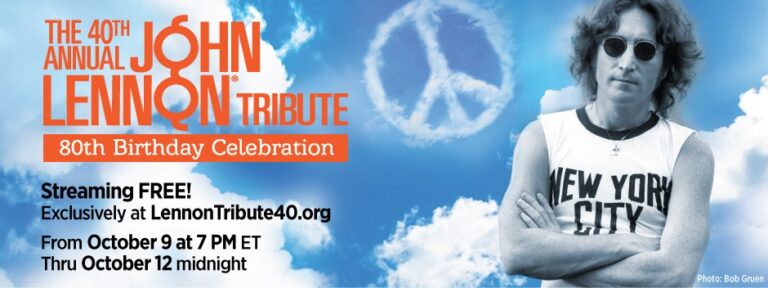
Theatre Within, the non-profit behind the Annual John Lennon Tribute charity concert since 1981, has announced that its milestone 40th Annual John Lennon Tribute Concert will again offer a free livestream exclusively at LennonTribute40.org, from Wednesday, December 23 at 7pm thru Friday, January 1 at midnight ET,
This program, the third installment of music and memories produced in Lennon’s honor, will feature a new performance by Steve Earle, recorded especially for the Tribute’s finale showing. The stellar line-up also includes recent John Lennon Real Love Award Honorees, Patti Smith, Natalie Merchant and Rosanne Cash, plus Jackson Browne, Taj Mahal, Jorma Kaukonen, Martin Sexton, Keb’ Mo’, Joan Osborne, Bettye LaVette, Shelby Lynne, Marc Cohn, Willie Nile, Lucy Kaplansky, Nicki Richards, The Kennedys, Ron Pope, and Music Director Rich Pagano.
In addition, the livestream tribute includes reflections on the music of John Lennon, social impact by rock photographer Bob Gruen, Double Fantasy producer Jack Douglas, radio personality Dennis Elsas, music critic Anthony DeCurtis, and playwright V (formerly Eve Ensler).
In a statement, Yoko Ono said:
John has been a loving spirit now for nearly as long as he was with us on earth, 40 years. Through all that time, Theatre Within has celebrated his music and message with its beautiful annual tribute, which helps makes possible its programs for those impacted by cancer, including the John Lennon Real Love Project songwriting workshop. This is such a wonderful way to honor John and the values he stood for.
This year, in partnership with Gilda’s Club NYC and Gilda’s Club Westchester, Theatre Within has provided 135 free workshops, all available online – in songwriting, art, meditation and much more – for children, teens and adults impacted by cancer.
Theatre Within invites John Lennon fans to make a donation in any amount by texting “TRIB40” to 41444. All proceeds will empower Theatre Within to continue its free programs for NY-metro cancer community through 2021.
The penultimate SNL episode for 2020 brought Bruce Springsteen and the E Street Band together in Studio 8H for the first time, and their first public performance in four years. This SNL episode also featured Tonight Show musical director Questlove in a sketch on classic versus modern rap.
This week’s episode was hosted by NYC born and raised Timothée Chalamet, who gave a shout out to his mom, who was featured in the 90s sketch Massive Headwound Harry. Chalamet gave a musical interlude during his monologue, talking about his love for New York City, and was joined by Pete Davidson to talk about a Staten Island Christmas.
“Ghosts” was the first song of the night, a track off the recently released Letter To You. For Bruce Springsteen and the E Street Band’s second song, a Christmas lit SNL stage framed an energetic performance of “I’ll See You in my Dreams.”
https://www.youtube.com/watch?v=UYW-DIG-CV4
Rolling Stone reports E Street Band founding bassist Garry Tallent and violinist Soozie Tyrell had to skip the SNL performance due to COVID-19 protocols. Springsteen tweeted earlier in the week, “Garry and his family are fine as is Soozie, but we thank Jack Daley of the Disciples of Soul for sitting in.”
Despite having a career starting in the 1970s, Springsteen did not appear on Saturday Night Live until 1992, on an episode hosted by Tom Hanks.
Bruce Springsteen last appeared on Saturday Night Live on the 2015 Christmas episode, performing “Meet Me in the City” and “The Ties That Bind.” SNL returns next week with Kristen Wiig and musical guest Dua Lipa.
From La Bamba to Kiko, having gone Disney and recording a holiday album, Los Lobos has been around for nearly half a century and continues to break new ground with their blend of Tex-Mex, country, R&B, rock and roll, and traditional Mexican songs. Louie Pérez, drummer, guitarist and lyricist for Los Lobos has faced the struggle of the music industry shutdown, but looks forward to “Still Home for the Holidays” livestream from Belly Up Tavern in Solana Beach, CA on Friday, December 11 at 10pm ET/7pm PT.
In 2019, Los Lobos released Llegó Navidad, a Latin Christmas album recorded in Los Lobos’ home in East Los Angeles, featuring Spanish-language holiday songs. Translating as “Christmas in here,” the first holiday release from Los Lobos continued to demonstrate the versatility of a band well-versed in mixing rock n’ roll with blues, folk, soul and traditional Mexican music. Instead of relying on over-played seasonal standards for Llegó Navidad, Los Lobos and friends researched and collected nearly 150 different traditional (and not-so-traditional) Christmas songs from North, Central and South America.
Los Lobos (L to R) – Louie Pérez, Conrad Lozano, David Hidalgo, Steve Berlin, César Rosas
Pérez talked with NYS Music over the weekend about the current state of writing with bandmate David Hidalgo, how venues and bands are faring at this time, and the legacy of Ritchie Valens.
Pete Mason: Louie, thanks for speaking with NYS Music today. How have the past nine months been for you and Los Lobos?
Louie Pérez: We’re just kind of dealing, have had quite a break you know, I guess this break is kind we’ve all been needing for a while, but what a terrible way to get it.
I’m dying to get back on the road again, but it’s just kind of very surreal at this point. It seems like a life I had a long time ago. It’s only been seven or eight months now I guess. I don’t know what to expect, that’s another conversation we can have another time, but I don’t know what the future of live music is going to be. It can be different that’s for sure. I’m hoping that we can still get some solutions for next year so that we can get back to live music, especially because there’s only so much we can stream, I think, at the end of the day.
I don’t know what the future of love music is going to be really. Nobody’s got an answer yet and hope we have some in the spring because with a vaccine out there, there’s got to be some ways we can have shows. I don’t really know what the face of live music will look like in the future. I can’t see it being back to our old normal.
There’s love for the musicians out there, I think their careers evaporated overnight. For myself, I was leaving on a Friday morning for Colorado, we were gonna do a run of shows for a week there. And at 10 o’clock in the evening my wife walked in and says “I’ve been watching the news all night. You better check with your roadmaster but look what’s going on.” I was scheduled to leave at 6 in the morning so I called our booking agent and he called back and it all went away. It was all gone. That was the last thing I heard about that.
When something like this happens, it feels so cataclysmic, you can’t help the banality of the whole vibe as just so, so strange. It just feels like it’s the end of a time concert, especially for musicians. It’s been really hard time for a lot of musicians, we’re okay, we’re getting by, we’re all right, and I’m glad my wife and my kids are safe. And, and that’s all we can do at this point.
PM: Working with up and coming musicians from across New York State, we see it, we hear it and know the reality some bands are facing: looking into other alternatives, taking studio time, hoping to stay afloat, until we can have music back.
LP: Yeah, it’s good to know that the community, the sense of community is there for musicians. I think all of us in general, we just put our nose to the grindstone. We do what’s right in front of us, as musicians, we get a gig here, a musician gets a studio gig, or a guy gets a road gig for a couple of weeks. However it works, we do what’s in front of us, and there’s some crosstalk obviously, between us, but to know that when things get as bad as it has gotten, that there is a community that we can look to and there is support among all of us to try to help each other out. That’s the good thing, the only thing that I think that we can skim off the top of this pandemic, is that we realize that, that there is that sense of family and community. Especially at a time where we’re united, it’s just so at risk of disappearing lately. Let’s see what happens after, after February.
PM: I’m hopeful for what happens in January, because we’ll be able to get some relief. So we have that and a lot of local music venues are going to be able to breathe a little bit easier with the passage of the RESTART Act, but they’re not out of the water even then. Hopefully there’s more long term change. So all the local musicians can make it because big bands don’t become big bands overnight. They start out small.
LP: Yeah, that’s right. I was just reading a pretty interesting piece. Not a lot of revelations and things that we know as musicians. This is a piece in The New Yorker a couple months ago that is a pretty good piece to talk about, art in the digital age and really kind of the nuts and bolts of what really goes on in the gig economy as far as musicians go, and how really, a lot of us are very fortunate and a lot of us are just in there just trying to get by.
PM: So with your holiday stream on Friday, Los Lobos researched the songs to include on your holiday album Llegó Navidad. How did the Christmas album come together and what will we hear on the stream this week?
LP: Well, it’s the first time we’ve ever done a Christmas record. In all of the years that we’ve been together. We just celebrated this past Thanksgiving 47 years as a band. So the first time we ever can say, ‘Well, this is way overdue.’ And then in looking around for a studio to record it in, we discovered a studio in East Los Angeles where we grew up. So we’re really going home for the holidays on this record, which would throw a really interesting spin on this thing, and we spent a good part of a few months in the studio in East Los Angeles, literally around the corner from where my mom would pay our utility bills at the 1st Street grocery store. That’s how personal it was, and it was great.
We had a couple people, one on the East Coast and one on the West Coast, do a search and curate so we can get all the songs together. We spent a few days just going through material and ended up with the songs, it’s a Pan-Latin record. At first I gave this a lot of thought of all the Mexican Christmas songs but it just was stunning how many songs and Christmas music there is all over the place, all over Latin America so we have quite a few to choose from. and that’s how it went together and it was really well received and we toured behind it around the holidays last year.
We just got this idea that everybody’s been doing these festivals online and we’ve thought ‘Well, let’s do one ourselves.’ We got all our friends together and we’ll put something together and we’ll have a bunch of bands contribute songs and it’ll lead to us headlining the live stream. We’ll do a lot of the Christmas songs so we can pepper in a lot of popular songs as well from throughout the catalog.
It’s quite a lineup. We’ve got Southern Avenue, John McCauley of Deer Tick, Greyhounds, and Los Cenzontles, which is a great group from the Bay Area. They have a cultural center where a lot of young kids come to learn about music with their culture, which is Mexican culture so they’re going to do some traditional songs. So we got all this rock music, we get some traditional music thrown in there, and we have a group that is going to be doing some traditional music but more electrified, so it’s a great mix. A friend of ours, Gilbert Guerrero, he’s going to be our emcee. They’re really looking forward to it. It’s been fun putting it together, and of course I have to mention that it had some hair pulling, and here we are down to the wire. It’s gonna be fun.
PM: For Eastcoasters, where is Solana Beach in relation to Los Angeles?
LP: South L.A., on the way to San Diego, it’s a great vibe. It’s kind of a roadhouse venue. And it’s where people just kind of show up. The Rolling Stones actually did an unannounced show there a few tours back. It’s a really great room that people love and it sounds great. We did one there and they have a good crew and facility that worked with our people to get this livestream happening and try to make it as seamless as possible, because it is not easy doing these live streams. And if they’re live, if you get some kind of dropout somewhere, there’s nothing you can do about it live, like live television used to be in the ‘50s
PM: There’s a raw aspect to it that I enjoy because we see a lot of local bands that are attempting it, and I think they were the first to jump in because they were more needed, and the bands that are up a level and more established, they have their cache of videos they can they can air and plan something more professional and take care of more folks because they can bring in lighting and sound.
LP: These gigs that we’ve been doing virtual, we’ve been doing some since July. We did Philadelphia Folk Festival, Hardly Strictly Bluegrass, and it’s a weird thing. We show up at the studio, we do a 45-minute set for this gig, and then we do 30 minutes separate for some other gig, and then we do four songs for this; we pretty much work from two o’clock in the afternoon to eight or nine o’clock in the evening. And by that time we’ve already done half a dozen gigs. Then we just set them all up. We used to joke about phoning it in and that’s exactly what we’re doing now. That’s what everybody’s doing.
PM: You’ve been writing with David Hidalgo since high school. How has your writing evolved, particularly in the last year, given that you may not see him as often. Has there been any alteration to your writing method?
LP: As far as the pandemic is concerned, in COVID times, it just doesn’t exist, we haven’t really worked on anything. To begin with because we work and tour so much, we work on so many other different projects that we can write on demand when we have a new record, then at that point, we go into writing mode. I’d like to say we’re writing all the time, but the fact that we work so much, the notion of going back to the hotel room to write a song, it’s just nuts. You can’t do it. And then to get home for such a short amount of time, we just completely immerse ourselves in family and things that we need to do. So we rarely get a chance to write songs when we’re not making a new record.
But in the years sinceHow Will the Wolf Survive?, the idea of sitting together in a room and writing together, it just doesn’t happen that way, we do it by correspondence now. It’s just unnecessary because of the fact that our time is at such a premium. I am the lyricist and he’s the musical component; yes, we split up the chores that way, but there’s more dialogue than that. To call him just the musical side and my separate lyrical side, that would be discounting ourselves, because we are songwriters any way you look at it, and ultimately we do go through everything, before we present it to the band. That’s the only thing I think that’s changed over the years, it’s just a logistical thing because we just don’t have the freedom of time. I can’t think of anything that I enjoy more than sitting down and working on a song and writing, but you just can’t get to them.
PM: I did want to ask about La Bamba, because I, like many others, discovered you because of the movie. I think what caught me off guard more was not only that Ritchie Valens was so young, but he was very influential and you guys really kept his voice alive. I don’t know if we’d be listening to his music as much if the movie hadn’t been made, since for a generation, that was the first introduction to his brief but important career. Los Lobos continue to celebrate his music and Chicano music. How do you look at Valens after all this time?
LP: Rolling way back to when we were kids, we were into music. We would buy 45s and I just remember that “La Bamba” was always part of that stack of 45s that showed up at like a backyard party or something. I didn’t really understand as a young kid or an early teen the importance of who this was, until probably about the time the band formed in 1973. He went hand in hand with this Mexican-American renaissance, a Chicano movement of us Mexican-American kids who grew up here, were born here and pretty much homogenized to American culture, that we had this renaissance, where we all kind of discovered our culture.
Ritchie Valens was the musical thing that just goes along with the traditional Mexican music and floated to the top, so everybody discovered a lot of things about musical heritage. He was an important figure then, and after about 10 years of being a band that played traditional Mexican music, we found ourselves playing electric music again in the punk rock clubs in Hollywood, and “Come on, Let’s go” and “La Bamba” were no brainers, they just became part of the set. Of course, when we would play it back then, in punk rock clubs in basements of Hollywood neighborhoods, we’d crank it up and we played it way too fast.
What finally happened was, we got offered by Ritchie Valens’ family, they presented the idea of making a biopic movie on his life. They asked for us and we said OK, we went into the studio and the rest is history – a traditional Mexican song became the number one hit around the world. It’s quite a statement, and at the same time, that your band became a household word. Now Ritchie is where he deserves to be and what we all continue to do is try to keep that legacy alive. He’s as important a figure as Elvis, Chuck Berry, Buddy Holly, all of those; he just fits right into the short 17 years that he lived.
Frank Gallagher, host of the podcast Soundman Confidential, is on a mission to keep the magic of live music in the public’s imagination. He hosts conversations with some of the biggest players and artists in the music business, opening up about their careers performing live, and how they see the future of live music, post-pandemic.
Season One commenced on November 12, finding Gallagher (as he’s most commonly known) conversing with all four Talking Heads, Jim Kerr of Simple Minds and Kate Pierson of the B-52’s.
In 1977, Frank drove from London to Zurich in a truck filled with sound gear to meet up with two American bands flying in for a European tour – The Ramones and Talking Heads. Post-show, Frank went backstage and told Talking Heads he wanted to be their sound guy. The band gladly accepted his offer. In 1982, he met Scottish band, Simple Minds, rapidly becoming an important band in the UK’s post-punk scene. Frank encouraged the band to work hard, play each gig if it was to be their last, and to stay connected to their fans who showed up to see the shows.
Frank Gallagher was still touring in his seventies before COVID-19 pulled the plug on a B-52’s tour. The B-52’s are a part of the legacy act touring business, and Frank commands their iconic sound with his punchy, energetic mix, much to the delight of their legions of fans. Based in Arizona and California, Frank awaits the call to get back on the road with the band.
Hanukkah is right around the corner and folk-rock Rabbi Gedalya has released “The Lesson of the Flame,” a musical reflection on the need for positive spirituality during difficult situations.
With a spiritual message that is universal, “The Lesson of the Flame” reflects Gedalya’s faith. “Finding ways to get through hardship is central to religion,” says Gedalya, “and I wanted this song to reflect the powerful combination of faith and positivity.”
It’s my first time writing a holiday song, or even writing a song directly about Judaism, for that matter. Even though I wrote the song with the holiday season in mind, it’s about more than just the annual celebration. I wanted to convey the power in continuity and history. This Hanukkah, many of us are experiencing a year of tragedies, but by learning from tradition and remaining faithful we can find better times. I tried to reflect that in ‘The Lesson of the Flame.’
Gedalya
The roots of ‘the flame’ in this case connects to the lighting of the Hanukkah menorah, and the lesson that comes from the eight-day holiday. Jewish men fought against the Greeks around 165 BCE, thus preserving their belief in the Torah. This self-sacrifice merited a miracle which revealed to them divine assistance; thus future generations now have this lesson to remember that even in the darkest of times, we are all capable of receiving divine assistance, especially when putting in effort to see through lies and seek the truth.
The song speaks directly to the power of positivity, especially during times of tribulation.
Finding yourself can be a challenge, especially when times are difficult. This year especially I have seen so many struggle with what is happening in the world. I wanted to make sure they heard a positive message for the holiday, but also I wanted anyone that hears the song to feel – deep down – that their situation can also get better. Now is the time to look inward to find the strength to make it to those better times.
Gedalya
The message of the song is not inherent to a particular faith, but rather speaks to a state of being. Framing ones mind that allows light to enter the darkness and appreciate the blessings of life.