Prolific Buffalo rapper Westside Gunn celebrates his 38th birthday today, July 27. Born Alvin Lamar Worthy, Westside has dominated the western New York rap scene along with the help of his brother, fellow rapper Conway the Machine, and their cousin, Benny the Butcher. The three have made a name for themselves in the current hip hop landscape through the formation of Griselda Records in 2014 which led the “Griselda gang” on their trip to stardom.
2016 saw the release of Westside’s debut studio album Flygod which lent further credit to the rapper’s name. The following year saw Griselda Records made a deal cosigning with Eminem’s Shady Records which further accelerated the groups career. The groups deal with Shady Records, a subsidiary of Interscope records, made Westside and his brother Conway the Machine the first Buffalo based rappers to sign to a major record label, giving the two an almost untouchable status in the Buffalo rap scene.
Recently, Westside Gunn has been a hot feature for artists such as Rick Ross and Anderson .Paak, collaborations that would have been hard to land without the backing of Eminem’s label. Westside has also made a name for himself in the music festival route playing massive summer events such as Coachella and Governor’s Ball.
This past April Westside Gunn released his Pray for Paris LP which debuted at number 67 on the Billboard 200. The album features sample heavy production handled by both The Alchemist and Tyler, The Creator who also guest stared in a verse on the track “327.” Other features on the album include Freddie Gibbs and Wale along with the rest of the Griselda gang, Conway The Machine and Benny The Butcher.
During the recording process for Pray for Paris, Westside learned that he had contracted COVID-19 which, he recounts, led to much of the promotion for the album to be handled while sick and isolated. Pray for Paris is yet another musical project that has faced obstacles placed by the global coronavirus pandemic. Following the mandated cancelation of large gatherings, the initial release party was postponed and traded in for a live stream event which took place on Twitch.
NYS Music and Music Minds have teamed up to check in with musicians around the scene and see how they are holding up and how they are feeling about their craft. For the first installment, we talked to Shira Elias, vocalist of Turkuaz.
Vocalist Shira Elias finds her voice in the space where soul, pop, and R&B collide. This spring, Shira welcomed her debut solo endeavor, GOODS the EP, under her latest project, Shira Elias’ Goods & Services. With funk band, Turkuaz, Shira has recorded six records and played shows across the globe at legendary venues and festivals. Elias is collaborating with producer and musical partner MEGA to offer up a series of songs that are deeply personal, decidedly honest, and undeniably unique.
Adam Chase: In what ways has this time period put live music into perspective?
Shira Elias: I mean, you don’t know what you got til it’s gone, right? In so many ways, over the past 4 months we have seen how art brings people together and HEALS us. Especially now, live music is necessary in that way.
AC: In what ways has music helped get you through tough times?
SE: Music is therapy for me, both by experiencing it from an outside source and in creating it myself. It transports me to a spiritual place where I can really look within myself for answers and for comfort. For me, it’s the most potent anxiety reliever out there.
AC: What makes being a singer different from other musicians?
SE: Your instrument is your body. It is all within you. Instrumentalists have a separate entity that they channel their expression through. Vocalists have a more literally visceral connection to their instrument, which is a blessing and a curse. A blessing because I believe the sound of a human voice can resonate and express emotion in a more profound way than any instrument can by virtue of it being produced by a living being. And a curse, because there is no escaping it. You cannot put your instrument away in its case after the gig, which is why vocal health is a lifelong challenge for singers.
AC: What words of encouragement would you have for someone learning how to sing?
SE: I would tell them to sing as much as they can, as often as they can because your voice is a muscle that you need to train and work out just like any muscle in your body. You gotta get those reps in. And I would also encourage them to find their own true, authentic voice, rather than try to sound like someone else. No one else in the world can sound like you, so be the best you that you can possibly be.
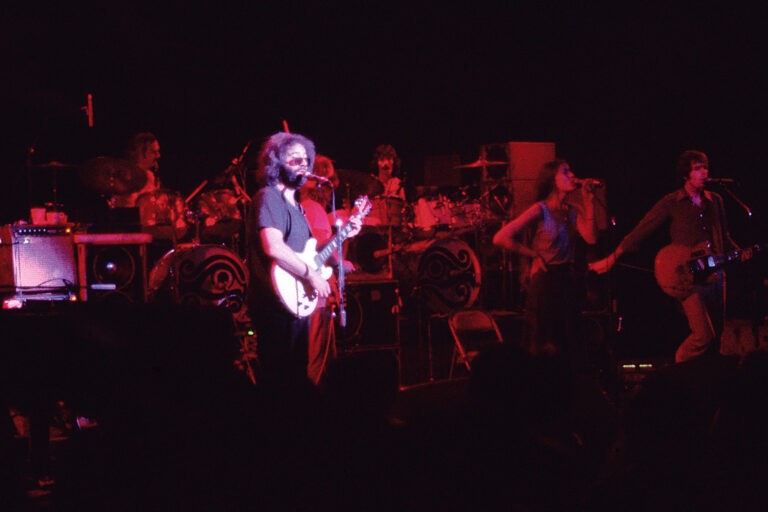
Shortly before the country would celebrate its Bicentennial in 1976, the Grateful Dead would play a show at the Beacon Theatre. This is the second and last time the band would play this New York City venue before upgrading to the larger confines of Madison Square Garden a few years later. They had recently ditched their fabled massive Wall of Sound PA system for a more stripped down and intimate stage setup, opting to let the music speak for itself rather than overpowering the audience. A string of East Coast shows in June of this year would see the band in pristine form as they dusted off some of their classic songs and began to introduce new ones, ushering in a new era of The Grateful Dead.
The first set starts off in electric fashion thanks a crisp vocal section led by guitarist Bob Weir that helps fuel a cover of “Promised Land” that would make Chuck Berry glow. A slow, drippy “Sugaree” follows that allows fellow guitarist Jerry Garcia a chance to stretch out his vocal chords a bit before a rip roaring “Cassidy” sets the tone for the first set, thanks to accompanying vocal support from Bob Weir and Donna Jean Godchaux.
An audible first set highlight, based on the crowd reaction alone, is a sultry “Candyman” that places the lyrical craftsmanship of Robert Hunter and the complimentary guitar play from Garcia front and center. Soon after, the ravenous New York City crowd gets a little taste of Grateful Dead shows of old show thanks to a stirring rendition of “It Must Have Been the Roses,” a song the band played extensively in 1974 and a staple of Jerry Garcia Band shows for years to come.
The first set of this show ends with an impressive sequence of a “Let It Grow” that stretches out all the way to a “Drums”-esque type jam before settling into a set closing “Might As Well.” Even though this tune was also played the night before, it still marked only the sixth time this Dead tune was played live, one they would continue to showcase for another eighteen years,
Grateful Dead, June 1976
The band wastes no time in opening the second set with a “Saint Stephen” that immediately explores the given space and stretches into a formidable jam. However, instead of a “William Tell Bridge,” the rhythmic partners of Bill Kreutzmann and Mickey Hart begin the percussive intro of “Not Fade Away,” a Buddy Holly cover that, by now, The Grateful Dead seem to have appropriated as their own.
Contrary to most Dead shows, the ensuing Beacon “Drums” section gets ripcorded almost instantly in favor of an incredibly emotional “Stella Blue” that’s spearheaded by poignant Garcia-sung lyrics. This particular version is marked by a beautifully patient progression from all parties and is definitely one of the show’s highlights. Garcia’s hauntingly slow delivery of the vocals, matched perfectly by the rest of the band, gives this version a rather emotional feel to it. Take a listen to the entire segment from “Saint Stephen” to “Stella Blue” below – worth the price of admission alone.
“Samson and Delilah,” a song that made its live debut only weeks earlier in the beginning of the tour, shows off its future potential nicely with a shortlived jam that picks the energy back up before a leisurely “Friend of the Devil” brings things to a crawl again. A manic “Dancin’ in the Streets” then follows as the band seems to delight in varying up the tempo of this second set. The telepathic interplay between Garcia and bassist Phil Lesh is on prime display here.
Perhaps what makes this show so special is the superb sound quality, thanks to soundboard recordings captured by the band’s longtime live recording engineer Betty Cantor-Jackson. For years, this and the other June ’76 shows were some of the most revered recordings in the tape trading community. Picking up on that, these recordings have since been further polished and remastered and are now available for purchase as part of a 15-disc box set that highlights this special era of Grateful Dead music. It features this and four of the other shows surrounding this one. With production limited to only 12,000 individually numbered copies and a slew of crisp recordings from this seminal era of the band’s history, it’s sure to be a “sound” investment for any fan.
Grateful Dead Beacon Theatre – New York City, NY
Set 1: Promised Land, Sugaree, Cassidy, Candyman, The Music Never Stopped, It Must Have Been The Roses, Looks Like Rain, Tennessee Jed, Let It Grow -> Might As Well
Set 2: Saint Stephen->Not Fade Away->Drums->Stella Blue, Samson & Delilah, Friend Of The Devil, Dancin’ In The Streets->The Wheel->Sugar Magnolia->Scarlet Begonias->Sunshine Daydream
WEQX has long been the preeminent independent station in the Capital Region of New York, broadcasting from Southern VT to a ever-expanding listening audience. Each Sunday evening from 7-9pm on 102.7 FM, you’ll find EQXposure on WEQX, featuring two hours of local music from up and coming artists. NYS Music will bring you a preview of artists to discover each week, just a taste of the talent waiting to be discovered by fans like you.
Art LaFleur – “Reset“
Art has been in the local Albany music scene for nearly 20 years performing in modern country bands such as Offramp, Rattlesnake, True Grit Outlaws, Byrds of Prey, and most recently, Grit N Whiskey. Art was out of the music scene for a couple of years dealing with the long term illness and the death of his wife who sadly passed away in 2017. As a means to deal with the loss, he has begun writing his own songs and putting more emphasis into building his songwriting career. He draws influences from Lynyrd Skynyrd, The Outlaws, Warren Haynes, The Eagles, Sting, and Charlie Daniels.
Thinner Friends – “Demons Are All I Have“
A new electronic punk trio from Troy in the vein of DEVO meets Le Tigre, Thinner Friends have just released their debut album and 50% of all sales on Bandcamp will be donated to the Black Trans Protesters Emergency Fund. Whatever is not needed will be given to Black trans-led organizations that work to stop violence against Black trans people.
Johann – “Sparkly Summer Radio Song“
A college student from Cambridge, NY, Johann released Thanks for Coming in April which is available on Bandcamp. “Sparkley Summer Radio Song” is his latest and was recorded during quarantine thanks to the extra time to write.
Six years ago today, Bobby Shmurda and his effervescent first single “Hot N-gga” was made digitally available for consumption by Epic Records. The music video – which has garnered nearly 650 million YouTube views – was released in May of 2014 and quickly became an internet sensation. While the record was re-packaged, the music video was not subjected to such changes, most likely because it had already reached “viral” status, but also because it represented the ingenuity of Brooklyn inner-cities. It spawned the “Shmoney Dance” craze where, in a moment of inventiveness, the rapper throws his hat in the air and begins to pop his hips left and right. Unplanned, the “Shmoney Dance” helped cement the record as the song of 2014. Peaking at Number 6 on the Billboard Hot 100, it helped usher in a new era. This was the first song that this current incarnation of social media (Instagram, Facebook and Twitter) made prominent, something we’ve since seen replicated several times over.
The hottest song of 2014
A subsequent EP – Shmurda She Wrote– followed along with other Billboard hits like “Bobby B!tch” and the cult classic “Computers.” Unfortunately, the success was short-lived. In December 2014, Bobby Shmurda, along with his associates, his brother and GS9 label-mate Rowdy Rebel, were arrested on charges of drug and gun possession, reckless endangerment and conspiracy to commit murder.
Ah Ah Ah
Less public members of the organization received the harshest of sentences, while Bobby Shmurda and Rowdy Rebel have been behind bars for the past six years, with an impending release set for the tail-end of 2020. Their impact on the New York culture has not been forgotten (as they successfully implemented the Chicago drill sound to help popularize the sub-genre of New York drill) and in return, fans have showered them with support and promises of a hero’s return. Hot
21 years ago this weekend, the festival calamity known as Woodstock 99 took place at Griffiss Air Force Base in Rome, NY. If you know anything about Woodstock 99, you likely know about the festival-ending fires and mild rioting that took place in the concert grounds, built out of a weekend of frustration with festival pricing and lack of an adequate infrastructure.
Over Friday and Saturday, the festival seemed to be your typical late 20th century festival – bands playing mostly on schedule, an amalgam of various groups of music lovers, basic amenities and little in terms of technological infrastructure. This was a time where cell phones were a luxury item and resembled Zack Morris’ brick phone.
via Getty Images
There was the giant plywood wall that surrounded the grounds, which gave you a feeling of being trapped inside, with only two or three entry points where you’d be searched at security’s leisure. Once inside, prices were high, even by today’s standards. Four dollars for a bottle of water, eight dollars for a hamburger, nine dollars for a cheeseburger, ten dollars for a chicken sandwich and twelve bucks for a small personal pizza. If you were lucky, you found a lemonade stand where the drinks cost only two dollars, but if you wanted alcohol, you had to drink it in the beer garden, which was devoid of shade or quality sound, and put you in a direct line of fire from people slinging mud through the chain link fence.
The musical lineup was as solid as it could be for 1999. In alphabetical order, you’d be able to catch Bush, Chemical Brothers, Creed, Sheryl Crow, Dave Matthews Band, DMX, Everlast, Guster, Ice Cube, Korn, Jewel, Limp Bizkit, Live, Los Lobos, Megadeth, Metallica, moe., Alanis Morissette, Willie Nelson, The Offspring, Rage Against the Machine, Red Hot Chili Peppers, Rusted Root, Sugar Ray and The Tragically Hip, among many others
Two stages that were a long, long walk from each other separated the acts. If you wanted to see someone on the West Stage, you’d be sacrificing a great deal at the East Stage, and vice versa. The schedule was staggered, but surely this could have been organized better. At least moe. got a set.
Governor George Pataki is rumored to have said of the Woodstock weekend,
“It seems to me the whole reason Woodstock ’99 failed was because of the kids. Kids from all over came to Rome and had no sense of authority, and did not care about anyone but themselves. The promoters should be held to blame, but also the irresponsible people who attended. It seems a strange contradiction. The week before Woodstock 99, 120,000 people gathered in Oswego, New York to see the rock band Phish. The event was in more cramped quarters, and was just as hot, and to my understanding no major problems were reported. Maybe if people behaved like they did at the Phish event this wouldn’t have happened.”
Pharmer’s Almanac, Volume 6
While Pataki’s remarks are off by around 90,000 ‘Camp Oswego‘ attendees, it does highlight the weekend prior where similar conditions of oppressive heat and humidity did not lead to the same circumstances as they did in Rome from July 22-25. How can two festivals, 80 minutes apart, be so diametrically opposite? You’d have to factor in an audience from mixed walks of life, many of whom may not have been to a multi-day music festival prior to this, and festival promoters who came up short in every single area – from bathrooms to food, safety to water, and layout to operations.
Skip ahead to Sunday, July 25, and on the main East Stage, you’d catch Al Green, Willie Nelson, Brian Setzer Orchestra, Everlast, Elvis Costello, Jewel, Creed, and Red Hot Chili Peppers. Genre-wise, in order, you could catch gospel/soul, country, swing, rap, rock, pop, ‘hard’ rock and pure rock ‘n’ roll from the Chili Peppers. Quite a variety to see in one day.
Long lines at the limited vendors that had food to serve coupled with very long lines for water, overflowing portos and litter seemingly everywhere, finally hit a tipping point. Add in the aforementioned oppressive heat and humidity plus a complete lack of shade, and a powder keg was ready to burst. The plywood fence around the venue was already being torn down casually throughout the day by concert-goers taking out their frustrations, which led to more seeking a piece of memorabilia.
During the day, in an odd bit of cosmic irony, anti-gun violence group Pax (now the Center to Prevent Youth Violence), distributed candles to those who stopped by their booth during the day. The original intent was for a candlelight vigil during “Under the Bridge,” but instead some used the candles to start bonfires, and when coupled with the thousands of empty water bottles that littered the East Stage field, there was plenty of fuel to light the grounds on fire from stage to stage.
At some point towards the end of the Chili Peppers set, the audio tower caught fire, and the fire department had to be called in. The festival was over thankfully, and many had left during the day, but for the thousands needing to vacate the grounds while emergency personnel were arriving, the scenario had to be frightening. CBS News reported:
The three-day concert climaxed into a frenzy about a quarter mile from the main stage when several concertgoers set fire to twelve parked tractor-trailers.
Several people pulled cases of soda and merchandise from the trucks and fed the flames with debris. Others toppled light stands and speaker towers, while another group tried to destroy a radio station truck.
As a result of Woodstock 99, it would be a number of years before a festival with pop bands reaching a broad audience would take place. Jam festivals were already on the rise, and while the lineup for Bonnaroo 2019 looks little like that of Bonnaroo 2002, the key to the festival formula was in building a lineup for a defined audience, not gathering an audience towards a known lineup.
And while Woodstock 50 never even got off the ground and Woodstock 99 was a stain on music festival history, the original and even the 1994 edition bear the torch for a name still synonymous with peace, music and love.
The nine-episode podcast Break Stuff: The Story of Woodstock 99 from The Ringer gives a detailed breakdown of the festival. Listen here.
An original review of this show was written for BUZZ Magazine in July of 1990 and can be found below.
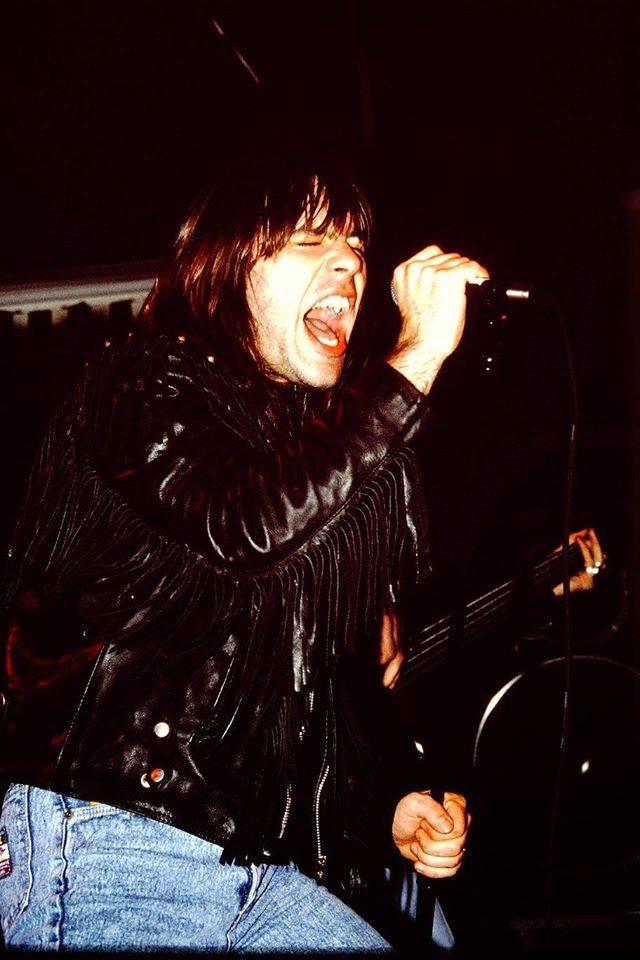
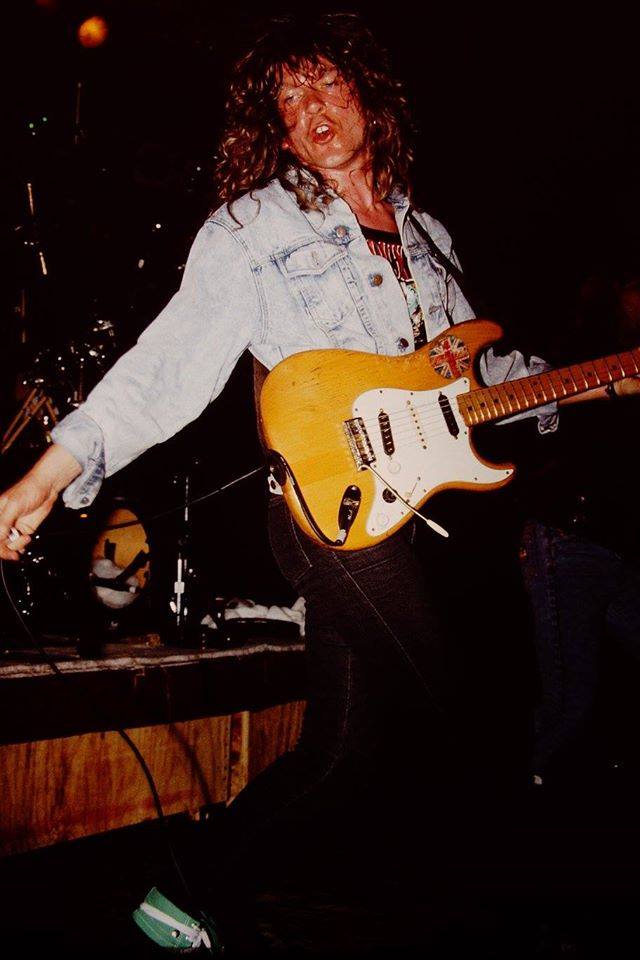
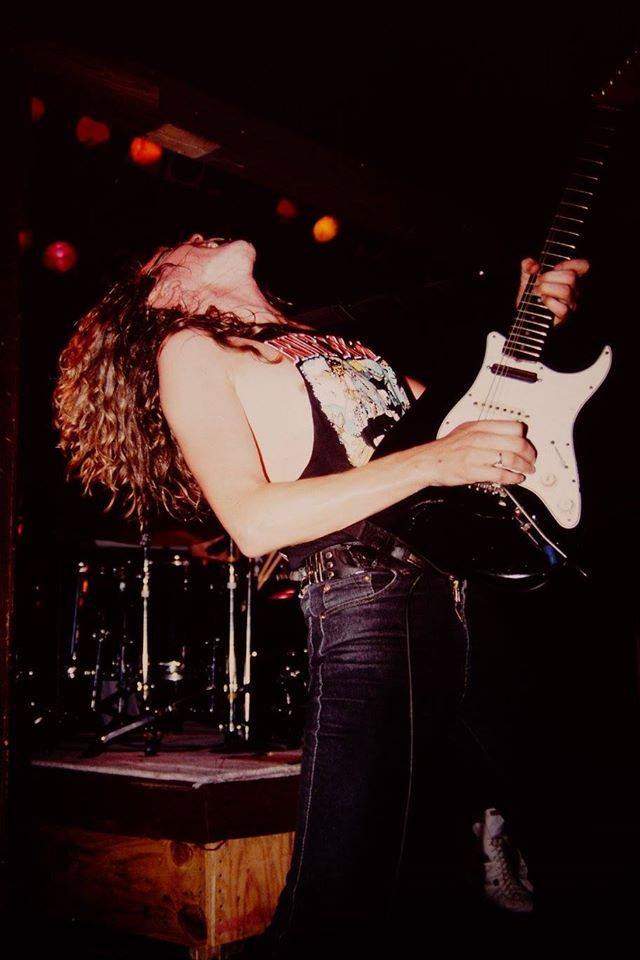
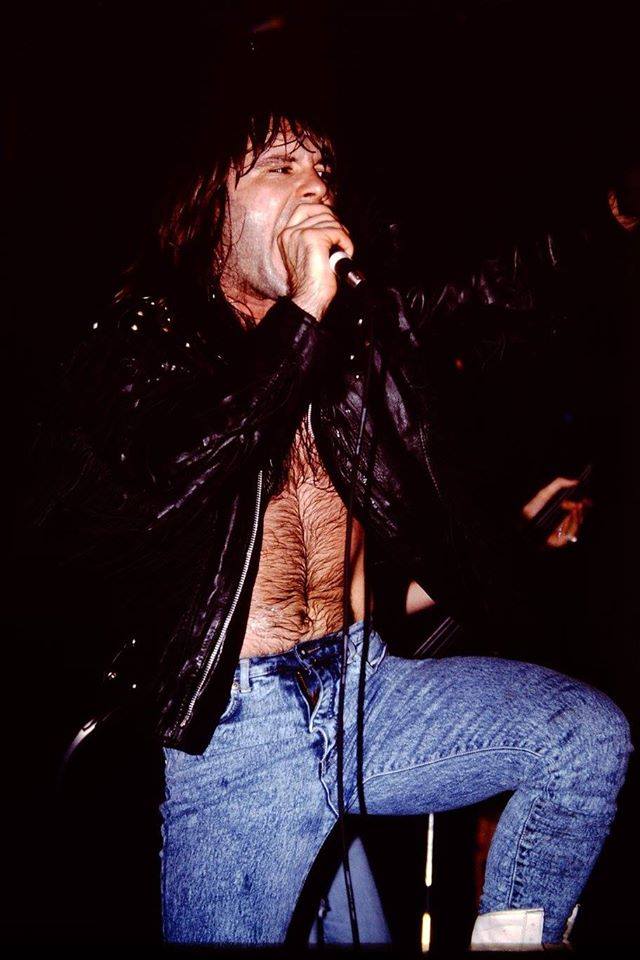
It was 30 years ago tonight, on Wednesday, July 25, 1990, that Iron Maiden front-man Bruce Dickinson and Kings of the Sun took the stage at the legendary Saratoga Winners in Latham, just outside of Albany.
Bruce Dickinson, Saratoga Winners, Latham, NY, July 25, 1990, picture by Mark Kurtzne
This bill also played The Chance in Poughkeepsie, on July 20, 1990. Dickinson was on a break from Iron Maiden, promoting his debut Tattooed Millionaire solo LP. It wasn’t a bad record, although not on par with his better Maiden stuff. He didn’t play any Maiden, unless you count “Bring Your Daughter To the Slaughter,” which at that point was still a Dickinson solo track from a soundtrack; Maiden wouldn’t do record it until their next album.
Janick Gers, Saratoga Winners, Latham, NY, July 25, 1990, picture by Mark Kurtzner
However, Dickinson opened the show with his pre-Iron Maiden band Samson’s “Riding With The Angels,” which rocked, and played a bunch of solo songs and covers. Good shows, both packed, mostly with Iron Maiden fans, and a ton of Iron Maiden t-shirts.
Janick Gers, Saratoga Winners, Latham, NY, July 25, 1990, picture by Mark Kurtzner
Dickinson’s guitarist this night was Janick Gers, who at the time was the former guitarist from Gillian, the early 80s metal band led by Deep Purple member Ian Gillan. He had also been in a new wave of British Heavy Metal band called White Spirit – as a fan of both of those bands, I was excited to see him, and he played great. But soon enough he could become far more well-known when he replaced Adrian Smith in Iron Maiden.
Bruce Dickinson, Saratoga Winners, Latham, NY, July 25, 1990, picture by Mark Kurtzner
The opening band, Kings of The Sun, were great at one show, kind of crap at the other. They were from Australia, a band led by a couple of brothers, playing good heavy rock ’n’ roll in the vein of AC/DC, on the heels of a pretty solid self-titled album out at the time.
J. Cole dropped two singles following a string of Instagram Story posts hinting towards an upcoming release. The singles are the first confirmed tracks on the southern rappers upcoming album, The Fall Off.
On Wednesday night, J. Cole made an Instagram post announcing the upcoming release of “The Climb Back“, produced by Cole, and “Lion King On Ice“, production arranged again by Cole aided by T-Minus and Jetson. The Fall Off will be Coles first solo project since 2018’s KOD.
The first of the two singles, “The Climb Back” has J. Cole performing in his pocket, spitting bar after bar over a sparkling piano melody and a high-pitched vocal sample leaving plenty of room for Cole to switch up his flow which he finds himself doing several times. The song is missing a strong hook however, the understated vocals Cole croons out serve towards the emotional potency of the track.
The second track released, “Lion King on Ice” is a J. Cole track by the numbers. Cole is again operating in his comfort zone; with an stripped back trap instrumental beat featuring similar pitched vocal sampling present in “The Climb Back”, Cole is able to ride the beat comfortably verse after verse.
Cole has made it clear that he has an album coming on the way. However, he is seemingly under little pressure to release the album because he has also made it clear he has no planned release date for the album.
With a dramatic entry into the world of blues opening for B.B. King in Rochester at the age of 12, Joe Bonamassa has carved out a place in blues history for himself which spans a decades-long career that has produced 15 solo albums, 11 of which reached #1 on the Billboard Blues Charts.
Twenty years ago the first of those albums A New Day Yesterday was released and the fan-favorite track “Colour and Shape” was introduced to the world. Now with a more evolved style listeners can experience Joe Bonamassa’s artistry all over again with the 2020 release of “Colour and Shape”.
Coming August 7 via J&R Adventures, Bonamassa will be releasing a revamped version of his debut album A New Day Yesterday with both new vocals and mixing remastered by long-time producer Kevin Shirley. Listeners can pre-order the album now.
This revamped album will include not only six of Bonamassa’s original tracks but also six cover songs from historically renowned blues and rock artists. The cherry on top is that three never before heard bonus songs will be added, produced by Stevie Van Zandt for Bonamassa.
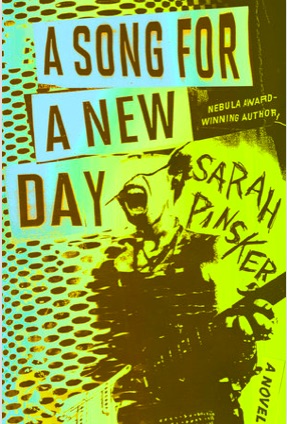
If anyone can lay claim to the title of “Rock and Roll Nostradamus,” it’s Sarah Pinsker. Born in New York City and a present-day driver of the fertile culture scene in hip Baltimore, Pinsker is a true multi-hyphenate. First off, she’s a singer/songwriter who has released a number of noteworthy albums with her band, Stalking Horses. More prominently, she can now lay claim to being the hottest rising star in the world of science fiction, whose eerily prescient debut novel, A Song for A New Day, just won the milieu’s highest honor, The Nebula Award, putting her in the company of legends like Isaac Asimov, Arthur C. Clarke, Ursula Le Guin, William Gibson and Neil Gaiman.
I stumbled across Pinsker’s book right as it came out in September 2019, drawn by the cool cover art, her background as a musician and its seemingly far-off but maybe too near premise, one steeped in the world of indie music making, technology and, one of my guilty pleasures, future dystopia!
In Pinsker’s novel, a deadly virus/pandemic unleashed by a terror attack that brings society to its knees. All public gatherings are prohibited for two decades, and everyone hunkers down quarantined in their homes, working and entertaining themselves via VR-equipped hoodies, and receiving most of their necessaries via drone from one mega corp. As gatherings are banned, so, too, are live musical performances. But, don’t worry, there are still shows, not in crowded bar and venues but streamed hologram performances of only the most visually appealing of acts coming from the HQ of mega promoter, StreamHoloLive, straight into your hoodie.
Starting to sound familiar yet?
Pinsker’s novel revolves around two women. First is Luce Cannon, an emerging indie artist on the cusp of a big mainstream breakthrough when the virus takes down the world (best character name for a rocker ever, right?). Then there is Rosemary Laws, a 20-something woman who doesn’t remember the time before the fictional quarantine who becomes a roving A&R person for StreamHoloLive. Her mission? To infiltrate the small underground network of clubs that still run live shows, illegally and until they are busted, to find new talent to holo-stream.
Musicians will love this book because it’s written by one of her own. Pinsker is someone who brings spot-on descriptions to the power of a kick drum, a power chord and the day-to-day lives of musicians, especially those who are scuffling to create and survive in both the old IRL and the new post-performance world.
How did Pinsker go from indie rocker to sci-fi darling? What commonalities does she see in her two creative lives? NYS Music gave Pinsker the chance to elaborate in the following Q&A.
Author and musician Sarah Pinsker
Sal Cataldi: I understand your debut novel, A Song for A New Day, is an elaboration of a novelette you wrote five years back. What, from what you have witnessed as a musician and as someone who reads the headlines, made you conjure such a premise?
Sarah Pinsker: My memory of the seed for the initial novelette was that I had passed the “Our Lady of the Highways” shrine on I-95 again, and I was thinking about all of my touring friends who had written songs based on that lovely title. I think I had “Our Lady of the Open Road” before I had a story, and then I started thinking about a band on the road long after everyone else had exited that life, and what would have put a stop to it. I worked backward from there, thinking about the things that might be societal roadblocks, and the technological advances that would reinforce the changes.
SC: How does it feel to be the woman who predicted our socially distanced, outlawed gathering present? How did it feel when you started to see this fantasy of yours beginning to come true in headlines?
SP: Most near fiction SF writers I know don’t set out to be predictive, so it’s a dubious celebration. I’d wanted to talk about things I *didn’t* want to see come true, and head them off at the pass. When people ask how I got so close in my “predictions,” it just feels like common sense to me. Humans are sadly predictable.
It’s been frustrating to see people say that my book is anti-social distancing. It doesn’t glorify flouting restrictions on gatherings during a pandemic; the problem in the book is that the country stays that way long after the threats are gone. I think there are opportunities right now to create a new and better normal, but we also have to do active work to make sure that we still have music and arts and venues when all of this is past.
SC: How much of you is in the Luce character?
SP: Hers is an easy voice for me to write, but she’s not me. She’s an amalgam of a whole bunch of musicians I adore. I guess the part of her that’s me is the way she feels on stage; I took that from my own experience. And I guess I tend to be skeptical of new technologies.
SC: Sounds like you’re a diehard DIY indie musician. What’s the worst part of the corporate music business that is in this book, and actually just out in the world as a musician. Seems like MTV on steroids, with the accent on looks.
SP: I think I’d spoil the book in saying what I think are the worst parts of the corporate music business I wrote. If you look at what’s happening right now, the corporate venues will get loans, the arenas will make it, but the small clubs are drowning. Big musicians are doing fine, but the indies who depend on touring are struggling, as are the musicians who play senior centers and restaurants and libraries, and the people who run sound, the roadies and techs, the indie venue owners and staff… Some of my friends are doing online shows with tip jars, which is actually an opportunity to reach their largest audiences ever, but I can still easily see that access getting throttled. There are already corporations looking to take advantage of this situation, even while musicians try to do their best to survive. In the best of times it’s difficult to make a living at music, and it doesn’t need to be that way, but the system is set up to elevate a very small percentage of the musicians out there and not necessarily to make access easier for all.
SC: Now that we are in the midst of a streaming music present, what do you think about it? Any artists that particularly inspire you in what they are doing in the medium? Like your character, do you lament the loss of live performance?
SP: Right at this moment, I am extremely grateful for the musicians who are streaming shows (and the theaters, and the museums, and the national park cams…) It’s not like in my book, in that we are still in the moment where this is necessary and appreciated. I like clicking into a show and seeing people I know are also there in the comments. I like sitting on my porch at sunset and listening to musicians I adore.
There’s a folk musician named Susan Werner who has been playing Sunday night shows online. Sometimes she invites friends, sometimes she has a theme, but she’s always been good at mixing a fun stage presence and quick wit with her songs. She often has a sponsor or a charity getting some of the money, and donations/tip jar are encouraged but not mandatory.
A lot of folk and acoustic musicians are doing similar things. Rufus Wainwright was doing a song a day in his bathrobe — I haven’t checked in a few weeks to see if he’s still going. LEA, thisislea on most sites, is a DC-area musician who always did cool community-oriented stuff. I played at an album release of hers a few years ago, where she invited people to play a song of theirs that was in conversation with a song of hers, and then she would play the connected song. She’s done some virtual choir stuff since this started. I’ve seen some Baltimore bands like Gingerwitch and Manners Manners and Santa Librada do triple bills online where each band does a set, and at the end gives you the address to find the next set. And I know a couple of venues here have offered to open for a band to record a show without an audience.
So yes, I think musicians are making the best of it, and while I lament the loss of live performance where I’m in the room where it happens, these shows are still special and appreciated. They feel intimate, and I love seeing some of these performers that I haven’t had a chance to see in a long time, either because schedules don’t align, or they haven’t been touring in my area.
SC: Which came first, your music or your writing career? Tell us a bit about both, and how they inform each other.
SP: Career-wise, music, though I had written and submitted short stories for publication before that. They’re both forms of storytelling to me, with their own advantages and disadvantages and tropes to explore. In my twenties my stories got shorter and shorter, and I found myself telling stories in song form. I loved the immediacy of playing, and the collaborative nature of performance; even when you’re on stage alone, you’re engaged in a conversation with your audience. I can’t say why I switched horses back to fiction at the moment I did. I struggle a little with doing both at the same time, so my music has suffered for my success in fiction. I have a fourth album completed that I really need to get out into the world, but that just feels like too much.
SC: Who are your three big inspirations in each of these areas?
SP: I hate answering those questions, because I always feel like for every name I mention, there are a hundred more. In fiction, I guess I’d say Ursula K. Le Guin, Octavia Butler, and Karen Joy Fowler, in terms of the way reading their fiction makes me want to up my game. In music? Argh. Um, I’ll just name one. My friend SONiA, from the band disappear fear, has been my model for what an ethical life in music looks like from the beginning. She’s a wonderful songwriter, a dynamic performer, and she’s comfortable with a band or solo and with adapting songs to both.
SC: You just received the Nebula Award for the book, which is the highest honor in science fiction. Did you at all expect it? What does it mean to your future as a writer? Are you the first musician/writer to win?
SP: I didn’t actually expect to win the Nebula. There were amazing books on the list, and I had assumed that one of those books was going to win. Getting onto finalist lists is always a tremendous honor in itself, and I don’t think it’s ever healthy to assume the top honor is yours, so I like to choose a book to root for that isn’t my own. That way, I’m happy if they win and surprised if I do. I think there have actually been other musicians who have won — Nicola Griffith and Catherine Asaro, among others, I believe.
SC: As an expert prognosticator and musician, what do you think the future holds for indie musicians and live music venues? Will this ever go back to what it was, or will there be a new normal based somewhat on what you created?
SP: I’m not an expert prognosticator, but I think what the future holds will very much depend on what we do right now. We should be helping venues pay their rent while they are closed, so they still exist when this is over. We should be giving basic income to everyone to encourage people who can stay home to stay home and allow those who can’t to do their jobs more safely. If we do those things now, we’ll have venues when this moment is over.
I do think there’s a lot we can learn from this, and there are things I’d like to see in a new normal.
There’s an accessibility in this moment: people who use wheelchairs and couldn’t get down the steps into basement venues get to see bands. Ditto people who couldn’t afford big ticket prices or didn’t have a way to get to a show, or didn’t have childcare, or whose health is too fragile even when we’re not in a pandemic to risk being in a crowd. We can definitely come back to a mix of both if we choose to.
We can encourage seeking out smaller bands, who may be playing to smaller crowds, rather than giant stadiums. We can normalize staying home when you’re sick, and we can normalize wearing a mask in a crowd if that’s what it takes to bring back live music. Music is about community, and we can continue to forefront that community-mindedness. But above all, we need to help musicians and techs and venues weather this with actual financial help, as they have in other countries. I’d rather wait longer in order to come back safely than rush it and risk the health of everyone involved, no matter how much I’d like to go to shows again.