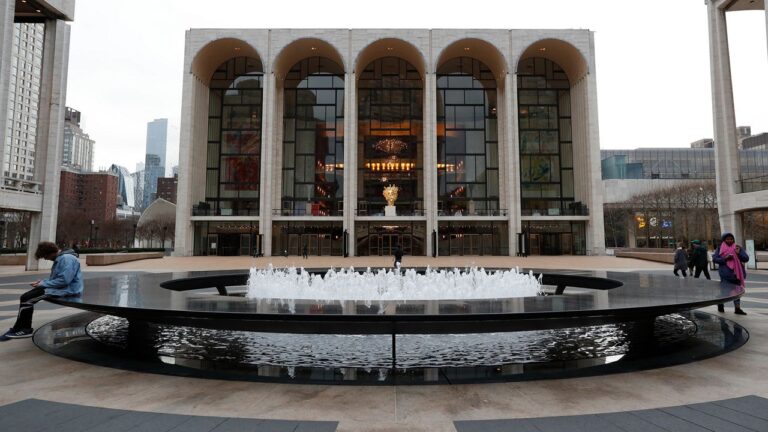
First reported by the New York Times on Wednesday, the Metropolitan Opera announced that the COVID-19 pandemic has forced them to cancel their entire 2020-2021 season. They will reopen September 2021, at the earliest.
This decision will likely affect organizations across New York State, but around the country as well. Many arts organizations are attempting to slowly reopen in accordance with social distancing guidelines, but this decision may put an end to that.
The pandemic closed the Met in mid-March, costing the Met $150 million in revenue and leaving about 1000 employees, including its orchestra and chorus, furloughed without pay for almost six months now.
Peter Gelb, the general manager for the Met, has announced an ambitious 2021-22 lineup to reassure its donors and patrons that they will remain strong. In addition, Gelb said he will ask the company’s unions to agree to cost-cutting concessions that will be necessary post-pandemic.
The Met plans to open with Terence Blanchard’s “Fire Shut Up in My Bones,” the first opera that they will perform by a Black composer. This is in part due to the rise in racial awareness that is occurring around the country, but also an effort of the Met to find more of a balance between contemporary works and the staples that made them famous in the first place.
Two lives at the Metropolitan Opera have already been lost to the virus: Vincent J. Lionti, a violist, and Joel Revzen, an assistant director. The scheduled star of Puccini’s Turandot next season, Anna Netrebko, announced that she had been hospitalized due to the virus.
Having already sold $20 million in revenue for 2021-22, the concern now is less about the Met Opera, and more about the other organizations that may look at the Met and their cancellation as a precedent.
Ed. note: this review of Trey Anastasio at Carnegie Hall was original published on PhanArt.net in September 2009. For a more recent review of Anastasio at Carnegie Hall, read our review from October 2019.
For years I have considered orchestral compositions the ultimate form of music, with the intricacies that I felt would never be understood, a style that would be too difficult to get into, and a high-class following that would elude me forever.
This started to change years ago when I heard the amazing beauty of Eric Clapton playing with the Royal Philharmonic Orchestra in London (February 10, 1990), and discovered the intersection of one of the greatest guitarist in history and one of the finest orchestras in the world. Hearing “Layla,” “White Room,” “Bell Bottom Blues,” as well as a unique Guitar Concerto in two movements performed with a guitar (?!) AND a 40 piece orchestra. My ears never had it so good. Every note was played, expanding, but not drowning out, the original composition. Bands like Queensryche and YES had explored orchestral infusion into their rock act previously, but the Clapton collaboration hit home with me, and I was forever hooked.
The only thing that stood in the way of getting a fix for this new-orchestral sound was more combination acts like the one that got me hooked. It took only a couple years before Trey was playing with the Vermont Youth Orchestra on “Guyute,” but opportunities to see this were limited. I listened to the version on Sharin’ in the Groove, The Mockingbird Foundation’s tribute album to Phish, over and over, guiding the orchestra while I drove cross-country and around town. This was some of the best music I could have imagined to hear.
When Trey Anastasio was announced to play the 2004 Bonnaroo music festival with the Nashville Chamber Orchestra, I knew that this would be the musical experience I had been long waiting for – combining my favorite band’s music with an orchestra, drawing out every last note of music hidden in there, expanding the tablature to a full musical composition replete with instruments I had not seen nor heard from since grade school. The experience was the highlight of that Bonnaroo, and set the stage for the musical bliss that was set with Trey Anastasio at Carnegie Hall on Saturday, September 12, 2009.
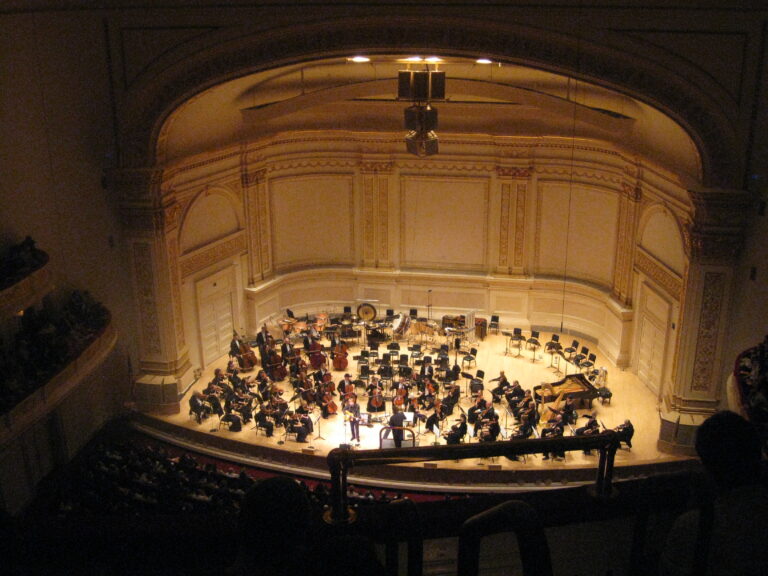
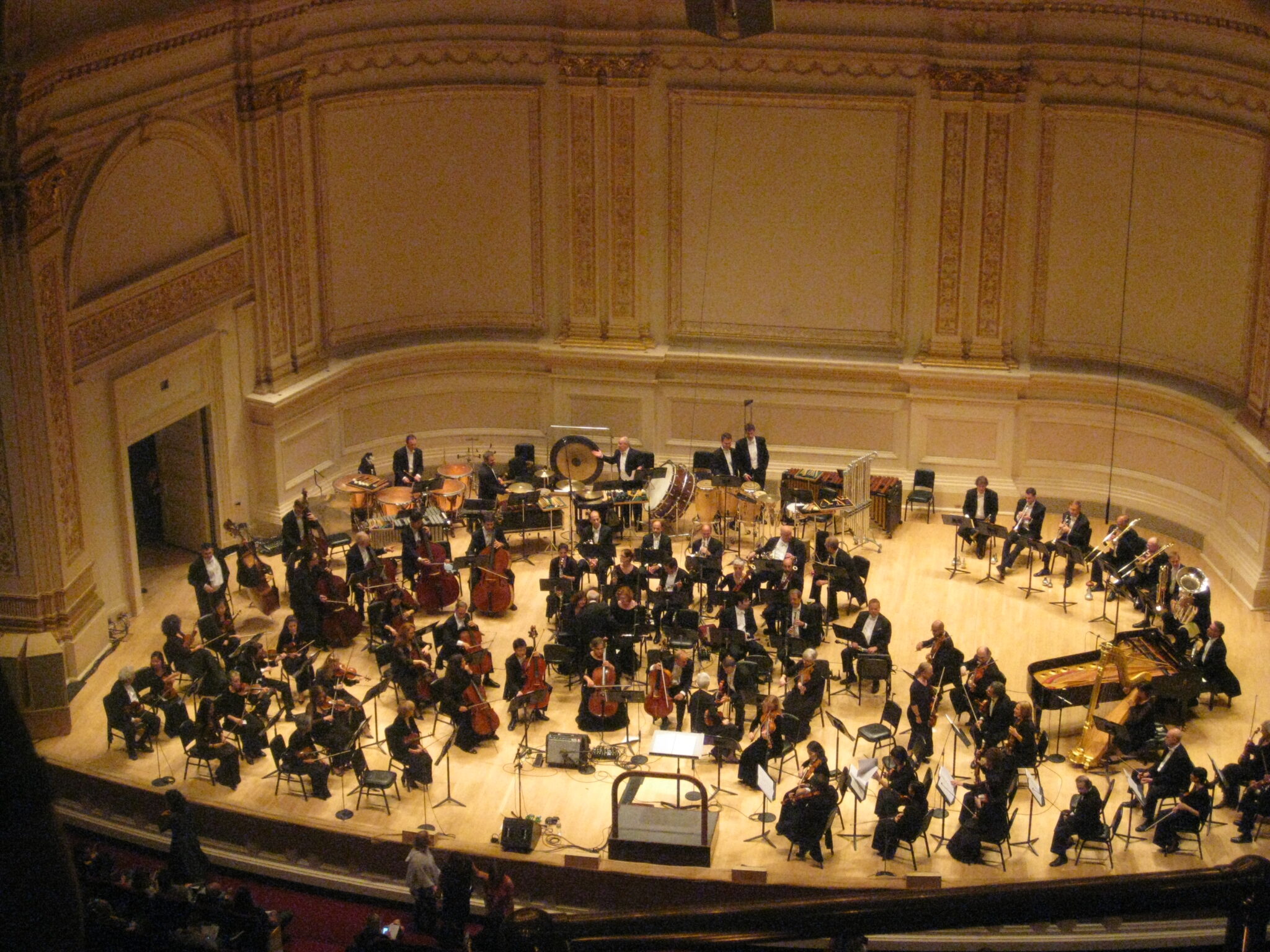
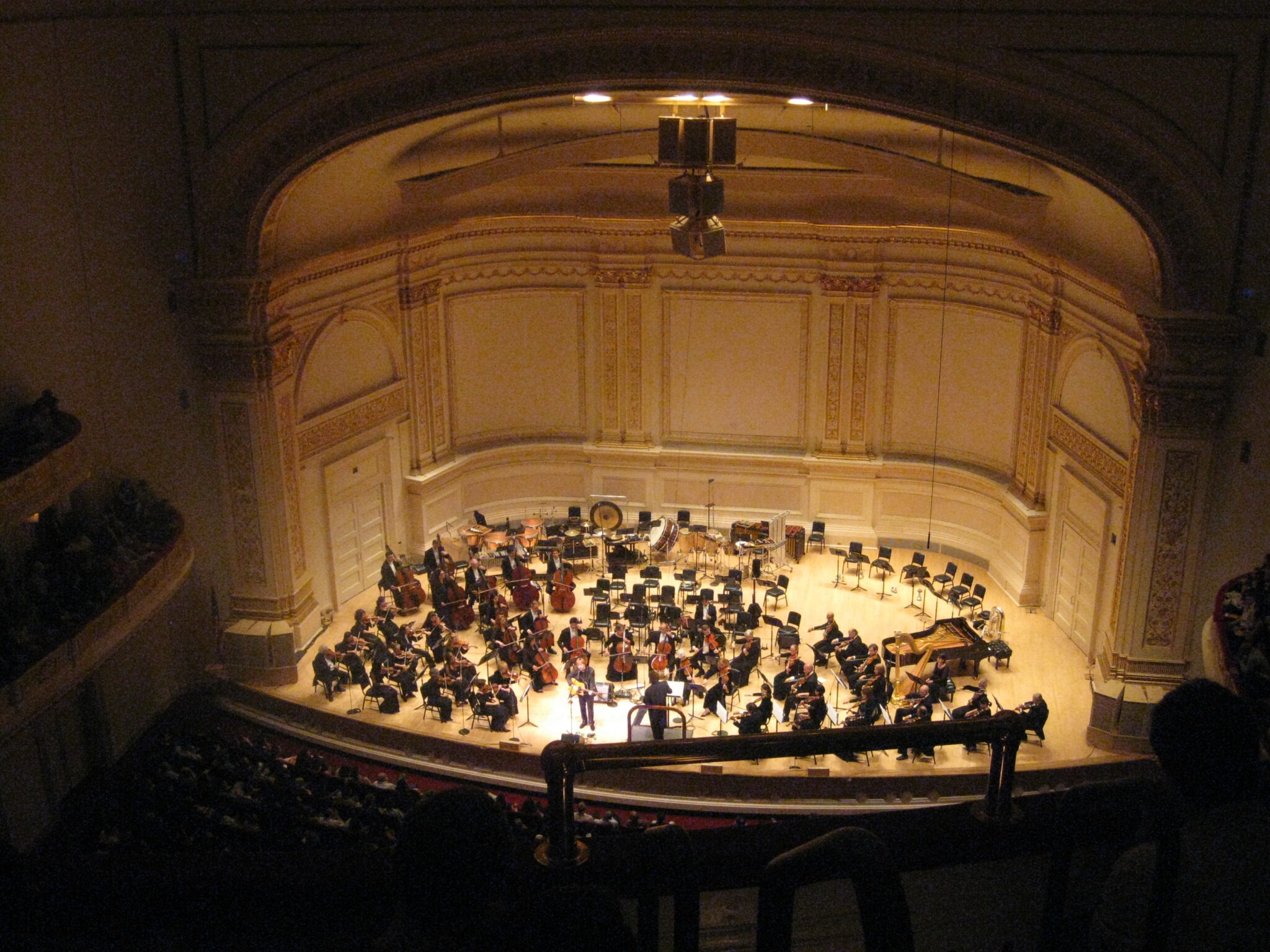
The show having been announced in mid-July, I immediately purchased the best seats I could afford (4th row balcony, which I hoped would provide immense views), as I knew the size of the room was considerably smaller than a normal phish-venue, and the demand would certainly be high. Arriving at Carnegie Hall, I saw what I had joked would be there, presuming it wouldn’t – nitrous tanks and a few shady-entrepreneurs making a quick buck on fans with money to burn on a cheap high. Ignoring this, I went inside and found myself walking up, up, up, up to the top level, and then was guided to my seat by an usher, which felt very high-class. Taking my seat, I marveled at the crowd around me, the youth, the remarkably familiar feeling I had in this great community of people, as well as the sharply dressed folks who took the occasion to go ‘phormal’, as we once had for Radio City in 2000. The crowd was very chill and happy, and notably respectful of the hall, likely thrilled to be able to see such a unique night of music in such a famous building.
The seats were small and legroom was nil, but that was all taken away with the warming up of the New York Philharmonic. You could hear each section of instruments (the strings, the horns, the woods, the percussion, etc…) randomly tuning up, and a finely tuned ear could hear aspects of the peak of “Guyute,” the middle section of “Pebbles and Marbles,” and miscellaneous tuning and playing as the crowd got settled.
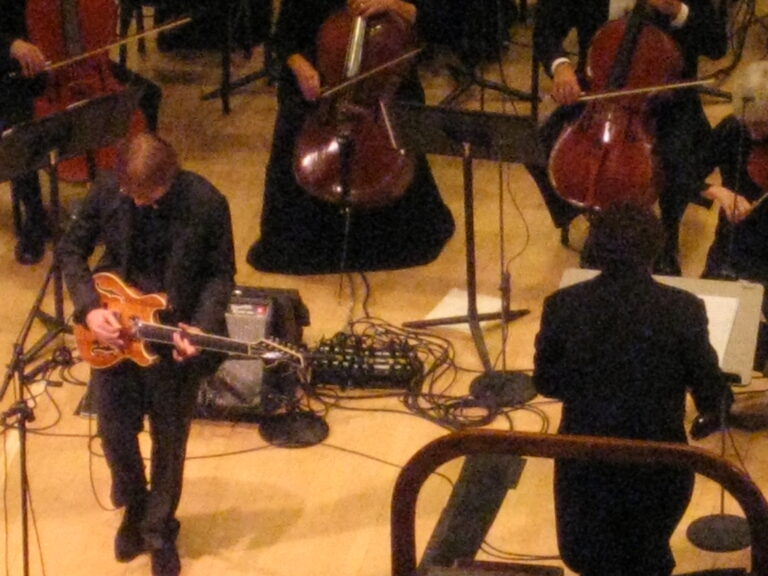
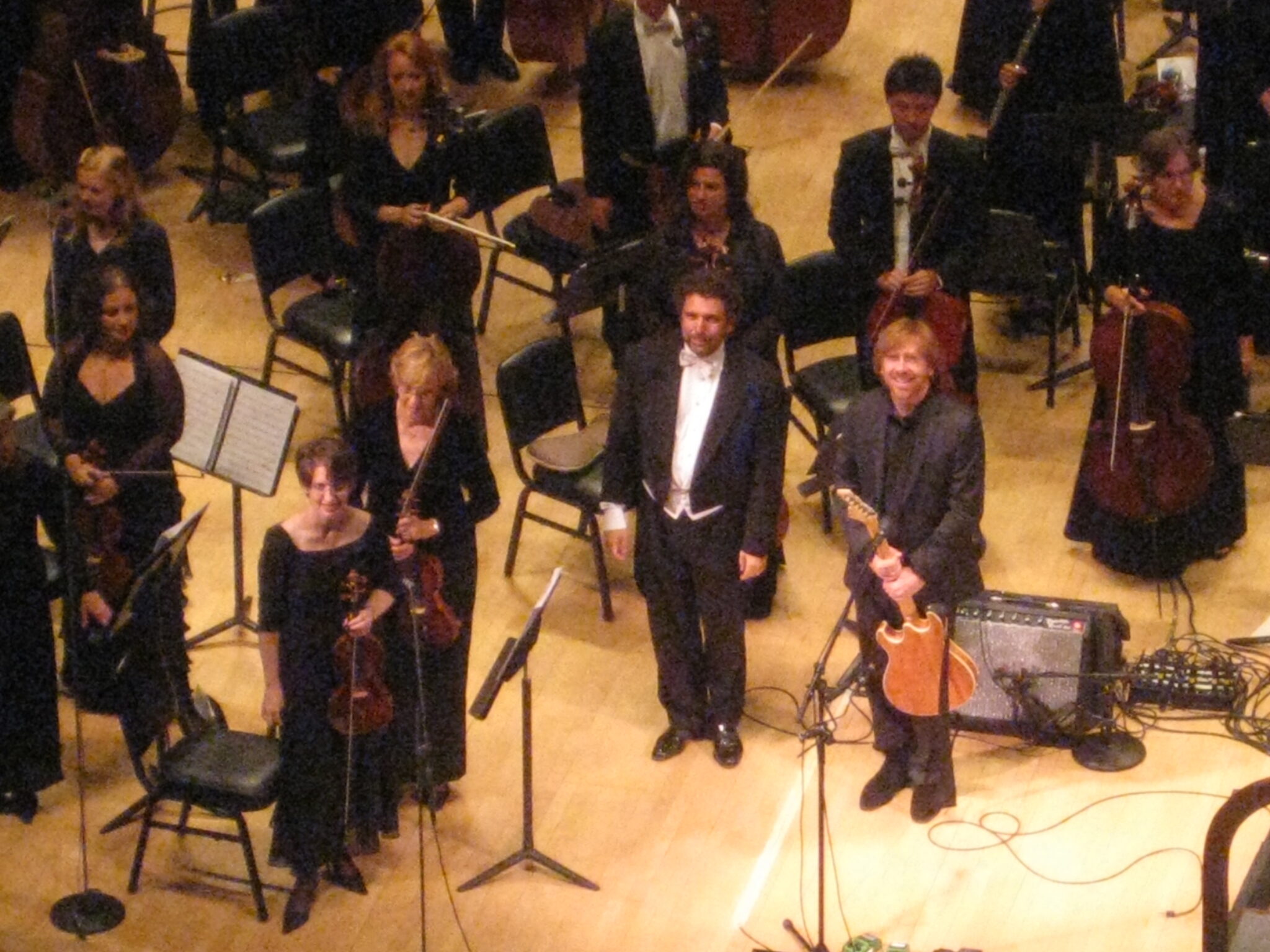
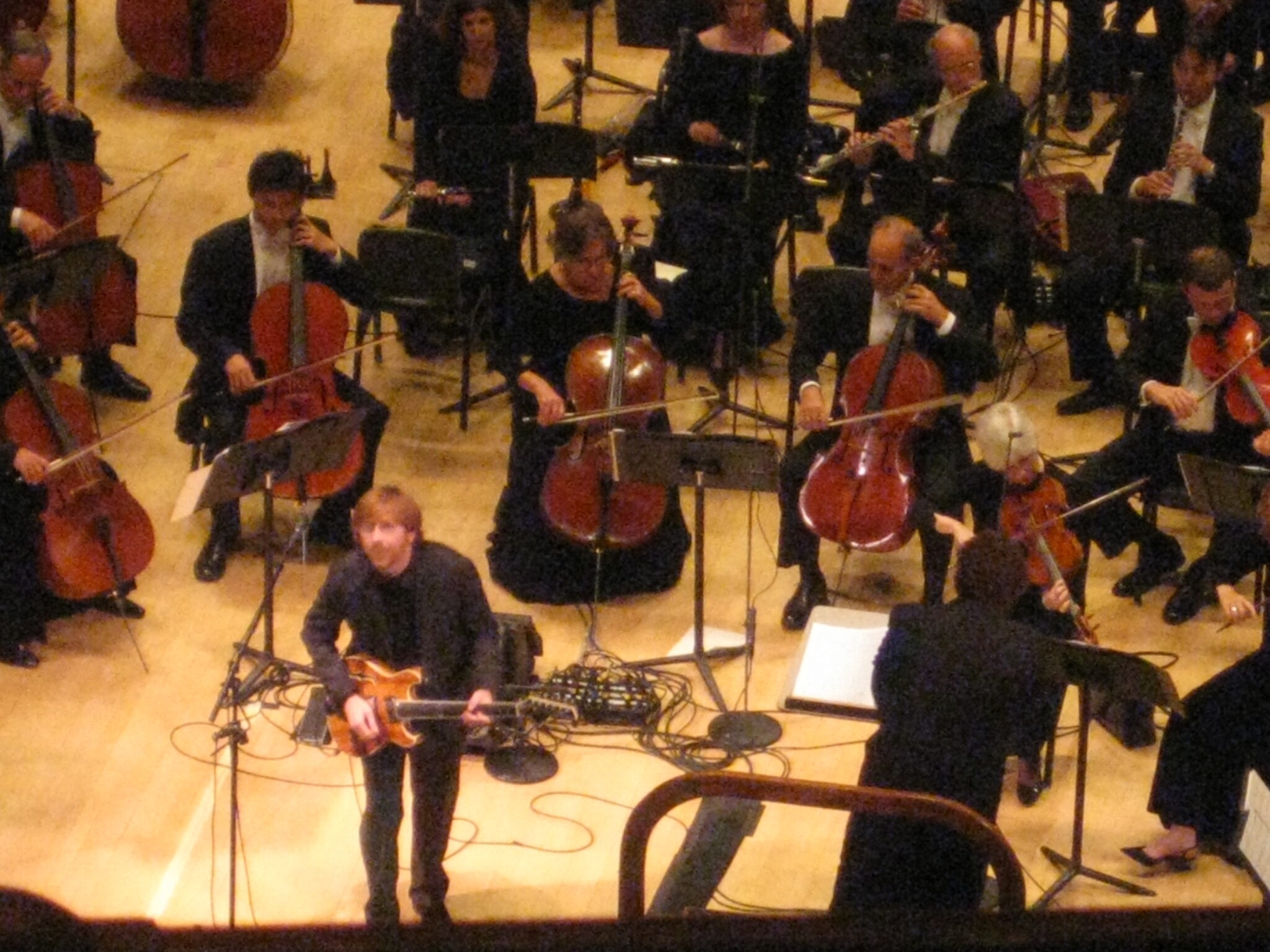
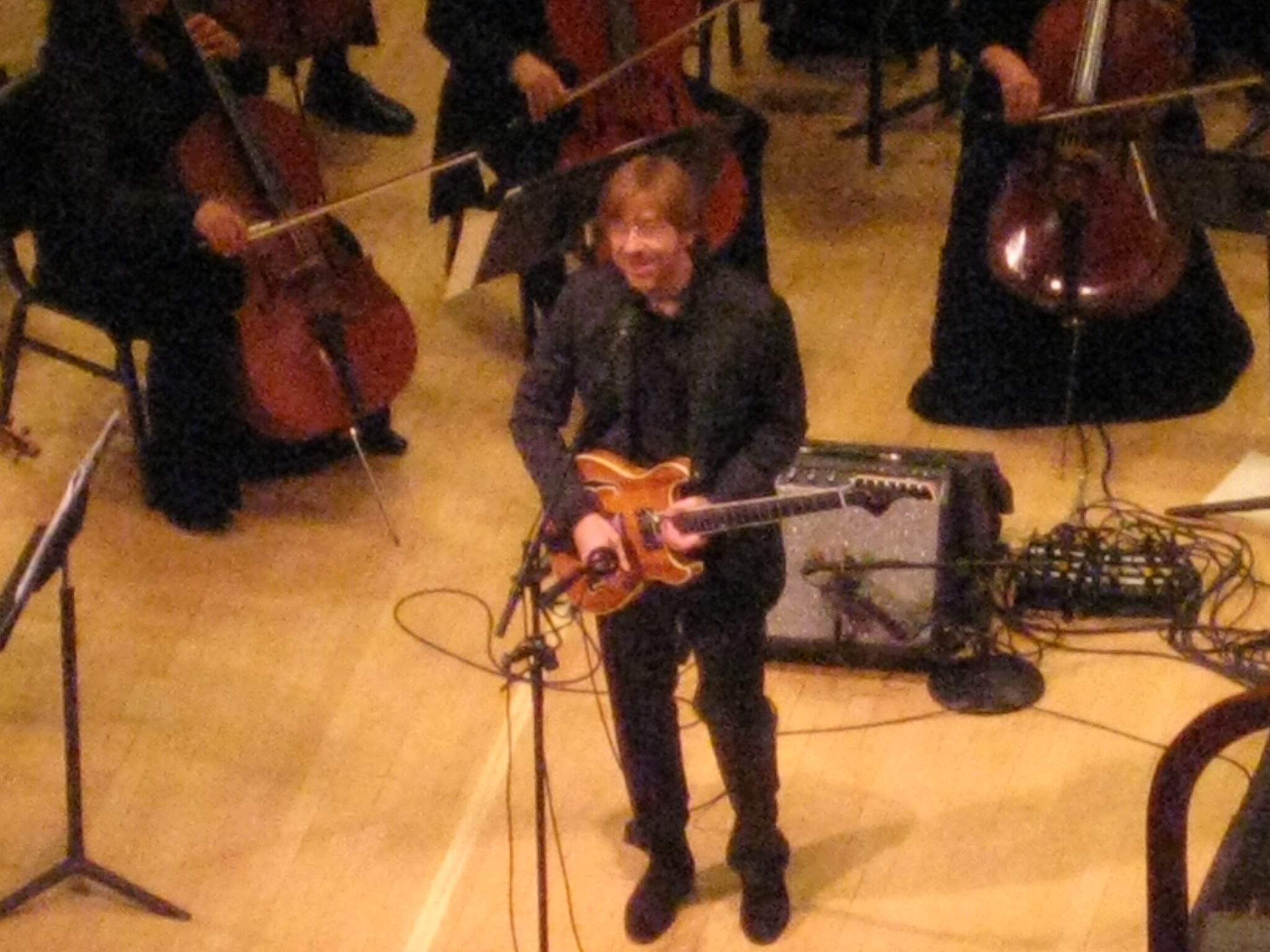
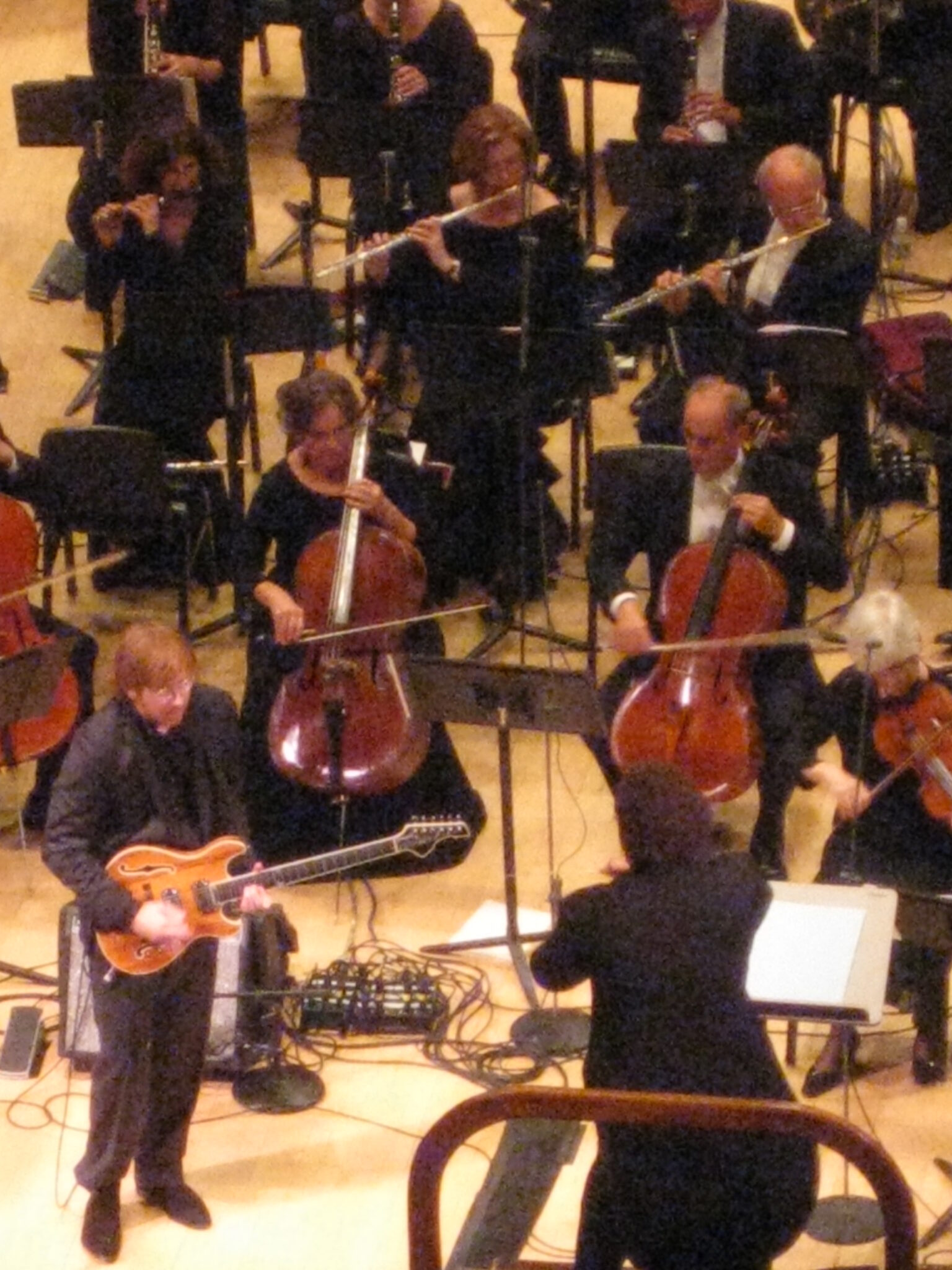
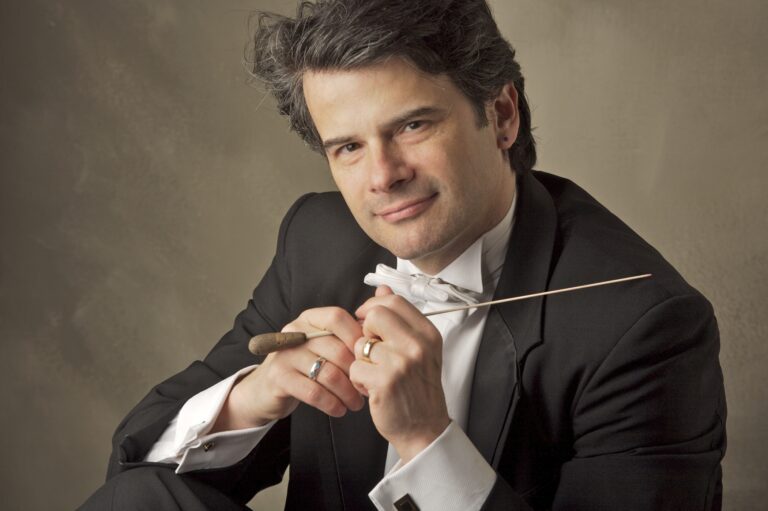
Upon their arrival to the stage, the principal violinist, the conductor, Asher Fisch, and then The Bad Lieutenant himself, Trey, came out to thunderous applause, likely the loudest Carnegie has ever heard. “First Tube” was soft and quiet at first, but perfect. Trey’s guitar was quieter than ever, but he changed the volume as the song got towards the end, with an amazing buildup, similar to the now-invigorated versions Phish has played in ’09. The flutes, violins and bongos/congos are heavy in this song, carrying the tune to its final section and peaking very subtly and suddenly.
“The Inlaw Josie Wales,” “Brian and Robert” and “Water in the Sky” were soft excursions into the mid-’90s writing of Trey, and showed the orchestral side of his writing that had been there all this time. “Divided Sky” was the crowd pleaser-supreme in the first set, giving the crowd a wide range of melodies and expansion of an already tremendous song. “Pebbles and Marbles” and “Guyute” closed out the first set, the latter of which had many heads bobbing and moving hands subtly to the movement of Asher Fisch, who was one of the more animated conductors I could have imagined, making Tom Hulce’s Mozart look like a impassive director of music. Fisch was swaying from side to side, almost seeming to leap in the air at times when the music compelled him to do so. It almost seems as though he would fit in at a Phish show.
Setbreak brought about a trip to the headiest smelling bathrooms since the last Phish show, and long lines of fans waiting for water, as the room was getting a bit warm. “‘Time Turns Elastic” started with the first two movements, which are not heard in the Phish version, as they are a cornucopia of the orchestra’s sound leading into the ‘Submarine’ section of the 30 minute composition.
This may be one of the best compositions I have ever heard, with crescendos and arpeggios that showed the masterpiece of Trey’s orchestral composition was a crowd pleaser, an attentive crowd focusing on the various sections intently. When played with Phish, fans take time to refuel and make pit stops, but for this version of “Time Turns Elastic,” every audience member hung on each section, as the segues were fluid to say the least. The most fascinating thing about this version of “Time Turns Elastic” was the focus on the various movements and sections within the song. The final section, ‘Carousel’, brought the song to a resounding peak, with applause that was the loudest of the evening thus far.
“Let me Lie” was touching, soft and short, providing a nice interlude in between two long epics, the latter being the debut of “‘You Enjoy Myself,” the immense Phish crowd pleaser. This was the song the entire crowd was waiting with bated breath to hear, only to be paused and let the excitement build longer as Trey thanked the audience, the orchestra, and remembered his late-sister, Kristine Anastasio Manning, for which her foundation that night was a beneficiary.
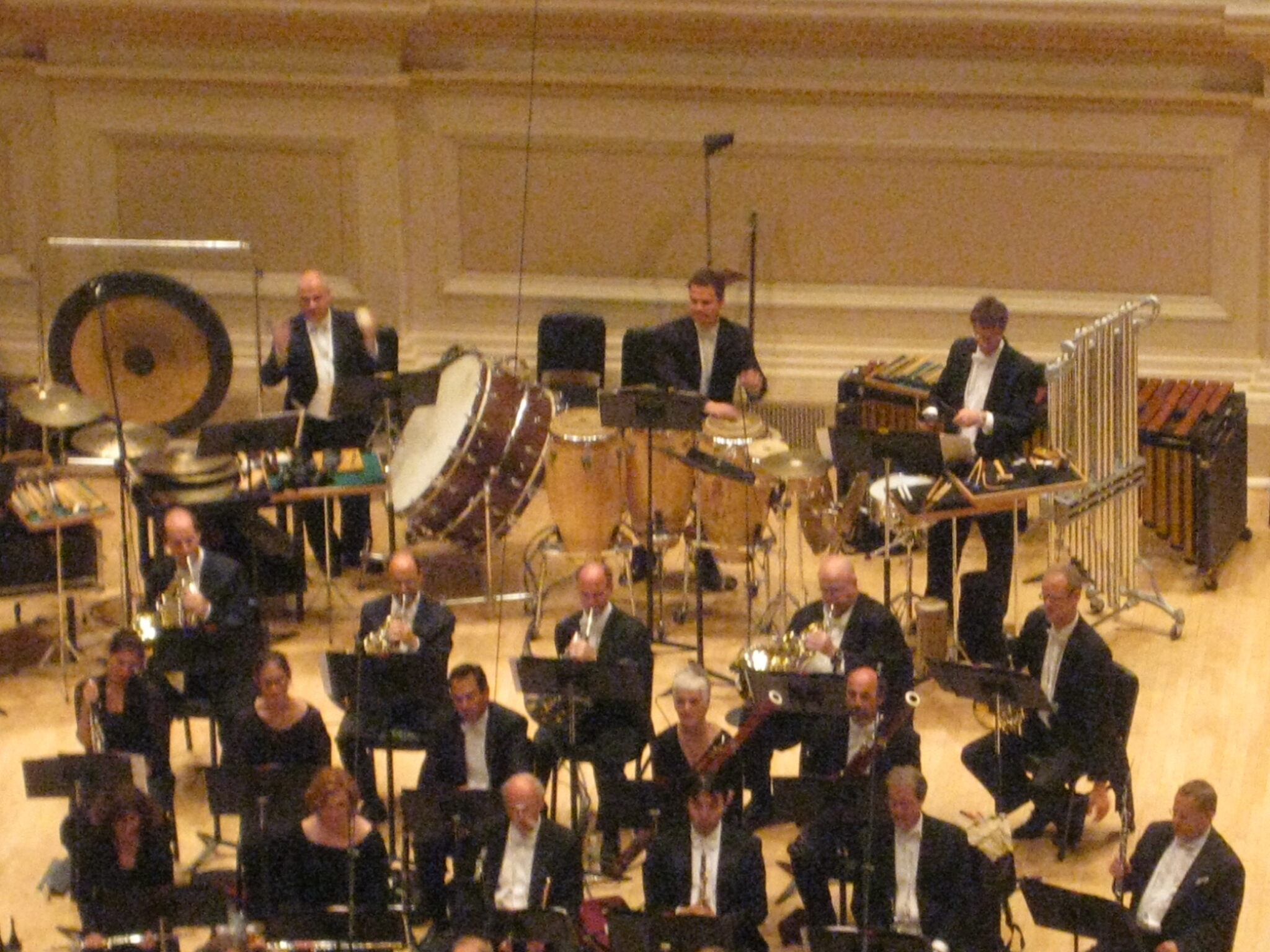
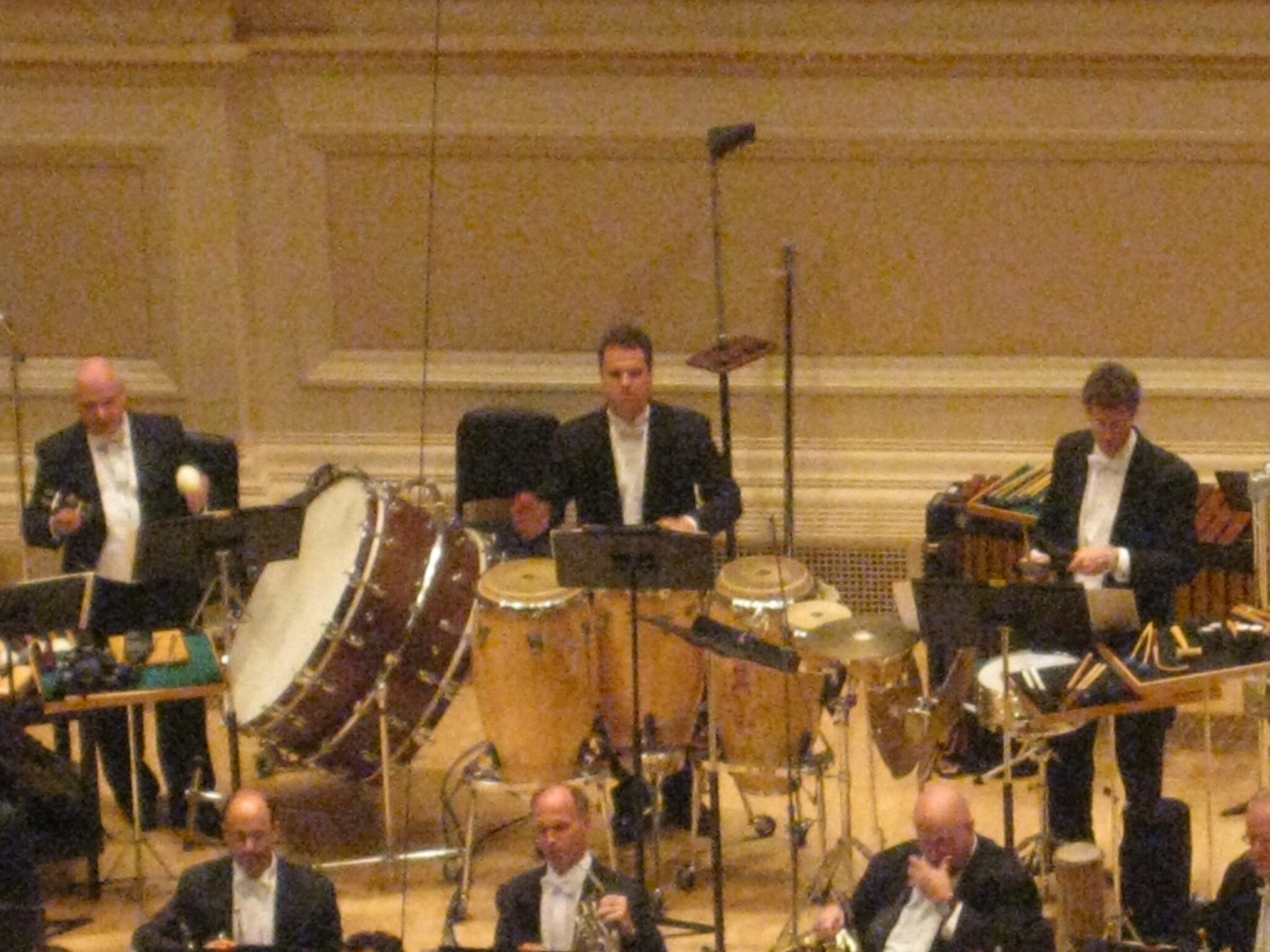
“YEM” started off with a round of applause overshadowing the opening section, but soon, you could hear a pin drop, were it not for the orchestra. The crowd hung on every note, hearing the song like never before, but really, like the song was meant to be heard – this version of the song brings out layers and aspects of the song still left unexplored through almost 500 performances over the course of the band’s career. The ‘Pre-Nirvana’ segment had the percussionist working a snare drum to emulate Fishman, as the strings brought about the largess of the ‘Nirvana’ section, with Trey playing softly and complementarily alongside the collection of musicians onstage. The xylophone in this section is worth turning the speakers up for. A crescendo appears with the trumpets, French horns and tympanis working to bring the song to its first crest. More xylophone brings the section typically played by Mike to its peak, with Trey playing louder and the horns coming in to build the song up once again.
The next section with the tremendous peak was resounding with horns and cymbals making it akin to the concert version. The bongos and congos took over the interlude in between these two sections, with an even louder zenith reached before ‘The Charge’ appeared and then dissolved with audience laughter, before a funky YEM jam beat was played by Trey and the percussionist, all the while the trombones, tuba and French horn played ‘Boy, Man, God, Shit’ in a way it was never played before.
You can’t help but laugh hearing this section, both out of the humor inflected by the horns, as well as the precision reached in the performance. Clarinets and other woods built up the song where the trampolines would usually come into play, and then the strings and full orchestra come into play, bringing the song into a three minute composed jam that highlighted all the parts of the song, as well as the musicians on stage, who were performing for an audience larger than they could possibly know.
As the final jam section ended and the strings played a very light ‘Wash Uffizi drive me to Firenze’, Trey set his guitar down and took towards the microphone, and began a vocal jam all on his own, a first for any Phish fan. The similarities between this vocal jam and the ‘Arc’ that Eddie Vedder performed on his 2009 solo tour were resounding, with the exception that Anastasio does his vocals all on his own, and without the addition of looping sounds; the room carried Anastasio’s voice throughout its acoustic borders, while the orchestra backed up each inflection of Trey’s voice.
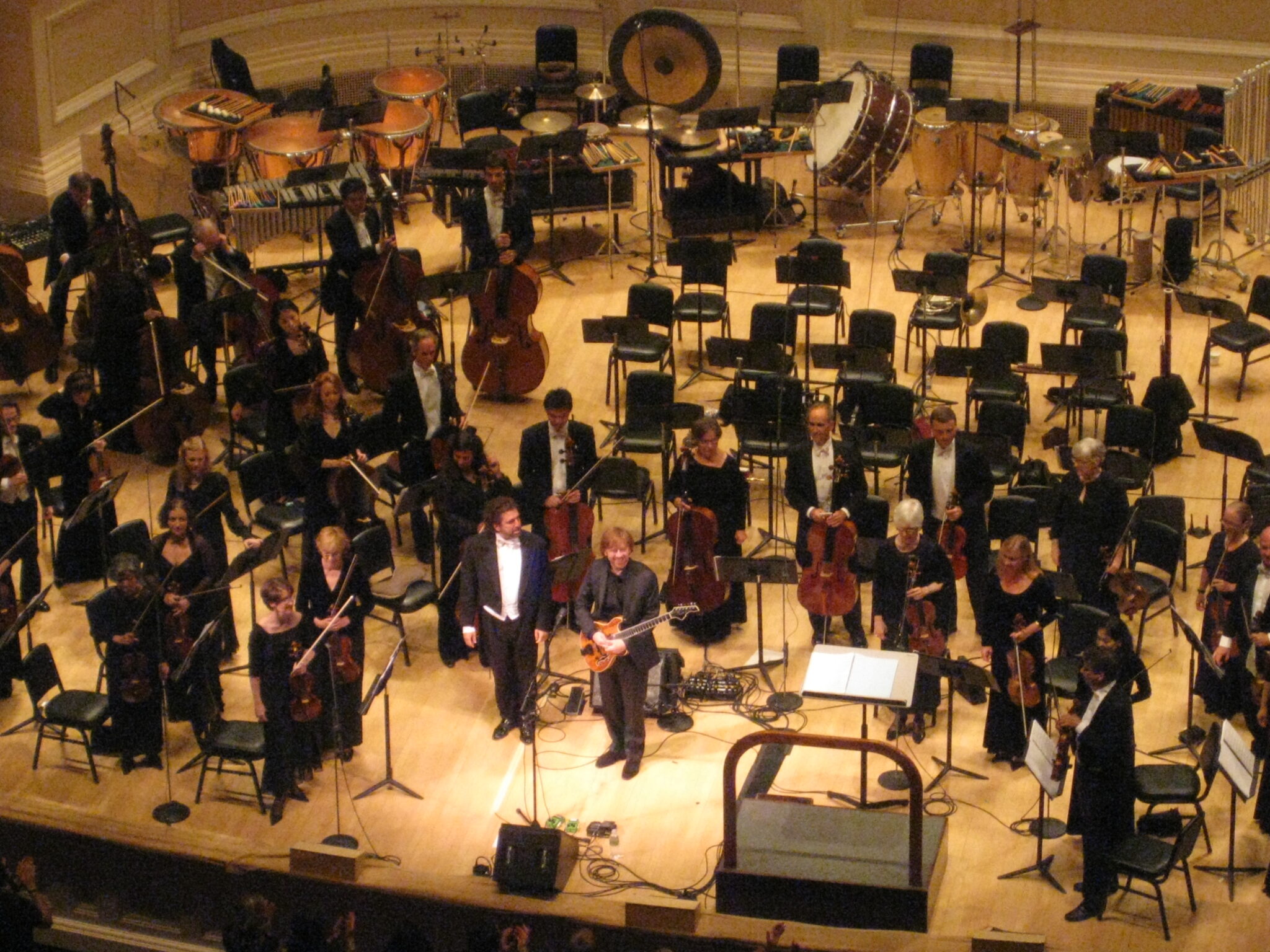
The roar of the audience at the end was deafening, even for one of those cheering loudly. We cheered like a Phish audience for a very non-Phish set of performers, and they deserved every ounce of it. An encore of “‘If I Could” was so perfect, you need to hear it to truly appreciate how soft and elegant the song gets; the album version has strings towards the end, which is a nice start for a song that has found a new home in an orchestral composition. The harp solo after the first two sets of lyrics is enough to make your eyes well up with tears of joy, and then the strings make the wells runneth over. A more beautiful composition is hard to come by.
As the show ended, fans ventured out into the streets to dodge the nitrous vendors, and headed out into the night, having experienced one of the most amazing musical events of 2009, let alone the entire decade/century. Yes, it was that amazing.
Overall, even the most rabid of Phish fans and music fans in general, would appreciate the intricacies, tempo changes, structure and multi-auditory stimulation that come from the greatness of an orchestra. Seeing Trey in an orchestral setting is the way to see him perform him music. Remember, he went to school for this, so this isn’t some silly venture like Jordan playing baseball. No, this is the real thing. This is Jerry Garcia playing solo shows, Mick Jagger putting out subpar solo albums for unknown reasons, and Bono hanging out with world leaders to push for more attention to Africa. This is where the rockstar in Trey goes on to become something more, something larger, something that transcends Phish, but brings along the music for the ride. You have to ponder the thought, since Trey went to college for Composition, had he not co-founded Phish, would he have been a colleague of Fisch?
One has to wonder, have we been duped this whole time by Phish, that now we deep down can appreciate the intricacy and effort it takes to create orchestral music? Most the songs played that night have been played by Phish since the early days (YEM, Divided Sky), the ’90s (Guyute, Inlaw, Brian and Robert, Water in the Sky) and in recent years (Time Turns Elastic, Let me Lie, Pebbles and Marbles), yet at those times, few considered that we were hearing the rock and jam versions of classical songs. All these songs have that familiar strain, and can possibly convert Phisheads into classicophiles in no time.
This show was a game-changer and eye-opener for many fans. Seek it out and join in one of the greatest auditory experiences you have ever heard.
On Saturday, September 12, Saratoga Performing Arts Center (SPAC) will begin their “SPAC @ Home: Concert Series” with world-renowned violinist and Grammy Award-winner Joshua Bell and classical pianist, Peter Dugan. The event will be held at the Arthur Zankel Music Center at Skidmore College.
The concert program includes the Beethoven Violin Sonata No. 5, the Kreisler/Dvorak “Slavonic Fantasy,” the Sarasate/Chopin Nocturne No. 20, and the Wieniawski “Polonaise de Concert.” After the concert, there will be a Q&A session with SPAC President Elizabeth Solo and Director of The Frances Young Tang Teaching Museum and Art Gallery at Skidmore College, Ian Berry.
Tickets for the virtual event are $10 and can be purchased at spac.org. Ticket buyers will be directed to an exclusive stream.
Born in Bloomington, Indiana, Bell began the violin at age four, and at age twelve, began studies with his mentor, Josef Gingold. At age 14, Bell debuted with Riccardo Muti and the Philadelphia Orchestra, and made his Carnegie Hall debut at age 17 with the St. Louis Symphony.
Bell has performed for three American presidents and the sitting justices of the Supreme Court of the United States. He participated in former president Barack Obama’s Committee on the Arts and Humanities’ first cultural mission to Cuba, joining Cuban and American musicians on a 2017 Live from Lincoln Center PBS special, Joshua Bell: Seasons of Cuba, celebrating renewed cultural diplomacy between Cuba and the United States.
CHQ Assembly announced their fall programming including lots of musical programming. The programming will start in September and will wrap up in November. The CHQ Assembly programming will be posted on the CHQ Assembly’s website.
The CHQ Assembly is a digital outlet of Chautauqua Institution which is a nonprofit organization that exists to explore the best in human values and the enrichment of life. The Assembly has some free content but also offers a subscription program for $3.99 a month or $45 a year after a 90 day free trial. People interested can subscribe here. Subscribers to the CHQ Assembly Video Platform will have year-round access to nearly all our 2020 broadcasts. People can revisit their favorite programs, or catch up with ones they missed over the course of CHQ Assembly’s jam-packed nine-week summer assembly season. The programs try to focus on exploring critical issues of the day through a range of experiences including lectures, artistic experiences, master and enrichment courses, and conversations.
The musical programming starts on September 15 at 12PM with a release of 2020 Piano Recitals featuring Gavrylyuk, Kobrin, Paremski, Buechner, Taylor, Zhu and many more. On October 1 there will be a Lecture by Grammy Award-winning Violinist Nicola Benedetti speaking on the impact of music education and to inspire us through music.. On October 6 at 12PM there will be an DEAs in Classical Music series. This four-part series of conversations on inclusion, diversity, equity and accessibility will explore issues in the classical music industry. And then in November with a to be determined date and time there will be a premiere of Chautauqua Opera Company’s A Cappella Song Cycle. This is a three-month project featuring 2020 Chautauqua Opera Company Young Artists and created by Composer-in-Residence Frances Pollock and librettist Jerre Dye.
For more information on the CHQ Assembly programming visit their website.
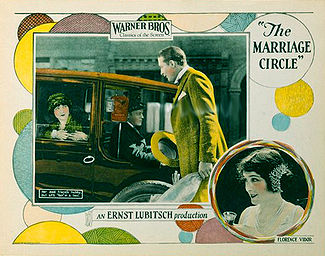
On Thursday, September 10, Glens Falls’ Park Theater is hosting a virtual fundraiser with the streaming of silent film The Marriage Circle. Silent film accompanist Ben Model will supplement the film with an original live score. The show begins at 7:00 p.m. with a presentation from the Chapman Museum about Glens Falls’ 1920s theater scene following the 1928 Spanish Flu pandemic.
Ben Model plays piano and organ, and his scores have been used by adult orchestras and high school ensembles alike. In addition to The Marriage Circle, he’s produced scores for the films of Charlie Chaplin and Buster Keaton. Over the past 30 years, Model has composed scores for hundreds of silent films both long and short.
The Marriage Circle, a 1924 comedy, was directed and produced by German-born director Ernst Lubitsch. The film’s writer, Paul Bern, was inspired by Lothar Schmidt’s 1909 play “Nur ein Traum (Only a Dream).” One of The Marriage Circle’s actresses, Esther Ralston, lived in the Glens Falls area in the 1970s. Ralston has a star on the Hollywood Walk of Fame.
LA Times.
Tickets for The Marriage Circle livestream are $15. Attendees will receive a link to join 30 minutes before the stream begins. For more information on the event, visit the Glens Falls Park Theater website.
Holly Bowling is taking her talents to the great outdoors. Ahead of her upcoming Grateful Dead album Seeking All That’s Still Unsung, the San Francisco pianist will stream weekly performances from Yosemite, the Badlands, and more. “The Wilderness Sessions” will run for six Thursday shows from September 3 to October 8.
Bowling’s “Wilderness Sessions” arrives after her last series of livestream concerts, “Alone Together: The Living Room Sessions.” In the eight-volume series, she performed Nine Inch Nails’ “Hurt,” famously covered by Johnny Cash, as well as Radiohead’s “Idioteque.” While piano covers of songs with full bands have potential to sound bare, Bowling’s arrangements are rich and fully realized. On changing the scenery from her living room to some of America’s most iconic landscapes, Bowling says:
As grateful as I was (and still am) for that opportunity, after a few months it was starting to feel like too much staring at the same walls in the same empty room. I decided if the only option right now is to play to empty spaces, then I wanted to do that in a giant canyon or on a mountaintop in the middle of nowhere. It’s one of those things that would never have worked in normal times. But I realized there’s two ways to look at this time – you can look at all of the things we can’t do, everything we’re missing out on, everything we’ve lost… or you can find the things that you can only do now that you wouldn’t be able to do otherwise, and seek those things out and make them happen.
Leg One dates for “The Wilderness Sessions” include:
September 3, Lake Tahoe, California
September 10, Yosemite, California
September 17, Salt Flats, Utah
September 24, Bruneau Canyon, Idaho
October 1, Beartooth Mountains, Wyoming
October 8, Badlands, South Dakota
Bowling first came to prominence in 2013, when she began performing solo piano arrangements of jam band music. One performance, “The Tahoe Tweezer,” based on Phish’s lengthy “Tweezer” led to two albums: 2014’s Distillation of a Dream: The Music of Phish Reimagined For Solo Piano, and 2016’s Better Left Unsung, a collection of Grateful Dead piano covers. Bowling soon attracted the attention of several Grateful Dead members including Bob Weir, Phil Lesh, and Warren Haynes, and was invited to perform at Terrapin Crossroads and Haynes’ Christmas Jam.
While “The Wilderness Sessions” will be free to view on Facebook and YouTube, Bowling has created a virtual tip jar. Visit Holly Bowling’s website for more information.
Randall Craig Fleischer, Maestro of the Hudson Valley Philharmonic (HVP), passed away suddenly Wednesday night at his home in Los Angeles, CA. Fleischer was much loved by all who knew him and were fortunate enough to create music with him. Fleischer was considered the heart and soul of the HVP.
Fleischer became music director of the Hudson Valley Philharmonic in 1992 and was a leading force in the classical music scene all over the United States. His charismatic personality and contagious love of music ignited orchestral brilliance in every concert he conducted.
He was an active guest conducting career with many major orchestras in the United States and internationally including repeat engagements with the Israel Philharmonic, Hong Kong Philharmonic, Los Angeles Philharmonic, San Francisco Symphony, Boston Pops, St. Paul Chamber Orchestra, Seattle Symphony, Utah Symphony, San Diego Symphony, Chamber Orchestra of Philadelphia, and Houston Symphony, among others.
Active as a composer, Mr. Fleischer was also a national leader in the area of symphonic rock and world music fusion. Pioneering these new and growing genres for more than 20 years, he had worked with artists such as John Densmore (The Doors), Natalie Merchant, Blondie, Ani DiFranco, John Cale (Velvet Underground), Garth Hudson (The Band) and Kenny Rogers. Mr. Fleischer’s arrangements and orchestral works have been performed by major orchestras worldwide.
He also composed several new works focusing on the interrelationship of Native American music and culture and the symphonic realm. He collaborated with artists R. Carlos Nakai, Burning Sky, The Hawk Project and The Benaly Family. Mr. Fleischer’s work “Triumph” premiered in Flagstaff, Arizona in 2005. His work “Echoes” premiered in Washington, D.C. in November of 2008 at the National Museum of the American Indian (Smithsonian). Fleischer’s most recent work entitled “Symphony in Step” features the dance ensemble “Step Afrika” and is the first and only orchestral work featuring the African American dance tradition of “stepping.”
Mr. Fleischer first came to international attention when, while serving his first of five years as assistant and then associate conductor of the National Symphony Orchestra (NSO), he conducted Dvorak’s Cello Concerto with Mstislav Rostropovich as soloist during the NSO’s 1990 tour of Japan and the U.S.S.R. Mr. Fleischer again had the honor of being chosen to accompany Maestro Rostropovich, once more conducting the NSO, this time in Lincoln Center’s Avery Fisher Hall in a performance of Prokofiev’s “Sinfonia Concertante” in celebration of the composer’s birth. In December of 1992, he conducted an ensemble of over 70 cellists, including Yo-Yo Ma, and a 190-voice chorus in the Kennedy Center Awards tribute to Rostropovich, televised nationally on CBS, with President and Mrs. Bush presiding.
Mr. Fleischer studied with Leonard Bernstein as a conducting fellow at Tanglewood in 1989. He served as the assistant conductor of the American Symphony Orchestra from 1986 to 1989. While working toward his master of music at the Indiana University School of Music, he served as chorus master of the I.U. Opera Theater program from 1983 – 1985. Fleischer received his bachelor of music education from the Oberlin Conservatory of Music and has studied conducting privately with Otto Werner Mueller and in master class with Seiji Ozawa, Ricardo Muti, Gustav Meier and others.
On Saturday, July 18, Bardavon Presents will stream the first Hudson Valley Philharmonic Virtual Concert Hall for free. The performance is curated by HVP Maestro Randall Craig Fleischer and will showcase favorite pieces performed by the talented HVP musicians.
As Bardavon is not sure when audiences will be able to gather together once again due to the Coronavirus pandemic, they are streaming virtual performances on YouTube for fans to enjoy from home. The HVP Virtual Concert Hall #1 will stream on July 18 at 8PM and will feature the following pieces along with commentary from Fleischer:
Reinhold Glière, 8 Pieces, Op.39, Scherzo, Performed by Madeline Fayette, Cello, and Abi Fayette, Violin
Reinhold Glière, 8 Pieces, Op.39, Berceuse, Performed by Madeline Fayette, Cello, and Abi Fayette, Violin
Gioachino Rossini, The Barber of Seville Overture, arr. for two flutes, Performed by Marcia Gates, Flute, and Jill Sokol, Flute
J.S. Bach, French Suite No. 2, Allemande, Performed by Elizabeth Handman, Viola
J.S. Bach, French Suite No. 2, Courande, Performed by Elizabeth Handman, Viola
Jay Ungar, Ashokan Farewell, Performed by Frances Duffy, Harp
Bela Bartok, Romanian Folk Dances, Allegro Moderato, Performed by Rachel Handman, Violin
Donna Doyle, “Cave of the Heart”, Performed by Gregory K. Williams, Viola
Gioachino Rossini, William Tell Overture, English Horn solo, Performed by Joel Evans, English Horn
Hatikva (trad.), Performed by Harvey Feldman, Bassoon
Subscribe to Bardavon Presents on YouTube so you don’t miss this or their upcoming shows planned for July through November. Bardavon is still selling tickets online for future events and updates their ticket holders on the status of the scheduled events.
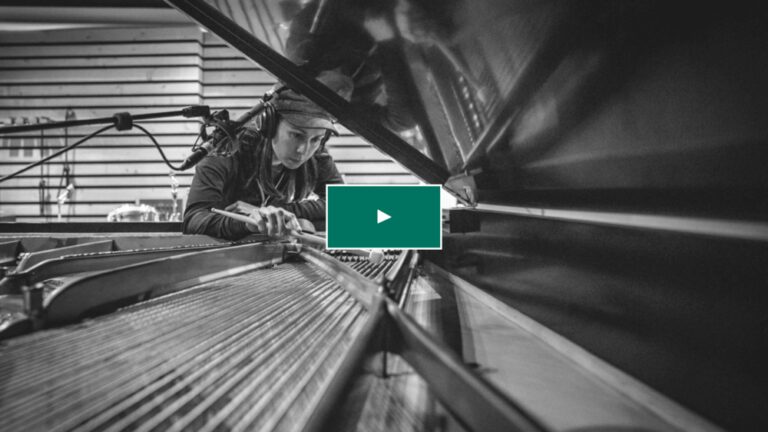
Holly Bowling will releasing a new Grateful Dead album full of solo piano renditions this fall. The new album, Seeking All That’s Still Unsung, is made of music recorded at 25th Street Recording in Oakland, CA.
Holly Bowling Photo Provided by Press Release.
Holly Bowling is a classical pianist who is based in San Francisco. Bowling uses the influence of jam band music to create an unique style. Her sound is emotionally rich and highly technical. She has already created albums focusing on Phish in the 2013’s Distillation Of A Dream album and the Grateful Dead focused Better Left Unsung (released December 9, 2016 through The Royal Potato Family). She known for her new band Ghost Light with Tom Hamilton, Raina Mullen and Scotty Zwang.
In this new album Bowling is attempting to create a record that feels similar to her live performances. Bowling is also using this album to create unique sounds that can only be done in a studio. The album will have the feel of a live album while accomplishing things that are impossible from a musical standpoint to create live on the road.
How Holly Bowling is Making the Album Possible
The album has been in the works for the last year and a half and has been recorded and mastered. But Bowling has a Kickstarter to get the album out to fans. The freedom that’s given her using a Kickstarter makes it so she can be an independent artist. The contributions to it will help to cover mechanical license fees, vinyl creation, and expenses associated with the release of the album. Some of these expenses include distribution, marketing, publicity. The mechanical licensing allows her to release covers of Grateful Dead songs and makes sure the original creators are fairly compensated
For more information on Seeking All That’s Still Unsung and Holly Bowling visit her website and her Kickstarter.
The Daniel Hersog O Canada Jazz Orchestra has released their first digital music video, featuring the Canadian National Anthem “O Canada.” The video’s release comes just in time for Canada‘s July 1 Independence Day.
Daniel Hersog‘s 17-piece ensemble formed in response to the Coronavirus Pandemic. The group is comprised of Juno Award winners, Canadian jazz stars and a recipient of the Order of Canada. All 10 Canadian Providences are represented among these musicians that have come together to support each other during trying times.
Daniel Hersog, hailing from Vancouver, British Columbia, has quickly become a vital Jazz player as a trumpeter, composer and arranger. Hersog is currently receiving significant airplay, and international media attention for his newly released album Night Devoid of Stars released through Cellar Music Label.