Matt Smith, a Capital District-raised, Austin-based artist, has released eight new albums as well as ten digital releases from Smith’s catalog of recordings. The albums will be available everywhere music is streamed or bought. Hard copies of the album are available through Austin’s Waterloo Records.
Smith has been working on the flagship release, Being Human, for four years. The song addresses broad themes of love, death and spirituality, along with timely issues such as immigration, narcissism and addiction.
Parlor is a solo acoustic instrumental album recorded entirely on an 1890’s Thompson and Odell parlor guitar that has been handed down through four generations of the Smith family. Chop Shop – Live at Strange Brew was recorded at the legendary south Austin venue during the band’s weekly Sunday afternoon residency.
When asked about why releasing now, Matt Smith said, “It’s an election year and there’s COVID. I had them all ready, and rather than dribble them out, why not put it all out at once? That way, I can get back to work on new material.”
The 13th studio album from legendary Queens rapper Nas was released on August 21 through Mass Appeal Records. Composed of twelve tracks and one bonus record, the project was produced solely by California native Hit-Boy, a well-known producer who has made a name for himself for producing records with artists the likes of Kanye West, Jay-Z, Drake, Big Sean and more.
Following the lackluster reception to his previous body of work, Nasir, King’s Disease had fans skeptical, wondering what the fabled emcee had left. Would the album feel as uninspired as its predecessor or, would it be as acclaimed as 2012’s Life is Good? Other concerns arose when the track list was revealed, as Anderson .Paak, Lil Durk, Fivio Foreign and A$ap Ferg held the guest spots, which led the public to assume that Nas would try to conform and abandon his timeless style for a more modern trend of music.
These doubts were surely put to rest after the intro track and realized that Nas wasn’t conforming but taking his style and meshing it with more modern sounding beats and production. He effortlessly got into his pockets and felt comfortable from start-to-finish.
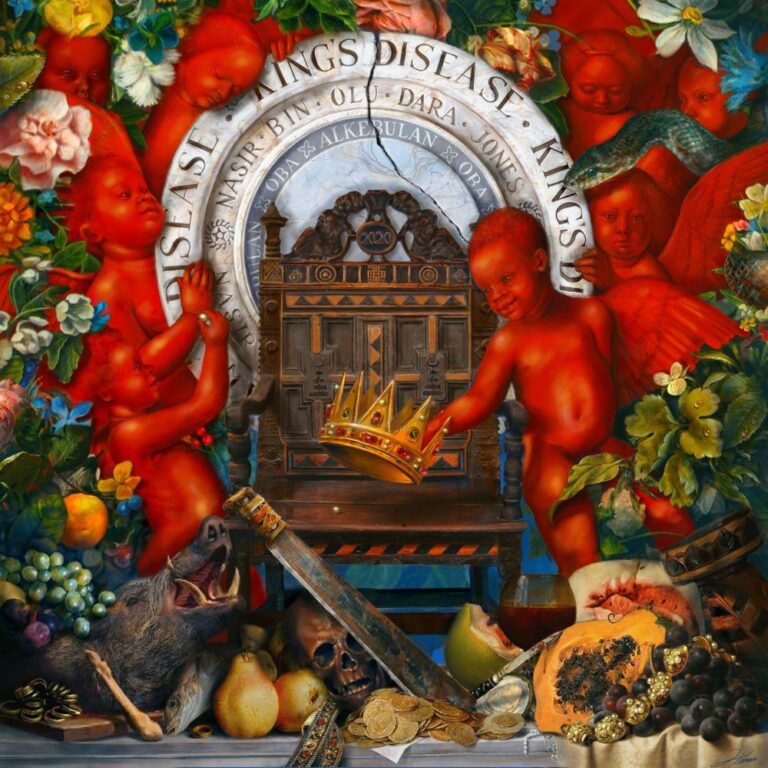
The album cover goes consists of Cupid-like babies. Some are black, others white, with wings of angels but colored red as if they were demons holding up a plaque that is covered by dirt. Nas’ name appears on the plaque, while one of the babies holds a crown. There is a rusty bloody machete on the table with fruit, gold, a skeleton head, the head of a hog, a serpent and flowers from a garden.
Throughout his last couple of projects Nas has been made his spiritual beliefs apparent and this album cover reflects that. King’s disease is defined as a disease where affluent people eat poorly, invest poorly and have bad relationships, which leads to one’s downfall. Nas touches on business and health throughout the project but the theme he harkens on the most is love and relationships. On multiple songs he tells stories of failed romantic relationships, or how relationships work poorly within the black community. Nas also touches on the struggles of the black community as a whole throughout.
Hit-Boy did a masterful job with the beats. The album has a classical sound to it, with a couple of instruments being played in the background on the majority of the tracks, combined with the heavy bass that is preferred in today’s rap music.
The story-telling is a highlight of the album. He didn’t do it too often but, when he did, they were amazing. On the record, “Car #85,” we get Nas at his descriptive best as he tells tales of his close run-ins with the law, his trips to hang out with friends, as well as his attempts of keeping a romantic relationship alive. All precipitated by this car service that he would use exclusively.
The length of the album was a plus – short and succinct, thus making it an easy listen, although several records felt short. Nas is known to rap multiple verses yet, on this project, it seemed like he would give one or two concise verses so as to not prolong the records.
And while many of the features were surprising, he did a great job of staying true to himself while letting other artists shine in their own lanes. He didn’t try to step on their toes and in return, they didn’t step on his. If there can be a complaint, it’s that the contrasting sounds made for songs sounding entirely different when a new act was introduced. For example, in the Lil Durk-assisted “Til The War is Won.” Nas raps for two verses and basically hands the record off to Lil Durk for the last minute or so. This also happened with his song with Anderson .Paak “All Bad,” which sounds like an Anderson .Paak song featuring Nas.
While having a great theme, Nas fails to focus on it for the entirety of the album. And at times, it feels like he was running down bullet points instead of detailed explanations. Nas is knowledgeable, but at times he doesn’t explain his knowledge – he just puts the knowledge out there for fans to either get it or not. This was a problem from his last release Nasir, where fans reduced many of lines to him being a conspiracy theorist.
Full Circle
“10 Points” is a record which embodies where Nas is in life. The song consists of him kicking game to the youth, explaining, “Take it from a street dude, you don’t need to be a street dude. Get a lawyer, read your contract, and eat food.” The way he delivers his rhymes in a smooth cool manner is what separates Nas from a lot of emcees, still.
He also addressed the longstanding rumors of him copying the late Tupac Shakur’s ‘Thug Life’ tattoo, rapping, “Pac saw the chain, got his medallion, I want it. Insinuate imitation cause I copied his stomach. Kings honor kings, straight from my pops to my son’s sh*t.” This was his way of laying to rest how his ‘Godson’ tattoo mirrored Tupac and a ‘Thug Life’ tattoo both being placed across their stomachs. The beat switch on this track was flawless and was the highlight of Hit-Boy’s production.
Nas also gave shootouts to legendary NBA player Kobe Bryant and rap legend Nipsey Hussle, rhyming, “Rest in Peace Kobe and Nip that’s off the rip.” People forget that Nas once ripped Kobe on his Street Disciple album on the track “These are our Hero’s” where he went at the then troubled NBA star for his alleged rape case allegations in 2003. It was refreshing to hear Nas ignore old wounds and pay respects to Bryant, although the two had reconciled long before his death.
Other great records include “Blue Benz,” “Car #85,” “27 Summers,” and “The Definition.” The beats for “Blue Benz” and “27 Summers” stand out.
Nas and Hit-Boy complimented each other well. Hit-Boy showcased his range as a producer while showing Nas’ ability to adapt to the new climate of music. Nas works best on more simplistic beats, with some drum patterns and instruments in the background to boost his message and it was cool that he was allowed to still find his pocket.
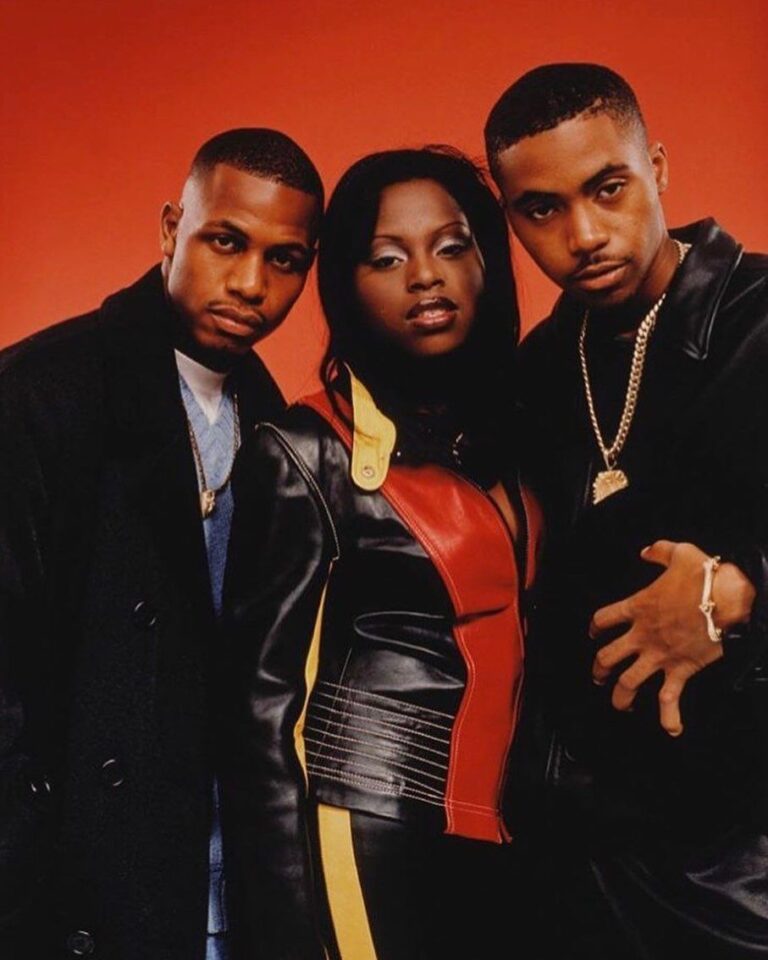
Nas meshed with many of the features on the album and it was great to see the return of his group, The Firm, on the song “Full Circle.” King’s Disease is a good album, and while it isn’t Nas’ best work, it wasn’t expected to be. It’s just good to hear one of the genre’s all-time greats still delivering quality music.The album is a solid 7.5 out of 10 and we look forward to what more Nas has to offer.
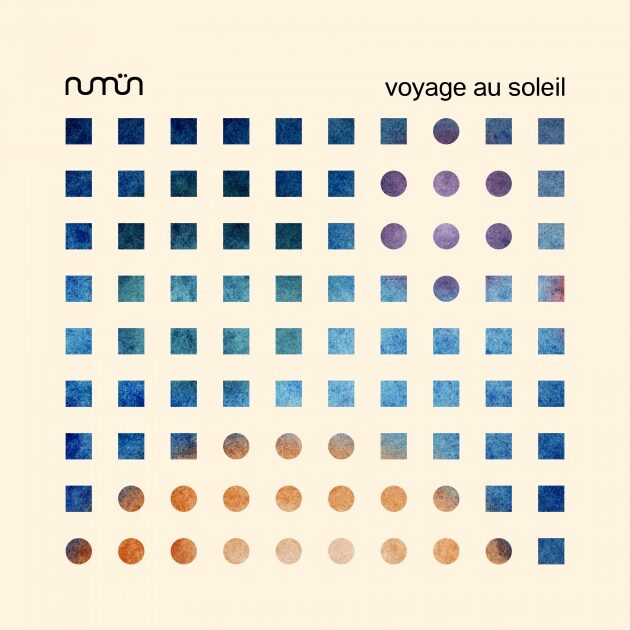
Bob Holmes, a member of SUSS and Joel Mellin and Christopher Romero of Gamelan Dharma Swara collaborated to create the minimalist group numün. They released their first album, voyage au soleil, French for “voyage to the sun,” on Friday, September 4. With their different backgrounds, numün is able to achieve a unique sound by using both American and traditional Balinese instrumentation, aided by synthesizers and looping.
The album first began as a project to commemorate the 50th anniversary of the 1969 moon landing. As with much ambient music, there is an inspiration from Brian Eno, but numün is able to break away from him using unique instrumentation and a key central element for the listener to follow.
The album begins with “Tranceport,” a song that invites the listener into the album. Even on this first track, the use of less-common instruments is evident. The song uses a gong that rings periodically. This functions as a start to the album, but also a start to the journey the listener is about to embark on. It transitions into a more guitar-heavy section, eventually fading into the next track, “First Steps.”
“Tranquility Base” works as a recap of the previous two tracks while also looking ahead to the future. As the longest track in the album at 8:22, numün is able to use this time to glance at the journey in front of them. The group reflects on what happened and looks to what is in store. The final three tracks work to propel the reader towards the finish, the heart of the sun.
The listener can get lost in the music and drift, but they will never get too far. There is always something that can pull the listener back. Sometimes it is a repetitive melody changing; other times it may be the use of an instrument that is foreign to the listener’s ear. voyage au soleil is a journey through it all: the unknown, the pitfalls, and the triumphs.
Key Tracks: Tranceport, Tranquility Base, Voyage Au Soleil
In the most recent installment of his Karma mixtape series, Harlem rapper Dave East makes his latest attempt at solidifying himself as one of New York’s head honchos. The 15-track, 53-minute project features notable guest appearances. Trey Songz, French Montana, Benny the Butcher, A Boogie wit da Hoodie, dancehall artist Popcaan, along with R&B legend Mary J. Blige, all lend-a-hand, in what felt like East’s best attempt at a commercially successful project.
The mixtape opens up with arguable its best record. “Handsome” is a thumping and fast paced track where East confesses his life’s agendum, which are “to not break the code,” “try not to die,” and “praying that he gets old.” It is an ode to the lifestyle that many from the inner-city can have an appreciation for. In 2:53, East captures the hopes and dreams of a generation of men, which is wealth and health, while staying loyal to their compatriots. What makes the record even better is that, while it has a radio feel to it, the authenticity remains. And with it being just shy of 3 minutes, the replay value is high. He follows it up with a record that feels straight of a Caribbean crime film. Backed by loud and distinctive horns, “Unruly,” features Popcaan and serves as an antithesis to its predecessor. While “Handsome” described the perfect outcome from a life in the streets, “Unruly” sees East chronicle the dangers that come with operating on the other side of the law.
The third track is where the album takes a turn, in the Trey Songz assisted “The City,” East tries recreating one of Jay Z’s better records “Heart of the City.” While a noble attempt, he lacks the soulfulness to pull it off. Not to mention, at the time of the original recording, Jay-Z was arguably the biggest rapper in the game and thus metaphorically was the “Heart of the City.” We do not think of Dave East in the same vain (or any current New York rapper for that matter). The same issue follows him on the fourth track, “Get the Money.” It’s a solid enough song, as he details his chase for financial prosperity. A god-awful French Montana chorus — along with a bridge that sees Dave East try his hand at harmonizing – completely derail it. He completes a hat-trick of melodically challenged songs with “Thank God.” Featuring A Boogie wit da Hoodie, East tries his hand at a club record, but the song never takes off, as the duo lack chemistry and it ultimately ends up feeling forced.
This ebb-and-flow continues throughout, as the best records see East stay in own pocket, solid beats, along with well put together verses, while his attempts at diversifying himself see him fall short. “Said What I Said,” “Broke or Not,” “Mission,” “Menace” and the Three 6 Mafia inspired “F**ck Dat,” are all good songs. While “Stone Killer,” — featuring Benny the Butcher — is absolutely explosive. The Mary J. Blige assisted “Know How I feel,” was a nice surprise as East meshed well with the r&b icon. Yet, for some reason, it did not serve as the outro. That was reserved for the self-reflective “Believe It or Not,” and while it is a good enough record, it left the project a bit anti-climactic.
All in all, this is a solid body of work, yet it feels as though the pressure for commercial success inspired a few of the songs. The problem is, Dave East isn’t and will probably never be a top-selling (or charting) artist and that’s okay. While he hasn’t led New York back to dominance as some predicted, his abilities as a rapper is still a rare and valuable commodity in this current era of New York hip hop.
File this one under so nice the Analog Players Society had to release it twice. The first disc, TILTED, is a percolating live acoustic jazz session featuring four of the genre’s finest players. The second, Soundtrack for a Nonexistent Film, is a loop based reimaging of the sounds waxed during the former, a fractal audio swirl that gives props to the sample-heavy production of hip-hop’s Golden Age and a new kind of noir cinema sound.
The culprits behind this very forward-thinking project are the Analog Players Society, the brainchild of producer/engineer Amon Drum (aka Amon aka J. Amon). This heavy collective originated at Amon’s first studio, The Hook, which recently moved and expanded to be reborn as The Bridge Studio, a new Williamsburg, Brooklyn-based favorite of NYC’s most cutting-edge players.
Photo by Jude Goergen.
The APS collective features a rotating ensemble cast of some of the Big Apple best soundmakers. APS’ various projects, which are all decidedly eclectic by nature, carry serious strains of the Jazz, Dub, Funk, Afrobeat and Soul within. Analog Players Society’s 2012 debut album, Hurricane Season In Brooklyn, impressively debuted in the top 15 of the Billboard Contemporary Jazz Chart, and earned press accolades from NPR’s Fresh Air, Wired, and All About Jazz to name a few.
Fast forward to April 2019 and the Analog Players Society is reborn during a live jazz session produced by Ben Rubin (aka Benny Cha Cha) and Amonat at The Bridge Studio. Rubin gathered four of the best jazz musicians in New York City for the occasion: tenor saxophonist Donny McCaslin (David Bowie’s last bandleader on Blackstar), pianist Orrin Evans (the Bad Plus), and the in-demand rhythm section of bassist Dezron Douglas and drummer Eric McPherson.
The fruits of this meeting are featured on TILTED, which comes out today on Ropeadope Records. It boasts three lengthy explorations, all full of quirky creative turns and high-wire harmonic interplay.
Nothing like the tinkle of a toy piano to set the mood for this most unique cover of Monk’s angular and playful Epistrophy. McCaslin is the focal point for most of this 10-plus minute journey. He deconstructs lines and floats across Evan’s alternatively chopped single note support lines and lush, complex chord painting. McPherson’s unique drumming, evident on all the tracks, is at its most impactful here. He’s a man more inclined towards orchestral stomps, punky thunks and unexpected breakdown fills than cliched, cymbal-ridin’ chinga chinga cocktail lounge swing. To my ears, his style owes more to someone like Captain Beefheart’s John “Drumbo” French and the delightfully jerky time of Prime Time-era Denardo Coleman than traditional post bopper. And making this even more oddly Monk, Evan’s goes two hands for his solo here, one on the piano grand, and one on his toy ivories!
Photo by Jude Goergen.
On the other cover here, One Note Samba, the quartet wrestles a tasty dose of avant garde out of Antonio Carlos Jobim’s mellow bossa nova classic, with McCaslin tossing about the memorable melody, bringing a bit of sinister mood with the subtle delay and harmonizer laden on his horn. With the sole original, Freedom is but a Fraction of Humanity, what starts as a lovely, yearning ballad turns into a high-speed chase, with especially fierce soloing from Evans. All of these tracks are produced and engineered to perfection by Rubin and Amon, imparting a crisp acoustic experience, notable on Douglas’ deep soulful bass, and with tasteful use of electronic effects that give it just the right among of left field fun.
When it comes to left field fun, it will be hard to beat the second release birthed from these sessions, Soundtrack for a Nonexistent Film, to be released on October 30.
Running a little over 30 minutes in all, Soundtrack is comprised of 12 miniatures composed entirely lifted from short samples from TILTED’s tracks, seven by Amon on the A side; five by Rubin on the B side. These tiny gems are looped and mutated electronically to create a new kind of moody, one that is part street, and part cinematic cool.
The opener, Chase, features a driving 70s Miles Davis beat (think Al Foster on Agartha) on which Amon hangs an edgy bit of melodic sax, only to break the drive periodically with the ringing of solo piano chords and time changes. He gets extra points from me on this one with the injection of the fartiest sawtooth wave bass synth lines, vintage Krautrock or early ELP. My favorite Amon remix is Act Cool. It features a Hip-Hop beat under a warm, melodic acoustic bass, lush pads and McCaslin’s sax at its breathiest, a kind of Ben Webster Goes to Mars experience.
Photo by Jude Goergen.
Rubin’s five pieces demonstrate his devotion to in-the-pocket rhythms and dub mixing, most evident on the ska-infused Brooklyn Blackout and the jazzy blues of Starry Night. What’s a delight about all the tracks here is how the duo recycles and dramatically changes these little phrases, whipping them into a wide range of compositions, ones that always seems to milk something evocative out of these humble two-bar nuggets.
Key Tracks: Epistrophy, Freedom is but a Fraction of Humanity, Act Cool, Brooklyn Blackout
Wavy Cunningham, an Albany-area rapper who has shown much potential in the past, comes through with his first full length project, Club Wavy. The album is a product of the collective efforts of Wavy along with producers N-Pro, DJ Mercy, and Frank Finesse.
The album itself plays as if Cunningham and the production crew have a thorough understanding of old school and underground hip-hop simultaneously performed through a 2010 lens. Throughout the album, it becomes evident that Wavy is eager to make a name for himself in the current hip hop landscape; Club Wavy may very well be that stepping stone.
The album starts off with the swirling synth beat featured on “I’m Good.” Wavy immediately follows in finding himself riding the beat like a surfboarder, spitting bar after bar about his come up in the past few years. The track progresses into a familiar “Eenie Meenie Miney Mo” rhyme pattern which is both appealing as well as gratifying to hear those anticipated rhyme schemes fulfilled. Wavy continues to flex his pen game which remains impressive from track to track. As the album progresses, the production leans towards a jazz rap fusion with Wavy’s prominent voice hitting as hard as a hammer over synth jazz chords.
Wavy’s vocal performances throughout this project are as smooth as ever, whether delivered in a triplet flow pattern reminiscent of 21-Savage on “I’m Good” or in smooth R&B fashion such as on “The V.I.P” with soulful, crooning vocals that hit like Kids See Ghosts era Kid Kudi. “The V.I.P.” serves as an interlude for the album but still, even as a transitional track, “The V.I.P” carries an almost tangible emotion that brings the audience into the next half of the album. The remainder continues on with Wavy performing in his pocket over beats with a jazzy guitar chords along with classic trap instrumentals which allow Wavy’s voice to take center stage.
The album culminates with “All We need is Love,” an emotionally heavy track that honors the lives of those who have become victims of police brutality. “All We Need is Love” is ripe with emotion and showcases Wavy’s ability to rap while simultaneously narrating a coherent story about a young black college man who was subject to unlawful search and seizure along with a wrongful arrest.
Wavy closes the album out by remembering the lives of recent victims of ongoing police brutality and racial discrimination in the United States, humbly singing and asking a closing question to the audience,
All we need is love, when it’s all said and done what we do effects the future of our daughters and our sons. Tell me what’s really going on.
Key Tracks: Whattup?, The V.I.P. (interlude), All We Need is Love
Jammcard — a social marketplace for music professionals — along with Black Lives Matter co-founder Patrisse Cullors, partnered up earlier this summer to present the Black Power Live virtual music festival. Musicians including Terrence Martin, Kamasi Washington and Denzel Curry took part in the event, which gathered 1.7 million viewers via live stream on Twitch. Now they are releasing the powerful three-movement “Racism on Trial.”
Black Power Live was centered around the current social-political climate, with police brutality, systematic oppression and black empowerment being focus points. Each part of “Racism on Trial” begins with a slam poetry type of setting where Florida rapper Denzel Curry recites his work, accompanied by a jazz ensemble.
“Racism on Trial” follows Martin’s recent album Gray Area – Live at the JammJam, featuring the song “For Free?,” which Terrance wrote with Kendrick Lamar. The album was released on Jammcard Music in partnership with Sounds of Crenshaw and Empire Distribution. Recorded at Studio A of United Recording, packed with 300 Jammcard members surrounding the performers, the album is filled with some of the most exciting and powerful jazz music created in years. The performance features Ronald Bruner Jr., Kamasi Washington, Maurice “Mobetta” Brown, Ben Wendel, Paul Cornish, and Joshua Crumbly.
All proceeds from “Racism on Trial”will go to Crenshaw Dairy Mart, Trap Heals, Transgender Law Center, Sankofa.org, and Black Men Build.
The first movement, titled “The Voice of King Nipsey,” begins as Curry walks up to the mic and performs his verse in silence. He starts by articulating all variety of horrid things that happen in the United States. After he is finished, a Terrence Martin saxophone solo follows with Kamasi Washington and the rest of the band later joining in.
For the second movement, “Any Day Could be Your Last,” we again see Denzel opening up with a poem without the aid of background music, as he descriptively lists things he wants out of life. He ends his poem with the title of the feature, with the band once again following up, only this time, on a more somber note, with added vocals from Los Angeles singer, Alex Isley. Her vocals meshing with the jazz music, as well as added visuals of scenes from the civil rights movement.
The third movement, “Pig Feet,” being the last installment once again begins with Denzel Curry but without a poem, just an intro. The band immediately starts playing and more visuals of police brutality through the years get run throughout the concert. Denzel Curry does end up rapping with the band as his background beats and he is joined by battle rappers Daylyte and G Perico.
Written by the trio of Terrence Martin, Kamasi Washington and Denzel Curry, Racism on Trialwas directed by Devin DeHaven, mixed by Manny Marroquin and engineered by Ethan Mates. Denzel Curry, Daylyte, G Perico and Alex Isley served as vocalists, while Kamasi Washington played saxophone, Marlon Williams the guitar. Terrence Martin, Robert Glasper, Paul Cornish played the keys, Trevor Lawrence Jr. and Jonathan Pinson were on the drums, Allakoi Peete on percussion, Dominique Sanders on upper brass, Paul Cartwright and Yvette Devereaux played the violin, Molly Rogers on the viola and Peter Jacobson on the cello.
All proceeds from the sale of “Racism on Trial” will go to Crenshaw Dairy Mart, Trap Heals, Transgender Law Center, Sankofa.org, and Black Men Build.
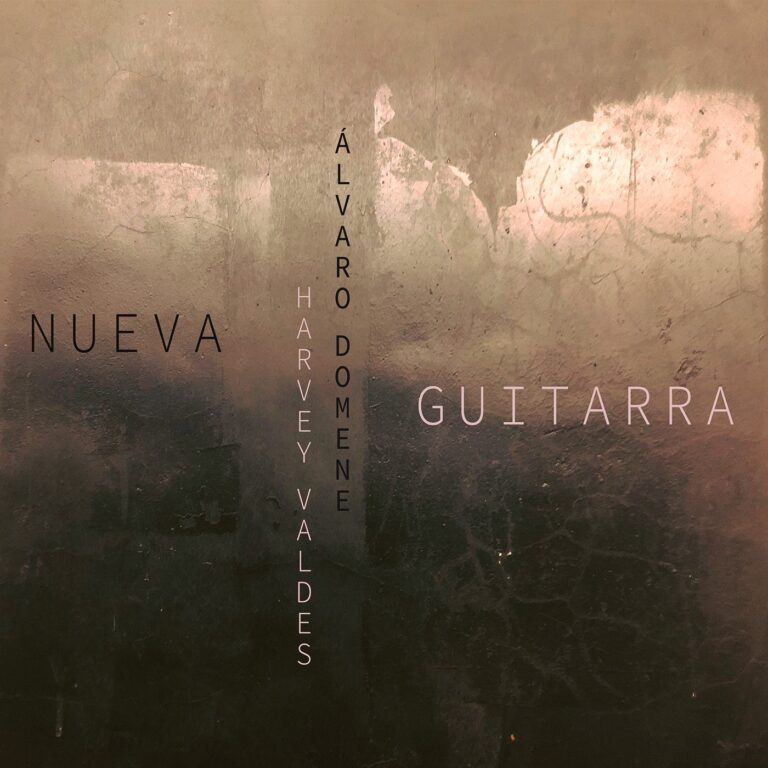
And now for something completely different. Two New York-based guitarists, Harvey Valdes and Álvaro Domene, come together for an ear-opening album of nine deliciously deviant duets. It’s an ever-evolving, sonic tornado that is part free jazz, ambient somatic, mournful acousticity, industrial noise and the most searing, dark brand of heavy metal thunder – Nueva Guitarra.
Madrid-born, Kingston-based Álvaro Domene is not only a most formidable and original guitarist; he’s a tireless advocate for the creative music scene in the Hudson Valley and beyond. His Singularity Concert Series has brought many renowned musicians like guitarists Ben Monder and Elliot Sharp for intimate performances at his Kingston loft. Since 2013, his co-owned Iluso Records has released over two dozen discs featuring some of the most fearlessly composed and improvised music you’d even want to spin. As with this album, Domene continues his habit of keeping some heavy company, recording and performing regularly with the likes of Joe McPhee, Karl Berger, Henry Kaiser, Ches Smith, Michael Bisio, Billy Martin and many more.
Like Domene, Brooklyn-based Harvey Valdes is another guitarist (and oud master too!) for whom genre boundaries have little meaning. His three solo albums have encompassed the radical reshaping of jazz standards (“Roundabout”), Mahavishnu-esque jazz fusion fury meets math rock (“PointCounterPoint”) and the 18 concise solo guitar compositions of his latest, “Solitude Intones Its Echo,” mixed and mastered by sonic guitar innovator David Torn (David Bowie).
“Nueva Guitarra” is not designed for the faint of heart and that’s a very good thing.
The duo make their uncompromising and delightfully madcap intentions known in the album opener, “A Crooked Odyssey.” It’s a sonic assault of tapping, looping, glissandos, drones, whammy dives and frizzled corrupted guitar signalry, a mad ride to the mountain top that only let’s up with a soothing ambient cloud appearing in the last 45 seconds of the six-minute outing.
The best place to start your listening might be with the two solo pieces, which showcase the players’ varied approaches and signature sounds.
Valdes’ “Zealous Reflections” is a chord and melody exploration, with close voiced dissonances alternating with pleasant resolutions that he lets ring out. “Biomimicry” is Álvaro Domene swinging for the fences. It’s all quicksilver, speeded up melodies over noisy pads, loops and thumps, over under upside down signals, otherworldly whammy bar and harmonizer torture. A noise jazz industrial racket of the highest order, from the bastard son of Buckethead and Albert Ayler.
My personal favorites, and maybe the easiest for the noise jazz newbie to dip into, are “Lady Dog Night Terror” and the album closer, “The Sophist Pundit.”
“Lady Dog Night Terror” emerges quietly from the darkness. Its deep warm volume swells from Domene’s rise to surround and complement Valdes’ clean chording and single note lines. Slowly, the dissonance in the melody and backdrop increases. It gets symphonic and fuzz laden, then slowly slips away just after the four minute mark.
https://youtu.be/p0idBsB0z6Q
With “The Sophist Pundit,” the duo saved the best for last. This is a summary statement of all the ideas set before, spread over nearly nine and a half minutes of guitar hellacious.
The track begins with stutter stop phrases looped to create a variable pulse, over which the duo improvise jagged lines. It just gets more intense as it goes on, with the duo creating a wall of feedback looped upon feedback, punctured by siren calls and squeals designed to melt your preconceived notions of what guitars can do.
All musicians have been hit by COVID-19, but not many have as hard as Domene. He battled the ailment all through the spring, but still managed to ready this and other collections for release.
If you want to do a good deed for music kind, and vastly widen your own appreciation of music and the creative possibilities still left in the guitar, download this uncompromising disc.
Key Tracks: Lady Dog Night Terror, The Sophist Pundit, Biomimicry
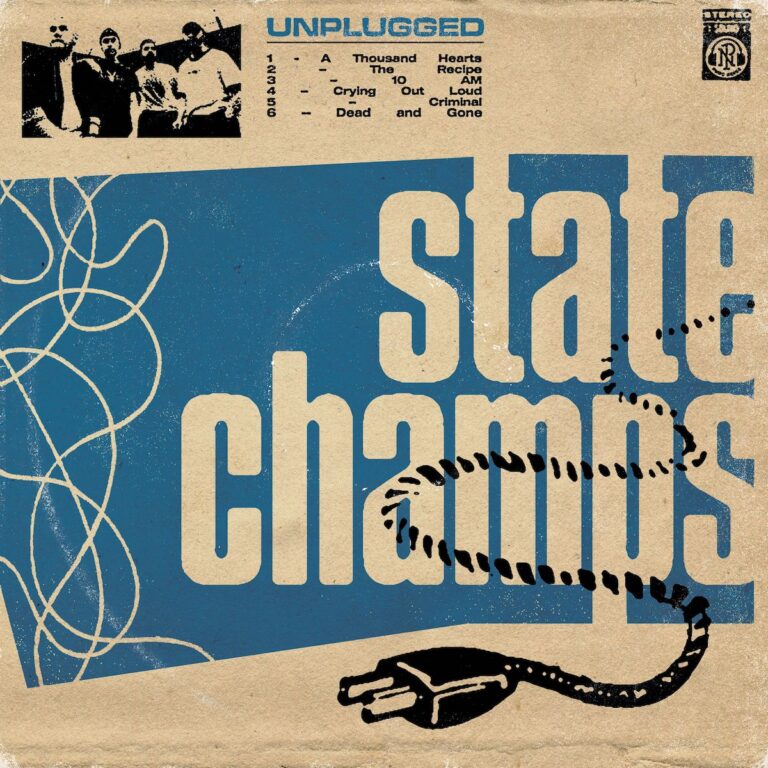
COVID got you down? Having some relationship troubles? Or maybe there’s a hankering for some good ol’ 2010 nostalgia? Take a listen to State Champs new album Unplugged and let it all out, in a true pop punk fashion. This collection was released to celebrate 10 years since the bands’ start in Albany. In their press release, they declare their change of pace as a “healthy growth spurt,” that will “set the table for the next ten years of their career.” They definitely have grown since their start a decade ago, but it’s arguable that they may have just aged out their genre, rather than growing into a new one.
This six-track album, with four original songs in their newfound acoustic sound, also features two covers of their highest rated songs, transposed into their new style. What’s fascinating is they’re able to keep that drive going in such a ‘low lit’ environment. This is their saving grace because, on its face, this album might not sound so appealing. How can you have a chill version of pop punk music about how your hometown sucks and you hate your ex-girlfriend? Well this is one way to do it. This feels highly multi-layered throughout. It’s not just a softer version of the songs you like, some are reimagined in creative ways.
“A Thousand Hearts” really sets the scene as to how laid back they’ve become. It has decent drive and motivation, but it’s not at all parallel to their original work, with one of the only similarities being Derek DiScanio’s voice and lyrical theme. That’s fine and all, being that the band wants to move in a new direction. It might be a bit of a shock to long time listeners, as will the smooth as butter saxophone solos. “The Recipe” falls into the similarly romantic space, but presents a better sense of direction and drive, as well as more relatable lyrics about how relationships don’t need to follow a ‘recipe.’
“10 am” has a very unique, self proclaimed EDM sound, mixed with well produced, natural sounds. It’s got a catchy hook to it, but again, not the most revolutionary word-smithing going on in this one. Musically though, this is very well executed. Fun fact: the song was birthed by Evan Ambrosio, who was messing around with an automated drum loop, and ran with the idea, creating a song with a synthetic drum loop that has a natural sound to them. Most of the song sounds completely acoustic and man-made, but fades out with the drum beat, which slowly morphs into a more computerized, 8-bit sound – a fun nod to the muse of the song.
“Crying Out Loud” is the best original on the album. The hook is super catchy, the energy created both lyrically and musically is moving and it should resonate well among Champ fans. This could easily be transposed into their original style perfectly, but again, that’s not their vision.
“Criminal” is the first acoustic version of an original song and it feels more natural compared to the first four tracks on the album. They’ve thrown in a very poppy, bluegrass feel to it, which takes some getting used to but it’s still a fun song if you’re a fan of the original.
“Dead and Gone” is the perfect song to cover. The lyrics are edgy enough to give it the drive it needs and the music follows to help propel it even further. It’s not too busy, or trying to be something other than what it is. The most extreme change is a twangy guitar that pops in and out of the song. The double time effect that we hear during the verses, (that feeling of the music getting faster) comes through perfectly in this too – a cornerstone of pop punk music.
Pop punk is a culmination of a lot of music, so the logic should be sound – why not just add another genre in there, and we should sound different. But pop punk is already so many things: Emotional, energetic, silly, dramatic, loud. There aren’t many genres that can say they have all of those things and still be palatable to the masses. It’s also quite the challenge to change a group’s entire attitude, let alone pulling from another genre of music. This is a definitely a sensible direction to go for State Champs, as the pop punk area of music may start to trail off soon, if it already hasn’t. But if State Champs find that golden ratio, as they did in their “Dead and Gone” cover and “Crying Out Loud,” then they themselves will be golden and “set the table for the next ten years of their career.”
Nyack duo ShwizZ slams you against the blackboard in awe that all your basic math skills have fleeted. Not only does ShwizZ explore a multi-level, mixed-meter halfway house of genres, but also bulldoze your ear to the other end of the record collection with their latest Big Things. No algorithm can compute this formula. Not from two people.
It’s hard to believe Big Things can lead you through all eight compositions without losing sight of what’s ahead. Something doesn’t add up. The duo – Ryan Liatsis and Andy Boxer – stab you with the sharp pain of “Splinter,” opening with an off the cuff funk tag. The tune walks on with staccato chunks of its bassline before Liatsis shoots out jarring guitar pads.
These guys look bored amid a musical Mortal Kombat where nobody breaks a sweat. Boxer is collected behind the kit, unleashing cool six-stroke rolls and collapsing tom fills in-between Liatsis’ ever-changing soundscape. Liatsis begins to crack a smile as he waves through his solo, far beyond the musical speed-limit. Boxer listens and instigates. The strings are not phased.
The albums second track “Khoi Khoi,” aides to more textured side of the duo. They explore a more mysterious side of scale that is oddly cathartic. That is until you’re stunned unexpectedly from your dream.
ShwizZ gets creative with “Your Call is Very Important Us,” in a meter that seemingly races ahead of the ear. Boxer’s cymbal work is airy and effortlessly hangs with Liatsis on Guitar. The meter does not exist.
There is no explaining how ironically calming this journey is. It’s the movie you can’t watch but inch closer to the screen. Liatsis has you on the hook with these roaring solos never loosing sight of the songs motif.
An album favorite for the die hard rocker is “The Shwizzard.” A chunky lead and solid back beat make the track stand out gritty. Liatsis shoves the lead right in your face. The track embarks on short epics with classic rock feel.
New York State’s theme of a “hearing aide” is unmasked by ShwizZ and their June release of Big Things. The album tunes the ears of the most complex listener and holds them to a higher standard.