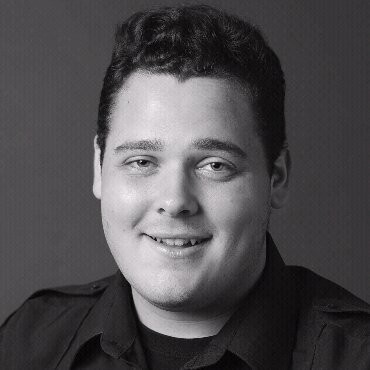
The latest from Albany’s Wavy Cunningham is a track for the times. “All We Need is Love” captures the raw emotion from recent protests over the police killings of George Floyd in Minneapolis and Breonna Taylor in Louisville. Cunningham brought his emotion to the studio to channel his thoughts:
I’ve been struggling to come up with the words to express my emotions during this time. I felt like the best route was education.”
Produced by Phil Dreisin, “All We Need is Love” precedes the upcoming release of Cunningham’s next album, Club Wavy.
After playing together for years, long-time jazz musicians Daniel Carter (tenor sax, trumpet, flute), Matthew Shipp (piano), William Parker (bass), and Gerald Cleaver (drums) have collaborated to release their first album as a group, Welcome Adventure! Vol. 1.
Carter and Parker have been working together since the 70s early into their music careers. Shipp began playing with the duo in the 80s, and Cleaver joined the mix more recently. This is the first recording which features the trio along with Cleaver. The four work together extremely well and manage to create an album which is easy-listening while still incredibly interesting. The three songs are a feast for the listener who is taken through a journey with each minute.
The album kicks off with “Majestic Travel Agency,” which effectively sets up the tone of the whole album quickly with piano that seems incongruent from the other instruments; this incongruence, surprisingly, brings the whole piece together. Things may seem slightly out of place, but in a clearly purposeful and harmonious way that makes the music all the more interesting. “Scintillate” is the shortest and brightest of the three, but still has an edge to it. The album’s ‘harmonious incongruence’ is shown most clearly in the final song, “Ear-regularities,” which is significantly darker than the two before it.
Welcome Adventure! Vol. 1 is available on Bandcamp. The album’s second volume will be released at a later date.
Watch them perform their eponymous song, “Hartley’s Encore,” for a funky break from your day. Hartley’s lineup includes Chris Oliver on guitar, Luke Malamood on keys and vocals, Jeff Nania on sax, Aimee Winzenread on vocals, Erik Pravel on drums and Dan Lawson on bass.
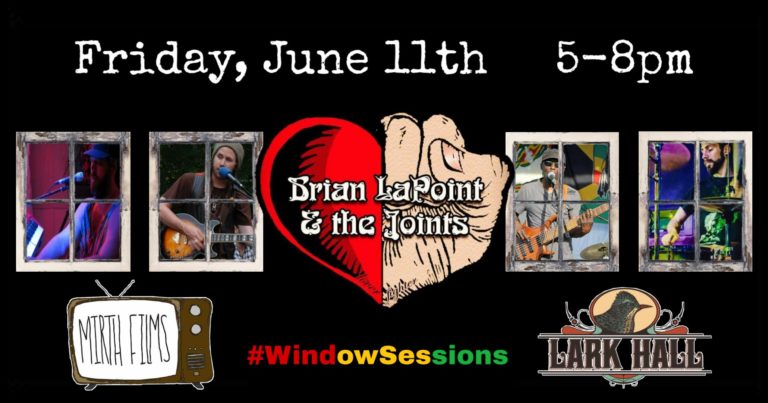
The next installment of Lark Hall Window Sessions is this Friday, featuring Brian LaPoint and the Joints. The stream kicks off at 5pm Friday, tune in here to watch.
Having just released the “Unhurried Journey” on May 29, Brooklyn musician Elena Moon Park, current co-Artistic Director of Found Sound Nation, a member of Bang On A Can, and a former player of the Grammy winning Dan Zanes and Friends, today premieres the video for the eponymous single. The world traveling Park, along with artist Lauren Gregory, illustrate what a free spirited world could sound and look like.
The albumUnhurried Journeyoffers a fresh and dynamic collection of reimagined East and Southeast Asian music and original, Western-style songs that encourage listeners of all-ages to slow down and appreciate each moment, finding the joy in their journey. Park says of the single of the same name:
The track “Unhurried Journey” is inspired by a serene and beautiful scene of the same name, created by artist Kristiana Pärn, which reminds us to take our time and make space for self-care on this journey of ours. In the song, I celebrate the beautiful things in nature that flow around us, slow and steady, with patience and care. I invited the wonderful musician Elizabeth Mitchell to sing this with me, as her music exemplifies patience and care for me.
On the website for the album, Park offers a suggested activity for kids (and adults) that accompanies the song, where you can try to draw a representation of something in the world that moves around you, slow and steady. The website also serves as a gallery dedicated to the collection, sharing the artwork that inspired each song, as well as the lyrics in original languages, translations of songs, stories, videos and more.
The video for “Unhurried Journey” was created by Park’s childhood friend Lauren Gregory, an oil painter and animator from Oak Ridge, TN. Park always found herself mesmerized by Gregory’s creations using stop motion oil painting animation. Gregory also created the video for the song “Anta Gata Doko Sa” from Park’s last album, Rabbit Days and Dumplings. Gregory said of her method behind the video:
When Elena asked me to make an animation for “Unhurried Journey,” I wanted to paint a sort of lullaby experience that was both adventurous and cozy. The landscape that this little bear family travels through is inspired by the foothills of the Smoky Mountains where Elena and I grew up as neighbors and friends. The two bears aren’t concerned about getting anywhere fast, they’re just enjoying the journey and getting some good quality time in together.
Unhurried Journeywas produced by Elena Moon Park and Rob Friedman and was recorded, mixed and mastered by Rob Friedman at littlelife studios and David studios in NYC. The 16 song collection encourages listeners of all-ages to slow down and appreciate each moment, finding the joy in the journey.
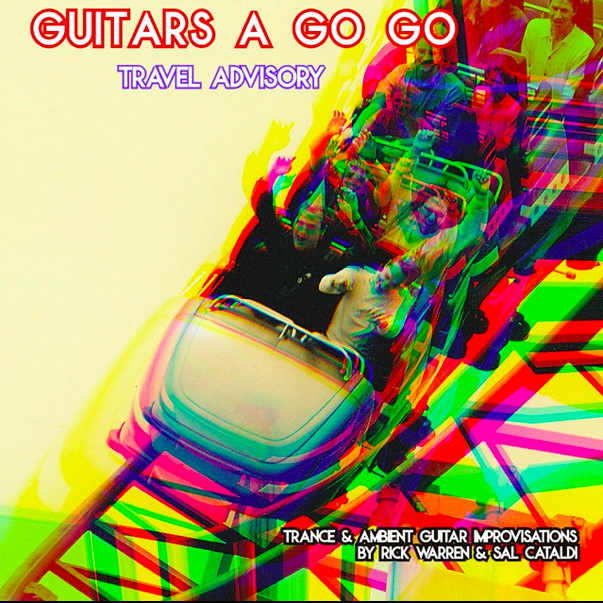
Guitars A Go Go, the improvisational duo of two acclaimed Hudson Valley-based guitarists, Rick Warren and Sal Cataldi (Spaghetti Eastern Music), have released their debut album, Travel Advisory. The duo have been performing at leading concert venues and art galleries since early 2019 and, on occasion, in a quartet abetted by bassist/composer Mark Steven Brooks and percussionist Pete Tenerowicz.
NYC and Saugerties-based guitarist Sal Cataldi may be best known these days for his style-jumping solo project, Spaghetti Eastern Music. Time Out New York describes Cataldi’s music as “largely instrumental, Eastern-influenced jams are infused with some delicate guitar work and hauntingly moody atmosphere.”
Originally from Kingston, Hudson-based guitarist Rick Warren has been deeply involved in the improvisational and experimental music scene. He was encouraged by renowned vibraphonist Karl Berger at his Creative Music Studio in Woodstock. It was Berger’s visit to a Rick’s high school music theory class that led him to become a regular participant in twice-yearly workshops held at CMS, an international hot bed of improvisational music performance and education founded in 1971 by Berger, Ingrid Sertso and Ornette Coleman. Rick is best known for using his guitar and a variety of electronic sound sources, each one a new and different on-the-spot creation.
Their debut album is a quartet of live-in-studio duets recorded just as the COVID-19 quarantine took hold. Travel Advisory features contemplative, peaceful songs as well as songs with textured noise and dissonance. These songs communicate the wide array of emotions we are feeling in response to the global pandemic. Five more songs were later produced in remote collaboration, with Cataldi adding guitars, synths, and effects at his studio in West Saugerties to solo pieces performed by Warren at his studio in Hudson.
Travel Advisory opens up with “A Jig for Europa,” comprised of blues performed by Warren on heavily processed acoustic 12-string, electronic blurbs, and backwards guitars by Cataldi. Throughout the album are songs such as “The Volcano Lovers,” 13 minutes of serene music with back-and-forth relay of melodic improvisations by each guitarist and “DeKooning Was a Crooner”the final and longest live-in-studio improvisation. The song consists of jazz chordal voicings from Cataldi lead into the inside-out improvisations from Warren.
Key tracks: A Jig for Europa, The Volcano Lovers, DeKooning Was a Crooner
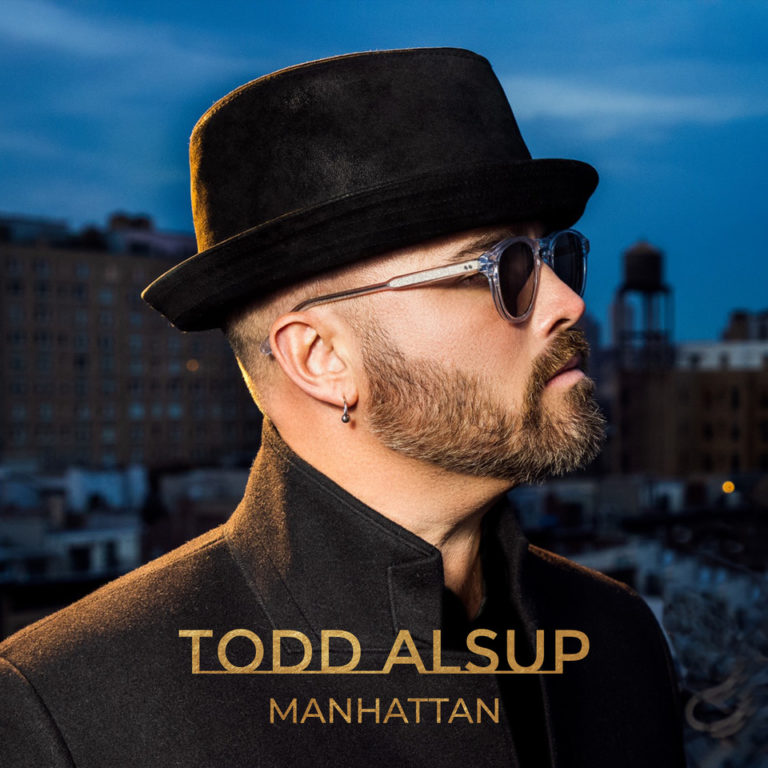
Todd Alsup premieres his new music video “Manhattan” is an ode to his beloved city as it braves the challenges of the COVID-19 pandemic. Dedicated to the essential workers and everyday heroes of New York City, the video features its diverse population coming together as a community while remaining six feet apart. Essential workers such as firemen and first responders are given special focus, as well as the artists and musicians who continue to brighten up the city in dark and confusing times.
Raised in Detroit, Alsup first became enamored with New York City on a high school trip. He fell further in love while attending New York University, where he earned a bachelor of music degree studying voice, theory, and songwriting. The singer, songwriter, and keyboardist says:
“‘Manhattan’ is a love song I wrote for the city I’ve called home for over 20 years. New York was, of course, hit very hard at the onset of COVID-19 and is now a center of protest in the fight against systemic racism and police brutality. I’ve seen my city rise up in the face of daunting challenges many times before and I’ve chosen to create a video that celebrates the spirit of strength and perseverance of New Yorkers.”
Todd Alsup criticizes many aspects of the city throughout the track, such as its noise, cold temperature, and “lunatics everywhere,” but ultimately couldn’t imagine living anywhere else. “One million reasons to leave and a million more to stay / Oh Manhattan, I wouldn’t have you any other way,” he concedes. In addition to “Manhattan,” Alsup has also released a lyric video for his cover of The Spinners’ 1973 hit “Could It Be I’m Falling in Love,” adding a retro hip hop flair to the Motown classic.
Since commencing his professional career in the early 80s, Gary Lucas has done about just about everything you could do with a guitar, beginning with his stint as guitarist for Captain Beefheart, followed by his songwriting and performance partnership with Jeff Buckley, and collaborations with dozens of notables just beginning with the likes of Lou Reed, Leonard Bernstein, John Zorn, Joan Osborne, Patti Smith and Iggy Pop.
A rarity who is equally adept at acoustic and the most tripped out electric, in idioms from traditional folk, Delta blues to pop, psychedelic, classical, world musics and the most avant jazz, Lucas has rightly earned the highest accolades from cognoscenti like The New Yorker (“the thinking man’s guitar hero”) and The New York Times (“Guitarist of 1,000 Ideas”). Even after 40 years and 30+ albums, Gary continues to be one of the busiest musicians going. He has toured over 40 countries, very often as a solo artist, unleashing spellbinding performances in small clubs to performing with symphonies in huge halls to creating live soundtracks to the projections of silent era film classics like “The Golem.”
photo by Brad Balfour
As per usual, Gary had a very busy year planned when Covid-19 slammed on the brakes, including a new 2-CD retrospective, tour dates in 10 countries and, of course, more collaborations with unique artistic partners, here and abroad.
When Covid came to crush the live performance business, Gary did was he does best; he improvised and created great art, and a place of comfort for his fans from around the globe, on a shoestring budget. On March 19, he inaugurated a series of three-times weekly concerts streaming live solo acoustic concerts on his Facebook page from his Greenwich Village apartment, with a diverse playlist, including tributes to his two biggest partnerships, with Beefheart and Buckley. Here’s how he did it:
Sal Cataldi: First off, what had you had planned in the way of live work that got cancelled as a result of the Covid-19 crisis and quarantine?
Gary Lucas: I had an album coming out on May 1, a Best Of double CD on the Knitting Factory label titled The Essential Gary Lucas, covering 40 years of music-making from Captain Beefheart to Jeff Buckley and Beyond—with shows booked in NYC, London, France, Italy, and Finland in support of the release. Now the album release has been postponed to early September and I naturally had to postpone the live shows till such times. Too bad as the album package itself by Steve Byram and liner notes by Glenn Kenny is a thing of beauty, and I think people would enjoy it, particularly during this very difficult period. But the way things are going, early September may prove just as problematic a time to release an album and tour as it is now– who knows? We shall see what we shall see, que sera sera and so forth.
SC: You’ve probably been one of the busiest musicians when it comes to live streams. When did you decide to take the plunge? How many have you had thus far and how long do you see continuing at this point?
GL: I’ve done about 30 half-hour solo concerts streaming live on my Facebook page every Tuesday Thursday and Saturday at 3pm EST since lockdown mid-March. And I’ve archived them here. I only missed two—once because my iPhone melted down the morning of the show and I had to scramble to get a replacement (an iPhone 11) for the next show. Then this week, because of observing Blackout Tuesday in the music biz in support of the worldwide protests against racism. I was inspired initially to begin by the example of my friend and collaborator Ada Pasternak, who does these kind of shows frequently on Facebook from her family house in Connecticut with her parents and siblings–they are great.
SC: How has the audience grown through since your debut streaming performance? How do you interact with them? Is it actually more interactive on some level than a live performance?
GL: It depends really—the streams always get thousands of views, people all over the world share them. I’ve had Facebook Messenger feedback from Australia, where one fan gets up at 5 am to watch my shows live each time I play, plus fans giving me shout-outs in Russia, Ukraine, Greece, Turkey, Morocco, Israel, South Africa, all over Europe of course, Cuba (where it’s very difficult to get internet access), Canada, Japan, Burma, Thailand… There are tons of viewers. I also talk to them directly after the shows on Facebook Messenger for about half an hour, and they also Messenger me whenever they like over Facebook to ask questions, sharing some of their work with me, and showing support. It’s more interactive in a way than a live performance actually —it’s different though. Nothing beats having a living audience in the room with you while playing and getting their feedback in real-time and in one-on-one exchanges after a live gig, I have to say, streaming is more like you’re hurling your music, throwing the thunderbolts into the ether— very strange and disembodied—and you never know who might be watching. The fans do comment while I’m playing but I am unable to read them while playing as it distracts from my focus. I do detect a stream of hearts throughout rising on the screen of my iPhone image as I play, which is a good feeling!
SC: What are the technical particulars involved in your streaming performances, in getting a good image and sound? Any big glitches?
GL: I just prop my phone up on my windowsill and hit Live Video on the iPhone at 3pm, and away we go! No other interface involved. The camera and the mic in the iPhone 11 are very good for these kind of seat of the pants performances, which are mainly acoustic or just playing electric through a small amp. I don’t bother with pedals for these streaming shows—this gives me tremendous freedom to switch between my guitars at will depending on my mood at the time.
SC: You seem to be doing a lot of thematic performances, retrospectives on your work with Captain Beefheart and Jeff Buckley for instance. How do come up with what you play, is it very pre-meditated or seat of the parts?
GL: A little bit of both actually. With my Jeff tribute, it started as me wanting to pay homage to Jeff, specifically to mark the 23rd anniversary of his tragic passing on May 29.
SC: Obviously live work is a significant part of your revenue earned as a musician. How has this impacted you and are able to make up some of the difference with donations via PayPal?
GL: Yes I have, some fans have been extremely generous and have contributed to my virtual tip-jar multiple times. It’s been a help but not enough to fully replace the typical income from my live shows. On the other hand, it’s been steady work. It’s given me some relief from the constant pressure of having to constantly line up new shows out of town on my calendar, which have to be decent paying gigs, in any case– I won’t play any old gig at this stage of the game, certainly not a door gig.
SC: On the cancelled gigs, how many have been rescheduled and are you now rebooking tours?
GL: Not yet, as no venues anywhere have truly re-opened at this point, to the best of my knowledge (and I keep checking with agents around the world). This is going to be a problem for awhile I reckon, as how can clubs and venues stay in business if they are forced to cut their attendance policy in half in order to satisfy social distancing requirements? Every time it seems the curve is flattening somewhere there are new spikes, and now with the recent mass protests in the streets…I am trying not to think about this too much, I’m just keeping on keeping on at this point with my live streaming concerts until this is hopefully sorted.
SC: You’re kind of unusual among guitarist with your acumen on both acoustic and electric. Tell us a little about your influences and how you have grown to do some pretty eclectic things like live music for the scores of classic films like The Golem and Spanish Dracula?
GL: I grew up loving all sorts of music, from Top 40 radio to English progressive rock to free jazz and, of course, American folk and blues. I loved all the same guitarists back in the day that everyone else usually cites, but I especially I loved the crazier psychedelic players such as Syd Barrett, all the guitarists with Captain Beefheart over the years, and also the English folk-blues virtuosos like Bert Jansch. America country blues master Skip James is maybe my favorite all-time guitarist. I got into live scoring of films going back to my love of cinema, especially fantasy and horror cinema, from earliest childhood. I used to show 8mm silent horror films to my friends and neighbors in the basement of our house growing up on Syracuse (and charge a nickel for the privilege). It was a short step from that to accompanying films, which I began doing in 1989 on a commission from BAM and New Music America to do something different with my music and another art form. I brought in my childhood friend Walter Horn on keyboards and we jointly composed the score for “The Golem,” which we debuted at the Museum of the Moving Image in Astoria as a duo. I figured out a way to do the score solo after some initial and very well received performances, and toured in 20 countries with the film solo. Since then I’ve gone on to compose at least a dozen more live solo guitar scores and perform them at cinemas and music and film festivals all over the world. My last live gig before lockdown was up at Cornell University in Ithaca NY with “The Golem”, which was extremely well received.
SC: You’re probably one of the busiest guy in guitardom, when it comes to recording? What are some the recent and forthcoming records you are most excited about?
GL: I love the recent release on Knitting Factory of The World of Captain Beefheart album, which I recorded with soul legend Nona Hendryx (Labelle) and Jesse Krakow, Jordan Shapiro and Richard Dworkin. Nona really brought something new to the proceedings in terms of being able to cover the more r&b side of the Van Vliet oeuvre, as well as very capably plunging into the Deep End of Beefheart’s most outré material. And I love the last album released before lockdown, “The Complete Jeff Buckley and Gary Lucas Songbook” on the Italian Esordisco label, which I recorded with Italian vocalist The Niro (Davide Combusti) and producer/ multi-instrumentalist Francesco Arpino. The album contains new studio versions of all the 12 songs I co-wrote with Jeff, 5 songs of which never got any official release before. The album was voted Album of the Year in Classic Rock Italia. I have two more albums ready for release with my Chinese pop trio featuring Mainland Chinese singer and erhu virtuoso Feifei Yang and Jason Candler on sax—we do some covers of Dylan and Leonard Cohen in Mandarin, which sound really fresh. I also have a new acoustic EP recorded in France before Xmas with a young French -Moroccan singer, Yass Boud, which sounds amazing—there’s also an EP in the works with a young Dutch acoustic bassist and vocalist Peter Willems to be recorded in Holland this summer. Plus a second Pearly Clouds album is in the works to be recorded in Budapest—this is my for lack of a better description psychedelic Hungarian folk trio featuring Toni Dezso on sax and traditional Hungarian folk vocalist Eniko Szabo. And I’m currently working on finishing songs for a new Gods and Monsters album featuring my longtime band of Billy Ficca (Television) drums, Ernie Brooks (Modern Lovers) on bass, and Jason Candler (Hungry March Band) on sax. There’s other stuff being planned too. I try and stay busy always.
SC: As for your retrospective, what was impact you wanted to make with this collection? Was it hard to choose these tracks over a 40-year career?
GL: I am very excited about this double CD retrospective of course. Besides containing what I consider the cream of my recorded output, it also contains some rare and unreleased tracks. Hopefully, it should provide a good overview of my work across the 30-plus albums I’ve released over the years for folks who might know my own work except for one thing only, for instance my work with Captain Beefheart, or with Jeff Buckley. It’s designed to be a good introduction to my music for folks who don’t know my work at all. Hopefully it will expand my fanbase, secure more live gigs if we ever get out of lockdown (I love to tour!), and win more appreciation for my own music in the world at large—isn’t that what most artist’s want? I’m not an Art for Art’s sake kind of guy. My music was designed to be user-friendly without following the trends of the moment. And I don’t look down on fans; I love and appreciate my fans. And, yes, it was damn hard to make the album’s selections. I kept switching and substituting tracks–until finally I said that’s it. Making that selection was like asking a mother with a very large brood of kids to choose her favorite children.
It was March 29, 1990 when saxophonist Branford Marsalis joined the Grateful Dead at Nassau Coliseum for much of the show. Notably, the version of “Eyes of the World” stands out, as it was released on Without a Net in September 1990, and later rereleased on Spring 1990 (The Other One) box set in 2014.
Branford Marsalis had not planned to sit in with the Grateful Dead for more than “Bird Song” that night, as he recalled in talking to Rolling Stone in 2014.
“I came up for “Bird Song,” and after the set was over, I said, ‘Thanks for letting me play, guys.’ And they’re like, ‘No, no, stay! Play the second half of the show. We’ll do “Dark Star”.’ That had no significance to me. I’m like, ‘ “Dark Star”? Okay. What is it?’ ‘Oh, you’re gonna love it. It’s free, it’s out.’ ‘Great, I can play out.’ They start playing that lick, and the audience goes bananas. Later, I started getting these phone calls on my private number: ‘Man, you were great last night. Thanks for getting them to play “Dark Star”. They haven’t played it in six months.’ I’m like, ‘Who are these people?’… There was almost nothing [the Grateful Dead] couldn’t play—and make it sound authentic. When they played a song by The Band or Bob Dylan, they played it with the same spirit as The Band or Dylan. They didn’t feel the need to write their own arrangement of it. They were all listeners. There is a point where musicians who establish themselves stop listening to music and start listening to their own rhetoric. The Dead didn’t do that. It was obvious in the way they approached a song.” – Branford Marsalis, to Rolling Stone magazine
Discover Grateful Dead shows from over the years across New York State with our interactive map below
Anyone who experienced the Spring 1990 shows, or has listened to Without a Net can attest to the benefit Marsalis brings to this version of “Eyes of the World.” The extra element of saxophone layered within the Dead classic gives it a proper place on a pedastal as one of the best versions of the song.
“After they whip through a bright first set featuring mostly live staples like ‘Bertha’ and ‘Ramble on Rose’, Marsalis joins in at the start of the second set for stellar, extended takes on the more exploratory side of the Dead catalog. His airy improvisations on classics like ‘Eyes of the World’ and ‘Dark Star’ sound brilliantly natural here, and what’s most palpable is the sense of exhilaration and mutual respect between these two forces of sonic trailblazing.”
One of the greatest blessings we have in life is the ability to use our voice; Shawn Wodraska, a 21-year-old singer/songwriter from the small town of Wingdale, NY recently used his to represent his passion for the Black Lives Matter Movement and overall peace between those with different backgrounds and beliefs.
Shawn took to Facebook to portray a message of hope with a beautiful cover of “If I Can Dream” by Elvis Presley. “As I was scrolling through social media, I noticed that news coverage and posts were almost exclusively negative,” he said, “I decided that I had to do something; we all have to play our role to make a change, so I chose to sing, the only thing I know how to do.”
His video generated an exceptional amount of positive feedback with more than one thousand views. Prior to posting, Shawn said, “I was worried about negativity or that people would think I was using the Black Lives Matter Movement to further my career.” He continued, “I knew I had to do something to play my role in restoring peace, likes and views were the last thing on my mind.”
Philosopher Aleksandr Solzhenitsyn and his belief that “the line between good and evil passes through every human heart” was one of the driving forces in Shawn’s decision to post on social media. “I want to do what I can to help bring peace to all corners of life by inspiring people to find the humanity in who they perceive to be their enemies,” he continued, “I am one voice of the many needed to bring about unity, but it’s important to remember that we are all human and we have to work together.”
https://www.youtube.com/watch?v=9jntQW9XOxQ
The passion inside of Shawn is evident in his original music as well. Although he doesn’t mind if he never makes it big, he said, “I want to use the platform I build to promote positivity. We can always do better. I want to highlight that in my music.”
Typically accompanied by the piano, his content ranges from story-telling folk tunes that draw inspiration from Marty Robins to easy-listening ballads without lyrics. While some of his songs have a theme, many of them are left open to interpretation. “Mediums like music tend to reach people on a spiritual level – there’s a reason why they call it soul – the music we write should be inspirational and bring people together,” he continued, “We can all unite and enjoy a good song, regardless of the differences that polarize us.”
Breezy, summery, and carefree: the latest new music video for “Ride” by Lenny Kravitz is exactly what the world needs right now. Sharing a chord progression and key with his groovy 90s hit “It Ain’t Over ‘til It’s Over,” “Ride” hearkens back to simpler times and offers some welcome respite from chaotic current events. Kravitz and his love interest frolic through Parisian museums, cafes, and fields of yellow daisies as he croons in the background, allowing us to vicariously live through the kind of summer road trip or vacation we may have recently canceled.
In addition to Kravitz’s earlier work, “Ride” is reminiscent of 1970s records such as Michael Jackson’s Off the Wall and Stevie Wonder’s Songs in the Key of Life. Although more understated, it retains their funky synths and strong basslines and makes the ideal soundtrack for floating in the pool on a lazy summer Saturday. Despite Lenny Kravitz singing “Through the storm, my love, we will ride,” it sounds like the storm has already passed and now there’s only peace.
Much like “It Ain’t Over ‘til It’s Over,” the lyrics of “Ride” deal with standing by a lover’s side through thick and thin, this time nearly 30 years later. “Ride” first appeared as the penultimate track on Kravitz’s 2018 album Raise Vibration. He told Rolling Stone, “We shot this video months ago in France before we could have imagined what life would be like today. After listening to the song […], we had a vision of expressing the song through portraying the characters of the writer and the spirit.” One might wonder why now after the nearly two-year wait for “Ride”’s music video, but there couldn’t be a better time to escape into a utopian summer where peace, love, and travel all prevail.