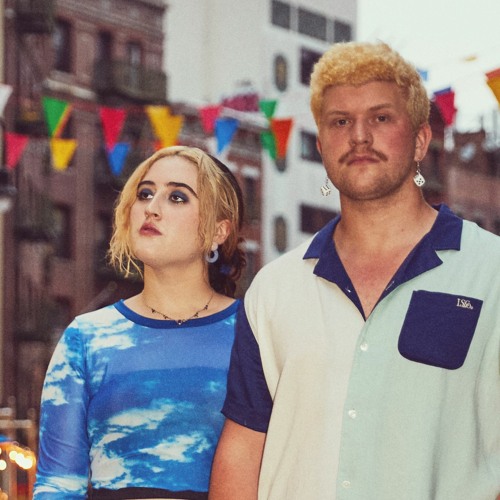
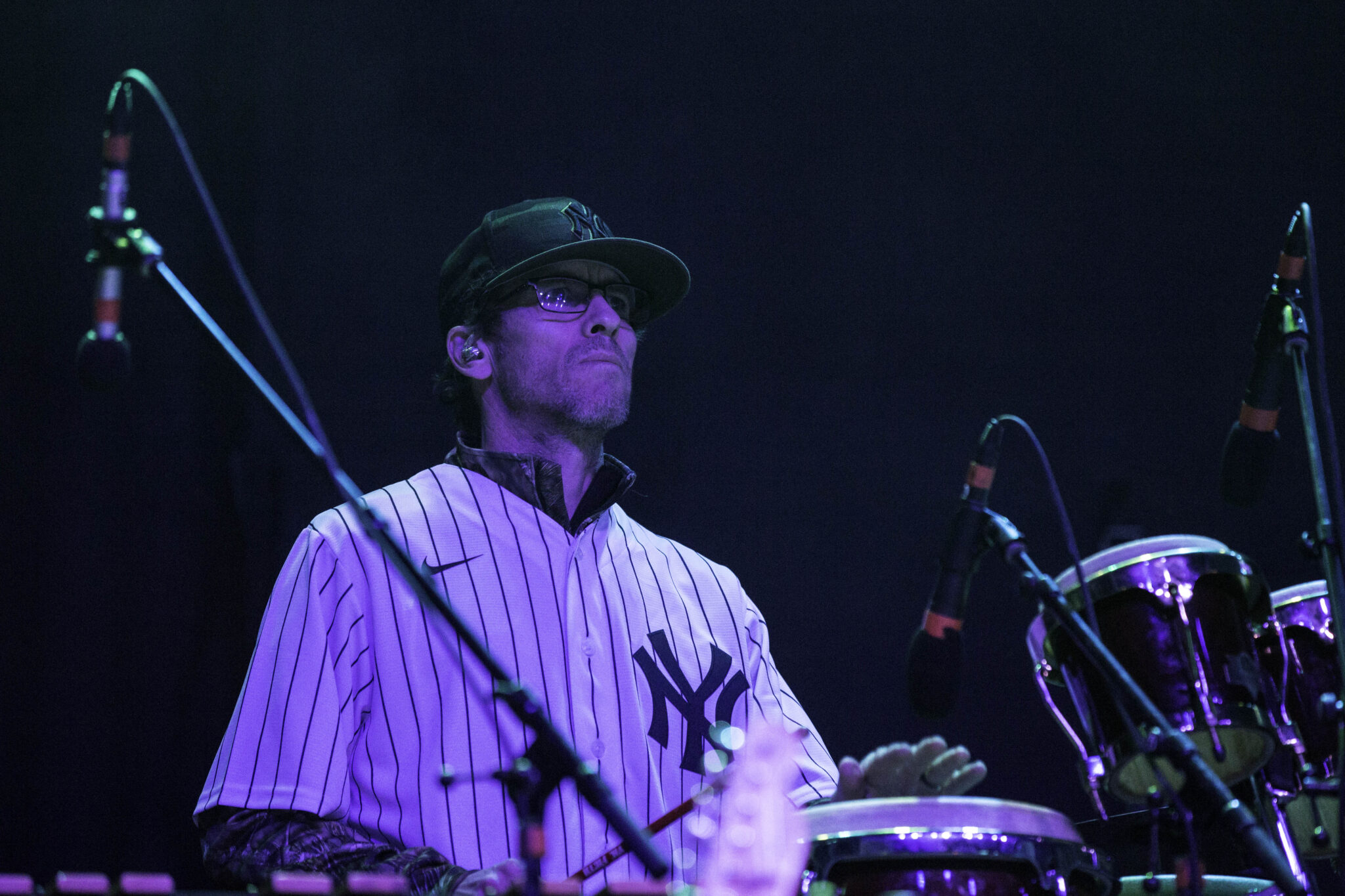
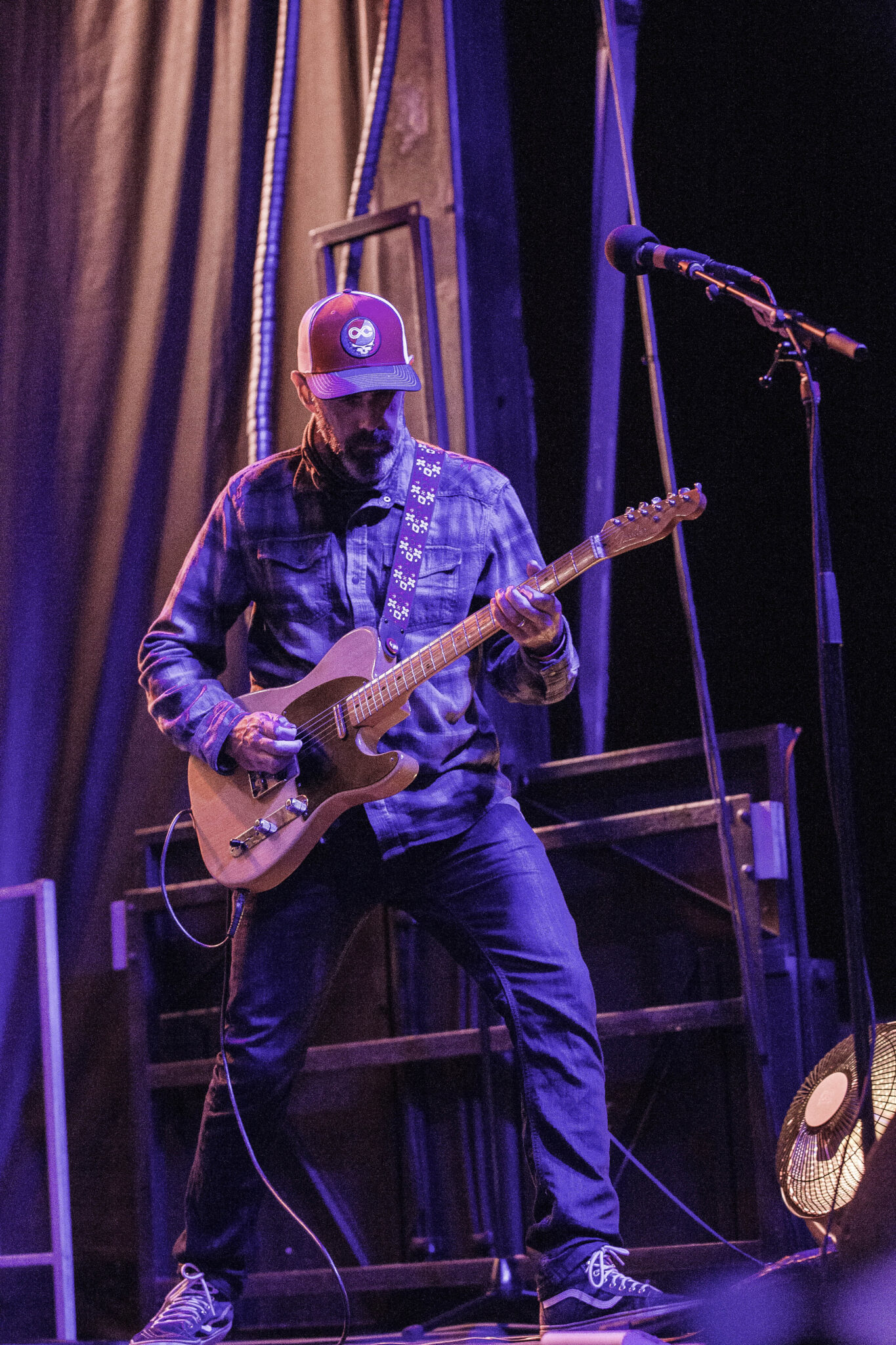
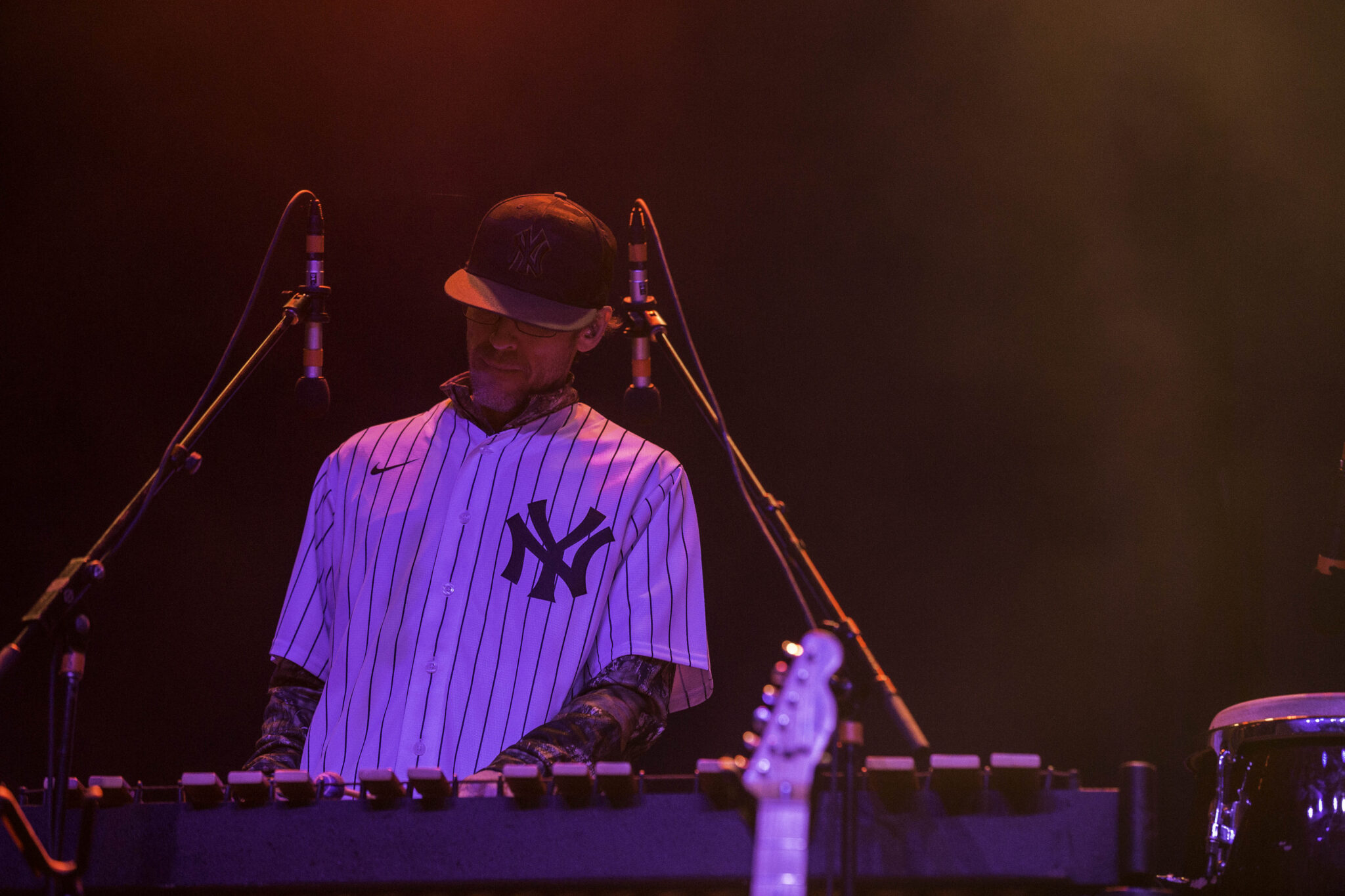
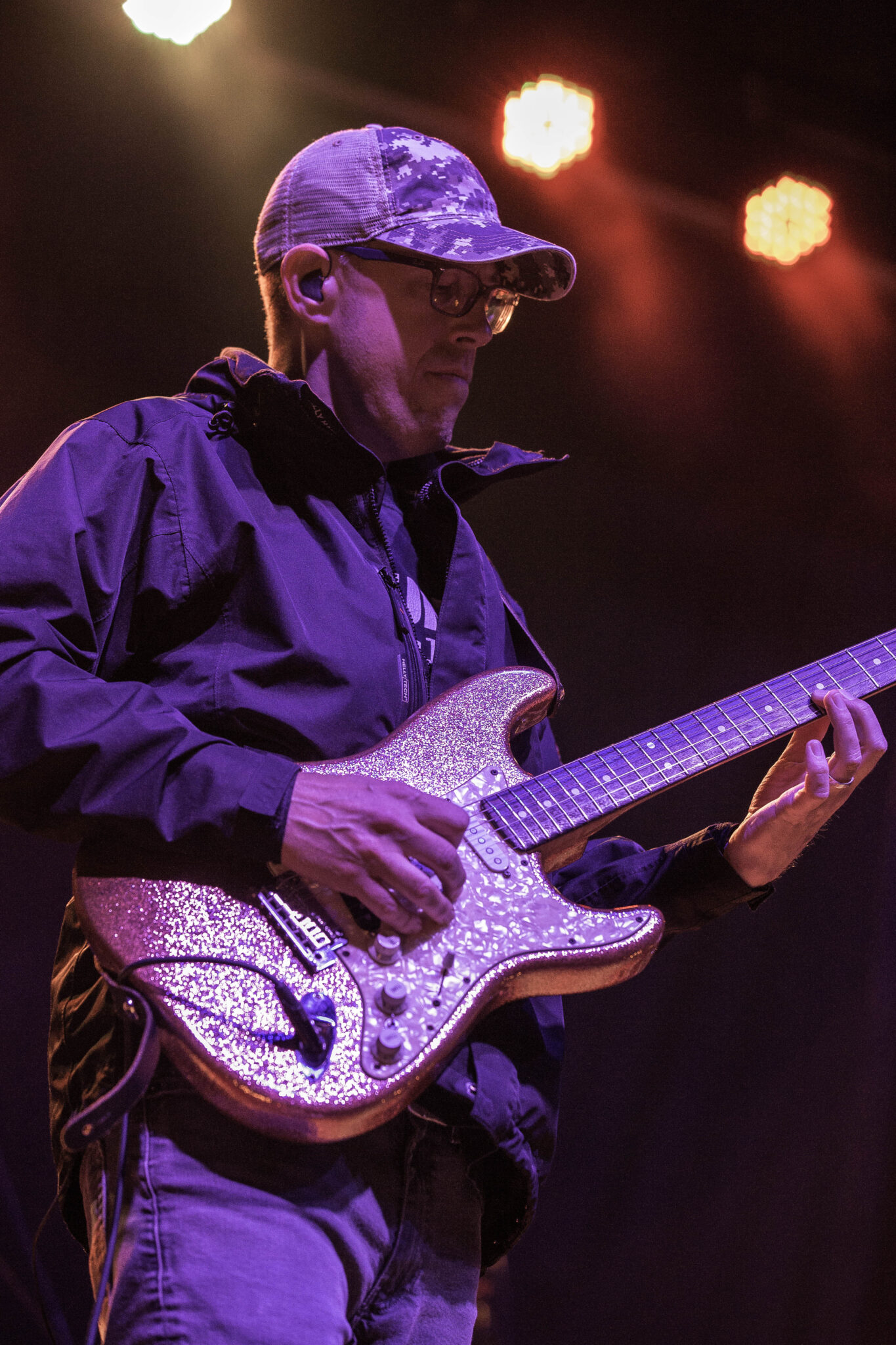
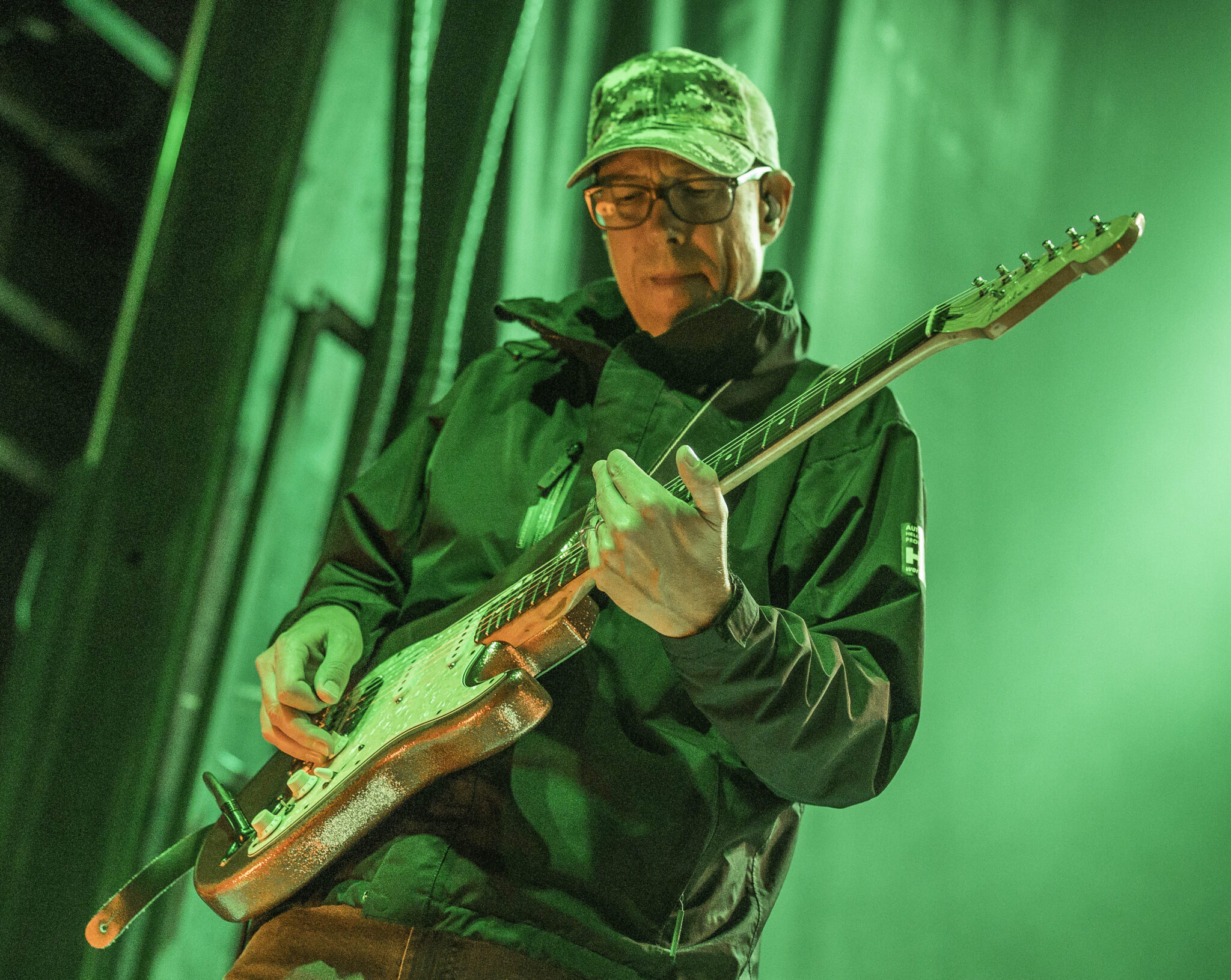
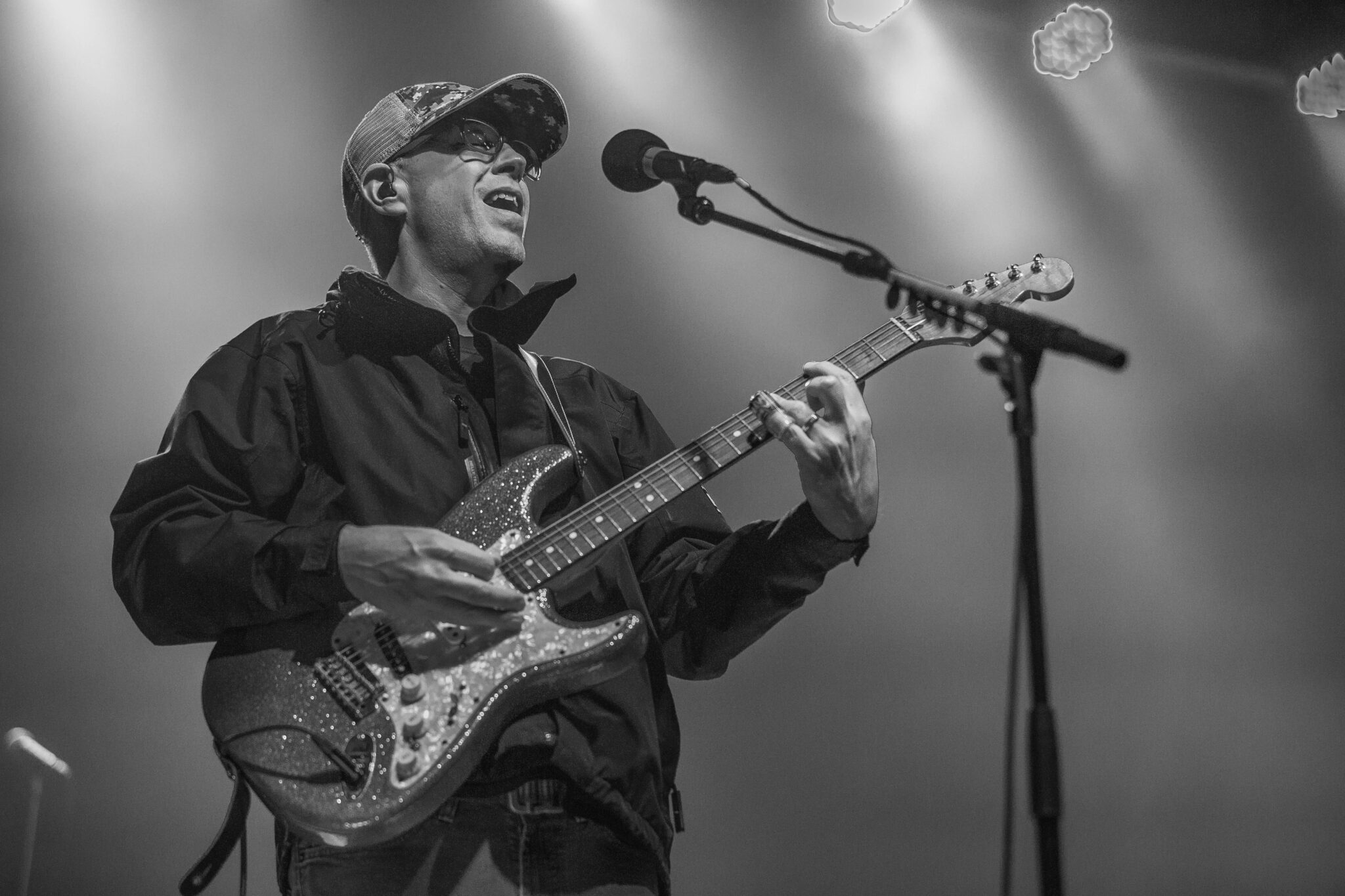
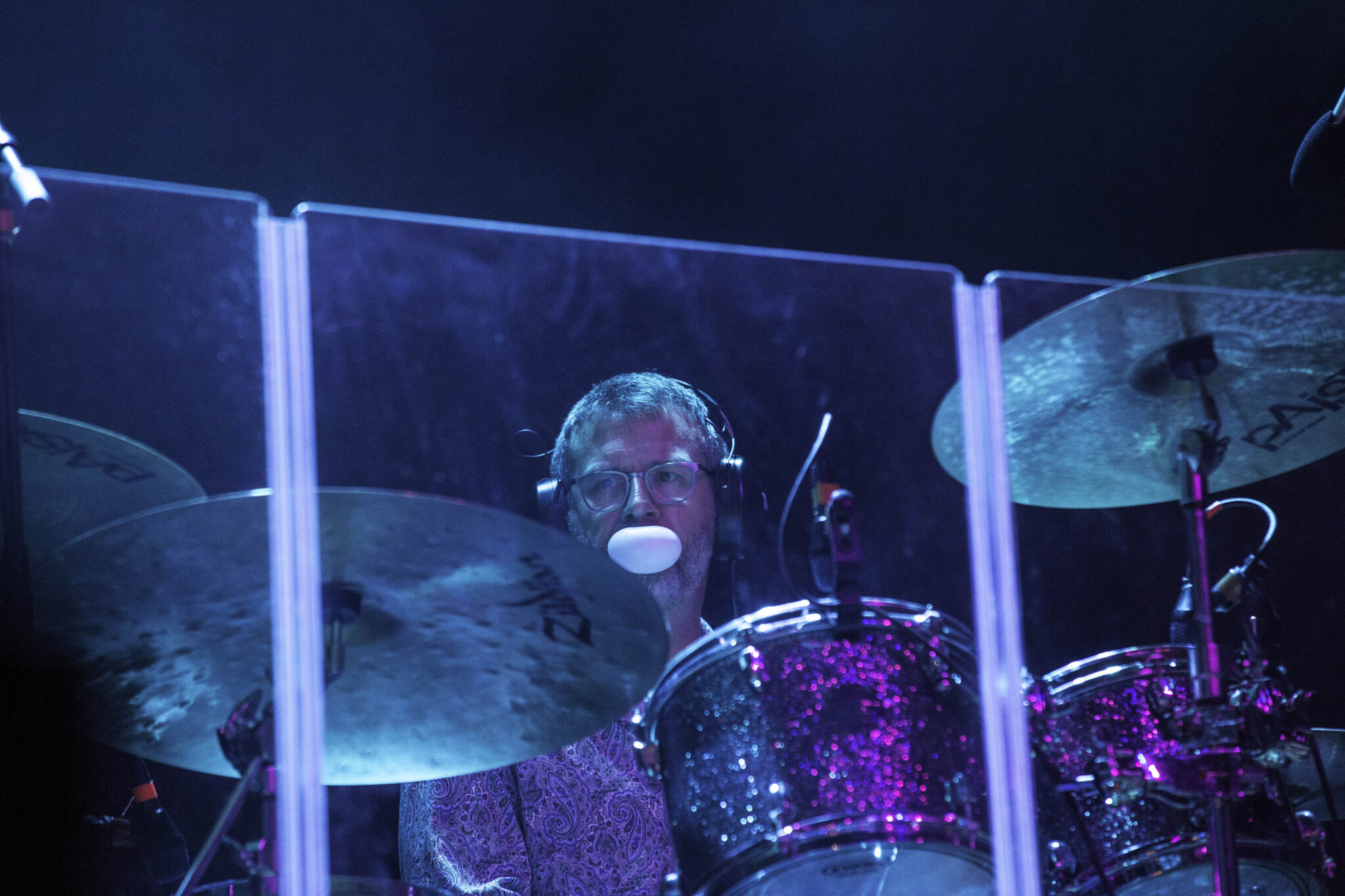
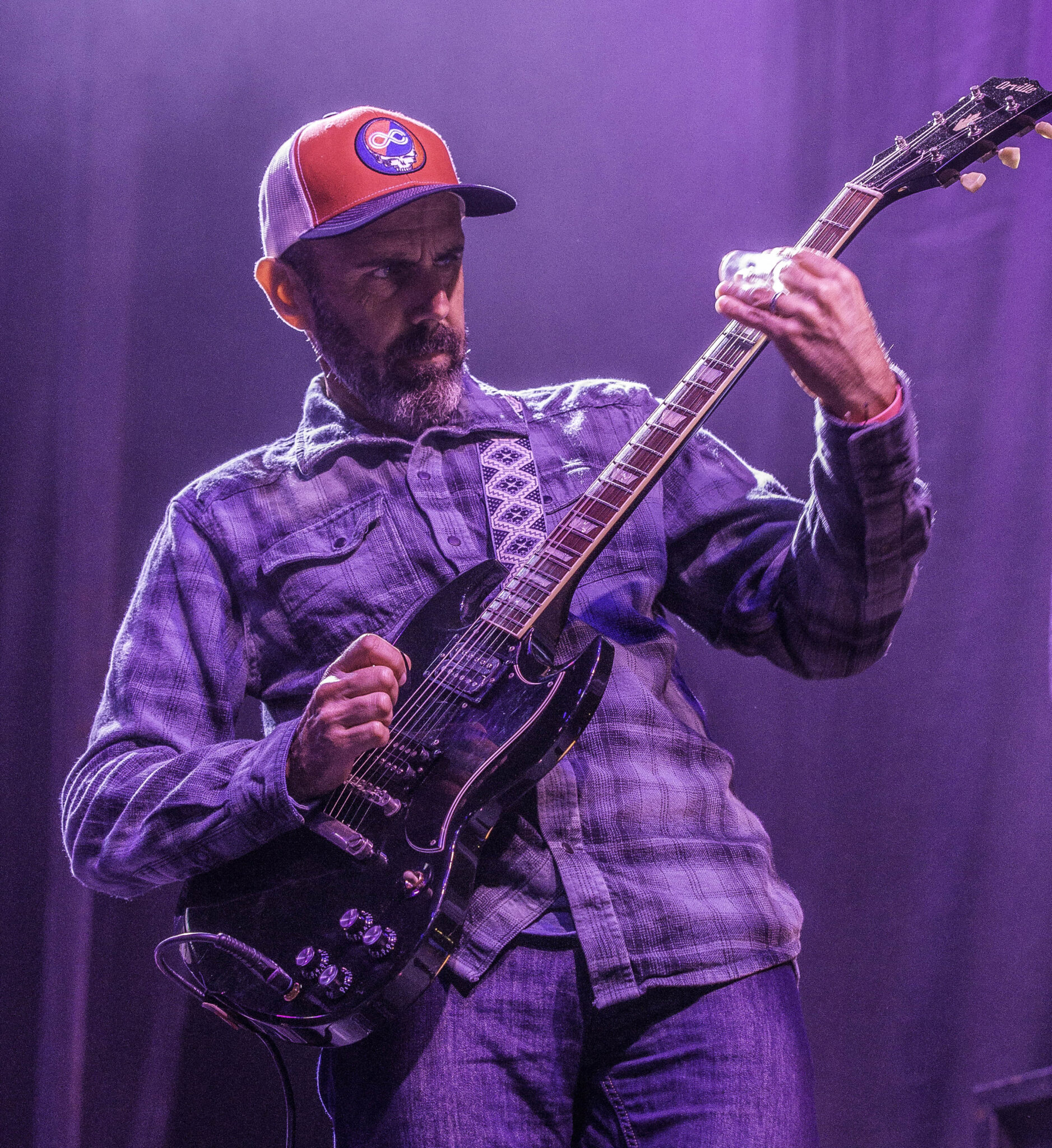
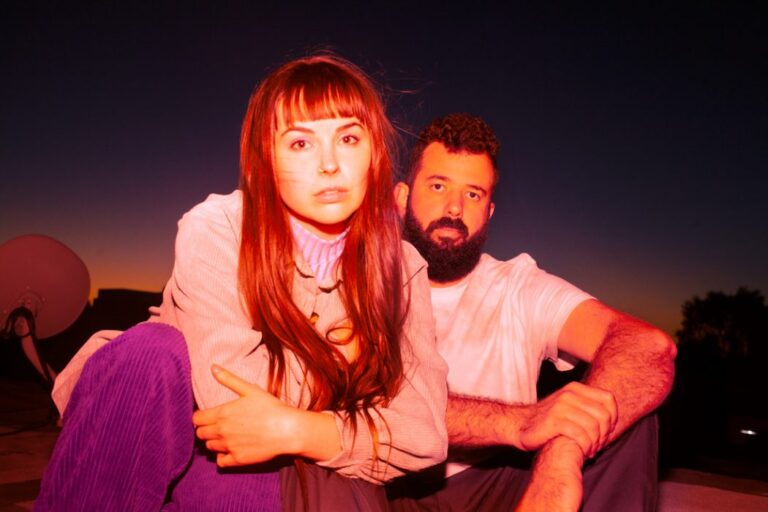
In preparation for a new EP in 2021, Brooklyn group Fake Dad have released a new single to close out the year. Andrea de Varona and Josh Ford found inspiration for their single “Breakfast in New York,” from a very interesting and unusual source.
The song is a mid-tempo electronic/R&B track, inspired by a knock off Jurassic Park ride in the middle country. “Fake Dad” used that exact backdrop for another music video, bringing a new inspiration to the duo. When de Varona and Ford wrote the song, they were fixated on the idea that the things we wish we could change is exactly what make our lives meaningful.
The Brooklyn duo, Andrea de Varona and Josh Ford, have made music in their tiny studio apartment since 2018. The duo had designated their roles within the band and have worked with a variety of up and coming artists. Andrea and Josh come from different musical backgrounds, but they do share a common goal. That goal is to create something that understands the listener. Both Andrea and Josh wanted to create music that comforted people, especially if the listener had a rough day in life.
“Fake Dad” has received many plaudits from media outlets. The Wild Honey Pie wrote, “Fake Dad take listeners on a trip down memory lane — but it feels closer to a cautionary tale than a fond retelling.”
EARMILK felt “Fake Dad” knew how to express their concepts with their single “Summer Hill.” EARMILK wrote “I tend to reject the saying, “Life is hard.” Not because it is not, but because it glosses over the very real hardships and struggles that so many of us face, tying it up with a bow in just three short words. I do not want to gloss over it. I want to dig deep and uncover what makes the simple act of existing so challenging for all of us. Fake Dad, comprised of Andrea de Varona and Josh Ford, sonically and visually conceptualize all of these ideas.”
“Fake Dad” looks to comfort and share their conceptual ideas with listeners, and their new single will surely do that. “Breakfast in New York” is out now on Spotify. To check out more of “Fake Dad” and their work, visit their Facebook, Twitter, Youtube, or Instagram page.
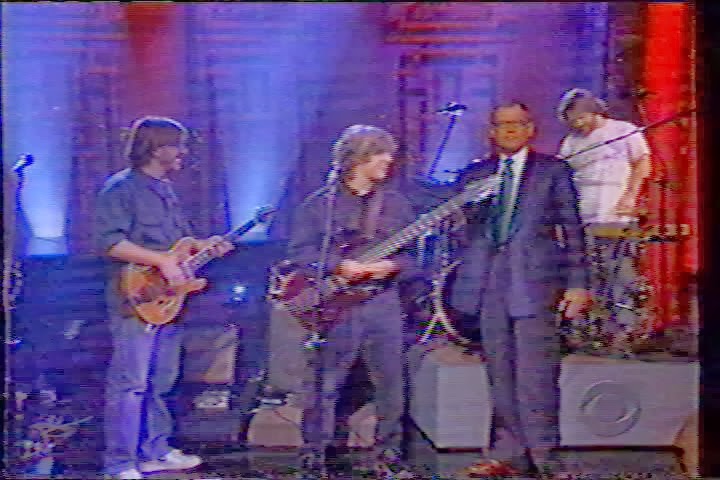
In the fall of 1998, Phish had just released Story of the Ghost, and were just about to start their cross-country Fall Tour, which included not one but two shows covering full albums by The Velvet Underground and Pink Floyd. Before diving into the tour, they’d pay a visit to David Letterman at the Ed Sullivan Theater on October 27, 1998, for the fourth time, performing “Birds of a Feather.”
via just-add-cones.blogspot.com
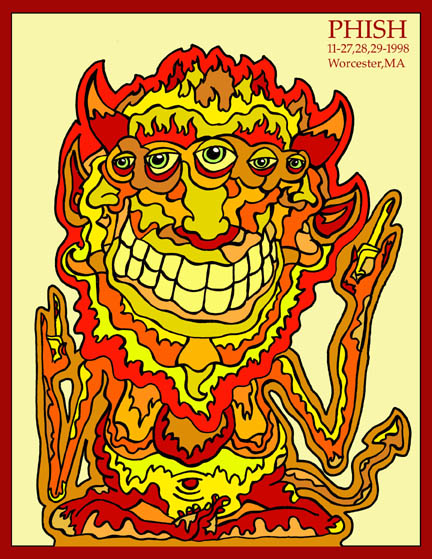
While Fall Tour started proper on October 29, 1998, Phish had a few performances under their belt already that month. Playing at Farm Aid in Tinley Park, IL and Neil Young’s Bridge School Benefit in Mountain View, CA, the band returned back east for a week of respite before a 30 day/22 show tour.
Poster for Louis Arzonico
Following guests Martin Short and Eddie Izzard, Phish served as musical guest that evening, performing the second track off Story of the Ghost, “Birds of a Feather.” Being their fourth time on the show, Letterman introduced the band noting they had their own book (The Phish Book) in addition to their new album.
The less than four minute version of “Birds of a Feather” has a lively audience celebrating not only the introduction of the band, but audibly so when the song breaks into a section where, in a live show environment, the band would venture off into exploring the arena rocker.
Following the performance, Letterman shakes hands with drummer Jon Fishman and says “Its Phish, kids!” The band would not return to the Ed Sullivan Theater until May of 2000, ahead of the release of Farmhouse.
Other individual song performances on Letterman include “Chalkdust Torture” on December 30, 1994, “Julius” on July 13, 1995, “Character Zero” on March 5, 1997, “Heavy Things” on May 15, 2000, “All of These Dreams” on December 19, 2002, a multi-song performance on the Ed Sullivan Theater marquee on June 21, 2004, and “The Line” on June 25, 2014.
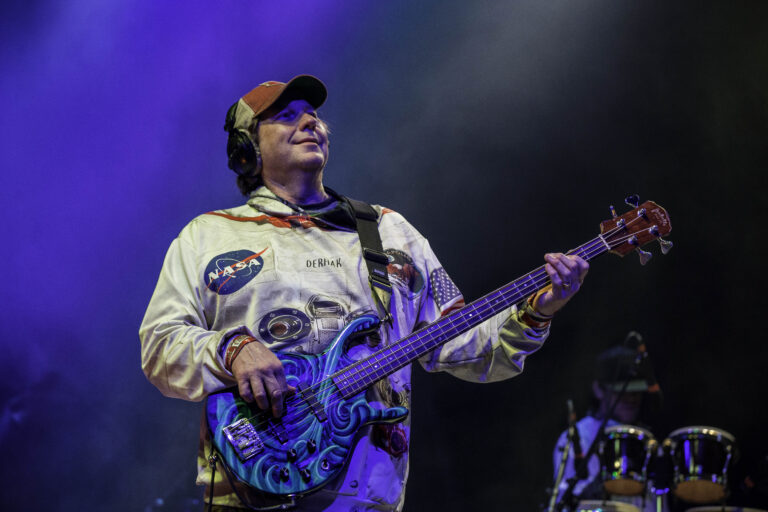
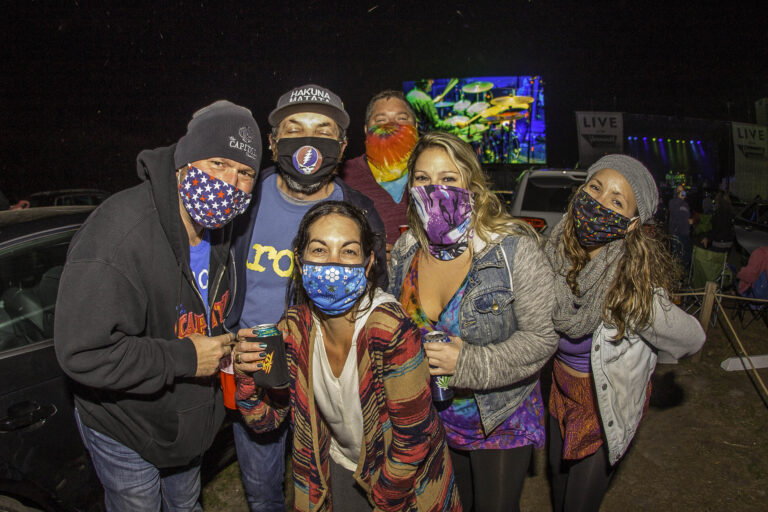
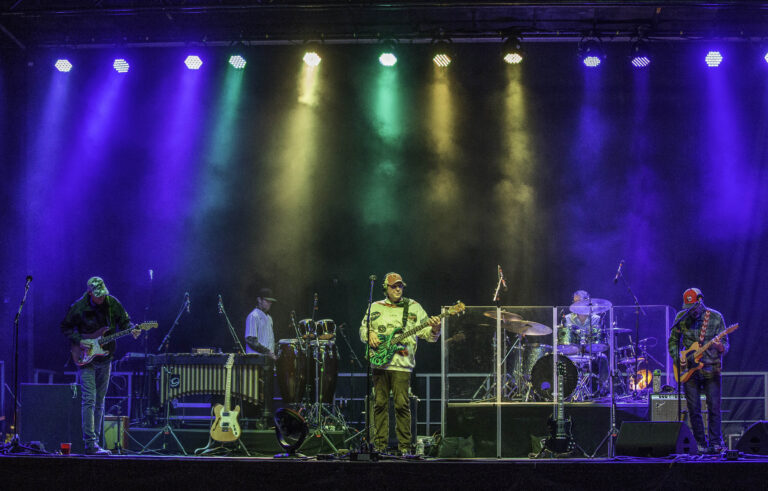
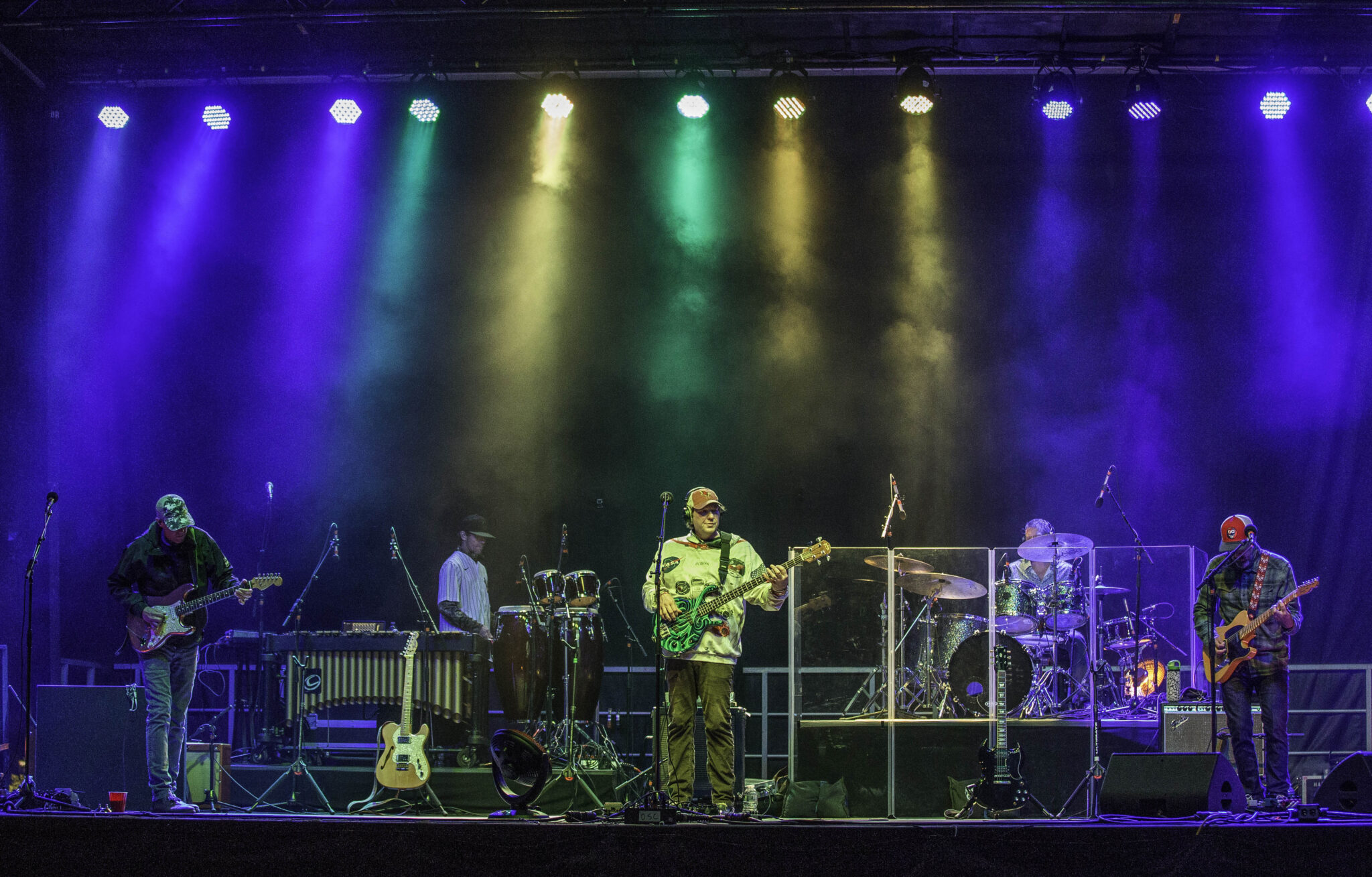
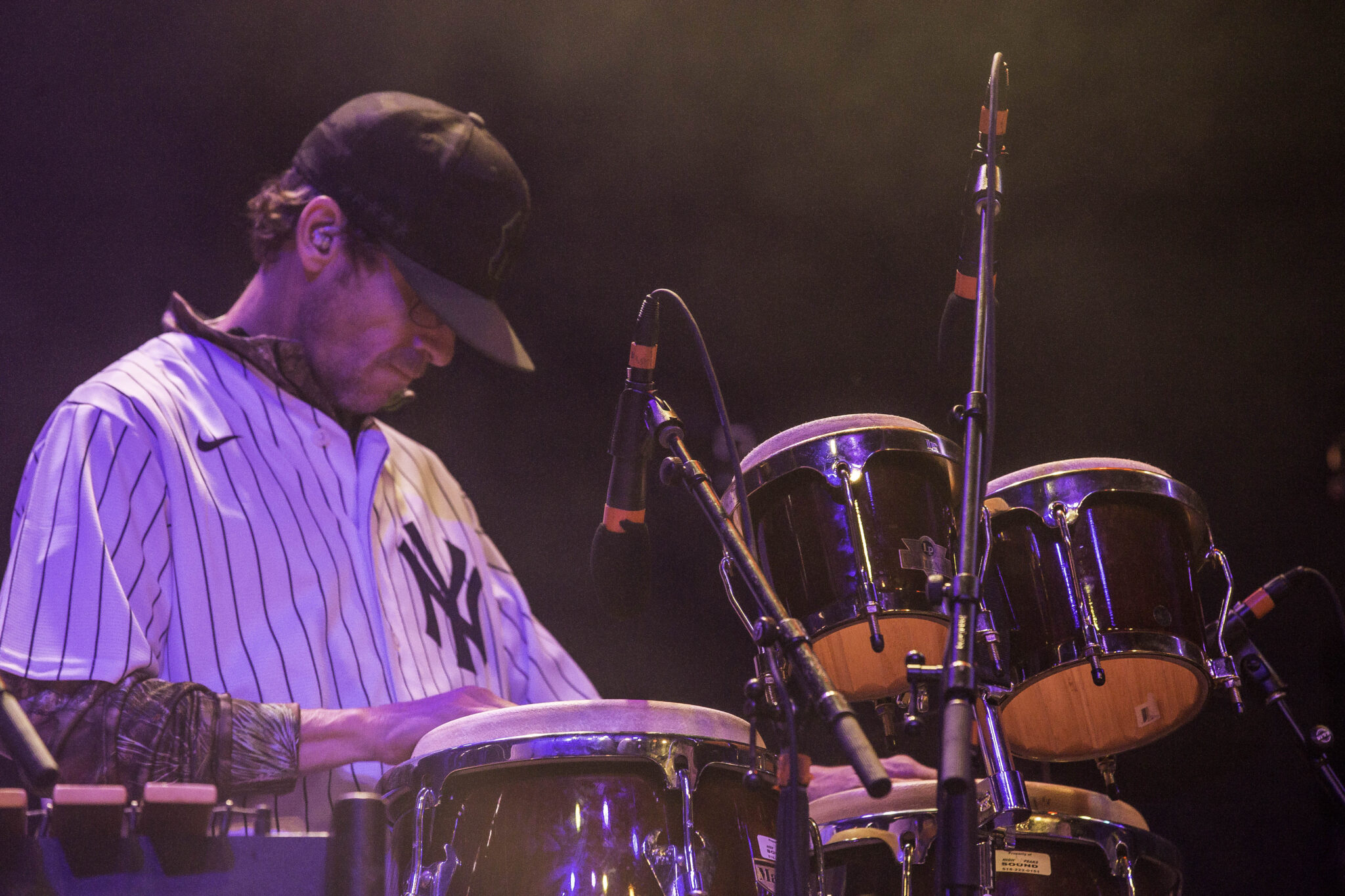
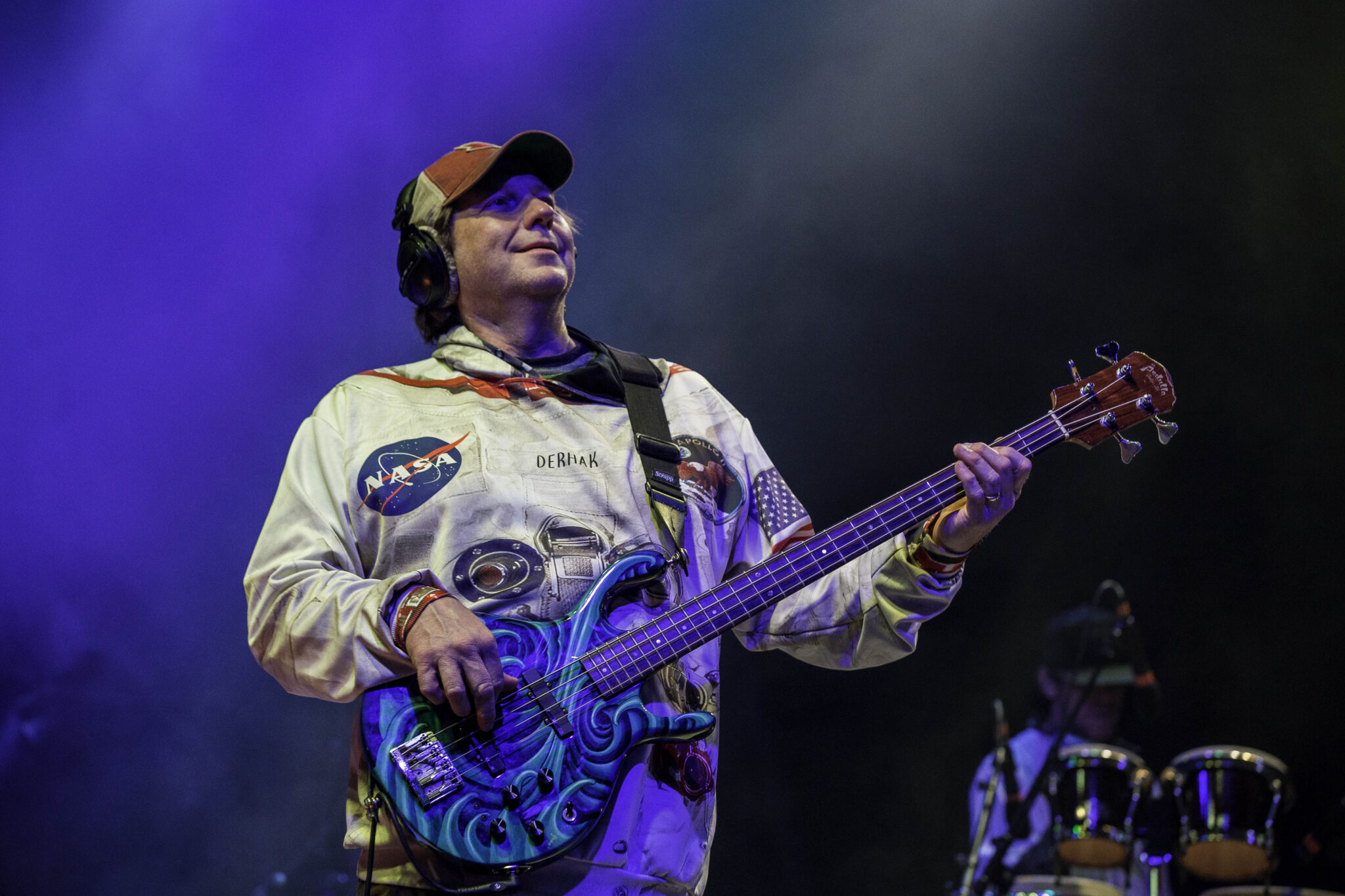
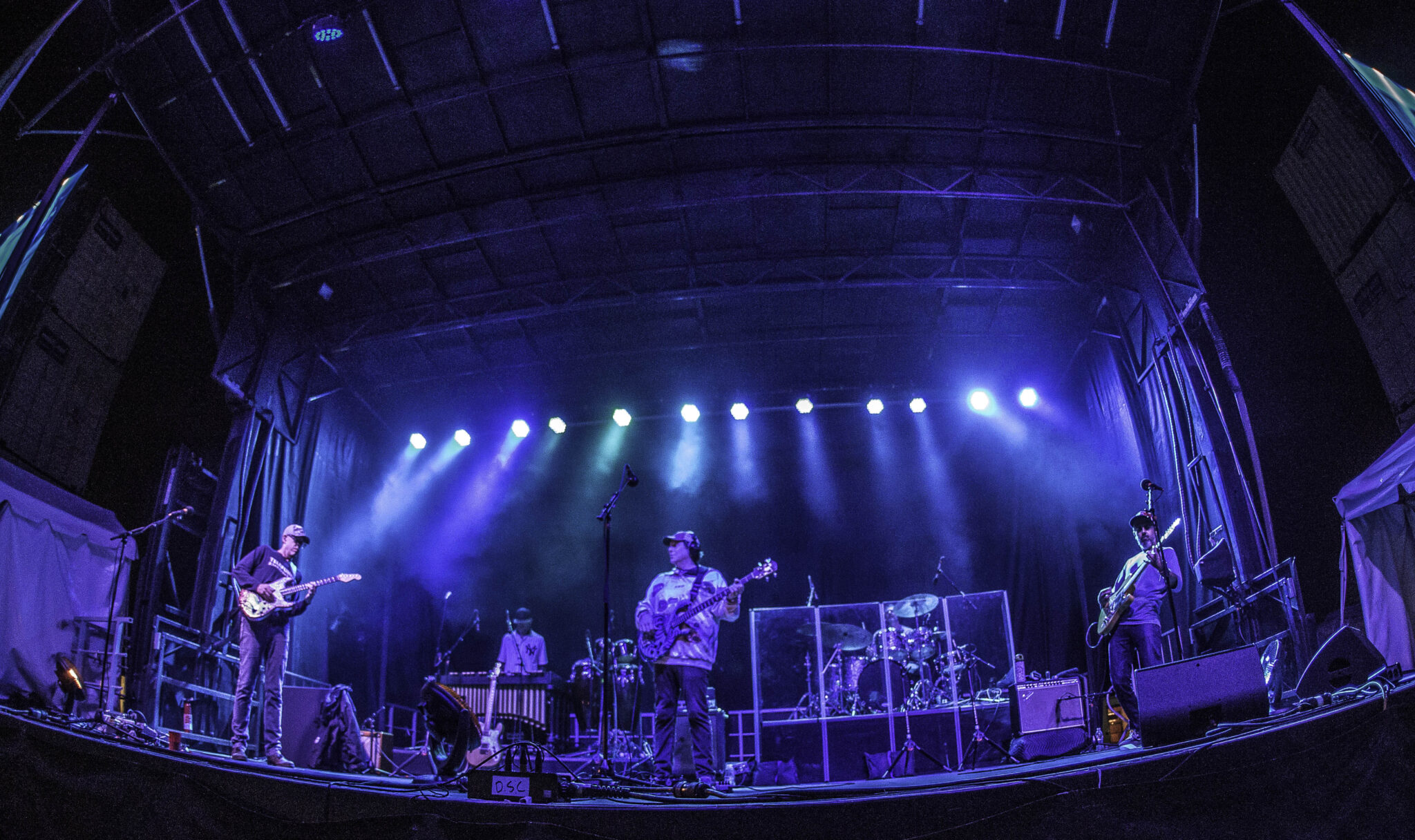
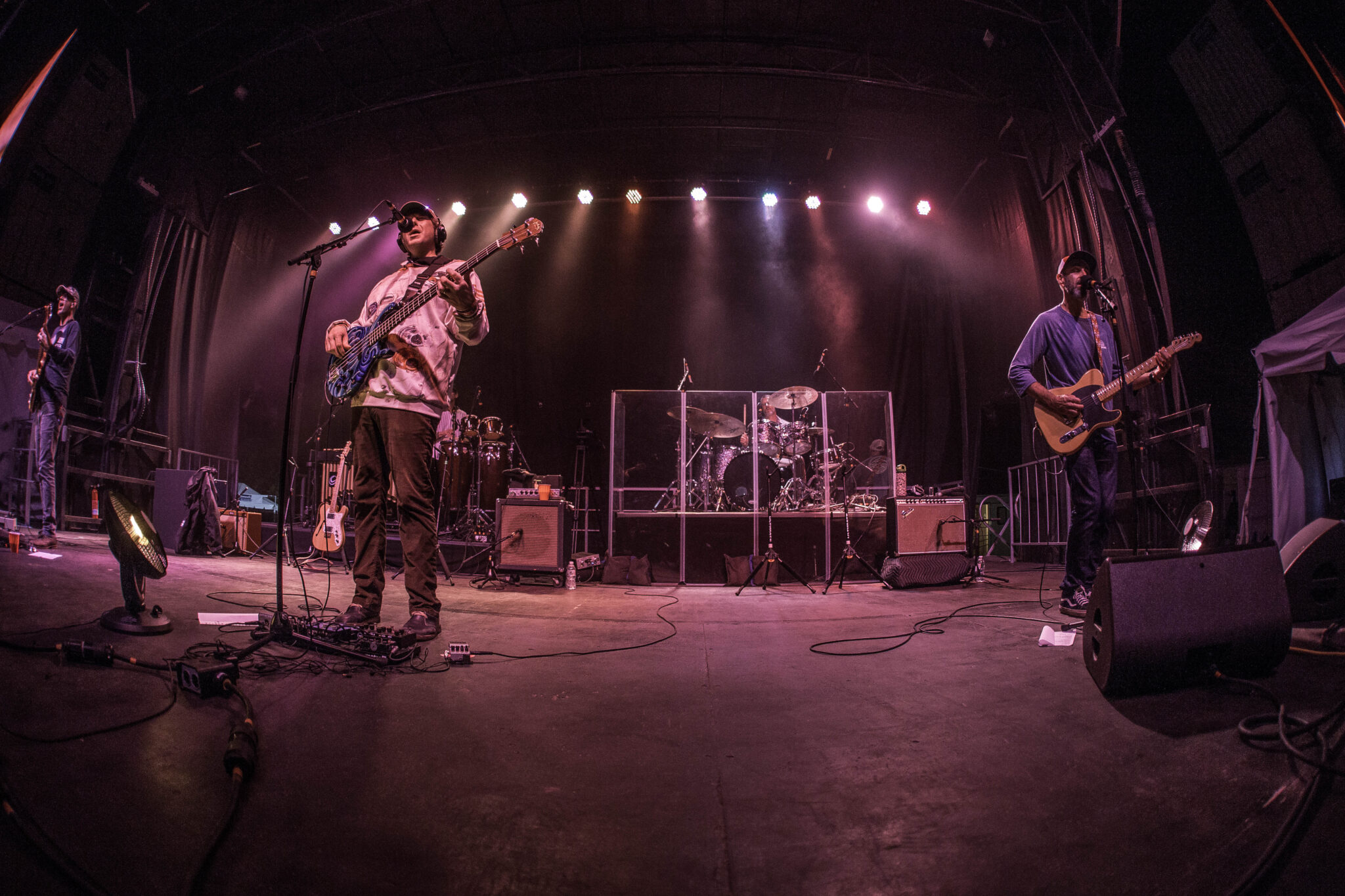
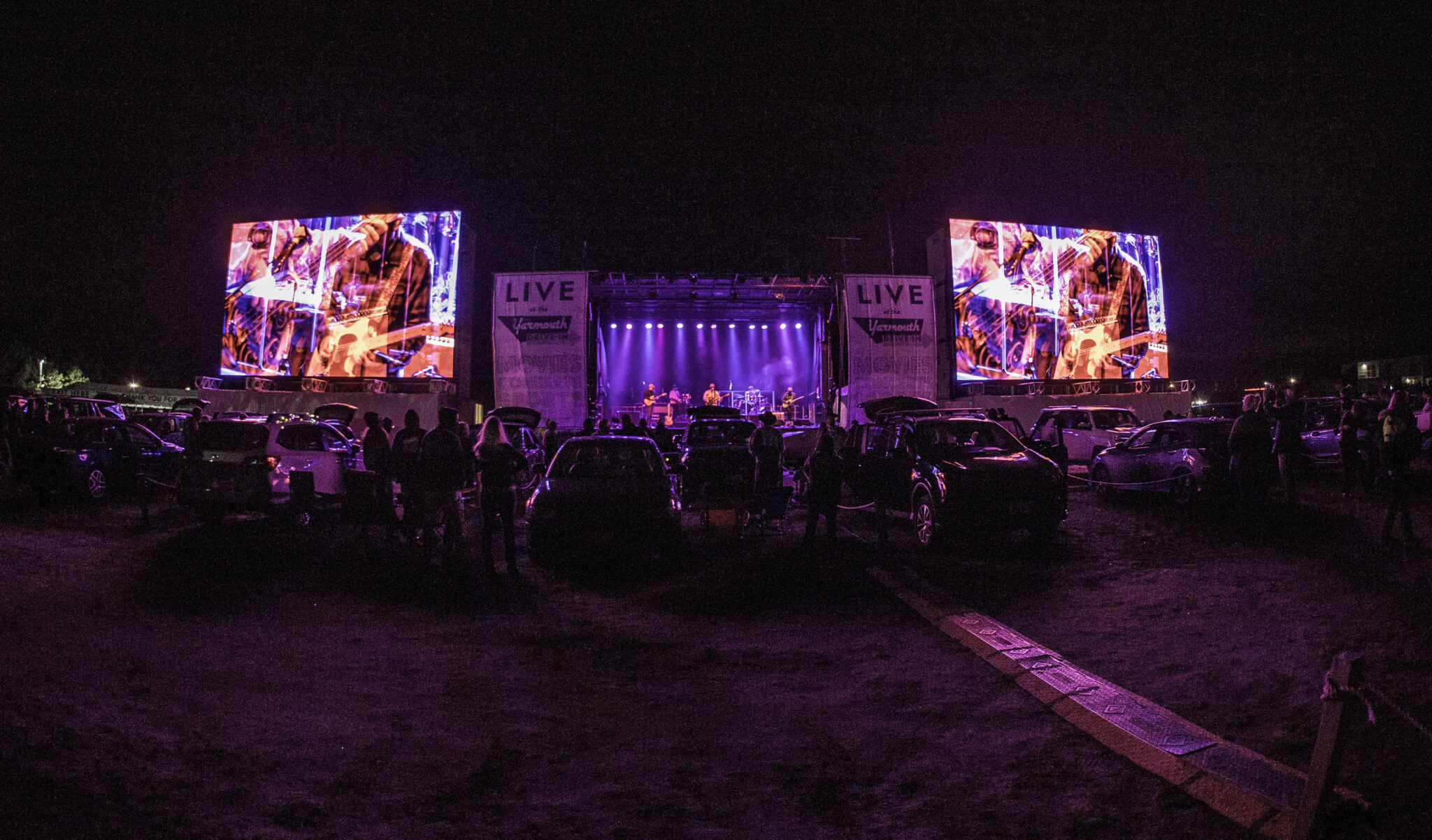
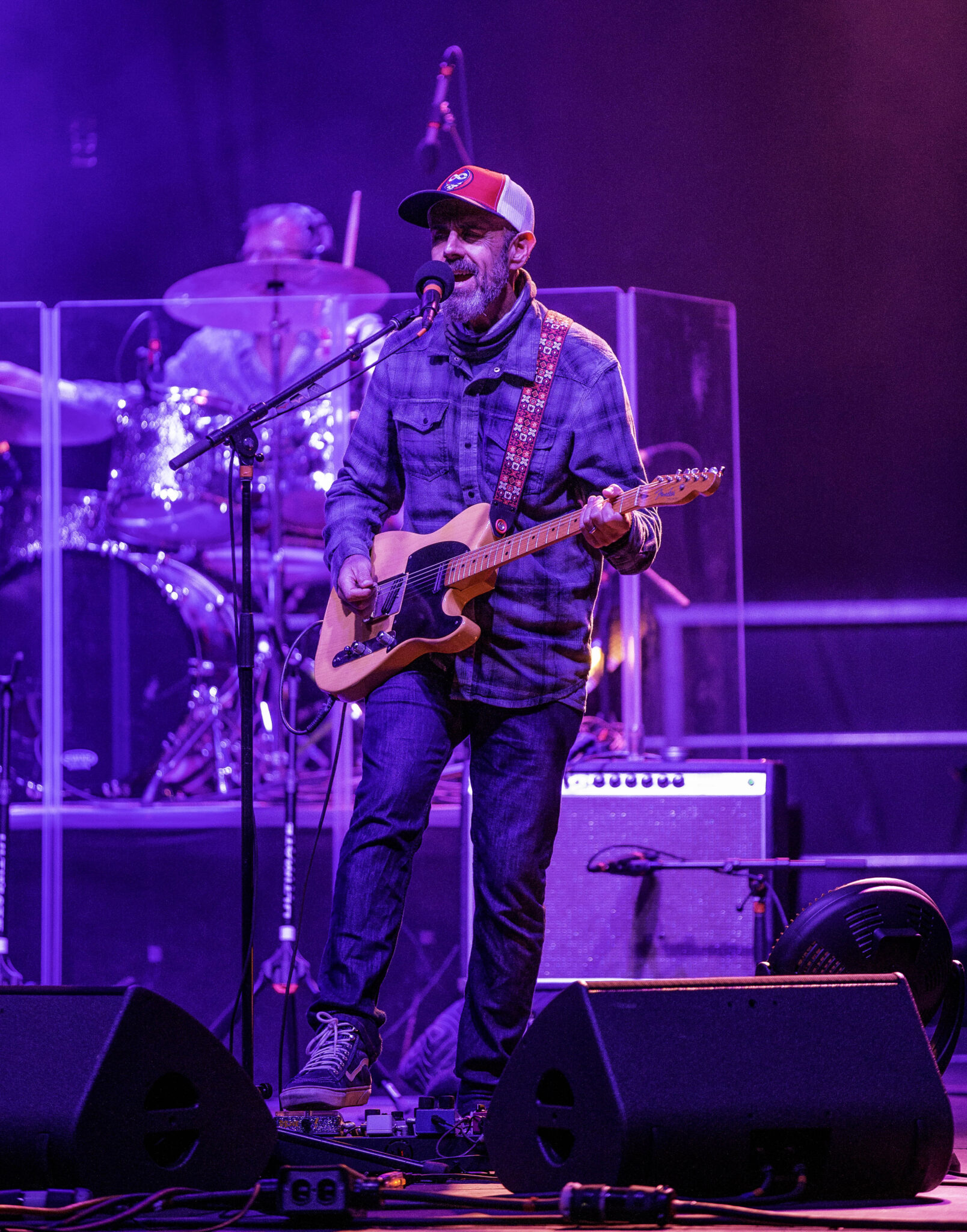
Buffalo jam stars moe. took to the stage in Yarmouth, Massachusetts on Cape Cod this past weekend for the middle two nights of their four-night New England run. Nearly seven months have passed since their last pre-Covid performance in Atlantic City, with a planned pair of drive-in shows in upstate New York unexpectedly cancelled mere days before the performance. It was clear early on that moe. was eager to shake the cobwebs off and play for a live audience.
The Yarmouth Drive-In, though spacious and very well organized, has the drawback of lacking a PA system, which seemed to sway some of the opinions of prospective attendees in the weeks leading up to the show. The venue used an FM transmitter to deliver sound to the patrons, who either used battery-powered radios or their own car radios to dance in their private cordoned-off suites.
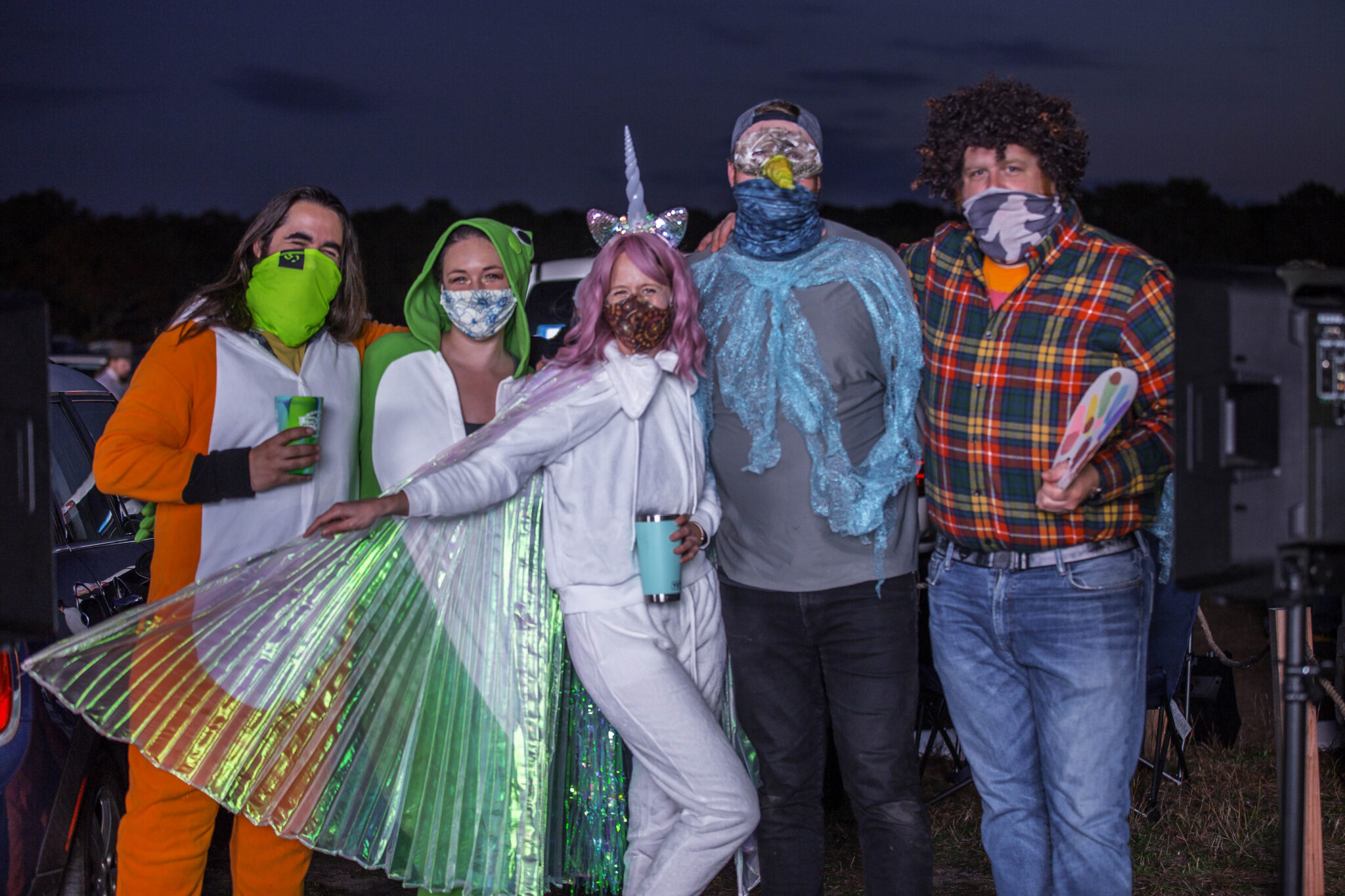
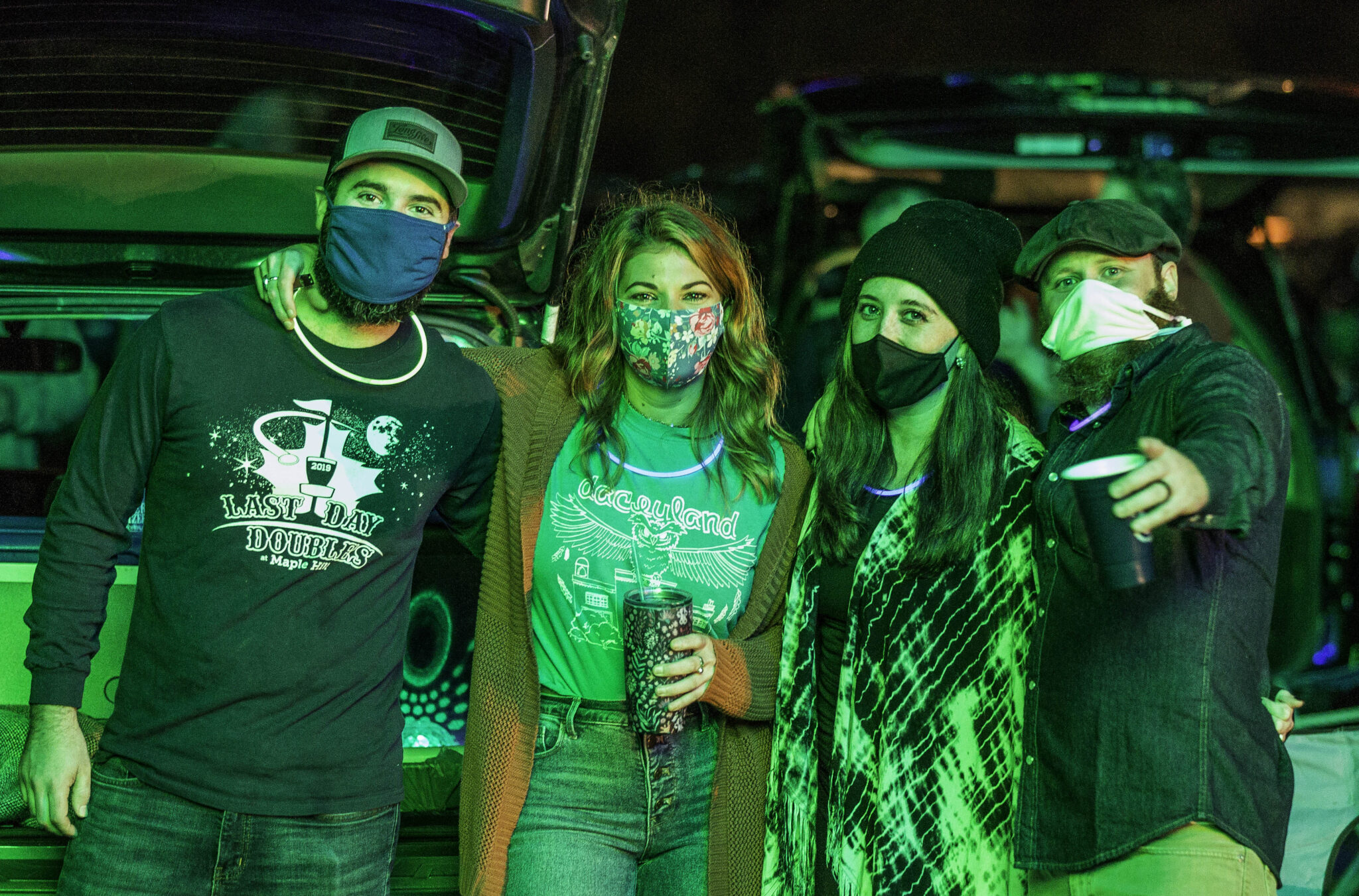
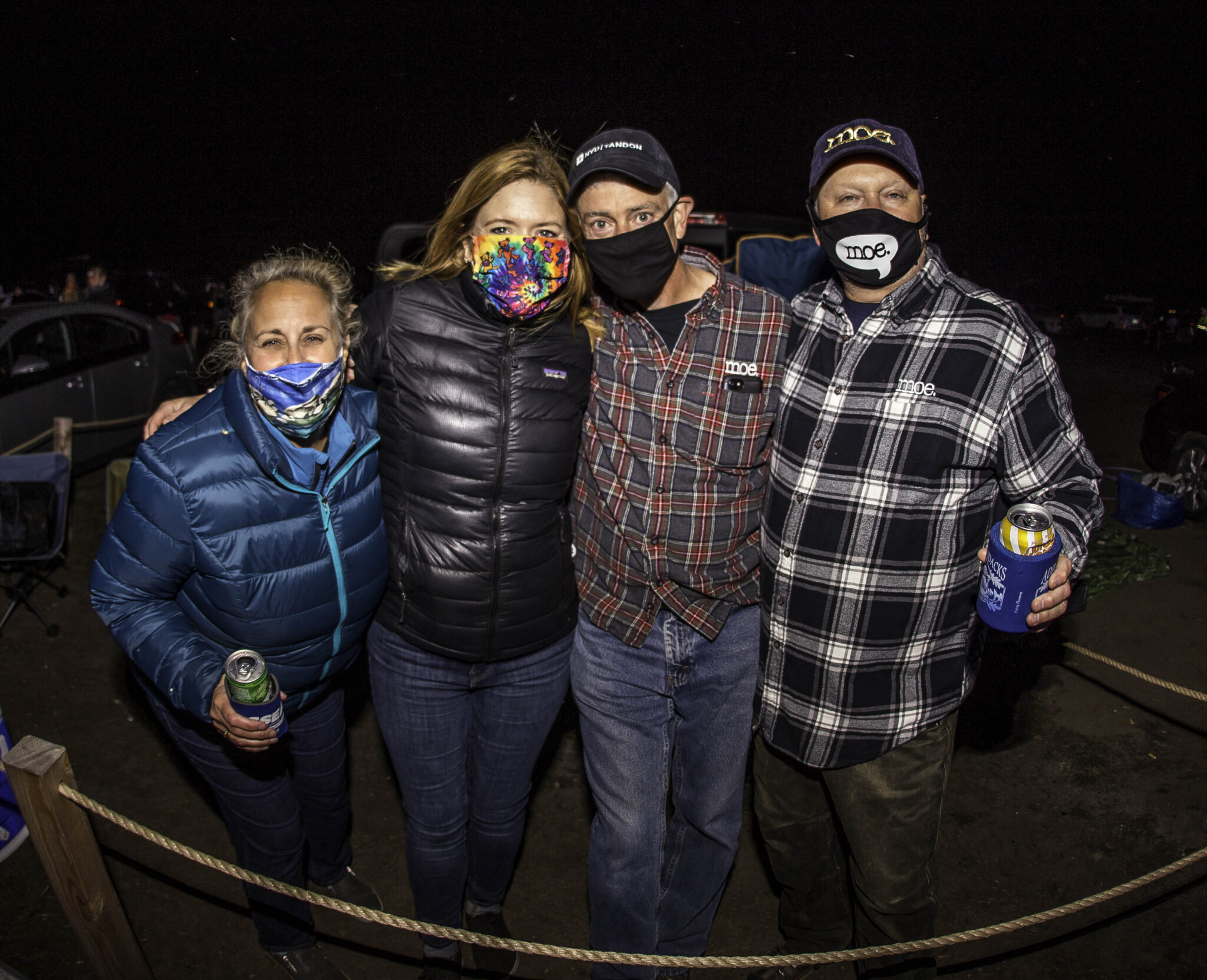
In a few instances, moe. fans at Yarmouth were seen lugging in their own PA systems, which they would mic up to a radio and supply loud, clean sound to their neighbors. Security was ever-present, making sure people were following the mask mandate and other safety protocols, while maintaining a friendly rapport with the fans.
https://www.youtube.com/watch?v=MuJHhNPCkAY
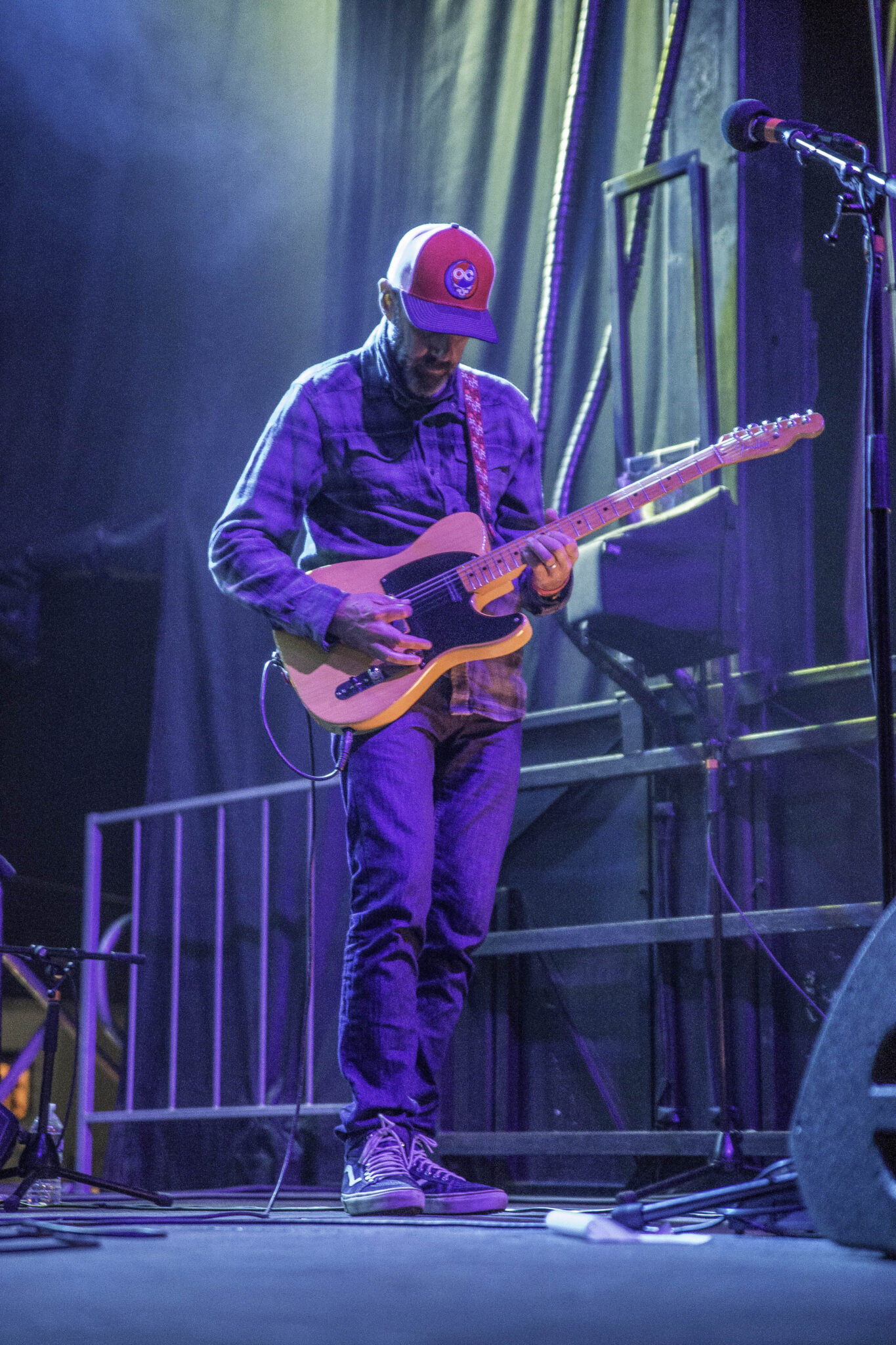
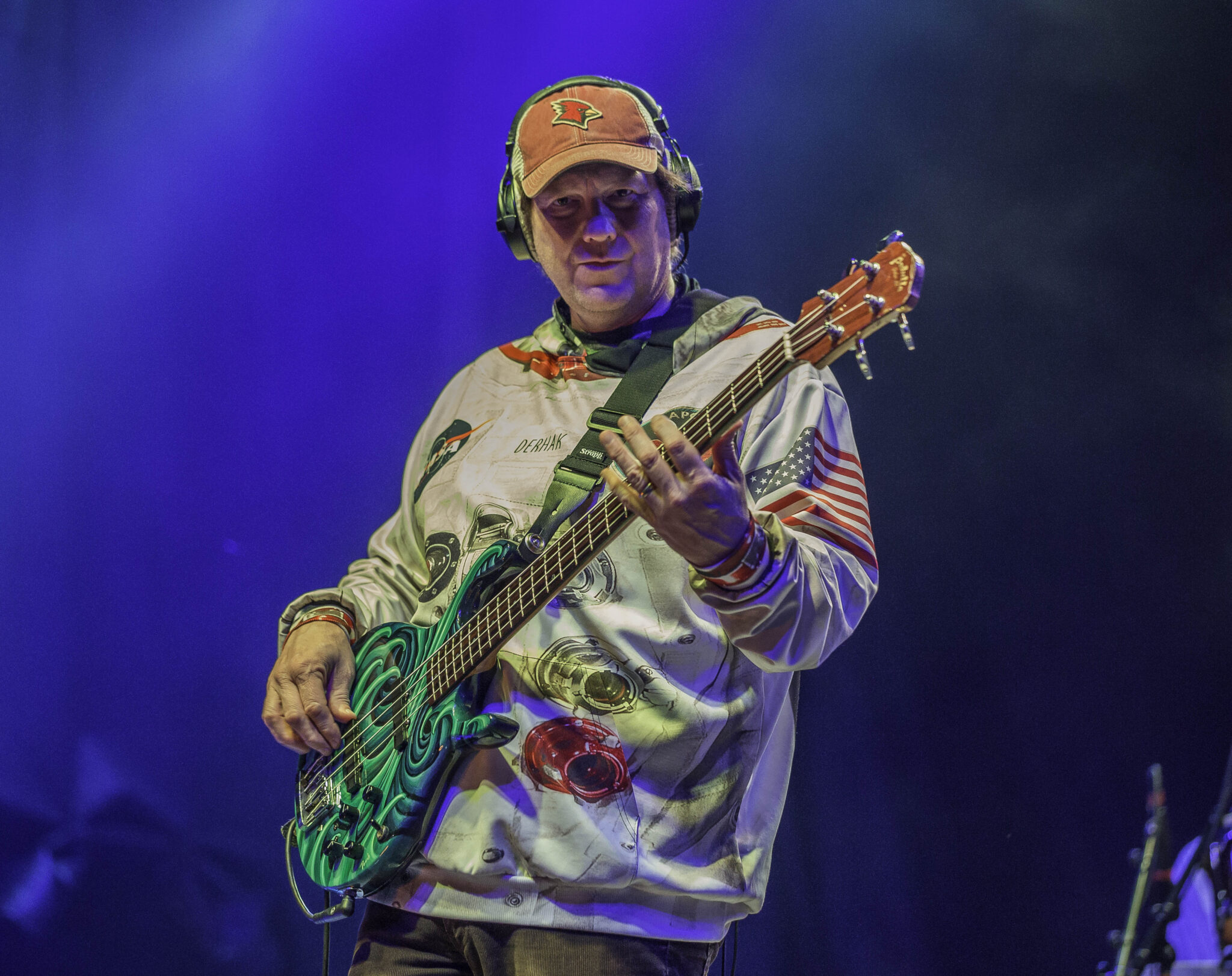
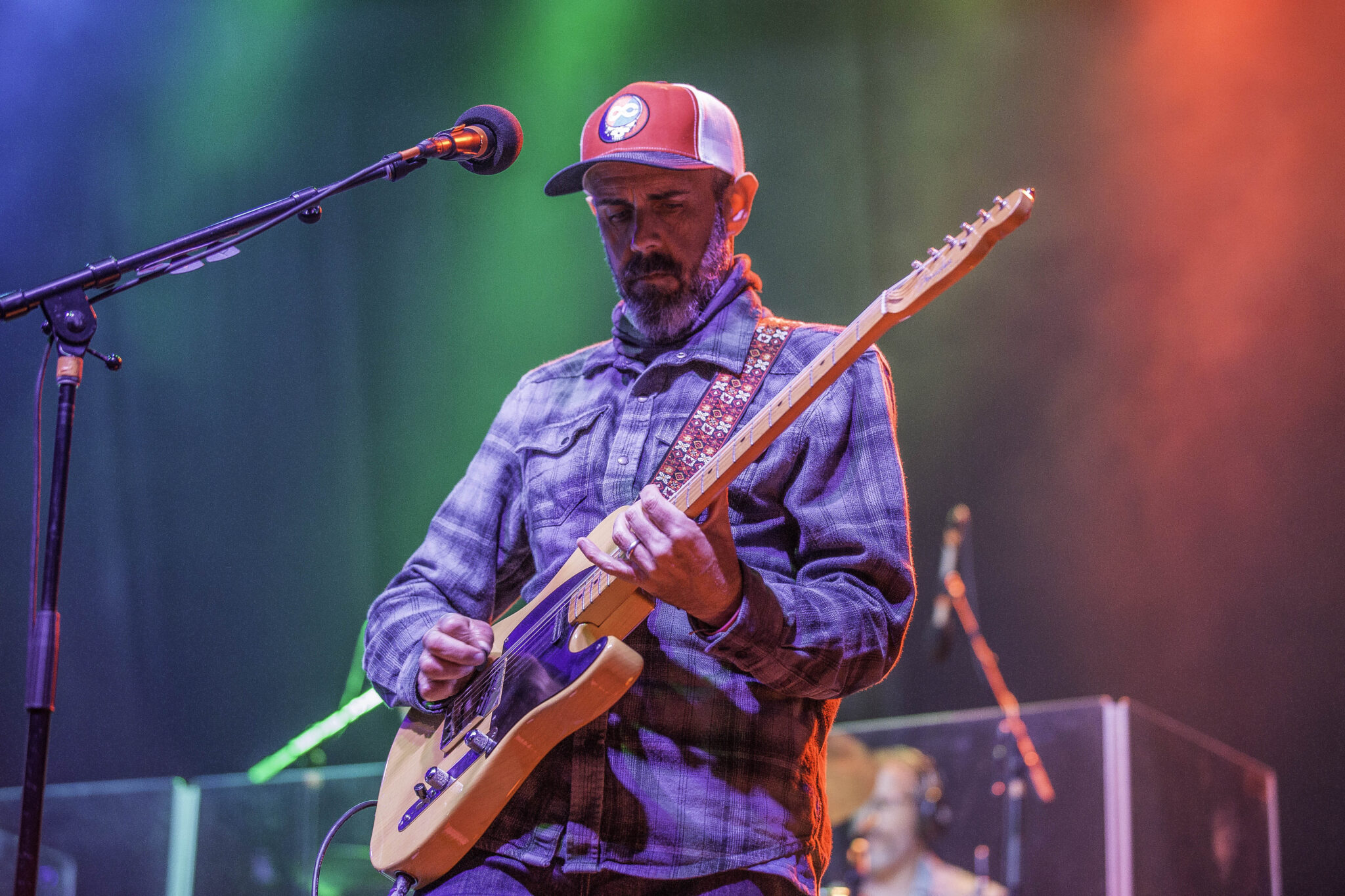
On night one, the boys took the stage promptly at 7 o’clock and opened with a speedy and energetic “Threw it all Away,” with their anthemic “Plane Crash” following close on its heels. Then, moe. went into some exploratory territory with “Skrunk,” featuring some pedalboard experimentation from guitarist Chuck Garvey (one fan described the computerized, robotic shredding as “connecting us to AOL” in a Facebook post.) He would return to use the effect sparingly throughout the two-night run, but brought it to the forefront here. They left “Skrunk” in the dust with a long, patient and smooth transition into their jam vehicle “Time Ed,” which is around the time the sound crew really dialed in bassist Rob Derhak’s vocals. They kept the energy high with “Akimbo,” segued into one of the new album’s songs, “Who You Callin’ Scared” and then closed out the first set of the weekend with Al’s ode to his late father, the epic two-parter “Downward Facing Dog.”
Set two opened with a drawn-out intro to the new track “Along For The Ride,” a protest song complete with E-drums and a funky bassline, which seems to be getting its feet under it more and more each time it’s played. This abruptly led into Annihilation Blues, a short and sweet rock tune from the No Guts, No Glory album, which took a surprising turn and featured a long, inventive outro jam that slowly morphed into the crowd-pleasing “Bring It Back Home.” “Mar De Ma,” Vinny’s instrumental number, led flawlessly into the iconic bassline of “Billy Goat” in yet another creative segue. They finished the second set with a pair of songs penned by guitarist Al Schnier, the history-inspired “Puebla” and the dark, heavy, strange fantasy tale that is “Bearsong” with an Iron Butterfly homage in between for the classic rock buffs in the crowd. For their encore (after a chorus of cheers and honking horns) moe. returned to the stage for a rendition of the triumphant “Happy Hour Hero” before bidding the crowd farewell for the night.
https://www.youtube.com/watch?v=c2naJUN5jYQ
While Night 1 had a creative setlist and some truly inspired segueways and jams, Night 2 showed a relentless side of moe. that can only emerge from months of quarantine. Nearly every single song transitioned into the next, either in the “no huddle” style of immediately diving into the next song, or with a long improvised jam that keeps the audience guessing, with only a single break between songs that occurred near the end of the first set. After opening with their flagship song, “Rebubula,” moe. played the traditional pairing of “Not Coming Down” and “Wormwood,” which bled into their first cover of the weekend, Pink Floyd’s rousing “Fearless” and then the reflective “Deep This Time.”
At this point, moe. stopped playing (for the only time the entire show) and Rob addressed the crowd with a brief speech in which he thanked the crowd for being there, expressing his solidarity. Shortly after, he plucked the opening notes of the Bush-era protest song “George” and the Yarmouth Drive-In briefly turned into a disco dance lot.
After a half hour set break, the temperature was dropping and occasional bursts of wind chilled the air. As some of the patrons added some extra layers and poured themselves another drink, moe. retook the stage for a fully segued set that deftly wove old classics and new additions to the moe. repertoire. Al started the set with a slow, bluesy lick, while the introduction to “Moth” was slowly solidified by his bandmates. “Moth” was left unfinished as they steered the soaring, uplifting “Moth” jam into the slap-happy, bass-heavy “LL3,” a new song written by Rob Derhak about his battle with oropharyngeal cancer. This version was livelier and heavier than previous versions, growing more and more energetic with each subsequent performance. They smoothly brought the tempo down and started teasing the harmonic intro of “Lazarus.” The song that has changed arrangements several times in the last decade and seems to have finally transformed back into the monstrous jam vehicle it once was.
They chased “Lazarus” with the mammoth instrumental “McBain,” which featured an expected “Walking On the Moon” tease (The Police) and a somewhat more predictable “Crosseyed and Painless” tease (Talking Heads) which has become a staple of performances of “McBain.” This was followed by another “no huddle,” this time into the Who’s classic hit “Pinball Wizard,” which has only been played seven times ever. Throwing yet another curveball our way, rather than ending “Pinball Wizard” and starting a new song to finish the set, moe. played a ripping, boisterous segue into the unfinished “Moth,” for one final singalong to close out the set. After a brief reading of the “al.nouncements,” they played a quick “Seat of my Pants” and “no huddled” once more into the bouncy, absurdist “Sensory Deprivation Bank” before finally calling it a night.
Despite the lack of PA and the safety restrictions due to the pandemic, moe. made the best of an unfortunate situation and delivered two powerhouse performances that would please the most devoted fans and casual attendees alike. Hopefully they will continue playing shows with this model for as long as it’s necessary. The fans seemed respectful of the rules for the most part, the Yarmouth Drive-In seemed to have peoples’ safety in mind, and the band seemed overjoyed to be back on stage.
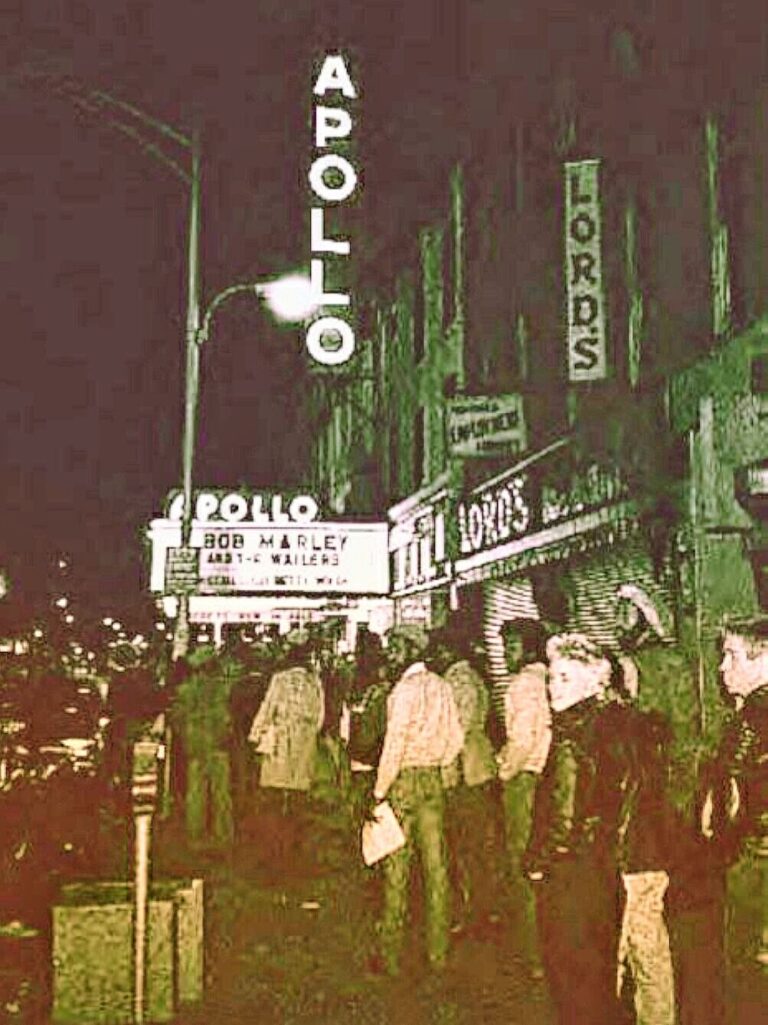
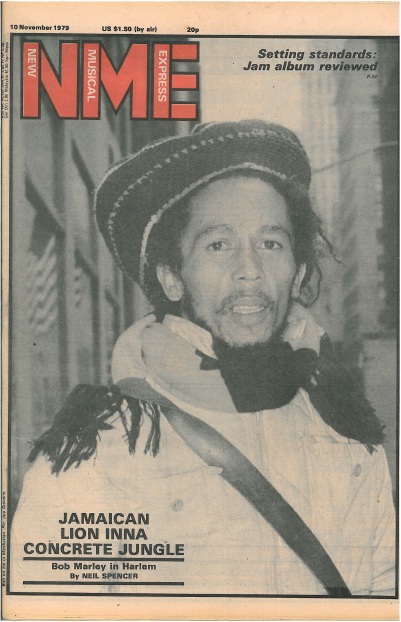
Over four days in late October, 1979, Bob Marley and The Wailers performed seven shows at the legendary Apollo Theater, marking the first ever reggae performances at the recently reopened Harlem venue. The shows, beginning on October 25 and ending October 28, would add to the rich history of the Apollo and connect Marley with the one-time home of fellow Jamiacan, Marcus Garvey.
The shows at the Apollo were the third stop on his Survival tour, which had kicked off on October 21 in Boston at Harvard Stadium with Stevie Wonder. A day later, Marley and The Wailers would perform at Madison Square Garden in New York.
Performing in Harlem was designed to broaden his reach to a demographic that had not yet tuned into his music, Black Americans. Dennis Thompson, one of four audio engineers and sound technicians working with Marley on these shows told the Jamaica Observer.
Bob wanted to reach the African-American people and he liked the idea of an intimate setting, and the Apollo had it. Survival related to the struggles and oppression of people; Bob once said to me, how great it would be if there could be a United States of Africa, so these concerts were very important to him.”
Dennis Thompson
The album Survival still stands as one of Marley’s most politically charged albums, featuring anthems “Africa Unite” and “Zimbabwe,” the latter celebrating the fall of the white supremacist regime in Rhodesia.
A mixed audience of African Americans, West Indians and whites was reported by Clinton Lindsay, a Jamaican student at the New York Institute of Technology. In covering the shows for college newspaper, Scope, he noted
“The show on the Saturday night was the best, it was sold out and had the best vibes. The opening show was also sold-out and had lots of major stars attending. Each show, although the set list might have been the same, were never alike. Each had its own identity.
Clinton Lindsay
Part of the reason Marley sought to perform in Harlem was due to the connection of Marcus Garvey to the neighborhood. Garvey was a Jamaican-born writer and speaker in the early 20th century who encouraged the Pan-African movementa, emphasizing unity between African-Americans and their ancestral lands. Garvey would inspire Rastafarians advocating for Pan-Africanism. Marley would perform at the Apollo with three backdrops: one of the Ethiopian flag, one of Ethiopian emporer Haile Selassie I, revered by Rastafarians, and one of Garvey, Selassie and guerilla fighters.
The Apollo is an important part of black heritage, I can’t think of any major black international star who hasn’t played there at one point – Bessie Smith, Billie Holiday, right from them people there to all the soul stars, everyone. That’s one reason Bob has to play there, to put him in that tradition for people to understand.
The lineup for the Apollo residency included Bob Marley on vocals and rhythm guitar, Aston Barrett (bass), Carlton Barrett (drums), Junior Marvin (lead guitar), Al Anderson (lead guitar), Tyrone Downie (keyboards), Earl “Wya” Lindo (organ), Alvin “Seeco” Patterson (percussion), Devon Evans (percussion), Glen DaCosta (saxophone), Dave Madden (trumpet) and The I-Threes (backing vocals).
A first hand experience from the show, shared with Marley Arkives, gives insight into the audience reaction to the peformances.
“Concerning the Bob Marley concert at the Apollo….there were three shows, in three days….and I made sure I was present for all three…Each show was different…but each unique. The Apollo Theater has 2 balconies…I was in the first balcony …front row center…best seat in the house…I sooo wish at least one of the concerts were on film….Bob rocked the house…so much so, at one point I actually got frightened…at the end of the third and final show…Bob had everyone on their feet singing “Get up Stand up”…of course everyone got up…but it wasn’t until a few minutes into the song that I realized the whole balcony was shaking….literally moving…I kept still to see if it was movement that I was really feeling…sure enough…it was…that’s when I started to hope that the balcony would hold….the balcony was full…even the isles…the Apollo is an old theater…..After the concert , I left feeling fulfilled and exhausted…Bob had taken all my energy…..any time he played NYC I was there….have never been to a concert that could surpass any Bob Marley concert since…….BLESS.”
Opening the shows was Betty Wright, known for “Clean up Woman” and “Tonight is the Night,” singing with a range from disco to soul. The New York Times said of the run of shows:
The theme of Bob Marley’s four-evening stint (Thursday through tomorrow) at Harlem’s newly reopened Apollo Theater is “black survival,” and Mr. Marley’s own survival has been a subject of concern lately. Although he seems to have recovered fully from a shooting incident a couple of years ago in politically turbulent Ja- maica, his reggae nas sounnea ratner pallid on recent albums and his opening‐night performance on Thursday was his first New York City appearance in nearly a year and a half.
While the Times felt that Marley was less energetic, he had begun to use his presence on stage to preach and inspire, with impassioned vocals and an audience that quickly warmed up and threw their energy back at the stage. These historic performances would be among Marley’s last shows in New York, returning the next September to open for The Commodores at Madison Square Garden in September, 1980; it would be one of Marley’s last performances.
On September 21, 1980, Marley would collapse while jogging in Central Park, likely due to malignant melanoma cancer he was diagnosed with three years prior. He would perform one more time, at the Stanley Theater in Pittsburgh, before losing his battle with cancer at age 36.
Setlist – Bob Marley and The Wailer at The Apollo Theater, October 25, 1979
Natural Mystic, Them Belly Full (But We Hungry), I Shot the Sheriff, Concrete Jungle, Ambush in the Night, Ride Natty Ride, Running Away, Crazy Baldhead, Wake Up and Live, One Drop, No Woman, No Cry, Jamming, So Much Trouble in the World, Zimbabwe, Africa Unite, War, No More Trouble
Setlist – Bob Marley and The Wailer at The Apollo Theater, October 28, 1979
Positive Vibration, Wake Up & Live, The Heathen, One Drop, I Shot The Sheriff, Runnin Away, Crazy Baldhead, Zimbabwe, War, No More Trouble, Exodus
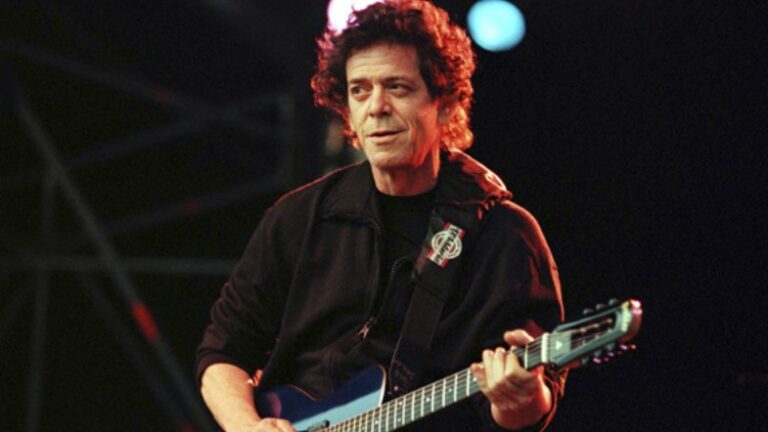
Today we celebrate the memory of one of New York’s true musical icons, Lou Reed. Seven years ago today, Reed died from liver disease, leaving behind an incredible library of music that’s been so influential to so many artists. His work with the Velvet Underground as well as his solo efforts continue to enthrall people even today, showing just how timeless his music can be.
Lewis Allan Reed was born on March 2, 1942 in Brooklyn in what is now known as Brookdale Hospital. He spent his youth and formative years growing up in Freeport Long Island in a Jewish household. Lou attended Freeport Junior High School, where his musical career truly began. His doo-wop band The Jades, where he played guitar and contributed backup vocals, was offered studio time for a recording in response to a talent show performance in 1958. This single, “So Blue,” didn’t quite make the charts but it would be Reed’s first ever radio airplay.
Lou would stay in state to further his education at Syracuse University, studying journalism, creating writing and film directing. However, during his first year there, he was brought back home after allegedly having a mental breakdown of sorts. According to his sister, he was “depressed, anxious, and socially unresponsive” for a while. This ultimately led to his parents consenting to electroconvulsive therapy (ECT) as a treatment option after doctors’ recommendations.
After treatment and recovery, Reed resumed his studies at Syracuse University, even hosting a radio show on WAER called Excursions on a Wobbly Rail. At Syracuse, he would study under the poet Delmore Schwartz, who would be an early mentor for Reed. It was also here that he would meet Velvet Underground guitarist Sterling Morrison for the first time. Morrison was visiting the older brother of eventual Underground drummer Maureen “Moe” Tucker.
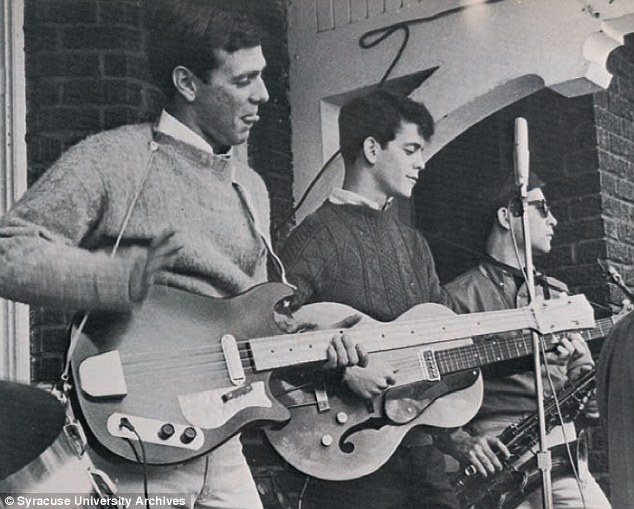
Lou Reed plays with his band LA and the Eldorados in front of the Sigma Alpha Mu fraternity house at Syracuse University
After graduating with a B.A. cum laude in English in 1964, Reed moved to New York City where his career would blossom. As an in-house songwriter for Pickwick Records, it was here that he would meet fellow musician John Cale and form a lifelong partnership of sorts. The two lived together on the Lower East Side and would eventually recruit Reed’s college acquaintance Morrison and Cale’s neighbor Angus MacLise who played drums to form the first iteration of The Velvet Underground. MacLise wound up quitting the band right before their first paid gig and was replaced by Tucker.
Although they never reached commercial stardom or widespread fame at the time, the Velvet Underground would go on to become one of the world’s most influential bands, providing a public image for the bustling New York City underground and alternative rock scene. They would eventually catch the attention of Andy Warhol who would serve as their early manager and quickly instituted them as the house band for his Explosive Plastic Inevitable multimedia events held at his Manhattan studio that was known as the “Factory.”
It was Warhol who would urge the band to hire the German former model and singer Nico. Their debut release, The Velvet Underground & Nico, would only peak at No. 171 on the US Billboard 200. However, Rolling Stone would much later dub it the “most prophetic rock album ever made.” The overall sound was propelled by Reed and Nico’s deadpan vocals, Cale’s droning viola, bass and keyboards, Reed’s experimental avant-garde guitar, Morrison’s often R&B– or country-influenced guitar, and Tucker’s simple but steady and tribal-sounding beat with sparse use of cymbals.
Nico and Warhol soon parted ways with the band with the former quitting and the latter fired by Reed, both against Cale’s wishes. The two co-founders were beginning to butt heads musically as well. Cale favored a more experimental, avant-garde style while Reed was trying to steer the band towards a more pop-driven style. It would result in Reed firing Cale from the Velvet Underground and replacing him with Doug Yule who played keyboards and bass guitar. This new version of the band would only record two more albums: The Velvet Underground in 1969 and Loaded in 1970. Shortly before Loaded‘s release, Reed would quit the band and by the end of 1971, the Velvet Underground was a thing of the past.
The Velvet Underground
Reed then set out on his solo career, signing a recording contract with RCA Records. His first release, Lou Reed, contained some unreleased material that never made it onto Loaded and didn’t receive much attention. This didn’t come until 1972’s incredibly successful Transformer release that was co-produced by David Bowie and Mick Ronson. The album’s hit single “Walk on the Wild Side” introduced Reed to a much larger audience and worldwide acclaim. It would peak at No. 16 on the Billboard Hot 100 singles chart, by far his most commercially successful record. Transformer also features other Lou Reed classics like “Perfect Day” and “Satellite of Love.”
Berlin, his next solo release in 1973, is described as a concept album about two junkies in love in the city. Perhaps uncoincidentally, he also married his first wife Bettye Kronstad this year. Although it appears to be mislabeled as Velvet Underground, check out Lou singing “Berlin” below to a spellbound audience.
Some of his later solo projects would go in a completely different direction. 1975’s Metal Machine Music is an hour’s worth of modulated feedback and electric guitar effects. It was widely panned by critics and seen, by some, as an effort to get out of his contract with RCA. He would later sign on with Arista Records and his first release for them, Rock and Roll Heart in 1976, features “A Sheltered Life,” a song with roots going back to 1967 and the Velvet Underground era.
A live album recorded at The Bottom Line in Greenwich Village titled Live: Take No Prisoners also came out this year with Rolling Stone describing it as “one of the funniest live albums ever recorded,” comparing Reed’s monologues with those of Lenny Bruce. Lou was certainly never afraid to speak his mind and reveal his true feelings, a true New Yorker in that sense.
Throughout the 1980s, Reed would continue to pump out new music and maintain a public persona. He collaborated with guitarists Chuck Hammer and Robert Quine on Growing Up Public (1980) and The Blue Mask (1982), respectively. 1984’s New Sensations even saw Reed back on the charts for the first time in six years. He even played a solo set at the first Farm Aid concert held in Champaign, IL in 1985. The decade would end with another one of his more successful solo efforts, appropriately titled New York, released in 1989. It not only netted him a GRAMMY nomination for best male rock vocal performance, but also served as his public commentary on contemporary issues like AIDS, crime and civil rights.
The 1990s would feature even more solo releases from Reed as well as a brief Velvet Underground reunion. Andy Warhol’s funeral in 1987 would bring John Cale and Reed together for the first time in decades. It would ignite a new collaboration between the two, 1990’s Song For Drella, a song cycle about Warhol. This eventually led to a brief Velvet Underground with one benefit show in France that year and a brief tour of Europe in 1993 that featured a performance at the Glastonbury Festival. Sadly, plans for a North American tour were scrapped after another disagreement between Cale and Reed.
In 1996, the Velvet Underground finally entered the Rock and Roll Hall of Fame, with an induction speech given by another musical icon of New York City, Patti Smith. Unfortunately, original guitarist Sterling Morrison passed away the night before the ceremony. Reed, Cale and Smith would later sing “Last Night I Said Goodbye To My Friend” in tribute.
For the rest of his life, Lou Reed continued to find new ways to express himself and grow as an artist. In 2000, he collaborated with Robert Wilson on POEtry. This would lead to a CD release under the same name years later that featured songs written by Reed and spoken-word performances of reworked and rewritten texts of Edgar Allan Poe by actors, set to electronic music composed by Reed. In October of 2001, the New York Times even published a poem of Lou’s titled “Laurie Sadly Listening” that was written in response to the recent 9/11 attacks. He would also go on to release three books of photographs, the second one released in 2006 was titled Lou Reed’s New York.
Reed would also go on to revive his Berlin and Metal Machine Music projects in live settings. He also wound up collaborating with modern day acts like Metallica, Gorillaz and Metric. Unfortunately, health issues caught up to him in 2013 and after a transplant in May, he succumbed to liver disease on October 27. Almost instantly, the outpouring of respect from other musicians began. Bands like Pearl Jam, The Killers, My Morning Jacket and Phish all dedicated either original or cover songs played that evening to the late guitarist’s memory.
Although he may be gone, Lou Reed’s legacy lives on and then some. He was posthumously inducted into the Rock and Roll Hall of Fame, this time as a solo artist, with another speech from Patti Smith. Lou Reed: A Life, a biography by Anthony DeCurtis was published in 2017. And an archive of his letters and other personal effects was donated to and can be viewed at The New York Public Library for the Performing Arts. More importantly, Lou Reed and his extensive musical catalog and stylings continue to influence and inspire new listeners and will continue to do so for the rest of time. Not too shabby for a kid from the city.
Brooklyn’s PEAK has announced the two-part “Live from the Studio” Sessions that will feature full sets from the band. The second and final session will air on December 5 at 8:15PM EST on their YouTube Channel and on Jamcast.
PEAK, a psychedelic indie funk outfit from Brooklyn features members of Turbine, Particle, Hayley Jane and The Primates, and Mick Taylor Band. The band has spent the majority of 2020 writing, rehearsing, and recording an album in their Brooklyn studio.
In October they invited videographer MKDevo and Lighting Designer Matt Calabrese to capture some of the magic that’s been going on.
Each performance will be a little over an hour in length and will feature familiar tunes, new originals and of course, some extremely healthy jams. Listen to the first session here or stream on YouTube below.
Fans are encourages to donate when possible, through Venmo @jeremy-hilliard1. Additionally, PEAK has just opened their online store, featuring a new t-shirt design, copies of Electric Bouquet, stickers and much more.
While waiting for PEAK “Live from the Studio” to arrive, check out PEAK’s performance at Opple Topple Festival from October 3, 2020.
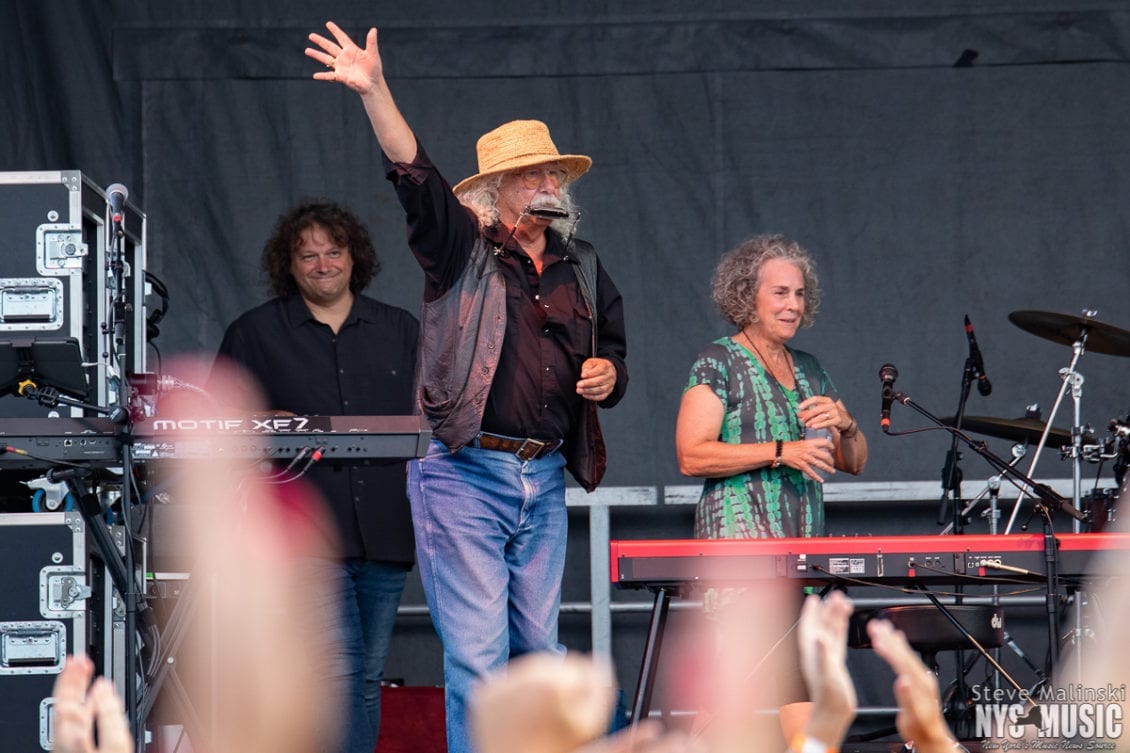
By now the word has gotten out. Arlo Guthrie, renowned folk singer and music industry icon has hung up a “Gone Fishing” sign. A lengthy and heartfelt Facebook post marks a change so abrupt on the hearts and ears of fans across the nation. But don’t make wake, we’re off to the Inlet to cast a line.
It’s been a great 50+ years of being a working entertainer, but I reached the difficult decision that touring and stage shows are no longer possible. I’ve cancelled the upcoming shows, and am not accepting offers for new ones. That’s the short version. For the longer version continue reading…
Guthrie’s message was missed by other major sources. While this marks the end of touring and live performances, it is also dawns a new beginning. His life will continue to influence the industry, while he basks in his accomplishments.
The road weighs on the toughest acts, constantly touring and performing. Especially for Guthrie, as he battled mini strokes and checked out to make a gig the next day.
“Then, on Thanksgiving Day 2019 (of all freaking days) it happened again. This time I was on my way to The Church / The Guthrie Center to help out with our annual Thanksgiving Dinner that we hold every year. I had pulled over to fuel up and realized I couldn’t continue to drive safely, as everything was spinning around, sort of like the old days, but without the help of illegal substance… [the next day he] had an important gig at Carnegie Hall in New York – The end of an annual series I’d been doing for decades and it was Sold Out. I had to be there. It was imperative.”
Arlo Guthrie’s ‘Gone Fishing’
The Cooney Island-born singer had big shoes to fill in the likes of his father, and he did. Now it is time to kick them off using the six-plus months a year he would be on the road to enjoy the sand and sun. Likewise, Guthrie is a hallmark, being an original Woodstock performer and tipping his hat at recreations in 2015 and the 50th anniversary.
Guthrie recounts memories of his original Woodstock performance at 22.
Just months ago, Arlo Guthrie released a heartfelt rendition of Stephen Collins Foster’s “Hard Times Come Again No More” with pianist Jim Wilson.
A heartfelt voice among a world pandemic, released July 31, 2020.
Hats off and best wishes to Guthrie as music, culture and storytelling are in his blood. Despite no longer touring, this will not be the last of Guthrie’s legacy. For now, Arlo Guthrie has just gone fishing.
CLAVVS have released a new single, “Dance in Place,” coming off of rave reviews from the release of their latest EP No Saviors in 2019. Along with an extended version of their EP released in February, CLAVVS are looking to capitalize on these releases with their brand new single. The single is also accompanied by a music video and was shot in their neighborhood in Brooklyn.
They made their own music video, looking to capture the strong presence of the sun and the vibrant colors of the autumn weather. Amber describes the video saying,“For the past few years I’ve been imagining visuals that capture my experience of moving through New York but with this fantastical element of suddenly connecting with strangers in some unexplainable moment of celebration.” Especially in the wake of the pandemic, Amber adds, “Having lived through Co-vid here, we both feel even more bound to this city and our neighbors. So, this video is a socially distant version of that daydream.”
The single represents the criticism of capitalism and “grind” culture. Amber described the song as a call for radical self-acceptance and finding joy in a joyless culture. “I wrote this song in February, so it was super weird when we were all kind of forced to closely examine those things in March,” she said. “We couldn’t have guessed how on-the-nose this song would feel now.” It features great production work and a very catchy hook. “We aren’t taking ourselves very seriously anymore,” said Graham. “We just want to have fun with our band.”
Going forward from their previous EP, the Brooklyn via Atlanta duo really wanted to challenge their sound. They have shifted from making disruptive pop songs to reflective music. The duo embraces their flaws to reinvent themselves. “The question became, how do we make CLAVVS songs that we can dance to and smile to?” Amber said. “We really wanted to challenge ourselves to make something we had never made before, something that, for a long time, didn’t feel at home to us. We didn’t know how to write happy songs that felt genuine.”
“Dance in Place” has strongly built on the success of their recent EP. The new song is out now on Spotify, Soundcloud, Bandcamp and various other platforms. Their new single is also accompanied by a music video, which is out now on YouTube.
Despite the chaos created by the pandemic so far, Swiss Brooklyn-based artist Sam Himself (aka Sam Koechlin) released his new single “Cry” from his debut album expected in 2021. “Cry” is the first long-distance collaboration with his longtime producer and creative partner, Daniel Schlett. Sam recorded “Cry” partly at a local Basel Studio and partly in his attic during the quarantine.
Before the pandemic took a turn for the worst, Sam was on tour in Europe and only performed at one show before the remaining dates were canceled. With the travel restrictions immediately enforced, Sam was stranded between his native Switzerland and his chosen home in New York City. He decided to self-quarantine in his hometown of Basel, Switzerland, and released his long-awaited EP Slow Drugs.
I was driving across Switzerland before dawn to shoot the final takes of the video for ‘Like a Friend’; I’d been up for a long time, the tour had just been canceled and, according to the news, I wouldn’t be able to fly back to New York anytime soon. Then my phone rang and at the end of that call, the relationship I was in had ended, too. In a matter of hours, my life as I’d known it was over. For all the dread and confusion of that moment, I also felt ridiculous for licking my own wounds while the world around me looked like it was ending. That’s the dissonant state I tried to capture with ‘Cry’: it’s a farewell letter to my old life in New York and a relationship ended by the pandemic, but also a caustic reminder to myself not to wallow in self- pity amid a global catastrophe.
Sam Himself, about the inspiration for “Cry”
Capitalizing on the extended time in quarantine, Sam created the soaring ballad “Cry” that showcases his baritone climbing to new heights as the song evolves into a weeping hymn with authentically vulnerable lyrics. Sam plays all the instruments on “Cry” except for the bass and one lead guitar, which was added by members of his European touring band. “Cry” is produced by Daniel Schlett and mastered by engineering legend Greg Calbi, who mastered songs for David Bowie and Bruce Springsteen.
Each Sunday evening from 7-9pm you’ll find EQXposure on WEQX, featuring two hours of local music from up and coming artists. Tune into WEQX.com this Sunday night to hear music from The Parlor, Haley Moley, and many more!
WEQX has long been the preeminent independent station in the Capital Region of New York, broadcasting from Southern VT to an ever-expanding listening audience. NYS Music brings you a preview of artists to discover each week, just a taste of the talent waiting to be discovered by fans like you.
This week’s EQXposure is a bit moody and is about exploring wide sonic spaces.
Named after a room in the 19th century farmhouse where they live, farm, and create, The Parlor is a project by husband and wife team Eric Krans and Jen O’Connor. The multi-instrumentalist, producer-composers create intimate art-pop intended to reflect some of the most powerful aspects of the human experience.
The Parlor’s music is the sonic corollary to what the couple is bringing to their land, an artisanal re-imagining of an antique dream. Jen O’Connor + Eric Krans make their home in Upstate New York. Their farmhouse is filled with jars of feathers + herbs, piles of broken guitars, trays of wings + claws, upright basses, a sampling synth, braided onions, polyester pants, Casio + Zenith, antique mirrors. Ghosts. They write and record music in a room called the parlor.
In early 2015, house music DJ and dance music producer Jennifer Maher Coleman (DJ Jennifer Haley) and indie rocker Paul Coleman (Mount Mole, Sinkcharmer, Beaked Whale, The Operators) combined their aliases and their musical sensibilities to form Haley Moley.
Moody synth and guitar rock over electronic beats ultimately blossomed into a full-on five-piece with the welcome addition of Andrea Kosek (aka DJ Goldeedust, keyboards) Pat Thorpe (of DJ duo Partyhorn, bass guitar) and Mike Broomhead (also of Partyhorn, drums.)
With a high concentration of electronic, funk, and disco dj’s on board as well as decades of rock experience steeped in atmospheric, dirty guitars, Haley Moley delivers a complex amalgam echoing these disparate roots and emerges refreshingly uncategorizable.