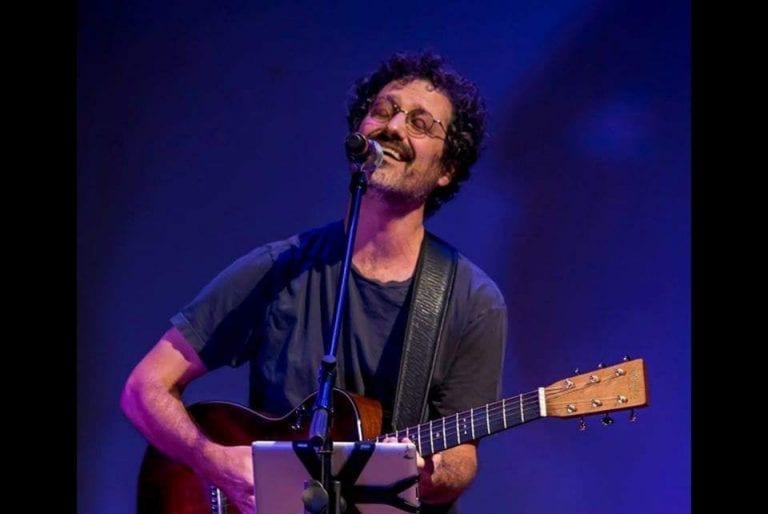
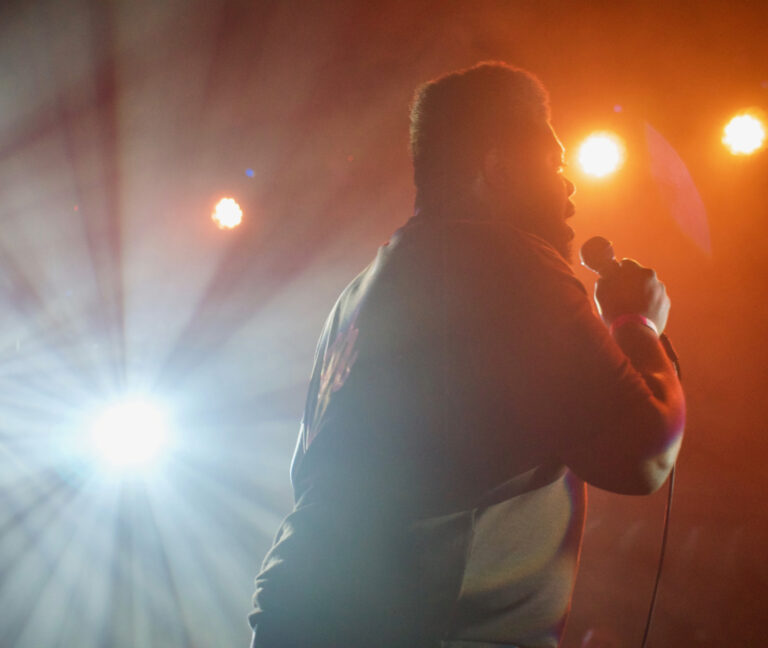
My extended family have tried to sell me on Bob Dylan’s music for years. Although it took them all my life, I’ve come to appreciate Dylan’s influence. The Folk and Americana genres have certainly grown on me. And I’m not the only one. Many folks listen to and play folk music. Need another example? Look no further than Charley Orlando — who is prepared to launch a new album, called Note to Self.
Photo by Ian LaRochelle
The new/old wave of Folk Music
It seems like just a few years ago, only independent artists exposed themselves as folk lyrics require. But recently, Top 40 artists such as Post Malone and Taylor Swift have both released charting records with folk backbone. As such, folk music has a lot of new listeners from the Millennial and Zoomer generations.
Looking at the music industry in terms of trends like this, Orlando could not have picked a better moment to release his new songs.
Orlando’s career spans 30 years with jam band Dexter Grove on his resume. But instead of a group with multiple instruments, Note to Self contains acoustic guitar and raw vocals almost exclusively.
But this doesn’t make the project any less ambitious. Note appears with visual aid with Orlando performing each song at various locations. And Orlando is an ambitious person with a cult following. Note holds a spot in a lineup of over fifteen releases, and it’s of course hard to say where this one falls. But it doesn’t matter. The album is accessible to those hearing Orlando for the first time.
Starting From the Bottom…
Like many of Dylan’s songs, you can pretty much start anywhere and you’ll eventually hear the right track. Both Orlando and Dylan’s lyrics make me think, “yeah, that is a good idea. He’s totally right.”
They say, “Less is more.”
The thing that draws me to this album is that unlike many albums of this year, Charley relies on few, if any, sound effects or ProTools plugins. While I do emphatically enjoy a good polished sugar pop album — such as the aforementioned Swift or Post — there is something wonderfully real about an acoustic guitar and a voice coming from a backyard or by a lake.
And it is real. Orlando convinces the listener of his true emotions in this effort while making larger statements about the world in 2020. Orlando leaves a positive impression while also asking relevant questions.
Another thing I find so accessible about this album is that — especially due to the visual element — Charley seems like a person that you could have a jam session with on your back porch, not the impossibly busy celebrity persona that surrounds many musicians. It is likely for this reason that Orlando has built himself a steady listener base without the aid of major labels or big advertisement.
That realness on Note to Self the exact same thing I enjoy so much about the Bob Dylan songs I’ve heard so far. And I don’t have to say much more about it, because good art sells itself.
Note to Self is available October 30th 2020 on all major streaming services.
I jumped on an opportunity last year: I worked around New York City on stage crew as a stagehand and production assistant. On show nights, I wore all black. I set up electronics, speakers, lights, and stages for artists big and small. I hustled as one of thousands of production assistants who make live shows possible as part of stage crews.
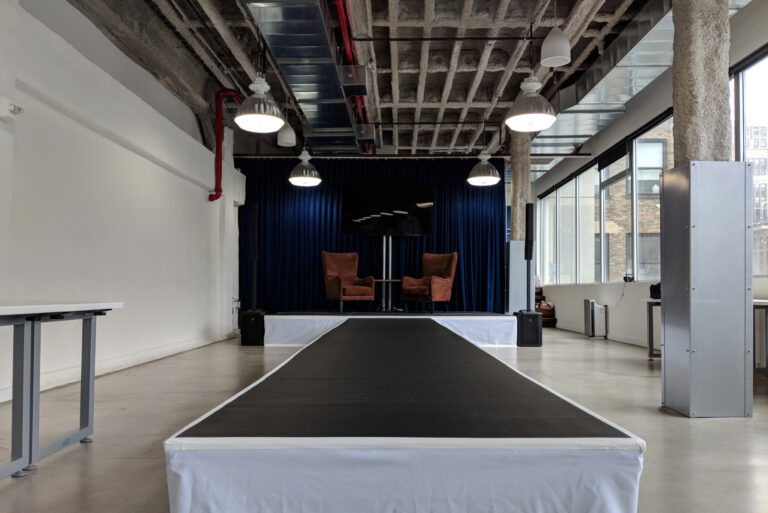
An empty stage waits in Midtown, Manhattan. Photo by Zach Hitt.
In March of 2020, a confirmed COVID-19 case infected Westchester. That changed everything. Now in August, many more cases and many businesses remain closed. Those that have reopened endure significant operating restrictions. Most industries have a lot less money in their cash register. Some businesses have gone belly up.
No live music for a while, either. Fans know this. Eliot Byron knows this. Byron began rigging live shows 25 years ago. serving on the stage crews of the IATSC Local One in NYC and as the Crew Chief of Capitol Theatre in Port Chester.
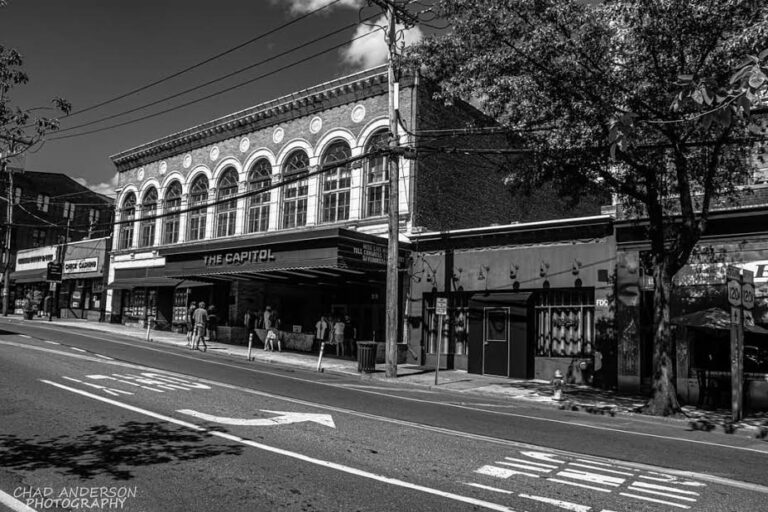
The Capital Theatre. Photo by Chad Anderson.
Just a few train stops north of Westchester, Port Chester shows came to a halt in March — as well as the rest of New York, under the orders of Governor Andrew Cuomo.
“We had a live event [in March]…but they started getting calls and decided not to do it. That was the first indication that we weren’t gonna see live shows for a while” says Byron.
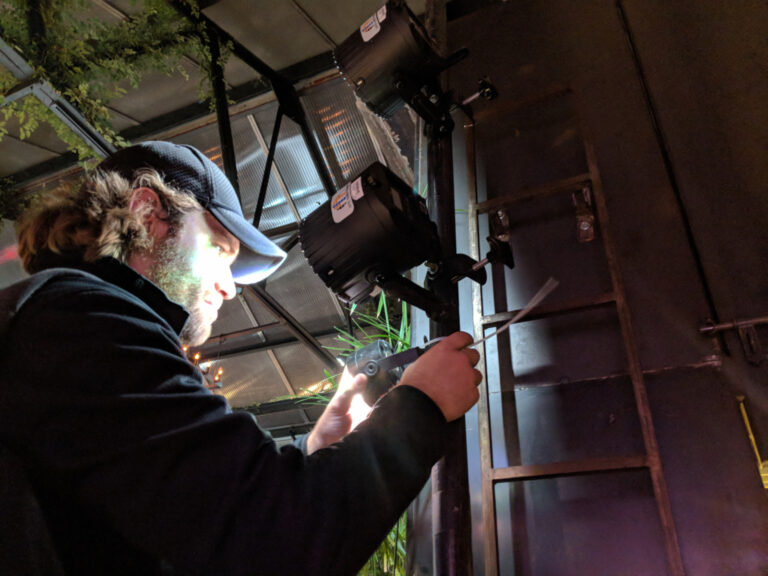
A Stagehand assembles and tests lights. Photo by Zach Hitt
Lights, Camera, Action…
The quarantine disappointed fans and live stage crews alike. But a stagehand’s job is comparable to a goalie. A majority of the time, it’s thankless, difficult work that goes unnoticed if executed correctly. But stagehands are the first to take the blame when things go wrong. “The artist [needs a crew]…that safely unloads trucks in a timely manner. You can’t just grab random guys off the street to do this, either. We are the manpower that gets these shows in and out in a safe, efficient process,” Byron explains.
Byron tells me that stage hands often take part in setting up the stage, lights, and sound, connecting the artist’s equipment with the venue’s electronic set up. It’s neither simple nor easy. And if the government or the industry doesn’t provide financial help soon, crew chiefs like Byron will be tasked with hiring and training all new crews who have less familiarity with the equipment, and less experience. “If this goes on for a long time without some kind of incentive to keep people in the industry, then we’ll be tasked with training a whole new set of people to perform a very, very specialized task,” says Byron. The lasting effect could have extreme ramifications for not only the live music industry, but surrounding businesses like bars, nightclubs, restaurants, and attractions, all of whose sales increase during live shows.
Give the people what they want?
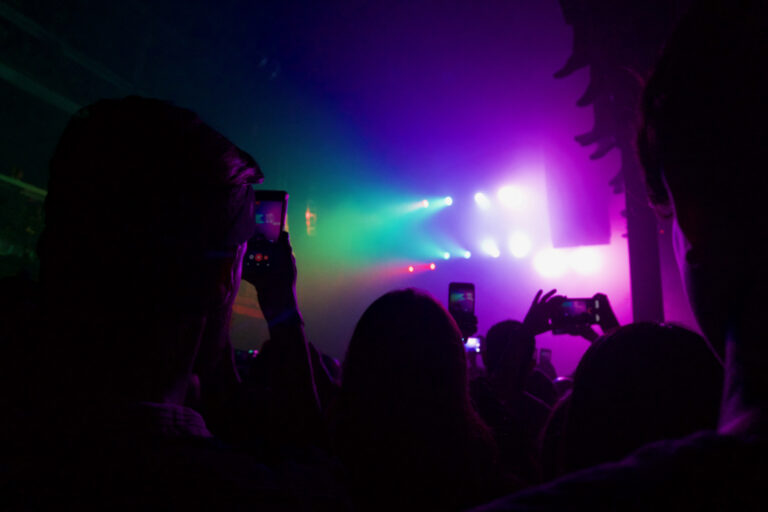
Fans of The Neighbourhood gather at Terminal 5 in Manhattan for a concert. Photo by Zach Hitt.
Frequent attendees of live music have voiced their concern on social media and in public. Some people want economies to reopen immediately, while others have shared concerns of spreading the COVID-19 virus. But while these fans have the safety of their homes and many have other jobs to return to, stage crews will likely be the last group of people to restart their employment. “We were the first to be shut down and we’ll be the last to go back to work,” says Byron.
Who are those guys backstage?
While many people understand that putting on a live show is a team effort, many do not understand the role of a stage crew. And to add confusion, major touring bands have their own road crew, or “roadies,” that differ from stage crew. A road crew is a team of technicians that travels with the performer to assist the artist with the equipment they bring, such as guitars or drums. Stage crews function as a bridge between the artist’s equipment, and the venue’s, such as the speaker system, lights, and sound mixers. In order for a show’s success, the two teams have to work together.
In most venues, especially larger ones, an event employs a team of specialists to lay tracks for a performance. This includes building a heavy stage, lifting bulky speakers, and hoisting enormous light shows to extreme heights. Falls, injuries, and series harm all sit and wait for the first sight of a shaky team or wavering leadership.
Different Vans, Different Plans
Some stage hands moonlight as roadies for touring artists. I met Luis “Lou” Rodriguez working on stage and A/V gigs around NYC. Rodriguez’ professionalism cannot be overstated. Along with local A/V gigs, he started working as the monitor engineer for Big Sean in 2015. Rodriguez takes responsibility for the sound heard by the artists in the stage monitors. He’s carved several big name notches on his stage belt, including The Bronx’s Cardi B, Chicago’s Common, and Yo Gotti from Memphis.
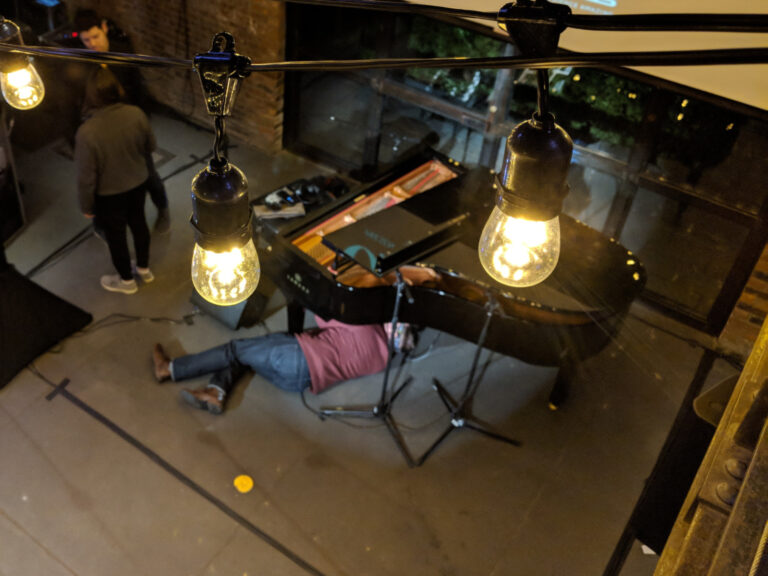
A roadie fixes the sustain pedal on a grand piano prior to a Jojo and Jordan XL show in Queens, NY.
Photo by Zach Hitt
Help Wanted
Nowadays, stage techs and roadies struggle in the same predicament: finding work. Since it is not easy to switch careers, many of those who used to lift heavy speakers and lights now depend on the kindness of tax dollars and crowdfunding to make ends meet. “There are crew members who have not gotten ahead of this. There are no shows, so that means no income for us. But we still have lives to lead,” says Rodriguez. “Everything around the house has gotten tighter.”
While the American government sent out a $1,200 check to adult citizens two months ago, a statistically low number of people live in areas where this covers more than one month of rent. An additional $600 sporadically made its way to certain qualifying individuals, but this has not alleviated the struggle, especially considering that most stage hands live in major cities where rent and medical bills can swiftly pile, Rodriguez tells me.
Will we see live shows again soon?
Different experts have shared opinions on when major US industries such as shows and sports will reopen to the public. While Dr. Anthony Fauci, a reputable infectious disease specialist, has repeatedly warned that the US should stay seated until we have a vaccine. Others propose middle ground: a plan to reopen. Either way, the day that hundreds of people can stand close together in the same room is undetermined.
“There’s no set day,” Rodriguez says. “In Europe, they’re trying a few things out. They’re holding some festivals while social distancing, so the audio set up [and my job] pretty much stays the same.”
Ending one song and starting another
Even if the US reopens, many people and venues fell behind on bills long ago. For this reason, several groups have proposed petitions for government intervention and assistance. A UK protest, themed “Red Alert,” saw many venues shine red lights outside as stage techs walked through the streets with equipment cases, according to a report by The BBC. The uproar has walked hand in hand with organizations like NIVA, or National Independent Venue Association to lobby for bills like The Save Our Stages Act, a bill which proposes $10 Billion Dollars in funding venues and stage crews during the financial burden of the COVID-19 outbreak. New York Senator Charles Schumer co-sponsored the bill.
Either way, the stage hand and roadie are both important parts of the live music industry, and the economy at large. Without them, we don’t have live shows. And without live shows, our economy sees less stimulation as live shows directly impact their surrounding environments negatively. This means a noticeable decline in sales for bars, nightclubs, and more. “I don’t know if it’s financially viable to put on the shows without an audience. They still have the paperwork, the utility, the taxes. There’s all the employees, stage crew, bartenders, security. How long can they last?” Byron considers.
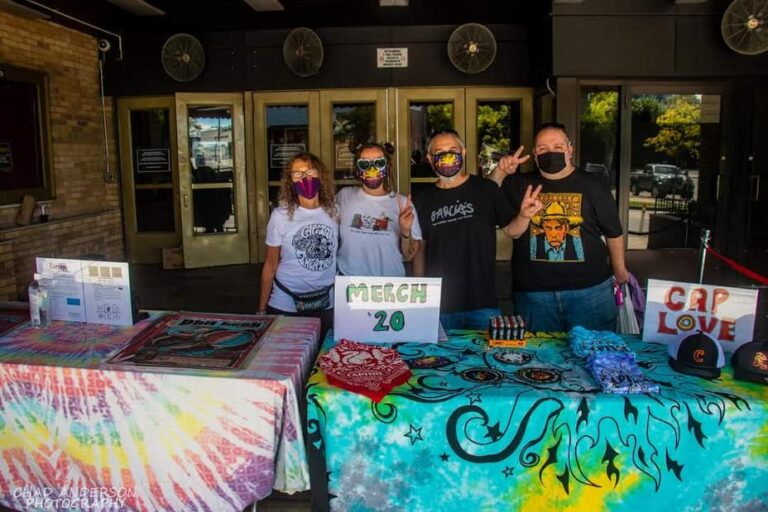
People selling merchandise outside The Capital Theatre. Photo by Chad Anderson.
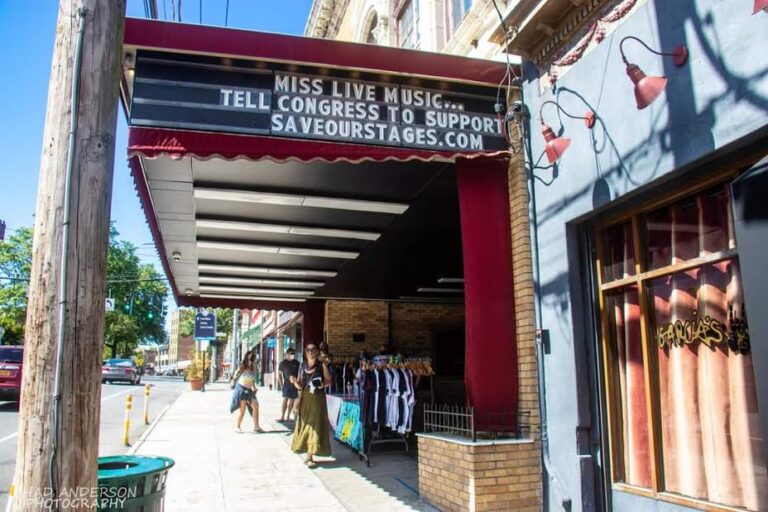
For The Capital Theatre, owned by Peter Shapiro, efforts to keep the venue open included an outdoor merchandise sale featuring hats, masks, and posters. Additionally, the sign outside the building directs those who love live music to call Congress and support SaveOurStages.
The sign outside The Capital Theatre. Photo by Chad Anderson.
What Can We Do for the Stage Crew?
The public must call upon political leaders to pass new legislation in order to help stage hands, roadies, and concert venues. You can read more about Save Our Stages by visiting their website, SaveOurStages.com.
But even with some solutions proposed, unanswered questions about live shows still linger pending a major change, like a vaccine, Byron notes. “Planning a tour is tenuous. Who is gonna ensure the tour? Who is responsible if the artist gets sick and misses a couple days?”
The same could be said about a stage crew: what will they do when they still aren’t allowed to work and the government’s assistance dries up?
If one thing is clear, it’s that Wavy Cunningham always makes music. I’ve seen him write a song in a notebook, and then release it days later. He never waits. He gave his fan base a week between the releases of his new EP, Fight Back, and album, Club Wavy. They set sails on July 31st and August 7th, 2020, respectively.
Photo by Zach Hitt
Always Be Closing
Wavy might not yet be a household name, but his charisma and performance style converts first time listeners into fans with little effort. That’s how he got me to listen. I’ve seen this happen during live sets, both at shows where he’s the featured headliner, and guest spots on stage too. But his ease around people doesn’t negate his work ethic.
Unique Style
In fact, Wavy, along with his frequent collaborator and producer DJ Mercy, enjoy writing, recording, and releasing music in extremely quick succession, unlike certain artists who wait for “outside influences and people around them” to lead to an album’s refinement, Wavy says.
Every year, major league record labels dispose of a tremendous amount of resources for their artists to drop a project only once every few years, on average. However, Wavy releases multiple projects per year without a label, so I talked with Wavy about his process, his plan, and his methods. We also dug into his newest work, Club Wavy and previous efforts such as Catch Me If You Can (2016).
More Music on Deck
At this point in time, Wavy Cunningham and DJ Mercy have over five projects on Spotify with dozens of smaller EPs, demos, singles, and mixtapes collecting listens on SoundCloud. “We also have a bunch of unreleased projects,” says Wavy. It allows the duo to pull from a vast repertoire of well-written rhymes and vintage samples when it comes to live shows. And Wavy is not concerned about what others are doing. He mentions wanting to go his own way, instead of “running on the hamster wheel,” or following the same pattern that other artists do.
The New Normal
Speaking of shows, performance is Wavy’s bread and butter, in my opinion. So with a lot of the world shut down due to the dangers of the COVID-19 health crisis, we might not get to see his live vibe for songs like “Doin’ My Thing,” (one of my favorites) and “1B” for quite awhile. Wavy told me that platforms like Twitch and live streaming methods have allowed him and other artists to put on virtual shows. “We’ve done…a concert on Instagram Live and we pulled out unreleased tracks. It’s cool to [be able to] do that.” Wavy also said that he and DJ Mercy have tentative plans for another Internet set, in which they’ll perform an album from beginning to end.
Most Improved Goes To…
Although the concept of recording and turning over material so quickly may seem chaotic, Wavy has a plan for the future, and music waiting to be released. “Each project is a learning experience,” he says, in which he and Mercy have been able to learn from each studio session and improve the listening experience little by little. They’ve made little changes along the way that lead to a steady climb in quality.
Notably, Entreband’s MostlyEverything took care of the mix and master to balance out the technical sonics of both projects, and producers Frank Finesse, Phil Dreisin, Hyuka, and N-Pro all lent instrumentals to pair with Wavy’s flow. “We went for more original sounds…this time. There’s less samples and more elements of [live instruments],” Wavy says. These instruments perfectly balance tracks such as “Get Away” (Fight Back) and “Whattup?” (Club Wavy) both of which feature a glassy guitar intro.
To close the latter of the projects, Club Wavy, Cunningham wrote “All We Need is Love.” This track contains a beautiful tribute to Breonna Taylor and other people who have been killed due to systemic racism and police violence. The swan song perfectly closes both projects and carries a message that will be heard the loudest.
Verdict
Overall, Fight Back and Club Wavy are strong entries into Wavy’s catalogue and will stay as his most cohesive work until he comes up with something, which probably won’t be long from now.
Club Wavy and Fight Back are both available on all major streaming services, with the music video for “Whattup?” being available for views on YouTube and Facebook.
Key tracks: Whattup?, Get Away, Never Ends, All We Need is Love