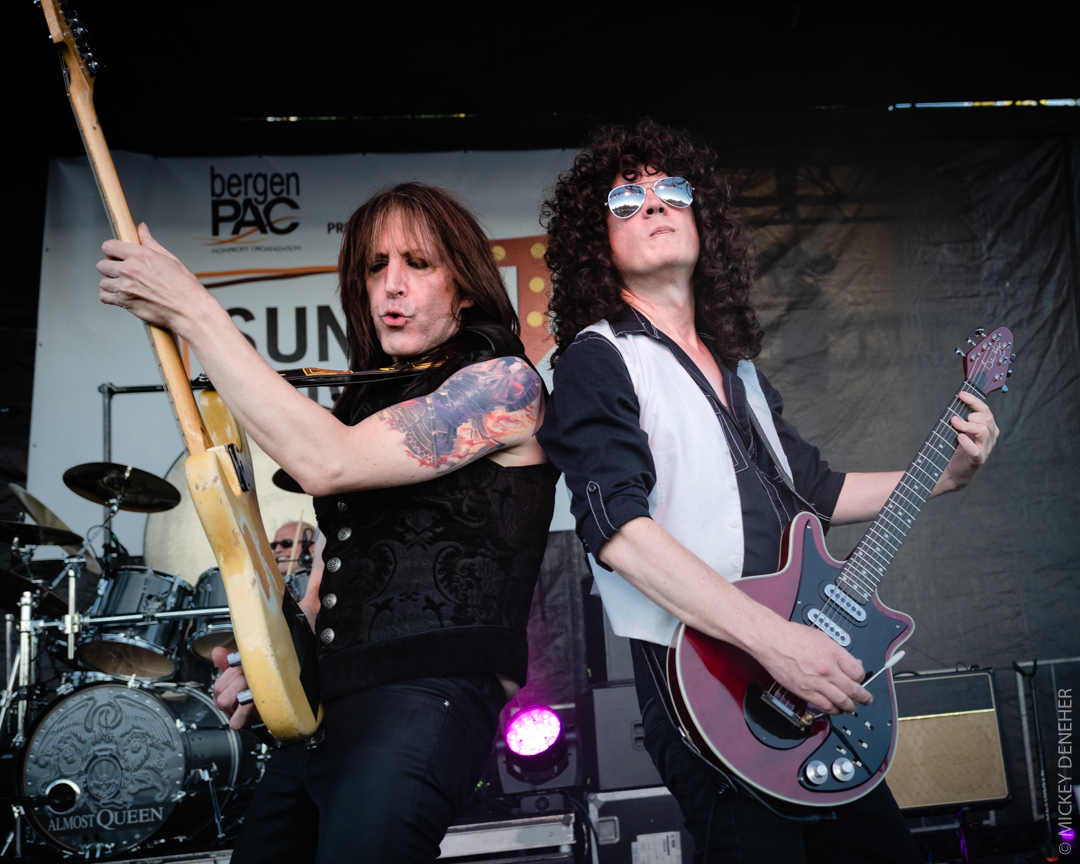
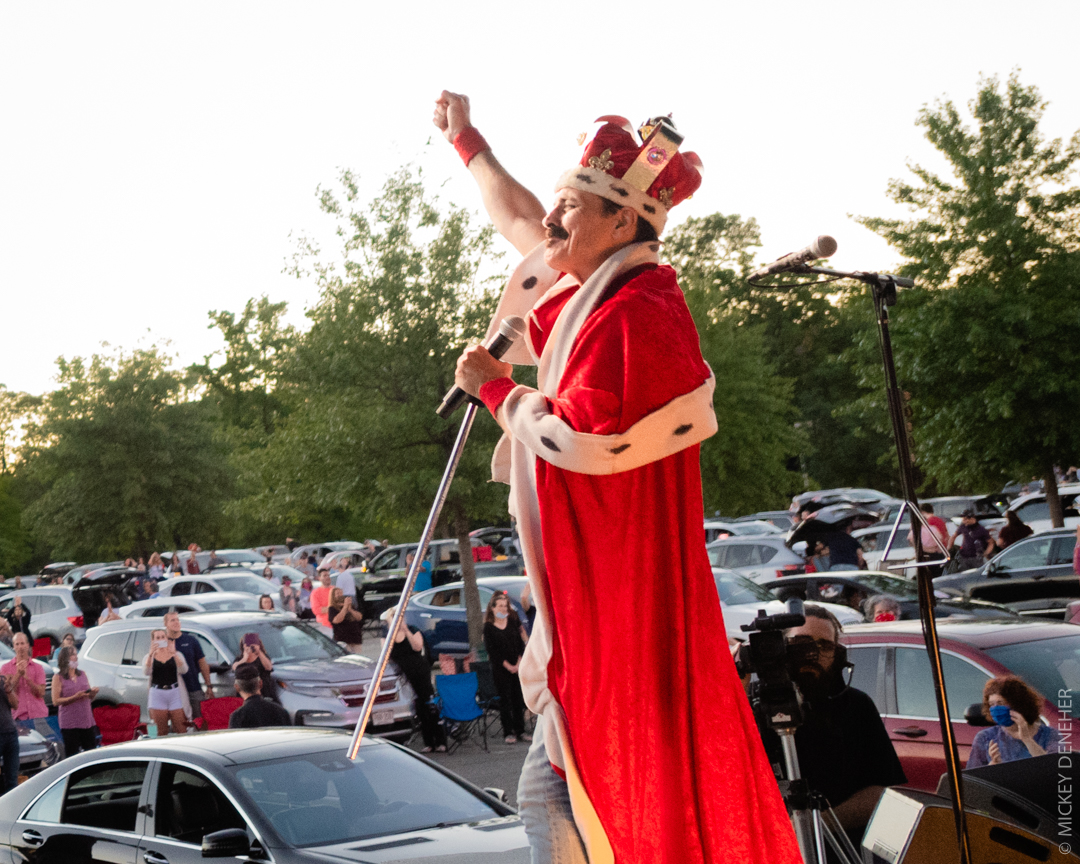
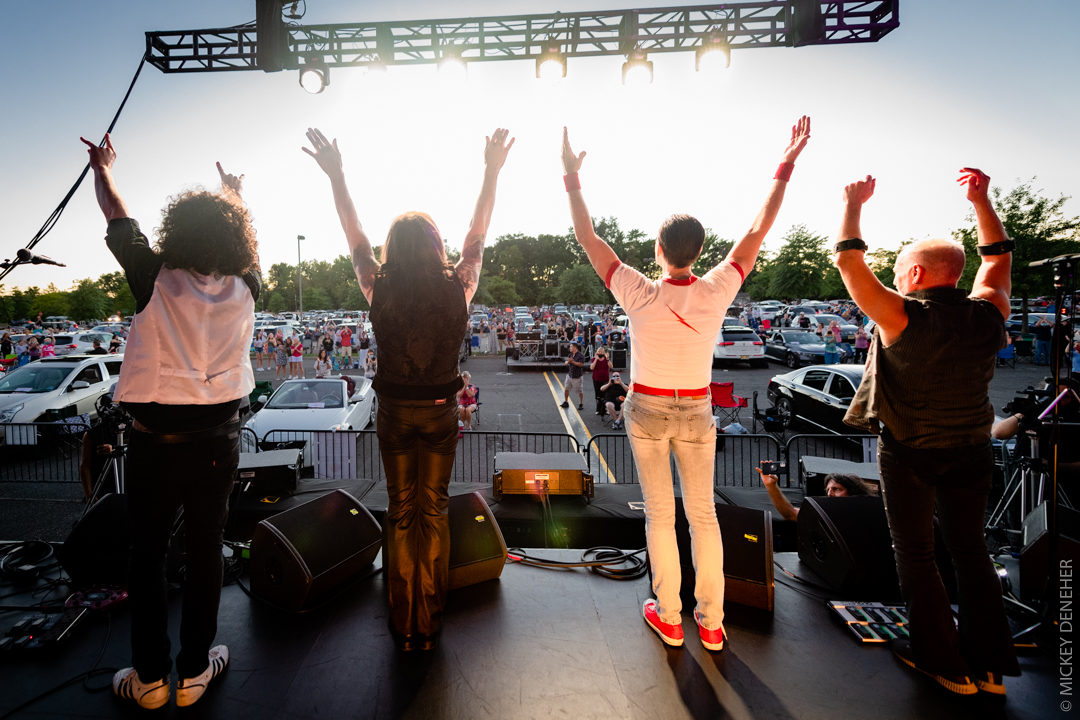
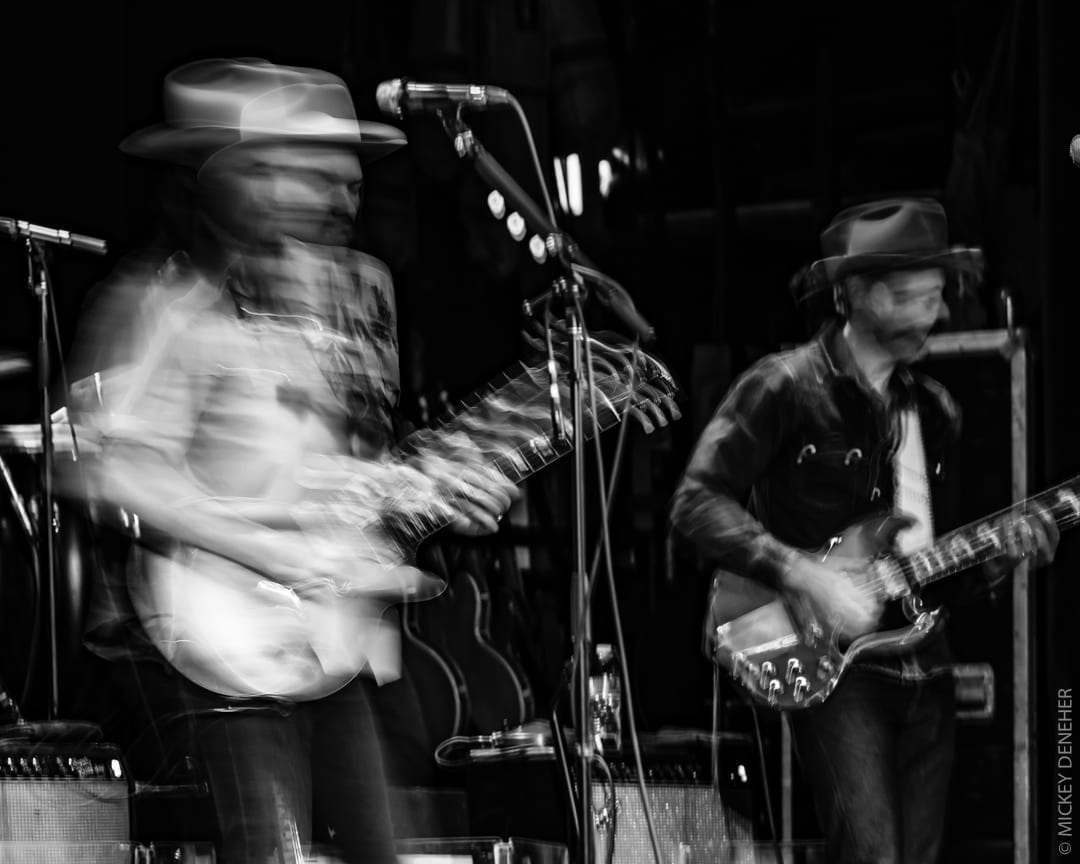
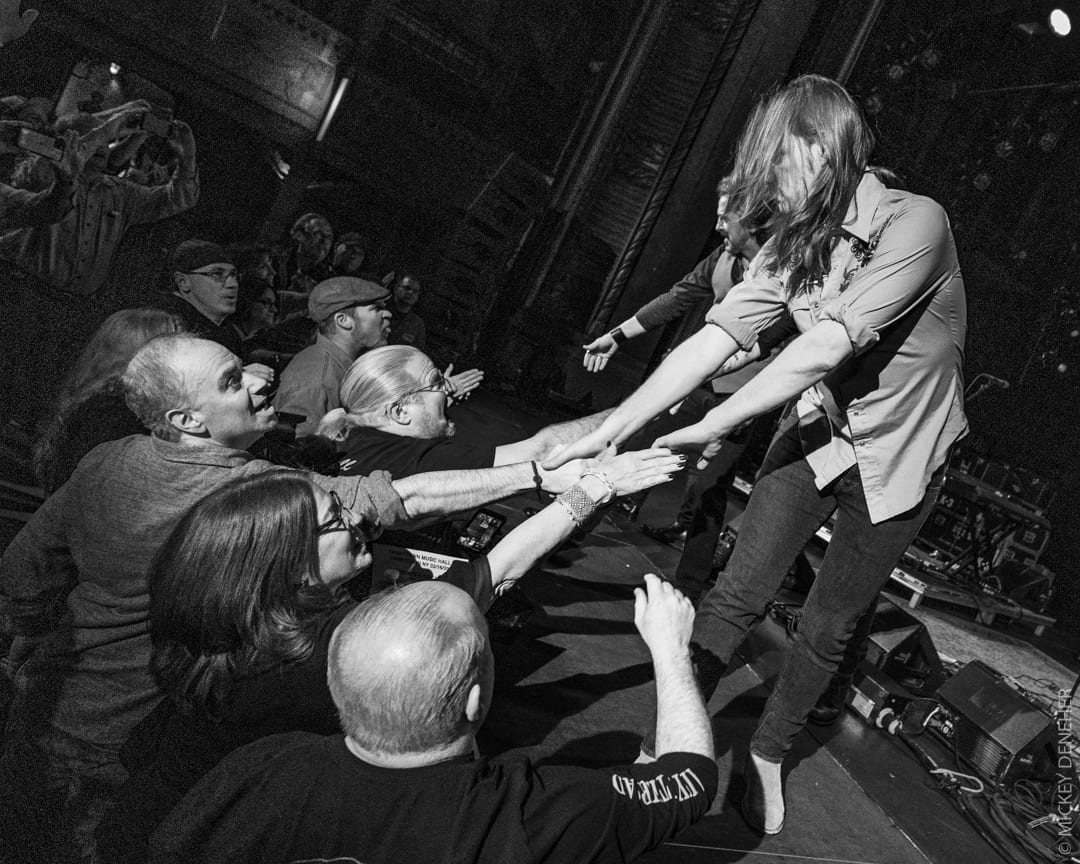
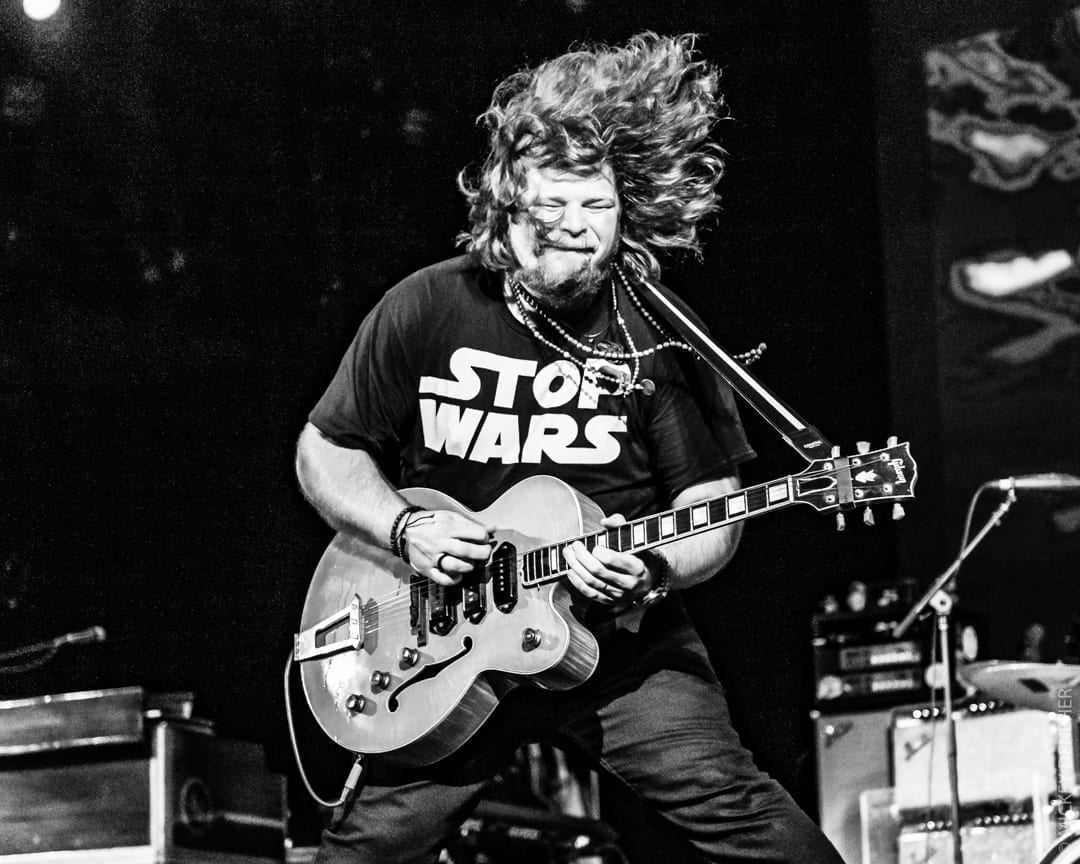
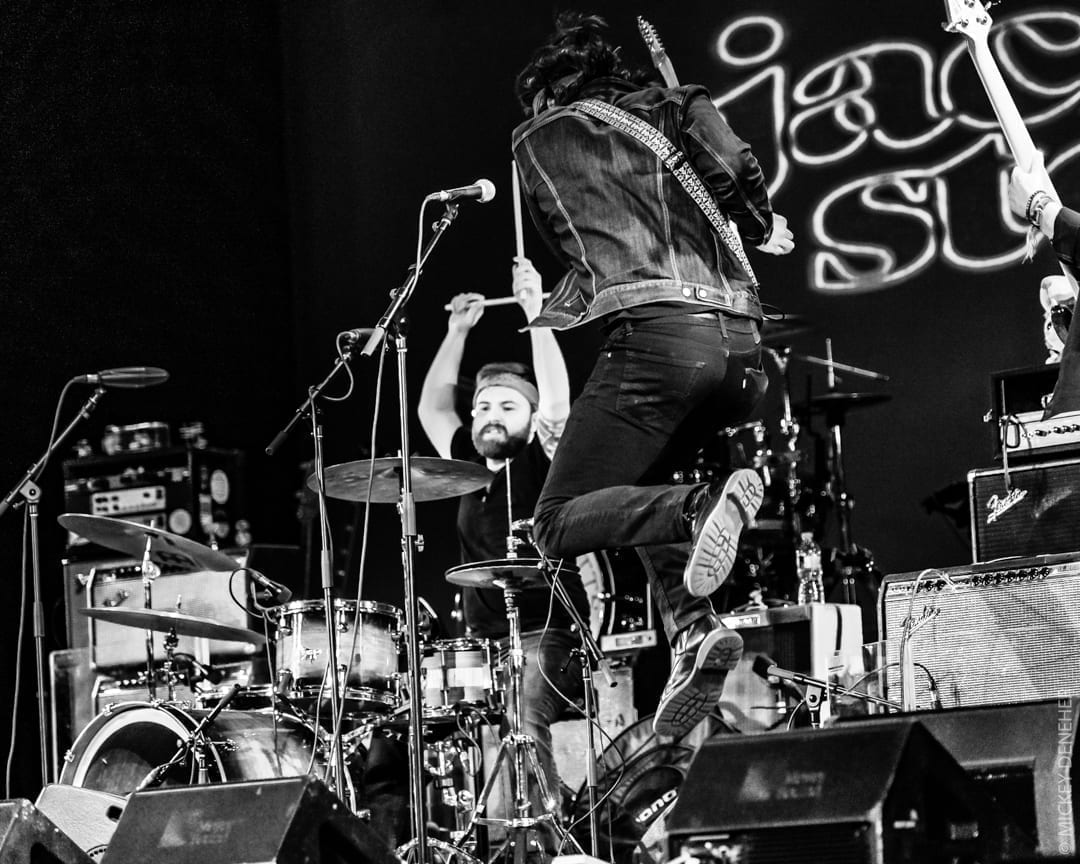
Over the last few years, Queen tribute band, Almost Queen has been on a roll. Selling out across the US, with 2020 starting out the same way. Then Covid-19. No shows, no touring, nothing. So, what’s a band to do? Some started doing social media performances, while others put out new music to cover the void. Neither route quite fit the mold of Almost Queen.
Plan B? What was old is new again. Drive-ins. Yup, drive-ins. Dating back to the 1910’s, hitting its popularity in the ‘50s’ and ‘60’s, drive-ins are experiencing a rebirth as the arena for live music. If you park it, they will play.
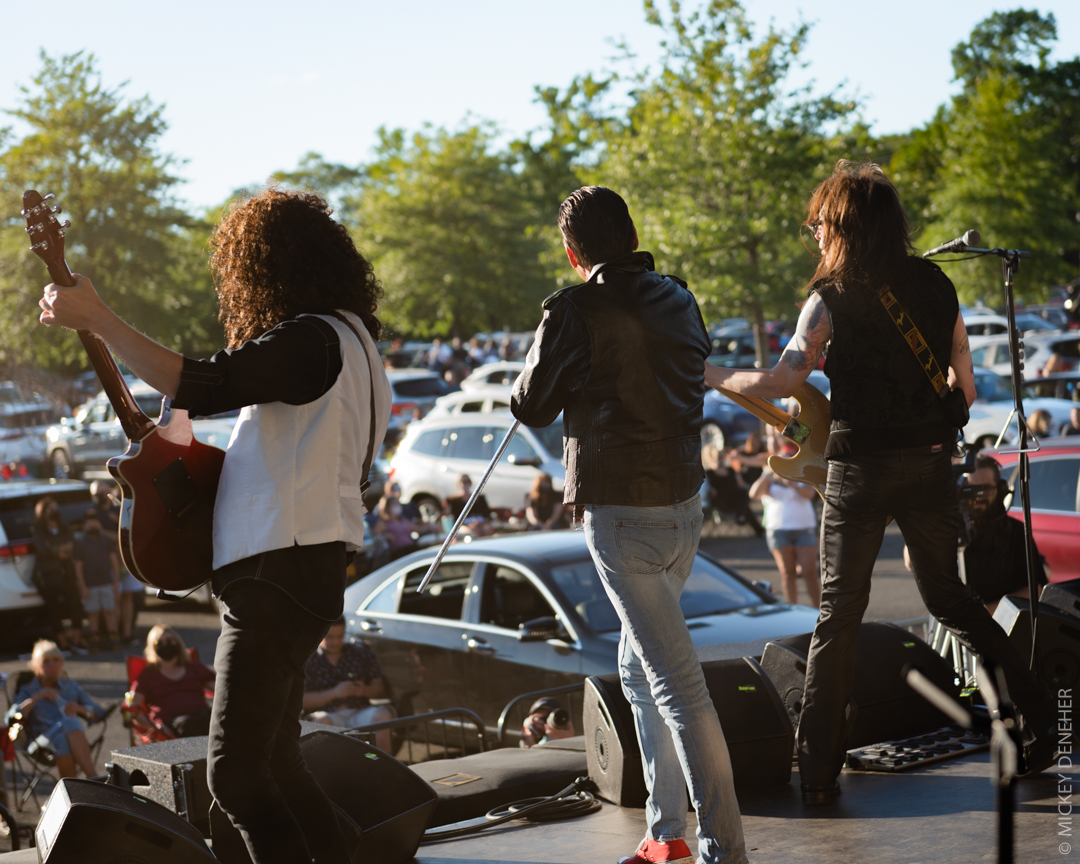
Almost Queen; Sunset Drive-In Concert Series
Now let’s be clear here. This is not The Capitol Theatre, The Strand Center, or Brooklyn Bowl. This is a drive-in. When the lights go down, it’s because the sun has set. So how do you prepare to play in this new realm? “With great difficulty” Randy Gregg, bass player for Almost Queen, cites. “Very different from the way we would prepare normally. What used to be this, is now this. It’s a whole different system of doing things now.“
Almost Queen; Sunset Drive-In Concert Series
“Our job as a band, is to break down this barrier between the band and the crowd, and get that crowd on your side before 90 minutes is up. That’s always the plan with any band. Now, that barrier is even thicker when they’re in their cars. “
Almost Queen faced this challenge head on in June when a band, booked to perform at a drive-in Hempstead, Long Island show, had to be quarantined, having just been in Florida. Almost Queen was called on a Wednesday to play that Friday.
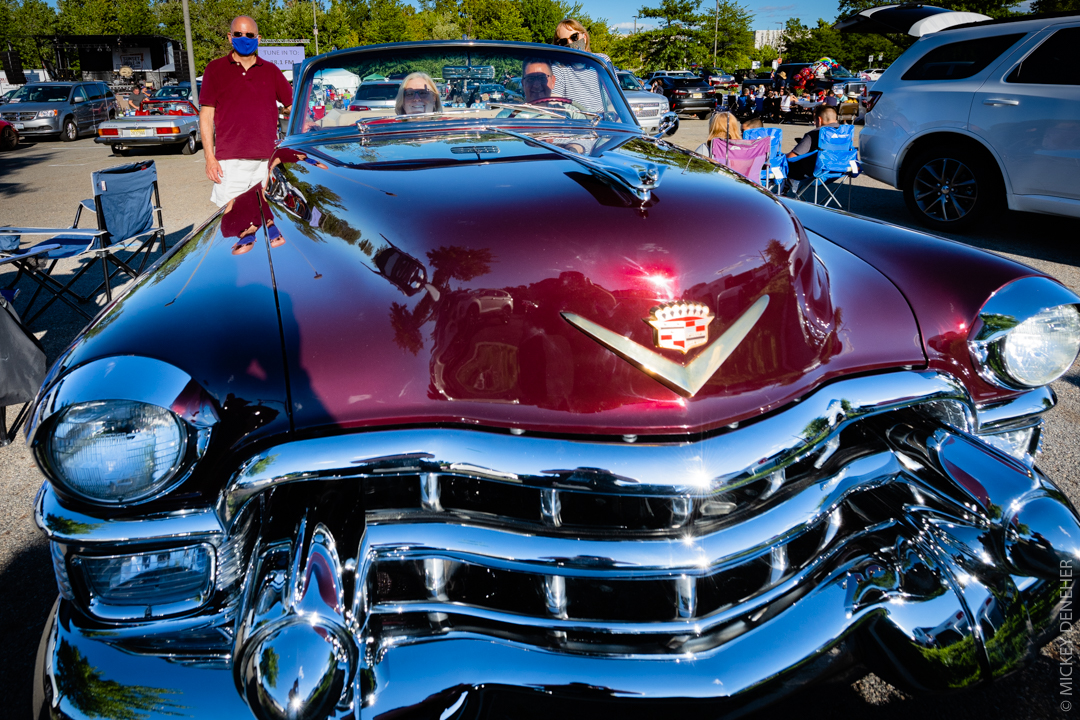
Tailgating; Sunset Drive-In Concert Series
“What had us very nervous was jumping into a drive-in show with two days notice. With all the work it takes to put a show on, and now it’s minimalized to hours to do things.” Gregg recounts. Adding to that, because of Covid, the band hadn’t played together in four months. The pressure was mounting. After squeezing in a rehearsal the night before the show, “we came out with the gloves on, just raring to go,” Randy quips. “Four months will do that to you when you’re cooped up. Apparently four months does that to everybody who was in the crowd that night. Even though everyone was in their cars, it seemed a bit explosive, if you will. People leaning on their horns, flick’n their lights, and you could hear people screaming and clapping from inside their cars. Definitely a different situation then it has been in the past. It is what it is. If there is a will, there is a way.”
With their foray into parking lot rock a success, the band started thinking of ways to interact with their audience, while adhering to restrictions. The solution? A “goodie bag,” given to each car when they arrive. Think of it as somewhere between a program and swag. In the “bag” is a brochure that shares info and photos about the band, glow sticks, and assorted rock accouterments that can be used during the show.
Almost Queen; Sunset Drive-In Concert Series
Our job as a band, is to break down this barrier between the band and the crowd…that barrier is even thicker when they’re in their cars.
Randy Gregg. Almost Queen
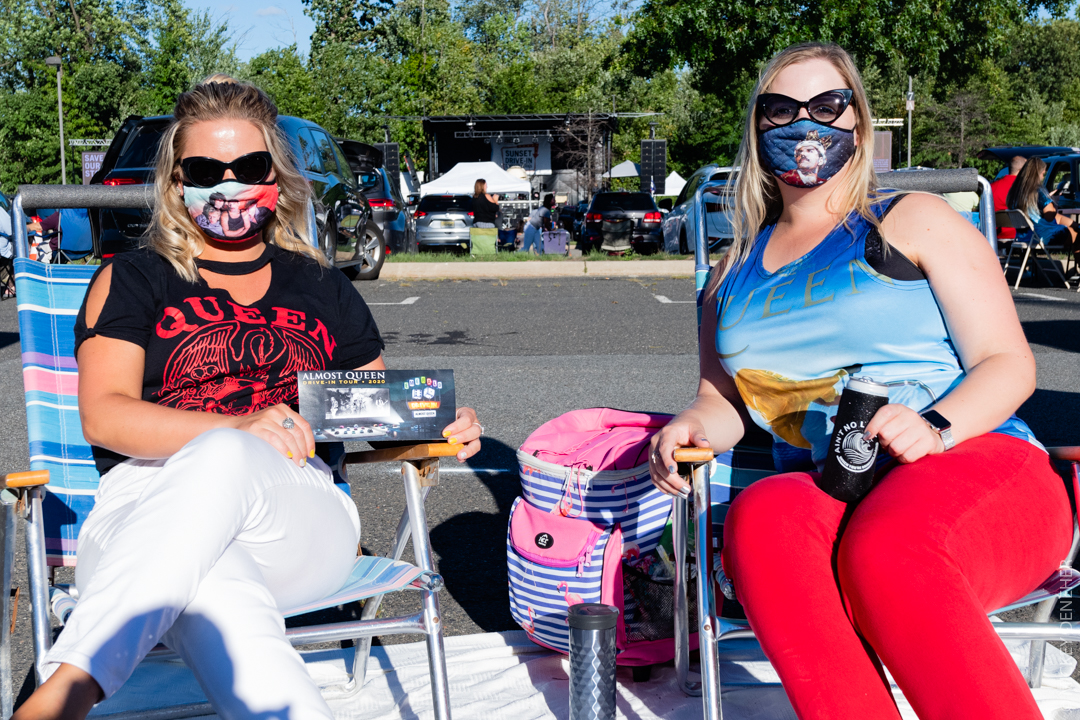
NYS Music tagged along with the band as they played the Sunset Drive-In Concert Series presented by Bergen PAC, at Garden State Plaza, in Paramus N.J. The lot used was a in a remote location behind the mall and isolated enough that you didn’t notice that Route 4 and 17 were beyond the perimeter. When we pulled up to the gate, our temperatures were taken, goodie bag received, and we were guided to our parking spot by a member of the on-site logistics team. Tailgating was approved for the show with each car given an additional space next to it, specifically for those purposes. Pre-show festivities went from people pulling drinks from a cooler to spreads with tables and tablecloths, candelabras and complete dinnerware sets. The “house” was filled with cars as far as the eye could see and large video screens were set up on each side of the stage, to insure that all had a full view of the action. Those attending ran the gamut from early Queen fans (circa 1970), to those who won’t learn to drive for a few years.
Almost Queen; Sunset Drive-In Concert Series
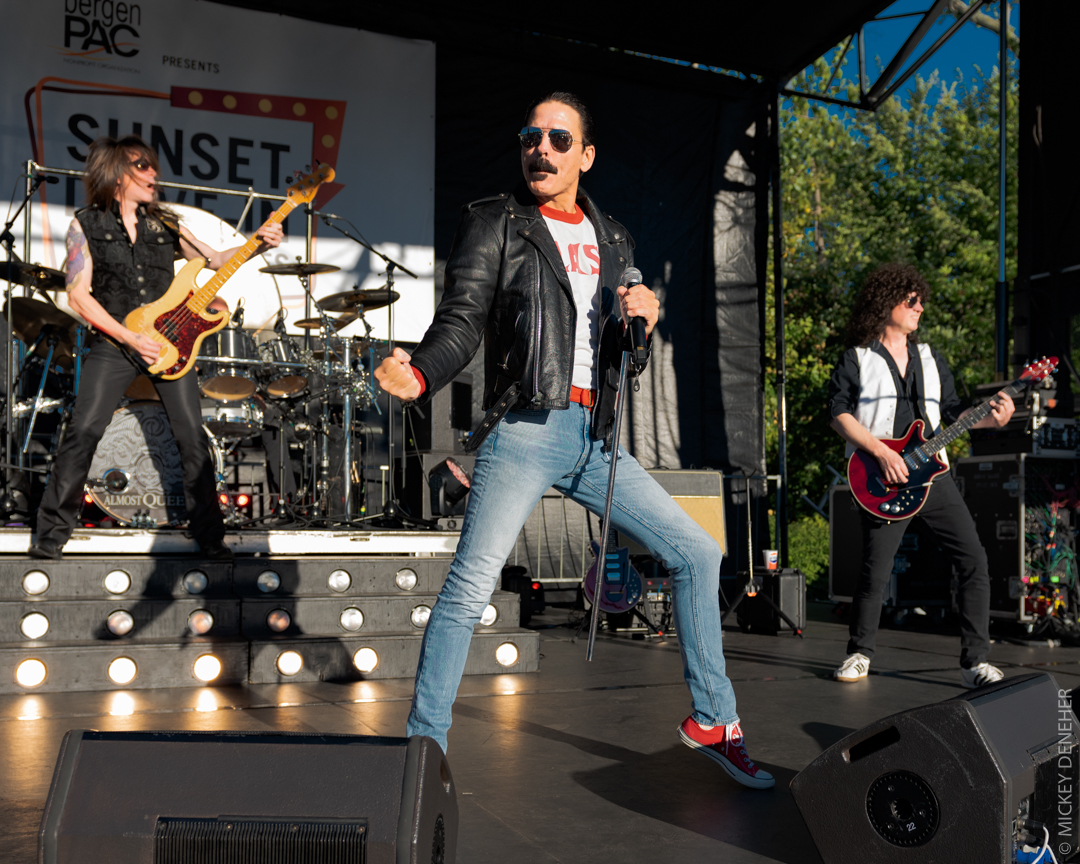
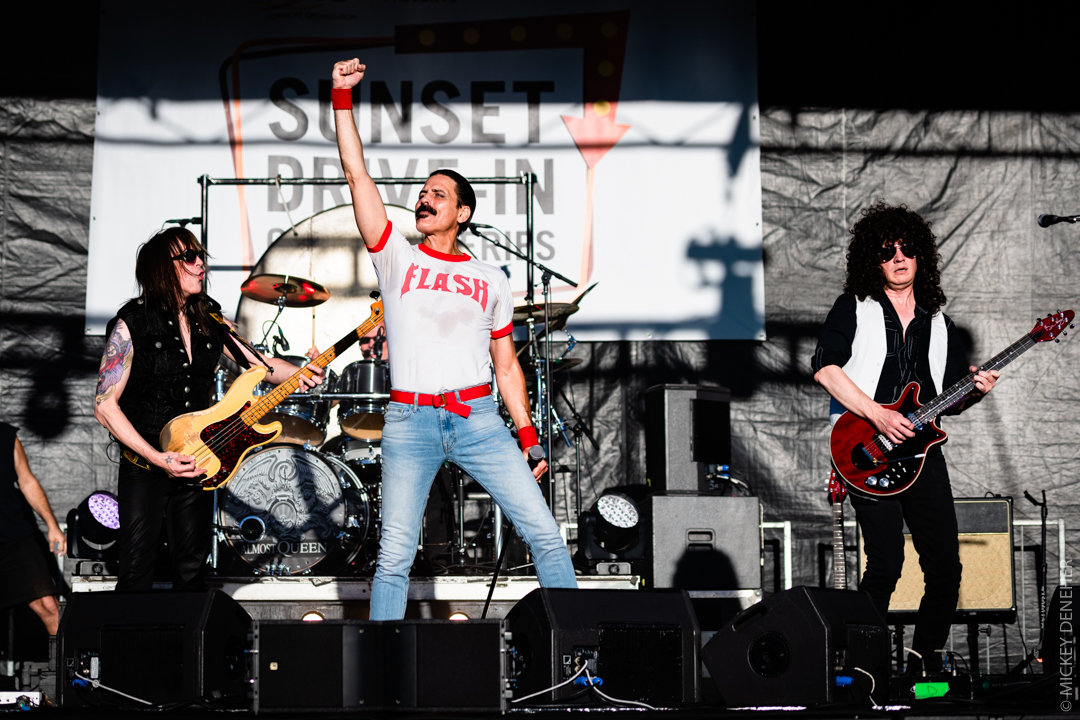
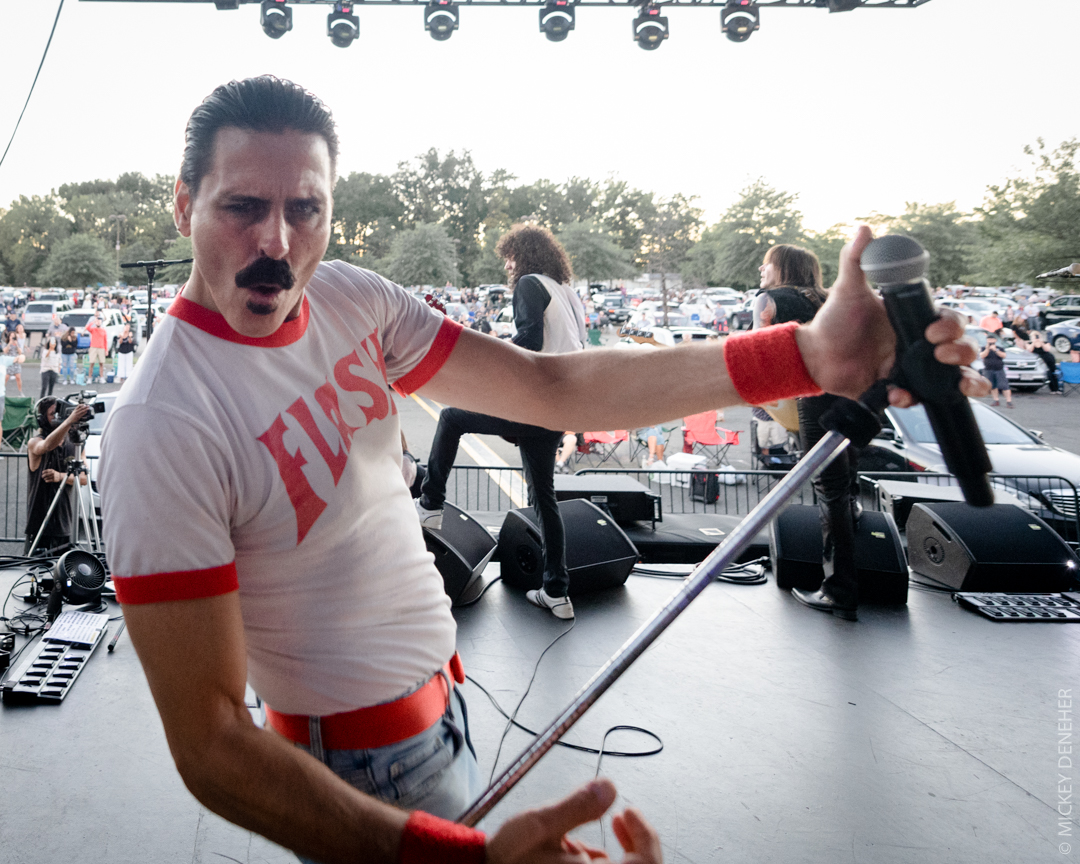
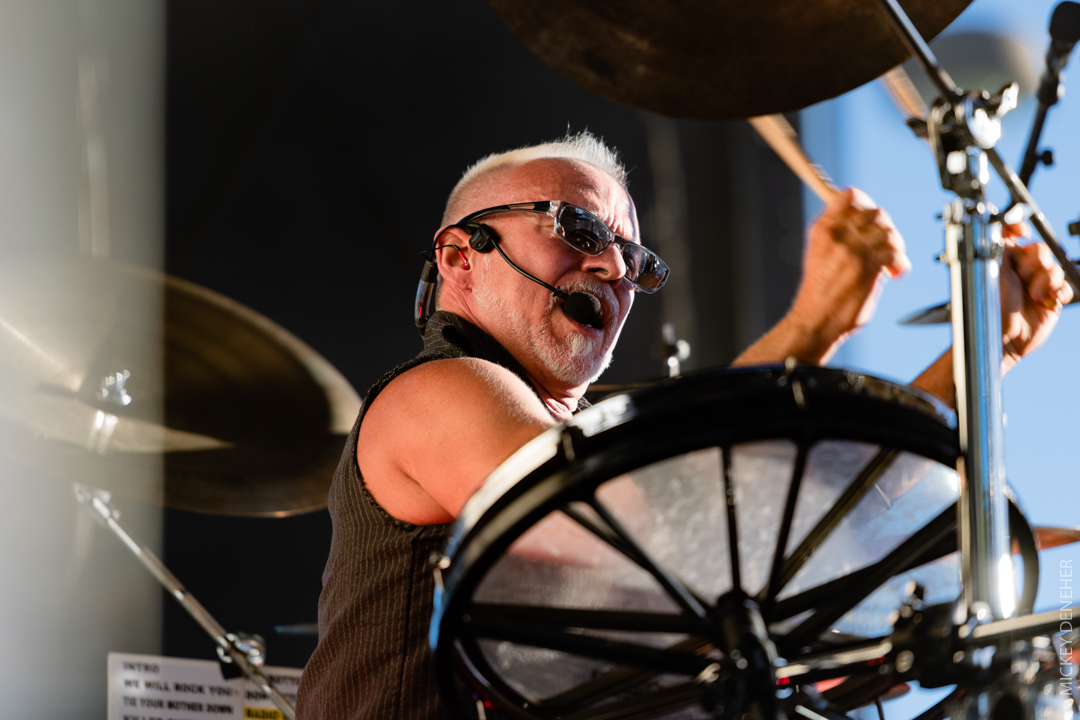
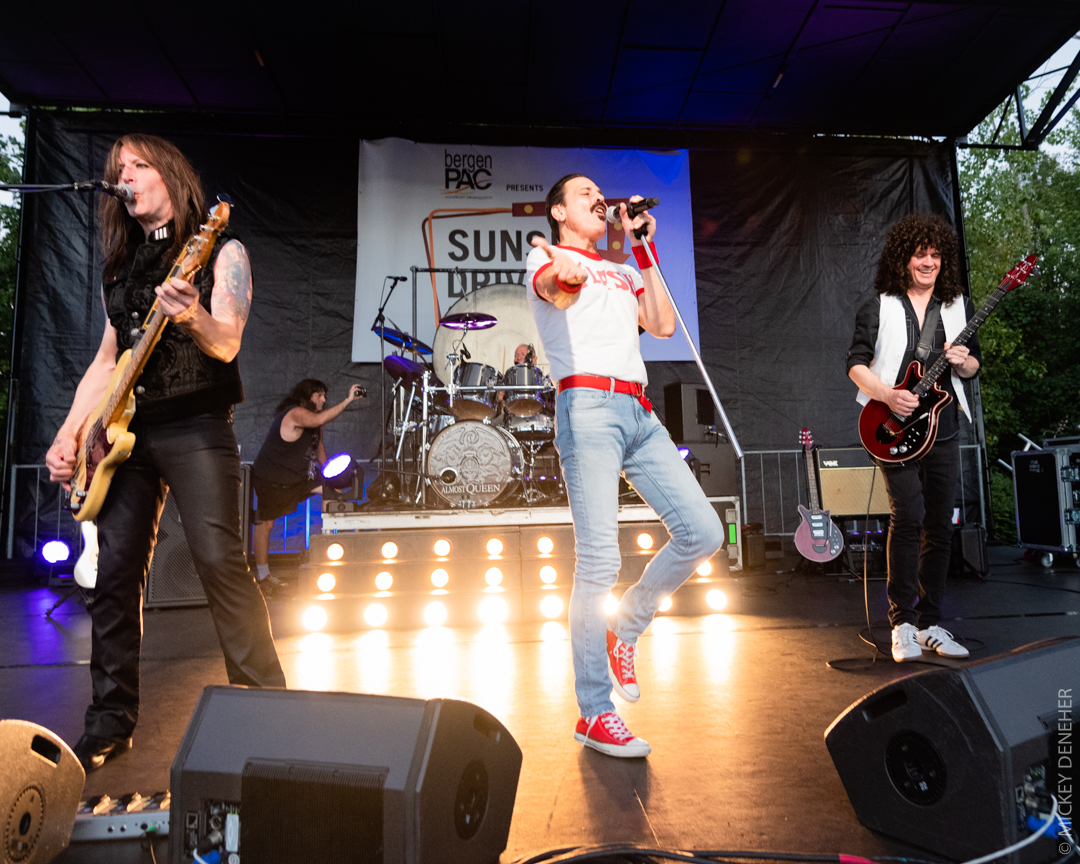
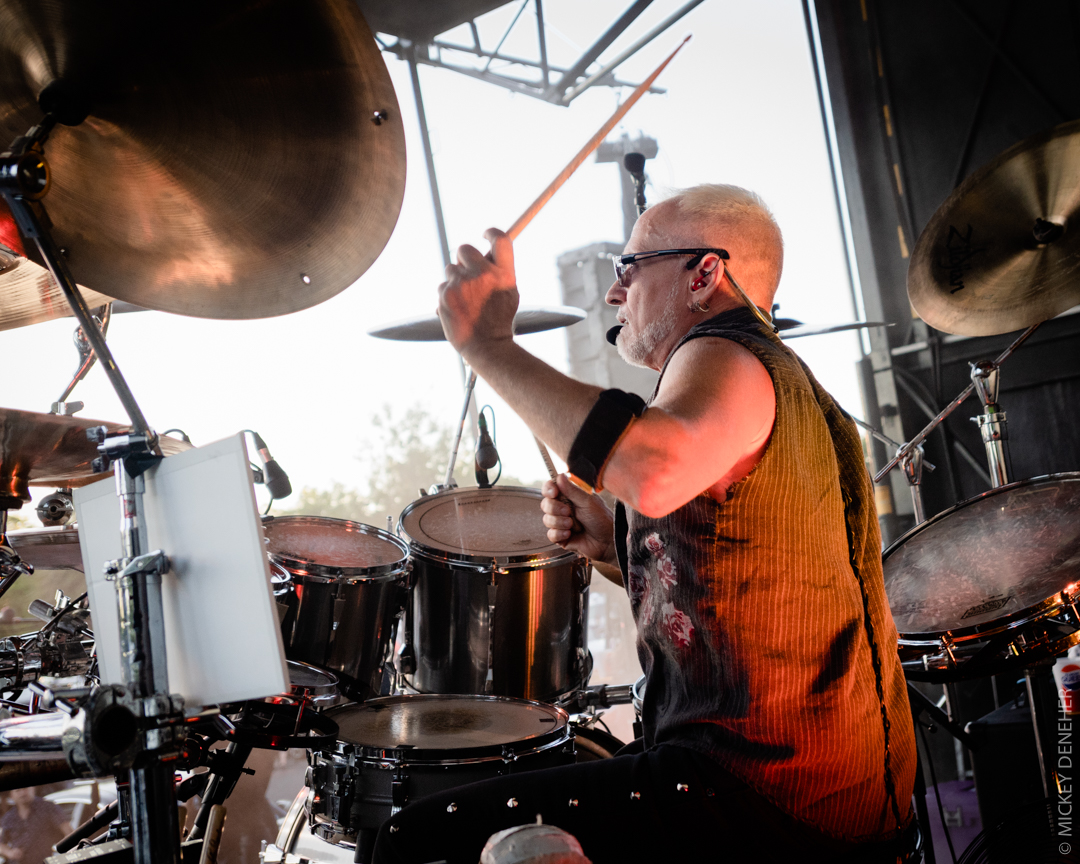
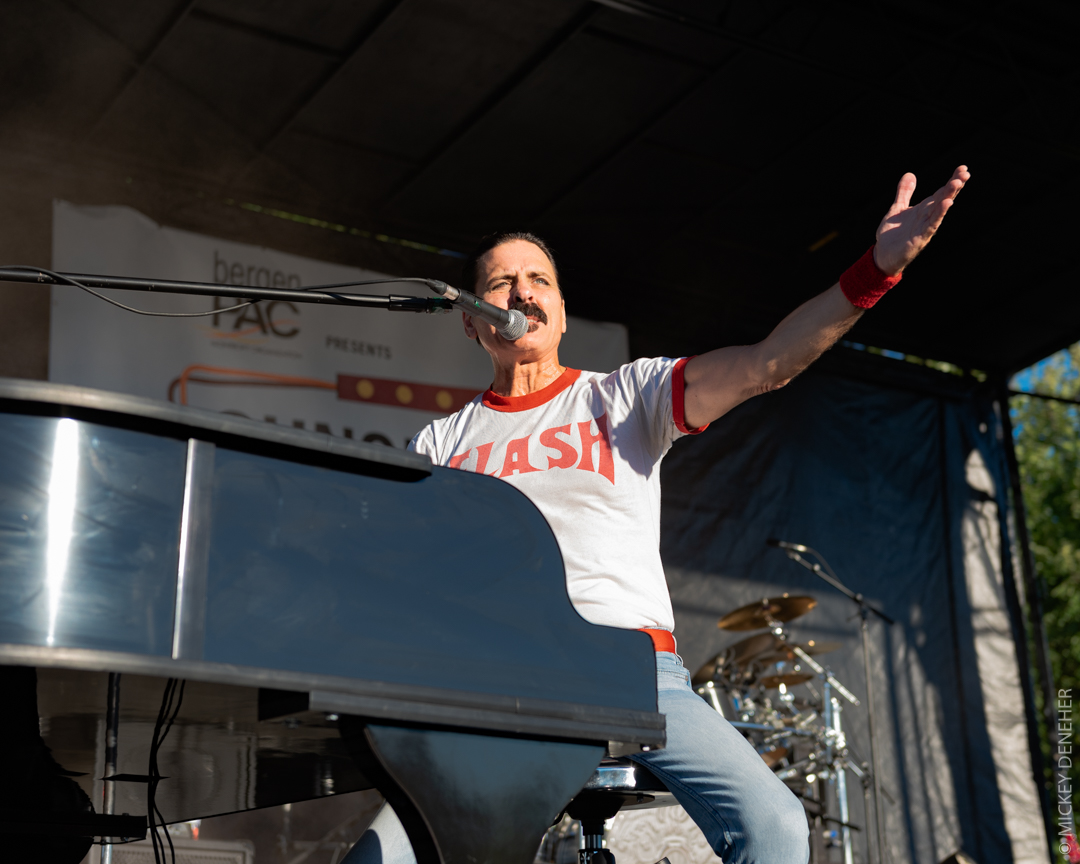
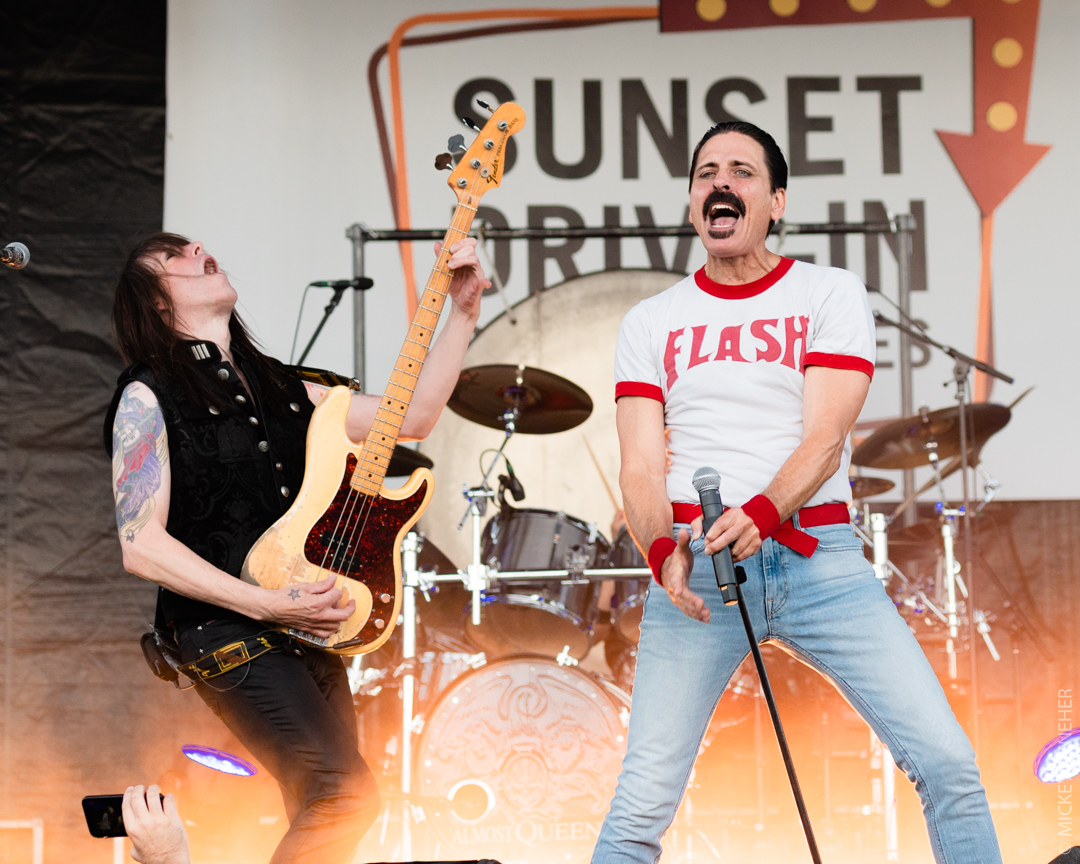
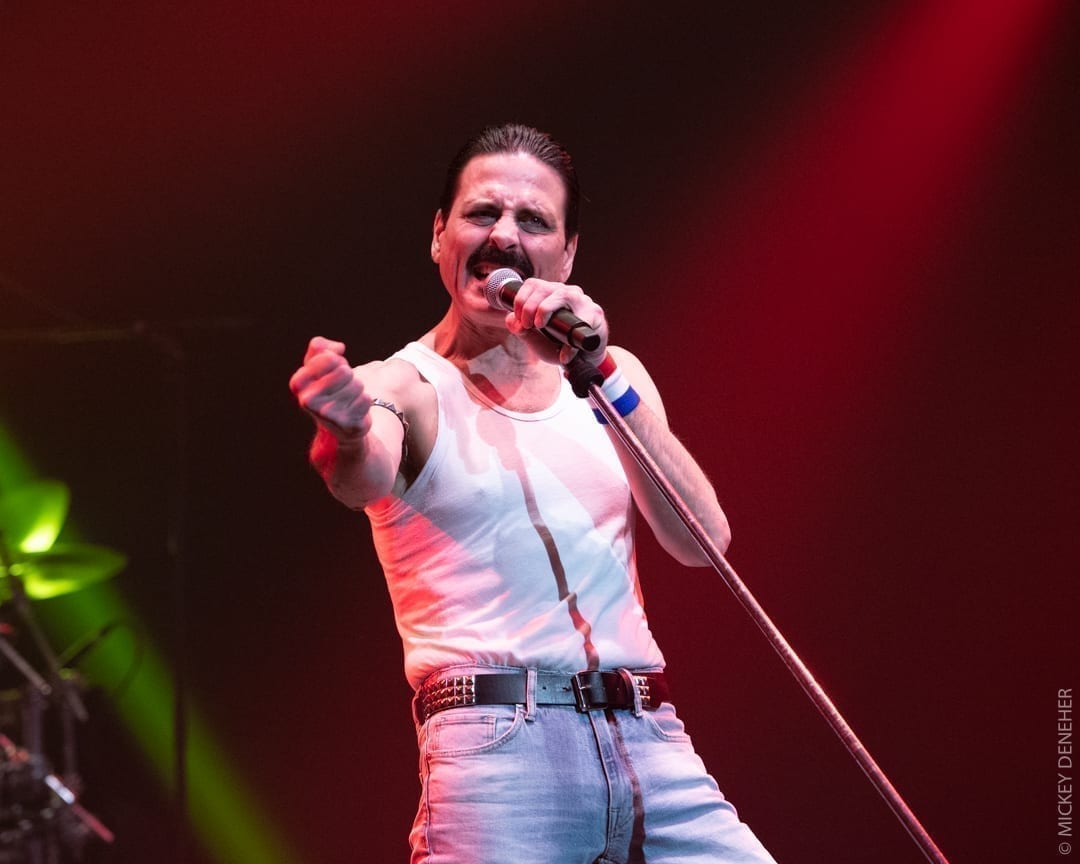
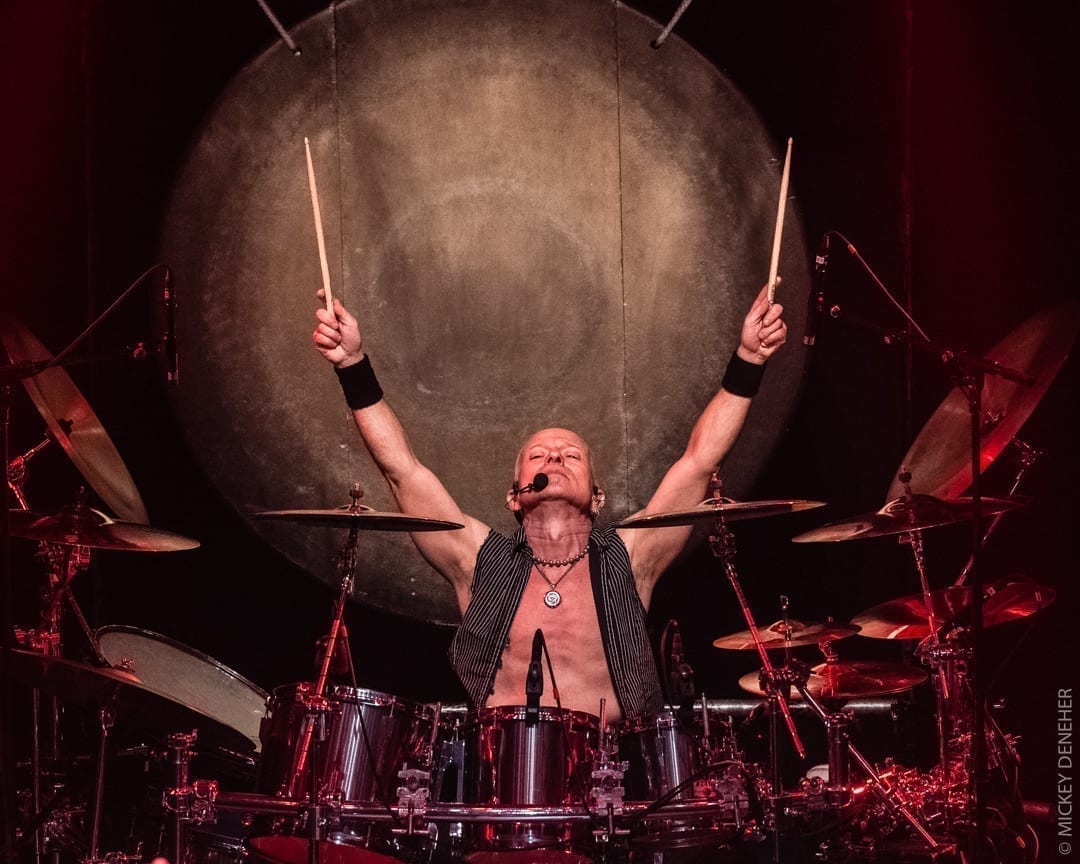
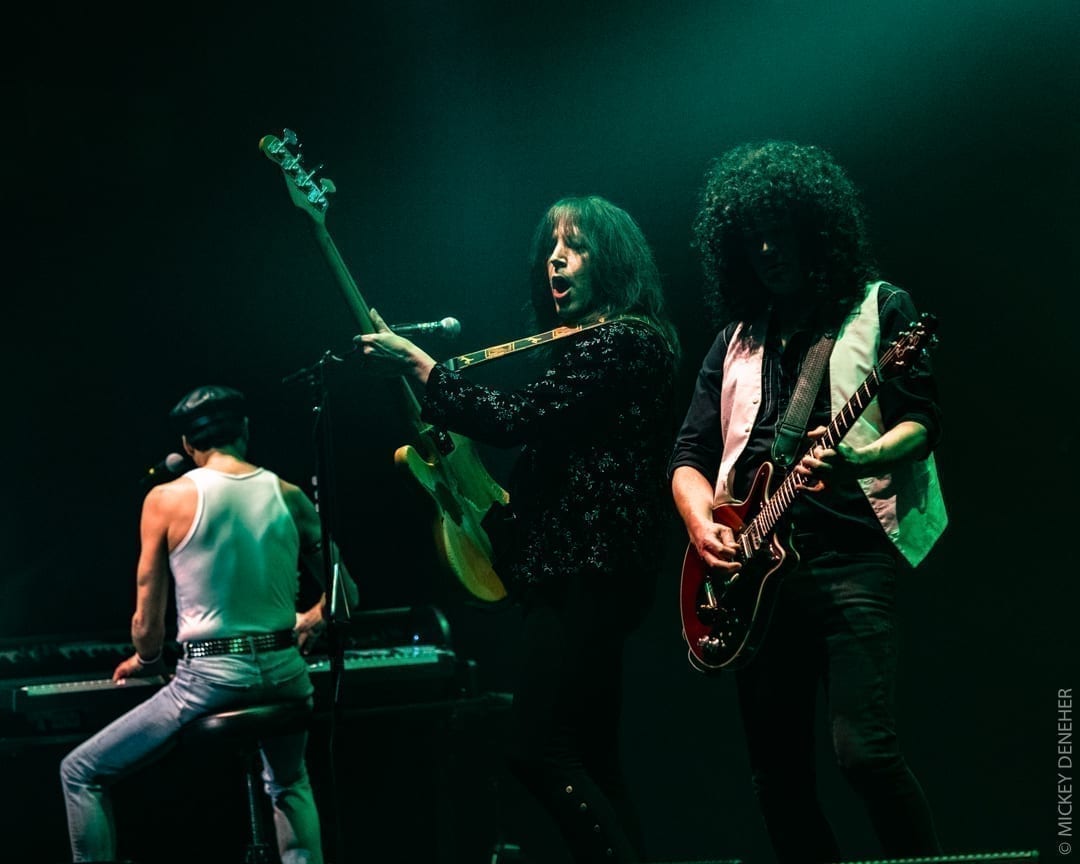
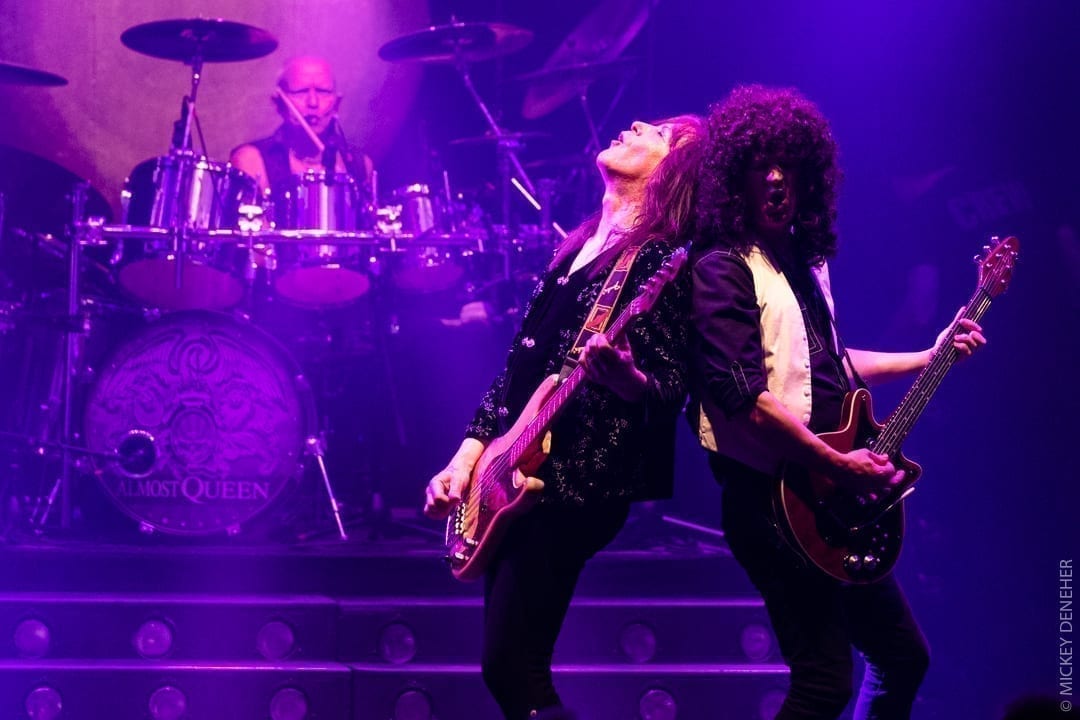
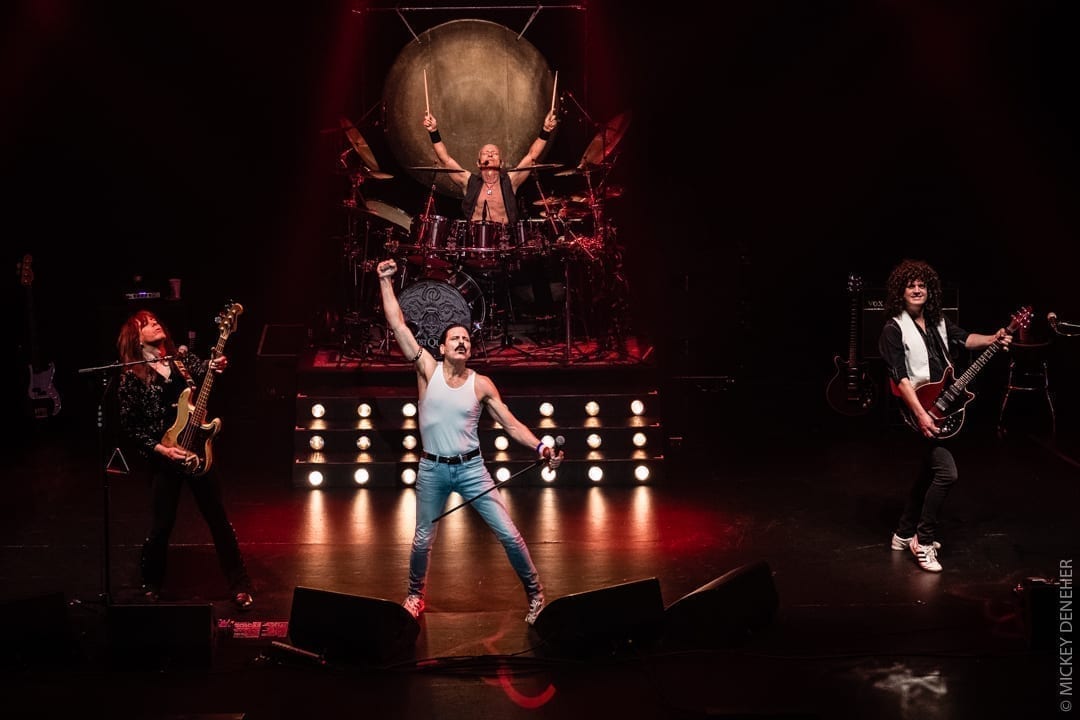
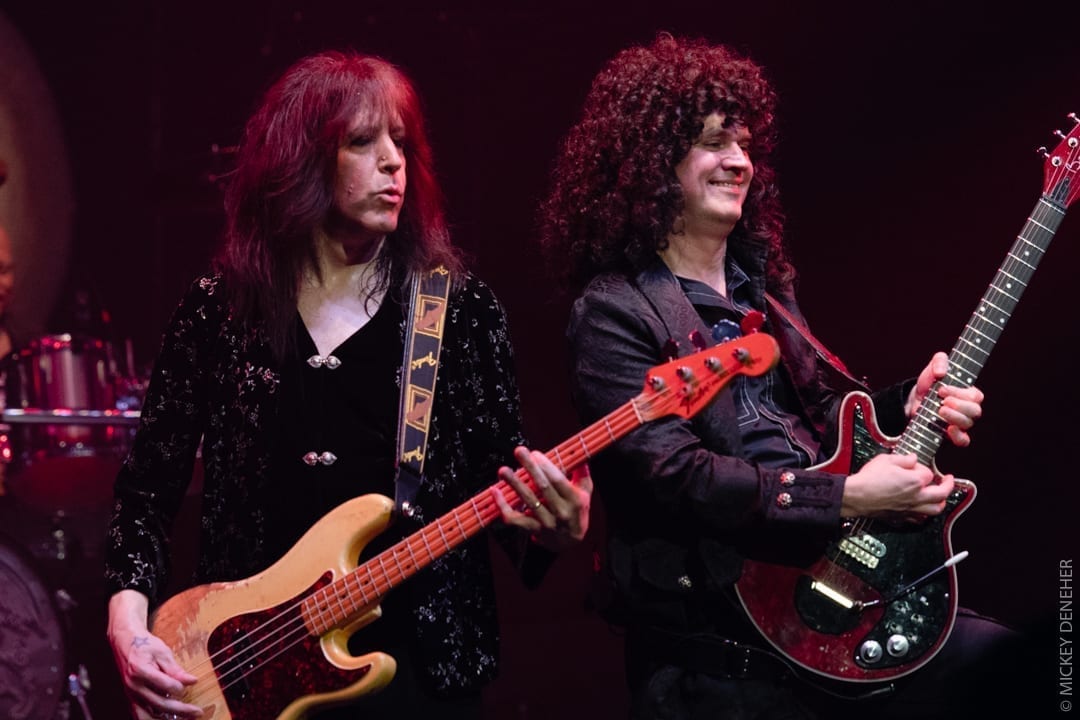
With the sun preparing to sink below the horizon, Almost Queen took to the stage, greeting the crowd with “We Will Rock You,” letting all know what was to come. Joe Russo, who takes the role of Freddie Mercury, embodies the lead singer’s spirit with his vitality and charisma. Not to take away from the rest of this rock tested band: John Cappadona on drums, Steve Leonard on guitar, and Randy Greggs on bass; who amplified their rock personas, performing as if they are in a 100,000-seat stadium and not a drive in.
Almost Queen; Sunset Drive-In Concert Series
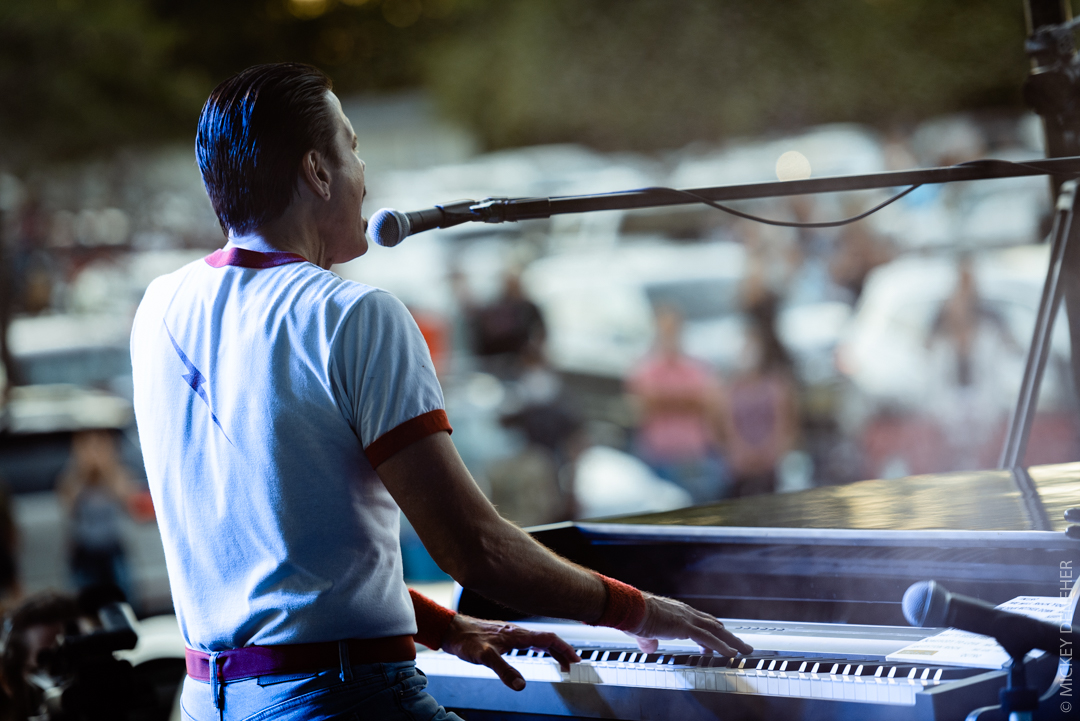
As the night progressed, more and more cars could be heard honking their horns in approval of the show. Midway through the night, the band dedicating the apropos “I’m in Love With My Car,” to all in attendance as a thank you for attending. Even though this was a wide-open, socially distanced drive-in show, singing was encouraged with Russo engaging the audience in a song round establishing a sense of solidarity between band and crowd.
Pulling songs from the vast catalog of Queen, the night’s set included, “Killer Queen,” “Radio Ga Ga,” and “Another One Bites The Dust,” with each song building on where the last one left off. The show closed with a multi-song encore, including “Bohemian Rhapsody” and “We are the Champions.”
Joe Russo, Almost Queen; Sunset Drive-In Concert Series
It takes the right act to be able to connect with an audience that has restrictions placed on them. Almost Queen proved worthy of the challenge by piercing the veil of disconnect and pulling everyone, whether in a car, back of a truck, or standing in their socially designated spot, into being part of the band.
Almost Queen will be performing this fall at various Covid approved shows in the northeast including Saturday, September 12th at the Northeast Delta Dental Stadium in Manchester, NH. Check there website for future shows. Whether you’re a Queen fan or not, you own it to yourself to see Almost Queen. A band that goes beyond being just a tribute, to what a rock ‘n roll band should be.
Artists strive to develop, grow, evolve. Blacktop Mojo’s latest release, Static, is certainly a product of that ethic. A 4 song EP that it is a get in your car, roll down the windows, crank it up, and drive recording. With their first three albums laying the groundwork, Static represents a defining moment in this East Texas based band’s career.
Blacktop Mojo
Issued as an EP, it equates more to a perfect album side. The bond between the songs begs for it to be played in its entirety. No singling out a song or two, you need to play them all. On first listen, I was so hooked that I played the EP through a second and third time before taking a breath. Simply put, this is a rocker. Raw, hard and an unfiltered.
Statoc = Blacktop Mojo
Twist the antenna around
Is there something wrong
There’s nothing but white noise now
The signal’s gone
“Signals Gone” – Blacktop Mojo
Blacktop Mojo has set a high watermark for future projects. If you are new to the band, what a place to start. For those those who have been in the know, Static will live at the top of the collection.
Imagine you’re an aspiring 11-year-old musician and your father tells you, “Devon plays music next door.” Then, that Devon turns out to be Devon Allman, son of Allman Brothers founding member Gregg Allman, and co-founder of the Allman Betts Band. If I was that kid, I would have to change my underwear. But for singer/songwriter Jackson Stokes, it is one of several galvanizing moments in this up and coming rocker’s venture into music.
At the ripe old age of 27, Tyler Jackson Stokes pursuit of music has been dotted with you can’t make this shit up moments, joined by those of honesty, passion, and respect, that has helped to subsidize his development. I spoke with Stokes by phone from his home in St. Louis, MO at the latter end of a self-imposed quarantine after returning from a west coast tour, because, as he puts it, “I shook a lot of hands on the west coast.”
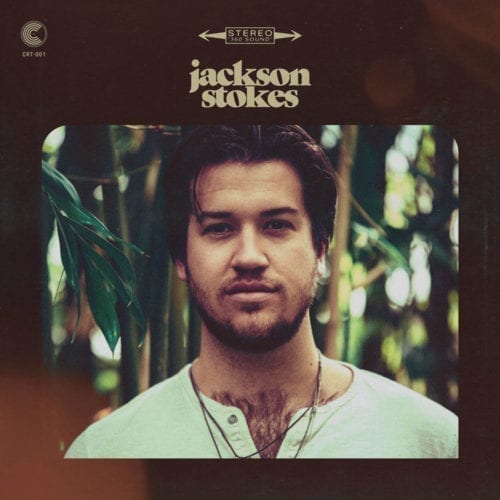
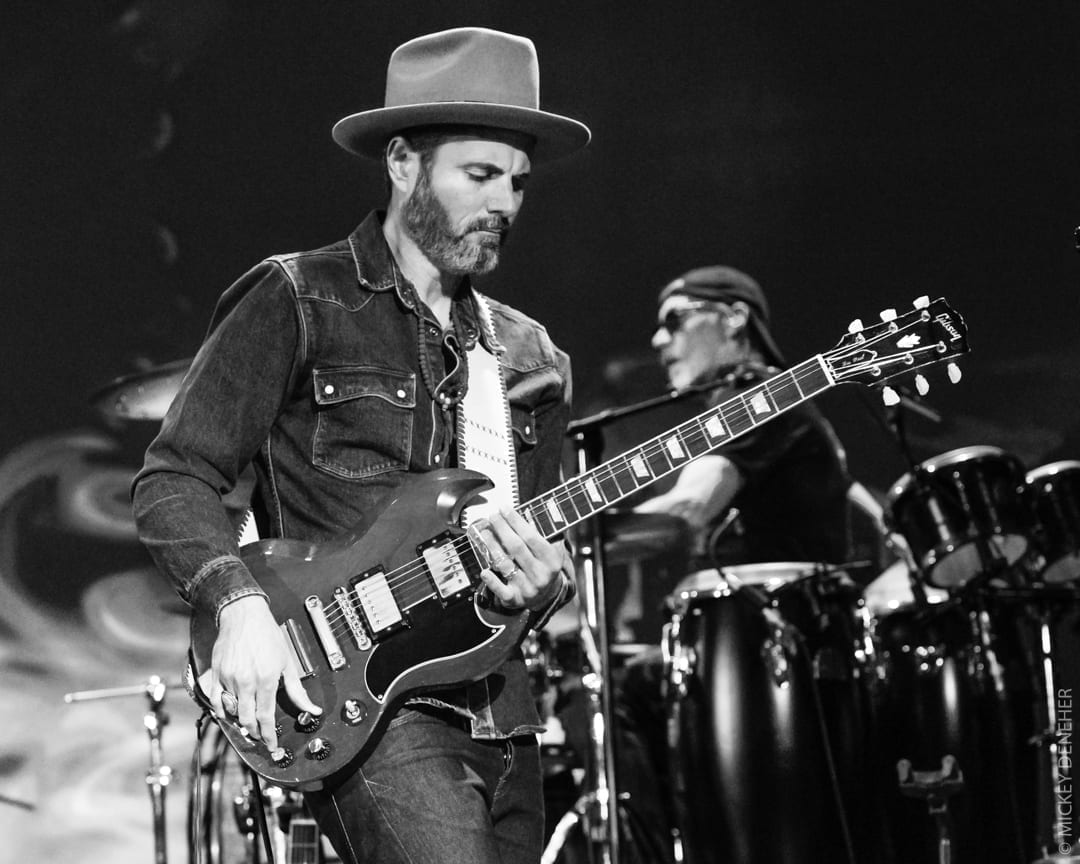
Over the last few years, Jackson has been fortifying his road chops as a member of The Devon Allman Band, The Devon Allman Project, and in 2020, opening for the Allman Betts Band in support of his debut release, Jackson Stokes, out on Create Records, Devon Allman’s new record label.
Knowing how his association with Devon Allman has turned out, I wanted to go back to the beginning when Jackson found out who his next-door neighbor was. I imagined that he started playing his guitar in the garage, door open, amp up to 11, hoping, praying, that Devon would hear it and say, “Who is that? I’ve got to go play with him!” Sharing my hypothesis with Stokes, knowing full well it wasn’t true, he joyously took the moment to set the record straight. “Well that’s not what happened. But, it’s not far from it.”
“It was very organic. My dad, I call him a talk to the neighbor’s guy. Older fashion, knows everyone, help’s everyone out kind of thing, and I was learning and already playing guitar and really passionate about it. My dad has seven Allman Brothers vinyls, and had been an Allman Brother’s fan, but doesn’t get caught up in celebrities. He said, ‘Devon plays music next door. You should go talk to him.’ So, I walked over there. I just had an acoustic guitar and knocked on his door. He opened up and he was like ‘Hello?’ and I was like ‘Hey, I’m Tyler, I’m from next door. I play guitar.’ I remember him saying ‘well play a little bit.’ I played a little bit for him, and he could tell I wasn’t just a kid, I was passionate. He said, ‘that was cool, kid next door plays guitar, I play guitar.’ “
“But the real defining moment; I was playing with my friends and I heard the music coming from their house. I left my friends and said ‘guys, I have to go check this out.’ So I left my friends, and I knocked on their door and Devon opened. ‘Excuse me, Mr. Allman, you mind if I just come watch your rehearsal?’ It was beautiful. You’re 11 and you just don’t really know about social norms. It’s blissful ignorance. He said ‘okay, sit in the corner and shut up.’ So, I sat in the corner. I believe they practiced every Wednesday. From 7 – 9 or 6 – 8. So, I would come home from school, do my homework really quickly, and I would just go over there and watch them work. Watch them rehearse. Watch them talk. Then afterward I would ask questions and Devon and I just became friends.“
“We kept up for five or six years and I finally came up with some songs. I had written songs before and he would say, ‘You’re a promising writer.’ I finally wrote some that were good enough and he was like ‘Hey, I’d love to produce an EP.’ Then from the EP, we did this little five song in Memphis with my old band (Delta Sol Revival) and it went really well. So, he was like ‘I’d like to do a solo record for you and an LP.’ When we started doing it, a job opened up in his band and he said, ‘I’m already producing your record, why don’t you come on the road for 2 years, tour with me, kind of build up a little fan base. Get some sea legs underneath you. Then we’ll release it and you can go back on your own.’ So that’s somehow, exactly how it worked.”
With that, Jackson’s voice takes on a tone of reflection. “When in a big journey, you forget the little steps, and all the things that had to just keep going right. So lately, I have been taking a lot of gratitude inventory. This is an amazing story. I never thought of it that way. It is very unique, and it’s crazy that the universe would catch both of these careers riding it and working alongside each other. I hope that I’ve been able to help Devon’s career, but obviously he has helped my career way more than I’ll know.”
Before ever getting his hands on 6 strings, air guitar was his instrument. Taking center stage in his room for an audience of siblings, he would exhibit his talents via Lynyrd Skynyrd ‘s “Gimme Three Steps,” for them. “I really got into Skynyrd,” he proudly boasts. “My parents took me to a Lynyrd Skynyrd show. It was great. It was like anyone’s first show. I had seen shows, but this was my first show where I was really invested in theband! I knew every song, I was prepared, I was ready to go. Obviously, that experience for anyone’s first invested concert is changing for most of us music people. I came home, and the next day I picked up a guitar.“
With Stokes pursuit of music now in full force, his musical palate matured over his formidable years. He breaks down his genre discoveries by age ranges, similar to pencil marks on a wall, showing how you’ve grown. From ten to thirteen, it was, as he describes it, classic rock. Allman Brothers, Pink Floyd, Zeppelin. Being a mid-westerner, Styx, Super Tramp, & Foreigner are in that mix in for good measure. Blues is the next notch on the wall. Barely a teenager, he could already discern the sacredness of the Blues, while looking to the masters: Robert Johnson, Muddy Waters, B.B. King & Albert King (a St. Louis native) to help guide him through his apprenticeship. Mid high school found Jackson taking a deep dive into jazz. Bebop to Big Band and everything in-between. Add sojourns into Soul and Latin music, and you get the depth of Jackson’s musical awareness which has served as architect to his musical evolution.
I hope that I’ve been able to help Devon’s career, but obviously he has helped my career way more than I’ll know.
Jackson Stokes
Post high school, Stokes attended Drury University where he obtained a degree in musical therapy. Not exactly the career path that one takes if the studio and road are to be your life’s calling. I asked about this decision and how he uses it today. While praising the profession, Stokes offered up a disclaimer; “I am a certified music therapist, but I do not practice music therapy. I am not doing music therapy by playing music.”
His time studying music therapy took him down a path that varies from a typical music major. “I worked a lot in Hospice, a lot with kids with autism. A lot of that is patient preferred music. I was playing a lot of music that the people loved. In Hospice, I played a lot of old jazz standards, because there were older people. That really helped me grow in the sense of just playing different styles of music and working with people. The college degree thing was essentially a backup. All my family is creative. My brother is a journalist, my other brother is a filmmaker. My parents were just hoping to God that one of them would go to college to get a back-up career. I did that, and I am blessed I haven’t had to use it.
But let’s not think that school didn’t produce its own rewards. “I didn’t have a normal music school thing,” he asserts. “I got to experience a lot of heavier life things, which I think inspired my life and writing a lot. I wasn’t just sitting in a practice room and going to frat parties. I was working in hospitals or in hospice wards, helping people in harder situations. I feel like it almost escalated some life experiences for me or sped it up. “
Ben Bicklein, Jackson Stokes
“It really helps me with gauging an audience in performing, because you have to adapt very, very quickly when you are a music therapist. You never know what’s going to happen. You’re working with kids with autism, or people with mental disabilities, or people that have triggers. You’ve got to be very cognizant of how their reacting. What I’ve learned specifically is there is a thing called the ISO PRINCIPLE, which means you meet someone where they are and take them where they want to be. If someone has terminal restlessness and they are going crazy at the end of life, they’re cussing and yelling and throwing things, because obviously it’s a lot of stress, you don’t play a soft song to calm them down. You play a loud song to match their mood. Then you slowly, in about 30 minutes, slowly, slow it down, and soon they are sleeping. That taught me a lot about gauging a room. In a theater, people are going to be sitting down, so it’s not like a club atmosphere. So, you come out, you want to hit them, but playing that slow song grabs them in a different way and you could bring them up from there. Or vice a versa, you’re in a club and it’s rocking and rolling and you play that slow song, you’re going to poop the bed. I know. I have done it.”
With a life fully consumed by music, I wondered if there was there a truly defining moment that solidified his commitment or had it always been there, and he just had to enable it? Taking a moment to ponder, “A little column A, a little column B,” Jackson responds. “I went to go see Robert Randolph, mid-high school. I had already been playing, so serious about music. You know, you’re a sophomore in high school, you kind of got things figured out, but also, the world’s your oyster. I went to go see Robert Randolph and he used to bring up people on stage out of the audience. He would suggest, ‘Who plays guitar?’ and someone would come up. If they could really play, great. If they could kind of play, they would make it work. Or jam around it.”
“I was that kid for that night. So, he pulled me up. There was probably about 3,000 people, under the Arch of St. Louis, and I played. They kept me on stage for two long jams, so at least ten to fifteen minutes. He was ‘Wow, he can really play.’ When I got off stage you could feel that energy, and that was the moment. I was just like, that’s what I want to do! “
“If we want to get incredibly full circle, I was at the Beacon (NYC) for the last (Allman Family) Revival show. The last one was where I was doing more of my thing. The first two I kind of helped with. But then the last one at the Beacon, Devon wanted me to play a lot. I ended up doing “The March” with Robert Randolph onstage. We finish and he was so nice, and he said, ‘You sounded great.’ I said you want to hear a funny story? What is even weirder, you know who was on keyboards that night in St. Louis? John Ginty (Allman Betts Band)! So, I played, when I was 15, with John and Robert. We played together again this year and it was great. You can’t make that up.”
Being on the road this year opening for John Ginty and the rest of the Allman Betts Band, Jackson has used the opportunity to present his solo debut to both east and west coasts. Recorded over 3 years in Memphis, St. Louis, & Stewart, FL, Jackson Stokes is a well-crafted recording, that flows gracefully up and down throughout. For the sessions, Jackson called on some of St. Louis’s best along with being graced with special appearances by Johnny Stachela (ABB) on a slide for “Sins are Forgiven” and Shannon McNally lending her vocals to tracks recorded in Memphis.
The songs offer an unfiltered view of life, empathizing with those impacted, and trying to communicate their experiences. Some light and fun, some taking darker paths. The song “You and Your Partner,” is a melancholy number that shares the story of lost love and the pain of seeing their dalliances splashed in front of you on social media. The age-old story of amour gone awry, modernized for the here and now. Not only is this my personal favorite on the album, but before a word is sung, the music paints a somber hue across the horizon setting the stage for what is to come.
Smack dab in the middle of the album is a Talking Heads cover. What? Talking Heads? Mid-west bluesy funk rock sort of guy? Stokes explains it this way, “I believe in a cover. A cover is something that you don’t expect an artist to play, but it makes perfect sense. That’s when a cover is great.” Going into the project with the idea of including a cover, Jackson and crew struggled to find one that fit the bill. Nate Gilbert, sound guy in St. Louis, having listened to the recorded tracks, suggested the Talking Heads. “I’m a high singing white guy. So what is that? That’s the Talking Heads,” he jokes. Surveying the Head’s catalog, they choose “Life After War Time,” using the logic, “You don’t want to do the most famous, but you don’t want to do one no one knows.”
“Take Me Home” sits at the end of the recording. It conjures up a sense of innocence, playing with your dog out back, or your mother giving you a big hug before you head out the door. “I’m big about home, I’m big about roots, and I’m big about where you’re from. An album should take you on a journey, but at the end of it, your right back home,” Jackson asserts. “I have to give credit to Devon for putting that song last. That was his call.”
With touring on hold for now, Jackson is taking to his Facebook page, two to three times a week, performing for all to hear. Just a man and his guitar (and an occasional guest,) going on musical excursions, emanating from his amassed library of influences. Each show taking on its own flavor to keep it fresh. As for living next to Devon Allman, that ended a few years back, but with both still living in St, Louis, when Jackson visits the Allman house, he is not require to sit in the corner anymore.
Westchester’s Jessica Lynn is asking you to take a stand with her behind our women veterans at a benefit concert at The Winery at Saint George in Mohegan Lake on March 11.
Prior to her upcoming five month European/UK/USA tour, Jessica Lynn returns to the beautiful and historic Winery at Saint George where she filmed her first Public Television Special to raise funds for a good cause.
Currently seen nationwide across America in her three full length PBS television specials, and with two Top 50 Country Radio singles under her belt along with years of international touring, Jessica has performed with some of the most recognizable names in country music such as Loretta Lynn, Keith Urban, Jo Dee Messina, and ZZ Top among others. Amidst all of her success, she has continually returned home to benefit her local community. A constant driving force behind charitable efforts for children, our military, and the arts at local schools, hospitals, and major venues, it’s important to Jessica to always stay true and close to her roots. Jessica is partnering with the incredible Barbara Giordano Foundation for this event whose mission is committed to the personal and professional growth of women veterans.
Women who served in the US Military have unique needs for healthcare, housing, employment and childcare in addition to needs shared with their male colleagues. The foundation exists as a holistic resource bringing together business, education, wellness and military community members to provide women who serve with opportunities for long term economic independence and personal empowerment. Ticket Sales as well as all pre-show fundraising initiatives will go towards the cause. Prior to the concert at 8:00 p.m., The Winery will open its doors at 6:00 p.m. for silent auctions, raffles, wine grabs, and a special VIP option that includes a pre-show meet and greet in Jessica’s dressing room around 7:00 p.m., a free autographed CD from Jessica, front row seats, and a complimentary glass of wine.
For more information on both Jessica Lynn and The Barbara Giordano Foundation, as well as to purchase tickets, please visit www.JessicaLynnMusic.org
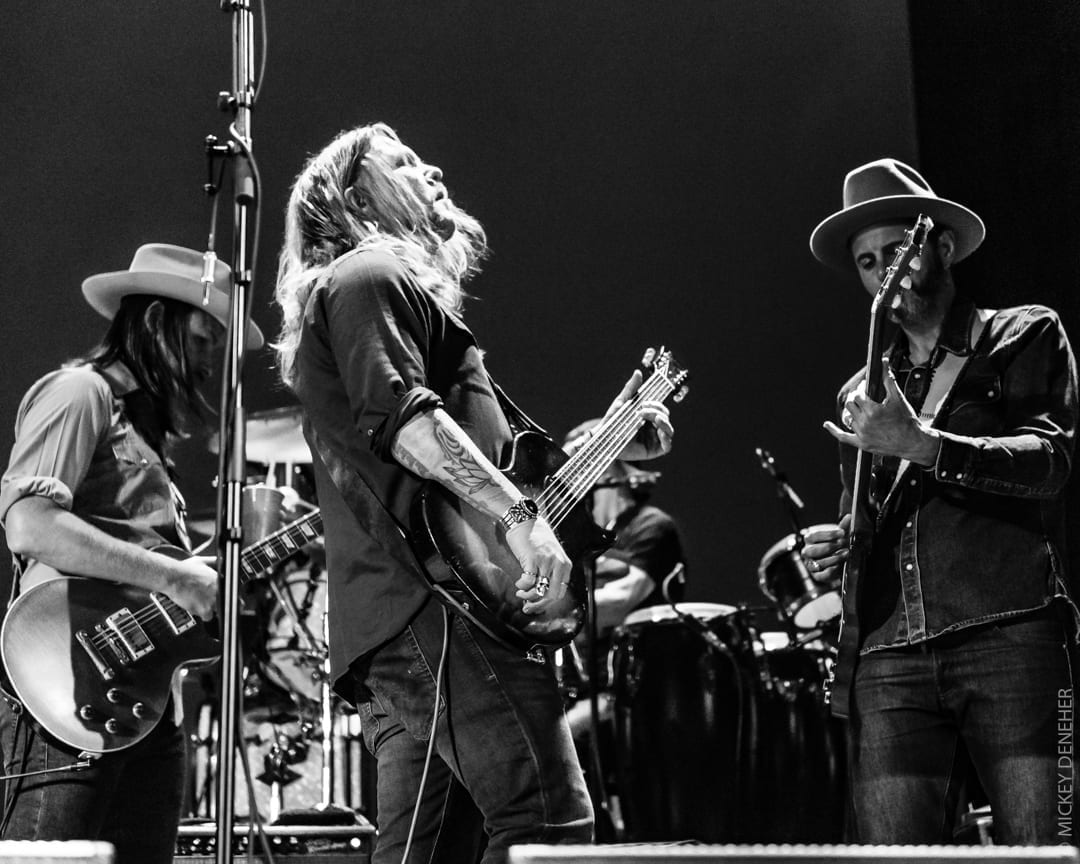
2019 was some year for the Allman Betts Band. In March, the band performed its inaugural show 50 years after the first time the Allman Brothers ever played together. June saw their debut album, Down to the River, hit #1 on the iTunes Rock charts the week it was released. The summer brought the band to a host of festivals and sold out headlining shows as well as a European tour. Throw in a medical emergency and a wedding too, and it was some year.
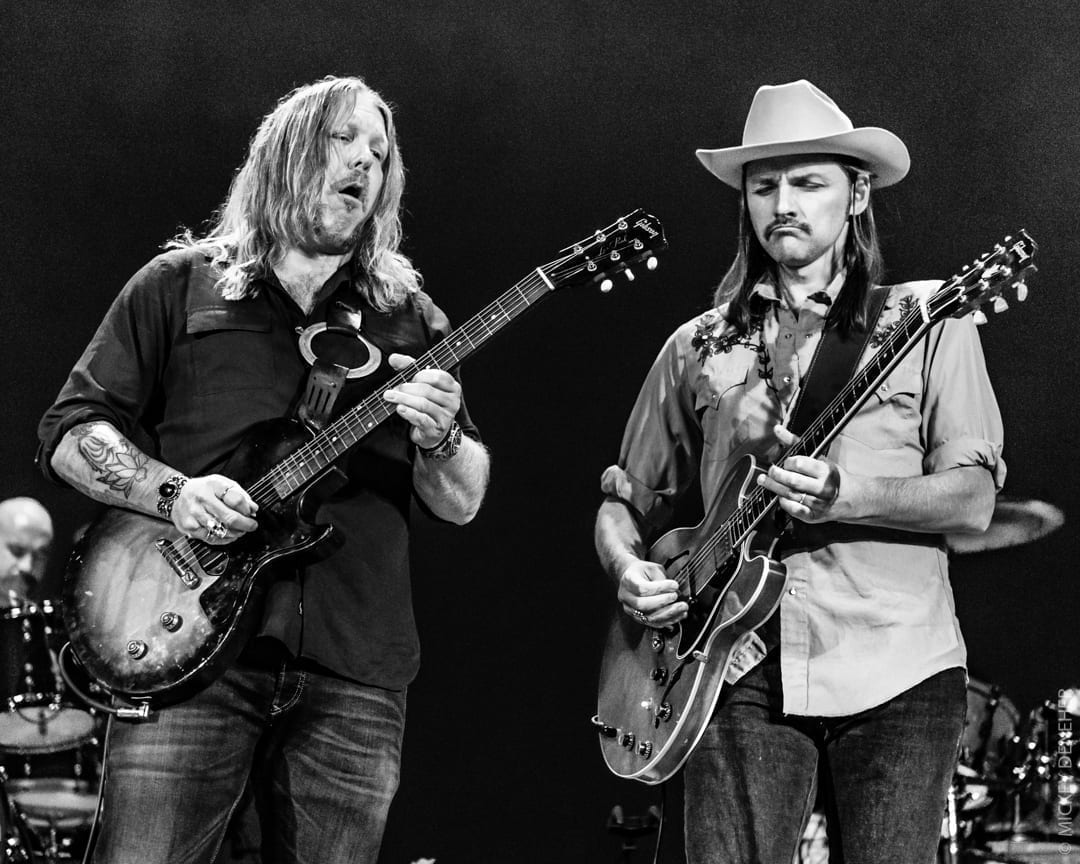
Berry Oakley, Devon Allman, Duane Betts, Johnny Stachela – Allman Betts Band
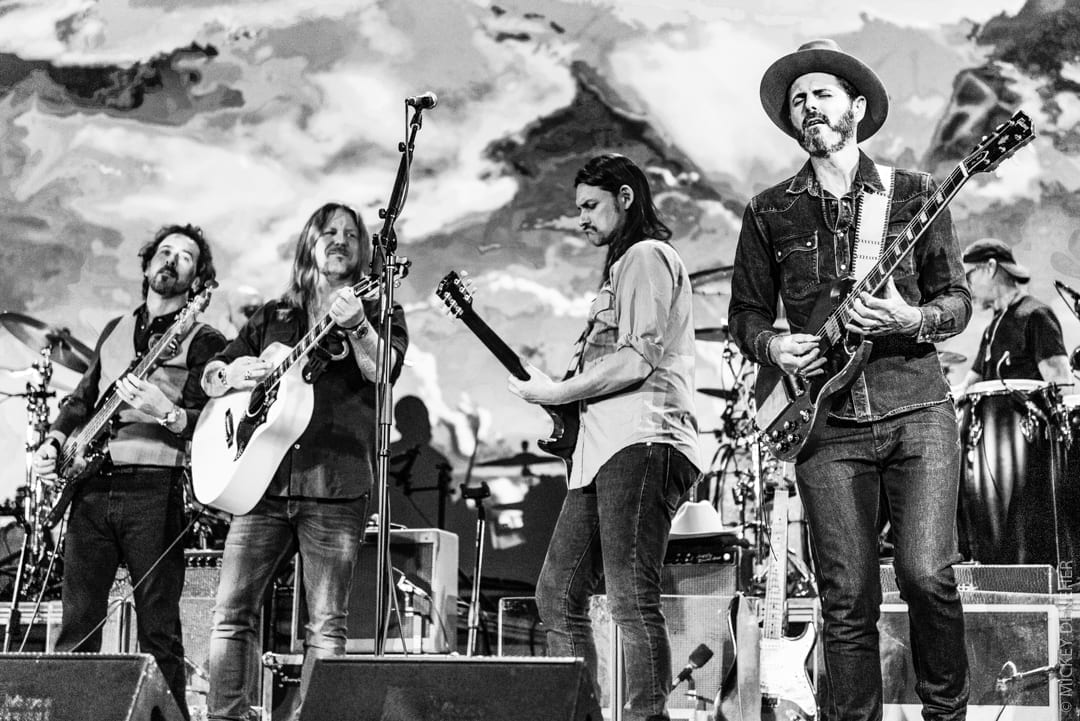
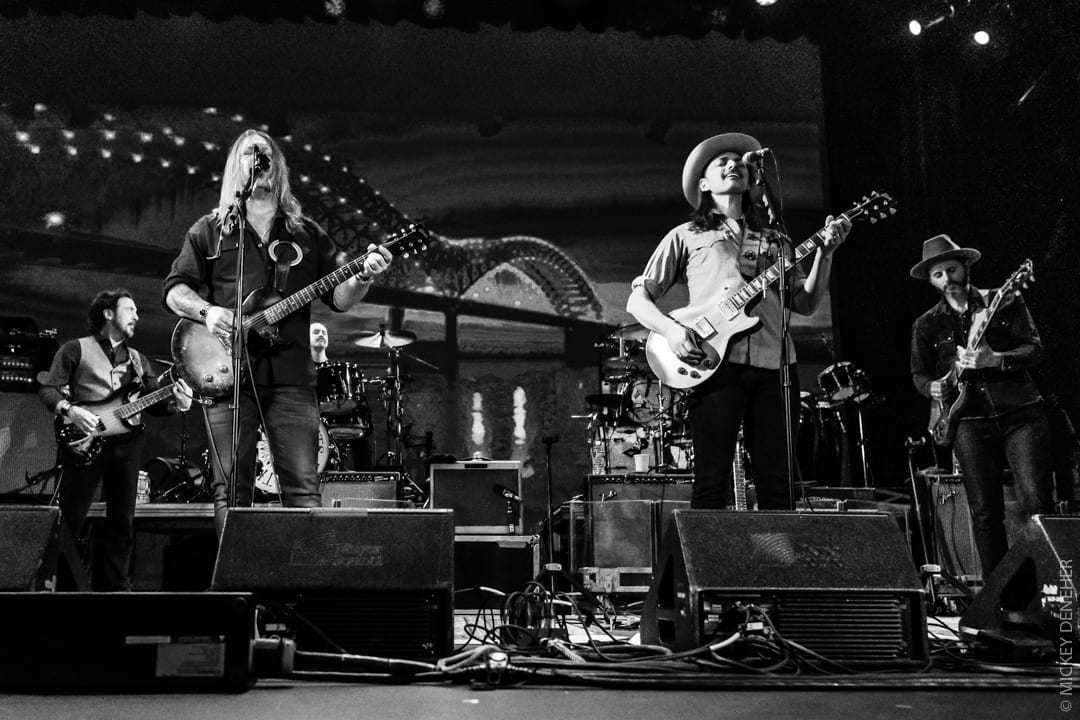
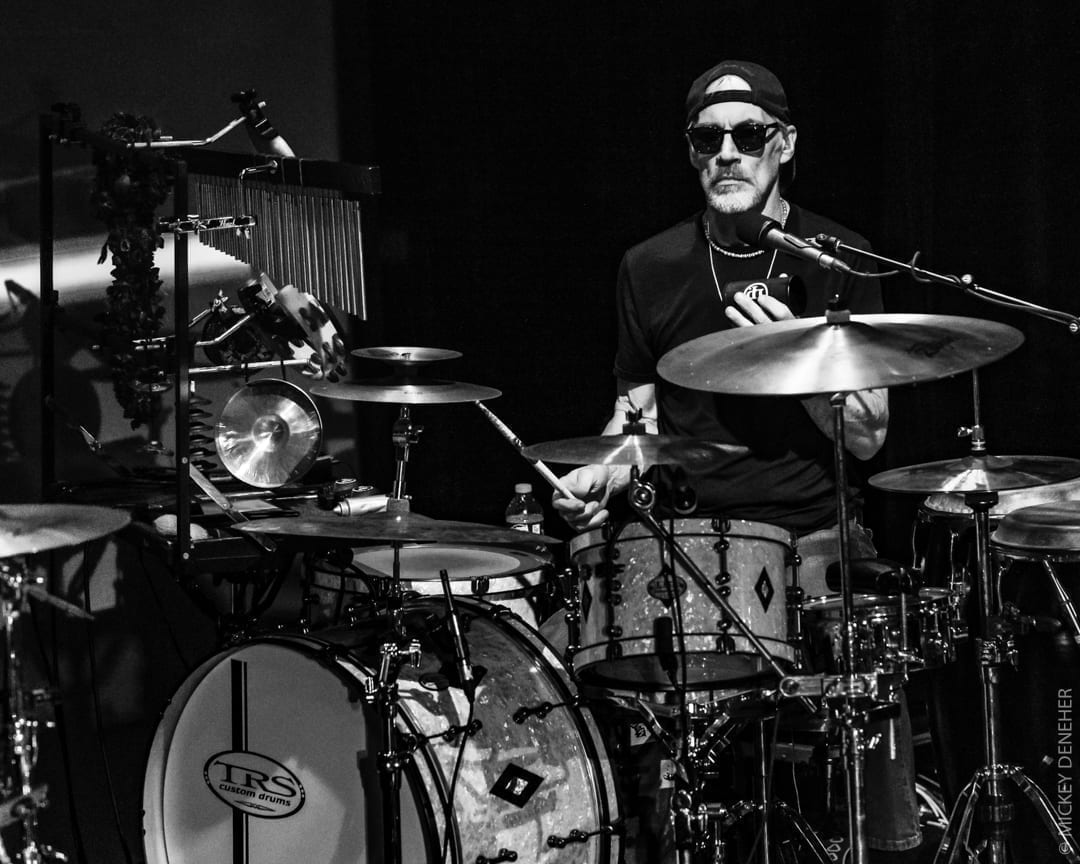
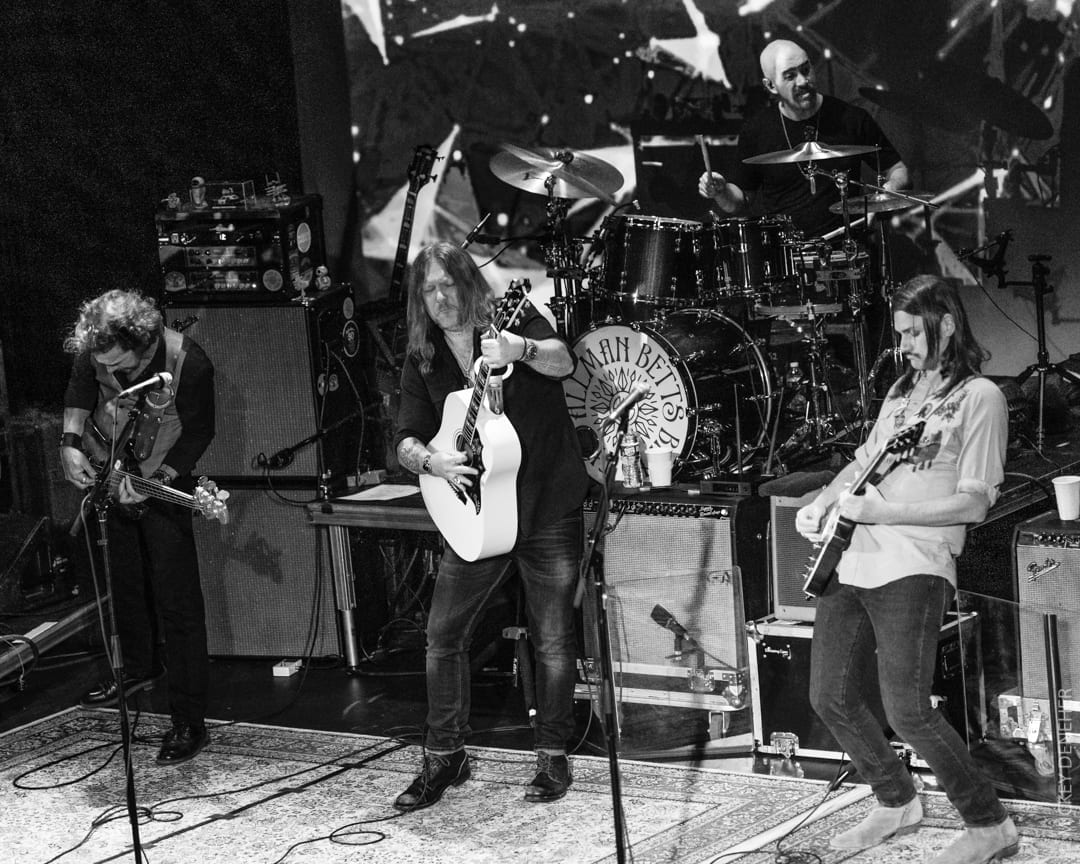
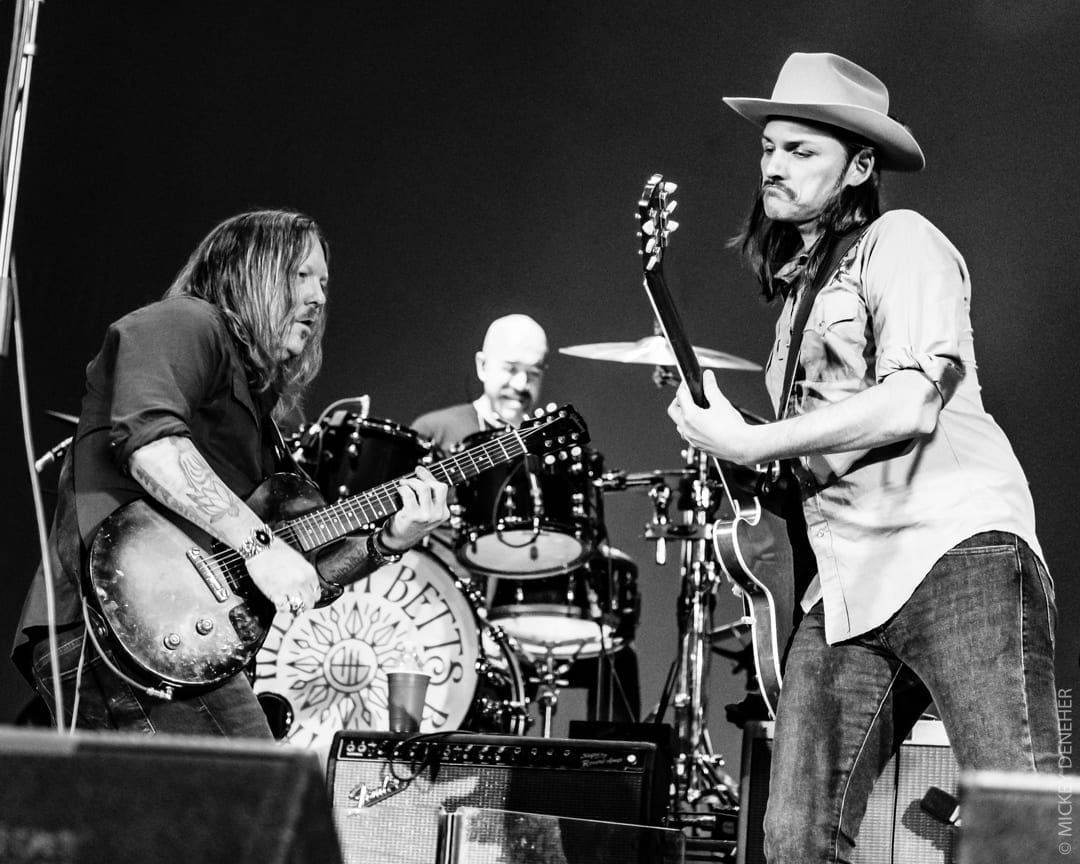
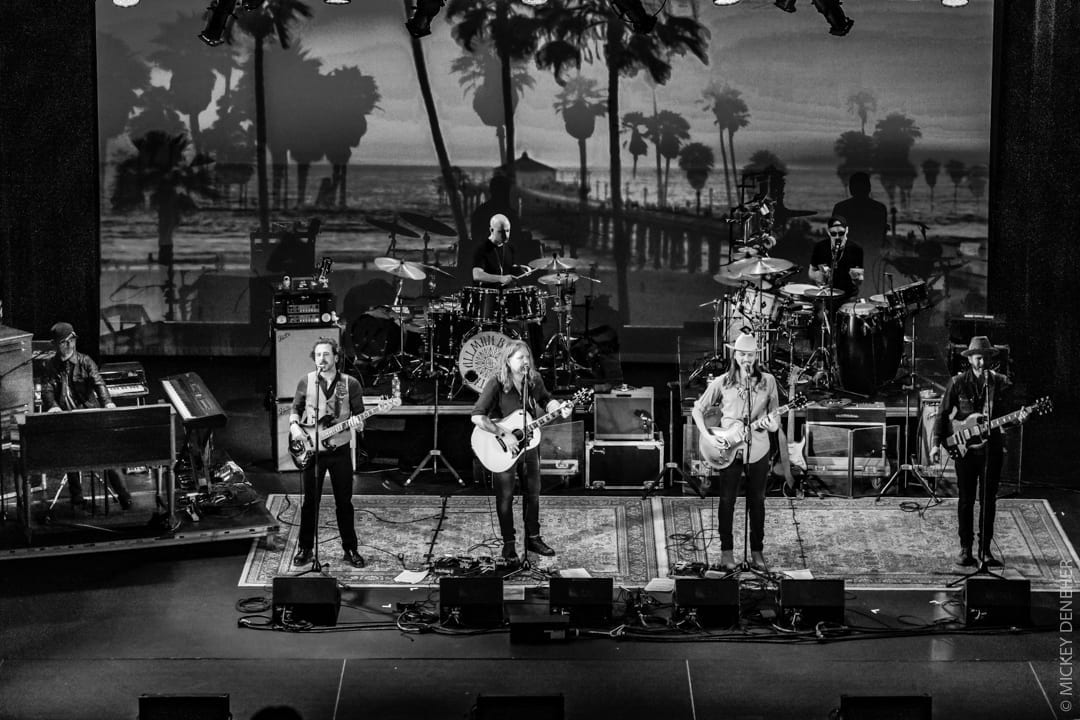
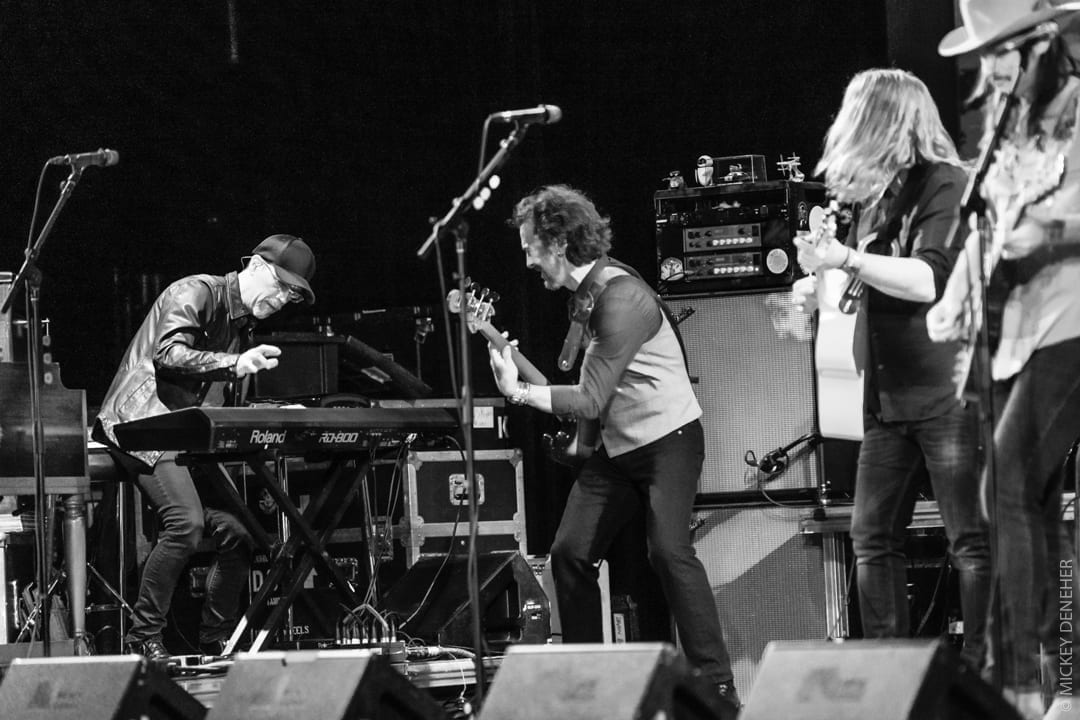
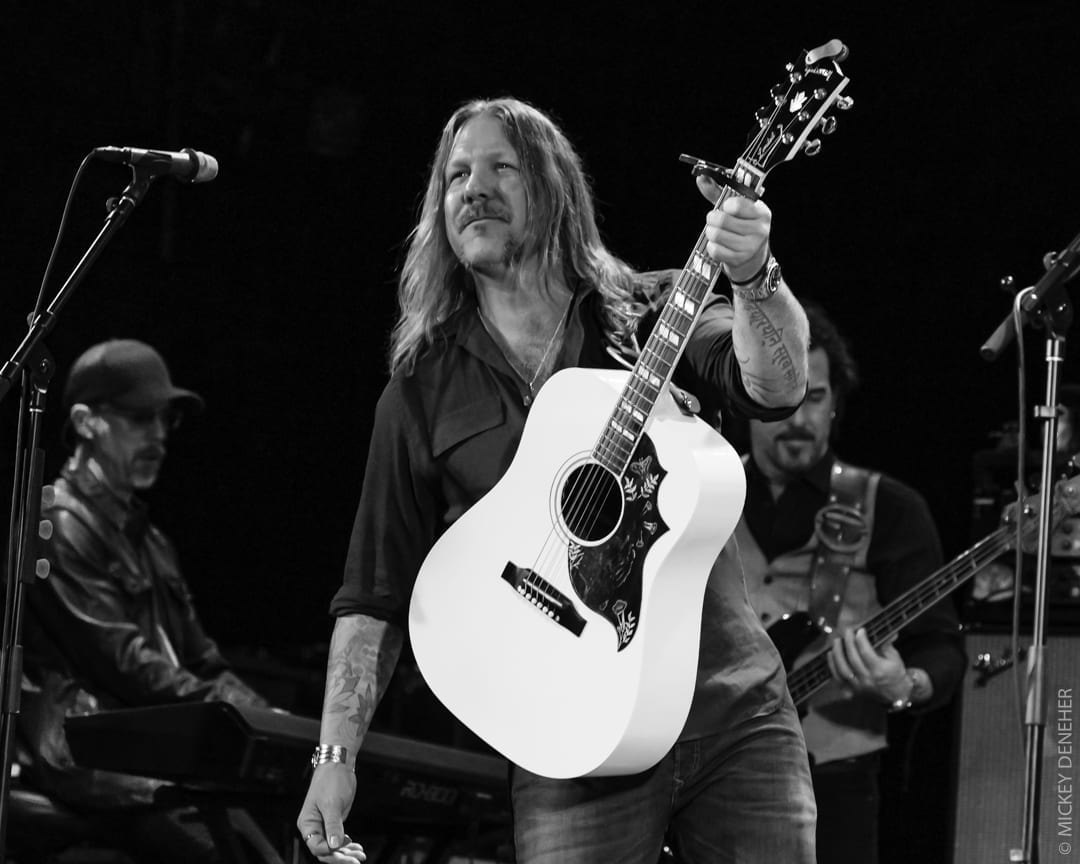
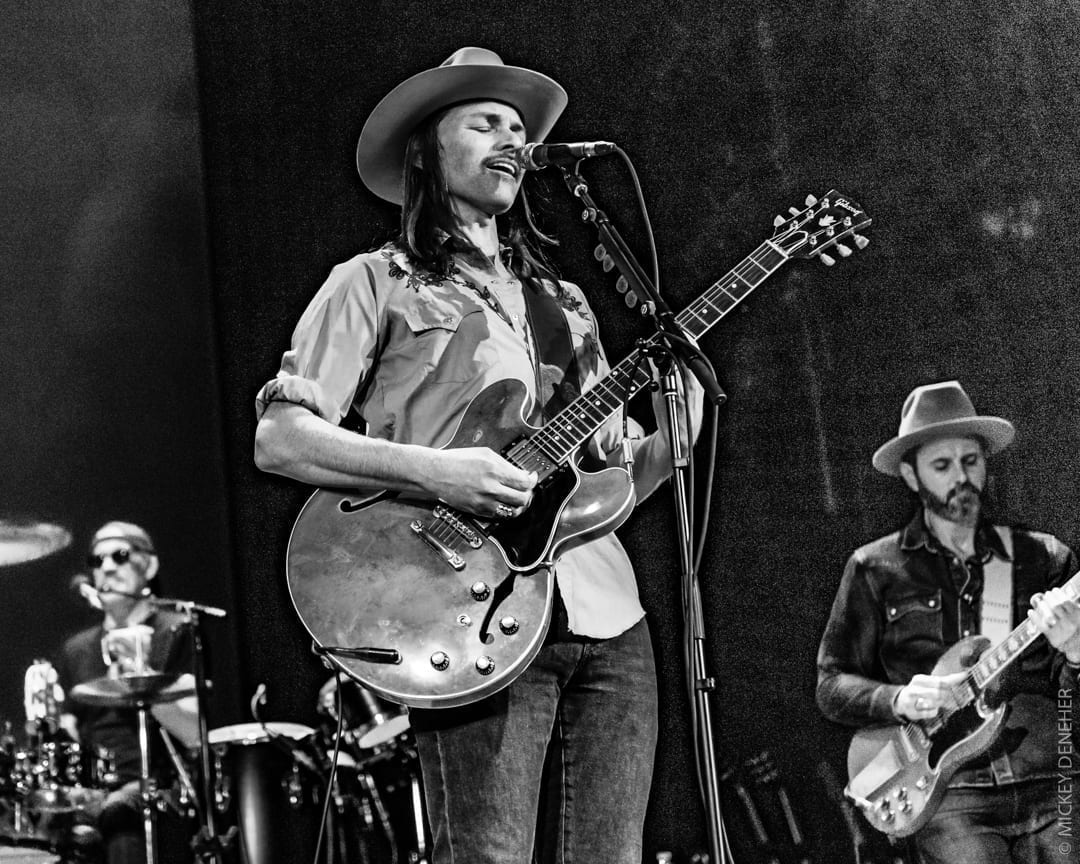
So what do you do in 2020? You go on a worldwide tour, of course. With a second album in the works (recorded at Muscle Shoals) and having taken some down time to recharge, the Allman Betts Band (Devon Allman– guitar, vocals; Duane Betts– guitar, vocals; Berry Duane Oakley– bass, vocals; Johnny Stachela– guitar, vocals; John Ginty– keyboards; R Scott Bryan– percussion, vocals; John Lum– drums) is going global. We caught ABB at the Tarrytown Music Hall stop of their global odyssey. It was coincidental that this weekend we happened to be celebrating two of our founding fathers while listening to the sons of two men who may not have started the blues, but certainly influenced many a contemporary blues or rock musician.
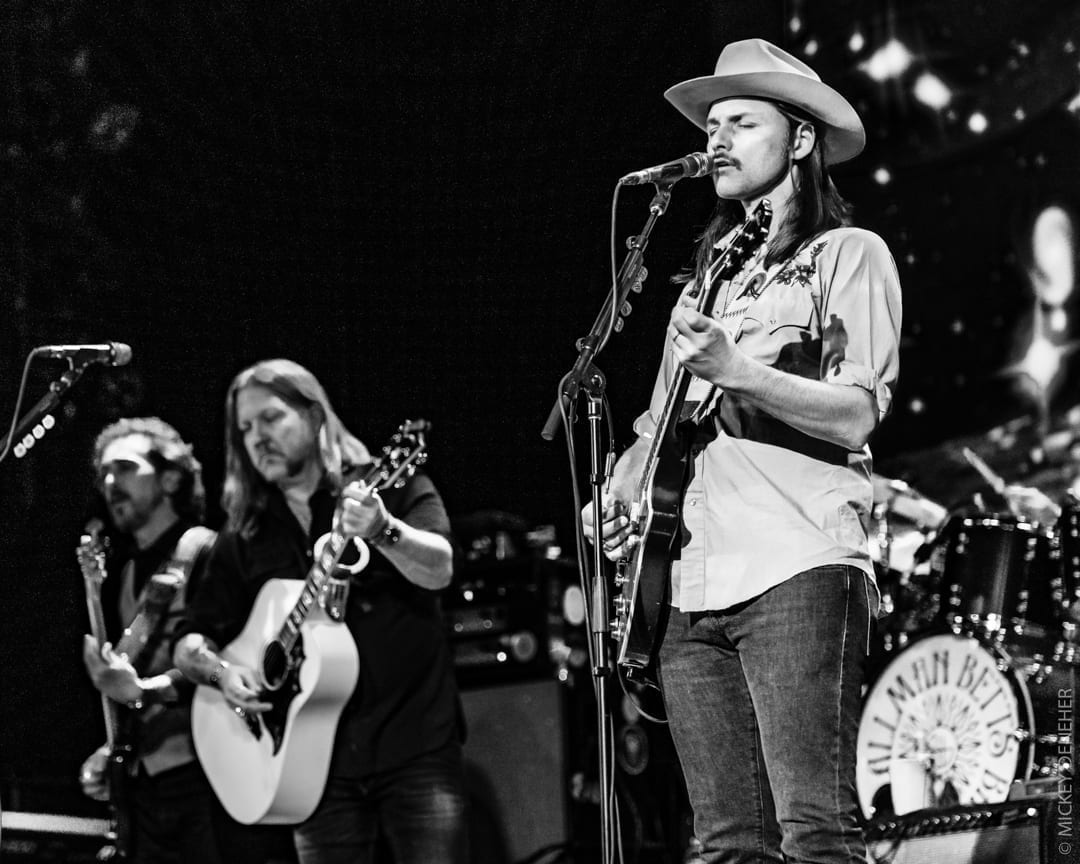
Jackson Stokes
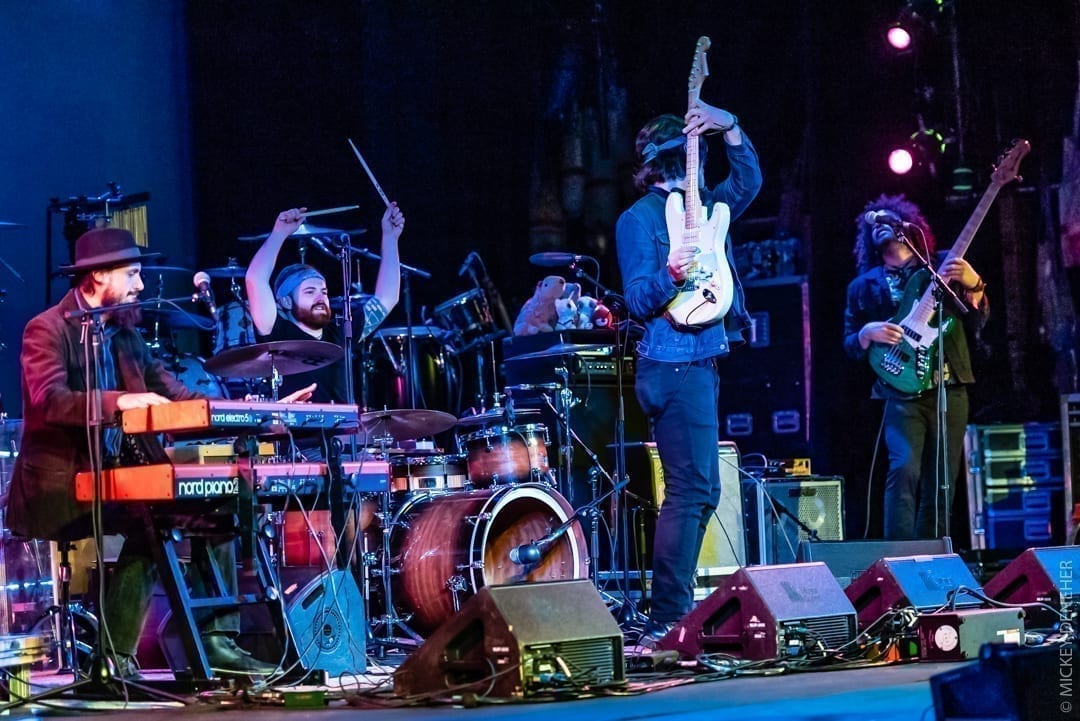
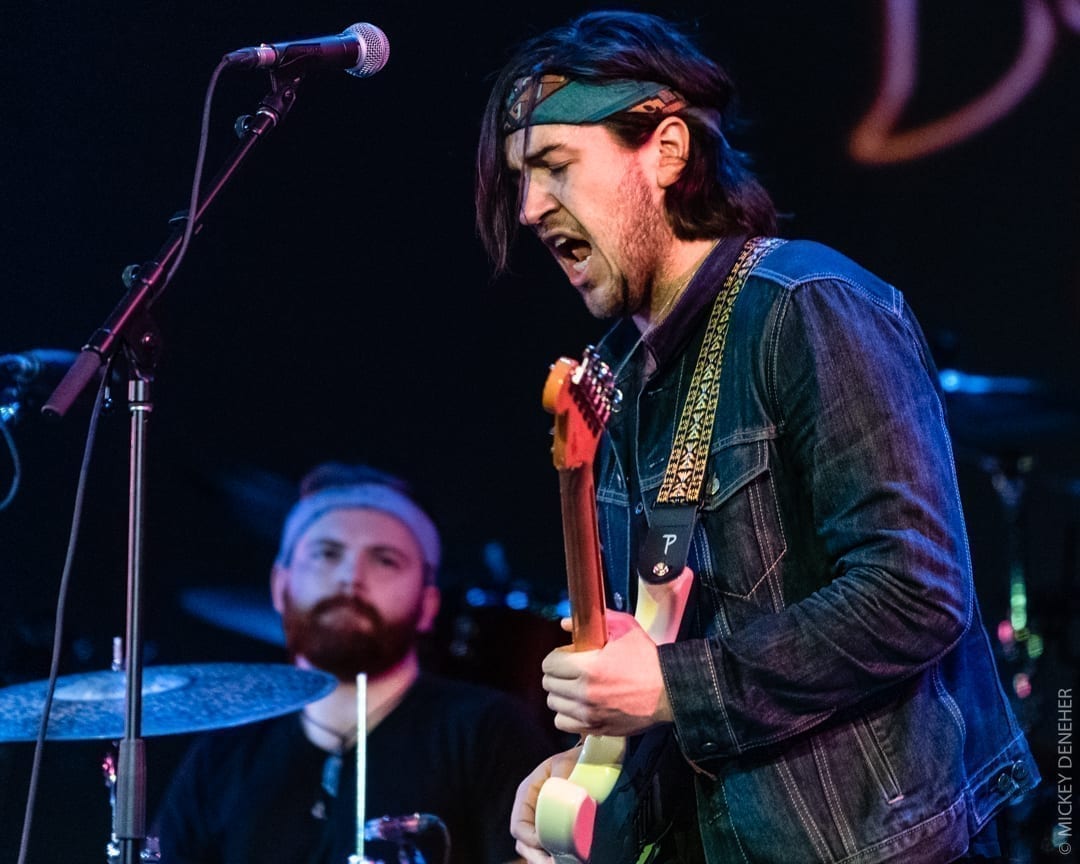
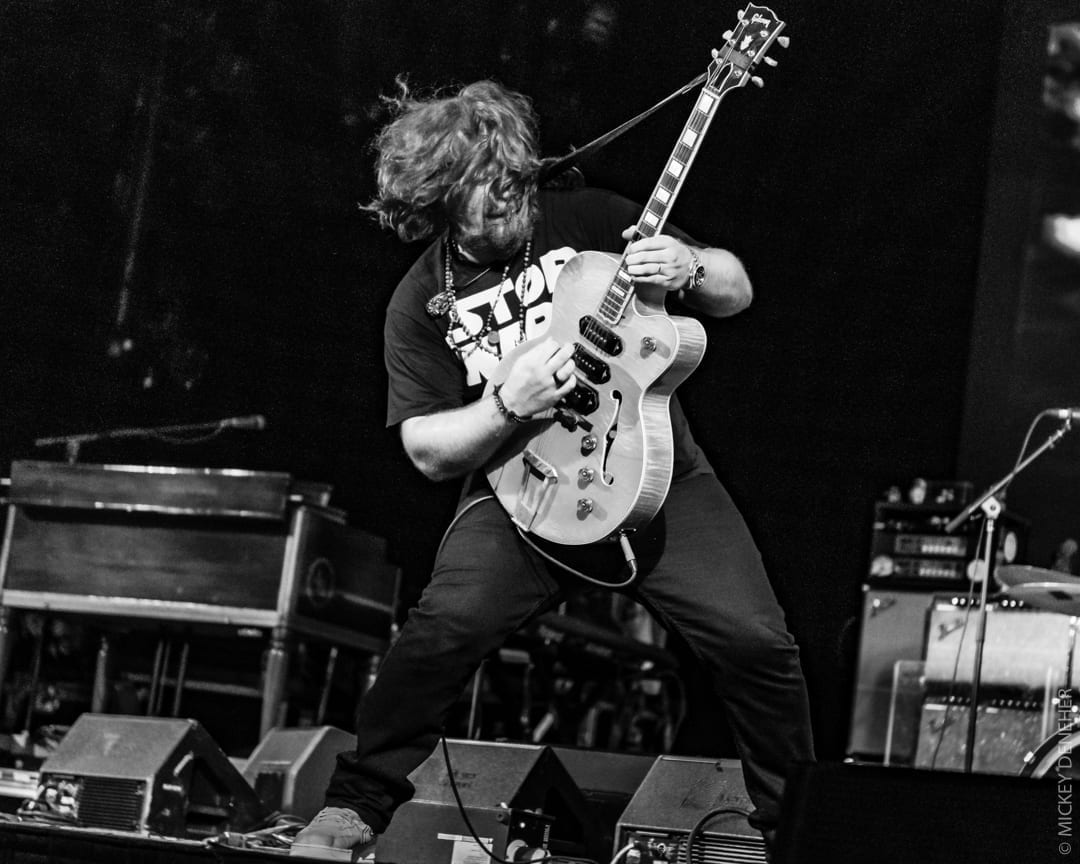
Opening the night was a St. Louis, MO guitarist and singer/songwriter named Jackson Stokes. Stokes is the first person signed to Devon Allman’s new label Create Records. Supported by a solid three-piece band, Jackson offered an unfiltered, raw performance, worthy of his signing to Allman’s new label. Stokes and his band have been playing multiple dates with ABB on this tour.
JD Simo
In the middle slot was JD Simo, a Nashvillian by way of Chicago. JD’s blistering guitar work most certainly pulls from those influences . This night he took the audience with him on his therapeutic musical journey as he performed, maneuvering seamlessly through the styles with no questions asked. A regular on last year’s ABB tour, JD and his band prove to be more than a warm up act, but one that stokes the fire in preparation for a big night.
Allman Betts Band
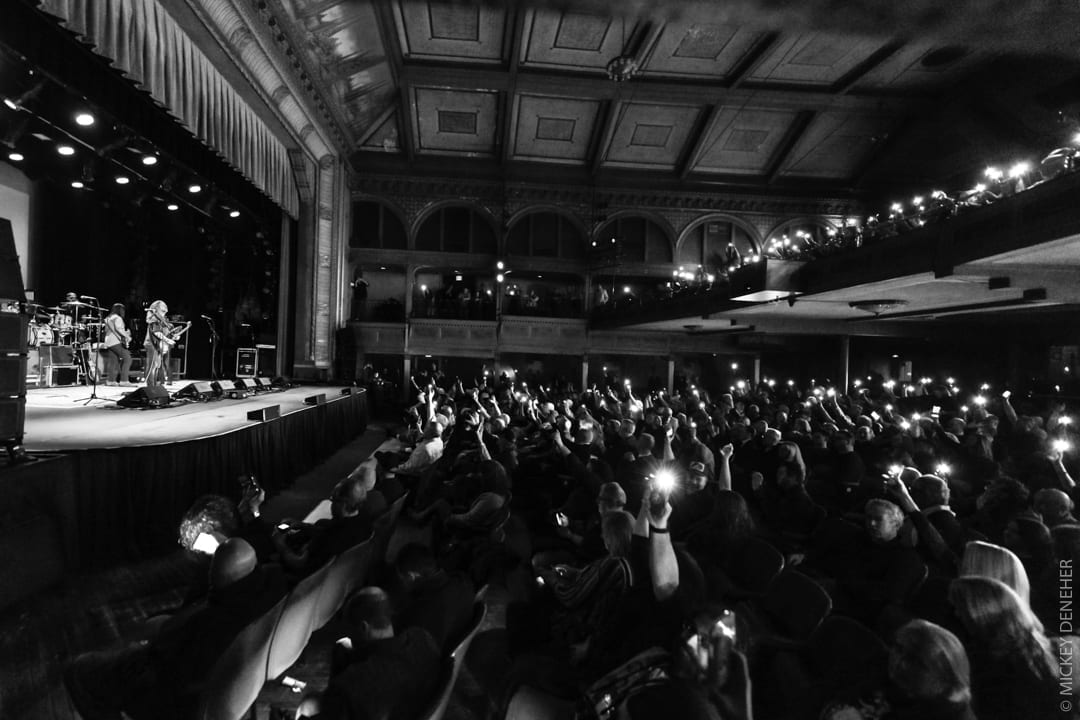
After two kickin’ acts, the house was set. The sold-out show (which is becoming the norm) had a mix of old and young in attendance. People were sharing stories of seeing Devon or Duane separately and looking forward to experiencing the coalescing of their talents. The band opened up with “Airboats & Cocaine” from the yet to be named upcoming 2nd album. “Shinin’” from their debut Down to the River followed and the groove for the night was in full swing. With almost a year together, the band has jelled into a musical monster to which you are willing to sacrifice yourself. The set list this tour has been in flux, so no one is sure exactly what each night will bring. Sprinkled through the night, a few covers found themselves being pulled out. Berry Oakley took lead vocals on The Dead’s “Shakedown Street” which had everyone up and dancing, while Devon had the crowd waving their cell phone flashlights, a la lighters in the air, to “Purple Rain” adding a special glow to the house. The encore had the band sharing another new tune, “Magnolia Road,” and took it home in reverent fashion with The Allman Brothers’ “Blue Sky.”
Allman Betts Band at Tarrytown Music Hall
So what is 2020 to the Allman Betts Band? A new album, lots of travel stickers on their guitar cases and a band to see if their trek takes them to your town.
Devon Allman, Duane Betts – Allman Betts Band
Allman Betts Band set list: Airboats and Cocaine, Shinin’, Left My Heart in Memphis, Autumn Breeze, Ain’t Wastin’ Time, All Night, Good Ol’ Days, Jessica, Shakedown Street, Taking Time, Mahalo, Purple Rain, Long Gone
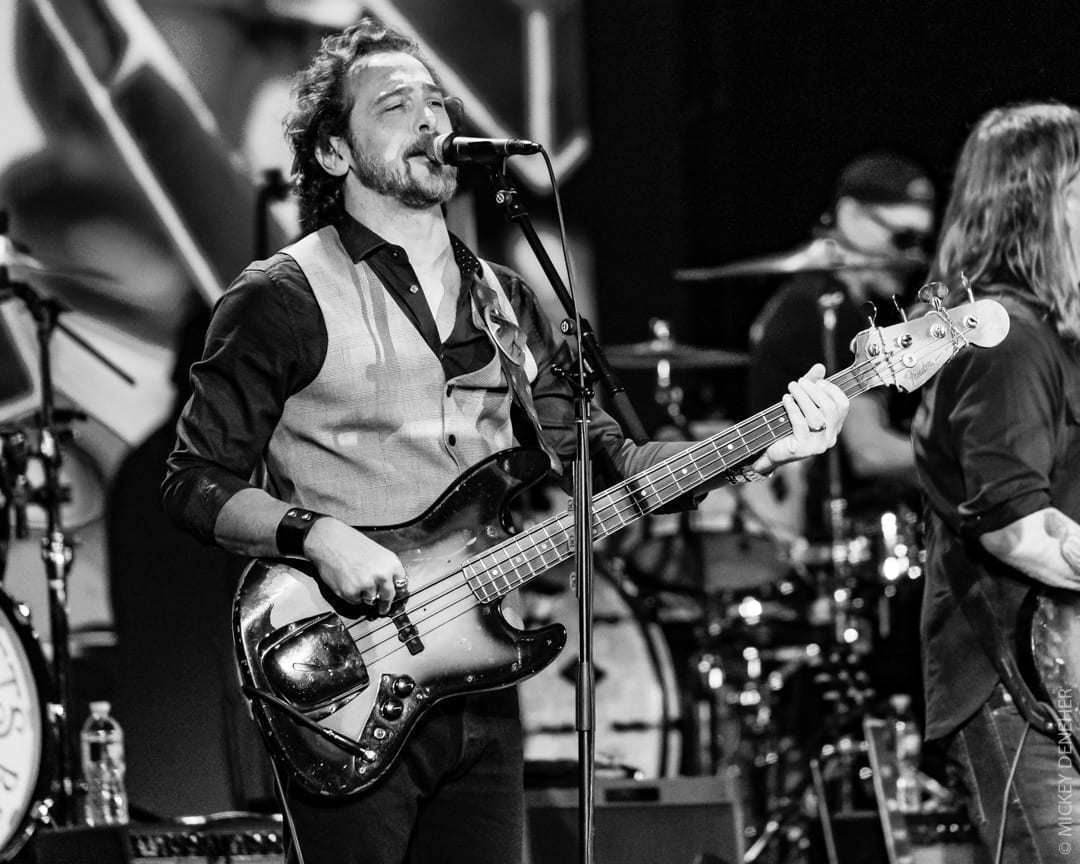
“It started out because of the love of Queen, and today it’s still going because of the love of Queen,” is how Randy Gregg characterizes his New York City based tribute band, Almost Queen. Now in their 16th year, Almost Queen is selling out shows across the U.S., including the The Capitol Theatre in Port Chester, N.Y. where we caught the band performing.
Joseph Russo (as Freddie Mercury)
Paying homage to one of the UK’s most iconic bands are Joseph Russo (as Freddie Mercury), Steve Leonard (as Brian May), John Cappadona (as Roger Taylor), and Randy Gregg (John Deacon). I spoke with Gregg a few days before the Capitol show to gather some insight into a “tribute” based rock and roll band.
“Almost Queen is first and foremost, a proper band,” he proclaims. “I see a lot of tribute bands out there and they do a great job, but I see that they focus, (are) so focused on trying to emanate and trying to do this, that they have lost the sight of your first reason: to be a band and play. We play. If we weren’t doing Queen music and we were doing the Rolling Stones, we’d kill that too because these four guys are first and foremost, a band.”
Almost Queen – The Capitol Theatre
“Back fifteen; sixteen years ago, I don’t even know if there were any Queen tribute bands around.” Randy recounts. “It was like a dare you even try to attempt playing Queen music. We did a lot of rehearsal in that first year. Our goal was to perform the songs you hear on the radio, studio versions is what we wanted to shoot for. ”
Randy Gregg (as John Deacon)
It started out because of the love of Queen, and today it still going because of the love of Queen
Randy Gregg, Almost Queen
Almost Queen – The Capitol Theatre
“We wanted to get as close to Queen as possible,” Gregg shares. “ We knew that we never could be what that band was. But we wanted to get into the ballpark. That’s why we call the band Almost Queen. ‘Cause there is no way we could be Queen and that’s just the end of it. So from day one we had an excuse that if you don’t feel we were that good, it’s called Almost Queen.”
John Cappadona (as Roger Taylor)
With 15 studio, seven EPs, two soundtracks and other recordings to draw from, determining what Queen songs to play on any given night can be a challenge. Gregg incorporates a technique based on where the band is performing. “If it’s the first time going into a venue, here’s the hit’s list. ‘Cause there is an expectation. You don’t want to hit them with anything out of the ordinary right away. Then boom, we did great, we are coming back for that next gig and here are these couple of songs we are going to take out and put these couple of songs in. Give it a different flavor. Third time back, lets put in a couple more, deeper cuts. I have set lists saved on my computer for years. If we’re playing (a) venue for the eighth time, in eight years, I will pull out eight different set lists. I never wanted to have it were we get a revue that says Almost Queen was great, but same set list. It’s always about keeping it fresh.”
Almost Queen – The Capitol Theatre
With 16 years performing as Almost Queen under their belt, I asked about the preparation before a show. “It’s a pretty cool vibe backstage. One or two people could be cranking some tunes in the back. It’s a lively vibe; it’s an exciting vibe. We know what we are going to be doing in a half hour. It’s pretty chill but it’s pretty exciting. We are just doing our normal routine, getting dressed, stretching out, warming up vocals, having a beer, putting on makeup everything that’s involved with a rock and roll show. The excitement builds per minute as that goes on. “
Steve Leonard (as Brian May)
Being a tribute band, what happens as you walk on stage for that first number? Is there a loss of person and a transformation? A transformation into Queen? “It is very close to that,” Gregg reveals. “When the lights go out, the place becomes hysterical as the intro comes on. That moment of walking out on stage when that intro comes on, it’s like a real deal rock show. That is the vibe that you get when you walk out into it. Within that time of the intro, you are absorbing this energy coming from the crowd, this excitement, here it is, you feel it all. Then, at that first start of the note, all of our minds go right to the music.”
Almost Queen – The Capitol Theatre
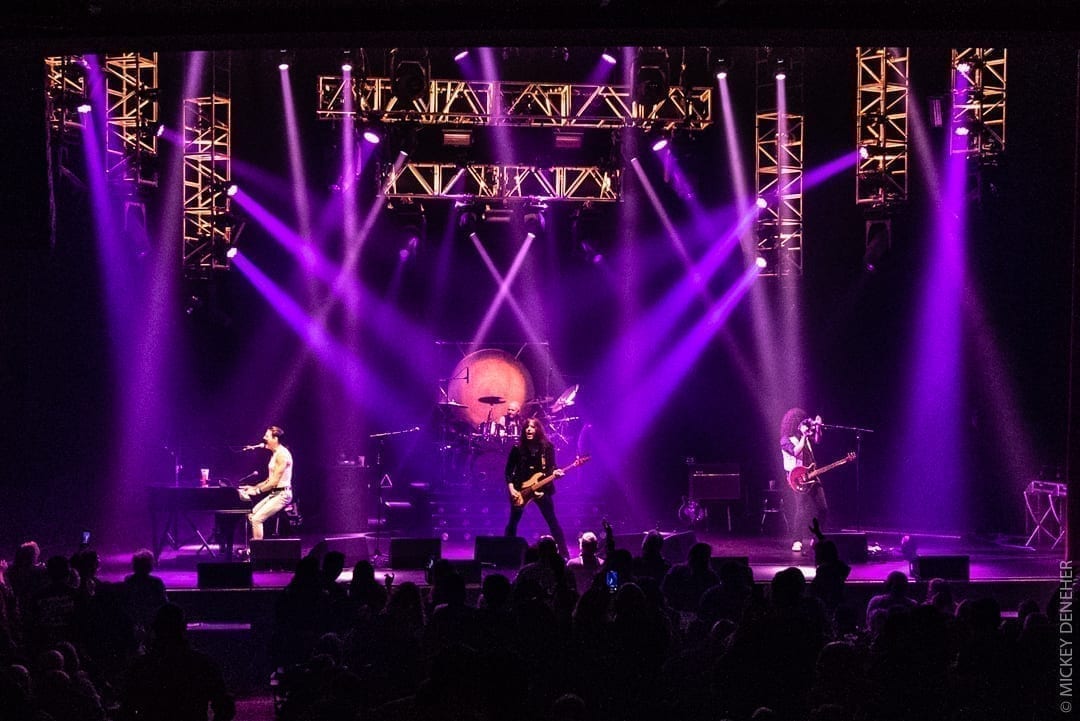
The energy level at The Capitol Theatre was peaking the dials. The band played for almost two hours, with people singing and dancing throughout the night. Mid show, lead singer Joseph Russo engaged the audience in an impromptu a cappella vocal round, making everyone a member of the band. The love for Queen was in abundance, emanating from the stage and being returned exponentially by those in the house.
Almost Queen – The Capitol Theatre
Taking the night to another level, the proceeds from the Almost Queen merch table are donated (as they are with every show) to The Mercury Phoenix Trust, which was founded by Brian May, Roger Taylor and Jim Beach in memory of Freddie Mercury, who died from HIV/AIDS in 1991. The goal of MPT is to fund the work of global charities fighting aids worldwide. “We are very proud to donate our merch,” Randy noted with a gratifying tone to his voice.
Almost Queen – The Capitol Theatre
What started as love for a band, that has snowballed into sell out shows, and promotes compassion for one’s fellow man to boot, has me thinking that maybe the band should change its name from Almost to Absolutely Queen.
Those were the days of our lives, yeah The bad things in life were so few Those days are all gone now but one thing’s still true When I look and I find, I still love you I still love you
These are the days of our lives Brian May / Freddie Mercury / John Deacon / Roger Taylor
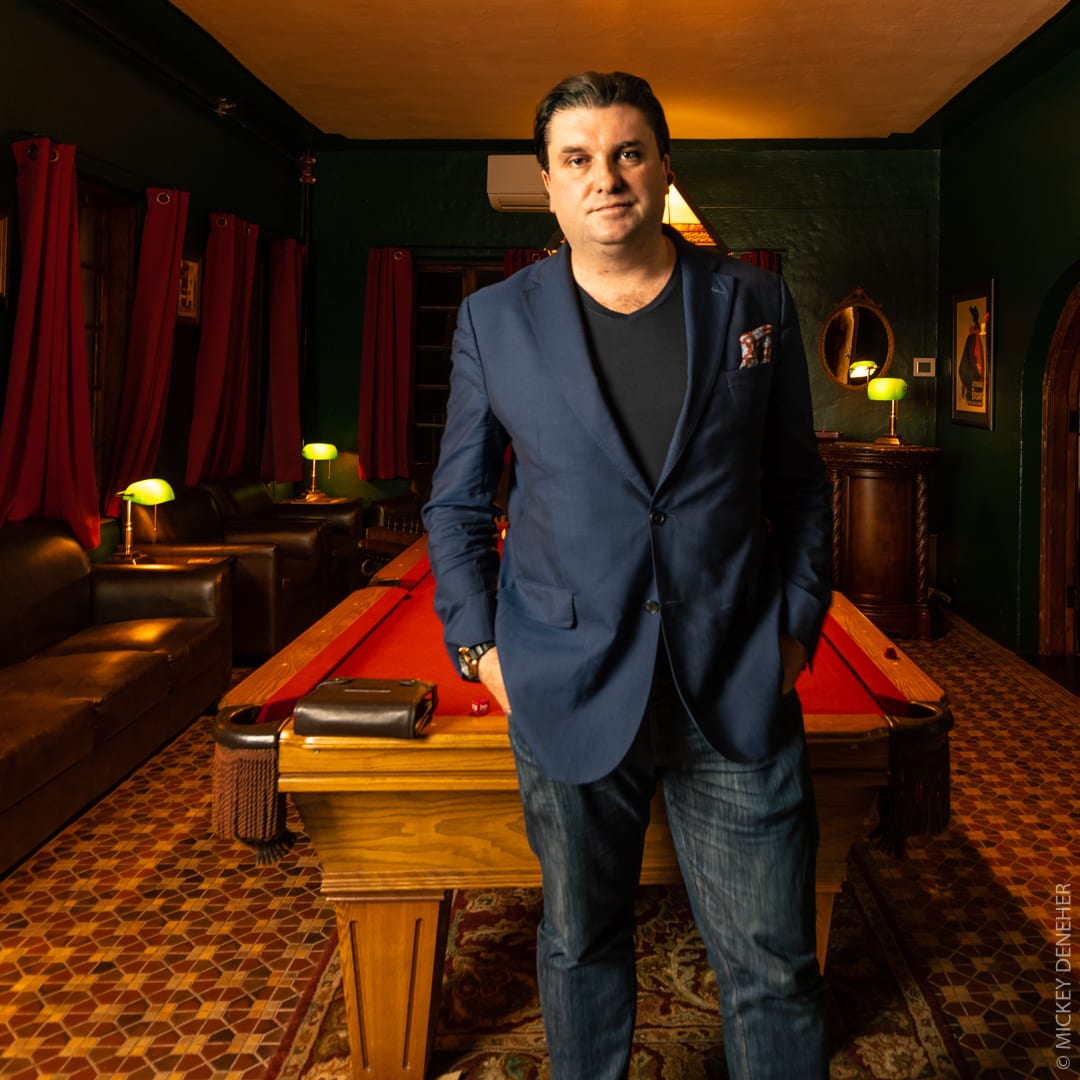
Dating back to the late 1800s, the blues have set a musical foundation for many to grow on. From Memphis to Chicago, and Leadbelly to B.B., a great debt is owed to those 12 bars. Giles Robson is just one of those musicians who has drawn from this enduring musical genre. Originally from Jersey in the Channel Islands (a British Crown dependency) and now living in France, he is a Blues Foundation Blues Award winner and the first British or European artist to appear on the prestigious Alligator Records blues label. I had the opportunity to sit down with this harmonica-touting blues man recently as the New Year began, after he wrapped up a 5-day promotional showcase introducing himself to the U.S. – a tour that included his debut American performance at the Colony, in Woodstock, NY.
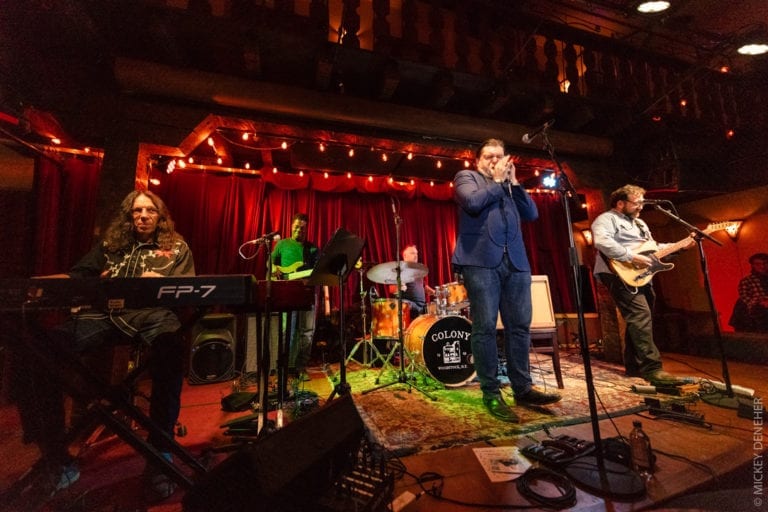
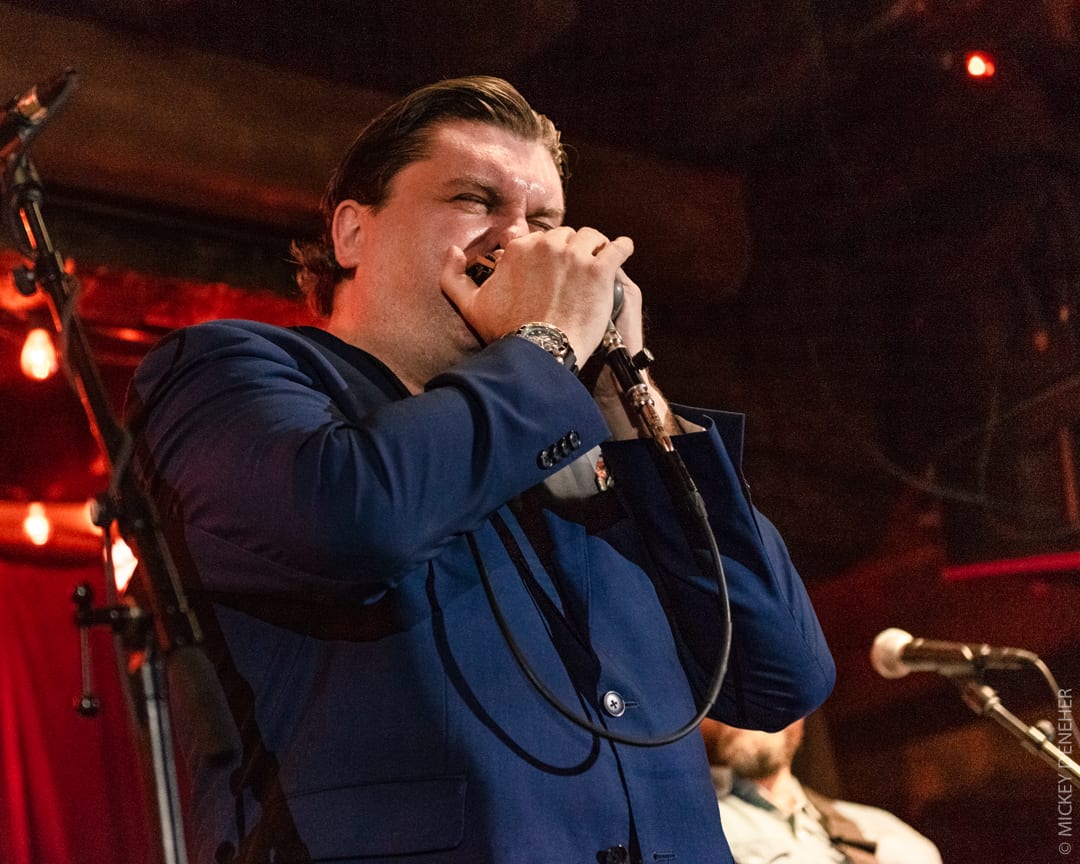
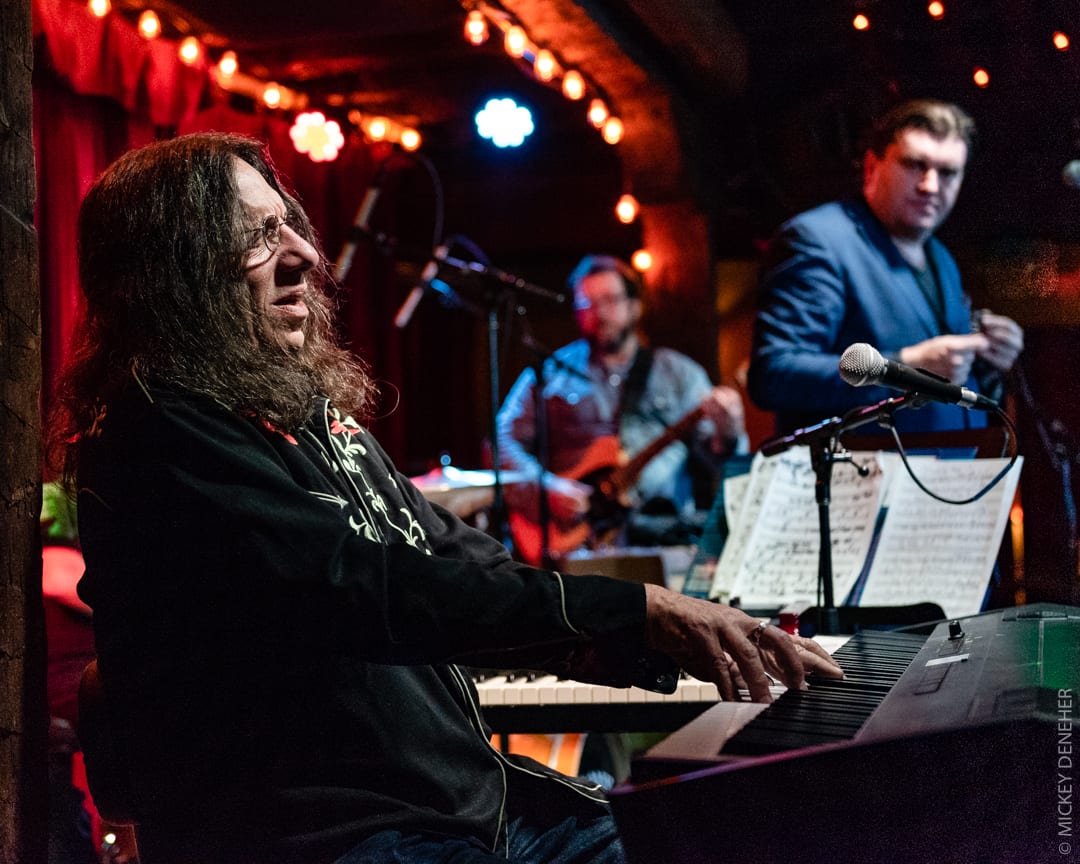
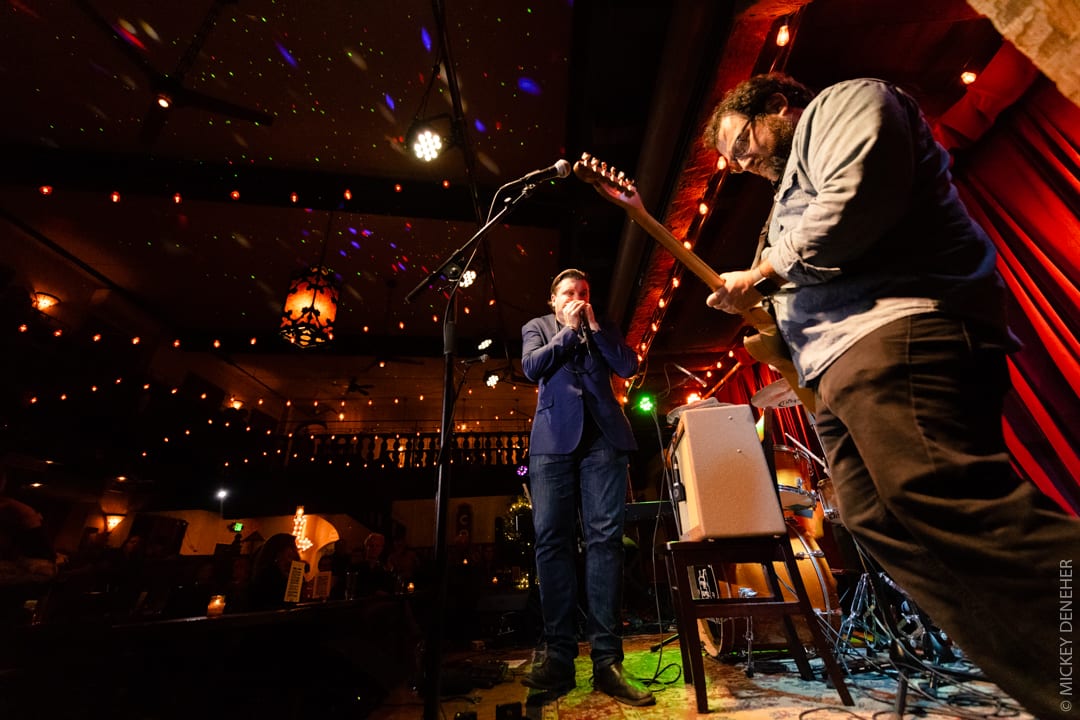
Bruce Katz, keyboards; Antar Goodwin, bass, Ray Hangen, drums; Giles Robson, harmonica; Aaron Lieberman, guitar; at Colony, Woodstock N.Y.
A disciple of the blues, his beliefs are straightforward, “I am under the opinion that the blues is the most incredible, communicative music in the world. So simple, yet it has so much feeling. I feel fortunate I fell in love with it and progressed in it.”
His journey into music started with the violin at age seven, then on to the saxophone three years later “because I watched a lot of old movies when I was ten or eleven year old,” Robson shares. “They always had the big bands, and I really fell in love with the swing horn lines.” While on a school art trip to Spain, he picked up his first blues harp. “I (had) heard it on the theme tune to Roseanne, a guy named John “Juke” Logan, and I heard Will Smith play it on the Fresh Prince of Bel-Air. I was intrigued by it. When I got back to Jersey, it just so happened that there was an African-American harmonica and guitar duo, Cephas and Wiggins, playing within a week of getting back. My parents sent me to see them and the rest is history. I just got hooked.”
Formal training helped prepare Giles for his foray into the blues. “My sax teacher was an acid jazz player and got me playing Charlie Parker heads (challenging melodies) and showed me the basics of improvisation. So when I started playing harp, I had that little bit of knowledge to help me out.” When it came to learning the harmonica, “I was teaching myself,” Giles divulges, “I would pretend I was a member of the Muddy Waters band and I would play the same solo along with the record, over and over again. “
I am under the opinion that the blues is the most incredible, communicative music in the world. So simple, yet it has so much feeling.
Giles Robson
Giles Robson, pre-show at Colony, Woodstock N.Y.
His efforts took hold and in 2007 Giles Robson and The Dirty Aces stepped onto the European music scene, receiving praise in the UK press. “That was an interesting band,” he notes. “I was trying to do a crossover with lots of different elements in it. I was trying to be as original as possible. But I realized my strength was in doing the blues, the pure blues with a little twist. I was getting too rock for blues and too blues for rock. It showed me what can and cannot work. “
After three recordings with The Dirty Aces, Robson signed with V2 Records in Holland. Now a solo artist, For Those Who Need the Blues was later made. “ We recorded that album in six hours. This was my return to the pure blues,” he professes. With a new record in hand, he was booked at an upcoming festival in Holland under the name Giles Robson and The Dirty Aces. “They were expecting this garage rock. I went over with the band I had just recorded with and did the pure blues. The people went crazy. From that moment on things changed around for me.”
Giles Robson, Colony, Woodstock N.Y.
Reflecting on that moment of musical purification, “The blues is always there, and it needs to be. I met a lot of people on this (current) tour that told me that they got into this music as they got older. Once you get to 40, you’ve probably been through several life events that the blues tackle. Divorce. Relationships. When you’re in your early twenties, pop music works because you’ve not been through any of that heartbreak and such. When you get older you’ve been through it. It’s not a shallow thing. You can’t help but think about things in your life that blues sings about.”
In December 2017, while performing at a festival in Europe, Robson crossed paths with Grammy-nominated, W.C. Handy Award-winning blues guitarist Joe Louis Walker. Walker saw his performance earlier that day and invited him up to jam during his set. “We got on musically very well. Then we talked for hours after the show about lots of blues music,” Giles recalls. A few months later while touring around Europe and listening to acoustic blues while traveling between shows, Robson started thinking, “I’d love to do an album with someone who could really do this (acoustic blues) music justice, and then the idea came, it was Joe. ”
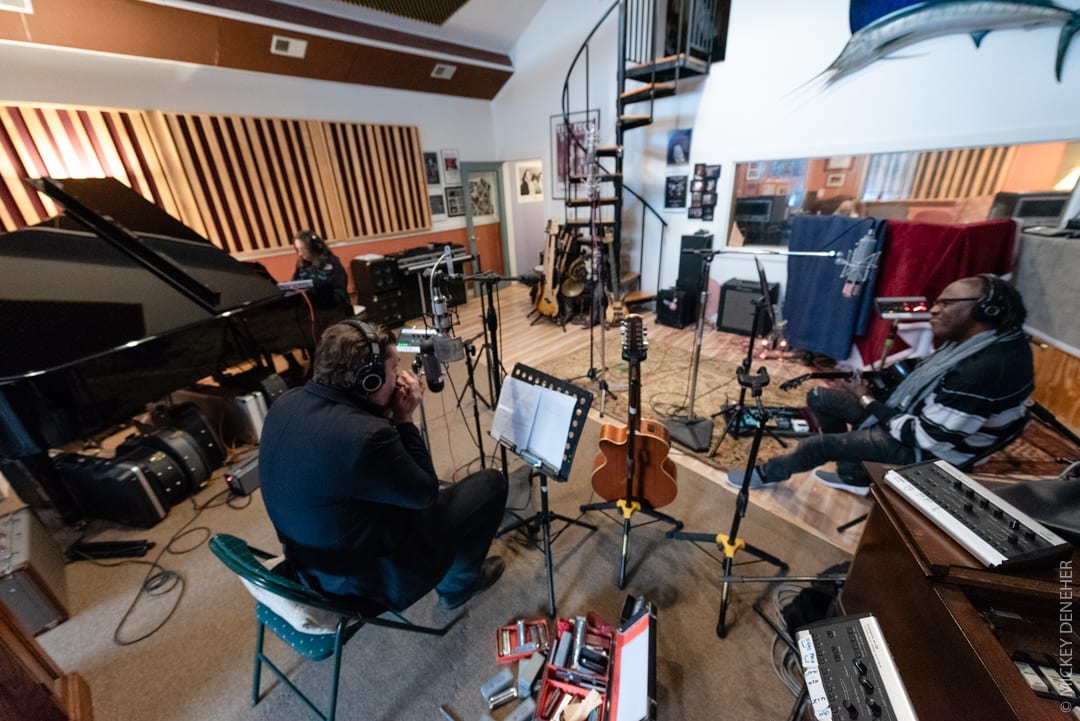
Recording session for Journey To The Heart Of The Blues
“I wanted to hear his voice, which is one of the most incredible voices in the blues,” Robson declares. “I wanted to hear his voice without a band behind him, in an intimate situation. I wanted my harmonica next to that voice. I contacted him and he was very keen on it. It was a beautiful experience.” Journey To The Heart Of The Blueswas the end result of this homage to acoustic blues, garnishing a 2019 Acoustic Album of the Year Blues Music Award. Bruce Katz (Gregg Allman, Ronnie Earl, Delbert McClinton, John Hammond,) joined the pair on piano for the recording sessions. “Joe brought Bruce in, an excellent sort of foil for the music. He is a funky player, but has this level of finesse that gave it an extra depth and added synergy in the studio.” Alligator Records picked up the album and it was tracked and mixed at NRS Recording in Catskill, NY for distribution in the U.S.
I was teaching myself … I would pretend I was a member of the Muddy Waters band and I would play the same solo along with the record, over and over again.
Giles Robson on learning to play the harmonica
“The beauty of the blues,” Giles lauds, “is the people already know the chord changes. They are really familiar with it and you put in your own individual harmonica style, or song style, or lyrics. It’s a magical thing. Sometimes musicians lose their way with the music because the technical ego takes over. They say on something as simple as that, I have to do something more complicated. As you get older, it becomes a lot easier to be naturally simple. Just do what is able.”
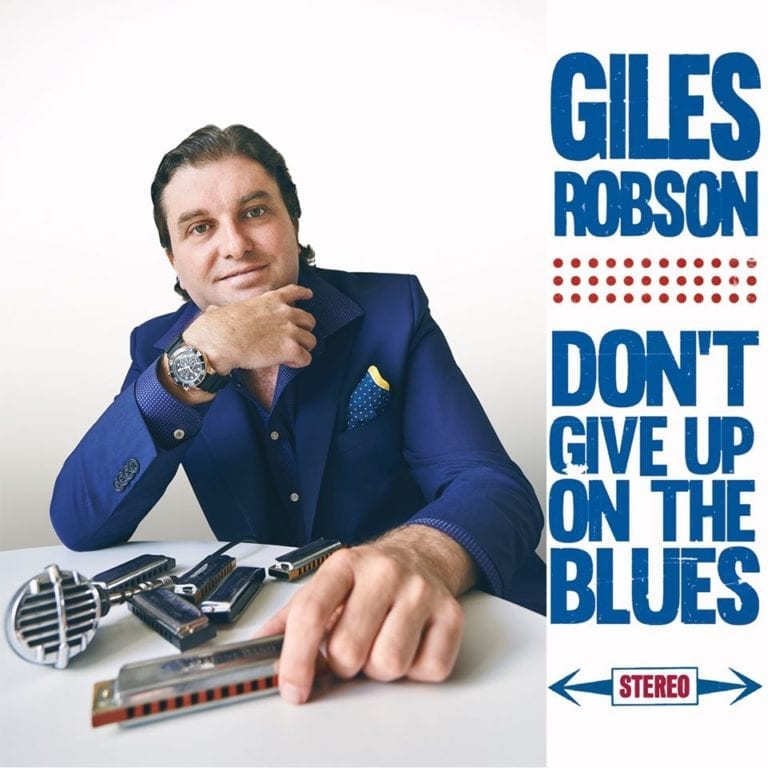
Don’t Give Up On The Blues artwork
His latest recording, Don’t Give Up On The Blues, which came out late September 2019, isa shift from Journey to the Heart of the Blues. Robson puts it this way, “I wanted to do original songs with blues structures. We’ve got original riffs in there, but we wanted to respect the structure and rhythm of the blues.” Capitalizing on their previous success, Bruce Katz joined on for this project. “Bruce is incredibly versed in the traditions of the piano.” Expanding on the approach to the album, “We didn’t use an out and out traditional guitar player or traditional bass player. We didn’t want to be too fussy about it. It is an album that has both the traditional and a splash of dirty.”
Bruce Katz, keyboards; Aaron Lieberman, guitar; Giles Robson, vocals/harmonica
As part of the Robson’s showcase tour, Don’t Give Up On The Blues was presented front and center. Backed by Bruce Katz on keyboards, Aaron Lieberman on guitar, Ray Hangen on drums, Antar Goodwin on bass, (who all played on the album) and joined by special guest vocalist Katie Henry, Giles and crew showed why this latest recording has been called, “Retro. Timeless with an edge of modernity so the sound is relevant and fresh today,” by the UK’s Bluesdoodles.com. I attended the Colony show in Woodstock, NY, where the music expanded and contracted throughout the set, allowing each song the opportunity to offer it’s own blues narrative. As the New Year begins, Don’t give up on the Blues continues to chart high on American and European blues radio.
Giles Robson, Aaron Lieberman; Colony, Woodstock
When it comes to blues harp influences, Giles points to the Chicago players. “All of them,” he says. “Everyone has their own distinct style. Some are very simple but still captivating. Some are very technically advanced and still captivating. They all had feeling and emotion. It’s pretty miraculous what they did with the instrument. The two main guys were Little Walter and Sonny Boy Williamson for me. I listen to them almost on a daily basis. “
The blues are based in suffering and heartache, but for Robson’s blues, 2020 is looking bright. A new record getting global recognition combined with a touring schedule filled with club and festival dates across the US and Europe, it will be hard to find a downside for this rising blues man. Perchance you run into Giles out on the musical highway, take a moment and imagine you’re both in a James Bond movie. “How would you like your blues, Mr. Robson?” “Pure. Not stirred.”