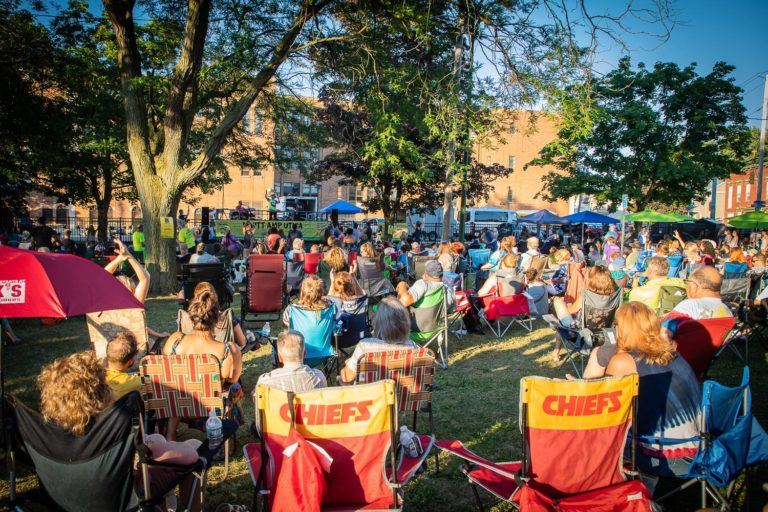
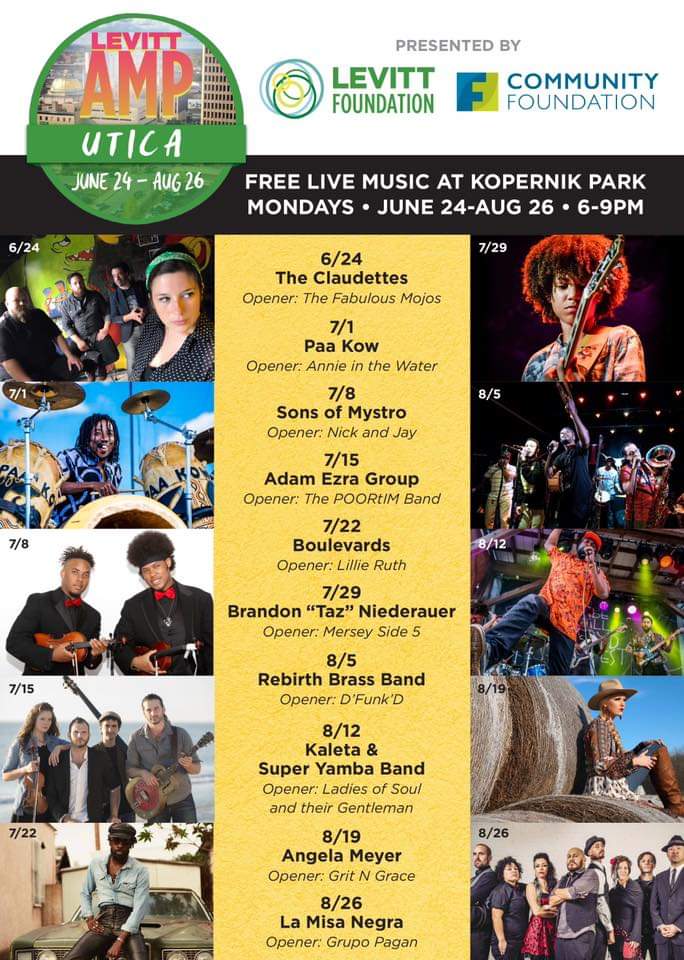
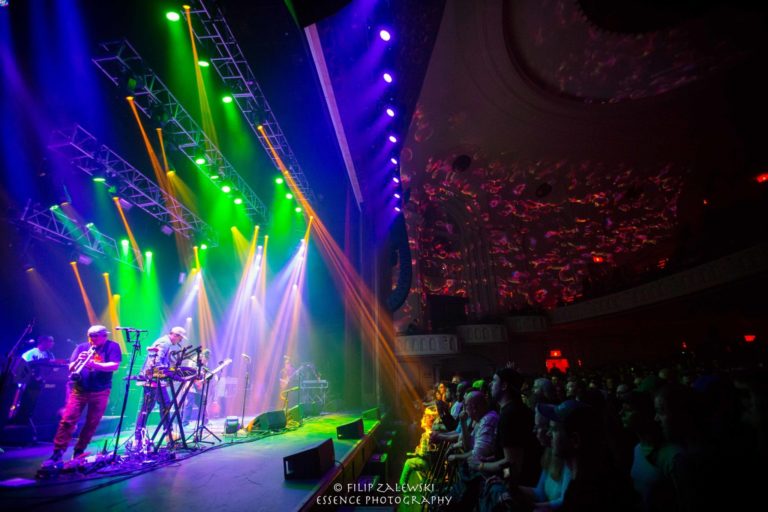
The City of Utica has been awarded a Levitt AMP concert series for the fourth consecutive year. The ten week free concert series will take place in Kopernik Park in Oneida Square on Monday nights beginning June 24 and continuing through Aug. 26.
The Levitt Foundation awards matching $25,000 grants to non-profits in select small to mid-size cities across the U.S. each year, creating a network of live music in underused spaces across the country. Eighteen cities have been selected to host the Levitt AMP series. This year, the Community Foundation provided a $25,000 match to help fund the series in Utica.
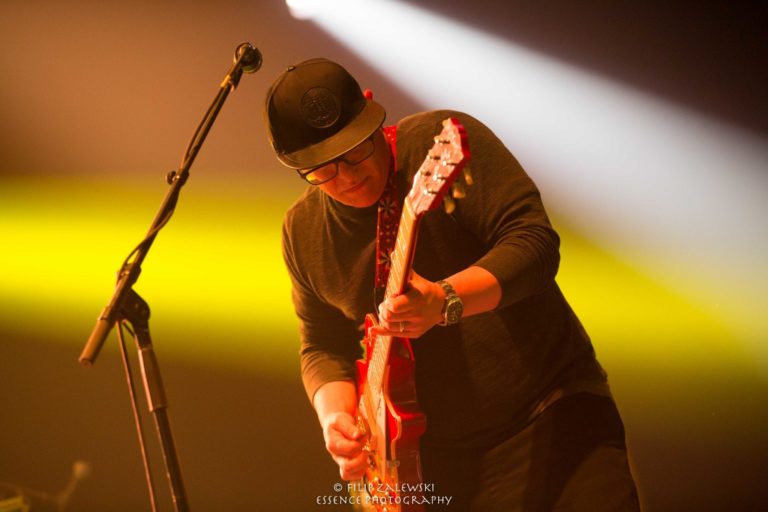
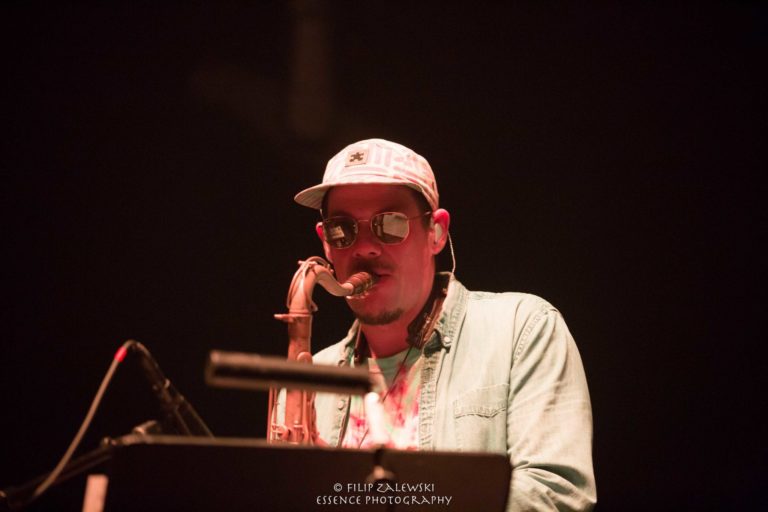
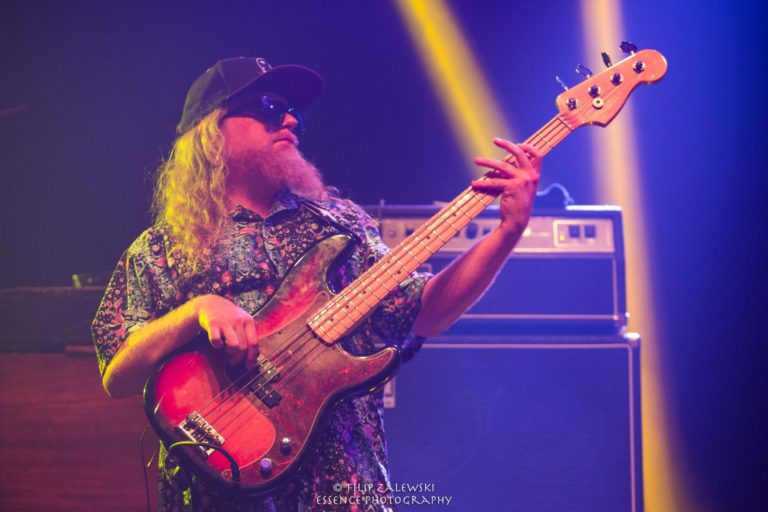
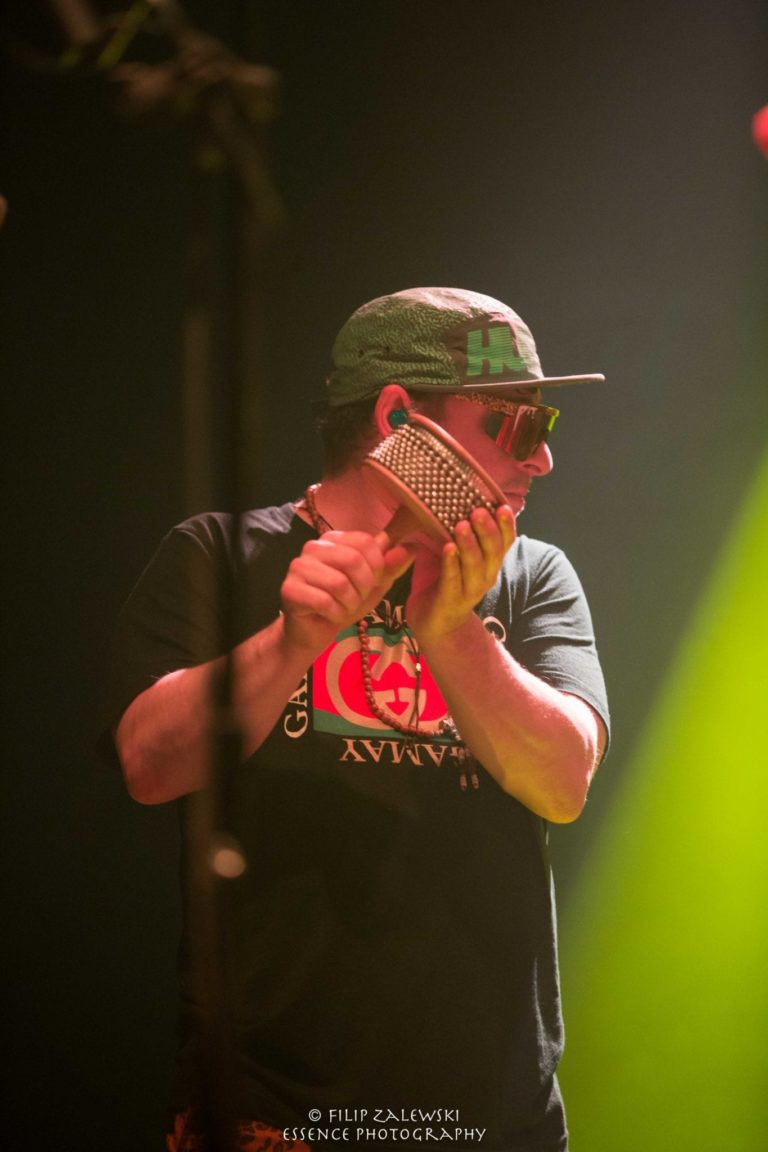
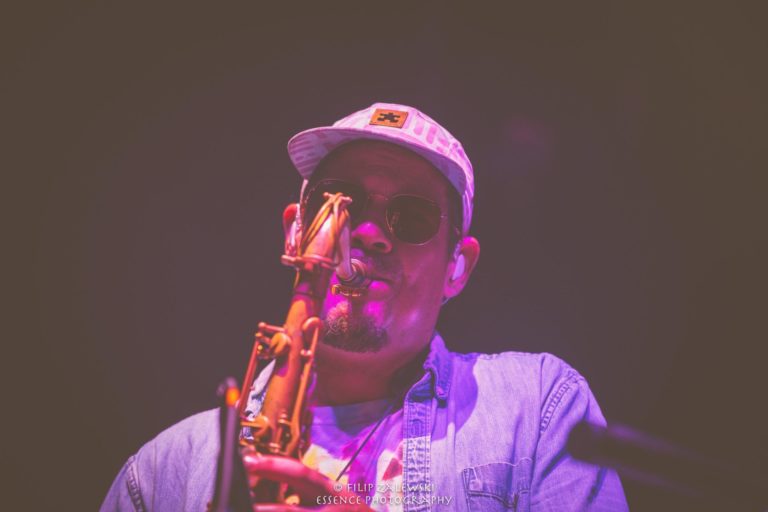
This year’s Utica Monday Night shows include a wide range of artists; from young Hendrix-influenced guitar phenom Brandon “Taz” Niederauer to the Grammy winning Rebirth Brass Band from New Orleans. Other artists include Paa Kow, a native of Ghana who combines the rhythms of West Africa with jazz to provide listeners a unique percussive sound, and La Misa Negra, a seven piece Afro-Latin collective from Oakland, CA that incorporates elements of hip-hop, metal, Caribbean and African poly rhythms.
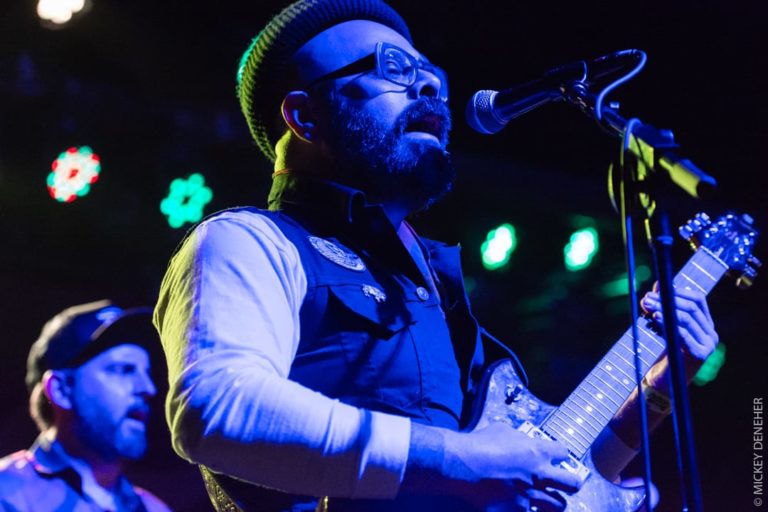
Brandon “Taz” Niederauer
Each show will feature a local opening artist beginning at 6 p.m. See the complete schedule below. For more information about the artists performing, visit the Levitt AMP Utica website here.
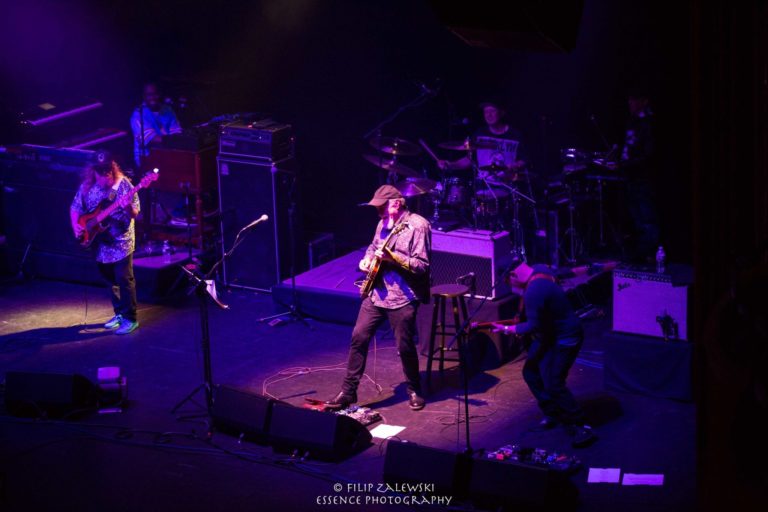
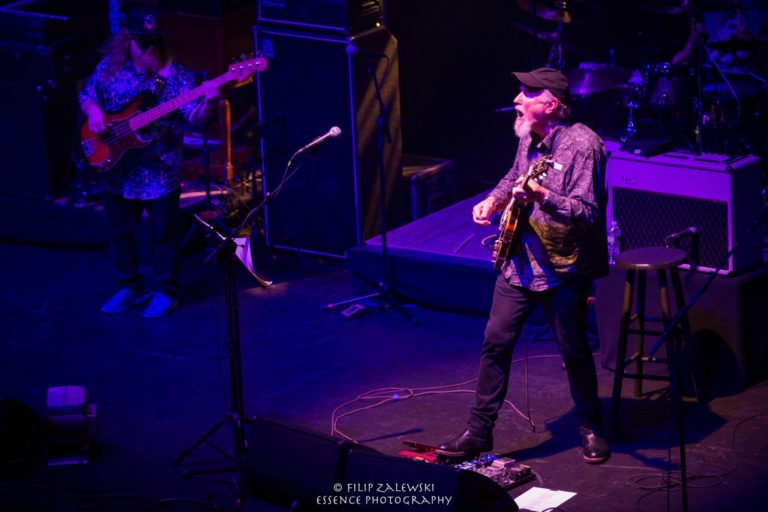
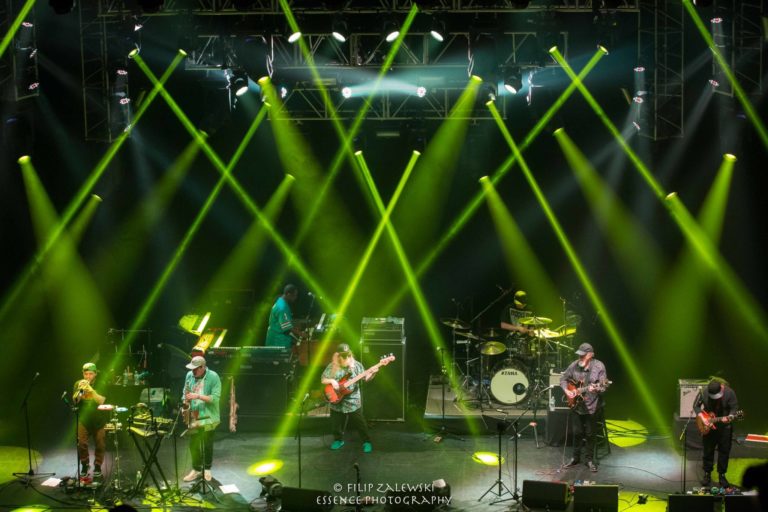
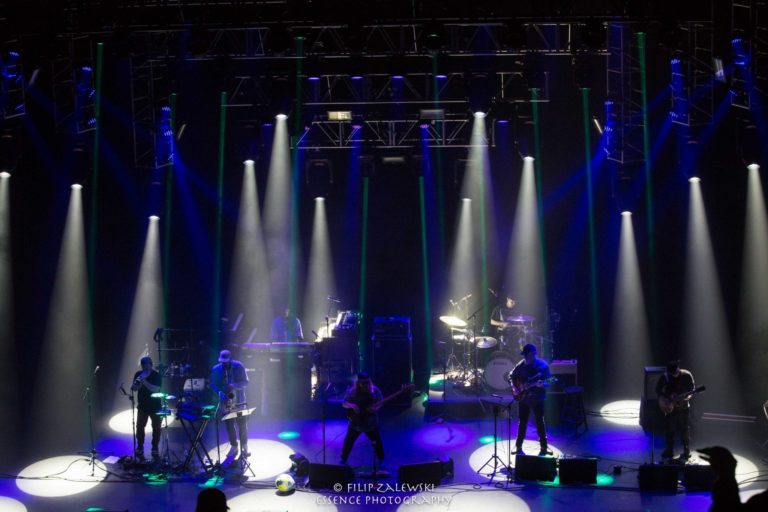
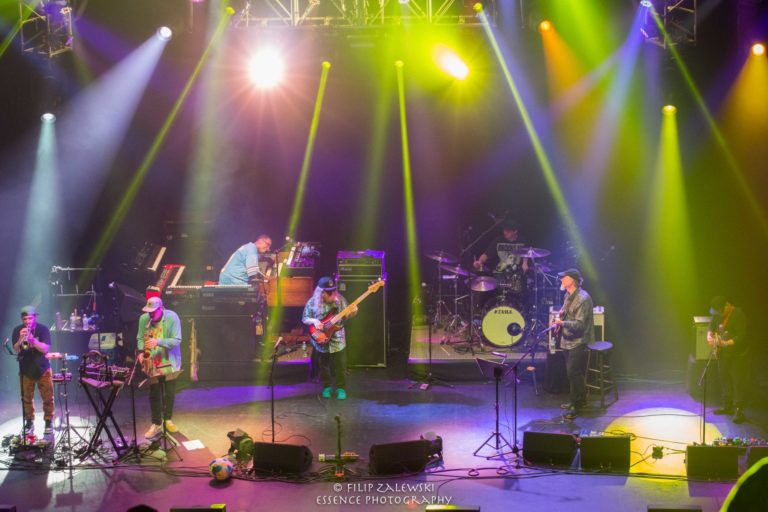
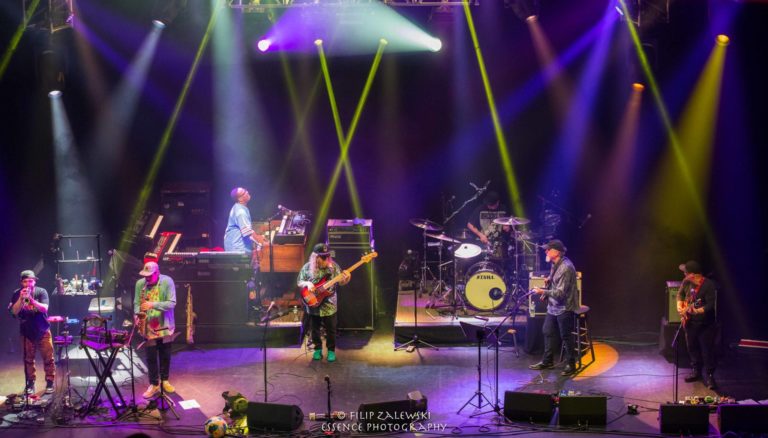
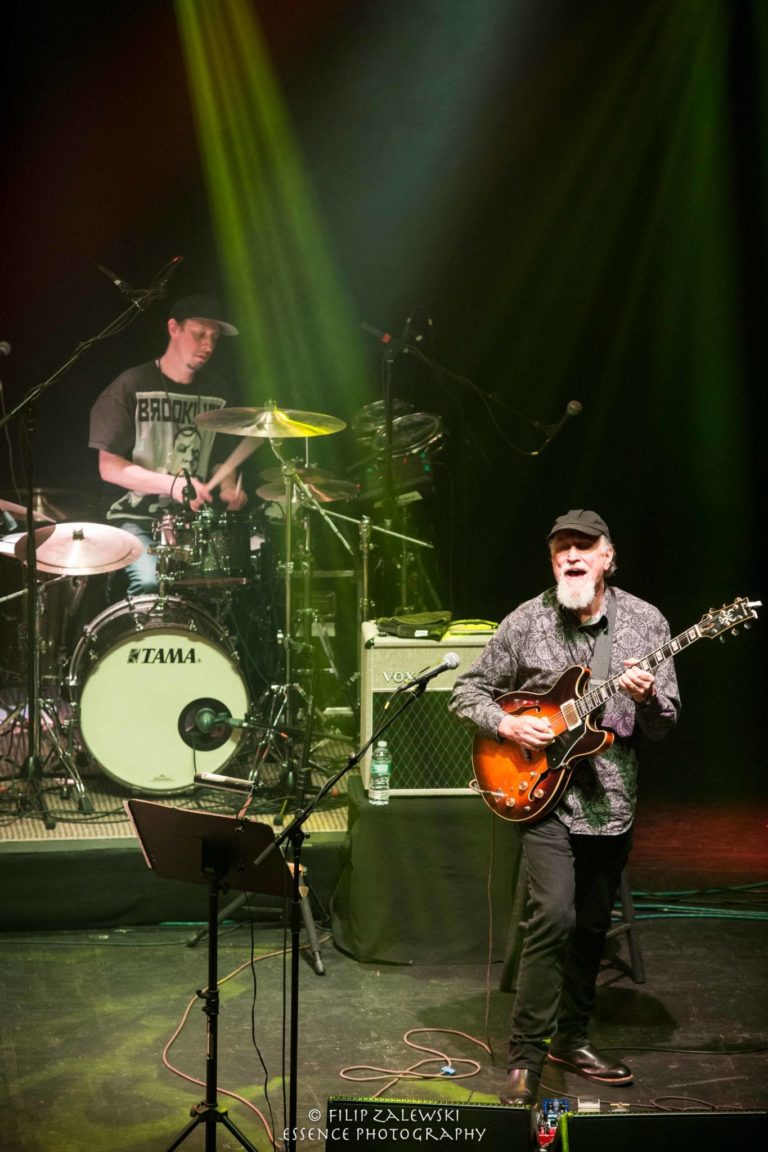
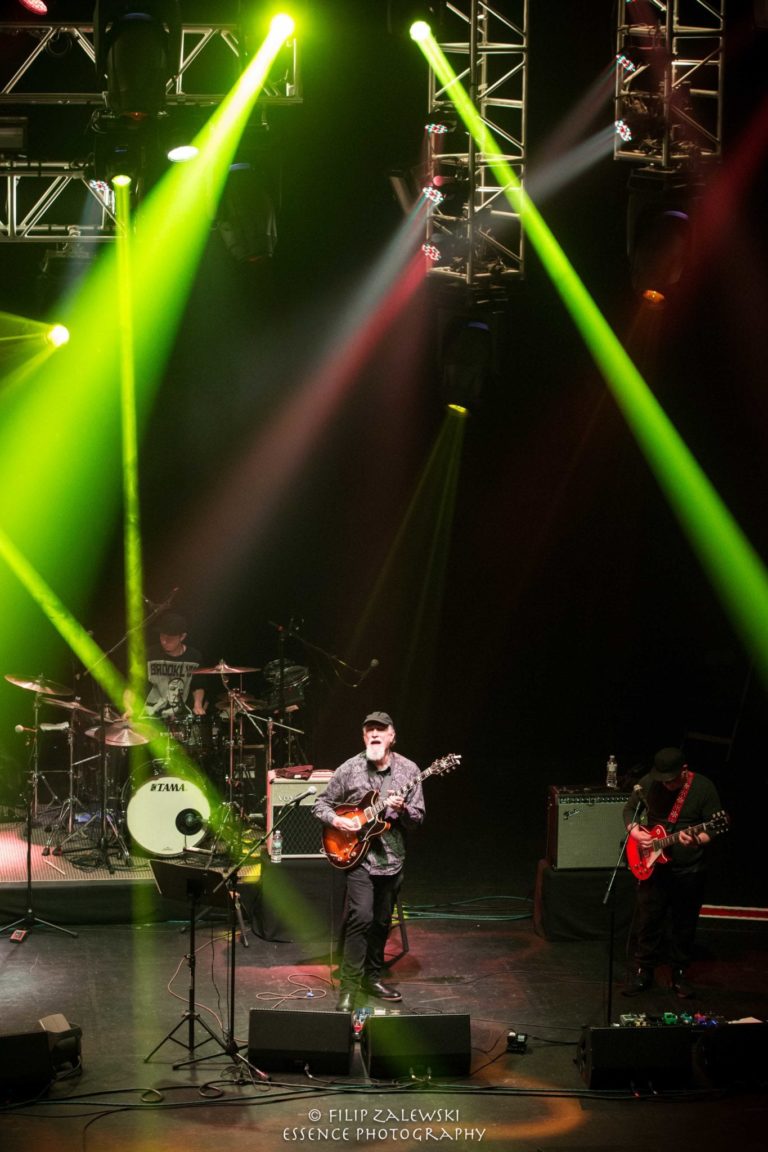
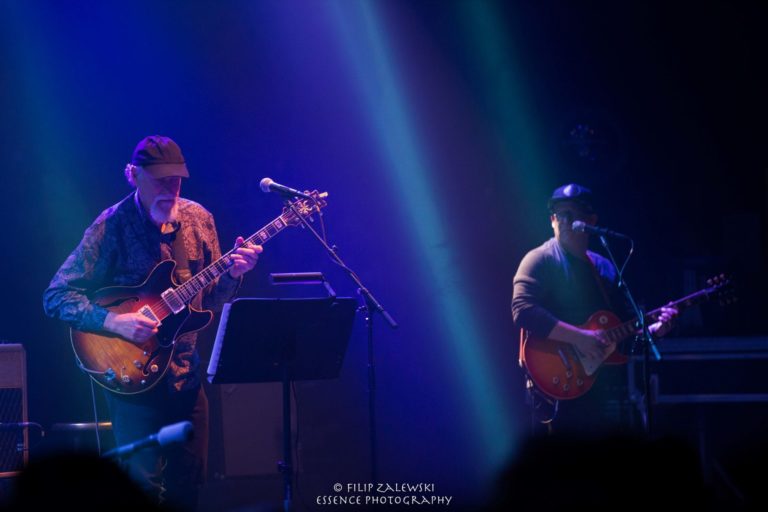
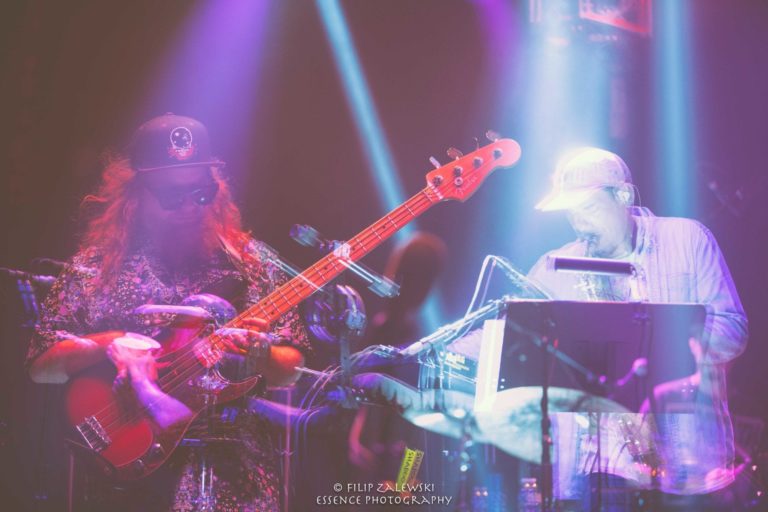
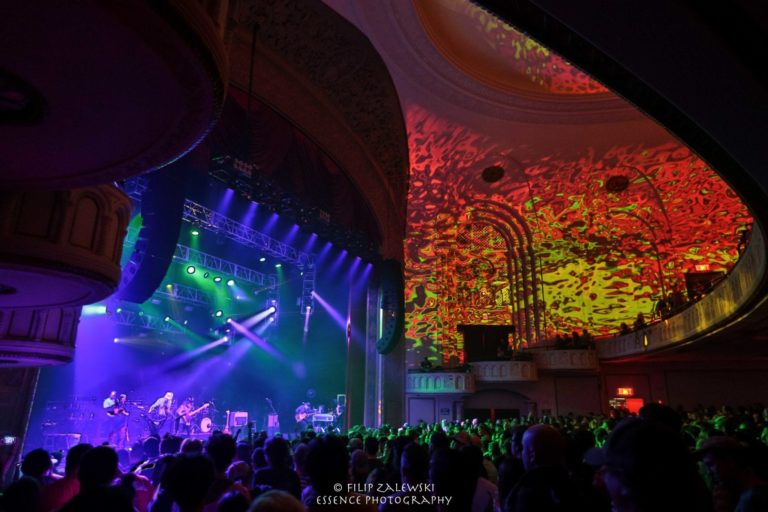
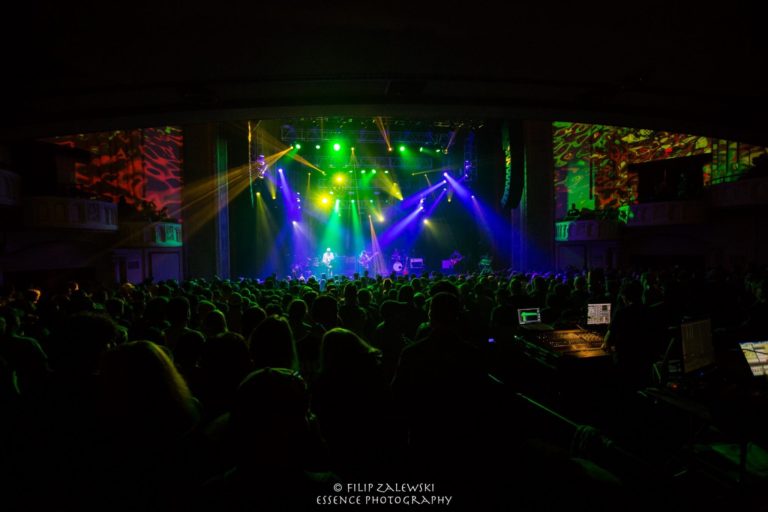
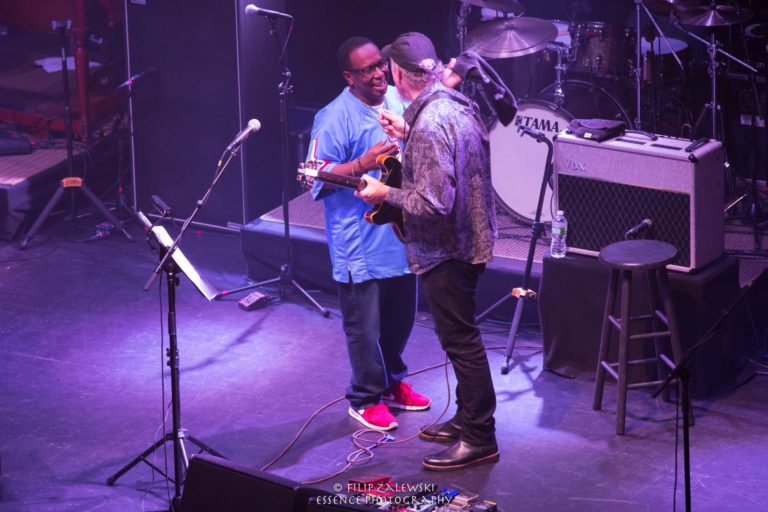
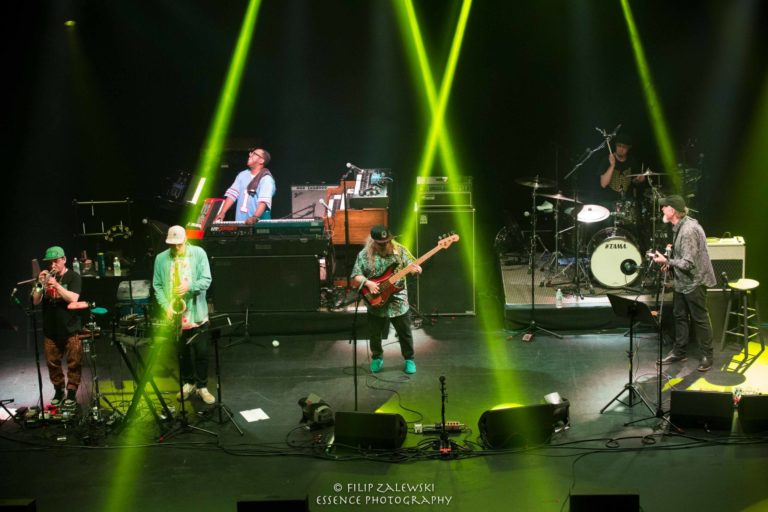
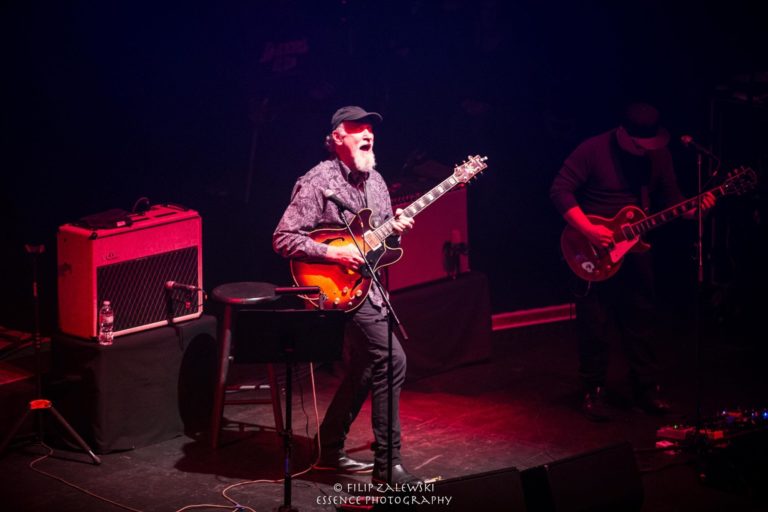
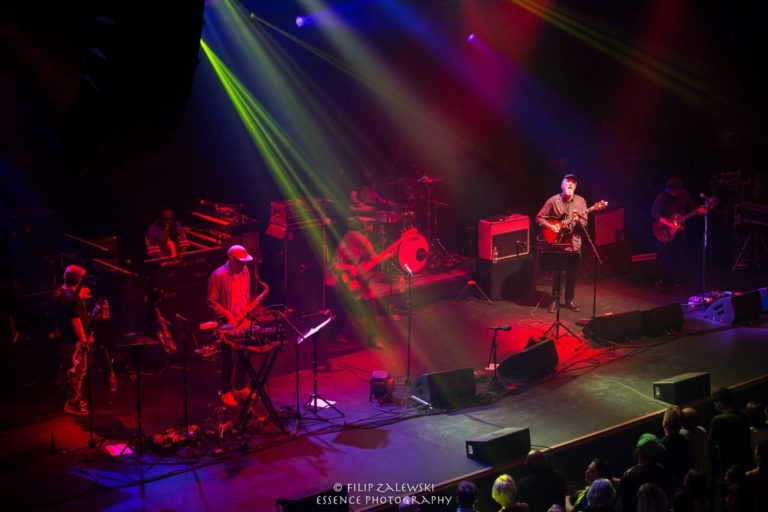
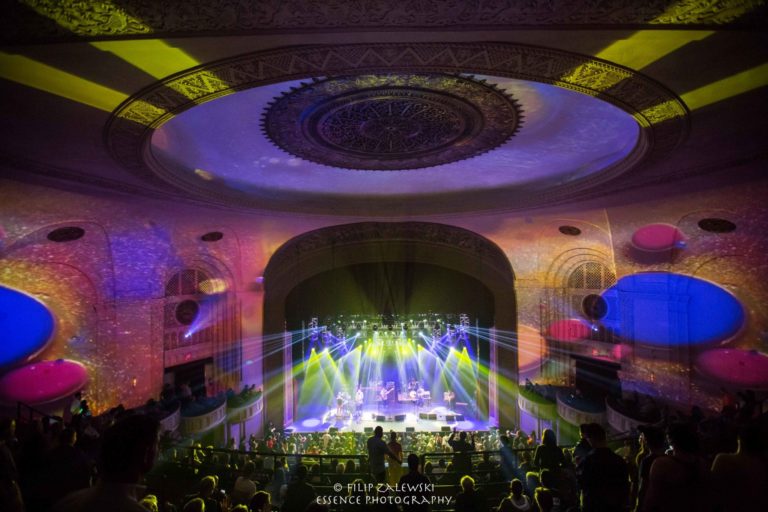
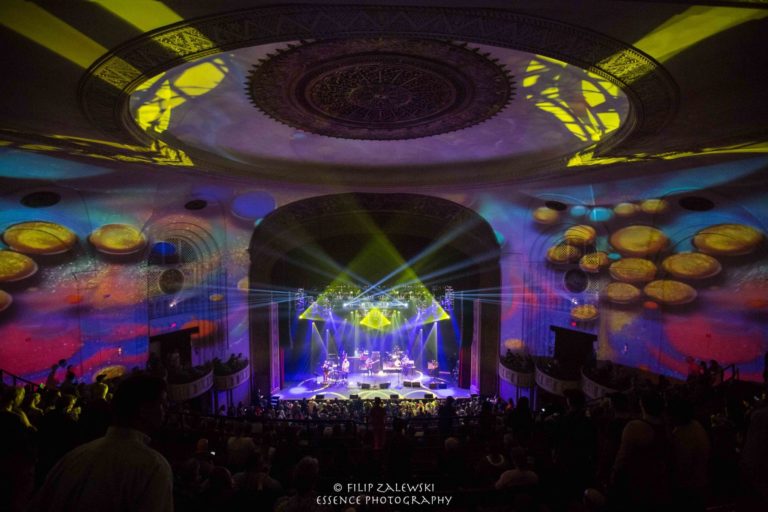
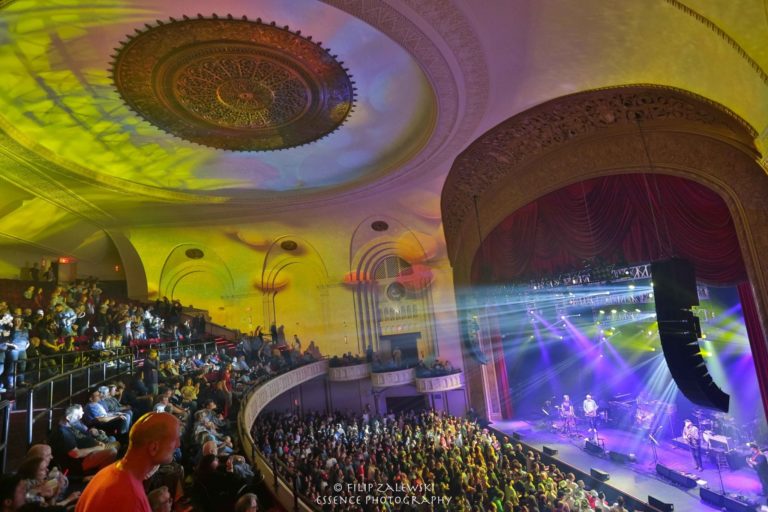
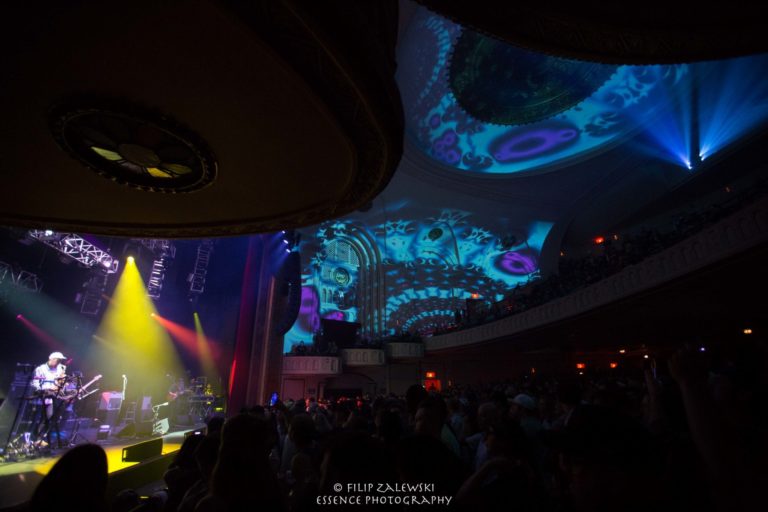
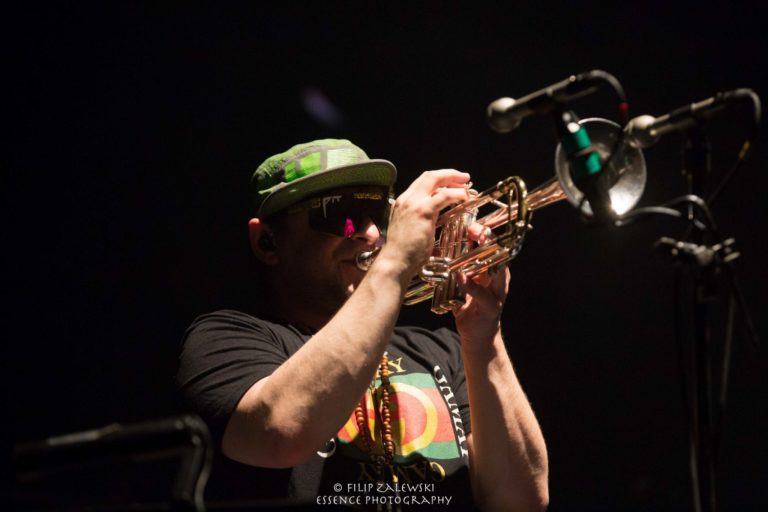
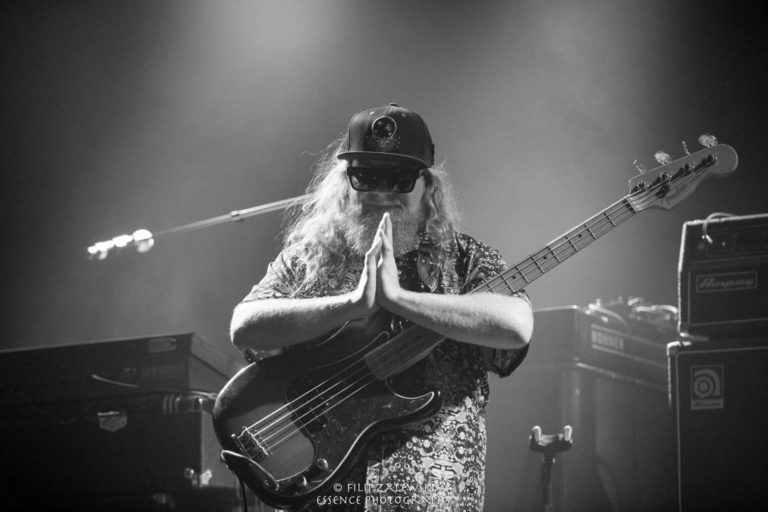
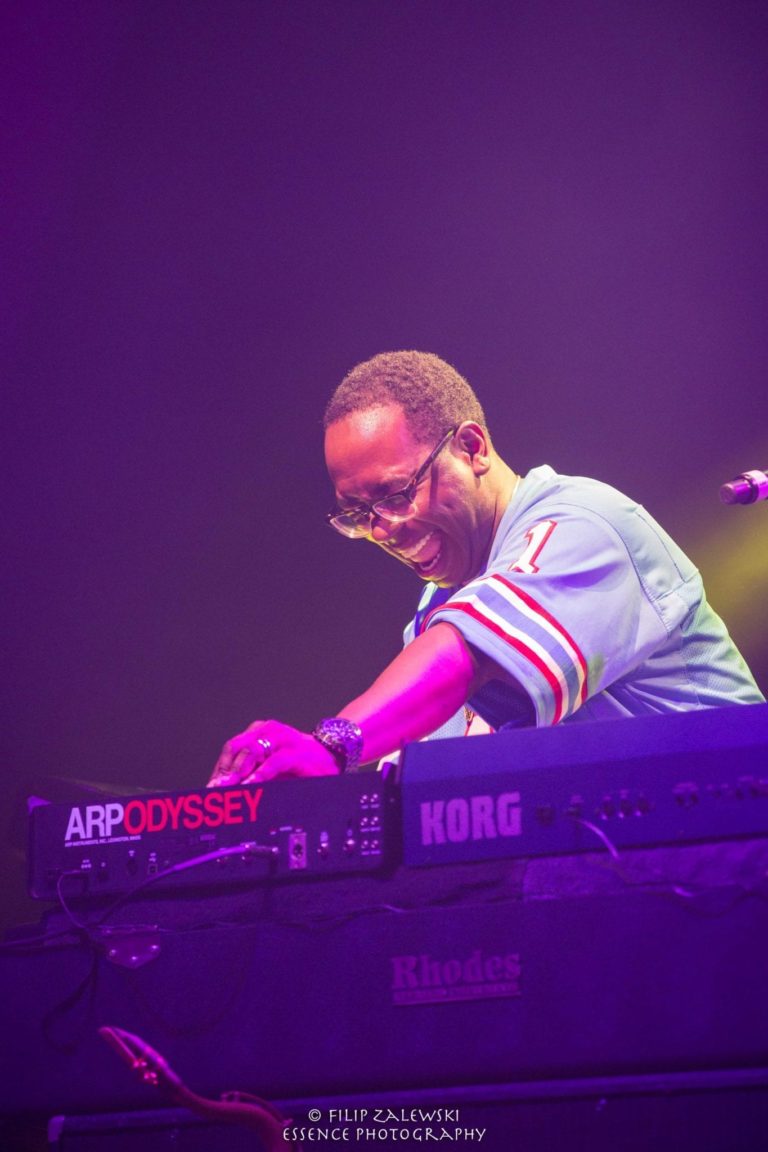
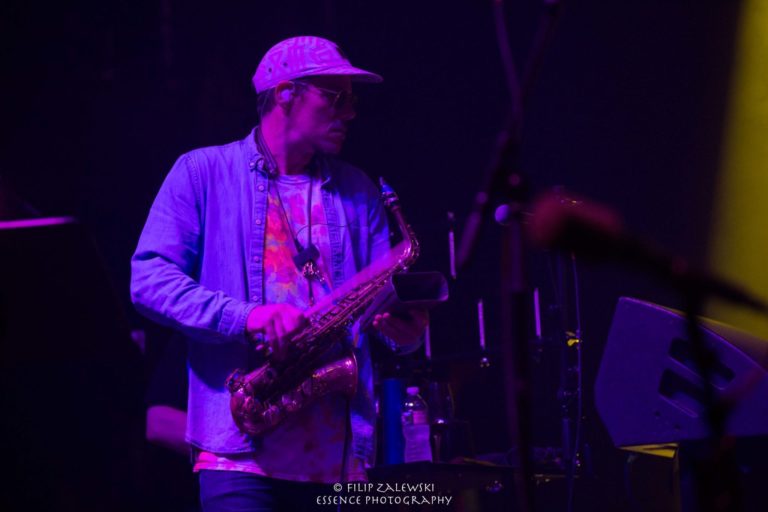
Lettuce was joined by John Scofield in lighting up The Capitol Theatre with their masterful funk grooves, mixed in with some jazz fusion. John Scofield sat in for most of the show, cutting through the funky grooves with incendiary guitar playing.
Lettuce is bringing their tight funk-grooves and hip-hop inspired beats to The Capitol Theatre in Port Chester on Saturday, April 20 for a special headlining show with famous jazz guitarist, John Scofield, sitting in as a special guest.
The band is getting ready to premiere their new studio album ‘Elevate’, of which their first single “Krewe” has just been released. Their latest release, 2017’s Witches Stew, is the band’s jazz fusion tribute to Miles Davis. Recorded live at the 2016 Catskill Chill, the album is an interpretive take on the experimental Bitches Brew era. Lettuce continues to push jazz fusion forward with this latest release, a tribute to one of the band’s biggest influences.
With John Scofield as a special guest, you should expect some psychedelic jazz fusion blends from Lettuce at The Capitol Theatre this Saturday. Tickets are still available here.
Soulive has confirmed a six dates at Brooklyn Bowl. Bowlive VIII spans two weekends, from July 11-13 and July 18-20. Tickets go on sale April 19 for individual nights or three-night passes.
Formed in 1999, Soulive is celebrating twenty years of making music together. The jazz-funk trio consists of Alan Evans on drums, Eric Krasno on guitar and Neal Evans on keys. In past years, Bowlive has included such guests as Lettuce, Marco Benevento, Chris Robinson, and Aaron Neville. Follow Soulive on Facebook, Instagram, and Twitter for updates on Bowlive VIII.
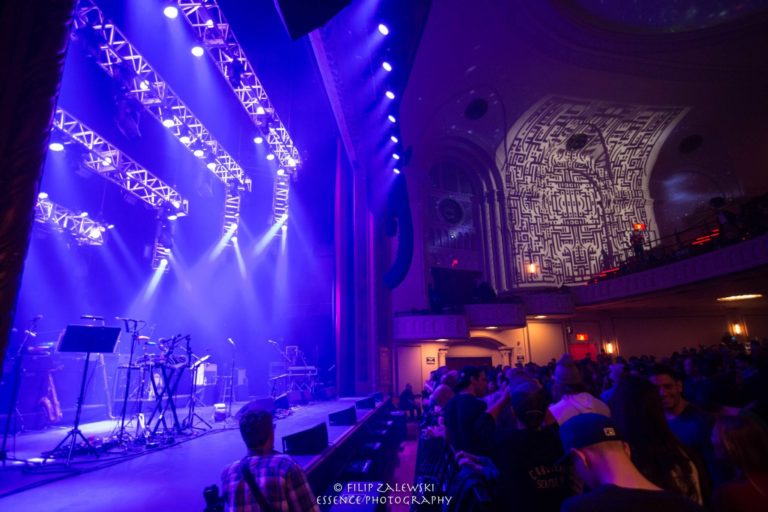
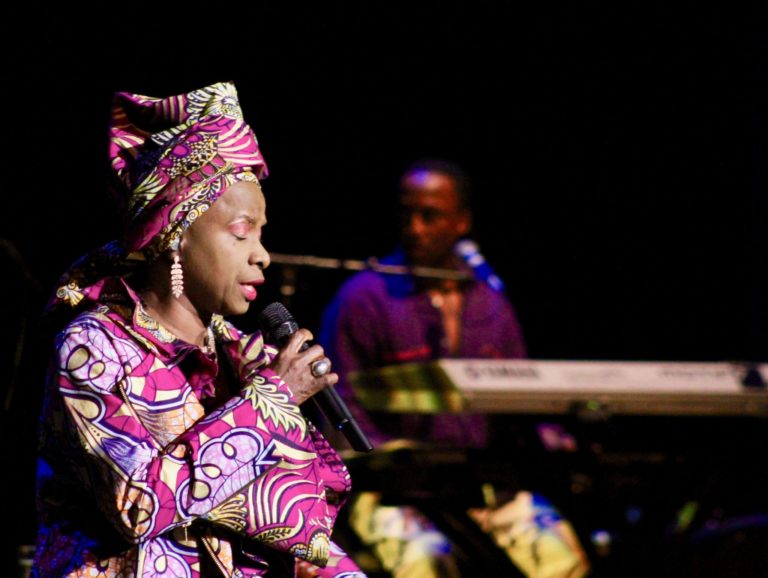
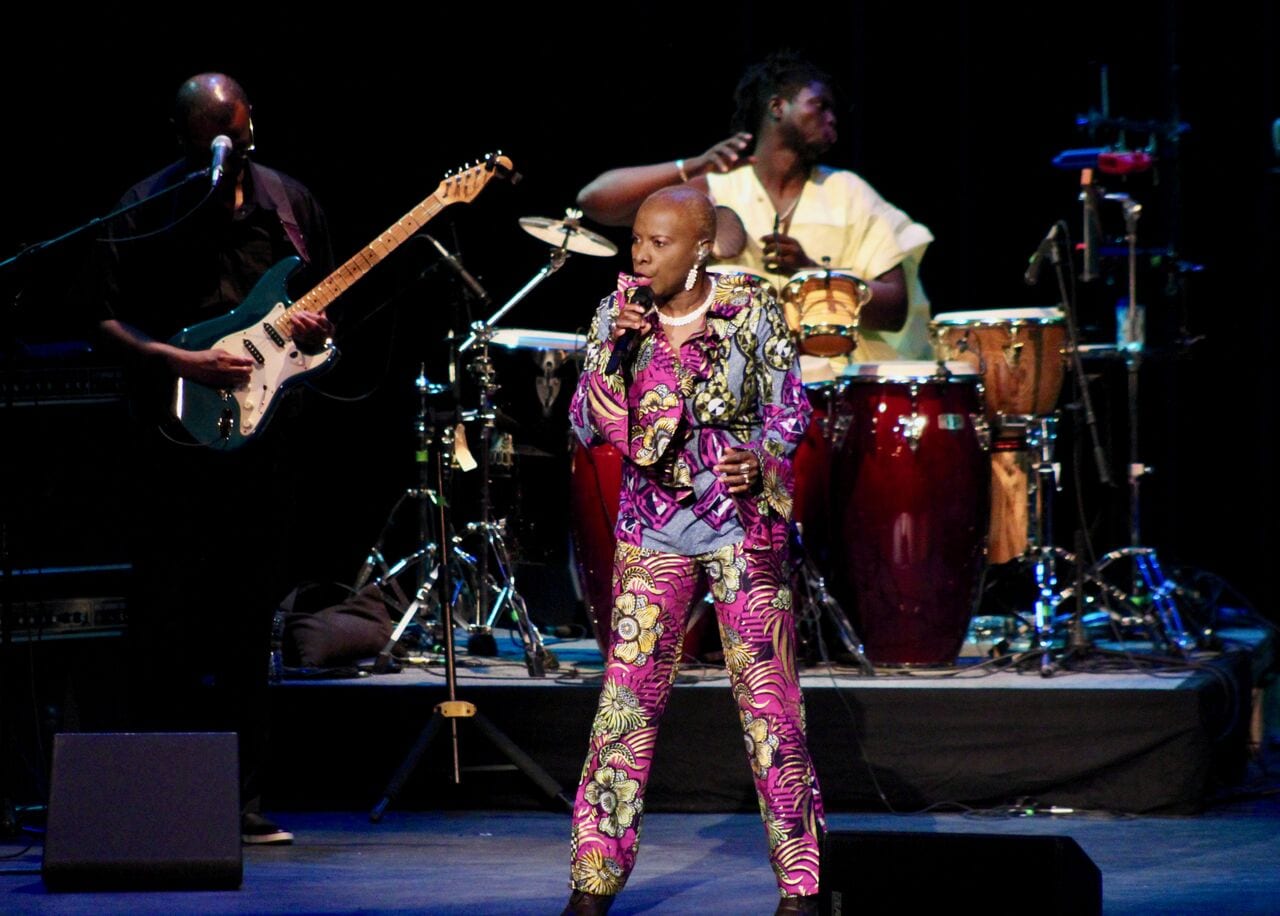
One of UPAC’s bartenders skipped down an abandoned hall, hands aloft, waving side to side, an unadulterated grin glued to his face. An usher, with no one requiring assistance, leaned against a post, nodding appreciatively and smiling approvingly. It was the encore, but the exit hall was empty and there was nobody to usher; no one left this show early. Meanwhile, Angelique Kidjo and her backing band took a victory lap, wading into the crowd from stage right, dancing, hugging and high-fiving their way to the back of the room. They shifted to the adjacent corner and shimmied back up onto stage left, all the while covering Talking Heads “Burning Down the House.”
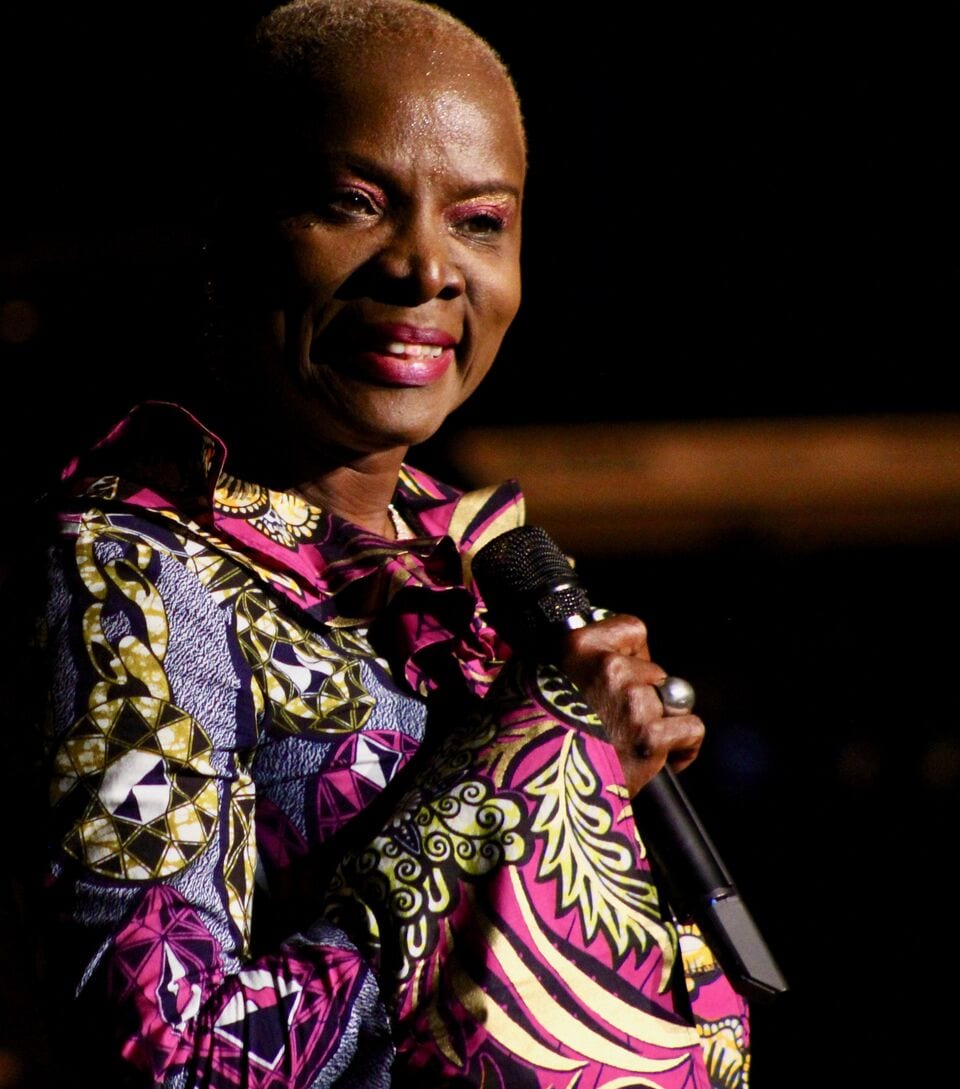
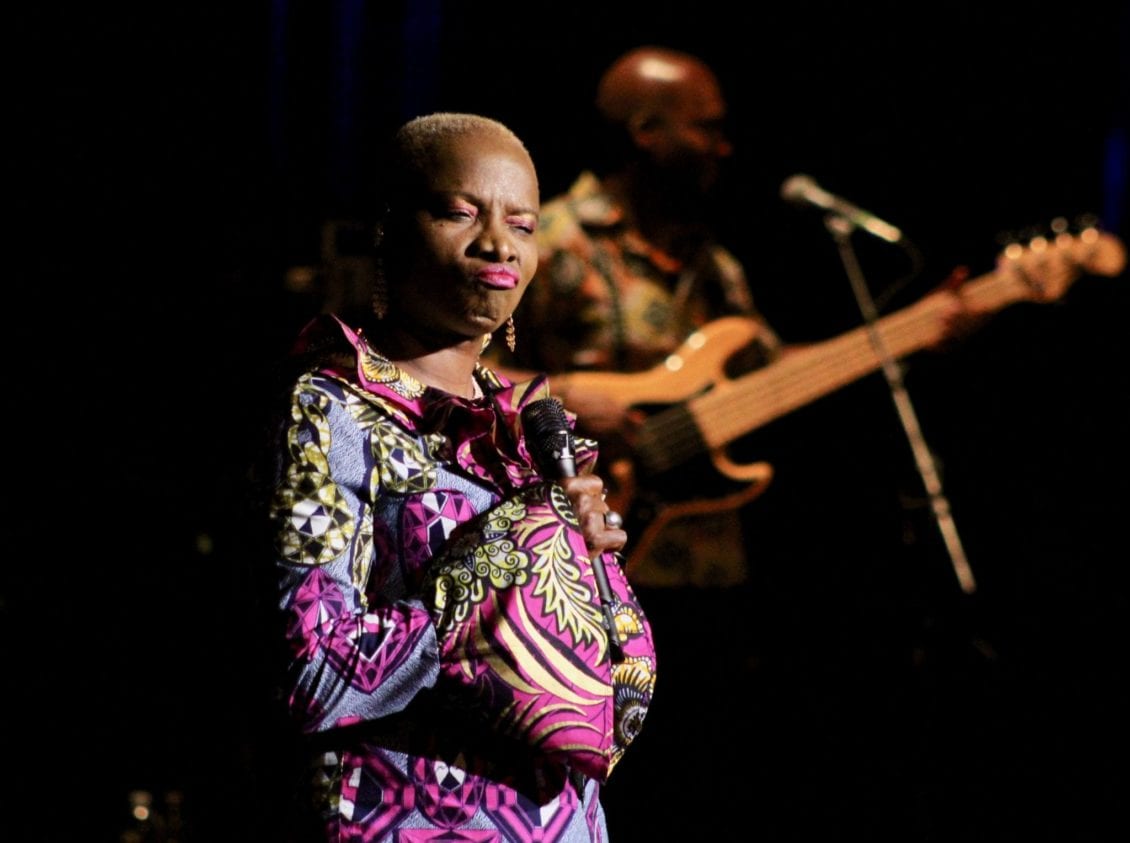
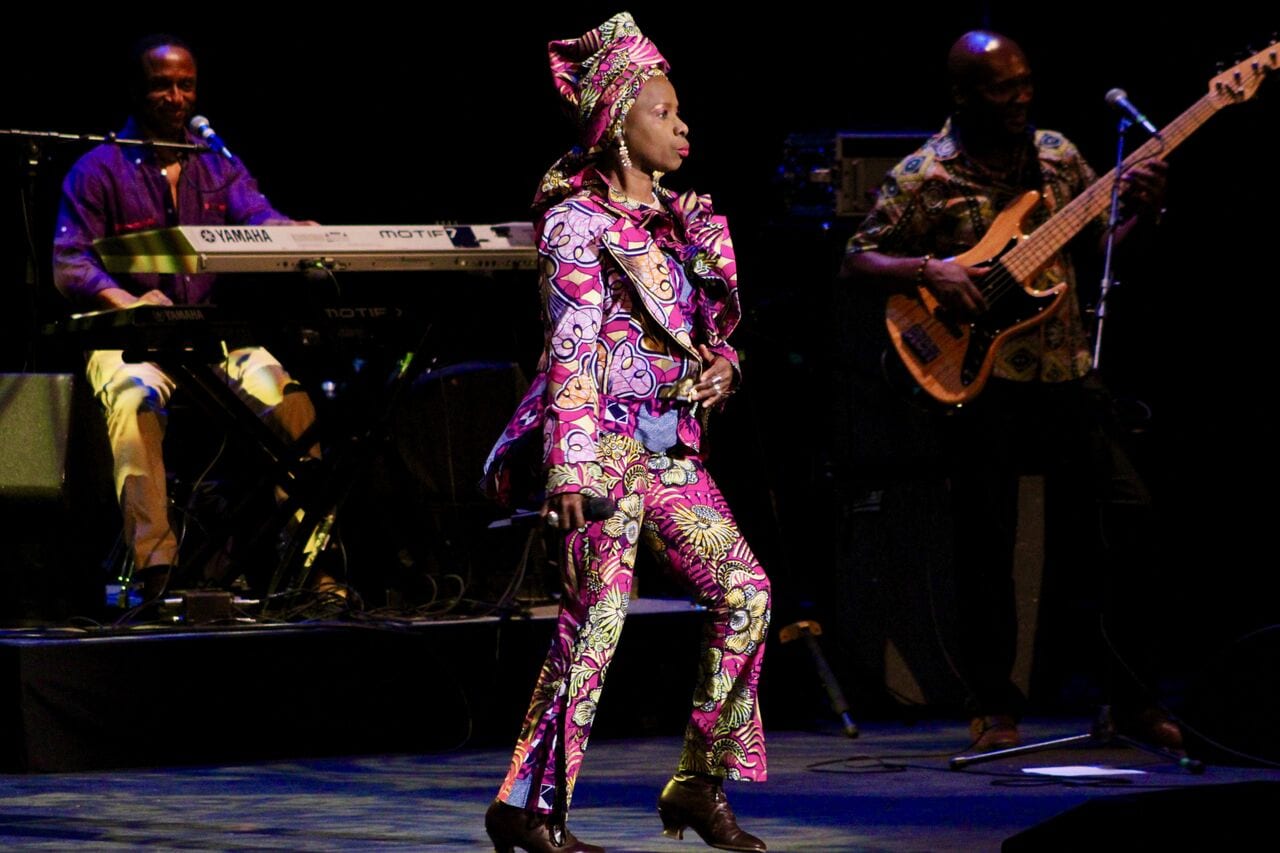
Kidjo and her band brought down the house from the opening djembe drum solo to the Talking Heads finale. When she took the stage, Kidjo’s presence instantly demanded full attention; her attire rivaled the vibrancy of her voice and she and her band held onlookers riveted all evening.
Originals and Talking Heads covers alternated throughout the evening, with anecdotes sprinkled in. After the opening drum solo kicked things off, a cover of “Born Under Punches” flowed into a bass and synth-heavy “Crosseyed and Painless.” Kidjo followed these covers by informing the Ulster Performing Arts Center, “We love doing Remain In Light—with the blessing of the Talking Heads of course!” Kidjo and her cohorts played a few California concerts with David Byrne, she explained.
For most of the evening, the aisles were filled with a wave of grooving bodies and seats were left abandoned. Kidjo is undeniably a star: her presence is vast and her voice is a wide-ranging instrument unto itself. She formed a symbiotic relationship with the Kingston crowd that blossomed all evening. Her dancing was like jujitsu that warded off bad energy as she bounced from American funk to African beats.
Midway into the show, Kidjo disappeared into the crowd and would occasionally pop up in a sea of fans in the heart of UPAC. She finally reemerged onstage for the remainder of her nearly two-hour set to energetically cover “Once In a Lifetime” to fans’ delight.
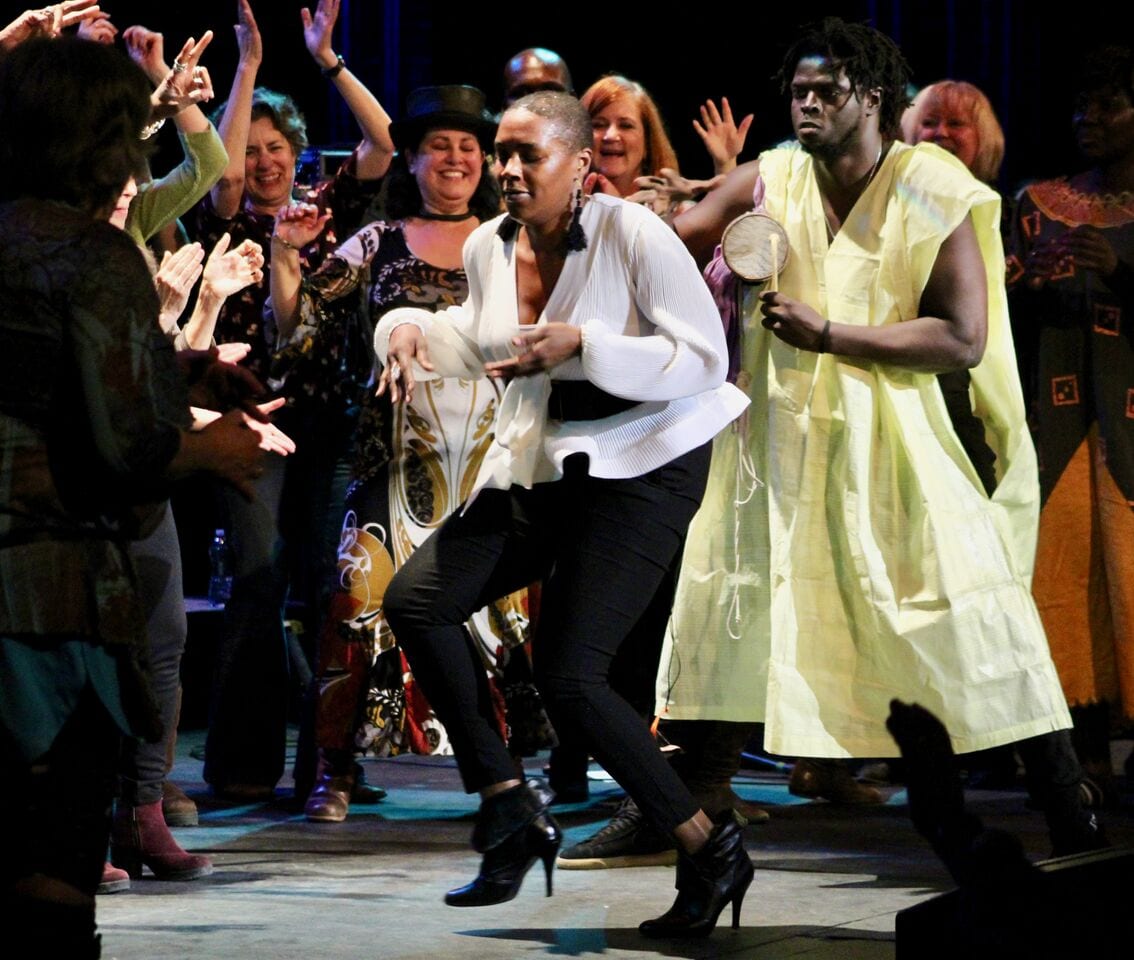
As the show neared its end, Kidjo exclaimed, “I want at least thirty people up on stage– first come, first serve, ladies, men, I don’t care who– get up here! Let’s go!” The stage quickly filled with eager attendees looking to bask in Kidjo’s presence. The djembe drummer lumbered to center-stage and began serenading dancers with beats, which they, in turn, interpreted with their shaking bodies. Anyone who wanted the limelight was given their shot at it. Those who preferred watching were treated to a show.
The evening was more an interactive musical experience than a concert. When Kidjo said, “Clap,” the Kingston crowd clapped; when she said stand, they stood. “Dance!” Kidjo demanded, and dance they did. No one left early, and no one left without a look that said they yearned to remain in Kidjo’s bright light.
It was Funk Night at the Rustic Barn Pub. Beau Sasser’s Escape Plan, featuring Albany’s Justin Henricks, brought out the funk, as they welcomed spring in their return to the venue.
The Northampton, Massachusetts-based band features: vocalist Beau Sasser double-timing on Hammond Organ, guitarist Dan Thomas, drummer Jimmy “The Italian Stallion” Robitaille, vocalist Ali McGuirk and Justin Henricks on guitar and vocals. Together, this border-crossed band got fans to dance and enjoy an evening of funk, blues and soul, on a snow-covered spring night.
“We’re keeping Aretha Franklin in our hearts,” called out McGuirk after covering her own unique spin on Bad Company’s “Rock Steady.” McGuirk and company throughout their two sets, paid homage to the late soul singer in their beautiful renditions of “Baby I Love You,” “(You Make Me Feel Like) A Natural Woman,” and “Save Me!!” Franklin’s music, especially in the genres of funk, blues, and soul, had made an impact on Beau Sasser’s Escape Plan. Through Sasser’s tasty piano solos and McGuirk’s sassy vocals, they were able to breathe new life into these iconic songs.
Being in their lineup for six months, the group decided to stick with playing cover songs for the show. Hearing the musical tightness of each cover being performed, you wouldn’t realize that they’ve been an ensemble for such a short period of time. Their sets were tight and entertaining and each song performed was covered with its own musical twist, that was unique and captivating to their audience.
From their up-tempo disco version of Stevie Wonder’s “Signed Sealed Delivered,” to playing a Frank Zappa tune that was inspired by both “Sticky Feet” and Sasser’s “Feeling Alright” (Joe Cocker) piano rhythm and a shortened, jazzy Allman Brothers Band “Whipping Post,” it was interesting to watch and hear these iconic tunes being covered well. Their cover of James’ Brown’s “Cold Sweat,” allowed you to observe the band’s chemistry, topped with outstanding soloing among Sasser, Thomas, Henricks and Robitaille, who played the drums with assistance of a tambourine to make additional noise in the jam-based song.
McGuirk returned to the stage for their final set to sing, “Can’t Hide Love,” “Taxman” (The Beatles), “Love the One You’re With” (Crosby, Sills, and Nash), “Save Me” (Aretha Franklin) which included Thomas using his lighter as a slide to perform his solo since leaving his slide upstairs, among other 60s-70s inspired songs that were enticing! McGuirk, apart from her work in Beau Sasser’s Escape Plan, will be performing in Woodstock on April 11, although little details are known about the time and venue of where her solo gig will take place. She announced her upcoming show towards the later part of the gig after performing a great rendition of “Taxman.”
Their musicality and the talent that each member expressed through guitar riffs, piano soloing and vocals left you impressed. The audience and venue were moved by their music. They wanted to hear two encore songs that the band had never performed live. One of which was “Uncle Remus” (Frank Zappa) sung by Sesser and another featuring McGuirk on lead vocals, to close out the evening.
Spring fever sprung at the Rustic Barn Pub as Beau Sasser’s Escape Plan came into town shaking those winter blues away, and to welcome spring with some good funk, blues and soul.
This article was originally published by The Spot 518.
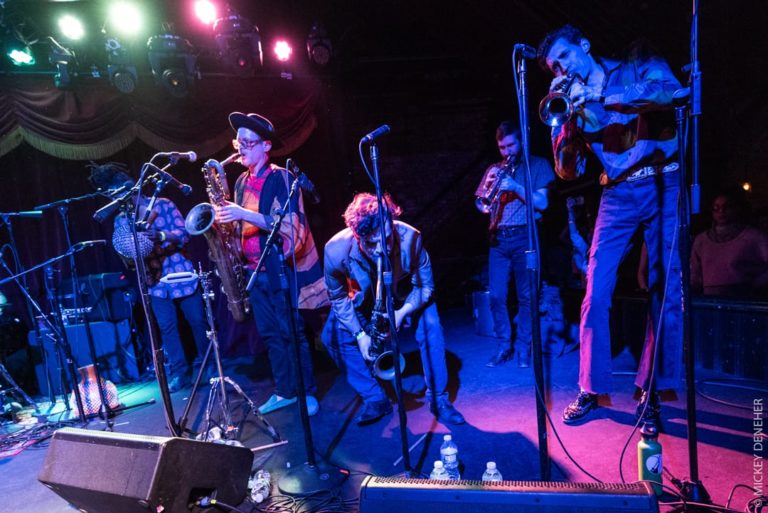
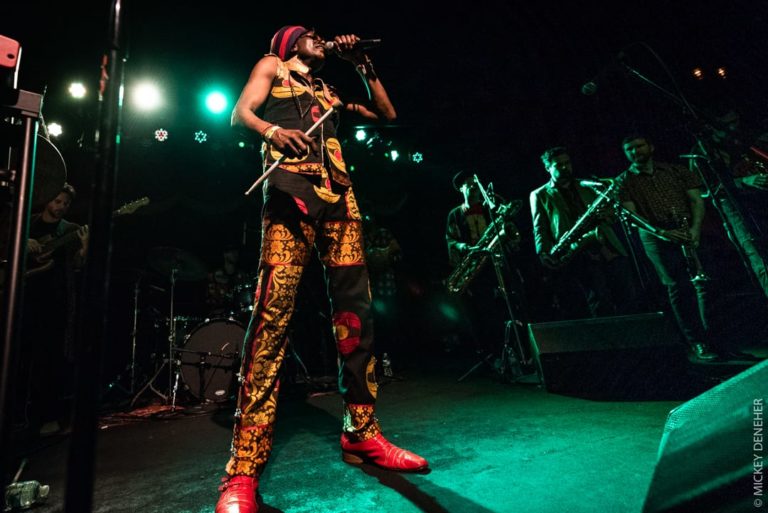
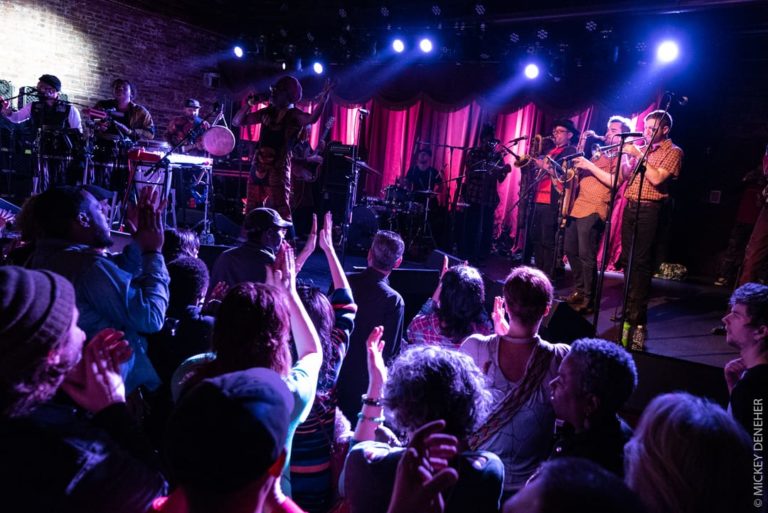
With lead singer Amayo preaching ‘deep unconditional love’ throughout the night, Antibalas performed to a sold out crowd on the second night of their 20th anniversary run at Brooklyn Bowl this past Saturday.
The fusion of African and Cuban music that Antibalas has brought to audiences for two decades is one that is rich in history and message, bringing the influence and sounds of Fela Kuti to a new generation. For nearly two hours, the 12-piece band and special guests took to the stage, creating a rich, full sound that moved the captive and diverse audience. Here’s to at least two more decades of Antibalas!
Antibalas return to their Brooklyn roots this weekend for their 20th anniversary tour’s final U.S. shows. They’ll play two nights at Brooklyn Bowl, with Innov Gnawa joining them on Friday, March 15, and Poetic Thrust starting the night off on Saturday, March 16.
The musical collective known as Antibalas (Spanish for bullet-proof or anti-bullets) was conceived of in Mexico City and formed in Brooklyn in the late ’90s. The early formation of the group was composed of the band’s founder Martín Perna and later included several other members (Gabriel Roth, Michael Wagner, Del Stribling aka Binky Griptite, Victor Axelrod, Fernando Bugaloo Velez, Anda Szilagyi) from the Soul Providers / Dap Kings band. performing their first show in May 1998 at St. Nick’s Pub in Harlem NY.
The music of Fela Kuti is well represented in the Antibalas sound, and was part of the band’s early connection with percussionist Amayo, who grew up in Lagos, Nigeria who was fluent in the music of Fela. Within months of his first show with the band at The Cooler, he began composing and performing lyrics and assuming the role of the group’s lead vocalist / frontman.
Antibalas recently released their sixth studio album on Daptone, Where the Gods are in Peace. Though recognized for their fluency in Afrobeat and funk music, the band is known to collaborate with diverse groups and artists, from Angélique Kidjo to Jovanotti to Medeski Martin & Wood to Public Enemy, and served as the house band at Carnegie Hall in 2014 (Music of Paul Simon), 2015 (Music of David Byrne & Talking Heads) and 2017’s Music of Aretha Franklin.
Join Antibalas and guests Innov Gnawa and Poetic Thrust this weekend at Brooklyn Bowl and celebrate 20 year’s of Afro-Cuban funk and rhythm.
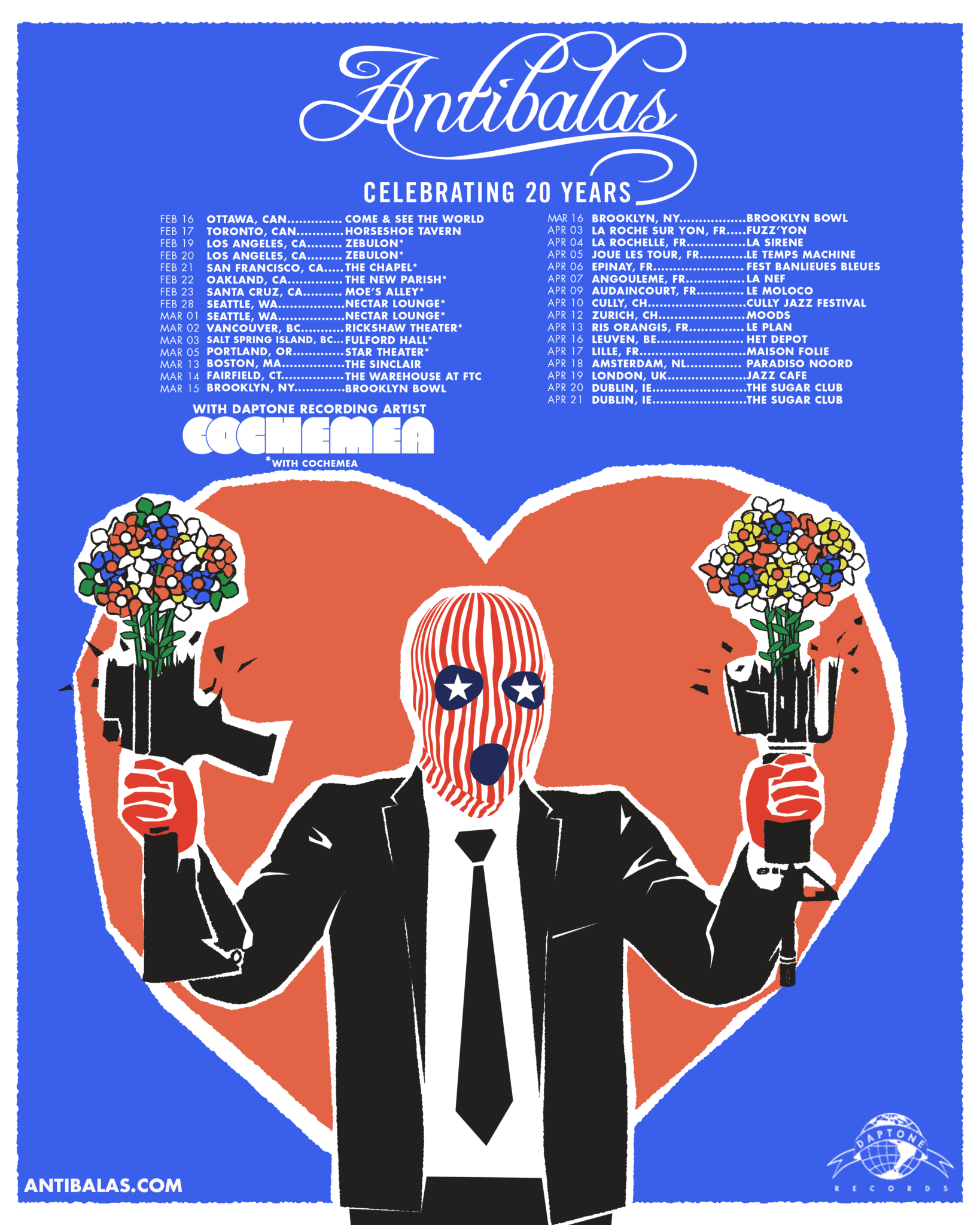
Check out the rest of Antibalas’ 20th Anniversary Tour Dates.
March 14 – The Warehouse at FTC – Fairfield, CT March 15 – Brooklyn Bowl – Brooklyn, NY March 16 – Brooklyn Bowl – Brooklyn, NY
March 30 – The Shrine – Lagos, Nigeria
April 3 – FuzzYon – La Roche Sur Yon, FR
April 4 – La Sirene – La Rochelle, FR
April 5 – Le Temps Machine – Joue Les Tour, FR
April 6 – Festival Banlieues Bleues – Epinay, FR
April 7 – La Nef – Angouleme, FR
April 9 – Le Moloco – Audaincourt, FR
April 10 – Cully Jazz Festival – Cully, CH
April 12 – Moods – Zurich, CH
April 13 – Le Plan – Ris Orangis, FR
April 16 – Het Depot – Leuven, BE
April 17 – Maison Folie – Lille, FR
April 19 – Jazz Cafe – London, UK
April 20 – The Sugar Club – Dublin, IE
April 21 – The Sugar Club – Dublin, IE
When you’ve won four Blues Music Awards, been inducted into the Blues Hall of Fame, nominated for a Grammy, and are a W.C. Handy Award recipient, your mark on the world of blues is pretty much set. Add a close friendship with B.B. King, James Cotton and Willie Dixon, and you get a glimpse into the life and career of a Blues Master: Mr. Joe Louis Walker.
Named “A legendary boundary-pushing icon of modern blues” by NPR, Walker started playing the guitar as a young boy, growing up in the Fillmore District of San Francisco in the early 60’s. Now living in the Hudson Valley for the last 10 years with his wife Robin, Joe has a non-stop schedule traveling the world; touring, writing, recording, and producing. I sat down with Joe after sound check at The Towne Crier in Beacon, N.Y. The band had just gotten in from Buffalo N.Y. and was wrapping up a few dates in the U.S. before heading off to a remote island in the Caribbean for a blues festival.
Charles Sullivan the promoter, he would give us free tickets. So we got to see the Temptations, the real Temptations. We got to see James Brown when he got a brand new bag. I got to see Little Richard with Jimi Hendricks on guitar. I got to see all of that sh#t for FREE! And plus, I got to play the Fillmore.
Mickey Deneher:Your career, over 50 years?
Joe Louis Walker: About 53 years. I’m 69 now. I turned 69 on Christmas (2018). I’ve been playing since about ’61. I joined the union in 1964. I joined the musician’s union. Been a union man all my life. Been living on my own since I was 16.
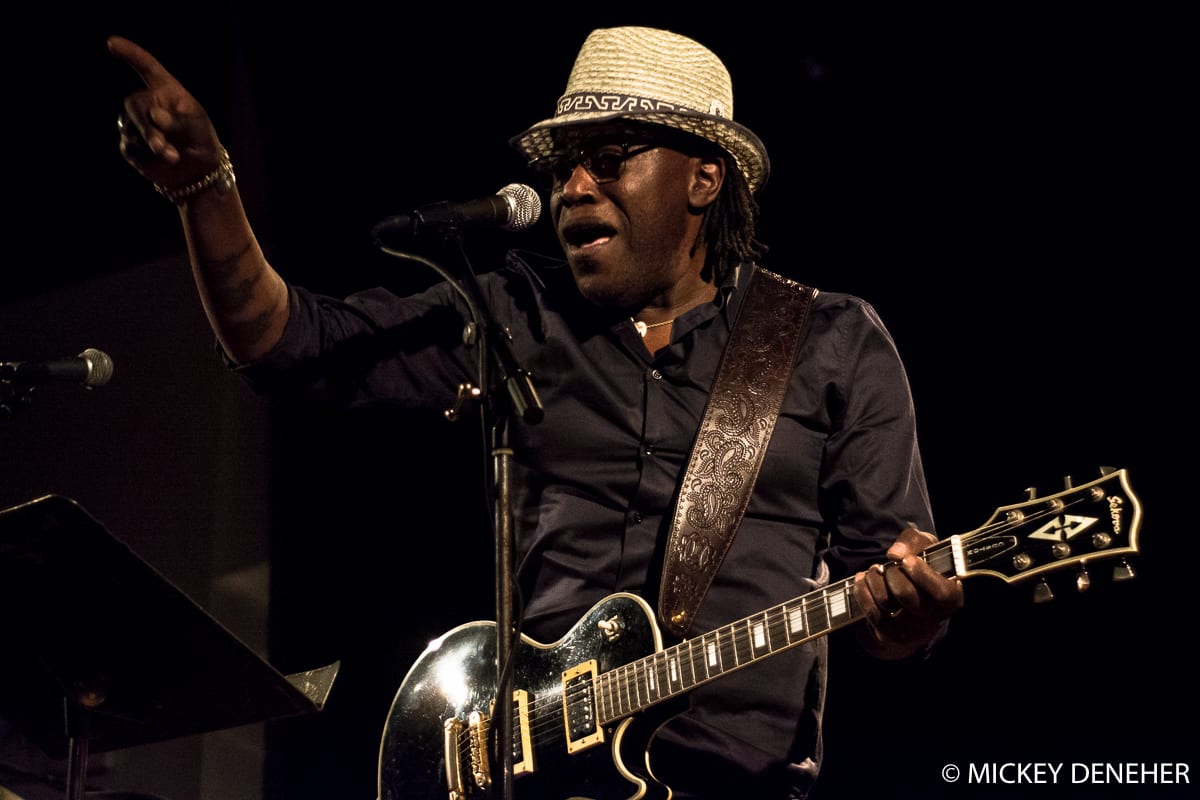
Joe Louis Walker
MD: You started playing music at a young age. What brought you to the guitar?
JLW: Well the guitar, when I was a kid, was the most accessible instrument, as it is now. The guitar was, when I was 12, 1962, only something you could look at. I went to a catholic school and at that time, you could check instruments out. If you had an aptitude, a little bit of an ear for the talent, they would nurture it. If you really had a talent, you would make a deal with your parents and they would rent you an instrument. Rent you an instrument. Not buy you one. Rent you one. With renting the instrument, come lessons. So I first rented, I checked out the violin when I was about 9, cause I could carry that home. But I really couldn’t make too much (out of it) when you’re fixated on that sound; that electric sound.
My parents had a temporary split and we ended up moving to the Fillmore District, and my world began. We moved to the projects, me and my mom and all of five kids, all of us. One project over, one housing (project), my cousins. I hadn’t seen or hung out with my cousins too much. But the first day I go there, they are on the 3rd floor of the projects; 3rd floor! I walk from the first floor. I am going to walk up three floors. You don’t want to catch the elevators. That’s where a lot of stuff goes on. All the way on the 3rd floor, all the way, the first floor to the third floor, wall-to-wall girls. Just standing and listening to my cousins play. I’m like; I am definitely going to do this now. [Laughing] Wall to Wall!
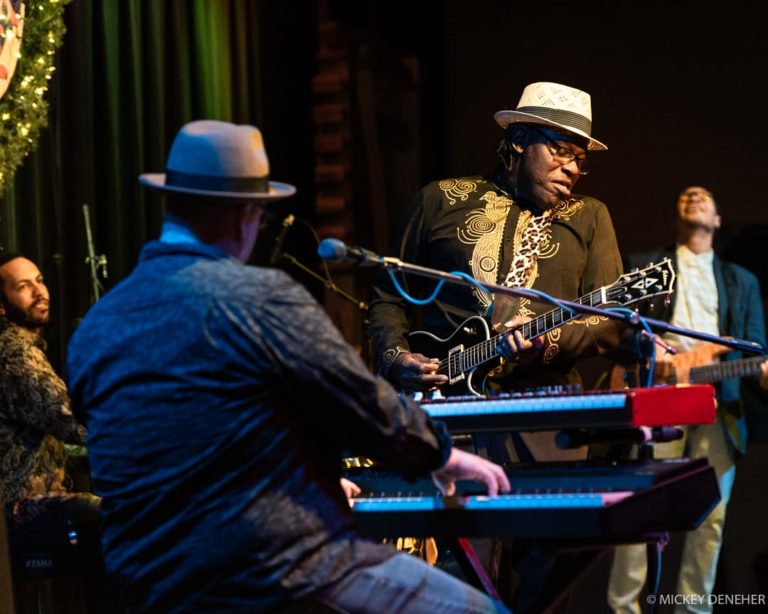
Dorian Randolph, Bruce Bears, Joe Louis Walker, Lenny Bradford.
MD: Ulterior motives!
JLW: But just to know, that there was something that we could do as young guys and make a few bucks. Buy our school clothes. Become popular without being jocks. Without being serious gang guys.
We literally, had the whole thing for ourselves. Of course there were bands all in the area. There was Sly’s (Sly and the Family Stone) brother Freddy Stewart who had a band with my cousin Ted Weisinger; Freddy Stewart and the Stone Soldiers, one of the big bands in San Francisco. This was before the hippies came to San Francisco. The hippies didn’t come till ’62, ’63, ‘64. I was in the Fillmore district in ’61, ’62. I was 12 years old in ‘62. I was lucky because there was this convergence among all the soul groups. The Fillmore at that time was like Harlem in the Renascence. It was, I would say, 75% African-American, huge amount of Japanese, a nice amount of Chinese and different, various people.
When the hippies came in to the Fillmore Auditorium, in it was sort of interesting because me and my cousins and all of us had been playing the Fillmore since we were young. That’s where we would have our battle of the bands. I went to junior high school a block from the Fillmore Auditorium. So we used to have our rehearsal there, battle of the bands there. Then, if we clean up some times, Mr. Sullivan who owned the Fillmore, Charles Sullivan the promoter, he would give us free tickets. So we got to see the Temptations, the real Temptations. We got to see James Brown when he got a brand new bag. I got to see Little Richard with Jimi Hendricks on guitar. I got to see all of that sh#t for FREE! And plus, I got to play the Fillmore.
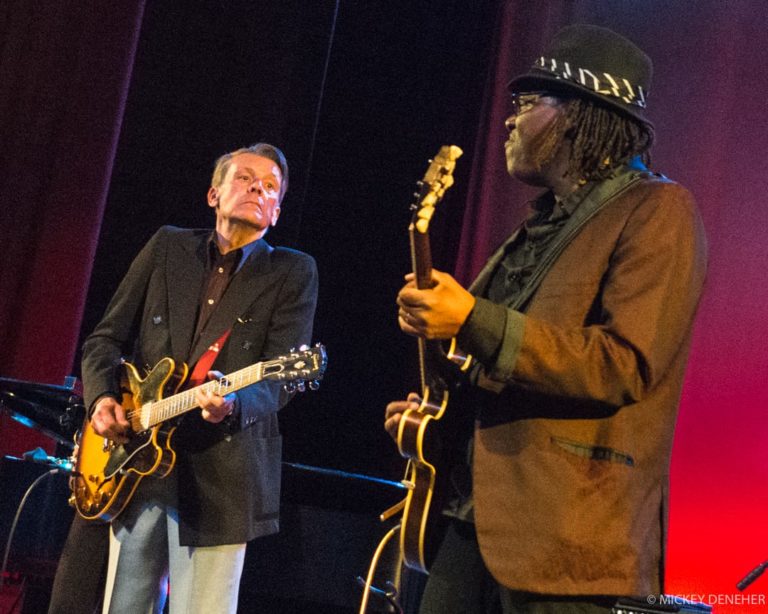
J. Geils, Joe Louis Walker
So when the hippies came there it was like ok, you know, I am cool with this. But as somebody said, very adroitly, they said “you know one of the best things to happened for a lot of the old rock and roll and blues guys was the English invasion, because they brought back interest in them.” But it was also one of the worst things to happen. Cause they put all their heroes out of work. The English guys did not mean to do that. That is not what they started for. There was like maximum R&B. That was, their heroes. That is not what they were about. Period. To note that it turned out that way, was a real drag. That is not what John Lennon and Mick Jagger and all those guys were about. They just weren’t about that. The Yardbirds, they just weren’t about all that. But that’s what it sort of turned into.
But, be that as it may, I was fortunate to be able to see all the Fillmore stuff, then play at the Fillmore. When Graham owned it; Bill would let me come any time I wanted. So I got to see all the shows.. I was fortunate to becoming up in all that stuff. It wasn’t just that; it was the young guys who were finding their musical paths.
MD:At 16 you had a name in the San Francisco music scene. Who were you were playing with?
JLW: Lowell Fulsom, Troyce Key, Percy Mayfield, Erle Hooker. You name it, I backed everybody. Katy Webster, Sly, (Mike) Bloomfield. John Lee, Earl, just on and on, and on and on. I played with all the hippie groups. I was in Blue Cheer, The Oxford Circle. We did a little fusion stuff with some other groups later. The coolest thing about that time, and that place, was that everything was progressing at the same time. What people wore, what people thought, the way the people responding to old mores, the Vietnam war, Richard Nixon, interracial marriage. Everything was happening at the same and the biggest thing I think, was what we invented in the United States in the San Francisco area, was FM radio. That was the biggest thing. Cause without FM radio we’d still be listening to The Monkees, 2 minutes, 40 seconds.
MD:You’re right. Wow, I did not think of that.
JLW: And jam bands.
MD:It wasn’t just blues, experimental, psychedelic.
JLW: It was so much. Oh my God. You could literally go out every night, hit three spots a night… You go to the Avalon Ballroom, The Family Dog (Ballroom), go see John Mayall with Mick Taylor and Muddy Water’s with his band, Big Mama Thorton. Go to the Fillmore, maybe see an Airplane with Quick Silver and Charles Lord Quartet, and Howlin’ Wolf. Four acts, that’s all in one night. That’s all in one night! Then you go to clubs after that.
Joe Louis Walker
The 60’s counterculture movement brought hippies, flower power and alternative life styles to the bay area. While the 70’s found San Francisco awash in a psychedelic haze. Walker made a conscious decision to take a detour from the 70’s status que and attended San Francisco State University, where he earned degrees in both English and Music. “It (was) important for me. Because it was something I started and didn’t finish.” Joe says. Applying his personal growth directive to music, Joe joined the gospel group The Spiritual Corinthians, in 1975.
MD:You went into Gospel. You did that for 10 years?
JLW: Longer than that.
MD:When I think about gospel, to me there is a blues base, a bluestone, that feeling.
JLW: Look at it like this: Gospel, Blues, and Soul music. Just take a for instance. For instance, in blues I mean B.B. King. I don’t mean Eric Clapton. No disrespect to Eric Clapton, ok. In blues, that is the template. Or Howlin’ Wolf. Say B.B. King, cause B.B. to me always was, and I used to have fun telling him this, “you’re just a gospel singer in a blues singer’s body.” When he was young, cause he hit all the high notes, his range was limitless.
JLW on B.B. King, Blues and Soul:
So you take a B.B. King for blues. So you take for soul music (pauses for a second), Sam Moore. Just a voice that’s just wicked, or Al Green. And say in gospel music, you take somebody like my friend, Clarence Fountain (Blind Boys of Alabama). When you have those three, all those three guys are cousins. I could take Bobby Blue Bland and interject him into soul, he wouldn’t miss a step, wouldn’t miss cause he helped invent it. I could take Sam Cooke and interject him into blues. Sam Cooke had a number 3 record; hit record with “Little Red Rooster.” A lot of people don’t know that and it’s cool. I could take Sam Cooke and interject him into soul, wouldn’t miss a step. I can take Sam Cooke, of course, interject him into gospel, wouldn’t miss a step. I can interject B.B. into gospel, wouldn’t miss a step.
Joe Louis Walker, Lenny Bradford
But now I could not interject Eric Clapton into gospel. No disrespect. I could not interject Joe Bonamassa into soul music. I can interject him as a player. But I couldn’t interject him in like Bernie Worrell or Catfish (Collins); Bootsy Collin’s brother; or someone like Jimmy Nolen who played with James Brown; or Freddy Stewart, Sly Stones brother; or Bobby Womack. I’m sure he could play all that, don’t get me wrong, but that style of playing within itself is the total opposite of this (Joe motions moving fingers all over a guitar neck at rapid speed.) Cause when you playing soul music and gospel, you are playing as an accompaniment to the voice. The lyric of the song is the star. Everything else is secondary. With blues now, and I should say blues rock, because its changed. It used to be, which it just blows your mind, go home and put on any record you like. Put on “Little Red Rooster” by Howlin’ Wolf, put on “Boom, Boom” by John Hooker, put on “Baby What You Want Me ToDo” by Jimmy Reed, put on “Got My Mojo Workin’” you will not hear one solo. You might hear four, five notes; but you are not going to hear (Joe makes sounds like a cacophony of notes played at lightning speed.) That is sort of what a lot of stuff has morphed into now. So when it’s morphed into that, and it’s morphed into screaming as loud as you can, singing as loud as you can, with a lot of fake ass emotion. I’m sorry I grew up in the same project with Etta James, I grew up in the same projects man. She never screamed on “I’d Rather Go Blind.” In that particular song she doesn’t scream. She really doesn’t.
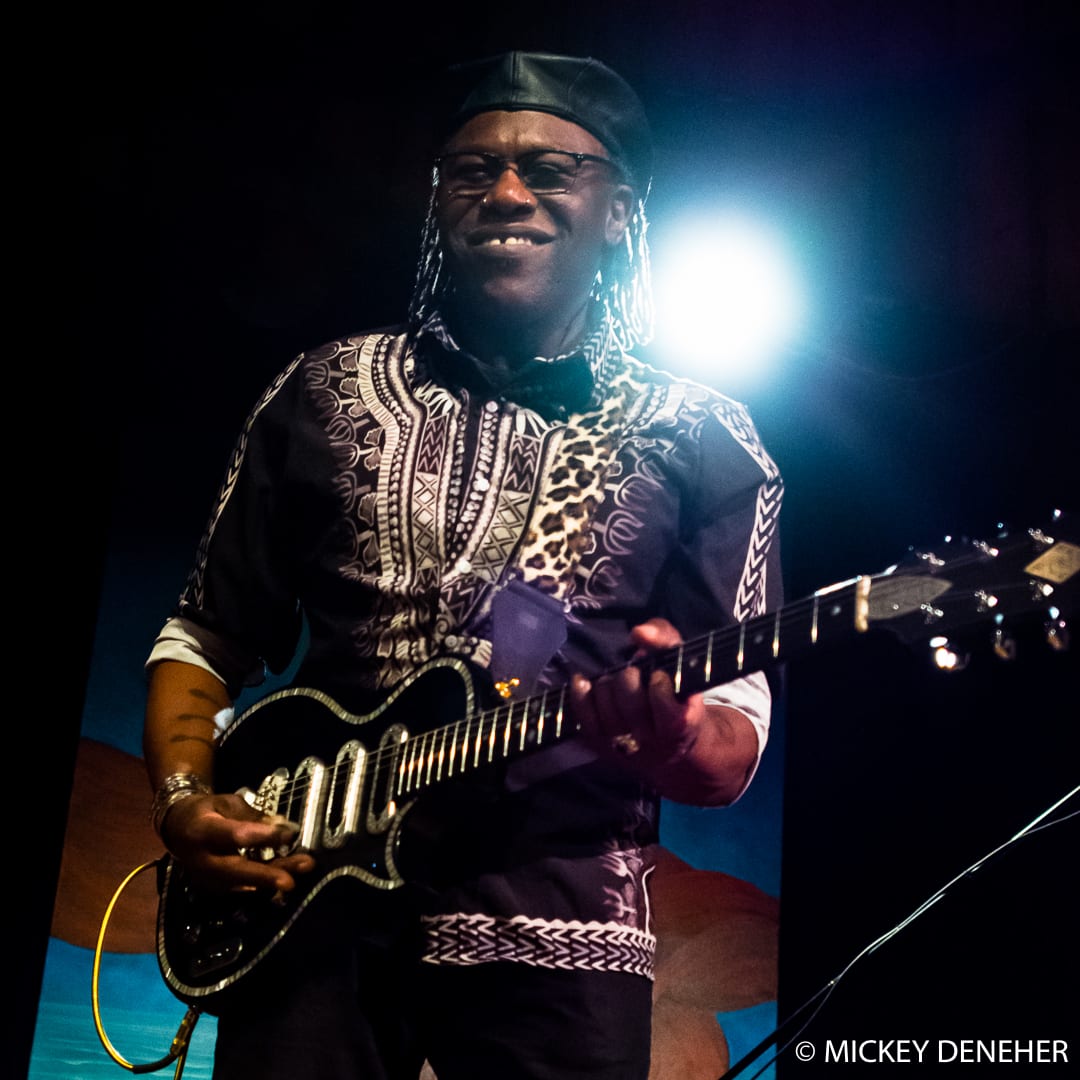
Joe Louis Walker
So I guess we all have our points of reference. We all have what we feel moves us. The same things, it moves me all my life. Once I heard the Wolf, I loved it. I loved it just as much now. When I heard “Satisfaction” I loved the song then, I love it now. But blues has morphed, you know it’s just morphed into more of a me thing, as apposed to a we thing. Muddy Waters was great. But he sounded really good with Little Walter, he sounded really good with Otis Spann, you know what I mean. He sounded really freak’n good with Willie Big Eyes Smith. When he didn’t have Willie, when he didn’t have Otis Spann what did he do? He got Pinetop Perkins!
Those guys could literally solo over each other and not step over each other. They could solo a little during the song, but not step on each other. That it was all about we. A lot now is about me. It’s about the individual. That’s sort of the way the music business has morphed.
[bs-quote quote=” B.B. King to me always was, and I used to have fun telling him this, ‘you’re just a gospel singer in a blues singer’s body.’ When he was young, cause he hit all the high notes, his range was limitless.” style=”default” align=”center” color=”#000000″ author_name=”Joe Louis Walker”][/bs-quote]
While attending the New Orleans Jazz and Heritage Festival with The New Corinthians in 1985, Joe had an epiphany that the blues were his calling. He realigned his musical direction and has not looked back. His resume of musical accomplishments include 25 albums to date and countless guest appearances supporting the likes of B.B. King, James Cotton, Branford Marsalis, Peter Green, Elvin Bishop, Issac Hayes.
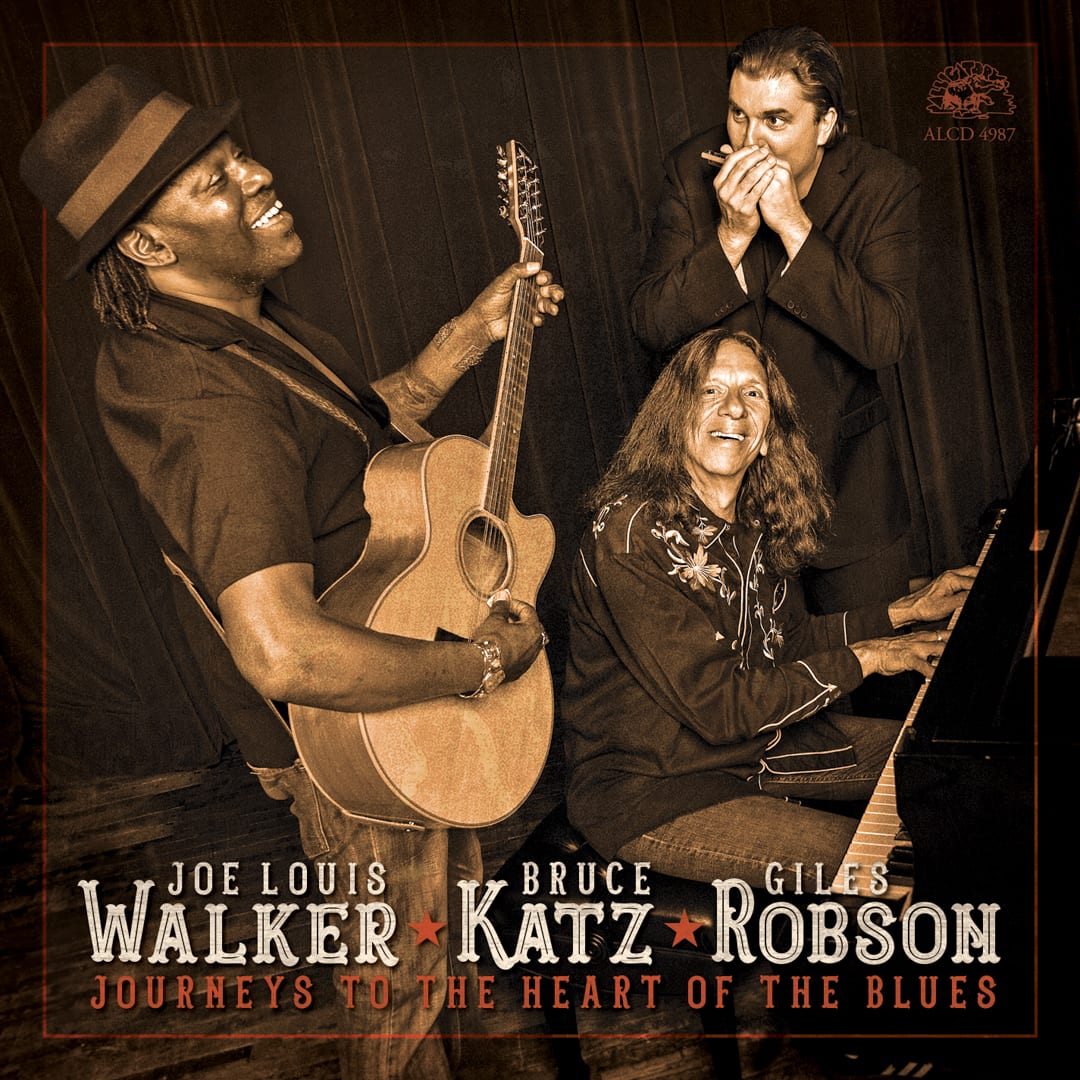
Joe’s latest project is Journeys to the Heart of the Blues. An acoustic blues album nominated for two 2019 Blues Music Awards (Album Of The Year, Acoustic Album.) Joe recorded with renowned keyboard player and fellow Hudson Valley resident Bruce Katz (Greg Allman Band,) and next-generation British harmonica ace Giles Robson. The album is out on Alligator Records throughout North America, Australia, New Zealand and Japan. Munich Records, a division of V2 Records Benelux, will release it in all other territories. The sessions were recorded at NRS Studios in Woodstock.
Joe Louis Walker, Bruce Katz, Giles Robson
Mickey Deneher:You are recording now, correct?
Joe Louis Walker: My album. We are about three quarters finished. A double album.
Joe’s upcoming album is chock full of his friends who he’s has played with over the years. The list includes: Juma Saltan, Mitch Ryder, Jesse Johnson (The Time), John Sebastian, Dion DiMucci, Ray Walker (one of the last living Jordanaires), David Bromberg, Carla Cook (Sam Cook’s daughter), Bobby Will, Charlie Harper (UK Subs,) Waddy Wachtel, Keb’ Mo’, and Jorma Kaukonen.
MD:I saw one of your recording credits is as a primary artist on William Shatner’s “Shatner’s Claus: The Christmas Album”
JLW: Yeah. We are getting ready to make a blues album next year. Going to beam us up baby. For me it’s sort of a double-edged thing. Because it’s amazing that now the blues are so popular, that literally, Captain Kirk, he done run out of universe, but he’s into blues music, and who’s he talking to? Joe Louis! I’m trying to give him a little bit of insight cause he’s very serious.
I just tell anybody that asks me; this is not about the notes. It’s not about the vintage guitar. It’s not about the tour bus. It’s not about the $5,000 Armani suits, with the $500 shades at the Royal Albert Hall. It’s not any of that. It isn’t. This here, comes out of suffering and what it is, its the social studies in survival and how to deal with adverse circumstances that are state sponsored and you have to deal with it. That’s what the blues came out of.
Catch this legendary bluesman and his band at The Egg in Albany on March 13th with The Robert Cray Band; March 21st at City Vineyard, in NYC; and March 22nd at Live at the Falcon, in Marlboro N.Y.
Lenny Bradford, Joe Louis Walker, Bruce Bears, Dorian Randolph
The funk-rock quartet, ponder, specializes in soulful and original tune-making. Praised for engaging live performances, the group from Buffalo, has been working diligently to shine light on their music in other regions of the state.
Previously, ponder has performed at Buffalove 2016 and Rochester Fringe Fest 2016 & 2017. An extension of the list includes Cobblestone Live Music and Arts Festival. Music is Art Festival, and Rock Autism Music Festival. Additionally, they have been granted the opportunity to open shows for acts such as LITZ, The Werks, Formula 5, and many others.
With the intention of bringing their talent to North America, ponder’s international tour begins in March, kicked off by the decision to release a brand new single today. Titled “Greener,” the tune embodies the multi-dimensional groove rock aura ponder promotes. Harmonies are smartly layered, accompanied by drums and dueling guitar phrases. The thoughtful lyrics in combination with a prominent bass line results in a full body experience for the listener. In reference to previous works, the single offers an uplifting message about staying together through tough times while keeping life exciting through transition and monotony.