Category: Album Reviews

  • Interview: Mike Robinson Talks Debut Album, Railroad Earth Tour and More

    Last week, NYS Music covered staple jamgrass group Railroad Earth during the incredible northeast run of their 2019 winter tour. While all musicians put on a strong showing every night, one performer stood out in particular: Mike Robinson, special guest musician for the run that shined on pedal steel, guitar, and banjo.

    Many music fans may have discovered Robinson during this tour, or maybe already knew him from his days with the progressive grass outfit Jeff Austin Band. Yet, soon enough, the musical world will get to know the singer-songwriter in his own right, when he releases his debut EP, Clevidence, on March 7. Featuring five emotionally and sonically rich songs, Clevidence comes as a great introduction to not only Robinson’s prolific talent across a number of instruments, but also his natural affinity for songwriting and singing.

    mike robinson

    The album’s release on March 7 will be celebrated with a special performance at Owl Music Parlor in Brooklyn NY, with singer songwriter Emma Frank opening up the show. In anticipation of the date, NYS Music talked with Robinson about the making of the record, his musical upbringing and more.

    Miles Hurley: My first question is on your experience with working in the studio. Being that Clevidence is your debut solo EP, was the making of this album a new kind of experience to other recording stuff you may have done in the past?

    Mike Robinson: Recording almost all of this project at home was a big departure from other studio experiences I’ve had. I was able to give everything the time it needed without the pressure of the clock that comes with being in an expensive studio. I find that in fancy studios with high hourly rates I am never I able to fully relax. Doing a majority of the recording in my home studio in Brooklyn made it possible for me to focus on the nuances that might have been otherwise overlooked.

    MH: One thing that stands out on the EP are the lyrics, which are pretty intense throughout. Do you feel like you were able to express the ideas or messages behind the songs in the way that you wanted?

    MR: In the process of writing, I found that using hyper-specific language was a potent way to paint a clear picture of an emotional situation. My goal was to give a listener clear mental images to hold on to. I think the specificity of the lyrics contributes to the ability the songs have to convey an emotional message. This can make things seem especially intense and revealing personally, but not sharing the whole story would feel fake. Songwriting is cathartic for me and can be super helpful for me if I’m struggling in my life. Hopefully it can also be helpful to listeners struggling with their own experiences.

    MH: Listening to “How Do You Know” in particular, I’m interpreting a sense of something like self-doubt, or worry. Would that be a close guess? Could you comment on what this one means to you?

    MR: “How Do You Know” is about a generation that is terrified, broke, and leaning on substances to deal with it. I’m twenty-six and I’m struck by how many conversations I have with people my age evolve to this conclusion. I don’t want to get into the politics of the specific things that could be to blame for a generation wide problem, but I do want to address that it is a real thing that many people are going through. From lack of health insurance, to being buried in student loan debt, to facing an uncertain collective future, there is a general sense of uneasiness in the air. And I see those around me relying on substances to cope. I don’t know if these are new problems. I just know that they are real ones.

    MH: The range of instruments you perform, in general and on this record, is nothing short of impressive. Did you develop an interest towards learning these instruments around the same time in your life, or has your progress as a multi-instrumentalist been more spread out across your career?

    MR: My dad plays a few instruments so I grew up with guitars, fiddles and mandolins around. My older brother played bass and drums in high school and my grandpa is a classically trained pianist and even played the cello for a while. I started guitar at age six and it has always been my main instrument. But being surrounded by different types of instruments, I wanted to learn how to play more of them. My first serious double was banjo which I picked up around 15. I didn’t become interested in the pedal steel until a few years ago, but I really got into it. That thing will make you crazy! I was listening to these lush records from the 60s and 70s and wanted to be able to relate to those sounds on a deeper level.

    MH: Follow-up question to that, asked by a non-musician interviewer: how hard is pedal steel to learn?

    MR: My cousin is studying to become a helicopter pilot and it sounds similar to that with lower stakes. The toughest thing for me was to be able to establish independence in all of my limbs. your left leg is responsible for 3 or 4 pedals and 2 or 3 levers, right leg is on a volume pedal and 2 levers, right hand is picking and stopping strings from ringing and the left needs to make sure the bar is in the right place and in tune. Physically, it’s a very complex instrument to master. While it’s also challenging mentally, it would be even harder if you are a non musician to start. Most of my knowledge came from guitar and I was able to transfer the theory to steel.

    MH: There are some great harmonies on the album. Can you give a little background on who’s there with you?

    MR: I sing all of the lead and some of my own harmonies, most of the female vocals are an amazing singer and composer based in Brooklyn named Emma Frank with the exception of “How Do You Know” which is sung by Abby Hollander.

    MH: Speaking of the pedal steel, it sounded great in the Railroad Earth setting—I caught The Egg show and you sounded fantastic! You’ve been on tour with the band and have performed many shows with them now. Can you speak a little to what that’s been like? Has playing with them met or been different from any expectations?

    MR: I did three shows with them that week: Albany at the Egg, Boston at the Wilbur, and the Capitol Theater in Port Chester. That’s been it so far, but I will play with those guys whenever they want. That band and crew are incredible. The songs are great, the players are great, everyone was very supportive and positive. It was a complete lesson in how the business is done and how to keep the music as the focus. The fans are some of the most genuine music fans I’ve had the pleasure of playing for and I would be very fortunate to do some more work with those guys. One of the highlights of my career so far, without a doubt.

    MH: You moved to New York at an early age, and is where you are based now, if that’s correct? Have you found NYC to be a fruitful creative environment towards your career as a performer or songwriter?

    MR: I’m from Colorado. I moved out here at 18 for college. I was pretty overwhelmed by the city but determined to study with all the inspiring New York musicians I grew up listening to. I had every intention of moving right back home to Colorado when I was done with school but right about when I graduated I had just started seriously gigging in New York. I decided to give being a full time freelance musician a try for a few months. One thing led to another and I found myself living with some of the most inspiring musicians in my generation, touring in several bands and growing as an artist. My life was working too well that I didn’t have a compelling reason to leave. I’m constantly pulled towards a the desire to live somewhere more calm and connected to nature. But 8 years later, New York has yet to let me down in the ways I’ve feared.

  • Hearing Aide: Joe McCann ‘Chase the Sunset’

    Places, moments and memories seem to be muses for Chase the Sunset, the instrumental guitar-centered album released by Joe McCann on January 1. Hailing from Upstate New York, McCann is a studio based BMI artist and multi-instrumentalist with a love of melodic, ambient and evocative sounds.

    In his first release of original material, McCann explores various ranges of mood and tone. “East Berlin Bridge” features a swaying melody over jazz-influenced chords and rhythms, while “Cool Breeze” explores wavy, echoing guitar effects over a light, almost shoegaze-influenced sound. The moving, soft quality of “Cool Breeze,” along with the sunny, pleasant mood of “Fingerwalk” invites listeners to sit back and momentarily let McCann’s soothing guitar serve as the backdrop to the day’s activities.

    McCann exhibits a clear passion for setting scenes with his music as he places us in a barroom evening with “Double Duty,” or drops us in the middle of a person’s quest for ascension in “Chase the Sunset.” Following this stripped-down debut, it will be interesting to see McCann expand his musical universe with other instruments or even vocals in his next release.

    Key Tracks: Chase the Sunset, Dwell, Cool Breeze


  • Hearing Aide: Consider the Source ‘You Are Literally a Metaphor’

    Consider the Source’s sixth studio release, You Are Literally a Metaphor is a creative picaresque, flushed with cultural influences, brought together in a thrilling narrative of layered instrumentation. The title, not to mention the playing, invites a literary reading and the expansive territory it explores, invokes the realms traveled by a surreal “hero” in an epic tall-tale of love, loss and weird trips around the sun. The real-ish universe stages a synastry of sketchy archetypes, faceless figures with obscure motives whose actions we recognize. You are Literally a Metaphor is a totem of the band’s figurative playing, evocative songwriting, and exacting range. It is musical treasure trove too rich for a non-musician’s explication, that journeys expressively through numerous genres, wistfully transitioning from prog rock to jazz-fusion, Middle Eastern sci-fi and blues over the course of nine tracks. “Sketches from a Blind Man” opens the album with painterly, cinematic playing, provoking listeners to see scenes from this cryptic odyssey as they unfold. The sound is atmospheric and spacey, imbued with foreboding and a breakneck beat. The chase is on, as guitarist Gabriel Marin, bassist John Ferrara, and drummer Jeff Mann, compete in a frenetic dance of ecstatic playing, weaving intricate lines into complex progressions. “The One Who Knocks” is a song akin to the work of Primus, and Bela Fleck the Flecktones, that spins folksy guitar lines and lean bass leads into a dark, heavy march, eventually escalating into a turbulent guitar section, before turning gracefully toward a triumphant, soaring conclusion. “It is Known” is a wild cruise. It begins as a red-eyed, breezy ballad with a hint of the blues, reminiscent of The Flaming Lips, but it lurches into a moody groove, ả la Eddie Hazel, before finally shapeshifting into a speed rock meltdown that recedes into blissful contemplation. The dignity with which CTS so casually blends these traditional elements with their own math rock sensibility, daredevil technicality, and genuine style, all while connecting each track purposefully with the others, is proof that Metaphor represents a peak for the band.
    Playing Twister with genres and influences seems to be Consider the Source’s way of taming the art of songcraft. These tracks sound like stories: rooted in place, with a beginning, middle, and end, repeated themes and motifs, and the hint of emotional development. Taking advantage of the familiar rituals inherent in a given genre provides CTS with the canvas on which they sketch their impossibly skillful illustrations. “When You’ve Loved and Lost Like Frankie Has” is a refreshing take on the blues. Mournful leads linger over an alluring pocket and hip-hop beat, as the tune’s bluesy restraint coolly displays the profound sadness portrayed in Marin’s playing. “Enemies of magicK” is a fitting finale to Metaphor, as it highlights CTS’s prog rock prowess, bringing the album to an anthemic close, while also recapitulating many themes, changes, and elements developed over the course of the album.

    You are Literally a Metaphor is a project articulated in full, an album seemingly without misstep or omission, on which the playing is peerless and without arrogance. The songs are delicately arranged and wisely executed. It draws on influences ranging from Mars to the Middle East, from Mississippi to Mahavishnu, from Dixie Dregs to King Crimson, and from ELP to epic psychedelia, but over the course of the album, it is Consider the Source’s immense originality and intrepid style that ultimately shines with the highest definition.

    Enemies of magicK,” the first single from the album is available to watch, below. The full album is set to release March 1, on all digital platforms.

    Key Tracks: Enemies of magicK, Sketches from a Blind Man, It Is Known

  • Hearing Aide: Bruiser and Bicycle ‘Woods Come Find Me’

    This is Bruiser and Bicycle’s second stab at an album and they have found something worth sticking to. Nick Whittemore and Keegan Graziane decided to make a change of tone and left their first albums, post-punk basement-core group with dark undertones and synesthetic lyrics, as they described it on their Promo Juke Box page. Now, they are pursuing an indie, psychedelic and eccentric writing style that keeps the album spicy and plain fun to listen to.

    They burst out of the gates with a quintessential indie and energetic tone in “The Train,” which is broken up by odd vocals choices. As for as an intro goes, it’s definitely exciting but feels like a big tease. A huge build up, and then drop off. No big jumps or launches. But listen on and you’ll see it’s not their style.

    “Casper” moves into their straightforward, folky roots and we begin to realize how their vocal style and tone separates this group from others. It’s not too deep in terms of production – we hear straightforward instrumentation, but also an omnidirectional and engaging sound. The duo showcases their lead guitar skills with a call and response from two very different voices. Static and distortion precedes a clean and spacious sound but both work over just the a-persistent, folksy guitar riff. It’s brilliant!

    “Woods”  is about as mainstream as the group gets. Without the electronic and quirky touches, we can see how well tuned into the music industry these two are. They know what works and they can recreate popular sounds but make it their own. That’s not a skills everyone has. However, we find ourselves on the other side of the spectrum with “Yonder”  – it’s an acid trip compared to “Woods.” We get very trippy and lazy vocals, omnidirectional and experimental instrumentation and some guitar licks that are plain discomforting. Lets just say the chorus isn’t something you’ll be whistling along to at work.

  • Hearing Aide: Karolina Rose ‘Invicta’

    Karolina Rose and her synth pop EP, Invicta, hold many certifiably commendable moments. The singer has racked up a few thousand plays and some rotation on radio. The January 31 release features present, sugary alto melodies combined with synth waves and booming, faithful drumlines delivered by producer Andros Rodriguez (Shakira, Florence and the Machine). For those involved, the talent is clear. Rose’s voice is built for power along the lines of singers such as Amy Lee or Lynn Gunn, while the instrumental composition will attract fans of Daft Punk and John Carpenter (Dir., Halloween).

    Invicta is a set of songs you wish you could enjoy more.  While it is obvious everyone involved is passionate about the project and that the talent is there, the elements therein (instrumentals, lyrics, melodies, and other aspects) are a mismatch. Many things may be causing this: one is the synth instruments chosen just simply don’t match the singer’s vocal tone especially on songs such as “Going to Berlin” and “Crystal Gem.”

    Another issue could be that the melodies she uses don’t always connect with the lyrics, or they need more of a dress-up. Speaking of lyrics, the singer’s narrative/analysis style distracts from the flow of the EP, and a few dashes of overused song concepts are a bit too sprinkled throughout (“just go with the flow,” “Love, it makes you do crazy things,” and “What will be, will be”). “Crystal Gem” throws a volley of statements at its listener but lacks direction. “Check my pulse to see if I’m alive,” is a statement made on “Move With Me,” which prompted this thought: “If you have the ability to check your pulse, wouldn’t it be obvious that you are, in fact, alive?”

    A quick Google search lands live audio and video of Ms. Rose on acoustic guitar in Hollywood. She’s clearly a multidimensional artist with much potential. Invicta could have had a lot of unique flavor by adding acoustic elements, but the quiet guitar strums at the opening of “Love Crazy” is all we get. What Invicta misses is less production. Sometimes, it is best to strip things down; this is one of those times.

    This music is adaptable, though. On the highlight tracks like “Downhill,” Rose’s voice weaves around a quiet synth beat and stays followable, while on “Goodnight, Mr. Moon,” the music quiets down and allows Rose to expose the subtler qualities of her voice. As a first effort, Invicta leaves room for growth and also shows many aspects of Rose’s artistry, but misses the mark as far as connection.

    Invicta is available for listening and downloads on all major platforms.

    Key tracks: Downhill, Goodnight, Mr. Moon, Love Crazy

  • Hearing Aide: Sharon Coates ‘None Of The Above’

    This is what happened when I dusted off my lovely Fender Strat, reads the beginning liner notes of Sharon Coates’ latest album, None of the Above.

    Coates and her Strat were joined in the studio by Dave Drago on guitars, Jacob Walsh on drums, Alex Northrop on organ and Josh Massicot on piano, with Jeff Beam lending a hand on guitar for a couple tracks. 

    None of The Above from Sharon Coats is chock full of songs exploring a wide range of sounds and topics about feminism, love, longing, and friendship. From the pop rock sound of the opening track “Radio” to the surf-rock undertones of “Hey Man;” and from the lofty echos of “I Look For You” to the slow smolder of “One of Those Nights,” driving guitar riffs tie everything together. The vocals, lyrics and other instruments are arranged like pieces of glass in a mosaic. Each sound has been thoughtfully placed to create an auditory kaleidoscope of sound with Coates’ beloved strat as the centerpiece. The steady back beat keeps everything grounded, and the moderate use of the Hammond organ adds a colorful touch. 

    Here’s to hoping the dust never has a chance to settle on this indie rocker’s Fender Strat again.

    Key Tracks: Radio, I Look For You, One of Those Nights


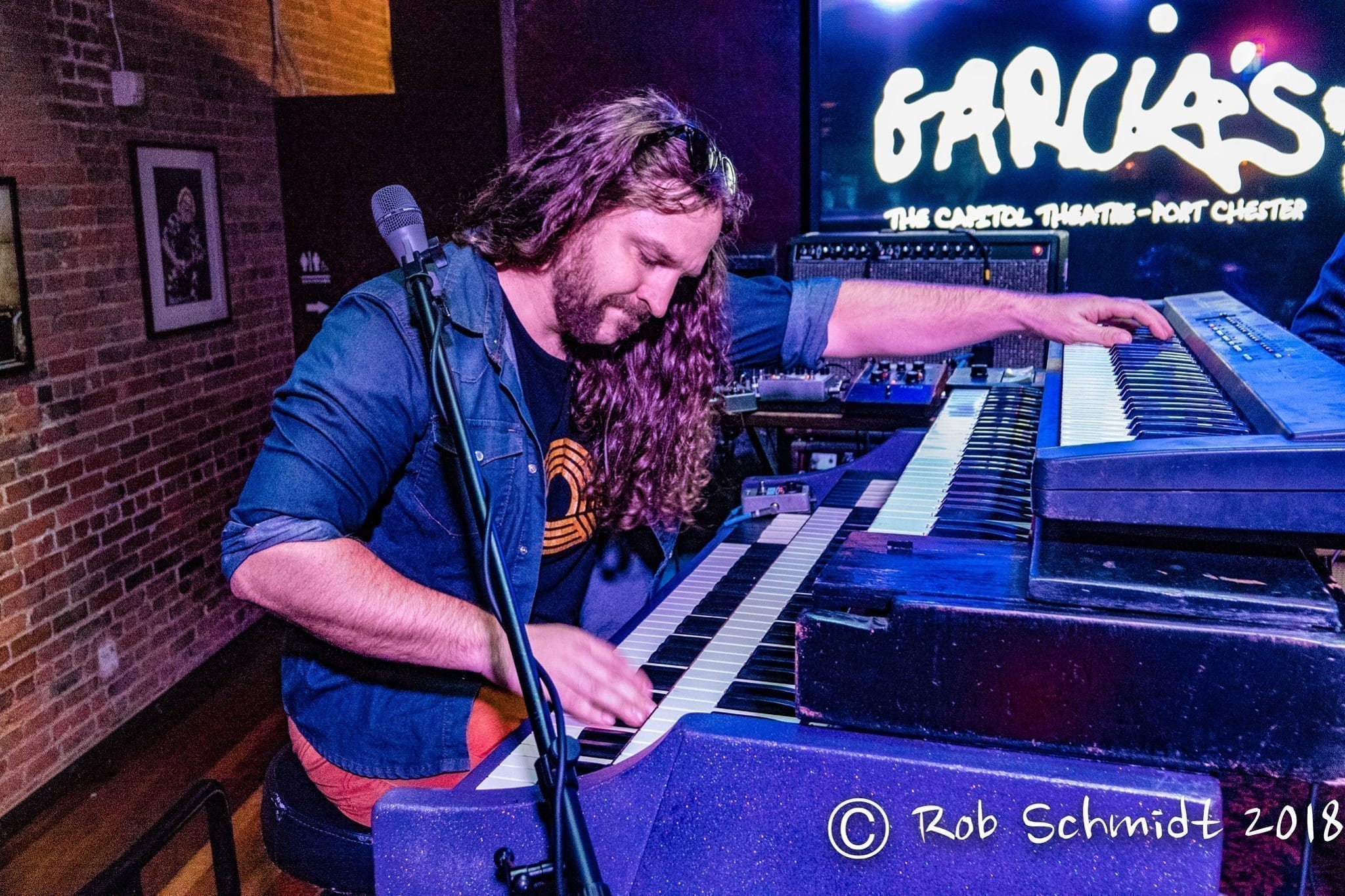
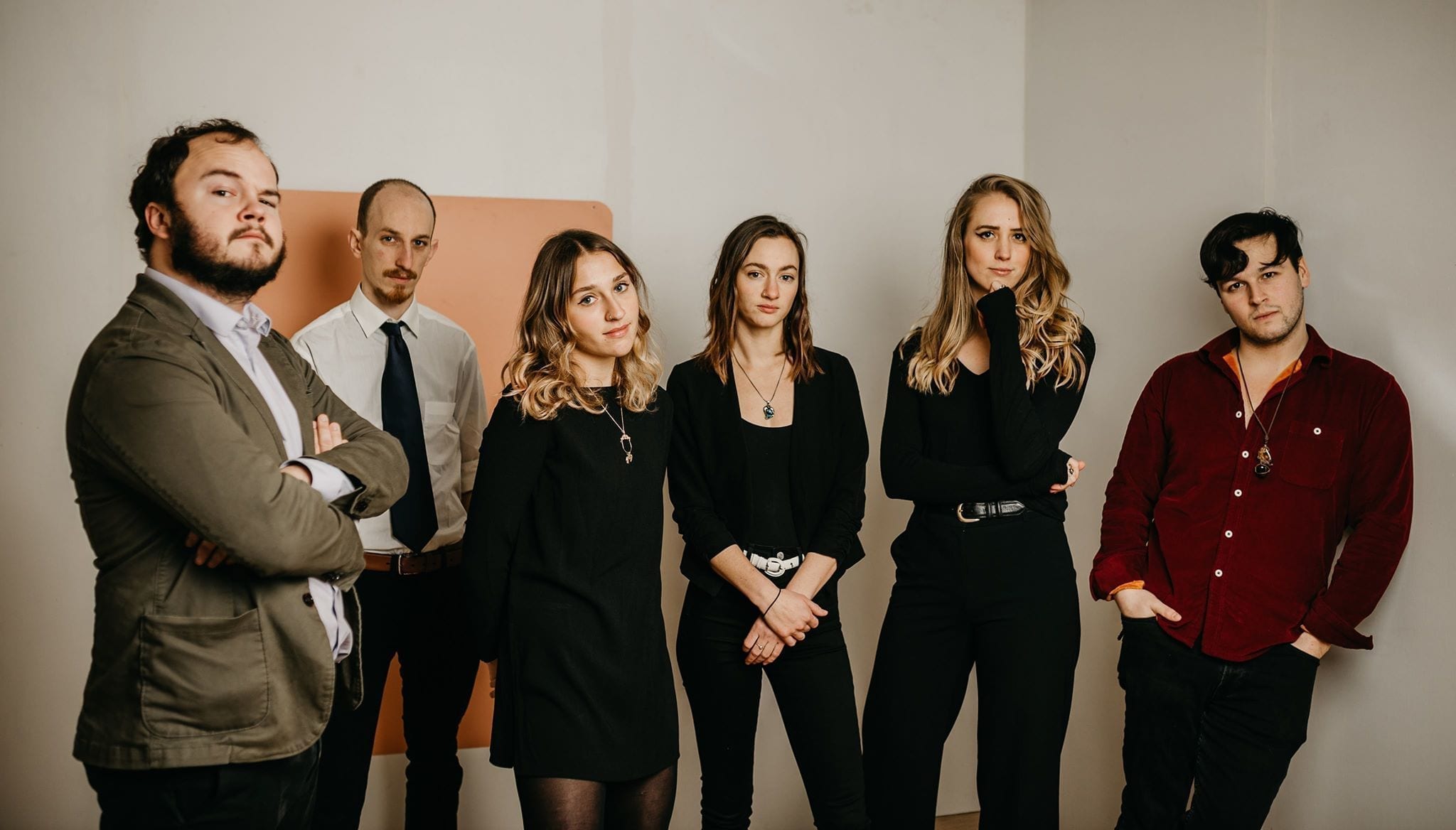
  • Hearing Aide: The New Motif ‘The Reciprocal Boogie’

    The Reciprocal Boogie, the debut album from Massachusetts four-piece The New Motif, is an impressive survey of the band’s eclectic sound. The roots are rock, but different tracks run jazzier or more psychedelic, funkier or more spacey. Produced by Soulive’s drummer, Alan Evans, the album showcases the band’s rich textures and compositional prowess.

    The album’s first track, “Manifest,” is microcosmic of the whole album: it features shifts in style and tempo, is at times led by a funky bass line from Dan Kelly, at other times with a catchy guitar riff from Dennis Christiano, sometimes the organ, sometimes the synthesizer, always high-octane drumming. There are vocals, but the song is undeniably led by the instruments. Checking in at nearly six and a half minutes, it’s a bold opening statement to a freshman album devoid of any filler tracks.

    While “Manifest” feels frenetic, The New Motif follows it up with a mellower “City Cituation.” Cory Schechtman swaps out the keyboards for a saxophone, a pleasant surprise as the track commences. Paired with the following song, “Crooooshtown,” the songs are a smooth, jazzy reprieve from the relative tumult of “Manifest.”

    In total, there are nine tracks, each between four and eight minutes long. About half are instrumentals and half feature vocals; Schechtman plays the saxophone for half the songs and spends the other half on keyboards. Unsurprisingly of an album produced by Alan Evans, drummer Terrence Kelleher is extremely active throughout.

    The heart of the titular track represents the album well. Guitarist Dennis Christiano trades licks with Schechtman on the saxophone while Ball and Kelly, even if not as prominent with the rhythms, are relentless, lending to the full sound.

    The sixth track, “Flown,” is the first where the vocals feel like the central component. The song has a reggae tone, unique to the album, and allows Christiano to show off with a high-soaring solo. The ensuing “Yasss!!” is dark and exploratory yet upbeat and features all band members finding their ways into dynamic grooves. At just over eight minutes long, the track is an instrumental odyssey. The following and penultimate song, “Whatever’s Clever,” features the catchiest vocals.

    Closing track “Late Cretaceous” once again puts The New Motif’s rich sound on full display; one needs to crank the volume dial to get the full flavor of all the layers. After multiple listens to The Reciprocal Boogie, something different has caught my ear each time: a guitar riff here or a bass line there. Each time after listening, I’ve found myself going back and listening straight through again

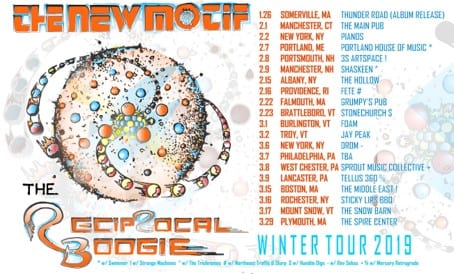
    The New Motif is currently touring to promote The Reciprocal Boogie and have multiple shows scheduled in New York. The full tour schedule can be found here.

    Key Tracks: Manifest, Yasss!!, Late Cretaceous

  • Hearing Aide: Reed Foehl ‘Lucky Enough’

    Americana journeyman Reed Foehl was on his way to make a new home in Nashville, looking to expand on the success he found in co-writing “Fly” off of Lee Ann Womack’s Grammy-nominated album The Way I’m Livin’. But then news came from Massachusetts where his mother was diagnosed with lymphoma. Without hesitation, he dropped everything and flew to Massachusetts to be by her side. While he cared for his dying mother he continued to write his music. Foehl’s latest solo album, his fifth, consists of the music written during this trying time in his life. Lucky Enough, released February 1, is dedicated to the memory of his mother, “the Queen of Everything,” who instilled a love for music in him at an early age.

    The songs, borne from loss, are steeped in deep reflection, but also instill a sense of hope and love while exploring themes of lifelong friendship. Foehl employed the help of friends in bringing his new tunes to life, with Austin’s The Band of Heathens fleshing out a full band sound. They also recorded in the Heathens’ new studio with guitarists Gordy Quist and Ed Jurdi co-producing as well.

    The short but dense set opens with a nugget of folk perfection. “Stealing Starlight” is one of those tracks with nary a false note or turn. Every moment was meant to be, from each cymbal crash and sparse piano plink, to the mysterious wailing noise emerging midway through. You’ll likely want to hit rewind a play through a couple of times before moving on.

    When an album opens that well, the rest is just gravy. But here it’s still damn good gravy! It’s chock full of catchy new-folk hooks, country bar singalongs, and twangy ballads all featuring an earnest down-home voice with plenty of range. Familiar enough to sound like it’s coming from your front porch but good enough that you’d want to see it played in a beautiful old theater.

    Key tracks: Stealing Starlight, Wish I Knew, He’s On an Island

  • Hearing Aide: Kris Yunker ‘Biocoastal Waves’

    Kris Yunker has been around the scene for many years, coming to the Northeast with his good friend and fellow On the Spot Trio bandmate, Danny Mayer. His long road has brought him to Iron Wax Studios, the brain child of soul-man extraordinaire, Alan Evans. Here Kris, Al, and guest singer, Kelly Burr laid down an incredibly funky and upbeat new album, Bicoastal Waves.

    Bicoastal Waves blends surf funk, space rock, and organ jazz to create a unique sound driven by Yunker’s left-handed bass lines. The whaling Hammond organ is the beauty, while Evans’ beats are the soul. This album has a little bit of it all with fat and funky whalers to heavy rock bangers.

  • Hearing Aide: Upstate ‘Healing’

    Rich harmonies, moving melodies and distinctive arrangements are abound in Healing, the new record released by Hudson Valley-based folk and soul sextet, Upstate. Produced by Wood Brothers’ percussionist, Jano Rix, with engineering helmed by GRAMMY-winner Justin Guip, Healing represents a self-proclaimed metamorphosis for the band. It’s the first full record with vocalist Allison Olender and the first release since the shortening of the band’s original name, Upstate Rubdown. In advance of the album’s release, Upstate shared a video for “Marietta,” along with a performance at City Winery in NYC.


    Much of what makes Upstate unique is amplified in this record. The group features a cajon, but no drum kit, and a mandolin, but no guitar (mostly). This allows Ryan Chappell’s mandolin, Harry D’agostino’s bass and Dean Mahoney’s cajon to take turns weaving melodic and percussive elements into the arrangements. Meanwhile, Olender, Melanie Glenn, and Mary Kenney trade lead vocals and infuse the spaces with harmonies.


    Mirroring the radical evolution of the band, Healing introduces some new instrumentation. “Sarah” has D’agostino on electric bass, while Glenn and Olender lend their guitar playing in “Crawl In” and “I’ll Be Fine,” respectively. These changes represent a larger effort by producer Rix to experiment with the recording process. Encouraging the band to delve deeper into their non-traditional structure allowed Upstate to nail down its characteristic tone and sound.


    Emotions arrive in waves, as the record journeys from the swaying softness of “I’ll Be Fine” to the high energy drive of the eponymous track, “Healing.” While rooted in soulful folk, some tracks stand out as boundary-pushing explorations of genre. In “Mother,” what starts as a vocal ode to a mother’s influence, then moves into a jazzy, moody, groove filled song with ambient sound, culminating with a sax solo by guest musician, Christian Joao.


Built in Breakdance