Author: Rob Simakovsky

  • Vera Sola Discusses Songwriting, Influences and Upcoming Plans

    When diving into the music of Vera Sola, the inevitable result is a transportation. You’re picked up and delivered into a pensive, intimate, cathartic, often moody and sonically lush environment. It’s a world that is curated, with a meticulous intentionality towards each ambient instrumental flourish, and at the same time, wild with emotional abandon.
     
    Before delving into playing her own music, Danielle Aykroyd was a seasoned storyteller and performer. Stemming from a love of poetry and prose, Aykroyd married her story crafting with music. With the release of 2018’s Shades, her full-length debut, Aykroyd achieved a personal and public triumph. Personally, it was a powerful fist-thump to the chest, as she took her music from the “smoky city hookah bars,” or “poorly lit open mics” she describes frequenting in an interview with Ravelin, to the public stage. In music news, it was a highly praised piece of work, lauded for its virtuosity and dynamism – a bold piece of work powered by a “unique talent,” as described by The Line of Best Fit.

    “Someone once told me they find my sound to be ‘frustratingly influenceless,’ but I think that comes from the fact that there are so many disparate influences that a single vein is hard to find.”

    Vera Sola

    Her songs are often a wrestling act, as she seeks to come to conclusions and confront often-harsh truths. There is an intoxicating, cathartic freedom to the heart-beat rhythms and layered harmonies abundant in her work. At the same time, there’s an astute self-reflection and caution – like someone who’s gathering courage to step over the line between darkness and light. It’s a balancing act shaped by the expressive vibrato of her voice. When she repeats “I want to hurt you,” in Shades’ “Small Minds,” it belies the complicated feelings beneath the surface – the feelings of somebody who couldn’t bear the thought of hurting somebody they love, yet wishes that person could feel a semblance of the pain they’ve caused. 

    Faced with a bit of downtime between tours, we connected with Vera to gather her thoughts on performing, songwriting, time spent in NYC and (local) plans for the future. Before heading off for a new round of shows, Aykroyd will join Sad Songs Summer Camp, an immersive songwriting workshop where guests will learn and craft music directly with the Milk Carton Kids and guest hosts.”Nestled in a remote camp in Big Indian, NY, she’ll be a featured songwriting and lyricism coach, working directly with camp goers to help them hone in and craft their stories. The camp takes place from July 23 to July 26 and space is limited. Learn more about joining.


    Rob Simakovsky: You’ve recently finished a tour, traveling nationally and internationally. What was that experience like? Any highlights or favorite moments?

    Vera Sola: The whole thing is so surreal. Two years ago I was holed up in my bedroom alone with my songs, and now I’m singing them out to faces around the world… in wild places like Alpine caves, or Prince’s club from Purple Rain, or a sold-out Saturday night at Irving Plaza. It’s like a fever dream. I still don’t believe it. When people tell me they like my music I experience this brain glitch, pure cognitive dissonance—“How do you know I make music?”

    My very favorite show was the last one on this U.S. leg… there was a violent thunderstorm and the electricity cut out a number of times during my set. I ploughed through unplugged and unmic’ed, and the power kept dying and coming back for certain crucial moments in the set. 

    RS: Now that you have some down time, is there anything in particular you’re catching up on?

    VS:
    I have trouble winding down, especially after working for so long without meaningful time off, so I’m just trying to be easy on myself. Allowing for days where I just watch TV and read and do laundry and don’t feel guilty that I haven’t written anything or solved some intense problem. I guess I’m just catching up on being a normal person in a house with a solid foundation.

    That and writing and demoing. I have a lot of songs rattling the cages right now. 

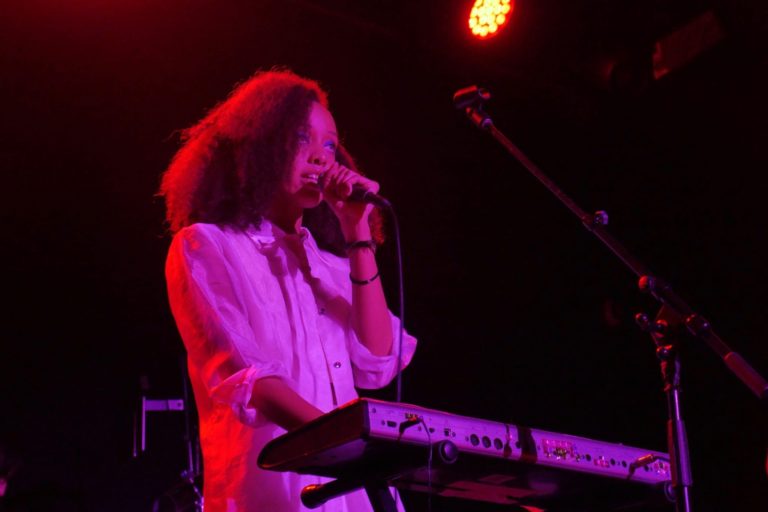
    vera sola
    Photograph by Damon Duke

    RS: You’ve performed with a full stage, but also often perform in your own intimate sets, supporting artists like The Milk Carton Kids. What’s the solo experience for you like on stage?

    VS: The full band can be comfortable in that there’s a cushion to fall back on—other energies to draw on if I’m tired, other noises to cover for my mistakes. It’s far less vulnerable and easier to hide my humanity. 

    Solo there’s nothing but the self to confront and be confronted with. It’s harder to capture and keep the attention of an audience when one’s just up there alone. But if the landing sticks, it’s more rewarding because of how stacked the odds feel. Either way, bad show or good show, I think there’s great beauty and power to getting up there alone. And I like the more difficult route, I’ve never been one to just take what’s easiest. 

    RS: Many artists approach songwriting in different steps. Some write either the melody or lyrics first, and some may flesh out an entire story. How do you usually formulate your songs?

    VS: Sometimes they come together, lyrics and music, sometimes they’re separate. I’m constantly writing, accounting for ideas. I write a lot in the notes on my phone, both fragments and fully fleshed poems. Sometimes there’s a melody to the words and sometimes not. 

    It depends on the situation. There are songs I’ve written in minutes, and songs I’ve been slaving over for years. There’s one in the bank right now that has my very favorite chorus I’ve ever written, but the verses—both lyrically and melodically—are objectively terrible. Don’t know what’s going to happen with that one. Hoping for a breakthrough at some point.

    RS: Are there connecting themes between your music, or recurring themes you find yourself revisiting?

    VS: I think a lot of my work comes out of longing. Not just a lovelorn longing—but for a better world, for reconciliation, for understanding. Longing, to me, is best described as a searching for something not immediately attainable. In that process I make a lot of music, fill that void, whatever it might be, with song.

    RS: You mentioned you have a particular love for 70’s and 80’s punk. “The Cage” could almost be rearranged into a punk song with a drum and snare 4/4 rhythm. Does the “punk” pathos, or your history of punk influences play a role in your songwriting?

    VS: Absolutely, all the music I’ve ever loved finds its way into my compositions. Someone once told me they find my sound to be “frustratingly influenceless,” but I think that comes from the fact that there are so many disparate influences a single vein is hard to find.

    When it comes to punk, I’m definitely hindered by the fact that I barely know how to play guitar with a pick. Down-strokes are not my strong suit…That said, I do still have a rather hard-hitting sensibility to my stuff, especially when I’ve got the band going. 

    But I think even more than the sound itself, I’m influenced by the raw nature of punk, a sort of purity of expression. At a certain point I discovered that same unbridled truth in the work of early folk and blues songwriters like Skip James. And that’s what moves me most. I don’t like being limited by genre, I just want to play and sing and let fly what will. I need that freedom or I lose touch with myself as a person and a performer.

    Vera Spla

    RS: Let’s talk about your voice, particularly your expressive vibrato. Was it there before you found your songwriting niche, or did it develop as you found your own style?

    VS: I’m not sure if I’ve found my songwriting niche yet! I have trouble locating what I do and how I write in any particular place at all.

    As for my voice, it sort of appeared out of nowhere. I’d been writing songs for years, but was too afraid to sing them, and that fear was a literal choke-hold. Even when I decided I was going to record something (I didn’t know yet what it would be), I had a very limited vocal range. It wasn’t until I actually opened my mouth to sing in the studio that I let go of all that tension and fear, and that’s when the vibrato arrived. What’s particularly cool (to me) about the album I made is that it truly is a ‘record’ of that moment of catharsis. You hear, on those songs, me quite literally hearing my own voice for the first time.

    That was just over two years ago now. I’ve grown stronger and more self-assured. I’ve certainly developed my voice—but it’s completely true that I didn’t even really have one until February 2017.

    RS: A few of your songs seem to have thematic dualities: Peace and struggle; joy and longing; betrayal and forgiveness. There’s an acceptance of balance. Would life be too boring if things were always good, or as they should be?

    VS: I’ve lived a very privileged life, but it surely hasn’t been without its sorrow. I’m lucky in that even in the darkest moments I’ve been able to hold on to my sense of humor. There’s a lot of laughter and good-hearted self-deprecation in my work. That’s where I find a sort of radical acceptance.

    Otherwise I’m a person who feels very deeply, and everything around me deeply too. I’m quite a pessimist, so it’s hard to even imagine a perfect world. To be completely honest, I play music as a way to process and conquer and come to terms with what’s hard about life. So I probably wouldn’t be a musician if everything was awesome all the time.  

    RS: You spent a good amount of time in New York growing up, and have said that the NYC environment had an impact on your work. How?

    VS: The city’s got this special coexistence of cold detachment and deep empathy. Growing up in that environment I learned to observe and to listen and to draw from the diversity of the surroundings for comfort and creativity. 

    RS: Any particular local spots you’d visit for artistic inspiration?

    VS: I like to walk long distances alone and compose in my head as I do. Doesn’t really matter where, as long as I’m moving through the streets at a clipping speed, it’s good.

    RS: After going on tour with The Milk Carton Kids, you’re now going to be a guest instructor on July 23 at their Sad Songs Summer Camp, where guests can workshop their songs directly with some amazing artists. How did the opportunity come about?

    VS: Kenneth has been a dear friend for a little while. He says he’s always admired the way I approach lyrics in particular. I think the kicker, though, was a discussion we had about a couple of Dylan songs. I was giving him a run-down of various critical interpretations, as well as what the words meant to me personally, and he invited me to teach a course on lyricism and poetry. I told him that I was deeply unqualified but he made a compelling case for why I should do it, and it was such a great opportunity and he’s such a doll I couldn’t say no.

    RS: How does it feel to be able to have a chance to coach others in their songwriting?

    VS: Totally wild. I guess I do have a few tricks up my sleeve thanks to a striking combination of personal error and schooling. I’ve been lucky enough to study under some incredible poets and it’s cool to be able to pass along what they taught me.

    RS: You recently released a couple of new singles,and are going to be playing a new set of shows in July and August. What exciting news should our readers keep in mind?

    VS: More music as soon as humanly possible. I’m excited about what I’m making now. 

    RS: Being a storyteller, how might you give guidance to somebody who might have a start and end of a story, but not a middle?

    VS: Oh gosh, I have a number of those going right now. I have no idea…make a list of possibilities and roll some dice maybe?
  • New York Series: The Lovin’ Spoonful “Summer In The City”

    While thinking about all the phrases across the American songbook which define moments or places recurring through time, perhaps one which quickly comes to mind is “summer in the city.” The Lovin’ Spoonful’s “Summer In The City” is an ode to their hometown, inspired by New York City. Appearing in 1966’s Hums of the Lovin’ Spoonful, the song eventually became synonymous with the excitement and liveliness of a bustling metropolis pulled between blistering days and cool nights of summer.

    “Summer In The City” chronicles the range of highs and lows that come with living in New York City during the summer. Using the dogged heat of the day and the cool night breeze as scenes for each verse, John Sebastian shares a vignette of how the city and its people transform as the evenings set in.

    During the day the heat is oppressive, reducing walking to a lethargic shuffle, with “people looking half dead.” Sebastian sings about the dense humidity accosting the back of people’s necks, and the sun baking the sidewalk until it can light a matchstick. Everything transforms as the evening rolls in; life becomes about going out, meeting someone and dancing the night away. People who start in the afternoon heat as panting dogs, become “cool cats,” looking for somebody to hang with. Much like the repeating nature of the song’s lyrics and chorus, summer in the city is a cycle, perpetuated by people’s desire to survive the day, only to take the night.

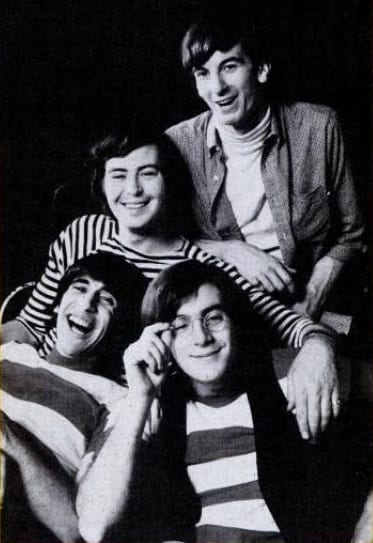
    The Lovin' Spoonful

    The Lovin’ Spoonful is: lead vocalist John Sebastian, guitarist Zal Yanovsky, bassist Steve Boone and drummer Joe Butler, with pianist Artie Schroek joining on “Summer In The City.” Sebastian and Yanovsky founded the band after years of being a part of the burgeoning Greenwich Village folk scene, crossing paths with the likes of Cass Elliot and Denny Doherty, who would later form The Mamas and the Papas. Many of their first songs played and recorded were representative of Sebastian’s origins in a jug-band folk style. It wasn’t until 1965’s single, “Do You Believe in Magic,” that the band began exploring a more popular, broad sound.

    The band’s heyday was from 1965 to 1966, culminating with Hums of the Lovin’ Spoonful, which was a deliberate attempt to experiment with various sounds and techniques. The following years were met with personnel changes within the band and the production team. Guitarist Yanovsky left the band largely due to a marijuana bust in the late ’60s as well as creative differences with the songwriting direction. Following a couple of records after 1967, Sebastian began a solo career, effectively causing the end of the band. The band was inducted into the Rock and Roll Hall of Fame in 2000, bringing all four original members together before Yanovsky’s death in 2002.

    “Summer In The City” climbed to number one on the Billboard chart during a time when folk music filled the still cigarette-stained air of bars and cafes, and traversed a majority of pop airwaves across the country. Though presented as a shorter, popular folk song, the circular and repeating nature of the lyrics positions the song as a jam, or even a mantra. “Summer in the City” is more than a season out of the year, it’s a state of being, represented by surviving the trials of the day in order to let loose at night.


    Summer in the City” lyrics

    Hot town, summer in the city
    Back of my neck getting dirty and gritty
    Been down, isn’t it a pity?
    Doesn’t seem to be a shadow in the city
    All around, people looking half dead
    Walking on the sidewalk, hotter than a match head

    But at night it’s a different world
    Go out and find a girl
    Come on, come on and dance all night
    Despite the heat, it’ll be all right

    And babe, don’t you know it’s a pity
    That the days can’t be like the nights
    In the summer, in the city
    In the summer, in the city

    Cool town, evening in the city
    Dressing so fine and looking so pretty
    Cool cat, looking for a kitty
    Gonna look in every corner of the city
    Till I’m wheezing like a bus stop
    Running up the stairs, gonna meet you on the rooftop

    But at night it’s a different world
    Go out and find a girl
    Come on, come on and dance all night
    Despite the heat, it’ll be all right

    And babe, don’t you know it’s a pity
    That the days can’t be like the nights
    In the summer, in the city
    In the summer, in the city

    Hot town, summer in the city
    Back of my neck getting dirty and gritty
    Been down, isn’t it a pity?
    Doesn’t seem to be a shadow in the city
    All around, people looking half dead
    Walking on the sidewalk, hotter than a match head

    But at night it’s a different world
    Go out and find a girl
    Come on, come on and dance all night
    Despite the heat, it’ll be all right

    And babe, don’t you know it’s a pity
    That the days can’t be like the nights
    In the summer, in the city
    In the summer, in the city

  • Girlpool Goes from Chaos To Calm at Bowery Ballroom

    Girlpool played to a devoted audience at New York City’s Bowery Ballroom on April 25, rounding out a tour supported by Australian rising star, Hatchie with show opener, Gemma. Supporting the release of 2019’s What Chaos is Imaginary, the show displayed the dynamic range of genre across Girlpool’s records, along with the duo’s knack to look at home on any stage, and make it their own.

    Waiving an introduction, the duo, supported by a second guitar, drums and keyboard, dove into “Lucy’s” from What Chaos is Imaginary. The slow, pounding pace driven by full, distorted guitar and an alternating kick and snare quickly enveloped the room, bringing people closer to the stage.

    Girlpool began as two teenagers funneling their vulnerabilities and existential quandaries into a piece of pure, self-expression, which became 2015’s Before the World Was Big. Since then, the duo has blossomed with expanding musical sophistication as Cleo Tucker and Harmony Tividad have gotten a little older, and a little more grounded in perspective. Changes and self-realization are included in that journey, including Tucker’s coming out as trans in 2017.

    Photograph By Jazmin Beltran

    For a band which started as two people playing instruments together with an ambiguous, co-lead syntax and relying on harmonies shouted over each other or shared in a whisper, Tucker’s now-deeper voice has found a new space to sit among the vocal mix. Rocking into “Hire,” Tucker shouts into the mic, their voice unbounded, cracking and passionate.

    The set traversed the different styles across Girlpool’s albums. Returning to 2017’s Powerplant, the band teetered on a punk-inspired shoegaze, in the space where The Cranberries and The Breeders dwell. “It Gets More Blue” featured grunge-y bass lines and monotone vocals sang in unison, breaking out of the self-imposed trance during the louder, punchier moments.

    Photograph By Jazmin Beltran

    Tucker and Tividad’s energy ebbed and flowed with the tone of song. Balancing Tividad’s often cooing, softly delivered lines, Tucker was often moving about the stage, always looking to be on the verge of vocally exploding with angst or excitement. Often checking in with one another on stage via smiles during songs or stage banter, the deep friendship the two have with each other enriched the experience. Even in front of an audience, the two looked as if they were just messing around with each other in their living room, experiencing the joy of musical connection for the first time.

    Touring with Girlpool and developing a large fanbase of her own, Australian-based Hatchie supported the show with her signature blend of dream-pop and shoegaze. She’s drawn from genre-definers like the Cocteau Twins and has since joined a talented pool of female-led indie groups including Snail Mail, Soccer Mommy, and of course, Girlpool. Deserving a mention is show opener and Brooklyn-based electro-soul group, Gemma. Helmed by Ava Luna’s Felicia Douglass along with guitarist Erik Gundel, the group delivered genre-bending dance energy reminiscent of The Talking Heads.

    Ending with an encore including a couple of crowd favorites, fans left the venue repeating a favorite line from Before the World Was Big’s “Chinatown”: “Do you feel restless when you realize you’re alive?” As they play stages of all sizes, Girlpool is always able to make it seem as if you’re a guest in their home, listening to music and laughing at their stories. This tour will continue in New Jersey as it moves southwest and ends in Europe. See them at a venue near you.

    *All photographs taken by Jazmin Beltran

  • Hearing Aide: Say What You Will ‘Anything, Everything’

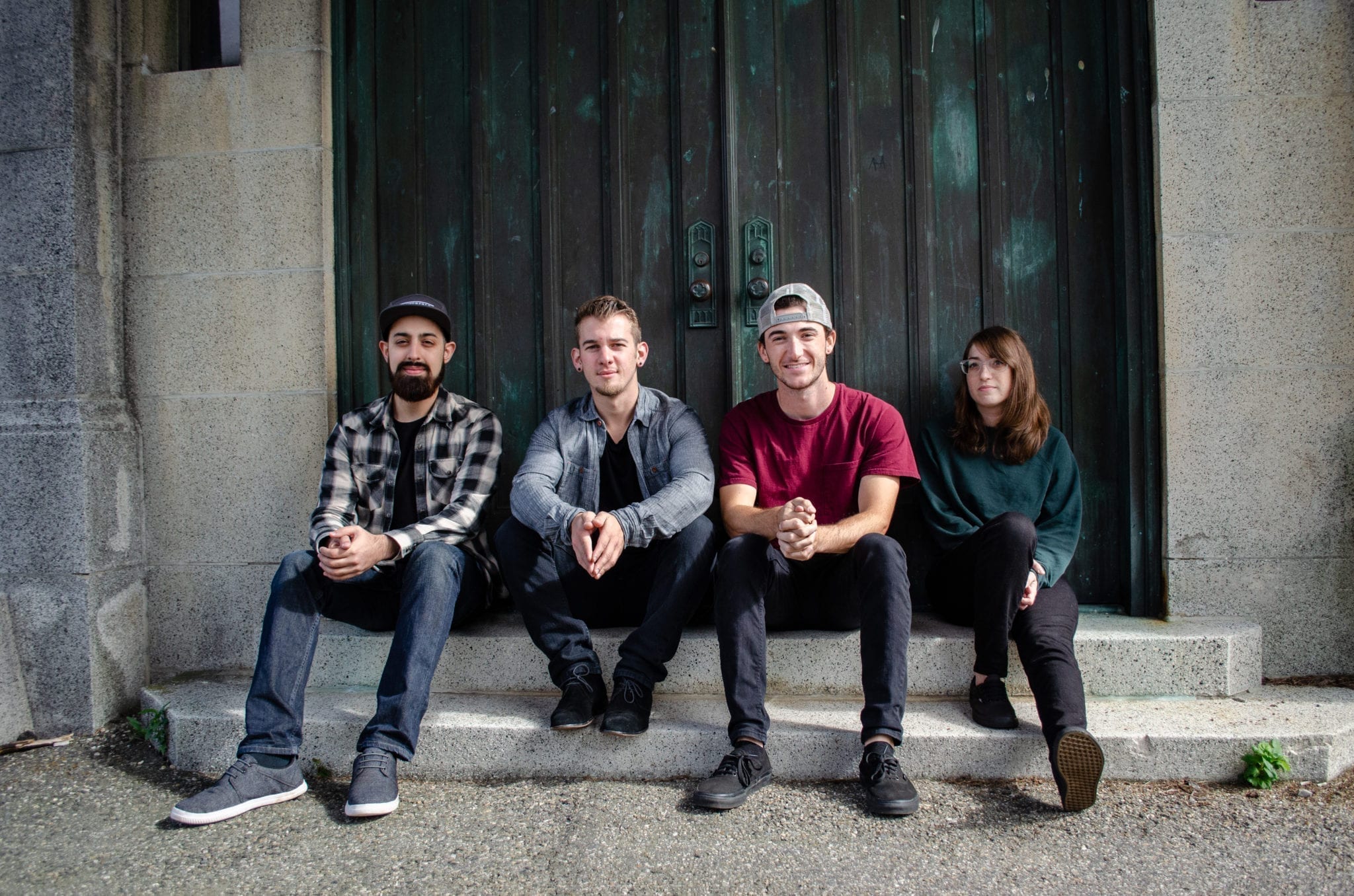
    Vignettes of heartache, redemption, hometown joy and drama fuel Anything, Everything, the sophomore album from the Connecticut-based pop-punk band Say What You Will. Hailing from New Haven, the band is Christine Sabol on bass guitar, Shane Emery on vocals and lead guitar, Chuck DeFilippo on drums and Ethan Griffeth on lead vocals. Amongst changes in personnel and other identity shifts since 2017’s Seconds to Home, the new album is a work of passion and exploration, sure to excite longtime fans and attract new ones. The band supported the album release by debuting their music video for the feature track, “Southbound,” in late February.

    Drawing from the likes of State Champs, Grayscale, Sleep On It and others, Say What You Will found a way to create a distinctive, unique sound while paying homage to their influences. Recorded with Chris Piquette at No Boundaries Studios in Rhode Island, the record marks a new age of growth and maturation for the band. Anything, Everything is set to release on all platforms next Friday, March 15.


    “We’ve always tried to incorporate so many influences into our music, and I think that this time around we were more focused on making something that sounded like us.”

    Shane Emery

    From the start, “Break Away” pulls listeners in, skipping casual orbit and launching them directly into the fiery atmosphere of Anything, Everything. The restrained, energy-building intro showcases the band’s chemistry by allowing Griffeth’s expressive voice to sit on top of the rhythm, culminating in a quick stop and explosion of layered melody sure to get peoples’ bodies moving.

    Moving on, it’s clear that a key strength of the album is how it dynamically shifts between the blasting, yell-along, triumphant choruses and the sensitive, yearning reprieves. “Carolina” stands apart as a pop-punk ballad, an ode to a specific place and time, displaying Emery’s journeying, skilled guitar and the interplay between drums and Sabol’s bass. The record picks up the pace again in “Lake Zoar,” filled with jump-along moments.


    Distinct from the instrumentation of each song, there are the stories Griffeth shares through emotive vocals and heart-wrenchingly piercing lyrics. “Summer Haze” ends the album with a story of a woman who’s struggled with helping her significant other with drug addiction. Inspired by heroin epidemics in Griffeth’s hometown, the song is the band’s plea to shine a light on dark moments.

    Anything, Everything has all the elements of what makes a great pop-punk record, though it doesn’t stop there. The album represents a refined and redefined sound identity for the group. Listeners will always find their way to the catchy hooks, the grooves and breakdowns in the songs that feature boundary-pushing infusions from other genres. Say What You Will has put all their cards on the table, successfully creating something unique and inspiring. Pop-punk fans will find plenty of value and perspective from picking up this album.


    [accordions title=”Tour Dates:”]
    [accordion title=”March 9: Tierra’s Tropicales – Ossining, NY” load=”hide”]March 10: The Raven – Worcester, MA
    *March 29: Wamleg – Wallingford, CT

    *Anything, Everything Release Show*
    [/accordion]
    [accordion title=”April 6: Pauly’s – Albany, NY” load=”hide”]April 15: Encore Live Room – Dayton, OH
    April 16: Evolution Music – Downers Grove, IL
    April 17: Laundry Room – Nashville, TN
    April 18: The Depot – Baltimore, MD
    April 26: Ralph’s Diner – Worcester, MA
    May 3: Cianfano’s – Elizabeth, NJ
    May 4: The Barbary – Philadelphia, PA[/accordion]
    [/accordions]

    Photo: Megan Greer

    Listen to Anything, Everything and learn more here.

  • Join Sad Songs Summer Camp with the Milk Carton Kids

    Welcome to Sad Songs Summer Camp, where you’ll talk, listen to, and learn about music from the Milk Carton Kids. You’ll also get the chance to workshop sad and not-so-sad songs during your stay, with input from the duo. From July 23, to July 26 at Full Moon Resort in Big Indian, New York, you’ll join a camp full of other music lovers for an all-inclusive music vacation, complete with lodging (available in multiple packages), provided meals, and more.

    The camp is powered by Music Masters Camp, a series of interactive retreats and workshops which bridge the gap between performers and their audience.

    Kenneth Pattengale and Joey Ryan sum up the experience in their special, banter-filled style in a transcribed bit from the above trailer video.

    Pattengale: “Basically, we all wake up, eat breakfast in the morning, Joey and I will give a master class, then a guest artist will give a masterclass. We eat lunch –

    Ryan: “Master class?”

    Pattengale: “Yeah, we’ll teach things, like things that we know. Harmony Singing, songwriting, lyric writing…”

    Speaking to NYS Music about the camp following a recent show at Tarrytown Music Hall, Ryan described the way the camp came together.

    “We’ve been aware of camps like this because friends of ours do them. Steve Earle does a camp called Camp Copperhead and the other people in our band will go and teach at folk and bluegrass camps. So, we’ve been aware of camps like this but we never thought that we would do one ourselves. When we got the call with the opportunity to host a camp, we thought it’d be a great chance to work with people directly and share a combined musical process.”

    On reflecting if working in a teaching and workshop capacity is of particular interest, Ryan commented:

    “I enjoy talking and getting to know people. We’re around musicians on tour all the time, so it’ll be great to spend time with people and musicians in another capacity, where we can learn about them and work directly. Conversations at merch tables are a quick ‘We loved your show’ and ‘Thanks, here’s a t-shirt we have,’ where at Sad Songs camp, we’ll be able to get to know people and fans on a deeper level that we aren’t usually able to, and work with their music, while spending some time to write for ourselves as well.”

    According to the website, camp goers can expect a full, crafted experience.

    “The camp will provide a space for a lucky group of individuals to learn, co-write, workshop, and, if desired, perform for an audience of like-minded peers —  all with the guidance of the Milk Carton Kids and some of their favorite songwriters and comedians. Mornings will have Kenneth, Joey and their hand-picked guest artists guiding master classes that explore the ins and outs of  harmony singing, songwriting, arrangement, lyricism, stage-banter and performance. After lunch, students will break off into workshops, working solo or with other campers on the skills of their choice, with encouragement and tips from TMCK and other SSSC instructors. Evenings are packed with entertainment, with performance opportunities for campers (don’t worry they’re not required), late night jam sessions, and informal song circles. Not to mention two intimate Milk Carton Kids concerts. Whether it’s over breakfast or around the campfire, students will have the opportunity to hang out with TMCK and friends while learning the tricks of their trade.”

    Non-musicians are welcome to spend time and attend the camp as well. Interested people who have a roommate in mind are welcome to sign up at the same time to secure a spot together. The camp is a unique opportunity for Milk Carton Kids and folk fans to spend intimate time with an artist, and engage in a study of the craft together.

    An early-bird special is available if you book before March. Secure your spot at Sad Songs Summer Camp.

  • Milk Carton Kids Bring Intimate Set and Woo Audience at Tarrytown Music Hall

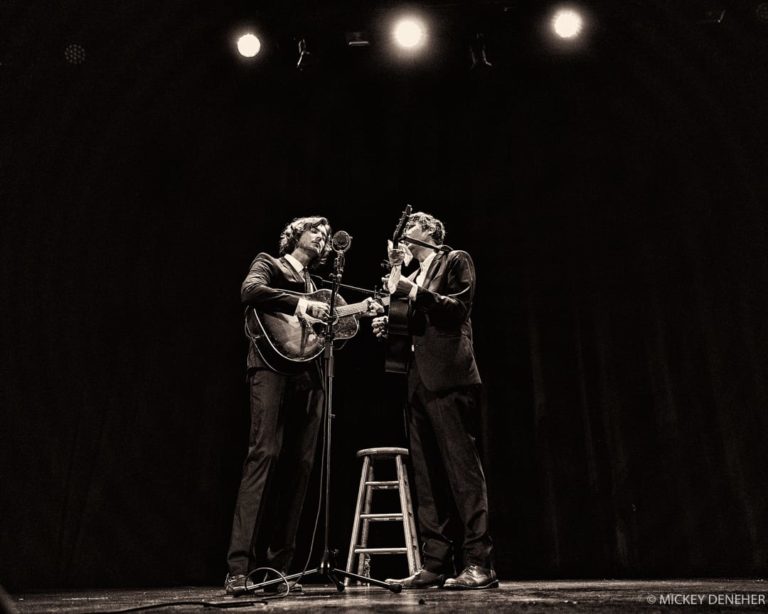
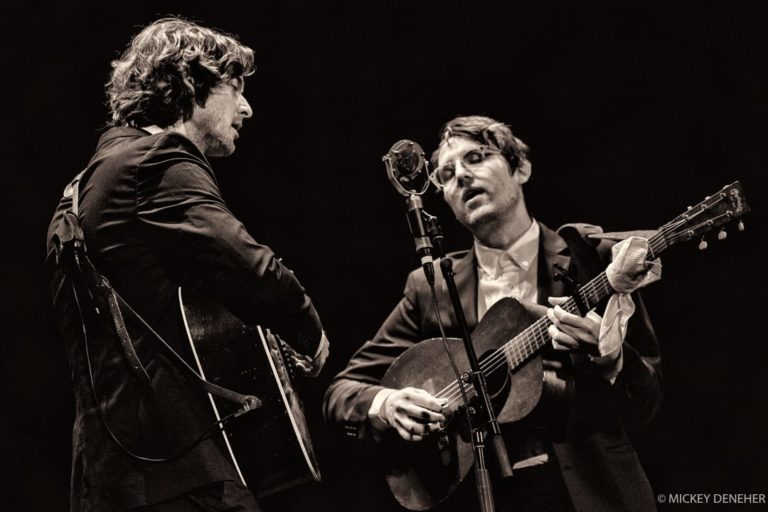
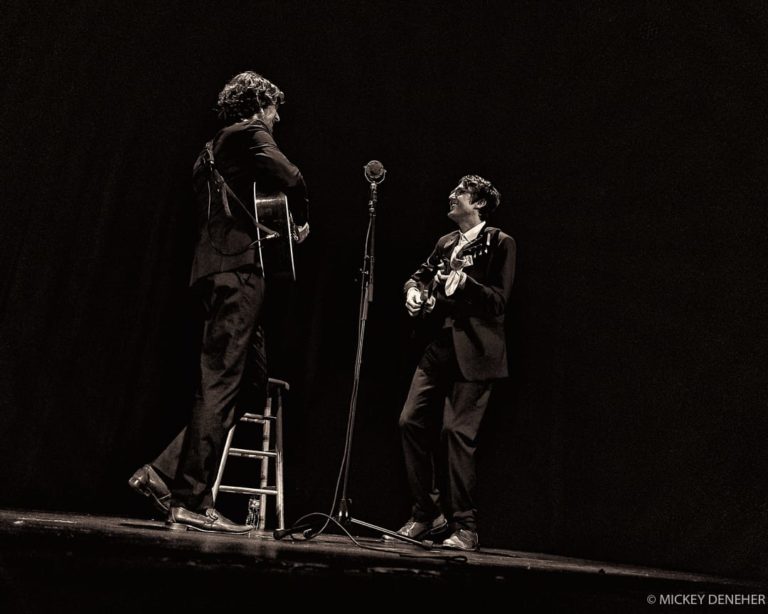
    “Our confidence is high, we’re fresh off our third GRAMMY loss.” Joey Ryan, often the chattier of the Milk Carton Kids, greeted the audience with his characteristically dry, sharp humor as the duo made their second appearance at the historic Tarrytown Music Hall on February 24. On the heels of a long tour with a new, full group, Ryan and Kenneth Pattengale shed the larger band for a return to original form, featuring just two guitars and one microphone.

    Milk Carton Kids

    The well-crafted set contained a mix of songs, including those from 2018’s All the Things I Did and All the Things I Didn’t Do. Or, as Ryan put it to the audience, “ATTID and ATTIDD… for short.” Beginning with “Hope of a Lifetime” from 2013’s The Ash & Clay, the audience was lulled into silence by the Milk Carton Kid’s ability to envelop a space in rich, emotional soundscapes through Pattengale’s river-flow, unbounded phrasing, Ryan’s understated, sturdy rhythm and the pair’s seamless harmonies.

    They then moved into “Mourning in America,” a song which captures poignant and timely modern themes. Revealing in an interview with Entertainment Voice that the song encapsulates cultural, political and personal struggles, a tear or two was spotted while the duo crooned, “I hear their cries through my window, they’re mourning again in America.”

    Milk Carton Kids

    The duo was able to shift their energy from “Snake Eyes,” the soft, weeping, ode to death which once brought a tear to Marcus Mumford’s eye, to the rousing, joyful pace of “Girls Gather Round” and “Honey, Honey.” Across each song, Pattengale’s impressive lead guitar phrasing was both technical and deeply passionate. His penchant for sweeping, single-note melodies and exploring unique sonic twists by adding out-of-the-box flats, sharps and harmonics shared a particular expressive virtuosity. All the while, his playing was threaded together by Ryan’s patient and supportive rhythmic root note picking and strumming.

    Between songs, there was the schtick. Pattengale and Ryan have developed a reputation for combining music with the other aspects which make a performance so memorable — stage presence, banter, and maintaining a connection with the audience. Known for imbuing their shows with comedic tangents, their special chemistry in which they play off Ryan’s cool, confident sarcasm and Pattengale’s charming, observational wit had the audience laughing often.

    This particular show included Ryan instructing the audience to put their hands up as he shared plans to include more hip-hop elements into their music (news to Pattengale), a conclusion to the tomato fruit vs. vegetable conundrum, and a particular exchange with a member of the audience accompanied by a service dog. Upon learning the dog’s name was “Daniel,” Pattengale quipped, “What’s your son’s name, Spot?”

    Not that they didn’t have touching, tender moments. After sharing Pattengale’s recent journey in which he successfully persevered through a cancer diagnosis and long-term relationship break-up, Ryan softly suggested, “Let’s play your cancer song,” as they transitioned into “Sea of Roses.”

    The duo is supported on tour by Vera Sola, an American/Canadian singer-songwriter, poet and multi instrumentalist who delivered a passionate and powerful opening performance, drawing from the moody, fingerpicking veins of Leonard Cohen. Sharing songs from her 2018 debut release, Shades, Vera Sola stunned the audience with strong, feverish storytelling supported by her unique voice which exhibited such a smokey, precise vibrato that it almost seemed like the microphone turned on and off every other second.

    The duo ended the night with an encore cover of Pink Floyd’s “Wish You Were Here.” Part of the reason the Milk Carton Kids are so enjoyable to see time after time is due to the earnestness in their desire to provide the audience with a complete experience, without asking for much in return. The only thing The Milk Carton Kids want you to do is listen, and maybe laugh, as they put everything, music and self, on display.

    Catch the Milk Carton Kids in New York again later in their tour. For the first time, they’ll also be working with Music Masters Camps by hosting their own summer music retreat and workshop series. Learn more about Sad Songs Summer Camp.

  • Hearing Aide: Joe McCann ‘Chase the Sunset’

    Places, moments and memories seem to be muses for Chase the Sunset, the instrumental guitar-centered album released by Joe McCann on January 1. Hailing from Upstate New York, McCann is a studio based BMI artist and multi-instrumentalist with a love of melodic, ambient and evocative sounds.

    In his first release of original material, McCann explores various ranges of mood and tone. “East Berlin Bridge” features a swaying melody over jazz-influenced chords and rhythms, while “Cool Breeze” explores wavy, echoing guitar effects over a light, almost shoegaze-influenced sound. The moving, soft quality of “Cool Breeze,” along with the sunny, pleasant mood of “Fingerwalk” invites listeners to sit back and momentarily let McCann’s soothing guitar serve as the backdrop to the day’s activities.

    McCann exhibits a clear passion for setting scenes with his music as he places us in a barroom evening with “Double Duty,” or drops us in the middle of a person’s quest for ascension in “Chase the Sunset.” Following this stripped-down debut, it will be interesting to see McCann expand his musical universe with other instruments or even vocals in his next release.

    Key Tracks: Chase the Sunset, Dwell, Cool Breeze


  • Imagine a World Without The Beatles: “Yesterday” Trailer

    What would happen if The Beatles never existed? What would happen if you woke up one day and you’re the only person who knew their songs?

    That’s what Yesterday, an upcoming musical comedy film directed by Danny Boyle (Slumdog Millionaire), is all about. Written by Richard Curtis (Love Actually), the film follows Jack, a struggling yet ambitious songwriter who awakes after a bike accident to find that he’s the only person who knows The Beatles and their songs.

    Jack’s journey seemingly mirrors the drama, fame, romance and fandom that The Beatles must have experienced. Starring Himesh Patel and Lily James along with an enticing supporting cast featuring Kate McKinnon and Ed Sheeran, Yesterday comes to theaters on June 28.

  • Adrianne Lenker Moves Hearts at Music Hall of Williamsburg

    Adrianne Lenker took to music from childhood, learning the craft of songwriting from her musician father and other teachers. Her path eventually led her to pull on the hearts of the audience at the Music Hall of Williamsburg on Febraury 14.” Mostly drawing from 2018’s abysskiss, Lenker brought her personal, imaginative and often complex world to life during her sold out performance.

    Adrianne Lenker

    Taking a break from leading Big Thief, Lenker opted for a smaller stage. Starting off with “Not,” a relatively new track debuted in France, she then followed with the rarely played “Spud Infinity.” The lyrical wit and sing-a-long pace of the song belied Adrianne’s heartfelt recurring theme of acceptance; to not be so harsh to exorcise the frightening unknown within us, and learn to embrace it as part of who we are.

    Lenker’s childhood is filled with material that she draws on for her songs. In multiple conversations with Pitchfork, she explains being raised in a religious cult in Indianapolis until she was four. She moved about 14 times before she was eight, bearing witness to her family’s fallout from religion and constant identity shifts. These years inspired a disposition to begin writing songs from different perspectives; a spectator looking from the outside, in.


    Lenker’s songs are examinations of identity, steeped in metaphors and themes of love, family, trauma, femininity and sex. Her words are descriptive and visceral, so delicately accented by her clear, expressive voice that they pierce straight through your core. Thematically, Lenker’s lyrics are reminiscent of artists like Laura Marling, showing a strength in moving through the pain.

    Playing “Pretty Things,” a song which Lenker describes as a mantra in a Stereogum interview, she struck a tone that was equally arresting and soothing. Singing about penetrating the facade of her lover’s toxic behavior and coaxing him into embracing the power of his feminine qualities, she repeated: Don’t take me for a fool, there’s a woman inside of me, there’s one inside of you, too.

    As the line lulled the men in the audience into embracing their Valentine’s dates a bit tighter, it was followed by a graphic representation of the power in feminine energy to wash away the sins of damaging masculinity: There is a meeting in my thighs where, in thunder and lightning, men are baptized in their anger and fighting their deceit and lies.

    Amongst the more raw, vulnerable songs, “Hours Were the Birds”, from the 2014 album of the same name, represented the romance of traveling with no destination. The song included hints of a poetic Springsteen-esque sehnsucht, a feeling of yearning for an idealised experience somewhere in the distance, reflecting on what you’ve gained and the traces of yourself you’ve left behind.

    Lenker’s sage storytelling was matched by her guitar skills. Her training at Berklee College of Music began when she filled a scholarship sponsored by Susan Tedeschi, and was accepted as one of only two women in the guitar program. Changing to an open tuning, she sang “Kerina,” filling the spaces between words with melodic guitar phrases which harmonized with her voice.

    Experimental indie folk artist Luke Temple opened the show, and joined Lenker on stage for a number of songs. The two explored various moods as Temple provided atmospheric accompaniment and effects from the mystical, peaceful declarations of love in “womb” to the darker and grungy “symbol.”

    Adrianne Lenker is a special kind of artist  who can make you feel just as exposed as she feels on stage, and yet help you find immense strength in that vulnerability. At only 27 years old, hers is a talent that’ll be heard for years to come.

    Visit Adrianne.

  • Hearing Aide: Upstate ‘Healing’

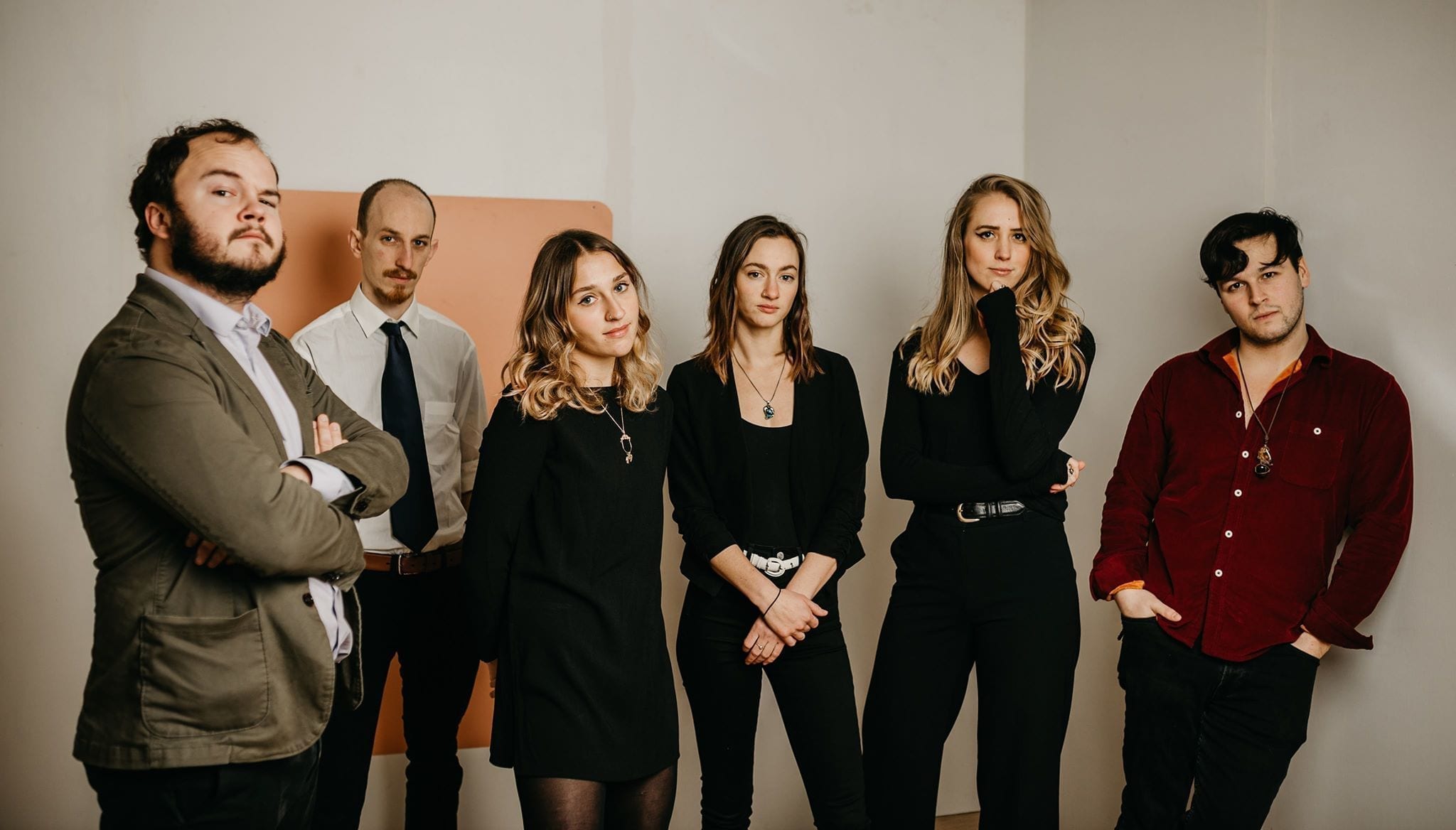
    Rich harmonies, moving melodies and distinctive arrangements are abound in Healing, the new record released by Hudson Valley-based folk and soul sextet, Upstate. Produced by Wood Brothers’ percussionist, Jano Rix, with engineering helmed by GRAMMY-winner Justin Guip, Healing represents a self-proclaimed metamorphosis for the band. It’s the first full record with vocalist Allison Olender and the first release since the shortening of the band’s original name, Upstate Rubdown. In advance of the album’s release, Upstate shared a video for “Marietta,” along with a performance at City Winery in NYC.


    Much of what makes Upstate unique is amplified in this record. The group features a cajon, but no drum kit, and a mandolin, but no guitar (mostly). This allows Ryan Chappell’s mandolin, Harry D’agostino’s bass and Dean Mahoney’s cajon to take turns weaving melodic and percussive elements into the arrangements. Meanwhile, Olender, Melanie Glenn, and Mary Kenney trade lead vocals and infuse the spaces with harmonies.


    Mirroring the radical evolution of the band, Healing introduces some new instrumentation. “Sarah” has D’agostino on electric bass, while Glenn and Olender lend their guitar playing in “Crawl In” and “I’ll Be Fine,” respectively. These changes represent a larger effort by producer Rix to experiment with the recording process. Encouraging the band to delve deeper into their non-traditional structure allowed Upstate to nail down its characteristic tone and sound.


    Emotions arrive in waves, as the record journeys from the swaying softness of “I’ll Be Fine” to the high energy drive of the eponymous track, “Healing.” While rooted in soulful folk, some tracks stand out as boundary-pushing explorations of genre. In “Mother,” what starts as a vocal ode to a mother’s influence, then moves into a jazzy, moody, groove filled song with ambient sound, culminating with a sax solo by guest musician, Christian Joao.


Built in Breakdance