Tag: mazzstock

  • Mazzstock 2018: A Birthday Bash & Family Affair

    My birthday parties typically consist of pizza and ice-cream cake. For Hudson Valley resident Lee Mazzola’s birthday, there were more than twenty bands for Mazzstock with hundreds of celebrators dancing and socializing in addition, of course, to pizza and ice cream.

    The (family) friendly atmosphere at Mazzstock.

    The party, dubbed Mazzstock, took place from August 24-26 on a back road in Marlboro, NY. While my wife Lauren and I could only attend Saturday’s festivities, everything we overhead confirmed our own time was representative of the overall experience: an intimate hangout among friends and neighbors, where overbearing security and a daunting list of rules were unnecessary; a small patch in the Hudson Valley hills with nonstop music and carefree families.

    AB/CD rocker

    Before I arrived at the music, here’s an anecdote that aptly encapsulates the Mazzstock milieu: I took a brief shuttle ride from parking to the festival, driven by an apparently crotchety, ponytailed and mustachioed middle-aged man named Steve, who could’ve easily passed for a farmer, trucker, original-Woodstock-survivor, or all the above. After jolting the van to a stop at the music drop-off point, Steve overheard another older gentleman, a curious neighbor who didn’t realize paid tickets were necessary. The gentleman asked Steve to drive him back to his car, disappointed, since he couldn’t pay for the ticket. Steve replied, “Hell no, brother. You take one of my tickets. I bought a bunch because the guy running this shindig is a helluva guy and one has your name on it. You’re staying all weekend, my friend.”

    Hours later, I saw the older gentleman enjoying himself plenty and hoped that Steve was somewhere nearby partying, too.

    Chris Owens of The Other Brothers

    When I did finally arrive at the music area, a soccer field-sized clearing with a smattering of people around two smallish stages set up on the woods line, New Paltz’s The Other Brothers were playing. Led by flamboyant frontman Chris Owens, the nearby natives entertained for forty-five minutes. His backing band churned out funk led by steady percussion while Owens pumped his legs and wrung his hands, belting out soulful vocals. Owens’ voice was pleasant and his presence was vibrant and I was nicely surprised with The Other Brothers.

    The weather was unimpeachable—sunny and seventy, the humidity had finally dissipated—and Lauren and I wandered around the festival grounds before the Alpha Male Gorillas took the stage. Kids (and grownups) were running around, dancing and hooping, everyone in high spirits. A communal bonfire smoldered in the middle of the grounds and revelers played cornhole and beer pong as music wafted from the background.

    The Alpha Male Gorillas bluesy beginning.

    Back at the stage, the Alpha Male Gorillas began their long set with a few bluesy ballads. The vocals were gravelly and the riffs were plucky, a nice changeup from the preceding bands’ jams. To the chagrin of the crowd, they threw a curveball and welcomed a couple rappers to the stage for freestyling midway through the set. Covering a large gambit, they played everything from Nate G to Bob Marley. Festival namesake Lee Mazzola jumped on stage during the set to announce they were the only band who’s played every Mazzstock and the growing crowd vehemently approved.

    While the Alpha Male Gorillas wound down, everyone scooted to the second stage for what turned out to be the highlight of the night. As the sun set, funk powerhouse Kung Fu took the stage and, from first note to last, catalyzed a phrenetic dance eruption. Early in their set, I overheard someone tell his friend, “There’ve been some good sets this weekend, but these guys are next level professionals.” I couldn’t have agreed more.

    Kung Fu rocked Mazzstockers as each bandmate took his turn soloing and harmonizing, a tightknit unit firing on all cylinders. At the end of lengthy jams, a uniquely Kung Fu riff snapped the crowd back to the chorus, before they cast off into another crescendo.

    Kung Fu lit up the night.

    An extensive drum solo from Adrian Tramontano highlighted the set while guitarist Tim Palmieri and tenor saxophonist Robert Somerville were constantly in sync, shifting between lead and rhythm roles. As with every able funk outfit, bassist Chris DeAngelis thwapped away tirelessly on the bass and keyboardist Beau Sasser rounded out the lineup with an upbeat performance on the keys.

    Two hours after they took the stage, Kung Fu left and a feeling of dazzled awe settled in the air. Late at night and with a long ride ahead of us, Lauren and I called it a night and walked back to the shuttle, bragging about the day we had just experienced.

    I was a little disappointed that Steve was still on duty as he dropped us off to the car. But, he said, he would be raging tomorrow.
  • Escaper guitarist Will Hanza talks influences, producing “Edge Detection” and songwriting

    Will Hanza, guitarist of Escaper has been enjoying the success of the group’s sophomore release Edge Detection and still buzzing about meeting Jon Fishman. Hanza spoke to NYS Music about the songwriting style that encompasses their new album, Escaper’s summer plans and jazz influences that create a monolithic jam fusion sound.

    will hanzaPete Mason: What was it like opening for The Mallett Brothers Band and Jon Fishman?

    Will Hanza: Well, we’ve sort of become regulars at Brooklyn Bowl, it’s our home venue really, and recently opened for Electric Beethoven. Working with the folks at Brooklyn Bowl is great, the sound and Vic Cornette on lights is a musician himself and he really works with you. This was our most jammiest show yet, opening the songs up in the moment in a way that keyed us into the improv we should be doing, avoiding meandering and allowing the moment to take over and launch from there. The reaction to the set was great on Thursday (April 12th). The Mallett Brothers are a really great band, and watching Fishman drum from side-stage was a treat. He was nice enough to say that he liked Escaper and that we had that Pink Floyd kind of vibe, which pretty much made my year.

    A post shared by Escaper (@escapermusic) on

    PM: What musical influences came through in the production of the Edge Detection?

    WH: The band comes from some diverse backgrounds, including myself who has a father who is a jazz musician, plus Zeppelin and Hendrix are in me. Lettuce and TAUK and more instrumentally oriented bands in the scene – we don’t want to sound like them, but they’re paving the way for what things fans are into, particularly instrumental music. Johnny Butler comes from Coltrane and jazz. Adam Ahuja comes from a pretty heavy jazz background, and is really into Mahavishnu Orchestra. For lack of a better word, this allows for a fusion of sounds, and that comes from combining jazz, classic psychedelic rock, funk rock, and I think it comes together cohesively in the process of what we take with these songs.

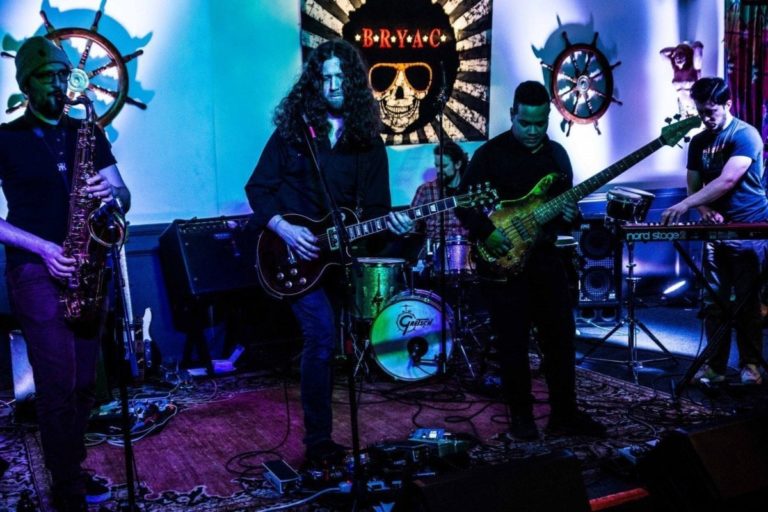
    Some of the songs on Edge Detection were written out of live jams. We hear them and cultivate them from loose jams that we’ve been digging. We ran out of songs at one of our first shows in January 2016 at B.R.Y.A.C., so we played and improvised, which led to some of these songs being born, including the first two tracks on the album, “Secret Weapon” and “Rare Form.”

    PM: What was Escaper’s songwriting process for Edge Detection?

    WH: The well rounded sound comes out of that process where we start with a groove, like Jay will start with a bass line, then the keys will add in, then the drums … it’s a little loose at the start, and soon a whole beast is starting to get formed as we go back and listen and see what parts work best. We don’t write songs and then ask everyone to learn it – Escaper builds on the idea that this is everybody’s band, and everyone gets equal credit on the songwriting. I want everyone to feel that this is their band and their music. I am honored to play with the cats I get to play with, not the least because they are invested in the music as much as I am. It’s a challenge and exciting to have a bunch of collaborators create music that you could never do on your own. We all recorded simultaneously in the studio, which gives that sense of synergy and react to each other in the moment, rather than layering things over and over.

    PM: How was the reception to Edge Detection and what did you learn from the recording process and release of the album?

    WH: The response has been very nice, very strong. We’ve only had a handful of reviews but they’ve all been positive and hey reflect our growth since the first album. The recording process was similar to the last album Skeleton Key and we have found recording in the Bunker Studio in Brooklyn with engineer John Davis (Lettuce, Black Keys) to be our spot and we’ve found a great relationship working with him. He’s brilliant, has a good bedside manner and while we were in there recording, we felt very at home. He’s taken time to get to know us as players to squeeze a better performance out of us while keeping the recording efficient and everything flowing. I don’t know we’d do much different on the next album, but we might add some vocals on the next one.

    PM: Where are fans going to be able to see you over the next few months?

    WH: We sort of kicked off the festival season playing Rock n Roll Resort, and we’ll do a couple club dates mixed in, but we’re doing a decent amount of festivals – Grateful for Spring in Mountain Sky, PA, then Elements Lakewood, Lakewood, PA on Memorial Day weekend. Disc Jam is definitely one of the highlights on our schedule coming up in early June. We’re doing Bear’s Picnic and Mazzstock in August. Being invited to play any festival is an honor and opportunity that is a great way to pollinate our music in these various places and that can only help us into a touring schedule in the fall in New York and Pennsylvania. It’s all about getting the music out there like Johnny Appleseed – the more that can enjoy, the happier we are.