Tag: jazz

  • Trypnotyx: An Interview with Victor Wooten

    As I sat in Anthology in Rochester, NY waiting for Victor Wooten to speak with me I had no idea what to expect. The crew setup the stage across the room to get everything ready for the upcoming soundcheck, but there was no sign of Victor. I sat and pondered how different the room would be in a few hours once it was filled up with enthused fans, and enjoyed the calm before the storm on the large, open dance floor. Victor walked in the front doors the same way I did, with a cup of coffee in his hand and a sigh of relief escaping the cold. Without hesitation he walked over to me, asked if I was conducting the interview, smiled and shook my hand as he introduced himself (as if I didn’t know who he was).

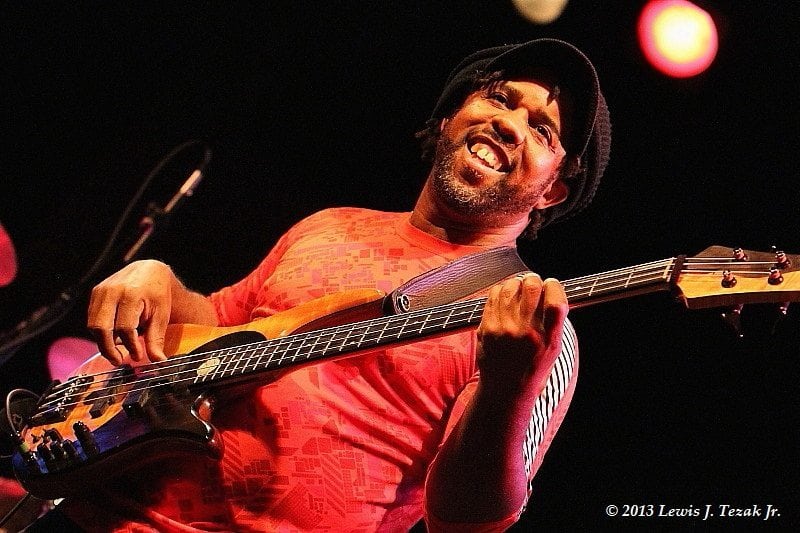
    victor wootenInterviewing Victor was less an “interview” and more a conversation. When he spoke, his big brown eyes locked in with mine, and it truly felt like we were the only two in the room. He is a genuinely caring individual who’s love for his craft and dedication to art was evident with every word he spoke. To him, music is about openness, letting go of your ego, and creating magic. He was ecstatic to speak about each project he was working on, and his passion for life and music is something he carries openly with him. I feel very fortunate to have had the opportunity to spend a half hour sitting down one on one with a music legend of his stature. Below is our full conversation:

    Ryan Randazzo: You recently released a new album, Trypnotyx, what inspired you to assemble this particular group of musicians to record this album?

    Victor Wooten: I played with these two guys, together, with a jazz guitarist named Mike Stern. Immediately I knew I’d love to do some of my own music with them, so the germ of the idea started years ago. With everyone’s schedules, the time was now right to do it.

    RR: When you recorded this album what was the process like? Was it different from other projects you’ve worked on or recording with the Flecktones?

    VW: A little bit different from the Flecktones, but very similar to recording my own records. A lot of it is me in the studio by myself working on ideas, then sending them to the other guys to add things to or see what they think. Bob Franceschini, the saxophone player, was doing the same thing; he was coming up with ideas as well. With the Flecktones, we do a lot in the studio together, but because of Bob and Dennis Chamber’s schedules, a lot of it was separately done. Mostly the writing, then we would get together and get parts recorded.

    RR: It sounds like technology has made it a lot easier to get things done.

    VW: Absolutely. Technology is amazing these days. I would say even more than not, records are done separately. At least for me, it’s rare that I’m in the studio with the whole band.
    victor wootenRR: Do you prefer recording separately?

    VW: In many cases yes because then I can record on my own terms in my own studio. I can go up and have dinner with my kids then go back down to the studio. Also, I can take my time getting my parts together rather than having to work on someone else’s stuff, but I like both. There’s nothing like having other people in the studio to collaborate with.

    RR: Playing with the trio requires you to fill a lot more space. Do you prefer playing with the trio or a bigger band, and what are some of the differences you’ve noticed as a bass player?

    VW: I’m lucky to play in many different situations. I like them all. When the band is bigger I have to do less, which is nice. With a trio like this, and there’s no chordal instrument, I have to do more like playing chords and melodies, but the challenge here is to not feel like I have to fill up all the space. Space is beautiful and it’s easy to go “oh it’s a trio, I better play more.” Sometimes it’s playing less that allows the trio to sound its best, so it’s a challenge.

    RR: What do you typically prefer?

    VW: I just like choices. If I did one thing all the time I would long for the other. The fact that I get to do a lot of different things keeps me musically happy.

    RR: As a well-respected musician, who do you look up to at this point in your life?

    VW: I have lots of heroes. There are lots of guys I learned things from growing up. I could name the normal names like Stanley Clarke, Jaco Pastorius, before that even James Jamerson, Bootsy Collins, Larry Graham, Paul McCartney; I could just go on. Also, people that I grew up with, and they’re names you’ll never know, that taught me just as much because they helped me grow as a youngster.

    The biggest influences were my four older brothers. That’s the whole reason that I played. I was born into a band, literally. They all played different instruments. Regi plays guitar. Roy aka “Future Man” from Bela Fleck and the Flecktones is a drummer. Rudy, the lesser known of the brothers, passed away a few years ago and was our saxophone player, and Joseph is the keyboard player. Joseph has been touring with the Steve Miller Band since 1993. We played as a band the first half of my life.

    RR: Do you have any particular mentor or a go-to person you like to bounce ideas off of?

    VW: My brothers are still those mentors. I also have a few other friends. One guy names Steve Bailey. Steve is now the chair of the bass department at the Berkeley College of Music. Another close friend who lives in upstate New York, Dave Welsch, he’s another bassist and teacher. Anthony Wellington is another great bassist and teacher. Steve, Anthony, Dave and I have been teaching together at my own music camp since the year 2000. We always keep in touch with each other to bounce ideas and teach together. Then I’ve got my brothers, and it’s always good to have people like that close.

    RR: What is the biggest challenge you faced as a growing musician, and is it something you still encounter today?

    VW: Today, my biggest challenge is finding time at home with my kids and my wife. Because I’m successful at what I’m doing, it keeps me on the road a lot of the time. I miss my kids and my family, and they miss me. That’s really the biggest one.

    Another one is to try and sell a record. We’re in the record making business, but people don’t buy many records these days. The younger generation expects the music to be free, and that doesn’t make it easy for us. People aren’t buying as much music and they’re not going out to see as much music, but they still want music. As a music maker we face that challenge. For a lot people, if you come to town they have a choice to watch a video on YouTube or go see a show. They can say “I’ll watch it tomorrow” knowing that someone is going to record it. Back in our day, we didn’t have that choice. If someone was coming to town we were there. We didn’t know when or if we would see that person again, so it was a special event when someone came to town. It’s not as special for the young audience anymore.

    At the same time, I’ll add this: our generation was different from our parents. Every generation changes. I don’t want to be the old guy complaining about how good it used to be. I want to learn the new way and figure out how I fit into it rather than complain, but at the same time make changes and fix things where we can.

    RR: Do you have any daily or pre-show rituals that you do?

    VW: Nope, none at all, except to try to be open, calm, and in a good mindset. I have to not be worried or frustrated, and just be calm so the music can flow. I don’t have anything I normally do every time, because if for some reason one day I can’t do it I might get upset or worried. The way I look at it, I’ve been playing bass for about 51 years. I should be ready and warmed up by now.

    RR: You’re currently playing with your trio and you’ll be going on tour with Bela Fleck and the Flecktones over the summer, what’s the biggest difference you’ve noticed playing with the two bands?

    VW: The biggest difference doesn’t have a lot to do with playing. This band has my name on it, so I have way more responsibilities. With the Flecktones, even though Bela treats all the members equally, I’m still just the bass player. There is a lot less responsibility. That’s nice after coming off many months of being in charge, for lack of a better word. It goes back to me having choices. I like doing my own thing, and I like not having to do my own thing. That’s the biggest difference. The music is different, of course, but it’s fun. Each project is very fun musically, and I really enjoy both of them.

    RR: You’ve been really big on music education over the years. What inspired you get into that?

    VW: It kind of found me in the late 80’s and early 90’s when Bela Fleck and the Flecktones started becoming more popular. I started becoming more and more popular, and was featured in Bass Player magazine a lot. I found out that if you’re in there enough times people think you must be good, so I started getting asked to do workshops. I had to figure out how to teach what I did. I just learned to play organically, the same way you learn to speak. When you learned to speak you didn’t practice, and no one told you what words to learn first, you just jammed with people all the time. You jammed with people who were better at it then you, and it was the same way I grew up playing the bass with people who were better than me. That’s the fastest, most natural way to learn.

    When I started being asked to teach I had to learn how to do it. One of the things I did was start looking at other teachers, and what/how they were teaching. I saw things I liked, but I decided to go a different route. I decided to teach the things that weren’t being taught. Basically, it was anything other than the twelve notes that we use. Most people were teaching twelve notes, and we call that music theory. Music theory, for the most part, only deals with twelve notes and focuses on scales, chords, key signatures, harmony, ear training, and what not, but no one dances to notes. No one jumps up just because a song is in E flat. So what else is there besides notes? That’s what intrigued me, so I started focusing on mostly that. It resonated with a lot of people, and they were asking for more. That’s what resulted in my book called “The Music Lesson.” Many of the lessons I came up with were put into stories.

    victor wootenRR: You’ve played with many people over the years, but is there any particular jam or event that stands out in your mind?

    VW: There are a bunch, yeah. Last December, almost a year ago from now, getting to play with Chick Corea for a couple of weeks in a couple of different bands to celebrate his 75th birthday. I got to play in two of those bands, and it was amazing. In one of them I was playing the upright bass, which is not something I do much, but he called me in to do it, so I said okay.

    Opening for the Grateful Dead was amazing. I’m not the biggest fan of their music, but I am the biggest fan of them. To open for such a legendary show like that on New Year’s Eve was great. From that spawned me playing with bands like Dave Matthews Band, Phish, and getting to play with all of those kinds of bands. One of my favorites was getting to play with two of my bass heroes Stanley Clarke and Marcus Miller. We made an album together titled ‘SMV.’ A lot of times getting to play with my heroes is the biggest treat. But growing up playing with my brothers, and getting to play with Bela Fleck for almost 30 years now, those things are just as special.

    Honestly though, the most special gig is the one I’m doing next. All the past ones are just warm ups, training ground, for the one I’m about to do. I need to treat the one I’m about to do as the most special gig ever, or else I feel I’m not giving the audience the full experience they deserve. So really, the most important gig is the one I’m doing or about to do.

    RR: What advice do you have for young musicians?

    VW: Listen. The same way we learn to speak is by listening. Play more than you practice, find people to jam with, go to hear music, and learn as much as you can, but don’t let learning about music rob you of the enjoyment.

    RR: It sounds like this trio is something you’ve wanted to do for a while, are there any other projects you’ve been thinking about that you really want to do?

    VW: Oh yeah, lots. One is an acoustic album featuring different acoustic instruments and an acoustic bass. I still have a plan for that. I also want to do a tour with students from my camps, which would be a lot of fun. I usually stay in touch with many of my students, and they make sure of it. They show up at my gigs, and find me on Facebook. Many of them are out doing major gigs themselves.

    I have a lot of projects and records I want to do. I still want to do a record with my three remaining brothers, and we’re actually recording something right now.

    RR: Is there anything else you’d like to say to our readers?

    VW: Just to let people know they can go to my website and sign up for my camps. We’re about to start our 19th year, and it’s easy to register. Either go to www.VictorWooten.com or you can go straight to the camp website, www.Vixcamps.com. You can just go on and sign up, no audition is required or anything like that.

    RR: You have a very large group of students with a very diverse span of knowledge, how do you handle that?

    VW: The same way you learn to talk with other kids. You learn much quicker when you talk to people who are older. We apply the same idea to our camp. It benefits both the beginner and more advanced players. For the more advanced players, it allows the people who are stuck to see beginners learning their craft and it inspires them. The most difficult part about that, for me, is finding teachers who are comfortable teaching a group whose ranges of knowledge are so different, and fortunately I’ve found those people.

    Our camps our different. I wouldn’t say they’re better, but they’re different. It’s located just outside of Nashville, TN and people can fly in and take a shuttle out there. It’s all inclusive and there is a chef onsite. I’m there 100% of the time, so the mystique of “oh there’s Victor” goes away after a couple of days, and we just become friends. We stay up late, jam by the fire, and get deep into music. It’s a good dream come true for me.
  • Woodhenge Music, Art and Sustainability Festival 2017 Announced

    Off the grid sustainable community, Woodhenge, has announced its first Woodhenge Music, Art, and Sustainability Festival, located in Adams Center near the Adirondacks, the community will host the festival on June 23-25, 2017.

    The three day event features a diverse mix of music genres including rock, jam, jazz, reggae, bluegrass, electronic, and funk, and features over 20 artist including Formula 5, Space Carnival, Root Shock, Intrepid Travelers, Lord Electro, Jiggawaltz and Drumadics.

    Fans will have the privilege to explore each morning the 60+ acres of nature and trails the area has to offer, along with yoga and workshops focused on how to live mortgage free, creating a sustainable lifestyle, optimal nutrition, and how to build with recycled materials. The event itself will be held in a field, between the village’s garden and orchard.

    In 1997, James and Krista Juczak, created the eco/self reliance village known as Woodhenge. The mortgage free community is set in the foothills of the Adirondack Mountains along the outskirts of a large forest, complete with a stream and waterfall set between a pond and an orchard. The off the grid solar and wind powered sustainable community practices upcycling, using environmentally friendly materials along with alternative building techniques.

    The village grows and cans most of their own fruits, berries, nuts and vegetables in their community garden and raises their own ducks and honey bees for honey and eggs. The community also hosts several workshops throughout the year on building a tiny house, living off the grid, and renewable energy.

    Known as the “King of Scrounge,” Juczak took 5 years to build his 3000 square foot home, set on 50 acres, out of recycled material including beams salvaged from an old bowling alley, and a two-story concrete column made out of scrapped manholes. Windows, doors, sinks, tubs, and other items were bought cheap, or salvaged for free from renovated buildings. The mortar holding the walls is made from 80% paper sludge waste from a nearby mill. The other 20% is made of masonry cement. Juczak has also buried a 10,000 gallon fuel tank used as a guest home buried into the side of a hill.

    Woodhenge has also hosted other music festivals in the past including Summer Solstice Campout in 2016, and the Halloween Costume Fiesta.

    Fans who purchase full weekend passes to the festival online will save some cash. The online pass costs $50 for all three days, and $60 at the gate on Friday, June 23. Other passes range between $20-$40. Camping is available in the field, and in the forest close by.

  • Hearing Aide: Yoko Miwa newest album ‘Pathways’

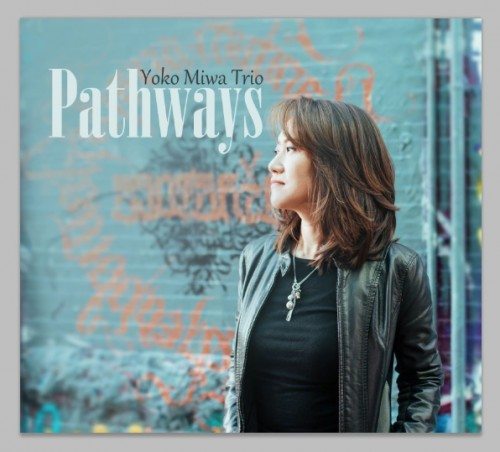
    Without a word, after reviewing jazz pianist Yoko Miwa and her longstanding trio’s newest album Pathways waltz you from the dance floor to the back alley with hints of everything from standards to show tunes and a few surprising renditions in between.

    Released by Ocean Blue Tear Music on May 12, the album features pianist Yoko Miwa, Bassist Will Slater (with Brad Barrett stepping in for one track), and drummer Scott Goulding (Miwa’s husband). A highly affable experience featuring three seasoned and spectacularly attuned musicians, Pathways is a timeless album that goes down smooth from start to finish.

    Things get rolling with a rare reprisal of Bill Evans Trio Bassist Marc Johnson’s “Log O’Rythm” which is also joined by another one of Johnson’s songs, “After You” on Pathways. Miwa also borrows from a page of Joni Mitchell’s songbook with a rendition of “Court and Spark.”

    Lickety Split” takes listeners on a spin across the dance floor with fast-paced crescendos, spiraling into spontaneous jazz riffs. Like a rollercoaster ride, the song has peaks and valleys, with appropriately placed drum and bass solos building anticipation which Miwa rises to meet.

    Pathways’ finale, a heartfelt rendition of the Beatle’s “Dear Prudence” could not be a more appropriate ending to a gorgeous piece of musicianship. A perfect blend of simplicity and beauty, the eight-plus minute track unfolds gradually and deliberately, with some sections of improvisation dispersed among this familiar classic.

    Yahama Pianos Artist, JVC Victor Entertainment recording artist, and an assistant professor at the Berklee College of Music, Miwa came from Japan to Boston to attend Berklee in the late-1990s on a full scholarship and never left. With more than a decade and a half together, the jazz threesome holds down weekly residencies at several renowned Boston venues. This is Miwa’s sixth album. Give it a listen and let Pathways bring pure beauty into your world.

    Key tracks: Lickety Split, Dear Prudence

  • Hearing Aide: Big Mean Sound Machine ‘Runnin’ for the Ghost’

    Big Mean Sound Machine is an instrumental funk group which has been evolving since the summer of 2009.  The adjectives in the band’s name are normally used to describe a Godzilla-like monster and this 9-piece out of Ithaca, NY has a sound that is far from gorgeous.  While members have come and gone to aid in the experimental efforts, their urge to grow creatively never ceases to amaze their loyal fan base.  Known for throwing some of the sweatiest dance parties in the Northeast, Big Mean Sound Machine has been ambitiously touring and working hard to welcome new followers with no plans of slowing down.  The new fan-funded album, Runnin’ for the Ghost, is just one example of how relentless experimentation on the road can lead to something positive and fruitful in the studio.

    The opening track, “Return of the March” begins with sound effects reminiscent of spaceship maintenance from a galaxy far away.  The futuristic afro-beat introduction to the album peppers in the perfect amount of brass giving it a relaxing hookah lounge feel.  “Runnin’ for the Ghost” features haunting synthesizer-bass interplay with a worldly drumbeat acting as the powerful nucleus.  The title track is the longest on the album, inviting listeners to embark on the meanest, craziest and biggest journey of all and is sure to become a staple of their already bustling live music repertoire.  “Hired Guns” takes to the streets of New Orleans for a straight forward funk piece that would mix well with any Mardi Gras influenced cocktail.  Extremely danceable and groovy, the track exits on the other side of the Earth with a tribal, West African percussion section.

    Big Mean Sound Machine attempts to travel to all parts of the globe in terms of musical influences and in “Burning Van” they cover the slums of Latin America.  The tenor sax and trombone combine forces as other band members delicately weave in and out of the track to create a perfect theme song for any 1970’s police detective TV montage.  Every band has a song that can attract attention simply based on the name.  On their newest release, “Triple Bacon” is that song.  While the title may induce hunger for one of our planet’s finest meat products, the gritty jazz will help you get your ass on the floor and burn some calories.  The 11 tracks come to an end with “Another Grain of Sand” returning to the afro-beat and Jamaican dancehall influence that has appeared throughout the 44-minute album.  An Epcot-like adventure through many different cultures and influences proves that these talented musicians have studied the encyclohpedias of sound.  From James Brown to Fela Kuti, the ghosts of artists that have come before them are sure to be dancing wherever they may be.

    Check out Big Mean Sound Machine on tour and pick up Runnin’ for the Ghost now!

    Key Tracks: Runnin’ for the Ghost, Hired Guns, Triple Bacon

  • Hearing Aide: The Bowling Alley Sound ‘The Bowling Alley Sound EP’

    On Friday, February 24, New Jersey’s own The Bowling Alley Sound will release their self-titled EP on their label 46 West. Their sophomore release brings musical and physical growth, as the original 4-piece has now transformed into a quintet with the addition of bassist and album cover artist, Andrew Capuano.

    The post-rock follow up to their 2014 debut, Metaphysical You, begins with the most energetic release of the four-track list, “Henry and Clark.” Well-known bands in the post-rock genre such as Explosions in the Sky and Mogwai can be heard echoed in their opening song as EP producer and guitarist, Mike Basil, kicks it off with a soft and subtle rift. Nick Looney’s drum playing anchors the song in place until the final section finds Issac Rubins’ violin eerily bringing the song to an end.

    “Night Flight” recreated the rich and repetitive textures heard in the first track, but much like the song title, the listener is reminded of dreams about flying. While the song will not make you want to get up and dance, or get up at all really, it would fit well at a yoga studio, meditation session, or music score of a Planet Earth episode.

    During the final two tracks, they inject muffled crowd noise to bring the listening audience together as one with the band. The group attempts vocals for the first time during the closing track, “The Conversation Of The Street Lights Will Pass As Quickly As Our Words,” a title almost as long as the EP itself. The post-rock vocal approach is very different from the typical verse-chorus structure found in many other rock genres, and The Bowling Alley Sound stay true to form using soft, spoken words to poetically describe a 2017 New Year’s resolution. While I would have liked to hear more trumpet textures from Danny Molloy, the final track sends the listener off in a tranquil and serene mood.

    The digital-only release of The Bowling Alley Sound will be available on all major platforms and can be pre-ordered now for only $1 (US currency).

    Key Tracks: Henry and Clark, The Conversation Of The Street Lights Will Pass As Quickly As Our Words

  • The Tribe Returns: MMW at Le Poisson Rouge

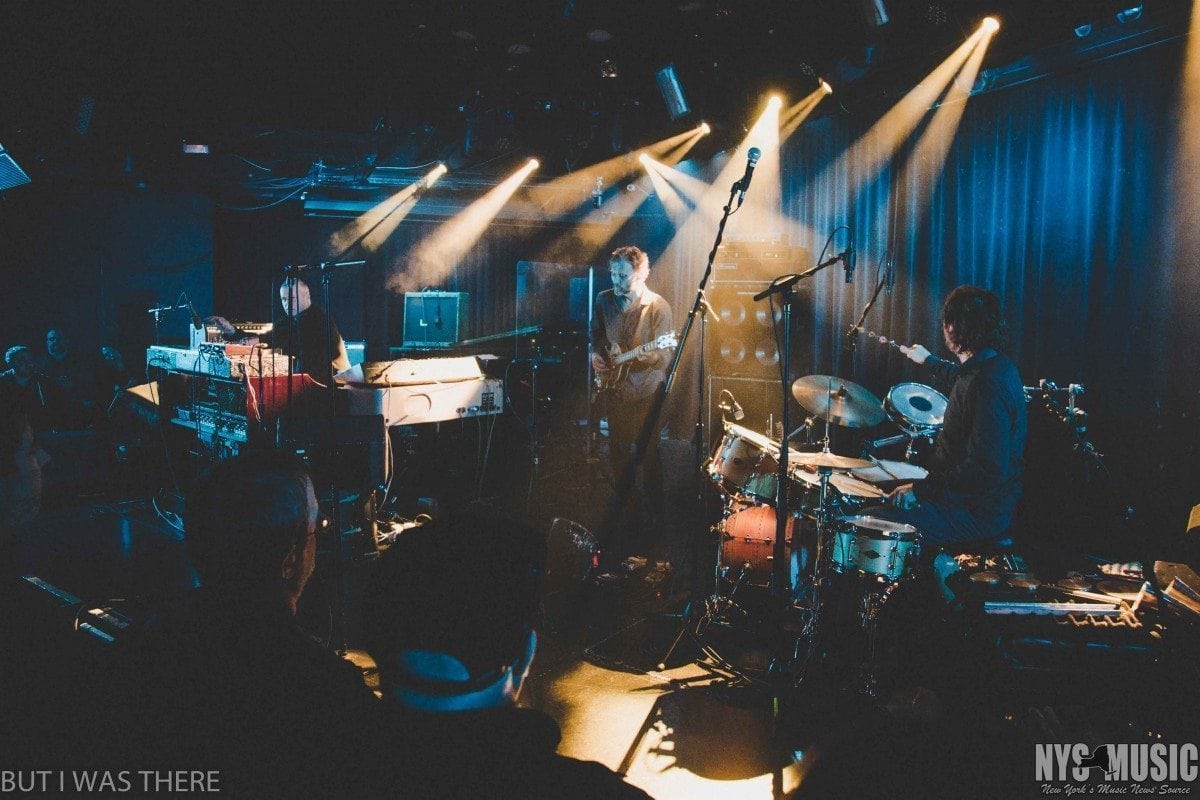
    On Tuesday night in the historic Greenwich Village, Medeski Martin and Wood returned for the second night of their sold-out Le Poisson Rouge run. The room was damp from the weather outside and the lights were dimmed as The Thunderclouds welcomed the audience to the ceremony with a Native American chant. John Medeski, Chris Wood, and Billy Martin joined behind the three tribal drummers from Wisconsin, as the two trios became one on stage, igniting the crowd in an almost euphoric fashion.

    The slow building jam picked up as the Thunderclouds exited the stage and morphed into an extended rendition of “Where’s Sly” off their second album It’s A Jungle In Here. Each member got their time in the spotlight as the crowd shook off the winter chill with a variety of dance moves. Up next was “Amber Gris” from Radiolarians II. The beginning of that track would serve as an excellent hip-hop beat and as much as I wanted to attempt to freestyle in front of my friends, I was able to contain myself in a room full of MMW veterans armed to give a solid “STFU” at any moment.

    MMW Le Poisson RougeThe first set came to a fantastic finish as the trio embraced the spirit of New Orleans with the danceable “Coconut Boogaloo” from the Combustication album. Bleecker Street in Manhattan felt a lot like Bourbon Street in Louisiana after a Mardi Gras parade as the packed room grooved to the Creole-influenced jam. While New Orleans is considered the birthplace of jazz, NYC is the birthplace of MMW and as set break began, longtime fans reminisced about seeing their baby all grown up after all these years.
    MMW Le Poisson RougeSet two brought us back to the Bayou with a swampy “Seven Deadlies,” most recognized from the live album, Tonic. The mesmerizing bass solo by Wood had the crowd in a trance before handing the baton over to Medeski to work his magic. There were moments when Herbie Hancock’s Chameleon album came to life during the 15-minute plus jam and the crowd adapted to every minute of it. A loose version of “Undone” off Radiolarians III created space for the most soulful tune of the night, “Everyday People,” which is the second one played from Combustication. Medeski has spent a lot of time taking the crowd to church with his super-group, The Word, and the gospel influenced tune transformed the room into a sanctuary for a peaceful ten minutes of bliss. A haunting drum solo by the master, Billy Martin, quickly turned into “Nostalgia in Times Square/ Angel Race” where the golden oldies “On Broadway” can be heard teased throughout. Medeski went back and forth from the organ to the keys and despite no psychedelic influence, I am fairly certain he had four arms during that jam much like Goro from Mortal Kombat.

    The always funky “Pappy Check” and “Partido Alto” got the blood flowing as this one-two punch ended the second set. The legendary band definitely didn’t need any introduction, but Martin announced the group anyway. When they returned for a much deserved encore, Billy remarked how right next door, the venue that was once the Village Gate was where they played their first ever show. Fans, friends and family of the band rejoiced as they launched into one of their most well known grooves, “Bubblehouse,” off the iconic Shack-man album. The trio shifted into high gear and revved the engine for an extended encore that left the crowd more than satisfied.

    The 3-show January residency in their old stomping grounds came about because Chris Wood was hospitalized during the originally scheduled October dates. It was amazing to see the band sonically tight and physically healthy after the brief scare last fall. While the band does not tour as much as they once had, the spirit of experimental jazz is stronger thanks to 25 years of MMW. Cheers to another 25.

    Set 1: Thunderbird Chanting>Jam, LPR Jam, Where’s Sly?, Amber Gris, Coconut Boogaloo> Jam

    Set 2: Seven Deadlies, Undone, Everyday People*, Drum/ Percussion Solo, Nostalgia in Times Square/ Angel Race!, Pappy Check, Partido Alto

    Encore: Bubblehouse

    *w/ Amazing Grace tease

    ! w/ “On Broadway” & “Lively Up Yourself” teases

  • Hearing Aide: Creamery Station ‘Creamery Station EP’

    Connecticut isn’t known to pump out world renowned musicians like New York, Seattle and California do, so it’s refreshing to see a group of guys emerge from the backwoods of the state with some true talent and passion for the art. Over the past three years, Creamery Station has been cooking up a collection that’s surprisingly good.

    Creamery says they’re a combination of the Grateful Dead, Allman Brothers, The Band, Little Feat, Railroad Earth, David Grisman, Doc Watson, Jimi Hendrix, Stevie Ray Vaughan and their first album is a fantastic representation of all these legendary groups. They manage to sound unique while giving glimpses of the defining characteristics of their inspiration rather than a copy of them. Some songs sound more familiar than others, but this is their  first compilation and it’s thoroughly impressive.

    They started from humble beginnings as a small band playing for a few house parties and slowly grew to a full seven-man group that brings a classic and a universally enjoyable country/ jam sound to the stage. They are based in CT but are making their way to New York City for the very first time and are definitely worth checking out.

    A lot of the inspiration came from the adventures some members endured, as well as a love for playing and performing music. All of the tracks were written and contributed to by every member of the band, which makes the connection between the musicians something truly exceptional, says singer and mandolin player Dylan Kader. “The energy between us when we play is something special and the crowd can feel that and they respond to it,” said Kader.

    This album is a bit all over the place, and that’s meant in the best way possible. Every song has a tie to country music with most of the tracks being based in that genre. But then some can, arguably, even have a reggae feel to it which is a combination that works surprisingly well.

    Things start off with “Ramblers Delight” and it’s about as country as it gets. It has a pretty straightforward chord progression with spices of mandolin a violin/ fiddle and relatable lyrical content. The feel of the song changes a bit when a very bluesy and fairly distorted guitar solo rings over the group that reminds listeners that a lot more is in store for the rest of the album. Country sounds are the basis of their musical content but that’s just the ground floor, and it’s a sturdy and simple one to build upon, giving Creamery free range to experiment with all sorts of genres.

    “Kansas City Blues” is appropriately named and placed at a  slower pace and even more like the typical melancholy country song. It’s the same sound as “Ramblers Delight” in terms of country sounding instruments, but the pace and chord progressions and lyrics make it a little more somber with just a few hints of uplifting major chords.

    “Walking for miles just to get a drink, then resting when we could find the shade, it’s hard to find the time for this poor boy to think, when he only eats if he sings and plays.” It’s still a well done song but this isn’t something that changes the minds of people who don’t like country.

    “Railroad Blues” is another very well-performed and professional sounding track. It’s comparably more upbeat and will definitely hit home with anyone willing to give Creamery Station a shot. There are light hints of country style instruments and it is based on a 12 bar blues chord progression which makes this one feel more rock and roll than anything else.

    Now “Sam the Clam” is where things get interesting. Harmonica player Don DeStefano dreamt up this song years ago in a separate band of his own while rehearsing backstage of a blues club called “Sam the Clam’s.” John Coltrane and Miles Davis were a big part of the inspiration behind this track as well as renowned harmonica virtuosos like Toots Thielmans and Little Walter. The combination makes for a jazzy, bluesy and damned smooth recording. It’s all instrumental to give keyboardist Jon Truelson, guitarist Jim Kader and DeStefano a chance to strut their stuff. The guitar is set to a perfectly smooth and warm tone, Truelson nails his time in the limelight and DeStefano absolutely kills his solo. It’s definitely the most fascinating song on the album and should be the go-to for first time listeners and those not soon keen on getting into the country scene.

    And just like that, “You Did Me Wrong” jumps on and the listener is thrown back into the world of country. Unfortunately, like the first three songs, it blends into the rest of the old-school country scene, but they still absolutely nail the style.

    “Out of Reach” is one of the most interesting songs on the album being that a country group created a pretty in-depth reggae sounding song. Everything about it is quintessentially reggae; a down beat, loads of percussion and funky guitar but a little hint of blues with a flavor of harmonica that sets this track apart from other songs of the same style. The best part of this song has to be the guitar solo. It’s a little dissonant and very similar to the styling of Carlos Santana. It’s a phenomenal track considering the roots of the band

    The album ends on a bit of a bittersweet note with “Sleep Late,” a very lazy country sound that leaves a little bit of an odd taste in the mouth of the listener, but again, as far as EP’s go, this one was really, really well done.

    Again, Creamery Station is coming to New York for the very first time and is going to blow the socks off of anyone that attends. This is a band that will be appreciated most in a live  setting, so see them on Friday, January 20th at American Beauty in Manhattan, find their free first album online, and keep an eye out for their soon to be released full length album, Pastures of Plenty.

    Key Tracks: Sam the Clam, Out of My Reach, Railroad Blues, Rambler’s Delight