The spectacular Pink Floyd experience known as Brit Floyd visits the Crouse Hinds Theater at the OnCenter in Syracuse Tues. April 18. The band has been proclaimed, “The World’s Greatest Pink Floyd Show.” The spectacle and grandeur of each Brit Floyd show leaves few to argue that point. The Immersion World Tour celebrates the 40th anniversary of Pink Floyd’s 1977 album Animals. Tickets for the show are still available through Ticketmaster and the OnCenter box office.
Recently, NYS Music sat down with Brit Floyd bassist Ian Cattell, who grew up in the Syracuse area, to discuss the current tour; the pressure to perform Floyd material and playing in his hometown.
Brit Floyd has been touring the world performing the music of Pink Floyd since 2011 but has its genesis in the Australian Pink Show back in 2005. Cattell has performed with both units in addition to playing in several prog-oriented outfits as an up-and-comer in the Central New York Scene.
Cattell moved to Syracuse at the age of 10 and lived there throughout high school. He played with several local outfits that gathered some large followings during his time in Syracuse: Crazy Diamond and Childhood’s End, both Pink Floyd tribute projects; the United Booty Foundation, a popular funk-disco band and Seconds Out, a Genesis cover band. It was through these endeavors that Cattell honed his prog-rock chops, leading to his current gig with Brit Floyd.
When you’re performing the music of such an iconic band in rock history, there is already a built-in fan base looking for note-for-note replication of that band’s work. When asked if he ever feels that pressure or if he places any pressure on himself, Cattell responded,
Oh, definitely. If we were out doing original music, you can kind of do it however you like. It’s yours. Whereas, there are so many Floyd fans that listen to the albums over and over again and they’re so familiar with every last detail. We try to put a little bit of our own flavor into it for our own fun, but it’s only to a point, because people are expecting to hear how it is on the album.
Cattell performs both David Gilmour and Roger Waters songs but finds his natural singing voice closer to that of Gilmour’s. He first “tried his Roger Waters vocals on with Childhood’s End” around 2001. He does admit to his voice being “in character” while singing Waters’ vocals. See below for Cattell in character during “The Trial” section from The Wall. Cattell goes full-on Waters. First timers may be fooled into thinking the Floyd bassist is making a guest appearance onstage.
When attending a Brit Floyd show, expect to spend the night. Each show is approximately three hours long, with songs spanning Pink Floyd’s career. This tour focuses on not only the 40th anniversary of Animals but also the 1994 release The Division Bell, with other eras being represented as well.
When asked what makes playing in his adopted hometown different from other venues, Cattell states, “Each time we play in Syracuse, it’s quite amazing. I feel like I know at least half the audience. If not from having done gigs or going to see gigs or through Facebook…I get a vibe off the Syracuse crowd like no other because I know so many people there. I do so many gigs where I don’t know anybody…but Syracuse is unique where it’s that the people I know are everywhere I look.”
If you miss Tuesday’s show in Syracuse, Brit Floyd will be performing in Schenectady at Proctor’s Theater Wed., April 19.
NYS Music had the honor and pleasure of speaking with Albert Mazibuko, an original member of Ladysmith Black Mambazo, the a cappella revolutionaries from South Africa. They gained global recognition from their collaboration with Paul Simon on his album Graceland and their careers have skyrocketed since. They worked with a variety of widely recognized artists from Dolly Parton to Sarah McLachlan and released a plethora of albums over the course of 50 years. Tickets are now on sale to see the group perform at the Fairfield University Quick Center in Connecticut, Sunday, March 12 at 7:00 p.m. Mazibuko tells NYS Music about their humble beginnings, stories of their time with Paul Simon and more information about their upcoming performance.
David Ostroff: When was the last time Ladysmith Black Mambazo came to Connecticut?
Albert Mazibuko: I cannot be specific, but it was maybe a year or two years ago. I cannot tell because we are always around the country
DO: That’s not surprising. Ladysmith has been performing constantly for years now. That being said, how do you and your team keep up your enthusiasm after 40 plus years of recording and performing?
AM: The music itself gives the energy that we need. Sometimes, I’m feeling tired before the show. But then we get together and we pray. After that we start a song to warm up ourselves and then the energy just comes. Before I hit the stage, I am a new person.
DO: I have to ask. I did some research and saw that in South Africa, before you came to the states, Ladysmith would perform in a cappella competitions. But you guys were so good that they wouldn’t let you compete. How did that happen?
AM: Wow, that is a good refresher! I’ll never forget that day. We were finally allowed to enter the competition (because their music was a different style than other groups). After we sang, the judges and audience stood up, and the other groups said, “You already won!” They decided the music was too good to entertain, so what (we) would do is sing from 8 to 12, and then after, the other groups will compete. We couldn’t believe it happened. We really missed the competition. But not anymore, after our success in our group.
DO: What were some of your best memories when working with Paul Simon?
AM: When we first received the message that Paul Simon was in Johannesburg to met Joseph Shabalala, we wondered why he would want to meet (Joseph)? We first thought it was someone who would sing American gospel, which is similar to our music. But when we heard it was Paul Simon, because we knew his music, it would play all over radio’s in South Africa, we said, “How?? Why does he want to meet him?” When Joseph went there, I remember he went there in the morning because we were around in Johannesburg on tour so he went to meet him in the studio and Joseph came back in the afternoon. We asked him what Paul said, Joseph said, “He is a man of music. He wants to do something with us.” So the concern was more than before. In two weeks time, he sent us a letter with a demo (of the track “Homeless”). Along with it came a piece of paper in Paul’s handwriting that said, “Dear Joseph, Don’t change this because I took it from one of your recordings.” Paul only sang two lines by himself which were “Homeless, homeless.” (The chorus) This was the right time to write the music because this would go with the situation in South Africa. Violence was all over the place. We then received a message that we had to go to London to meet with Paul. We went as a group and we were so excited. We stood behind the microphones, and Joseph told Paul we had been trying to work on the song. We tried to record the song on the first day and it did not work at all. It was so much different with all the people trying to help and the song was not getting together. We were in the studio at two in the afternoon, and by six in the evening, Paul said let’s all go back to the hotel. We were very disappointed because Ladysmith Black Mambazo would usually record up to 12 songs a day. We practiced until midnight. The following day, we went into the studio. Joseph told Paul that that we had been rehearsing and to take a listen to this one. We sang the whole song, someone said, “This is it,” and in two hours we knew the song was there.
DO: Well it must have been worth putting that effort into that song, though. It’s absolutely beautiful.
AM: It was like a nightmare to us! One song for three, four hours? But we understood that it was something else that was introduced to us. I appreciate that because, after that, everything was so much better for the group.
DO: I didn’t know much about your music aside from your work with Paul Simon and most of my generation have limited knowledge of Ladysmith Black Mambazo as well. What else would people my age recognize Mambazo from?
AM: We have worked with a song on Michael Jackson’s “Moonwalker” and we collaborated with artists like Dolly Parton, Stevie Wonder and Ben Harper. There were so many others. Sesame Street (“Put Down the Duckie”) was a very famous one, The Lion King (“Upendi” from The Lion King 2) and the track for Eddie Murphy in “Coming to America” (“Mbube”).
DO: Aside from your generation, Americans most likely remember Ladysmith from their intro in Paul Simon’s “Diamond on the Soles of Her Shoes.” What is the rough translation of that intro in English?
AM: That one happened in the way that we used to do things. One day we came to New York to perform on Saturday Night Live. (The day before SNL) Paul Simon was recording and he said, “You can come in.” When we went in we found he was working on this song, “Diamonds on the Soles of Her Shoes” and he said to Joseph, “Just give me some blessings in my song.” We listened and said, oh this song is complete. But Paul Simon insisted that we do something. Joseph just took a piece of paper and a pen and wrote it down. It translates to, “It’s unusual, the girls, they take care of themselves so they don’t depend on a man.” He was responding to the song about this girl who is rich. The girls have their own money so they take care of themselves. We recorded that on the last day, and it took not even 30 minutes. To tell you the truth, this is a song that after I heard it for the first time I thought, “Oh it’s one of those song where you said, ‘Okay I need 12 songs, so I’m going to put something that makes number 12’”. But I was mistaken, because after I played it the third time I realized, this song is good!
DO: One more question before we move to your performance in Fairfield. Your group has been recording and performing for more than half a century now. Many bands and musicians that stay together for even half that time were doomed to have conflict, like Simon and Garfunkel. How did you and your group keep such good ties with one another?
AM: I think something is helping us. You see groups all over the world that have been together for two or three years and then they go separate ways which is sad, most of the time. But in ours, we are fortunate that we are all family. In our culture, the family will stick together, no matter what. And also, our culture tells us that the person who is in charge of the family is a leader of that group. We are bound to listen to that person and respect that person and also respect one another. We believe that (Ladysmith Black Mambazo) is a family and if I have a different opinion than my brother, or whomever, I represent that in a respectful way. So even if we have some disagreement in the group, we always tell it with respect. It helps us a lot because I can tell you the truth that we’ve never had something like a fight between us. We do have different opinions sometimes when we talk about things. But we find a solution and a common ground. If my way works, I will never say, “What did I tell you? Your idea was useless.” No you don’t say that. In our group, we will always find a way to agree with one another.
DO: On behalf of all people that love your music, thank you for thinking in such a way and staying together for as long as you have. Your contribution to American music was immense. Let’s move on to your performance at the Quick Theater. What kind of audience usually attends your shows?
AM: It’s amazing that we see all ages. All people. Older people up to the toddlers. All the nations and the colors enjoy our music. Joseph used to say, “Our music, it’s coming from the blood to the blood.” So everyone creature who is a human being in this world can relate to our music because we speak to the soul of the people. When I look to our audience, every time I will see a 90-year-old and then I see the toddlers, maybe three years, which we are so grateful for that.
DO: In a few of your albums and performances I hear some light instrumentation. Will we see a strictly a cappella or will there be a band accompanying you?
AM: No it will just Mambazo. When you get into the theater you will see 10 microphones lining up on the stage. You will see 10 guys, they walk to the stage with colorful clothes, white shoes and the song will begin. Some parts we will include the audience and so we engage them. We give them something and then we sing so it’s like a competition then after that we come together and we sing. It’s a very good lineup. It’s songs that are entertaining and uplifting. They are more encouraging with a positive message, especially in this time. It seems that this beloved country is in a conflict. We choose very specific songs for that. The songs that we sang for South African people, it helps them and encourages them. They were able to solve their problems. Hopefully the message is going to be held in America so it can open into its beauty again. Our music is about love, peace and harmony. We want people to take peace and feel that harmony. By doing that, we will make this world we’re living in a beautiful place to live
Rock music across the pond in Australia is starting to have quite the following here state side with bands such as Karnivool, Dead Letter Circus and 12 Foot Ninja. But one band that seems to be looked in the rock genre is Birds Of Tokyo. Birds Of Tokyo have been pigeon holed into the pop genre with singles from their self titled and March Fires albums. But this time around Birds embrace their heavier roots on their latest album Brace, which was released on November 4, 2016.
Brace has a dark, heavy and sometimes retro tone throughout the entire album, yet it is enlightening lyrically. Birds pushed the envelope and delivered a much needed album reflecting current political events happening all over the world. Digging deep, Birds transcended by taking their fans to a new level of music greatness with Brace.
Fresh off of their Australia tour, Birds Of Tokyo’s drummer Adam Weston graciously took time out of his busy schedule to answer some questions for NYS Music!
Rebecca Clark: What was the hardest track to record on Brace and why? Adam Weston: “Empire.” In demo form it had its strengths but lacked an identity that the other album tracks solidified during pre-production, so once we actually started drum recording it really was against the ropes. Some songs really tell you what direction they want to go in and others you sometimes end up putting through the ringer. After all tracking had been done we had a breakthrough with the song, flew our producer David Bottrill back out from Canada, set everything back up again and nailed it.
RC: If you could go in a time machine and could tell your past self anything what would it be? AW: Other than a decade’s worth of NBA winners I’m not sure I would have anything pivotal to say. No regrets!
RC: What did you guys do to celebrate on release day of Brace? AW: Our bass player Berney and his wife are great cooks, so it was food, plenty of drinks and arguments over album track listing at his pad. We shunned the tradition of cigars which is probably a good thing.
RC: How was it working with Hayley on “Discoloured?” How did teaming up with her come into play on the record? AW: Haley’s a gem and really gave “Discoloured” an extra edge. We’ve run into The Jezabels often when billed on the same festivals or just out at pubs in Sydney, so Hayley was our first choice and the first time Birds have collaborated with another vocalist on record.
RC: Your lyrics have always been amazing and dig deep on a personal level. Was it nerve wracking stepping into writing about the more political and heavier events going on in our world? With the US presidential election at fever pitch while writing, I personally love what you have done with the lyrics. AW: Lyrically, Birds often had a ‘you and I’ connection in their early storytelling, then with March Fires it became more of a ‘we’ perspective and Brace is more of a current ‘state of things’ extension of that.
While we knew we were aiming towards a harder edged record, some content naturally found its way in purely from what was and of course still is going on in our daily lives. Current Australian government policies, environmental issues and other worldly concerns were an alarming fit to the dystopian-tinged tales and end of days vibes we were feeling.
RC: What is the story behind the art concept on the cover of Brace? AW: We came across some amazing art done by the wonderful Sean Mundy and that acted as a visual starting point. Mood boards followed that encompassed a lot of sci-fi and dystopian content but we didn’t really want to blatantly take that path. So many facets of the album process were about making new and bold decisions, so the final cover art I personally feel is certainly bold while suggesting despair from oppression. Based on a lot of feedback it really is open to interpretation.
RC: What is the one thing you hope your fans take away from the songs by crossing the “political line” in your songs? AW: Awareness. I think all members have been passionate about particular causes since our teenage years, but as a group of friends continuing to grow and write together I feel we’re just more aware than ever about issues that concern everyone around us. Of course this isn’t literal amongst the material, but there’s a sense of shining a light on the things that trouble us.
RC: Is Glenn jealous that there isn’t another Glenn in the band? I know Kenny goes by his last name, do any of the Adams have nick names so you don’t get confused? AW: Ha, well there’s Kenny, Sparky, Westy, Berney and Glenn is Diffy.
RC: Is it hard sharing Kenny with Karnivool? How does he compartmentalize being in two successful bands? AW: That all just comes down to time management/effective planning. Naturally not everything lines up exactly but we all make it work.
RC: Do any of the other band members have other projects they work on as well as BOT? AW: Berney and Diffy have recently begun a Sydney based band Kiko Smokes – check em out.
RC: Who has pulled the most epic prank and what was it and on who?
AW: A friend of ours and a studio colleague of a couple of members recently reported a break-in where a whole heap of valuable gear and irreplaceable hard drives full of work were stolen. The break-in was real, but fortunately the stolen gear was not. I’m not sure how long the members were left stewing, but I know my stomach sank when I heard the first half of the story!
RC: What is your theme song when you walk into a room? (like in the movies) AW: Spanish Flea
RC: Do you have anything else to add? AW: In the space of two weeks this month I get to see (again) two of my favourite acts, Every Time I Die and PJ Harvey, while other weekends include Birds shows, then in February it’ll be a guilty pleasure as Glenn are off to Gn’R! Not a bad start to 2017…
 Brit Floyd has been touring the world performing the music of Pink Floyd since 2011 but has its genesis in the Australian Pink Show back in 2005. Cattell has performed with both units in addition to playing in several prog-oriented outfits as an up-and-comer in the Central New York Scene.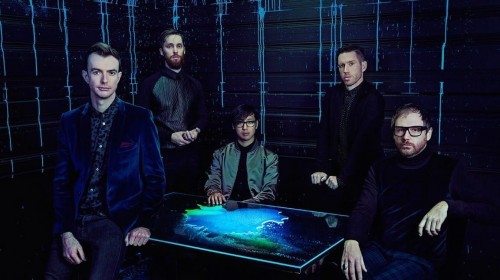
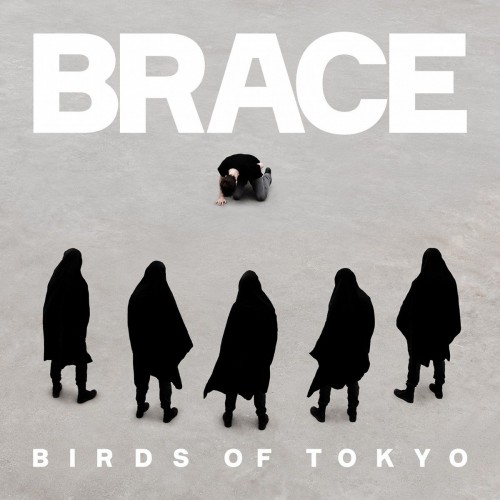 RC: What is the story behind the art concept on the cover of Brace?