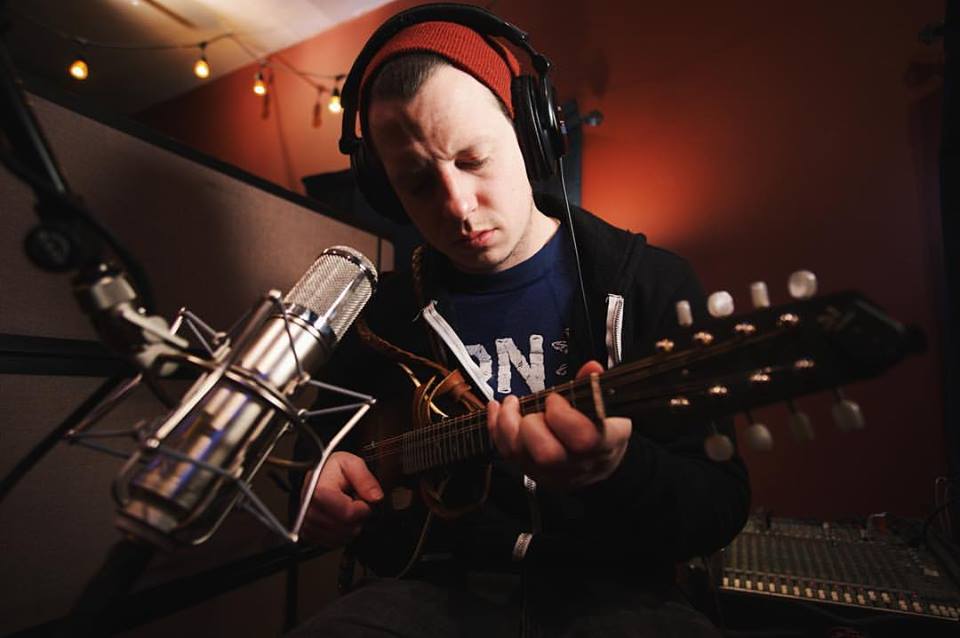
On Friday September 29, folk powerhouse Cabinet landed in Ithaca, NY, and played two long sets at The Haunt. Since their birth in 2006, Cabinet has built a committed grassroots following by providing an eclectic roots sound. They have earned unconditional respect with their commitment to quality songwriting, and impressive ability to cross between genres of bluegrass, country, jam, and psychedelic. Before Cabinet’s foot-stomping performance, NYS Music had the opportunity to sit down with Cabinet co-founder, singer, songwriter, and mandolin player JP Biondo. NYS Music is ecstatic to present you this edition of “In Their Own Words.” Here we have a collection of bite size nuggets of knowledge, quoted directly from J.P Biondo of Cabinet:
On a Musical Childhood:
My first instrument ever was a Tuba. I joined the band as a young teenager in around 1998. As a child, I always loved music. I always loved singing a bunch. I came from a very musical family. Growing up, I was surrounded by music all the time. For example, my dad would teach me how to sing harmonies on car rides.
I come from a very large musical family. My dad has eight brothers and sisters, and so, I have like a whole slew of 1st cousins. There is a total of 35 of us or something like that. The family has at least one family reunion every year at grandma’s house. She lives on a big farm near Scranton, PA. At last year’s family reunion, there was like 180 us. Every year, the sun goes down and everybody knows it’s time to get around the campfire and sing. We sing, play harmonies, and just hang out and have fun. This is how I first learned to sing. At our family reunions, I would pick an elder out for the night and stand by their side and listen to everything they were singing. I would be like, “ohh thats how you do that. Ok cool.” So a lot of my teaching came organically that way.
Later on, I started to take playing very seriously. I started playing guitar when I was about 14 or 15. I learned every Dave Matthews song in the book–like any young kid does. I just loved it. I always loved music. Until this very day, music pulls me like nothing else in life. When it came to playing music, I didn’t really have a choice in the matter.
On Songwriting:
I don’t have a specific goal. Every song is different for everybody. I like to write about life experiences, For example, I wrote a song called “The Tower,” about this place where I grew up, we called it the “Dry Dam.” It’s a dam that was supposed to provide drinking water for the town of Scranton, but, for whatever reason or another, it didn’t end up working. The lake stayed there, and above this dam there was a big tower. It was like 30 or 40 feet high. As kids we would climb up the tower and jump off into the lake. We also would just hang out, drink under age or whatever, all the stuff kids do. It was a big time hang out spot for me and friends. I had a lot of fun experiences there. I like writing about my personal experiences and hopefully, someone can relate to them in some sort of way.
Advice For a Kid or Young Adult With A Passion For Music:
Follow your heart…Decide if music is something you’d like to make money at or if it’s something you just enjoy doing. Try to decide that as soon as you can, and either way is fine, but, just make that decision at some point and know where you’re at with it.
“Do you remember who you were before they told you who to be?” Morgan Bolender asks the world during her demo track “Mary Oliver.” She is a self-taught musician from the Empire State that has traveled the globe and currently calls Oakland, CA home.
During her travels, she found her sacred path as an artist and after hundreds of thousands of Youtube views, she realized that her compassionate lyrics and beautiful voice was echoing throughout the world. Her debut album, Recordings From My Living Room, has gained popularity among her open minded and globally conscious followers and while the music may be too emotional for some, others find refuge in its soulful tranquility.
Self-proclaimed “freak folk” artist Scott Ferreter calls his music “Deep Pools.” Ferreter spends his time in the spotlight attempting to engage the members of the audience mentally and emotionally. He uses his music to tell stories of his life and experiences. Musical influences such as Radiohead, Neil Young, and The Band can be heard in his stirring tales of death, birth, peace and seasons. After decades of practice, Ferreter has formed a bond with his guitar, allowing him the confidence and comfort to explore many different sounds and genres. His most recent LP, See You In The Morning Light, has been described as “an ecosystem of emotion” by Sacramento News and Review. It was no coincidence that Bolender and Ferreter found each other and formed a musical communion that has been strengthened through love, respect and admiration for one another.
After their first sonic pilgrimage through the country called the Come As You Are Tour, Bolender posted on her Instagram, “Tour’s over. 10,512 miles. 34 cities. 70 days. I have so many feelings.” These feelings were planted inside of Ferreter and Bolender in the beginning of the Fall of 2016, and much like a tulip bulb, they are finally ready to bloom this Spring. They will embark on yet another house concert tour entitled The Feelings Parade. After the spiritual, emotional, creative and musical success of their 2016 travels, they have decided to do it all over again on an even bigger and more ambitious trail. Their live shows feature the two playing together as well as solo before an audience of all different backgrounds and interests. In reference to last year’s adventure, Ferreter writes, “We played over 35 shows, saw parts of the country we had never seen, and made deep-feeling community in places where we used to be strangers. We miss you already.”
The truly dynamic duo is currently calling on their friends new and old to host house concerts for their upcoming gigs. No town is too big or small. No mansion is too sparkly and no barn is too dirty. No swamp lands are too filled with alligators and no desert is to dry. Based on their Instagram feed from last year, they are willing to do basically all the work except building the venue itself. If you or someone you know is interested in helping with the tour efforts, send an email to the performers and express interest. I caught up with Bolender and Ferreter after their last tour to hear more about what they learned, what they liked, and what the future holds for them.
Ben Boivin: What covers did you play most frequently?
Morgan Bolender: “Hallelujah” by MaMuse, and “Old Before Your Time” by Ray LaMontagne. When playing MaMuse’s “Hallelujah,” I invited the crowd to sing along, which was almost always an overwhelmingly beautiful experience. There’s nothing quite like singing my heart out with a room full of people. My favorite times were when the crowd started out singing with quiet trepidation and finished with wholehearted gusto. Due to my own trepidation, I didn’t sing at all (not even in the shower!) until about 5 years ago, so it’s one of my missions to create a safe place for people to open up the channel that has enriched my life so much.
Scott Ferreter: I hardly played any covers this tour, because I have so many new songs I’m excited about. It was hard enough to decide which originals to play. One cover-playing memory that really sticks out is playing “Traveling Song” by Bright Eyes in Omaha, Nebraska, because that’s where Conor Oberst (of Bright Eyes) is from. He’s one of my favorite songwriters, and it was quite the experience playing it on my first visit to his hometown and having several people in the crowd passionately singing along.
BB: Did you switch up the sets or add more to a set based on where you were and the experiences you had during your travels before the shows?
MB: Our sets varied from let-it-all-hang out, no-holds-barred-wild-fun, to playing for a garage full of conservative Christian corn and soy farming seniors on a farm in South Dakota who all brought their own lawn chairs. Part of the beauty of the intimate house concert setting is having the opportunity to really feel and connect with the audience – to experience them as a living body and try to tap into what would be most nourishing for that body.
SF: The set changed almost every night, based on the feeling of the place and the feeling of the crowd. Also, a lot of my songs are very vulnerable and they often push at different social norms that I find myself bumping up against in my struggle to be my full self. For that reason, some of them were entirely inappropriate for certain shows and certain crowds. I have no interest in shoving anything in anyone’s face–my intention is to stretch boundaries, not break trust. For that reason, I found myself changing the set quite a bit.
BB: What was your worst show of the tour?
MB: New Orleans. For sure.
SF: Absolutely, New Orleans. Heiress to a fortune. Old school classism and elitism. Small turnout plus pretension equals a terrible show. I’m amazed that we played over 35 shows and only had one that I wouldn’t want to do again!
BB: What was one of the best shows of the tour?
MB: That’s a really tough one, as I’m still processing the experience. My heart feels warm when I think about Kim’s living room in Blue Springs, Missouri, who Jodi filled with a lively, funny, loving crowd. Then I think of Jen’s show in West Bend, Wisconsin, which happened on gorgeous, magical land where, if there are fairies, fairies lived. That show was so sweet and tender, the people so open and ready to receive what we came to share. And the, Paonia! In a castle, and then a community house! And San Diego! Then the Dakota’s – a beautiful yard along the Missouri River, a sweet farm with Alice’s epic flower garden! Nicole’s overflowing yard in Nunica, Michigan! Playing for family and friends in NY, many of who’d never seen me play. Flagstaff, AZ, where they created an ornate backyard festival for us! There was a tea tent! I didn’t answer this question very well, but truly – there were so many magical shows. Oh! The squawking baby eagles that accompanied our show on Whidbey Island! The Heartson’s in Vermont, where we not only got to play a great show, but got to teach a songwriting workshop! Like I said – magic, magic, magic.
SF: There were so many great ones, and they were all great for different reasons. I had a particularly connected-feeling set in Paonia, Colorado. It was one of the few places where I felt no need to bring people into the right headspace for the music. It felt like we were all there together from the beginning, and it was so sweet to be able to just drop into the music and feelings. Wisconsin was a very meaningful set for me because I showed up incredibly sad, and decided to be vulnerable and play the set I needed (instead of the set I imagined the crowd wanting). As it turned out, sadness must’ve been in the air, because it seemed like the perfect set for the people there, too. I left that show feeling very held.
BB: If you had to spend two weeks at one venue you played, where would it be?
MB: Hmmm. Possibly New Orleans. That place feels like an entirely different universe, and I feel like in order to really drop in and explore it, I need some time. Or Portland, because there are so many people there I love and want to hang out and make music with.
SF: Great fucking question! I feel like Ashville, North Carolina and I have some catching up to do. I’d never been before, and yet I’ve had many great friends live there over the years. I felt deeply connected to the land there, and could easily see myself putting in some weeks barefoot in Asheville.
BB: What did you learn during your travels and would you do it all over again?
MB: If you’re going to buy high quality, American made, ethically sourced and produced merchandise, be sure to let people know, because ethical and conscious consumption is really important for our people and planet, and I want more people to consider where their things come from. Also, ethically sourced and produced merchandise is more expensive.
Humans are extremely capable of adapting. For the first 2 weeks of tour, I was a wreck. My body was falling apart, my emotions raw, and my nerves fried. The pace of tour, the emotional expenditure, and the sheer amount of work was breaking me down. Once we got into a rhythm and once I made a strict “I need 8 hours of sleep per night” rule, things changed dramatically. I was amazed and inspired by how much my limits could be extended.
It’s okay to need people. Okay, fine, I’m still learning that one, but tour helped a lot. I was very stubborn about my independence, and was sure to let Scott know, many times, that I could have done this on my own. But the truth is, I couldn’t have. Not this exact tour. I could have done some version, sure, but not what we did. Doing it together made so much more possible. And just because I can do something by myself doesn’t mean that I have to. I learned so much about how to trust and work as a team.
I can set out to do something huge, and make it happen. Even if I don’t really, really know what I’m doing, I can learn as I go. [There are] so many more things that I don’t know yet. I would absolutely do this again, and intend to. I realized after a few weeks of the Come As You Are Tour that, though we were already reaping harvest, much of our work was seed planting. Meeting new people who became part of our community. Refining our model for producing house concerts. Creating systems. Walking first-time hosts through how to put on a concert. The tour was enough, just as it was, and, it’d be a shame to not put all we learned to use!
SF: I learned that I’m supposed to be touring and sharing my music! I learned that you don’t eat passionfruit by biting it directly in half. I learned that it’s better to play the songs I want than play the songs I think the crowd wants. I learned that just because the east-coasters don’t show their love as freely doesn’t mean they aren’t loving it. I learned that nobody wants to buy totes. I learned that there are fewer medium-sized people listening to our music than there are small and large people listening to our music. I learned that I’ve still got a lot to learn from Morgan. I learned that Morgan has still got a lot to learn from me. I learned that I’m making music on behalf of all of the people who are nourished by it, not just for myself. I would do it again tomorrow!
In a dark world, Bolendar and Ferreter use their music as the guiding light. Their compassion for the human race is powerful and their creative approach to going on tour is refreshing. The Feelings Parade of 2017 is sure to see these couch-surfing companions on an entirely new wave of energy and bliss. Two old souls living their own version of the American Dream with a trunk full of instruments and heads full of sound will hopefully inspire a new generation to get in their cars and cruise the land of the brave and free.
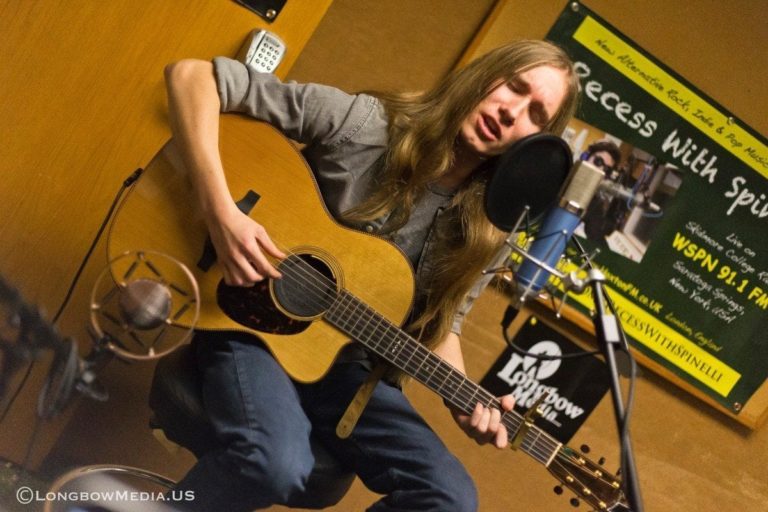
Fultonville, NY native and winner of NBC’s Season 8 of “The Voice,” young Sawyer Fredericks will be joining the stage with fellow local musicians The Sea the Sea, Girl Blue, Sandy McKnight and John Davidson for the 518 Songfest at The Egg in Albany, NY on April 1. interview
Sawyer Fredericks live on Recess with Spinelli at WSPN
Back in November, Mr. Fredericks stopped by the WSPN radio studio on the Skidmore College campus for an interview and to perform several live songs and discuss life on the family farm, musical inspiration, experience on “The Voice” and much more.
You can listen to the full radio broadcast here:
Sawyer Fredericks live on Recess with Spinelli at WSPN
Recess with Spinelli can be heard every Wednesday 8pm-10pm EDT on WSPN in Saratoga Springs, NY on 91.1FM and on Hoxton FM in London, England every Wednesday 11pm-1am GMT 6pm-8pm EDT
NYS Music had the chance to sit down and interview with Oliver Wood of The Wood Brothers just days before they embarked on their 2017 Winter Tour, which is currently under way. Due to their familial connection, the Woods come from the same musical roots, but their talents grew in all different directions over the years prior to forming the soulful folk band that now has a worldwide following. Some dates on this tour are already sold out, so if the spirit of their music moves you, purchase your tickets today!
Ben Boivin: Let’s start from the very beginning…The Wood Brothers connection with the state of New York. Your first ever show was at Tonic in NYC and two of the first five shows were at Savannah’s in Albany. How did the Capital District wind up as your first stomping grounds?
Oliver Wood: Well, part of it was a matter of convenience because my brother [Chris Wood] used to live in Saugerties and in the early days of The Wood Brothers we were trying to find little gigs and do things that were realistic and convenient. I was living in Atlanta at the time so I would just go up there and hang out for a few days and work on music and then get a few gigs in the area. We played gigs nearby Atlanta for the same reason. My brother would come down and that just made the most sense. Sort of how we cut out teeth and started to figure out what The Wood Brothers was all about.
BB: What do you feel is different about playing in New York State compared to other parts of the country?
OW: Every region has its own unique vibe and certainly New York State has that. The first thing that comes to mind for me is obviously New York City. That’s where we got our record deal and where our management company is located and where we played our first gig. There’s a sentimental connection to it. Also, we played several times at Levon’s [Helm] barn, his rambles, while he was still alive. Besides Chris living in that part of the country, it certainly has some sentimental value to me as well. There is such a rich tradition there.
BB: Is there one band member that chooses the set lists or is it a group effort?
OW: We definitely tweak it as a group, but I would say Chris is the master set writer. He is the guy that masterminds it and really thinks it through. I don’t know why, it is just something he started doing and was really good at. I guess he is a better decision maker than me? We certainly consult each other and as a group make a list of songs, but Chris is really good at putting them all together.
BB: Do you ever consider cutting songs based on the crowd?
OW: Oh, absolutely. If the crowd is rowdy, we add some rowdier songs. Sometimes we try to tone it down for people and they might be rowdy, but what they don’t know is that they actually want to shut up for a minute and really be in the moment and that’s cool too because it brings them in. It gives them something they didn’t expect.
BB: I read something you said about touring with the Zac Brown Band in front of 20,000 people and how that is a much different level than the normal tours you do as a trio. What makes that different from the theaters and bars where you primarily play?
OW: In a large venue, it is more consistent, there is this one gear. But, I like the variety of small and medium places because they are all unique and you can play them in different ways. It is very satisfying to not just do the same thing every night.
BB: How does playing music with your brother help or hurt what it is you are trying to do?
OW: It is definitely a different dynamic. I mean when you play in a band for years and years with people they become brothers. It’s like a family. It’s like a marriage even. There are those kind of brothers and then something different and deeper with a real brother because you’re family and because you have a more shared experience. Your childhood and your growing up and your parents are all formidable things that you both have. I think also, there is that innate, intangible, yet genetic thing that Chris and I noticed right away. After years apart, being able to comfortably play together and have this telepathy that usually takes years to develop, we were kind of like,“Wow, we have it built in!”
BB: In recent tours you guys have been taking different versions of the same songs on the road. Does Jano Rix help you dissect and resurrect new versions of the same song?
OW: It’s very much a group effort. Part of that is for us. By rethinking a song it is keeping it fresh for us. If we have been playing a song for a couple of years, we may think people love this song but maybe we are getting kind of tired of it. Let’s do something different with it. There is a big rocking number, like the song “Shoefly Pie,” that’s a full electric one, but we made it more porch-y the next time around. We made it all acoustic and Jano was on percussion instead of drum kit, and that’s an example of how we can deconstruct a tune and put it back together in a completely different way. It keeps it fresh for us and for the audience too. We have had a lot of comments where people appreciate and enjoy that.
BB: I have seen you guys a lot and must have heard “Luckiest Man” about 100 times.
OW: Yeah me too, tell me about it.
BB: In the Winter 2016 tour, Jano came out and did a long piano intro before a very jazzy version of “Luckiest Man” and it was really special to hear a familiar song played differently for the first time.
OW: I think people like to get surprised and challenged a little bit and there’s nothing wrong with that on either side.
BB: Going back to the topic of New York, your most recent release, Live from the Barn, was recorded right in the heart of the Catskill music scene in Woodstock, NY. Why did you choose that spot and why is it so special to you?
OW: It’s a very sentimental place for us and Levon is a serious influence and indirectly like a mentor to us. We hadn’t been there in years. Since he passed away we have done stuff with Amy, his daughter, and felt that family connection with their family. When we made the plan to go back there to play, it felt like a special occasion and we wanted to record it all. You never know how it will turn out. Maybe that was okay or that was horrible, but as it turned out, if felt like a real special night. We were really happy and excited that we captured it. We were sort of tripping on being there. It was magical and brought back all these memories. I mean, we were there watching Levon play and standing two feet from his drum set. By the end of the night, we were singing songs with him and sitting around in his kitchen after the show. There are spirits there that you just don’t get anywhere else.
BB: What is the best piece of advice Levon gave you?
OW: He never really gave us any specific advice. I think we just learned by example. I will tell you the thing I get from him is to just be yourself. Just be real and be yourself. That’s what he was and sometimes it is hard to do that and remember that in this business. Sometimes you think, what can we do to survive and to sell more tickets? It’s not about that. If you can be yourself, that’s going to be the best art you can make.
BB: I am sure you are aware that “Big Pink,” the house that The Band rented to create their debut album, is located about 10 minutes outside of Woodstock. Do you, Chris and Jano have your own “Big Pink”? Is there a place that makes writing and creating music easier for you as a group?
OW: Not necessarily. We’ve had several spots, but it has been a challenge since Chris and I lived in different parts of the country for the first six or seven years of The Wood Brothers. I would go up to him and we would write and then he would come down to my place. We would write on the road, backstage, in dressing rooms and at sound checks. He would send me e-mails and we would go back and forth. I will say, since we all moved to Nashville a few years ago, it has been awesomeness because we have been able to hole up in someone’s basement or living room or even rehearsal space. Nashville has been a good place to gel in that regard and relax with our writing. It makes it fun.
BB: What was it about Nashville that drove you guys there?
OW: It was a combination of things. For one, it was somewhat in between New York and Atlanta. We wanted to stay on the east side of the country and I was in the South so long and I like the South, a lot! Part of it too is that we had a lot of great experiences before we lived here. Really cool times where we came to town and recorded with people and collaborated with people and had some shows we really enjoyed. At random, we got to know some good friends and we had kids in school and Nashville is a nice place to raise a family. The music industry here has a stigma that it is just a country music town but there is all sorts of stuff happening with great writers and great music. It is really inspiring just to be here. You can sit in your house and think, “Maybe my neighbors are writing great songs and making great music.” I love that part too.
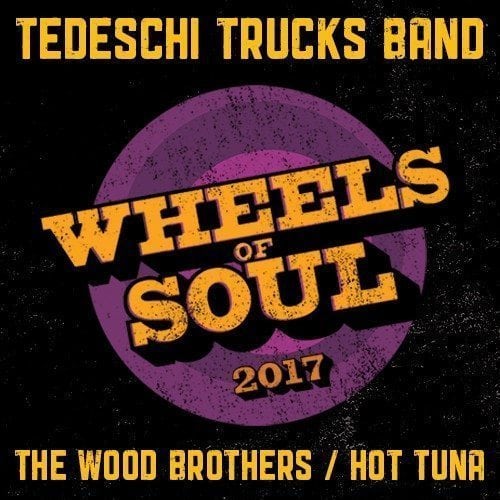
BB: You will be returning to the Empire State this summer, hitting SPAC in Saratoga and the Highland Bowl in Rochester as well as over a dozen other cities with the Tedeschi Trucks Band & Hot Tuna for the 2017 “Wheels Of Soul” Tour. What’s it like touring with other well-known bands compared to being on the road as a trio?
OW: It’s real special because usually when you’re on the road alone you are crossing like ships in the night and you don’t get to hang out with your contemporaries and they’re all playing at the same time as you are in some other city or state. It is a real treat even at summer festivals to get to cross paths with some of our friends and to get to hang out for a few minutes if we’re lucky. To do a tour with Tedeschi Trucks and be with them every day for a month or two is a real privilege because not only do we get to hear them play every night, but we also get to play with them, eat meals with them and be close.
BB: Well, we are definitely looking forward to that tour.
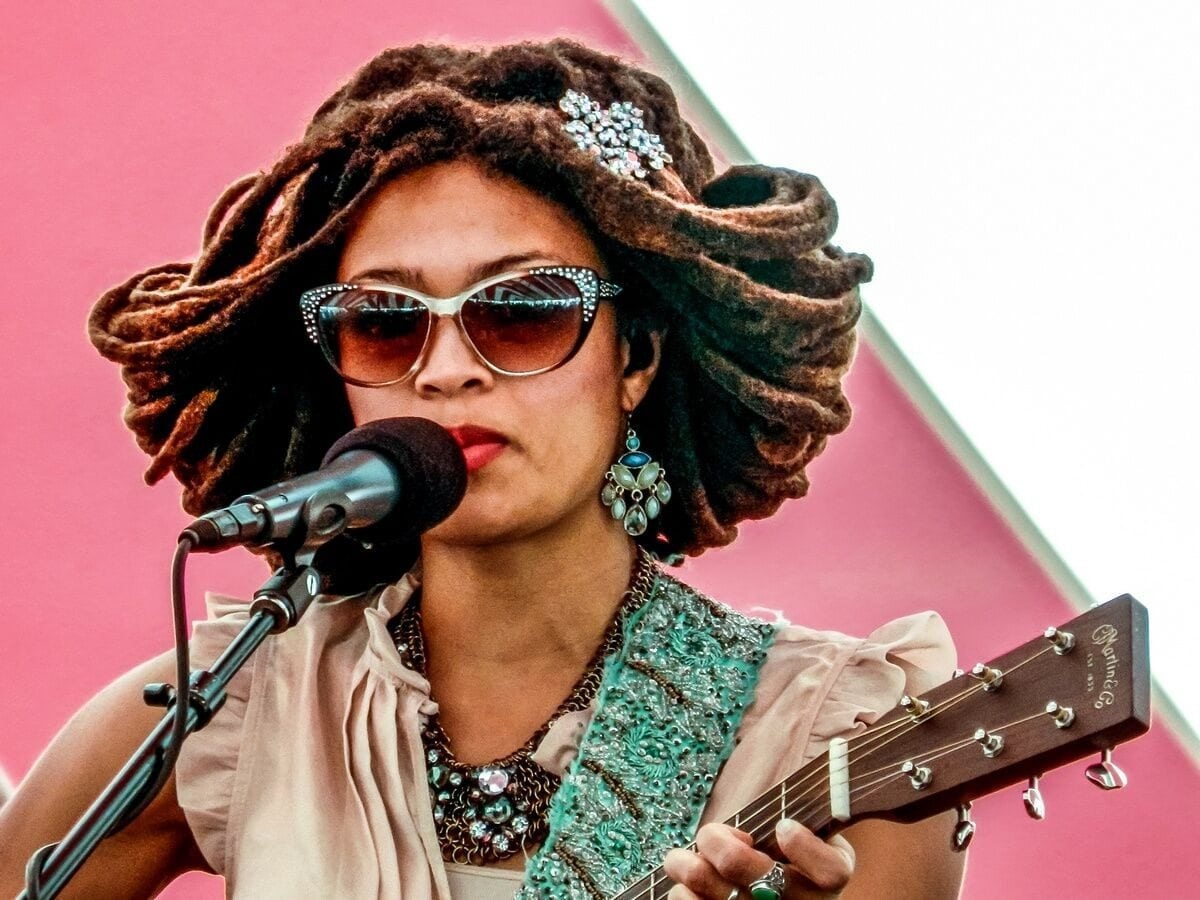
Valerie June‘s critically acclaimed 2013 recording, Pushin’ Against a Stone, drew wide attention to the Tennessee native’s eclectic mix of blues, folk, bluegrass influences, world music rhythms, and her singer/songwriter abilities. She refers to it as “organic moonshine roots music.”
The title of her latest work, The Order of Time, reflects June’s philosophy of recognizing and respecting the time it takes for things to happen in life, and for her songs to reach fruition. June recorded the album in Guilford, Vermont with producer Matt Marinelli, known for his work with Bad Brains, Beck, and Norah Jones. Jones contributes piano accompaniment on three of the twelve original songs on the record.
photo by Brian Cornish
June is renowned for her picking skills on guitar and banjo and says,“People shouldn’t necessarily think of bluegrass when they see the banjo. It was originally an African instrument, and people in America used to play all kinds of banjo. For some reason people like to limit it and say it just has to be in folk and bluegrass, but to me it can be in anything, and I really wanted to set the banjo free on this record.”
June also contributed a version of “Astral Plane” from the new record to Bedstock, a music fest in which artists play songs from their beds for sick children who are stuck in their own. Fans contribute to the charity and help music be the medicine.
Many Central New York music fans will recall June’s captivating performance at the 2013 Chenango Blues Festival in Norwich, New York.
The Order of Time can be pre-ordered through June’s website, iTunes, or Amazon, and will be released on Concord Records Jan. 27.