Category: Album Reviews

  • Hearing Aide: Body Count ‘Bloodlust’

    Body Count have returned with a vengeance.  For the first time since 1994’s Born Dead, the band has finally put out two consecutive albums with the same line-up.  And this is clearly Body Count’s best line up since the original lineup.  So what does Bloodlust bring to the table?

    The album starts off with “Civil War” which features Megadeth’s Dave Mustaine on additional guitars, clearly stating that this album is going more political this time through. Obviously with the political climate as well as the on going violence in inner city areas around the country, Ice-T and the gang are here to make a statement.  Then going into the first single release “The Ski Mask Way, ” which has the old school Body Count feel to it, shows the band is on point, clutch, and heavy as ever.  Not to mention the production on the album is top notch.

    Similar to the previous album Manslaughter,  Body Count has dialed up some additional help from other big names in metal.  And on the song “All Love Is Lost” Max Cavalera of Soulfly lends his deadly vocals which was a nice touch to the track. Following that Body Count busts out a kick ass Slayer medley cover which is a cool way to segue at the halfway point in the album.  I would call it heavy metal half time.  Lamb Of Gods’ Randy Blythe also makes a guest appearance with “Walk With Me” where his vocals make a brutal mix with Ernie C’s nasty guitar riffs and Ill Will’s relentless drumming.

    The tail end of the album grabs you by the collar and gets politically heavy with “No Lives Matter” whether you agree or disagree with what Ice-T and gang have to spit out, you can’t deny the beats and breakdowns kick major ass, but that’s the beauty of it.  The music is damn catchy, it helps convey the message that much easier.  The last track “Black Hoodie” which pays tribute to KRS-One while conveying one last message, is the album’s best track and leaves you wanting more.

    In conclusion, a lot has changed since their first album from 1992, the previous album Manslaughter was aimed at society, this album attacks politics and discrimination.  While all the breakdowns, amazing Ernie C riffs, spectacular drumming, and powerful lyrics from Ice-T are all there, which we are used to hearing from a Body Count album,  the album did feel much shorter than their previous album and there are not as many guitar solos and there are no ballads or clean singing vocals from Ice-T or Ernie C.  But it is still a fantastic metal album and a solid entry to the Body Count catalogue.  This is one of their best albums to date and a lead candidate for best metal album of 2017.

    Key Tracks: All Love Is Lost, Walk With Me, No Lives Matter, Black Hoodie

    <iframe width=”560″ height=”315″ src=”https://www.youtube.com/embed/XiskVcNiDUM” frameborder=”0″ allowfullscreen></iframe>

  • Hearing Aide: Grand Gesture ‘King of Cups’

    All in all, it’s a wholesome, laid back and refreshingly straightforward collection. The album holds a  psychedelic feel without bombarding listeners with abstract and unnatural sounds that tend to come with the genre, and not doing so takes a considerable amount of talent. It’s well produced, diverse and catchy – something the group harps on in their biographies.

    Grand Gesture hails from Brooklyn and are best described as a combination of Talking Heads, Lou Reed, The Pixies, the Grateful Dead. They don’t copy the sound of these historical groups, but there are hints of their inspirations found throughout all of their tracks. They range from a fairly heavy rock drive to a plain and simple folk jam, and listeners might hope that they take a more aggressive route with their tone in any forthcoming album because tracks based off that formula leave more of an impact that their lighthearted tracks, if they were to ever drop another album.  Examples of this style are found predominantly in “King of Cups.” One of the highlights is a dueling guitar breakdown that’s very Allman Brothers-like along with a funky and heavy guitar solo played through a fuzzy and distorted amps.

    “Straw In My Sock” is another key track that had a more forceful tone which keeps listeners engaged. Their songs don’t rise and fall as much as other psychedelic rock songs do, so songs like “Wildflower” seem to drone on a bit. With the more intense tone, listeners feel more immersed into the music. This feeling could also only be only true when listening to the recording. They claim, “The band aims to write songs with pop song precision, yet they have a deep respect for improvisation so it’s not uncommon for the material to take on new directions in the live setting.”

    “Hey Okay” has a cool ‘skipping’ feel to it with more of those dueling guitars everyone loved from the Allman Brothers. It’s funky and technically with great direction and precision. It’s a song that would be an absolutely blast to see live as there’s so many fantastic opportunities to vamp and mess around.

    It is undoubtedly feel good music and would make a perfect fit for a live setting in an intimate bar or concert hall. The album is available on their website and Spotify and show no sign of any live performances this year, but will post upcoming events on their Facebook page.

    Key tracks: King of Cups, Straw in My Sock, Hey Okay

  • Hearing Aide: Dangermuffin ‘Heritage’

    Melding multiple genres, Americana quartet Dangermuffin has put together eight unique tracks for its new album, titled Heritage, which is set to drop on March 31.

    Kicking off the album with a Corona-in-the-sand vibe is the wavy and groovy “Ancient Family,” an almost surfer dude type of track, but with a more elegant and highbrow vibe. It’s a solid song to blast on a beach vacation with your friends, or late-night at home when you want to wind down.

    “Fidel” continues the seashore and ocean theme, except this time it’s strictly a reggae song with quite the fun nearly sky, rhythmic musical interlude in the middle. “Kindred Sun” starts out sounding like a slowed down version of “Jack Straw” by the Grateful Dead, but quickly morphs into a psychedelic excursion based around the biggest star in our solar system.

    “Methuselah” begins with a simple drum beat that slowly builds into a five note rhythm that might play out very well on the live stage. “One Last Swim” combines a country feel with bluegrass twang that simply adds to the eclecticism of Heritage.

    “Sea and the Rose” brings back the breezy and free feel of the beginning of the album, enlisting the use of the clavicle in a simple but quite effective way. “Waves” would have closed out the album in the perfect way, adding a little bit of all the themes on the previous six songs. The gentle guitar leads and danceable rhythms make this the feel good song of the record. “Ode to my Heritage” closes out the album in an old timey, campfire circle sort of way.

    Dangermuffin hails from Charleston, S.C., and this album reflects the light and airy ways of the south. A little pickin’, a little grinnin’ and a lot of soul and groove have given Dangermuffin an album to be proud of.

    Key Tracks: Waves, Methuselah, Kindred Sun

  • Hearing Aide: Julia Felice and the Whiskey Crisis ‘Devil on Your Back’

    Nestled in the foothills of the Finger Lakes is the college town of Ithaca, a community rich in the arts with a vibrant indie music scene. It was there six years ago when Julia Felice and Harry Nichols set out to record a few songs. Rather than release them on an EP, they held out until they had enough for a full-length album. Diving for Falls was released in 2014, with Felice on vocals and keys, Nichols on guitar, and Julian Dalton on drums. For the release show, they enlisted the help of Samuel B. Lupowitz on bass guitar and Joe Massa on lead guitar. This lineup eventually became known as The Whiskey Crisis.

    Over the past couple years, Julia Felice and The Whiskey Crisis have distilled their sound. Devil on Your Back has a more distinctive flavor than its predecessor. Felice’s deep and sultry vocals are complimented by the band’s jazzy blues stylings. The sound is full and robust, and the instrumental breakdowns give the musicians an opportunity to flaunt their skills.

    Over the course of 11 tracks, Julia Felice and the Whiskey Crisis demonstrate that they can perform a range of R&B songs – from the spirited numbers “Waste” and “Count Stacks” to the slow, soulful songs “Help Me Break” and “Come Over.” The song “Denim” has a funky 70’s vibe, but overall the entire album seems timeless and classic – with songs which could fit in as easily on a playlist with Joss Stone and Amy Winehouse as with Carole King or Janis Joplin.

    The band is celebrating the release on April 1 with a hometown show in Ithaca at The Range. Follow Julia Felice and the Whiskey Crisis on Facebook for upcoming shows and purchase information for Devil on Your Back.

    Key Tracks: Help Me Break, Count Stacks, Albatross

  • Hearing Aide: Son Volt ‘Notes of Blue’

    Back in 1994, alt-country pioneers Uncle Tupelo split in two seemingly equal parts. Both made critical hit debut albums, but one, the Jeff Tweedy-led Wilco, rode an ever increasing wave of success. The other, Jay Farrar’s Son Volt, has had a steadier, though less visible, run. Three decades later and both bands are still going strong down their own paths.
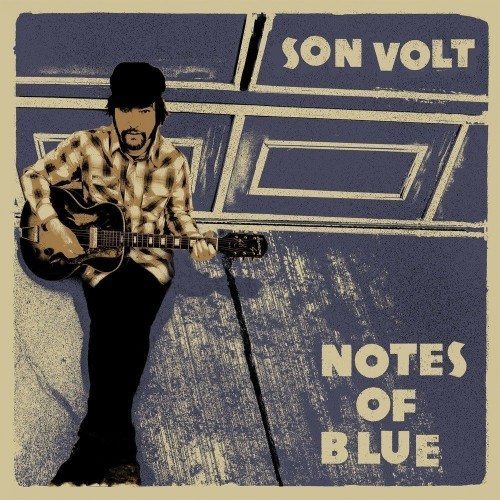
    In February, Son Volt released their eighth album, and first in four years, titled Notes of Blue. Farrar could release a collection of rap or metal and it would still be recognizable as Son Volt. His voice is that much of a signature. In this case, the band washes his voice in the blues, as the album’s title would suggest.

    The music is inspired by the blues stylings and specifically tunings of classic pickers Skip James and Mississippi Fred McDowell, from back when the blues and folk music were one and the same. He also mixes in the more recent sounds of English folky Nick Drake. Inspiration in the right hands doesn’t translate directly to “sounds like” though, and it certainly doesn’t here. Son Volt lends it’s own distinctive hand throughout, crunchy reverb guitar, just enough twang, straight up from-the-earth lyrics. But on Notes of Blue, Son Volt appears with more finger-picking, more slide and perhaps even darker themes.

    Though it can get somewhat bogged down in monotonous earth tones at times, natural splashes of color bring the bluesy landscapes to life. The surprising reverb guitar thrashes in “Promise the World,” when Nick Drake’s influence comes to the fore in the lovely ballad “Cairo and Southern,” the pedal-to-the-metal opening of “Static,” the rough and tumble slide blues on “Sinking Down” … yeah, there’s enough color throughout.

    At just 30 minutes, Notes of Blue is a quick but dense listen, with a lot of repeated listening value. Of playing the new material live, Farrar says, “It’s going to be an adventure.” He’s excited to take them on the road, but the different tunings will require some extra coordination, “We’re going to have some long talks, with charts about what guitars to use when,” New Yorkers get two chances to catch these original purveyors of alt-country sling their craft, first at Bowery Ballroom on April 7, and then at Rough Trade in Brooklyn on April 8.

    Key tracks: Cairo and Southern, The Storm, Sinking Down

  • Hearing Aide: Periodic Table of Elephants ‘Henry’

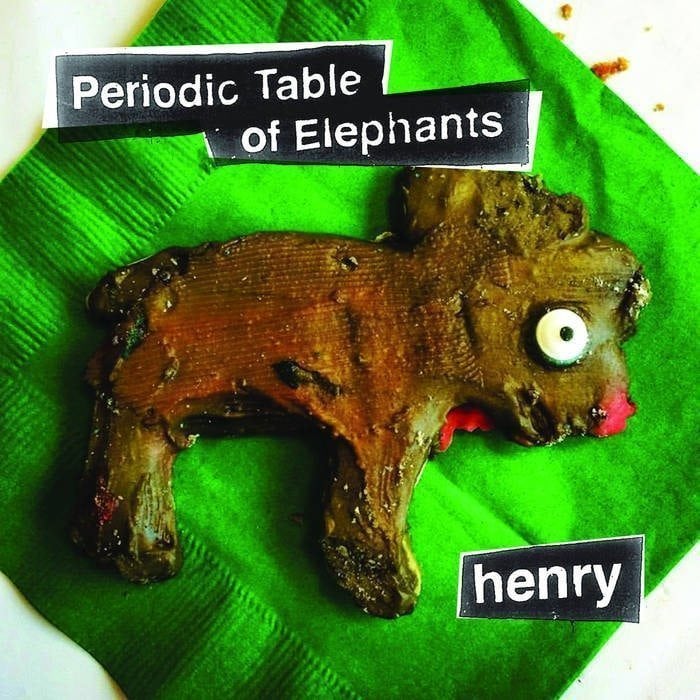
    If there ever was a formula behind the iconic music of the 90s, many would say it would be “Guys with instruments & vocals” + “Guttural feelings” + “Garage.” While rock is not as dominant on today’s airwaves, some artists such as Rochester, NY’s Periodic Table of Elephants keep this classic formula alive and well. With Jason Pariseau on vocals and guitar and Sean McGinnis on drums, the Periodic Table of Elephants (PToE for short) puts together a rough guttural punch-your-boss-in-the-face sound sure to cause a riot at a pub or dive bar. As of a few months ago, PToE released their first EP titled Henry.

    Periodic TableWhile PToE sights influences such as Green Day, Biffy Clyro and Blink 182, the vocals on this EP remind me of Smashing Pumpkins and instrumentals remind me of Canadian rock duo Death From Above 1979. What I mean by this is that Jason Pariseau chooses a guitar tone with a lot of bass in it to compensate for lack of a bass player, while Death From Above 1979 utilizes a bass guitar with various distortion pedals which yields a similar sound in lieu of a guitarist. Overall the production on the four-song EP was delightfully under-produced. Too often do you see up-and-coming bands using excessive production to polish their albums to the point where it no longer sounds organic. While this may boil down to preference, many purists prefer when drums hits aren’t 75 percent sound replaced.

    In terms of the songs themselves on the Henry EP, the lyrics while straightforward, do the job in terms of connecting with the listener’s gut. The track “Better Off Dead” is the mosher’s anthem when played at a local show. The lyrics literally capture the intent of rage in the song with a lyrical pattern of coming back to a statement of physical action, each time increasing in violence. For example, things escalate from “I’m gonna punch you in the face” to “I’m gonna punch you in the throat” to “I’m gonna punch you in the dick”…ouch… Not the most poetic lyrics but the song was meant make an audience go wild. Out of the four songs on the EP, three of them are in your face and are very grungy while “Pile of Bones” is the one that breaks up that sound with something a bit softer and lyrically deeper. This is the track on the EP where PToE puts it all together in my opinion. It seems like Jason and Sean channeled their inner Foo Fighters on this track.

    Periodic TableThe Henry EP is a good start for Period Table of Elephants. As with any band’s first EP, this is the band trying to establish their identity and sound. The rough-around-the-edges feel will appeal to angsty millennials and Gen Xers looking for something that relates to their high school and college days. On the same token, this particular sound won’t appeal to those looking for mainstream appeal. With that being said, this EP is a tribute to the spirit of 90s alt rock…that RATM mantra of “F*ck you I won’t do what you tell me.”
    Key Tracks: Pile of Bones, Better Off Dead

  • Hearing Aide: Morricone Youth ‘Mad Max’

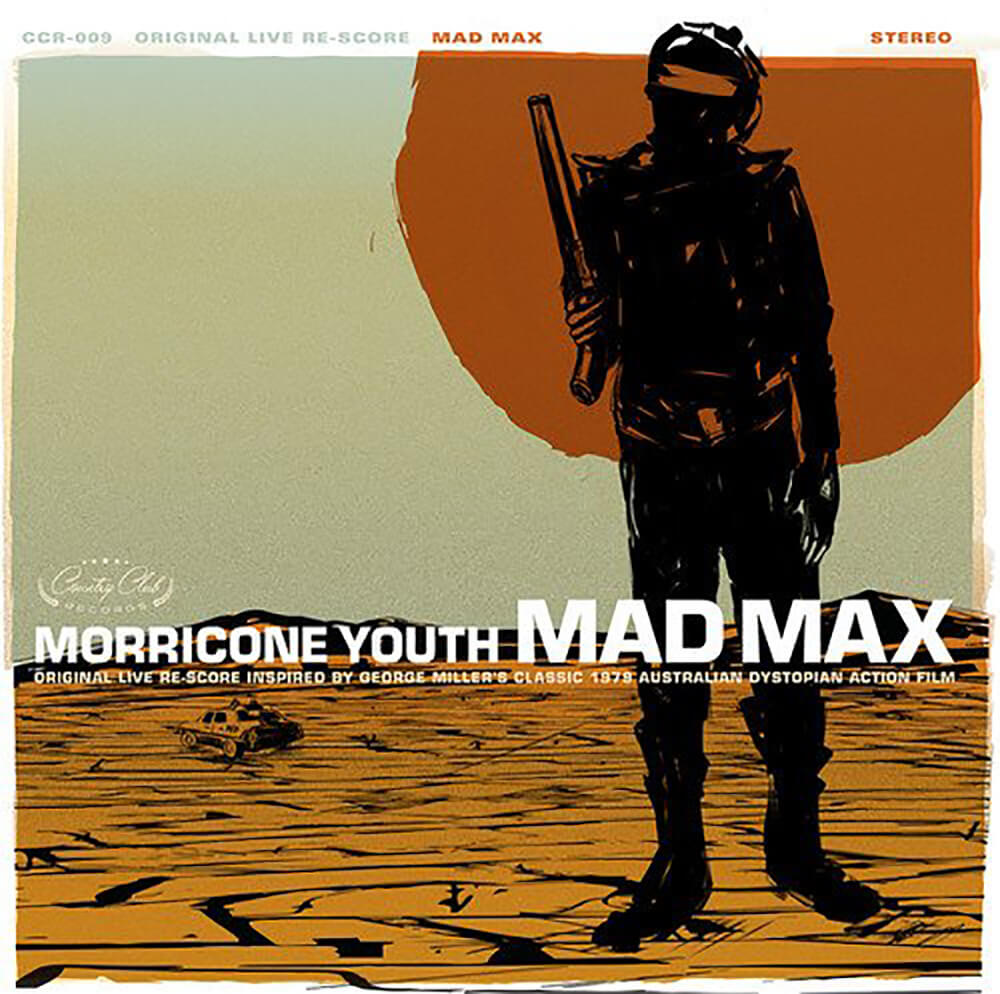
    Morricone Youth is an odd music collective no matter which way you look at them. Formed in Brooklyn and having been performing together since 1999, the group focuses mainly on writing soundtracks for already existing silent and midnight movies. A total of 15 have been done so far, includeing Eraserhead, The Battleship Potemkin, Enter the Dragon, Foxy Brown, the original Nosferatu, Fantastic Planet, The Lodger: A Story of the London Fog, Night of the Living Dead, and the work I’ll be reviewing here, the original 1979 Mad Max.
    How Morricone Youth’s shows usually work is the movie the soundtrack’s for will play, without sound of course, as the band plays their music over it instead. The only image I could find of the band playing live, one in granulated black and white, had the members in the frame wearing Michael Myers type masks. Now, aside from playing live, Morricone Youth is recording all the soundtracks they’ve composed so far, with Mad Max being their latest release.

    The first thing you need to get out of your mind, and I reiterate, is no, this is not a direct recreation of the original Mad Max score. This is their own interpretation based on their varying styles. I myself have only seen this film once, so my knowledge of events the music is supposed to correspond to is limited.

    The opening number, “Halls of Justice,” begins with a somber violin with electronic bleeps and blorps, along with distorted vocals where the only lines I could make out for sure had to do with the Interceptor, Max’s car. So when it flows into “Mad Goose,” after another synth buildup, the chase from the beginning of the movie is in full swing, complimented with surf guitar and clanking keyboards. You certainly feel like you’ve been taken along for a ride.

    Much like a soundtrack should do, it weaves in and out with your emotions. “Clunes Town,” “Jessie,” and “Johnny the Boy” are supposed to the down points, where the audience is meant to catch their breath and catch up with the side characters, like Max’s wife and child. There are also bits of cheesy saxophone and trumpet in there to make this feel authentically from the late 70’s, early 80’s (though not as cheesy as in “Beyond Thunderdome”). Meanwhile, tracks like “Revenge of the MFP,” “Nightrider,” and “Toecutter,” are downright villain songs. Which makes sense since they’re named after the various villains in the movie, with loud blaring instruments and melodies filled with tragedy, mayhem, and the urge to fight the nearest person to you.

    When the last song, “Bad Max (End Credits)” finally comes around, with a general melancholy sound from all the instruments, you feel as worn out as Max at this point, where he finally gets his revenge and leaves civilization behind for the outback. You feel just as worn out as Max at this point, longing for peace. If this album taught me anything, it’s that I should really re-watch the Mad Max movies. I remember enjoying all of them and I haven’t gone back to them since I saw Fury Road in theaters. Then I can determine for myself if this music actually does fit the parts they’re supposed to.

    Key Tracks: Mad Goose, Nightrider, Bad Max (End Credits)

  • Hearing Aide: Danny Barnes “Stove Up”

    Although the first days of spring are upon us, winter still holds its cold grasp in New York. With warm weather just within reach, its’s easy to daydream of warm summer breezes, barbeque, ice cold brews and outdoor music. Could anything go better with this fantasy than the sweet sounds of a fiddle? Perhaps a mandolin? Or better yet, some fast paced banjo pickin’?

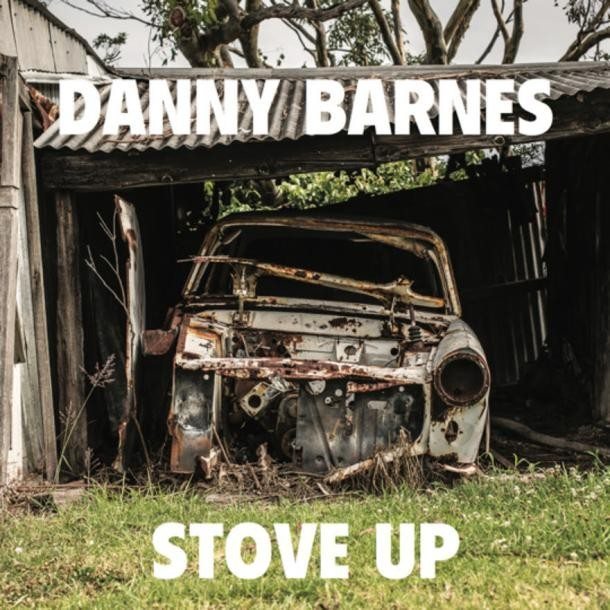
    Just in time to usher in the better temperatures is Stove Up, the first acoustic bluegrass banjo album by Danny Barnes. The album serves as homage to the late and great Don Stover, and includes an all-star backup band featuring producer and guitarist Nick Forster, mandolinist Chris Henry, fiddler Jason Carter and bassist Mike Bub.

    With 45 years under his belt, Barnes is no stranger to the five-string community. He has received accolades from all the greats and in 2015 he received The Prize for Excellence in Banjo from Steve Martin.

    The 17-track album produced in Boulder, CO is an old-timey exploration of musical precision and grit. Barnes’s abilities are jaw dropping and are perfectly paired with Carter’s fiddle genius. The album includes several Barnes-Charter duets including “John Hardy” and “Bill Cheatum.” While 90 percent of the album is instrumental, “Charlie” and a twangy reinterpretation of the Rolling Stones’ “Factory Girl” allow the bluegrass legend to flex his pipes, not just his strings. “Get it While You Can,” provides more ominous tones, like the soundtrack to a “whodunit” in a dusty saloon.

    Originally a Stover compilation, “Rockwood Deer Chase” features an intro like a train pulling out of the station, that then releases a steamy whistle before gaining full momentum and speed. “Steel Guitar Rag” slows down this pace – a bit more delicate and classically western.

    The entire album sounds like a boot stomping, smile inducing summertime throw down between friends. It’s the day dream catalyst to warm country nights so many of us are yearning for.

    Key Tracks: “Isotope 709,” “Rockwood Deer Chase,” and “Flint Hill Special.”

  • Hearing Aide: BIG Something ‘Tumbleweed’

    When BIG Something arrived on the scene back in 2009, their name made it apparent they knew what the future had in store for them. Fast forward eight years later and the funky, electronic, alternative rockers have gone nowhere but up, managing to keep climbing the ladder of fame. Continuously bringing the high-energy jams to east coast music festivals, the group crafted their own annual fest in Mebane, North Carolina: The Big What. After three studio albums, the six-piece hailing from NC decided 2017 was the year to put forth their newest endeavor titled Tumbleweed, the namesake of their December 2016 teaser single. If Tumbleweed is any accurate indication, 2017 is already shaping up to be huge for them.

    In anticipation of their then-impending album, the group decided to launch “Tumbleweed,” paired with a quite jarring narrative, giving fans a spoonful of what was to come in the following weeks. The name “Tumbleweed” references the main character of the track who finds himself endlessly wandering through the depths of a post-apocalyptic desert. If that’s not enough of a concept, he’s hallucinating on peyote, too–quite a trip. The album’s narrative is centered on his lonesome and dark destination and his will to survive and keep movin’ on.

    Released on February 24, 2017 and recorded at Echo Mountain Studios in Asheville, NC, the album blew into the speakers of many, proving to be an apt addition to their album lineup: 2010’s Stories From the Middle of Nowhere, 2013’s self titled venture and their penultimate release in 2014, Truth Serum, in addition to a number of live releases. The 8-track album covers a lot of ground, taking a step away from the group’s more lighthearted, carefree and fun tone, bringing it down to a darker realm of sonic trips through barren desserts. Of course, some tracks held true to an upbeat feel but for this runaround, the group decided they’d convey a heavier temperament while flying through a variety of genres.

    The title track, acting as the first glimpse of the album produced by Grammy-nominated John Custer, leaves listeners feeling as if they’re the ones left deserted on the cracked earth beneath a heavily beating sun. The opening notes alone spark an instant curiosity and yearning to hear more. The lyrics, “Cactus tripping/eclipse the sun/mind or mirage/are you having fun?”and synthy keys conjure up psychedelic inspiration and provoke deep thought with airy guitar solos to match.

    This is quickly juxtaposed by “Song for Us,” the second track on the album. Desolate emotions are exchanged for happier, reggae tunes solidifying the fact that the listener is on their own unique journey through Tumbleweed, one they must come out of in their own way, as they bounce between lighter and darker moods. Allowing an ending guitar solo to smoothly transition into “Passenger,” the track begins to grab at bluegrassy (think String Cheese Incident), western influences and spirals further into the theme of wandering in darkness.

    “Blue Dream” follows, introducing a jammier, space rock sound to the album that has yet to be seen. Regardless of being instrumental in its entirety, the track demands your attention. Contributing to the southern rock theme and tying in psychedelia, this track mirrors the album artwork nicely, which displays major sci-fi nods with images of UFOs and alien life. “UFOs are Real” brings a bit of kitschy lyrical fun with groovy bass lines, an added horn section and a quick ability to force you on your feet to dance. The penultimate track, ironically titled “In the Middle,” brings some Californian vibes with surfer rock mentality through its vocals. Wrapping up the 2017 release, “Waves” proves to be a fitting closing track, offering a powerhouse of a crescendo that softens into reminiscent tunes from the album’s opening track. Listeners are seemingly looped and dropped off at the beginning of their own desert trip, left to reflect on the highs and lows the last eight songs challenged them with.

    Tumbleweed is a gripping, innovative release chock-full of imagery, creative instrumentation and solid production, which gave Nick MacDaniels (vocals, guitar), Doug Marshall (bass), Josh Kagel(keys, trumpet), Casey Cranford (saxophone, EWI), Jesse Hensle (lead guitar), and Ben Vinograd (drums) the opportunity to shine in their respective areas and display their utmost dynamism, both in the studio and on stage. Although unmistakably dark, the album grounds the listener and helps them come to terms with the fact that we are all just tiny ants on this humongous globe in space, dragging ourselves through the scorched earth beneath our feet. It’s up to us to keep going.

    Key tracks: Tumbleweed, Blue Dream, Waves