Four long months after the final notes of the Baker’s Dozen’s “Tweezer Reprise,” Phish retook the Jell-O stage at MSG on December 28, 2017, for their “Triumphant Return” to the world’s most famous arena. If there were any doubts as to whether they could play with the intensity and passion of the Baker’s Dozen, they were abandoned almost immediately as New York was treated to a show that carried a similar magic to those of the previous run at the Garden. The only noticeable difference was the bitter cold and lack of gourmet donut wrappers on the floor.
The band took no time getting the show on the road with a spacey ‘AC/DC Bag’ which saw Trey sitting back on the solo and letting the rest of the band organically develop a patient groove, which would foreshadow the jamming style of the night. ‘Wolfman’s Brother’ emerged out of the white lights and provided the first (of many) jam highlight of the evening. The band quickly transitioned from the classic Wolfman’s funk to a dark, murky jam that gave the feeling that you took the wrong turn down a shrunken alley on the lower east side, but there was no going back because you already devoted to making it past the sketchy brown walls and back to a world of streetlights and pretzel vendors. An early first set ‘Roggae’ broke out of the darkness and saw masterful interplay between all four band members as they reached a glorious peak that shook the garden.
Another first set highlight came next in the funky ‘Tube’ which saw an extended jam reminiscent of the Dick’s 16 ‘No Men in No Man’s Land.’ Trey played around with his effects to create an echoed funnel over the fast-building Mike led jam. It was brought so far into space they had to take a couple of seconds to catch themselves before fumbling back into the final verse of the song. There was so much packed into this short ‘Tube’ that I still almost don’t believe it only clocked in at just over eight minutes. A standard ‘Bouncing Around the Room’ came next and gave everyone a chance to catch their breaths before the band went right back at it with an exceptionally rocking ‘Back on the Train.’ For a while in recent years, this song played the role of keeping the energy in a setlist up without doing anything too special, but the last few we have seen has broken that mold and become must listen to first set highlights.
A funky ‘Your Pet Cat’ followed and kept up the energy in the room before a dark ‘Waking up Dead’ showcased Mike’s songwriting ability and Trey’s prog-rock roots in the solo. An oddly placed, but much appreciated, set closing ‘Theme From the Bottom’ followed, and quickly broke the mold from a traditional ‘Theme’ jam as the band built a peak similar to a summer 2014 ‘Bathtub Gin.’ The only other time ‘Theme’ closed out a first set was 12/13/1999. While the first set may look standard on paper, it was anything but. Nearly every song saw the band taking a risk and going off the deep end, as they have been doing all year.
After a smile-fueled set break, the band to the stage with a rocking ‘Wilson’ which got everyone in the crowed fired up and ready to boogie. As soon as the opening notes of ‘Wilson’ began, there was a feeling in the air that the second set was going to be special, as second sets that open with Wilson are historically very strong (the last two prior to this shows were 9/6/15 and 7/27/14). ‘No Men in No Man’s Land’ came hot off the high energy ‘Wilson’ produced and catapulted the show from “Wow” to “Did that just happen?!?” The multi-part behemoth saw an array of the band’s play styles from funk to rock to space, and created soundscapes that swirled through the air from Page’s new synth, which defined the sound of 2017 Phish. Clocking in at just over 24 minutes, this NMINML is a jam that will be listened to for a long time. Out of the madness came a familiar riff as Trey transitioned into another anticipated jam vehicle, ‘Twist.’ The band took no time getting things going as they built the versatile song into a fervent funk jam which shot laser beams from one end of the garden to the other. Out of the funk peak saw a push back into darkness from Mike and Fish, which lasted for a few minutes leading many to believe they were going into ‘Steam,’ though Trey had different ideas.
The transition to ‘Everything’s Right’ wasn’t the cleanest, but once the vocals started it did not matter one bit. The new song has been a consistently strong jam vehicle since it’s debut, and this version was no exception, as it dissolved into a misty canal then slingshot the band back into space as they effortlessly transitioned into ‘2001.’ While this ‘2001’ didn’t really break the mold of the song’s structure, it was played exceptionally well with a little extra mustard and no (blatant) missed notes. The band was not about taking a break during this set, so what better song to cap it off with than ‘Harry Hood?’ This Hood saw a patient build with all four members contributing to the jam leading to the peak. While it wasn’t the most over the top peak they’ve played, there was on old school feel to the way Trey approached the ending solo which filled the garden with uncontrollable joy and plentiful high-fives.
A standard ‘The Wedge’ was placed in the encore role for only the second time in the song’s history (the first being the infamous 11/14/1995 show), and just when everyone thought they were done Trey played the opening notes to “Slave to the Traffic Light” and ripped us back in. Slave is another song that will always keep you satisfied while not quite living up to the glory of it’s younger days, but this version seemed to have a little extra something in it. The jam leading to the peak showcased a band that did not want to stop as Mike, Page and Fish pushed the structure of the song to its limits while Trey held a note for what felt like an eternity and drove the crowd wild. When he finally let go and exploded into the peak it was as if 20,000 people who had just been holding their breath underwater for two minutes came up for air at once and completely let go of any control they had of their bodies. It was a phenomenal way to end an amazing show, and this was only the first night.
Setlist via Phish.net
Set 1: AC/DC Bag, Wolfman’s Brother, Roggae, Tube > Bouncing Around the Room, Back on the Train, Your Pet Cat, Waking Up Dead > Theme From the Bottom
Set 2: Wilson > No Men In No Man’s Land > Twist > Everything’s Right > Also Sprach Zarathustra > Harry Hood
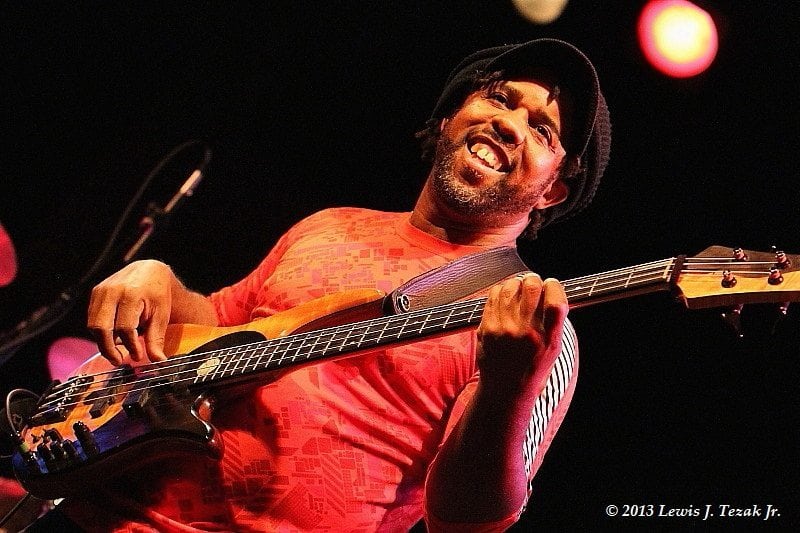
As I sat in Anthology in Rochester, NY waiting for Victor Wooten to speak with me I had no idea what to expect. The crew setup the stage across the room to get everything ready for the upcoming soundcheck, but there was no sign of Victor. I sat and pondered how different the room would be in a few hours once it was filled up with enthused fans, and enjoyed the calm before the storm on the large, open dance floor. Victor walked in the front doors the same way I did, with a cup of coffee in his hand and a sigh of relief escaping the cold. Without hesitation he walked over to me, asked if I was conducting the interview, smiled and shook my hand as he introduced himself (as if I didn’t know who he was).
Interviewing Victor was less an “interview” and more a conversation. When he spoke, his big brown eyes locked in with mine, and it truly felt like we were the only two in the room. He is a genuinely caring individual who’s love for his craft and dedication to art was evident with every word he spoke. To him, music is about openness, letting go of your ego, and creating magic. He was ecstatic to speak about each project he was working on, and his passion for life and music is something he carries openly with him. I feel very fortunate to have had the opportunity to spend a half hour sitting down one on one with a music legend of his stature. Below is our full conversation:
Ryan Randazzo: You recently released a new album, Trypnotyx, what inspired you to assemble this particular group of musicians to record this album?
Victor Wooten: I played with these two guys, together, with a jazz guitarist named Mike Stern. Immediately I knew I’d love to do some of my own music with them, so the germ of the idea started years ago. With everyone’s schedules, the time was now right to do it.
RR: When you recorded this album what was the process like? Was it different from other projects you’ve worked on or recording with the Flecktones?
VW: A little bit different from the Flecktones, but very similar to recording my own records. A lot of it is me in the studio by myself working on ideas, then sending them to the other guys to add things to or see what they think. Bob Franceschini, the saxophone player, was doing the same thing; he was coming up with ideas as well. With the Flecktones, we do a lot in the studio together, but because of Bob and Dennis Chamber’s schedules, a lot of it was separately done. Mostly the writing, then we would get together and get parts recorded.
RR: It sounds like technology has made it a lot easier to get things done.
VW: Absolutely. Technology is amazing these days. I would say even more than not, records are done separately. At least for me, it’s rare that I’m in the studio with the whole band.
RR: Do you prefer recording separately?
VW: In many cases yes because then I can record on my own terms in my own studio. I can go up and have dinner with my kids then go back down to the studio. Also, I can take my time getting my parts together rather than having to work on someone else’s stuff, but I like both. There’s nothing like having other people in the studio to collaborate with.
RR: Playing with the trio requires you to fill a lot more space. Do you prefer playing with the trio or a bigger band, and what are some of the differences you’ve noticed as a bass player?
VW: I’m lucky to play in many different situations. I like them all. When the band is bigger I have to do less, which is nice. With a trio like this, and there’s no chordal instrument, I have to do more like playing chords and melodies, but the challenge here is to not feel like I have to fill up all the space. Space is beautiful and it’s easy to go “oh it’s a trio, I better play more.” Sometimes it’s playing less that allows the trio to sound its best, so it’s a challenge.
RR: What do you typically prefer?
VW: I just like choices. If I did one thing all the time I would long for the other. The fact that I get to do a lot of different things keeps me musically happy.
RR: As a well-respected musician, who do you look up to at this point in your life?
VW: I have lots of heroes. There are lots of guys I learned things from growing up. I could name the normal names like Stanley Clarke, Jaco Pastorius, before that even James Jamerson, Bootsy Collins, Larry Graham, Paul McCartney; I could just go on. Also, people that I grew up with, and they’re names you’ll never know, that taught me just as much because they helped me grow as a youngster.
The biggest influences were my four older brothers. That’s the whole reason that I played. I was born into a band, literally. They all played different instruments. Regi plays guitar. Roy aka “Future Man” from Bela Fleck and the Flecktones is a drummer. Rudy, the lesser known of the brothers, passed away a few years ago and was our saxophone player, and Joseph is the keyboard player. Joseph has been touring with the Steve Miller Band since 1993. We played as a band the first half of my life.
RR: Do you have any particular mentor or a go-to person you like to bounce ideas off of?
VW: My brothers are still those mentors. I also have a few other friends. One guy names Steve Bailey. Steve is now the chair of the bass department at the Berkeley College of Music. Another close friend who lives in upstate New York, Dave Welsch, he’s another bassist and teacher. Anthony Wellington is another great bassist and teacher. Steve, Anthony, Dave and I have been teaching together at my own music camp since the year 2000. We always keep in touch with each other to bounce ideas and teach together. Then I’ve got my brothers, and it’s always good to have people like that close.
RR: What is the biggest challenge you faced as a growing musician, and is it something you still encounter today?
VW: Today, my biggest challenge is finding time at home with my kids and my wife. Because I’m successful at what I’m doing, it keeps me on the road a lot of the time. I miss my kids and my family, and they miss me. That’s really the biggest one.
Another one is to try and sell a record. We’re in the record making business, but people don’t buy many records these days. The younger generation expects the music to be free, and that doesn’t make it easy for us. People aren’t buying as much music and they’re not going out to see as much music, but they still want music. As a music maker we face that challenge. For a lot people, if you come to town they have a choice to watch a video on YouTube or go see a show. They can say “I’ll watch it tomorrow” knowing that someone is going to record it. Back in our day, we didn’t have that choice. If someone was coming to town we were there. We didn’t know when or if we would see that person again, so it was a special event when someone came to town. It’s not as special for the young audience anymore.
At the same time, I’ll add this: our generation was different from our parents. Every generation changes. I don’t want to be the old guy complaining about how good it used to be. I want to learn the new way and figure out how I fit into it rather than complain, but at the same time make changes and fix things where we can.
RR: Do you have any daily or pre-show rituals that you do?
VW: Nope, none at all, except to try to be open, calm, and in a good mindset. I have to not be worried or frustrated, and just be calm so the music can flow. I don’t have anything I normally do every time, because if for some reason one day I can’t do it I might get upset or worried. The way I look at it, I’ve been playing bass for about 51 years. I should be ready and warmed up by now.
RR: You’re currently playing with your trio and you’ll be going on tour with Bela Fleck and the Flecktones over the summer, what’s the biggest difference you’ve noticed playing with the two bands?
VW: The biggest difference doesn’t have a lot to do with playing. This band has my name on it, so I have way more responsibilities. With the Flecktones, even though Bela treats all the members equally, I’m still just the bass player. There is a lot less responsibility. That’s nice after coming off many months of being in charge, for lack of a better word. It goes back to me having choices. I like doing my own thing, and I like not having to do my own thing. That’s the biggest difference. The music is different, of course, but it’s fun. Each project is very fun musically, and I really enjoy both of them.
RR: You’ve been really big on music education over the years. What inspired you get into that?
VW: It kind of found me in the late 80’s and early 90’s when Bela Fleck and the Flecktones started becoming more popular. I started becoming more and more popular, and was featured in Bass Player magazine a lot. I found out that if you’re in there enough times people think you must be good, so I started getting asked to do workshops. I had to figure out how to teach what I did. I just learned to play organically, the same way you learn to speak. When you learned to speak you didn’t practice, and no one told you what words to learn first, you just jammed with people all the time. You jammed with people who were better at it then you, and it was the same way I grew up playing the bass with people who were better than me. That’s the fastest, most natural way to learn.
When I started being asked to teach I had to learn how to do it. One of the things I did was start looking at other teachers, and what/how they were teaching. I saw things I liked, but I decided to go a different route. I decided to teach the things that weren’t being taught. Basically, it was anything other than the twelve notes that we use. Most people were teaching twelve notes, and we call that music theory. Music theory, for the most part, only deals with twelve notes and focuses on scales, chords, key signatures, harmony, ear training, and what not, but no one dances to notes. No one jumps up just because a song is in E flat. So what else is there besides notes? That’s what intrigued me, so I started focusing on mostly that. It resonated with a lot of people, and they were asking for more. That’s what resulted in my book called “The Music Lesson.” Many of the lessons I came up with were put into stories.
RR: You’ve played with many people over the years, but is there any particular jam or event that stands out in your mind?
VW: There are a bunch, yeah. Last December, almost a year ago from now, getting to play with Chick Corea for a couple of weeks in a couple of different bands to celebrate his 75th birthday. I got to play in two of those bands, and it was amazing. In one of them I was playing the upright bass, which is not something I do much, but he called me in to do it, so I said okay.
Opening for the Grateful Dead was amazing. I’m not the biggest fan of their music, but I am the biggest fan of them. To open for such a legendary show like that on New Year’s Eve was great. From that spawned me playing with bands like Dave Matthews Band, Phish, and getting to play with all of those kinds of bands. One of my favorites was getting to play with two of my bass heroes Stanley Clarke and Marcus Miller. We made an album together titled ‘SMV.’ A lot of times getting to play with my heroes is the biggest treat. But growing up playing with my brothers, and getting to play with Bela Fleck for almost 30 years now, those things are just as special.
Honestly though, the most special gig is the one I’m doing next. All the past ones are just warm ups, training ground, for the one I’m about to do. I need to treat the one I’m about to do as the most special gig ever, or else I feel I’m not giving the audience the full experience they deserve. So really, the most important gig is the one I’m doing or about to do.
RR: What advice do you have for young musicians?
VW: Listen. The same way we learn to speak is by listening. Play more than you practice, find people to jam with, go to hear music, and learn as much as you can, but don’t let learning about music rob you of the enjoyment.
RR: It sounds like this trio is something you’ve wanted to do for a while, are there any other projects you’ve been thinking about that you really want to do?
VW: Oh yeah, lots. One is an acoustic album featuring different acoustic instruments and an acoustic bass. I still have a plan for that. I also want to do a tour with students from my camps, which would be a lot of fun. I usually stay in touch with many of my students, and they make sure of it. They show up at my gigs, and find me on Facebook. Many of them are out doing major gigs themselves.
I have a lot of projects and records I want to do. I still want to do a record with my three remaining brothers, and we’re actually recording something right now.
RR: Is there anything else you’d like to say to our readers?
VW: Just to let people know they can go to my website and sign up for my camps. We’re about to start our 19th year, and it’s easy to register. Either go to www.VictorWooten.com or you can go straight to the camp website, www.Vixcamps.com. You can just go on and sign up, no audition is required or anything like that.
RR: You have a very large group of students with a very diverse span of knowledge, how do you handle that?
VW: The same way you learn to talk with other kids. You learn much quicker when you talk to people who are older. We apply the same idea to our camp. It benefits both the beginner and more advanced players. For the more advanced players, it allows the people who are stuck to see beginners learning their craft and it inspires them. The most difficult part about that, for me, is finding teachers who are comfortable teaching a group whose ranges of knowledge are so different, and fortunately I’ve found those people.
Our camps our different. I wouldn’t say they’re better, but they’re different. It’s located just outside of Nashville, TN and people can fly in and take a shuttle out there. It’s all inclusive and there is a chef onsite. I’m there 100% of the time, so the mystique of “oh there’s Victor” goes away after a couple of days, and we just become friends. We stay up late, jam by the fire, and get deep into music. It’s a good dream come true for me.
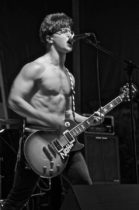
Buffalo rocker Jorian Holka is at it again. Not long after the release of his debut EP, EP1, he went right back at it to bring us his new single, “Loser With Ambition.” The track starts off with a pounding drum intro that immediately gets the blood flowing, and leads into a melodic swirl of fast paced, hard rock riffs from what feels like a small orchestra of distorted guitars. The lyrics are a raw reflection of what it feels like growing up differently than everyone else, and what it is like breaking away from the status quo as a youth by rejecting what is forced down your throat by society.
Holka reminds listeners that it is okay to think differently, and that doing so is often a good thing, even if others believe you are weird for it. The incredibly catchy chorus makes a statement that even if other people might not see the world the same way as us, it doesn’t matter. What matters is that you are comfortable with who you are and doing the best you can, so you should not care what other people think.
While the song may provide a very positive message, that does not mean it does not rock. It does, hard. The guitar solo following the second chorus highlights Holka’s technical knowledge on guitar, reminding listeners that although he may be playing every instrument on the track, the guitar is where his true talent lies. As he creates more music, it is very clear that Holka is becoming a more proficient songwriter, instrumentalist, and producer.
At times it seems like the world of popular music is caught in a cycle of poppy repetitive chord patterns and excessive autotuned tracks. Diversity among genres is something that is beginning to thin more and more as specific niches become more established. With his new release, EP1, Buffalo-local Jorian Holka aims to break away from the mold, and weave the world back to the days when hard rock and alternative-influenced music reigned supreme with a diverse new collection of songs.
The EP begins with a statement, both musically and lyrically, with the hard-rock anthem “Rock’s Not Dead.” The up-tempo rocker starts off relatively quietly with an energizing guitar riff before quickly exploding into a full rampage, which sounds like a combination of Black Sabbath and the Foo Fighters. The sentiment of “Rock’s Not Dead” is very apparent, as the feeling that our society is losing sight of what true high energy rock music is defined as slaps the listener in the face. As the album continues, it is very clear that Holka yearns to bring back the days of lightning-fast guitar licks, heavy bass lines, and catastrophic drum solos. Elements of alternative, pop, screamo and hard-rock can be found throughout the album, as Holka does a virtuous job at keeping his influences close while establishing a sound of his own.
Influences of Green Day, Billy Talent, Royal Blood, Nickelback, and Avenged Sevenfold, among others, can be heard echoed throughout this debut EP. While most of the EP can be defined as raw, edgy hard rock, there are often glimpses of a more lighthearted musician throughout, as seen in the intro of “Ordinary.” Holka spills his soul into the EP as the sole writer, instrumentalist, and producer, and it clearly pays off. The EP may come as a relief to many with the way popular music has drifted in the past twenty years. For as long as there are still musicians who demand loud, screaming guitar solos and the desire to play until their eyes are burning with sweat, Holka is correct in saying “Rock’s Not Dead.”
Key Tracks: Rocks’ Not Dead, Terrible Paradise, Party Lines
If you’ve ever experienced live music in Western/Central New York, the chances are you’ve heard Collin Jones. Whether he is out playing with Haewa, Ocular Panther, Stereo Nest, or collaborating with other local artists, the man exhales music. His new EP Specimen is a beautiful assortment of innovative folk-inspired melodies, and a raw reflection of the true essence of human existence.
The first notes of Specimen transport the listener to a different dimension. The intricately woven acoustic rhythms and spacey loops featured throughout create an aura that is somewhere in between the past and future, but certainly not in the now. If you close your eyes and dig deeper into the EP you may suddenly get the feeling that you are alone, lost on a farm in Medieval times. However, you cannot be sure you have gone too far into the past as spaceships and the glowing effects of technological advancements cautiously linger above. The combination of folk-influenced songwriting with psychedelic loops throughout create a futuristic Americana sound that can delicately be defined as an Emersonian audio experience.
It would not be fair to single out any particular track when discussing this EP, as each individual song molds together to create a magnificent sum. Had Jones decided to record the songs as a string of instrumental tracks it would be worth your listen, but thankfully he chose to layer it with soothing vocals and thought-provoking samples. The theme of the album can be heard scattered throughout, and demands that you truly examine the human condition. He asks substantial questions like why are we here, and what’s it all for? However, he dares not provide answers, but rather guides the listener to an optimistic acceptance of the world we live in. As you reach the end of the final track, ‘Chapel Perilous,’ you are a caught in an anxious daydream of wanting more with the feeling of being lost in a snowstorm and glad to have nothing left to do but keep wandering. It would not be inappropriate to queue up “Throw Hands” again, and spend a little more time in the angelic world of Collin Jones.
To many jam band fans, catching a RAQ show is like finding a four-leaf clover; it doesn’t happen often, but when it does you know you’re having a legendary day. The four-piece jam band from Burlington, VT made a name for themselves in the early millennium by touring relentlessly and creating some of the most distinctive psychedelic albums of the early 2000’s. After seven ferocious years of creating music together, the band decided to take a hiatus in 2007. Then in 2010, the band decided it was time to reunite with a show at the Bowery Ballroom in Manhattan.
Since they have gotten back together, RAQ has not toured the same way they used to. Their focus has been on shorter, more condensed runs rather than the “50 shows from coast to coast” tour model. Fans have come from all over the country for a chance to see RAQ again during these runs, and this Fall they will have another opportunity. RAQ will be performing a five-night east coast Halloween run with special guest ‘Goose’ starting on 10/31 at Gypsy Sally’s in Washington, DC. The Halloween show is being billed as “FOO-Q-AZI” as they will be mixing in material from the Foo Fighters and Fugazi, along with their own songs. From there they will play The Stanhope House on Nov. 11 in Stanhope, New Jersey, the Abby Bar at Appalachian Brewing Co. Nov. 2 in Harrisburg, PA, The Hollow Nov. 3 in Albany, NY, and will finish things off at the Arch Street Tavern Nov. 4 in Hartford, CT. I had the opportunity to speak with Chris Michetti (guitar and vocals) and Jay Burwick (bass and vocals) about their upcoming run:
Ryan Randazzo (RR): You recently got back together again. Why did you initially take a break, and what made you want to start things up again?
Chris Michetti (CM): We took a break in 2007 because we played together for 7 years at that point. We did 50 show tours, lived in a van for what felt like forever, and got burnt out. RAQ hit their stride in 2004-2005, then we hit a point where we were spending a lot of money, people’s lives got in the way, and we just needed a break. Looking back on it, we had no one to tell us to take a short break to just play a New Year’s Eve or big show, so we just stopped.
We have been on and off since, and all have our own musical and life projects around the band. I like it better now because I’m not relying on it. Back then, we relied on the band, our manager, the lighting guy, our agent, etc. It was our sole source of income. It was hard relying on all that, and became stressful. We’re doing it for fun now. It takes all the bullshit away of how much money we make each night, how many people came to see us, and how we did that night.
I remember, when we were younger, if someone missed a note we would get made at each other. Now we laugh about missing a note and joke about it. It’s almost the best part. At the end of the day we have a new attitude: “who freaking cares, we’re having fun.” It sounds silly, but we just have fun. It was so hard to do when we were young. We still had fun, but things were more serious.
Jay Burwick (JB): It’s different when you’re doing it for fun. Now we’re just having a good time and it’s apparent in both the band and audience. We were shooting for the golden ring in the early day. Everything was focused on being a huge band and making it big. Now we get to get together with our brothers and play music to people who appreciate it. It’s such a blast to not have to worry about the end game. It’s more about music, fraternity, and having a good time. It’s also really cool to see dedicated fans who are excited about it.
RR: Is this going to be the same RAQ on stage, or will things be changed up musically?
CM: It will be and it won’t be. We used to call what we play “high performance rock and roll” and that’s what it is, but the attitude of having fun has made us a bit more mellow and that’s been great. We used to get compared to Phish and other jam bands because we used to come out and play a million notes. We still do that, I guess, but are more relaxed with it. When we’re on it’s super fun. Like riding a wave; there’s nothing like it. That’s the goal. I used to think we had to slow down, but really, we just need to get into a groove and do our own thing. When we first formed the band and played at parties we would do this thing where we’d get ultra-loose, and it was infections. We were having such a good time it would spread and people would be freaking out. We have hit more of those moments in the past four years than ever. It happens once every two shows now.
JB: What he said. It’s different because now we just relax. We don’t worry about impressing anyone. We have a good time and let the music come out as it does.
RR: What are you most excited about for this Halloween run you’re about to embark on?
JB: I’m honestly most excited for Halloween night. The FOO-Q-AZI thing is going to be a ton of fun.
CM: I’m looking forward to playing The Hollow. The last time we played there it was crazy loose, like, what’s going on with this place?!? I’m also excited to hang out with friends and play some music.
RR: How has not playing together often changed the band?
JB: A great aspect of us not playing together often is that the jamming is epic when we do get together. It’s like all the ideas flow out in the first few shows. Sometimes we rehearse and play an epic jam, then we wish we saved it for the show. The lack of jamming together has been a good thing because since we’ve played together for so long and know each other so well that when we finally get together it just explodes.
CM: Scotty, our drummer, has become the most learned on RAQ songs. The rest of us have played them so many times over the years we’ve just gotten lazy and forget parts, so Scotty has to show them to us. With the condensed mini tours, we end up reaching points that used to take us 50 shows to achieve. The jams are so fresh. Music can get old, and I bore myself pretty quickly. If haven’t played in a while, a jam in ‘A’ becomes the best thing ever and everything feels so new. Even writing music is different. Now when I’m writing a song and making it sound good, I’m not concerned if others will like it. I just do it for myself.
RR: What are your future plans? Will we see more RAQ after this run?
CM: We have a record coming out soon that’s so cool. I’m really excited about this record. I wanted to create a new RAQ album for a while, but I didn’t think I had the time. Then it all just started coming together. With today’s technology, we can basically create a record on our own. We used to have to hire producers and spend a lot of money, which can drain a band. It also meant someone else had control of our destiny, which is a weird feeling. The last time we were in the studio as a band it made me want to learn how to record an album on my own. Now I have a vision, the songs are fun, and there’s an attitude of “who cares” so the raw tracks sound freaking good. We’re hoping the album will come out by February at the latest, and after that we plan on playing some more shows.
RR: What’s been different with this album compared to past ones you’ve made?
CM: The biggest thing is technology. You can have an idea and just do it all yourself; the drums, bass, keyboard. Then you just hand it out to everyone and it’s done. Then the band members interpret it differently, so you let go of some control and collaborate. Like, I did all the drum parts on drum a software. I could have spent a lot more time on there, but then Scotty will just practice to drum tracks he made anyway. We get to where we want to be for each part without having to explain to each other what it should sound like since it’s already there. Then he gets it, and it makes it easier to record. I wish it was like this years ago. We’re not just sitting in a room all day recording. Now we have layers, textures and polish.
RR: What are your thoughts on the jam scene now as opposed to when you started?
JB: It’s definitely changed, but when I go out in Denver I still see the same things. The same people seeing shows. Bands still tour the hell out of themselves to get recognition. The biggest change is how people market themselves and advertise to get people to shows. They post on Twitter and Instagram now. When you go out to see a jam band you still get the same feeling though, and you know it’s a jam band. The festival scene is very different. It’s crazy. There are groups of people who just go to festivals. They weren’t that big when we first started, so it’s very different in that aspect.
CM: It’s changed on so many levels, but I love the use of technology. It’s interesting to see it stay the same yet change in so many ways. Musically its consistent across the board. Even with newer bands, it’s the same vein of music. If you hear jam music you know it’s a jam band, but electronic bands are where there is a big difference. With a lot of bands, the internet had brought the secret out. Sometimes there is extra hype for a show that normally wouldn’t have had any. Because of this there are new ways of navigating way to find a band, and people have to be convinced to see them or like them. The best bands I like I had to be convinced to like at first. But overall the scene is pretty much the same. If we play Camp Bisco this year, it might as well be 15 years ago. We play the same songs, get into the same hijinks, see the same people. It’s the same thing. Most changes are technological. Social media, ticketing, and sound.
RR: What are your biggest influences for you, and how have they changed over the years?
JB: Early on it was the Dead, Phish, Zappa; live music bands. Lately I’ve been big on the Foo Fighters. I’m psyched to play some Foo Fighters on Halloween. I love Grohl’s writing style. It’s easy to absorb. It’s also fun to have a metal vibe when I’m in a jam and just want to shred. It’s influenced me to play harder, dig deeper, and get heavier.
CM: Everything Jay said, but I’m not as big into the Foo Fighters. Anyone who plays guitar well is a big influence on me. I love music everywhere. Sounds, production; I like it all. Sounds absurd. There are a million good guitar players out there, and many people wouldn’t recognize them if I listed them. I find a lot on social media, like Andy Wood. I find them online and am amazed. It’s fun to find new guitar players on Instagram.
RR: What advice do you have to young bands just starting out?
CM: The best thing is to understand business aspect of music and the music business. It’s gonna help you. Help with struggle. The struggle is real, be ready. Know the backend before booking a show. Think: how can we maximize this? Learn the deal: What you will make, how you can make it better, and understand the settlement sheet with club. If you want to make your living off music, it’s very important to understand the business and how to actually make money doing it. If you follow and understand what’s happening you can make it better. You have to rely on yourself, not the tour manager who is gonna quit in two weeks.
JB: I second that; study business. It will bite you in the ass if you don’t have someone in the band who knows business.
Once you fall down the rabbit hole and begin obsessively following the “Jam Scene” you quickly take note of which bands are the real deal and which ones will soon become another fourth-tier festival causality. Since their birth in 2009, Baltimore natives Pigeons Playing Ping Pong have quickly pulled themselves up the ropes and show no signs of slowing down. Progressing from simply a name you saw on the line-up of nearly a dozen festivals and hearing about them for Phish after-shows to headlining their own two-set shows and establishing an obsessive fan-base of their own (often referred to as “The Flock”), PPPP has secured a spot in the rank of bands you absolutely must see if they are within driving distance (eight hours is driving distance… right?). With the release of their new album PIZAZZ on October 20, the band solidifies that they are here to stay and only getting better with age.
If you’ve ever been fortunate enough to catch a show, then you already know how much energy this band has at all times. For the right person, a PPPP show is the equivalent of running a 5K on acid. Prior to your first show I would recommend going to the gym three times that week to prepare for the number of funk-driven convulsions your body will encounter. While it is often difficult to translate what a band can achieve in a live setting to a studio album, PIZAZZ is about as close as it gets. This is the essential “dancing your ass off in the kitchen while cooking dinner and you’re so into it you don’t even notice your roast has burnt” kind of album. It is genuinely fun, with each track offering a different form of exhilaration to keep the listener engaged. It is often difficult to choose music that satisfies every guest’s tastes when throwing a party, but with PIZAZZ you are guaranteed a bridge that will keep everyone satisfied and may even inspire a few hallway dance circles.
The album starts off hot with its first single “Fun in Funk” which epitomizes what the band and album is all about. The lyrics are playful and self-aware, but musically it is clear that they are not messing around. While “Fun in Funk” has already debuted live, like many other tracks from the album, the studio version is cleaned up and polished, while not at all overproduced. The second single “Something for Ya” follows keeping the energy going, but after listening through the album a couple of times you realize that they could have release almost any other song as their second single and it would fit. The album flows like a well-thought out 11-song set. As you reach the end of the final track, the mystical “Poseidon,” you have the urge to let out a little yell and clap for a couple of minutes until they come out for an encore. While we will have to wait a bit for the encore, this album is certainly one you will listen to over and over until it comes.
Key Tracks: Fun in Funk, Something for Ya, Poseidon
With the bustling, vibrant music scene which Buffalo has remarkably fostered, there are often many places a music lover can find solace on an active Saturday night. Despite the many options, it seems many WNY music lovers knew the place to be on Saturday, September 30 was in Buffalo at The Tralf Music Hall to catch a nearly sold out performance by Rochester’s own reggae powerhouse Giant Panda Guerilla Dub Squad (GPGDS).
Attendants were in great spirits as they frolicked through the doors and found a place to put their recently located jackets and sweatshirts on Buffalo’s first truly chilly Autumn night. The festivities began right on time with Hip-Hop Duo Level 7 Experience acting as the night’s MC and performing on the floor in front of the stage to better engage with the audience while the bands set up.
The crowd was loose and ready to dance once Level 7 Experience finished their first set and the opening band, Thunder Body, took the stage. The multi-instrumental, Rochester-local Dub group took no time to get started as they performed a bouncing set, spanning multiple genres. Jumping from reggae to ska to outward psychedelia, the well-rehearsed band did an excellent job using their horn section, percussionists, and theremin to create a very distinct sound of their own. It seemed as though they could play all night and everyone would have been okay with it, but unfortunately time was not on their side and they had to leave room for the main course.
After a well-earned standing ovation, Level 7 Experience took to the floor once again to entertain the crowd while the stage was set for GPGDS. Now that people were a bit more liquored up and frisky, the duo played to the room and performed more call and response songs than their first set. By the time they finished their last number and thanked the crowd, GPGDS took the stage leaving almost no time between performances.
As the band took the stage, the screen behind them featured a homage to the city by displaying the Bill’s logo with the buffalo replaced by a panda. It quickly became clear that this was a reoccurring symbol as many people in the crowd wore shirts with the logo, indicating how invested and committed the reggae band’s fanbase was in the area.
A long, slow drum segment started out the set, leading to an explosion of funk and reggae with bass player James Searl and drummer Chris O’Brian holding down the low end while guitarist Dylan Savage played a scratchy rhythm to get the crowd grooving. After the long intro, O’Brian mixed things up by playing a Latino-inspired beat prompting Searl to holler a Marley-inspired rap with quick, impressive alliteration. Following a breakdown and nailed composed ending, the band slowed things down and segued perfectly into a slower reggae number.
The light, minimalist reggae tune transformed the Tralf from a dark, oddly shaped room to a refreshing summer day just relaxing by the pond. Reggae fans experienced exactly what they came for as keyboardist Tony Gallicchio sprinkled light-hearted fills throughout the tune while the rest of the band kept things easy. From there they shifted the tempo once again to a faster reggae number which allowed guitarist Dan Keller to showcase his musical expertise by taking the quick reggae tune to space, infusing his love of reggae with that of psychedelia.
One of the most impressive aspects of GPGDS is their ability to jump from song to song without any stopping and constructing their setlist to feel seamless. They controlled the energy in the room throughout the night with few breaks in the music and making the show feel like a sound wave; going up and down as they played songs with varying tempos one after another.
Each member of the band was proficient at what they played and took turns on lead vocals. Throughout the night the band excelled at giving the crowd a genuine reggae performance while at the same time incorporating different genres to establish a sound of their own. By welcoming guest spots from the previous acts, there was never a dull moment throughout the show as you could not predict what was coming next.
Had you told me I would be walking out of this show and entering the humid streets of Kingston, I might have believed you after that performance. It is clear why GPGDS has such a strong following among reggae fans, and they can truly do justice to a genre of music that so many bands tend to butcher.
People from all walks of life gathered together in Buffalo at the intimate Tralf Music Hall Sunday, September 17 to experience the long-awaited return of the Boston-based funk machine that is Lettuce. While it was a typical, dreary September Buffalo night outside, the crowd and aura of the dancefloor gave the feeling that you were at a late Saturday night festival show.
The show began with a high energy DJ set by the up and coming electronic artist Maddy O’Neal. The 45-minute set showcased a great combination of bone shaking bass drops, obscure drum beats, and well-placed sound effects as she sampled songs that were both familiar and unfamiliar to the crowd. O’Neal’s energetic movements blurred the lines between the crowd and the performer as red, blue and yellow lights swirled around the stage and inspired the mostly timid crowd to get up and dance. By the end of her set nearly the entire dancefloor was filled and grooving, and the crowd was warmed up and ready for the meat- or vegetable- of the show.
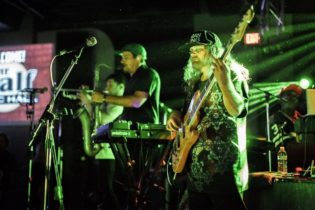
The audience was ecstatic when Lettuce took the stage, with a few extra cheers and whistles directed towards keyboard player Nigel Hall who emerged from behind the curtain in a Bill’s hat and old-school O.J. Simpson jersey. The band took no time getting going as they opened with an electrifying “Requiem,” a song that wove jazz and funk influences as drummer Adam Deitch and bass player Erick “Jesus” Coomes held down a steady funk groove while trumpet player Eric Bloom and saxophonist Ryan Zoidis skillfully whirled through a Middle-Eastern melody.
The tight stage and small venue created a college-basement feeling as the crowd was now shoulder to shoulder, bobbing and spinning just feet from the almost comically over-packed, tiny stage of musicians. The next two songs kept the energy high as they blasted through “Get Greasy” and “Chief,” two fat funk instrumentals which gave the band multiple opportunities to showcase their ability to control the energy in the room and build to a peak out of almost thin air. The crowd clearly appreciated the heavy funk to start the show because by the end of the third song multiple heads of lettuce could be seen flying around the audience.
The band slowed things down a bit with “Dump,” the first song featuring vocals, which sounded like a cross between James Brown and Stevie Wonder. Hall did a magnificent job handling the vocals with his delicate yet dominating voice, as the band played softly around him.
The next few numbers highlighted the band’s ability to create ambience while at the same time holding on tight to their funk roots. The intro to “Ready to Live” gave the feeling that you were being ominously watched as you went scuba-diving through an abandoned shipwreck at the bottom of the ocean, eventually being pulled up to the surface by the funky breakdown.
High energy jazz solos by guitarist Adam “Shmeeans” Smirnoff was a clear highlight to the diverse crowd before the band took a quick break leaving Deitch alone on stage to hammer out an intense, Bonham-like drum solo. When the band returned to the stage, they might as well have come back with George Clinton with them because they brought the funk. The crowd exploded with the band, and there was not a single person whose neck wouldn’t be sore in the morning from the trance-like grooving.
The band ended their set with two songs containing more vocals than they had utilized the entire night. During “Shmink Dabby” Hall taunted the audience in a James Brown-like fashion yelling “Buffalo, Hit Me!” while Zoidis let out a powerful saxophone solo. They ended their set with “Sounds Like a Party,” a fun song that does in fact sound like a party. During the breakdown, each band member took a small solo before coming together as one entity to leave the crowd on a high note.
The band did not leave the stage for long before the crowd began a “One More Song!” chant, forcing the musicians back out almost immediately. The band thanked the audience and gave them a little more of what they wanted with a bustling rendition of “The Flu.” Hugs, high fives, and smiles were exchanged as the crowd left the venue, with every soul feeling just a bit richer thanks to the night of funk they had just experienced together.
Setlist: Requiem > Get Greasy > Chief > Dump > Ready to Live > Purple Cabbage > Kron Dutch > Blaze > Phyllis > Lettsanity > Shmink Dabby > Sounds Like A Party
 The band took no time getting the show on the road with a spacey ‘AC/DC Bag’ which saw Trey sitting back on the solo and letting the rest of the band organically develop a patient groove, which would foreshadow the jamming style of the night. ‘Wolfman’s Brother’ emerged out of the white lights and provided the first (of many) jam highlight of the evening. The band quickly transitioned from the classic Wolfman’s funk to a dark, murky jam that gave the feeling that you took the wrong turn down a shrunken alley on the lower east side, but there was no going back because you already devoted to making it past the sketchy brown walls and back to a world of streetlights and pretzel vendors. An early first set ‘Roggae’ broke out of the darkness and saw masterful interplay between all four band members as they reached a glorious peak that shook the garden.


 Interviewing Victor was less an “interview” and more a conversation. When he spoke, his big brown eyes locked in with mine, and it truly felt like we were the only two in the room. He is a genuinely caring individual who’s love for his craft and dedication to art was evident with every word he spoke. To him, music is about openness, letting go of your ego, and creating magic. He was ecstatic to speak about each project he was working on, and his passion for life and music is something he carries openly with him. I feel very fortunate to have had the opportunity to spend a half hour sitting down one on one with a music legend of his stature. Below is our full conversation:
 RR: Do you prefer recording separately?
 RR: You’ve played with many people over the years, but is there any particular jam or event that stands out in your mind?
 Holka
Holka  The EP
  The first notes of Specimen transport the listener to a different dimension. The intricately woven acoustic rhythms and spacey loops featured throughout create an aura that is somewhere in between the past and future, but certainly not in the now. If you close your eyes and dig deeper into the EP you may suddenly get the feeling that you are alone, lost on a farm in Medieval times. However, you cannot be sure you have gone too far into the past as spaceships and the glowing effects of technological advancements cautiously linger above. The combination of folk-influenced songwriting with psychedelic loops throughout create a futuristic Americana sound that can delicately be defined as an Emersonian audio experience.
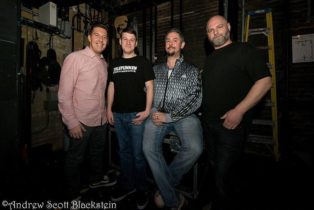 Since they have gotten back together, RAQ has not toured the same way they used to. Their focus has been on shorter, more condensed runs rather than the “50 shows from coast to coast” tour model. Fans have come from all over the country for a chance to see RAQ again during these runs, and this Fall they will have another opportunity. RAQ will be performing a
  If you’ve ever been fortunate enough to catch a show, then you already know how much energy this band has at all times. For the right person, a PPPP show is the equivalent of running a 5K on acid. Prior to your first show I would recommend going to the gym three times that week to prepare for the number of funk-driven convulsions your body will encounter. While it is often difficult to translate what a band can achieve in a live setting to a studio album, PIZAZZ is about as close as it gets. This is the essential “dancing your ass off in the kitchen while cooking dinner and you’re so into it you don’t even notice your roast has burnt” kind of album. It is genuinely fun, with each track offering a different form of exhilaration to keep the listener engaged. It is often difficult to choose music that satisfies every guest’s tastes when throwing a party, but with PIZAZZ you are guaranteed a bridge that will keep everyone satisfied and may even inspire a few hallway dance circles.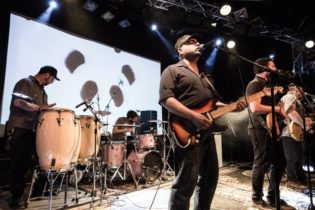
 The show began with a high energy DJ set by the up and coming electronic artist