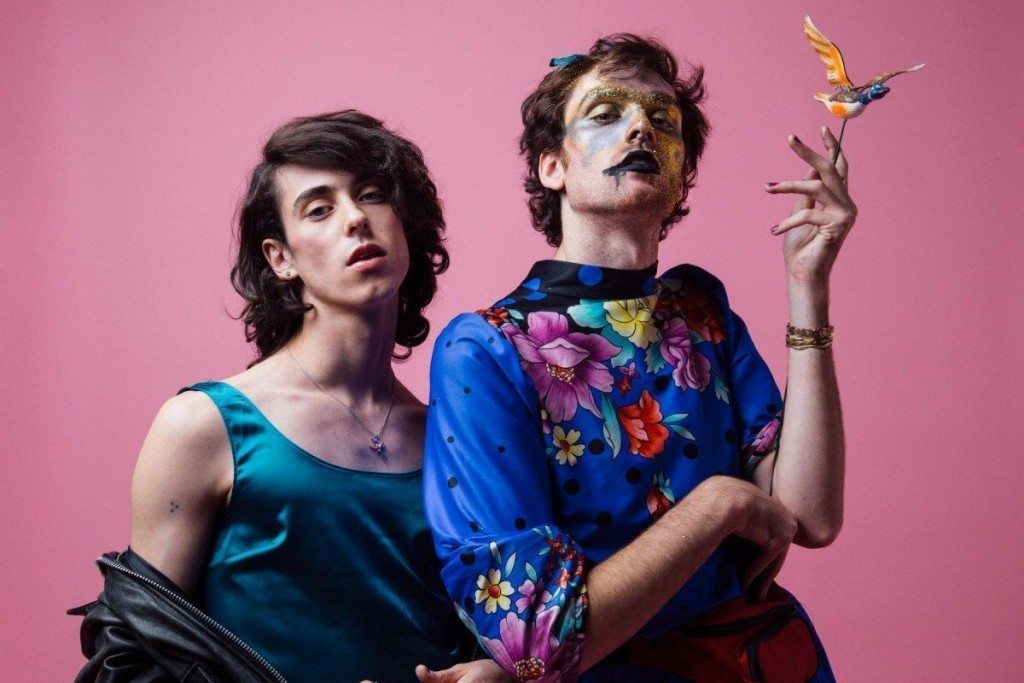
Multiple accusations of sexual abuse and harassment have been levied against Ben Hopkins, a member of the pop duo PWR BTTM, coming into the public spotlight via social media on the eve of the launch of their sophomore album, Pageant.
The music industry and community are resoundingly sympathizing with survivors and witnesses of abuse. As a result, PWR BTTM’s album release show in New York scheduled for Friday was cancelled. Their managers and labels have dropped them. Supporting acts have withdrawn from upcoming shows. At least one festival has dropped them from the lineup so far.
In a statement on PWR BTTM’s Facebook page on Thursday, the band offered to participate in mediation with those who are reporting abuse online. In part, the statement reads:
Our primary goal here is to ensure that a survivor of abuse has a voice, that their story should be heard and that people who cross the line should be held accountable. What this means for the band, our album, our fans and our upcoming tours is, as of yet, unclear. Music is everything to us, but we feel strongly that this matter needs to be addressed first.”
A touring member of the band who also helped with the arrangements on the album Pageant immediately resigned from the band. Cameron West had this to say on Twitter:
Today, like many PWR BTTM fans, I was shocked to discover that sexual assault allegations were levied against Ben Hopkins. From my understanding, these accusations were in fact levied via e-mail months ago, but were left unshared with other members of the band, including myself. In order to provide the highest possible respect to everyone who has come forward, I am hereby ending my tenure with the band as an arranger and touring musician.”
The band’s album release show which was scheduled for Friday night in New York City was cancelled.
Also on Friday, the band’s management agency, Salty Artist Management dropped the band. A portion of their Facebook statement reads:
In light of the allegations involving members of PWR BTTM, Salty Artist Management will no longer be working with the band. We do not take these kind of allegations lightly and our thoughts are with victims and survivors of abuse who have been affected by this.”
By Saturday, PWR BTTM was dropped from their current and former labels. Polyvinyl is offering refunds on any purchases of PWR BTTM music or merchandise made through their company. Those who made purchases can send a request via mailorder@polyvinylrecords.com. Polyvinyl is also making donations to RAINN, and AVP, organizations which assist survivors of sexual assault and violence. The label Father/Daughter Records, who released PWR BTTM’s debut album, Ugly Cherries, have also followed suit, pulling PWR BTTM music and merchandise, and donating to the same charities.
Over the past few days, supporting acts have withdrawn from billing on PWR BTTM shows. Nnamdi Ogbonnaya, iji, Ratboys, and Tancred have distanced themselves from the band in light of the allegations in public statements on social media. T-Rextacy acknowledged hearing about the allegations prior to them being made public. “We made a mistake supporting this band,” they stated. “We put our career above the safety of fans who have trusted us and supported us and there’s no way for us to remedy that.”
Furthermore, the band has been removed from the lineup of this fall’s Hopscotch Music Festival in Raleigh, North Carolina. “It is the primary goal of the festival organizers to ensure that everyone feels safe and free to express themselves.”
Friends and fellow members of the Brooklyn music scene Diet Cig summed up the feelings of many fans and supporters in a Tweet on Sunday:
we’re so heartbroken about these allegations and have been trying to sort through our feelings the last few days. one thing we know for certain is we believe and stand with the survivors, we take this very seriously. it’s scary thinking your friends could hurt someone like this but friendship doesn’t excuse these actions, or make them any less real.
Support and compassion goes out to all survivors and witnesses of abuse. The resources below are available 24/7 via online chat or phone to anyone impacted directly or indirectly by violence.
Last week Rochester honored six people who contributed to the local music legacy. In a ceremony held at the iconic Eastman Theatre, The Rochester Music Hall of Fame 2017 inducted blues man Joe Beard, classical composer Samuel Adler, pop star Gary Lewis, jazz trumpeter Lewis Soloff, radio DJ Roger McCall, and Penny Arcade owner Greg Sullivan. Highlights of the evening included spectacular performances by honorees and distinguished guests David Clayton-Thomas and Paul Shaffer.
The first inductee was the legendary Joe Beard, born in the 1930’s to sharecroppers in Mississippi, he grew up immersed in the musical heritage of the delta blues. He migrated north and settled in Rochester, where he married and raised four children. In his lifetime, he has played with the likes of Muddy Waters, BB King, and Son House. On this occasion, he performed with his sons, Chris and Duane. They played a trio of songs from his extensive catalog of music, including “Don’t Know Why.” Joe stood center stage, his cherry red guitar a stark contrast to his dark suit, while his sons stood behind. At one point, they took turns soloing on their guitars, playing with as much comfort and ease as a friendly conversation.
Next up for an award was Samuel Adler, a distinguished composer and teacher, with more than 400 published works to his name. Adler taught at the Eastman School of Music for three decades before relocating to New York City to teach at Julliard. His “Piano Quintet for Piano and String Quartet” was performed by Upton String Quartet with Yi-Yang Chen on Piano. The piece starts slow and lamenting, bursts into discordant notes, then finds triumphant harmony. It is a shining example of Adler’s adept skill as a composer, and why he is highly sought after for commissions.
Gary Lewis took the stage, sidestepping his way to the mic. His natural ability at showmanship comes from growing up in the entertainment industry, taking the stage at an early age with his father, Jerry Lewis. Gary made a name for himself in the 60’s with his band, Gary Lewis and the Playboys, with rapid-fire hits that bumped bands like The Beatles down on the charts. Gary Lewis met his wife at the Eastman Theatre twenty years ago, and has lived here since. They still tour actively around the world. Tonight, they performed rousing renditions of their greatest hits, including “This Diamond Ring,” which had audience members dancing in their seats.
The intermission was also a to-do, with performers and local music legends like Lou Gramm meeting with attendees in the hallways to chat, sign autographs, and share a “Kodak moment” with their fans. The second half of the night was more somber, with posthumous awards given to members of the local music community who we have lost.
Lew Soloff, most notably known for his work with the band Blood, Sweat & Tears, spent part of his career teaching at the Eastman School of Music. His daughters accepted the award on his behalf. Paul Shaffer and David Clayton-Thomas also made the trip to Rochester to help honor their longtime friend. Paul carried out Jimi Hendrix’s “Little Wing” on piano, then took to the organ to accompany as David Clayton-Thomas played a trio of Blood, Sweat & Tears songs, starting with “Spinning Wheel.” He also sang “God Bless the Child,” a song originally done by Billie Holiday, which he said Lew had encouraged him to tackle. He ended with “You Make Me So Very Happy.”
Roger McCall, the beloved radio DJ known by the alias “Unkle Rog,” worked for over 30 years at WCMF, making him the longest-running DJ at a single station. He worked the graveyard shift, and featured local artists, helping to cultivate the local music scene. Unkle Rog was taken from us in 2003 in a tragic act of violence. His wife and his son accepted the award. A tribute song “All Night DJ” was composed by John Akers. The jazzy number was performed by Akers on vocals and piano, Paul Akers on Bass, Erik Welsh on drums, Andy Calabrese on Keyboards, and James Richmond on Saxophone.
The final inductee was Greg Sullivan, owner of local venue The Penny Arcade. The nightclub featured live music, bringing in major rock stars like Iggy Pop, Greg Allman, and Huey Lewis & The News. Sullivan also mentored local musicians, providing a place for them to hone their craft and grow a following. The club has been closed for seven years now, and Sullivan passed away in 2014. Sullivan’s wife accepted the award. A tribute song “We’re Rockin’ at the Penny Arcade,” was composed by James Richmond, Mike Gladstone, and Rob Smith. The rocking number was played by Smith and Phil Naro on vocals, David Cohen on drums, Ron France on Bass, Gladstone and Donnie Mancuso on guitars, Will O’Riley on keyboard, and Richmond on saxophone.
The finale of the night was a tribute song “You Shine,” written by Jeff Cosco in memory of Greg Sullivan and Unkle Rog, and played in homage to the legends by Cosco on vocals, Mancuso, Gladstone, and Joe Chiappone on guitars, Bobby Bond on drums, France on bass, and Andy Calabrese on keyboards.
All of the performances of the night were supported by the Hall of Fame’s house band, Prime Time Funk. The Rochester Music Hall of Fame is a non-profit agency, and this program was made possible by a host of local patrons and advertisers. For more information about the Rochester Music Hall of Fame and past inductees, visit www.rochestermusic.org.
Ever wonder where your city measures up when it comes to the music scene? Value Penguin, a company which compiles information for consumers, compared 200 US cities using more than a dozen variables from reputable sources to create a list of best places for music lovers. Six cities in New York State are in the top 30%: Albany, Rochester, Binghamton, New York, Buffalo, and Syracuse.
The top 10 cities in the nation are: Nashville, Honolulu, Seattle, Madison WI, Austin TX, Albany, Tuscon, Rochester, Pittsburgh, and San Francisco. Binghamton came in at No. 20, New York City at No. 26, Buffalo/Niagara Falls at No. 43, and Syracuse at No. 56.
Cities were rated in three categories: Bands, Crowds, and Intangibles. For bands, factors included the number of musicians and bands per capita, the number of recording studios and labels, and the average hourly wage. The crowd category included information about venues, music-related stores, and number of radio stations. The intangible category was a catch-all for miscellaneous info on weather, public transportation, music schools, and closing time for bars, all of which may impact the quality of the music-going experience. Data was pulled from government sources such as the US Census Bureau, Bureau of Labor Statistics, and Department of Commerce. Additional information came from sites such as Music School Central, USA Today, Songwriter Universe, and Fodors. The information spanned the years 2014-2016.
The Albany area took a high position, thanks in part to venues like Palace Theater, Cohoes Music Hall, The Hollow Bar and Kitchen, Madison Theater, Troy Music Hall, Dinosaur Bar-B-Que, Proctors Theater, The Massry Center for the Arts, Times Union Center, EMPAC and many more.
Rochester was not far behind, known by music lovers for the Eastman School of Music, Eastman Theater, Blue Cross Arena, The Bug Jar, The International Jazz Festival, The Record Archive and The House of Guitars, to name a few.
You can see the complete list and view the data sources at Value Penguin.
In a time when locally owned stores are struggling to stay afloat, The Record Archive in Rochester is finding new ways to thrive. On Friday, April 8, they unveiled their latest endeavor, The Backroom Lounge, with an official Grand Opening Party. A venue like no other, this all-ages community space is annexed to the region’s largest record store. It’s a place to kick back, enjoy live music and have a drink – The Record Archive has the distinction of being the first and only record store in New York with a license to serve alcohol. NYS Music was invited to be part of this prestigious event.
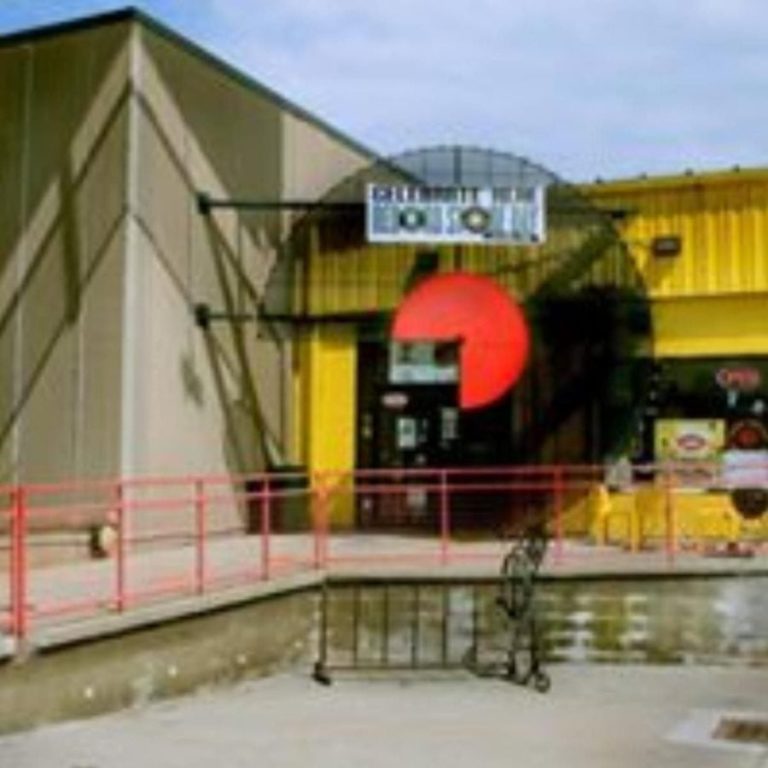
Pulling up to the building at 33 1/3 Rookwood Street in Rochester, there’s an immediate sense that this is not your run of the mill music store. From the sunshine yellow exterior to the enormous record framing the front door, everything about The Record Archive feels extraordinary.
The interior opens up to a 10,000 square foot retail space, chock full of music, stereo equipment, gifts and memorabilia. For music lovers, it is the equivalent of being a kid in a candy shop. It is a veritable feast for the eyes and ears. It’s hard to imagine that the entire operation began in 1975 with a crate of records on the floor of a flea market stand.
The entrance to the lounge is beyond the extensive collection of CDs, through tall arched doorways framed in black curtains. For the Grand Opening event, guests were greeted with glasses of blue champagne. We also had the choice of a wide variety of drinks. The shelves held regional wines, craft beers, music-themed beverages and some new discoveries. Beer was available on tap. The cooler is stocked with non-alcoholic beverages, including the local brand FIZ Pop.
Near the entrance of the lounge, Record Archive founder Richard Storm greeted guests. I asked him what he thought about all of this, and he said, “I never in my wildest dreams imagined I’d have a venue with a bar.”
The space is furnished eclectically – a mishmash of eras and styles, like remnants of random time travel. Jukeboxes are scattered around the room. Lava lamps bubble up on a far table near bookshelves overflowing with biographies of musicians. One wall is lined with boxes containing a myriad of 45’s spanning decades and genres. Seating options included a diner booth, a cozy couch, pub tables or a 1960’s ball loveseat. The room is lit by the warm glow of chandeliers in varying styles. The look of the space was put together by Reo Alderman. His design aesthetic brings the seemingly disparate pieces together in an artful showcase. And speaking of showcases, many of the pieces in the lounge are available to purchase.
At the antique piano near the bar sat a musician who could have also been plucked out of a bygone era. Honky Tonk Henry was playing jaunty old-timey tunes. These are the songs I used to listen to with my grandparents back in the day. It was comforting to know that someone is keeping the music tradition alive.
In the corner, under the watchful gaze of a full-sized T-Rex skeleton, is a stage large enough for bands to perform comfortably. I sought out the Record Archive’s Events Coordinator Deb Jones to get the scoop on the sound system.
“We’re very proud to have Fulcrom Acoustic speakers,” Deb said, “It’s a locally-based company. They’re world class speakers -they’re being installed in Madison Square Garden. We’re the only place in Rochester to have them. And the amps are Ashly Audio.” Ashly Audio is also a local company, which produces state-of-the-art sound equipment.
Deb introduced me to Alayna Alderman, business partner and Vice President of The Record Archive. She was the driving force for creating The Backroom Lounge.
“I told Rich I wanted the place to be an extension of what we’ve been – a touchstone for the community,” she told me. “This is not a club. We’re a record store that sells beer and wine, not a bar that sells music. You can come, have a slice of pizza and a drink, enjoy live music and be home by 9. The music will always be our business. This is the next layer.”
Obtaining a liquor license was not a decision that they took lightly, she told me. It was a lengthy process, and required lots of forethought (not to mention the amount of paperwork!). In the end, they decided to license the entire space, including the retail area, so that people can enjoy refreshments while they browse through the store.
The guest list was a who’s who of friends and supporters of The Record Archive over the years. Frank DeBlase, writer/photographer and front man for The Busted Valentines, described the scene as “a new living room that comes furnished with guests.” Among them was Andy Babiuk, a founding member of The Chesterfield Kings and owner of Andy Babiuk’s Fab Gear music shop. Greg DeLuca from the local visitor’s bureau was also there. Members of the local press in the crowd included Emmy-award-winning journalist Seth Vorhees from Spectrum News, Susan Rogers, Executive VP of WXXI, and Mark Shuttleworth from Legends 102.7.
True to their commitment to support other local businesses, the Grand Opening event included sweets from Savoia’s bakery and was catered by Tasteful Connections. The spread was divine. My favorite of the offerings was a Bacon Rind Shrimp Shooter – a Bloody Mary with shrimp and celery, served in a bacon-rimmed shot glass.
Alayna took the podium and thanked everyone for their support in this endeavor. And a round of speeches ensued. Ted Potrikus, president and CEO of the Retail Council of New York, talked about working at The Record Archive in 1984, and about all the effort that went into making this venue possible.
“It’s the coolest place in Rochester,” he concluded, “I’m thrilled to be here.”
City Councilman Adam McFadden presented The Record Archive with a certificate from Mayor Warren. He also shared fond memories of times spent at the Record Archive, including the joy of meeting the members of Stetsasonic after seeing them perform in the store back in their heyday.
Baye Muhammad, Commissioner of Neighborhood and Business Development, presented a plaque from the City of Rochester and thanked the owners of Record Archive for being committed to staying within the city limits when they relocated to this space nine years ago.
After the speeches, shiny blue ribbon embossed with the City of Rochester logo was stretched across the stage. Members of The Record Archive family and key supporters made cuts, marking the official opening of The Backroom Lounge.
The Backroom Lounge is open to the public during normal business hours, with the exception of when it is reserved for private events. The bar stops serving an hour before closing.
The room is available for special occasions such as weddings and birthdays. Furniture can be rearranged to meet the needs of events (for example, theater seating or banquet-style table arrangements). Talk to Events Coordinator Deb Jones for more information about reservations.
The space naturally lends itself to musical performances. Happy Hours are held every Wednesday. Themed nights for metal and blues occur monthly. In-store performances are plentiful. They have a full bill for Record Store Day on April 22, including The Fox Sisters, Teagan & The Tweeds, Teressa Wilcox and more. There are performances by Staly on April 28 and Zara Larson on April 29 in collaboration with local radio station KISS FM. This is also becoming a popular venue for release parties, the next one with Junkyard Fieldtrip on the evening of April 29. For a full event listing, check The Record Archive’s webpage or Facebook.
Nestled in the foothills of the Finger Lakes is the college town of Ithaca, a community rich in the arts with a vibrant indie music scene. It was there six years ago when Julia Felice and Harry Nichols set out to record a few songs. Rather than release them on an EP, they held out until they had enough for a full-length album. Diving for Falls was released in 2014, with Felice on vocals and keys, Nichols on guitar, and Julian Dalton on drums. For the release show, they enlisted the help of Samuel B. Lupowitz on bass guitar and Joe Massa on lead guitar. This lineup eventually became known as The Whiskey Crisis.
Over the past couple years, Julia Felice and The Whiskey Crisis have distilled their sound. Devil on Your Back has a more distinctive flavor than its predecessor. Felice’s deep and sultry vocals are complimented by the band’s jazzy blues stylings. The sound is full and robust, and the instrumental breakdowns give the musicians an opportunity to flaunt their skills.
Over the course of 11 tracks, Julia Felice and the Whiskey Crisis demonstrate that they can perform a range of R&B songs – from the spirited numbers “Waste” and “Count Stacks” to the slow, soulful songs “Help Me Break” and “Come Over.” The song “Denim” has a funky 70’s vibe, but overall the entire album seems timeless and classic – with songs which could fit in as easily on a playlist with Joss Stone and Amy Winehouse as with Carole King or Janis Joplin.
The band is celebrating the release on April 1 with a hometown show in Ithaca at The Range. Follow Julia Felice and the Whiskey Crisis on Facebook for upcoming shows and purchase information for Devil on Your Back.
Key Tracks: Help Me Break, Count Stacks, Albatross
St. Phillips Escalator is on the verge of releasing their long-anticipated sophomore album, The Derelict Sound. What’s more – it’s coming out on vinyl on Record Store Day. NYS Music met up with members of the Rochester-based rock band at Record Archive. It was easy to spot guitarist/vocalist Ryan Moore, with his signature newsboy cap and long sideburns, chatting with drummer Zachary Koch in the Archive’s Backroom Lounge. Friends since childhood, Moore, Koch, and bassist Noel Wilfeard were just out of their teens when they recorded their debut album Endless Trip with the help of members of garage rock revivalists The Chesterfield Kings. The 2015 EP Elevation was highly praised, with the one criticism that it was too short and left a reviewer wanting more. Now they’re just about ready to deliver.
Photo: John Myers
Paula Cummings: Tell me about your single “New Age.” Why did you choose this as your first release off the new album?
Ryan Moore: We have a heavier psychedelic sound to the other songs and this one was a little catchy. It’s one of my favorite songs on the album, I think.
Zachary Koch: We wrote it starting with the beat – it was an early Doors’ first record kind of beat – and based it around that with minor chords. It just came together. But the style definitely references them (The Doors).
PC: The single comes from the sessions for The Derelict Sound. How did you choose the album title?
ZK: We just sat down and had a talk one day when we were making some plans. We were really trying to think of what would represent the record. We’ve been together for years now and we reference music from different eras – modern and vintage – but it’s not understood by many people when they first hear it. It’s a derelict sound, an unused kind of overlooked sound… dusted.
PC: What was the writing process like compared to your previous works, the first album a decade ago and the EP two years ago?
ZK: As far as the way we write the songs, I don’t think it’s changed much since the beginning. Maybe somebody has a fully baked song or if it’s just a riff then we’ll work it out at practice.
RM: We usually know if a song works for our sound right away. We only just give it a couple tries with some because it’s like beating a dead horse with some. We’re like, “That would have been great but we know it wouldn’t work.”
ZK: We build on it together. It’s a collaborative process. Sometimes a single idea comes to the group and we know it works right away. We’ll get inspired with a song first and then play with it. We always had the power trio and blues thing happening, and on this we tried to bring it more into the psych genre.
RM: I would say this is a little bit darker.
ZK: The songs fit together well. We had 13 songs, but we cut it down to ten because some of them just didn’t fit that vision. They’re still good songs but just didn’t fit the feel we wanted for this one.
PC: How has your music matured over the years?
ZK: We have more life experience, so the content is different from our first record. We were just coming out of our teens. And now there’s more life experience. I have some political lyric writing. Ryan’s lived in New York and so has Noel, so we all have different life experience that go into the writing. I think the music process has been the same, but maybe back then it was a little unhinged, like “Let’s write and play” without having an idea first. It was fun. It’s always fun, but there’s more goal-setting. But the writing process, that’s the same. It’s always just fun at the heart of it all.
PC: You have this energy that comes across well in live shows. How did you try to capture that in the studio?
RM: The guy we collaborated with suggested we record it live. So what we did was we went to this place in Geneseo, Tempermental Recording. It’s this big old church and it’s really awesome. All of the tracks for the whole thing we recorded together. There wasn’t anybody separate.
ZK: That was the key. It was not just a live record, but the bass, drums, and guitar the core of it we played together because it’s the only way we could draw that energy. We tried before to record separately.
RM: It’s just not the same.
ZK: And allowing the big space… We need to play louder, so we don’t feel like we’re holding back. That space allowed us to be loud.
RM: Yeah, that was amazing. I think it was just one of the best experiences that we’ve had.
PC: That was my next question, how did the space enhance the acoustics?
RM: The guy who owns the church, he’s an insane collector, so it’s just full of guitars, and organs and pianos and drums and all those things are in the room, vibrating and making a sound as we’re recording, too. It’s really cool.
ZK: Even recording into the night that helped set the tone because it got dark in there.
PC: And in a space like that, you’re going to have a big, cavernous sound.
ZK: We used that to our advantage.
RM: And he had tons of cool gear that we were able to use. Echo on the vocals and vintage amps. But mostly we used our own stuff.
PC: Who did you work with, and how did they influence what you produced?
RM: Alex Patrick did the recording and the mixing. And when we were out of that studio Mike Brown (owner of Tempermental Recordings) hung out and gave us feedback.
ZK: He’s like-minded.
RM: We never met him before. We were renting the space from him, and he was just hanging out and interjecting. He came up with cool ideas.
ZK: Yeah, he’s really talented. He’s a guitarist and writer, so it was nice to get his perspective on things. It helped.
RM: Then Brian Moore mastered our tracks out at Red Booth Studios in Rochester.
ZK: Really helpful people, gifted. They have that patience I would never have to be able to engineer and mix. I just like playing.
RM: I just appreciate it so much.
PC: Which tracks are you most proud of and why?
RM: I really love “New Age.” I think that came out awesome.
ZK: I really like this track five. It’s called “Find My Way.” It closes out the first half of what will be the vinyl. And I think that it’s a different direction for us. It still fits, but in my mind it’s more of a modern song. It has a type of beat that’s different than what we’ve done. It’s this driving type of beat – you’ll see – but that’s one of my favorites from the record. Generally, a lot of our songs in the past have been four minutes. We get to solo a lot in this one.
RM: That song and the last song are kind of long, dark psychedelic songs. And I think the first song is one of my favorites, too, “Sleepy Silver Train Haze.” That’s just kind of a dark brooding psychedelic tune that feels a little sad.
PC: Is this your first vinyl? How does this fit the aesthetic of what you do and what you’re about?
RM: It fits perfectly.
ZK: It’s everything. We’ve collected, we were raised on it.
RM: We’re just huge record fans and I think it’s pained us to not have anything on vinyl yet. That’s one of the reasons why it took so long to come out. We were looking to find the right partner and in the end we did everything ourselves. We were going to wait as long as it took to make sure it was released on vinyl.
ZK: Vinyl gives the opportunity for the album artwork to shine. Ryan is an incredibly gifted graphic designer. He has a wonderful friend, a very generous friend, John Myers, who shot the cover for us and Ryan put it all together. That’s something that’s missing with a digital outlet. You can’t hold it and you can’t see the art that goes into it as well. But yeah, I play records every single day and to finally have one of our own is what we’ve always been going for. For our last EP Ryan and Noel were in NYC so we didn’t have as much time to get it all in line for vinyl.
PC: What are you listening to on vinyl?
ZK: We still listen to all formats. We just appreciate it the most and it sounds the best. But some of our favorite vinyl?
RM: My collection? I have some of my favorite old blues records like Mississippi Fred McDowell and the Blues Bakers. Cool rare blues records are some of my favorites. Then on top of that 13th Floor Elevators, The Seeds and some of the stuff that influences our band. It all sort of comes together.
ZK: And when I’m really sitting down and listening I really love to put on either Neil Young or The Byrds. I like listening to folk records on vinyl. I think it’s really befitting.
RM: We also started collecting some newer, modern psych bands on vinyl too. Morgan Delt, Black Angels. Anything that’s good sounds better on vinyl.
PC: Tell me about the album cover.
RM: We really had this idea that I really wanted this to be an out of focus picture of us, like a really blurry, just weird picture. I didn’t want just another portrait of the band. People either know us or they don’t, and I don’t care to have our mugs pegged on it.
ZK: And the photographer was able to do that without any special effects.
RM: We were just playing around. It was fun to go through a whole set of photos. We went picked the blurriest one that had a cool vibe. It’s got a cool grain and strange colors to it as well. And then I put just a small psychedelic treatment to it, kind of small off to the corner, kind of nondescript.
ZK: We never really had a set logo, and that little badge in the corner is kind-of new.
PC: You guys have been together half of your lives. What are some of the challenges you’ve had to overcome to do this?
RM: I think it’s because we were friends first. I think we became friends in junior high.
ZK: I think it’s been an advantage.
RM: I think that us looking out for each other and keeping each other in mind…
ZK: Feeling comfortable enough to share what turns out to be a really terrible song or a great song, but not being afraid of what you’re bringing to the table.
RM: Respect for one another.
ZK: When we play, we’re just hanging out. So we get to hang out with each other as friends but also as a band. It’s beneficial.
RM: Sometimes it gets tough though when you have to get work done, and you just want to have a beer and catch up.
PC: So you mentioned that Ryan and Noel lived out in New York City for a bit and you had to make that work long-distance.
RM: Yeah, that was tough. We weren’t as active during that period. But it also opened up some different opportunities because I met a lot of people in New York and we were playing a lot of gigs in Brooklyn and Manhattan.
ZK: And then we could just stay at Ryan’s.
RM: Yeah, it was easier then than it is now because we had a home base.
ZK: And then we rented an hour studio to practice in New York.
RM: We were still playing shows actively, but I think creation was the harder thing to do.
ZK: We would send things online, but we couldn’t really test them out.
RM: That was obviously the hardest part…
ZK: The productivity in the studio.
RM: But something about us being together for so long, we could book a show in New York or Rochester, practice once – or not – and play the show and it still sounds good.
Follow St. Phillip’s Escalator for news about upcoming show dates, news, and links to purchase the album.
Buffalo’s best kept secret is about to break out. Super American has been wowing the local music scene with its youthful energy and optimism. With two music videos out now and a debut album hitting the market on April 7, these boys are poised to top the indie pop scene.
Photo by Andy DeLuca
The core of Super American is Matt Cox and Pat Feeley, with friends helping to fill out on drums and guitar. NYS Music interviewed Cox to learn more about Super American’s peppy tunes, clever phrases and… pineapples?
Paula Cummings: Let’s start with the one burning question that’s on everyone’s mind: what’s up with the Year of the Pineapple?
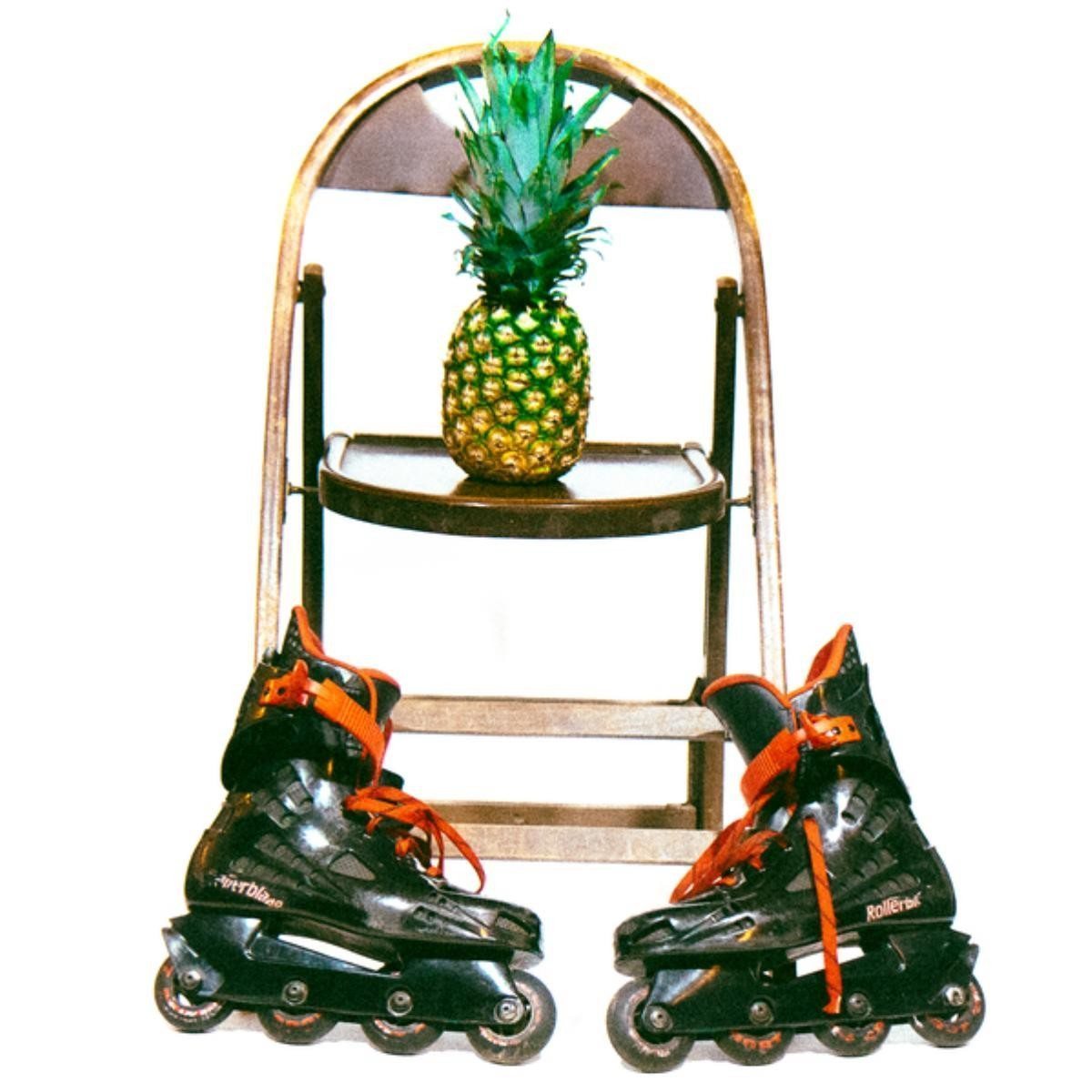
Matt Cox: Before we started taking all the photos of our friends at shows, we all referred to the Year of the Pineapple as this sense of optimism for the upcoming year. When the year started, we didn’t have much of a choice, because we laid the foundation that this is the year of the pineapple. It’s a fun way to start the year.
PC: So people are bringing pineapples to the shows. What are you doing with all of them?
MC: When people do bring them to the shows, I’m not sure what they do with it. I typically leave it or I’ll pass it along. The last time we brought one out someone asked for it, so they take it and it makes its way to the bar or wherever it’s going.
PC: Tell me a little about how Super American started.
MC: We were working on songs about this time last year. We’ve been friends, Pat had in bands separately from myself and vice versa. It was something we talked about working on music together. We got together about this time last year and we haven’t looked back.
PC: So you guys were in separate projects, but ran in the same circles in Buffalo.
MC: Yeah, it’s a tight-knit community. We recorded our album through the spring of last year, we wrote it over the winter. We played a few shows in the summer. That’s when we gained the attention of Joe from the label, and put things on hold til the end of the year. And now we are going to release the album on April 7.
PC: I’m looking forward to it. Going back to the community, you’ve been working with Andy DeLuca. What was it like working with him for the music videos and promotional photos?
MC: Working with Andy, I personally grew up with Andy around the corner. He was a friend, and he was someone who inspired me at a young age. So I got to learn how to make music from Andy and learned how to be creative from Andy. Some of my best jokes were stolen from Andy, and at one point we were roommates. He just moved to the city, but seeing what he’s been able to do in a short period of time is awesome. When you have an opportunity to work with someone like that you let it happen, and you don’t take any second for granted, because he could obviously be spending his time elsewhere at this point. So we’re lucky to have him as part of our team.
PC: I think he’s captured your aesthetic – that retro feel-good throw-back to an earlier, simpler time.
MC: Definitely. When we made the video [for “Sloppy Jazz“] we didn’t have too much of a plan ahead of time. We just had an idea. We just went at it. And you just get out of the way of someone that talented who has a vision. He did an awesome job. The video he did was amazing.
PC: Did he also direct the video for “Congratulations?”
MC: He did. That was actually Pat’s idea. The stand still lyric video, which was cool. And Andy said where to sit and things like that, and he did the lyrics. We actually recorded those videos on the same day.
PC: On your band profile, you identify your genre as “Poolhouse Rock.”
MC: We were spending a lot of time this past winter in a suburb of Buffalo, in East Aurora. We’d go there every weekend just to get out of the city. There was a lot going on in the city. Sometimes it’s a bit repetitive and there are a lot of distractions. So we would go to East Aurora to get inspired, and not even just to write music. Our friend had a pool house that was potentially available to rent. So Poolhouse Rock is something Pat came up with. It’s about defining music, and removing yourself (from the label of a genre) to hear it objectively. So Poolhouse Rock works for Super American.
PC: How would you describe your music?
MC: We made a lot of effort to capture that same energy that we had in past bands that were a bit louder and more aggressive in an audible sense. So the energy, but a little easier to listen to. We made an effort to try and step up as musicians in this batch of songs we recorded, and I really hope we accomplished that.
PC: What I like about the album is that it’s pop and it’s fun, but it’s got a message to it.
MC: I’d say it’s a very friendly record. We wrote the songs all together. Our good friend Fred Cimato, who played in a band called Cute is What We Aim For for a number of years, really helped us when we were writing songs and arrangement and recording the album. Fred is intelligent when it comes to songwriting and producing. And Rob Grabowski, our drummer at the time, had a part in it. So it was a lot of heads put together for all the songs on the record. Our friends Fred and Rob recorded with us and were on the videos. Rob has moved to NYC and Fred is always down to help if needed. Now it’s Pat, myself, Steve Gardner, and Elliot Douglas.
PC: Where did you record the album?
MC: We were actually very fortunate in that aspect. We have a studio called CGR Studio that’s owned and operated by Robby Takac of the Goo Goo Dolls. It’s been around many years. Rob’s done a good job renovating the studio. He’s had people like James Taylor come here to record parts of his album and people such as Lil Wayne. That’s the reputation CRG has. We’re very lucky to have a place to make something like that. We recorded with Jay Zubricky, who’s a producer here in Buffalo. He engineered it, mixed it and produced it.
PC: What led to the signing with Take This To Heart Records?
MC: We were looking at putting it out with a label. We were looking for a team approach. Joe (the owner of Take This To Heart Records) was very nice to us. We have the same goals. He’s been getting us exposure on playlists. Working with Joe has been great so far.
PC: What are your band goals for the year of the pineapple?
MC: To live up to the standard of the year of the pineapple. And continue to grow as a band and as artists and grow as people. And if we’re able to do that then I think that those things our band looks forward to like touring and playing shows will take care of themselves.
PC: Anything else you’d like to add?
MC: I would suggest that people listen to the Del Paxton record. I highly recommend it.
Photo by Andy DeLuca
Disposable and pineapple-themed Super American t-shirts are available to preorder on Take This to Heart Records.
Upcoming Shows:
4/8 – Buffalo, NY @ Waiting Room
4/14 – New York, NY @ TBA
5/24 – Brooklyn, NY @ Shea Stadium
5/25 – Philadelphia, PA @ Alternative Underground
5/26 – Washington, DC @ Electric Maid
Chuck Berry’s name is synonymous with rock and roll. The singer-songwriter-guitarist got his start in the 50’s with hits like “Maybellene”, “Rock and Roll Music” and “Johnny B. Goode.” His music redefined the fabric of the musical landscape and provided inspiration to musicians for generations. The legendary musician passed away on March 18 in his Missouri home.
Born Charles Edward Anderson Berry in St. Louis Missouri in 1926, Berry was the fourth of six children in a middle class family. He was interested in music and entertaining at a young age, and began performing as a teenager. It was about this time he also started his lifetime conflicts with authority, landing in a reformatory until his 21st birthday. In 1948 he married Themetta “Toddy” Suggs, and they had a daughter together in 1950. Berry began performing with local bands on the side of his day job to supplement his wages.
Berry’s break came when he met Muddy Waters in Chicago in 1955. Waters connected Berry with Leonard Chess of Chess Records. With the label behind him, Berry recorded “Maybellene.” The single went on to sell over a million copies and reach number one on Billboard magazine’s rhythm and blues chart and number 5 on the Best Sellers in Stores chart.
Berry’s trademark songwriting elements, including driving beats and flashy guitar solos, became defining standards for rock and roll. He also helped shape the subject matter, with lyrics appealing to teenagers and consumer culture. His showmanship and attitude of defiance also became hallmarks of the rock and roll persona. Berry was a trendsetter for generations to follow, inspiring bands such as The Beatles, The Rolling Stones, and The Beach Boys. His influence on the genre runs so deep that John Lennon once said, “if you tried to give rock and roll another name, you might call it ‘Chuck Berry’.”
With a career spanning more than six decades, Chuck Berry recorded 20 studio albums and a dozen live albums. His contributions to the music industry garnered him such honors as a Grammy Lifetime Achievement Award and induction into the Rock and Roll Hall of Fame.
St. Phillip’s Escalator released the video for “Sleepy Silver Train Haze.” This rollicking tune is the opening track on their upcoming album, The Derelict Sound.
This Rochester trio is known for its profoundly dynamic sound, which is deeply influenced by the traditions of the delta blues and psychedelic rock. The video was shot live on the stage at The Little Theatre, the nation’s oldest continuously-running independent film theater. It was produced with the help of JR Kraus, Chris Hogan-Roy, and Eric Maira, and the audio was recorded by Alex Patrick and Schuyler Skuse.
St. Phillip’s Escalator is: Ryan Moore (guitar/vocals), Noel Wilfeard (bass guitar) and Zachary Koch (drums). The Derelict Sound, follows their 2006 debut LP Endless Trip and 2015 EP Elevation. It is set to be released on Record Store Day, April 22, and will be available in multiple formats, including vinyl. The song “New Age” from the upcoming LP is already available digitally for streaming and purchase. Follow St. Phillips’s Escalator for updates and news on upcoming shows.
In a vast sea of pop punk bands, Lighters emerges as a stand-out from the crowd. On their latest EP, Fear of Missing Out, they pay homage to the nostalgic aspects of the genre, while at the same time redefining the boundaries.
Photo: Corinne Cummings
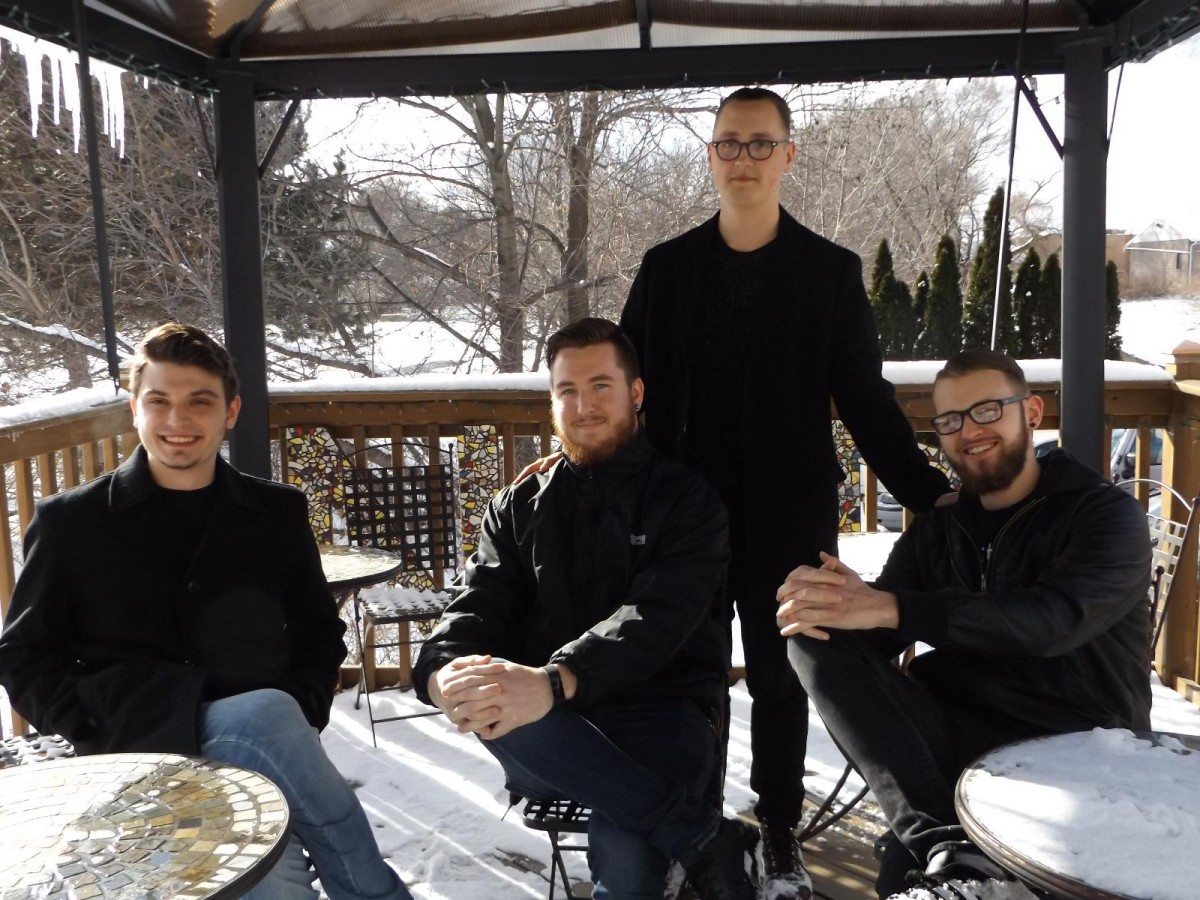
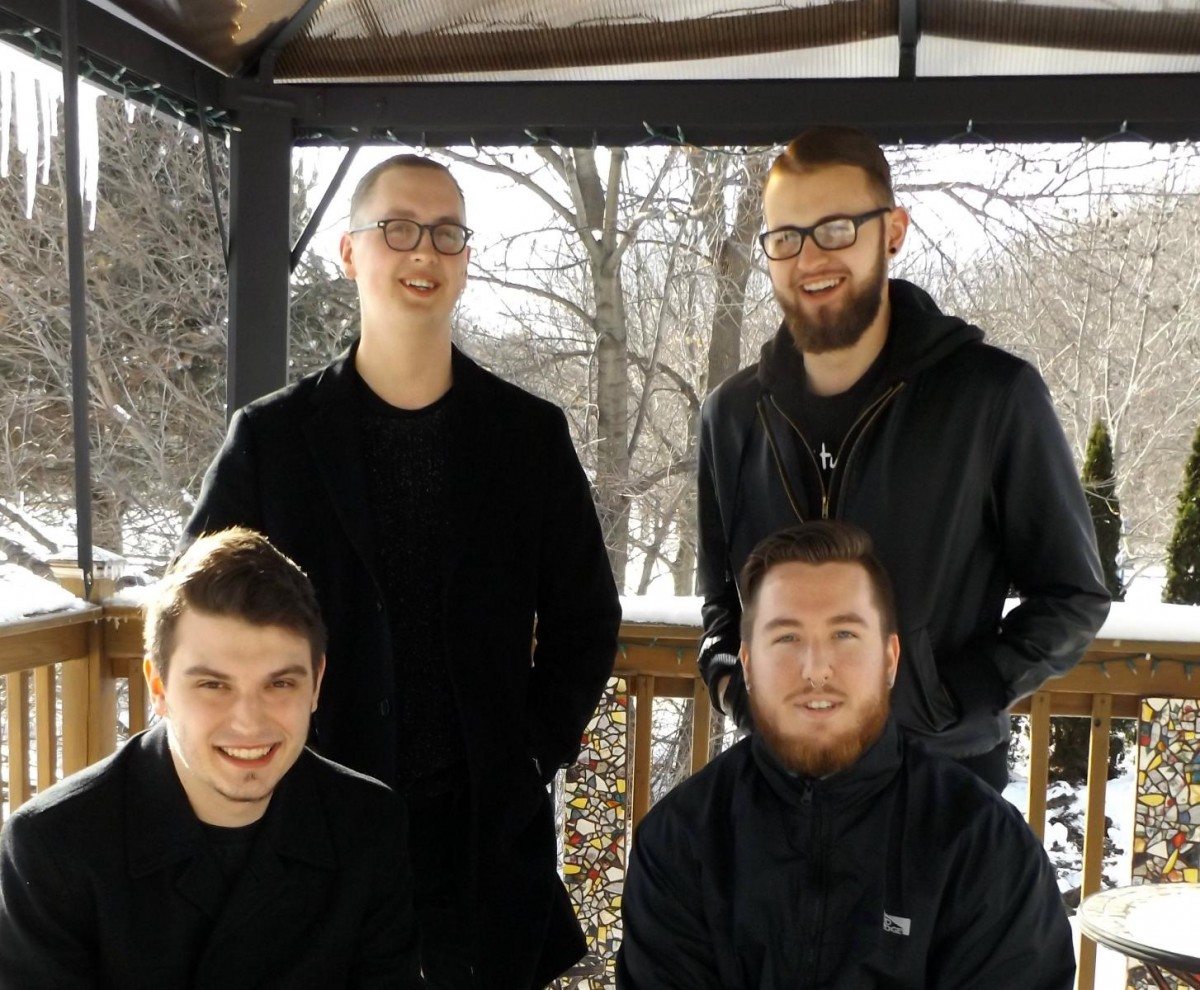
To learn more about what went into the making of Fear of Missing Out, I met up with the members of Lighters: Matthias Galley (lead vocals/guitar) Will Westveer (lead guitar), Jake McDermott (drums), and Alan Pelton (bass) at New Roots Coffeehouse in their hometown of Rochester. We talked about recording at home versus the studio, the stories behind the songs, and the best places to go in Rochester for a garbage plate.
Paula Cummings: So why Lighters?
Will Westveer: Plural nouns were the thing two years ago. Every band was a one word name with an “s” at the end and without the “The,” and we thought Lighters would be good. Part of the reason we changed our name (from Cult Classic) was because there was already a band called Cult Classic. But now there’s another band called Lighters. So it’s really unavoidable.
PC: How would you describe your sound?
WW: It’s very old school. There’s a lot of old school pop punk, old school emo.
Matthias Galley: Early 2000’s – The Get Up Kids, Blink
Jake McDermott: My girlfriend said last night, “You guys sound like newfound glory.”
Alan Pelton: We’ve also got that newer emo going. Modern Baseball is a huge influence.
MG: We’re not a straight up punk band, but that’s definitely where a lot of my roots came from – just like that pure aggression and energy and maybe not being technically the best but having heart behind it. I think that’s a lot of our philosophy.
JM: But we also want to get out of that and be more modern, like alternative emo.
MG: It’s really hard to put your music in a genre because you just have so many influences and you put them in the box and you don’t know what’s going to come out.
PC: The new EP, Fear of Missing Out, where did you record and who helped you put that together?
JM: First we tried recording at my house.
WW: It didn’t sound too bad, but it was too much work.
JM: My parents were out of town for Halloween weekend last year. We set up my drums in the living room. We put pillows next to the fireplace so no one would hear outside. And we just recorded drums for the entire day. Then we recorded their vocals and stuff for the next two days. We finally were almost done and we were on the last song when someone rang the doorbell. I forgot it was Halloween. So my dog starts barking, and we’re like “Okay, we’re just going to get someone to do it.”
WW: It was the last straw.
PC: Yeah, DIY is great, but it takes a lot of work.
WW: We recorded it with one of our friends in a band called REPS. They’re a hardcore band, they’re really good. They have a rehearsal space over off Park Ave and they’re turning it into a studio too. We’re one of the first bands that used it. The guitar player Jordan Foehner helped us. We were really happy with it. HQ Audio – they were deciding the name as we recorded.
MG: It’s cool to be at the beginning of something like that.
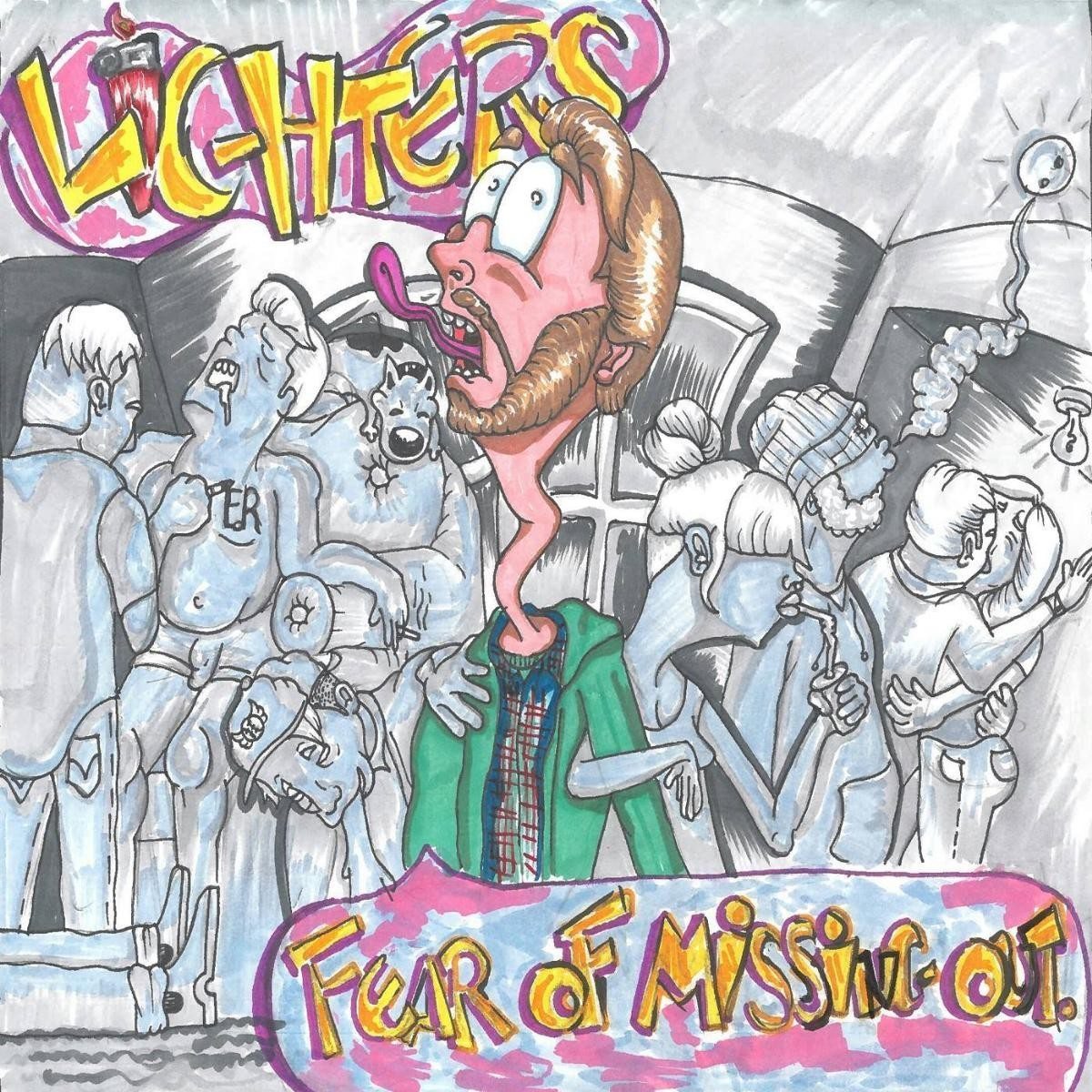
PC: And then the album art – that’s a throwback.
MG: That’s my roommate Billy Lyons. He’s a local artist. He had a show at the Bug Jar a while back and he just had a show at Ugly Duck Coffee. I was like, “Hey can you draw something that looks like 1990’s cartoons, like Rocko’s Modern Life style?” We had him base it off our friend Bobby Heath, who is the guy on the album artwork for the other EP. Bobby comes to a lot of our shows. We’ve known him forever.
AP: We kind of made him look like he’s not really fitting in, like everyone’s having a good time and he’s hanging around.
PC: And that fits the title of the album, Fear of Missing Out. So let’s talk about the tracks. Tell me about “It’s Cold, I’m Sorry.”
MG: That song I wrote after my 21st birthday. I went to a show at the Bug Jar. And it was my 21st birthday, so I left the bar and I forgot my coat inside. And my girlfriend was like, “What are you doing, you have to go in and get it.” So she went and got it for me. It was such an insignificant thing, but I thought it was kind of cute.
PC: The cold seems to be a theme, because there’s mention of the cold in the next song.
MG: You have to write about what you know, right?
AP: It’s something that happens in Rochester.
WW: It’s a reoccurring theme – you can’t get away from it.
PC: But then your EP came out right at the beginning of a heat wave, which was ironic. Tell me about the second song, “Cult Classic.”
WW: That’s one of my favorite songs, I think. That’s a song that we wrote in our old band Cult Classic. That’s why we named it. Back then it was only a verse and a chorus, like verse-chorus-verse-chorus. We only played it once or twice, but I always thought that the chorus was super catchy. We had this other song that we wanted to put on the EP, but we were on the fence about it. And I was like, “Let’s go back to that, let’s revamp it, let’s add a few more parts.” I think it turned out really good. That song’s about Rochester.
PC: But then there’s “Cranberry Lake,” which does not sound like a Rochester reference.
MG: Cranberry Lake is a campground up in the Adirondacks. It’s more of a return to a natural setting. We talk about Rochester, then we shift settings.
PC: I think punk pop bands have like three prerequisite songs, and one of them is always about getting out of town.
MG: We try to avoid those tropes because it’s really tough being a punk pop band.
WW: But you can’t really avoid the pop punk clichés.
JM: We love pizza and buffalo chicken.
PC: And then “Mary Jo,” that one’s a little different than the other ones.
AP: The title is my grandma’s name. One of the first times we played was at the Vineyard Community Space. She came and a ton of my family came and they took up half the room. She had like a folding chair – she got a chair from somewhere, I don’t know where – and she put it right in the front, like right in front of our mics. She put some ear plugs in and she just sat there for the whole thing. That song didn’t have a name, so we just slapped her name on it and it stuck. I kinda like it.
MG: I really like that venue. It’s cool. It’s all ages, which is amazing around here. You know it’s tough. I don’t know how you can encourage people to keep moving into the scene if you have venues that you can only go in if you’re 21. I just wish there were more all-ages venues around.
PC: The last song is “No Pictures Please.”
MG: The song itself I wrote two summers ago. Cold is kind of a theme for the whole album, but this swings to the opposite end of the spectrum. This is about summertime. We had put out our first EP and we were trying to write new songs, to generate new material and come together as a band. At the same time this was in between classes and I was living at home, because you can’t live on campus during the summer break. And you feel anxious and you just want to move on to the next phase. And I think that’s what the song is about – trying to advance as a band and a person.
Photo: Corinne Cummings
PC: How was the experience recording this one different than your first EP?
WW: The EP we did at RIT at WITR studio. We recorded the whole thing live so we played it all live in this tiny room. We did vocals afterwards. This time we had a lot more control. It took way longer. Last time took only a day. This time took a few weeks and we tracked everything separately, so we got to mess around with some tones. We did a little editing. It was a lot more professional this time around, and a lot more fun, really.
MG: Yeah, it was cool. We really did enjoy recording at HQ Audio. It was a really nice, relaxed environment. I didn’t mind coming in multiple sittings because it’s enjoyable recording with them and doing what we do.
AP: Jordan knows what he’s doing. In “No Pictures Please,” at the end, he jumped in too and that was super fun.
WW: Yeah, it was me and Alan and he’s got a booth with all of his board. Me and Alan were standing outside the booth with headphones and a microphone. And he’d hit go and run out with headphones on.
MG: He was really involved.
JM: It was fun doing vocals with Jordan.
WW: He helped out a lot too. A lot of harmonies and input.
AP: He pushed you to make it sound better – “No, you can do better than that” and “do it again, do it again.”
MG: Yeah, it definitely would have sounded different if we went with someone else. He had a lot of good constructive criticism.
PC: In your band interests you mention garbage plates. What’s your favorite place to go for garbage plates in Rochester?
JM: I like Steve T’s the best – on Lyell. It used to be Nick Tahoes. It looks really trashy, but it’s good.
WW: I love a greasy spoon.
AP: But I like Henrietta Hots, they’re consistent. They’re open late, too.
PC: Anything else you’d like to add?
MG: We had a lot of outside help, between Jordan and Billy who did the album artwork. And Bobby, too. He comes to shows whenever he can. And Tim Avery. He’s the reason we play shows. The majority of shows come through him and he’s the one who gave me my first shows when I was 16 or 17 years old. The way he goes about his business is very commendable and I really appreciate what he does for the scene.


 Pulling up to the building at 33 1/3 Rookwood Street in Rochester, there’s an immediate sense that this is not your run of the mill music store. From the sunshine yellow exterior to the enormous record framing the front door, everything about The Record Archive feels extraordinary.
 Nestled in the foothills of the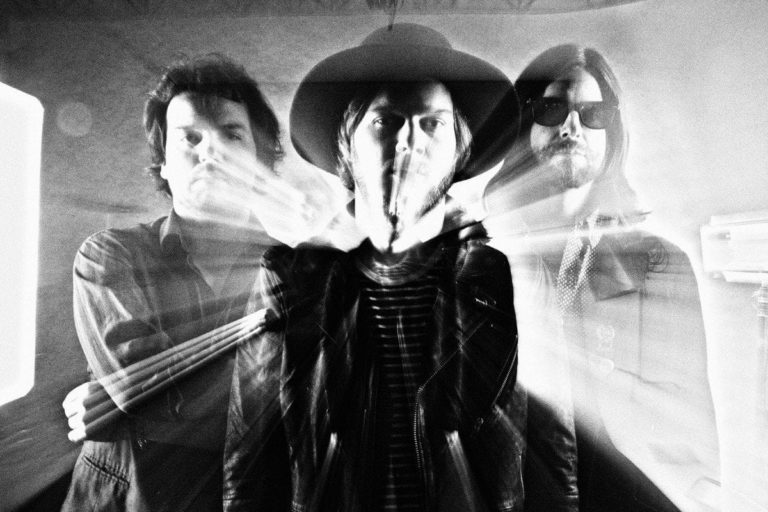


 Born Charles Edward Anderson Berry in St. Louis Missouri in 1926, Berry was the fourth of six children in a middle class family. He was interested in music and entertaining at a young age, and began performing as a teenager. It was about this time he also started his lifetime conflicts with authority, landing in a reformatory until his 21st birthday. In 1948 he married Themetta “Toddy” Suggs, and they had a daughter together in 1950. Berry began performing with local bands on the side of his day job to supplement his wages.
 Berry’s break came when he met Muddy Waters in Chicago in 1955. Waters connected Berry with Leonard Chess of