Some protest music speaks to specific events. Sometimes it commands specific actions. Other times it is a non-specified reaction. Woods’Love is Love is a reaction to the unexpected turn of events that flipped the United States on it’s head last November.
Recorded in the immediate months that followed, it is not overly negative, angry or sad. As the title clearly states, it is steeped in feelings of love. If you made a word cloud of the compiled lyrics of this six-song EP, ‘LOVE‘ would stand central, big and bold, eclipsing all others by a large margin. This is a record borne in protest, but one that exists to lift up and comfort. If the ‘Love Trumps Hate’ slogan needs a soundtrack, this is it.
Woods fans will find immediate comfort in the familiar psychedelic rock sounds with it’s signature mix of Ethiopian jazz influences as the band had built into their last standout record, City Sun Eater in the River of Light. Horns, psychedelic guitar, groovy bass and in-the-pocket rhythms wrap around each other to form a bond not easily broken throughout this tight 30+ minute set.
The record kicks off with positivity and warmth on the title track. It’s a song that instantaneously gets added to the Woods canon like it was there all along. “Bleeding Blue” sounds like the soundtrack to a Rocky montage, had Rocky been training in the streets of London while being chased by a throng of young screaming women. “Lost in a Crowd” brilliantly adds a sunny splash from the Caribbean to the already thick mix. Beginning with a din of digital crickets, “Spring is in the Air” builds to colorful and blooming horn blasts, but never quite explodes through to summer. Instead it falls quietly into “Hit That Drum.” The EP isn’t just oozing positivity, doubt and struggle do rear their ugly heads. But lead man Jeremy Earl more or less explains the main drive for the album in “Hit That Drum,” singing “Feeling dark / feeling down / I hit that drum / It takes me away.”
They end it with a return to the title track, and a question, “How can we love with this kind of hate?” And comes the answer: “Say that love is love.”
Key tracks: Bleeding Blue, Lost in a Crowd, Spring is in the Air
On All Points North, the new album from Albany jam-rockers Formula 5, ‘North’ is not a physical direction, but a mental state. North is up, and up is good.
And so we begin with a happy-go-lucky blast of B3 on album-opener “Come Along.” Even a dark turn toward a minor key on the following “Sad Bed” quickly escapes to a frenetic organ and guitar groove that mostly bobs and floats above the surface.
There are plenty of extended instrumental moments to satisfy fans of the band’s penchant for live improvisation. “Trout Waters Pt I & II” is a two-part instrumental that begins rocking in a Widespread Panic sort of way, climaxes midway with some surprisingly nifty guitar howls, then finishes off with a funk that attempts to match the Headhunters in it’s depth and length but perhaps wanders on too long. “Excalibur” twists and turns in almost disorienting fashion, but always settles back to North. The highlight of the instrumental gymnastics comes in “Q & A,” a near twelve minute multi-section workout that hits all the sweet spots. Early moments borrow elements from Frank Zappa and the Grateful Dead, piano and guitar intermingle in a light and airy mid-section before it all builds to a triumphant finish.
Though, the best moments on All Points North, Formula 5’s third studio recording, come in the shorter, song-centric tracks. In the jam band world, this is remarkable and refreshing. A sign of maturation and of great things to come for this young band. There’s the feel-good blues of “It Goes…” and the Southern-rock-meets-soul anthem “The Birch Tree.” Strongest of all is the slinky groover, “Do Tell.” Vocals, guitar, keys, horns and cymbal-washed rhythms softly smudge together eliciting the moment where an early morning Sesame Street montage and a late night smokey jazz lounge meet halfway at a time that is either too late or too early. The set finishes strongly with “Figure Out a Feeling,” which finds a happy medium between the band’s songwriting and desire to stretch the limits.
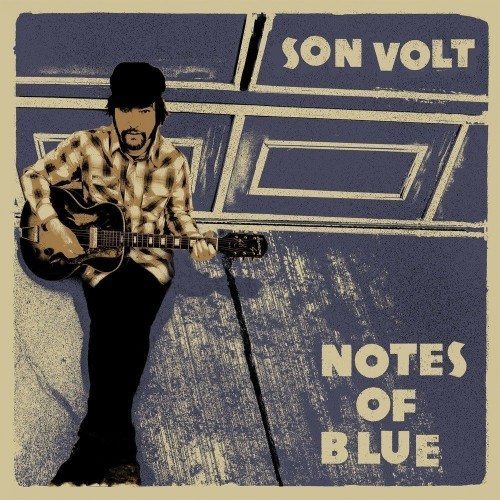
Back in 1994, alt-country pioneers Uncle Tupelo split in two seemingly equal parts. Both made critical hit debut albums, but one, the Jeff Tweedy-led Wilco, rode an ever increasing wave of success. The other, Jay Farrar’s Son Volt, has had a steadier, though less visible, run. Three decades later and both bands are still going strong down their own paths.
In February, Son Volt released their eighth album, and first in four years, titled Notes of Blue. Farrar could release a collection of rap or metal and it would still be recognizable as Son Volt. His voice is that much of a signature. In this case, the band washes his voice in the blues, as the album’s title would suggest.
The music is inspired by the blues stylings and specifically tunings of classic pickers Skip James and Mississippi Fred McDowell, from back when the blues and folk music were one and the same. He also mixes in the more recent sounds of English folky Nick Drake. Inspiration in the right hands doesn’t translate directly to “sounds like” though, and it certainly doesn’t here. Son Volt lends it’s own distinctive hand throughout, crunchy reverb guitar, just enough twang, straight up from-the-earth lyrics. But on Notes of Blue, Son Volt appears with more finger-picking, more slide and perhaps even darker themes.
Though it can get somewhat bogged down in monotonous earth tones at times, natural splashes of color bring the bluesy landscapes to life. The surprising reverb guitar thrashes in “Promise the World,” when Nick Drake’s influence comes to the fore in the lovely ballad “Cairo and Southern,” the pedal-to-the-metal opening of “Static,” the rough and tumble slide blues on “Sinking Down” … yeah, there’s enough color throughout.
At just 30 minutes, Notes of Blue is a quick but dense listen, with a lot of repeated listening value. Of playing the new material live, Farrar says, “It’s going to be an adventure.” He’s excited to take them on the road, but the different tunings will require some extra coordination, “We’re going to have some long talks, with charts about what guitars to use when,” New Yorkers get two chances to catch these original purveyors of alt-country sling their craft, first at Bowery Ballroom on April 7, and then at Rough Trade in Brooklyn on April 8.
Key tracks: Cairo and Southern, The Storm, Sinking Down
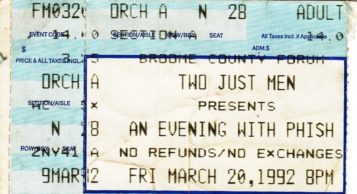
On a Friday night in late March of 1992, the 20th to be exact, everything changed. Phish had more or less hooked me the prior July and I had worn through my tapes of Junta and Lawn Boy and the handful of bootlegs I had acquired. The band’s major label debut on Elektra, A Picture of Nectar, had just been released in February and that ragtag collection of songs, new and old, was also quickly absorbed into my consciousness. After a couple of missed opportunities, I finally found myself at a real live Phish concert.
Back in those days, before the internet and instant satisfaction, there wasn’t much available to prepare for such an experience. No Phish.net. No YEMBlog. No YouTube videos. No LivePhish. No listening to the show from the night prior, week prior or many months prior. More or less, I was going in blind.
Nine month’s worth of anticipation and my excitement was bubbling over. Driving to the venue with my friend’s father, who was equally geeked, he was spouting off comparisons to Zappa (over my head) and telling of how he heard they jumped on trampolines in rhythm with music. Taking a pre-show bathroom break, I suddenly was peeing next to a few giggling hippie college girls. They were climbing in through the men’s bathroom window, sneaking into the show. This was an event, this was a happening and it seemed it wasn’t just me feeling it.
The band took the stage in darkness. They broke the silence with a pair of deep monotonous notes, repeated a few times. Then a creepy falsetto “Wiiiiiiiilson” rang out and white lights hit Trey and Mike’s faces from below against the dark background. It was like a scene out of Spinal Tap or reminiscent of “Bohemian Rhapsody.” Spooky, theatrical, campy. I knew of Wilson the character from other songs like “Lizards” and mentions of Gamehendge in APicture of Nectar‘s liner notes and elsewhere, but I had never heard or knew of the actual song “Wilson.” In this light, I was freaked out by this opening sequence. I didn’t know what the hell was going on, but I loved it.
My newb-iness would shine through repeatedly throughout the first set. Phish had just released Nectar, but it was a prolific period for them and they were already working out the material that would later become their next release, Rift. Though “Brother” wasn’t on Rift and it was heavy in the rotation dating back to the fall, it was new to me. Trey introduced it by making a joke about the orchestra pit in front of the stage. “This is the alligator moat up here, make sure you don’t fall into it.” Later they even changed the lyrics to “alligator pit.” None the wiser, I assumed the name of the song was “Alligator Pit,” a mistake that lived on months later when I acquired a recording of the show. I can still remember those tapes, with the deep red cover and Jim Pollock artwork, and the third song mislabeled as “Alligator Pit.” Later in the set, they would play the new song “Maze,” though I thought they were singing “living in outer space” and I can remember my friend and I dancing around the aisle singing along with the final chorus, “We’re living in outer space!” That was also mislabeled on my tape. Another new song, “Mound,” had bassist Mike Gordon purposefully goading the the crowd to clap along to it’s simplistic blues beat before mixing it up and leaving the crowd clapping instead on the off beat. Fooled again! After wild runs though complex and head-spinning material, when they landed on “Mound” I felt a bit of a relief with something a bit more straightforward. But that quickly went out the window when what I thought was a blues number turned into a zany, genre-less romp. It was like a “Mike’s Corner” column come to life.
The first set was stocked full of Phish’s signature intricate instrumental gymnastics with “Reba,” “Glide,” the newly minted “Rift,” “Fluffhead,” “Lizards” and the set-closing “Run Like an Antelope.” Each was executed flawlessly. These are my baselines – when they can’t dismount on those or their ilk, points are deducted. Second song into the show and I was presented with a top-notch “Reba.” My baseline “Reba.” If it isn’t at least as good as this one, it isn’t all that great. And this one was incredible. A jam I know so well I can sing along.
This whole show would serve as my Phish baseline. The versions of these songs would be what I would judge every subsequent version. The energy at this show was the energy upon which I would judge all others. This show, these versions and these memories hold up after countless listens 25 years and 100 shows later. It was a great show with unique touches throughout, setting a high bar to hurdle for future shows. It’s like eating your first barbecue at the Dinosaur BBQ, which I also did around this same time. While it isn’t necessarily the best, it sets an unusually high bar for the rest.
And the care free, off-the-wall energy exhibited at this show is also my baseline. Drummer Jon Fishman came out to play trombone during “Antelope” and played a bagpipe hooked up to a vacuum cleaner during a cover of Syd Barret’s “Terrapin.” Weird and wild! They ended the show with instructions for a secret language intent on confusing random concert-goers. What in the holy hell?! The language was prompted by musical signals. One of the signals was the theme song from my favorite TV show at the time, The Simpsons, and I was blown away. These guys like what I like! When you’re a sophomore in high school, that is the pinnacle of cool. Another signal had the entire crowd and band simultaneously falling to the ground. I didn’t realize you could smile and laugh so much and so heartily at a music show. These guys were crazy and played by their own rules. And I loved it!
After one near 90-minute set, I could have left and been completely satisfied. But it was only half over. And that second set started with “Mike’s Song.” It has been my favorite song to see live for as long as I can remember and I trace it, once again, back to this baseline show. To see “Mike’s” in those days was to see the perfect amalgamation of Phish’s energy, music and wackiness. On this night they opened with a hearty tease of Yes’ “Roundabout.” As an avid consumer of classic rock radio at the time, my heart almost stopped. Would they? They wouldn’t. But what they did do… oh boy. Here came those trampolines my friend’s father spoke of. The stage was filled amply with smoke. Strobe lights flashed revealing Mike and Trey’s bouncing shadows amidst the white-out. The smoke would engulf the first handful of rows at least and the pounding bass, swirling organ and powerful drumming were your only guides. Some fans these days clamor for the return of the so-called ‘second jam,’ but I would rather see the the return of tramps, smoke and strobe lights during “Mike’s Song”. Trey’s guitar solo was drenched in feedback, bringing the energy to a fever pitch. Heavy, dark and glorious. I think my eyes may have just glazed over. The rest of the set was a blur of more oddball, genre-jumping, rule-breaking signature Phish-iness. Trey was certainly the hero, even if it was Mike’s birthday. But it was a lot of high-pitched noodling to absorb in one night for this sixteen-year-old. By the time their blistering cover of “Fire” closed out the night, my head was spinning from all the guitar. I had had my fill and was ready to go. But the next morning, I was primed and ready to go again. Fortunately, it would be less than two months later that they’d be playing my hometown for show number two.
25 years and 100 shows later, here I am. The sheer volume of music introduced to me through this band, both directly and tangentially, be it Frank Zappa, bluegrass, jazz and so much more, makes this first show much more than just a first show, but a defining moment in a lifelong musical journey.
Set 1: Wilson > Reba, Brother[1], Glide > Rift, Fluffhead > Maze, The Lizards, Mound > Run Like an Antelope[2]
Set 2: Mike’s Song > I Am Hydrogen > Weekapaug Groove [3], Sanity[4], The Sloth, The Mango Song > Cavern, Uncle Pen, Harry Hood, Cold as Ice >Terrapin[5] > Cold as Ice, Possum > Secret Language Instructions[6] > Possum[7]
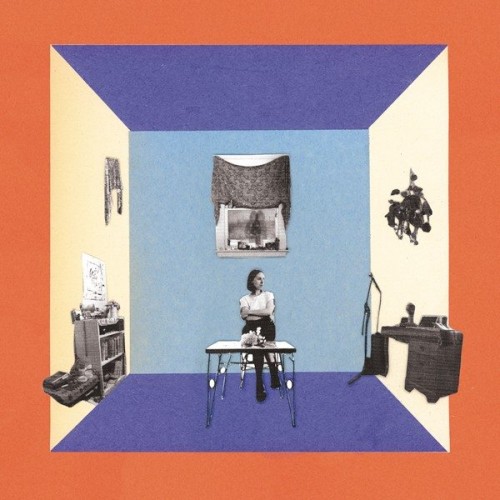
A persistent cold rain taps the window while the trees shake it off with the blowing breeze. But you sit comfortably warm in your living room. Feet warming by the fire. Belly warming by a glass of your favorite brown liquor. Ears and soul warming by the new Hand Habits’ album, Wildly Idle (Humbly Before the Void).
It fills the empty void of sound in the room pleasantly enough. As your mind grows heavy with thoughts of the day, it almost passes by without notice. Then it grabs you. Maybe it was the angelic harp-like strum from “Actress.” It could have been the softened “I Want You (She’s So Heavy)”-esque building progression of “In Between.” Or perhaps it was the gentle hook and groove in “All the While.” Regardless, it grabbed you, and trained your ears on the subtler moments.
The moments grow and feel more complex with each listen. The droning proggish guitar lead in “Book On How To Change” gets punctuated in the background with slashes of reverb-drenched guitar. “Nite Life,” a pleasant psychedelic groover, has layer upon layer of musical treasures floating just below the surface. The repetitive vocal close of “Demand It” is decorated with a swirling multi-part guitar jam.
Each moment on Wildly Idle (Humbly Before the Void) feels crafted to the nth degree, but remains simple, sparse and intimate. It makes sense then that multi-instrumentalist Meg Duffy is responsible for every bit of instrumentation and production. A native of the Albany area, she has been playing extensively with Mega Bog and Kevin Morby for the past few years. Now striking out on her own, Hand Habits becomes the latest branch on a Woodsist family tree that has been sprouting incredible talent at an impressive pace.
Key tracks: All The While, Book On How To Change, Nite Life
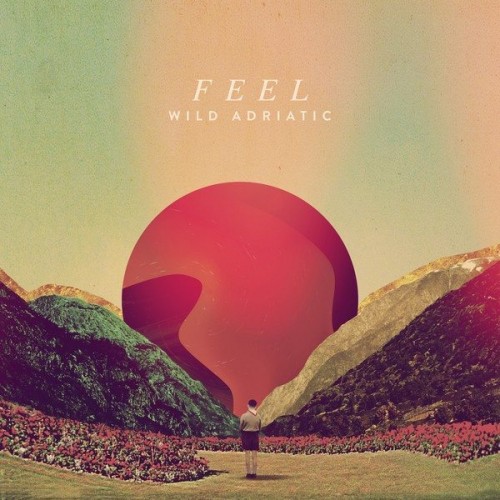
Saratoga Springs’ Wild Adriatic has logged a good deal of miles on their way to many well deserved accolades as a live act. On their latest LP, Feel, they looked to their touring experience both for inspiration and style. In a recording session in Austin, with Grammy-nominated producer Frenchie Smith, they kept it simple. They avoided production bells and whistles, opting for a more organic and in-the-moment sound. The songs themselves were born on the road as well, in various writing retreats around the country, from Wisconsin to Virginia to Texas.
But this journey begins in Appleton, Wisconsin, site of some of the band’s most memorable shows. The opening track, “Appleton,” starts things off with an unexpectedly funky nod to Sly and the Family Stone. They ease into their more muscular moments with the slinky and soulful “Runnin’ Thru” and the infectious and poppy “Come Back Baby,” where guitarist Travis Gray works a gorgeous falsetto backed by the West End Horns.
There’s no looking back from there. Fueled up, the trio – Gray, Rich Derbyshire on bass and Mateo Vosganian on drums – step on the gas, letting loose on their energetic and soulful rock engine. When all three cylinders are firing, Wild Adriatic commands attention.
“Same As It Ever Was” establishes their ability to elevate a simple blues into a grooving and fist-pumping rocker – a formula they find more success with on “Hurricane Woman” and “Some Nerve.” Thumping bass, rollicking drums, ripping guitar riffs are all tied together with Gray’s unmistakable voice.
“Blaze of Love” blends their knack for funky grooves, powerful beats and soaring leads perfectly. The album closes with “Busman’s Holiday,” a deep rocking blues number that calls to mind Led Zeppelin and the Black Keys. Gray repeatedly sings, “I’m going back on the road.” This excellent collection of songs is ready to go with them there. Back where they all began.
Key tracks: Blaze of Love, Same As It Ever Was, Come Back Baby
The red-bearded guitar slinger from Vermont, who cuts his teeth in the cozy confines of Nectar’s, reunited with his band to release a new record. Yes, after 12 years, the Seth Yacovone Band finally put music to tape and set it free for the world to hear this past December. The band, drummer Steve Hadeka and bass player Alex Budney, has been playing live again together for the past few years. But when his bandmates bought him studio time for his birthday, it was time for Yacovone to finally reenter the world of recorded music.
Yacovone picked the shovel up for Shovel Down, a workingman’s rock album that digs deep to satisfy all of your rock cravings. What your favorite track is will depend entirely on how you like your rock cooked.
If you like it grooving and jammy, you’ll dig album-opener “Playing Patterns.” Zappa fans will gravitate toward “Caveman Guerrilla,” where Yacovone delivers it’s off-the-wall lyrics like “I’ve got the wherewithall of a Neanderthal” with a Zappa-like cadence punctuated by angular guitar blasts. “Falling on Deaf Ears” will not fall quietly to those that enjoy their rock with a pulsating melodic blues and Gov’t Mule fans will find a lot to like in the power trio blues jam “A Question Mark to Answer.” For those that like to enjoy it with their head on a swivel and their devil fingers raised high, “The Snake” descends into the depths of metal, complete with speedy runs down the fretboard and slithering reptilian lyrics. “Mr. Reed” will appeal to anyone who wants their rock raw, anthemic and fist-pumping while “Open the Door” bookends the album with more of that groovy funk.
For those that just want to hear some quality guitar playing, Yacovone has sprinkled plenty throughout this near-50 minute set that showcases a band, while quiet in the recording world, has clearly been putting the work in on the live stage.
Key Tracks: Caveman Guerrilla, Falling on Deaf Ears, Mr. Reed
 Some protest music speaks to specific events. Sometimes it commands specific actions. Other times it is a non-specified reaction. Woods’ Love is Love is a reaction to the unexpected turn of events that flipped the United States on it’s head last November.
 On All Points North, the new album from
  Back in 1994, alt-country pioneers Uncle Tupelo split in two seemingly equal parts. Both made critical hit debut albums, but one, the
 My newb-iness would shine through repeatedly throughout the first set. Phish had just released Nectar, but it was a prolific period for them and they were already working out the material that would later become their next release, Rift. Though “Brother” wasn’t on Rift and it was heavy in the rotation dating back to the fall, it was new to me. Trey introduced it by making a joke about the orchestra pit in front of the stage. “This is the alligator moat up here, make sure you don’t fall into it.” Later they even changed the lyrics to “alligator pit.” None the wiser, I assumed the name of the song was “Alligator Pit,” a mistake that lived on months later when I acquired a recording of the show. I can still remember those tapes, with the deep red cover and Jim Pollock artwork, and the third song mislabeled as “Alligator Pit.” Later in the set, they would play the new song “Maze,” though I thought they were singing “living in outer space” and I can remember my friend and I dancing around the aisle singing along with the final chorus, “We’re living in outer space!” That was also mislabeled on my tape. Another new song, “Mound,” had bassist Mike Gordon purposefully goading the the crowd to clap along to it’s simplistic blues beat before mixing it up and leaving the crowd clapping instead on the off beat. Fooled again! After wild runs though complex and head-spinning material, when they landed on “Mound” I felt a bit of a relief with something a bit more straightforward. But that quickly went out the window when what I thought was a blues number turned into a zany, genre-less romp. It was like a
  This whole show would serve as my Phish baseline. The versions of these songs would be what I would judge every subsequent version. The energy at this show was the energy upon which I would judge all others. This show, these versions and these memories hold up after countless listens 25 years and 100 shows later. It was a great show with unique touches throughout, setting a high bar to hurdle for future shows. It’s like eating your first barbecue at the Dinosaur BBQ, which I also did around this same time. While it isn’t necessarily the best, it sets an unusually high bar for the rest.
 A persistent cold rain taps the window while the trees shake it off with the blowing breeze. But you sit comfortably warm in your living room. Feet warming by the fire. Belly warming by a glass of your favorite brown liquor. Ears and soul warming by the new Hand Habits’ album, Wildly Idle (Humbly Before the Void).
 Saratoga Springs’
  The red-bearded guitar slinger from Vermont, who cuts his teeth in the cozy confines of