All in all, it’s a wholesome, laid back and refreshingly straightforward collection. The album holds a psychedelic feel without bombarding listeners with abstract and unnatural sounds that tend to come with the genre, and not doing so takes a considerable amount of talent. It’s well produced, diverse and catchy – something the group harps on in their biographies.
Grand Gesture hails from Brooklyn and are best described as a combination of Talking Heads, Lou Reed, The Pixies, the Grateful Dead. They don’t copy the sound of these historical groups, but there are hints of their inspirations found throughout all of their tracks. They range from a fairly heavy rock drive to a plain and simple folk jam, and listeners might hope that they take a more aggressive route with their tone in any forthcoming album because tracks based off that formula leave more of an impact that their lighthearted tracks, if they were to ever drop another album. Examples of this style are found predominantly in “King of Cups.” One of the highlights is a dueling guitar breakdown that’s very Allman Brothers-like along with a funky and heavy guitar solo played through a fuzzy and distorted amps.
“Straw In My Sock” is another key track that had a more forceful tone which keeps listeners engaged. Their songs don’t rise and fall as much as other psychedelic rock songs do, so songs like “Wildflower” seem to drone on a bit. With the more intense tone, listeners feel more immersed into the music. This feeling could also only be only true when listening to the recording. They claim, “The band aims to write songs with pop song precision, yet they have a deep respect for improvisation so it’s not uncommon for the material to take on new directions in the live setting.”
“Hey Okay” has a cool ‘skipping’ feel to it with more of those dueling guitars everyone loved from the Allman Brothers. It’s funky and technically with great direction and precision. It’s a song that would be an absolutely blast to see live as there’s so many fantastic opportunities to vamp and mess around.
It is undoubtedly feel good music and would make a perfect fit for a live setting in an intimate bar or concert hall. The album is available on their website and Spotify and show no sign of any live performances this year, but will post upcoming events on their Facebook page.
Key tracks: King of Cups, Straw in My Sock, Hey Okay
It was an interesting night for all of those that attended the Fairfield Theater Company on March 23. Most guests were obvious die hard fans of the eclectic group. People of all different ages were dressed for the occasion, bobbed their heads to every song, mouthed out lyrics and moshed their way through the center of the floor. But those who were unaware of the strange nature of Fishbone, seemed to be unpleasantly surprised by the brash and outrageous group. Eight band members mobbed the stage, which was just a few too many for the venue to hold – there always seemed to be a competition between instruments and voices. It didn’t seem to bother those who were familiar with the music because they were recognizable inflections, but there were times when it was hard to make out the melody being sung from horn section, which made up a third of the band.
The group is known for their diverse musical styles and tones. They range from funky and technical ska, to bold and brash thrash. But different venues work well for different bands and genres. For example, seeing Metallica at the Blue Note wouldn’t be very fitting, nor would putting John Coltrane at Red Rocks. This is all an outsider’s point of view as well. Again, those die hard fans were having the time of their lives. But there were many out of place patrons (ones lacking leather clothing and chains) that left early or lost interest halfway through. Fishbone was undoubtedly very talented and professional and the venue has hosted some incredible shows that were perfect for it’s size, but they just didn’t have the space to let Fishbone loose. There were too many sounds and tones to be shoved through their PA system, which ranged from a theremin, to a fret-less acoustic bass guitar. It felt unintelligible at times, which was only true during the heavy parts.
It wasn’t all indeterminable noise. As stated before, Fishbone is well known for there buck-wild performance and expansive genre selection. They played a well-balanced setlist, oscillating from ska, to punk, hard rock and back over again, so it wasn’t a constant barrage of sound the entire night. Ska and reggae styled songs like “Unyielded Conditioning” were very well done. Each instrument could be heard clearly and it was enjoyable for everyone. But songs similar to “In The Cube” a ten minute hard rock/metal track about sitting on the toilet, were musically all over the place and contained too many tone variations for the sound system to handle, especially during the heavier parts.
Again, no one was at fault here. The Fairfield Theater Company is a fantastic venue with a huge stage, open area, and Fishbone and Rebuilder, the opening act, did their jobs and did them well. Rebuilder is a punk/ rock band out of Boston Massachusetts and gave 100 percent. Their sound was a little familiar, pulling out all the stops listeners would expect from a punk band. But it was reassuring to see that genre of music still thriving. Fishbone gave it their absolute all as well because this is the first time all of the original members have shared a stage for sometime. But somethings aren’t meant to go together. Like pineapple on pizza – great for some people, but just not a good mix for others. And when a band is trying to make a come back like they were, they need to appeal to as many people as possible, and a more intimate venue in central Fairfield was not the place to gain a larger audience.
This may seem like the interpretation of an older, less tolerant soul. But rest assured, loud and brash music is still fantastic to see live, but only in the proper setting. Fishbone is a group known specifically for their wild performances, but just be sure to see them in the right venue to give listener’s ears some space to enjoy the music instead of leaving them ringing.
It was an absolute honor and pleasure to see this iconic group of musicians Ladysmith Black Mambazo play such a humble venue as the Quick Center in Fairfield, CT. They were not only baffling to listen to, they were visually astounding. Dressed in brightly colored shirts, dark pants and white shoes, they danced around in unison and improvisationally in the most entertaining way. They were well rehearsed, full of energy and had a great sense of humor.
Those not familiar with the group might recognize them from the highly respected Paul Simon album, Graceland, among a plethora of other widely recognized artists. More info on the band can be found in an interview with NYS Music and one of the founding members, Albert Mazibuko. Listeners can appreciate the beauty of the music for themselves by finding their copious amount of music available for download on their website, iTunes and Spotify.
The group consisted of mostly replacement members and only two members that were with the original group. Taking the place of founding member Joseph Shabalala, were his two sons, Thamsanqa Shabalala and Sibongiseni Shabalala, who were a perfect fit for the group as it moved into it’s sixth decade. Other members included close and extended family, all of whom did an immaculate job.
Unfortunately, Ladysmith already made their rounds through New York and Connecticut, but they are always touring and will undoubtedly run through the tri-state area again soon.
Their music wasn’t really the most fascinating part of the show, though. Although it was more than impressive, their presence and personalities made it the extravagant performance that it was. At first, it was almost uncanny how close they sounded to their studio recordings. But what was more astounding was they didn’t need to listen to the key of the song they were going to sing. They just dove right into it and all nine of them were all in sync and on the same key. It goes to show how well rehearsed and passionate they are about about their music as well as what it represents. Some amount of improvisation was used in terms of their singing and dances. The rest of the group would vamp over the chorus while members would take turns stepping forward to center stage and show off some moves. They would perform both native dances as well as some modern and comical moves coming from the younger members.
They mostly performed songs from their most recent album, Walking In the Footsteps of Our Fathers which they described as a celebration of the group’s past present and future. They said it is a way for the future group to honor the paved path made by their predecessors. They featured many of their own popular recordings like “Awu Wemadoda, “King of Kings” and “Long Walk to Freedom” as well as some of their most popular songs like “Homeless, and the intro to “Diamonds In the Soles of Her Shoes,” both of which were written alongside Paul Simon. Preceding the songs, members would tell a quick story or explanation behind the creative process and meaning of the songs. These stories clearly gave the audience a better understanding of the songs as well as the visuals performed by all members. The show was stimulating to almost all of the sense and is definitely something everyone should experience in their lifetime.
The Albany based trio Lord Electro has made an epic sound for such a humble group, their debut album Business is highly synthetic, immersive and overall impressive. This is the first full length album for the group and they’ve done a immaculate job. The production quality is top notch, their performance is tight and it will leave listeners with a few pleasant ear-worms. They’re playing all over the tri-state area, mainly focused in New York, as well as an album release show on Friday, March 10 at The Hollow in Albany, NY.
They’ve played with big names like The New Deal, Soule Monde (Ft. members of TAB), Roots of Creation, Conehead Buddha and have been influenced by groups like The Disco Biscuits, Lotus, Phish, NERVE and STS9. They haven’t reinvented the livetronic style, but they have created a great album to add to the library of livetronica lovers. The group consists of Dan Gerken on Synth, Steve Mink on bass and synth and Jordan LeFluer drums.
The title track “Business” is first up and it’s a little generic to start, but as the saying goes, ‘If it ain’t broke, don’t fix it.” It builds nicely through a variety of unique tones from Gerken and is very spacious and trance-like with mild peaks and drops. The direction isn’t very surprising but it will definitely get people moving in a live setting. Vocal hooks will have listeners humming the tune for days making this a key track. Again, it’s easy to forget that only three men are creating this music, through the help of loops and drum tracks of course, but it is still impressive nonetheless.
“Spiral” is truly encapsulating, partly because of the instrumental track, but also because of the thought that went into the vocals. Again, Gerken’s voice is sultry and spot on, harmonized at some points and thoroughly impressive. That voice laid over a never-stopping beat is a really nice touch considering it’s an overlooked aspect of livetronica.
“The Slumber” is another track that incorporates that fantastic voice from Gerken. That, on top of a darker take on a trance tone makes for an excellent song. The verses aren’t the most incredible pieces of music ever created, but the chorus is astounding. The lyrics, “Too much, too fast” will be ringing out in the heads of listeners as well as this washy, never ending riff that leaves listeners feeling trapped in a whirlpool of sound.
Towards the end, “Reflections” comes in a little slow to start, but pulls through in the end in the best possible way. LeFluer stays consistent the whole way through, Mink lays down a fantastic, highly addictive, but slightly repetitive groove and Greken digresses from a peppy and tight synth run to an intense, falling lick that gives a nice contrast of light and dark tones.
Overall, this album won’t revolutionize the livetronica genre, but it is well thought out, well produced and will be an absolute blast to see performed live. Lord Electro perform later this month at Dino BBQ in Troy NY, March 24, The Monopole in Plattsburgh NY March 25 and several other New York based shows mid March through late April. Tour dates are on their Facebook page as well as hard copies of their CD for purchase and digital downloads available on iTunes.
NYS Music had the honor and pleasure of speaking with Albert Mazibuko, an original member of Ladysmith Black Mambazo, the a cappella revolutionaries from South Africa. They gained global recognition from their collaboration with Paul Simon on his album Graceland and their careers have skyrocketed since. They worked with a variety of widely recognized artists from Dolly Parton to Sarah McLachlan and released a plethora of albums over the course of 50 years. Tickets are now on sale to see the group perform at the Fairfield University Quick Center in Connecticut, Sunday, March 12 at 7:00 p.m. Mazibuko tells NYS Music about their humble beginnings, stories of their time with Paul Simon and more information about their upcoming performance.
David Ostroff: When was the last time Ladysmith Black Mambazo came to Connecticut?
Albert Mazibuko: I cannot be specific, but it was maybe a year or two years ago. I cannot tell because we are always around the country
DO: That’s not surprising. Ladysmith has been performing constantly for years now. That being said, how do you and your team keep up your enthusiasm after 40 plus years of recording and performing?
AM: The music itself gives the energy that we need. Sometimes, I’m feeling tired before the show. But then we get together and we pray. After that we start a song to warm up ourselves and then the energy just comes. Before I hit the stage, I am a new person.
DO: I have to ask. I did some research and saw that in South Africa, before you came to the states, Ladysmith would perform in a cappella competitions. But you guys were so good that they wouldn’t let you compete. How did that happen?
AM: Wow, that is a good refresher! I’ll never forget that day. We were finally allowed to enter the competition (because their music was a different style than other groups). After we sang, the judges and audience stood up, and the other groups said, “You already won!” They decided the music was too good to entertain, so what (we) would do is sing from 8 to 12, and then after, the other groups will compete. We couldn’t believe it happened. We really missed the competition. But not anymore, after our success in our group.
DO: What were some of your best memories when working with Paul Simon?
AM: When we first received the message that Paul Simon was in Johannesburg to met Joseph Shabalala, we wondered why he would want to meet (Joseph)? We first thought it was someone who would sing American gospel, which is similar to our music. But when we heard it was Paul Simon, because we knew his music, it would play all over radio’s in South Africa, we said, “How?? Why does he want to meet him?” When Joseph went there, I remember he went there in the morning because we were around in Johannesburg on tour so he went to meet him in the studio and Joseph came back in the afternoon. We asked him what Paul said, Joseph said, “He is a man of music. He wants to do something with us.” So the concern was more than before. In two weeks time, he sent us a letter with a demo (of the track “Homeless”). Along with it came a piece of paper in Paul’s handwriting that said, “Dear Joseph, Don’t change this because I took it from one of your recordings.” Paul only sang two lines by himself which were “Homeless, homeless.” (The chorus) This was the right time to write the music because this would go with the situation in South Africa. Violence was all over the place. We then received a message that we had to go to London to meet with Paul. We went as a group and we were so excited. We stood behind the microphones, and Joseph told Paul we had been trying to work on the song. We tried to record the song on the first day and it did not work at all. It was so much different with all the people trying to help and the song was not getting together. We were in the studio at two in the afternoon, and by six in the evening, Paul said let’s all go back to the hotel. We were very disappointed because Ladysmith Black Mambazo would usually record up to 12 songs a day. We practiced until midnight. The following day, we went into the studio. Joseph told Paul that that we had been rehearsing and to take a listen to this one. We sang the whole song, someone said, “This is it,” and in two hours we knew the song was there.
DO: Well it must have been worth putting that effort into that song, though. It’s absolutely beautiful.
AM: It was like a nightmare to us! One song for three, four hours? But we understood that it was something else that was introduced to us. I appreciate that because, after that, everything was so much better for the group.
DO: I didn’t know much about your music aside from your work with Paul Simon and most of my generation have limited knowledge of Ladysmith Black Mambazo as well. What else would people my age recognize Mambazo from?
AM: We have worked with a song on Michael Jackson’s “Moonwalker” and we collaborated with artists like Dolly Parton, Stevie Wonder and Ben Harper. There were so many others. Sesame Street (“Put Down the Duckie”) was a very famous one, The Lion King (“Upendi” from The Lion King 2) and the track for Eddie Murphy in “Coming to America” (“Mbube”).
DO: Aside from your generation, Americans most likely remember Ladysmith from their intro in Paul Simon’s “Diamond on the Soles of Her Shoes.” What is the rough translation of that intro in English?
AM: That one happened in the way that we used to do things. One day we came to New York to perform on Saturday Night Live. (The day before SNL) Paul Simon was recording and he said, “You can come in.” When we went in we found he was working on this song, “Diamonds on the Soles of Her Shoes” and he said to Joseph, “Just give me some blessings in my song.” We listened and said, oh this song is complete. But Paul Simon insisted that we do something. Joseph just took a piece of paper and a pen and wrote it down. It translates to, “It’s unusual, the girls, they take care of themselves so they don’t depend on a man.” He was responding to the song about this girl who is rich. The girls have their own money so they take care of themselves. We recorded that on the last day, and it took not even 30 minutes. To tell you the truth, this is a song that after I heard it for the first time I thought, “Oh it’s one of those song where you said, ‘Okay I need 12 songs, so I’m going to put something that makes number 12’”. But I was mistaken, because after I played it the third time I realized, this song is good!
DO: One more question before we move to your performance in Fairfield. Your group has been recording and performing for more than half a century now. Many bands and musicians that stay together for even half that time were doomed to have conflict, like Simon and Garfunkel. How did you and your group keep such good ties with one another?
AM: I think something is helping us. You see groups all over the world that have been together for two or three years and then they go separate ways which is sad, most of the time. But in ours, we are fortunate that we are all family. In our culture, the family will stick together, no matter what. And also, our culture tells us that the person who is in charge of the family is a leader of that group. We are bound to listen to that person and respect that person and also respect one another. We believe that (Ladysmith Black Mambazo) is a family and if I have a different opinion than my brother, or whomever, I represent that in a respectful way. So even if we have some disagreement in the group, we always tell it with respect. It helps us a lot because I can tell you the truth that we’ve never had something like a fight between us. We do have different opinions sometimes when we talk about things. But we find a solution and a common ground. If my way works, I will never say, “What did I tell you? Your idea was useless.” No you don’t say that. In our group, we will always find a way to agree with one another.
DO: On behalf of all people that love your music, thank you for thinking in such a way and staying together for as long as you have. Your contribution to American music was immense. Let’s move on to your performance at the Quick Theater. What kind of audience usually attends your shows?
AM: It’s amazing that we see all ages. All people. Older people up to the toddlers. All the nations and the colors enjoy our music. Joseph used to say, “Our music, it’s coming from the blood to the blood.” So everyone creature who is a human being in this world can relate to our music because we speak to the soul of the people. When I look to our audience, every time I will see a 90-year-old and then I see the toddlers, maybe three years, which we are so grateful for that.
DO: In a few of your albums and performances I hear some light instrumentation. Will we see a strictly a cappella or will there be a band accompanying you?
AM: No it will just Mambazo. When you get into the theater you will see 10 microphones lining up on the stage. You will see 10 guys, they walk to the stage with colorful clothes, white shoes and the song will begin. Some parts we will include the audience and so we engage them. We give them something and then we sing so it’s like a competition then after that we come together and we sing. It’s a very good lineup. It’s songs that are entertaining and uplifting. They are more encouraging with a positive message, especially in this time. It seems that this beloved country is in a conflict. We choose very specific songs for that. The songs that we sang for South African people, it helps them and encourages them. They were able to solve their problems. Hopefully the message is going to be held in America so it can open into its beauty again. Our music is about love, peace and harmony. We want people to take peace and feel that harmony. By doing that, we will make this world we’re living in a beautiful place to live
Everyone needs some feel good dance music in their life and mainstream pop doesn’t always tickle the fancy of listeners. Crystal Fighters found a way to create a cultured, unique and all around fun album to enjoy, with past albums like Cave Rave and Star of Love inspiring some good feelings. A majority of their songs were uplifting but some had a darker, more intense feeling to them. Their new album, Everything is My Family, is a bit contrary to their prior work. It has a more straightforward structure to it and many characteristics of today’s pop songs. But the groups Bosque roots and use of organic instruments from that area of Spain sets this apart from mainstream pop songs and it makes for an interesting and different take on the genre.
The sound isn’t the only thing that’s interesting; The story behind the group’s beginnings is almost too good to be true. Group vocalist, Laure Stockley, found her deceased grandfather’s unfinished opera that he started in his last days when he was deemed insane, according to The Guardian.Earlier albums were created in an attempt to finish and recreate some parts of the unfinished play, but that vibe and character they have created has taken on a life of it’s own which now isn’t so dark and insane. It’s more uplifting and motivational and heavily based around partying and having a good time.
Some people might think the lyrics a little corny, but deep lyrical content was never the focal point of pop/dance music. Looking past that, listeners will find the group has a great story and inspiration behind it, along with a tasteful twist on a tired out genre.
“Yellow Sun” is up first and it could be seen as background music for a Corona commercial, where “twentysomething’s” dance around a makeshift bonfire under a moonlit sky. There’s a fair amount of acoustic instrumentation with hints of synthetic sounds and it makes for a good segue into the moral/ direction of the album. The following track “Good Girls” has the same feel but includes more of a synthetic sound. They’re both key tracks that prepare listeners for Crystal Fighters’ change of pace.
“Live For You” is the only ballad on the album. It’s a spacey and euphoric tune that’s synthetically driven but includes a plethora of unique but pleasant tones that make it intriguing and immersive. Vocalists whisper lyrics through a slightly auto-tuned tone but it’s sung over acoustic drums and acoustic guitar which gives a cool contrast.
“Ways I Can’t Tell” is one of their less impressive songs. It was definitely created for the rave scene. It’s very predictable and has no other purpose but as a build of for a drop. The drop isn’t really that special either, but it’ll make a nice addition to a dance/ pop playlist for die hard fans of the genre.
“All Night” is going to be hit or miss with listeners too. It’s very tribal with light touches of synthetic instrumentation but it’s very busy and polyrhythmic, meaning there’s a number of conflicting rhythms and percussion instruments. It’s what gives music that primitive or tribal sound. Fighters uses it a lot in this album but it’s very prominent in this track.
“Fly East” is one of the most interesting songs on the album. It builds in the strangest way and at first listen is completely unpredictable. It’s the longest track on the album and it needs to be because it’s always changing direction and tone. It’s light and dark, excitable then settled and is over all just epic. The end of the song is unfortunately a let down. There’s so much time spent building up this feeling with different directions, and it lazily concludes with a fade out. At the same time, it’s hard to imagine what would be the perfect ending for the song would be.
“Lay Low” caps off the album with a natural and uplifting tone. It consists of almost all acoustic instruments and holds a powerful message about living life to the fullest while it’s still good. The music isn’t very complex so listeners can focus on the meaningful lyrical content a little bit more. The music is still catchy and fun and it makes a perfect ending to an inspiring album.
The album is available on multiple platforms and are coming to Brooklyn’s Music Hall of Williamsburg April 5 and 6.
It’s hard to be so humble and mature when talent comes so naturally to someone, but Bobby Paltauf proved in an interview it’s possible, as he is undoubtedly one of the most professional and grounded young musicians out there.
He’s coming to the Fairfield Theater Company‘s secondary venue, Stage One, on Saturday, March 11 and NYS Music revealed some information about the show and how he got started. Paltauf also talks about a pre-show fundraiser with organizations like Horns For Kids, along side Rock Cottage Studio as well as how a portion of the ticket sales going to Zach Staden, a man who requires stem cell therapy for a spinal chord injury.
Dave Ostroff: What age did you pick up the guitar?
Bobby Paltauf: Around 7, I’ve been playing for about 10 years now. Started right on a Strat too, it’s a huge guitar. My dad used to play a lot and he had an acoustic and Strat and I dove right into those.
DO: Did your dad tempt you to play?
BP: It was always more of my doing. My dad always played great music. When I was a kid we would just rock out to Led Zeppelin. He played one Zeppelin song and it just intrigued me. I picked up his guitar one day and I tried to learn it.
DO: Did you ever get stumped and need that extra push to keep learning?
BP: Definitely. It was hard especially when you have those baby fingers. There were songs that I wanted to learn, a lot of Led Zeppelin stuff. It was about a year, year and a half where I was kind of getting it… and then it just clicked.
DO: When did you get together with the people you put the album out with?
BP: 2013. I started going to BRYAC. They had a funk night and there, someone told me about this bass player and drummer and we met in their basement and we just clicked right away. We added a keyboard player that we knew and then we put together that record.
DO: You guys sound fantastic. One of my favorites is Atmosphere. Talk us through the creative process of that song.
BP: When I first met with the drummer Kaitlyn, and the bass player Miles, we jammed on a funk tune and directly after, Miles started playing some diminished line, and we wrote the tune right there on the spot. It was the first or second time we met. We molded it out every night that we were on tour and it just came to be the song.
DO: What would you define the album is in terms of genre?
BP: A lot of it is instrumental, it’s funky with a little bit of jazz influence, so I would just call it a funk rock album.
DO: A lot of the music, as you said is instrumental, but in some songs you sing. Did you want to stay more instrumental because that’s your strong suit?
BP: At the time we put out the record I was only 14 and at the point your voice is changing every couple of months. At that point my voice wasn’t my strong suit and I was more engulfed in the guitar, so I just wanted to make that album based around instrumental stuff. I wanted to let my voice develop more. That’s actually what I’ve been doing for the past year/ two years now is writing lyrical based music. The next record is going to be a complete twist, all lyrical stuff.
DO: Led Zeppelin was your muse for your guitar work. Do you pull any inspiration from famous vocalists?
BP: Back then I was focused on guitarists. But in the past couple years I’ve been getting into folk singers like Bob Dylan. I like his less technical approach, just singing from your soul. I’ve been working on my own, which will be on the new album.
DO: Is there an expected date for the album drop?
BP: Mostly likely early May.
DO: Compared to Lost and Found, are we going to see a similar genre? Striving for something new?
BP: I’m definitely going to go for more of a rock and roll feel, going back to the music I really fell in love with years ago. It’ll definitely be more rock based, there will be tracks that go off a little bit and jam with a little bit of funk thrown in. Also some more lyrically developed idea.
DO: You’re show at the FTC is coming up in March, are we going to see anything from the new album?
BP: We’re actually going to play the entire new album. We might throw in some stuff from lost and found, but it’ll almost all be new stuff.
DO: You got to sit in with Buddy Guy among other famous musicians. How did you get that gig and what was it like?
BP: I played with him at the Ridgefield playhouse and my aunt who works there set me up with him. I didn’t really know who he was. I was more into the rock stuff, but I started to check him out and thought, “I need to see this guy he’s a legend!” She ended up getting me to meet him before the show, he had me play a little bit in front of him, he said, “Stand over here by the side stage and I’ll call you up for a song. It was just so incredible and surreal.
DO: Was that the most memorable sit in with an artist?
BP: Buddy Guy was probably the big one. The other one at Catskill Chill when I sat in for The Meters with Paige from Phish. That one was incredible. I was around 14 for that one. I happened to be a in a Meters phase too. It was incredible to play with George and Leo.
DO: Did any of these big names say or do anything that will stick with you for the years to come?
BP: I’ve seen Buddy Guy so many times after that. You see he brings so much energy to the shows. It shows that it’s all about the music, but you need to keep people engaged, especially nowadays. The Meters show was a fun jam for jam lovers, but the Buddy Guy one stuck with me. You need to keep the crowd engaged. He walks around the stage, into the crowd and up into the balcony. He has a lot of fun with it.
DO: You’re playing with Grayson Hughs at the FTC, have you talked to him? Know him at all?
BP: I’m actually in his band too. He called me up a few years ago, I had no idea who he was. He got my number from a girl in my school who was family friends with him. He’s this legendary soul singer from the 80’s who fell out but is making a come back with a few albums. He happens to be from Danbury and he tried to put together a band, he found me, a drummer and bass player and we’ve been rehearsing for about a year and a half. We thought about the idea of merging the two bands at a bigger venue- Stage One in Fairfield.
DO: So your group is going to open first, and then you’ll combine together for the second set?
BP: We’ll do a little over an hour and then change over and he’ll do about 90 minutes with us.
DO: Do you guys plan on heading over to NYC anytime soon?
BP: We plan on doing a bigger run when the album drops. We loved playing New York City, and hopefully try to get a nice run together for the early summer.
DO: Any other info regarding your upcoming FTC show?
BP: Before the show we are going to have a bunch of local organizations and causes setup in the art gallery at FTC StageOne to promote what they do and to raise donations. There will be a table for Zach Standen setup where they will be collecting donations for medical funds, stem cell therapy, and more (as well as a portion of the ticket proceeds will be also going to him). Rock Cottage Studio will have a setup to spread Horns For Kids, which gives instruments to underprivileged kids who can’t afford them. There will be many other things set up at doors before the show and we will also have merch and cd’s.
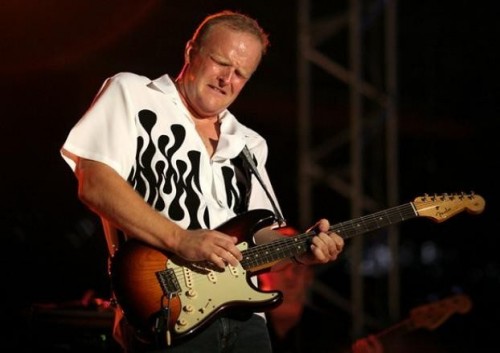
The best performances of the blues will always be in an intimate venue. Singing the blues, contrary to it’s name, is about having fun and make the best of sticky situations. Lyrically, artists talk about woes, troubles and sorrows, but the instrumentals are mostly uplifting and emotional. And when musicians can belt out these feelings to a smaller audience, it feels like a conversation with good friends. Granted, seeing B.B. King play a 10,000 person venue would be a once in a lifetime experience, but it doesn’t compare to paying 20 bucks to sit 20 feet away from a few talented musicians playing some of the most important and influential musical styles ever created. Stage One at the Fairfield Theater Company in Connecticut is just the place to hold concerts like this and fit the bill perfectly for the Albert Cummings band.
The best way to describe Cummings is a mix between Vaughan and Hendrix. They had the power and modern blues sound of Stevie but with the musical and visual flair of Hendrix. Their recordings are immaculate and unique but seeing them perform live gave their music a bit more magic. They were well rehearsed, energetic, relentless and without these characteristics the show would not have been the same. Causal listeners of the blues may have a notion that blues music is slow or depressing, but it’s not all like that. The patterns were the same, they mostly stuck with a 12 bar blues sound, but managed to make each one interesting and unpredictable.
There weren’t too many theatrics to the show, but just enough to keep things visually interesting. Stage One just isn’t that type of venue. The light work was mild, no spotlights or grand entrances. Most of the pizzazz came from a very animated drummer and from Cummings himself, who did everything Jimi would have done on stage just short of playing the guitar with his teeth. He would dance around the stage during his solos, swing his arms around and even bowed the neck of his guitar against his mic stand.
They warmed up with a few of their own compositions like “The Blues Makes Me Feel So Good” which all had a very aggressive attitude and high energy. Drummer Warren Grant gave the performance the energy it needed to keep people energized and interested. Without Grant, the show would have had a completely different attitude. He was a fun character to watch when he got his turn to flaunt during drum fills and the crowd loved it. His aggression is what gave the Stevie Ray vibe to it with his brash but precise style. Bassist Scott Spray gave the low end of the sound a great character as well. He was able to hold the beat and groove effortlessly while still having his own fun.
The crowd of 60-70 people immediately felt a connection with the band and began shouting out requests and telling Cummings where they came from and how much they love him. The worked their way through the set to a classic B.B. King tune “Three o’clock Blues” to which the crowd reacted very positively too. One woman almost stopped the performance as she screamed out, “getting wetter over here!” The look on Cummings’ face was absolutely priceless.
One 12 bar blues song after another can get a little monotonous so they were sure to throw in some good old American rock. A steady drum chop from Grant gave the songs a powerful feel, Spray laid low and let Cummings have his fun with his wide array of floor pedal that gave his guitar a nice variety of voices to choose from. He stuck to a few covers including “Hoochie Coochie Man” among others which got a rise out of the crowd. Unfortunately, it was hard to differentiate what was a cover and what was an original recording because there was no set list. When asked what Cummings played that night, he replied, “I have no idea what I played. I don’t use a set list.” That’s not what’s important, though. The groups attitude and good spirits made for a fantastic show that left the crowd on their feet cheering for an encore.
Sadly, Cummings won’t spend anymore time in New England and is headed south to finish his tour, but he has a plethora of music to enjoy on multiple platforms including iTunes, Spotify, Soundcloud and physical CD’s available for purchase on his website.
At long last, some honest indie rock rolls around and it comes from the great white north, of all places. Laughed the Boy‘s style is guitar driven, easy to enjoy and edgy. They’ve had some time to nail their sound so it’s very refined and professional. That, coupled with the production quality makes this a record that will definitely yield some recognition.
Most of their music was created by singer, guitarist and bassist Chris Panacci and were brought to fruition with help from his brother Sean who plays drums on the recordings. Their goal, according to a press release, was to create “honest and unpretentious 90’s nostalgia inspired songs,” and it’s safe to say that’s a mission accomplished. The brothers recorded a few albums together and soon after brought bassist Brennan Hrehoruk on board so they could perform their creations live. During rehearsals, they created several new songs that will be released as a full album on February 10.
There’s a few key tracks that listeners should look into that will quickly help them decide if this is their cup of tea, and “Autumn” is the best place to start. The tone is fairly melancholy, with chord progressions that don’t seem to flow together nicely, but somehow work perfectly. It’s a bit like anti-pop (pop meaning popular music in general) but their sound is natural and doesn’t come across as ostentatious. Instead, listeners get the sense that the songs are inspired and genuine. In other words, it doesn’t feel like they listened to a four chord pop/rock song and say, “let’s do the opposite of that.”
They created something that comes across as a real expression of themselves. “Autumn” is definitely the least aggressive track and is more dainty with most of the attitude coming from a lightly distorted guitar solo found at the tail end of the song. Laughed the Boy’s music is very reminiscent of the Pixies’ “Where Is My Mind” but a little more brushed up and refined. This is definitely true when compared to “Bell Rock” and “I Sold Out For This.”
Another key track is “Warm Hands Cold Feat.” It sounds very much like Ben Folds without the piano, which isn’t a bad sound for them, but it most likely won’t be a direction they will go with on future records. It’s a little too airy and lighthearted for them, but it’s definitely one that people will enjoy. It’s a nice segue into the realm of indie/punk/rock because it can be very hit or miss with listeners. Many of their other songs sound pretty similar, like “Double Down” and “Trip Down the Gold Mine.” They’re well done, but the works mentioned before are definitely ones to be looked into first.
This is a great album for those interested in delving into the world of indie rock. The name of the genre brings to mind a sound of angst and pretentiousness which can push people away, but if listeners dig deep enough they can find groups like Laughed the Boy that create quality work that’s fun and addictive.
The album drops Friday, February 10th. Listeners can find singles from the new album on their Soundcloud account.
Key Tracks: Autumn, Bell Rock, I Sold Out For This, Warm Hands Cold Feat
Andy Suzuki & The Method (Kozza Babumba) are on the verge of releasing something incredible. It’s called The Glass Hour and it’s going to get them the recognition they deserve. Their past work, unfortunately, blended in among other folk-rock/pop bands, but they have taken a new direction that will definitely make waves in the New York music scene and it’s only a matter of time before they reach national recognition. They’re slowly finding their niche, now focused around future-pop with heavy R&B and soul touches, garnished with rock undertones. There are a wide variety of tones and attitudes and one could imagine these songs fitting seamlessly in between today’s popular music radio stations.
The Brooklyn based bunch have known each other for some time and have been producing music for about 10 years now. They first met in college and knew that they would fit together perfectly musically. Their unique backgrounds made them gravitate towards each other with Suzuki, being half Jewish and half Japanese, practicing music in both languages, and Kozza, being the son of Grammy-winning percussionist Babatunde Olatunji.They teamed up, created three albums and on February 3rd they will release their fourth one which is arguably their best work.
Their prior album, Born Out of Mischief, is very heavy on the folk/country side and it slipped under the radar. It was creative, well thought out and well produced. It showed that they knew what they were doing and could work their way around a studio and recording process. It was great work but it just wasn’t special and wasn’t worthy of great recognition. Going above and beyond, trying new techniques and combining sounds that have not been fused together before is what gets the name out there. Mischief didn’t do the trick, but The Glass Hour sure will.
The album starts off with “Run Away” and the attitude and tone is such an incredible change compared to Mischief. It’s a giant leap towards today’s pop music direction. The Method, who will be referred to as Babumba, has a keen ear for an addictive beat. That, paired to Suzuki’s sultry voice, is the perfect recipe for a not too distant future-pop sound that feels familiar but has enough flare to keep things interesting and unique. This track is a softer entry into the album but things get even more interesting as it goes along.
“I Can’t Live” is one of the singles they released and it’s one of which they seem to be particularly proud. They say it’s one of the tracks that sounds like a cross between Jack Garratt and Michael Jackson. That’s a bold statement, but it’s arguably true. The song is more impressive because of its properly balanced mix of pop and rock. Both clean and distorted guitar sounds ring throughout the entire song which gives the heavy pop beats and licks a nice flare.
“Shelter” is definitely a notable track because of it’s heavy R&B and gospel influences which makes for a very emotional song. It seems that it’s about trying to convince a girl that he will take care of and “shelter” her, which is very R&B-like lyrical content. One of the best phrases of the song is when it climaxes and they bring in a beautiful gospel/church-like chorus line and it can send chills up and down the spine of listeners.
“Fire” is more typical pop, filled with tribal drum beats and plenty of vocalization. It brings to mind a movie montage of a group of friends on their way across country via a VW Microbus. It’s well made, but lacks direction. It’s very predictable and can be uneventful to those who don’t enjoy this type of sound.
Once listeners hit “I Need You More” they’ll see that he group is still in experimental phase as they toy around with a very 90’s pop sound. The tone stems from the beat mainly with it’s peppy and upbeat grooves and recognizable synthetic snare hits. They again combine this sound with a gospel chorus line that adds a nice flavor to an old sound. And it works pretty well, but more than likely for a small demographic. But society is full of surprises and may eat this stuff up.
“Come Forward” is very well done and has one of the most aggressive attitudes on the record. It carries a primarily minor tonality all the way through and it makes for a very unique track. Once again, Babumba creates a very cerebral and intriguing series of beats. It’s very busy and complicated but listeners can still feel the beat and that’s not something that’s easily accomplished.
“Overtime” will definitely be a crowd pleaser. It was another one of the singles they released so it’s obvious they’re very confident about it. The chorus is so well done and it’s hard to explain why, but Suzuki hits a perfect series of notes over a super smooth, laid back and spacey beat. Again, a bluesy and distorted guitar solo makes a for a fantastic and addicting climax.
If listeners weren’t perplexed by the album’s diversity by this point, then they will be by the time they hear “Digging My Way Out.” It almost sounds like a modern chain gang song. It’s march with a “four on the floor” beat with a jingling tambourine on the upbeat to give it an authentic chain gang song feel. Once again, their guitarist absolutely crushes the solos and adds a fantastic emotional flavor to the song that separates it from other genres and bands alike.
The album is highly experimental, but it seems that there is one central theme among all the songs and that’s the intricacies of the music and how they propel the songs forward. Suzuki’s voice is immaculate, there’s no argument, but a lot of the focus is directed towards how addictive the song is musically. Hopefully, they will stay with their influences of R&B and rock because these flavors obviously work with so many different genres.
Key Tracks: Overtime, Shelter, I Can’t Live, Digging My Way Out
 All in all, it’s a wholesome, laid back and refreshingly straightforward collection. The album holds a psychedelic feel without bombarding listeners with abstract and unnatural sounds that tend to come with the genre, and not doing so takes a considerable amount of talent. It’s well produced, diverse and catchy – something the group harps on in their biographies.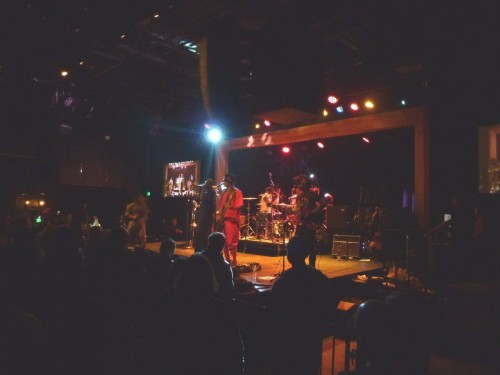
 Those not familiar with the group might recognize them from the highly respected Paul Simon album, Graceland, among a plethora of other widely recognized artists. More info on the band can be found in an
 The Albany based trio Lord Electro has made an epic sound for such a humble group, their debut album Business is highly synthetic, immersive and overall impressive. This is the first full length album for the group and they’ve done a immaculate job. The production quality is top notch, their performance is tight and it will leave listeners with a few pleasant ear-worms. They’re playing all over the tri-state area, mainly focused in New York, as well as an album release show on Friday, March 10 at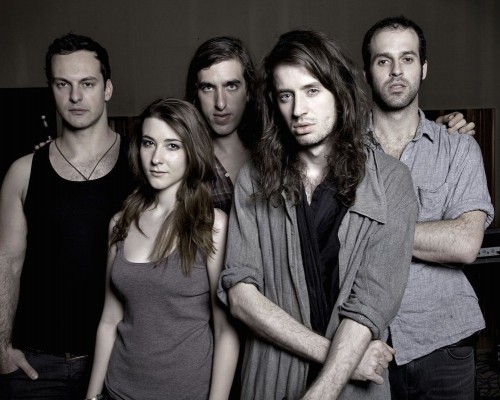


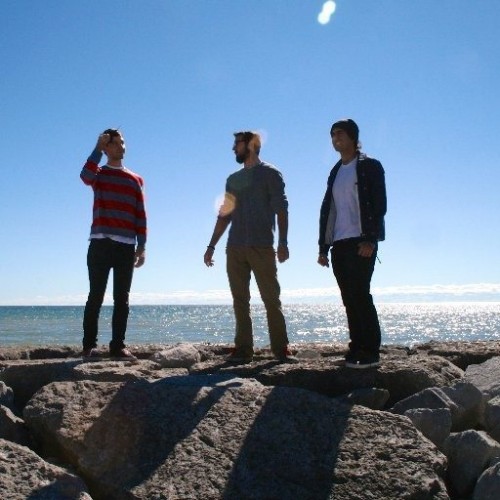 At long last, some honest
 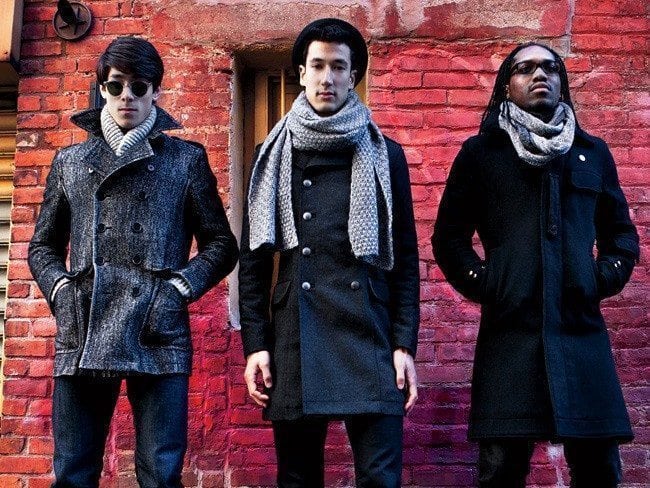 The
The  “Shelter” is definitely a notable track because of it’s heavy R&B and gospel influences which makes for a very emotional song. It seems that it’s about trying to convince a girl that he will take care of and “shelter” her, which is very R&B-like lyrical content. One of the best phrases of the song is when it climaxes and they bring in a beautiful gospel/church-like chorus line and it can send chills up and down the spine of listeners.