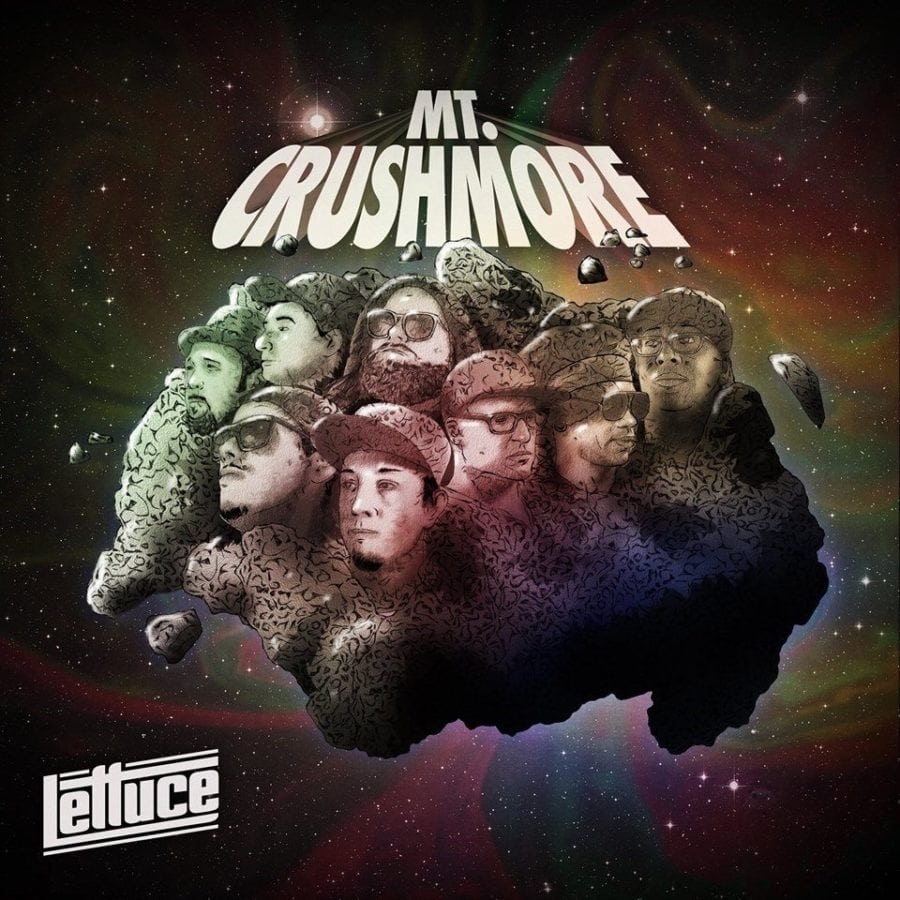
Last month, the jam scene’s funk favorites, Lettuce, released a new EP, titled Mt. Crushmore. While still holding down their exclusivity and unique take on the genre, it is largely more background music than it is dance fuel like we’ve seen from full albums like Rage and Fly.
The likely reason for this is that the 7-track EP contains tracks that didn’t make the cut for “Crush,” (Crush…Mt. Crushmore…you get it). Although it’s not to say these tracks are sub-par by any means. They still demonstrate the band’s ability to lay down groovable tracks, but with perhaps a more hip-hop feel. Many of the tracks would add powerful, yet sophisticated instrumentals for a progressive lyricist.
Mt. Crushmore starts off with its title track and what is hands-down the most epic sounding piece to date. Adam Deitch’s rhythmic drumming combined with Eric Bloom’s authoritative trumpet alarm could be the soundtrack to a military march – if that army was ascending upon enemy territory on an alien planet. A choir of female vocals only adds to the celestial impression.
Other female vocals appear later in the album but with full-on lyrics, a feature that is atypical for Lettuce. “The Love You Left Behind” featuring Alecia Chakour is a nice mix of funk and gospel music to keep you interested.
The EP includes “’Lude, Pt. 5” and “’Lude, Pt. 6,” two quick tracks that sound like intros or filler music. They are a continuation of the series that began on the previous album, “Crush.”
In “116th St.” Erick “Jesus” Coomes drops the signature Lettuce bass thud, the foundation and appeal of their sound. “Ransome” also brings the beloved funk, with a quick rhythm making it the dance tune of the EP.
Listeners should keep in mind that “Mt. Crushmore” is not an album, but an EP, short for “extended play.” And that’s exactly what it feels like – an extension of “Crush.” Absolutely worth a listen if you enjoy Lettuce, but would be largely underwhelming as a standalone album compared to the rest of their catalog.
Key Tracks: Mt. Crushmore, Ransome, The Love You Left Behind
New Year’s Eve and New York City go hand-in-hand. While the celebration and ball drop in Times Square receive the most attention from people around the world, there are also a ton of musical happenings in the city, with Phish’s storied Big Apple New Year’s Eve run at Madison Square Garden, December 28 to 31, 2016 being one of the big highlights. Here’s a rundown of the shows happening, some billed as Phish after-parties and some shows worth mentioning on their own accord. There’s something for Phish fans and non-fans alike in the city during the days leading up to 2017.
American Beauty, just a block from MSG, is hosting several Phish-related events. They kick off the run on Dec. 27 with a free show by Phish tribute band Jibooty and a late set from Escaper. The show starts at 7 p.m. The following four nights, they feature Phish pre-parties and after-parties. Dec. 28 sees PEAK and Gang of Thieves playing a pre-party at 4 p.m. for $5 and Particle and J. WAIL playing the after-party at 11:55 p.m. for $20. Dead Sessions plays tribute to the Grateful Dead for both the pre-party at 4 p.m. and after-party at 11:55 p.m. on Dec. 29. These shows are $20 each. Phanart presents a free pre-party on Dec. 30 with Formula 5 starting at 3 p.m. Spafford and the Magic Beans play two nights on Dec. 30 and 31 after Phish. They start at 11:55 p.m. and are $25 for each night. The pre-party on Dec. 31 features the Stella Blues Band paying tribute to the Grateful Dead at 4 p.m. with a $15 cover.
DROM in the East Village hosts two Phish after-parties on Dec. 28 and 29. Aqueous plays the 28th with Mungion. The show starts at midnight with tickets at $12.50 in advance or $17 at the door. The 29th sees lespecial with Chromatropic. The show starts at 11:30 p.m. with tickets going for $12 in advance or $15 at the door.
The Cutting Room, a handful of blocks from MSG, is also hosting several Phish parties, all presented by CEG. Elise Testone brings her “Thankful for Amy” tribute to Amy Winehouse with several special guests for an early show at 8 p.m. and a Phish after-party at midnight on Dec. 28. Tickets for both are $15 in advance or $20 at the door. Kung Fu plays an after-party on Dec. 29 at midnight with tickets at $18 in advance or $20 at the door. Holly Bowling pays tribute to Phish and the Grateful Dead through her solo piano work at pre-parties on Dec. 30 and 31. The shows start at 4 p.m. with tickets running $15 in advance or $20 at the door. The Marcus King Band plays the after-party on Dec. 30 at midnight. Tickets are $15 in advance or $20 at the door.
The Brooklyn Bowl has a series of shows leading up to the new year. Zeppelin Bowl, featuring Gene Ween, Scott Ian and John Medeski, takes place on Dec. 28 at 8 p.m. Tickets are $20 and still available. Joe Russo’s Almost Dead plays a sold out show on Dec. 29 at 8 p.m. Late night on the 29th is Talib Kweli performing a DJ set at midnight for $10. Kamasi Washington and the Budos Band are playing Dec. 30 and New Year’s Eve. Tickets are $40 for the 30th and $65 to $75 for New Year’s Eve. Both shows start at 8:30 p.m. Sleigh Bells is playing a DJ set late night at midnight on the 30th for $15 with Animal Collective doing the same on New Year’s Eve for $20 to $25.
Being New York City, there are plenty of other shows taking place that are worth checking out. See below for a rundown.
Wednesday, Dec. 28
PEAK with Gang of Thieves @ American Beauty (Midtown) – 4 p.m. – $5 *
Zeppelin Bowl feat. Gene Ween, Scott Ian, John Medeski @ Brooklyn Bowl (Brooklyn) – 8 p.m. – $20
“Thankful for Amy” with Elise Testone @ The Cutting Room (Midtown) – 8 p.m. & 12 a.m. – $20 each #
Aqueous with Mungion @ DROM (East Village) – 12 a.m. – $17 #
Particle with J. WAIL @ American Beauty (Midtown) – 11:55 p.m. – $20 #
Madaila @ Arlene’s Grocery (Lower East Side) – 11:55 p.m. – $10 #
Hayley Jane and the Primates do Bowie @ Lucille’s at B.B. King’s (Times Square) – 11:59 p.m. – $10 #
Thursday, Dec. 29
Harlem Gospel Choir @ B.B. King’s (Times Square) – 12:30 p.m. – $30
Dead Sessions @ American Beauty (Midtown) – 4 p.m. & 11:55 p.m. – $20 each * #
Joe Russo’s Almost Dead @ Brooklyn Bowl (Brooklyn) – 8 p.m. – $40
Dar Williams @ The Bell House (Brooklyn) – 8 p.m. – $25-$30
The Skints with The Far East and Rude Boy George @ Knitting Factory (Brooklyn) – 8:30 p.m. – $20
The Lone Bellow @ Bowery Ballroom (Lower East Side) – 9 p.m. – $30
Start Making Sense @ Irving Plaza (Gramercy/Flatiron) – Doors 11 p.m. – $20
lespecial with Chromatropic @ DROM (East Village) – 12 a.m. – $15 #
Kung Fu @ The Cutting Room (Midtown) – 12 a.m. – $20 #
Talib Kweli (DJ Set) @ Brooklyn Bowl (Brooklyn) – 12 a.m. – $10
Friday, Dec. 30
Formula 5 @ American Beauty (Midtown) – 3 p.m. – free *
Holly Bowling @ The Cutting Room (Midtown) – 4 p.m. – $20 *
David Wax Museum with Auld Lang Syne @ Mercury Lounge (Lower East Side) – 6:30 p.m. – $20
Tower of Power @ B.B. King’s (Times Square) – 7 p.m. & 9:30 p.m. – $45 each
Snarky Puppy @ Irving Plaza (Gramercy/Flatiron) – Doors 8 p.m. – $45
Gov’t Mule @ Beacon Theatre (Upper West Side) – 8 p.m. – $50-$60
Kamasi Washington with The Budos Band @ Brooklyn Bowl (Brooklyn) – 8:30 p.m. – $40
The Lone Bellow @ Bowery Ballroom (Lower East Side) – 9 p.m. – $30
Cymbals Eat Guitars with Haybaby @ Mercury Lounge (Lower East Side) – 10:30 p.m. – $20
Pink Talking Fish plays Animals @ Gramercy Theater (Gramercy/Flatiron) – 11 p.m. – $29.50 #
Spafford with The Magic Beans @ American Beauty (Midtown) – 11:55 p.m. – $25 #
Sprocket with Kabina @ The Bitter End (Greenwich Village) – 12 a.m. #
The Marcus King Band @ The Cutting Room (Midtown) – 12 a.m. – $20 #
Sleigh Bells (DJ Set) @ Brooklyn Bowl (Brooklyn) – 12 a.m. – $15
Saturday, Dec. 31
Stella Blues Band @ American Beauty (Midtown) – 4 p.m. – $15 *
Holly Bowling @ The Cutting Room (Midtown) – 4 p.m. – $20 *
Snarky Puppy @ Irving Plaza (Gramercy/Flatiron) – Doors 8 p.m. – $60
Rainer Maria with Snail Mail @ Saint Vitus (Brooklyn) – 8 p.m. – $25
Kamasi Washington with The Budos Band @ Brooklyn Bowl (Brooklyn) – 8:30 p.m. – $65-$75
Gov’t Mule @ Beacon Theatre (Upper West Side) – 9 p.m. – $65-$75
Guided by Voices @ Music Hall of Williamsburg (Brooklyn) – 9 p.m. – $70
The Lone Bellow @ Bowery Ballroom (Lower East Side) – 10 p.m. – $40
All-Star James Brown Dance Party @ Gramercy Theater (Gramercy/Flatiron) – 12 a.m. – $35 #
Spafford with The Magic Beans @ American Beauty (Midtown) – 11:55 p.m. – $25 #
Animal Collective (DJ Set) @ Brooklyn Bowl (Brooklyn) – 12 a.m. – $20-$25
Snarky Puppy @ Irving Plaza (Gramercy/Flatiron) – Doors 1 a.m. – $35 #
The New Deal @ B.B. King’s (Times Square) – 1:30 a.m. – $30 #
* Billed as Phish pre-party
# Billed as Phish after-party
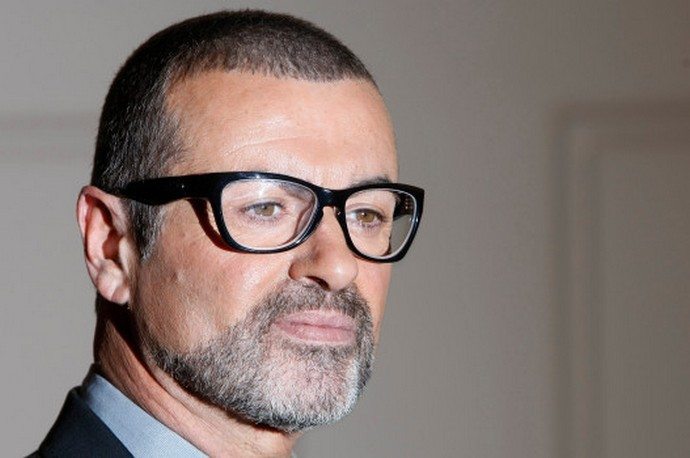
The year 2016 has been a particularly rough one in many respects. The music world has lost legends such as David Bowie, Prince, Leonard Cohen and Leon Russell. On Christmas Day, pop icon George Michael was found in his bed, a victim of heart failure at the age of 53.
Michael’s publicist, Connie Filipello issued a statement about his death Sunday:
It is with great sadness that we can confirm our beloved son, brother and friend George passed away peacefully at home over the Christmas period. The family would ask that their privacy be respected at this difficult and emotional time. There will be no further comment at this stage.
Michael was born Georgios Kyriacos Panayiotou in London in 1963. His rise to fame began in the mid-80s with the Brit-pop duo Wham!, formed with his school friend Andrew Ridgeley. Wham! had a hit in both England and the U.S. with “Wake Me Up Before You Go-Go.” The video was in heavy rotation on MTV and was influential not only in the music world but the fashion world as well. The over-sized shirts with slogans such as “Choose Life” became ubiquitous around U.S. high schools in 1984.
Michael and Ridgeley split in 1986 following a farewell concert at Wembley Stadium. His first solo album Faith was released in 1987 and launched Michael into superstar status. The lead single from the album, “I Want Your Sex” featured risqué lyrics that radio made radio leery. Despite this, the single rose to No. 2 on the Billboard charts that year. Faith went on to sell 10 million copies in the U.S. and spawned three No. 1 hits in “Father Figure,” “Monkey” and “One More Try.”
In later years, Michael faced legal battles with his label as well as with law enforcement. He was arrested in the men’s room in Beverly Hills in 1998 on a charge of lewd behavior. Following that arrest, he came out as gay. The struggles with his sexuality and the efforts in hiding it led to bouts of depression for Michael. He became a vocal advocate for AIDS causes and gay rights.
While his musical output waned in the 2000s, he was still able to sell tickets to stadium shows. He performed with Paul McCartney at the Live 8 show in 2005 and released his final album, Symphonica, a set of standards and originals performed with an orchestra.
Michael was an uncomfortable star. His public persona exuded a confident performer but his inner feelings were a complex mix of doubt and struggle. Through it all, his musicianship radiated among many.
His friend, Elton John provided the following expression of sadness alongside a picture of the two together on Instagram:
As Christmas Eve transitioned to Christmas Day, fans of Run the Jewels were treated to an early release of El-P and Killer Mike’s latest album. Run the Jewels announced the album drop through the help of Fred Armisen and Carrie Brownstein on their Facebook page just before midnight Christmas Day.
Run the Jewels 3 is live now! ??
#RTJ3 runthejewels.com
Originally scheduled for release on Jan. 13, the rap duo decided to give listeners an early Christmas present instead. The album, RTJ3, contains four previously released singles alongside ten other new songs and can be heard right now on Spotify and iTunes.
There are several collaborations on the album include Danny Brown, Boots, Kamasi Washington and TV on the Radio’s Tunde Adebimpe.
RTJ was recently named as one of Summer Camp 2017’s headliners and they will embark on a massive U.S. tour in January, culminating with an appearance at NYC’s Terminal 5 on Feb. 25. Joining them on this tour are The Gaslamp Killer, Spark Master Tape, and CUZ.
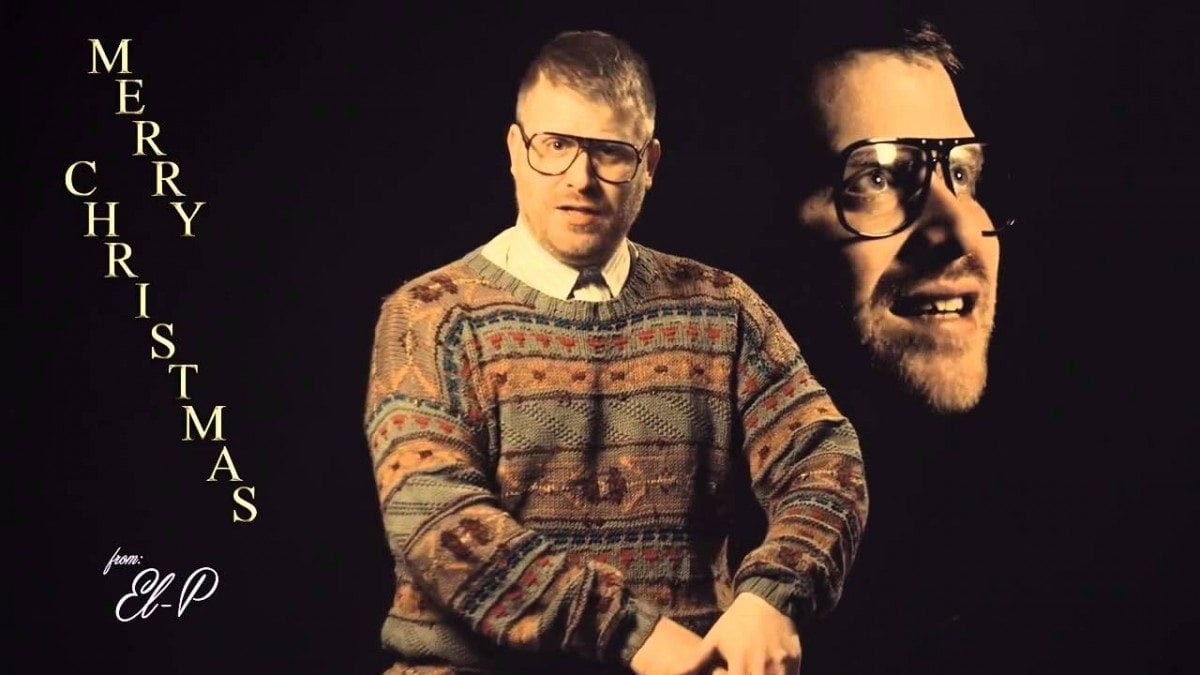
Check out the new video for “A Christmas F**king Miracle” below the tour dates.
Run the Jewels 2017 Tour Dates:
Jan. 11 – Electric Factory – Philadelphia, PA
Jan. 12 – Echostage – Washington, DC
Jan. 13 – Stage AE – Pittsburgh, PA
Jan. 14 – House of Blues – Cleveland, OH
Jan. 16 – Express Live! – Columbus, OH
Jan. 17 – Marathon Music Works – Nashville, TN
Jan. 18 – The NorVa – Norfolk, VA
Jan. 20 – The Ritz – Raleigh, NC
Jan. 21 – The Tabernacle – Atlanta, GA
Jan. 23 – The Beacham Theatre – Orlando, FL
Jan. 24 – Jannus Live – St. Petersburg, FL
Jan. 25 – The Fillmore – Miami, FL
Jan. 29 – Marquee Theatre – Tempe, AZ
Jan. 30 – The Observatory – San Diego, CA
Feb. 1 – Shrine Expo Hall – Los Angeles, CA
Feb. 2 – San Jose Civic Auditorium – San Jose, CA
Feb. 3 – Fox Theater – Oakland, CA
Feb. 5 – Van Duzer Theatre – Arcata, CA
Feb. 6 – Crystal Ballroom – Portland, OR
Feb. 7 – Showbox SoDo – Seattle, WA
Feb. 8 – Vogue Theatre – Vancouver, BC
Feb. 10 – The Complex – Salt Lake City, UT
Feb. 11 – The Fillmore – Denver, CO
Feb. 13 – The Midland – Kansas City, MO
Feb. 14 – Myth – St. Paul, MN
Feb. 15 – Orpheum Theater – Madison, WI
Feb. 17 – Aragon Ballroom – Chicago, IL
Feb. 18 – Royal Oak Music Theatre – Royal Oak, MI
Feb. 19 – Danforth Music Hall – Toronto, ON
Feb. 21 – Metropolis – Montreal, QC
Feb. 22 – State Theatre – Portland, ME
Feb. 24 – House of Blues – Boston, MA Feb. 25 – Terminal 5 – New York, NY
Spafford is a four-piece act from Phoenix, Arizona that has been steadily gaining recognition in the southwestern states since 2012. Following a successful “Breakout Tour” this fall in the Midwest, including two sold-out shows in Chicago, these Arizona funk rockers are ready to spread their horizon even further and head East, as they continue to grow on a national scale. NYS Music took this opportunity to make sure that you’re familiar with the name Spafford and the sound in an interview with their drummer Nick Tkachyk.
The group consists of Brian Moss (guitar), Jordan Fairless (bass), Andrew “Red” Johnson (keys) and Nick Tkachyk (drums). Their sound can be described as an electrofunk therapy, which combines deep sonic exploration and jam-heavy improvisation. With jams that stretch anywhere from 10 minutes to 30, their songs expand typical song structure, offering an original take on funk-dance-rock music.
In the past, they’ve shared the stage with prominent acts like Widespread Panic, Particle, EOTO, the Motet, and they’ve performed festivals such as Arizona’s McDowell Mountain Music and Gem and Jam Music Festivals. For the summer of 2017, they have already been announced on the bill for the Electric Forest in Rothbury, MI and Resonance Festival in Thornville, OH.
On New Years Eve, you can catch them on Dec. 30 & 31 for Phish after-parties with the Magic Beans, at the American Beauty Bar in NYC, and see for yourself why this four-piece is gaining momentum.
This spring, the Arizona act will hit the road with Umphrey’s McGee for their 2017 tour. Spafford will be fitting in gigs in between their shows with Umphrey’s, including a date in Philadelphia on Jan. 24 and in New Jersey on Jan. 25. For a full list of tour dates, tickets and information, please visit here.
Karina Verlan: Where did the name Spafford come from?
Nick Tkachyk: The word “Spafford” is the middle name belonging to our Lighting Designer/Social Media Guru/General Awesome Dude, Chuck Spafford Johnson. The original name of our band, or should I say “the” band because myself and Red were not in the band yet, was “Officious Tort Feezer… or Freezer”. Apparently this is a legal term for a general wrong doer. Either way, the tort thing didnt work out, Brian and Jordan decided to name the band Spafford, and the rest is the future!
KV: You’ve toured on the West Coast and central states for a while; how do you anticipate breaking through on the East coast?
NT:We were meant for the East Coast. We were meant for West Coast. We were meant for people… and their ear hearts.
KV:How excited are you to be joining Umphrey’s McGee on their tour this spring?
NT:My scale of excitement for this upcoming occasion can be explained in two words… Cannot. Explain. (mostly due to excess excitement, and the inability to explain myself when excessively excited)
KV:Who writes the music in your band and how do you decide on your setlists?
NT:Music is a collaborative effort. Always. Every song is different. Our song writing process is extremely personal and sacred for me, and “us.” Honestly, as a drummer, I don’t “write” songs per-say, however when coming up with specific parts for a Spafford song, I love contributing to the greater good (for lack of a better word) that is Spafford! Setlists are whatever.
KV:What has been the biggest challenge for you thus far as a band?
NT:THE MUSIC. (and “challenging” in a very inspiring, creative, and GOOD way!)
KV:Where would you like to see your band 5 years from now?
NT:Sharing as much positive, emotional and RAW energy with people through music as possible.
KV: Is there anyone alive or dead that you would do anything to have them sit in with you?
NT:Bernard “Pretty” Purdie. Nuff said.
KV:What was your favorite venue thus far? Favorite set that you’ve done?
NT:The word ‘Favorite’ when it comes to MUSIC, in my opinion, is poppycock. As an artist, I believe I don’t have the luxury of preference. All art IS. And all ART is GOOD. But okay… Favorite venue: Vinyl Las Vegas. Favorite set: First time we played there for a Further afterparty.
KV:If you added an another instrument to your band, what would it be?
NT:Another Brian Moss.
KV: Have you surpassed any of your early goals as a band thus far?
Chicago Farmer recently released his seventh studio album, Midwest Side Stories, which debuted on September 30, 2016 on his Chicago Farmer record label. It’s the follow-up to 2013’s Backenforth, IL. Chicago Farmer is the nom de plume of Illinois-based folk artist Cody Diekhoff, who has spent the last decade barnstorming bars and theatres across his native Midwest, traveling far and wide, through dim towns and bright cities alike, to perform for a growing legion of appreciative fans. Diekhoff was born in tiny Delevan, IL, has spent significant time in Chicago, and currently calls Bloomington, IL home. It’s these localities, which are largely defined by the sordid power dynamics surrounding them, that make up the backdrop for his blue-collar ballads.
Distilled to its essence, Midwest Side Stories is a concept album, one centered around the workingclass struggles of the people of Tazewell County, Illinois. The concept, while in league with Sufjan Stevens’ Illinois, is less sprawling, more localized, and reads sort of like Sherwood Anderson’s short-story collection Winesburg, Ohio, yet its themes are more aligned with those of another famous Illinoisian, the poet and folk singer, Carl Sandburg.
The opening track, “Umbrella,” a seemingly autobiographical take on the life of a folksinger with a rainy day plight and a ticket to ride, acts as an overture, setting the stage for the strugglers that Chicago Farmer will routinely call into the limelight over the course of the album. The track takes its name from a simile built into the first verse, which provides an inside look at the inspiration behind the songs, while also detailing the apparent relationship between the folksinger and his subject. The first-person narrator sings:
I went searching for some kind of meaning
Like words looking for a page
Came up empty and full of worry
That nothing could cover the pain
And these songs and stories
Began unfolding like an umbrella in the rain.
I want to write you a sad, sad song
That I hope will make you smile
And we could pass it along
We’re only here for a little while.
The track also sets in motion the album’s most resonant message: that storytelling is important, and that it’s equally important how one goes about it. Here, Chicago Farmer delivers a well-constructed acoustic guitar tune that’s tinged with electric honky-tonk guitar fills, and hinges on his shaky and crisp, rich as honey vocal performance, complete with emotional tension, brief yodeling, and a crafted message. And while there’s some slick lines in “Umbrella,” such as “we’ve been trying to find our way through the darkness of our minds,” we also see the traces of Chicago Farmer’s major weakness as a songwriter, that there’s a disturbing lack of particularity, personality, and local detail in these folk tales, while there’s an abundance of flat lines and forced rhymes that advance the story by length alone.
One song in and I’m totally going for Chicago Farmer’s voice, as it’s reminiscent of Ryan Adams during the Cardinals era, while the song itself sounds more like something from Kentuckian Stoll Vaughan’s catalogue, but I’m definitely not sold on the lyrics.
When the second song, “The Revolving Door,” hits, it’s high drama from the jump. Shrill, Neil Young inspired harmonica tears through the song like a factory whistle, while the ominous bass and drums lugs a gurney of carnage out of what seems a folk music netherland, some gruesome place from which the Byrds’ “Lover of the Bayou” once emerged, and from whence Chicago Farmer’s authoritarian boss figure comes, wielding a trembling falsetto warble like a razor, his voice haunted with the spirit of Will Oldham and bent on corporate enforcement.
After the first verse, the song breaks suddenly into a bewitched surf-hued anthem that takes up the point of view of a worker caught in this exchange, who’s prideful in repeating “I’m a worker / Not a number,” yet fully aware that the boss dictates he always get “back in line.” Finally, the song increases in tempo and intensity, building up to the climactic moment, in which the blazing harmonica returns, as does the voice of the boss figure, who informs the worker, “saddened to tell you, sir / you don’t work here anymore / pack your things and your feelings / and head on towards the door.” And while the title seems to allude to “revolving door” politics, the song is essentially about the binary bind of incorporated power and its grip on a vulnerable labor force.
Two songs in and Chicago Farmer has me captivated by his voice, impressed by the careful structures inherent in his songwriting, and excited about the range so far displayed.
The next three songs, “Rocco and Susie,” “Skateboard Song,” and “Two Sides of the Story” provide the album’s most on-the-nose references to Tazewell County. “Rocco and Susie” is a stripped down, bluegrass-tinted ballad featuring acoustic guitar, tambourine, and backing vocals. There’s a slow setup as the song unfolds. The couple described, at first, “seem like your typical neighbors / [whose] children were somewhat behaved,” but, ultimately, the family succumbs to the sordid afflictions facing Tazewell County: the stock market crash, factory job loss fallout, crystal meth addiction and production, police intervention, and the dissolution of their family. While Rocco and Susie at least have names to which one can connect, they serve merely as stock pieces, with all evidence of their personalities and the sweat of their struggle erased, in what reads as basically a reductive critique of a changing economy, from which the only thesis adduced from the ordeal is simply that one should “stick to smoking grass and drinking beer.”
“Skateboard Song” gives another passing glance at some of the participants in the local goings-on in Tazewell County, this time from the view of a first person skater riding through town; however, the characters involved in the story are warped by the lighthearted, uptempo, musical-theater style satire Chicago Farmer employs in critiquing smalltown social ills and the misguided laws meant to curb them. Every authority in town, from the signs to the cops to the judge, has only this to say, “skateboarding is bad,” which is always followed with why don’t you “take up guns” or “do some harder drugs,” or some other such miscreant behavior, and only a pop-punkish jingle by which to convey it. While the idea of making a powerful metaphor out of the skateboard has great promise, the execution is tepid, and listeners are left with a less than revolutionary assault on the powers that be.
“Two Sides of the Story” is a John Prine-esque portrait of the small town heartbreak and struggle that seems to typify the experience Chicago Farmer presents to his audience. It’s another stripped down acoustic guitar tune, with piano and harmonica accompaniment, and featuring Chicago Farmer’s twangy vocals. From his point of view, middle America is a place divided exponentially in twos, where the politicians are feckless liars and misinformation abounds, where the media is a gluttonous machine and working-class reality its fodder, where living’s dying and dying living.
And here Chicago Farmer uses his highly developed sense of songcraft to portray a growing chasm dividing Americans along intangible lines. In the chorus, he sings “there’s two sides to every story, there’s two sides of every town / the side of town that tells the story and the side where the story went down,” which calls attention to the gap between product and producer that outlines the larger conflict at stake. He adds depth to this stance throughout the song, stringing together artful, impactful lyrics that diagnose the worsening situation while adding some political punch. Take for example this stanza that highlights the gulf between the words and actions of politicians:
There was a lawmaker whose laws never made any sense
So he started making promises on both sides of the fence
Double-crossed his fingers every other time he smiled
Shook hands across the country, couldn’t reach across the aisle.
Whereas, Chicago Farmer’s other story songs do well to elicit many concerning issues, they mostly fall in short driving home a moral lesson, however, “Two Sides of the Story” succeeds in convincing the audience that storytelling is important and that it’s even more important to “get your story straight.”
Halfway through and Midwest Side Stories has proven Chicago Farmer’s obvious talents, namely songcraft and singing, but, in comparison with one another, the songs are quite uneven. In fact, “Two Sides of the Story” marks the high point of Midwest Side Stories, but it also marks the point at which the album takes a turn for the worst.
“New Used Car” is an easy listening diddy with an attractive pedal steel part, but the trite subject matter and blithe singing give it the taste of Diet Springsteen in a can, while the feathery lyrics secure this tune’s place as the Americana version of those riding-around-town-in-a-pickup-truck revelries celebrated on pop country radio.
The next tune, “9PM to 5,” is a straightforward country-tinged rock song in the manner of Los Lobos, which describes the life of a graveyard shift worker, but nothing ever develops regarding his situation and it’s difficult to know what Chicago Farmer is trying to invoke here.
An uptempo fiddle-number follows with the Carter Family styled singalong “Farm and Factory,” which details the working backgrounds of the narrator’s family. Chicago Farmer’s aim here seems directed once more at a changing economy, one that used to provide satisfactory jobs for Midwesterners, either on farms or in factories, but has since rendered these institutions defunct, leaving the people in search of opportunity. He sings “thank God for the farm and the factories / thank the devil for the factory farm.” In retelling this brief, mostly detail-less history, however, it appears that Chicago Farmer’s concern is not truly complex economic despair and worn down, hardworking individuals who need a voice lifted on their behalf, but something more aligned with joining his voice in a nostalgic rank and file of troubadours singing work songs.
The album’s penultimate song, “Homework,” continues in making rather obvious social observations, partly in reference to environmental destruction and denial, while placing the blame on a wide, vague swath of the citizenry, for which a cloudily aware, altruistic, and populist “we” becomes “the kid who does everyone else’s homework,” which precludes his half-hearted rallying cry, “we have a chance if we can enhance the number of us who’ll stand.”
Midwest Side Stories concludes with a cover of John Hartford’s “I’m Still Here.” The approach to the song is reminiscent of Houser-era Widespread Panic, with whetted guitar leads, a solo section, a marching drumbeat, and savory vocals. It’s also refreshing to hear lyrics matching the high-stakes political matter at which the originals often obscure or only gesture toward, rather than point at, and it goes a long way in fleshing out the album’s narrator and vision to hear Chicago Farmer howling:
My cigarettes are gone and so’s my money
So are all my nerves and all my teeth
My hair’s falling out, I’m looking funny
My friends are either dead or on relief.
When the last note ceases and the dust settles over Midwest Side Stories, what’s left is a readily accessible and highly entertaining volume of country-fried ballads in the Americana tradition, and while the songwriting is polished and the playing refined, the final product lands somewhere shy of the ambitious summit it sets for itself in the early going. Listeners get merely a glimpse of the broke-and-busted life and times of the folks of Tazewell County, Illinois, as the gritty detail and sludgy realism is mostly omitted, and the characters who appear in these weary tales are not granted the shape of their struggles or the use of their authentic voices, as Chicago Farmer flattens them to fit the contours of his traditional songwriting and the bent of his buttery vocals.
Within Shadows released their debut album Mind = Enemy on December 21. In conjunction with the release, they premiered the music video for “Get Up,” the first track on the album. And if that weren’t enough excitement for one week, the band also announced a show on January 14th at Lucky’s Roudhouse in Windsor, Ontario.
This metal band from Ontario, Canada features Sean Farias (vocals/guitar), Jordan Heffernan (drums), Brad Tiessen (guitar), and Jacob Bailey (bass). NYS Music spoke with frontman Sean Farias about their ambitious 15-track album, the passion they poured into the making of the video, and their plans for 2017 and beyond.
Paula Cummings: Your album is called Mind=Enemy. How did you choose the title?
Sean Farias: We chose the title Mind=Enemy because it relates to the song themes that we portray lyrically. The majority of our songs relate to inner battles, struggles that we’ve had and about conquering those. This also helps bring a positive outlook to the listener and help them with the same problems.
PC: Tell me about the tracks on the album.
SF: The album is going to consist of 15 tracks, four of them being remakes of older Within Shadows tunes and 11 brand new songs. The songs will range from different metal genres like hardcore, easycore, djent, heavy metal and more. We have a new instrumental track called “Captive” where we try to recreate the concept of our EP song “Regrets” and have guitar solos through the whole song. “Demons” is a remake from an EP released a year ago. We have a song called “Djust Kill Me Now,” which was written during one the darkest times in my life. It is a collaboration with Derek Petricka of Discord Curse and Lucas Mann of Rings of Saturn. We also wanted to showcase that we like to play different genres by including a pop punk song called “On My Mind.” There are many more tracks to this album, and I promise there are many bumpin’ riffs to mosh to.
PC: Which bands inspire you?
SF: Our band is greatly influenced by other bands, such as Slipknot, Lamb of God, Beartooth, Tool, Billy Talent, Rings of Saturn and more. We are influenced by their musicianship and writing styles which we infuse into our own. Also we have seen the majority of these bands perform live, which in its own powerful way leaves us with extreme levels of motivation and the urge to write our own music.
PC: What was it like to record your first music video together?
SF: It was incredible! We had the honor of working with Ryan Brough of Zeebrah Media. He is a great guy, easy to work with, and made what was envisioned in our mind come to life. We are just as excited as our fan base to see the finished product. We wanted our first video to be the perfect representation of what we will be like live to anyone who would want to come see us. So it is literally us going buck wild in front of a camera playing our song “Get Up!” We had so much fun shooting this video. Jumping around for three hours was certainly tiring, but we brought the crazy throughout the whole shoot. Jacob Bailey even bled all over his bass from going so full out!
PC: Jordan got to break out his new drum kit for the video, right?
SF: Oh yes! He was most certainly excited about that. We all were. This new kit is magical!!!
PC: You guys also help local charities.
SF: That is one of our passions. We love to help out those in our community, and also contribute to local charities. When we raise enough money or make enough sales on our music and merchandise, we love to give a chunk of that to charity. For our EP Release the Disease, we ended up donating $500 to our local food bank, because of all the support our fan base gave us. We hope one day we can grow our band to a bigger level where we can help impact more people in a positive way and more on a global scale.
PC: 2016 has been an eventful year for Within Shadows. What are your band goals for 2017?
SF: Shows. Lots and lots of shows. Trying to get our band more exposure. Sending our new songs out to record labels and work with many people in the industry and other musicians. Also we want to record a lot more music videos for our tracks.
Pre-orders for CD’s are being taken at their website. Digital downloads and streaming are available through Bandcamp, iTunes, and Google Play.
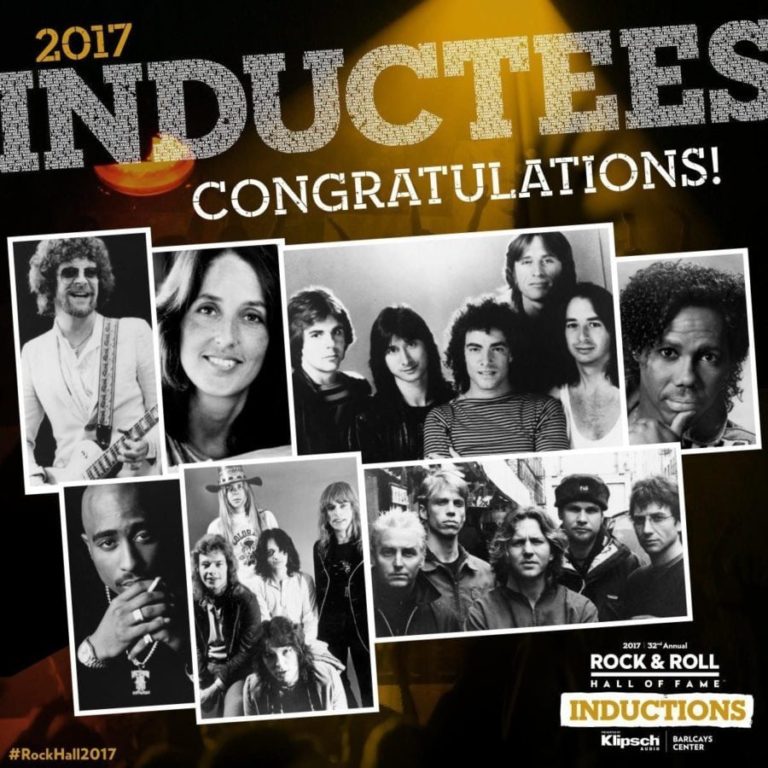
The Rock and Roll Hall of Fame announced today that seven new inductees will be enshrined in 2017, including three New Yorkers among them – Joan Baez, Tupac Shakur, and Nile Rodgers. Rodgers gets the nod for the Hall’s Award for Musical Excellence, as well four classic rock bands, Electric Light Orchestra, Journey, Pearl Jam, and Yes.
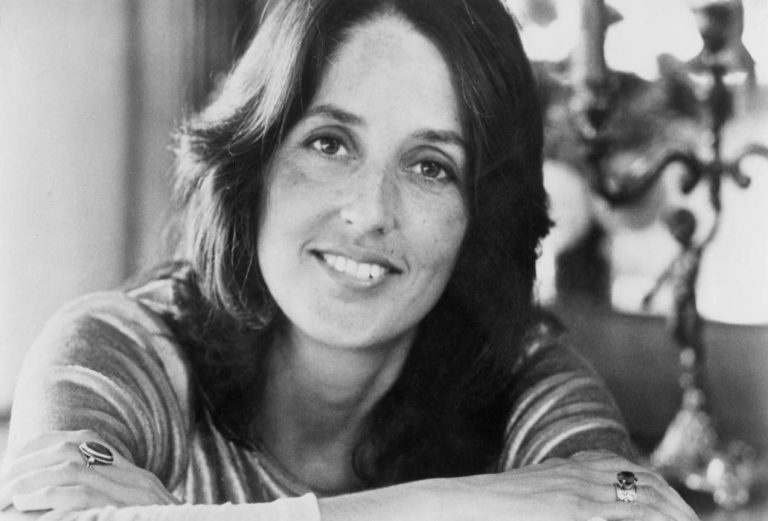
Joan Baez, who is from Staten Island, NY, came to prominence following her performance at the 1959 Newport Folk Festival. While Baez is a talented songwriter in her own right, she is equally well known for enthralling interpretations of classic songs, helping other songwriters, especially Bob Dylan, achieve greater notoriety; and more importantly, Baez remains a longstanding advocate for human and civil rights.
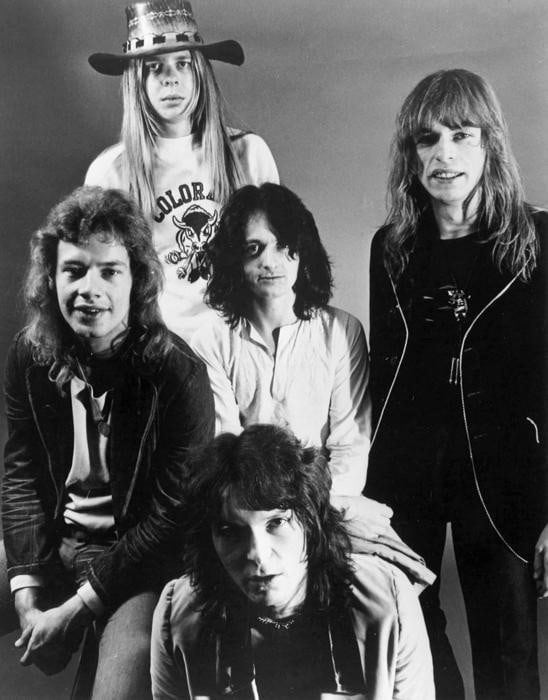
Yes formed in 1968 in London, and despite undergoing many lineup changes, they have persisted in bringing virtuoso prog-rock to adoring fans around the globe for more than forty years. Led by frontman Jon Anderson, guitarist Steve Howe, bassist Chris Squire, drummers Bill Bruford and Alan White, and keyboardist Rick Wakeman, Yes created some of the most iconic music of the prog-rock era, including the hit song “Roundabout” and the epic album Close to the Edge.
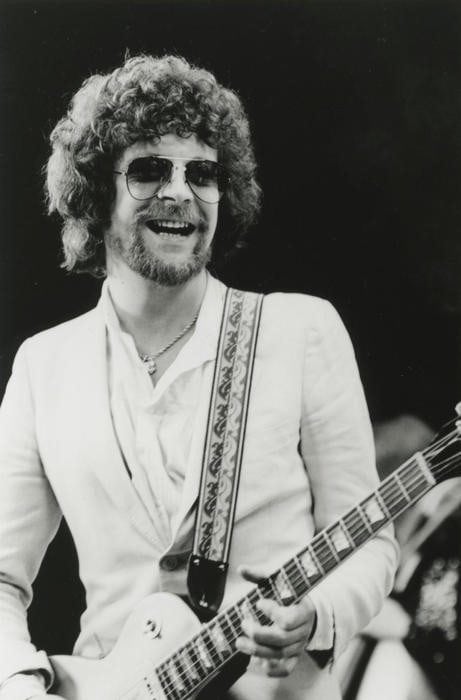
Electric Light Orchestra, the brainchild of Jeff Lynne and Roy Wood, began in 1970 in Birmingham, England and went on to sell over fifty million records worldwide. Melding a Beatles-like pop-rock sensibility with grandiose, classically-inclined orchestration became ELO’s hallmark, and led to their success with singles such as “Can’t Get It Out of My Head,” “Evil Woman,” “Strange Magic,” “Livin’ Thing,” “Telephone Line,” and “Mr. Blue Sky.”
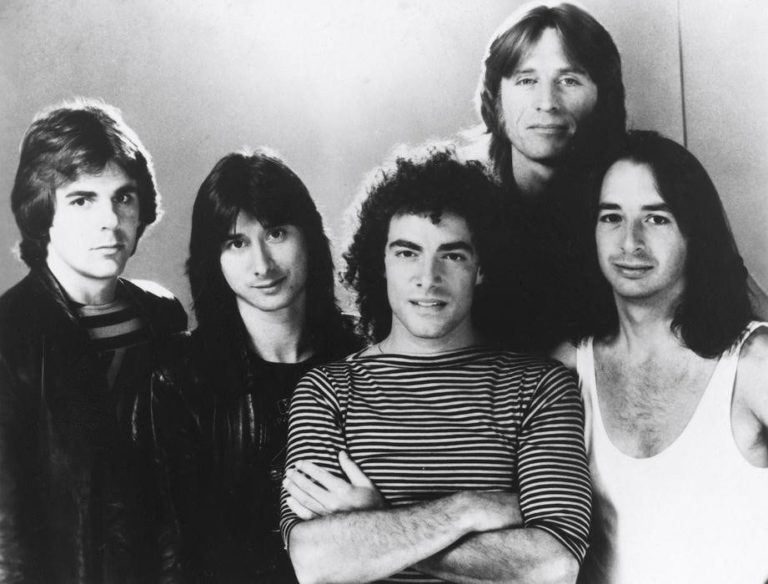
Journey entered the rock n’ roll landscape from the psychedelic San Francisco scene in 1973, spearheaded by ex-Santana players Neal Schon and Gregg Rolie; but it was the addition of renowned vocalist Steve Perry, in 1977, that propelled them to rock stardom. Their 1981 album Escape is one of the landmark’s of the stadium rock era and features their international smash hit “Don’t Stop Believin’,” which remains a cultural mainstay today.
Unlike most of this year’s inductees, Pearl Jam did not have to wait long to enter the Hall after becoming eligible. Bassist Jeff Ament, guitarists Stone Gossard and Mike McCready, singer Eddie Vedder, and drummer Matt Cameron came together to launch Pearl Jam from the Seattle grunge scene into the rock n’ roll stratosphere. On the backs of five platinum albums (Ten, Vs., Vitalogy, No Code, and Yield), decades of fan-centric touring, and dozens of indelible collaborations, Pearl Jam stands as one of the most successful bands in rock history.
Tupac Shakur, who was born in East Harlem, NY, is entering the Hall on the strength of his infamous and poetic brand of “west coast” rap. Tupac first broke onto the scene as a member of Digital Underground in 1991, and was murdered at the age of 25 in 1996, but in the five years between he released two albums that went ten times platinum with All Eyez on Me and Greatest Hits, penned two number one hits with “California Love” and “How Do U Want It,” starred in several Hollywood films, and sold over 75 million records.
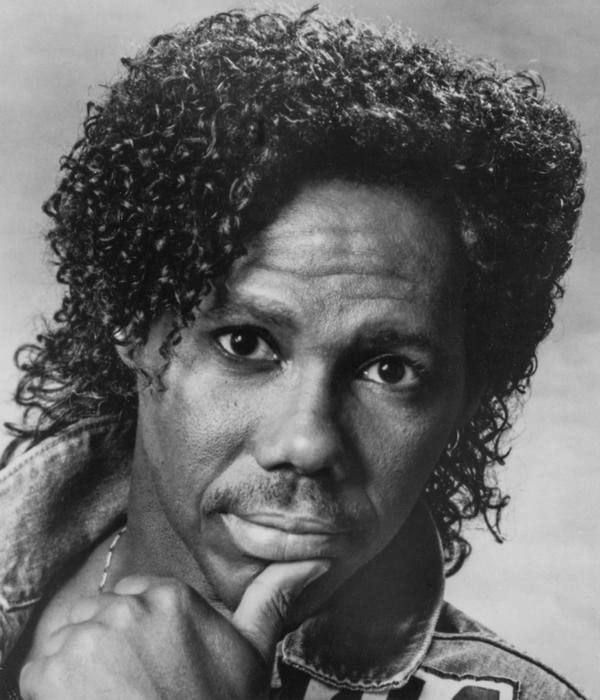
In addition to the six performers being inducted in 2017, Nile Rodgers, a New York City native, will receive the Award for Musical Excellence. With bassist Bernard Edwards, he formed the iconic disco band CHIC in 1977, which produced the hits “Le Freak” and “Good Times,” on their way to becoming the cornerstone of the Studio 54 dance scene. Then, beginning with Sister Sledge’s “We Are Family” in 1979, Rodgers went on to cultivate a spectacular career as a producer, which saw him work his magic on classic albums for the likes of Diana Ross, David Bowie, INXS, Madonna, the B-52s, Jimmy and Stevie Ray Vaughan, and Daft Punk.
The Rock & Roll Hall of Fame Induction Ceremony, the 32nd annual, will be held at Brooklyn’s Barclay’s Center on Friday, April 7, 2017. Ticket on-sale dates will be announced in January.
NYS Music is celebrating the end of 2016 by posting staff and reader picks on 10 various categories, and today we are highlighting the winners of the Best Show by Region and the Best Venue in New York State.
The number one venue, according to our staff pick, is the Saratoga Performing Arts Center (SPAC).
SPAC is a focal point for music for areas like upstate New York, the Hudson Valley, Vermont, the Berkshires, and Connecticut. Originally instated in the late 1960’s, the concert venue has held some of the greatest acts of our age, including an iconic performance by the Doors in 1968, and others such as, Santana, Guns N’ Roses, Aretha Franklin, Whitney Houston, KISS, Pearl Jam, Bruce Springsteen, Pink Floyd, Phish, Dire Straits and The Grateful Dead, to name just a few. Dave Matthews Band holds the title of the most sold-out performance at the venue.
This summer, SPAC had a full schedule of not-to-be-missed performances, in celebration of their 50th anniversary summer. NYS Music staff writer, Mike Kohli, wrote a preview to highlight the eventful 2016, that you can read here.
We are looking forward to seeing what summer 2017 at the SPAC will bring!
Our readers picked differently, however, and the winner this year for the Best Venue in NYS was the Brooklyn Bowl. The Brooklyn Bowl was opened in 2009 and has since become one of the more prominent venues in New York State.
Following closely behind it were The Capitol Theatre, SPAC, The Hollow and The Town Ballroom which all tied for second place.
Best Show by Region:
The staff pick for the Best Show by Region was Dead & Co. at the SPAC on June 21.
Pete Mason wrote the following in his review of the evening:
“With Dead and Company having started their fall tour in Albany this past October, Capitaland got the first taste of John Mayer in a Jerry Garcia role, one that brought criticism and concern from those who weren’t familiar with Mayer’s guitar prowess but experts in tabloid fodder. But to those in the know, musicians and real fans alike, convivial awe and heightened expectations were the emotions directed toward Mayer, and when the October show ended with “Touch of Grey,” any musical concerns were laid to rest.
And they were laid to rest over and over, as the tour wrapped around the country, culminating with New Year’s Eve in Inglewood, CA, and now a summer tour that began this month, including a stop at Bonnaroo. Four shows deep and the expectations for the performance at SPAC on June 21 were as high as ever, partially because three members of the original Grateful Dead were back in Saratoga for the first time in more than 20 years, and partially thanks to no repeats in the setlist during the previous four nights.”
To see a full recap and photo gallery by Jim Gilbert, go here.
The readers’ picks for the best show were Twiddle, TAUK, Holly Bowling and Matisyahu at Capitol Theater on May 7.
“Take the fastest rising jamband in recent years, add in a hot prog-rock band boiling over with talent, a classically trained pianist performing the music of Phish and The Grateful Dead, and a cross-genre reggae singer and you have the fixings for one of the best nights of live music The Capitol Theatre has seen this year, and that’s saying a lot.”
NYS Music had a chance to talk to Ryan Dempsey of Twiddle before the show, see the interview below:
Dopapod just wrapped up their Fall Tour with Pigeons Playing Ping Pong, performing more than 30 shows across the eastern half of the U.S. The guys sat down with NYS Music publisher Pete Mason prior to their Putnam Den show on October 26 to discuss collaborative sets with Turkuaz and The Werks, performing at Red Rocks and the return of Neal ‘Fro’ Evans to the lineup.
 The likely reason for this is that the 7-track EP contains tracks that didn’t make the cut for “Crush,” (Crush…Mt. Crushmore…you get it). Although it’s not to say these tracks are sub-par by any means. They still demonstrate the band’s ability to lay down groovable tracks, but with perhaps a more hip-hop feel. Many of the tracks would add powerful, yet sophisticated instrumentals for a progressive lyricist.

 Check out the new video for “A Christmas F**king Miracle” below the tour dates.
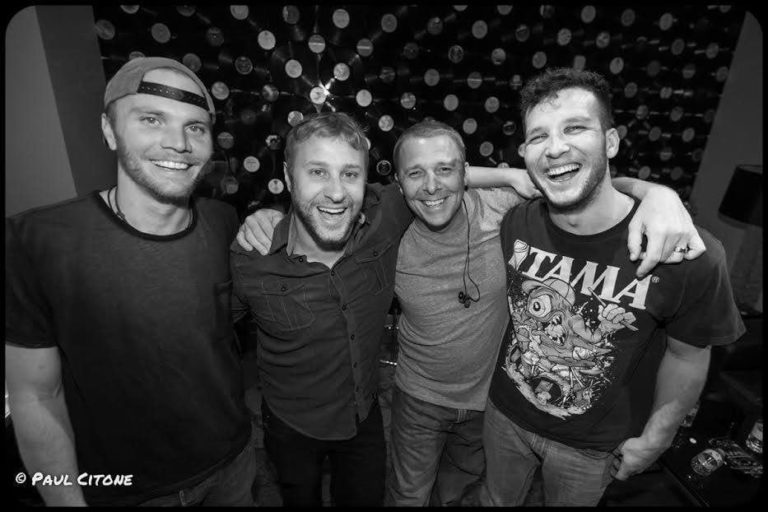 The group consists of Brian Moss (guitar), Jordan Fairless (bass), Andrew “Red” Johnson (keys) and Nick Tkachyk (drums). Their sound can be described as an electrofunk therapy, which combines deep sonic exploration and jam-heavy improvisation. With jams that stretch anywhere from 10 minutes to 30, their songs expand typical song structure, offering an original take on funk-dance-rock music.
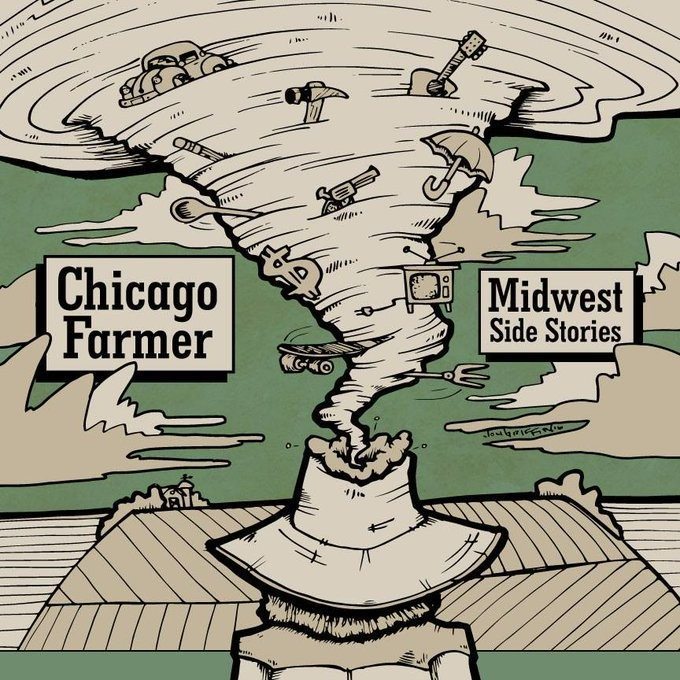 Chicago Farmer recently released his seventh studio album, Midwest Side Stories, which debuted on September 30, 2016 on his Chicago Farmer record label. It’s the follow-up to 2013’s Backenforth, IL. Chicago Farmer is the nom de plume of Illinois-based folk artist Cody Diekhoff, who has spent the last decade barnstorming bars and theatres across his native Midwest, traveling far and wide, through dim towns and bright cities alike, to perform for a growing legion of appreciative fans. Diekhoff was born in tiny Delevan, IL, has spent significant time in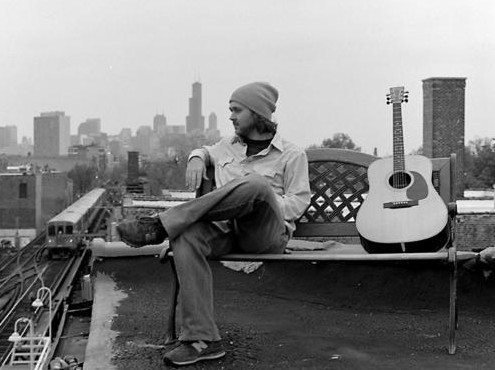
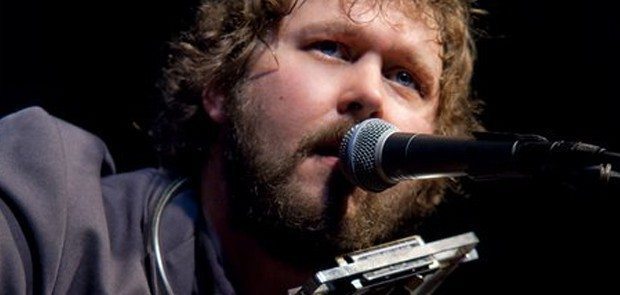
 Within Shadows

 Joan Baez, who is from Staten Island, NY, came to prominence following her performance at the
  Yes formed in 1968 in London, and despite undergoing many lineup changes, they have persisted in bringing virtuoso prog-rock to adoring fans around the globe for more than forty years. Led by frontman Jon Anderson, guitarist Steve Howe, bassist Chris Squire, drummers Bill Bruford and Alan White, and keyboardist Rick Wakeman, Yes created some of the most iconic music of the prog-rock era, including the hit song “Roundabout” and the epic album Close to the Edge.
 Electric Light Orchestra, the brainchild of Jeff Lynne and Roy Wood, began in 1970 in Birmingham, England and went on to sell over fifty million records worldwide. Melding a Beatles-like pop-rock sensibility with grandiose, classically-inclined orchestration became ELO’s hallmark, and led to their success with singles such as “Can’t Get It Out of My Head,” “Evil Woman,” “Strange Magic,” “Livin’ Thing,” “Telephone Line,” and “Mr. Blue Sky.”
 Journey entered the rock n’ roll landscape from the psychedelic San Francisco scene in 1973, spearheaded by ex-Santana players Neal Schon and Gregg Rolie; but it was the addition of renowned vocalist Steve Perry, in 1977, that propelled them to rock stardom. Their 1981 album Escape is one of the landmark’s of the stadium rock era and features their international smash hit “Don’t Stop Believin’,” which remains a cultural mainstay today.
 Unlike most of this year’s inductees, Pearl Jam did not have to wait long to enter the Hall after becoming eligible. Bassist Jeff Ament, guitarists Stone Gossard and Mike McCready, singer Eddie Vedder, and drummer Matt Cameron came together to launch Pearl Jam from the Seattle grunge scene into the rock n’ roll stratosphere. On the backs of five platinum albums (Ten, Vs., Vitalogy, No Code, and Yield), decades of fan-centric touring, and dozens of indelible collaborations, Pearl Jam stands as one of the most successful bands in rock history.
 Tupac Shakur, who was born in East Harlem, NY, is entering the Hall on the strength of his infamous and poetic brand of “west coast” rap. Tupac first broke onto the scene as a member of Digital Underground in 1991, and was murdered at the age of 25 in 1996, but in the five years between he released two albums that went ten times platinum with All Eyez on Me and Greatest Hits, penned two number one hits with “California Love” and “How Do U Want It,” starred in several Hollywood films, and sold over 75 million records.
 In addition to the six performers being inducted in 2017, Nile Rodgers, a New York City native, will receive the Award for Musical Excellence. With bassist Bernard Edwards, he formed the iconic disco band CHIC in 1977, which produced the hits “Le Freak” and “Good Times,” on their way to becoming the cornerstone of the Studio 54 dance scene. Then, beginning with Sister Sledge’s “We Are Family” in 1979, Rodgers went on to cultivate a spectacular career as a producer, which saw him work his magic on classic albums for the likes of Diana Ross, David Bowie, INXS, Madonna, the B-52s, Jimmy and Stevie Ray Vaughan, and Daft Punk.
 The Rock & Roll Hall of Fame Induction Ceremony, the 32nd annual, will be held at Brooklyn’s Barclay’s Center on Friday, April 7, 2017. Ticket on-sale dates will be announced in January.