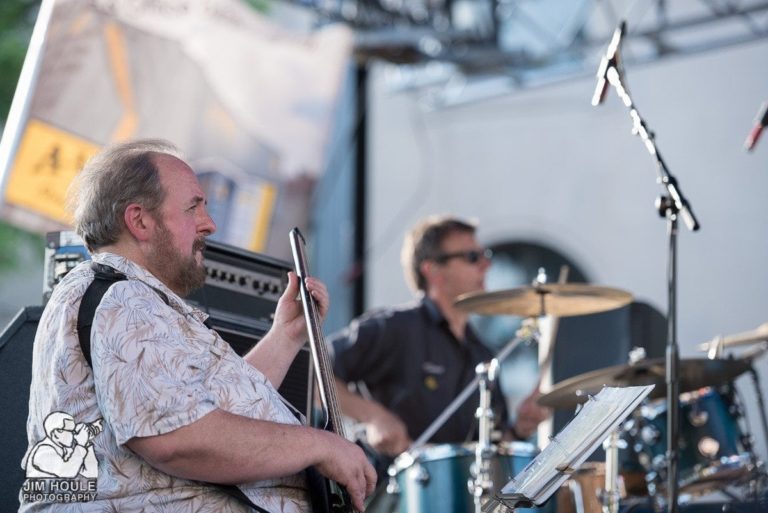
Bassist Tony Markellis, best known for his work with the Trey Anastasio Band, The Mamas and the Papas, Paul Butterfield, David Bromberg, and his own group, the jazz ensemble Kilimanjaro, will be playing a host of local shows in the Northeast to close out 2016.
On Sunday, Dec. 4, Markellis will join the Burns Sisters, a folk duo from Binghamton, performing their holiday show at Caffe Lena in Saratoga Springs. Then, on Friday, Dec. 9, he will return to Caffe Lena with Jeanne O’ Connor and the New Standard to treat Saratoga Springs to fresh renditions of classic hits from the 1960s and 70s. Next, performing with moe. drummer Vinnie Amico’s side-project, the progressive newgrass outfit Floodwood, Markellis will travel to Wilkes-Barre, PA for stops at the Jazz Café on Saturday, Dec. 10, and for a private concert on Sunday, Dec. 11.
Markellis returns to New York, rejoining the Burns Sisters for their holiday shows at the Hangar Theater in Ithaca on Friday and Saturday, Dec. 16 and 17, and at Six on the Square in Oxford on Sunday, Dec. 18. Lastly, in bringing 2016 to a close, Markellis will reunite with his longtime running mates in Kilimanjaro for a New Year’s Eve performance at the First Night Burlington festival.
And don’t miss a chance to see Markellis with the Trey Anastasio Band this upcoming spring. New York fans will get first crack at TAB tour with two Capitol Theatre shows on April 14 and 15.
Mr. K Phillips opened up for Rob Thomas and the Counting Crows at SPAC in Saratoga Springs, so naturally, we had to speak with this young up-and-coming ranch-raised Texan about his passion for story-telling.
Listen to interview: https://www.youtube.com/watch?v=ve-EK4DeG9M
Listen to the abridged feature/interview
Recess with Spinelli: How’s the trip going, any highlight so far?
K. Phillips: Everything is a highlight. This is a highlight; we’re in Saratoga Springs there’s 24,000 seats in this venue. It’s like I died and went to heaven, I’m just glad to be here.
RWS: It sounds like this tour is largly outdoor amphitheatres?
KP: Yes. I loved it. It’s a little harder for us because the band rehearsed so much and and we’re so good at playing a club setting but nothing can prepare you for playing on a gigantic stage; it’s made out of aluminum and the sound shoots everywhere and it bounces off the back of the hill and comes back to you and it was very challenging, first to learn how to hear each other to play on the stage. I’ve been touring the United States for about seven years but that’s usually in front of you know, 15 people a night.
RWS: When that transition initially happened, from going from playing in front of 15 people to playing in front of thousands or 20,000 what was your initial mindset change?
KP: It’s actually actually easier because when there’s 5000 people watching you who haven’t seen you seen you, some of them are listening and so maybe like 2500 people are actually watching you attentively. It’s actually easier because you feel like you’re doing something. Sometimes when you play for 15 people, 2 of those people are listening. We’ve been ready to do this but nothing can prepare you for it.
RWS: The way we heard about you was through interviewing Adam Duritz of Counting Crows; Adam spoke very fondly of you and told us to check you out, How long have you actually known Mr. Duritz.
KP: In 2012…he sponsors a blog that finds new music and he listens to all of it. He doesn’t have to do that but he still does. I mean, I think that’s what makes him great, is that he loves music and he’s always filling the well. It was so funny when we started to play and he used to come to my shows and it would be 12 people, but then 1 of the 12 people would be Adam Duritz. It was almost embarressing, you know like “you like me, but I don’t have any fans yet.” I mean he’s like one of the greatest writers of our time and one of the greatest literate writers. it’s a very special thing for me. And Rob too, I didn’t know Rob before this tour; they’re 2 of the nicest guys I’ve ever met and they don’t have to be, they’re super successful, they watch every show of mine and then they going to put on a show on the kill and after that we hang out; it’s amazing. I never want it to end
RWS: Have you noticed any doors open or any opportunities come your way because of this?
KP: D’Angelico, the great New York guitar company gave me a guitar. They sent me to their showroom and I just pick out a guitar to play for this tour and that was so nice. Being somebody that they think is worthy of an endorsement, that’s kind of neat to me. Right before this tour I had a guitar in pawn which I lost because I couldn’t afford get out of pawn. And then D’Angelico gives me this way better guitar than I had in pawn. It’s just funny how your life changes so quickly when people help you
RWS: Now with Mr. Duritz, I believe that you’ve done some work with him in the past, I think I saw that he covered “Kat’s Song” and I think I heard that he worked with you on the new albums?
KP: Yeah, he let us record some stuff at his house, so one of the new songs on this was recorded at his house and actually, a guitar that we used, we found out later was the guitar from the “Mr. Jones” video, which is funny. I was like “this guitar sounds so Counting Crows. So we recorded at his house and he sang on it and he added this four-part harmony like it was nothing. A few years ago I was watching the Counting Crows. We were at the Bowery Electric and the Crows were playing a cigartette show and my friend Nekia was playing a song with them and he’s like “Dude, you gotta video tape me doin’ this song” and I’m like “Man I gotta go, I have my own show” and he said “This is gonna blow your mind.” They go into this song and I’m like “That’s funny, I have a song that sounds alot like that.” and then Adam Duritz sings “I took that young thing to dinner,” which is my line to a song I wrote called “Kat’s Song” and I realize at that moment that they’re not doing a song that sounds like my song, they’re doing my song. I started weeping, it was like a lifetime achievement award. The Counting Crows have too many good songs.
RWS: As a songwriter, would you say you have a certain duty or responsibility either to yourself or to the listener to write an honest song?
KP: My duty is to connect people and to write things which connect the song with the listener, and the only way you can do that is to have an honest narrator. When you do that, it doesn’t matter what the story is, it’s going to connect, it’s gonna help people through whatever the situation is.
RWS: How do you know whether or not you are being honest?
KP: I know because, there’s a poem by Robert Graves, which I always go back to. It’s actually what our LLC is named after. It’s called “Love without Hope” and in four lines, Robert Graves tells the story of this bird catcher in industrial England, he spends his day in this park, everyday his job is to put larks in his hat, take them to a baker, baker gives him a piece of bread, maybe a piece of coal and that night he goes with food in his stomache and he doesn’t go cold; that’s all he has to do, just grab the birds before it gets dark. On this particular day, he’s leaving the park, he’s got his birds and he sees this beautiful white carriage drawn by two white horses and inside is this beautiful squire’s daughter and here, this lowly birdcatcher, sees this girl and he looks at her and shee looks at him and he tips his cap; the birds fly out, the larks fly to the heavens and she watches them go to the heavens and he’s made this impression on this girl he’d never have a chance with. Now he goes home and he’s cold and he’s hungry, but he’s made an impression on this girl. I’ve never been a birdcatcher, bu I know from that story, I can relate and I think about that story all the time and if I wonder if my narrator is being honest, I just compare it to that, “Love without Hope.”
RWS: Was it a relief when you were finally able to put your thoughts on paper in a cohesive manor that could be understood?
KP: Yeah, but I can’t do that every time. After each song you write after every record you write, you’re just starting over. You’d think that you would get better, but the only thing that gets better is your expectations, I’ve definitely gotten better at finishing songs, I’ve gotten better at writing with people. This last record was writted to be a breakup record. That was fun for me to go like “How does this fit in?” or “There’s a song called 18 year old girls,” an 18 year old girl who like looks like a grown-up but she’s totally not. It’s funny the idea of this character who’s come out of a relationship and he’s gonna bring this 18 year old girl around to his friends and they’ll be like “What are you doing, dude?” So I am looking for more perspective than I am looking for the next what I can’t have. What gets me off about songwriting is finding different angles and funny scenarios.”
Recess with Spinelli can be heard every Wednesday 8pm-10pm EDT on WSPN in Saratoga Springs, NY on 91.1FM and on Hoxton FM in London, England every Wednesday 11pm-1am GMT 6pm-8pm EDT
Pauline Oliveros, experimental composer, electronic music innovator, accordionist, pioneer of the Deep Listening philosophy and Distinguished Research Professor of Music at Rensselaer Polytechnic Institute, passed away Thanksgiving Day at the age of 84.
During my own time as a student at RPI studying soil mechanics and structural analysis of steel and concrete I somehow found the time to add an electronic arts minor to my transcript. I had heard of a class called ‘Deep Listening’ and it seemed to this then-junior engineering student like a curious subject to help round out the arts minor. It wasn’t until my senior year – when it was too late to reconfigure course schedules – that I had a taste of this subject when my advanced computer music class sat in on a session happening two floors above in West Hall.
Near one side of the room a dozen or so students was Pauline Oliveros, deeply immersed in the multi-channel surround soundscape created with her cherry red accordion and numerous effects processing. Seeing the focus of those students in a music setting unfamiliar to me was incredible and proved an importance to her course.
Oliveros was interested in music from a young age, learning accordion from her mother in Texas at age nine and learning the French horn and tuba later on. Her education took her through music programs at the University of Houston and San Francisco State College where she obtained a Bachelor of Fine Arts degree in composition. She remained in academia for several years, teaching at Mills College and UCSD. In 1981 she left UCSD to come to the Hudson Valley, where a less restrictive creative environment allowed her to further explore performance and composition where she later founded the Deep Listening Institute.
She introduced herself to the idea of deep listening in the early 1950s when she got her first tape recorder. “I immediately recorded from my apartment window in San Francisco,” she recalls in a 2012 interview on WRPI in Troy, NY. “I listened as I recorded but when I listened back to the tape I heard things that I hadn’t heard when I recorded. So, I realized that I hadn’t really been listening. Since then my mantra has been listen to everything all the time and remind yourself when you’re not.”
The term “Deep Listening” hadn’t been coined for many years after her early experiments with tape recordings and work with the San Francisco Tape Music Center, though the ideas and teachings were there in Oliveros’ early academic career in experimental music and composition. “Deep Listening” as a term was a coincidence of pun associated with recordings made in the Dan Harpole underground cistern in Washington State in 1988 with two of her musical partners Stuart Dempster and Panaiotis who then donned the name for the group of Deep Listening Band.
Deep listening, in brief, is about treating listening as an active rather than passive process, a process that takes some effort. “Deep Listening is listening in every possible way to everything possible to hear no matter what you are doing,” Oliveros described. “Such intense listening includes the sounds of daily life, of nature, or one’s own thoughts as well as musical sounds. Deep Listening represents a heightened state of awareness and connects to all that there is.” That philosophy has led her to have a profound influence on music through improvisation, meditation, and use of electronic music.
Oliveros’ extensive fifty-year career as a leader in avante-garde and experimental music included numerous recordings under her own name and with the Deep Listening Band. Along with these recordings, Oliveros has many publications, videos and has given many lectures and workshops out of the classroom setting. She received several awards in her career, including the most recent biennial John Cage Award in 2012, given by the Foundation for Contemporary Arts in New York City to individuals who have made outstanding achievements in contemporary performing arts.
From 2001 until her passing, Oliveros had been teaching Deep Listening and conducting research at RPI in Troy. Her collaborative research at the university included the Adaptive Use Musical Instrument (AUMI) – a development of adaptive musical instruments through computer interfaces for those with mobility restrictions – and others including artificial intelligence programming for improvised music and data science research with the university’s School of Science.
In 2012 a celebration of Oliveros’ 80th birthday was held at the university’s Experimental Media and Performing Arts Center (EMPAC). Oliveros, along with the Deep Listening Band, gave a performance utilizing computer simulations, developed by architecture acoustics professor Jonas Braasch, of the acoustics of the cistern in which the band recorded in 1988, implemented using technology within the theater.
While Oliveros had an extensive career as a composer and performer, many people who have worked with her have been remembering her as a compassionate mentor, brilliant until her passing. Former student Blair Neal recalls of her impact, “Technology was never at the core of [class] discussions though, it was always the power of the human and how we communicated and listened to each other. That kind of teaching is something I try to carry with me always.” Another former student, Alex Bulazel shares simple words of gratitude, “Pauline was always an inspiration to her students, reminding them of the importance of creativity, artistic self-expression, humor, and most importantly, listening.”
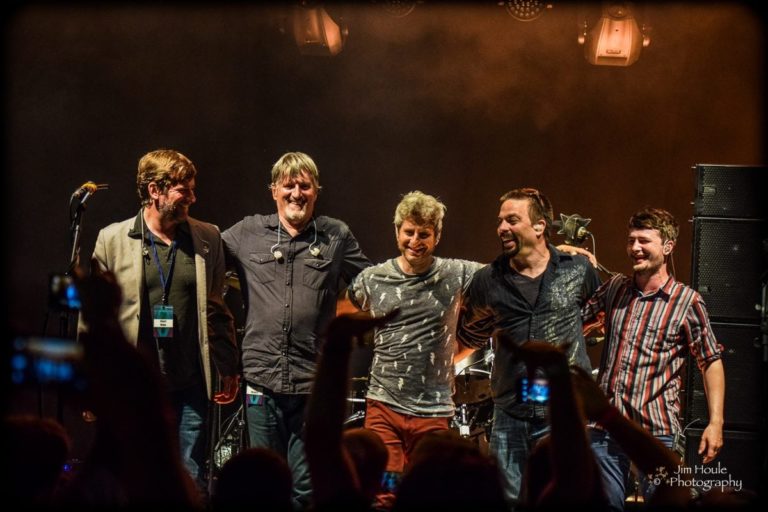
Halfway through the second set of his November 26 performance at The Egg, Mike Gordon paused to remark, “I think this is the best sounding venue on the Eastern seaboard,” which led to thunderous applause from the sold out crowd. Gordon spoke of his affinity for The Egg in a recent interview with NYS Music, something residents of the Capital Region have known for many years.
The two-set show opened with “Waking up Dead,” followed by “Jumping,” which featured strong interplay between Gordon’s bass, John Kimock’s drums and Craig Myers’ percussion, which broke down into a bluesy duel with Mike and guitarist Scott Murawski working up and down their instruments. A stand out jam was built by Kimock’s drums during the set closing “Traveled Too Far.”
A six-song second set featured “Just a Rose” by Max Creek, a high energy number that added a spark to the crowd. A dark “Yarmouth Road” segued smoothly into “Let’s Go,” which brought out the interactive instrument REEL into the crowd, which fans touched to add to the jam (Mike got in a few touches too). Robert Walter’s nasty keyboard work was on full display during “Take it as it Comes,” while “Tiny Little World” closed the set with “My Sharona” teases mixed in.
An encore of “Sugar Shack” had Mike invite fans to dance on the front of the stage, perhaps to the dismay of security but with absolute joy from the looks of fans dancing and smiling to close out the night.
Set 1: Waking Up Dead, Jumping, Morphing Again, Don’t Chin The Dog > Let Her Go > Traveled Too Far
Set 2: Here Today, Just a Rose, Yarmouth Road > Let’s Go, Take It As It Comes, Tiny Little World
Jam for Tots returns to the Capital Region of New York for the 10th year in a row, with a series of performances that bring the live music community together in supporting children in need this holiday season.
Hosted by Luke Weiler of Positive Mental Trip, the event started as a way to help make less fortunate children happy and doing so through music for a positive cause. Working with The Marines Corps, who run Toys for Tots, the events grew from one in 2007 to nine in 2013, while keeping a focus on the Northeast as an area of need.
“Our goal for 2016 is to make as many children happy on Christmas Day and make sure that every person that comes to Jam for Tots leaves happy and glad that they took the time to come,” said Weiler. “We go to great lengths every year to make sure people have a blast at Jam for Tots with raffles, giveaways, great bands and all around good vibes. When a town and a good promoter get behind these events, there is really nothing that can stop them from being successful. This year all four shows are in places that love Jam for Tots and are all about it so they are all gonna rock.”
The four Jam for Tots events kick off on Friday, November 25 in Tannersville at The Spinning Room. Bring a toy for a child as your cover charge for the shows.
On Saturday night at the Palace Theatre in Albany, Dark Star Orchestra (DSO) brought the good ol’ Grateful Dead back to life in a stellar fashion. Excitement filled the room before the first note was played as word had spread that Jeff Chimenti would be on keys for the entire show as he did the night before in New Haven, CT. Normally holding down the boards, Rob Barraco replaced Skip Vangelas on bass creating a music chairs scenario that we were all ready to embrace.
Opening the set with a heartfelt “Sugaree,” the Capital Region crowd began to “shake it” on low gear while blissfully enjoying Jeff Mattson’s passionate vocals. After the silky first set introduction, rhythm guitarist Rob Eaton wasted no time channeling the cowboy in Bob Weir with a wild west “Me and My Uncle> Big River” one-two punch. While “Me and My Uncle” is by far the most played song in the Dead’s expansive repertoire, I never get tired of the rockabilly energy release after a soul searching Jerry Garcia tune. Chimenti gave the fans a symbolic “YEEHAW” on the keys during “Big River” and reminded the room why he was invited by the remaining Dead members to join them on the “Fare Thee Well” run.
Slowing things down with an exceptional threesome of “Peggy-O,” “Cassidy” and “Friend of the Devil,” this show was starting to feel like a classic late-70’s gathering. Barraco displayed his nasty bass playing abilities during “Peggy-O” before Lisa Mackey floated her way on stage during “Cassidy,” playing the role of Donna Godchaux. She would return two songs later for “From the Heart of Me” which would turn out to be one of the last times this tune was ever played on stage. It was after “Ramble On Rose” that a wide-eyed seasoned tour-veteran giddily informed me of the Grateful Dead show the Orchestra was recreating: January 11th, 1979 from the Nassau Veterans Memorial Coliseum in Uniondale, NY.
My original hunch of a late-70’s show turned out to be true, but I did not realize the importance of the date until hearing the tear-the-roof-off “Jack Straw.” Cowboy Bob was back for this desperado masterpiece as Mattson threw in some rawer than usual jamming. Deadheads young and old call this one of the best versions of all time for the blistering Jerry solo and, nearly 38 years later, DSO honored their heroes to the fullest extent. Also noteworthy in the original performance was Bobby’s comical word-swap as he sang, “We used to play for acid, now we play for Clive.” But from what I heard on Saturday, Eaton left those lyrics in 1979. Out of all the stand-out moments of the first set, the vocal belting of “Jack Straw from Wichita” hit the crowd with a sonic uppercut that we didn’t recover from until after set break. The always rockin’ “Deal” closed out a set filled with Jerry’s greatest hits and some colossal Bobby moments in between.
Picking up right where the first set left off, “I Need a Miracle” carried the tidal wave of momentum that was felt over the intermission. “Ship of Fools” calmly sailed into the number two slot of the second set before kicking off another Weir-inspired highlight in “Estimated Prophet.” Chimenti, Barraco and Mattson provided the foundation for the psychedelic reggae and while we were in Upstate NY, the California lyrics were shown a lot of love. “My time’s comin’ any day” eerily stood out to me as the original 1979 show would be Keith Godchaux‘ last appearance at the famed Grateful Dead stomping grounds of the Nassau Coliseum. An even more fitting tune for the final night of Keith in Long Island, “He’s Gone” allowed my over-thinking self to read even further into the lyrics, symbolism and song placement of my favorite band. Fortunately, we were given a temporary vocal time-out and the spinners in the audience were treated to a short and sweet “Drums” by Dino English and Rob Koritz on kits and percussion.
[singlepic id=6787 w= h= float=none]
New Yorkers from Long Island to Albany were able to enjoy the home state lyrics delivered in the straightforward version of “Truckin’” before the second major highlight of the set, “Stella Blue.” Mattson made his guitar strings shine one more time during this bluesy crowd pleaser. “Stella” may have a somber tone, but Jerry’s fiery guitar solo always brings the boil to high during this signature ballad and the Orchestra perfected the nucleus of the original. Closing the second set with a reminder of all we really need, “Good Lovin’” pleasantly drifted off into DSO show history.
The boys encored with “Casey Jones,” which serves as a rarity in late-70’s era. The “upper” drug reference in one of the band’s most radio-played tunes gave the crowd the extra pep in their step before pouring out into the street of Albany for a night cap. Similar to the good ol’ Grateful Dead, Dark Star Orchestra seems to have a particular affinity for the Empire State. While I have not done the research, I would suggest that New York may have more Deadheads per capita than any other state from sea to shining sea. Saturday night’s recreation of a legendary 1979 Nassau show performed in front of an Albany crowd furthered my love for New York State, the Grateful Dead and the incredibly talented Orchestra that pays tribute to them tour after tour. DSO returns to the state with “the ways and means” for two shows on November 25th and 26th at The Paramount in Huntington.
01/11/79
Nassau Coliseum – Uniondale, NY
Set 1: Sugaree, Me And My Uncle, Big River, Peggy-O, Cassidy, Friend Of The Devil, New Minglewood Blues, From The Heart Of Me, Ramble On Rose, Jack Straw, Deal
Set 2: I Need A Miracle, Ship Of Fools, Estimated Prophet, He’s Gone, Drums, Truckin’, The Other One, Stella Blue, Good Lovin’
Mike Gordon has returned to the road, with a Fall Tour stretching from the Midwest to the east coast. Having just wrapped up Phish’s Fall Tour in Las Vegas with a performance of David Bowie’s The Rise and Fall of Ziggy Stardust and the Spiders from Mars, NYS Music talked to Mike about his favorite moment from the instant classic set, the goals of improvisation, and what he loves about The Egg so much.
Mike Gordon will be in Pittsburgh on Tuesday November 22 at Stage AE, Town Ballroom in Buffalo on Wednesday November 23, Higher Ground in Burlington on Friday November 25 and The Egg in Albany on Saturday, November 26.
Pete Mason: This is your third show at The Egg in Albany. Your show from 2011 was even released as a live show. What is the appeal of the venue to you?
Mike Gordon: The acoustics are pretty incredible, I don’t know what it is about eggs, part of how they built it I guess. I had been in the past to see Jerry Douglas. I remember liking the weird shape and it sounds good. The first time, you could hear a pin drop, and when it got loud it was a good kind of loud. And it’s nice how it’s just nestled there in Albany. I love that word. Nestling.
PM: Is there a moment you hope to reach in improvisation? A certain goal in mind?
MG: Not so specifically as a specific goal. There are different kinds of goals in there, set personally or with bandmates, different feelings. I’ve had different unique experiences, some are high energy, some are about a lot of sweat. All moments have to be unique, not just rehashing to feel special. There are kinda high energy ones, some more dreamy – in that department, what I used to say, is that my goal in music is to bridge the gap between being awake and asleep – there really is, in the middle of a jam that feels like it’s playing itself, this kind of opening in my soul or somewhere in my mind that accesses a neural network or feelings that I can usually only sort of traverse in night dreams. That’s why I’ll remember certain night dreams, the feeling, the location, the people, some aspect of it. That’s the biggest goal.
Being 100% in the moment is the true catharsis of what people have or are overcoming problems. In an experience it doesn’t mean you can’t keep track. When it’s not happening and it’s sort of a road trip to another song, then I forget how deep these experiences can be. Then I’m reminded, and I don’t need to be anywhere else in the world and I can be in a cozy living room or somewhere else.
I’ve been in a philosophical mode – my answers are veering this way for interviews lately. There are so many other feelings and metaphors. A complicated answer and definitely something I think about a lot.
PM: Why do you feel that is?
MG: Switching projects, my album, my daughter – so much going on at once. That allows for some cross referencing and applying one inspiration to another to go back and forth to blend all the experiences together and have it come out either way.
PM: What compels you to have improvisation as such a large aspect of your music?
MG: I have one band that jams a lot, maybe not enough for fans who want every song jammed out. But enough that St. Vincent made fun of it (the jamming). I think I have that (with Phish), so (with Mike Gordon Band) I can rock and work with catchy hooks in fun ways, or ask “How can we experiment with new sounds?,” but what happens for me, even if it’s not what I’ve been writing about in my journals compared to 30 years ago, these little peak experiences remind me that there is a deeper well to be tapped into than what the surface level of what music can provide. There is something that if you believe in it and allow it to go deep into your soul, it’s deeper than one can remember. Anything they try to read and watch later isn’t going to be the same, when the experience becomes irreplaceable. For me, I just keep getting reminded of total spontaneity and what you can plan for, but there is some planning that is necessary and good. Sometimes I think about how my favorite Radiohead show was really deep and dreamy and all the songs were 3 minutes long. If something feels really good, I don’t want it to end, I want to bask in it. Like when you get a new video game, you want to keep playing it. I don’t want things to end at 3 minutes, but if it does that’s OK.
With Phish and my experience being in bands with long jams, in the middle of that long jam, something may come up that has nothing to do with the song. Melodies, chord progressions, not as often lyrics, but sometimes lyrics. Made up stuff comes together, almost as a new song, even with its little emotions, flashbacks, dreams, chords, melodies, a whole new little song. So cool to be able to get to that. But wait a minute, this little new song that came out of the jam, taken on its own, could just be a song on the radio – pop, old blues – that isn’t filled with all this cosmic stuff and it’s not a dream song. Maybe there is another route to get there. Maybe there is a different way to get there, by writing songs, that don’t have improv to be enjoyed.
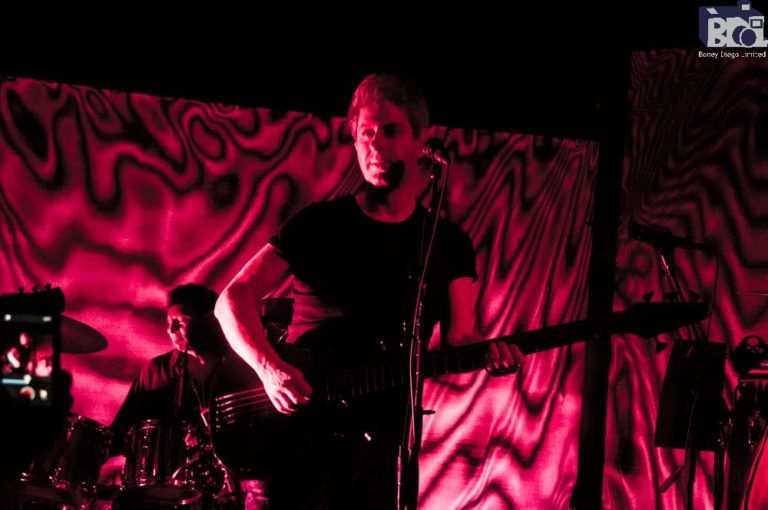
PM: “Let’s Go”, which was left off BigBoat, was performed by your band this summer at Catskill Chill, and twice this year by Phish. Will the catchy tune have a home in both band’s repertoires?
MG: I think so, yeah. Scott and I have been doing a lot of writing over the last couple years and I don’t think I’ve said this before, but it came out of a jam my band was doing, some sort of outro, and I just started singing that chant and saved it, and I loved that chant. My friend Fonzworth Bently (From G’s to Gents) was at my band’s L.A. show, and he loved the show a lot and offered some feedback, “I wish you could address the crowd more, say some stuff,” which is interesting since I’m from a world where we don’t talk to the crowd. I wondered “What would I say?” and my friend replied “What about ‘Let’s go?’” When we played House of Blues Boston, we were Googling this medley as a joke of all the songs that have ‘Let’s Go’ (The Cars, Richie Valens) so we went into a writing session, liking the chant, and working off a list of songwriting ideas, this demo we made had a hip hop groove, it sounded sort of fresh, a fresh style for me, mixing synth guitar and drum machine with live percussion. Trey said he kinda lit up when he heard it – we don’t have a chant, aside from “Fuego.” BigBoat was so open ended where I bring songs that are open ended and have more room to build. Trey put it back on the list in the studio, mid-recording, and Bob Ezrin suggested we try it with only drums, all singing, with no other instruments, all after one take. We added in some toy synth sounds and went through an evolution that didn’t sound right.
PM: Were there any lessons from Big Boat that you have applied to your own band?
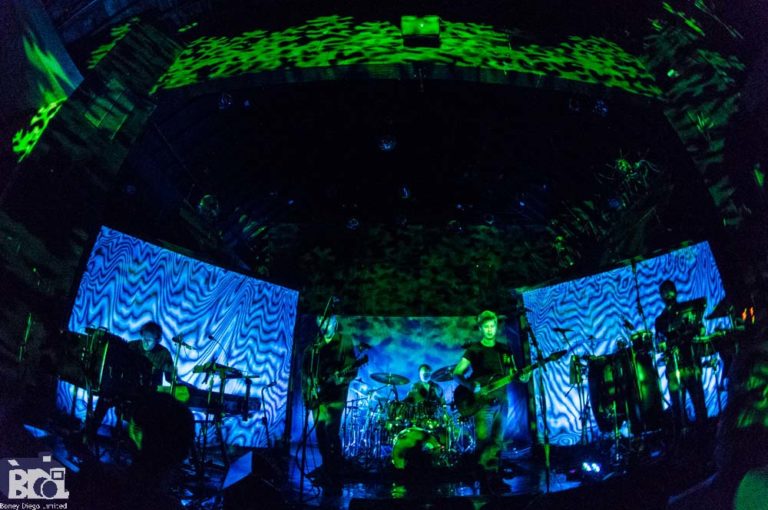
MG: There are always lessons. In terms of BigBoat, there were a wide variety of songs on there, which stemmed from the lesson with Bob about being more heartfelt and direct about some songs. When Trey first brought “Miss You,” he played his demo for us, just him strumming and singing and it was authentic, he did miss someone. The chord voicing thing, it sounded unique, like Trey. I appreciated the directness. Bob sat us down and talked about taking the cleverness away and keeping emotion, which he’s done with Pink Floyd and U2. When someone challenges you, I like to look at both ends of spectrum. We want to try that out a bit more. I take it as a grain of salt when I realize I don’t know what my songs are about, and that is intentional. Like “Come Together,” where Lennon admitted it was filled in with gibberish, but it sounds so good. Sometimes directness doesn’t work for me, especially if it feels too plain and other times it does. That’s one thing to think about from that experience. Maybe the way the themes were tied together, there were certain nudgings in certain directions. I liked those directions and discussions, and liked to directly go to YouTube and bring up some influences as old as they might be, and learn some grooves from legendary artists and not be afraid. I really like Page’s song ‘I Always Wanted it This Way’ – he spent over 10 years on it. I’ve been really getting into “Petrichor,” being so long and having 22 sections, it is really fun to digest. There’s a collection of little things.
PM: What was your personal highlight from the Ziggy Stardust Halloween set?
MG: I liked it all. Maybe it was highlight of rehearsal for “It Ain’t Easy” and Trey got to sing while I played one note. At the show I think it was different, really all of it together, just a feeling of how comfortable I was doing it. As we always do getting into the mind of another artist, I really like being in that world but feeling like myself, but I liked singing “Starman” because it was the first song everyone knew that was a hit. Having everyone singing along felt amazing.
PM: What books, movies and music have you been enjoying this year?
MG: It’s actually a book Phil Lesh lent me – I have to get this back to him – “In Perfect Timing” by Peter Caddy, about the formation of a community in Ireland where the term ‘New Age’ came from where they use spiritual guidance: “I can do it” and “I can climb the biggest mountain.” I’m slowly getting my way through it. I love the weirdness and empowerment feeling.
I keep missing movies I want to see. Grand Budapest Hotel stuck as a landmark for me where I was like ‘Yeah, I seriously like that one.’
I’ve been checking out producers and such, my bandmates provided these albums they’ve been listening to and mine hasn’t gone out yet. Warpaint, Can, my daughter is now only spinning Megan Trainor. She had gone into World Pop 40 on Spotify, and now she has been listening to it as a guilty pleasure that she comes up with. So sonic to indie to pop to indie pop to kraut rock.
PM: In listening to Megan Trainor, had you noticed any similarity between “All About that Bass” and “Contact?”
MG: All about that bass… I hadn’t thought of that. I like the lyrics, some of her songs go straight back to 1950’s with a modern twist, but some is exactly out of there.
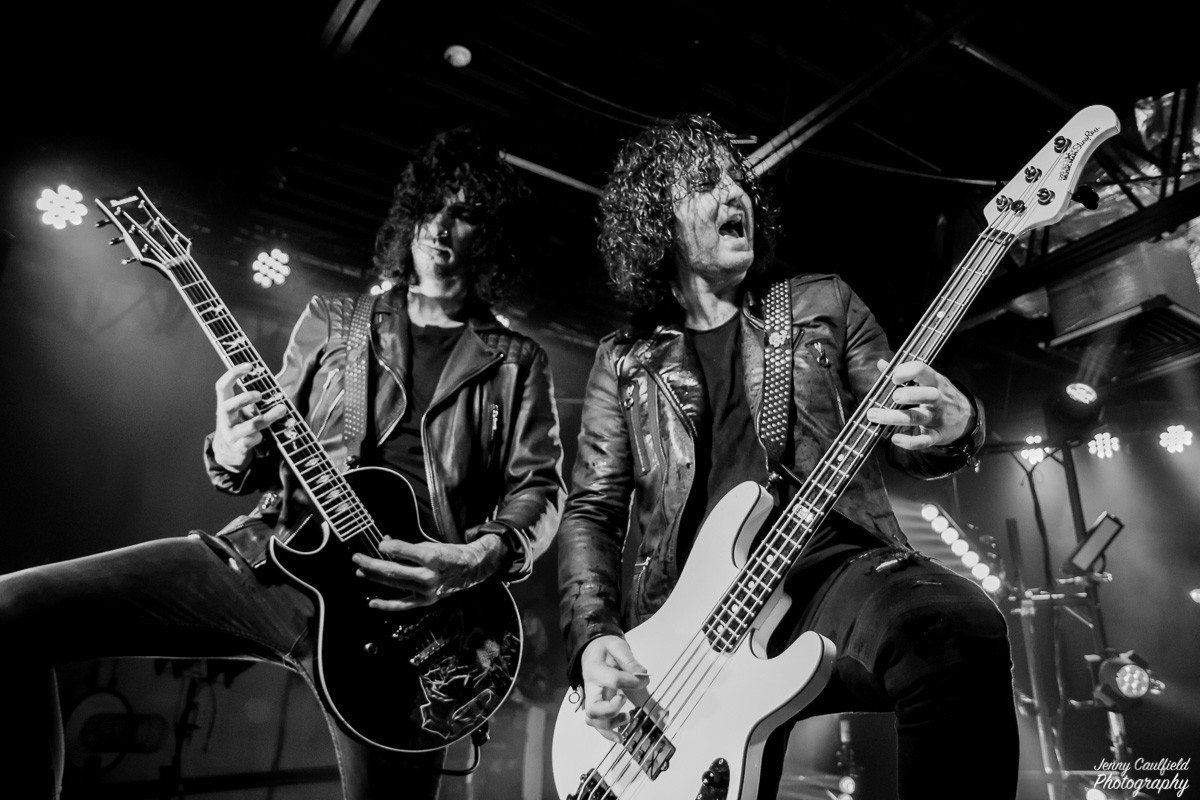
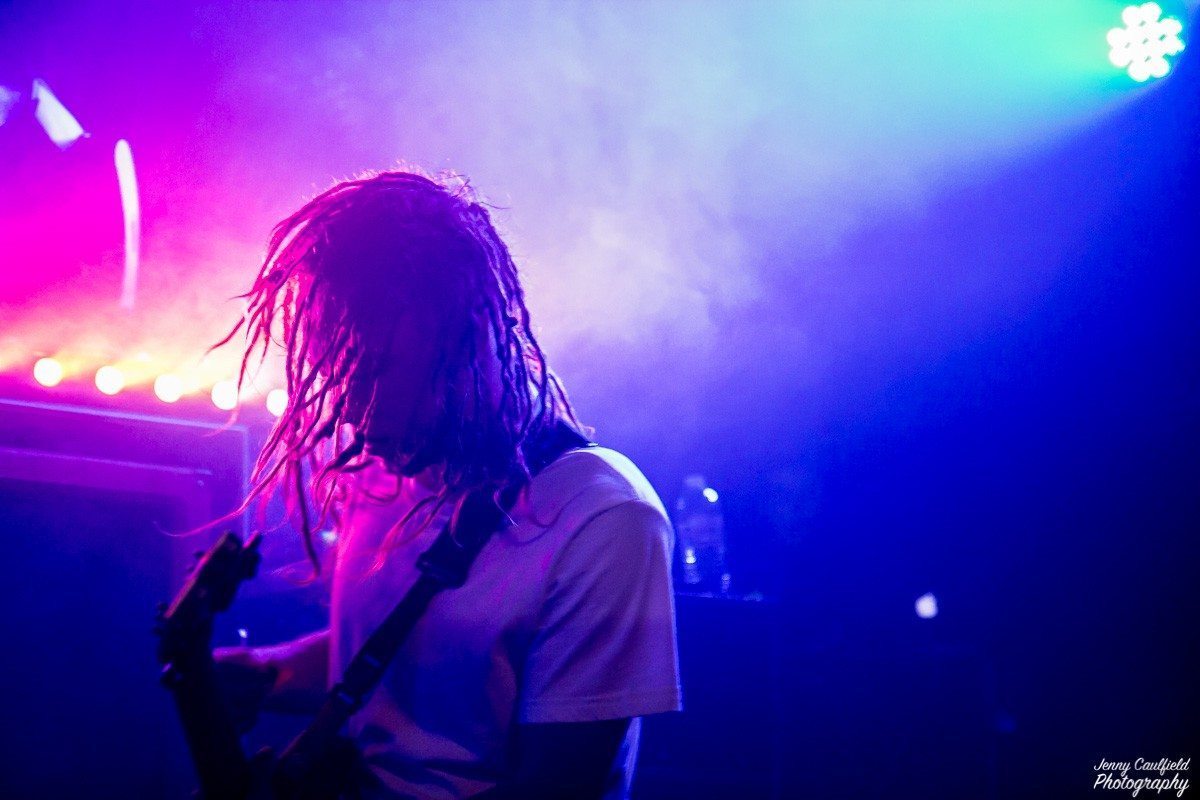
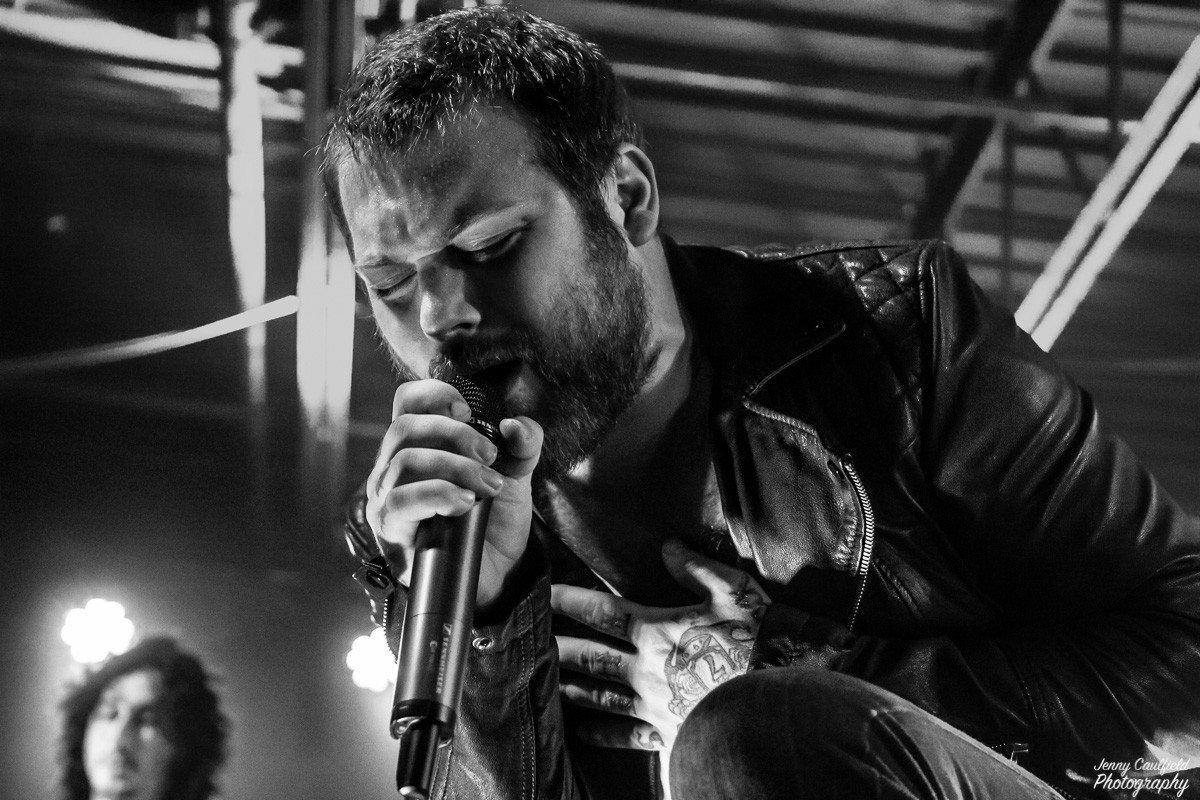
Old school fans of Asking Alexandria cannot miss the 10 Years in the Black Tour. On November 15, Asking Alexandria alongside Born of Osiris, I See Stars, After The Burial, Upon A Burning Body and Bad Omens, brought the tour to Upstate Concert Hall in Clifton Park to showcase not only the best of the Sumerian Records, but the best of each band as well.
Asking Alexandria, headliners for Sumerian Records’ 10 year anniversary tour, have a surprise waiting for fans coming out this month. For any new fans of Asking Alexandria who expected to see songs from their latest release, The Black, performed on this year’s tour, you are surely mistaken.
Bad Omens opened the show with clean, intense, harsh vocals by vocalist Nicholas Ryan. They were the best way to start the night, especially impressive being the drumming by drummer Nick Folio. Their set allowed for the crowd surfers to come out early, and were just what the audience needed before watching Upon A Burning Body.
Texas natives, Upon A Burning Body, woke up the crowd to the fullest during, “Texas Blood Money.” A fan favorite by Upon A Burning Body, this was the first song of the night that really got everyone in the venue up and moving. At the end of the song, a couple in the crowd starting ballroom dancing to the Mexican interlude that followed the song.
Encouraging the crowd to be active, frontman Danny Leal invited fans to come up to him and give him a high five. “Don’t be afraid, every single one of you get the f-ck over here,” said frontman Leal.
Although this show was not a sell out and not everyone had arrived at the venue yet, during Upon A Burning Body’s set, there was a reminder of what a concert should really be like. A smaller number of fans were all working to get everyone off of their feet that wanted to crowd surf, and making sure they would get safely to the front of the venue.
Following Upon A Burning Body were metal group After The Burial. The excitement from Upon A Burning Body carried over into After The Burial’s set, with frontman Anthony Notarmaso encouraging shaking people around in the audience.
“If you came here with a friend start shaking this mother f-cker side to side. I promise if you do it, they will smile,” said Notarmaso before performing, “Collapse.”
Before performing their last song, the crowd was so upset about their set being over, fans started yelling profanities from the crowd towards the stage encouraging them to stay longer.
I See Stars, who released a their new album, Treehouse, over the summer, has gone from playing The Vans Warped Tour to being a part of this ten year celebration with Sumerian Records.
With their unique style of blending electronic and metal together, I See Stars were one of the most entertaining and energetic performances from the tour. Frontman Devin Oliver left no area of the venue untouched, whether by jumping on top of stereos to reach out to fans, or going up against the audience themselves.
“I want you to sing louder, I want you to jump higher,” said Oliver.
Although performing a majority of their set to promote Treehouse, there are some fans who were hoping for earlier I See Stars songs to appear on the setlist, like their 2012 song featuring Danny Worsnop of Asking Alexandria, “Endless Sky.”
All of the energy given off from Oliver was given back to him by the reactions from fans during their entire set.
Heavy metal quintet, Born Of Osiris, were the heaviest band on the tour, and fans knew it immediately. Although it can seem odd going from the upbeat style of I See Stars to the heavy style of Born Of Osiris, the shift was not as strange as fans may think.
Playing songs like, “Follow The Signs,” were exactly what they crowd needed to be ready for headliners Asking Alexandria.
Despite being named the, 10 Years in the Black Tour, fans of Asking Alexandria may find themselves pleasantly surprised about the content played by Asking Alexandria. This tour not only surprises original fans with old content, but they actually go through their evolution as a band.
Asking Alexandria, who reunited with original vocalist Worsnop and parted ways with vocalist Denis Stoff soon before the tour began, gave, according to Worsnop, “a whopping five days before the tour started,” to prepare for the tour.
With a lack of preparation and the confusion from fans, Asking Alexandria are using the 10 Years in the Black Tour to perform the stages of Asking Alexandria, starting with performing from Reckless & Relentless, followed by From Death To Destiny, and ending with songs from Stand Up and Scream.
According to Worsnop, bringing himself back into the mix makes the band feel they are back to how they were, “When it was five guys in a beat up RV in a Walmart parking lot in New Jersey.”
The chemistry between every member of the band surpasses any expectation. Despite being, in general, well-rounded musicians, the energy and connection between the members of Asking Alexandria is enjoyable for everyone to watch.
Every member of the band, whether it’s guitarist Ben Bruce, or guitarist Cameron Liddell, make sure to get up on speakers and get as close to fans as possible.
Worsnop, who has had vocal issues in the past, surprised the audience with the way his live performance has improved. His vocals, especially on songs like, “The Final Episode,” and “A Single Moment of Sincerity,” sound remarkably like the original recordings from 2009.
As well as going through the evolution of Asking Alexandria, the band also paused between songs to share stories and give background on some of the songs and the albums themselves.
“I’m not addicted to drugs anymore, that’s cool,” said Worsnop to introduce the middle of the show where they started performing songs off of From Death To Destiny.
The performance by every member of Asking Alexandria is not only incredibly impressive, but you get a sense that these five guys who started the band together, missed their time performing together. Any fan of Asking Alexandria looking to see old school Asking Alexandria songs performed, cannot miss out on the 10 Years in the Black Tour.
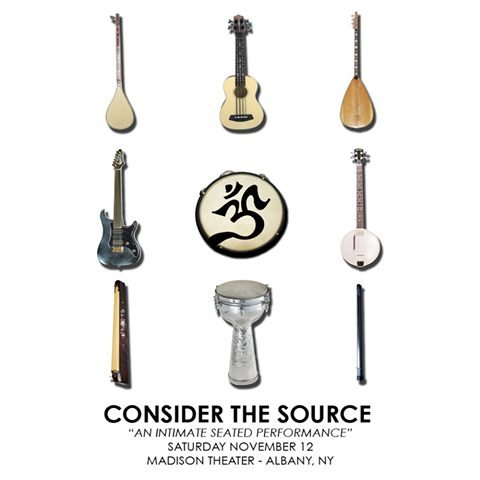
Walking down the sidewalk of Albany’s Madison Avenue, a laundromat and Tierra Farm Store are the book ends to a timeless, historic neighborhood theater, complete with old school signage and black typeface letters that spelled out “Consider the Source Tonight” above head. The sci-fi, Middle Eastern fusion band hailing from NYC that has garnered quite the following from the Jam community, awaits in a back room of the small Madison Theater, ready to offer fans an unforgettable experience of two sets: one acoustic and one electric.
If you’ve seen Consider the Source, I’m sure it’s been at your average sized music venue or perhaps one of many festivals that roll on through summertime. In rare, more intimate cases, CTS brings an acoustic set to the forefront of the stage. Back at Wild Woods 2014, 200+ people fell victim to a beautiful, serene performance that found its viewers seated on the ground, watching in awe. The trio has also surrendered an interesting choice of acoustic Radiohead sets to their fans. Madison Theater, on the other hand, would witness a cozy performance in a back room of a theater, able to hold no more than 100 people. Seats weren’t filled, but those who came prepared for the show with a drink in hand were ready to relinquish all control and step into an inter-dimensional journey of cerebral intellect and emotional engagement.
An unplugged, acoustic set is not what you’d expect from quite a powerhouse of a trio but that’s what makes the performance all the more distinctive. John, Jeff and Gabriel emerged from behind a curtain, which they referenced as a “hobbit hole,” towards the back of the stage, mirrored with two large, probably locally crafted paintings on each side. Just three rows back and even still, you were at their very feet, able to get a close up view of an array of atypical instruments and a minimalist yet captivating stage set up.
After quick banter and brief introduction with a small yet devoted crowd, they launched into acoustic set one with a prelude of harmonies that seemed straight out of Game of Thrones, paired with the stylings of rhythmic African drumming. From the get-go, it was clear to see each band member truly work with and bounce off one another in the heat of the musical moment. The atmosphere made it easy to get a closer look into their onstage operations, as they displayed top-notch eye contact and ability to follow and lead one another at the snap of a finger or the strike of a drum. Aside from the technicalities, their crescendos were master-level, able to give off sound as grand as a full-piece band or as soft as a mouse.
Song two, a Turkish tune by the name of “You Go Squish Now,” brought a double neck guitar to the stage– one Gabriel Marin is known to handle with integrity. The wails and cries of the double neck drew intense emotion from Marin’s face and demanded the attention of all in its path. Next up was an improvisational “Good Point, Wandering Bear” which found the group conquering their halting breaks and impeccable timing. In the midst of all of this, they cracked jokes in between song changes and asked each other to borrow instrument tuners, bringing us all back down to planet earth to realize that aside from their unmistakable talent, they’re just like the rest of us, if even for a second.
A fan-appreciated Star Trek reference kicked off song five, titled “There are Four Lights,” which found John exchanging banjos for basses and claiming “I forget how to play this one, who starts?” The last song of set one introduced the first major hand drum solo in the middle of “Tihai for the Straight Guy,” which is typically very electric and offered a captivating Dan Bau solo. Consider the Source makes you feel like you’re on a journey of self-discovery, inner-confusion and triumph as your passing through dimensions of time and space, only to be spit out where you started, feeling more enlightened than before.
Set two was plugged in and picked back up with Are You Watching Closely fan-favorite “Moisturize the Situation,” which is more up-tempo than most of the tunes delivered in set one. After coming to a band decision whether or not it would be 40/60 or 60/40, they launched into a song by the name of “40 Percent Gentleman, 60 Percent Scholar” while segueing into the first song drummer Jeff Mann ever played with the group. Macedonian track “Do Not Shrink Me Gypsy” was what solidified Mann’s involvement when founding drummer and member Justin Ahiyon parted ways with the group that began back in 2003. Fans were delighted to see the Mandolin make its way out on stage as well as the electric sazz for “More Than You’ll Never Know.” (Bonus points if you knew the title referenced Arrested Development.)
“Bass Wand Jam” came up next and as if their instrumental diversity wasn’t enthralling enough between Kala U-basses, Goldtone Banjo Basses, Dumbeks, Theremins and Mandolins, John threw a Slaptick bass into the mix. Essentially, its a thin, 5 foot bass-drum hybrid instrument. The rectangular piece of metal has a paper thin slab of metal running down it, which functions the same way as a string would. With two songs left, Jeff manned the drum kit while holding down a Dumbek solo during the appropriately titled “Doumbekistan,” before entering the last song of the night, “Tsim Sha Tsui.” The last two songs found Gabriel releasing his long strawberry blonde locks from his hat, a cultural Taqiyah.
When someone asks you to explain Consider the Source, you find yourself somewhat caught off guard. You know exactly how their magic makes you feel, yet no words seem to accurately depict their impact, as their sound is unrivaled and incomparable to the music that surrounds them. Their use of technique and one-off musical instruments make for quite a treat and although they’re huge in the Jam world, they continue to break boundaries with Middle Eastern influences and plan to dip into progressive rock and metal scenes as well. Those in attendance at Madison Theater witnessed quite a luxurious, musical experience– one that many dream of being a part of.
On Saturday, November 12, Highly Suspect, one of hard rocks bands that are fast on the rise, made their first appearance at Upstate Concert Hall in over three years, but this time, they headlined, and have all this momentum with a studio album, (with another on the way this week) a Grammy nomination, and few songs on active radio. So did the band live up to the hype?
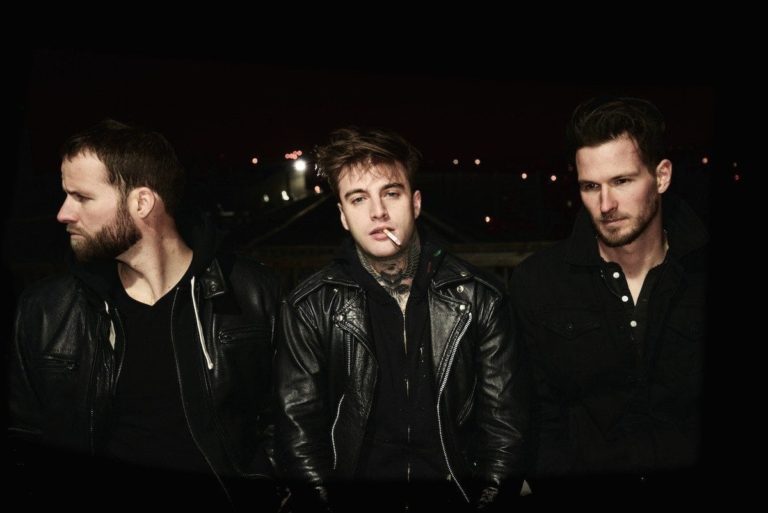
The night started with indie trio Slothrust, who received a warm reception from the packed crowd. Now I am not familiar with any of their material, but musically they were very clutch, and that “I don’t give a shit” attitude gives them a unique appeal. It will be interesting to see what the future holds from this band. My only minor criticism would be that there’s a minor lack of chemistry on stage between the three of them.
Things got very loud when Highly Suspect took the stage. There was plenty of build up before they got on. They started their set with “Bath Salts” easily one of the best songs off their debut album Mister Asylum. This band shares a unique chemistry between twin brothers Rich and Ryan Meyer and guitarist/vocalist Johnny Stevens. They’re heavy enough for the metal heads, they’re hip enough for the hipsters, mainstream enough for the casual rock listener, and have enough sex appeal for the ladies. You could take anyone with you to see this band and you’re guaranteed a kick ass time.
The band also did a wonderful job showing off their versatility between each member. Ryan Meyer had a couple of sick drum solos, and there were a couple songs where Rich Meyer took over lead vocals. Rich has more of a softer voice than Johnny Stevens, whom I think, has the most emotion behind his voice since Eddie Vedder of Pearl Jam. Highly Suspect also debut a few songs off their upcoming album The Boy Who Died Wolf such as “My Name Is Human” and “Serotonia.” But the main highlight was the song that everyone wanted to hear “Lydia.” They even teased the crowd a little bit during the song to add a nice element to it that would make this song extra speciallive.
After finishing their initial set, they came out with a three song encore and closed with the dirty tune “Fuck Me Up” that got the crowd pumped one last time. All I can say is that this band has a very bright future ahead of them and will be playing much bigger venues in the next couple years. Everyone needs to catch this band now while they’re playing the smaller venues. They’re a young, talented, power trio that will make bigger splashes in the music world and is giving rock and roll the much needed facelift that it needs, so that rock as we now know it, doesn’t fade to obscurity.

 During my own time as a student at RPI studying soil mechanics and structural analysis of steel and concrete I somehow found the time to add an electronic arts minor to my transcript. I had heard of a class called ‘Deep Listening’ and it seemed to this then-junior engineering student like a curious subject to help round out the arts minor. It wasn’t until my senior year – when it was too late to reconfigure course schedules – that I had a taste of this subject when my advanced computer music class sat in on a session happening two floors above in West Hall.
 The two-set show opened with “Waking up Dead,” followed by “Jumping,” which featured strong interplay between Gordon’s bass, John Kimock’s drums and Craig Myers’ percussion, which broke down into a bluesy duel with Mike and guitarist Scott Murawski working up and down their instruments. A stand out jam was built by Kimock’s drums during the set closing “Traveled Too Far.”
 Hosted by Luke Weiler of
  Opening the set with a heartfelt “Sugaree,” the Capital Region crowd began to “shake it” on low gear while blissfully enjoying
  Mike Gordon will be in Pittsburgh on Tuesday November 22 at Stage AE, Town Ballroom in Buffalo on Wednesday November 23, Higher Ground in Burlington on Friday November 25 and The Egg in Albany on Saturday, November 26.
 PM: What compels you to have improvisation as such a large aspect of your music?
 PM: “Let’s Go”, which was left off Big Boat, was performed by your band this summer at Catskill Chill, and twice this year by Phish. Will the catchy tune have a home in both band’s repertoires?
 PM: Were there any lessons from Big Boat that you have applied to your own band?
 The night started with indie trio