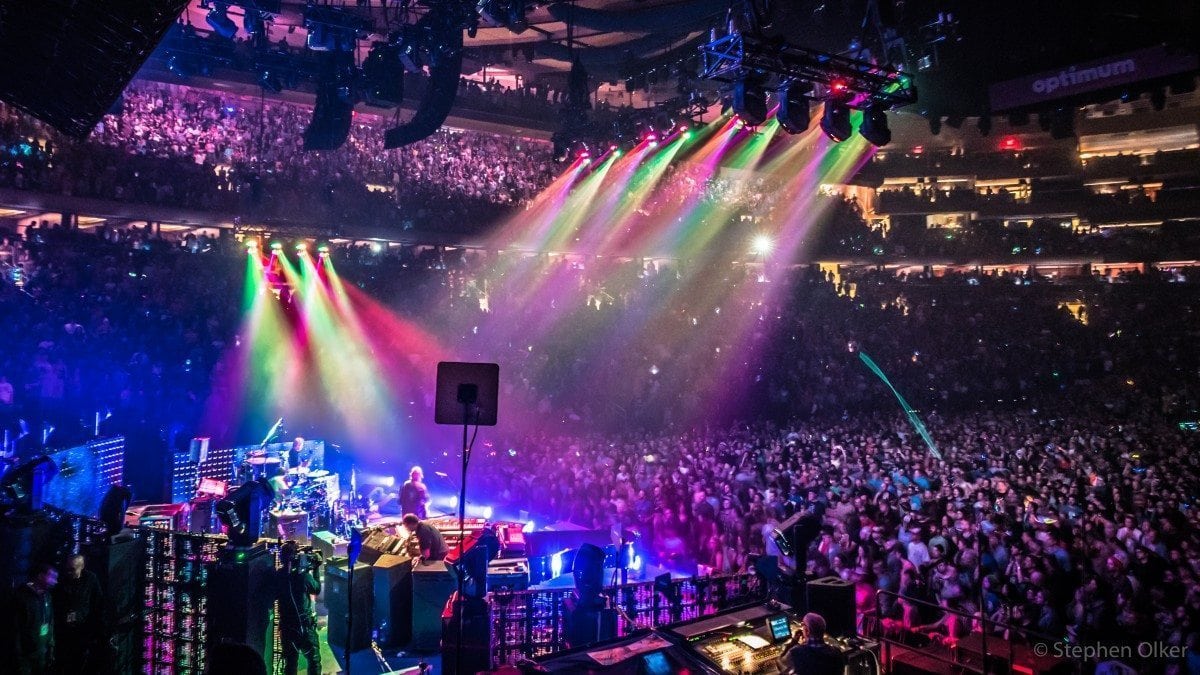
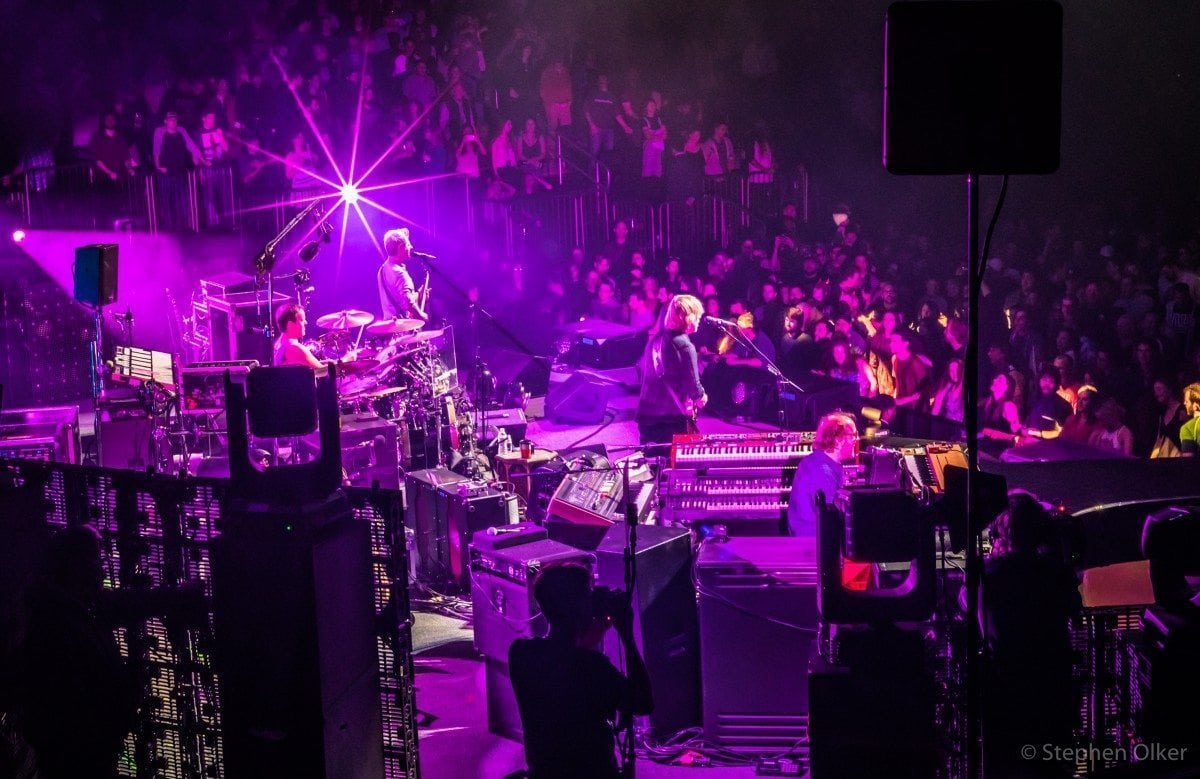
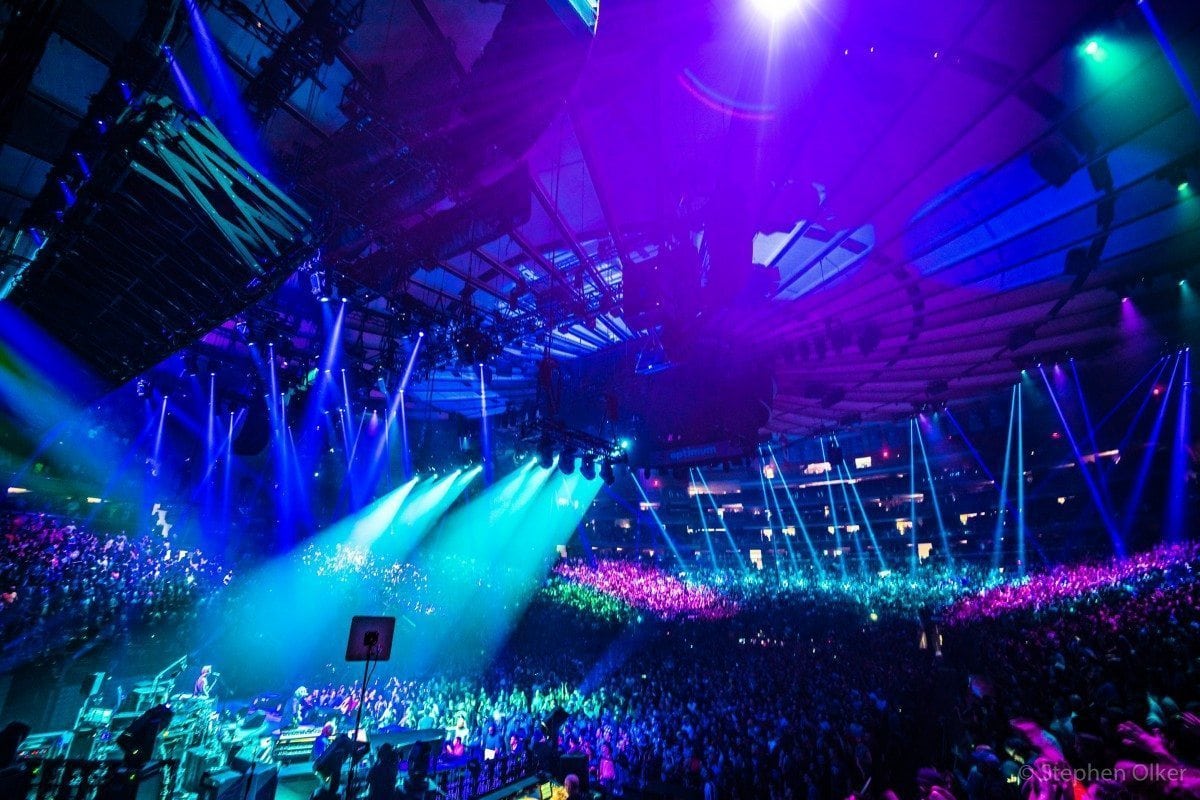
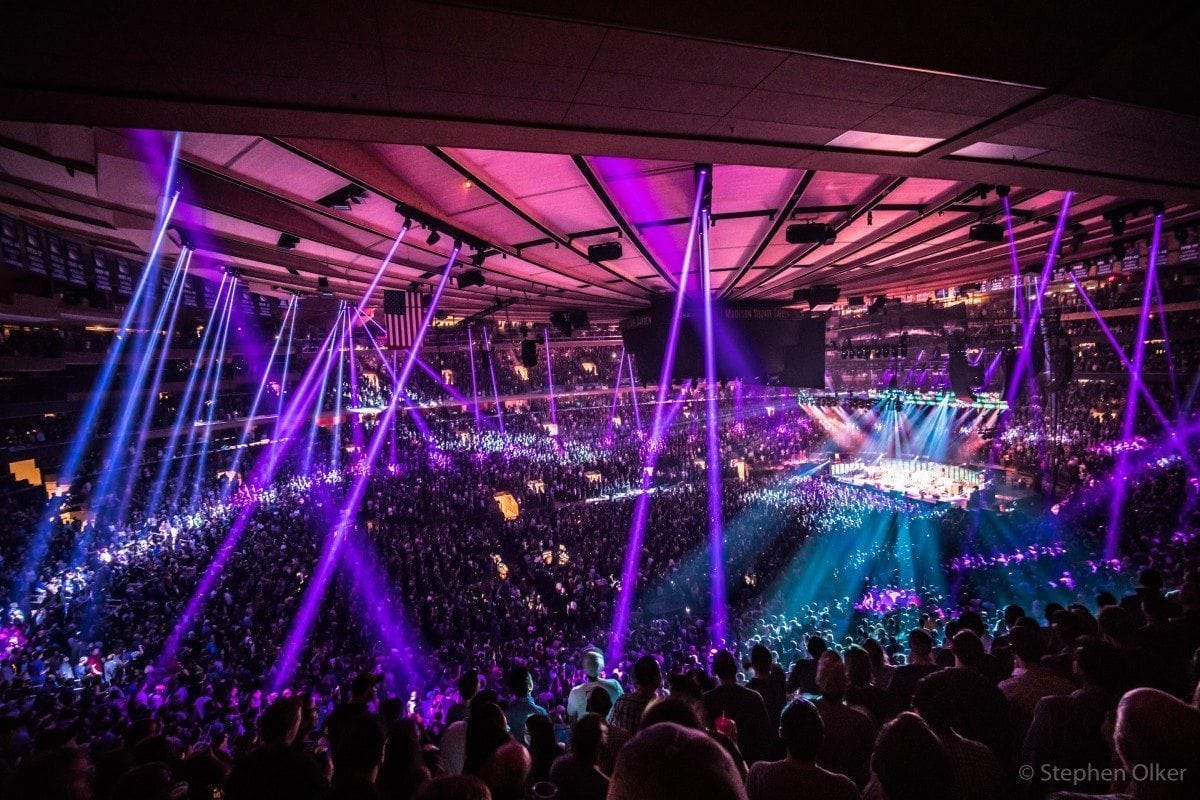
In a sea of tourists, NYC inhabitants and phans with one phinger in the air hoping to score a miracle ticket for less than their internal organs, Madison Square Garden welcomed all walks of life back through its doors on December 30, 2016 for night three of Phish and their annual four-night NYE run.
The third night was most certainly a charm, as the foursome wholeheartedly delivered with their highly anticipated NYE gigs, bringing a juggernaut of material both new and old to the forefront of their explosive jams. The penultimate gig kept up with tradition of openers from both the 28th and 29th, kicking off with an acapella rendition of “Carolina,” leaving a sardine-packed and immensely energetic MSG crowd silent and still. Following the 28th’s acapella opener of “The Star Spangled Banner” and the 29th’s “Sweet Adeline,” “Carolina” found Trey, Mike, Page and Jon digging deep in their archives and offering their first bust out of the night–having not played the tune since 2003 at Greensboro Coliseum.
Phish “Blazed On,’ through the second set with crowd-favorite “The Moma Dance,” “Gumbo” and a fitting choice of “Cities” which had the whole building hypnotized on foot. ‘The Old Home Place,” eased into a “Bathtub Gin” scorcher, complete with arena rock vibes, dense jams and enchanting licks.
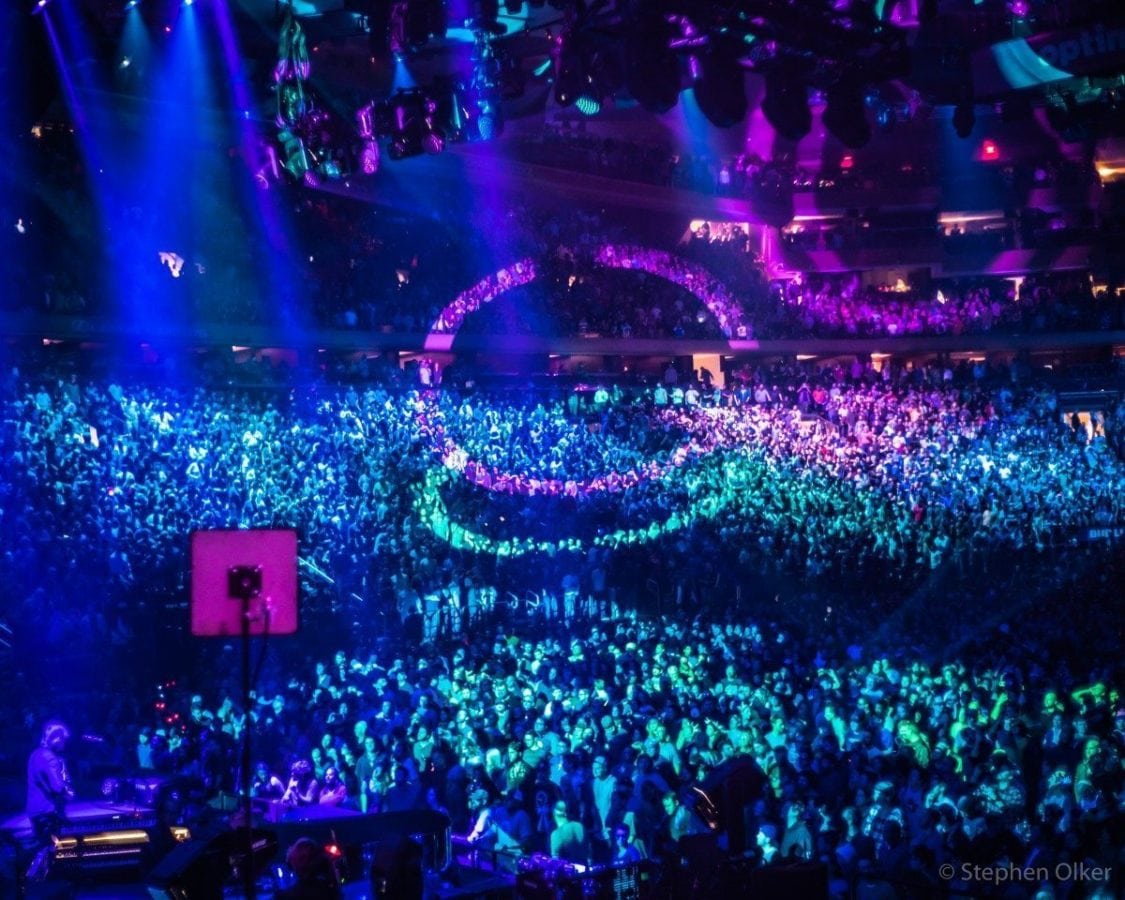
“Things People Do” served as the first “Big Boat” performance of the run, before launching into “My Friend, My Friend.” The first in a triad of Joy tracks sprinkled throughout the night, came fully equipped with face-melting jams and moody red and black lighting. The next track found every phan in the house shouting “Wilson” across a sea of wide eyes and color spectrum donut lights. A light-hearted “Sugar Shack” delighted the audience as the night’s second track hailing from Joy, before a fully-welcomed “You Enjoy Myself.” Complete with trampoline bounces and all, YEM closed out a magnificent first set for a thankful MSG crowd.
The second set magic quickly rolled out with a funky take on “Tweezer” which led into The Who’s 1969 Tommy track, “Sparks.” A crowd sing-a-long was incited on “Ghost,” until the Joy trifecta came to an end with “Light,” as things dove into a lengthy, swampy “Party Time” jam. Ease washed over the crowd with a soft take on “Wading in the Velvet Sea” just ahead of closing out the second set with another cover, The Osborne Brother’s “Rocky Top.”
Played last time in New York for a SPAC crowd, Phish encored with The Velvet Underground’s “Rock n’ Roll.” It felt more appropriately placed this time, however, in the city that front man Lou Reed often based his music on. A transcendent segue led into a fiercely received “Tweezer Reprise,” which closed night three with energy spiking through the roof.
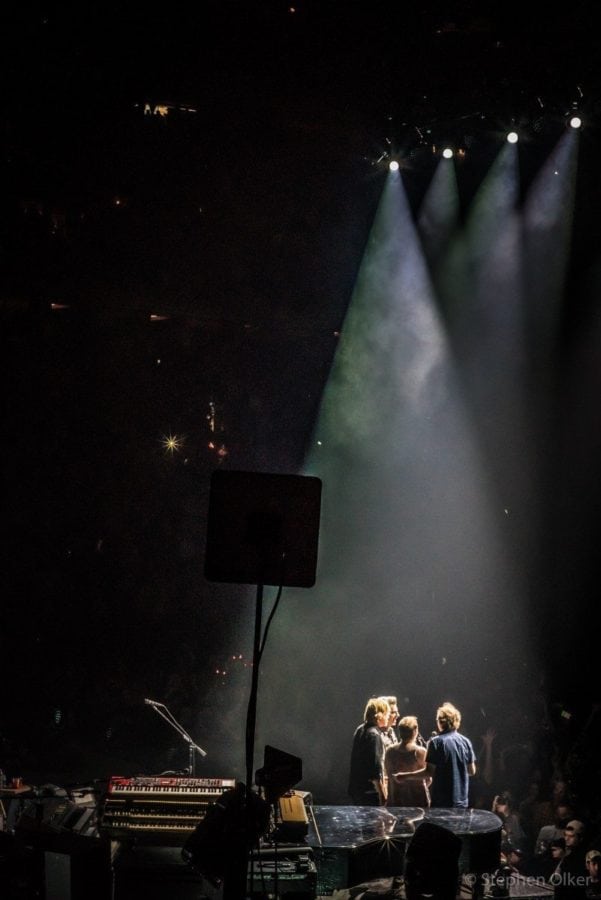
Between page’s keyboard kinetics, phishman’s double down drumming, gordon bumpin’ bass slaps and trey’s fireworks across the fretboard, phish left little to the imagination. The beloved jam band has so far proven that they can cap off a year filled with an abysmal onslaught of celebrity deaths, political turmoil and environmental concern, making you forget all of the madness if only for a few hours. Tomorrow will end the NYE run and after three nights of unforgettable music at the world’s most famous arena.
Phish, December 30, 2016, Madison Square Garden, NY, NY
Set 1: Carolina, Blaze On, The Moma Dance > Gumbo > Cities, The Old Home Place, Bathtub Gin, Things People Do, My Friend, My Friend, Wilson, Sugar Shack, You Enjoy Myself
Set 2: Tweezer > Sparks > Ghost > Light -> Party Time Jam, Wading in the Velvet Sea > Rocky Top
Phish opened their annual 4-night New Year’s run in grand fashion last night at Madison Square Garden. For night one, perhaps picking up on the palpable political tension this year has brought us, an a capella rendition of “The Star Spangled Banner” served as a somewhat fitting opener.
With a raucous Garden crowd now energized, “Stealing Time From the Faulty Plan” followed, allowing guitarist Trey Anastasio to shine early with some fierce guitar licks. The first of three first set covers (not including our national anthem) then appeared in the form of “Lonesome Cowboy Bill,” a song prominently featured on the band’s cover of the The Velvet Underground album Loaded done in 1998 for their musical costume. This fun, semi-bustout of a cover then gave way to “Free” which picked up the energy level in the building significantly and seemed to have everyone dancing in unison for the first time all night.
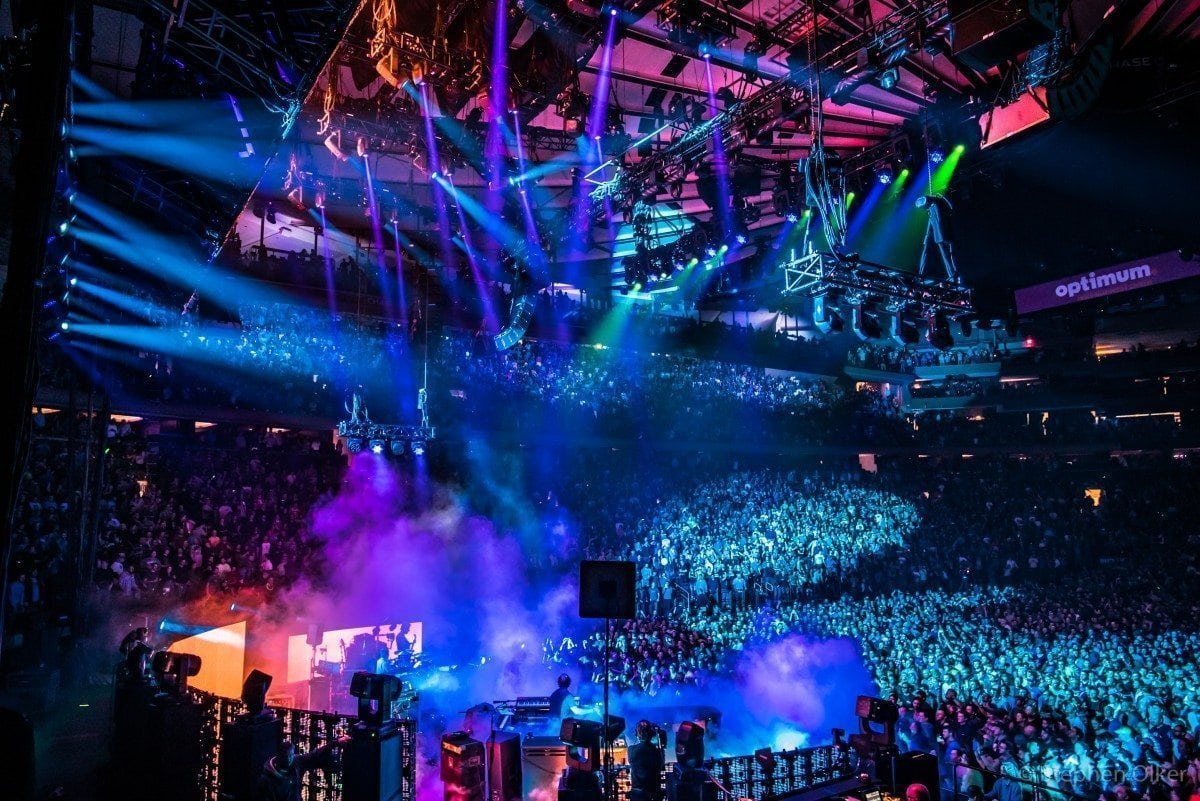
However, the pace settled back down again afterwards as “Train Song” and “Prince Caspian” followed, two songs featured on the now 20-year-old album Billy Breathes. “Roggae” kept the mellow first set vibe in full gear, allowing lighting director Chris Kuroda to show off some new lighting techniques in addition to some old favorites. A cover of the blues classic “Funky Bitch” then followed, highlighted by tremendous vocal and bass work from Mike Gordon. “Halfway to the Moon,” a song penned by keyboardist Page McConnell, gave him a chance to take center stage before another bust out of a cover in the form of a beautifully melodic “Corrina.” The first set wouldn’t be complete without one last jam and chance to stretch out a little and “Stash” fit the bill perfectly for that before a standard first set “Cavern” closer ended an enjoyable yet fairly laid back first set.
The second set that followed was anything but laid back as a three-headed monster of musical mayhem kicked things off. A top notch rendition of “Wolfman’s Brother” started the proceedings and saw the four musicians in perfect harmony with one another. Then, although it may not have been up to the epic level of the previous version played in Vegas a few a months ago, the “Golden Age” that followed was not that far off and featured some of the most inspired interplay of the evening which eventually led into a seamless segue into the classic arena rocker “Simple.” This three-song section of the evening was, by far, the highlight of the night, prompting one show goer to call it “her new best friend.”;
After a typically splendid “Simple” outro jam, the band picked things back up with an uptempo number in “Chalkdust Torture” that, once again, seemed to have the entire arena moving as one. The “Martian Monster” that followed was anything but typical as sound effects delivered by McConnell and steadfast drumming by Jon Fishman soon gave way to a full on “Tweezer” outro jam that took everyone by surprise and even had Anastasio integrating “your trip is short” lyrics sung to the tune of “Tweezer.” Phish playing around both musically and lyrically is when they’re at their best and this was no exception. “Wingsuit” then followed as the requisite breather song to slow things down a little before a fairly standard run through of “Possum” closed a ferociously enjoyable set of music. One last cover in “Good Times, Bad Times” served as the encore, undoubtedly sending everyone on their way ecstatic from a great night of music with, presumably, three even better ones to follow.
SET 1: The Star Spangled Banner, Stealing Time From the Faulty Plan, Lonesome Cowboy Bill > Free, Train Song, Prince Caspian, Roggae, Funky Bitch, Halfway to the Moon, Corinna, Stash, Cavern
SET 2: Wolfman’s Brother, Golden Age -> Simple > Chalk Dust Torture, Martian Monster -> Tweezer Reprise Jam -> Martian Monster, Wingsuit > Possum
ENCORE: Good Times Bad Times
Setlist courtesy of Phish.net
Phish is halfway through their 4 shows at Madison Square Garden and we’re looking at one of the best holiday runs in recent memory. Starting off each of the last two nights with an acapella number (“Sweet Adeline” on the December 29, 2016, “The Star Spangled Banner” on the 28th), bust outs galore (“Lonesome Cowboy Bill,” “Kung,” “Secret Smile”) and powerhouse jams that are sending us into 2017 with a head full of steam.
The 29th featured an intense “Peaches en Regalia” post-“Adeline” that dropped into a strong “Mike’s Song,” and while many were itching for the elusive second jam in “Mike’s,” the vibe was interrupted by “Secret Smile,” the first since 2013. “Smile” cast a lull before “Weekapaug Groove” and “Roses are Free” provided a needed jolt of energy, “Theme from the Bottom” > “Split Open and Melt” was a fantastic pairing to cap a well rounded set.
Opening the second set with “Down with Disease,” Phish launched into an expansive jam with an awkward shift into a blissful “What’s the Use?,” followed by “Fuego” which grew into a “Meatstick” that was well jammed. “20 Years Later” gave up its jam for “Kung” which slowly drifted into “Makisupa Policeman” with a “vaping” keyword from Fishman. A perfectly placed “Harry Hood” ended the set with incredible bliss and joy throughout the audience, especially this guy and ended with a “Julius” encore that literally had the venue bouncing with joy.
Phish, December 29, 2016, Madison Square Garden, NY, NY
SET 1: Sweet Adeline, Peaches en Regalia > Mike’s Song > Secret Smile > Weekapaug Groove, Roses Are Free, Poor Heart, 46 Days, Brian and Robert, Beauty of a Broken Heart, Theme From the Bottom > Split Open and Melt
SET 2: Down with Disease[1] -> What’s the Use? > Fuego > Meatstick, Twenty Years Later -> Kung -> Twenty Years Later > Makisupa Policeman, Harry Hood
If you like a folk, jamgrass & newgrass cocktail then you’ll love Grassroots Rebels recently released album, Ad Vitam Meliorem—which is “Towards a Better Life” in Latin.
Ad Vitam Meliorem is a 14-track compilation of Grassroots Rebel’s original songs, mostly self-recorded in the first eight years of their time together as a band, with two tracks on the album that are new songs recorded at Blue Sky Recording Studio. Grassroots Rebels are a duo comprised of Jim Bonville and Jeff Tehan, but some of the songs on the album include their former bandmate, Jeff Lockmer, on bass. Bonville plays guitar, banjo, vocals and harmonica, while Tehan provides the mandolin and guitar.
The title track, “Ad Vitam Meliorem,” is the opener on the album and it’s my favorite piece; it is a slow melody that is coupled with yearning, poetic lyrics on the theme of letting go; like “you thought you had nothing, but it’s all right in your soul/ once you stop trying to find the things you cannot know/ you learn to love, when you learn how to let go.” The next track, “Here It Comes” features a great interplay between the light picking melody and Bonville’s strong, raspy vocals delivering a catchy tune, while also exhibiting his vocal range on the chorus. Some of the songs on the album evoked a feel of the Irish, and I was reminded of The Pogues when listening to songs like “Broken Soul,” “Salt of Our Tears” and “Sin and Gasoline.” The other songs were a range between rock and newgrass, creating a great compilation of musical experimentation and adventure.
Grassroots Rebels hail from the outskirts of Albany, NY, and perform locally at establishments such as, The Low Beat, The Hollow, Parish Public House, Madison Theater, etc. Their next show is set for December 30, for an Eve of New Years Eve party at The Hollow.
For more information and tickets, visit Grassroots Rebels’ Facebook Page. If you’d like a copy of Ad Vitam Meliorem, visit here.
Key tracks: Ad Vitam Meliorem, Here It Comes, Weight of the World
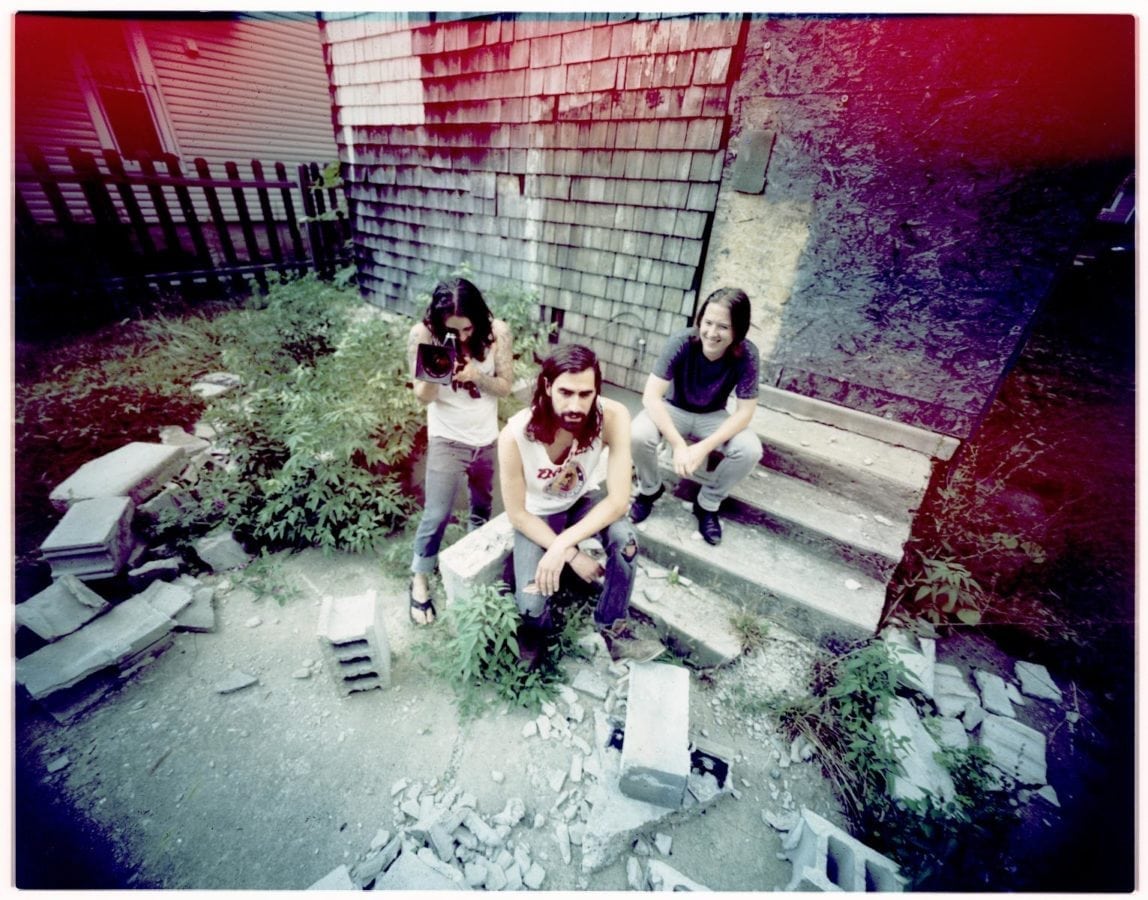
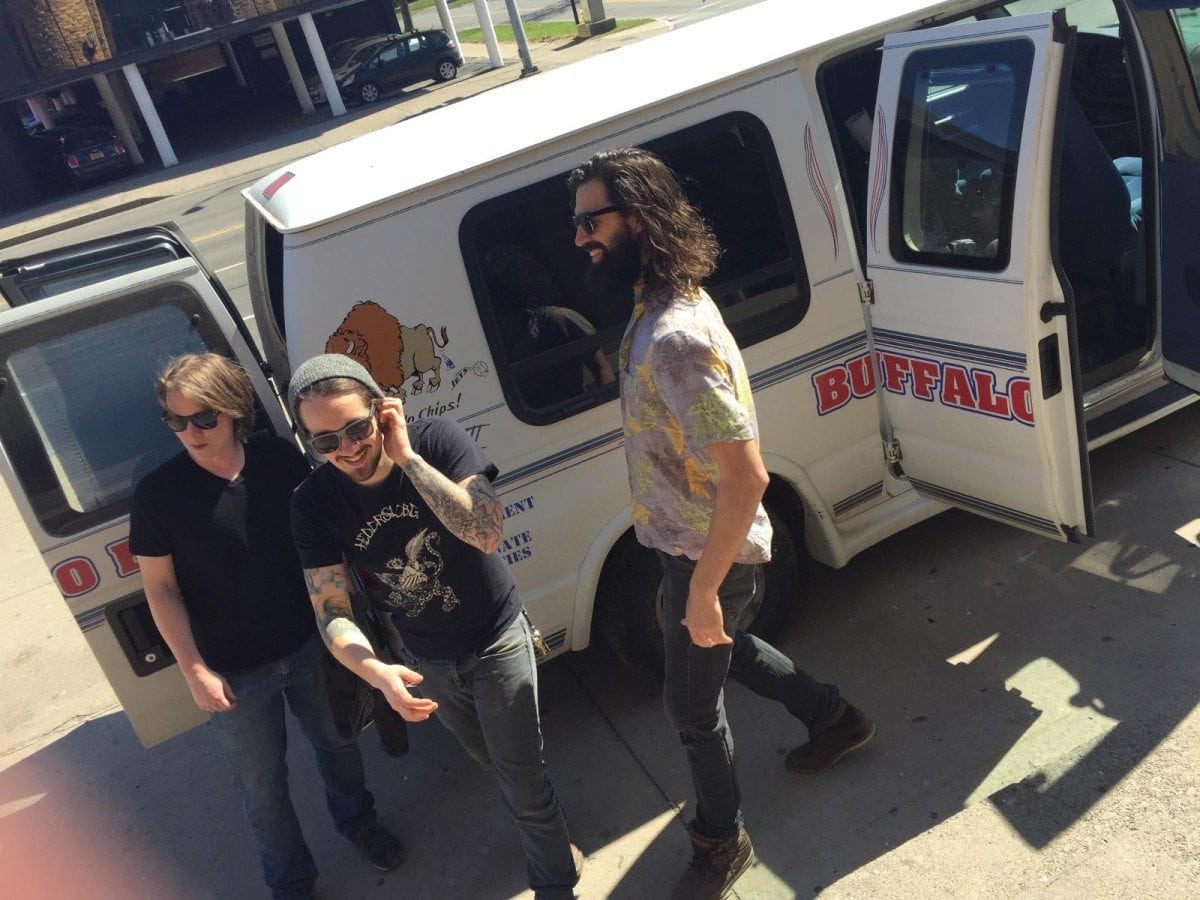
Rochesterians tend to think of King Buffalo as a local band, however they are garnering attention on national and international levels. Their debut album, Orion, showed up on the Album of the Year lists for several rock critics. Earlier this month, Stickman Records released a European version of the album.
Photo by Mike Turzanski
The psychedelic rock band with a heavy blues bent delivers heady grooves laden with symbolic imagery. It’s the kind of music that is best heard live – but if not live, then on a turntable in a room with curtains drawn and incense burning. The sound is reminiscent of iconic classic rock bands like The Doors, Deep Purple, and Black Sabbath, but also has a modern edge that leads one to wonder if this is what Jim Morrison would be creating if he were alive today.
King Buffalo is comprised of Rochester natives Sean McVay (Guitar & Lead Vocals), Dan Reynolds (Bass & Lights), Scott Donaldson (Drums & Vocals). NYS Music caught up with the band at their recording studio inside the historic Main Street Armory, to discuss the history of the band, their creative process, and future plans.
Paula Cummings: How did King Buffalo come into being?
Sean McVay: Dan and I played in a band together for a few years before King Buffalo, called Abandoned Buildings Club. Scott played in a band called Velvet Elvis. We were all in the same sort of psychedelic heavy blues rock circle and played a bunch of shows together. We were all part of the same scene. When our bands dissipated and fell apart, we started jamming, and we clicked really fast.
Scott Donaldson: I approached those guys because Velvet Elvis broke up before Abandoned Buildings Club. I was booking all these dates and then Velvet Elvis broke up. So I was wondering if you guys were interested in learning some of the songs and filling in. Our fourth original member, Randall, was also the singer of Velvet Elvis. We started jamming and maybe the first or second practice we wrote a song.
Dan Reynolds: Yeah, I don’t think we played any Velvet Elvis songs until a couple weeks in.
SD: It was cool we were able to pound that (new) stuff out that quickly. So we started touring and pissing people off because half of them thought we were Velvet Elvis. We were like, “No, we go by King Buffalo now.”
SM: We’d show up and there’d be a marquee that would say Velvet Elvis and we’d play two Velvet Elvis songs and the rest was King Buffalo stuff.
DR: And we played one Abandoned Buildings Club song.
SM: Yeah. We knew pretty early on that we had something cool going. That’s why we kept writing. And then we recorded them. We wanted to have something recorded so we could say, I know you came to see Velvet Elvis, but here. We just ended giving out 300 CD’s on that tour.
PC: But they were people who were already into that kind of scene.
SD: Yeah. The first tour we did as King Buffalo was with All Them Witches. They were relatively unknown then. Now they’re doing quite well. We were in an RV with those guys, having fun playing to some people some nights and just to each other some nights. It was a great experience.
SD: One dude from STB Records posted a picture of our demo, like “I’m jamming this, packing orders.” And I just emailed him, like “I heard you like our demo, we should do something together.” He said “I’d love to, it sounds amazing, but I’ve got so many projects this year, I can’t do it.” A week later, “You guys are doing a split with this band from Sweden called Le Betre.” STB’s got their own following. It’s a very collector’s-based, die-hard version with splatter vinyl. I mean, none of us had had anything that looked so pretty, so we were all about it.
SM: The package that they put together – it’s all 180 gram vinyl, it’s super high quality. It has a super loyal following of buyers. I don’t know if they heard of us before they put out the split.
SD: They have a lot of faith in his label, so they’re like “You’re putting it out? And it looks really pretty, and there’s only so many of these, I’m going to buy one of every version.”
PC: Tell me about the decision to release Orion internationally.
SD: To do anything international is pretty easy these days with the internet. You sign up for a website, you put your stuff up there and you pay a little extra to make sure it’s in all the different countries. Stickman Records had approached us after the record had already come out. They gave us an amazing deal because they really love the record and really want to be a part of it. We were obviously floored and extremely happy about it. And then they made a gatefold and 180 gram vinyl record in orange.
DR: It’s easy to get international, and vinyl record sales right now are so almost bafflingly huge market all of a sudden. In England vinyl sales just passed digital downloads.
SD: For us, selling internationally is expensive. The shipping is $22.50. I ship everything personally, so I know exactly how much that costs.
DR: So that’s the only way we could get them out over there.
PC: I read a lot of the reviews and descriptions of your music, and I’ve seen you guys play, but how do you define your sound?
SM: We’re influenced by all the classic stuff from the 60’s and 70’s and grew up in a time when grunge was the thing.
SD: It is what it is. It’s weird now that every genre has so many clear cut “this is what it is” instead of being just one general broad thing. Back in the day, heavy metal was so much more broad than it is now.
SM: Post–rock pre-blues metal, like what does that even mean?
DR: I want to know who’s making all these up.
SD: Psychedelic stoner rock is the one we consistently hear, and heavy blues.
Photo by Mike Turzanski
PC: You record right here at The Armory?
SD: This is the room. All the awesome reverb comes from Sean just opening the door and sticking the mic in the hallway. You just get this cavernous amount of sound. If you walk in the hallway and give a nice loud clap, you’ll hear it.
PC: What is your songwriting process? Do you hammer out the instrumental and then add lyrics to it?
SM: It’s definitely the very last thing. We just wrote a new song, and we’ve had the structure of it for a while. I wrote the lyrics to it on the way to the gig where we first played it. I knew what I wanted for the melody, but I didn’t have words. We basically jam all our stuff. We’ll have a basic riff or idea and then we’ll just play it for a while and flesh it out and whittle it into something that makes some sense. I’ll just kind of mumble over the top and just sing. Either I’ll come up with some words or Scott will write words and then in the process of reading his words, I’ll write something based off of that.
SD: It was weird because when we first wrote Orion, we were trying to figure out a writing process and it took some time. We definitely got better at it now. Hopefully it goes a little quicker.
SM: I had this big vision for Orion, and there’s definitely a story in it. It’s all one cohesive story. I very much wanted it to be that. So we can’t just write anything for the lyrics for the song – like the third song has to push the story forward.
SD: I think this time it might be more polished, the process.
SM: Yeah, I’m still trying to figure out the story.
SD: Sean has a habit of sometimes overthinking things.
PC: But it’s easier if you have a concept in mind going in. A lot of the lyrics on Orion are references to nature, sci-fi and mythology.
SM: I was trying to use a lot of psychedelic metaphors and imagery to bring it all together.
SD: It’s a little ambiguous. That’s a good thing because then everybody can put their own interpretation upon it. If you tell somebody, “This is what to think when you’re listening to this,” it’s harder to make a connection.
SM: People come up and tell me what they think a song is about, tell me what they think the album is about.
SD: I was talking with Parks about this – Parks is the singer of All Them Witches – he’s like “The best is when someone is like ‘Dude, me and my lady have a lot of sex to your album.’”
SM: I just want to be the soundtrack to people’s lovemaking.
SD: It would be a weird sight if we were playing a show and it just kind of broke out.
SM: I’d turn around and be like, “Guys, it’s working. I think I found the chord progression.”
King Buffalo released the recording Live at Wicked Squid Studios on December 26. They will be touring in 2017, and have just begun composing songs for a second album.
As the year draws to an end and people gear up for New Year’s celebrations, Daryl’s House Club in Pawling will help kick the weekend off with three New York area acts this Thursday December 29 – Honeycomb, Karma Darwin, and headliner Moon Hooch.
Based out of Massachusetts, Honeycomb is a beat box performer with a loyal following and a successful ranking finish in the 2015 American Beatbox Championships. Not only does he have a lot of studio experience including a collaboration with Moon Hooch, he has also worked with many DJs and jam bands at festivals. Appearing also before the headliner is Karma Darwin out of Brewster, NY. Formed in 2013, the band has an 18-track self-titled album and has won the Capitol Theatre’s (Port Chester) battle of the bands contest in May 2014.
From their busker days in the NYC subways five years ago, Brooklyn’s Moon Hooch has since exploded, gaining many followers and refining and refocusing their drum-and-sax dance sound to build off the energy commonly found at their live shows. Earlier in 2016 the band released its second full-length album Red Sky and just before Christmas released The Joshua Tree EP, available for free (or small donation) from their website.
New Year’s Eve and New York City go hand-in-hand. While the celebration and ball drop in Times Square receive the most attention from people around the world, there are also a ton of musical happenings in the city, with Phish’s storied Big Apple New Year’s Eve run at Madison Square Garden, December 28 to 31, 2016 being one of the big highlights. Here’s a rundown of the shows happening, some billed as Phish after-parties and some shows worth mentioning on their own accord. There’s something for Phish fans and non-fans alike in the city during the days leading up to 2017.
American Beauty, just a block from MSG, is hosting several Phish-related events. They kick off the run on Dec. 27 with a free show by Phish tribute band Jibooty and a late set from Escaper. The show starts at 7 p.m. The following four nights, they feature Phish pre-parties and after-parties. Dec. 28 sees PEAK and Gang of Thieves playing a pre-party at 4 p.m. for $5 and Particle and J. WAIL playing the after-party at 11:55 p.m. for $20. Dead Sessions plays tribute to the Grateful Dead for both the pre-party at 4 p.m. and after-party at 11:55 p.m. on Dec. 29. These shows are $20 each. Phanart presents a free pre-party on Dec. 30 with Formula 5 starting at 3 p.m. Spafford and the Magic Beans play two nights on Dec. 30 and 31 after Phish. They start at 11:55 p.m. and are $25 for each night. The pre-party on Dec. 31 features the Stella Blues Band paying tribute to the Grateful Dead at 4 p.m. with a $15 cover.
DROM in the East Village hosts two Phish after-parties on Dec. 28 and 29. Aqueous plays the 28th with Mungion. The show starts at midnight with tickets at $12.50 in advance or $17 at the door. The 29th sees lespecial with Chromatropic. The show starts at 11:30 p.m. with tickets going for $12 in advance or $15 at the door.
The Cutting Room, a handful of blocks from MSG, is also hosting several Phish parties, all presented by CEG. Elise Testone brings her “Thankful for Amy” tribute to Amy Winehouse with several special guests for an early show at 8 p.m. and a Phish after-party at midnight on Dec. 28. Tickets for both are $15 in advance or $20 at the door. Kung Fu plays an after-party on Dec. 29 at midnight with tickets at $18 in advance or $20 at the door. Holly Bowling pays tribute to Phish and the Grateful Dead through her solo piano work at pre-parties on Dec. 30 and 31. The shows start at 4 p.m. with tickets running $15 in advance or $20 at the door. The Marcus King Band plays the after-party on Dec. 30 at midnight. Tickets are $15 in advance or $20 at the door.
The Brooklyn Bowl has a series of shows leading up to the new year. Zeppelin Bowl, featuring Gene Ween, Scott Ian and John Medeski, takes place on Dec. 28 at 8 p.m. Tickets are $20 and still available. Joe Russo’s Almost Dead plays a sold out show on Dec. 29 at 8 p.m. Late night on the 29th is Talib Kweli performing a DJ set at midnight for $10. Kamasi Washington and the Budos Band are playing Dec. 30 and New Year’s Eve. Tickets are $40 for the 30th and $65 to $75 for New Year’s Eve. Both shows start at 8:30 p.m. Sleigh Bells is playing a DJ set late night at midnight on the 30th for $15 with Animal Collective doing the same on New Year’s Eve for $20 to $25.
Being New York City, there are plenty of other shows taking place that are worth checking out. See below for a rundown.
Wednesday, Dec. 28
PEAK with Gang of Thieves @ American Beauty (Midtown) – 4 p.m. – $5 *
Zeppelin Bowl feat. Gene Ween, Scott Ian, John Medeski @ Brooklyn Bowl (Brooklyn) – 8 p.m. – $20
“Thankful for Amy” with Elise Testone @ The Cutting Room (Midtown) – 8 p.m. & 12 a.m. – $20 each #
Aqueous with Mungion @ DROM (East Village) – 12 a.m. – $17 #
Particle with J. WAIL @ American Beauty (Midtown) – 11:55 p.m. – $20 #
Madaila @ Arlene’s Grocery (Lower East Side) – 11:55 p.m. – $10 #
Hayley Jane and the Primates do Bowie @ Lucille’s at B.B. King’s (Times Square) – 11:59 p.m. – $10 #
Thursday, Dec. 29
Harlem Gospel Choir @ B.B. King’s (Times Square) – 12:30 p.m. – $30
Dead Sessions @ American Beauty (Midtown) – 4 p.m. & 11:55 p.m. – $20 each * #
Joe Russo’s Almost Dead @ Brooklyn Bowl (Brooklyn) – 8 p.m. – $40
Dar Williams @ The Bell House (Brooklyn) – 8 p.m. – $25-$30
The Skints with The Far East and Rude Boy George @ Knitting Factory (Brooklyn) – 8:30 p.m. – $20
The Lone Bellow @ Bowery Ballroom (Lower East Side) – 9 p.m. – $30
Start Making Sense @ Irving Plaza (Gramercy/Flatiron) – Doors 11 p.m. – $20
lespecial with Chromatropic @ DROM (East Village) – 12 a.m. – $15 #
Kung Fu @ The Cutting Room (Midtown) – 12 a.m. – $20 #
Talib Kweli (DJ Set) @ Brooklyn Bowl (Brooklyn) – 12 a.m. – $10
Friday, Dec. 30
Formula 5 @ American Beauty (Midtown) – 3 p.m. – free *
Holly Bowling @ The Cutting Room (Midtown) – 4 p.m. – $20 *
David Wax Museum with Auld Lang Syne @ Mercury Lounge (Lower East Side) – 6:30 p.m. – $20
Tower of Power @ B.B. King’s (Times Square) – 7 p.m. & 9:30 p.m. – $45 each
Snarky Puppy @ Irving Plaza (Gramercy/Flatiron) – Doors 8 p.m. – $45
Gov’t Mule @ Beacon Theatre (Upper West Side) – 8 p.m. – $50-$60
Kamasi Washington with The Budos Band @ Brooklyn Bowl (Brooklyn) – 8:30 p.m. – $40
The Lone Bellow @ Bowery Ballroom (Lower East Side) – 9 p.m. – $30
Cymbals Eat Guitars with Haybaby @ Mercury Lounge (Lower East Side) – 10:30 p.m. – $20
Pink Talking Fish plays Animals @ Gramercy Theater (Gramercy/Flatiron) – 11 p.m. – $29.50 #
Spafford with The Magic Beans @ American Beauty (Midtown) – 11:55 p.m. – $25 #
Sprocket with Kabina @ The Bitter End (Greenwich Village) – 12 a.m. #
The Marcus King Band @ The Cutting Room (Midtown) – 12 a.m. – $20 #
Sleigh Bells (DJ Set) @ Brooklyn Bowl (Brooklyn) – 12 a.m. – $15
Saturday, Dec. 31
Stella Blues Band @ American Beauty (Midtown) – 4 p.m. – $15 *
Holly Bowling @ The Cutting Room (Midtown) – 4 p.m. – $20 *
Snarky Puppy @ Irving Plaza (Gramercy/Flatiron) – Doors 8 p.m. – $60
Rainer Maria with Snail Mail @ Saint Vitus (Brooklyn) – 8 p.m. – $25
Kamasi Washington with The Budos Band @ Brooklyn Bowl (Brooklyn) – 8:30 p.m. – $65-$75
Gov’t Mule @ Beacon Theatre (Upper West Side) – 9 p.m. – $65-$75
Guided by Voices @ Music Hall of Williamsburg (Brooklyn) – 9 p.m. – $70
The Lone Bellow @ Bowery Ballroom (Lower East Side) – 10 p.m. – $40
All-Star James Brown Dance Party @ Gramercy Theater (Gramercy/Flatiron) – 12 a.m. – $35 #
Spafford with The Magic Beans @ American Beauty (Midtown) – 11:55 p.m. – $25 #
Animal Collective (DJ Set) @ Brooklyn Bowl (Brooklyn) – 12 a.m. – $20-$25
Snarky Puppy @ Irving Plaza (Gramercy/Flatiron) – Doors 1 a.m. – $35 #
The New Deal @ B.B. King’s (Times Square) – 1:30 a.m. – $30 #
* Billed as Phish pre-party
# Billed as Phish after-party
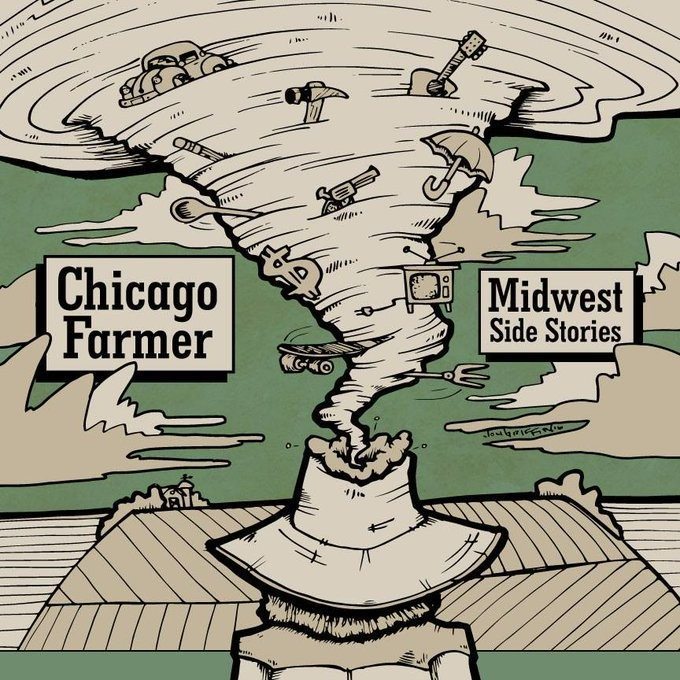
Chicago Farmer recently released his seventh studio album, Midwest Side Stories, which debuted on September 30, 2016 on his Chicago Farmer record label. It’s the follow-up to 2013’s Backenforth, IL. Chicago Farmer is the nom de plume of Illinois-based folk artist Cody Diekhoff, who has spent the last decade barnstorming bars and theatres across his native Midwest, traveling far and wide, through dim towns and bright cities alike, to perform for a growing legion of appreciative fans. Diekhoff was born in tiny Delevan, IL, has spent significant time in Chicago, and currently calls Bloomington, IL home. It’s these localities, which are largely defined by the sordid power dynamics surrounding them, that make up the backdrop for his blue-collar ballads.
Distilled to its essence, Midwest Side Stories is a concept album, one centered around the workingclass struggles of the people of Tazewell County, Illinois. The concept, while in league with Sufjan Stevens’ Illinois, is less sprawling, more localized, and reads sort of like Sherwood Anderson’s short-story collection Winesburg, Ohio, yet its themes are more aligned with those of another famous Illinoisian, the poet and folk singer, Carl Sandburg.
The opening track, “Umbrella,” a seemingly autobiographical take on the life of a folksinger with a rainy day plight and a ticket to ride, acts as an overture, setting the stage for the strugglers that Chicago Farmer will routinely call into the limelight over the course of the album. The track takes its name from a simile built into the first verse, which provides an inside look at the inspiration behind the songs, while also detailing the apparent relationship between the folksinger and his subject. The first-person narrator sings:
I went searching for some kind of meaning
Like words looking for a page
Came up empty and full of worry
That nothing could cover the pain
And these songs and stories
Began unfolding like an umbrella in the rain.
I want to write you a sad, sad song
That I hope will make you smile
And we could pass it along
We’re only here for a little while.
The track also sets in motion the album’s most resonant message: that storytelling is important, and that it’s equally important how one goes about it. Here, Chicago Farmer delivers a well-constructed acoustic guitar tune that’s tinged with electric honky-tonk guitar fills, and hinges on his shaky and crisp, rich as honey vocal performance, complete with emotional tension, brief yodeling, and a crafted message. And while there’s some slick lines in “Umbrella,” such as “we’ve been trying to find our way through the darkness of our minds,” we also see the traces of Chicago Farmer’s major weakness as a songwriter, that there’s a disturbing lack of particularity, personality, and local detail in these folk tales, while there’s an abundance of flat lines and forced rhymes that advance the story by length alone.
One song in and I’m totally going for Chicago Farmer’s voice, as it’s reminiscent of Ryan Adams during the Cardinals era, while the song itself sounds more like something from Kentuckian Stoll Vaughan’s catalogue, but I’m definitely not sold on the lyrics.
When the second song, “The Revolving Door,” hits, it’s high drama from the jump. Shrill, Neil Young inspired harmonica tears through the song like a factory whistle, while the ominous bass and drums lugs a gurney of carnage out of what seems a folk music netherland, some gruesome place from which the Byrds’ “Lover of the Bayou” once emerged, and from whence Chicago Farmer’s authoritarian boss figure comes, wielding a trembling falsetto warble like a razor, his voice haunted with the spirit of Will Oldham and bent on corporate enforcement.
After the first verse, the song breaks suddenly into a bewitched surf-hued anthem that takes up the point of view of a worker caught in this exchange, who’s prideful in repeating “I’m a worker / Not a number,” yet fully aware that the boss dictates he always get “back in line.” Finally, the song increases in tempo and intensity, building up to the climactic moment, in which the blazing harmonica returns, as does the voice of the boss figure, who informs the worker, “saddened to tell you, sir / you don’t work here anymore / pack your things and your feelings / and head on towards the door.” And while the title seems to allude to “revolving door” politics, the song is essentially about the binary bind of incorporated power and its grip on a vulnerable labor force.
Two songs in and Chicago Farmer has me captivated by his voice, impressed by the careful structures inherent in his songwriting, and excited about the range so far displayed.
The next three songs, “Rocco and Susie,” “Skateboard Song,” and “Two Sides of the Story” provide the album’s most on-the-nose references to Tazewell County. “Rocco and Susie” is a stripped down, bluegrass-tinted ballad featuring acoustic guitar, tambourine, and backing vocals. There’s a slow setup as the song unfolds. The couple described, at first, “seem like your typical neighbors / [whose] children were somewhat behaved,” but, ultimately, the family succumbs to the sordid afflictions facing Tazewell County: the stock market crash, factory job loss fallout, crystal meth addiction and production, police intervention, and the dissolution of their family. While Rocco and Susie at least have names to which one can connect, they serve merely as stock pieces, with all evidence of their personalities and the sweat of their struggle erased, in what reads as basically a reductive critique of a changing economy, from which the only thesis adduced from the ordeal is simply that one should “stick to smoking grass and drinking beer.”
“Skateboard Song” gives another passing glance at some of the participants in the local goings-on in Tazewell County, this time from the view of a first person skater riding through town; however, the characters involved in the story are warped by the lighthearted, uptempo, musical-theater style satire Chicago Farmer employs in critiquing smalltown social ills and the misguided laws meant to curb them. Every authority in town, from the signs to the cops to the judge, has only this to say, “skateboarding is bad,” which is always followed with why don’t you “take up guns” or “do some harder drugs,” or some other such miscreant behavior, and only a pop-punkish jingle by which to convey it. While the idea of making a powerful metaphor out of the skateboard has great promise, the execution is tepid, and listeners are left with a less than revolutionary assault on the powers that be.
“Two Sides of the Story” is a John Prine-esque portrait of the small town heartbreak and struggle that seems to typify the experience Chicago Farmer presents to his audience. It’s another stripped down acoustic guitar tune, with piano and harmonica accompaniment, and featuring Chicago Farmer’s twangy vocals. From his point of view, middle America is a place divided exponentially in twos, where the politicians are feckless liars and misinformation abounds, where the media is a gluttonous machine and working-class reality its fodder, where living’s dying and dying living.
And here Chicago Farmer uses his highly developed sense of songcraft to portray a growing chasm dividing Americans along intangible lines. In the chorus, he sings “there’s two sides to every story, there’s two sides of every town / the side of town that tells the story and the side where the story went down,” which calls attention to the gap between product and producer that outlines the larger conflict at stake. He adds depth to this stance throughout the song, stringing together artful, impactful lyrics that diagnose the worsening situation while adding some political punch. Take for example this stanza that highlights the gulf between the words and actions of politicians:
There was a lawmaker whose laws never made any sense
So he started making promises on both sides of the fence
Double-crossed his fingers every other time he smiled
Shook hands across the country, couldn’t reach across the aisle.
Whereas, Chicago Farmer’s other story songs do well to elicit many concerning issues, they mostly fall in short driving home a moral lesson, however, “Two Sides of the Story” succeeds in convincing the audience that storytelling is important and that it’s even more important to “get your story straight.”
Halfway through and Midwest Side Stories has proven Chicago Farmer’s obvious talents, namely songcraft and singing, but, in comparison with one another, the songs are quite uneven. In fact, “Two Sides of the Story” marks the high point of Midwest Side Stories, but it also marks the point at which the album takes a turn for the worst.
“New Used Car” is an easy listening diddy with an attractive pedal steel part, but the trite subject matter and blithe singing give it the taste of Diet Springsteen in a can, while the feathery lyrics secure this tune’s place as the Americana version of those riding-around-town-in-a-pickup-truck revelries celebrated on pop country radio.
The next tune, “9PM to 5,” is a straightforward country-tinged rock song in the manner of Los Lobos, which describes the life of a graveyard shift worker, but nothing ever develops regarding his situation and it’s difficult to know what Chicago Farmer is trying to invoke here.
An uptempo fiddle-number follows with the Carter Family styled singalong “Farm and Factory,” which details the working backgrounds of the narrator’s family. Chicago Farmer’s aim here seems directed once more at a changing economy, one that used to provide satisfactory jobs for Midwesterners, either on farms or in factories, but has since rendered these institutions defunct, leaving the people in search of opportunity. He sings “thank God for the farm and the factories / thank the devil for the factory farm.” In retelling this brief, mostly detail-less history, however, it appears that Chicago Farmer’s concern is not truly complex economic despair and worn down, hardworking individuals who need a voice lifted on their behalf, but something more aligned with joining his voice in a nostalgic rank and file of troubadours singing work songs.
The album’s penultimate song, “Homework,” continues in making rather obvious social observations, partly in reference to environmental destruction and denial, while placing the blame on a wide, vague swath of the citizenry, for which a cloudily aware, altruistic, and populist “we” becomes “the kid who does everyone else’s homework,” which precludes his half-hearted rallying cry, “we have a chance if we can enhance the number of us who’ll stand.”
Midwest Side Stories concludes with a cover of John Hartford’s “I’m Still Here.” The approach to the song is reminiscent of Houser-era Widespread Panic, with whetted guitar leads, a solo section, a marching drumbeat, and savory vocals. It’s also refreshing to hear lyrics matching the high-stakes political matter at which the originals often obscure or only gesture toward, rather than point at, and it goes a long way in fleshing out the album’s narrator and vision to hear Chicago Farmer howling:
My cigarettes are gone and so’s my money
So are all my nerves and all my teeth
My hair’s falling out, I’m looking funny
My friends are either dead or on relief.
When the last note ceases and the dust settles over Midwest Side Stories, what’s left is a readily accessible and highly entertaining volume of country-fried ballads in the Americana tradition, and while the songwriting is polished and the playing refined, the final product lands somewhere shy of the ambitious summit it sets for itself in the early going. Listeners get merely a glimpse of the broke-and-busted life and times of the folks of Tazewell County, Illinois, as the gritty detail and sludgy realism is mostly omitted, and the characters who appear in these weary tales are not granted the shape of their struggles or the use of their authentic voices, as Chicago Farmer flattens them to fit the contours of his traditional songwriting and the bent of his buttery vocals.
Within Shadows released their debut album Mind = Enemy on December 21. In conjunction with the release, they premiered the music video for “Get Up,” the first track on the album. And if that weren’t enough excitement for one week, the band also announced a show on January 14th at Lucky’s Roudhouse in Windsor, Ontario.
This metal band from Ontario, Canada features Sean Farias (vocals/guitar), Jordan Heffernan (drums), Brad Tiessen (guitar), and Jacob Bailey (bass). NYS Music spoke with frontman Sean Farias about their ambitious 15-track album, the passion they poured into the making of the video, and their plans for 2017 and beyond.
Paula Cummings: Your album is called Mind=Enemy. How did you choose the title?
Sean Farias: We chose the title Mind=Enemy because it relates to the song themes that we portray lyrically. The majority of our songs relate to inner battles, struggles that we’ve had and about conquering those. This also helps bring a positive outlook to the listener and help them with the same problems.
PC: Tell me about the tracks on the album.
SF: The album is going to consist of 15 tracks, four of them being remakes of older Within Shadows tunes and 11 brand new songs. The songs will range from different metal genres like hardcore, easycore, djent, heavy metal and more. We have a new instrumental track called “Captive” where we try to recreate the concept of our EP song “Regrets” and have guitar solos through the whole song. “Demons” is a remake from an EP released a year ago. We have a song called “Djust Kill Me Now,” which was written during one the darkest times in my life. It is a collaboration with Derek Petricka of Discord Curse and Lucas Mann of Rings of Saturn. We also wanted to showcase that we like to play different genres by including a pop punk song called “On My Mind.” There are many more tracks to this album, and I promise there are many bumpin’ riffs to mosh to.
PC: Which bands inspire you?
SF: Our band is greatly influenced by other bands, such as Slipknot, Lamb of God, Beartooth, Tool, Billy Talent, Rings of Saturn and more. We are influenced by their musicianship and writing styles which we infuse into our own. Also we have seen the majority of these bands perform live, which in its own powerful way leaves us with extreme levels of motivation and the urge to write our own music.
PC: What was it like to record your first music video together?
SF: It was incredible! We had the honor of working with Ryan Brough of Zeebrah Media. He is a great guy, easy to work with, and made what was envisioned in our mind come to life. We are just as excited as our fan base to see the finished product. We wanted our first video to be the perfect representation of what we will be like live to anyone who would want to come see us. So it is literally us going buck wild in front of a camera playing our song “Get Up!” We had so much fun shooting this video. Jumping around for three hours was certainly tiring, but we brought the crazy throughout the whole shoot. Jacob Bailey even bled all over his bass from going so full out!
PC: Jordan got to break out his new drum kit for the video, right?
SF: Oh yes! He was most certainly excited about that. We all were. This new kit is magical!!!
PC: You guys also help local charities.
SF: That is one of our passions. We love to help out those in our community, and also contribute to local charities. When we raise enough money or make enough sales on our music and merchandise, we love to give a chunk of that to charity. For our EP Release the Disease, we ended up donating $500 to our local food bank, because of all the support our fan base gave us. We hope one day we can grow our band to a bigger level where we can help impact more people in a positive way and more on a global scale.
PC: 2016 has been an eventful year for Within Shadows. What are your band goals for 2017?
SF: Shows. Lots and lots of shows. Trying to get our band more exposure. Sending our new songs out to record labels and work with many people in the industry and other musicians. Also we want to record a lot more music videos for our tracks.
Pre-orders for CD’s are being taken at their website. Digital downloads and streaming are available through Bandcamp, iTunes, and Google Play.
Dopapod just wrapped up their Fall Tour with Pigeons Playing Ping Pong, performing more than 30 shows across the eastern half of the U.S. The guys sat down with NYS Music publisher Pete Mason prior to their Putnam Den show on October 26 to discuss collaborative sets with Turkuaz and The Werks, performing at Red Rocks and the return of Neal ‘Fro’ Evans to the lineup.
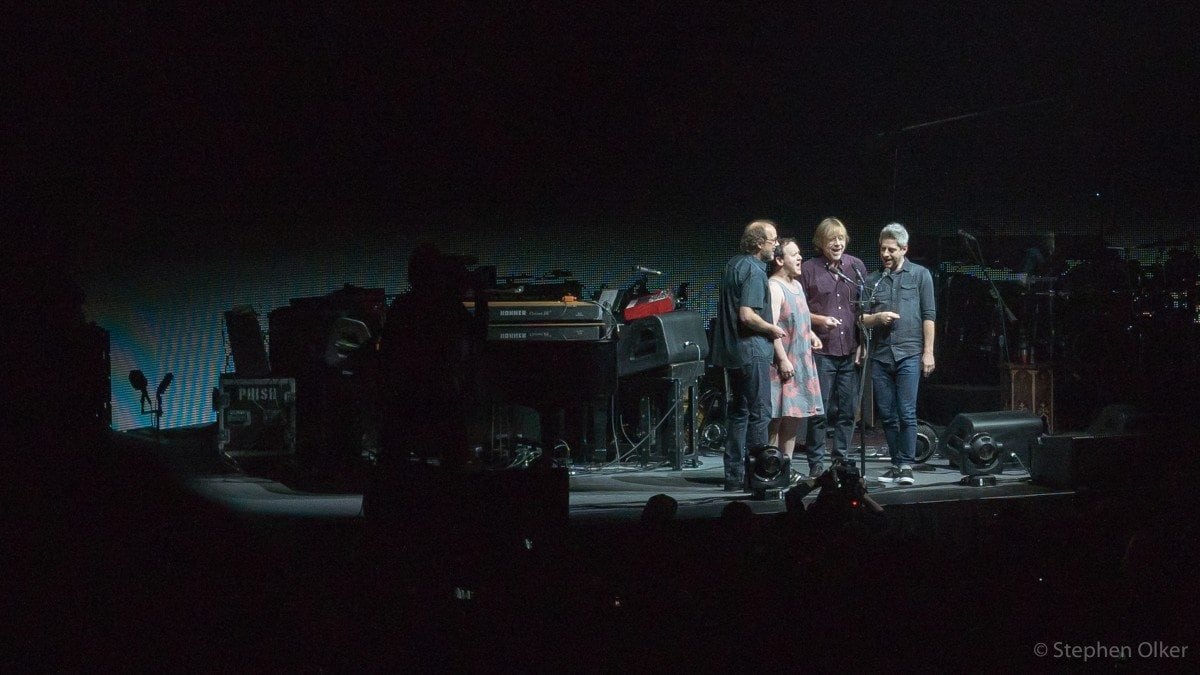 The third night was most certainly a charm, as the foursome wholeheartedly delivered with their highly anticipated NYE gigs, bringing a juggernaut of material both new and old to the forefront of their explosive jams. The penultimate gig kept up with tradition of openers from both the 28th and 29th, kicking off with an acapella rendition of “Carolina,” leaving a sardine-packed and immensely energetic MSG crowd silent and still. Following the 28th’s acapella opener of “The Star Spangled Banner” and the 29th’s “Sweet Adeline,” “Carolina” found Trey, Mike, Page and Jon digging deep in their archives and offering their first bust out of the night–having not played the tune since 2003 at Greensboro Coliseum.
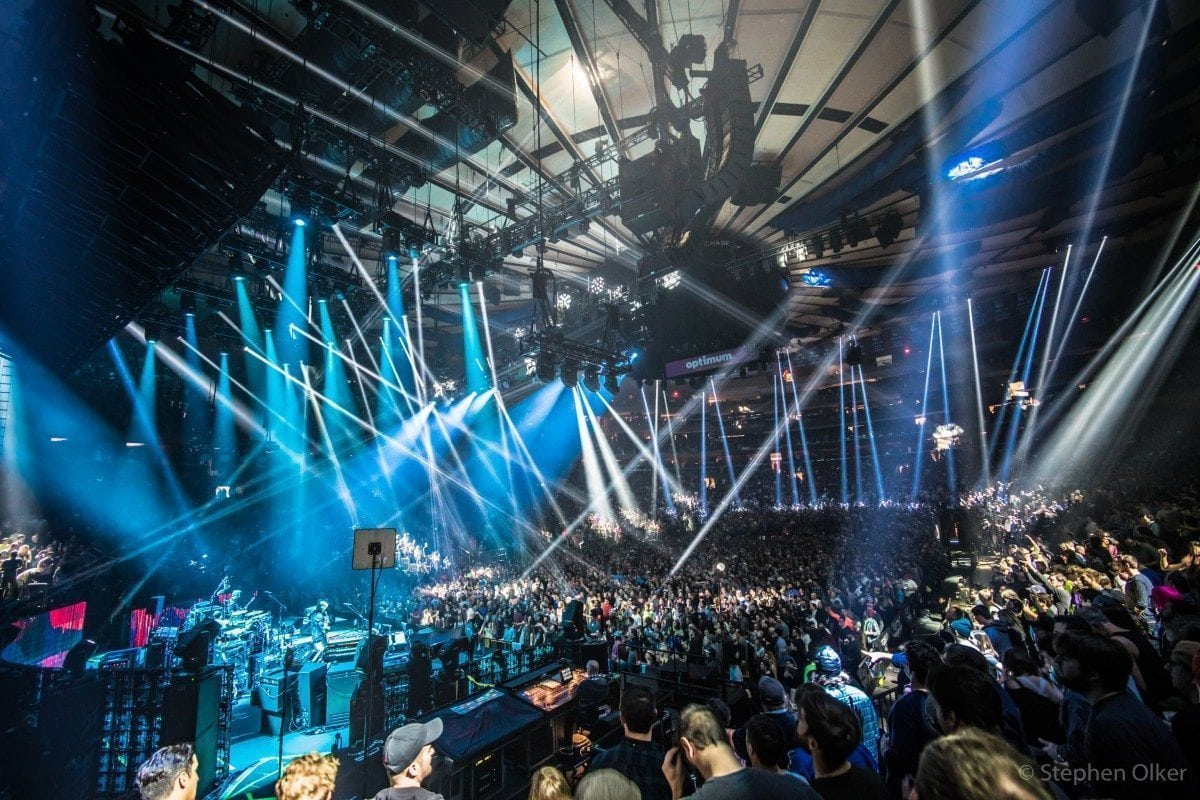 Phish “Blazed On,’ through the second set with crowd-favorite “The Moma Dance,” “Gumbo” and a fitting choice of “Cities” which had the whole building hypnotized on foot. ‘The Old Home Place,” eased into a “Bathtub Gin” scorcher, complete with arena rock vibes, dense jams and enchanting licks.
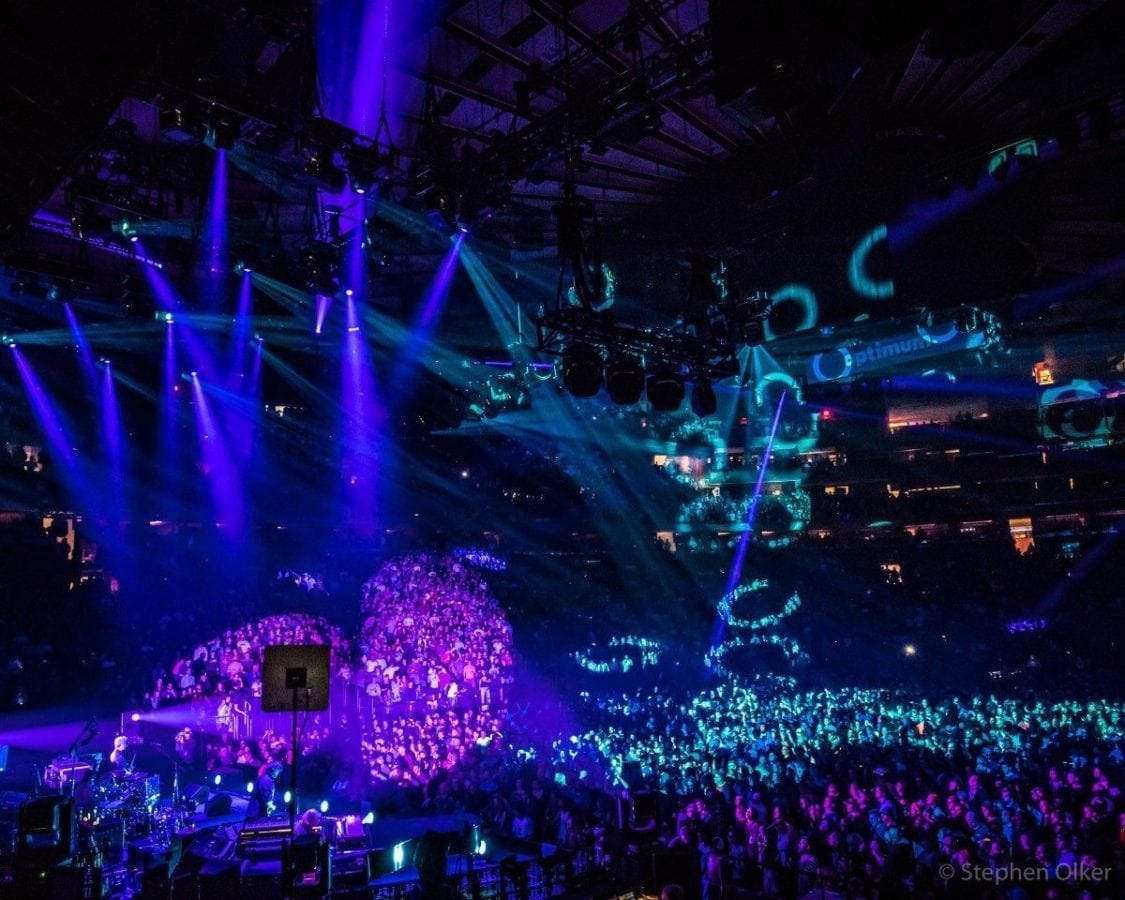 “Things People Do” served as the first “Big Boat” performance of the run, before launching into “My Friend, My Friend.” The first in a triad of Joy tracks sprinkled throughout the night, came fully equipped with face-melting jams and moody red and black lighting. The next track found every phan in the house shouting “Wilson” across a sea of wide eyes and color spectrum donut lights. A light-hearted “Sugar Shack” delighted the audience as the night’s second track hailing from Joy, before a fully-welcomed “You Enjoy Myself.” Complete with trampoline bounces and all, YEM closed out a magnificent first set for a thankful MSG crowd.
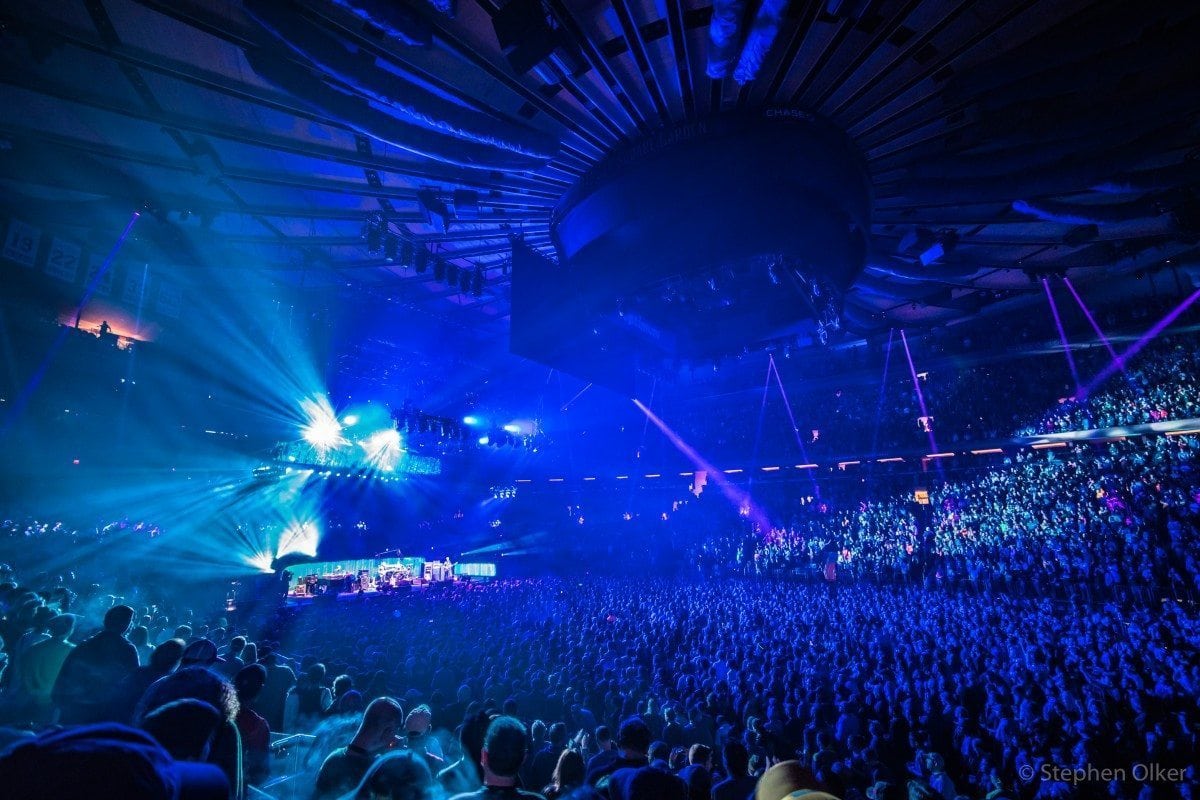 The second set magic quickly rolled out with a funky take on “Tweezer” which led into The Who’s 1969 Tommy track, “Sparks.” A crowd sing-a-long was incited on “Ghost,” until the Joy trifecta came to an end with “Light,” as things dove into a lengthy, swampy “Party Time” jam. Ease washed over the crowd with a soft take on “Wading in the Velvet Sea” just ahead of closing out the second set with another cover, The Osborne Brother’s “Rocky Top.”
 Between page’s keyboard kinetics, phishman’s double down drumming, gordon bumpin’ bass slaps and trey’s fireworks across the fretboard, phish left little to the imagination. The beloved jam band has so far proven that they can cap off a year filled with an abysmal onslaught of celebrity deaths, political turmoil and environmental concern, making you forget all of the madness if only for a few hours.
  With a raucous Garden crowd now energized, “Stealing Time From the Faulty Plan” followed, allowing guitarist Trey Anastasio to shine early with some fierce guitar licks. The first of three first set covers (not including our national anthem) then appeared in the form of “Lonesome Cowboy Bill,” a song prominently featured on the band’s cover of the The Velvet Underground album Loaded done in 1998 for their musical costume. This fun, semi-bustout of a cover then gave way to “Free” which picked up the energy level in the building significantly and seemed to have everyone dancing in unison for the first time all night.
 However, the pace settled back down again afterwards as “Train Song” and “Prince Caspian” followed, two songs featured on the now 20-year-old album Billy Breathes. “Roggae” kept the mellow first set vibe in full gear, allowing lighting director Chris Kuroda to show off some new lighting techniques in addition to some old favorites. A cover of the blues classic “Funky Bitch” then followed, highlighted by tremendous vocal and bass work from Mike Gordon. “Halfway to the Moon,” a song penned by keyboardist Page McConnell, gave him a chance to take center stage before another bust out of a cover in the form of a beautifully melodic “Corrina.” The first set wouldn’t be complete without one last jam and chance to stretch out a little and “Stash” fit the bill perfectly for that before a standard first set “Cavern” closer ended an enjoyable yet fairly laid back first set.
 The second set that followed was anything but laid back as a three-headed monster of musical mayhem kicked things off. A top notch rendition of “Wolfman’s Brother” started the proceedings and saw the four musicians in perfect harmony with one another. Then, although it may not have been up to the epic level of the previous version played in Vegas a few a months ago, the “Golden Age” that followed was not that far off and featured some of the most inspired interplay of the evening which eventually led into a seamless segue into the classic arena rocker “Simple.” This three-song section of the evening was, by far, the highlight of the night, prompting one show goer to call it “her new best friend.”;
 After a typically splendid “Simple” outro jam, the band picked things back up with an uptempo number in “Chalkdust Torture” that, once again, seemed to have the entire arena moving as one. The “Martian Monster” that followed was anything but typical as sound effects delivered by McConnell and steadfast drumming by Jon Fishman soon gave way to a full on “Tweezer” outro jam that took everyone by surprise and even had Anastasio integrating “your trip is short” lyrics sung to the tune of “Tweezer.” Phish playing around both musically and lyrically is when they’re at their best and this was no exception. “Wingsuit” then followed as the requisite breather song to slow things down a little before a fairly standard run through of “Possum” closed a ferociously enjoyable set of music. One last cover in “Good Times, Bad Times” served as the encore, undoubtedly sending everyone on their way ecstatic from a great night of music with, presumably, three even better ones to follow.
 SET 1: The Star Spangled Banner, Stealing Time From the Faulty Plan, Lonesome Cowboy Bill > Free, Train Song, Prince Caspian, Roggae, Funky Bitch, Halfway to the Moon, Corinna, Stash, Cavern
 The 29th featured an intense “Peaches en Regalia” post-“Adeline” that dropped into a strong “Mike’s Song,” and while many were itching for the elusive second jam in “Mike’s,” the vibe was interrupted by “Secret Smile,” the first since 2013. “Smile” cast a lull before “Weekapaug Groove” and “Roses are Free” provided a needed jolt of energy, “Theme from the Bottom” > “Split Open and Melt” was a fantastic pairing to cap a well rounded set.
 Opening the second set with “Down with Disease,” Phish launched into an expansive jam with an awkward shift into a blissful “What’s the Use?,” followed by “Fuego” which grew into a “Meatstick” that was well jammed. “20 Years Later” gave up its jam for “Kung” which slowly drifted into “Makisupa Policeman” with a “vaping” keyword from Fishman. A perfectly placed “Harry Hood” ended the set with incredible bliss and joy throughout the audience,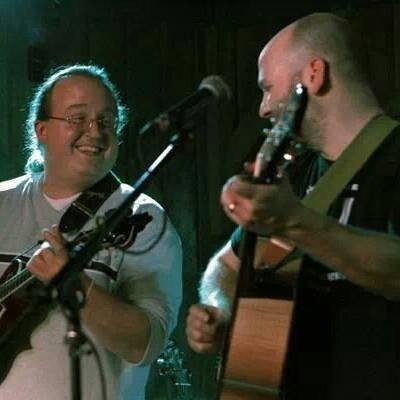

 Chicago Farmer recently released his seventh studio album, Midwest Side Stories, which debuted on September 30, 2016 on his Chicago Farmer record label. It’s the follow-up to 2013’s Backenforth, IL. Chicago Farmer is the nom de plume of Illinois-based folk artist Cody Diekhoff, who has spent the last decade barnstorming bars and theatres across his native Midwest, traveling far and wide, through dim towns and bright cities alike, to perform for a growing legion of appreciative fans. Diekhoff was born in tiny Delevan, IL, has spent significant time in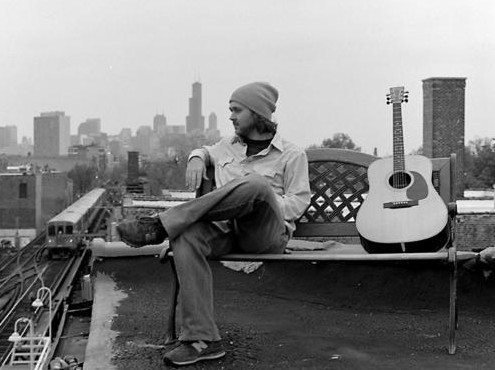
 Within Shadows
