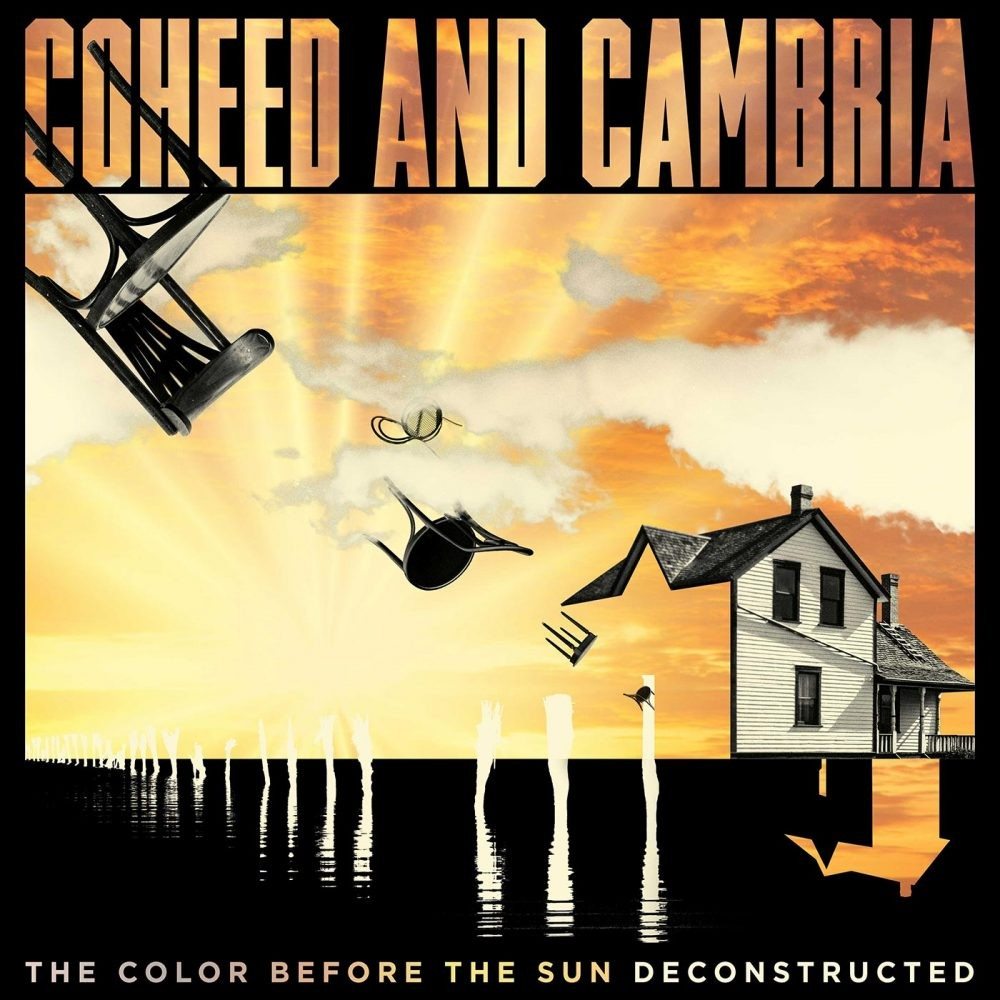
Progressive rock band Coheed and Cambria launched their newest album, The Color Before the Sun, on October 16th, 2015; but recently released a deluxe edition of the album, Deconstructed on August 19.
The Color Before the Sun Deconstructed is a companion deluxe edition to Coheed and Cambria’s newest album, under the same title (minus Deconstructed). The new title is ironic, because Deconstructed puts on bleeding display a thirty track mausoleum that gives sinew and muscle to an already great skeleton. Nothing about this edition is deconstructive.
The first part is The Color Before the Sun as it was originally released. If you haven’t yet heard the album, I recommend starting here as it gives context to everything else. “Island,” the first song kicks off the whole album with the sounds of a New York City subway fading into a simple pop rock song, yet effective allegory for not wanting to be stuck in one place. Following suit, songs like “Atlas,” “Eraser,” and “Colors,” hold ground as a thematic, and strong foundation for the rest of the album.
It is the first album that Coheed has put out to not feature a storyline related to the Amory Wars, the collection of a book and four graphic novels on which Coheed and Cambria’s concept is based.
Instead, the lyrics represent a sense of quiet introversion, personal responsibility, fatherhood, and growth. While Sanchez, in the past, has said that his lyrics are metaphors for things that go on in his own life, mostly having to do with relationships, this album’s lyrics are to be taken literally.
As for musical bravery, I cite that while every other Coheed album features what I can really only describe as “progressive rock weirdness,” this one has has few true complexities attached. Instead, TCBTSD features a very stripped down, bar chord, standard tuning, Dad rock feel, but they manage to make it work. At first listen, I must admit my aversion to this. How dare my favorite band change their sound to something so simple? But I can’t fault someone for wanting to write what they want to write. Through this mindset, I’ve come to admire this album as much as the rest. So maybe it is not as layered or as weird as Good Apollo I, but that is exactly the point. TCBTSD was meant to sound stripped down, straight-forward, and unencumbered by the weight of somewhat of an overload, just like its literal lyrics.
If, at this point, you’re thinking that this is a lot of information at once, you’re right. Coheed has always left on the table enough material to give the party something to talk about all night. This brings me to another thing I loved about TCBTSD: you don’t have to be familiar with anything Coheed related to enjoy it. TCBTS stands alone in its own lane; anyone is safe here.
So what else stood out? A whole lot, such as “Here to Mars,” a sappy, but cute love song released as a single. That last chorus/bridge, in which Sanchez and co. scream “…and we’ll never let you go…” on repeat gave me chills and is most assuredly to be a crowd pleaser, as the live aspect of Deconstructed shows.
Further notable, the use of more acoustic guitars on this album than the last ones. “Ghost,” and “Peace to the Mountain,” are almost creepy in sound and may remind one of Good Apollo I‘s “Wake Up,” one of my personal favorite songs by Coheed. Likewise, both of these songs particularly showcase Sanchez and guitarist Travis Stever’s compatibility as co – musicians and guitarists. Both songs feature a “weaving” guitar pattern and solidify the musical relationship. The ballad of Sanchez and Stever has always inspired me as a musician. In said terms, I think in previous albums they’ve made a great couple whose company you enjoy, so to speak, but by this one, they’ve gone from dating to married. “Ghost” is the best example of this.
And let’s not overlook the rest of the group. Zachary Cooper joins the ranks on bass once again (this is his third effort with Coheed, the other two being The Afterman: Ascension and Descension). Similar to the last two, Cooper brings technically refined precision to his position while giving the listener heart. I’ve always admired Coheed’s use of bass guitar. While many rock bands keep their bassist on a leash, it’s almost as if they told Cooper before recording, “Hey, buddy, go fucking crazy.” Good. But that’s not all.
You know how a lot of people think there is always that member that any given band would not be the band without? Take, for example, an image of the Rolling Stones without Keith Richards, would they still be The Stones? Maybe not.
I admire that this is really not the case for Coheed. Save Cooper, the band has a longstanding lineup, and even Cooper meshes so well with the rest of the group that he might as well be a veteran.
But Coheed has a secret weapon. Perhaps the most unique member is Josh Eppard, or Weerd Science as he appears in each hip hop solo album he’s made.What can I say about a hip hop musician playing drums in a rock band? A whole lot. He’s also contributed to keyboards and backing vocals in the past.
At first glance, Eppard’s drumming style is true to hip hop: minimalistic, but groovy and effective, matching perfectly with Cooper’s bass playing.
To the dismay of many fans, Eppard departed from Coheed and Cambria after Good Apollo I to Afterman, meaning that he was absent for two albums: they were Good Apollo, I’m Burning Star IV, Vol. 2: No World for Tomorrow (usually referred to as No World for Tomorrow to avoid confusion with From Fear Through the Eyes of Madness). During No World for Tomorrow, Coheed was joined by Foo Fighters’ drummer Taylor Hawkins, and then Chris Pennie (ex – The Dillinger Escape Plan) for its subsequent tours and next album, Year of the Black Rainbow. Josh Eppard returned for the Afterman.
Although both Eppard-absent albums were great (even considered classic to some fans), the void of Eppard could not be filled by other drummers, no matter how great (come on, The Dillinger Escape Plan is ridiculous), but Eppard’s reunion with the band solidified a lot of diehard fans’ feelings about their favorite band. I think this is because Eppard adds that simple factor that makes The Color Before the Sun/Deconstructed non – facade. It’s kind of like what the Edge adds to U2, or Keith Richards to the Rolling Stones. None of these guys play anything overly complicated, but for some reason, the position cannot be held by anyone else. An X – factor, maybe. Or maybe Eppard is what gives Coheed it’s soul, where Sanchez gives it body.
I emphasize so much the rest of the band (besides Claudio Sanchez) because although Sanchez is the primary writer, Coheed has a specialty in the department of live shows, a concept of live shows are kind of lost these days in a world of streaming, especially amongst Millennials and Gen Y. I have no data to back this up, it’s just what I’ve unfortunately noticed, and I doubt many would argue. However, bands that actually perform – I mean with real, or mostly real, instruments and few samples – know that it can take years before the live show is perfected.
For this reason, the second part of Deconstructed stands out as another form of bravery to me: it’s a set of live soundboard recordings. To my knowledge, it’s all unedited, containing no autotune or deep effects. I admire the bravery it takes for a band to release something to the open world with its mistakes still nailed, naked, to their crosses, especially in the modern day of digital perfection. There is anything wrong with digital perfection, but a true live performance can send chills down the listener’s spine in a way that a studio recording usually cannot. They loaded a number of old classics onto this part, such as fan favorite “In Keeping Secrets of Silent Earth: 3,” the title track of their second album.
The real twists come in the live interpretation of songs off their newest album, such as “The Audience,” or “Atlas.” This is why I emphasize the rest of the line up besides Sanchez. The band works together in the live setting so perfectly. It’s almost unfair, and as someone who loves playing in live bands, I’m jealous.
Other great moments included their performances of “Sentry the Defiant” (from Descension), and “Here to Mars,” (from The Color Before the Sun). These songs both reinforce the band’s live prowess.
In the next part, “Big Beige/4th Street Demos,” we hear a more intimate side of the band. I love the way that this section shows an honest look into Coheed’s writing process. I especially enjoyed the way that they included bonus tracks that did not make it onto the album, such as “Bridge and Tunnel,” a Simon and Garfunkel – type spot that I wish had made the main album.
Thirty songs deep, Coheed and Cambria has really outdone themselves, bar chords and all.
I’m not exactly sure how to rate this one. It has a hopeful air to it, it’s a fun listen, and it’s different from other releases. Other reviewers have even called it “a bold step.” I concur, and I add that it is definitely worth a few listens of all thirty tracks.
Key Tracks: Colors, Ghost (main album), Peace to the Mountain, (4th Street / Big Beige Demos), Everything Evil (Live Soundboard Bootlegs)
Saturday and Sunday at The Peach Music Festival in Scranton, PA was more of the same weather wise with scorching heat, humidity and powerful storms that would delay several sets in the evening. Despite the elements, festivalgoers all across Montage Mountain appeared to be in better spirits for the later half, perhaps due to an acceptance and understanding of these factors, but more likely due to the outstanding music delivered to their eyes and ears. Headliners like Trey Anastasio Band and Umphrey’s McGee delivered top notch sets on Friday and Gov’t Mule and new supergroup “RB&B” brought the festival to a truly satisfying close on Sunday.
New York’s own Sister Sparrow and the Dirty Birds swooped onto the main stage early in the afternoon. Arleigh Kincheloe and brother Jackson, along with the rest of the birds energized the mountain with their soulful yet funky performance fans have come to love.
The afternoon also welcomed back Tom Hamilton to the Grove Stage with his band American Babies. Hamilton is a talented songwriter and although his presence in Thursday night’s Pink Floyd Electron set was nothing short of jaw dropping, the change of pace with the lively Americana feel to his afternoon set is exhilarating as well. Also during this time, metal rockers Brown Sabbath slayed over on the Mushroom Stage. Their frontman is as comical as he is talented, addressing the crowd as “motherfuckers” in between sets. As the name suggests, the Austin based band covers the catalog of Black Sabbath, but they do so with horns and Latin-style percussion for a unique experience both metal heads and hippies can appreciate.
The darlings of the festival scene, Twiddle, brought a massive crowd to the Mushroom Stage mid-afternoon on Saturday. This would likely have been a massive pool party like that of Pigeons Playing Ping Pong the day before, but the wave pool was closed. No matter though as fans packed the area to witness the rising stars welcome Russ Lawton on drums and Ray Paczkowski on keys, both from Soule Monde and TAB, join the band for “White Light.” Bassist Zdenek Gubb proved himself to be MVP of the set with powerful and funky bass playing that could be felt at the very top of Montage Mountain.
The highlight of Friday afternoon was Joe Russo’s Almost Dead. Because the Grateful Dead means so much to so many people in the community, it’s no wonder their set drew such a massive crowd to the main stage. Joe Russo and friends bring a thrilling and welcomed update to the classics so many of us have come to cherish. Their set included greats like “Eyes of the World,” “The Wheel” and a full and powerful “Terrapin Station.”
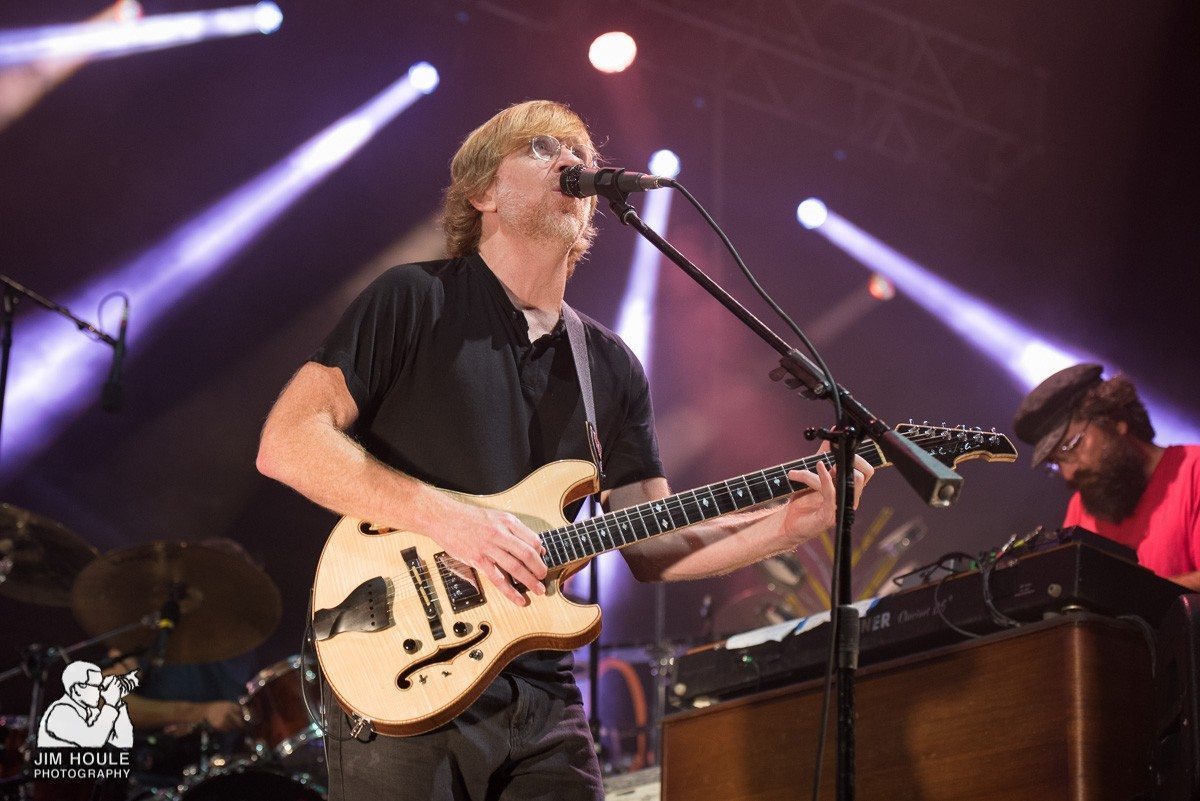
As was the trend each evening at Peach, Mother Nature made her presence known with continuous flashes of lightening that would come with strong winds, rain and thunderstorms forcing The Lennon Claypool Delirium to prematurely end their predictably spacey yet original set. Fans took cover under the Pavilion as the first part of the storm passed overhead flooding the floors under their feet. Once passed it was finally time for the great Trey Anastasio Band to hit the stage. The pavilion, now packed with fans, housed tunes like “Cayman Review,” “Magilla,” “Gotta Jibboo” and “Money Love and Change.” As soon as “Sand” started to pick up, Anastasio was forced to tell fans to once again seek cover due to more severe weather. Once given the all clear, TAB returned to the stage to pick up “Sand” where they left off. Later in the set, Trey shared the story of how former TAB trombonist Jeff Cressman left the band to play with Santana. When Trey asked him who might replace him, Cressman suggested his daughter Natalie. Jeff was then welcomed to the stage and the father-daughter team thrilled the crowd together during “Push on Til’ the Day” to close one of the best sets of the entire Peach weekend.
Umphrey’s McGee gave the best musical nightcap of the weekend with their latenight set on the main stage Saturday night. The lightshow in the Pavilion was spectacular and the music was on point. The progressive rockers from Chicago played older songs from their catalog such as “Wappy Sprayberry” as well as a cover of Prince’s “Controversy,” a song they first covered in Minneapolis the day after the legendary singer’s death. “Puppet String” included Hall and Oates’ “I Can’t Go for That” and Pink Floyd’s “Another Brick in the Wall” teases. Fans beat on the back of the seats within the Pavilion; the sound dragging the band out for a thrilling encore of “In the Kitchen” into “Glory” and ending with a reprise of “Puppet String.”
Sunday was the return to struggle city for many campers packing up their belongings to hike off the mountain and return home. Lines seemed to move faster and despite it being the fourth day of the festival, people were in good spirits.
Sunday began with a special ‘Wake up With Warren Haynes’ acoustic set that featured Gov’t Mule numbers “Beautifully Broken,” “Raven Black Night,” and “In My Life.” The set would not have been complete without the delivery of some Allman Brothers Band tunes to commemorate the festival’s beginning. Haynes played “Old Friend” and “End of the Line,” two ABB songs he contributed to. Warren returned for a two-song encore beginning with Van Morrison’s “Into the Mystic” and Gov’t Mule favorite “Soulshine” to the delight of thousands.
Not more than a year since the Black Crowes called it quits, founding member Rich Robinson is taking his solo career to new heights. The Rich Robinson Band performed Sunday at The Peach. In addition, Robinson was welcomed to the stage to join Blackberry Smoke and later on with Gov’t Mule.
Blackberry Smoke is a southern rock group with bluesy guitar riffs and country music undertones not unlike that of the Allman Brothers Band. The set featured originals as well as a down home version of Led Zeppelin’s “Your Time is Gonna Come.” Robinson joined the quintet for The Black Crowes’ “Wiser Time,” in which he delivered a thrilling guitar solo.
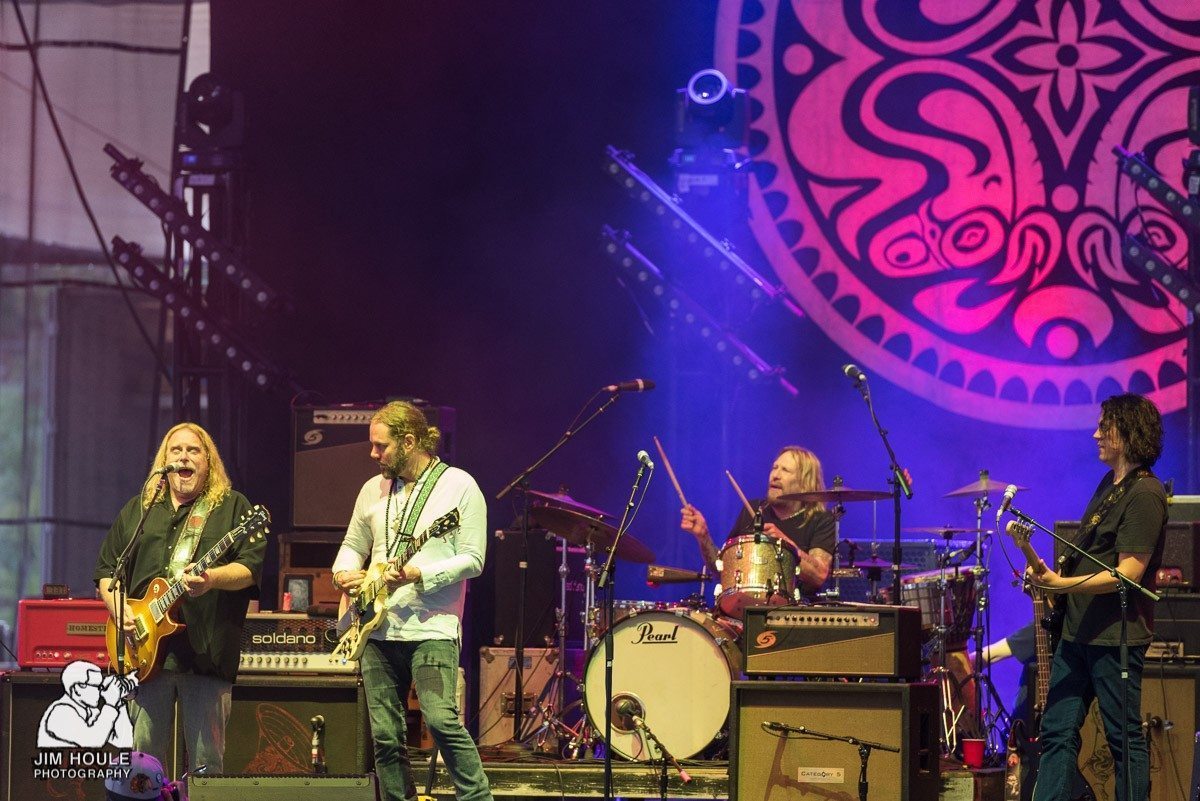
With Gregg Allman canceling a week prior to The Peach due to illness, a supergroup was formed to fill in the time slot he was scheduled for Sunday afternoon. The group consisted of Joe Russo, Marco Benevento and Oteil Burbridge. The trio delivered a unique set that was largely a jazz-fusion jam in which the talents played off one another with ease, a nice segue to the headlining guest packed performance by Gov’t Mule. After a few Gov’t Mule tunes including “Mule” and “Game Face” with a “Mountain Jam” tease, Rich Robinson was once again welcomed back to the stage for a Crowe’s signature song “Sometimes Salvation.” The encore included “Come and Go Blues” with Charlie Starr, Brit Turner and Brandon Still of Blackberry Smoke before Oteil Burbridge joined the stage once more to aid in Allman Brothers’ classic “Dreams,” before ending the festival with a triumphant “Whipping Post.”
The fifth annual Peach Music Festival was legendary in its own right with world class musical acts, a stunning yet difficult venue, and memories fans would take with them for the rest of their lives. The spirit of the Allman Brothers Band was alive and well and we are happy to hear Gregg Allman is on the mend.
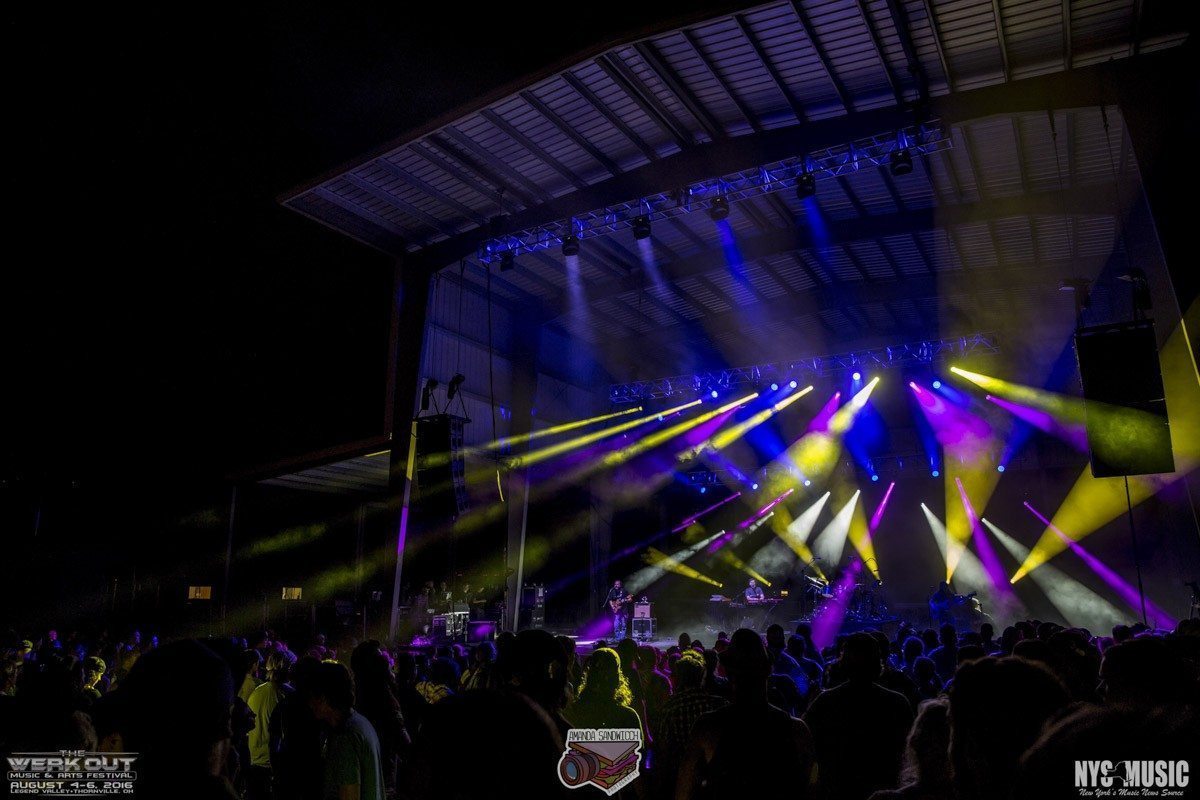
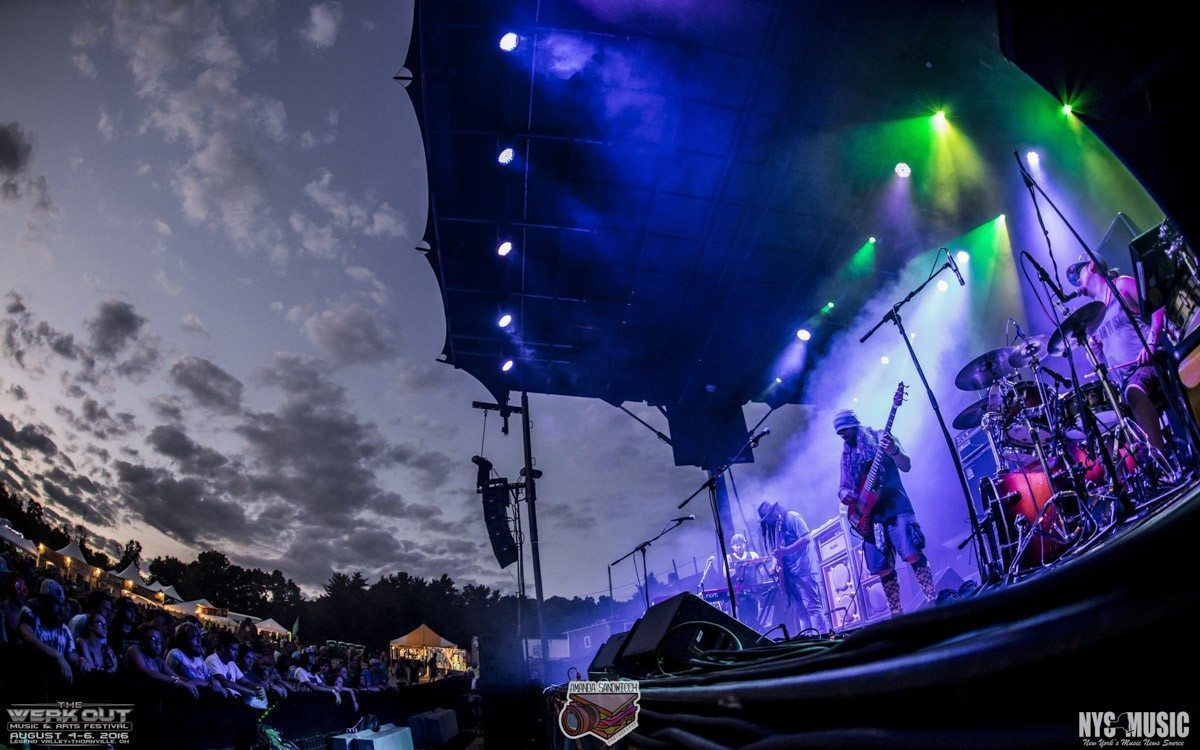
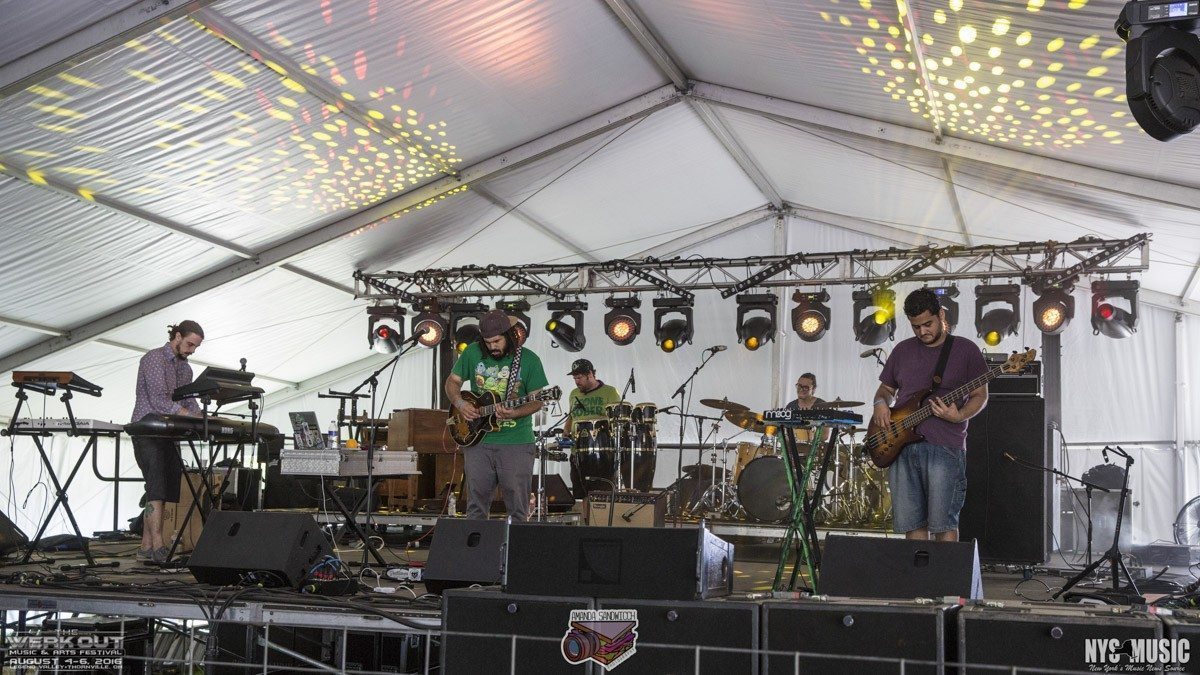
The 7th annual Werk Out Music and Arts Festival at Legend Valley Music Venue and Campground was stacked for success with a powerhouse line-up.
Taking place in Thornville, Ohio, August 4-6, it was more than just the music that fueled the success of this year’s festival. Anchored by moving tributes in honor of former Werks’ keyboardist Norman Dimitrouleas, as well a plethora of artist sit-ins and breakout performances, this year’s festival was marked with emotion and surprises.
The Werk Out’s biggest surprise literally fell on STS9 drummer Zach Velmer, when a female fan managed to bypass festival security. Once onstage, the fan made Werk Out history by attempting a trust fall onto Velmer and his kit. STS9 left the stage to regroup and returned for a high energy second set that closed out the Main Stage on Friday Night.
Friday afternoon was highlighted by the Big Damn Jam’s performance of the Beatles’ classic album Abbey Road. The performance was dedicated to Dimitrouleas, who passed earlier this year. As a member of Big Damn Jam, Dimitrouleas always wanted to perform the album. After his passing, BDJ decided to honor him posthumously with the performance at this year’s Werk Out Music Festival.
The Abbey Road set included a rotating cast of musicians most notably Dino Dimitrouleas (The Werks), Todd Stoop, Alex Delk (Octopus’ Garden), Marcus Cornwell (The Vibe) and Justin Robb (Litz) as well almost a dozen other musicians throughout the afternoon set. Most of the musicians participating had played with Dimitrouleas in various projects over the year. During the set, fabric flowers fashioned from Dimitrouleas’ old shirts were passed out in his honor. Fans and musicians wore them on hats, backpacks and various pieces of clothing throughout the rest of the weekend.
The tributes to Dimitrouleas continued throughout the weekend including The Werks’ Saturday night encore with a dedicated performance of “Carry Me Back Home.”
“I’ve never been so emotionally touched by a musical performance as I was during the Werks encore tribute to Norman on Saturday night,” said Zachary Burns of Grand Rapids, MI. “Everything from the crowd chanting ‘DINO! DINO! DINO!’, to Dino’s speech before the song starting, to seemingly every member and a good portion of the crowd crying during ‘Carry Me Back Home.’ That was the definition of being happy and sad at the same time.”
The Werk Out’s most talked about performance came in the form of the Twerkapod “Tribute to the 90s.” Featuring members of Twiddle, The Werks, and Dopapod, the Friday night late night set was packed with a mix of obvious choices (Green Day, Blink 182, Sublime, Nirvana, Rage Against the Machine) and stunning surprises (Britney Spears, Hanson and TLC). Highlighted performances from the set included “Gangsta’s Paradise” which featured a perfect reproduction of the song’s ending choral arrangement and Twerkapod’s word perfect performance of TLC’s “Waterfalls.”
Fans of The Werks weren’t in agreement on which of the weekends multiple sets were the band’s best. Most found that each of the weekend’s set contributed a different experience for the weekend.
“I really enjoyed the first Werks set on Thursday,” noted Tyler Raymond of Michigan. “I’ve seen the Werks more than any other band and the sound and production was top notch from them. The way the light show was coordinated with the band was seriously next level. You could really tell that they were putting the shows on for us and that the guys really love us.”
Dino Dimitrouleas, currently on a hiatus from bass duties with The Werks, joined his band mates on several occasions for sit-ins throughout the weekend starting Friday night. “When Dino came on stage in the tent everyone was so happy” Raymond told NYS Music, “Definitely a moment to always remember.”
Vermont based quartet Twiddle continued to create a buzz about their unique brand of jam. Raymond also noted that the band’s Saturday night sunset performance on the Side Stage was among his favorite non-Werks set of the weekend. “They are moving up the list of my favorite bands quickly because what they bring to the take is so fresh and different than anyone else out there right now.”
The weekend also featured several breakout performances. New York’s Mister F and Teddy Midnight created a buzz in the Big Tent Stage. North Carolina’s Big Something capitalized on their first Werk Out appearance on the Side Stage with a high energy afternoon performance on Saturday afternoon, while Maryland based band Litz turned heads during their Big Tent Stage set, which featured a sit-in from Twiddle keyboardist Ryan Dempsey.
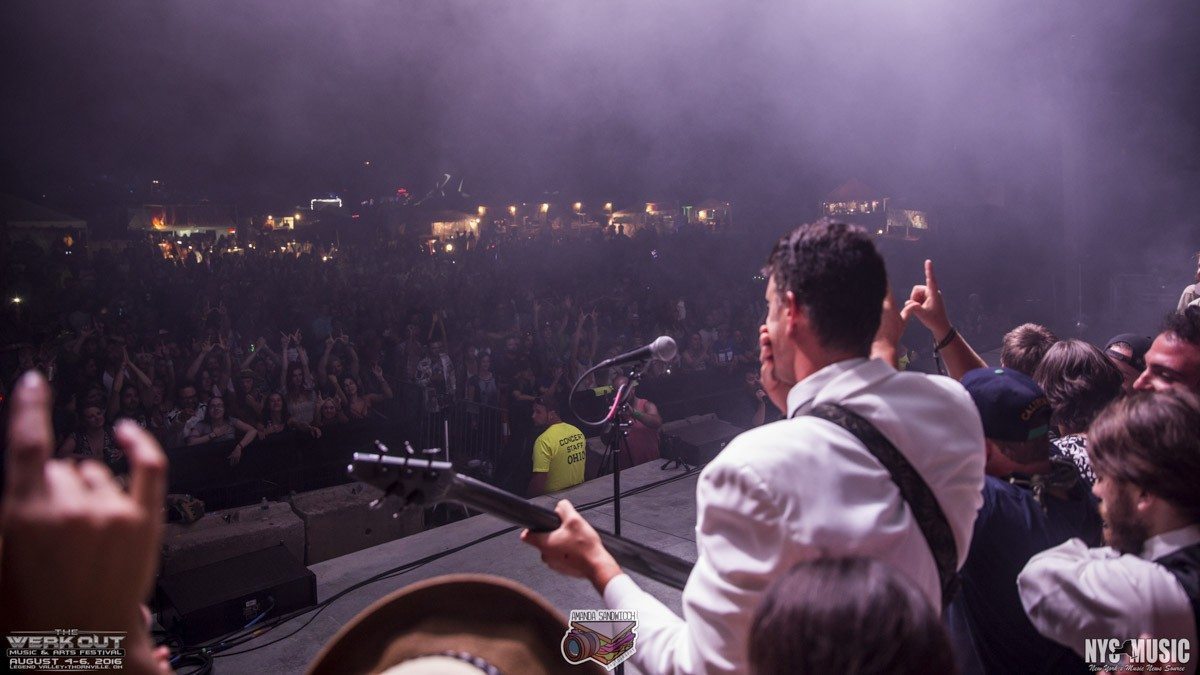
In fact, the weekend was full of sit-ins including Twiddle’s Mihali Savoulidis and The Werks’ Chris Houser performing with Greensky Bluegrass and Dopapod’s Rob Compa shredding during Twiddle’s “Apples.” And according to Derrick Webber of Ypsilanti, MI, these sit-ins add a new element of musicianship for some of his favorite musicians. “It blows me away to hear such clean performances from guys that don’t typically play together, and the passion they still have is inspiring.
The weekend’s ultimate sit-in featured members of the Werks, Twiddle, Greensky Bluegrass and Big Something in Matt Butler’s Everyone Orchestra. Butler finds a way to coordinate a variety of musical sounds, while leading his EO members to create unique and one time only jams. Twiddle bassist Zdenek Gubb stepped on stage to lead the EO to the highest energy, grooved out dance party of the set. However, Houser received the set’s MVP award for showcasing a variety of styles, genres and face-melting solos throughout the performance.
Beyond the music, the Werk Out featured a large number of vendors, giving attendee’s a variety of food, beverages, merchandise and crafts to choose from over the weekend. Vendors for the weekend all were competitively priced, creating a fairly priced and active marketplace throughout the weekend.
Nick Augustine, a first time Werk Out attendee from Maryland, noted that his favorite non-musical part of the weekend was the fire spinners and propane dance floor set up near the late night stage. “What a cool addition to the atmosphere!”
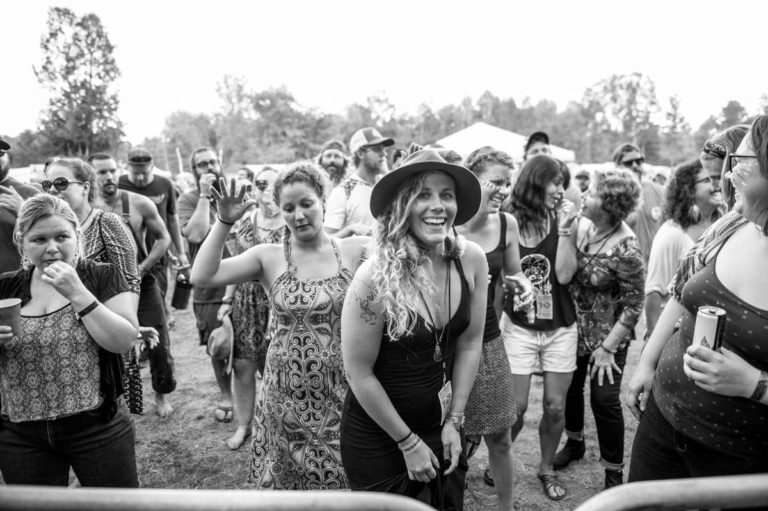
The Werk Out looks to return to the Legend Valley Music Venue and Campground for its eighth installment next August. The venue has plenty of space for the festival to grow without the inconvenience of having to move locations to accommodate its growing popularity. What the Werk Out does right is that it cultivates an environment of friendship and community while packing its line-up with musicians and artists that clearly have solid working relationships and mutual respect for their fellow musicians.
Augustine, who told NYS Music that he will be making the Werk Out an annual addition to his summer festival plans, said it was the overwhelming sense of community that made the festival a stand-out event. “The staff, the crew and the people were all adding to making this festival fun, beautiful, exciting and safe. From the decorations to the sound and lights to the amount of good vibes and vending, this festival was one of the best I’ve attended!”
It wasn’t at the famed Chicago Paradise Theatre that the legendary classic-rock band Styx performed. This time it was the stunning and fairly modern American Music Theatre in Lancaster, Pennsylvania on a warm summer night, August 15, 2016. The 1600 seat American Music Theatre first opened its doors in 1997 and has been the host of a multitude of Grammy winners, Grand Ole Opry legends, National Broadway Tours as well as numerous top musical acts and performers over its two decade span.
It may not have the history as the famed Chicago’s Paradise Theatre, however, but the classy modern AMT is surely a beautiful and relaxing place to catch a show with its wonderful mezzanine accessible by two grand staircases on each side of its spacious open lobby, a nice and unique gift shop, clean modern restrooms and two plentiful and delicious refreshment areas that are easily accessible from the main lobby directly outside the theatre doors. Seating is very comfortable and spacious with a good open view of the stage. There really isn’t a “bad seat” in the house. The AMT provides state of the art sound and lighting as well as top notch production, sound, lighting, crew, very friendly ushers and accommodating staff.
Styx, one of the world’s best selling bands of all time, formed in Chicago in 1972 by twin brothers Chuck and John Panozzo and Dennis DeYoung along with Guitarist James Young. Tommy Shaw would join the band in 1975. Styx signed with A&M Records and released Equinox in 1975 as well which gained the band considerable recognition and airplay on FM radio in the relatively new Album Oriented Rock (AOR) format. The band’s 1976 album, Crystal Ball, would be the first to feature Shaw. The bands real breakthrough triple platinum smash album The Grand Illusion was released on July 7, 1977 and featured the mega-hits “Come Sail Away,” “The Grand Illusion” and “Fooling Yourself (The Angry Young Man)”. Styx would go on making huge albums and selling out arenas and stadiums throughout the late 1970’s and 1980’s with albums Pieces of Eight, Cornerstone, Paradise Theatre and 1983’s Killroy Was Here.
At just a little after 7:30 p.m. in the sold out 1600+ seat AMT, the house lights went down and Styx drummer Todd Sucherman could be seen settling in behind his kit while waving to the crowd. As the intro music intensified, the other members of Styx walked out a stage door just to the right of the drum riser waving and moving into position. As the intro reached its crescendo the band, guitarist/singer Tommy Shaw, founding guitarist James Young, keyboardist/singer Lawrence Gowan, drummer Todd Sucherman and bassist Ricky Philips established their musical diversity and ageless sound right away opening with “The Grand Illusion” followed by the timeless 1981 hit “Too Much Time on My Hands” and another from the 1977 Grand Illusion album, “Fooling Yourself (The Angry Young Man)” which featured original founding bassist Chuck Ponazzo joining the band on stage.
The band was musically superb. Without a doubt the performance was outstanding as the band was as tight as could be, delivering a loud but clean sound with the amazing vocal harmonies the band is known for, dazzling guitar tones blended well with the mix of electric and acoustic six and twelve stringers along with the synth and piano from Gowan, who replaced founding keyboardist/singer Dennis DeYoung in 1999. Shaw however soaks up the majority of the spotlight while sharing frontman duties with Gowan as he took lead on at least half of the 18 song set as well as explained a little history of the band including Styx being one of the founders of “Album Rock” and “Story Telling” through LP’s. He commented that the goal in the late seventies for bands was the idea of Album Oriented Rock and that “If you made it through side A of the album and flipped over to side B, the more experimental and personal songwriting and sounds tended to find its way to the B sides”. Shaw introduced the next song as the second song from side two of the Grand Illusion album, “Man in the Wilderness,” as he strummed his beautifully crafted Gibson acoustic guitar.
Styx continued throughout the night with Young engaging with the crowd as well as he took lead on several numbers and introduced the next song, “Light Up,” from the 1975 Equinox album. He talked about the days when President Ford was still in office, before the cell phone era, when the band would engage in “not so healthy choices,” and when the crowd forty years ago would hold up actual lighters and a “so called aroma would permeate the air.” He urged the modern concert goers to instead hold up and light their cell phones as the band broke into the song sung by Gowan. Young then took lead on the 1977 song, again from the Grand Illusion album, “Miss America” and later on the 1981 song “Snowblind” from the Paradise Theatre album making reference to how hot it has been recently and for the audience to relax and cool down a bit for this song.
Shaw and Gowan performed a mesmerizing tribute to David Bowie with their rendition of “Space Oddity” featuring bewitching harmonies with only Shaw’s acoustic guitar and Gowin’s piano accompanying their vocals. A few other surprises were covers by The Beatles with “I am the Walrus,” Elton John’s “Rocket Man,” and Prince’s “1999,” as well as a rendition of Otis Redding’s “(Sittin’ On) The Dock of the Bay” all performed solo by Gowan while the rest of the band stepped offstage for a bit. It seemed the hits kept coming one after another. With close to 45 years as a band and over 15 studio albums with four consecutive albums being certified as Multi-Platinum from 1977-1981, the set-list could continue for hours. Styx’s AMT set included thirteen of their well known hits as well as five covers. The band tends to avoid adding some Dennis DeYoung songs to their set-list including “Babe,” “Mr. Roboto,” and “The Best of Times.” Needless to say, the set, the songs, the musicianship, the showmanship, the enthusiasm and energy all made for an amazing show in the very classy and comfortable American Music Theatre.
Styx had the audience highly entertained and engaged throughout the night in between their powerful guitar heavy rock songs such as “The Grand Illusion,” “Too Much time on my Hands,” and “Miss America,” and their more laid back hits such as “Man in the Wilderness,” “Crystal Ball,” and “Lights.” As the show progressed, Shaw urged the crowd to move up to the front of the stage and move around. And again, as expected, the crowd was enthralled in the moment, with much of the audience choosing to sit and watch the show from their relaxing theatre seats many of the other fans moved right up to the front of the stage waving and extending their arms in the air hoping to slap hands or catch a guitar pick from one of the band members.
The hits kept coming all night including “Blue Collar Man” and the mega power rock ballad “Come Sail Away.” Styx came out and performed two encores including “Rockin’ the Paradise” complete with confetti blasters on both sides of the stage and finally, from the 1978 album Pieces of Eight, “Renegade.”
Styx continues their summer 2016 tour throughout the months of August, September, October and November. Whether you’re an old fan or a newcomer to Styx, the band is timeless and the band features amazing musicians that perform all the Styx hits with flawless sound, energy and passion. Check out their upcoming tour dates, news and more at their website below.
Styx, August 15, 2016 – American Music Theatre, Lancaster, PA
Setlist: The Grand Illusion, Too Much Time on My Hands, Fooling Yourself (The Angry Young Man), Man in the Wilderness, Light Up, Miss America, Space Oddity, Crystal Ball, I Am the Walrus, Snowblind, Lights, Blue Collar Man, 1999, Rocket Man, Dock of the Bay, Come Sail Away
No one can replace the likes of Roger Waters, David Gilmour, Rick Wright, Nick Mason, or Syd Barrett of Pink Floyd, but in The Machine’s recent stop in Peekskill the band showed that it’s possible to get fairly close to doing so.
The Machine lived up to their 26-year reputation for accurately recreating the Pink Floyd catalog in their first ever appearance at Paramount Hudson Valley, a sort of hometown show as they are from across the river to the south in Nyack, NY.
The set list pulled from each of Pink Floyd’s distinct sounding eras including the songwriting of Syd Barrett, the Roger Waters-driven songwriting, and the post-Waters take-off under the wing of David Gilmour’s guitar. The Machine wasn’t shy in reaching deep, either. “Wut’s…Uh the Deal” and “Burning Bridges” were in the mix as treats to the true Pink Floyd fans in the crowd.
Each of the key elements that identify Pink Floyd’s style were obvious during The Machine’s set. Joe Pascarell’s guitar intonation mimicked that of Gilmour’s Black Strat and was almost note-for-note on solos, particularly the show-closing “Comfortably Numb.” The distinct vocal leads of both Waters and Gilmour were well represented in similar tones particularly when the two roles play off each other in “Run Like Hell.”
Set 1: Welcome to the Machine, Another Brick in the Wall, Wot’s…Uh the Deal, Hey You, Astronomy Domine, Sheep, On the Turning Away
Set 2: Shine On You Crazy Diamond (Parts 1-5), What Do You Want From Me, Echoes, Money, Arnold Layne, Wish You Were Here, Shine On You Crazy Diamond (Parts 6-9)
The night was dirty, loud, revolutionary, beer-soaked and pleasantly dark. I’m not only describing the inside of indie Brooklyn’s sacred sanctuary, Shea Stadium, but also the band behind the interior madness, Evolfo. As the band entered the stage, their UFO style of music was introduced to the crowd with a thunderous instrumental intro highlighting everything from the keyboard and bass to the drums and horn section.
One of their newer installments, “Bloody, Bloody Knife,” had a familiar, almost White Stripes meets 60’s punk sound and included a guitar solo by Matt Gibbs. During the solo, his hair completely covered his face while he melted our faces. The crowd favorite, “Mechanicals,” created an infectious dance party with a late night lounge feel. The whirling keyboard effect used by Rafferty Swink sounded like something Dr. Dre may steal for his next album while Matt Gibbs’ creative lyrics were politely screamed in a Shakespearean manner. As soon as it feels like the song couldn’t get anymore genre blending, the bursting horns march their way into the room like an impromptu parade down Bourbon Street. Gibbs gave the crowd a minute to catch our breath as he highlighted how ecstatic the group was to play in such an iconic, underground sonic space.
After boogieing through “Love Like a Freak,” Evolfo kept the most recent songs coming with “Rat City.” Imagine David Bowie’s “Suffragette City” played with a faster tempo by a psychedelic garage band like The 13th Floor Elevators, but with just the perfect amount of brass to shackle it to the ground. Next up was “Let’s Carry On” which saw bass player Ronnie Lanzilotta stomping back and forth like an air guitarist on Red Bull. His energy was so intense he cosmically summoned one of the members from the opening act, Mobile Steam Unit, to jump on stage and rage with him equally as hard. The momentum spread like the Zika virus and before you knew the entire crowd was infected; one of the highlights of the hour long set.
Judging by the “Herbie and the Headhunters” t-shirt worn by their bearded saxophonist, Jared Yee, this gnarly crew were no strangers to the realm of funk. They have no shame in fronting as a “funk band” even though they consider themselves “garage-soul.” One of the best tunes that display their thrilling, chilling funk talent is “Wild Man” which Evolfo played with delightfully terrifying precision. I had a moment to speak about the visually freaky yet addicting music video for “Wild Man” with Gibbs before the set, inquiring about the first music video regarding any correlation to the imagery in the video compared to what he thinks about while on stage. He replied:
“Well some things in the video do quite literally have a place in our show. Some of the outfits and the demon mask and other small things have made their way onto the stage over the years. And then, of course, I hope that we portray some of that raw animal magnetism. I would love for real life to be as crazy as “Wild Man.” If we’re in the zone and we’re getting the energy from the audience I believe we can really live up to that fun with reckless abandon. As far as what’s on my mind while I play, I pretty much always wish I could pour some ambrosia on the audience and make them turn into animals. That would be ideal.”
After the “Wild Man” lit up the room with aerobic weirdness, they were ready to give us what we wanted, the title track to the newly announced EP, Last of the Acid Cowboys. The lyrics are coming from a place of pure spacey madness. Swink’s keyboard is projecting a surfin’ synthesizer sound while he sings in an eerily familiar Jim Morrison tone. If this song doesn’t wind up on the next Quentin Tarantino soundtrack, someone isn’t doing enough research.
Gibbs shed some details about the new EP and it was time for one more classic Evolfo tune for the brass-aholics in the crowd. Loaded with sexual innuendos, tantalizing bass lines and mod soul-funk, the climax during “You Light Me Up” is definitely the horn (or horny, sorry, I had to) section. Their time on stage was short and sweet, but the memory of that performance will last a long time, even for the fans in the booziest of states.
Musical evolution has been as much a staple of New York City as pizza, or more recently, Pokemon Go. Much like the global sensation of walking around with a smart phone and searching for rare creatures from a different dimension, a new species of music is evolving right before us. Label it whatever you want, but for those of us lucky enough to discover the rare Evolfo at Shea Stadium on a Wednesday night, we have a new band that is about to morph. After the release of their new EP, a tour is sure to follow and if they continue to put on shows with that sort of allure and creativity, I gotta catch em’ all.
As the crowd eagerly anticipates tonight’s concert at the Lakeview Amphitheater for the Counting Crows and Rob Thomas, lead singer, Adam Duritz took a few moments while getting ready for the tour this spring to speak with NYS Music on fame, music, his band, and Woodstock 99.
Kathy Stockbridge: Hi Adam, how are you?
Adam Duritz: Hi Kathy, I’m great, it’s a beautiful day today.
KS: Yes, it absolutely is. I want to thank you for taking the time to talk with our readers today, I know you are a very busy man. Most know that you are a musician, but you are also a film and music producer as well. You wear a lot of hats. Is there any one particular hat you prefer over the others?
AD: I just really like playing with the band. I’ve done a lot of different things, and mostly because it was necessary at that moment. Honestly I don’t think I would ever do another movie again, that was exhausting. I just did it because my friends had written a script and I wanted to help them get it made. Mostly, I just play in a band, that’s what I like.
KS: Well that’s good because you are good at it, and we enjoy it so it’s a win/win for everyone here. In past interviews I’ve seen and heard, many people think that “Mr. Jones” was your breakout song as it it went up the charts so fast. But it actually was your performance on Saturday Night Live of “Round Here” that actually catapulted you into the limelight. Talk to us a little about that take off, and was it everything you expected when it happened?
AD: No, but it never is. Because there is no way for you to ever conceive what that’s going to be like. Whatever picture you might have or imagination about fame or fortune of that sort of thing, where guys are suddenly listening to your music and you are the center of culture for that second, yeah there’s no way. In fact whatever ideas you ever have about what’s that’s like, are nothing like what it’s actually like. It’s so weird.
KS: It’s almost like the first time you ever hear your song on the radio, you never forget where you were. I’m sure it really a cool experience though.
AD: Yah, that’s a really cool experience. I very vividly remember that. It was just very clean, very simple, and FUN. Like the first time I heard us on the radio I was like “that’s just really cool”. But becoming famous all of a sudden having a sudden wash of success is nothing like anything you’ve ever experienced before in life. Like hearing your song on the radio is like really cool, but it’s like feeling appreciation from someone in some other way. And that’s happened before (feeling appreciation), people have told you something was good and you’ve gotten a compliment so it’s like a bigger.. better version of something you’ve experienced before. Getting famous and having that mass cultural thing is like nothing else in life. There is no way to understand before you hit that, how weird that is. It’s just really strange and bizarre. We had been touring for awhile at that point. People had made a mistake thinking that “Mr. Jones” was new, but it had been out for awhile. “Mr. Jones” had been on the radio, the record wasn’t even in the top 200. The video came out and we were touring, and we had not been doing our first headline shows yet. We had been opening for Kracker. We really hadn’t toured as a headliner at all. Then we played Saturday Night Live, and played “Round Here” and the whole world changed. Our record jumped forty spots a week for five weeks. We were at like 213, then we were at 170 something, 130, 90 something, 50 something, 12, 6, 2, and then stayed at 2 for like the next two years. It was just weird. It happened so suddenly, and it was such a weird surprise.
KS: That song has a special meaning to you I’m sure, but then even more so as it was the one that helped you get your music out there to everyone.
AD: Yeah, and not just for me too, but for our fans in a way. Because “Mr. Jones” is a really great pop song, I love that song, but “Round Here” it shows the breathe of what we really do. Like what we do live and how its kinda the scope of our music. “Mr. Jones” doesn’t, so when we played it on TV, that’s why it blew us up because a single is one thing, but a band that moves you, a band that makes you feel something, expansive and big and moving like “Round Here” does, apparently knocked people out that day because our lives all changed after that.
KS: Did you know automatically this would be the one you would sing?
AD: On Saturday Night Live? Yeah we knew. But it was a huge fight. It was a mess. Like we had been getting offers for months. The Letterman show had been offering for us to come play on there. But they kept making all these caveats like it had to be Adam with the Late Night Band; okay it can be Adam with guitar player and our band, it can be Counting Crows, but with Paul, and we were just waiting for someone to offer us an opportunity so that we could just play. And then SNL came along and they were through more months of arguments about what we were going to play, and came to an agreement that we would play “Round Here” first, then “Mr. Jones” later, and then we wouldn’t have to cut anything. Then we got there that week and started rehearsals for the show and they sprung on us that they had changed their mind and that we were going to play “Mr. Jones” first and that we were going to have to edit both songs. So it was just a huge fight all week. It was kinda a nightmare. Like I was sure that “Round Here” was the song to play for our first big exposure. They didn’t want it any more and it was a mess, and it was a huge fight all week. Then they finally caved about an hour before the show.
KS: Good thing you stood your ground there.
AD: I think they were so pissed that they never had us back again.
KS: Their loss. “Round Here” was written off the top of your head, from what I understand. You were able to write it in one sitting. In an interview I with Charlie Gillingham, he said that “(Durwitz) has a way of coming up the amazing complex literary lyrics off the top of your head. And that there are lines in these songs, hundreds of them where he says something that really matters that is just so well said.” That’s amazing to me. When writing songs do you find that these songs take on a life of their own or does it write itself in a way with you?
AD: No, its a little of both. It’s not like I wrote the song off the top of my head, it’s a Himalayan song, my band before Counting Crows. “Round Here” is from that band. We were playing along and we were recording, on a cassette tape, our rehearsal. So it was probably 20 minutes of us singing on there and a lot of the song was already in there, so I edited it down. I used to do that a lot. Where I would say things off the top of my head, listen to it, then go back and pull things off it, and edit it down into a song. That I used to do an awful lot of. But I don’t write as much that way anymore. Probably because we don’t rehearse as much any more, as we all live in different places now. So I tend to write more by myself or with the other guys. Yeah, I used to write a lot that way. But it wasn’t like I would play for five minutes and then there’s “Round Here.” It’s more like there’s 20 to 30 minutes of music on a tape and I pull from it and then craft it into a song. A lot of it was there, but it was heavily edited down.
KS: Has writing been something you’ve always done? Was it a creative outlet for you?
AD: I didn’t really start writing songs till I was about, well the first song I wrote music and lyrics was the fall term of my freshman year in college. Before that, I hadn’t really done it. But after that, I did nothing else. For years at a time. I just used to write all day, every day.
KS: Well you are very talented and it comes out in your lyrics and music. You once described the difficulties you experienced when you guys were recording August and Everything After. You were developing your roles within the band and the sound and brand during those sessions. You knew in your mind what you wanted to achieve in the finished product and took charge. If you had a chance to go back would you do anything differently while recording that first album?
AD: I’d be less of an asshole. The thing of it is, it’s hard to like…I have skill sets now for being a band leader that I didn’t have then. I had no idea how to do that. It wasn’t a brand, I just knew there was something better than what we were doing. We were playing a kind of music that sounded like a sort of style of the time. It kinda sounded like late model Roxy, which is cool. We sounded like a bunch of sounds that were big at the time, that we were trying to sound like. And I just wanted us to sound like us! I was like, strip it down and find out what we were. I felt like that was what it was necessary, and in order to do that I had to take away to just play simple instruments for a bit. We ended up using lots and lots of weird sounds over the years. But at that moment I just wanted us to stop trying to sound like something and just figure out what we sounded like when we stood in a circle and played together. I felt like there was something much more long term, much more rewarding, and much like a deeper vein to mind, than what we were doing. But the thing is, I was brand new to doing this. And brand new being a band leader, and not very good at it. People always talk about how they love playing music, or anything you do in life that you enjoy like a hobby, then talk about it becoming work it’s a negative. Because all of a sudden you’re fighting over things that you used to enjoy. But that’s what work is. Work is when you take something you used to do for fun and you turn it into something you really really good at. And a lot of people can’t get past that point because they don’t like when their hobby starts to be work. Because it’s a big transition to get from one to the other, ya know. And you have to fight about things, where you used to just have fun. I just wasn’t very good at that so there was a point on that first album where we were having a lot of pressure of making a first record and I’m making everybody ditch the instruments and the effects they are using that they are comfortable with and stripping them all away and saying just play. That made it hard on everybody. I was pretty sure of what I was doing, but not very good at doing it. I was hard on everybody. I was harsher than I needed to be and I was so insecure about it. Everyone in the band tried to quit during that album. At some point during it, every single one of us decided to quit the band. It was really hard. The one thing I would change, is the one thing you can’t really change. I would like to know what I know now, then. I could be better at it, but you only get that knowledge doing it. In life the one thing you can’t go back and change, is the shit you learned, because that’s how you learn it.
KS: Exactly. I’m with you on that. As you wrote more albums, of course it got easier for you and as you grew as a band in the business you developed a reputation as an amazing live band. Your band mates are one of the most cohesive groups that I’ve ever heard. And nothing is more apparent than as you play live and improvise on stage. Which is amazing to me. You once said that “playing is really important but listening is more important.” Do you think this is why you all meld so well on stage because you listen to each other and pick up these cues?
AD: Yes, I think so. And also I think we’re not afraid to get it wrong. We have a confidence that there is no “wrong.” What you are suppose to do up there on stage, is try stuff. To play, feel it, and try stuff. I think it’s a live experience. I think when you are so worried about being perfect all the time it makes you really stiff in those moments and I think we’ve kinda gotten over, and not so worried about being perfect. We try to be really good, but we’re willing to experiment and if something goes wrong, it goes wrong and it’s not the end of the day. If we have a train wreck, I don’t mind stopping the song, pointing out the guy that screwed up, laughing at him and then starting it over again. It happens sometimes, things go wrong. It’s real life. The other night we were playing a show at a festival outside of Austin, like last Friday. I went back to the piano to play “Long December,” I sit down and was talking with the audience, and I start playing and right before I played the song I changed the cap on my mic. So when I do that, I signal my monitor guy and he turns off the mic so that when I’m unscrewing the cap, it won’t make a bunch of noise. You have to do that (change the cap) because you sweat and it soaks into it and you have to change them every now and then. So I changed it and he turns the sound off, screwed it back in, and then go back to the piano to play “Long December.” So when I go to sing he had forgotten to turn the mic back on. So I just stopped the song, laughed at him, he turned it back on, we joked round for a second, then we counted it back in. Truth is, that stuff happens. It’s just human stuff. He’s just doing 90 things at once, he’s setting up someones else’s monitors, flicks my thing off, and then forgets to flick it back on. You can get uptight about stuff like that, or you can realize it just happens. So you just keep playing.
KS: When audiences see that stuff happen, it helps them relate to you I think. They have you up on a pedestal, then when life happens, and they see your human side, they can relate more with you as you are just like them. Mistakes happen.
AD: I think that’s true. It’s an interesting by product of it. Fact of the matter is, it is all real. We’re a bunch of guys on stage playing, and we’re trying to not do the same thing every night exactly the same way. And so, stuff happens. It’s just real life. It just happens to be on stage, and we just happen to have microphones. It’s the same as the rest of our day in a way and everyone’s real life.
KS: In 1999 you came to my hometown and played the Woodstock here. Can you share thoughts of that eventful concert there?
AD: They are not really good remembrances.
KS: I know. At times I wonder if we should get a do over or should we just cut our losses and just call it a day? SMH over here.
AD: I think that was one of the worst ways of honoring one of the best places in the history of rock and roll that I can ever possibly imagine. Woodstock is deservedly one of the most important place names in the history of music. It really is, and totally deservedly so. But those guys, that year, ended up charging like $7 for waters, on a concrete pad, on a day that was 100 degrees outside. Having the port-a-potties not properly maintained, and the poor fans that are dehydrating like crazy can’t buy water because it’s so expensive, and there was a 40 yard pool of urine and shit. People rioted. Let me tell you something about that. And they blamed the bands. Not the people, the promoters blamed the bands. But we wanted to play a night slot at Woodstock, I know this is true because they came back and said we want you to play before sundown because all the night slots we want to have as many aggro bands as possible. They wanted to have it as wild and as intense as possible at night. So we are only putting the loudest bands on at night. They put Limp Bizkit on, the Red Hot Chili Peppers and who ever else. After a certain hour, they were only really aggro bands. Which meant that’s exactly what you are going to get at the end every day. So when they set that up that way, all the bands did was be themselves. I saw the Limp Bizkit show, they played a great show that day. But they are an inciting band. So if you want to have people out in the sun all day and not give them water, and then put Limp Bizkit on, it’s going to become a mosh pit.
KS: Our town is quite embarrassed by the whole thing. It’s one thing to be famous, another to be notorious. So sorry you had bad memories of Rome.
AD: I don’t think that’s peoples memory of Woodstock. Many have probably forgotten that part. When you think of Woodstock, you think of the original, just not that year. Some stages were like triage. There were people like on stretchers. People were getting like so hurt. We saw like women getting their clothes torn off them in the audience. It was just so chaotic and so much anger in the crowd. It just wasn’t well run.
KS: Well we hope to welcome you back to Central NY this August at the Lakeview, and hope to change that bitter taste you have in your memory with some good ones. You will be touring this summer with Rob Thomas. Have you ever played together before?
AD: Yeah, but we’ve never toured together before. We’ve known each other for such a long time. There were times we would be in the same city and get up on stage and sign “Momma Don’t Let Your Babies Grow Up to Be Cowboys” together. One time I had a European tour and they had a European Tour that started a couple weeks before mine, so I just went over early to be with Rob and the guys in Italy. I just spent a week getting drunk and hanging out with them in Italy going on interviews with them before my tour started. Just because it was fun. I’m really looking forward to this because I haven’t seen Rob much the last ten years. So it will be nice to see each other again.
KS: It will be an epic tour and we can’t wait to have you guys come through. Final question for ya. If I had never heard a Counting Crows song before, which one would you tell me to listen to to get a feel and encompass what you guys are all about?
AD: “Pallasides Park.”
KS: Okay. That’s a very interesting choice. That is a great video too. Where did the concept for that come from?
AD: It was all Bill Fishman. I asked him to change a few things, but basically it was his concept from hearing the song and wanting to do it. There were a lot of submissions for who wanted to direct that, but it was clear to me the moment he sent his in. He was the guy. He just had the grasp on it.
KS: So his visual concept met yours?
AD: His visual concept met my emotional concept. I didn’t have a visual concept. I knew how I wanted it to feel, and I felt like he really captured that.
KS: Well thank you again Adam for taking the time to talk to our readers and we look forward to welcoming both you and Rob Thomas back to Central New York once again.
As the interview ended, the old proverbial ‘don’t’ ask a question you’re not certain of the answer’ came to mind. Not quite sure how I expected Adam to answer the Woodstock 99 question, however his insight from a stage view was enlightening to this journalist. Was actually embarrassed all over again for my community wishing there was a way one could rectify this catastrophic event in the minds of all that participated and attended. Perhaps some things are best left alone. Note to self, do not ask about Woodstock 99.
I found the lead singer extremely easy mannered as our conversation began. Although I sensed a reservation in his tone in the beginning of the interview, I felt his guard come down as I kept my questions on topic. I know readers want a personal insight into stars and their lives, however some things that personal are just that, personal. Perhaps I should be that type of journalist, delving into topics that readers want answers to but are encroaching, but then again, I want to know about his music, how it makes him feel, how he wants to grow and share with his fan base, not his past dating history. So I left that line of questioning to those other rags you can read in the line at the grocery checkout as I was preparing to talk with him. If he wanted to speak of those topics, I would gladly be an outlet, but we were there to discuss his music.
As our interview quickly exceeded our allotted time, we were interrupted and asked to wrap up questions to keep him on schedule by his publicist. It felt like this conversation could continue another day. I had so many other questions I wanted to ask him. Questions about acts he’s toured with, artists he’s recorded with, and then so many other topics that come from those conversations. I got a sense that Adam could be a person’s best of friends. His concern with having to take charge as band leader in the beginning, and his recognition on how he handled it was endearing to me. His willingness to work on projects to help out friends, even when it’s not his cup of tea. Then the shear compassion of the audience at Woodstock 99 left me with an insight to his character and peak under that cloak of mystery these interviews often leave you with. Sometimes not asking questions, gives you more of an insight I think into the character of person than asking them and having a wall come up. Adam was so likable, so real, so intelligent. His first answer to my hello, pointing out the beautiful sunny day he (and I) were experiencing here in NY state, immediately made him real to me. As our conversation went along it truly appeared that he was happily reliving the moments with me as he shared his story with our readers. His simplistic answer said it all. “Mostly, I just play in a band, that’s what I like.”
Being a live band, this photo-journalist looks forward to covering his show and experiencing these improvisational moments on stage with those he considers friends; his band mates and audience. The live experience is what drew us in from that initial emotional rendition of “Round Here.” This heart is what I want to see tonight.
Tour Dates Fri Aug 12 Syracuse, NY Lakeview Amphitheatre Sat Aug 13 Niagara Falls, NY Seneca Niagara Casino* Mon Aug 15 Saratoga Springs, NY Saratoga Performing Arts Center Tue Aug 16 Brooklyn, NY The Amphitheater at Coney Island Boardwalk
Thu Aug 18 Bethlehem, PA Sands Bethlehem Events Center
Sat Aug 20 Cincinnati, OH Riverbend Music Center
Sun Aug 21 Indianapolis, IN Klipsch Music Center*
Tue Aug 23 Detroit, MI DTE Energy Music Theatre*
Wed Aug 24 Chicago, IL FirstMerit Bank Pavilion at Northerly Island
Fri Aug 26 Toronto, ON Molson Canadian Amphitheatre
Sat Sep 3 Woodinville, WA Chateau Ste. Michelle
Sun Sep 4 Ridgefield, WA Sunlight Supply Amphitheater
Thu Sep 8 Los Angeles, CA Greek Theatre
Sat Sep 10 Mountain View, CA Shoreline Amphitheatre
Sun Sep 11 Reno, NV Grand Theatre at Grand Sierra Resort
Tue Sep 13 Phoenix, AZ Ak-Chin Pavilion*
Wed Sep 14 San Diego, CA Cal Coast Credit Union Open Air Theatre at SDSU
Fri Sep 16 Indio, CA Fantasy Springs Resort Casino
Sat Sep 17 Las Vegas, NV Downtown Las Vegas Events Center*
Mon Sep 19 Denver, CO Red Rocks Amphitheatre*
Thu Sep 22 Albuquerque, NM Sands Casino Amphitheater
Sat Sep 24 Allen, TX Allen Event Center
Sun Sep 25 Houston, TX Cynthia Woods Mitchell Pavilion presented by Huntsman
Tue Sep 27 Kansas City, MO Starlight Theatre
Wed Sep 28 St. Louis, MO Hollywood Casino Amphitheatre*
Fri Sep 30 Nashville, TN Ascend Amphitheater
For any festival to survive – let alone thrive – for 10 years is an impressive feat. Bonnaroo and Coachella are two names that immediately pop into mind, but now it’s time to add Backwoods Pondfest to that list.
This past weekend at Twin Ponds Campsite in Peru, N.Y., Pondfest, which is put on by northern New York band Lucid, celebrated its 10th birthday by throwing a truly cohesive party melding the fun of camping in the middle of the forest with live music.
The lineup mixed the best that the Adirondacks has to offer, with some of the bigger acts of the festival circuit. Lucid, a band straight from the heart of the Adirondacks, has been a staple of the weekend since inception, and while this year was the same, it was also very different. Last year, the band announced it was taking a long break, but not officially breaking up and would continue to play events like Pondfest.
And just to put any rumors to bed, bassist Chris Shacklett gave me a brief interview on Saturday afternoon to discuss the state of the band. First off, Lucid is not breaking up.
“We are totally shifting our focus,” Shacklett said. “Instead of continuing to hemorrhage money, we are being smarter about what we do. There’s not going to be much in the way of touring anymore, but we’re going to do more things like this (Pondfest).”
Along with Lucid, the other headliners were Melvin Seals and JGB, Pink Talking Fish (is Bowie), the Blind Owl Band and Twiddle’s guitarist Mihali Savoulidis and his ‘Frends’, who brought the surprise of a Twiddle set. NYS Music contributor Chelsea Wright was in attendance and gives us a first hand account of how it went down:
“I received a message from Lowell, letting me know that there would be a special surprise Thursday night. I made the last minute decision to travel the two hours from Vermont for the ‘Mihali & Frends’ show, knowing that if Lowell promised a surprise, it was bound to be extra special. Having seen Mihali & Frends the weekend prior as a part of Twiddle’s first major event, Tumble Down, I knew that some amazing collaborations were going to happen – at his sold out Higher Ground show, he brought together musicians from Nahko & Medicine For The People, Twiddle, and the Kitchen Dwellers for two full hours of incredible jams.
Arriving just on time, I approached the stage and Mihali was just getting it started by inviting a few good Frends up to join him. It was like revolving doors, including some of my favorite musicians; Ryan Dempsey on keys, Jamie Armstrong on Sax, Joshua West on drums, to Kevin Sabourin on guitar and vocals. At one point Brad Hester from Annie in The Water came up and had a back and forth match on a kazoo, with Jamie’s sax. Then they switched it up to Chris Shacklett on bass, Lowell Wurster on percussion and vocals, the beautiful Meadow on vocals, and then the big surprise of a total shift into a set by Twiddle. After Twiddle finished, Mihali remained, and invited members of Capital Zen up to join him. It was an all-around party, with special moments that no one could have anticipated.”
Arriving on Friday, I was greeted by multiple ambulances and state police cars with lights flashing all over. I was not allowed to enter for nearly two hours as the entrance was blocked for any cars getting in or out.
When pressed for a reason, a State Police officer said, “We’re here because of some overdoses. Make sure you’re safe when you go in.”
Derek Haviland, the press and marketing man for the festival, said there weren’t any overdoses in the sense that you’d think of, but rather that someone had simply imbibed a bit too much and just needed a little help. He hinted at a bit of an overreaction by local first responders.
“Little towns like this aren’t really used to stuff like this, so I think they just took any and every precaution while they were here,” Haviland said, adding that the individual was fine by the following morning. “We are safety first; we took all the right precautions.”
With my delayed arrival killing any chance at seeing Hayley Jane and the Primates, Bella’s Bartok, Thunder Body and Lucid, I arrived just as Melvin Seals was taking the stage. The longtime keyboardist for Jerry Garcia had a nice groove going for “Cats Under the Stars,” before starting right up into a Grateful Dead regular, “Sugaree.” “Strugglin’ Man,” “Rhapsody in Red” and “Money Honey” perfectly captured the essence of a JGB show, with swirling, noodly guitar and the big church organ sound. “Sisters and Brothers” and “Deal” were my personal favorites, with the latter coaxing an uproarious applause from the crowd of beards, sun dresses and dreadlocks.
Right after, on the Woods Stage, Syracuse hip-hop trio Sophistafunk took the audience on a positive mental trip with lyrics of encouragement, happiness and elation.
Spiritual Rez then started the late night sets and there seemed to be a large congregation of fans in attendance mainly to see this band. After a set with some sit-ins, Rez gave way to Tweed on the Woods Stage at around 2:25 a.m.
Tweed could be categorized as a jamtronic act, but I thought the set was more dreamy than anything else. Because of the downpour, I made the decision to hear the set from my tent which was about 300 feet from the stage. I drifted right off into blissful slumber.
Waking up in the woods when the weather is hot but still pleasant, is everything I want in a festival morning. This morning was special as some of my favorite live acts were slated to perform. Making my way backstage to interview some folks, I bumped into Formula 5’s bassist and the young Gregg Allman-lookalike James Woods, who was energized and pumped for the band’s set later that afternoon.
After grabbing a sausage, egg and cheese, two coffees and water (thanks to my editor), I made my way to catch some of Doomf#@k, a band with some of the Lucid guys. I can only describe this act as a talented, humorous joke band.
The Honey Smugglers were slated to perform on the smaller stage, but because the members of The Brummy Brothers, scheduled to perform on the main stage later, got into a car accident and were unable to make the trek, the Smugglers were asked to move from their slot and play on the main stage later.
Formula 5 comprises young men from the Adirondacks, led by guitarist Joe Davis who totes a red Gibson SG, a guitar he loves with all his heart.
“This thing is a beauty,” he said before loading in his gear.
F5’s set consisted of some of the tightest jamming I have ever heard from the group. Matt Richards, who recently took over keyboard duties, displayed the energy and enthusiasm he brings to the band. Woods and Davis are a natural team, with Davis typically weaving his speedy licks around Woods’ boisterous bass lines.
Mister F’s insane pace and tempo made them perfect for the late afternoon slot before Lucid and The Blind Owl Band satiated the crowd’s thirst for jams, before leading into Pink Talking Fish’s set in honor of David Bowie. The band weaved in songs from Bowie, Phish, Talking Heads and Pink Floyd seamlessly while guitarist Dave Brunyak shredded uncontrollably.
Gang of Thieves, The Nth Power and Subsoil finished off the music with abandon and there wasn’t an unhappy soul in attendance.
With 10 years under the belt, Pondfest shows no signs of slowing down, even a bit. Attendees often speak of the weekend as “going home” to see their friends and make new ones. With a great philosophy and positive outlook, Pondfest stands to be around and rocking the Adirondacks for years to come.
Tumbleweed Highway and Molly Hatchet performed in Albany at Alive @ 5 on August 4. The two bands gave a performance that rocked the hearts of all attending. The crowd roared with patriotism and pride as they listened to the sweet riffs and vocals of the southern rock bands. It put a great end to the Alive @ 5 free concert series for Summer 2016.
Earlier this month, Suit of Lights released their album Break Open the Head. Suit of Lights is a musical project that was started by Joe Darone who’s played in a number of bands prior to this including The Fiendz and The Rosenbergs. You can hear Darone singing the vocals and playing keys, Chris Connors on guitar, bass and keys, Billy Carrion also on bass, and Corey Colmey on drums. Suit of Lights is based in New York City and though the band self-identifies as a rock group, this album is far from a standard rock album. Most rock albums contain songs that remain in one key and in one time signature. Break Open the Head pushes the limits of genre categorization and explores the capabilities of musical structure in just ten tracks.
The title track and first track on the album has a cool groove with offbeat accents on the hi-hat during the verse and then morphs into a half-time feel during the chorus. In accordance with the groove shifts, the mode of the music changes from minor verses to a more major sound in the chorus and instrumental break. The song “Break Open the Head” seems to be first so that the songs that follow illustrate what happens once the head (presumably figuratively) is broken or thoughts span outside of the box.
“New Frontier” begins with a spooky introduction on piano that’s passed off to the guitar. The chord progression throughout is a little unsettling as there is a harsh balance between tension and release. Featured on the track is an organ sounding instrument, or better yet, a calliope- type instrument that creates carousel or carnival music. The instrument comes in when the singer sings about a continuous carousel of time. That’s clever introduction to the timbre but the tones get a little distracting. The song is slightly unresolved at the end with the guitar feedback, perhaps indicating that the future is uncertain.
“Monsters” has a neat little 7/8 introduction that features a repetitive guitar melody. It’s all about getting rid of your monsters; it’s quite empowering. “Zero Camera,” along with others, frequently changes harmonically with the chord progressions. Though artistic, someone who doesn’t appreciate the theory may find it unsettling or too dramatic “Circle the Drain of History” features the lyrical line “monkey with brains all full of mush, about to get the royal flush, circle in the drain…” over and over again, perhaps to reinforce the concept that history repeats itself.
The instrumental prowess of the musicians is quite strong as, technically and harmonically, the backing works. But the vocals don’t match. The tenor tones are a little whiny sounding, almost in the vein of an acoustic pop punk vocalist. Some upper range notes sound like a push or slightly unrehearsed. The vocals are on key, but they’re not as strong as the instrumentals. The purpose of the album may simply be to stand as a work of art. It may be an album to spark change and stand for something more than notes and rhythms. In that case, it definitely succeeds in sounding unique and has some catchy lines that may stick in your brain. They’re not the easiest songs to sing along to as they’re very unpredictable in nature but, over time, they could become participatory.
Overall, it’s a quick album to listen through and interesting if you’re looking for a change from more mainstream artists.
Key Tracks: Monsters, The Beginning Is Near, Break Open the Head






 The lineup mixed the best that the Adirondacks has to offer, with some of the bigger acts of the festival circuit. Lucid, a band straight from the heart of the Adirondacks, has been a staple of the weekend since inception, and while this year was the same, it was also very different. Last year, the band announced it was taking a long break, but not officially breaking up and would continue to play events like Pondfest.
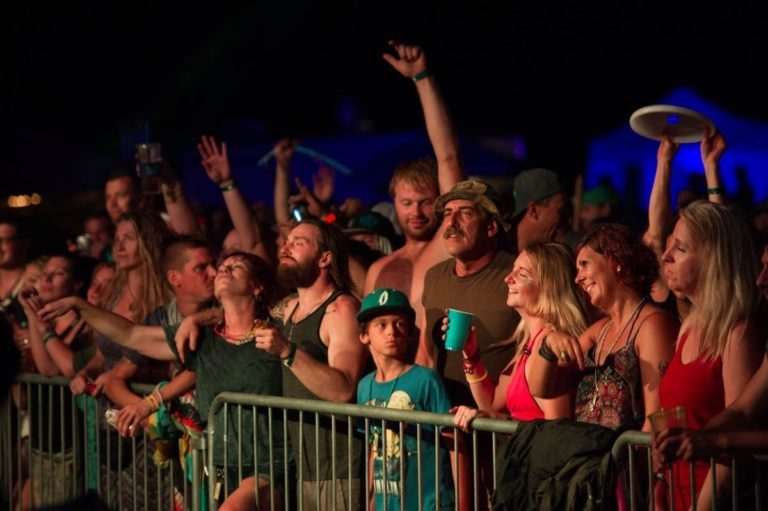 Along with Lucid, the other headliners were Melvin Seals and JGB, Pink Talking Fish (is Bowie), the Blind Owl Band and Twiddle’s guitarist Mihali Savoulidis and his ‘Frends’, who brought the surprise of a Twiddle set. NYS Music contributor Chelsea Wright was in attendance and gives us a first hand account of how it went down:
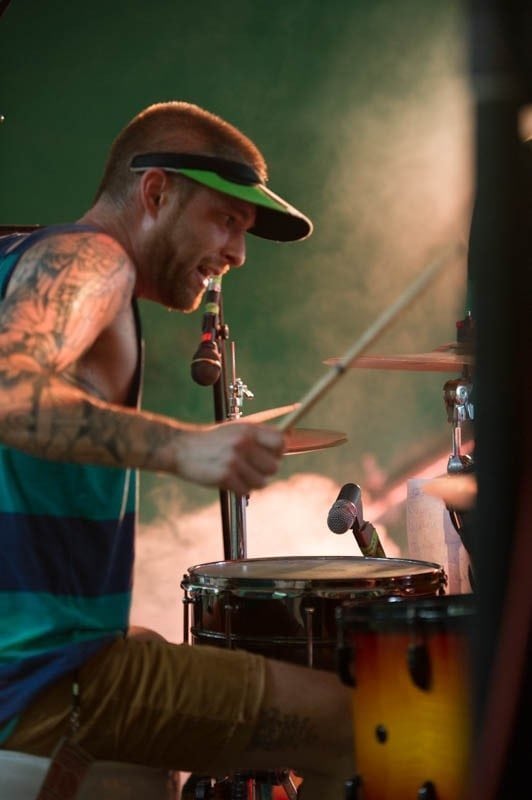 Arriving just on time, I approached the stage and Mihali was just getting it started by inviting a few good Frends up to join him. It was like revolving doors, including some of my favorite musicians; Ryan Dempsey on keys, Jamie Armstrong on Sax, Joshua West on drums, to Kevin Sabourin on guitar and vocals. At one point Brad Hester from Annie in The Water came up and had a back and forth match on a kazoo, with Jamie’s sax. Then they switched it up to Chris Shacklett on bass, Lowell Wurster on percussion and vocals, the beautiful Meadow on vocals, and then the big surprise of a total shift into a set by Twiddle. After Twiddle finished, Mihali remained, and invited members of Capital Zen up to join him. It was an all-around party, with special moments that no one could have anticipated.”
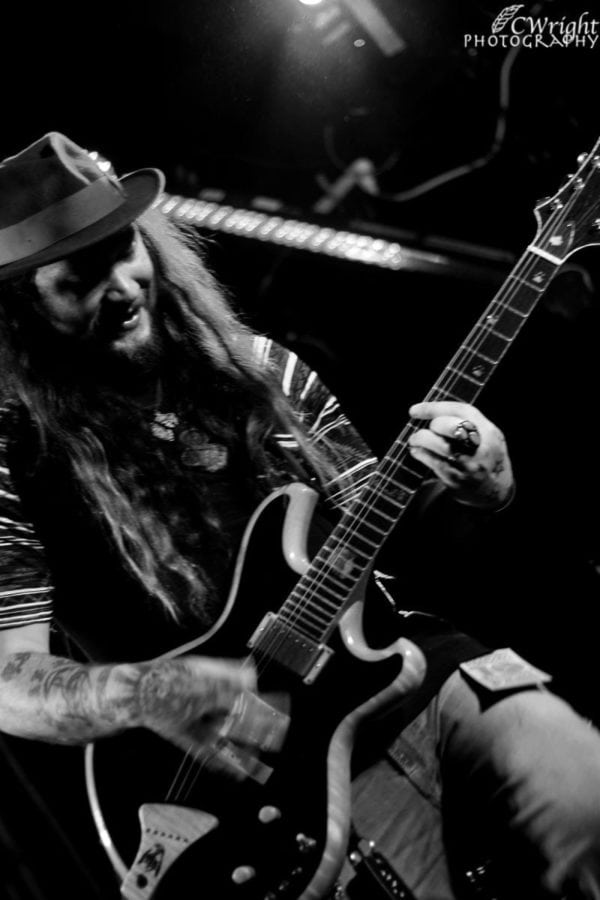 “Little towns like this aren’t really used to stuff like this, so I think they just took any and every precaution while they were here,” Haviland said, adding that the individual was fine by the following morning. “We are safety first; we took all the right precautions.”
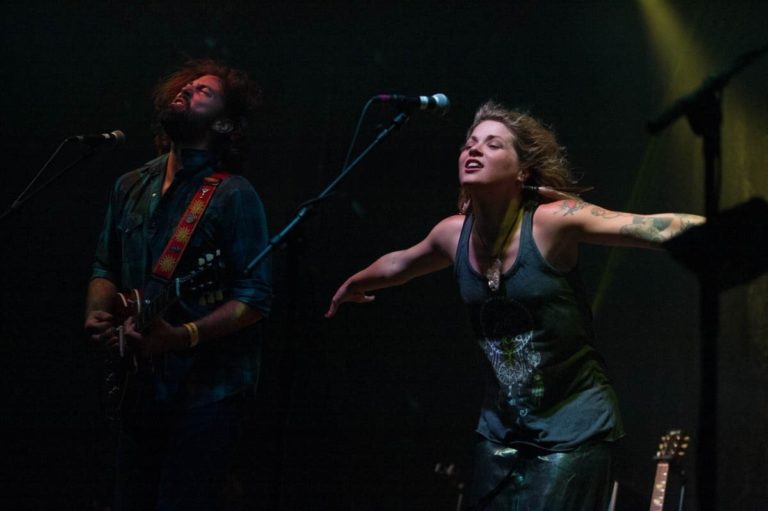 Right after, on the Woods Stage, Syracuse hip-hop trio Sophistafunk took the audience on a positive mental trip with lyrics of encouragement, happiness and elation.
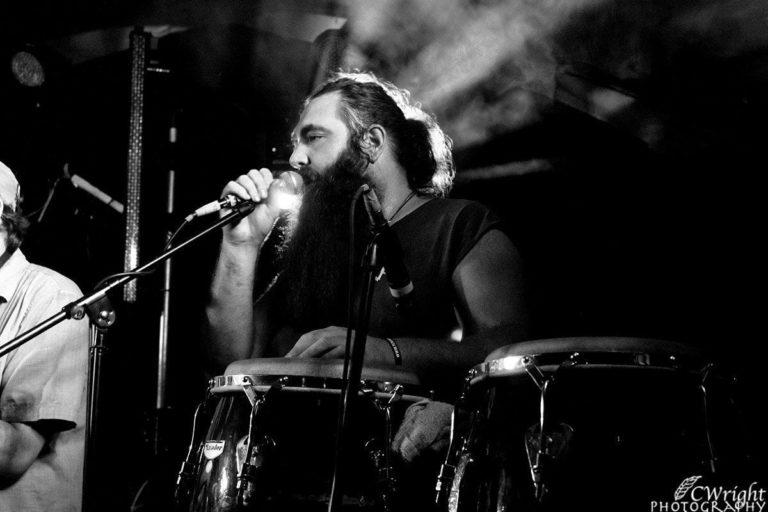 After grabbing a sausage, egg and cheese, two coffees and water (thanks to my editor), I made my way to catch some of Doomf#@k, a band with some of the Lucid guys. I can only describe this act as a talented, humorous joke band.
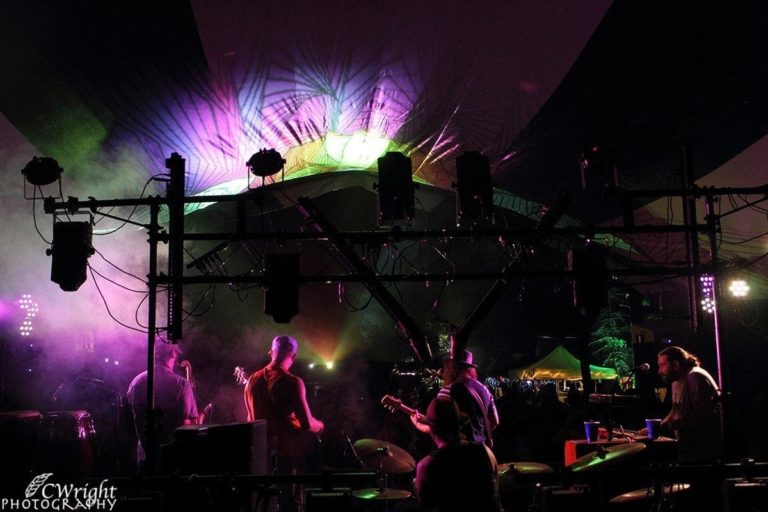 F5’s set consisted of some of the tightest jamming I have ever heard from the group. Matt Richards, who recently took over keyboard duties, displayed the energy and enthusiasm he brings to the band. Woods and Davis are a natural team, with Davis typically weaving his speedy licks around Woods’ boisterous bass lines.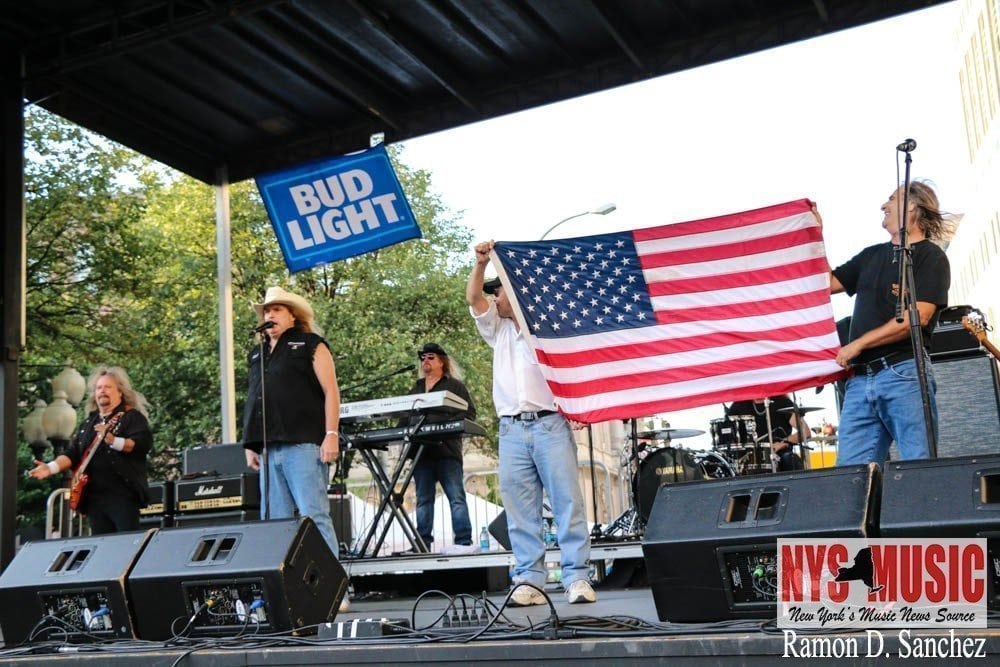
 Earlier this month, Suit of Lights released their album