“If someone could guarantee me that the preliminaries will not be too disagreeable, I look forward to…” This was Leonard Cohen’s response to a question asked of him in a 2009 interview with the CBC’s Jian Ghomeshi. What he was looking forward to is what ultimately happened Thursday. Poet, novelist, songwriter, Leonard Cohen has died at the age of 82. His death was confirmed on his Facebook page.
In a statement to Rolling Stone, Adam Cohen, his son and producer issued the following:
My father passed away peacefully at his home in Los Angeles with the knowledge that he had completed what he felt was one of his greatest records. He was writing up until his last moments with his unique brand of humor.
The record his son is referring to is the recently released You Want it Darker, an album hailed by the magazine as a “late career triumph.” The album was recorded as Cohen was suffering from back issues that kept him confined to the house. His son created a recording studio in the house the elder Cohen had been sharing with his daughter Lorca. The resulting album is nothing short of a beautiful goodbye.
Cohen’s most famous composition, “Hallelujah,” has been performed by everyone from Bob Dylan to high school choirs. The most renowned version was done by Jeff Buckley nearly a decade after it was first recorded. The song was recorded for his 1984 album Various Positions, an album seen as not commercial enough by his label. The spiritual ballad has been so ubiquitous since Buckley brought it to the forefront that Cohen himself indicated that maybe there should be a moratorium on performing it. In the coming days, however, it is sure to appear many times over in tribute to its creator.
Cohen began his career as a musician later in life than most of his contemporaries. He was a highly regarded poet and novelist, but was unable to parlay that into a career. So he turned to music in an attempt to make a living through his writing. His first album, Songs of Leonard Cohen was released in 1967, when he was 33 years old. His song “Suzanne” from his debut, was recorded by Judy Collins as well as many other artists, launching his musical career.
Known among his fans as “The Godfather of Gloom,” Cohen still possessed a sardonic wit, once suggesting that perhaps his label should give away razor blades with his albums. Despite the grim and somber tone of his work, he influenced not only his contemporaries but a generation of pop musicians to follow. According to the New York Times, his work has been recorded over 2,000 times by everyone from the aforementioned Dylan, Collins and Buckley to Elton John, U2 and R.E.M.
Cohen was born in Montreal on Sept. 21, 1934 to Nathan and Masha Klonitzky, his father a Polish emigre, his mother the daughter of a Lithuanian Rabbi. His father, a clothier, died when Cohen was nine years old, leaving a trust fund that allowed Cohen to pursue his writing interests.
He enrolled at McGill University, studying English. Upon graduation, he spent time pursuing a graduate degree with little satisfaction, likening it to “passion without flesh, love without climax.”
Cohen’s eventual move to the U.S. fostered the musical career he sought. He became a member of Andy Warhol’s inner circle and began to achieve success as a touring musician throughout the ’70s and early ’80s. Always a spiritual, if not necessarily religious man, Cohen chose to retreat to the Mt. Baldy Zen Center in the Los Angeles area in 1994, becoming an ordained Zen Buddhist monk in 1996.
Following his five year retreat, Cohen again returned to the studio in 1999. The result was the 2001 album Ten New Songs. He continued writing, recording and touring through the early years of the 21st century. A bitter legal dispute with his former manager Kelley Lynch, however, left him financially strapped.
In 2008, he embarked on an extensive tour, mainly out of financial necessity. Between 2008 and 2010, Cohen performed all over the world without rest. Stops on his tour included New Zealand, Canada, Europe and performances at the Glastonbury and Coachella Festivals.
Cohen often referred to his career as a three-act play. Thursday night, the curtain was drawn on the final act of this legendary career. His final album was released in October and is a fitting cap on the life of a true Renaissance man.
“He said all men will be sailors then until the sea shall free them”
The photographer stands in front of a print of a young Bruce Springsteen squatting down and looking out upon the crowd as he straddles his guitar. “I try to tell a story with every picture I take,” said Patrick Harbron, acclaimed concert and portrait photographer of some of the biggest names in rock. “Even here with Springsteen. Unless you lived under a rock or were in solitary confinement, you can tell what’s happening here.”
In Lawrence Kirsch’s “The Light in Darkness,” a book covering Springsteen’s “Darkness on the Edge of Town” tour, Harbron described The Boss’ music as “grand but not arrogant.” The same could be said for the photographer who penned the words. The helix of Harbron’s career wraps around a pivotal time line in rock and roll history — out of the infancy of touring county fairs and maturing in front of sports arenas. He has followed and captured the likes of The Who, B.B. King, KISS, Prince and Blonde, in their respective primes, yet recalls stories of his personal interaction with these legends devoid of pretense.
Harbron began his concert photography career capturing local acts in the Canadian media hub of Toronto, Ontario. At the onset of the 70s, Toronto was a blossoming music scene teeming with local acts while being a natural stop for the largest personalities in rock and roll.
Born to a photographer as a father and an editor as his mother, Harbron’s lifework began covering concerts as a freelance journalist. Having a natural proclivity for both film and prose, he said he had difficulty choosing on which career to focus.
“When I saw how large the picture was, and how [much smaller] the article was, the choice was easy.” he said.
The Albany Institute of History & Art is showcasing Harbron’s work in its latest exhibition “Rock & Roll Icons: Photographs by Patrick Harbron” from Nov. 12 through Sunday, Feb. 12, 2017. The exhibition includes some of Harbron’s concert posters, memorabilia and souvenirs, as well as items on loan from the Rock & Roll Hall of Fame.
“As disparate as some of these artists seem,” said Harbron, “they all share the common ideal that rock and roll is made up of many faces, voices and influences. Everybody’s love of rock and roll is personal choice. I couldn’t do justice to just one artist or the entire genre at once, so this is rock and roll from my point of view.”
The exhibit includes Harbron’s collection of concert and promotional posters and personal memorabilia he collected over the years. Much of the work on display, including album covers, books, magazine and publicity shots, have not been viewed before.
Harbron first brought a camera to a show in December 1975. The Who was playing at Maple Leaf Gardens. “I had no idea then where it would take me,” he said.
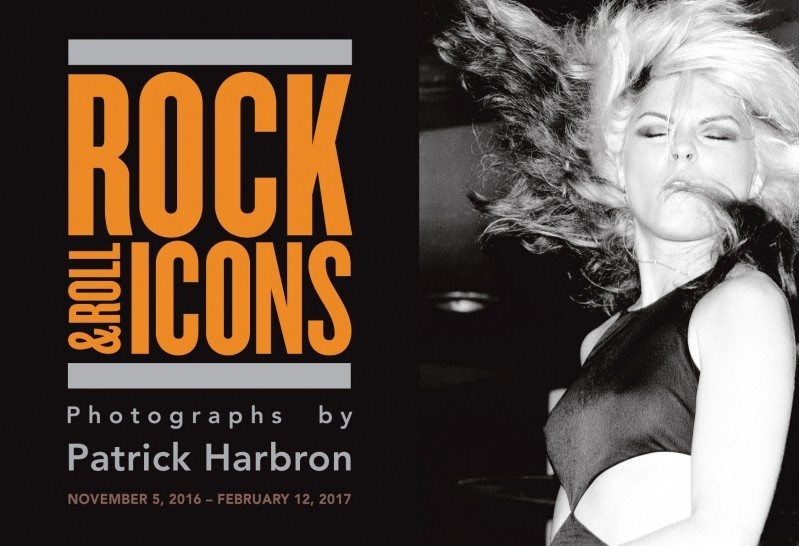
A black and white image of Debbie Harry tossing her hair is the lone image displayed on the show’s promotional material. It’s a picture Harbron captured at El Mocambo Club in Toronto in 1978. The contrast between her skin and platinum (and black) hair against the backdrop of the club shows a flash was used — a no-no for today’s photographers.
“The early concerts were really exciting, and there was a little more freedom,” said Harbron. “Somebody asked me about access recently. There was a little more access. You could do more. And as groups began to understand how they appeared visually, they became more controlling. To the point it’s out of control, from a photographer’s point of view.”
Camera technology had advanced so far as allowing photographers to capture images in low-light environments by tweaking their ISO setting. ISO once distinguished a film’s sensitivity to light. A roll of 100 ISO film was best used for bright, outdoor shots, where 800 ISO film was best for indoor, low-light action shots. Harbron commonly shot shows with 400 ISO film with a shutter speed of 1/125. Today’s high-end cameras are capable of shooting at 25,600 ISO (so, a flash would be unforgivable).
“Photography was, it wasn’t digital, it was all film,” said Harbron. “You had to have the skill set. And, of course, I hit the runway running. … I don’t remember shooting [those first] live performance shoots foundly because it was really before my skill sets matched the requirements of the job. I learned the hard way. I learned on my feet.
Harbron’s body of work includes two JUNO Award nominations for album cover photography. His work appears in magazines, advertising, annual reports and books. His clients include Rolling Stone, Time, People, and Business Week. His style of photography has lended him opportunities in photographing advertisements for Apple Computer, IBM, American Express, AT&T, PepsiCo, and Nabisco, among others. He now works for television network programs like “Marvel’s Daredevil” on Netflix, and is a faculty member of the International Center of Photography.
Over nearly 20 years, Harbron photographed the likes of Springsteen, Ray Charles, the Grateful Dead, Blondie, David Bowie, Eric Clapton, RUSH, Michael Jackson, The Rolling Stones, KISS, Queen and The Who. “Many of these performers influenced me as a listener and musician,” Harbron said, who still plays the drums, and was able to pull a favor to display a symbol and a pair of drumsticks from Neil Peart. “I grew up with them. The photographs on display are only a slice of my archive, and of rock and roll itself. … Through it all, I never lost my love of music, the artists or the shows. And, I still have most of my hearing.”
The above piece appears special to NYSmusic.com from TheSpot518, a weekly arts and entertainment newspaper out of New York state’s Capital District. You can find content shared between NYSmusic.com and TheSpot518 in their concerted effort to provide quality coverage of our area’s music scene. For more information on TheSpot518, visit www.TheSpot518.com.
On Saturday night at The Paper Box in Brooklyn, lespecial held their annual mini-festival to the delight of hundreds of lucky fans in attendance. After meeting dozens of friendly freaks in the crowd, I regretfully realized that I was one of the rare guests taking part in my first lespectacle. While I was unable to locate a coat check in the eerily, yet vibrantly decorated venue, it was clear from the very beginning that I would need to check my concept of reality at the door.
Starting around 9pm, Connecticut based producer, Tsimba was spinning his intricate form of otherworldly music to a prematurely spun-out crowd. During this opening act, it was clear that the energy of the room was already sky high and not coming down anytime soon. Tsimba’s bio describes his music as “sounds that could manifest anywhere in the universe” and while no one on the floor appeared to be a qualified astronaut, the dance moves suggested some spacey exploration.
After the short and sweet DJ set, Gene Shinozaki of The Beatbox House popped out of the crowd to show off his amazing talent. I have heard many variations of beatboxing in my life ranging from legends like Doug E. Fresh and Biz Markie to my drunk white friend at a frat party in college, but Shinozaki introduced me to sounds that I did not know were possible to create with one human mouth. His ability to tackle genres like dubstep while looping underground hip-hop beats was fantastic.
Other members of The Beatbox House joined Shinozaki along while the oddly-dressed crowd of music lovers circled around them. Light on the treble, the group segued into their abbreviated version of Meghan Trainor’s “All About That Bass” before dropping into something that sounded like Plinko chips on The Price Is Right. The House’s first performance of the night came to an end, but they were set to appear several more times before the end of the event.
lespecial bassist, Luke Bemand, filled in as the MC of the night and introduced the next group, Ross Jenssen, as one of his favorite bands in the world. The “Ross” part of the Connecticut trios name is Brian Ross on bass. The “Jenssen” half is Jules Jenssen on drums and the “just right” third bear in between the two of them is Sam McGarrity on guitar. Their mostly instrumental set had the occasional spoken word sample thrown in for good measure, but the crowd will be talking about this performance until next year’s lespectacle. Ross Jenssen opened up with the introduction to “Perspiration” off their debut album, Phrases.
Interstellar travel seemed to be the theme of the night as the first few songs reminded me of a spaceship about to blast off into outer space. Songs like “Curmudgeon” and “Hell or High Water” begin with a haunting yet tranquil groove before launching into heavy, raw and unfiltered rock and roll. It is a sonic wonder how the same band weaves an original like “Illumination” into a set filled with head banging madness as this tune may be appropriate for deep meditation at a yoga studio.
Ross Jenssen’s chameleon-like ability to adapt to different genres makes them a hard act to compare or even describe for that matter, which is why they had the crowd in the palm of their hands all night. “Rabble Rouser” creates an electronic sludge that leads to a danceable darkness toward the middle of the jam, yet prior to entering this disco-dungeon, the trio covered “Ten Tonne Skeleton” by Royal Blood to the delight of a music-loving room. After closing with the topically appropriate “Afraid of Americans,” I searched the room for the insane guitar-shredding McGarrity to learn more about the mad scientist’s lab where he got his hands installed.
An incredibly humble musician in a world full of Trumps, I found Sam backstage crushing a slice of pizza before taking five minutes to speak with me. He gives all the credit to founding members Ross and Jenssen for allowing him to jam with them back in 2013 and then join them on their album “Phrases.” After he became “somewhat of a permanent member” he describes his musical influences and the strong connection that members of lespecial and Ross Jenssen have shared since playing together and going to shows in high school. I mentioned how some of their sound reminded me of a darker version of a prog-rock jamband and one example that came to mind was Umphrey’s Mcgee. Much like Jake Cinninger of the Chicago-based jam monster, Sam explained how from an early age he “loved to shred.” “I’m gonna do that, that sounds cool, I want to do that,” he wildly proclaimed before mentioning how much stronger of a player he has become since joining Ross Jenssen and practicing daily.
After the The Beatbox House finished improvising with “Can’t Feel My Face” by The Weeknd, it was finally time for the main event, lespecial. Guitarist Jonathan Grusauskas held down a powerful solo during one of the band’s most popular songs “Fruit Dance Wolf.” I would have felt completely satisfied with their set had they just played that song, but there was still two full and fiery sets to go when they brought out their first guest, Jesse Stocker on flute for “Skull Kid.”
The appropriate set placement of this tune worked well with the central decor of the night as skulls, antlers, and post-Halloween props were set up throughout the stage and venue by designer The Reliquarium. Speaking of antlers, “Third Antler> 4th Antler Improv” found their way into this first set madness after the trio covered Nine Inch Nails’ “Piggy.” Prior to the event, I predicted some band collaborations due to the overwhelming talent on the bill and lespecial did not disappoint when calling upon Gene Shinozaki for some improvisational beatboxing assistance on stage before “Pressed for Time” closed out this jaw dropping first set.
In order to stimulate some other senses before during and after lespecial, Vin Pugliese was put in charge of the intense lighting and visuals to make everything look and feel as good as it sounded. Set two was off to a thunderous and spooky start as the boys took a stab at their Fela Kuti arrangement of “HarambeZombie” to honor a fallen hero. While there were no dicks out during their rendition of the afro-beat classic, there was black magic in the air as the band and the zombies in the crowd became one.
The tribal beat presented one of the highlights of the entire night for me until just two songs later lespecial annihilated a cover of “Frizzle Fry” from the iconic Primus album. Bemand proved to the crowd that his chops were among the best in the business as he channeled Les Claypool in this creatively mind-blowing anthem. The band kept an eclectic mix of covers coming with Skrillex’s “With Your Friends” and “Fade” by Kanye West. The first set began with a track off their newest album, Omnisquid and in a similar fashion, “Squid Rising” ended the show.
While lespecial was technically finished performing for the night, the now masked trio reemerged as Robert Jacob Max’s Supersillyus Lifeband took the stage. The shadowy and mystical super-group has been an ever-changing phenomenon since its early conception years ago. The Lifeband was heavy on the jam and risk-taking improvisation while still keeping the crowd moving as we gained an hour thanks to an end of Daylight Savings in the outside world. A psychedelic journey through extraterrestrial soundscapes took the Paper Box for one last ride before sending us back into reality in the streets of Brooklyn.
After my first lespectacle, I discovered a kaleidoscope of all things that are right with Brooklyn. A melting pot of different subcultures coming together to create something new during a time when almost everything seems to be remade. The musicians, the visuals, the art and the audience all worked together to create something great instead of trying to make it “great again” which will lead to even stronger and thought-provoking lespectacles in the future! I will see you there.
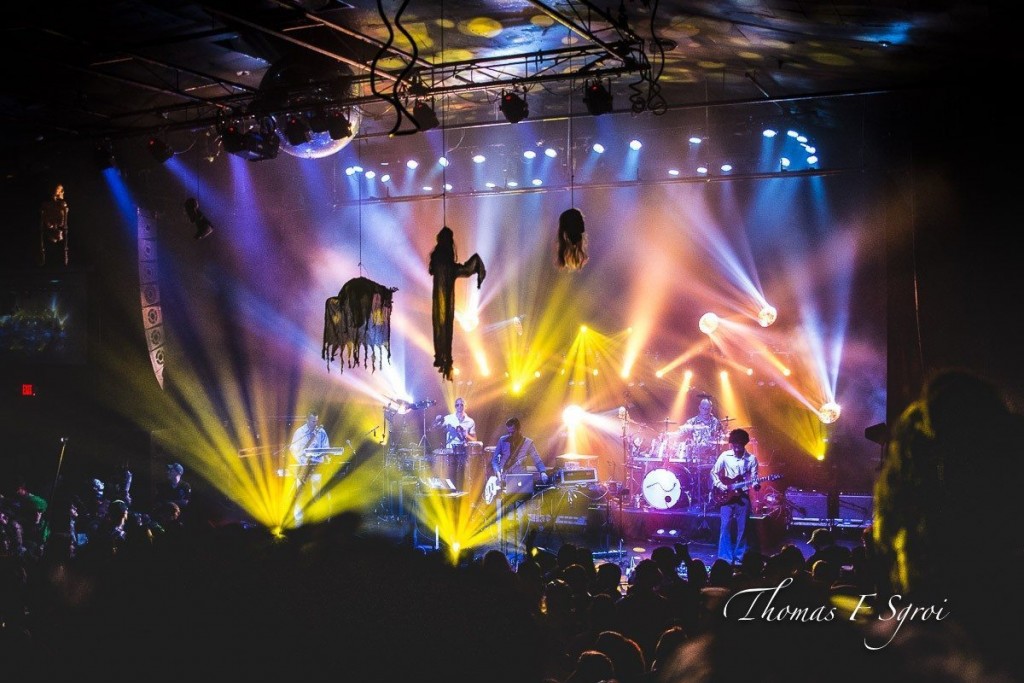
Lotus completed a two night run in Buffalo October 29-30 with a Space Disco Theme on Halloween, complete with the Town Ballroom’s giant Disco Ball shining on a crowd who were dressed to impress.
The room filled in shortly after Jimkata took the stage to a sold out show. Lotus followed and absolutely crushed the room and blew the roof off the place.
October 29 Setlist Set 1: Middle Road, I’ve Been a Fool (Toy Guns), Uffi, Destroyer, Bubonic Tonic>In the Bliss>Bellwether Set 2: Fearless, Ashcon, 128>Philly Hit>Did Fatt>128, Turquoise, Greet the Mind Encore: Sodium Vapor, Age of Inexperience
October 30 Setlist Set 1: Nematode, Opo, Arupa>Sift>Mikesnack>Hammerstrike, Eats the Light Space Disco Set: Space Disco Intro Story>Snooze 4 Love>Stellar Triangulation*>Bizarre Love Triangle>Giffards Airship*, Sextant*, Ra Ako St>Life on Mars>Like a Prayer>Get Lucky Encore: Jump Off, Disappear in a Blood-Red Sky
*original music written for Space Disco Set
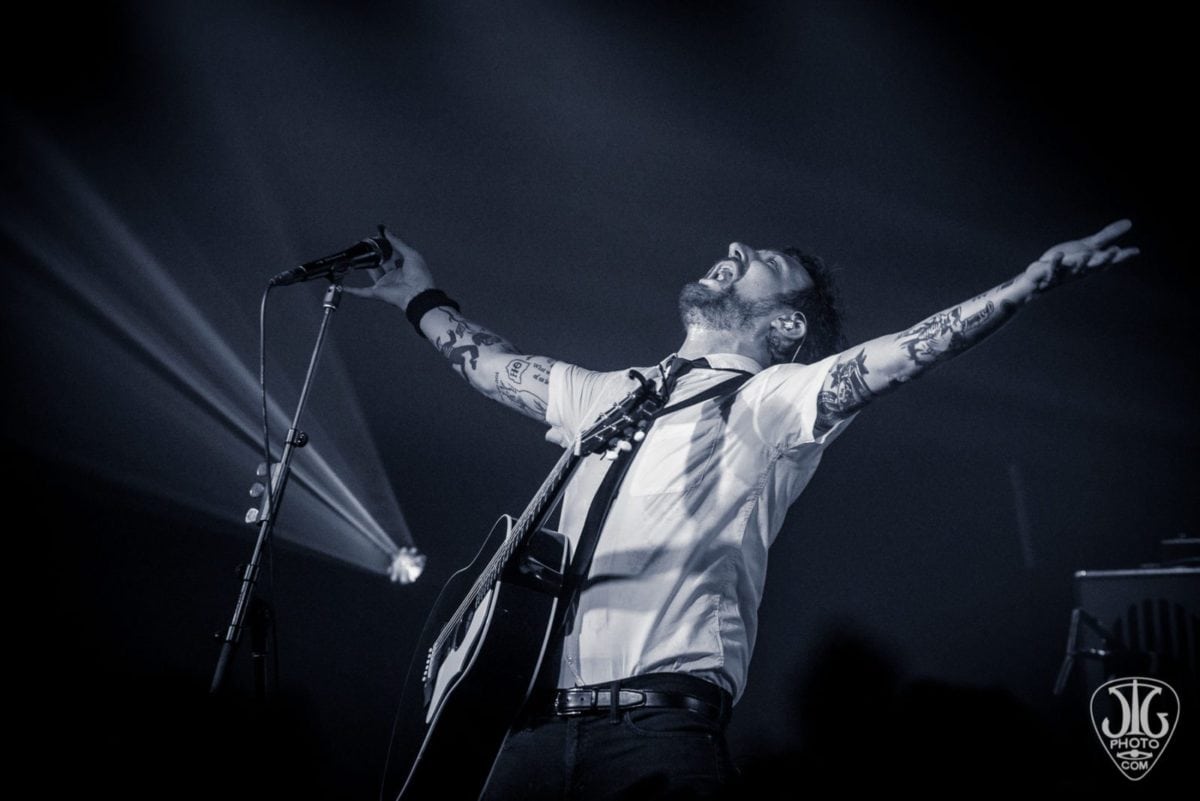
Frank Turner – who headlined Upstate Concert Hall on Wednesday Nov. 2 with support from Arkells and Will Varley – radiates passion and authenticity both in his on stage performance and work behind the scenes. Turner, who has six albums under his belt with 2015’s most recent release Positive Songs for Negative People, hovers the genre line between punk and folk. Defying categorization, he has amassed a fan following who packed Upstate Concert Hall to near capacity, the largest Turner has seen for one of his performances at the venue.
Fans of Turner perhaps most identify with his honesty and tendency to not deter from difficult themes, even when those topics are self-deprecating. Turner was open about discussing authenticity, empathy, and his experience writing The Road Beneath My Feet.
Lisa Christopher: You tour pretty incessantly. Can I know what show number this one is?
Frank Turner: Tonight is 1,972.
LC: How do you keep all the different numbers and shows straight in all the shows from The Road Beneath My Feet?
FT: I just have a list. It’s on my website; it’s publicly accessible. That’s the thing, people think I’m sort of, more, sort of like “rain man” about it than I actually am. I write the set number on the set list every day, and I just write it down, and I just check when the number of the previous one was.
LC: Was it difficult transitioning from song writing to memoir writing with The Road Beneath My Feet?
FT: Yeah, definitely, that was a classic case of hubris for me. I sort of got, I was part reluctant about writing a book, full stop, at the beginning simply because I think people who write autobiographies when they’re young, I think that’s lame. But we talked about stuff like, Henry Rollin’s tour memoirs, which have been a big deal to me growing up. I know he’s in town today, actually. Get in the Van was like a bible for me as a kid. The publisher and I sort of came up with an approach that made sense. And then I was like, well I’ve written sort of three-page magazine articles plenty of times so this is kind of going to be like writing –
LC: A bunch of them all in a row?
FT: Yeah, and that’s obviously completely wrong. And there’s quite a serious intellectual effort to support the internal architecture of a 300-page book, you know?
LC: Absolutely.
FT: It was quite rough at times where I wasn’t sure if I would pull it off. It was immensely satisfying when I did. It’s always satisfying to finish a record, but I’ve done it a few times now. This was the first time I’ve finished a book. When I got a hard back copy it was great because you can gift it to your friends for Christmas, or indeed your enemies.
LC: Inflict it upon them.
FT: Yeah, you can hit people with it, it’s quite a solid thing. It felt pretty good.
LC: I noticed there’s kind of a big change and transition in the tone from Tape Deck Heart to your current album. Is it hard to include songs from both albums in a complete set?
FT: No, I don’t think so. The set list thing – I try to do something different every time I make a record because I sort of write autobiographically and I tend to write chronologically as well. You know, the mood of a record generally reflects my mood as an individual at the time. Part of the reason I find comparing the records I’ve made impossible – I think most artists do anyway – but it’s like asking me to compare my second record with my sixth record. It’s a slightly meaningless comparison to me because it’s like asking me to compare myself at twenty-five to myself at thirty-two. It’s just like…what?
[singlepic id=6167 w= h= float=none]
LC: So much has changed.
FT: Right, it’s so kind of time specific to me. So definitely, I think that Tape Deck Heart and Positive Songs are kind of flip slides of a coin. Tape Deck Heart is about things sort of falling apart and Positive Songs isn’t so much about them coming back together, it’s about kind of, dragging yourself out of the burning wreckage.
LC: I feel like the theme of recovery is kind of a theme among all of them.
FT: Yeah, it sort of is about dusting yourself off after falling off your bike, and trying to straighten out the handle bars. I mean, in terms of set list, I spend a really tragically large part of my adult life thinking about the set list. We generally have a kind of working architecture that lasts for about three months or so before we flip it up. There’s so much you have to do, I try to play something off every record I’ve done, I try to not put two songs in the same key next to each other unless you’re deliberately running from one into the other. There are transitions and technical issues…there’s just a million different things. You want to tell a story, you want to start strong, you want to bring people down…it’s endless. The consideration of which record and which mood is part of it, but those are two attributes of many things that come into consideration.
LC: In the same vein as that, your live shows are always so energetic and engaging. You always engage the audience. Your lyrics are so honest and personal, and I wonder, is it hard sometimes to juxtapose those song concepts into such an energetic set?
FT: Yes and no. There’s a degree of performance…I mean I am a performer among other things. I’m a singer and a songwriter and a musician but I’m also a performer. There’s something with the repetition of performance and the realities of a tour, where it sort of softens the emotional content of some songs, you know what I mean? And you have kind of an emotional…I am shying away from the word detachment. I don’t want to say that I feel detached when I play those songs, but you can’t go through the experience of everything that goes into writing a song every single time that you play it. So, there’s that. And there’s also, I think one of the most central concerns as a writer is empathy. And for me, there’s something fascinating and enormously rewarding about singing a song about your deepest darkest secrets and screw ups and having a room full of people sing it back again. At the very least there’s something interesting about that. So I don’t think that the two are philosophically opposed.
LC: That’s a good point.
FT: It sort of surprised me – sorry I’m rambling, I talk way too much – but one of things that sort of pleasantly surprises me, I always try to write honestly and about flaws and that kind of thing. But particularly with Tape Deck Heart, as well as many other things that went into that record – England Keep My Bones is quite a bombastic record thematically, and certainly in the UK it was kind of my break through record. I was definitely like, much more main stream after that record came out. And at that moment in time it kind of struck me as perversely interesting to then go inwards rather than outwards as to my subject matter, and I sort of tried to write the most broken down record about failure and my own failure that I could. Just because that seems – I’m kind of a contrarian at heart I think. It seemed kind of interesting to me. And then it was yet more popular – which was like oh my god what’s happening! But yeah, it’s weird singing the song “Plain Sailing Weather” in front of a room of people, because that’s a song that isn’t generous to myself, you know.
LC: But I think it’s authentic and a lot of people can relate to that as a ubiquitous human experience.
FT: Yeah, that was kind of the intention so I’m glad the plan worked.
LC: How was working with Butch Walker?
FT: He was great. Butch is an amazing guy. He smells better than any man I’ve ever met.
LC: What does he smell like? Just curious now!
FT: He smells like, just like, goodness and adulthood and manhood. No, I don’t know. He’s just, anyway. He just sort of – I kind of got myself in a bind where I’d come up with a methodology to go with the songs I was writing and my record label were not convinced that it was a good idea. And I sort of fought tooth and nail for that but I needed an ally, and in the end Butch was my ally. I mean part because he’s a major league producer but also just like – I sort of contacted him not through management or whatever, I just got his e-mail address and dropped him a line – we met up for a beer and just instantly clicked. And one of the first things he said is that everything he thinks about song writing and production can be found on the first two Weezer records. And I said, I could not agree more strongly with that statement. So yeah, so we clicked straight away. And when I started explaining this methodology – which had to do with making things quickly and raw with a kind of pop heart to it – he just kind of started finishing my sentences before – we’d known each other for twenty minutes, you know. He’s a great soul and I’d love to work with him again.
LC: Is there anyone you haven’t worked with as yet who you liked to?
FT: Oh yeah – loads. On the production side of things, yeah. I’m fascinated by Rick Rubin. I have mixed feelings about Rick Rubin
as a producer but I think that’s kind of the point. Part of me is really interested in the idea of going off and making a record with something out of really left field…I’m really into Bjork and indeed electronica. Do something really deconstructionist –
LC: That would be interesting.
FT: Yeah, you know, it’s certainly – I think that being outside my comfort zone at this point in my career is extremely important and it’s certainly what I try to do.
LC: Are there any topics that you wouldn’t write about? So much that you write about seems so personal.
FT: Um, you know, I try to quite hard for the answer to that question to be no. My boundaries are more to do with stuff like…like consideration for other people, you know what I mean? There’s a song, which I’m not going to name because that’s kind of the point I’m trying to make, but there is a song I wrote about a situation with a friend of mine that it was an overstepping of the bounds in kind of revealing or just discussing – it didn’t name her in any way but – she was pretty pissed when the song came out. Retrospectively, I understand why completely and I feel pretty bad about it. So, you know what I mean, if like I choose to hang my dirty laundry out in public that’s my business but it’s not up to me to do that for other people.
LC: Right, choice and consent.
FT: Yeah, exactly. I mean, the counter argument to everything I’ve just said is Tape Deck Heart because I wrote quite in depth about a relationship which involves another person and I’m not sure I have a ready argument for that topic that I’ve just introduced. But, other than don’t date song writers.
LC: Or you’ll be written about?
FT: Yeah.
LC: I have one more question that is kind of silly. I’ve seen you in other places where you’ve Googled an anecdote of places you’re at and shared what you’ve found. Have you Googled Clifton Park yet and what did you find?
FT: That’s a good question, it’s not something I do every single time and it’s funny because – that shit works better in the states than it does in other places in the world. I think partly because American cities and towns have a sort of tradition of civic pride where they’re trying to distinguish themselves so it’s like you get a place that’s like, we have the biggest coke can in the continental united states! And it’s just like…what? But Clifton Park is sort of, we’ve played here before, and I think last time I cheated and googled Albany instead.
LC: I think more will come up if you Google Albany.
FT: But you sort of just reminded me to do that tonight.
Social Repose made a stop in Rochester on November 2nd as he was making his way to Toronto to join some friends for a month-long tour. The artist/musician with a penchant for goth performed an hour-long electronic pop set on the stage of the historic Harmony House Ballroom.
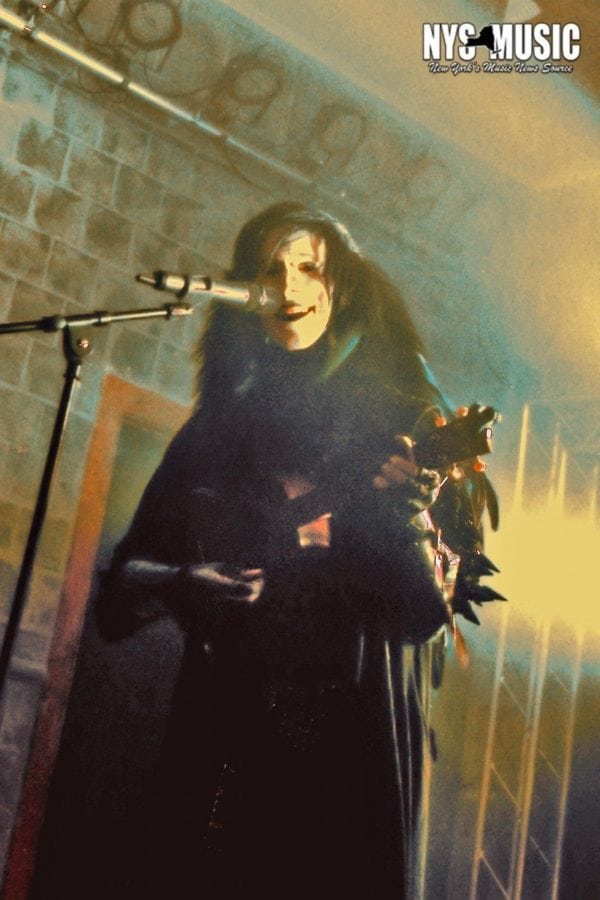
As we entered the hall, we spotted Social Repose signing autographs and taking pictures with fans between opening acts. He wore his trademark feathered headdress and wings – all black, of course. It’s a look instantly recognized by anyone who has seen his YouTube Channel, which has attracted nearly three quarters of a million subscribers. Over the past five years, he has used YouTube to post hundreds of videos featuring original songs, a cappella covers, comedic skits, and performance art.
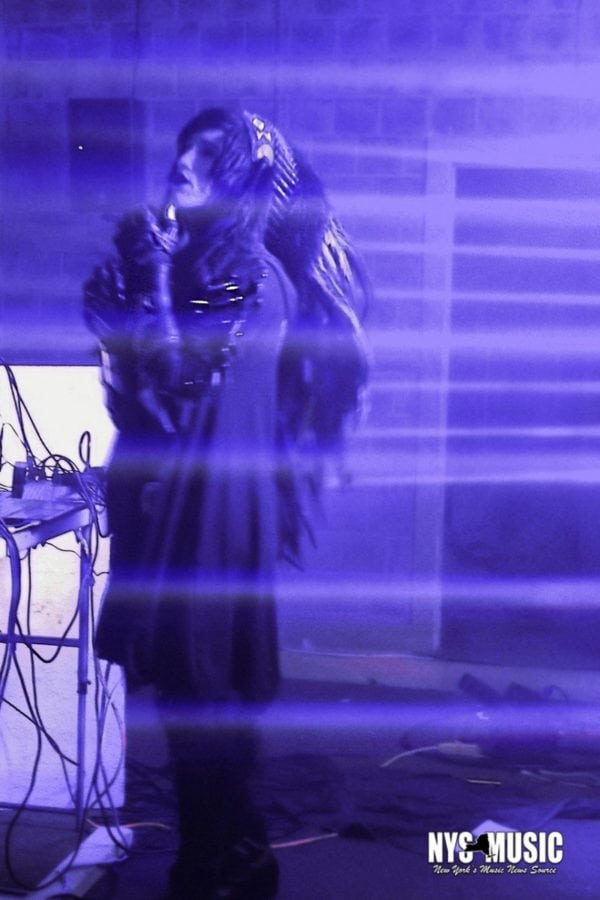
In fact, watching him and his crew set up the stage, I felt like I was witnessing a live art installation. Multiple light towers stood behind a DJ Booth featuring a dream-catcher logo. He launched the evening with “I Can’t Sleep,” an ode to insomnia with digital tick-tock beat. A light show was timed to the rhythms, and the back-lighting emphasized the silhouette of Social Repose’s figure in full regalia as he dominated the stage.
The local scene turned out, wearing T-shirts from alternative bands and beanie hats over vibrant hair colors. We jumped, clapped and sang along. At one point, when Social Repose thought the crowd was a little too cheerful for the mood of a particular song, he brought us down by reminding everyone that My Chemical Romance has broken up and will never re-unite.
He sang a handful of fan favorites, and even threw in a cover of a Twenty-One Pilots song. The highlight of the evening was “Filthy Pride,” the new single released on Halloween, just three days prior to the show. A warped music-box melody augments the heart-wrenching lyrics: “I should’ve known a little better / Good things never last forever / My heart in repose / I need you the most.” Winding things down, Social Repose pulled out a ukulele for “If You’re Thinking of Leaving, You Should.” This emo ballad is about setting a loved one free while yearning for her return.
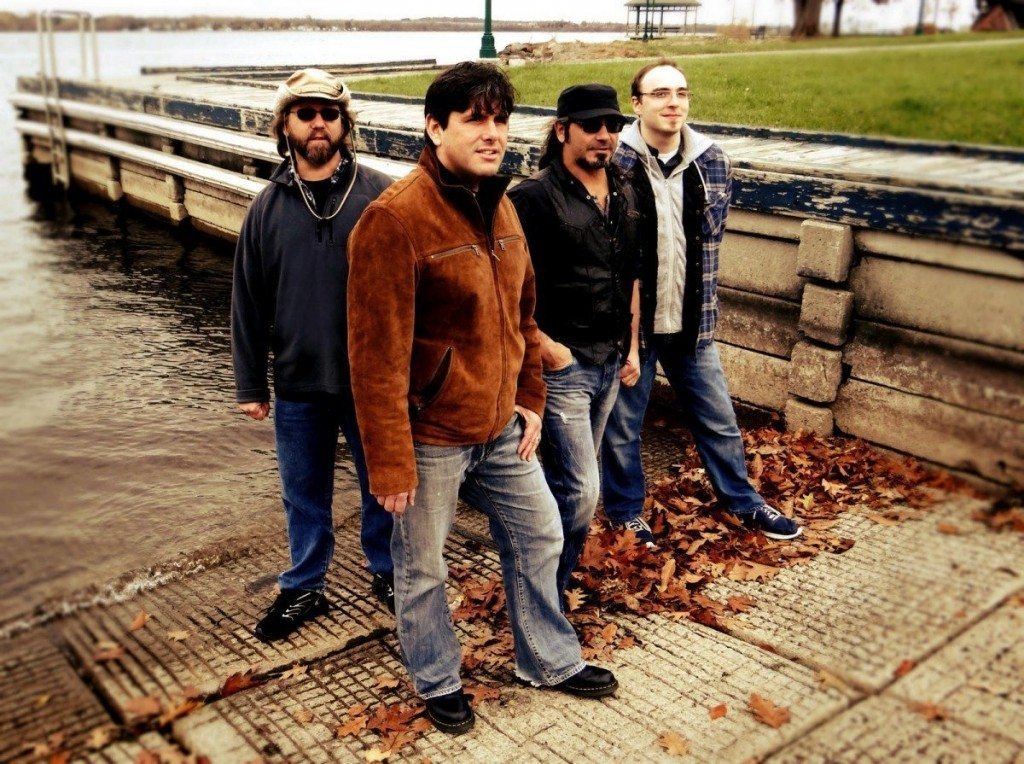
The sentiment echoed as we all parted at the end of the evening, hoping that Social Repose will make his way back to our city again someday.
Social Repose is the stage persona of Richie Giese, a 24-year old who resides in the vicinity of Washington, DC. He can be found on multiple social media platforms, including YouTube, Twitter, and Instagram. His music is available for purchase through iTunes and Google Play.
The day after this performance, he joined fellow musicians Say We Can Fly and Johnnie Guilbert for the Something Before Christmas Tour. Shows are listed as open to all ages.
Something Before Christmas Tour dates:
November 3 Toronto, ON Hard Luck Bar
November 4 Philadelphia, PA Voltage Lounge
November 5 Cambridge, MA Middle East Downstairs
November 6 New York, NY Webster Hall
November 7 Kittanning, PA Radioactive Events Center
November 8 Lakewood, OH The Foundry Concert Club
November 9 Pontiac, MI The Pike Room at Crofoot Ballroom
November 10 Columbus, OH Park Street Saloon
November 11 Chicago, IL Reggies Rock Saloon
November 12 Burnsville, MN The Garage
November 13 Saint Louis, MO Fubar
November 15 Denver, CO Moon Room @ Summit Music Hall
November 16 Salt Lake City, UT Billboard – live
November 18 Orangevale, CA The Boardwalk
November 19 Van Nuys, CA White Oak Music
November 20 Anaheim, CA Chain Reaction
November 22 Mesa, AZ Nile Theatre
November 23 Albuquerque, NM Blu Phoenix
November 25 San Antonio, TX Korova
November 26 Fort Worth, TX Tomcats
November 27 Houston, TX Scout Bar
November 29 Orlando, FL Backbooth
November 30 Saint Petersburg, FL Local 662
December 1 Atlanta, GA The Masquerade
December 2 Nashville, TN Rocketown
December 3 Greensboro, NC Arizona Pete’s
December 4 Freehold, NJ GameChanger World
On October 10, 2016 Allen Stone got up close and personal with his fans at the Musikfest Cafe in Bethlehem, PA with Jason Holt on the drums, Steve Watkins on the keys and Moorea Masa as a back up singer. This venue succeeded in creating an intimate environment for Allen Stone to share his music and personal life stories with everyone who attended.
This intimate night with Allen was called “My Favorite Songs, Favorite Stories” which perfectly described the night, sharing many great stories about his journey as an artist including his travels to paris and spontaneously sky diving with his friends, trying rice tempura balls for the first time, opening for Stevie Wonder and his personal insight on life and love. If you haven’t heard his music yet, or seen him on stage check out his music and upcoming shows here.
Canton’s Waydown Wailers appear on the ballot for three Grammy award nominations, all stemming from their latest album Empty Promises.
The Waydown Wailers sophomore album Empty Promises, released earlier this year, is on the Grammy nomination ballot for Best Americana Album. Their song “Jealousy” off the album is on the ballot for Best Americana Roots Song, and their cover of the Creedence Clearwater Revival classic “Susie Q,” which appears as a bonus track on the album, is on the ballot for Best Americana Roots Performance. Only five finalists will receive nominations in each category, selected by the voting members of the Recording Academy.
The band consists of brother Dave and Christian “Moe” Parker, both on guitar with Dave on lead vocals, along with Michael “Scruffy” Scriminger on drums and percussion and Connor Pelkey on bass and vocals. They released their debut album, State of the Union, in 2013. They plan to begin recording their third album later this month.
The Waydown Wailers have a couple performances coming up in New York. They’ll play the Westcott Theatre in Syracuse on Friday, Nov. 18 with Donna the Buffalo and Annie in the Water. The show starts at 8:00 p.m. They also make a hometown appearance on Wednesday, Nov. 23 at the Stadium Sports Bar in Canton with special guests the Gathering. This show starts at 7:00 p.m.
Harbron is a New York City and Hudson Valley resident who spent his career photographing the early careers of rock icons such as Blondie, Elvis Costello and The Police as well as the later careers of The Who, Genesis, The Grateful Dead and KISS.
Attendees will get a rare opportunity to explore more than 70 of Habron’s concert and portrait photographs of influential musicians from the 1970s and 1980s. The exhibition also includes some of his concert posters, memorabilia, and souvenirs, as well as guitars from the Rock and Roll Hall of Fame. Guests are encouraged to wear concert attire.
Tickets for Rock the Museum are available at the Albany Institute of History and Art’s website.
A very eclectic crowd showed up at Buffalo’s Mohawk Place on Friday, November 4th, made up of regulars, some older patrons, and some visible Japanophiles. The kinds of people based on visual looks you wouldn’t expect to be at the same show. Somehow, they all came together for quite a novelty show; a Japanese all-girl garage-pop band by the name of Shonen Knife.
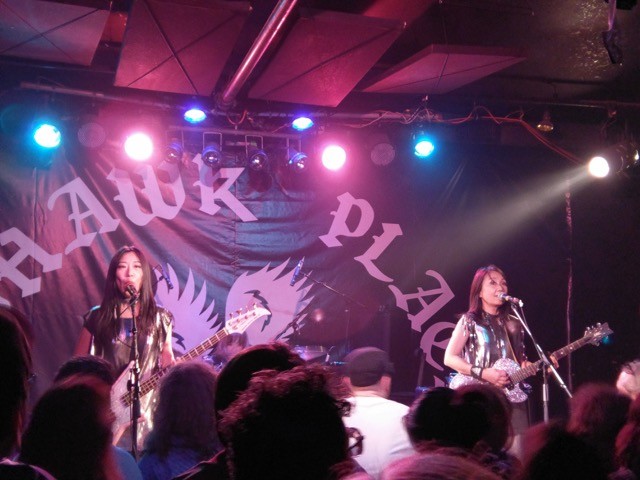
Shonen Knife, currently made up of guitarist Naoko Yamano, bassist Atsuko Yamano, and latest drummer Risa Kawano, have had quite the long, strange history for what at first seems just like another garage band, this one just happens to be from Osaka. Since their albums got their first American release on Sub Pop records in the mid-80’s, they’ve made fans out of Nirvana, Sonic Youth, and L7, along with Matt Groening and Mike Judge. They even played some dates with Nirvana on their Nevermind tour, various festivals like Lollapalooza, Fun Fun Fun Fest, Fuji Rock Fest, and had a tribute album made for them, Every Band Has A Shonen Knife Who Loves Them, featuring underground 80’s punk acts like Sonic Youth, L7, Babes in Toyland, and the wonderfully named The Mr. T Experience.
Shonen Knife does have a soft spot for Buffalo. Their current American record label, Good Charamel Records, is based in Buffalo and run by Goo Goo Dolls bassist Robby Takac. They also released a live DVD at the very same Mohawk place establishment from their 2009 American tour.
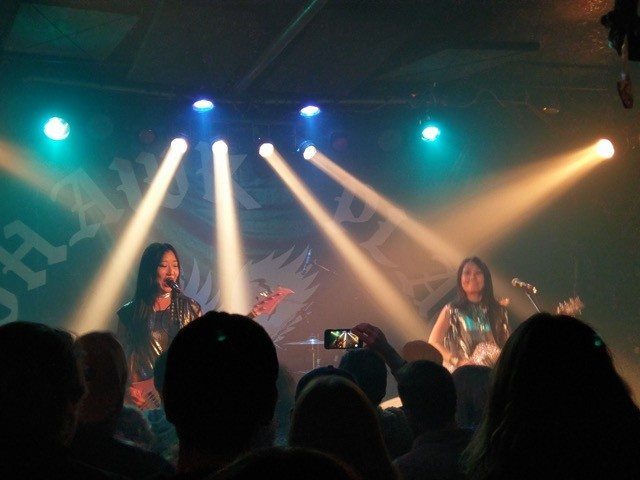
When they finally took the stage, after having three opening acts, Shonen Knife came out wearing dresses looking like they were flattened disco balls, playing sparkling instruments, and going straight into their fast, tight bubblegum punk songs that left a good portion of the full crowd dancing. They hardly let anyone have a chance to take a break from the fun at the frantic pace they went on at.
The show lasted 75 minutes, but it somehow simultaneously felt like it passed by really quickly and took forever. All their songs are around two to three minutes, so they were able to fit quite a lot in for an average set. Not to mention getting various synchronized motions during and after the songs. Hell, there was only a few seconds of downtime between the songs, with Risa either doing a quick 1,2,3,4 on her cymbals or Atsuko shouting a 1,2,3,4. What downtime there was when they talked to the audience, in the best conversational English they could muster, was spent introducing the next song, or talking about their new album, Adventure, and it’s 1970’s influences.
I suppose this next part is expected, given most American’s common perception of stereotypical Japanese music, but the song lyrics are about cute things. Like cats, complete with a “meow meow meow” chorus line, capybaras, tangerines, and how fun roller coasters are. Dare I say, the only unpleasant thing they sang about all night was wasabi. But Atsuko said she likes it before starting to sing, so maybe I’m convinced it’s gotten better since the last time I tried it.
Even when the band left the stage, with the audience demanding an encore, I figured they would come back eventually. It’s a tradition at most major rock shows. But this was a small venue with everyone cramped for space, where it felt like anything could happen. So when Shonen Knife came back onstage for a two-song encore after some audience chanting, it somehow felt more earned than when it happens in an arena setting.
For a band with a visible American cult following, along with being around since 1981, it’s was odd for me at first seeing a band with Shonen Knife’s cred playing here, one of many Buffalo venues mainly catered toward local bands. Now I wonder if they play at any larger venues here in America, if it may ruin their mystique. I don’t blame them for wanting to play in a small, cramped space like the Mohawk Place. It just makes the fun all the more infectious, which makes for a better experience.