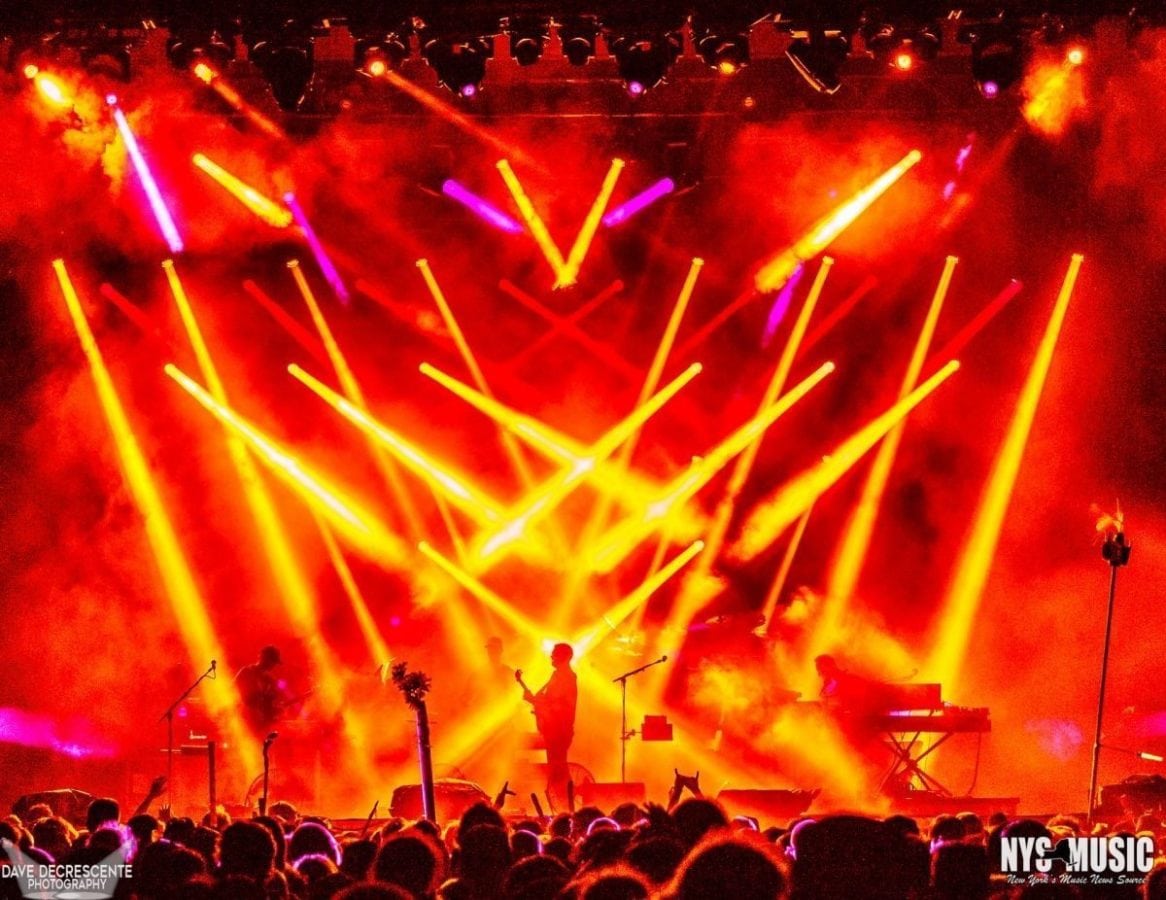
Back in 1972 the cost of a gallon of gas was 55 cents. Richard Nixon was our nation’s president, soon to experience a fall from grace. The Dallas Cowboys defeated the Miami Dolphins in Super Bowl VI. “American Pie” by Don McLean was #1 on the music charts. March 25, 1972 was the date in Grateful Dead history that Dark Star Orchestra helped us relive in Buffalo. That original show took place at the Academy of Music in New York City.
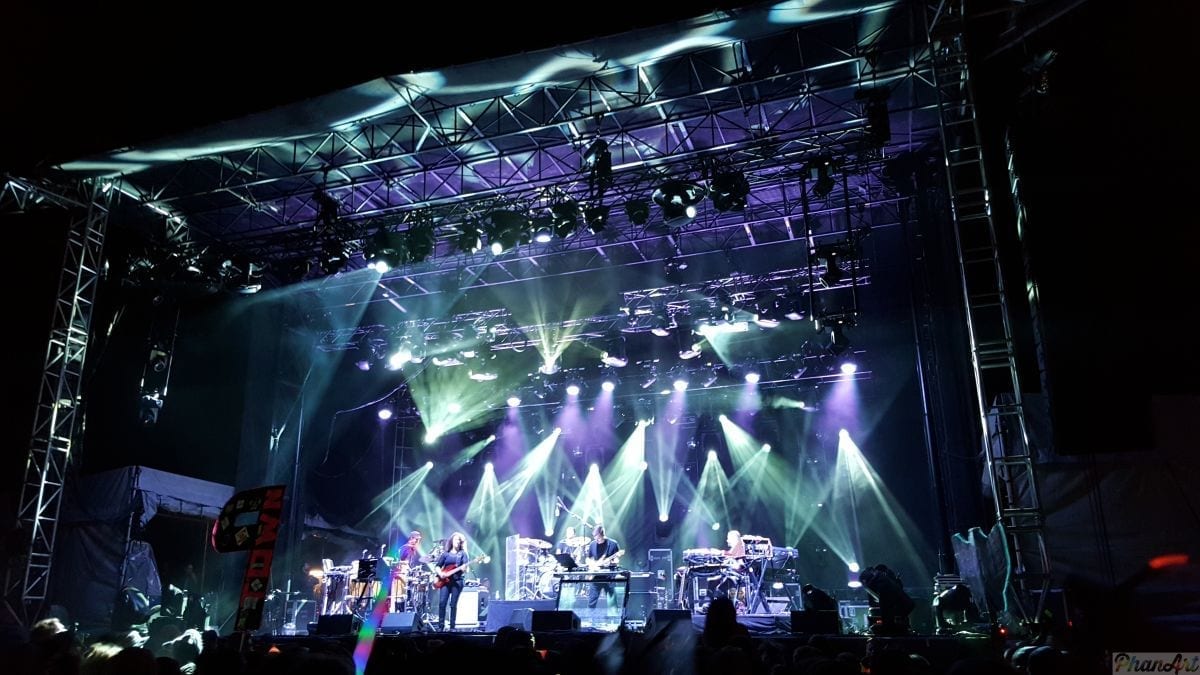
DSO took the stage at the sold out Town Ballroom in Buffalo NY right after 8:00 p.m. They started the night off with the classic “How Sweet It Is (To Be Loved By You).” They would close the first set with “Bertha.” Throughout the night they teased the crowd saying they might play three sets.
By the start of the second set, DSO seemed to be feeding off the enormous amount of energy that the crowd was providing. “Mr. Charlie” got things started with set two. They would close this energetic second set with the sing a long classic “Casey Jones.”
The third set did not directly correlate with this date in Grateful Dead history. It was a filler set but you couldn’t ask for a better way to close out four hours of beautiful music. Songs like “Black Throated Wind” and “Tangled Up In Blue” really seemed to hit the sweet spot with the crowd. All in all it was a beautiful night of music. The crowd consisted of old school and new school Dead Heads. No matter what their age, every last one of them left the Town Ballroom with a huge smile on their face.
Set One: How Sweet It Is (To Be Loved By You), Are You Lonely For Me Baby, Next Time You See Me, Brown Eyed Women, Smokestack Lightnin’, Sitting On Top Of The World, Sugaree, Looks Like Rain, Bertha
Set Two: Mr Charlie, Black Throated Wind, Deal, Playing In The Band, Turn On Your Lovelight, Casey Jones
Set Three (Filler): Chinatown Shuffle, Just Like Tom Thumb’s Blues, Black-Throated Wind, Positively 4th Street, Tangled Up In Blue
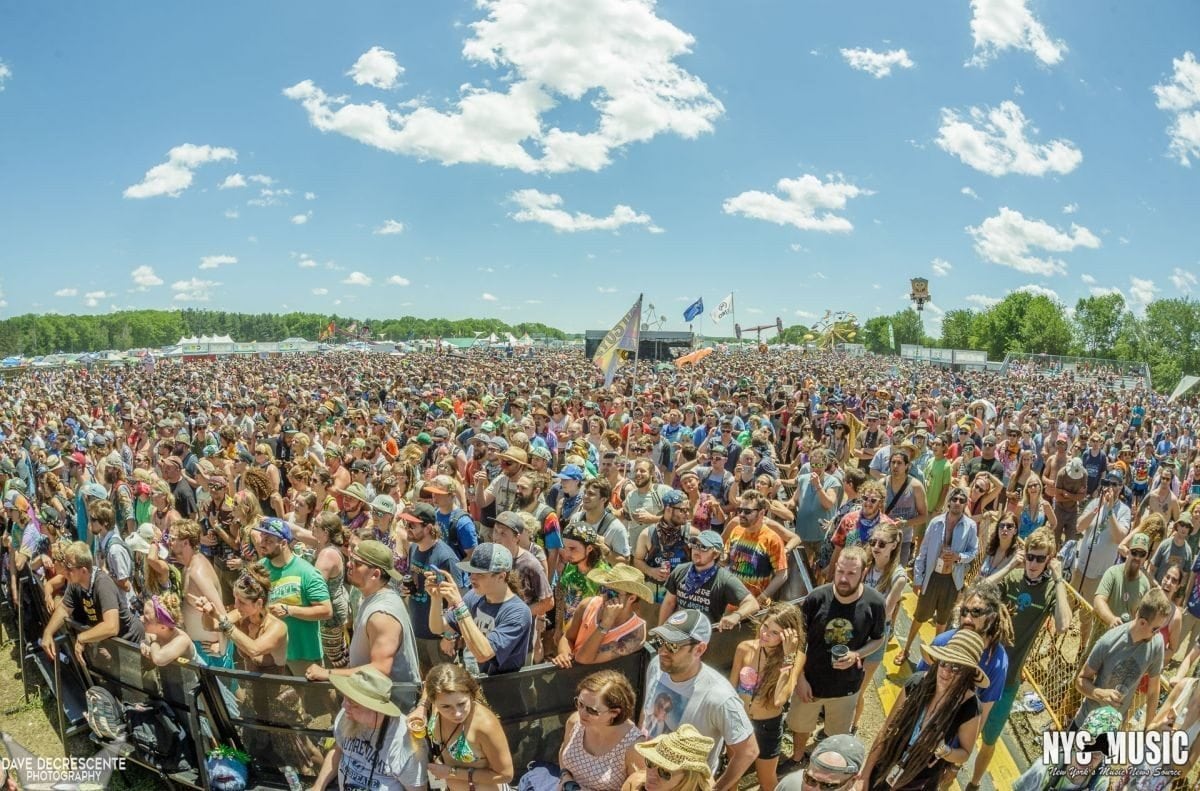
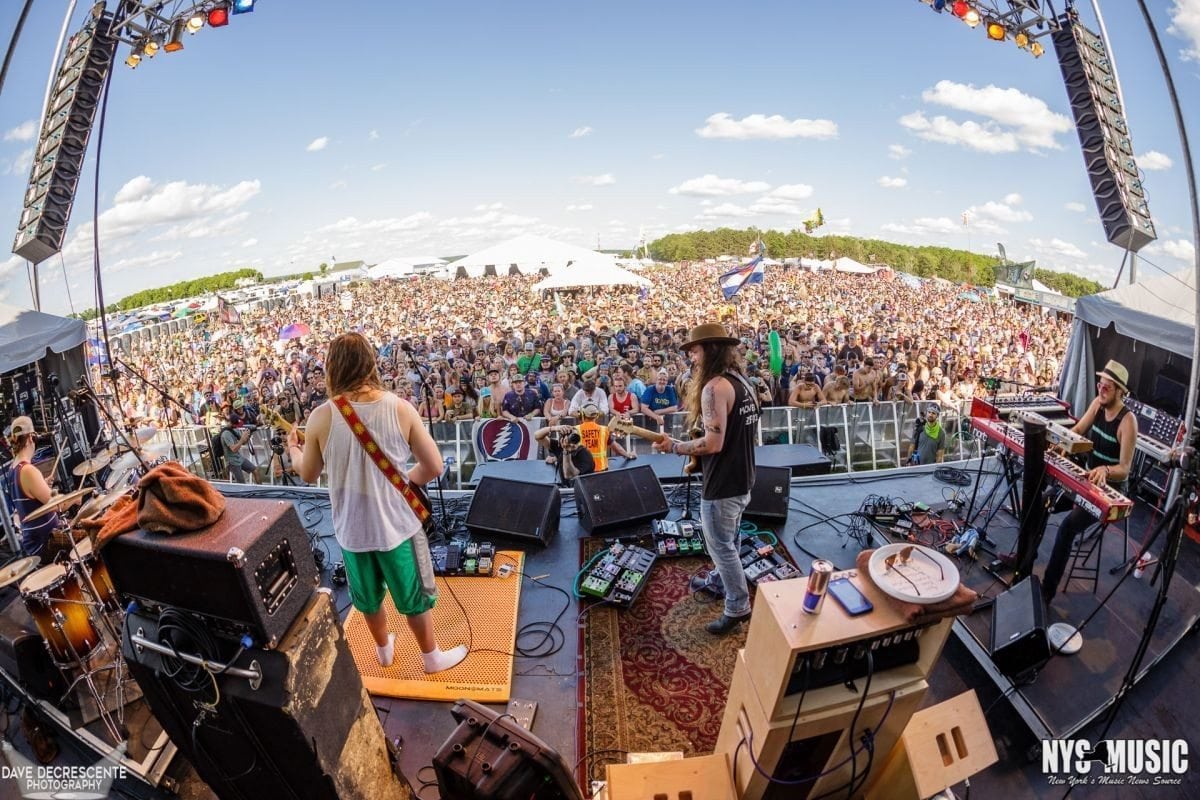
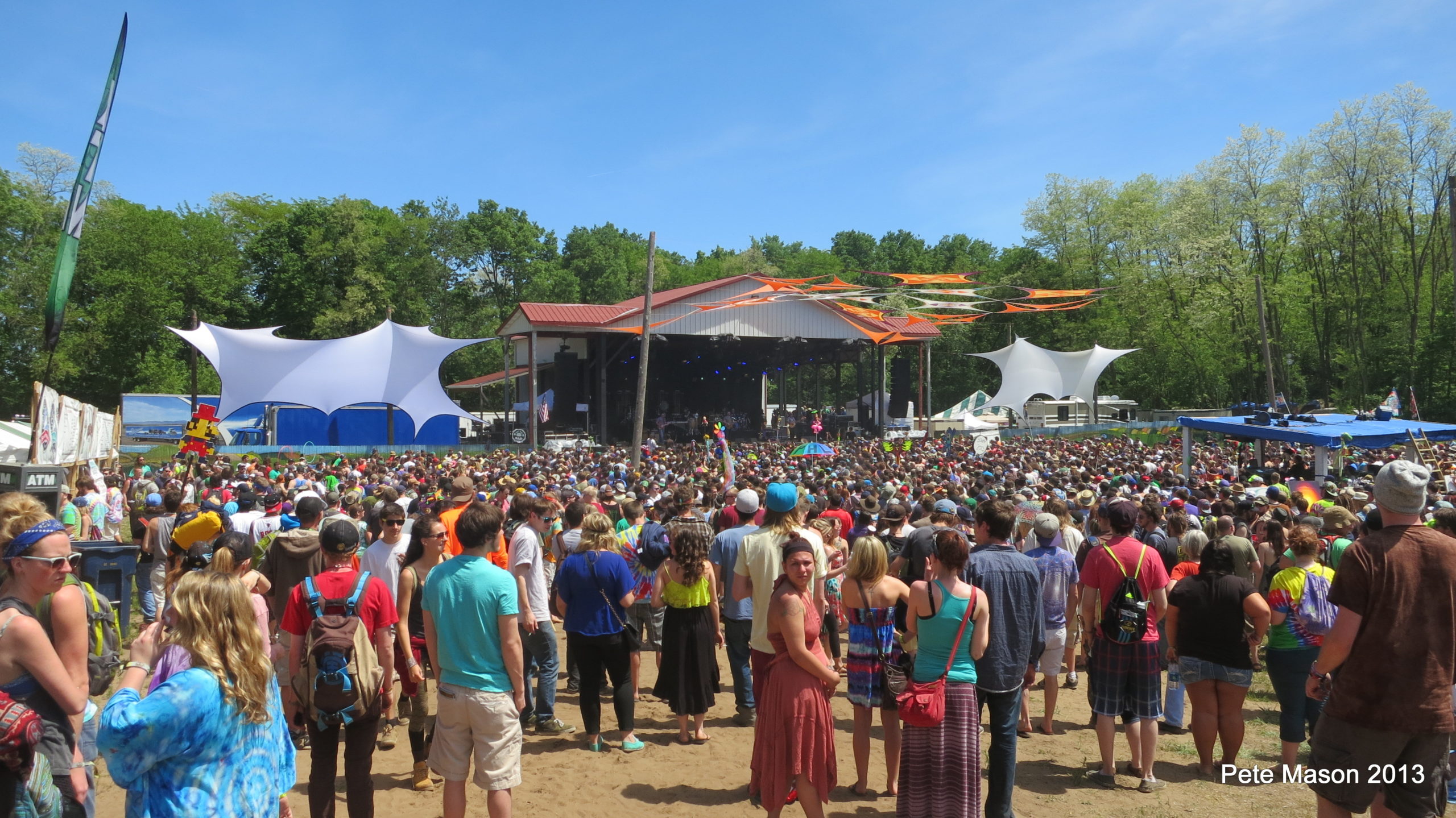
Summer Camp Music Festival has developed into a time-suspended Bonnaroo, c. 2002-2005. Big names and small alike are found at the annual festival in Chillicothe, IL, and while the size of the festival grounds have grown only as needed to accommodate growth, attendance reached a reported 30,000 in 2016, the festival’s largest year. But Summer Camp seems to know when to stop, unlike Bonnaroo; the number of stages has been mostly consistent for a number of years, and the propensity to add-on the big names is reserved for acts that fans may only get one chance to see this year, like Jason Isbell or Mudcrutch, and not reverting to bringing in an LCD Soundsystem or 2015 Outkast when they can be found at many festivals.
photos by Dave Decrescente
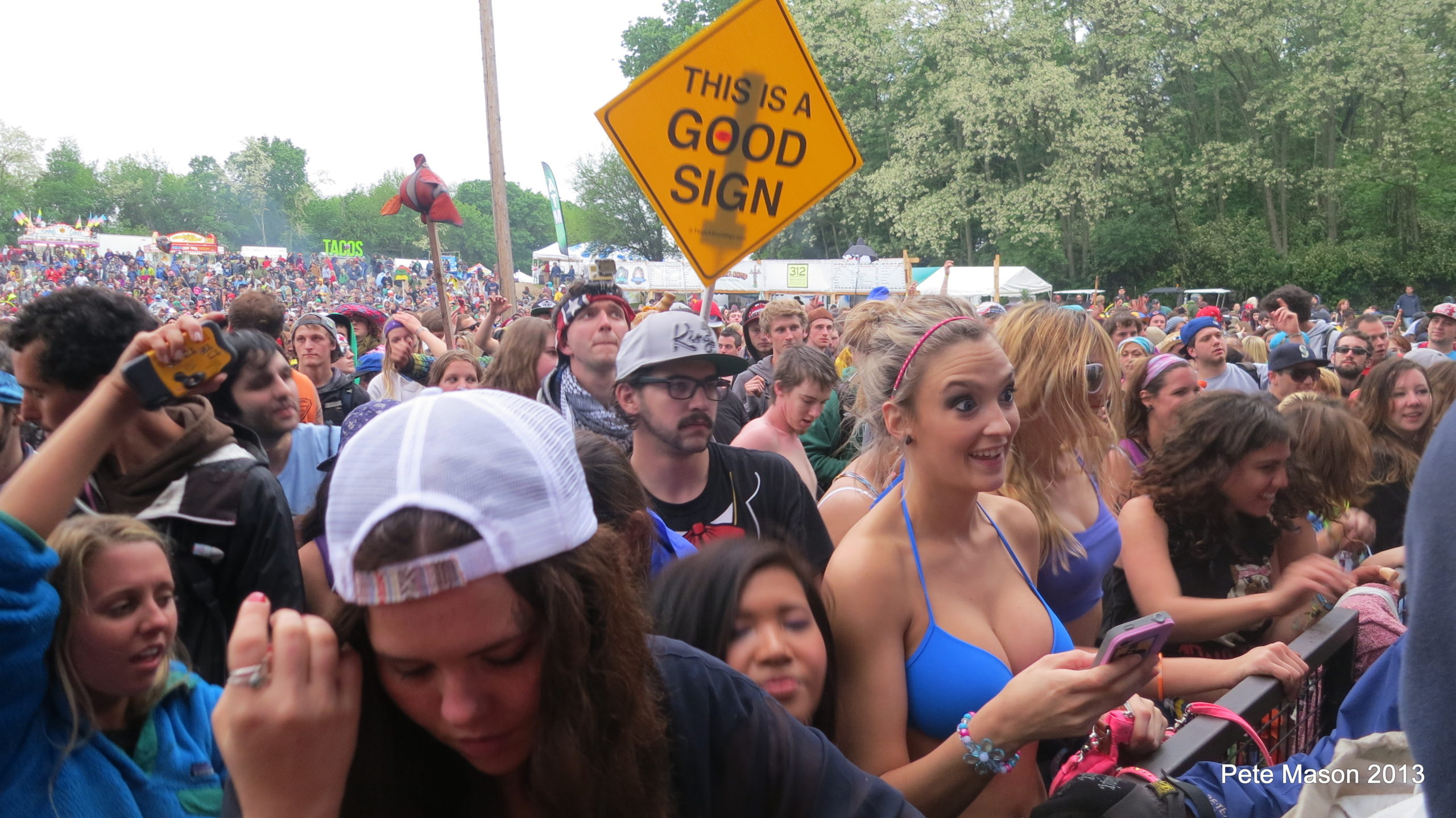
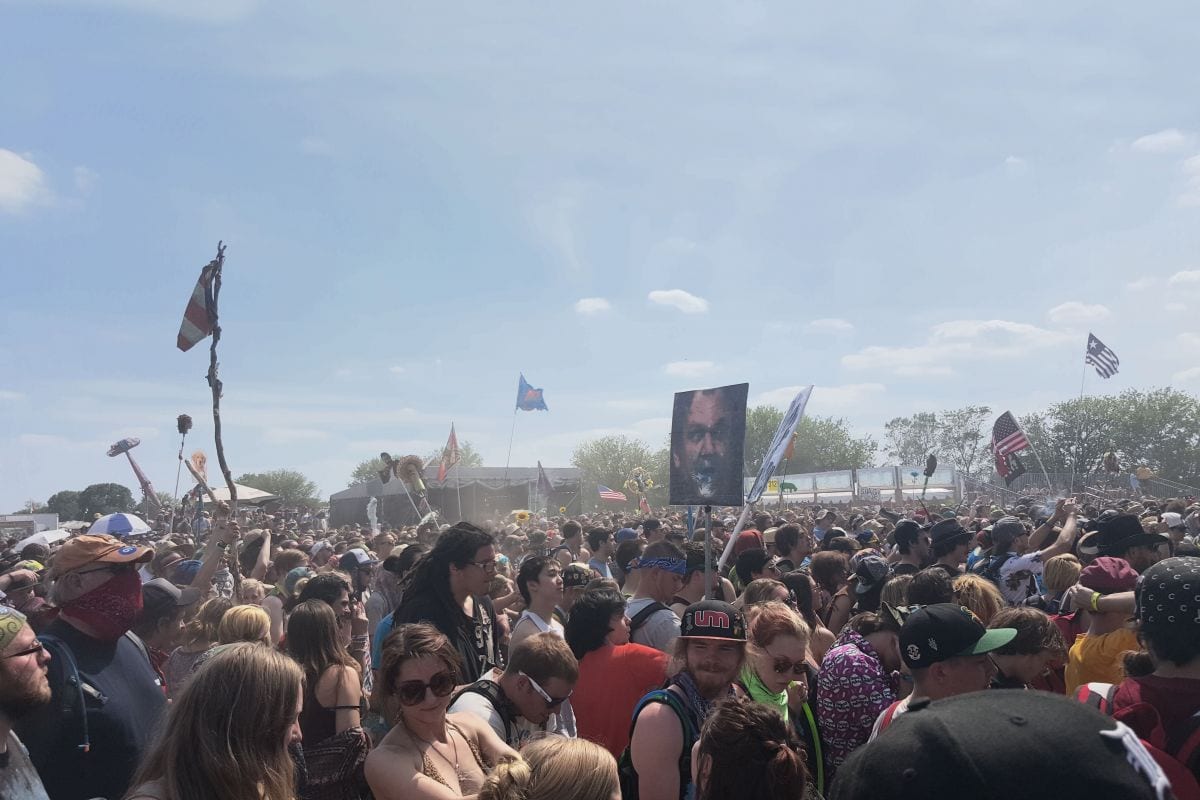
What makes Summer Camp standout is that it sticks to a lineup that works; start with moe., Umphrey’s McGee, a handful of Chicago and Midwest bands, the best funk and jam bands touring today, some new names, some DJs and a couple of random acts (Big Grizmatic, George Clinton and P-Funk) and you have a functional recipe that doesn’t need to be reevaluated each year to bolster the bottom line or appeal to a newer fanbase. Summer Camp remains an annual tradition for thousands, and the familiar yet diverse lineup with must-see acts from around the country is the origin of this tradition. Collaboration and a constant flowing party with the Midwest’s finest soundtrack is the focus of the weekend at Summer Camp, with a little rain mixed in for good measure.
Now when it comes to attending a large festival, or really any festival for that matter, it becomes impossible to see everything, and sacrifices need to be made. If you’ll see Turkuaz in two weeks, do you skip them and go see Future Rock, a band you might not see outside the Midwest? Or pass up a little Sunday night moe. for March Fourth? (Answers may vary.) That being said, when your RV blows a tire on the way out to Summer Camp, you can cross a few artists off your Thursday list and pray the tire repair gods smile kindly upon you. And with that, we begin at Summer Camp, in the Vibe Tent on Thursday night, with Wyllys.
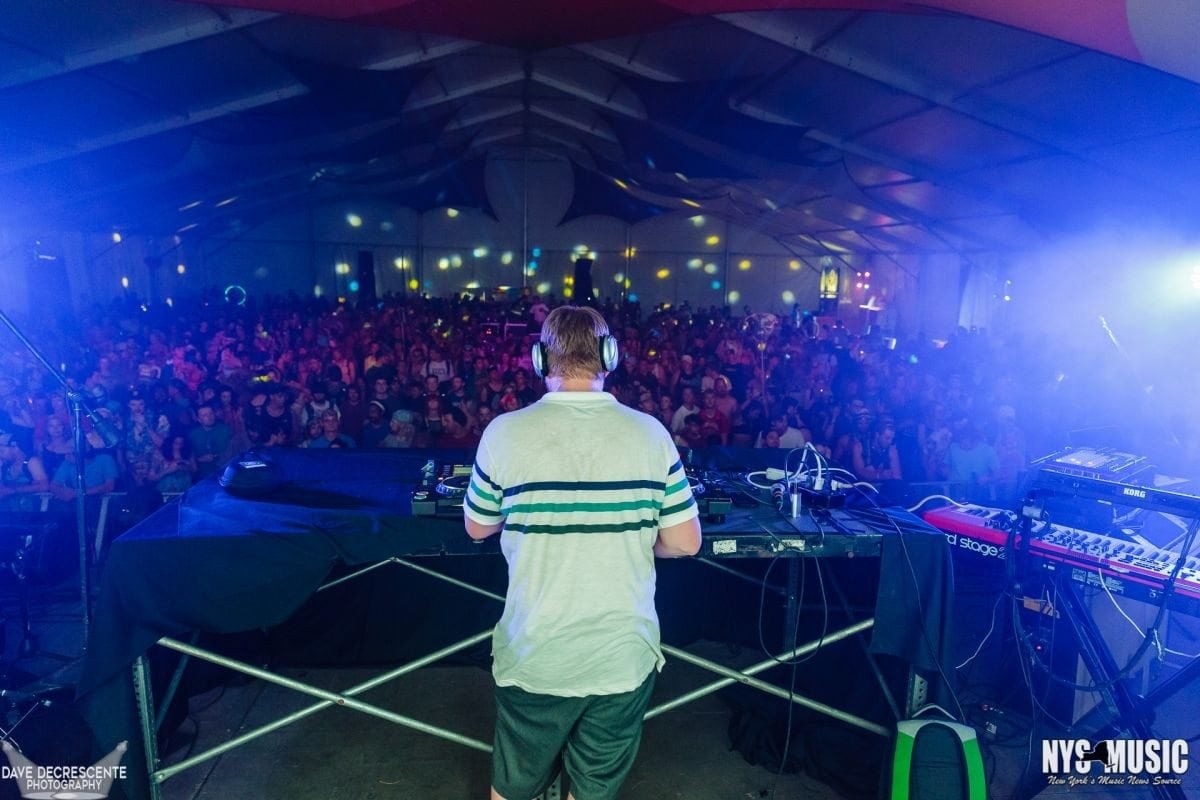
Creating a bookend for NYS Music’s Summer Camp as he performed late night in the VIP tent until dawn on Sunday, Wyllys threw down a powerhouse set in the Vibe Tent, dropping nu disco on the unsuspecting crowd, followed by Break Science, who was joined the next evening by the Shady Horns on the Starshine Stage. After getting warmed up in the Vibe Tent, we headed to the Camping Stage and happened upon The Waydown Wanderers who come across as the next Railroad Earth and more than a string band with ardent fans packing the hill. Sun Stereo was a pleasant and energetic surprise, filling in for the delayed London Souls, while in the Red Barn, all guests were welcomed to join the Werks, Louis the Saint and Lettuce for the Thursday night pre-party.
Friday morning got hoppin’ with a dose of the Nth Power’s high-intensity soul, which transferred over nicely to Sister Sparrow and the Dirty Birds who woke the crowd on the Sunshine Stage with a healthy serving of funk and a cover of Paul Simon’s “Diamonds on the Soles of her Shoes.” Down at the Moonshine Stage, moe. dropped their first set of the weekend, featuring a monster “Haze,” and later played an acoustic “Not Coming Down” > “Wormwood” > “Okayalright” for the VIP crowd that evening.
At the Camping Stage, Aqueous tore into their second set of the weekend with “Origami” and “Kitty Chaser,” with Rob Houk behind the kit, a potentially great fit for a band that has been searching for a permanent drummer for the past six months. On Thursday night, Rob handed off the sticks to Vinnie Amico from moe., who sat in for Black Sabbath’s “War Pigs.” Jimkata followed with a lively set, highlighted by “In the Moment,” an indie-pop number that didn’t stray far from improvisational roots and showed the trio in great form.
On the Moonshine Stage, Greensky Bluegrass invited Al from moe. to join them for the Wood Brothers’ “Luckiest Man,” followed by bringing Keller Williams up for “For Sure, Uh Huh” and covering the Band’s version of Bruce Springsteen’s “Atlantic City” for good measure. Back up at Sunshine Stage, Umphrey’s rained down on the crowd with a ridiculous “Plunger” > “Wife Soup,” hit fans with a one-two punch of “Syncopated Strangers” and “Divisions” to close their first set of the weekend. A monster second set began with the recent arrival “Stinko’s Ascension” and “Ocean Billy,” which seemingly turned the spigot in the sky off for the rest of the night. A “2×2” sandwich with “Speak Up” and “In the Kitchen” > “Hurt Bird Bath.”
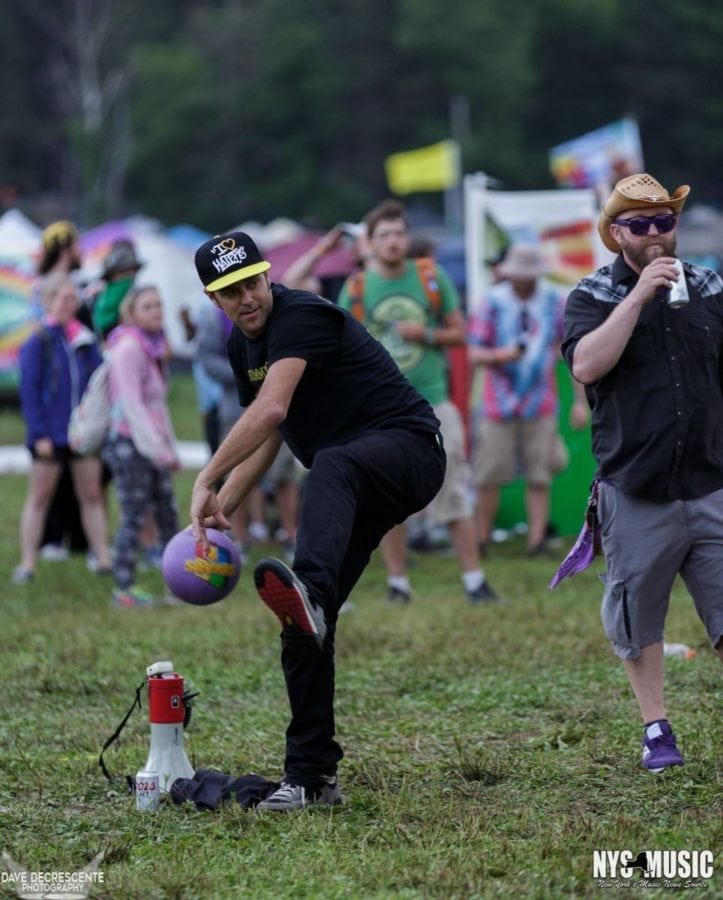
Between moe. and Umphrey’s sets, Future Rock’s livetronica hit the Starshine Stage, a Second City complement that kept the energy rolling from the two fire sets of Umphrey’s. Over at the Campfire Stage was one of the largest crowds of the weekend, where a few thousand filled in for Pigeons Playing Ping Pong. For non-stop late night funk, this four piece from Baltimore was the perfect pre-Sunrise Kickball music you could ask for. Performing songs off their 2015 album Psychology, as well as covers of the “Cantina Jam” from Star Wars and “Psycho Killer,” and a second time ever played “We Put the Fun in Funk,” made for one of the most enjoyable and exhausting sets of the weekend.
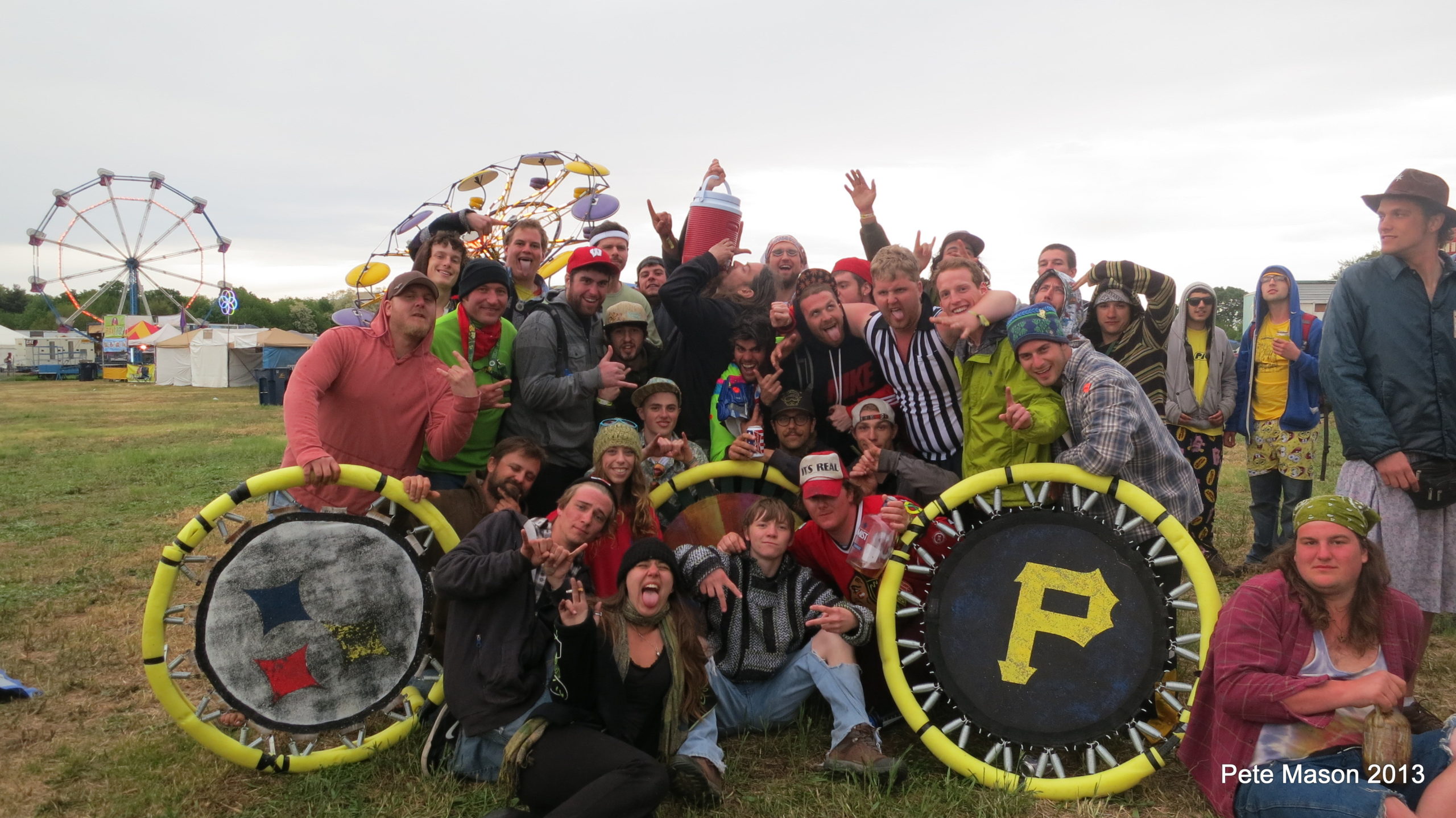
After getting some post-Sunrise Kickball rest, Saturday began with Field Day activities. From 3 to 6 p.m., the music from Starshine Stage and Vibe Tent were the soundtrack to the games this year, and what a soundtrack it was. Unlike Pluto got things started during Dodgeball and Tug of War, treating us to trap and progressive house beats, perfect to warm things up on the field. Michael Menert and the Pretty Fantastics were pretty damn incredible, bringing a dose of soul to electronic music honed under Pretty Lights Music, aiding in an epic Capture the Flag that ended with the Yellow Team winning the event. When it was time for the Twister competition, Gibbz provided the perfect beats for the extended yoga session on a makeshift Twister board. Given that this Brooklyn DJ burst onto the scene only recently, having him as the beats to the last hour of Field Day was perfection in scheduling. (Oh, and the Red Team won Field Day, in case anyone was keeping score.)
Dopapod served as outro music as the weary legs of sweaty Scampers departed Field Day for some rest before another raging night of Umphrey’s and moe. A brief storm featuring a double rainbow cooled the festival down a bit before Umphrey’s, the timing of which is always welcome to keep dust down and chill the grounds slightly after a long hot day. Umphrey’s two sets were a hard rock lovers dream, with “Miss Tinkle’s Overture,” “Puppet String,” “Wizard Burial Ground,” “1348,” and “Nothing Too Fancy.” The encore of Mark Ronson’s “Daffodils” was perfectly executed before segueing back into “All in Time,” capping off an old-school set, perfect if you were celebrating your 200th Umphrey’s show that evening.
Heading back down to the Moonshine Stage, moe. gave a nod to two of the major music losses of 2016, David Bowie, with a cover of “Fame,” and Prince, with “Purple Rain.” The string of covered continued in the second set with Kyle Hollingsworth joining for “Shine on You Crazy Diamond,” “Opium” and “Making Flippy Floppy,” the former and latter being usual Umphrey’s covers. “George,” “Wind it Up” and “Lazarus” closed out the set and fans moved onto campsites or late-night stages. Strolling back to the late-night music, Turbo Suit with Ryan Stasik performed a funked-out rendition of Nirvana’s Nevermind, and festival dark horse Sunsquabi threw down at the Camping Stage with serious drive behind his electro-funk.
Relaxing with a keg of Goose Island Green Line and the Field Day crew started the day off just right, with Tom Hamilton’s American Babies playing on Starshine Stage. Heading over for Umphrey’s day set, the “early” risers (1 p.m.) were treated to a “Cemetery Walk” > “Bad Friday” and some acoustic tunes as well, including “Gone for Good,” “No Diablo” and the Pixies’ “Where is My Mind?”before wrapping up the day with “Sociable Jimmy” > “JaJunk.”
Catching Twiddle in the Midwest made me curious if the Vermont group had the same response they did in the Northeast, and indeed they did. The largest audience of the weekend at Starshine was a captive one for a five-song set, including an energetic opener in “Apples” and an emotional “Hattie’s Jam” > “When it Rains it Poors,” featuring Chris Houser from the Werks on guitar.
Following Twiddle’s set, the Werks invited up Ryan and Mihali to join them on a shredtastic “G Funk” and closed their set with a cover of Edgar Winter’s “Frankenstein.” Heading over quickly to the Red Barn for Make a Difference’s Everyone Orchestra set, guest bandleader Derek Chamberlain led a group including Al Schnier, Marc Brownstein, Jeremy Salken, Kyle Hollingsworth, Jennifer Hartswick, Tom Hamilton, Mimi Naja, Daniel Lamb, Nicholas Gerlach and Chris Gelbuda through his own funky creation, while Matt Butler handled conducting duties for an hour’s worth of on-the-spot all-star compositions.
Rushing back over to the Starshine Stage for Here Come the Mummies was worth it—this is one of the best festival acts, period. Award-winning studio musicians from Nashville, who are under contract and thus, cannot perform under their own names, keep their identity under-wraps by performing as mummies. But all the while, they put on the funkiest of shows, one honed in Nashville studios and elsewhere around the country, performing suggestive songs that will keep you smiling, while your feet and hips do the rest.
Tom Petty and Mike Campbell’s pre-Heartbreakers group Mudcrutch got their highly anticipated set off to a rousing start with the classic “Shady Grove,” selections from their first album, “Orphan on the Storm,” “Scare Easy,” “Crystal River,” and the Byrds’ “Lords of the Bayou.” The set had a handful of tracks off their latest release 2 that fit neatly into the middle of the set, including the outlaw cowboy tune and Benmont Trench penned “Welcome to Hell,” “Dreams of Flying,” “Beautiful World” and “Hope.” For those who don’t get to see Tom Petty and the Heartbreakers sell out sheds when they do tour, seeing Mudcrutch allows you to catch a slightly different Petty/Campbell outfit that is a resounding late-career success.
moe. finished the Moonshine Stage off with “Baba O’Reilly,” where they were joined by Yonder Mountain’s Allie Kral on fiddle, following up with “Spine of a Dog” > “Buster,” “Jazz Wank” > “Rebubula” with the benefit of quadrophonic sound emitted from speakers across the bowl. As an added tongue-in-cheek bonus, the Who’s Quadrophenia served as set-break music.
Set two began with a bittersweet moment for Summer Camp; Mike Armintrout bid farewell to the festival he had a hand in booking and marketing for 16 years, bringing a large number of Summer Camp staff to the stage as Al Schnier and festival promoter Ian Goldberg gave credit where credit was due to Armintrout, before an emotional on-stage audience.
moe. dropped a five-song set for the last notes of the Moonshine Stage, starting with a 30-minute “Recreational Chemistry” followed by “Kids,” and between both Rob was on top of his game on bass, a highlight of moe.’s sets this weekend for sure. A Floyd-ish “Silversun” and rockin’ “Timmy Tucker” all brought out Rob’s bass, something that Big Grizmatic’s crowd missed out on. An encore of Cream’s “White Room” featured a Rob on near-perfect vocals and a disco ball lighting up the entire crowd—the perfect ending to the weekend of the host band. Props to the guy behind me shouting out “Chicken rigis,” “Utica Club” and “Saranac” during lulls between songs, for a delicious reminder of home while the hometown band closed out their Midwest festival.
One last stop of the night was to catch Crosseyed and Phishless, a unique idea for a Phish cover band in that they only cover Phish covers and jam them out quite well. The five-piece group notably includes the sounds of a Languedoc guitar and Modulus bass, making the performance uncanny to what you might find at Wrigley Field in a few weeks. Covers of “Sneakin Sally Through the Alley,” “Roses are Free,” “Drowned” and even “When the Circus Comes to Town” were crowd pleasers, hinting at Phish but never fully crossing the line into being a Phish cover band.
As the RVs rolled out Monday morning and Scampers cleaned up their campsites to head home across the country, another year of Summer Camp was in the books. There are few festivals like Summer Camp, and many that can take a page from the successful chapter Jay Goldberg Presents writes each year.
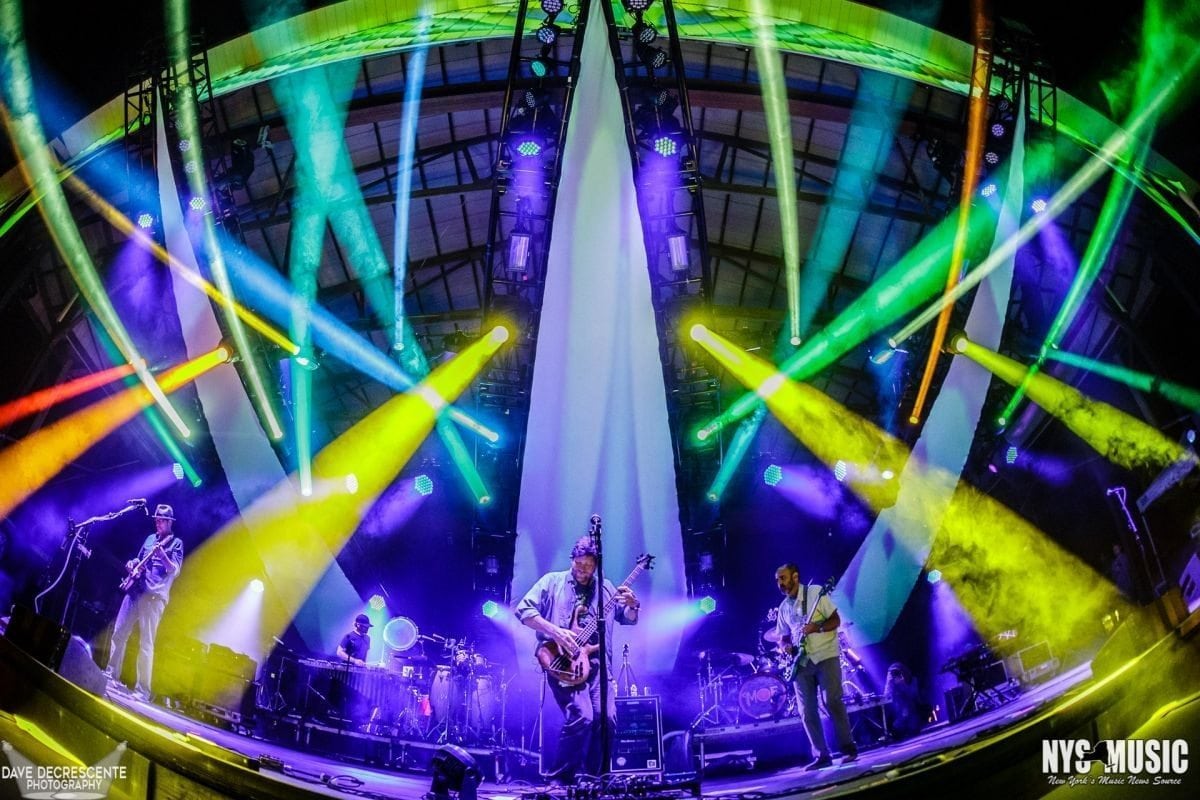
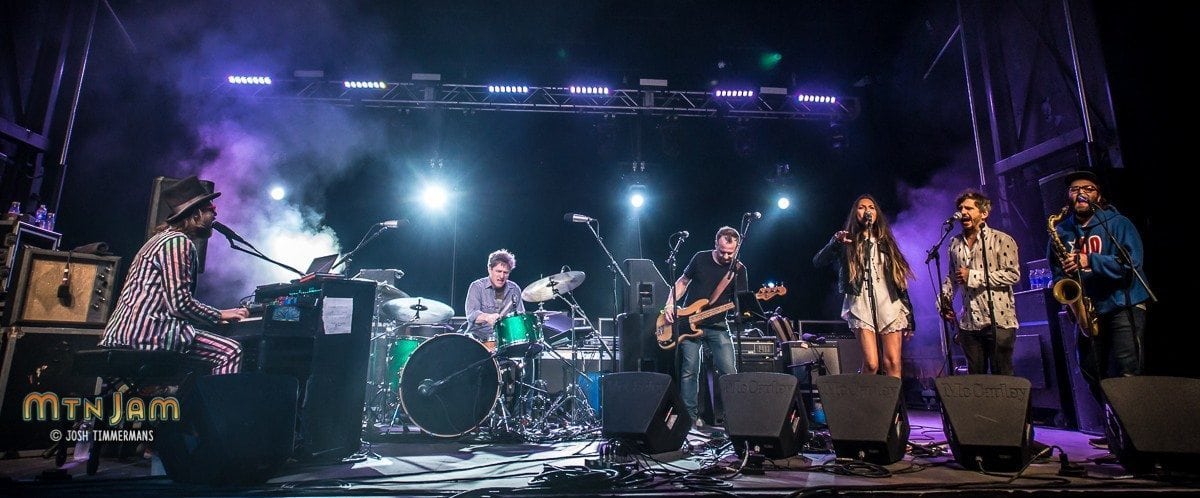
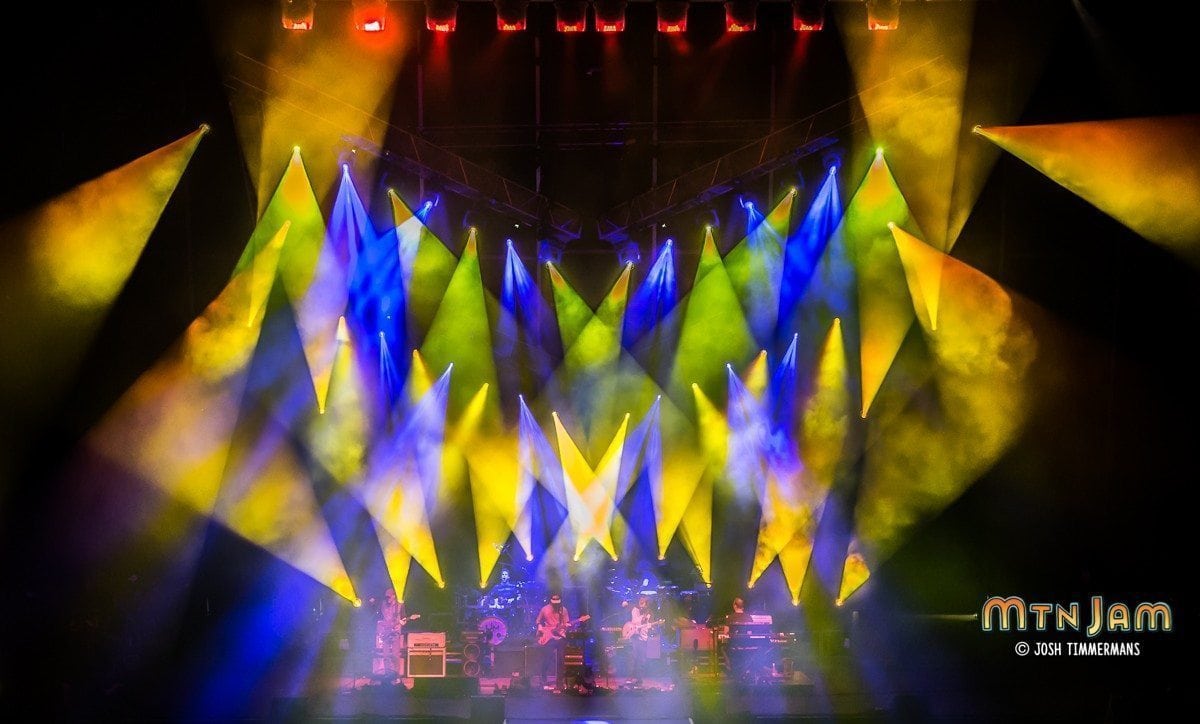
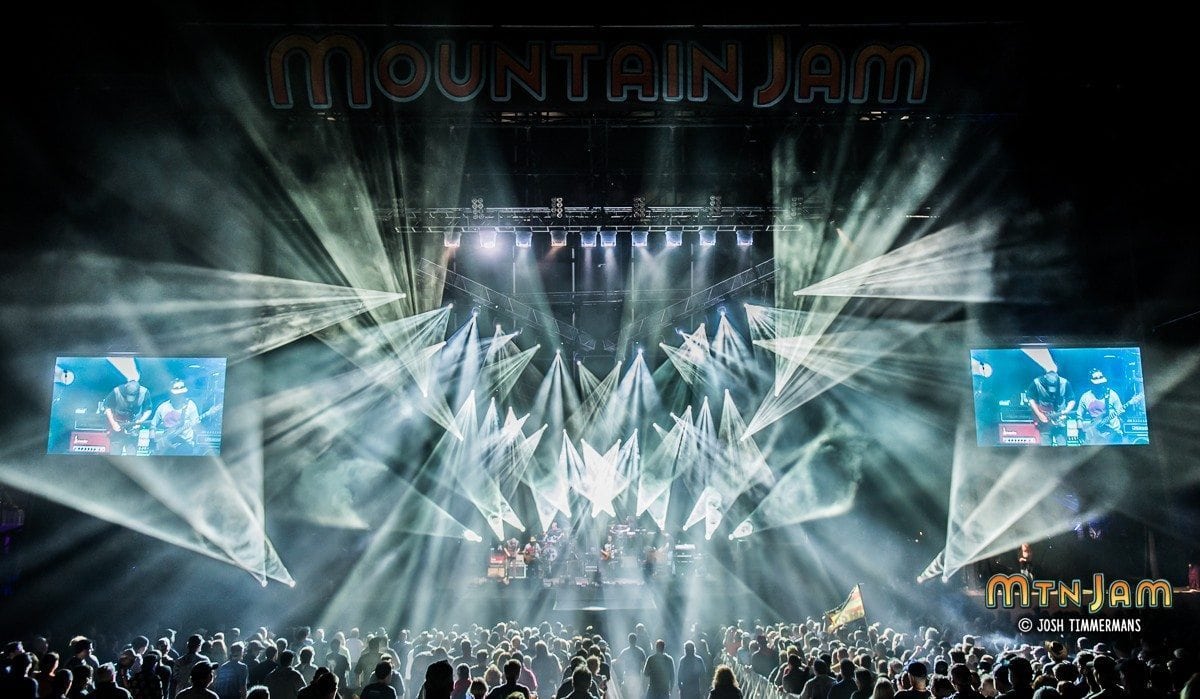
On June 3, festival-goers awoke in their tents, RVs, and hotel rooms to a beautiful day ahead. The temperature was in the low 60s, there was some light comfortable wind blowing through the mesh of tents, and some clouds in the sky, which kept the sun from waking people up hot and sweaty. Most importantly, there was the first full day of Mountain Jam 2016 ahead.
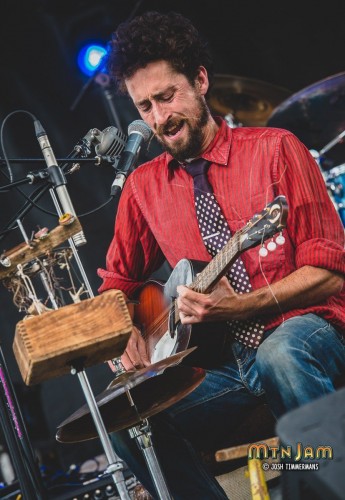
The day of music got underway on the Valley Stage with The Suitcase Junket, a one-man-band out of Amherst, MA. Matt Lorenz entertained the crowd with his adaptation of a music man, crooning out sweet lyrics, while smoothly playing a combination of a variety of instruments to accentuate those heartfelt vocals.
The next couple of acts to hit the Valley Stage were Marcus King Band and Love Canon. Marcus King and his band proved to be a crowd favorite and was invited to play a small acoustic set live on Radio Woodstock, which is broadcasting on-site all weekend. NYS Music captured a moment of that radio set on Instagram. Love Canon, a fast-paced bluegrass band with a keen ability to cover Top 100 songs got the late-afternoon crowd fired up for the evening to come. Their covers of J. Geils Band’s “Centerfold” and Africa’s “Toto” ensured that as few butts were on the grass or in chairs as possible.
The Mountain Stage had its first act early in the afternoon, with And The Kids, a band based in Northampton, MA, who labels themselves as not just indie rock, but as an existential and accessible form of music. After this unique and subtle yet powerful trio was a band who has worked hard to be thought provoking with the depth to assist generations with escaping the ease of apathy. That band with such an intense charge is Nahko and Medicine for the People. NYS Music was fortunate enough to catch a few minutes with Nahko, an artist with a great heart and his mind truly in an enlightened state.
“A lot of the music that I eventually opened up to that fueled my own style of writing came from [the Sixties]. The old story-telling of a time when there was a very strong movement, as far as a social movement goes, to become aware of yourself and to be involved in your political structure and to be involved in making democracy work for the people.” He goes on to explain that he doesn’t see his music having a political drive. Instead he prefers to label it as having political content and some non-fictional history lessons, which is ultimately positioned to open fans’ minds in order to do their part in shaping a better world.
The Santa Monica, CA based band was here playing their first Mountain Jam and were excited to say the least. The only disappointment was that they had to leave almost directly after their set. However, the reason was nothing short of incredible: they are performing at a Bernie Sanders rally in San Diego, CA.
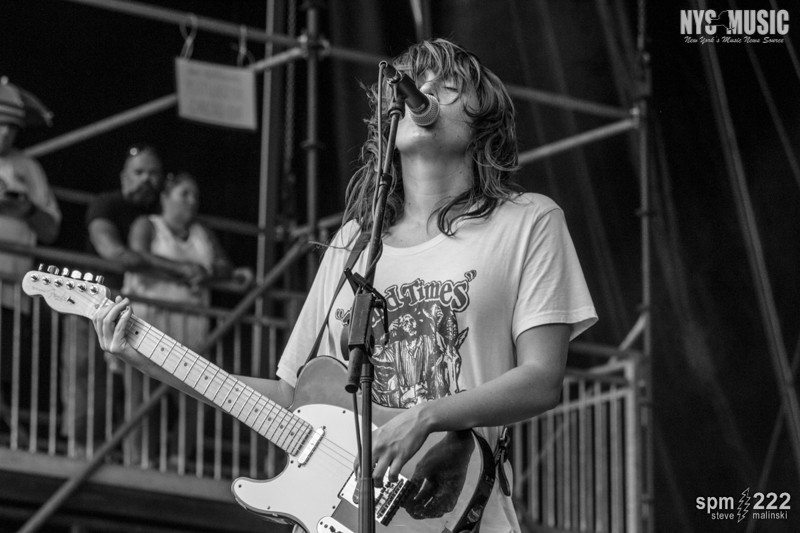
The Mountain Stage then welcomed Courtney Barnett, the Melbourne, Australia-based singer, song writer, guitarist and all-around bad-ass performer. Courtney brought her attitude-filled full-bodied sound to the Catskill Mountains, introducing many to her music and galvanizing the crowd when she played The Grateful Dead’s “New Speedway Boogie” for her first time ever in front of an audience. NYS Music posted a clip of that excellent cover on Instagram as it happened.
Immediately after the Australian indie-rocker finished her set, Brooklyn’s own Turkuaz got things started on the Valley Stage. Anyone who has seen this power funk ensemble knows that the impending set they stand anxiously waiting to see will fill everyone’s ears with a ground shaking orchestration. Turkuaz shows everyone why this relatively young band has started to gain the momentum that is likely to carry them to very high places in the national music scene and possibly beyond.
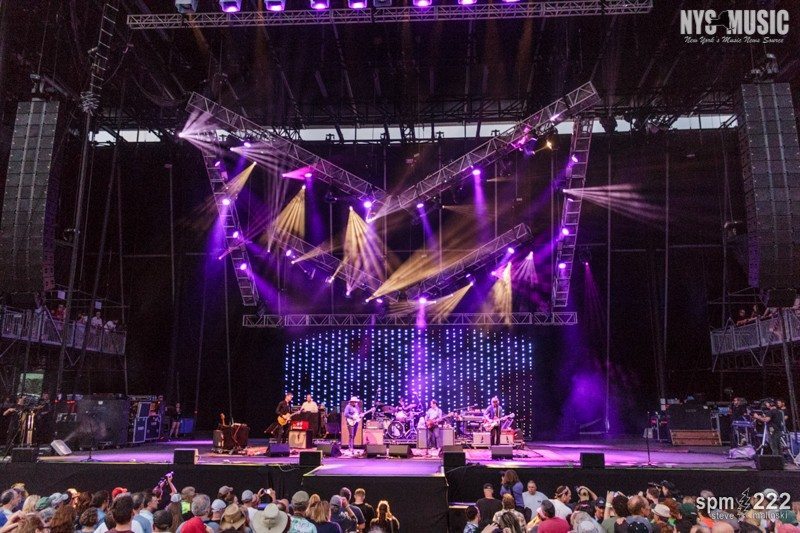
As the evening led into night, Mountain Jam 2016 was captivated by the music of Jason Isbell and Chris Robinson Brotherhood, who was making their return after having been on the Mountain Jam X billing in 2014. By the time CRB was wrapping up their ever-soul-filled set, dusk had settled in nicely and the previously anticipated rain had decided to issue a stay of aquatic festival execution.
The soon to be chilly night was then taken over by an incredible pair of Mountain Stage acts. Wilco was tasked with firing up the crowd for the historical host of Mountain Jam, Warren Haynes. The veteran band completed their assignment with mastery, giving a massive crowd of long-time Wilco fans and first-timers alike the 90’s alternative rock fix they’d been seeking, whether they knew it or not.
After Wilco, there was a 30 minute lull. That gave people enough time to run and prepare for the host to present his musical bounty. Gov’t Mule took the stage just before 11:00 pm to a crowd itching to hear the drawl of that Southern rock. It’s not easy to forget how breathtaking of a show the Mule gives its fans, but if someone in that crowd had forgotten, they were immediately reminded when the band opened up with the Black Sabbath cover “Sweet Leaf.” They proceeded to give the audience some of their favorites, including “Thorazine Shuffle” and “Funny Little Tragedy,” which finished with a “Thorazine” reprise, Traffic’s “Dear Mr. Fantasy,” “Mule,” in which the festival was teased with riffs of “Shakedown Street,” and then finished with a “Soulshine” encore.
When Warren and his crew of troubadours left the Mountain Stage the crowd was split in two. Those who filed toward Healey Hall for The New Mastersounds and those who sought the comfort of their camp sites, RVs and hotels after a long first full day of Mountain Jam 2016. For the latter, rest was needed to ensure the best experience of the Saturday of music and events to come, while the former knew that it would take a powerful force to stop their momentum.
Today, the third day of the 12th annual Mountain Jam, the festival-goers are in store for a day filled with amazing music and other incredible events. Sister Sparrow & The Dirty Birds, Beck and Thievery Corporation have Mountain Stage duties. Son Little, Lettuce and Houndmouth will be playing their sets on the Valley Stage. All the while there will be workshops, documentaries and Q&As from the likes of Jay Blakesberg and Lettuce. Late night will be covered by the sounds of Con Brio and then Lettuce. Whether you haven’t yet streamed Mountain Jam 2016 or if you have all along, be sure to visit Tourpedo to stream all of these great artists. In the meantime, check out these galleries from yesterday by our staff photographer, Steve Malinski.
On the first day of the 2016 Mountain Jam at Hunter Mountain, there was a much expected buzz throughout the festival grounds. Thursdays of a four-day festival can be one of the greatest days; it’s the kick-off to the annual celebration of music and arts. Attendees, staff and volunteers are just gaining their bearings for the weekend to come, but most notably, Thursdays tend to be a bit more exclusive. Not everyone has a schedule that allows for them to arrive so early, making attendance on the first day much lighter than the rest. This was the case in Hunter on June 2.
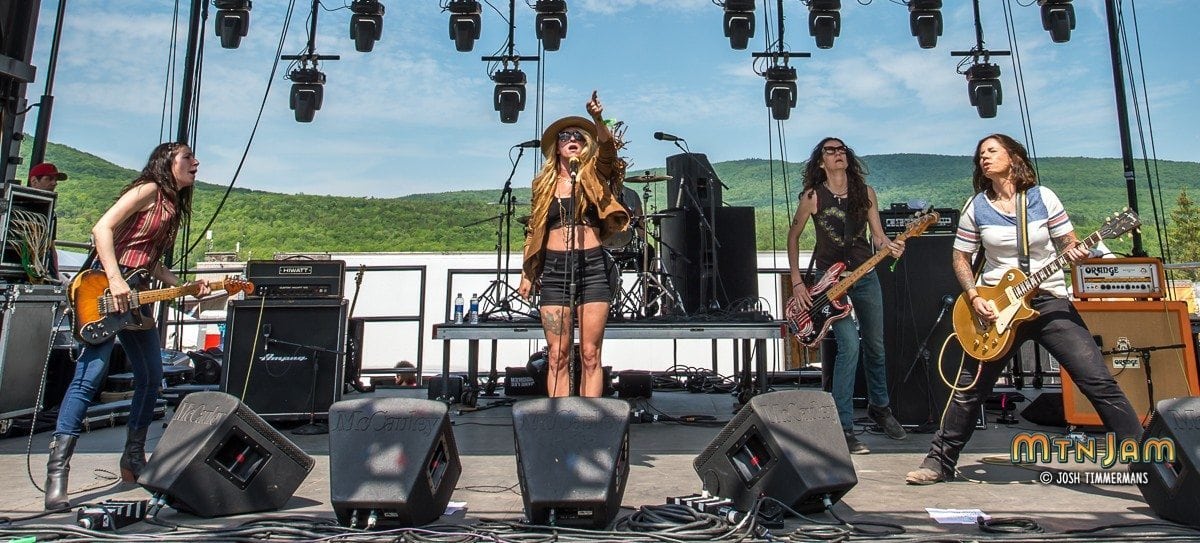
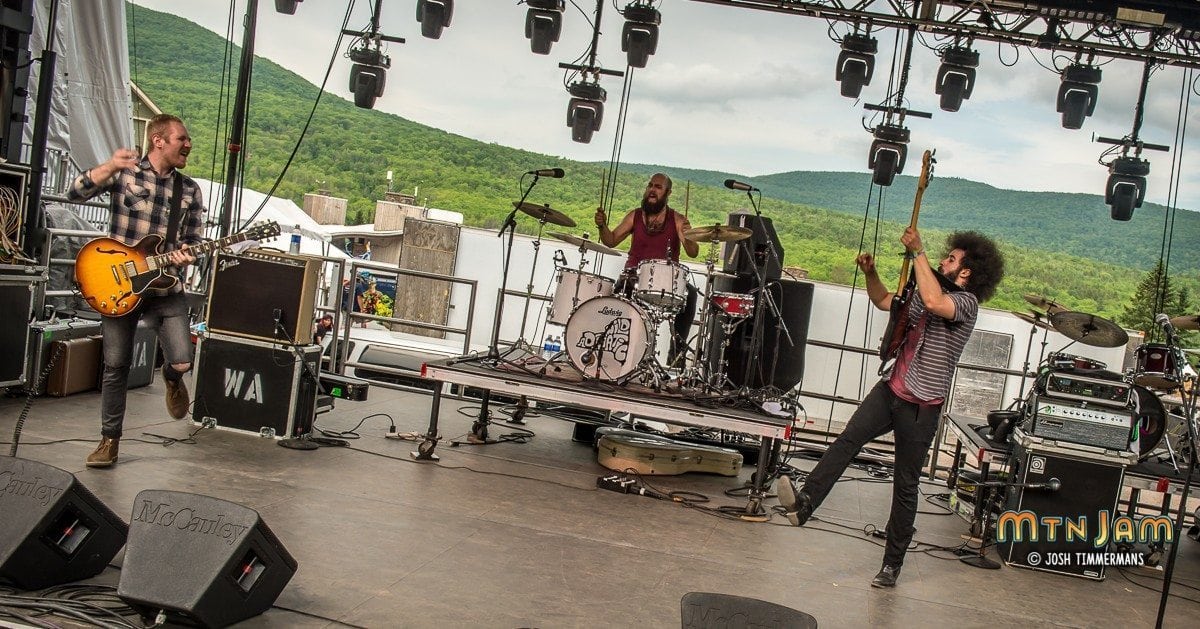
Mountain Jam 2016 kicked off on the Valley Stage with a quartet of consecutive acts who were not only the musical welcoming committee as the first wave of fans poured in, but they were the catalyst for a day and evening of incredible music. Jane Lee Hooker, a New York City-based blues quintet, were first to play. The all-female blues band brought fervor and soul to the stage, which proved their respect to the blues craft and their namesake, John Lee Hooker. Next up was the Capital Region’s own Wild Adriatic; they lived up to expectation and performed an amazing set, which only substantiated the next act, Cabinet, a Pennsylvania bluegrass band that always makes the crowd shake and stomp.
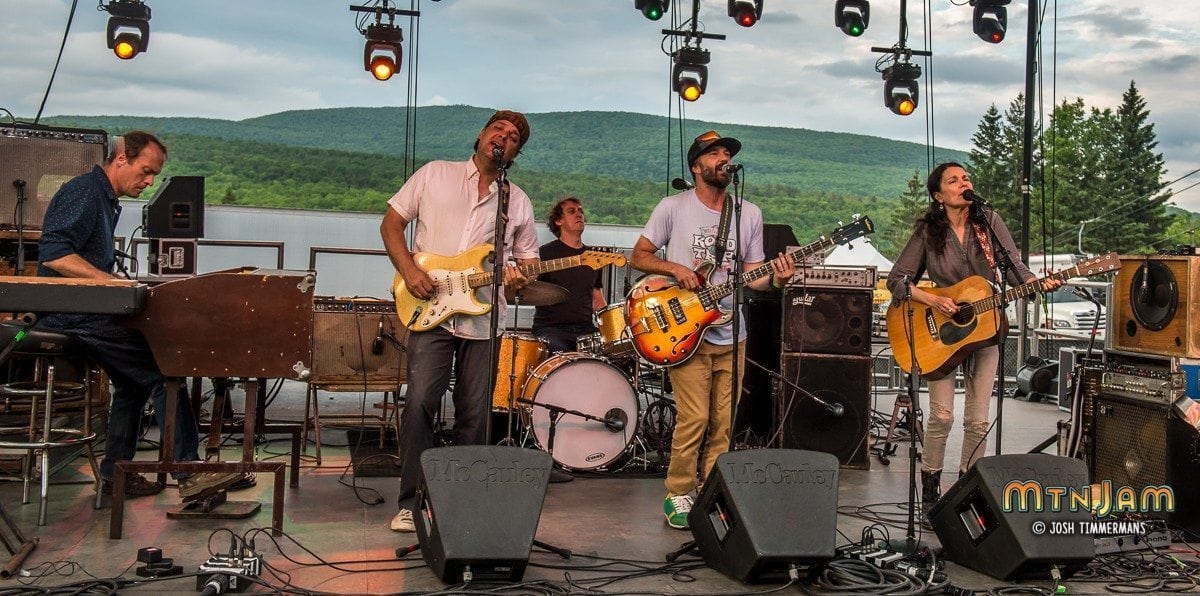
The fourth band of the initial quartet was Donna the Buffalo, a Central New York-based band riddled with Americana influence from old-time Appalachian music to modern rock and country; this was the group’s first Mountain Jam billing. NYS Music sat down with Tara Nevins and Jeb Puryear, who founded the band in 1989. When asked how they came to be, Jeb said, “We’re both old-time fiddle players, and in that form of music, a lot of people jam with each other. All you have is acoustic instruments, so you can just meet easily.” He added that Tara was the first person he’d met that wrote songs like the ones heard on the radio. A smile instantly hit her face when he paid her that compliment.
Over the course of time, Donna the Buffalo, comprised of these old-time players Tara and Jeb, met back in the ’80s and evolved from acoustic fiddle and banjo music to a more modernized, electric bluegrass. “The music [Appalachian music] kind of predates bluegrass; the kind that bluegrass grew out of,” Tara added. “I started writing songs that were more pop-oriented and then Jeb started writing songs. Then we [started to] transfer to electric instruments, and thus, was the formation of Donna the Buffalo.” Although they evolved into a more modern sound, they still stick close to their roots, continuing to play bluegrass festivals around the country, including their own called the Finger Lakes Grassroots Festival of Music and Dance in their hometown of Trumansburg.
As the evening progressed, the heavy hitters started to come out. The first Mountain Stage act was Train Play Led Zeppelin II. Festival-goers throughout the grounds were hypothesizing how the performance would go. Only those who had heard Train play Zeppelin tunes on Howard Stern’s Sirius/XM radio show knew just how amazing it was going to be. The band’s frontman, Pat Monahan, was a true embodiment of a young Robert Plant. The band masterfully moved through the entirety of Led Zeppelin II and finished off their set with a crowd-pleasing reprise of “Stairway to Heaven.”
After Train finished their jaw-dropping performance, an amazing duel between Marco Benevento and Superhuman Happiness on the Valley Stage and Umphrey’s McGee on the Mountain Stage commenced. Marco and his collaboration of astounding musicians and singers paid homage to the late David Bowie by covering a vast amount of his catalog, including legendary hits like “Oh You Pretty Things,” “Let’s Dance” and “Life on Mars.” Chills were brought to many spines in the audience as this well-orchestrated performance not only gave everyone a live listen of Bowie tunes, but paid breathtaking amounts of respect to Ziggy Stardust—a face, voice and mind that the music world and its fans miss very much.
The echos of Bowie off of Hunter Mountain were responded to by a true fan favorite, Umphrey’s McGee. Although the Thursday crowd was light, it seemed every soul in Hunter was on the concert field. The boys from Chicago started their set off with “Similar Skin,” after which Brendan Bayliss delivered the message that instead of everyone pacing themselves for the weekend to come, a full-on party should take place since they were only around for the one night. After that public service announcement, Umphrey’s kicked into “Rocker (Part II),” and it didn’t slow down much from there. As is often a staple at Mountain Jam, Warren Haynes came out to jam during the first set, helping to breakup “Higgins” with a mid-song jam of southern rock and blues.
Another guest hit the Mountain Stage to make an appearance. Dressed in his eye-grabbing garb for the Bowie tribute set, Marco Benevento sat with Joel Cummins during the adapted and absolute monster cover of Pink Floyd’s “Breath.” After the first set was over, the crowd was filled with electricity. Marco played his second set of Bowie music, which made way for the second set of Umphrey’s; this second set seemed to step-up from the groundwork laid out in the first. Starting off with “40’s Theme,” the band moved through their second set making head-banging and fist-throwing and, of course, the Ryan Stasik-patented style of rock horns, explode throughout the crowd.
The boys finished their set with a line of “Educated Guess, “Conduit” and “Relax, Have a Thunderkiss.” Surprisingly, the crowd didn’t chant out the so-often-heard “We want the Umph!” chant, but they came back onstage with a certain vengeance, encoring with “Hajimemeshite” into “Bridgeless” to end the night; the perfect bookend to a perfect first night of Mountain Jam 2016.
Today’s lineup has some much anticipated acts throughout the day. Jay Blakesberg is personally looking forward to Courtney Barnett and Jason Isbell, both hitting the Mountain Stage in the late afternoon. Also playing today are favorites Chris Robinson Brotherhood, Wilco and Warren Haynes’ own Gov’t Mule. Be sure to log into the live stream, so you don’t miss any part of the Mountain Jam 2016 weekend.
And we’re back! Music Festival season hits hard around the country in May, with Summer Camp Music Festival being a destination event for fans of all things jam and funk, Umphrey’s McGee and moe., and more at Three Sisters Park in Chillicothe, IL. NYS Music heads west this weekend, as many do when bands like Aqueous, Jimkata, Break Science, moe., Lettuce, Dopapod, Turkuaz, among others, perform at the same four-day festival, now in its 16th year.
Summer Camp has a lot going on, making it tough to see it all, but far from overwhelming like mega-festivals. Check out the full schedule here, or create your own on the Summer Camp app (recommended). To break down the music, camping and activities, here’s a sampling of the live performances for each day of Summer Camp:
Thursday
There is a lot of Chicago love on Thursday, and the Second City takes center stage with Chicago Funk Mafia (3:30-4:30 p.m.), Family Groove Company (6:30-7:30 p.m.) and Future Rock (8-9 p.m.), all at the Starshine Stage.
Make your way to the nearby Camping Stage for Buffalo’s Aqueous (8:30-9:30 p.m.), where they typically have quite the crowd of AQuaintences, one that should merit Starshine Stage in future years.
Heading into the late night of Summer Camp Day One, you’ll want to hit the Vibe Tent at 11 p.m. for Adam Dietch’s Break Science and stick around after for a nu-disco DJ set from Wyllys. Down at the Campfire Stage, the London Souls rock from 1:30-3 a.m., winding down the day with ease, before the heavy hitters arrive on Friday with the majority of the crowd.
Friday
It’s a given that you’ll probably see moe. (2:30-4 p.m., Moonshine) and Umphrey’s (7:45-11:15 p.m., Sunshine), but there are many other bands to discover at Summer Camp, even those that might be the next moe. and Umphrey’s — just venture through the festival grounds and find some new music to explore.
Two highly talented acts can be found at Starshine Stage on Friday afternoon. Soul never sounded so smooth coming from the Nth Power (1-2 p.m.) and experimental prog-rock from Tauk (5-6 p.m.) is a sound you need to experience firsthand, despite having some incredible albums under their belt. One band I have been eagerly waiting to see live is prog-funk band Earphunk, performing at the Campfire Stage (4:30-5:30 p.m.)
There will be a trio of New York bands to check out on the Camping Stage, starting with Aqueous at 3:30 p.m., followed by Jimkata at 5 p.m. and Giant Panda Guerilla Dub Squad at 6:30 p.m. After Umphrey’s, late night is looking prime at Campfire Stage with Turkuaz (11 p.m.-12 a.m.), Mike Dillon’s New Orleans Percussion Consortium (12:30-1:30 p.m.) and Pigeons Playing Ping Pong closing out the stage (2-4 a.m.). And then return to the Sunshine Stage field (if you still have the energy) for sunrise kickball—the best unofficial activity at Summer Camp.
Saturday
Have you ever wanted to combine a carnival, circus and funk band all at the same time? Then Marchfourth! is your wake-up remedy today. Head over to Sunshine Stage at 1 p.m. to see one of Portland, Oregon’s heavy hitters blow you away. You can’t go wrong with Steve Kimock and Friends who grace the Moonshine Stage at 2 p.m., bringing keyboardist Jeff Chimenti, bassist Bobby Vega, drummer Jay Lane and guitarist/vocalist Leslie Mendelson together for a set of blues, Grateful Dead and classics. Check out a recent setlist for a taste of what’s to come.
At this point, you should be heading over to the Vibe Tent for Field Day. More details on this day below, but while you’re taking part in the always eventful activities surrounding Field Day, Gibbz will surprise you with his voice and musicianship at 5 p.m. in the Vibe Tent. Then, you can turn around and walk over to Starshine Stage for Dopapod, another of the heavy hitters on a stacked stage.
One of the next great supergroups, Hardworking Americans, featuring Todd Snider and bassist Dave Schools from Widespread Panic, hit the Sunshine Stage at 6:45 p.m., followed by two more sets of Umphrey’s (9 p.m.-1 a.m.) and of course, late night moe. (10 p.m.-2 a.m.), which will make you feel like you’re at moe.down, but with a few thousand extra people clamoring to the hillside. And after moe., if you still have the energy, late night includes Slow Magic, Shiba San and Grandtheft in the Vibe Tent until 4 a.m.
Sunday
Exhausted yet? If not, Sunday will do the trick. You’ll have the heavy hitters and a lot of decisions to make today in order to drain all the life you can out of Summer Camp 2016. Start the day at Starshine with American Babies at noon, Main Squeeze at 2 p.m., Twiddle at 4 p.m., The Werks at 6 p.m. and Here Come the Mummies at 8 p.m. Or head to Moonshine for the New Mastersounds, the Motet, George Clinton and P-Funk, Lotus and more moe.
Sunshine Stage hosts Umphreys McGee (1-2:30 p.m.), Ani DiFranco (3:15-4:15 p.m.), Yonder Mountain String Band (5-6 p.m.), Jason Isbell (6:45-8:15 p.m.), Mudcrutch (9-10:30 p.m.) and Big Grizmatik (11:45-1 a.m.). Have you ever wanted to be in more than one place at a time? The Sunday lineup alone will make you support cloning. Top your weekend off at Campfire stage with Kung Fu at 10:30 p.m., Horseshoes and Hand Grenades at midnight and Dopapod playing from 2-4 a.m.
Check out the full lineup below—but there’s more…
Counselor and Camping Options
You should listen to your counselors. Seriously, these are the pros who know Summer Camp inside and out. They’re the best resource for Scampers of all ages and experience levels (myself included). Read the handbook, which covers virtually every detail and question about the festival, and if you still have questions, join the Facebook group where you can find answers to virtually any question that may arise over the weekend.
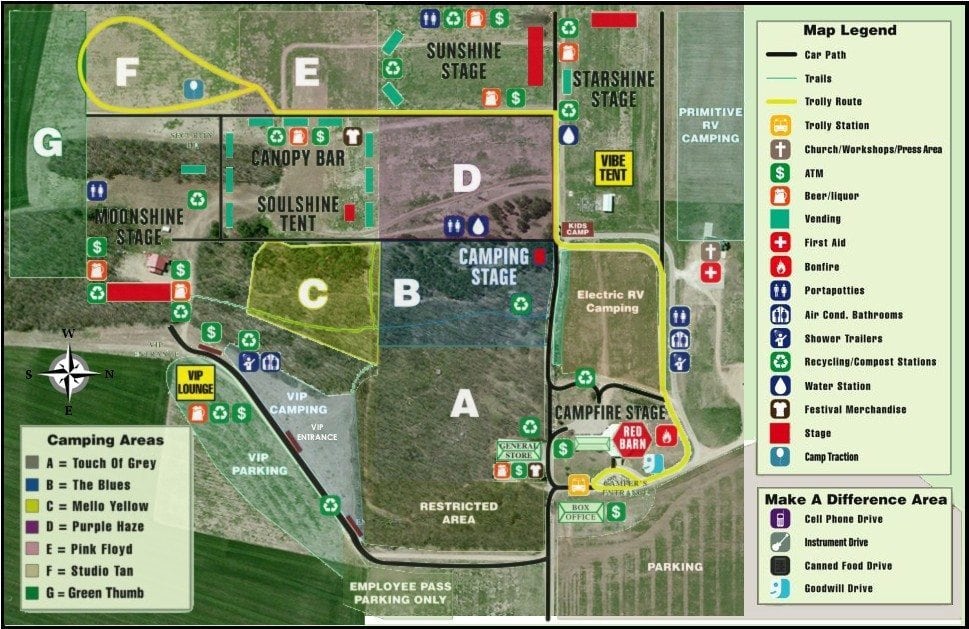
When it comes to camping, unless you’re in an RV, I recommend the field between Sunshine and Camping (Area D in the map above). Why? Because you are proximate to five stages—Sunshine, Starshine, Vibe Tent, Camping and Soulshine Tent (very underrated, even late at night)—and although there is no shade, you’ll love being able to catch a set of music while chilling between sets of music. The Woods are a solid option as well if you have a smaller set up, but fear not—the sprawling area in the woods is one of the coolest areas to walk through at any festival, night or day.
And while you are at Summer Camp, Make a Difference! there are so many ways to leave Three Sisters Park better than how you found it; clean up trash, cigarette butts, bring a reusable water bottle, recycle your waste and check out the Soulshine Tent to find ways to bring some of that positive energy from Summer Camp back home with you.
Then, of course, what do you do when you want to relive a little bit of Summer Camp from your youth? You participate in Field Day! Yes, Field Day is an annual tradition at Summer Camp, one that has a rightful place in the history of the festival. Started in 2011, the annual event takes the cake as the most unique and most fun non-musical component of Summer Camp. Sign up online, and the first 100 get a free team bandana on Friday from noon–1 p.m. at the Vibe Tent. Come back Saturday at 3 p.m. and participate in capture the flag, arm wrestling, spelling bee, banana eating contest and much more, with a Champions ceremony at noon Sunday. Field Day is open to all, the smack talk is free and it has become a growing event everyone should check out, whether as spectator or participant.
The Field Day staff shared a little insight into why you should take part in Field Day:
The number-one reason why people should sign up is because of the amount of awesome people you’ll meet doing so, especially myself Ashley Pardy. What keeps me coming back is all of the memories, and the Red Team wins. I mean would you leave a team that has won almost every year?” – Ashley Pardy
“You will meet amazing people, laugh your ass off and drink free beer. Participating in one of the many cool activities at Summer Camp will make your festival experience unique beyond just seeing shows.”
– Jessica Coughlin
“Bragging rights.” – Elizabeth Cox
What memories of past years keep these wonderful staff keep coming back, year after year?
I come back year after year because the people are so amazing. Favorite memory is Sheppy nearly getting arrested by some serious looking state troopers for defacing an American flag, while simultaneously being hoisted on our shoulders raising the red flag after yet another contested victory.” – Anthony Piccirilli (Shep talked his way out of it and the cop came to our keg party.)
“Every time kids will tell me it was their favorite part of Summer Camp. Knowing that we can make people so happy just by being silly is so rewarding. I have seen Field Day bring together lifelong friends who would have never otherwise met. And it is a chance to make a difference like with our ‘big butt challenge’; we picked up 3,500 cigarettes last year! Field Day feels like ‘Revenge of the Nerds: the Grownup Hippie Edition.’ We are all just a bunch of kids, best friends who get to run around our own personal playground at Summer Camp year after year.” – Jessica Coughlin
“Mud Tug-o-War, Drunken Spelling Bees, Sheppy drunken walks with the cup.” – Elizabeth Cox
“Drunken Spelling Bees.” – Anthony Piccirilli
The Palmer kids showing up to Field Day when they were middle schoolers, joining our staff and literally growing up in front of us at Field Day becoming the coolest kids at Summer Camp, aka, ‘the front row family.’” – Jessica Coughlin
And while sunrise kickball isn’t an official activity, it has been the unofficial opening ceremony of the games for six years now. This is one of the highlights of Summer Camp; at 5:30 a.m. come to the Sunshine Stage for a game of kickball with 200 Wookiees led by Ryan Stasik. There will be trampolines, bacon at second base and no apparent rules; it is the most beautiful and absurd shit-show ever witnessed, and one worth staying up for!
There you have it; NYS Music gives you the ins and outs of Summer Camp 2016. Make sure to follow us all weekend on Twitter and Instagram to live vicariously if you can’t make the trip to the Midwest.
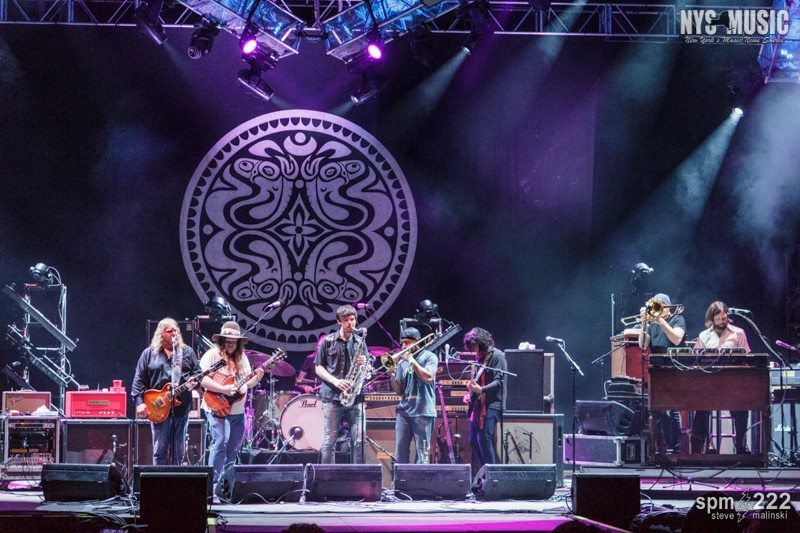
Dark Star Orchestra (DSO), the Grateful Dead tribute band hailing out of Chicago Illinois, will return to the Town Ballroom in Buffalo. Since forming, DSO has played 2,200-plus shows, recreating Grateful Dead concerts in their entirety.
To any Dead Heads that need their fix, this show is not to be missed. It’s been more than 20 years since Jerry Garcia has passed, but the Grateful Dead’s music lives on with the passion and extensive touring DSO has displayed over the years.
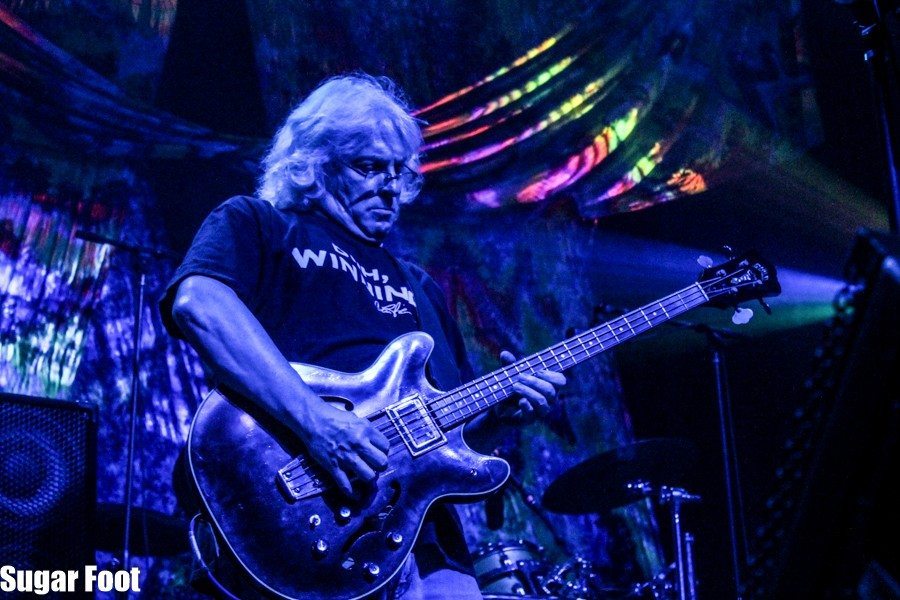
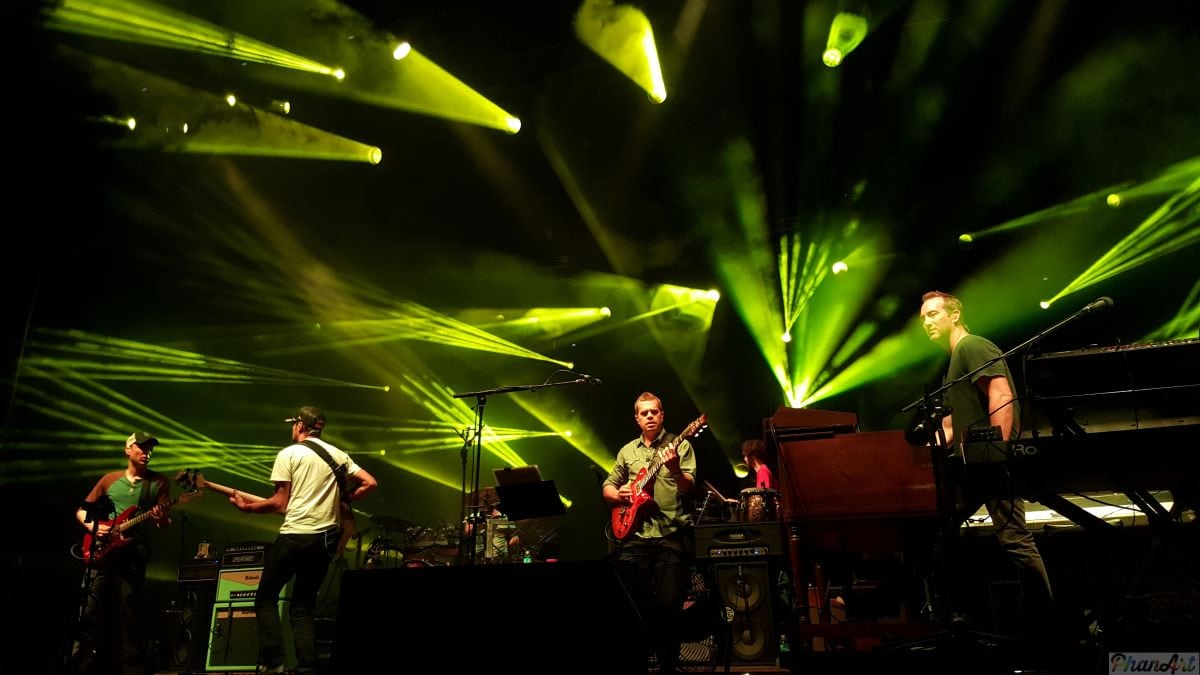
Dark Star Orchestera has had a slightly changing line up throughout its existence; the current band members include Rob Barraco (keys/vocals), Rob Eaton (guitar/vocals), Dino English (drums/percussion), Rob Koritz (drums/percussion), Lisa Mackey (vocals), Jeff Mattson (guitar/vocals) and Skip Vangelas (bass/vocals), and look forward to their return to Town Ballroom.
Tickets for the May 24 show are still available and can be purchased from Ticket Fly or through the Town Ballroom box office; door open at 7 p.m.
Massachusetts-based American Roots Rock quintet Daemon Chili is hitting the road this summer in support of their sophomore album released earlier this year, titled Mercy of the Sea.
Their 10-city tour is set to start June 3 in New Hampshire before trekking though New York with two stops in SaranacLake and Syracuse following shortly after. Their tour wraps up at Arlene’s Grocery in New York City on Oct. 8.
Daemon Chili is made up of five members including singer Michael Dion (lead vocals, rhythm guitar) formerly of Hot Day at the Zoo, Steve Benson (pedal steel, electric mandolin), Jason Moretti (lead guitar), Jay Breen (drums) and Jason Samiagio (bass). The group formed in the fall of 2013 and quickly hit the studio to begin recording. Their first album, titled Rise Up, was released in 2014 to great reviews of their transition from acoustic string band to a roots rock force.
Mercy of the Sea details provided by the bands website:
The band’s second album, Mercy of the Sea (2016), is Daemon Chili’s first official full-length studio effort, which peaked out at number 5 on the Relix/Jambands.com Radio charts. This album marks the band’s unquestionable metamorphosis into a musical outfit that truly defies genre categorization. The album also features a myriad of additional musicians whose talents help to round out a sophisticated musical juggernaut that heaves up-and-down with purpose and intention. The lineup includes Max Chase (Amulus) on keys; Nick Heys (Hot Day at the Zoo) on piano; Seth Bailin, Mike Kaskiewicz, Alex Allman (The Party Band) on horns; and Jes Sheldon (The Lightkeepers) on backing vocals.
Clutch is one of the headliners for the Rock ‘N Derby Festival, taking place in Schaghticoke May 20-22 and is currently on tour with Lamb of God and Corrosion of Conformity. NYS Music recently had a chance to sit down with the man who keeps the beat for the venerable Clutch, Jean-Paul Gaster.
When you’re in high school, you probably have a group of friends that you swear you’ll be tight with until the end of days. Perhaps that group of friends forms a band in someone’s garage or your parents’ basement. An oath is taken among yourselves that you’ll always be a band, no matter what.
Odds are, that high school band probably doesn’t make it through graduation. Sometimes though, it does. All of a sudden, 25-26 years later, you look out in front of you during a show at say, Upstate Concert Hall, and see one of the guys you made that pact with oh-so-long ago, accompanying you in the rhythm section of one of rock’s longest running lineups.
If your name is Jean-Paul Gaster, and you play drums in the Frederick, MD based band Clutch, that buddy you’re looking at is your high school pal and band mate, bassist Dan Maines.
Clutch’s foundation can be traced back to the halls of Seneca Valley High School in Germantown, MD, where the members of the band met. Gaster, Maines and guitarist Tim Sult got together to form Clutch in 1991. Original vocalist Roger Smalls left the band shortly after formation and was replaced by another friend, Neil Fallon. The band has been going strong ever since.
Gaster is a drummer’s drummer and a student of the instrument. We spoke at length about Clutch’s longevity and influence; the value of side projects; the festival scene and drumming as a mental exercise.
Mike Kohli: One of the things I’ve noticed with you guys – I’ve seen you perform a few times over the past couple years – is the way you interact with each other. I know you’re all friends from high school. Is that something that comes naturally? Do you just kind of give each other a look onstage and go with it? How’s the onstage chemistry work?
Jean-Paul Gaster: Yeah, there’s definitely a lot of unspoken dialog going on up there. I think it just comes with playing with the same guys for so long. I think musicians do that in general . I think we’re in a unique situation because we’ve been doing it for so long. Even in the writing process, we might play for 45 minutes and there might not be a whole lot of verbal communication, sometimes none at all. But we manage to put these ideas together with sort of pointing and grunts.
MK: Kind of a universal language…
MK: When I go to shows – I’m into a lot of different types of music- but typically when I go to a show, I watch the drummer. Now, I’m by no stretch of the imagination, a drummer. I do play a mean steering wheel though.
When I caught your show with Corrosion of Conformity in Clifton Park a few months ago, watching your style, it’s got a jazzy feel to it, kind of like Bill Ward of Sabbath, Ginger Baker of Cream. You mentioned them before as big influences on you. Have you had any formal jazz training or did you teach yourself how to play?
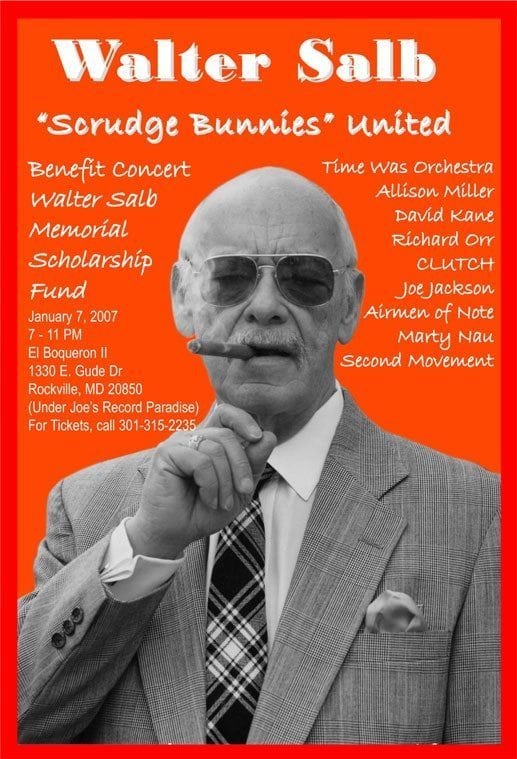
JPG: Early on, I took a few lessons, but I never really practiced. It wasn’t until I was about 23 when I started studying with a man named Walter Salb (Click the link for a short documentary on Salb). He was a professional teacher/instructor/player in and around Washington, D.C. for many many years. He actually started playing professionally in 1946, so he was definitely from the big band/swing era.
I learned a tremendous amount of stuff from him. A lot of it was thinking about jazz and what it means to play jazz. But i think more than that, he really taught me to be a musician and to be prepared for any musical situation. He wanted his students to be able to do any kind of gig and to play that music with authority and confidence. Those kinds of lessons had a really lasting impact on me. I miss that guy. He passed away about ten years ago.
MK: I’m sorry to hear that. Sounds like he was a really big influence on you.
JPG: Yeah, he definitely was. He lived life to the fullest all the way to the end; I will say that.
MK: I’m kind of into the jamband scene, stuff like Phish and moe., those types of groups. Sometimes I’ll come across people who for whatever reason, still don’t know who Clutch is. Why that is, I don’t know. You guys have been around for such a long time and have been a big influence on a lot of bands. You’re solid, a solid rock and roll band.
However, one thing I’ve noticed about you guys, you don’t fit neatly into any one mold. You’re not a metal band. You’re not a classic rock band. You came about during the grunge era, but you don’t fit into that category. You’re kind of in-categorizable. So when I try to describe Clutch to people who haven’t heard of you guys, I tell them you’re kind of a jamband. Your setlists aren’t always the same. You do stretch stuff out. You throw some improv in there. Have you ever been involved with any of the bands in the jamband scene? Say Warren Haynes or Govt Mule…
JPG: We like those bands a lot. I’m a huge fan of the Allman Brothers, Govt Mule. Warren Haynes’ playing, I think, is just incredible. You know, a few years ago we spent a lot of time trying to break into that scene a little bit. In retrospect, I think we were still, for those folks, I think there was a little too much for them. Maybe a little too much music coming at them. So, yeah, definitely familiar with that scene. Would love to play with some bands in that scene. I think that maybe that they weren’t really ready for us at the time. But stuff changes. And hopefully we’ll be able to get our music out to some of that scene.
I think the coolest part of being in this band is that we’re able to pull from so many different genres. We’ve played with so many different kinds of bands through the years. When you come to a Clutch show, it’s really a mishmash of different kinds of music fans. And I’m very proud of that. And I think that has a lot to do with the longevity of the band and the band’s ability to draw like we do. These days, pretty much all over the world.
MK: That’s exactly what I see when I go to the shows. There are guys who look like me, just a regular everyday joe, there’s college-aged people, there’s the stereotypical headbanger looking guys…It’s really a testament to what you guys do. You can draw all different types of people.
JPG: It’s a beautiful thing.
MK: Working with Neil…when I listen to Clutch, I envision Neil’s voice, his vocal style, as another instrument in the band. But also, his lyrical style, it’s almost percussive, the way he delivers the lyrics. So he’s almost like a multi-instrumentalist in that way. How does it play with you? Do you guys get together and work lyrics out so that they have that percussive style?
JPG: I’ll say this. Neil writes all of the lyrics, which in this band is a great thing. Because, speaking for myself, my lyrics would suck (laughter). I think the last time I tried to write lyrics it was sometime in high school and it wasn’t good.
So, we are well aware of Neil’s virtuosity and talent. I think he’s probably the most talented lyricist in rock and roll today. It has to do with being able to pull from so many different sources. Much like the way we put together our music. I think a lot of bands spend a lot of time asking, “Is this our band? Is this the kind of music our band can play?” The great thing about Clutch, you can literally go up there and play whatever you want whether it’s in a live situation or getting together to write new songs. There are no rules. So in that respect, I think we’re very fortunate.
Neil Fallon of Clutch
Speaking directly to the rhythmical feel of Neil’s lyrics, I think a lot of it has come directly from hip hop. Early on, Chuck D from Public Enemy was a big influence on him. We listened to a lot of hip hop as a band in the early and mid 90s. That had a lot to do with it for sure. And as a drummer, I react to whatever is happening rhythmically within the band more so than in a melodic sense so I’m listening for those things. On Psychic Warfare for instance, I paid particularly close attention to the way Neil syncopated his lyrics and how they were swung. That gave me a lot of inspiration as to how to play that part, how to best support that vocal.
MK: That whole hip hop thing, that’s really what came across to me. His vocal style is hard driving as well as hip hop. You summed it up perfectly.
MK: Any plans for anymore Bakerton Group stuff? (The Bakerton Group is a Clutch side project that works primarily as an instrumental outfit, incorporating elements of blues and other sounds outside the typical Clutch sound.)
JPG: No immediate plans. I will say, we did have a request from someone to record one of the Bakerton Group songs. We certainly said, “Of course. Go for it!” That was an interesting request. We haven’t had that in a while. The Bakerton Group project gives us the opportunity to play a little bit differently than we do in Clutch. Mainly because it’s mostly instrumental stuff. It’s sort of a laboratory for us.
Having said that, we’ve been so busy with Clutch stuff, we really haven’t had much time to do it. We did Earth Rocker, and there was a tremendous amount of momentum that came off of that record and that’s really flowed right into Psychic Warfare. And I know we’re going to be really busy on Psychic Warfare for at least another year.
MK: That’s terrific. You guys deserve to be busy. I pre-ordered Psychic Warfare on vinyl and when it was delayed and delayed, I ran out to the nearest store and bought the CD on release day. I had it on repeat for like four days straight. I really soaked it up. It’s definitely my favorite album of 2015, to say the least.
JPG: Wow, thank you.
MK: Festival season is heating up. Do you enjoy the festival circuit?
JPG: Festivals are fun because you get to play with a lot of bands that you normally wouldn’t play with. And more importantly, there are lot of folks there who don’t necessarily know about Clutch who will be given the opportunity to check us out.
MK: Do you get to mingle a lot with other bands when you play festivals?
JPG: Sure. Sometimes you run into old friends. Sometimes you make new friends. It’s always a good time. And it’s nice to be outside and not so much in a rock venue. It’s a different kind of environment, when you spend 6 or 7 nights a week in the dark theaters and clubs, it’s nice to get outdoors.
MK: Is King Hobo (another Gaster side project with the motto: “Get funky or get out.”) still a thing? I know it has to be tough to get together with Per Wiberg (keyboardist) from Opeth and Thomas Andersson from Kamchatka. Do you still work on stuff with those guys?
JPG: Sure. There’s some new stuff in the works with those guys. That was an incredible time to be able to go over there (The band recorded at Wiberg’s home in Sweden in 2005.) and record with Thomas and Per. I try to do as much of that as I can.
You know, with every side project, at the end of the day, all that energy ultimately comes back and makes Clutch a better thing. Every time you play with somebody new you’re going to learn something. There’s gonna be some energy there that you pick up on that’s gonna eventually translate back to your day gig, which for us, is Clutch.
MK: Do you do stuff over the Internet? Throw a few tracks in Dropbox and go back and forth with it?
JPG: Yeah, we definitely do that kind of thing. It’s great to be able to take advantage of the technology available to us. We weren’t able to do that 10-15 years ago.
MK: What do you listen to when you’re just going about your day?
JPG: I listen to all kinds of stuff. I’ve been listening a lot recently to Miles Davis’ Live at the Cellar Door. It’s the complete recordings that he eventually edited down to make Bitches Brew. Jack DeJohnette is on that record. Dave Holland is on that record. Just last night I was listening to Robert Palmer’s Sneaking Sally Through the Alley. That’s an incredibly funky record. He’s got the Meters as his backing band on that record.
MK: Yeah, yeah, that’s quite different than the Palmer who became a hit in the 80s.
JPG: I very much enjoy that recording. Really I listen to pretty much anything. The blues – Muddy Waters, B.B. King. Reggae stuff. Bob Marley and Augustus Pablo. I like dub a lot. I will say these days, I don’t listen to a lot of loud rock and roll. I do on occasion. I find myself always trying to pull influence from other stuff. And I think that’s what makes the rock and roll better.
MK: Your drum kit, I’ve noticed, is a lot of vintage equipment. Is that all you play?
JPG: I have vintage kits. I have newer kits as well. But I will say, the newer kits I have, and I’m speaking specifically about my Gretsch USA Custom kit. Really, it’s the same drum and the same design that they’ve been making for 50-60 years. There’s a lot of modern stuff out there that’s great, that sounds good.
I prefer to go with that older style tone. I don’t muffle my drums much at all. Playing a drum that’s wide open, that’s not muffled in anyway is much more difficult than playing one that’s muffled or has pillows in the bass drum. And the sound that you get out of a drum that’s wide open like that has a lot of possibility. You can get to a lot of different sounds, a lot of different dynamics depending how you hit that drum, how you address that drum in the context of what the music is.
I find that vintage drums or drums in the style of vintage drums, give me a little bit more tonal color to work with. I don’t play a big kit. I have a bass drum, two tom toms, a snare drum and a couple cymbals and that’s about it. I look to my drums to give me a lot of options. And I feel like with drums like that, they really respond to how you tune them and how you play them ultimately.
MK: Rumor has it, you’ve been known to practice on your drum pad for eight hours at a time while on the bus…
JPG: (laughter) Eight hours may be a little bit more than what really happens. I will say that when I’m out on the road, i have a practice kit and a couple of drum pads. And when you’re out there, that’s what you do 24 hours a day.
So when I wake up i think, “What do i need to do to make this the best show it can be?” I think about the drums all day long. Before sound check I try to warm up. After sound check I’ll typically get something to eat and then I’ll hit that practice kit until showtime. I’m there sometimes for three or four hours, but the time moves quickly.
Practice for me is not a tedious thing. I had an interviewer say to me one time, “I hear that you practice very often.” And i explained to him, “Sure, I’ll practice three or four hours a day sometimes.” He says, “Well, doesn’t that get boring?” (laughs) I said, “Only if you find practice boring.” I don’t. I find it to be very meditative.
There are points in the practice routine where you really reach a mental state in which time is irrelevant and you’re only considering the concept in front of you and how it relates to other stuff that you’re doing. I get a lot of enjoyment out of that. A lot of relaxation. So much of what we do now is mental. What I mean by that is, drumming has become more mental than physical for me. So, many of the exercises I’m working on are not really how fast can you hit the pad or how quickly can you play paradiddles. I’m really trying to deconstruct stuff. I’m trying to get inside the drums, subdivide things into what I haven’t done before. It’s a very mental thing for me.
MK: Well, that’s good to know. I get tired just watching you.
(laughter)
MK: I don’t want to take up too much more of your time, just one more thing: A buddy of mine, who went to the show with me back in October, wanted me to mention something to you. He’s been home brewing for a while and is on the verge of opening a brewery here in our town. He said, “If Clutch plays opening night of the brewery, I will close the doors the next day. It cannot be topped.”
(laughter)
You guys wanna call his bluff?
JPG: (laughter) Ha ha, no. But we’ll take some of his beer.
MK: Nice. OK, I’ll let him know.
MK: Thanks for taking time to speak with NYS Music. Good luck with the rest of the tour and keep on rockin’.
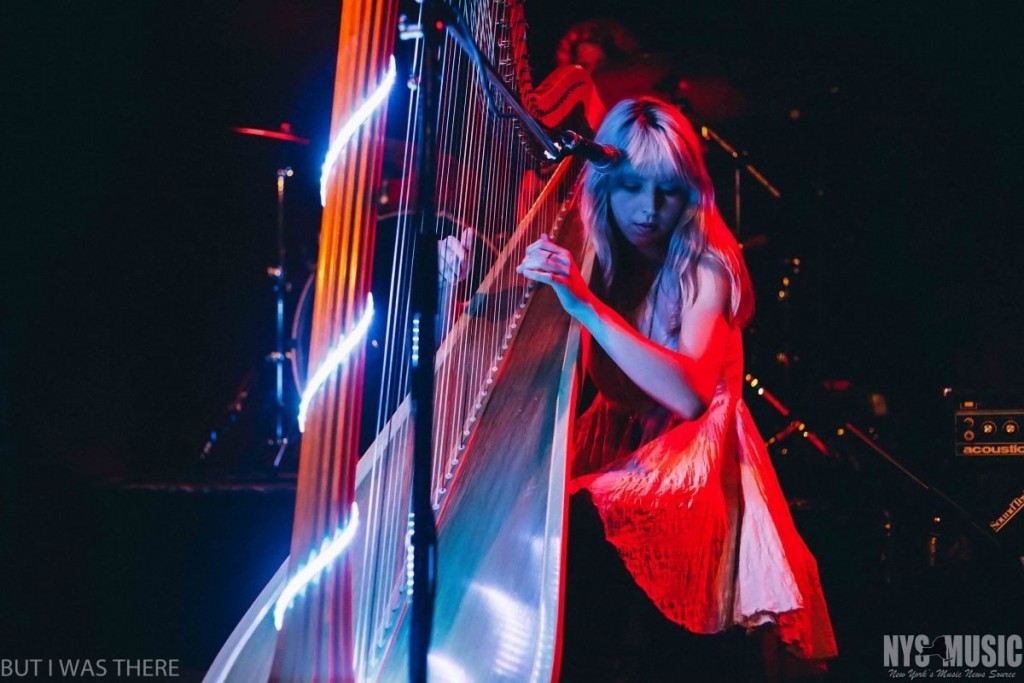
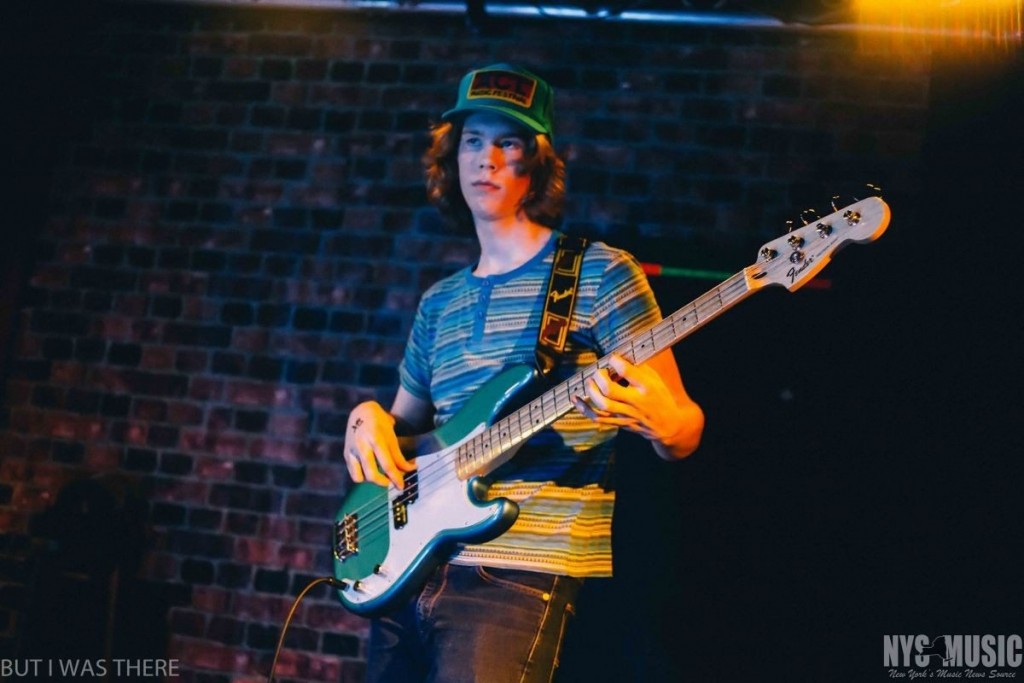
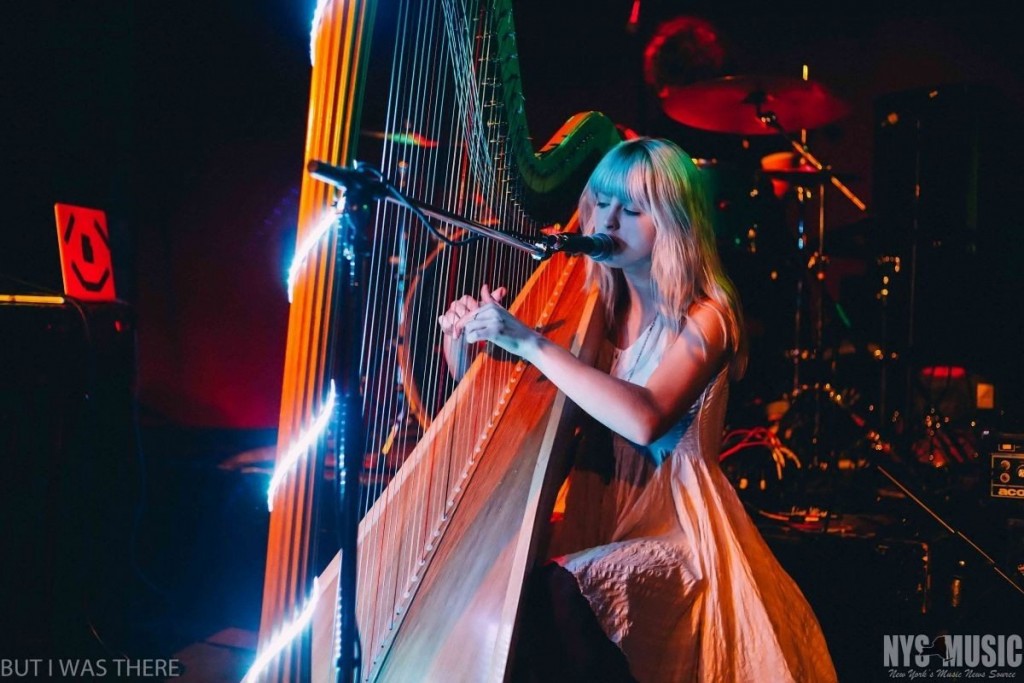
An evening of acts defying easy categorization at the Montage Music Hall on May 12 began with Rochester-born Mikaela Davis and her harp-led melodies. Her band, whittled to a trio from its usual quartet format, consisted of Alex Coté on drums and Shane McCarthy on bass. The lack of guitar pushed the harp to an even more prominent position in the music, and “Other Lover,” off a special tour sampler CD, was a slow groover with a nifty mid-song breakdown. Coté shined early and often, taking control both in backing and leading positions. The magnificently exotic (particularly to the Montage stage) harp was adorned not only with spiraling LED lights, but with many effects pedals as well, pushing its sound into strange and different spaces.
After the set closed with, “In My Groove,” a brand new song, ironically about needing to write a new song, the opening band found itself in the unusual position of being called back for an encore. They hesitantly took the stage, and with nothing prepared, they winged a cover of Gillan Welch’s “Caleb Meyer” — nice choice, nice execution and impressive all around.
Davis mentioned that in the trio format she felt they were resembling Marco’s band, with the bass, drums and said that there was pretty much a harp sitting inside the piano. It certainly rings true with the unique approaches they take to their instruments.
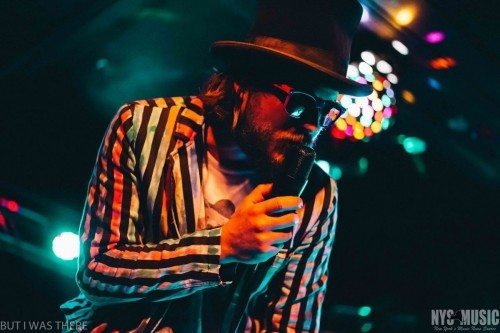
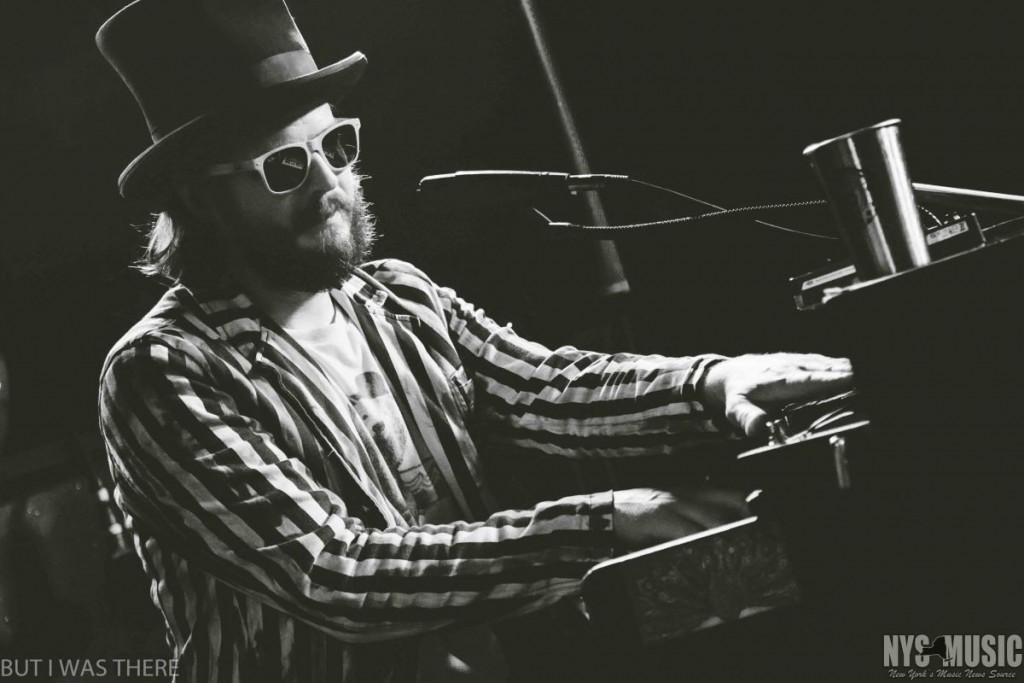
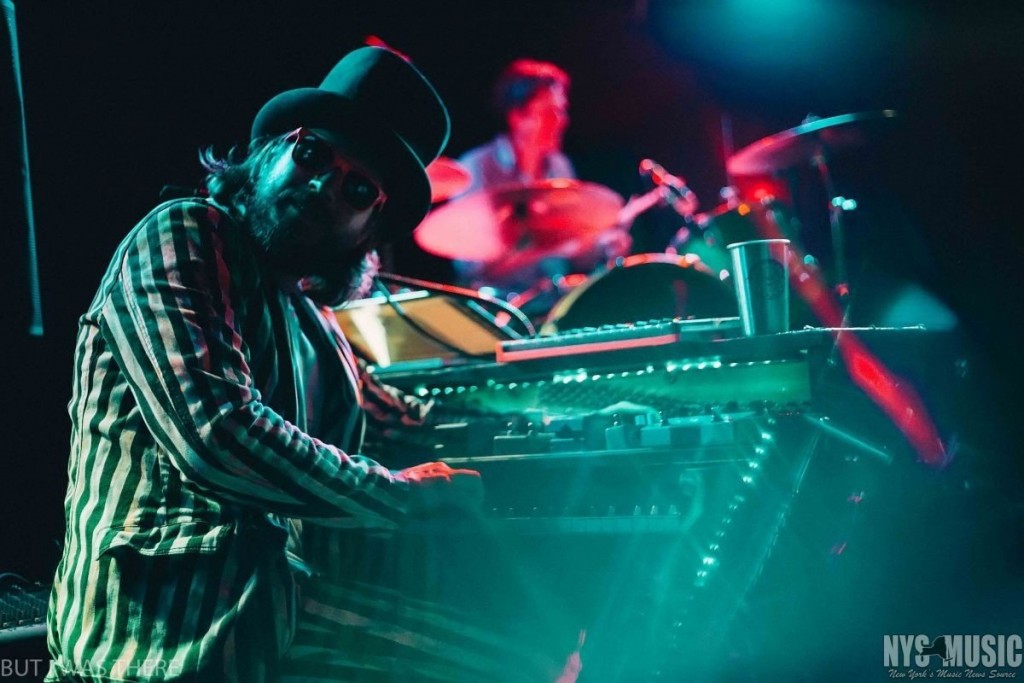
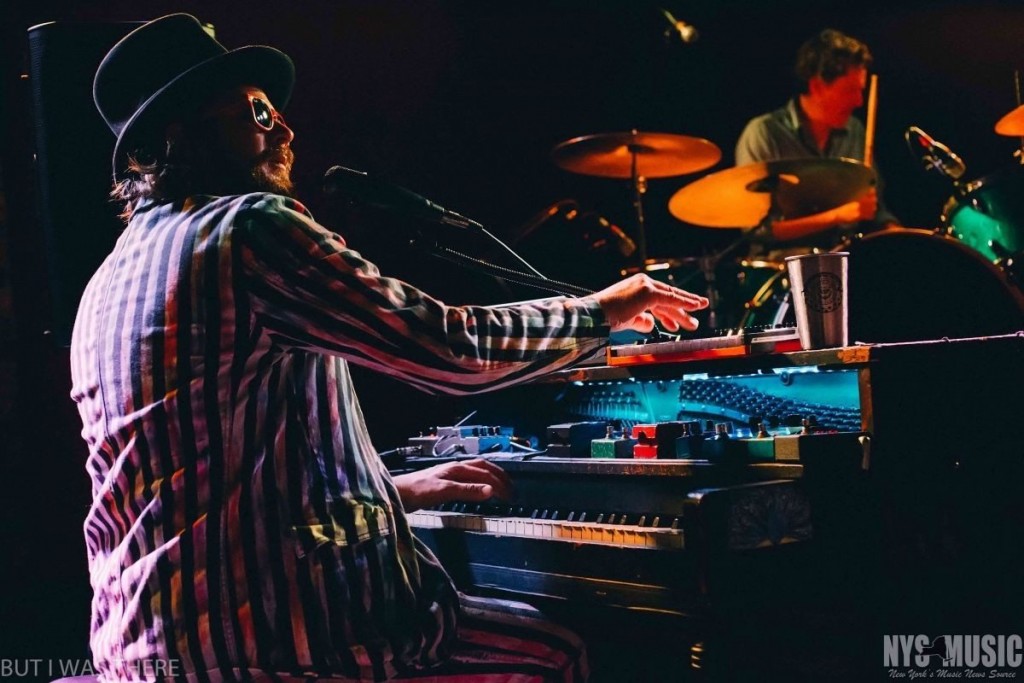
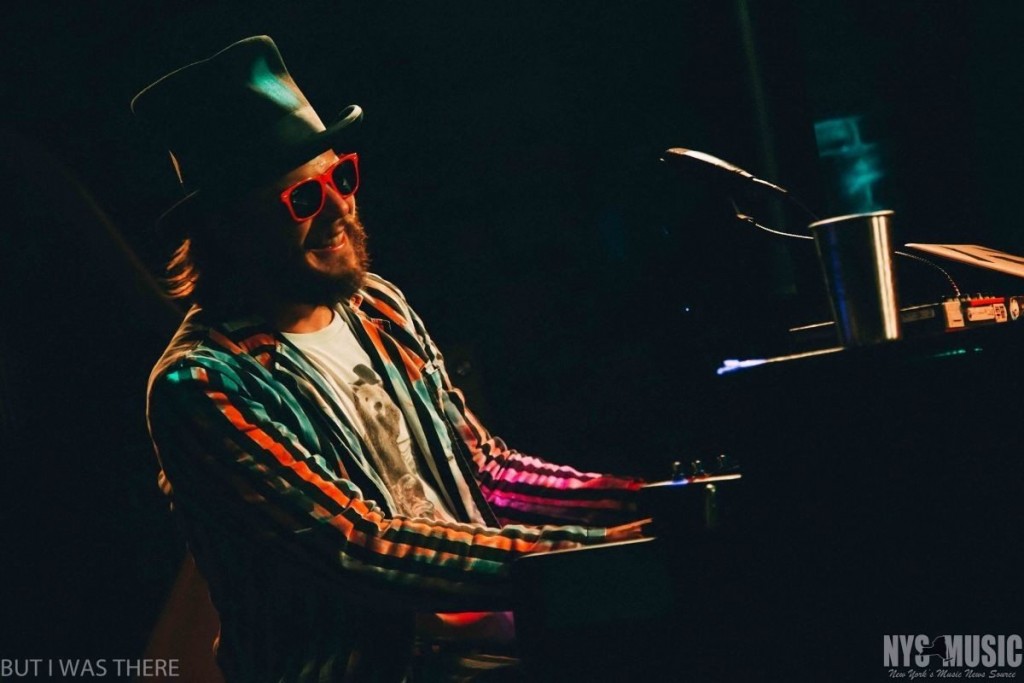
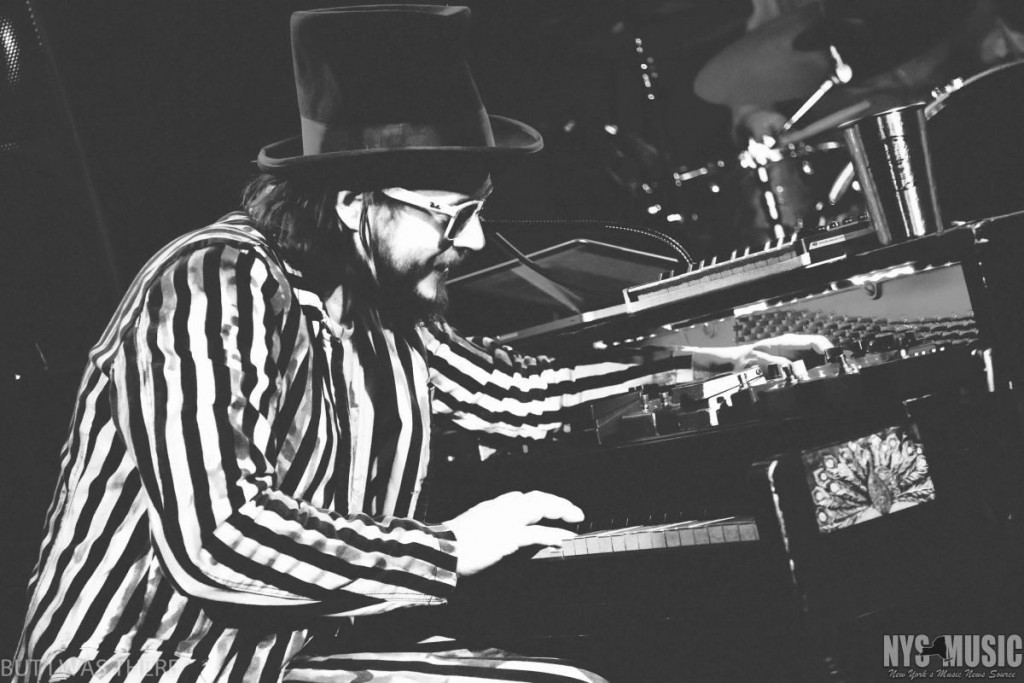
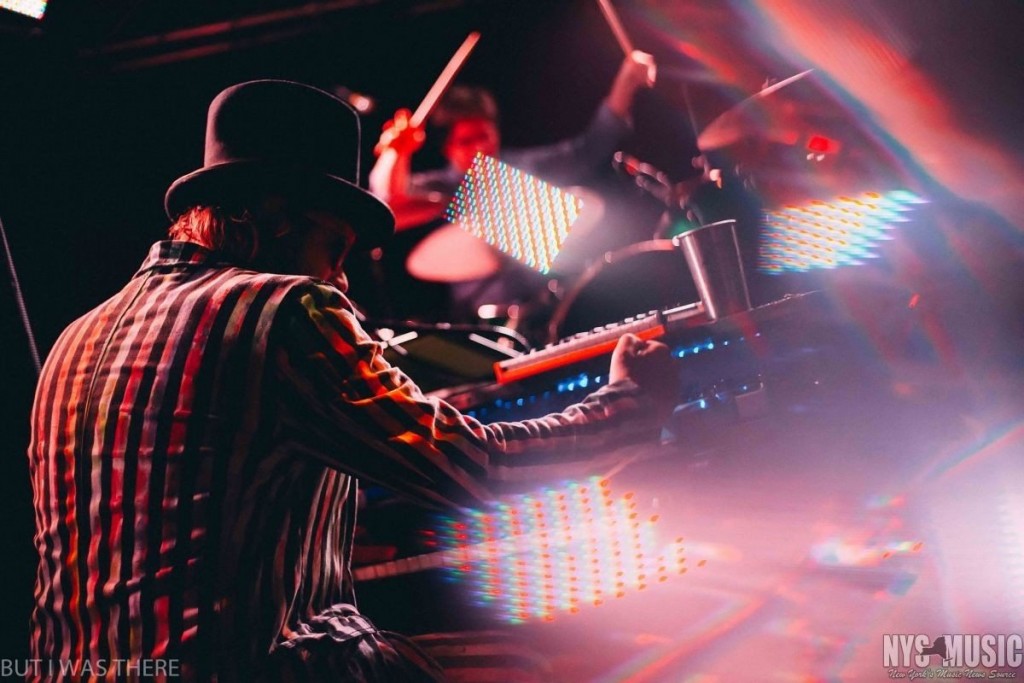
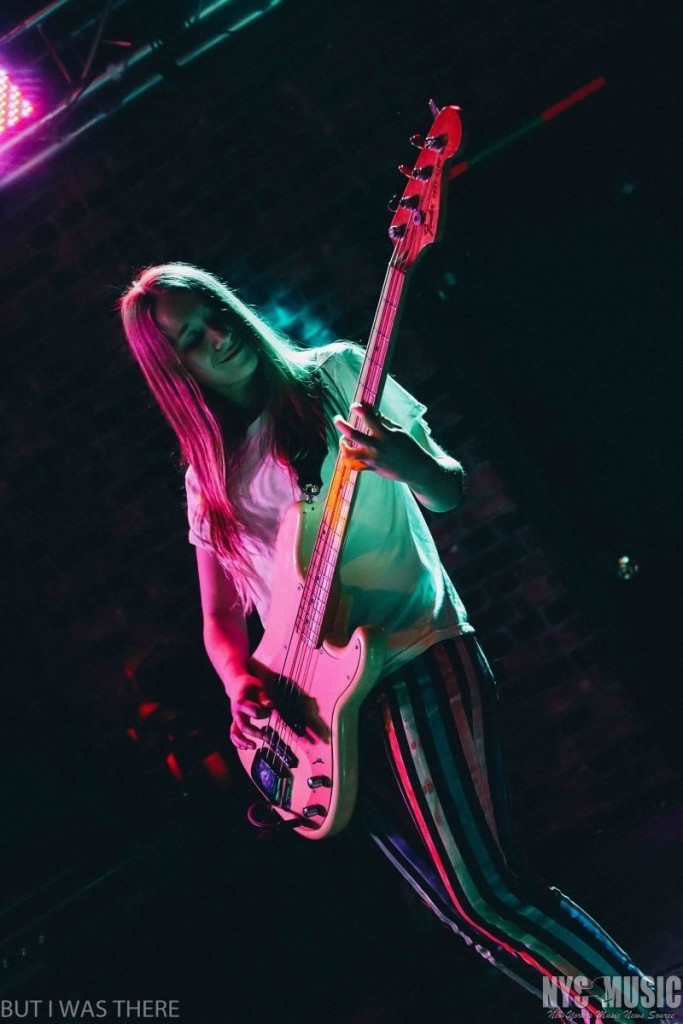
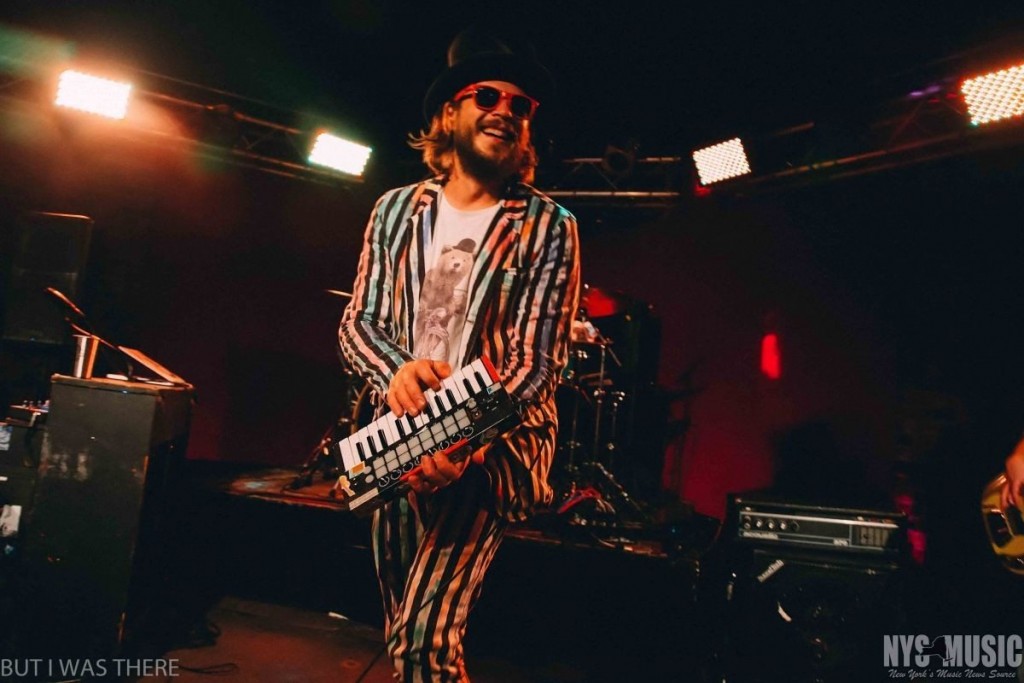
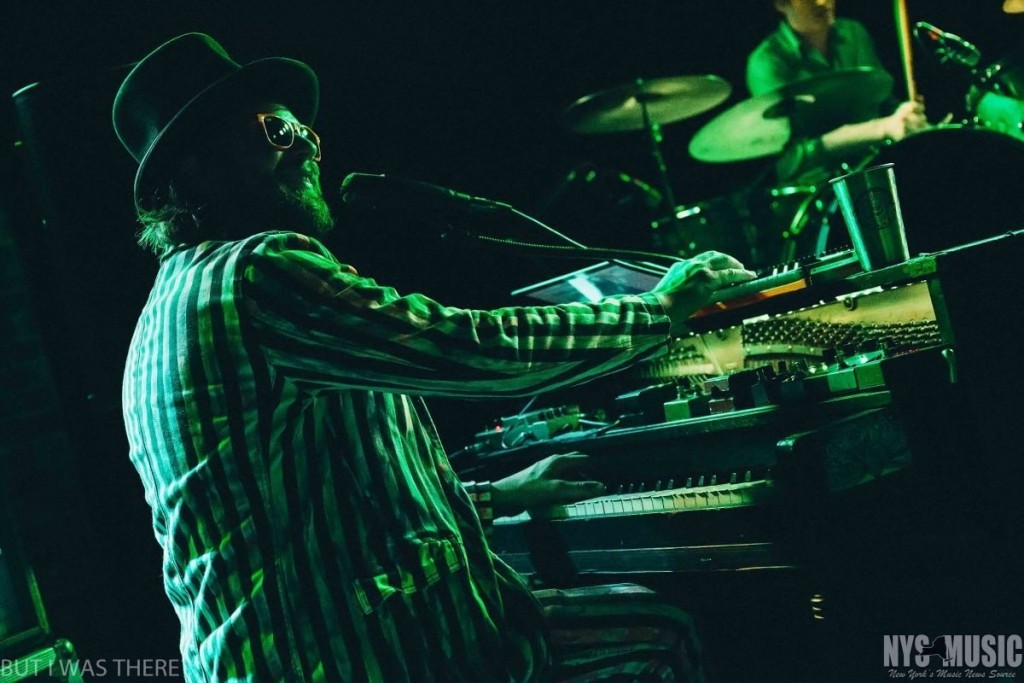
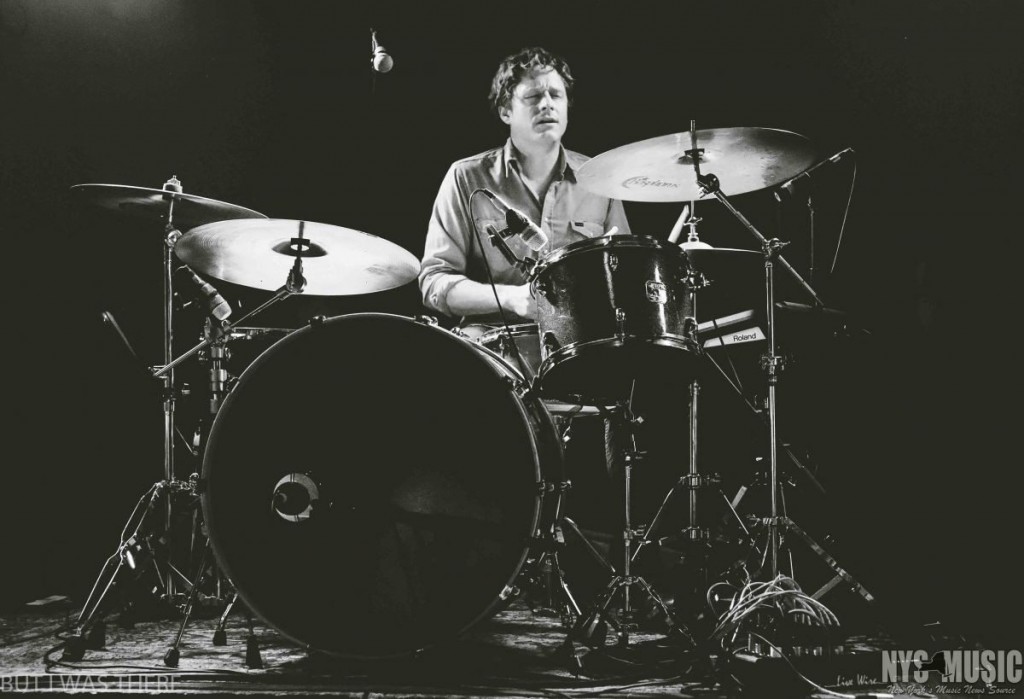
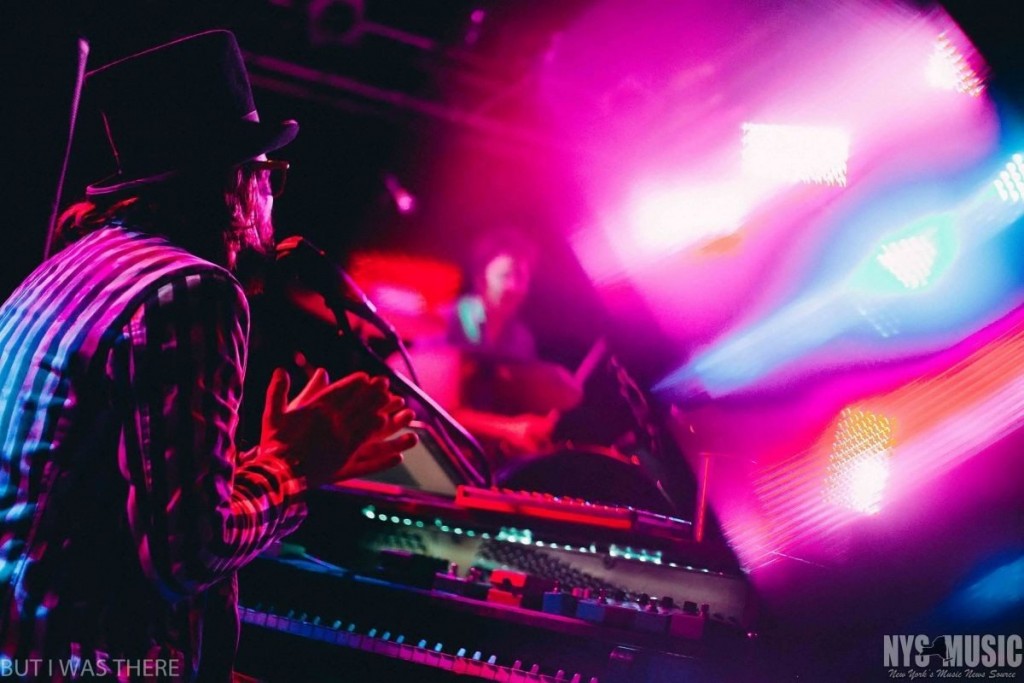
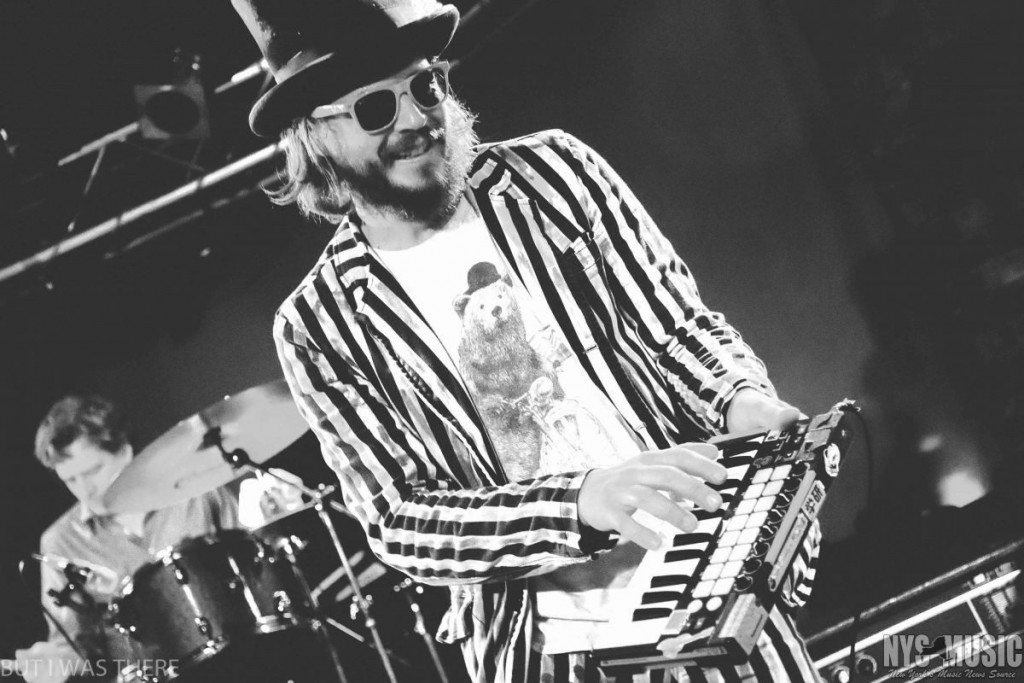
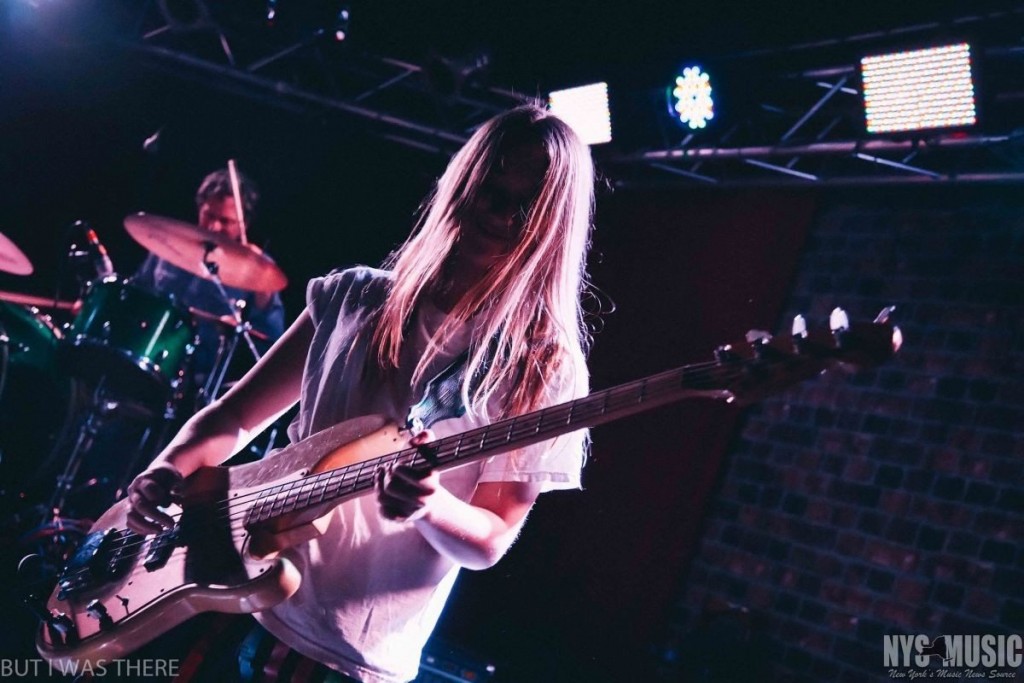
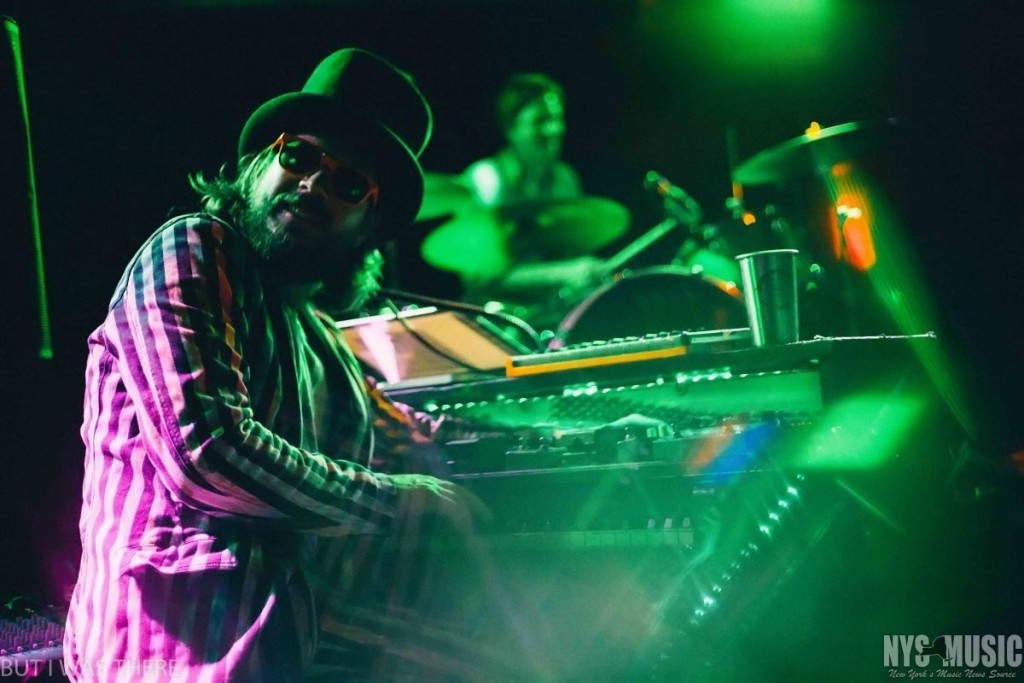
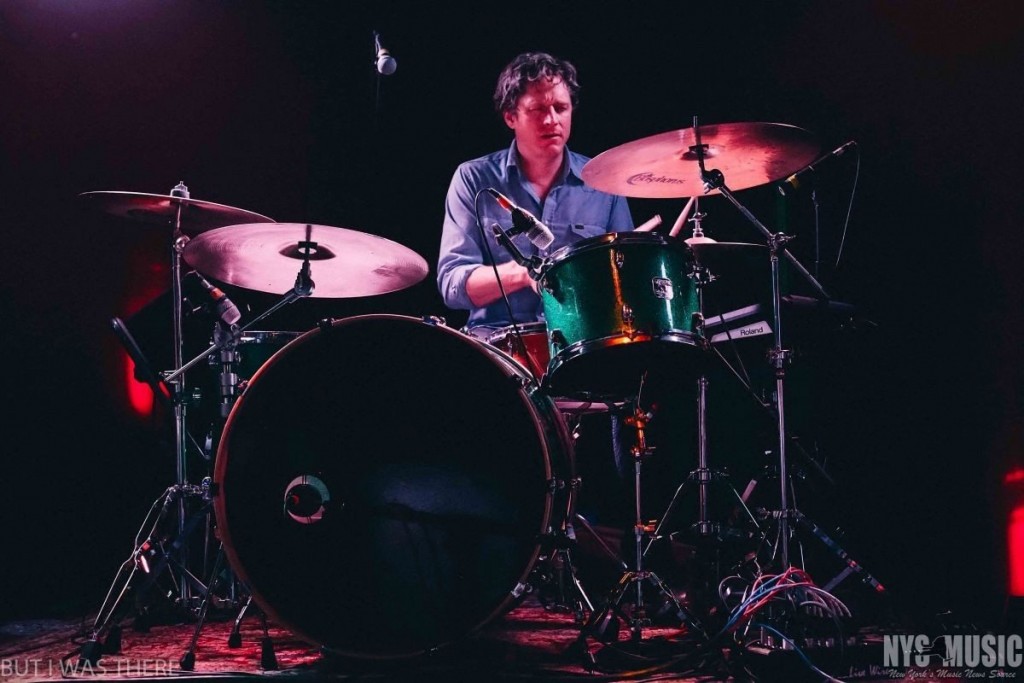
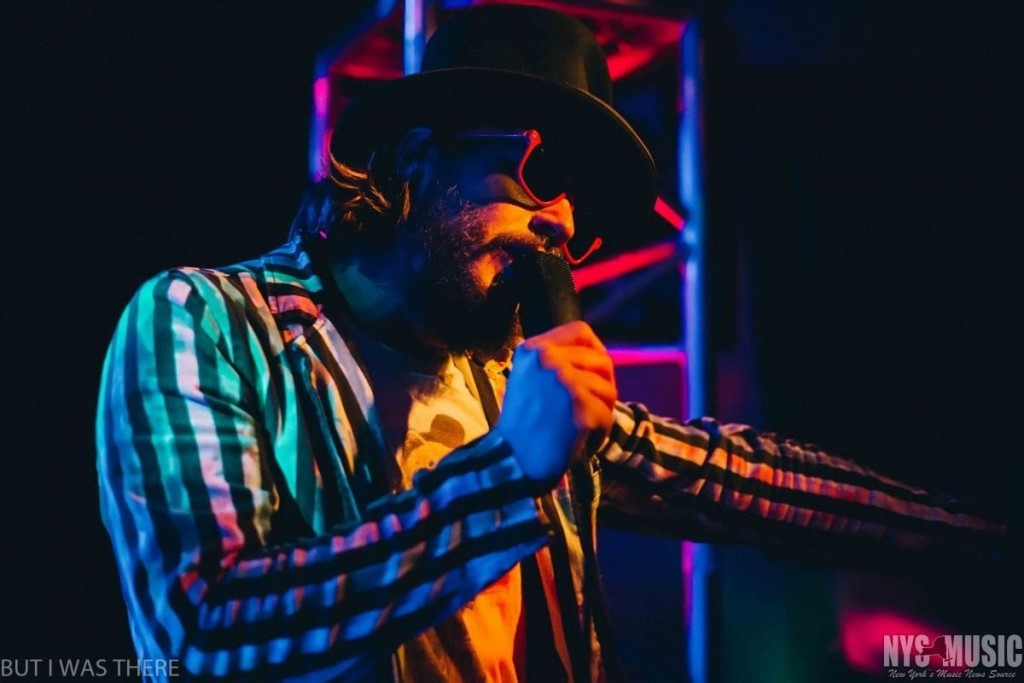
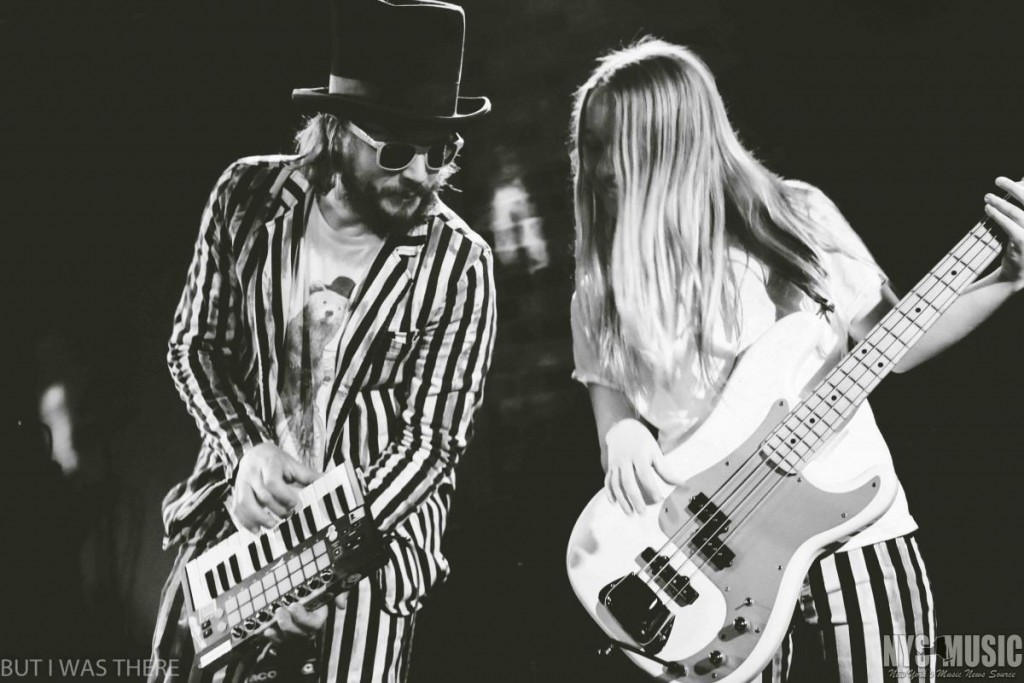
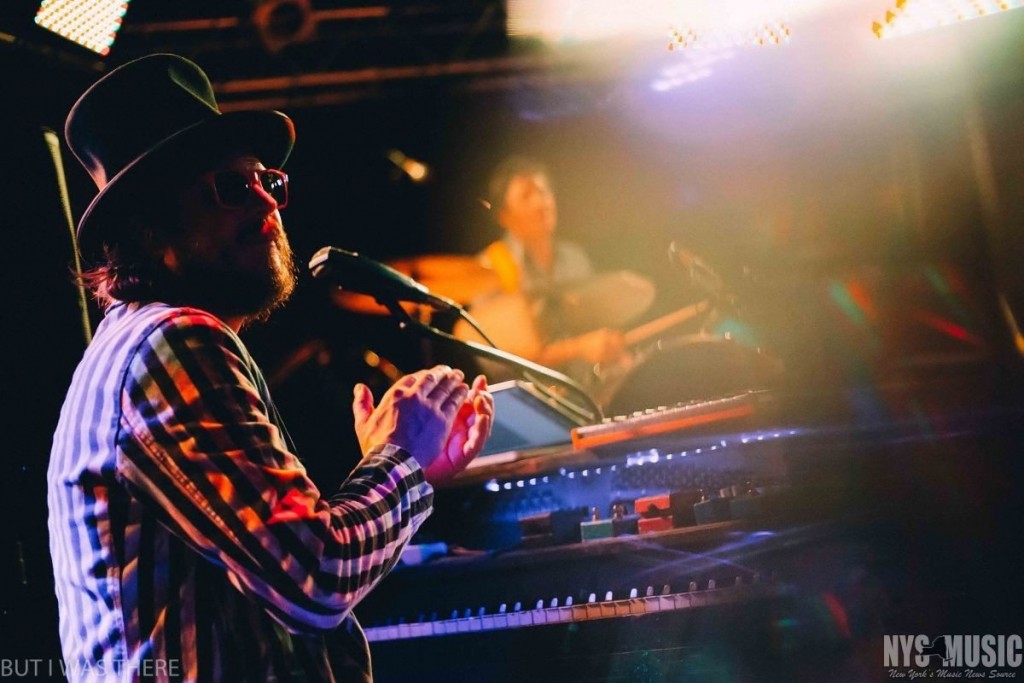
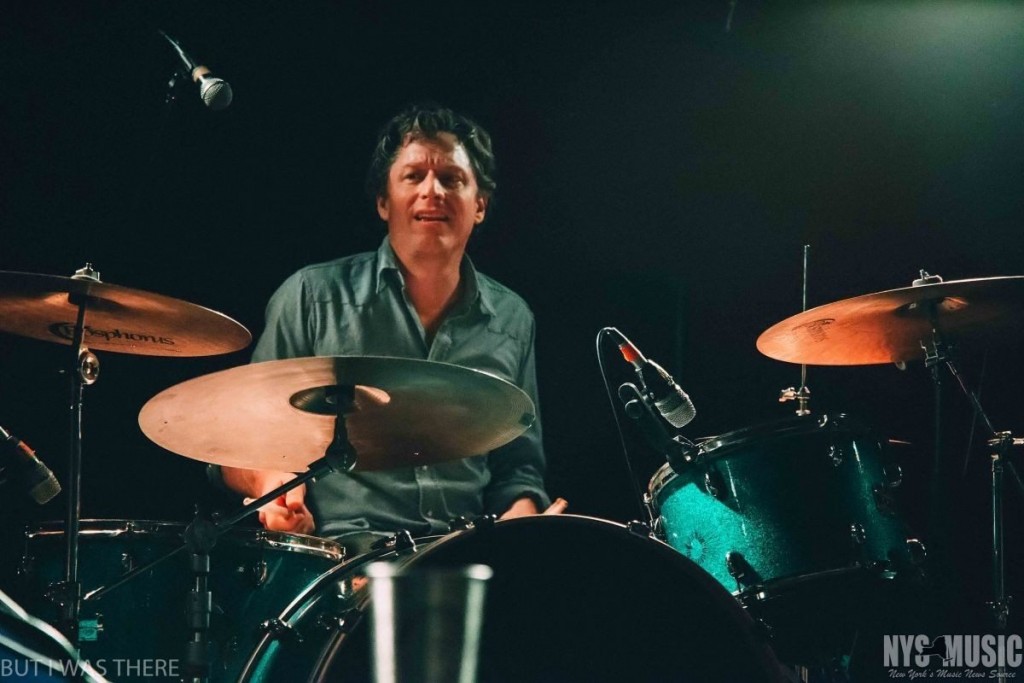
Davis wasn’t the only one playing with a modified band. Karina Rykman was filling in on bass for Dave Dreiwitz in Marco Benevento’s band. She matched Dave’s signature smile and bass stylings perfectly, while filling out striped pants that complemented Marco’s candyman-meets-madman outfit better than Dave ever could. Andy Borger maintained his spot behind the kit, as he has for a handful of years.
When Marco introduced the band, he also introduced the audience to his piano, Gibbs. It fittingly shares a name with the street just around the corner from the venue, where the famous Eastman School of Music resides. The piano was a $100 purchase off of CraigsList, which to put it mildly, has been slightly modified to Benevento’s tastes.
Touring behind his freshest release, The Story of Fred Short, the band kicked right into the new material with a set-opening take on the infectiously catchy “Dropkick.” Moving back in time they continued with “If I Get To See You At All” off Swift and then”Atari” from Invisible Baby.
It was right back to the present with the full presentation of the side B conceptual Fred Short suite of songs. This was pulled off brilliantly with special sound and lighting effects and the works. The “Stay in Line” section was particularly fiery. Borger and Rykman took charge and pounded it into submission.
But “The Real Morning Party” had only just begun, with ripping versions of a by-request “RISD,” “The Knife’s “Heartbeats” and “Limbs of A Pine” that featured a quick return into “Dropkick.” The 90-minute set finished up with the whole crowd singing along to “At the Show.”
The show came full circle during the encore as Mikaela Davis re-emerged. The modified harp and the modified piano played side-by-side for rollicking takes on David Bowie’s “Heroes” and the Rolling Stones’ “Let’s Spend the Night Together.”
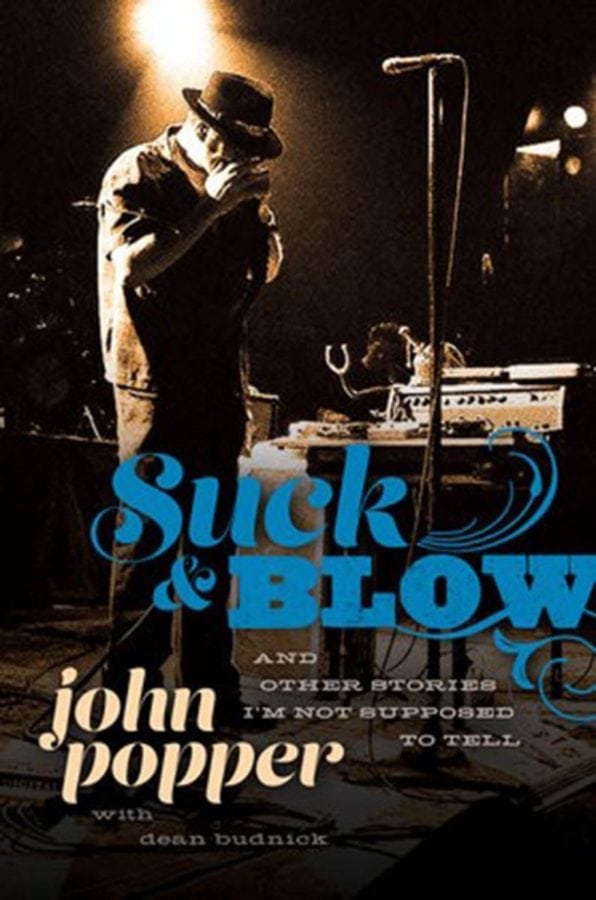
John Popper, best known for his mean harmonica skills, and being the front man of Blues Traveler, really lets it all hang out in his new autobiography, Suck and Blow: And Other Stories I’m Not Supposed To Tell, written by Popper with Dean Budnick.
If Popper had not made it big on the stage as a musician, he probably would have done well as a comedian. Suck and Blow is splayed with hysterical moments that will make others around you wonder what’s so funny. This book is highly recommended to be read in public places, such as on a crowded train, a cross-country flight, or perhaps waiting in a long line to use the ladies rest room. Why? Because the stories within will make you burst out in random displays of laughter. Any attempts to keep it in will just result in a contorted face and the appearance of tears for unknown reasons. Do yourself a favor, read this book and get ready to release the Kracken of hysterics.
Suck and Blow begins with Popper’s adventures when he was young. He clearly regarded school as just a place to go and think of new ways to enjoy the day. His antics in the classroom, which were rare appearances, resulted in convincing adults that more time out of the class room was the way to go. His brilliant hold on the psychology of humans at such an early age did well for him as he, and Blues Traveler, eventually came up through the ranks of the music world.
His book also unfolds the mystery of how he was first introduced to the harmonica, and discusses how he later goes on to severely crush several top musicians on stage with his masterful hold of the instrument during performances.
Like many musicians, Popper was just winging it as Blues Traveler gained success over the years. That winging it included heated arguments, a few thrown punches, and a lot of rock and roll shenanigans that prevailed. Did you know that Gregg Allman wanted to be a part of Blues Traveler? Well, neither did Gregg Allman, apparently, who would repeatedly say that he needed to be a part of the band while drunk.
The moments were fleeting, as the morning after resulted in him forgetting he even asked. These rare glimpses of truth bring readers the crazy stories that happened behind the scenes, backstage, in the van, and on the side of the road.
The book is not all humor, however. There are occasions of cinching heartache. Bill Graham’s death sent shock waves throughout the industry. Best known for his involvement with the Grateful Dead, Graham was an integral part of Blues Traveler’s early years. The moment the band hears of his death is gripping and, with each page, the sorrow and heartbreak is felt through Popper’s commanding use of the written word. Have tissues readily available, as this chapter of life will tear at the heartstrings, however, don’t be surprised when someone gets punched in the face while mourning.
Suck and Blow also winds through evolutionary tales of how songs were borne from various experiences of John Popper. If this book were a song, it would be a symphonic masterpiece, as each page brings the audience back to the melodies of popular tunes, while shedding light on how those tunes were created. The candid stories weaved throughout make this a “can’t put down” read.
For a vivid look at the life of a musician, run out and get this book. It will make your day, week and year. The humor, heartache, and just plain craziness that John Popper has experienced will make this story seem unreal, yet every shred of it is true.
 On June 3, festival-goers awoke in their tents, RVs, and hotel rooms to a beautiful day ahead. The temperature was in the low 60s, there was some light comfortable wind blowing through the mesh of tents, and some clouds in the sky, which kept the sun from waking people up hot and sweaty. Most importantly, there was the first full day of Mountain Jam 2016 ahead.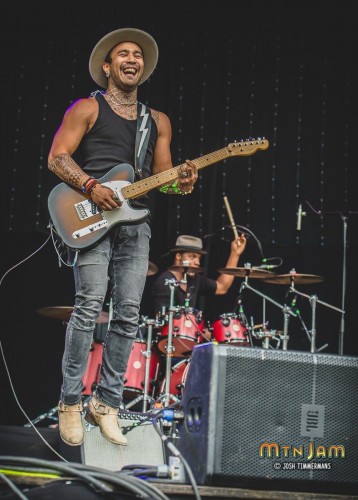

 To any Dead Heads that need their fix, this show is not to be missed. It’s been more than 20 years since
 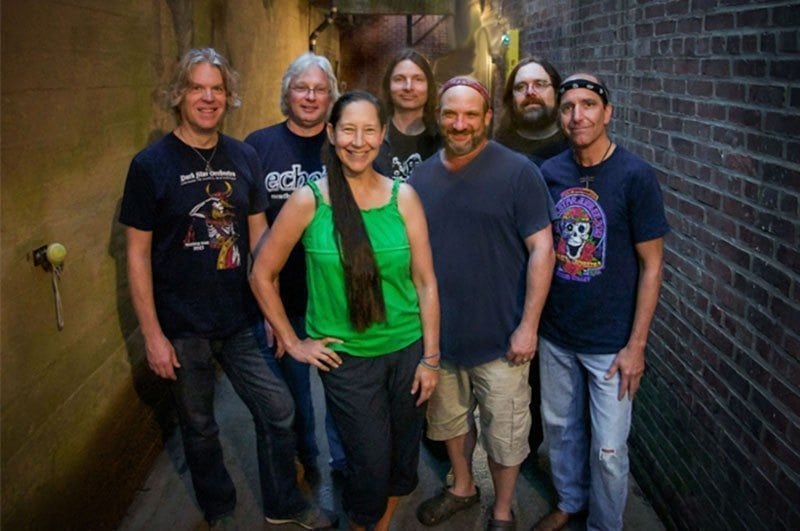 Dark Star Orchestera has had a slightly changing line up throughout its existence; the current band members include Rob Barraco (keys/vocals), Rob Eaton (guitar/vocals), Dino English (drums/percussion), Rob Koritz (drums/percussion), Lisa Mackey (vocals), Jeff Mattson (guitar/vocals) and Skip Vangelas (bass/vocals), and look forward to their return to Town Ballroom.

 An evening of acts defying easy categorization at the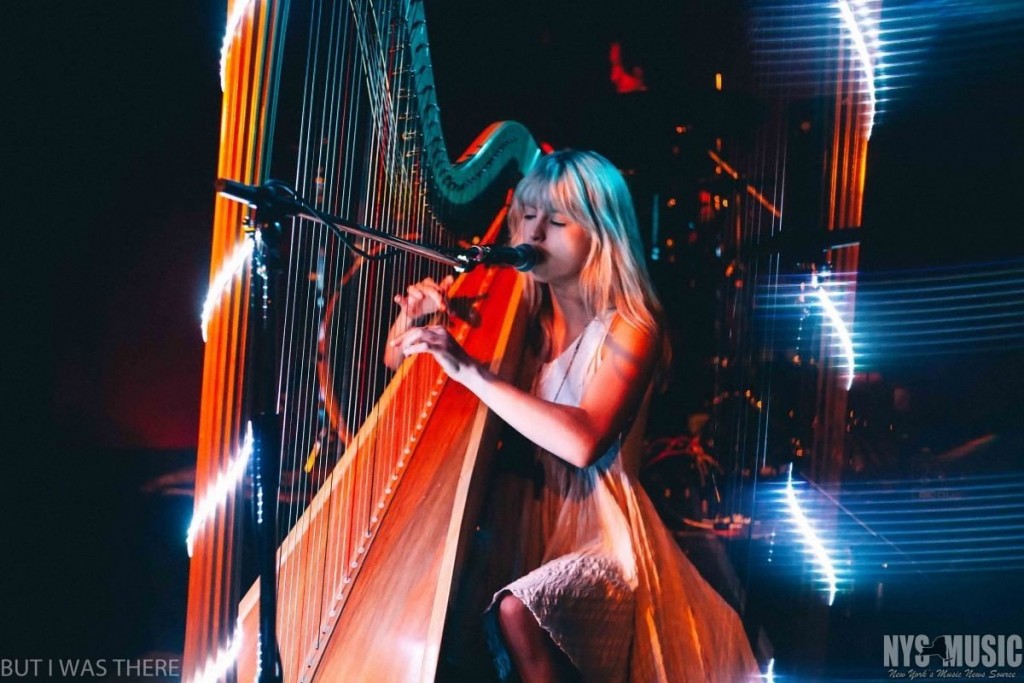






 Suck and Blow begins with Popper’s adventures when he was young. He clearly regarded school as just a place to go and think of new ways to enjoy the day. His antics in the classroom, which were rare appearances, resulted in convincing adults that more time out of the class room was the way to go. His brilliant hold on the psychology of humans at such an early age did well for him as he, and Blues Traveler, eventually came up through the ranks of the music world.