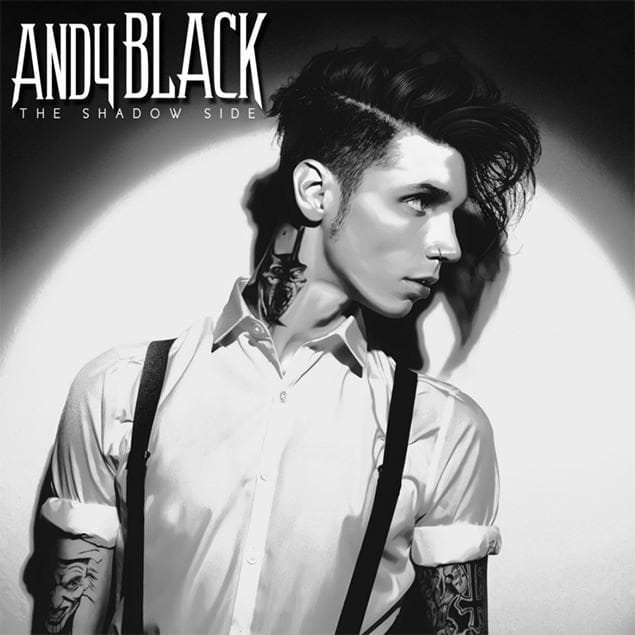
Andy Black, also known as Andy Biersack or Andy Sixx, is the lead singer and one of the founding members of the band Black Veil Brides. On May 6,Andy Black released his first solo debut album called The Shadow Side.
While Black’s fans are normally used to hearing him sing hard rock or metalcore styled music he is taking is solo debut in a different direction. The Shadow Side is comprised of a much more of a pop-rock sound than we’re used to hearing from Black.
The album starts out with the song “Homecoming King.” This is the longest song on the album at four minutes and fifty-six seconds. It’s a bit of a more relaxed song to help ease us into the transition of the different genres. His low raspy voice is great blend with the background instruments, there’s a nice blend between his voice and the percussion.
As the album moves on it begins to pick up in beat with the next song “We Don’t Have to Dance.” This was Black’s first released solo single from the album. This is one of the most pop sounding songs on the album and already has music video with over seven million views.
Andy Black’s dark voice is only more complimented by the pop-rock music performed on the song “Louder Than Your Love.” It’s another upbeat song towards the end if the album that kind of wants to make you get up and dance. The album rounds out at the end with the songs “Broken Pieces” and “The Void.” Both of these songs are more deep and musically relaxed than the rest of the album. Black’s raspy voice is a good contrast to the piano in “The Void,” giving the song that pop-rock sound.
The whole album is a bit of a different direction for Andy Black, hopefully it’ll pay off in the way he wants. Black will be touring the entire The Shadow Side album starting in the UK on May 10. He will be playing a show at the Highline Ballroom on May 27 in New York.
Key Tracks: Homecoming King, We Don’t Have To Dance, and Stay Alive
Iowa based Christopher the Conquered’s first full-length album I’m Giving Up On Rock and Roll, released May 13, is made up of personal lyrics, powerful vocals and theatrics that are hard to match to any of his contemporaries. While listening to the album, one can often draw parallels to Elton John and Billy Joel, while the lyrics, drawing upon universal themes and experiences, are occasionally reminiscent of Ben Folds. Despite these attempts at drawing parallels, in the end, the sound is uniquely that of Christopher the Conquered, leaving the listener sold from the first track.
The nine-track record opens with the song “I’m Giving Up on Rock and Roll,” complete with powerful vocals reminiscent of Allen Stone and gospel-like background singers, before slowing down to only Christopher’s voice. Christopher has explained that the song ultimately is about giving up on the idea of living behind a facade and misrepresenting oneself, adding that the person he wants to be onstage is the same person he wants to be offstage. Ultimately, one begins to see the truth behind this sentiment in the lyrics throughout the album.
In the second track, “Mystery,” Christopher sings: “I’ve been thinking a lot these days about how life’s not really real/We all wanna believe it’s there/but it’s just this thing meant to conceal/The fear we have about our end and what it’s gonna do with us.” With lyrics such as these, he perhaps emphasizes a universal feeling many have experienced but do not often articulate.
In the following song, “On My Final Day,” Christopher highlights the realization — or fear — of what people will say once he’s gone. He sings, “I just tried to share what I found to be the truth/But no one wants to listen when they know they know it, too.” These seem to be the key lyrics to the album, continuing the lyrical themes grounded in shared experience and struggle.
The middle of the album slows the tempo down, sidestepping previous themes to discuss love and relationships. The song “Everybody Rains,” stands out because of the upbeat piano and positive feeling it creates in the listener, blending thematically with the following “Be A Good Person.”
The album ends on a humorous, tongue-in-cheek note with “I’m Not That Famous Yet.” Lyrically, this album is memorable due to its honesty, while its sound feels simultaneously retro and contemporary.
Christopher the Conquered is currently on tour in support of his latest release. He has two New York dates: Aug. 4 at Mercury Lounge in New York City, and Aug. 6 at Amityville Music Hall.
Key Tracks: I Guess My Heart’s Out of Tune Again, Everybody Rains, On My Final Day
Clutch is one of the headliners for the Rock ‘N Derby Festival, taking place in Schaghticoke May 20-22 and is currently on tour with Lamb of God and Corrosion of Conformity. NYS Music recently had a chance to sit down with the man who keeps the beat for the venerable Clutch, Jean-Paul Gaster.
When you’re in high school, you probably have a group of friends that you swear you’ll be tight with until the end of days. Perhaps that group of friends forms a band in someone’s garage or your parents’ basement. An oath is taken among yourselves that you’ll always be a band, no matter what.
Odds are, that high school band probably doesn’t make it through graduation. Sometimes though, it does. All of a sudden, 25-26 years later, you look out in front of you during a show at say, Upstate Concert Hall, and see one of the guys you made that pact with oh-so-long ago, accompanying you in the rhythm section of one of rock’s longest running lineups.
If your name is Jean-Paul Gaster, and you play drums in the Frederick, MD based band Clutch, that buddy you’re looking at is your high school pal and band mate, bassist Dan Maines.
Clutch’s foundation can be traced back to the halls of Seneca Valley High School in Germantown, MD, where the members of the band met. Gaster, Maines and guitarist Tim Sult got together to form Clutch in 1991. Original vocalist Roger Smalls left the band shortly after formation and was replaced by another friend, Neil Fallon. The band has been going strong ever since.
Gaster is a drummer’s drummer and a student of the instrument. We spoke at length about Clutch’s longevity and influence; the value of side projects; the festival scene and drumming as a mental exercise.
Mike Kohli: One of the things I’ve noticed with you guys – I’ve seen you perform a few times over the past couple years – is the way you interact with each other. I know you’re all friends from high school. Is that something that comes naturally? Do you just kind of give each other a look onstage and go with it? How’s the onstage chemistry work?
Jean-Paul Gaster: Yeah, there’s definitely a lot of unspoken dialog going on up there. I think it just comes with playing with the same guys for so long. I think musicians do that in general . I think we’re in a unique situation because we’ve been doing it for so long. Even in the writing process, we might play for 45 minutes and there might not be a whole lot of verbal communication, sometimes none at all. But we manage to put these ideas together with sort of pointing and grunts.
MK: Kind of a universal language…
MK: When I go to shows – I’m into a lot of different types of music- but typically when I go to a show, I watch the drummer. Now, I’m by no stretch of the imagination, a drummer. I do play a mean steering wheel though.
When I caught your show with Corrosion of Conformity in Clifton Park a few months ago, watching your style, it’s got a jazzy feel to it, kind of like Bill Ward of Sabbath, Ginger Baker of Cream. You mentioned them before as big influences on you. Have you had any formal jazz training or did you teach yourself how to play?
JPG: Early on, I took a few lessons, but I never really practiced. It wasn’t until I was about 23 when I started studying with a man named Walter Salb (Click the link for a short documentary on Salb). He was a professional teacher/instructor/player in and around Washington, D.C. for many many years. He actually started playing professionally in 1946, so he was definitely from the big band/swing era.
I learned a tremendous amount of stuff from him. A lot of it was thinking about jazz and what it means to play jazz. But i think more than that, he really taught me to be a musician and to be prepared for any musical situation. He wanted his students to be able to do any kind of gig and to play that music with authority and confidence. Those kinds of lessons had a really lasting impact on me. I miss that guy. He passed away about ten years ago.
MK: I’m sorry to hear that. Sounds like he was a really big influence on you.
JPG: Yeah, he definitely was. He lived life to the fullest all the way to the end; I will say that.
MK: I’m kind of into the jamband scene, stuff like Phish and moe., those types of groups. Sometimes I’ll come across people who for whatever reason, still don’t know who Clutch is. Why that is, I don’t know. You guys have been around for such a long time and have been a big influence on a lot of bands. You’re solid, a solid rock and roll band.
However, one thing I’ve noticed about you guys, you don’t fit neatly into any one mold. You’re not a metal band. You’re not a classic rock band. You came about during the grunge era, but you don’t fit into that category. You’re kind of in-categorizable. So when I try to describe Clutch to people who haven’t heard of you guys, I tell them you’re kind of a jamband. Your setlists aren’t always the same. You do stretch stuff out. You throw some improv in there. Have you ever been involved with any of the bands in the jamband scene? Say Warren Haynes or Govt Mule…
JPG: We like those bands a lot. I’m a huge fan of the Allman Brothers, Govt Mule. Warren Haynes’ playing, I think, is just incredible. You know, a few years ago we spent a lot of time trying to break into that scene a little bit. In retrospect, I think we were still, for those folks, I think there was a little too much for them. Maybe a little too much music coming at them. So, yeah, definitely familiar with that scene. Would love to play with some bands in that scene. I think that maybe that they weren’t really ready for us at the time. But stuff changes. And hopefully we’ll be able to get our music out to some of that scene.
I think the coolest part of being in this band is that we’re able to pull from so many different genres. We’ve played with so many different kinds of bands through the years. When you come to a Clutch show, it’s really a mishmash of different kinds of music fans. And I’m very proud of that. And I think that has a lot to do with the longevity of the band and the band’s ability to draw like we do. These days, pretty much all over the world.
MK: That’s exactly what I see when I go to the shows. There are guys who look like me, just a regular everyday joe, there’s college-aged people, there’s the stereotypical headbanger looking guys…It’s really a testament to what you guys do. You can draw all different types of people.
JPG: It’s a beautiful thing.
MK: Working with Neil…when I listen to Clutch, I envision Neil’s voice, his vocal style, as another instrument in the band. But also, his lyrical style, it’s almost percussive, the way he delivers the lyrics. So he’s almost like a multi-instrumentalist in that way. How does it play with you? Do you guys get together and work lyrics out so that they have that percussive style?
JPG: I’ll say this. Neil writes all of the lyrics, which in this band is a great thing. Because, speaking for myself, my lyrics would suck (laughter). I think the last time I tried to write lyrics it was sometime in high school and it wasn’t good.
So, we are well aware of Neil’s virtuosity and talent. I think he’s probably the most talented lyricist in rock and roll today. It has to do with being able to pull from so many different sources. Much like the way we put together our music. I think a lot of bands spend a lot of time asking, “Is this our band? Is this the kind of music our band can play?” The great thing about Clutch, you can literally go up there and play whatever you want whether it’s in a live situation or getting together to write new songs. There are no rules. So in that respect, I think we’re very fortunate.
Neil Fallon of Clutch
Speaking directly to the rhythmical feel of Neil’s lyrics, I think a lot of it has come directly from hip hop. Early on, Chuck D from Public Enemy was a big influence on him. We listened to a lot of hip hop as a band in the early and mid 90s. That had a lot to do with it for sure. And as a drummer, I react to whatever is happening rhythmically within the band more so than in a melodic sense so I’m listening for those things. On Psychic Warfare for instance, I paid particularly close attention to the way Neil syncopated his lyrics and how they were swung. That gave me a lot of inspiration as to how to play that part, how to best support that vocal.
MK: That whole hip hop thing, that’s really what came across to me. His vocal style is hard driving as well as hip hop. You summed it up perfectly.
MK: Any plans for anymore Bakerton Group stuff? (The Bakerton Group is a Clutch side project that works primarily as an instrumental outfit, incorporating elements of blues and other sounds outside the typical Clutch sound.)
JPG: No immediate plans. I will say, we did have a request from someone to record one of the Bakerton Group songs. We certainly said, “Of course. Go for it!” That was an interesting request. We haven’t had that in a while. The Bakerton Group project gives us the opportunity to play a little bit differently than we do in Clutch. Mainly because it’s mostly instrumental stuff. It’s sort of a laboratory for us.
Having said that, we’ve been so busy with Clutch stuff, we really haven’t had much time to do it. We did Earth Rocker, and there was a tremendous amount of momentum that came off of that record and that’s really flowed right into Psychic Warfare. And I know we’re going to be really busy on Psychic Warfare for at least another year.
MK: That’s terrific. You guys deserve to be busy. I pre-ordered Psychic Warfare on vinyl and when it was delayed and delayed, I ran out to the nearest store and bought the CD on release day. I had it on repeat for like four days straight. I really soaked it up. It’s definitely my favorite album of 2015, to say the least.
JPG: Wow, thank you.
MK: Festival season is heating up. Do you enjoy the festival circuit?
JPG: Festivals are fun because you get to play with a lot of bands that you normally wouldn’t play with. And more importantly, there are lot of folks there who don’t necessarily know about Clutch who will be given the opportunity to check us out.
MK: Do you get to mingle a lot with other bands when you play festivals?
JPG: Sure. Sometimes you run into old friends. Sometimes you make new friends. It’s always a good time. And it’s nice to be outside and not so much in a rock venue. It’s a different kind of environment, when you spend 6 or 7 nights a week in the dark theaters and clubs, it’s nice to get outdoors.
MK: Is King Hobo (another Gaster side project with the motto: “Get funky or get out.”) still a thing? I know it has to be tough to get together with Per Wiberg (keyboardist) from Opeth and Thomas Andersson from Kamchatka. Do you still work on stuff with those guys?
JPG: Sure. There’s some new stuff in the works with those guys. That was an incredible time to be able to go over there (The band recorded at Wiberg’s home in Sweden in 2005.) and record with Thomas and Per. I try to do as much of that as I can.
You know, with every side project, at the end of the day, all that energy ultimately comes back and makes Clutch a better thing. Every time you play with somebody new you’re going to learn something. There’s gonna be some energy there that you pick up on that’s gonna eventually translate back to your day gig, which for us, is Clutch.
MK: Do you do stuff over the Internet? Throw a few tracks in Dropbox and go back and forth with it?
JPG: Yeah, we definitely do that kind of thing. It’s great to be able to take advantage of the technology available to us. We weren’t able to do that 10-15 years ago.
MK: What do you listen to when you’re just going about your day?
JPG: I listen to all kinds of stuff. I’ve been listening a lot recently to Miles Davis’ Live at the Cellar Door. It’s the complete recordings that he eventually edited down to make Bitches Brew. Jack DeJohnette is on that record. Dave Holland is on that record. Just last night I was listening to Robert Palmer’s Sneaking Sally Through the Alley. That’s an incredibly funky record. He’s got the Meters as his backing band on that record.
MK: Yeah, yeah, that’s quite different than the Palmer who became a hit in the 80s.
JPG: I very much enjoy that recording. Really I listen to pretty much anything. The blues – Muddy Waters, B.B. King. Reggae stuff. Bob Marley and Augustus Pablo. I like dub a lot. I will say these days, I don’t listen to a lot of loud rock and roll. I do on occasion. I find myself always trying to pull influence from other stuff. And I think that’s what makes the rock and roll better.
MK: Your drum kit, I’ve noticed, is a lot of vintage equipment. Is that all you play?
JPG: I have vintage kits. I have newer kits as well. But I will say, the newer kits I have, and I’m speaking specifically about my Gretsch USA Custom kit. Really, it’s the same drum and the same design that they’ve been making for 50-60 years. There’s a lot of modern stuff out there that’s great, that sounds good.
I prefer to go with that older style tone. I don’t muffle my drums much at all. Playing a drum that’s wide open, that’s not muffled in anyway is much more difficult than playing one that’s muffled or has pillows in the bass drum. And the sound that you get out of a drum that’s wide open like that has a lot of possibility. You can get to a lot of different sounds, a lot of different dynamics depending how you hit that drum, how you address that drum in the context of what the music is.
I find that vintage drums or drums in the style of vintage drums, give me a little bit more tonal color to work with. I don’t play a big kit. I have a bass drum, two tom toms, a snare drum and a couple cymbals and that’s about it. I look to my drums to give me a lot of options. And I feel like with drums like that, they really respond to how you tune them and how you play them ultimately.
MK: Rumor has it, you’ve been known to practice on your drum pad for eight hours at a time while on the bus…
JPG: (laughter) Eight hours may be a little bit more than what really happens. I will say that when I’m out on the road, i have a practice kit and a couple of drum pads. And when you’re out there, that’s what you do 24 hours a day.
So when I wake up i think, “What do i need to do to make this the best show it can be?” I think about the drums all day long. Before sound check I try to warm up. After sound check I’ll typically get something to eat and then I’ll hit that practice kit until showtime. I’m there sometimes for three or four hours, but the time moves quickly.
Practice for me is not a tedious thing. I had an interviewer say to me one time, “I hear that you practice very often.” And i explained to him, “Sure, I’ll practice three or four hours a day sometimes.” He says, “Well, doesn’t that get boring?” (laughs) I said, “Only if you find practice boring.” I don’t. I find it to be very meditative.
There are points in the practice routine where you really reach a mental state in which time is irrelevant and you’re only considering the concept in front of you and how it relates to other stuff that you’re doing. I get a lot of enjoyment out of that. A lot of relaxation. So much of what we do now is mental. What I mean by that is, drumming has become more mental than physical for me. So, many of the exercises I’m working on are not really how fast can you hit the pad or how quickly can you play paradiddles. I’m really trying to deconstruct stuff. I’m trying to get inside the drums, subdivide things into what I haven’t done before. It’s a very mental thing for me.
MK: Well, that’s good to know. I get tired just watching you.
(laughter)
MK: I don’t want to take up too much more of your time, just one more thing: A buddy of mine, who went to the show with me back in October, wanted me to mention something to you. He’s been home brewing for a while and is on the verge of opening a brewery here in our town. He said, “If Clutch plays opening night of the brewery, I will close the doors the next day. It cannot be topped.”
(laughter)
You guys wanna call his bluff?
JPG: (laughter) Ha ha, no. But we’ll take some of his beer.
MK: Nice. OK, I’ll let him know.
MK: Thanks for taking time to speak with NYS Music. Good luck with the rest of the tour and keep on rockin’.
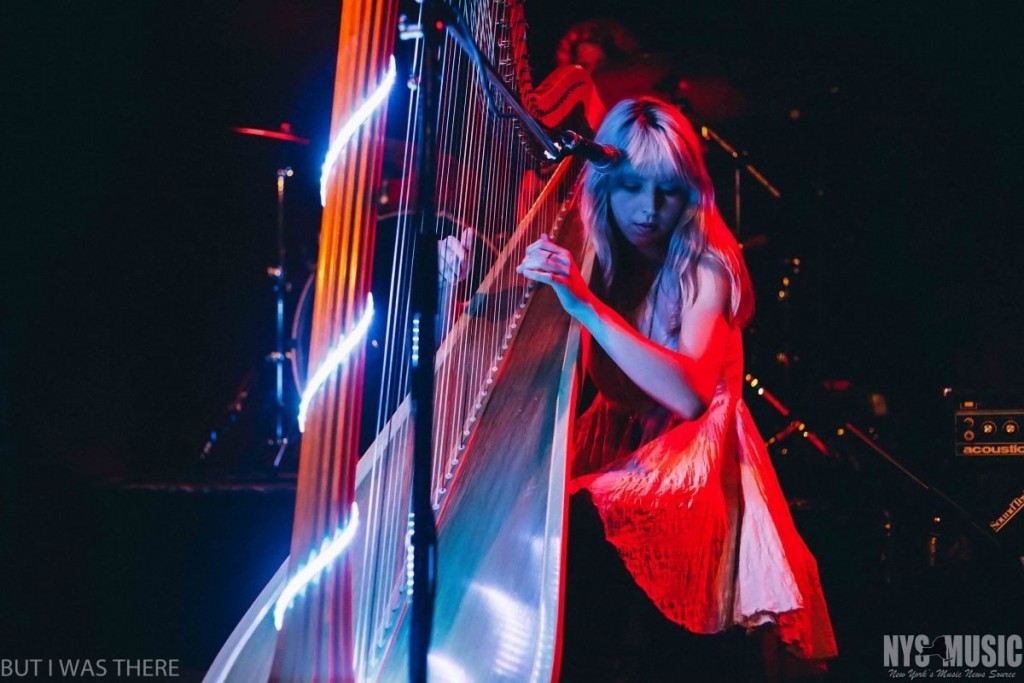
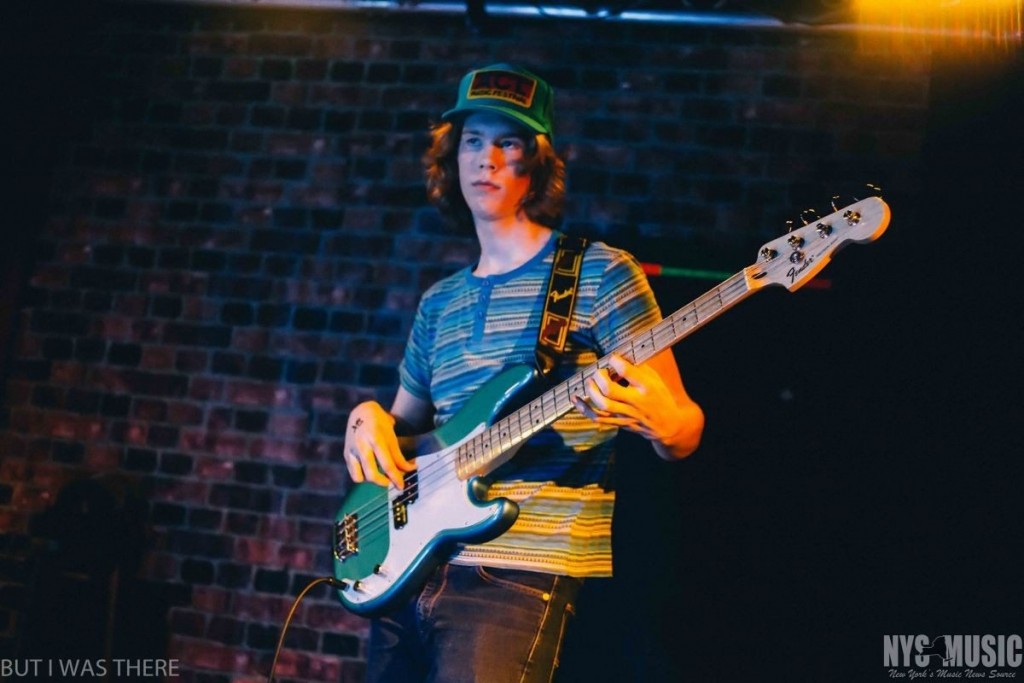
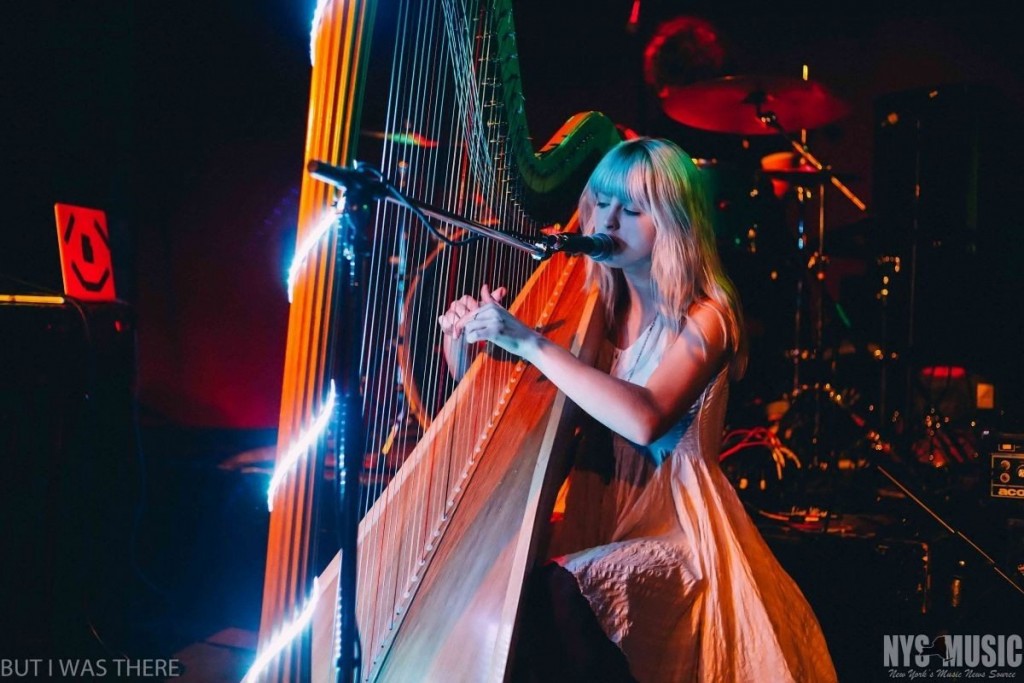
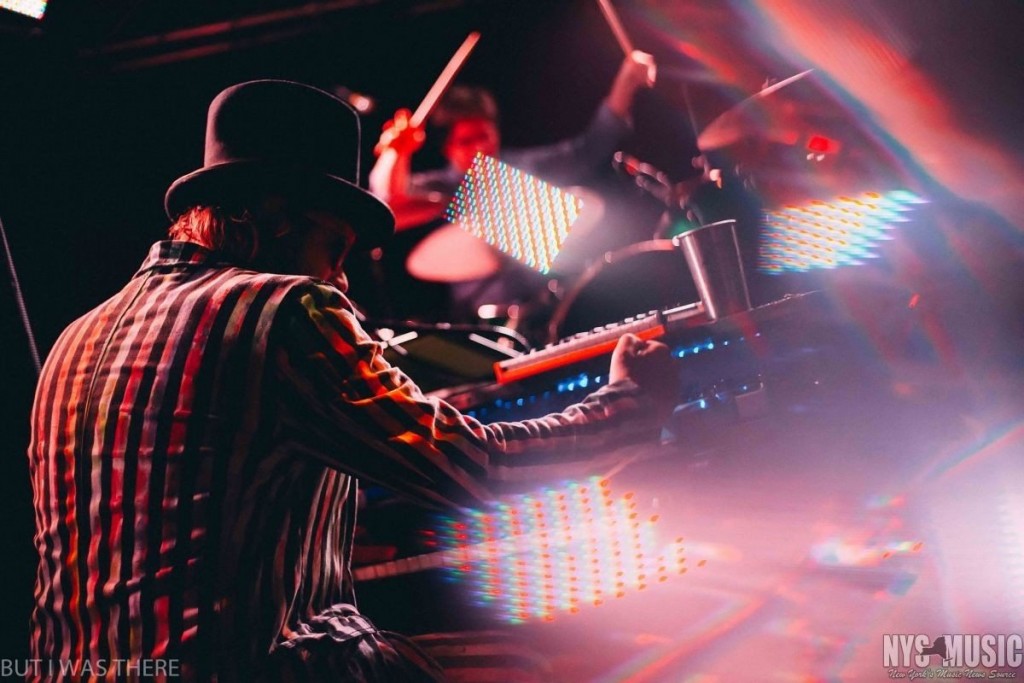
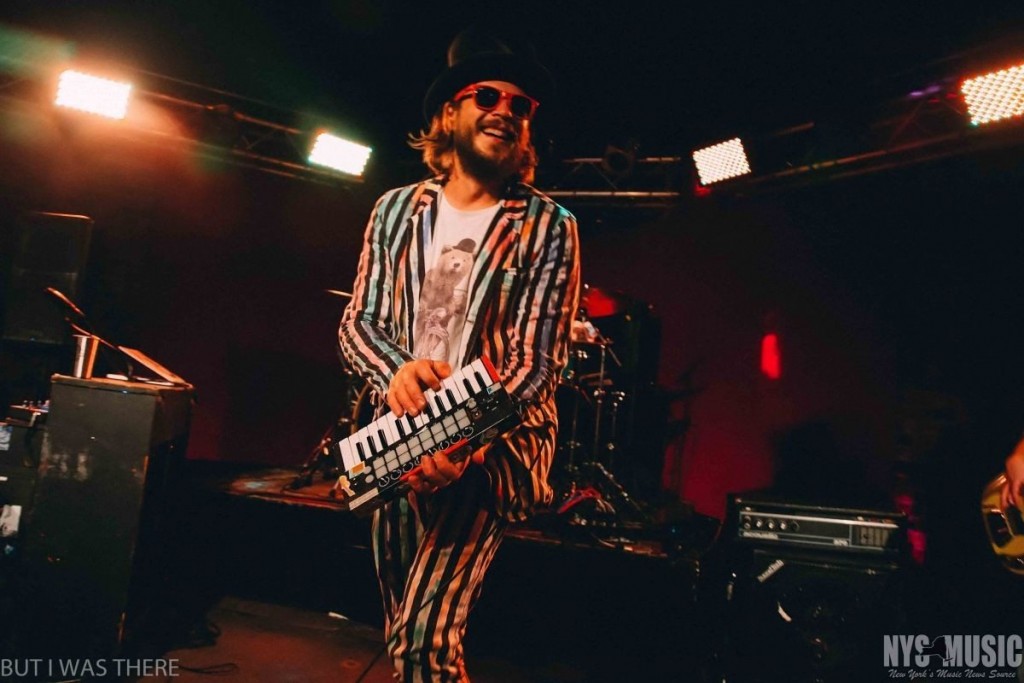
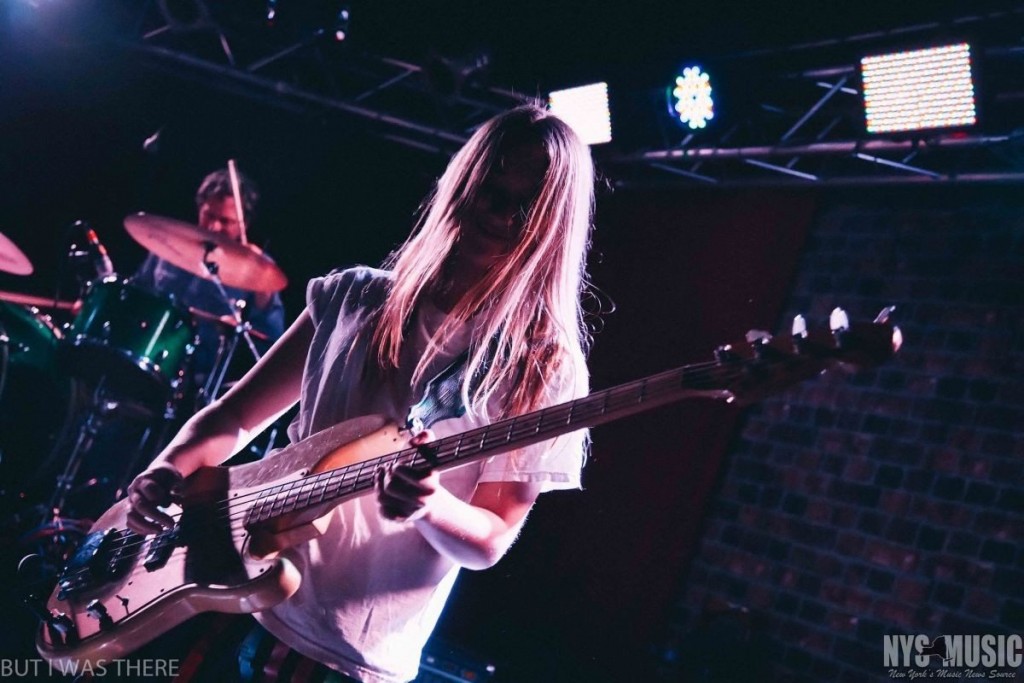
An evening of acts defying easy categorization at the Montage Music Hall on May 12 began with Rochester-born Mikaela Davis and her harp-led melodies. Her band, whittled to a trio from its usual quartet format, consisted of Alex Coté on drums and Shane McCarthy on bass. The lack of guitar pushed the harp to an even more prominent position in the music, and “Other Lover,” off a special tour sampler CD, was a slow groover with a nifty mid-song breakdown. Coté shined early and often, taking control both in backing and leading positions. The magnificently exotic (particularly to the Montage stage) harp was adorned not only with spiraling LED lights, but with many effects pedals as well, pushing its sound into strange and different spaces.
After the set closed with, “In My Groove,” a brand new song, ironically about needing to write a new song, the opening band found itself in the unusual position of being called back for an encore. They hesitantly took the stage, and with nothing prepared, they winged a cover of Gillan Welch’s “Caleb Meyer” — nice choice, nice execution and impressive all around.
Davis mentioned that in the trio format she felt they were resembling Marco’s band, with the bass, drums and said that there was pretty much a harp sitting inside the piano. It certainly rings true with the unique approaches they take to their instruments.
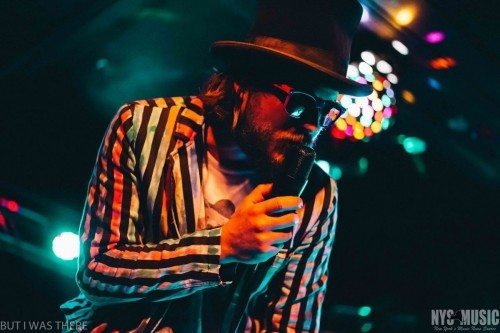
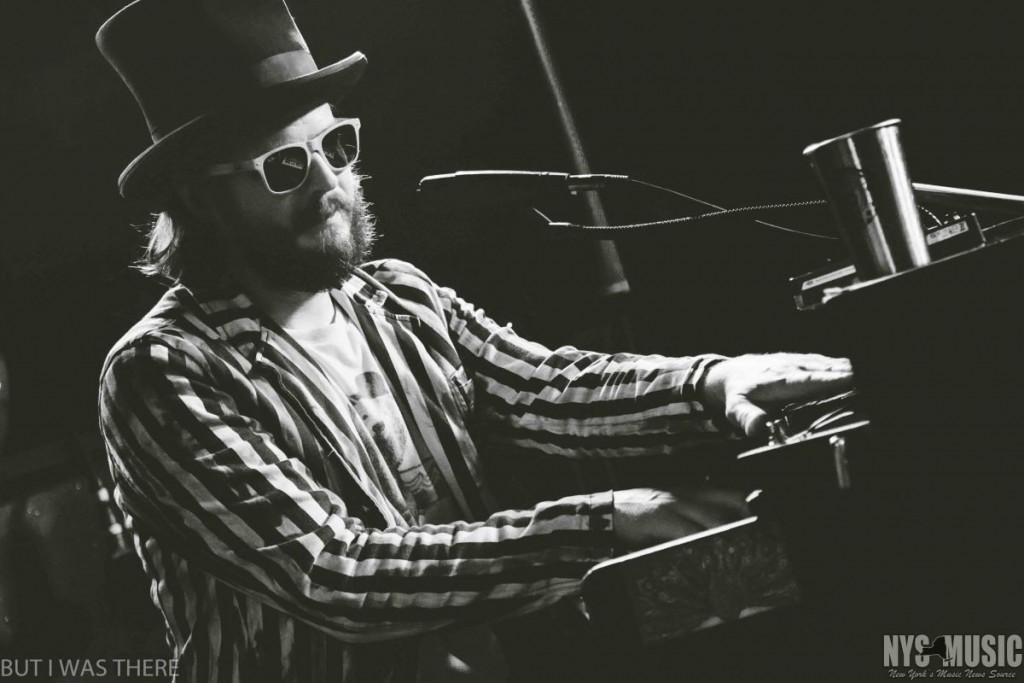
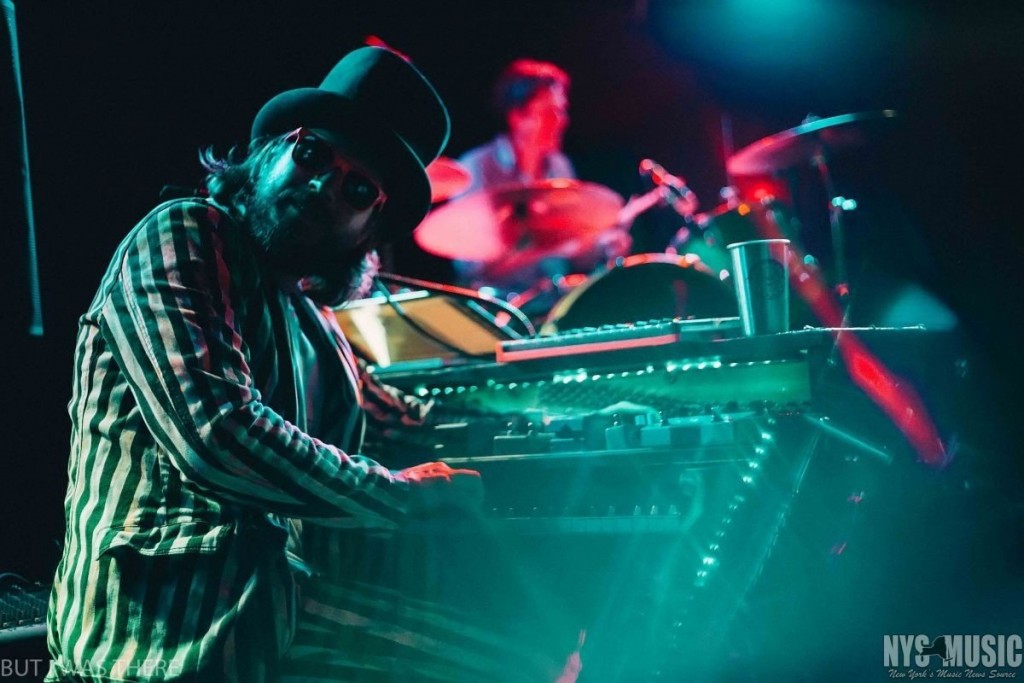
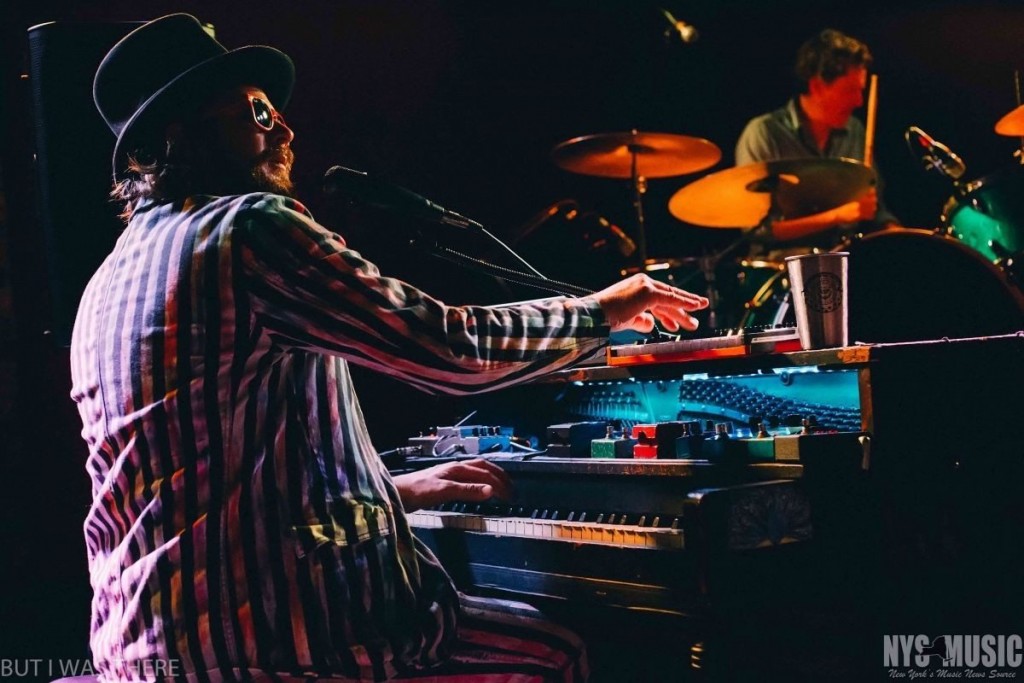
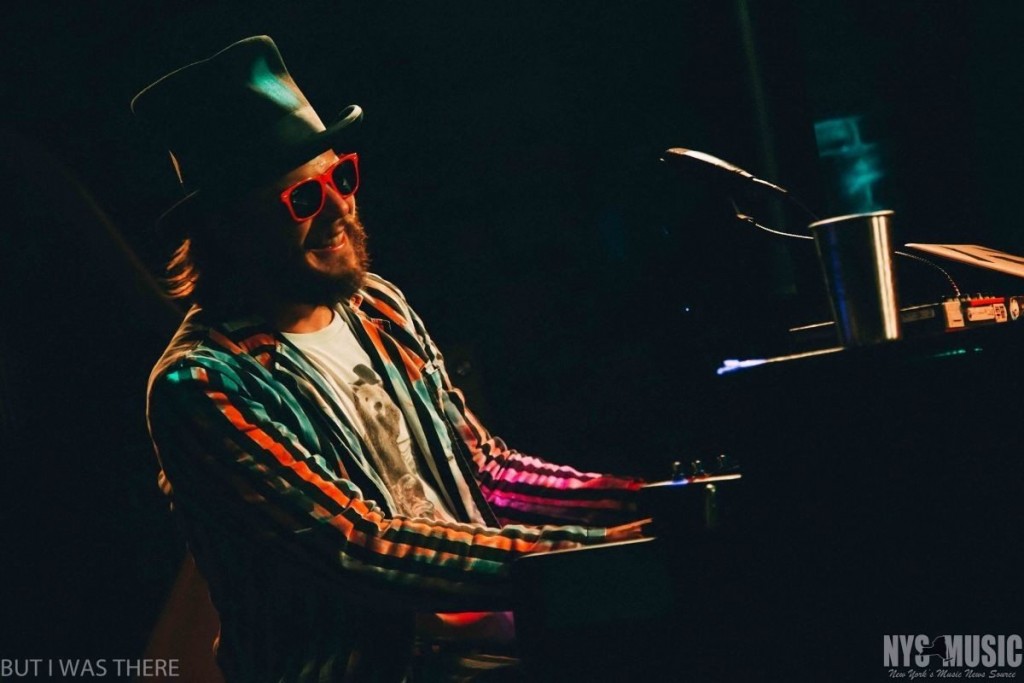
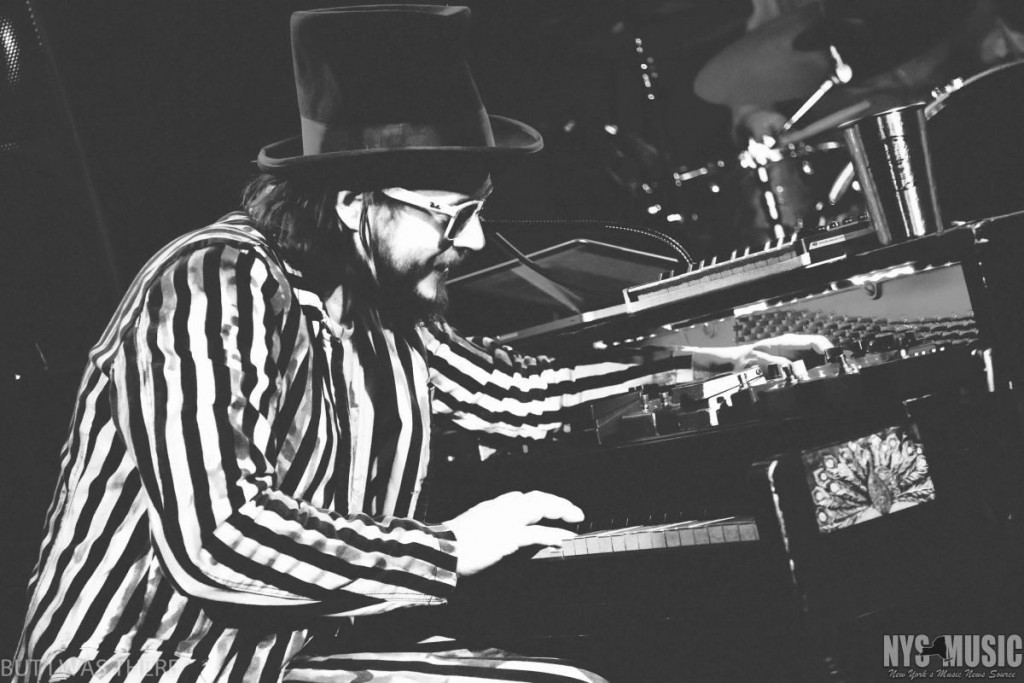
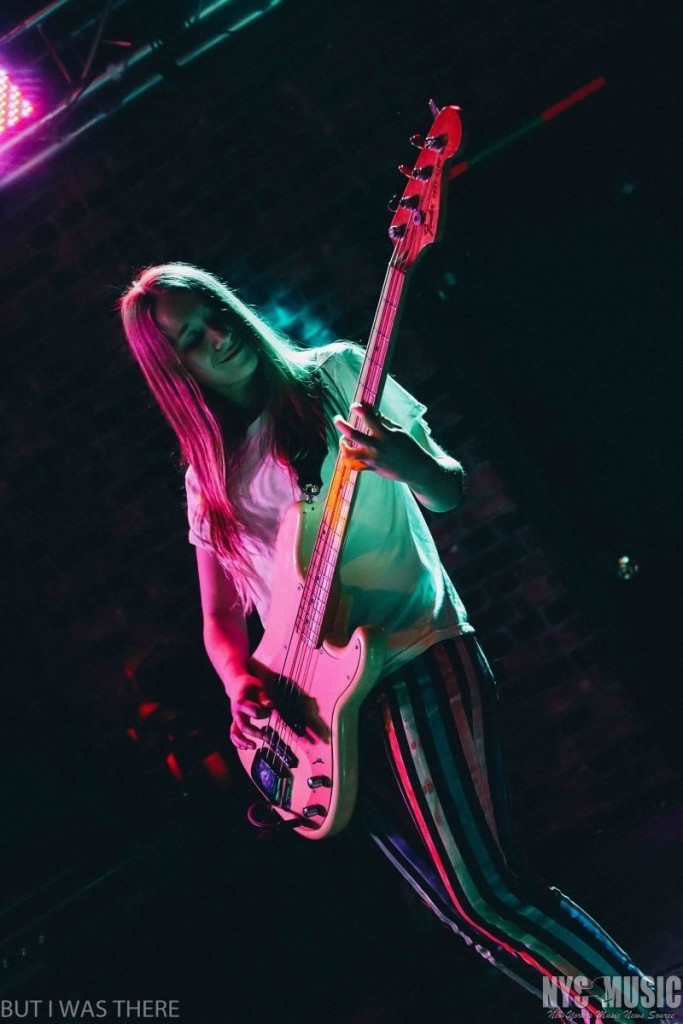
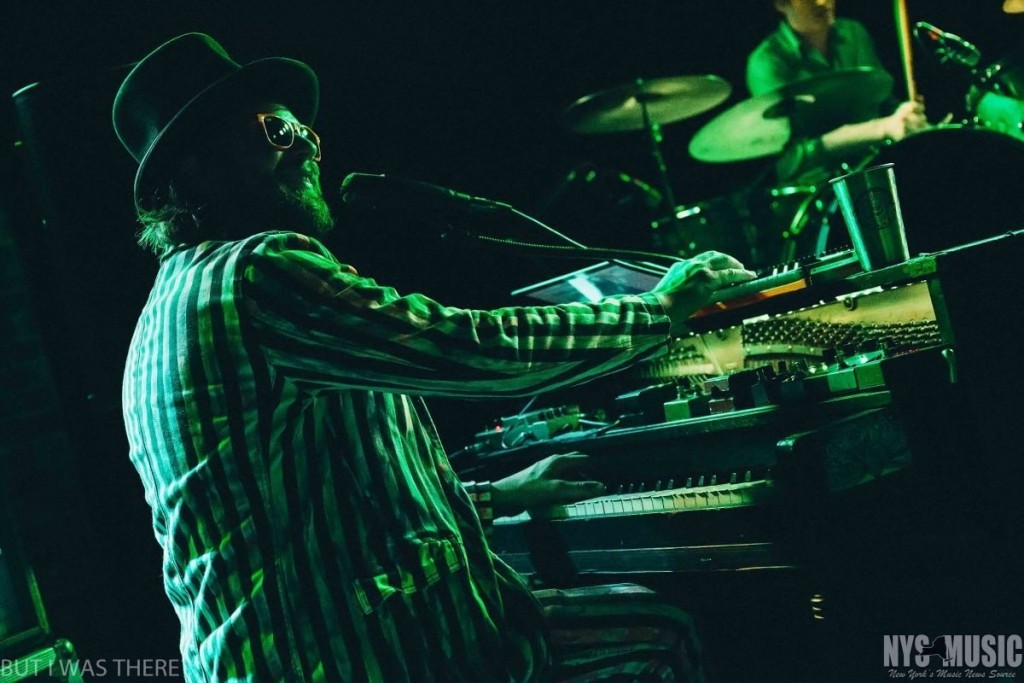
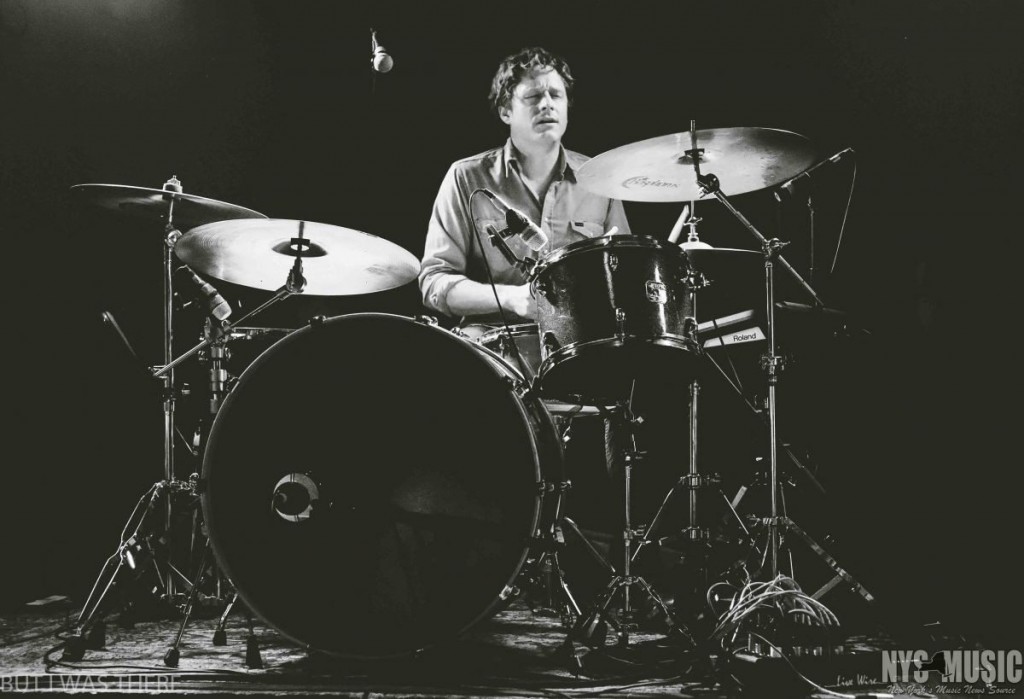
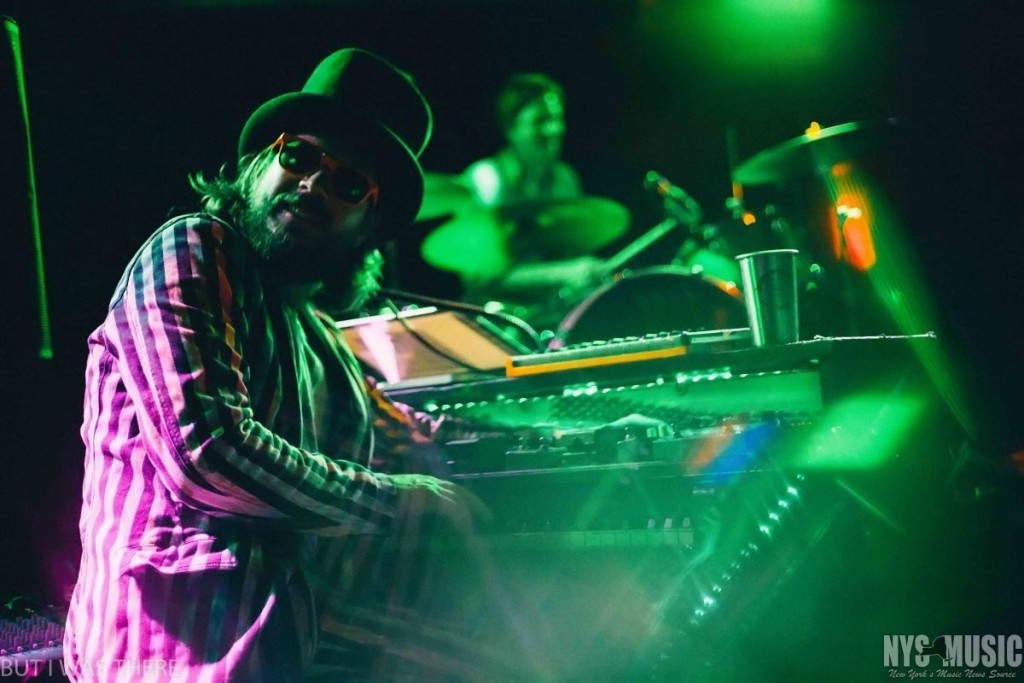
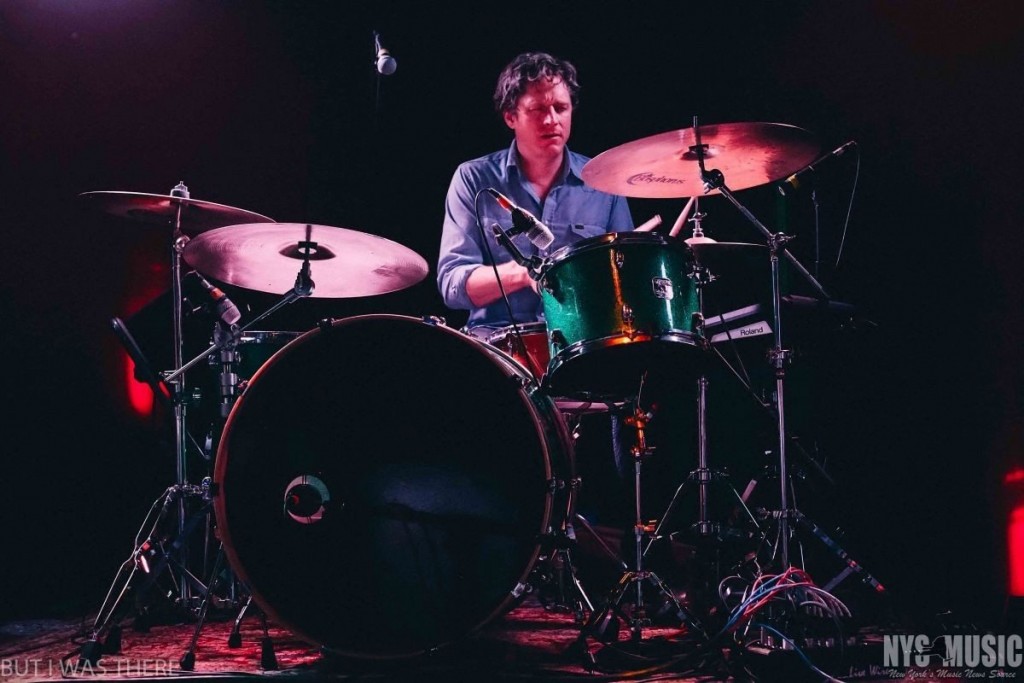
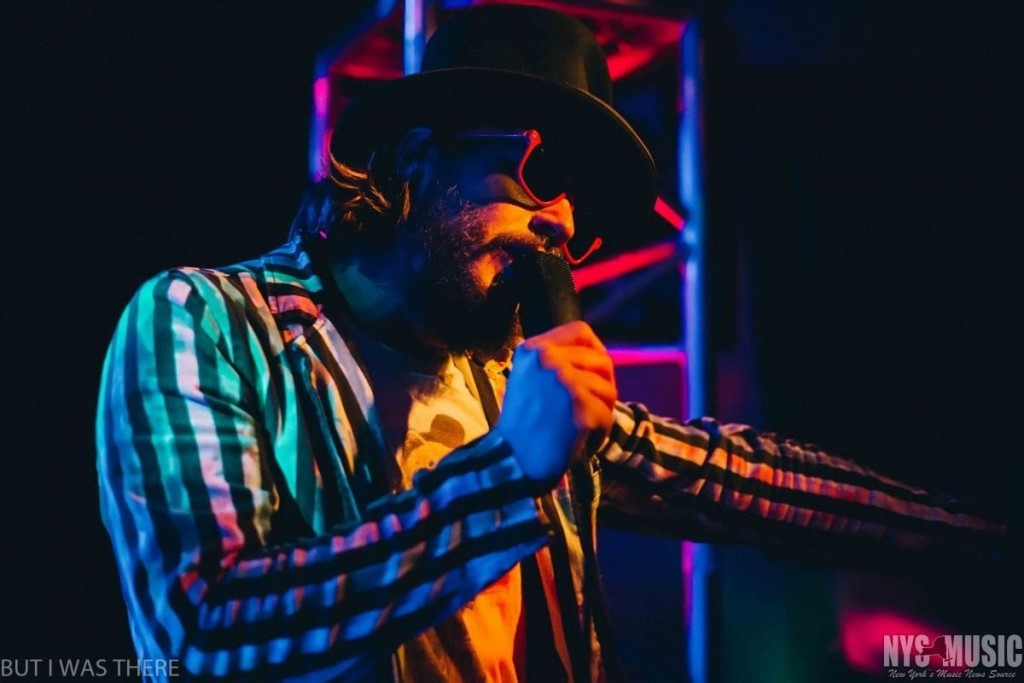
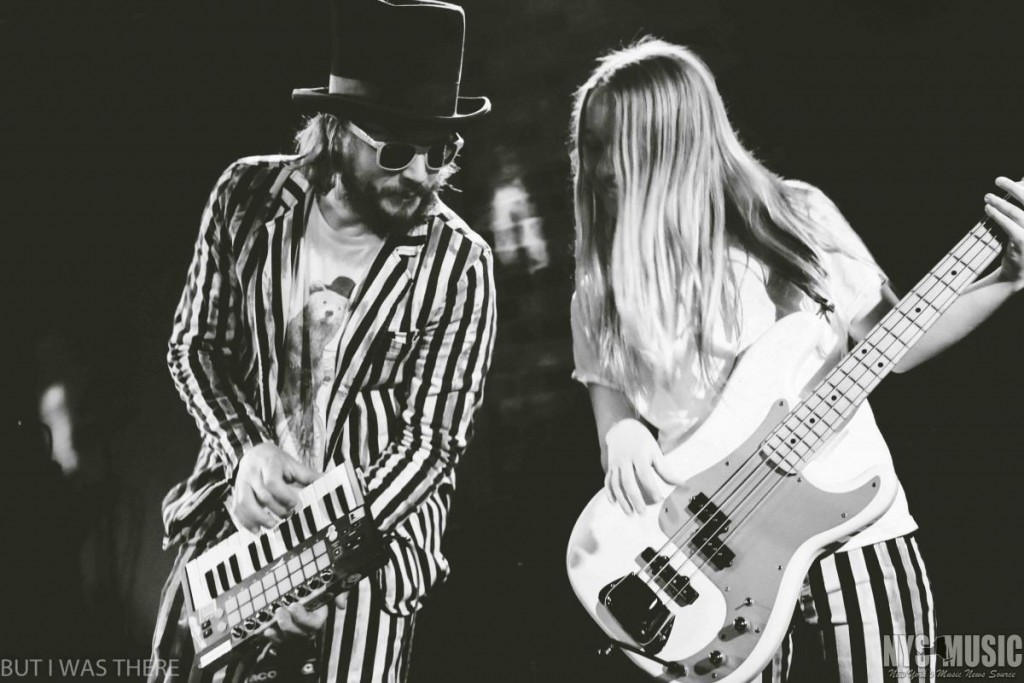
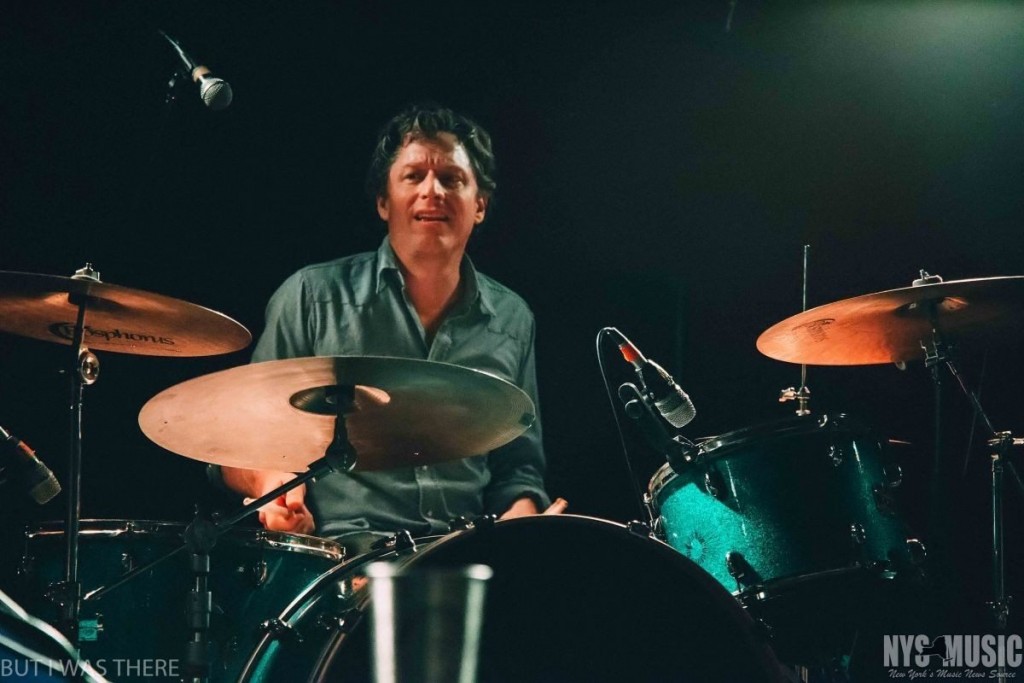
Davis wasn’t the only one playing with a modified band. Karina Rykman was filling in on bass for Dave Dreiwitz in Marco Benevento’s band. She matched Dave’s signature smile and bass stylings perfectly, while filling out striped pants that complemented Marco’s candyman-meets-madman outfit better than Dave ever could. Andy Borger maintained his spot behind the kit, as he has for a handful of years.
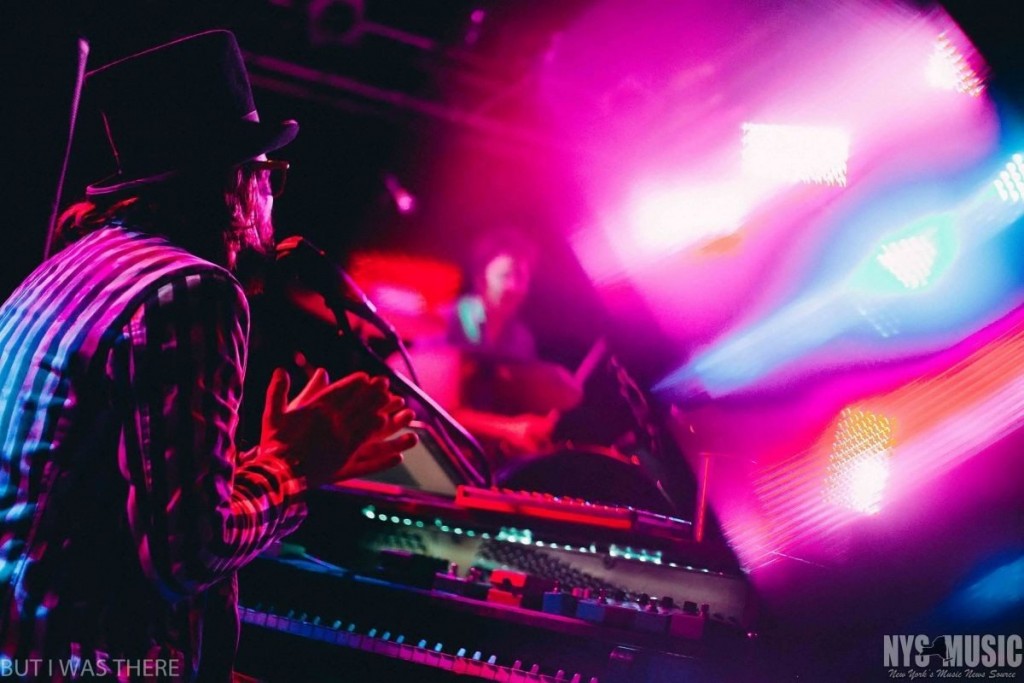
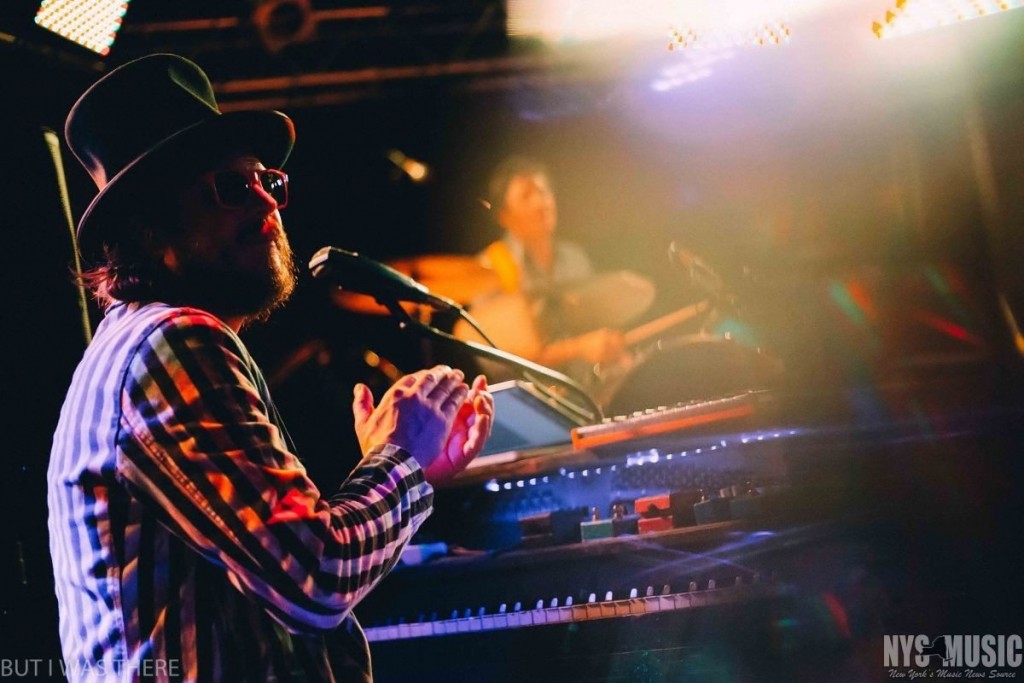
When Marco introduced the band, he also introduced the audience to his piano, Gibbs. It fittingly shares a name with the street just around the corner from the venue, where the famous Eastman School of Music resides. The piano was a $100 purchase off of CraigsList, which to put it mildly, has been slightly modified to Benevento’s tastes.
Touring behind his freshest release, The Story of Fred Short, the band kicked right into the new material with a set-opening take on the infectiously catchy “Dropkick.” Moving back in time they continued with “If I Get To See You At All” off Swift and then”Atari” from Invisible Baby.
It was right back to the present with the full presentation of the side B conceptual Fred Short suite of songs. This was pulled off brilliantly with special sound and lighting effects and the works. The “Stay in Line” section was particularly fiery. Borger and Rykman took charge and pounded it into submission.
But “The Real Morning Party” had only just begun, with ripping versions of a by-request “RISD,” “The Knife’s “Heartbeats” and “Limbs of A Pine” that featured a quick return into “Dropkick.” The 90-minute set finished up with the whole crowd singing along to “At the Show.”
The show came full circle during the encore as Mikaela Davis re-emerged. The modified harp and the modified piano played side-by-side for rollicking takes on David Bowie’s “Heroes” and the Rolling Stones’ “Let’s Spend the Night Together.”
Buffalo Iron Works was introduced to a night full of in your face rock with promising young bands rocking the house. Hudson, all the way from Los Angeles, kicked things off Thursday night with a high energy, on-point performance, despite the lack of crowd participation and lackluster reaction.
Stitched up Heart set up their gear and by their looks I wasn’t sure what to expect. Their outfits were great but hinted at a feeling of metal and screaming, which did not fit the rest of the bill. Front woman Alecia “Mixi” Demner ran onto the stage and had such a crisp, clear voice with a power that reminds one of Lzzy Hale from Halestorm. The band had magnificent harmony and the hair flips and guitar riffs were impressive. I am definitely a fan and cannot wait to listen to their newest tunes.
Red Sun Rising (RSR) is a band I’ve seen before when they were in town opening for Seether and Mark Tremonti at Rapids Theatre last year. RSR’s fan base has grown tenfold and they have a more confident stage presence since I last saw them. Mike Protich’s vocals have mammoth power and clarity to them. He has a towering stage presence that captivates and engages the audience. Dave McGarry replaced original guitarist Tyler Valendza and he is an exceptional replacement. McGarry’s uses his long hair to his advantage, whipping it around while playing his catchy riffs. I expect to see this band headlining their own shows within the next five years.
Sick Puppies returned to Buffalo after a lengthy hiatus, and first time since their antecedent lead singer, Shimon Moore left the band. Many fan favorites were played as well as a couple of new songs. They kicked off their set with “War” that immediately brought the audience off their feet.
Buffalo gave a warm welcome to new front man Bryan Scott as he stood his ground. Bassist Emma Anzai, made her presence felt with her typical top notch performance. Stand out songs from the Aussies’ set list included “Riptide,” “Should’ve Known Better” and “Pitiful.” The band also performed their latest single, “Stick to Your Guns” from their upcoming release Fury. The crowd loved the appearance of another taste of the new record during a short version of “Black & Blue.” Bryan Scott has stepped into some big shoes and came off as a solid replacement. The direction the band is now taking is impressive and the crowd at the Iron Works seemed to agree.
True to form, Radiohead delivers another anthemic masterpiece with their ninth album, A Moon Shaped Pool. The creative masterminds who make up Radiohead, joined by the likes of Pink Floyd and Beck, are some of the few musicians who are able to successfully mix the use of acoustic instruments and the more “techno” side of music via their use of a wide variety of sound effects. A Moon Shaped Pool allows lead guitarist and keyboardist Jonny Greenwood to showcase his impressive orchestral arrangements, balanced by the always quaveringly powerful vocals and brilliant lyrics (including such gems as “Broken hearts make it rain,” “The wings of love fly,” and “This is a low-flying panic attic”) of Thom Yorke.
Radiohead’s members are collectively so much more than just talented musicians; rather, they seem to be able to tap into our innermost musical yearnings and know how to pull the right heartstrings at the right times. This album does a great job of drawing in listeners who are already diehard Radiohead fans by sticking with some tunes that are more characteristic of their early sound (on songs such as “Daydreaming” and “Identikit”), but it will also attract some new fans with its more innovative and out-there sounds (as if “out there” can’t be used to describe everything that Radiohead does).
In addition to the more traditional-sounding Radiohead tunes, the band experiments with new and different elements such as the dancey number “Ful Stop,” the island music getaway “Present Tense” and the closest Radiohead will ever come to an acoustic singer-songwriter, guitar duo on “Desert Island Disk.” Perhaps one of the more striking elements of this album is the vastly different feeling between the first and last songs: the album starts with “Burn the Witch,” a rather witty upbeat number featuring choppy fiddles with an underlying layer of electronic buzz, and very stream-of-consciousness lyrics consisting of a string of clichés and non sequiturs, and ends with “True Love Waits,” the quirkiest yet most touching love song one’s probably ever heard. (One nerdy observation — the song list is in alphabetical order; is it coincidence that the order of the 11 tracks makes perfect sense this way, or another testament to the power of the genius that is Radiohead?)
Radiohead’s latest album can best be summarized as a veritable cacophony of sound. The music moves through your body, pulsates through your veins and takes you on a psychedelic journey, before dropping you off right where you started and wondering what the heck happened during the past hour. For those who are intrigued and desire to go on this incredible musical adventure (which, I assure you, is well worth the experience), A Moon Shaped Pool is available now for digital download, and will be out on CD and vinyl on June 17, with a special edition option available in September.
Key Tracks: Daydreaming, Identikit, Tinker Tailor Soldier Sailor Rich Man Poor Man Beggar Man Thief
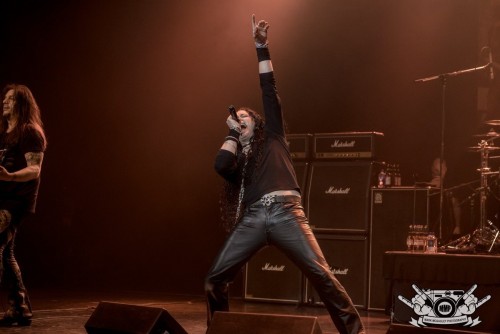
After rescheduling their performance last winter because the then lead singer quit the band, New Jersey’s own heavy metal lords, Skid Row, made up for lost time with the sold-out crowd at the Turning Stone Casino Showroom in Verona on May 14.
Taking over vocal duties for Skid Row is now the one and only ZP Theart, who’s best known as the former frontman of the power-metal band Dragonforce. Theart joined Skid Row after former singer Tony Harnell left the band in December.
ZP and the rest of Skid Row came out Saturday night to prove they could still kick ass — and that they did. The packed house didn’t stay seated for more than 30 seconds once the band opened with “Slave to the Grind” and continued with a heavy set featuring classic tracks from the group’s self-titled 1989 album and 1991 followup, Slave to the Grind. Skid Row even threw in a cover of the Ramones’ “Psycho Therapy” before capping off the night with a three-song encore that included “Quicksand Jesus,” “Beat Yourself Blind” and “Youth Gone Wild.”
This performance definitely showed diehards that ZP has the pipes to fill the shoes of Skid Row’s original singer, Sebastian Bach. Check out the setlist and gallery from the band’s United World Rebellion stop in New York below.
Setlist: Slave to the Grind, Big Guns, Sweet Little Sister, Piece of Me, 18 and Life, Makin’ a Mess, Riot Act, In a Darkened Room, Psycho Therapy [1], I Remember You, Monkey Business Encore: Quicksand Jesus, Beat Yourself Blind, Youth Gone Wild
[1] Ramones Cover
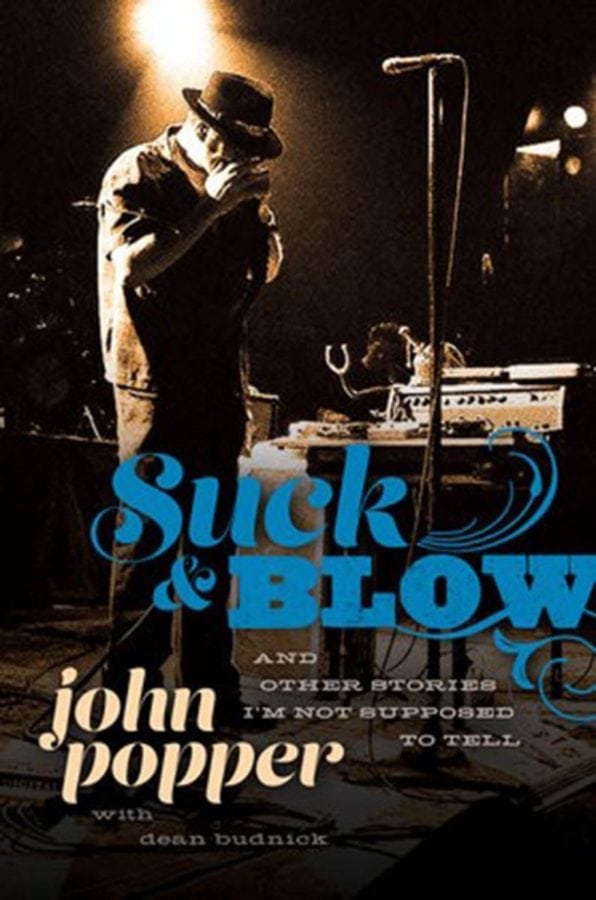
John Popper, best known for his mean harmonica skills, and being the front man of Blues Traveler, really lets it all hang out in his new autobiography, Suck and Blow: And Other Stories I’m Not Supposed To Tell, written by Popper with Dean Budnick.
If Popper had not made it big on the stage as a musician, he probably would have done well as a comedian. Suck and Blow is splayed with hysterical moments that will make others around you wonder what’s so funny. This book is highly recommended to be read in public places, such as on a crowded train, a cross-country flight, or perhaps waiting in a long line to use the ladies rest room. Why? Because the stories within will make you burst out in random displays of laughter. Any attempts to keep it in will just result in a contorted face and the appearance of tears for unknown reasons. Do yourself a favor, read this book and get ready to release the Kracken of hysterics.
Suck and Blow begins with Popper’s adventures when he was young. He clearly regarded school as just a place to go and think of new ways to enjoy the day. His antics in the classroom, which were rare appearances, resulted in convincing adults that more time out of the class room was the way to go. His brilliant hold on the psychology of humans at such an early age did well for him as he, and Blues Traveler, eventually came up through the ranks of the music world.
His book also unfolds the mystery of how he was first introduced to the harmonica, and discusses how he later goes on to severely crush several top musicians on stage with his masterful hold of the instrument during performances.
Like many musicians, Popper was just winging it as Blues Traveler gained success over the years. That winging it included heated arguments, a few thrown punches, and a lot of rock and roll shenanigans that prevailed. Did you know that Gregg Allman wanted to be a part of Blues Traveler? Well, neither did Gregg Allman, apparently, who would repeatedly say that he needed to be a part of the band while drunk.
The moments were fleeting, as the morning after resulted in him forgetting he even asked. These rare glimpses of truth bring readers the crazy stories that happened behind the scenes, backstage, in the van, and on the side of the road.
The book is not all humor, however. There are occasions of cinching heartache. Bill Graham’s death sent shock waves throughout the industry. Best known for his involvement with the Grateful Dead, Graham was an integral part of Blues Traveler’s early years. The moment the band hears of his death is gripping and, with each page, the sorrow and heartbreak is felt through Popper’s commanding use of the written word. Have tissues readily available, as this chapter of life will tear at the heartstrings, however, don’t be surprised when someone gets punched in the face while mourning.
Suck and Blow also winds through evolutionary tales of how songs were borne from various experiences of John Popper. If this book were a song, it would be a symphonic masterpiece, as each page brings the audience back to the melodies of popular tunes, while shedding light on how those tunes were created. The candid stories weaved throughout make this a “can’t put down” read.
For a vivid look at the life of a musician, run out and get this book. It will make your day, week and year. The humor, heartache, and just plain craziness that John Popper has experienced will make this story seem unreal, yet every shred of it is true.
This summer, English rockers the Temperance Movement will debut the sophomore album, White Bear, followed by a headlining tour.
The five-member outfit kick off the July run at the Ride Festival in Telluride, Colorado, and are scheduled to make stops at Lost Horizon in Syracuse, Mercury Lounge in New York City and Underground Arts in Philadelphia before the tour closes in Detroit. And on May 15, the group exclusively premiered the video for the record’s title track via Loudwire.
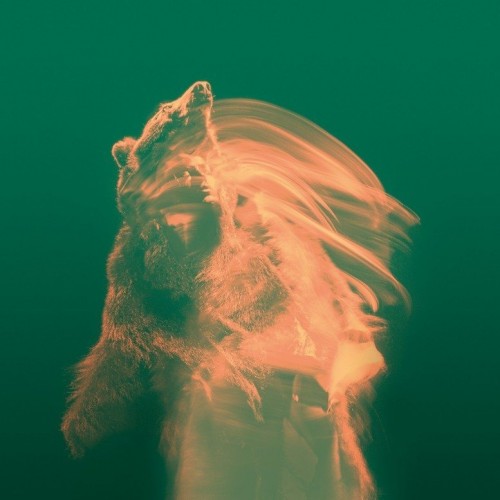
The three-minute video was the creation of noted photographer and director Steven Sebring, who used his signature “revolution system” camera techniques to produce a stunning visual manipulation of time and light. Sebring also created the album’s cover image “of a girl and a bear, interlaid and overlapping in magical realism” inspired by Fyodor Dostoevsky’s essay, Winter Notes on Summer Impressions.
The rising rock band that includes vocalist Phil Campbell, bassist Nick Fyffe, drummer Damon Wilson and guitarists Paul Sayer and Matt White. Although bearing the same name as the prohibitionist social movement of the 1900s, the Temperance Movement is not straightedge when it comes to gritty rock and roll. They have opened for heavyweight acts like the Rolling Stones, and this summer, the group shares the Ride Festival bill with Pearl Jam and Cage the Elephant, among others.
White Bear officially drops July 15 via Fantasy Records, but is available for pre-order now via iTunes and Amazon. If you want to see them live, scan the dates here or below to see if the Temperance Movement is coming to a venue near you.
The Temperance Movement summer 2016 tour:
7/9-10 – Ride Festival – Telluride, CO
7/12 – Marquis Theatre – Denver, CO
7/14 – Bottom Lounge – Chicago, IL
7/15 – Limelight – Peoria, IL
7/16 – The Stache at Intersection – Grand Rapids, MI
7/18 – Lost Horizon – Syracuse, NY
7/19 – Mercury Lounge – New York, NY
7/20 – Underground Arts – Philadelphia, PA
7/22 – A&R Music Bar – Columbus, OH
7/23 – The Shelter at Saint Andrews Hall – Detroit, MI
NYS Music goes to Cuba is a multi-part series detailing Cuban music and culture, the impact of Western music on Cuban music and the potential for change given the recent pending normalization of relations between The United States and Cuba.
It’s 11:30 p.m. in Central Havana and I’m sitting in Casa de la Musica with my best friend, surrounded by stalking prostitutes and Cuban music videos streaming on the screens behind the stage. I am focused on taking notes of my surroundings for this article, ignoring the hooker who is not giving up on me before my third Cristal beer kicks in and my handwriting becomes completely illegible. I don’t usually ignore women when they talk to me at a bar or club, so this is a first. (Plus, we didn’t budget for prostitutes.) They can smell our CUCs through our cargo shorts; they’re good.
Rewind back to 10 p.m. We arrive to find out the club is closed until 11 p.m., so with an hour to kill, we are encouraged by locals outside the club to walk down the street with them to a small bar, El Coronet, and meet some women who are clearly prostitutes. We aren’t taking the bait and bail after we finish our lone drink. Los Van Van is on the television, and ironically, they are playing the other Casa de la Musica in Miramar, where we should have gone, but alas, here we are.
With two shows nightly, Casa de la Musica is open from 5 to 9 p.m. and 11 p.m. to 3 a.m., but 9 to 11 p.m. is the ‘how fast can we fleece the early arrivals for the show?’ show. We pay a 10 CUC cover, get security wanded and enter to find 10 people in the club. The stage is set for 14 musicians with smoke machines that are continually going off. With two large screens on either side and three tall screens behind the band, this place looks awesome and must scream L.A. club when it’s packed. But until midnight, it’s somewhat dead, yet it provides an escape from the pimps, grifters and panhandlers waiting outside for easy prey to saunter along. The prostitutes though, they’re among us.
It’s hard to tell if this is arranged with the venue, just allowed to happen, or a combination of both. But it’s the one thing bringing in women to the club, beyond the two girls sitting near us who clearly aren’t prostitutes. More on them later.
While we wait for the stage show to begin, we ask to speak to El Jefe of the club, a short promoter type whom I explain our presence to as music journalists, and he immediately says photo is OK but no video and we agree. We ask to speak in a more quiet area, and quickly ask my questions. He directs me to a bartender who can speak a good deal of English. Alex, a Vin Diesel type, is fine with an interview and seems slightly flattered.
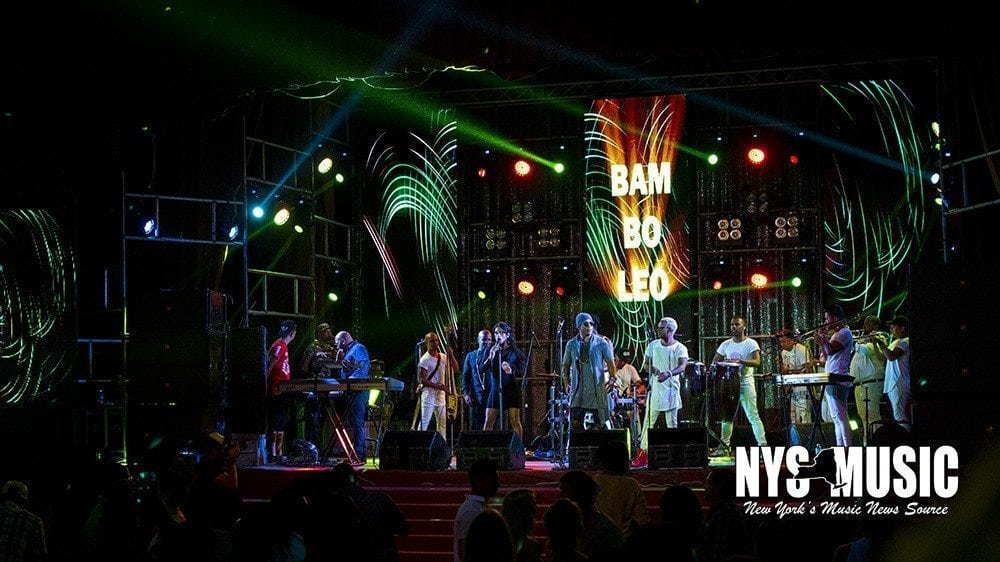
We ask about the club, which opened in 2002 with a capacity of 1,000 and followed the Miramar venue that opened in 1995 for 300 capacity and caters to a more highfalutin crowd (my term, not his.) There is Salsa every night (tonight is Bamboleo); it is all Cuban music, every night, and packed every Thursday through Saturday. We ask how things may change with more Western influence, and he assures us they already have. There is more pop music, so much so that when Usher was here this past Saturday, everyone knew him. He was recognized, signed autographs and sang four songs unannounced — this island is not as isolated or secluded as you might think.
The club has no advertising, no presales, just day-of show sales only. Attendance depends on the bands ultimately. The stage is 21st century even if outside the building is mid-20th century. While we talk to Alex, we don’t notice the crowd filling in the place. The audience is a mix of locals, tourists and prostitutes, perhaps 300 are here by midnight. Locals are sitting around, taking selfies and snaps, while buckets and bottles pepper the tables. Two Cuban guys are warming up Salsa moves near us. It’s 12:30 a.m., almost go time.
DJ SARAO takes over from the PA with “Uptown Funk” and the night of music finally begins proper. He’s good, but we came for Salsa. There are more than 350 in the club now. It feels dead despite the crowd, compared to the potential for the space. Ever go on spring break and the club is randomly undersold? That is Casa de la Musica tonight.
It is now 1:05 a.m. and Bamboleo finally arrives. Horns and drummer on percussion are the signature sounds, and it’s good to see Sisqo still getting work. Chris leans over and asks if we are watching a Cuban Turkuaz. I laugh; it’s not far off, but the Talking Heads covers are missing. This is a large band, fully in sync, rehearsed but not scripted, and each member has their own flair and presence with the music altogether fucking stellar. The keyboardist looks like Pitbull. It might be Pitbull. He makes a lot of appearances. The performance is quite amazing and highly energetic at all points. The sound doesn’t let up and even though I know zero of these songs, I am loving it. If I had someone who wasn’t Chris or a prostitute to dance with, I’d be getting down. Antibalas Afrobeat Orchestra prepared me for this, but not this. Turkuaz/Bamboleo tour 2021 is going to crush the Caribbean.
My effort to dance the Salsa is admittedly minimal. I am an observer. Five or six Cristals deep now and I work up the courage to talk to the two girls near us. I say I would have spoken sooner, but with all the prostitutes, I wasn’t sure. They understood, thankfully. We chat; they are from the Basque Country in Spain. They are as close to normal as we find tonight.
Toward the end of the show, Chris is denied shooting stage right low. I go to El Jefe. He says OK, walks up with us and says, “Go up.” We do, but we are turned away. A bouncer denies us and even El Jefe can’t override. El Jefe brings us stage left low. We are fine here, but the angle isn’t as good. We still take the shots. The cab driver for our ride was a fan of SARAO and waited inside the club to offer us safe passage to our hostel. The 25 CUC he charges is a rip-off, but a 10-minute drive is all we can ask for given the state of the night. We didn’t spend as much in the club as we did on the cab, something we need to work on the next few nights.
 While Black’s fans are normally used to hearing him sing hard rock or metalcore styled music he is taking is solo debut in a different direction. The Shadow Side is comprised of a much more of a pop-rock sound than we’re used to hearing from Black.
 Iowa based Christopher the Conquered’s first full-length album I’m Giving Up On Rock and Roll, released May 13, is made up of personal lyrics, powerful vocals and theatrics that are hard to match to any of his contemporaries. While listening to the album, one can often draw parallels to Elton John and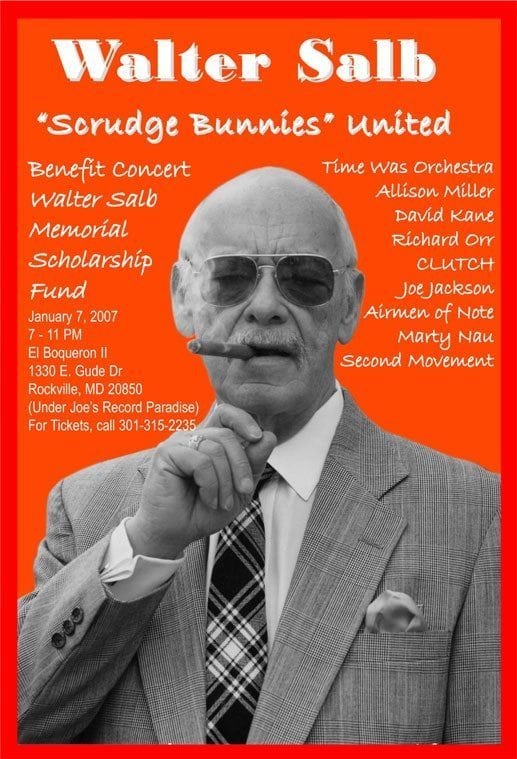

 An evening of acts defying easy categorization at the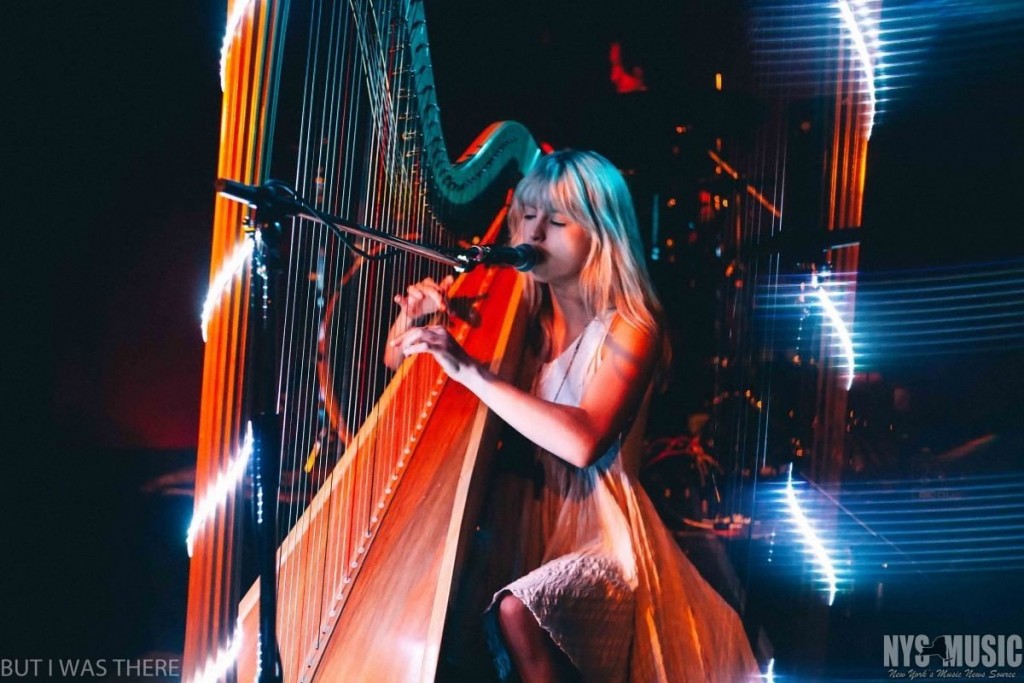








 Suck and Blow begins with Popper’s adventures when he was young. He clearly regarded school as just a place to go and think of new ways to enjoy the day. His antics in the classroom, which were rare appearances, resulted in convincing adults that more time out of the class room was the way to go. His brilliant hold on the psychology of humans at such an early age did well for him as he, and Blues Traveler, eventually came up through the ranks of the music world.