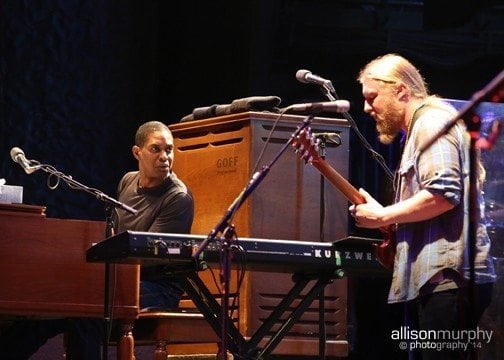
Next year will mark 20 years since a group of guys got together, under a shared love of the Grateful Dead, and started what would grow to be the country’s most well-known Dead tribute act. Rob Barraco looks upon his time in our interview with the legendary keyboardist.
Dark Star Orchestra
From humble beginnings in 1997 to packing a baseball stadium in 2015, Dark Star Orchestra has more than put in the work to earn such praise. Not only does the band recreate specific setlists from the Dead’s more than 2,300-show cannon, but the members are all very well versed in the era each show took place. Now, they do not play note-for-note renditions, but they do alter their improvisational style to portray a mood similar to the original.
“We get a show book (of GD shows) before each tour,” Rob Barraco, DSO keyboardist of 11 years, said in a phone interview. “Sometimes it’s the ’70s, sometimes it’s the ’80s or ’90s, and then I think ‘oh no’ then we start the show and it just does not matter. We are all locked in and that’s when the best improv happens. We play the songs, but it’s anyone’s guess what happens when we go off.”
And that is the spirit of what Jerry Garcia left behind. Any given night, once the words were over and he started his unique flurries of notes, anything could — and did — happen. DSO brings that same mindset across the country upward of 120 times each year, and this Sunday at the Saranac Brewery in Utica, you can see the magic that occurs. On Friday and Saturday, the band is playing Stateside Ampitheater at Jay Peak Resort in Jay. Vt., to lead up to the Saranac show.
A few days later, on July 26, DSO returns to Frontier Field in Rochester, site of the largest non-festival crowd the band has ever performed in front of. Last summer at the minor league baseball stadium, the band hit a grand slam, packing about 10,000 fans and delivering what can only be described as a no-hitter complete with an offensive explosion.
“It’s the biggest turnout we’ve ever had as the headliner,” Rob Barraco said. “We loved it, and the energy was palpable. We went and fed off of that, and the crowd gave us back so much love. It was so great that we’re going back.”
For DSO, the show marked a step up in terms of audience size. Typically a festival and mid-sized theater band, DSO has been inching toward playing larger venues over the last three years. Maybe coincidentally, that’s when bassist Skip Vangelas took over for Kevin Rosen, who retired in 2013. Rob Eaton, an original member, plays rhythm guitar; Jeff Mattson plays lead; Dino English and Rob Koritz handle the rhythm section and Lisa Mackey is a backup singer/dancer extraordinaire.
Barraco doesn’t hide his roots. He first saw the Dead in 1972, and continued to attend shows as often as possible up until around 1980, not long after graduation from a college in New Paltz. He recalls the Wall of Sound and the band’s universally renowned 1977 Spring Tour, where he said he was lucky enough to catch a large portion of the Northeast shows.
It was, however, when he got the chance to play with Phil Lesh in 2000 when his music performing dreams came true. He was a member of the timeless Quintet (featuring Warren Haynes and Jimmy Herring) and also toured with The Dead in 2002-03. He regularly played with Lesh until around 2012, and is very vocal about the lessons he learned from the legendary bassist.
“From the very first note I played with Phil, it was just complete improv,” he said. “Phil didn’t ask us to play like the Grateful Dead. He wanted us to be who we are, and it was magical every single night. We took the music and we did some crazy shit, man. With The Dead, they decided they wanted to be a bit more traditional, and that took a little adjusting. And Phil used to tell me, ‘it’s like playing in one band is a Ferrari and the other is a freight train.’ My heart will always be with Phil.”
In the summer of 2006, Phil and Friends did a co-headlining tour with GRAB (Mike Gordon, Joe Russo, Trey Anastasio and Marco Benevento), and they made a stop at Bethel Woods Performing Arts Center. Anastasio sat in with Phil almost every night, but the Bethel show was special for many reasons, not the least of which was because it took place on the same grounds that hosted the original Woodstock.
“We were playing (with Trey) and then we all started to realize something, that we were playing the same setlist the Dead played at Woodstock,” Barraco said with a laugh. “That’s Phil — he gave us the setlist, but just didn’t mention that we were doing that.”
Of all the lessons he took from Lesh, the main one was this: “In DSO, I can never get above myself. None of us do, and that really makes it so great.”
Rob Barraco attended Fare Thee Well last summer, and gave a fun anecdote of an encounter he had.
“Trey did a phenomenal job (at GD50.) On the last night, I ran into him backstage and he looked at me and said, ‘Do you realize that if it wasn’t for these guys we wouldn’t have a job?’ Phish never would have done what they’ve done. The Grateful Dead are the architects of the jam band scene. The Allman Brothers Band wouldn’t have started the jam band thing we have. And when Trey said that to me, I said, ‘no shit, dude,’ and that’s the truth.”
The band recently discussed the state of DSO, and they all agreed they would like to keep this thing going forever. Barraco said the only change, due to band members having children and wanting more family time, is that they’d like to cut the number of shows down to around 100 per year.
“We are all looking forward to this tour,” he concluded. “We are giddy for the baseball stadiums and I think we are really going to knock some doors down.”
The Frendly Gathering 2016 was an incredible 3 day adventure, that always delivers more love, compassion and new ‘frendships’ than one can imagine. Jack Mitrani & Danny Davis founders/owners of The Frendly Gathering festival, and the rest of the ‘Frends Crew‘ have had quite the journey throughout their growth with the Frendly community – fans, musicians, artists & ‘frends’.
One thing that makes Frendly stand out far beyond any festival I have yet to attend, is the essence that remains year after year – no matter how big the festival gets, it maintains the inclusivity that it was founded upon. I got a chance to speak with Jack about his personal experience with this.
Chelsea Erin Wright: The Frendly Gathering 2016 has been incredible for me so far. Experiencing the evolution of Frendly since the very first one in Vermont, has been ahhh-mazing!
Jack Mitrani: Ah yes, you’re a lucky one!
CW: Yeah certainly, blessed. I’d love to hear a bit about how your journey manifesting your dreams to create Frendly, has transformed your life?
JM: My life, wow…yeah. Great question. I think that over the years Frendly has just evolved and the way that it has evolved, is by so many amazing people being behind this to make it happen. It’s taught me so much…it’s taught me so much in business, in relationships, in health…the yoga, the musicians. It’s really been such a crazy lesson, and I take the lessons from what I’ve created with Frendly into my everyday life; a host in action sports, a boyfriend, and every other thing that I am outside of this, ya know? I just feel like I’m so lucky, because I never in a million years would’ve known if you asked me before I started this, if I would be an event planner or festival owner, or any of that…some of that kinda just popped up out of the ground, and has really shaped my life today.
CW: Yeah that’s pretty incredible…it’s affected you on every level of your being.
JM: Mhmm, literally. There’s so much you can learn from, like I was saying – the yoga, the community that this festival brings is so health conscious, Earth frendly conscious…you just get so much from it that I would never have gotten. In the action sports, snowboard world that I come from it’s definitely there, but this is like the core of real human beings.
CW: Yeah, it is way more interconnected than any other festival I’ve attended.
JM: Yeah exactly, on a spiritual level.
CW: Definitely, and that’s one of the defining elements. It’s not about the typical kind of ‘party’ that you see at bigger festivals. The all inclusive vibe of Frendly is undeniable, which is one of many reasons why I have returned every year – what has been your favorite part of watching the Frendly community grow?
JM: I can think about this and come up with one billion answers because there are so many things, but the first thing that popped in my head was year after year, it grows, it doubles in size, and no matter how many more new people come, everybody ripples with the Frendly inclusive energy. Like watching Twiddle play at the campfire, and everyone respects the band…no one trampled them for an autograph right after…it’s just great that no matter how big it’s grown, it’s still remained to the core of what it stands for.
CW: You’ve been able to maintain the Frendly essence and it’s quite a beautiful, special energy. I’ll definitely say that where I come from there’s not a great sense of community, and this experience each year has opened my eyes up in a lot of ways.
JM: That’s the best part about this weekend…for the Frendly crew that prepares the site beforehand, it’s like we’re building, and it’s stressful and crazy, and we’re like what are we doing?! And then all of the sudden everyone shows up, and we remember that’s why we do it – everyone’s so nice, everyone’s hugging you…we want to just embrace every single second around all of these people. I have a broken leg right now, for those of you who can’t see me, and people just come up to me and heal me…people ask if I’m okay, and what’s happened…it’s so nice, like you said, to just be surrounded by kindness everywhere you turn. I wish that the entire world was like that.
CW: If only we could expand this to cover the Earth!
JM: Yes if only…Vermont, I would say is very peaceful in this way. If you go to NYC and walk around on the streets you feel alone.
CW: There has to be a pretty incredible shift, which needs to happen.
JM: I agree, 100%…if we could bottle this up & turn this into a nuclear bomb of peace and blast it out everywhere…I was a huge John Lennon fan growing up, which is where a lot of this vision comes from, it’s is ingrained in me. I’ve always wondered why there needs to be borders and why everyone can’t be peaceful…this is like our version of it, our small little nugget of it that we get to live.
CW: It’s a wonderful little world that you’ve created!
JM: Thank you! That we’ve created…the team, and you for being here throughout the years…it’s all of us.
CW: Yes! And speaking of Vermont being peaceful, this mountain is the perfect place for Frendly…what led you to Timber Ridge?
JM: Well, we used to come to Timber Ridge when we were in highschool…a family friend owned it, so we would come here for prom and graduation parties…this was the spot, ya know? If Chris Waker was throwing a party at Timber Ridge, it was known that everyone was going to be there. So the first two Frendly gatherings we threw in California, and then we realized we should throw it in Vermont. So we called up Chris, he asked his dad and they were super excited…from that day on, it’s been the most solid connection and the ridge couldn’t be more perfect for this kind of event.
CW: That’s wild that you’ve been coming here since you were in highschool…makes it even that much more special for you!
JM: Yeah I know, if you only knew the memories I have from inside of this lodge from when we were kids! And I see a lot of people here from high-school, it’s kind of like a reunion. There are a lot of stories and history at Timber Ridge.
CW: The stories that continue to be created are what make the space! Each year’s line-up has been pretty special…what inspired this years?
JM: Every year the lineup comes from the same inspiration, which is a combination of myself and my partner Danny Davis’ vision…we’re huge music fans, so we spend the entire year looking for music. And then we have all of the facebook fans…we’ll throw out a post asking the fans who they think should headline and play the upcoming Frendly and we’ll get hundreds of comments. We go through each one and see who got the most recommendations, and we really spend time filtering through. We also have Higher Ground, a venue in Burlington that has talent booking, which suggests up and coming artists as well. It’s a year long process of making sure we’ve searched every band in the world!
CW: It’s pretty incredible that you guys reach out to the fans & take their opinions into consideration. I’m not aware of any other festival that does that.
JM: Yeah, of course – those are the people who are coming, and they have so many good suggestions…it’s a collaborative decision on the lineup. Our lineups are always very eclectic, and ultimately this is really about bringing people together for a good time, to shut off from technology and connect with each other, and the music is the catalyst for that experience. So we want bands from every genre, to hit every Frend. The whole point of this is because we want all of our frends to come here, to get them all in the same place…so in order to do that you have to cater to all of the frends!
CW: It’s more about connection, which is most important! That’s just another aspect of what makes Frendly so special. What has been your favorite musical experience so far this weekend?
JM: The Twiddle campfire set for sure…Thursday night Twiddle played around the campfire, and that was my favorite for sure. I talked to Mihali the lead singer and guitar player, and we were asking each other if it was possible…we talked about it for months. So then when it actually happened, and everyone was singing along, the feeling that we pulled it off. I think that’s the most special part about Frendly, is the unique performances that we get to put together and experience here.
CW: There are definitely some unique ones! Like the pond sets, where people can be swimming & have the stage right there. I saw some very young kids right up in the front at the fire and was thinking wow, if I were one of those kids seeing Twiddle for the first time, at Frendly around a campfire…how incredible. And to look around, and see almost everyone singing along word for word. It was excellent!
JM: Yes, yes! It’s so awesome! And the fact that the people respect it. Imagine if people didn’t respect that, ya know?…or like caused a riot…campfires can cause people to get wild!
CW: A riot over Twiddle at the fire, imagine that…
JM: Literally it could happen, our headlining band playing around a campfire…
CW: Yeah it’s pretty incredible that we could have them there and they don’t have to be fenced in, they could be totally exposed and immerse in the experience. I’ve been seeing Twiddle since 2008, lucky for me I grew up about a half hour from where they formed in Vermont. I feel fortunate to have had the opportunities to see them play the much smaller and intimate shows around the area, including many of Mihali’s solo shows. Watching them transform over the past eight years has been so beautiful. But being able to see them play, without a fence…without a crowd pressing to be as close as possible – what a feat you pulled off! It says a lot about the energy created here, and the people that come.
JM: Exactly! We don’t have to put a fence up, we don’t have security standing everywhere. We do have security in front of the big stage…and sometimes I just want to tell them to go home, like what are ya doing here?…ya look cool standing there with your arms crossed, but everyone’s respectful here.
CW: Yeah exactly, it’s quite thing to know that you don’t truly need that barrier. What do you envision for the future of Frendly?
JM: I’ve always envisioned multiple events…bottling up the same experience we have here, and trying to send it around the world to places that need it, places that need a sense of community. That would be the dream come true…doing what we do here around the world.
CW: That would be awesome, and with how I’ve seen you manifest this into the beautiful creation that it is, I have no doubt that you’ll make that happen! Thank you for sharing your time with me, and for providing such a beautiful experience for so many people! I look forward to many more Frendly’s.
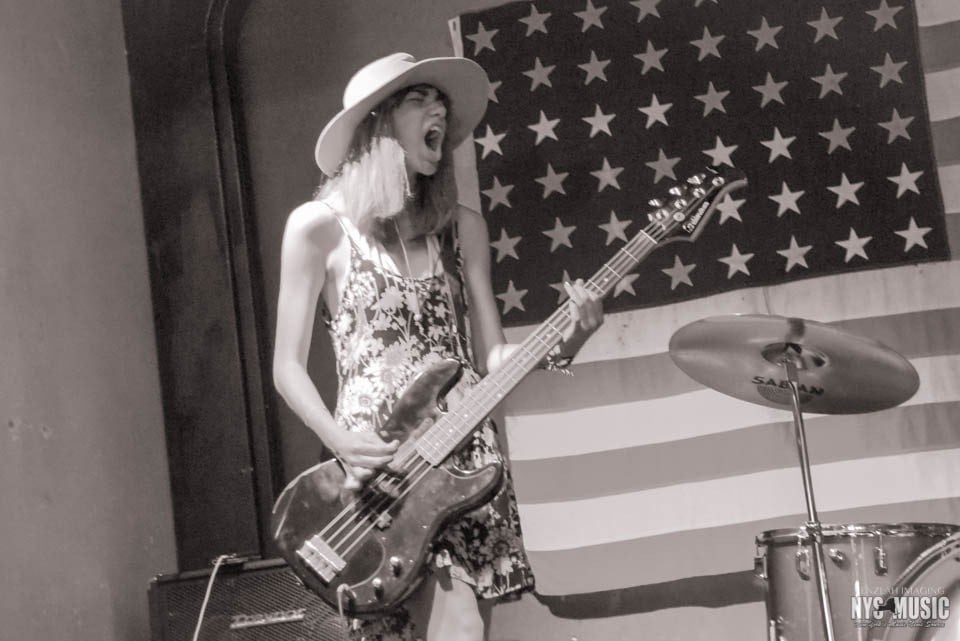
On June 12 at the Grand Victory in Brooklyn, NYS Music caught up with Jigsaw Youth, an all-girl punk-garage band from New York City. Offstage they are three unassuming teenagers, but onstage they let it all out as hardcore punk musicians. Hailing from Staten Island and Washington Heights, NY, Jigsaw Youth is made up of Maria Alvarez on bass, Isabella Occhipinti on drums and Nastacha Beck on guitar.
Beck and Occhipinti have known each other since the sixth grade, and upon reconnecting in high school, they decided to start playing music together. Last year, Beck met Alvarez via Tumblr, as she was intrigued by Maria’s blog quote, “If I play the bass in your face, would you jack off?” Sight unseen, Beck bravely reached out to Alvarez who was serious about starting a band; and immediately, Beck, along with the group’s former drummer, Julia Mannarino, began writing songs. A few months later, Jigsaw Youth performed their first shows in NYC, and drummer Occhipinti joined in December 2015. In less than a year, this “grunge body with a punk soul” group has made a name for itself across the United States and abroad.
So, what led this three-piece to form a Nineties-esque punk band? It’s simple — the recurring challenges still relevant today from feminism to the government to social change and teenage angst. But, this is balanced of course with a healthy zest for life and redefining the riot-grrrl movement for today’s generation, as ambitious female musicians like Kathleen Hanna (Bikini Kill), Kim Gordon (Sonic Youth) and Courtney Love (Hole) inspired them. Beck actually met Hanna — her idol — at a House of Bands show in Brooklyn, and shared with Hanna that her band’s moniker was an homage to the Bikini Kill song, “Jigsaw Youth” (Yeah, Yeah, Yeah, Yeah, 1993). Hanna then got up onstage and dedicated her next song to the blossoming band in front of the nearly 800-member audience. Alvarez has also crossed paths with her hero, Anthony Kiedis (Red Hot Chili Peppers), and Occhipinti is still vying for the opportunity to meet her icon, Alanis Morissette.
Rocking smartphones, and surprisingly, one flip phone, the ladies of Jigsaw Youth independently market their music on social media outlets like Facebook, Instagram, Bandcamp, SoundCloud and Tumblr; currently, they are working on getting their sounds on iTunes. (They’ve even received acknowledgements from Hanna and Love via Facebook.) Beck, Alvarez and Occhipinti shared that growing up in an era where the use of technology is required can be overwhelming at times, but all three agree that it’s about having intention when it comes to online posting. As a result of their smart online networking, they have connected with Joey Armstrong’s band Swimmers (SWMRS), who asked to record them for their song, “They Don’t Know,” and have also achieved an international presence. The Swedish webzine, Grrrl Collection, reached out to Jigsaw Youth, and then flew to New York to interview them for an upcoming web series.
When it comes to playing gigs, Alvarez is very proactive at reaching out to local festival creators and online music news outlets; she is not the least bit afraid to send mass emails to venues, radio shows, magazines and record labels. And sometimes organizers reach out to them like the most recent Northside Music Festival, where they shared the Grand Victory bill with Cutters, Luke Halloween: Teenage Halloween Solo and the One Handed Bandits. The band hopes to venture out into more live-music venues, but the challenge of being underage teenagers trying to book shows in Manhattan is often a struggle. They use their creativity to overcome this obstacle by playing house parties on Staten Island where they, “rage in basements.” In the interim, Jigsaw Youth recorded the song “Aunt Jenny’s Got My Back,” and has had four songs recorded by Princeton College Radio, with plans to professionally produce their first album in the near future — after their funds are replenished from senior prom.
With unique personal mottos ranging from “everything is going to be OK” (Beck) to “treat yourself” (Alvarez) and “no risk, no reward” (Occhipinti), their collective advice to other girls wanting to make an impact with their music can only come from shared experience: Have passion, take action, set your mind to it and follow the beat of your own drum, and focus on you and what you’d like to accomplish and success is bound to follow. Jigsaw Youth began their journey in the midst of taking the SAT and applying to colleges, making it possible to juggle school, jobs and music to achieve their goals. Because at the end of the day, it’s all about spreading the message that girls can start bands — and scream, too — without fitting into a cookie-cutter box. Catch Jigsaw Youth live in Staten Island at Killmeyer’s Old Bavaria Inn on July 6 (the annual Rock Out Against Smoking concert) and at the Liberty Tavern on July 21.
With any luck, you’ve been internalizing phrases like “be yourself” and “be honest” since the day you could understand language. These ideas are applicable to our everyday lives in a general sense, but they can also be the guiding force and underlying theme in the way we express ourselves through music and art.
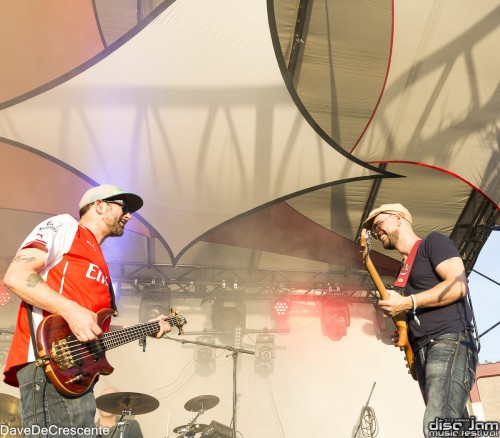
If you’re reading this, chances are you already know Tom Hamilton is an exceptional guitarist of many projects, including Brothers Past, Joe Russo’s Almost Dead, Billy and the Kids, Electron and, of course, Tom Hamilton’s American Babies. He is rising as one of the most talked about musicians in the scene, yet he continues to stay humble.
I initially wanted to chat with him about his upcoming scheduled appearances at Disc Jam June 9 through 12 in Stephentown, NY. On Friday, he will play a set with the Babies as well another set with headliner Electron. What we got out of the conversation was much more insightful. His tell-it-like-it-is candor about his own life and passionate ideas come with underlying morals applicable to humanity.
With that I present to you is, “Lessons from Tom Hamilton.”
Talk about it.
The new American Babies album, An Epic Battle Between Light and Dark, was influenced by Tom’s experience with his own depression as well as that of past significant others. One of whom was hospitalized for her mental illness. One of whom left without saying a word. In addition, a member of his family had committed suicide, something he had not fully come to terms with. It was when Robin Williams took his own life that he really felt compelled to write music about these struggles. “We all have our shit, our human faults; why is no one talking about it?” he said. The process of creating the album has provided the closure to his family member’s death that he had been seeking.
Be confident.
When Tom was just four years old, his love for the Grateful Dead began. He remembers his father watching nervously as he put his little hands allover his music collection, so he gave him his first tape—Grateful Dead at Red Rocks 7/8/78.
“Back then there were two kinds of Grateful Dead fans—the hippies and the bikers. My dad and his friends were definitely the later, but they were the nicest guys,” he said. “Bunch of mean looking guys standing around listening to ‘Ripple.’ They loved music. They lived for it.”
He learned to play all the instruments of the Grateful Dead, playing their respective parts at a very young age.
In 2014, a friend of Tom’s recommended him as a fill-in for a severely food poisoned Anders Osborne at Phil Lesh’s 74th Birthday Bash at Terrapin Crossroads in California. Tom recalls an irritated and anxious Lesh who, hoping for the best, asked this complete stranger if he wanted to go over the songs. Tom told him, “I can play 95 percent of the catalog without sheet music, I’m good to go!” With that, Phil seemed to instantly relax.
“I’ve been playing with Phil my entire life, he just didn’t know it,” he said.
Be yourself.
Tom said he feels that too many bands these days are looking around at what other people are doing or looking to the past to what they did. With the American Babies he feels he is doing his own thing without worrying about what’s trending. It is why out of all the bands he plays in that he considers the Babies to be his heart.
One of the things Tom said he feels is wrong with the jamband scene is an overemphasis on the jam. He feels the song itself becomes lost. In fact, he said the only jamband he listens to is the Grateful Dead.
“It’s like piling hummus onto a cracker. You aren’t even eating the cracker anymore, it just becomes the vehicle in which you shove hummus into your mouth,” he said.
To Tom, the music of his American Babies is what good songwriting sounds like. The lyrics have meaning and there are clear segments of the song. While they often become grouped in with jam bands and there are certainly some shreds between Tom and guitarist Justin Mazer, they are doing their own thing, creating their own kind of sound. And it’s working.
Make new friends, but keep the old.
Having played with super group Electron since 2001, Tom said he is looking forward to getting down with Marc Brownstein and Aron Magner of the Disco Biscuits and Mike Greenfield of Lotus at Disc Jam. Their set from 2015 was one of the most memorable of that weekend, featuring an exceptional cover of the Grateful Dead’s “I know You Rider.” Playing with old friends is something Tom said he really enjoys. But while they are known to cover Tom’s beloved GD tunes and even did a full Pink Floyd set at last year’s Gathering of the Vibes, the majority of songs are Marc Brownstein’s.
“But those are Marc’s songs,” he said. “And let’s face it when it comes to songwriting, he’s no John Lennon.”
What he is looking most forward to is being onstage with girlfriend and bandmate, Raina Mullen, Justin Mazer, Al Smith and Mark Sosnoskie—The American Babies. He is looking forward to playing his own songs with the people he calls “family.”
Electron
Be honest.
At one point in our conversation, Tom asked me if I had ever written a “bad review.” I had to think about that. I’ve definitely been to shows I wasn’t a fan of, or nights where the band was off. I certainly have listened to albums that I didn’t care for. I told him I had, but that I try not to completely tear the artist a new one, highlighting both the good aspects as well as the bad. His response was not sugarcoated.
“You journalists are so afraid to write a bad review. Why? You end up with this diplomatic shit. If something is a steaming pile of shit, just say it!”
Eighteen year old Jacob Whitesides is taking the pop music scene by storm. Originally a kid who uploaded covers to YouTube, he’s completely captivated the audience similar to that of Justin Bieber.
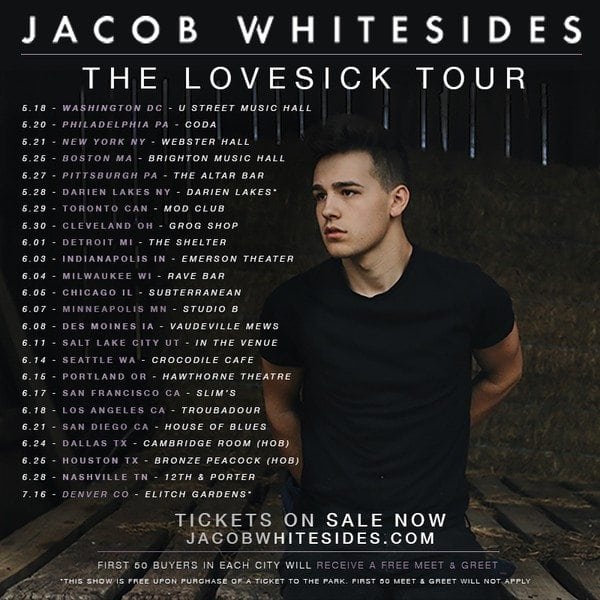
And this talented musical artist and young entrepreneur is ahead of his time in the best way possible, stealing the spotlight and not taking it for granted. His headlining U.S. tour began on May 18, and we had the opportunity to catch up with him, while preparing for his first stop in Washington, D.C. And on May 28 you can catch him at 6 p.m. at Darien Lake, which will be his last show in the Empire State during the Lovesick Tour. Read on as Whitesides opens up about his roots and where he plans on taking them.
NYS Music: Your headlining tour kicks off in D.C. tonight. How are you feeling?
Jacob Whitesides: I’m very excited. I’ve been getting ready for this tour. We had rehearsals for 12 hours a day and it’s all worth it. I love that it’s a headlining tour.
NYSM: What are you looking forward to the most?
JW: Being able to perform new music from the album that comes out in September. I really look forward to the feedback from the fans. I have a full band with me and it’s going to be great. My tour manager is playing the keys for the shows and it’s going to be a lot of fun.
NYSM: Speaking of new music, you released a new single last month called “Lovesick.” How did this song come about?
JW: I was in Europe for a month and a half doing nonstop promo and the frustrations of being that far from home, from my family and my girlfriend, just resonated a lot. I would journal everything. When I got back I flew into Nantucket and I sat there talking with my producer and manager; I was able to collaborate with Alex and Mark from Magic. They had this song idea and we worked together. I wanted to mix the singer-songwriter with pop elements and in the end we were able to create the single. I looked toward musical influences like John Mayer and Justin Timberlake. Having found the single so early on helped guide the album production.
NYSM: Let’s go back to how it all started. You began covering songs on YouTube and then auditioned for the The X Factor, so how did being a YouTuber help your career?
JW: I’m going to start from the very beginning. My dad was into music and I wasn’t really that interested at the time. It wasn’t until he took me to a bluegrass festival when I was 13. I was listening to Chris Stapleton and Steel Driver, and I started to really become inspired. A few weeks later I got my first guitar and joined my dad’s band. After a bit I realized that I didn’t want to keep playing performances like this—I wanted more. I looked at Justin Bieber and Austin Mahone and saw how they were doing, and I decided to jump on the YouTube wave. I posted a few videos and would respond to comments and eventually it spread. I still like to look at my own videos and respond to the comments and interact with everyone as much as I possibly can. I believe that everything happens for a reason and this one just happened to work out.
NYSM: How did auditioning for The X Factor impact you professionally?
JW: I was on The X Factor for a really short period of time, but it was one of the most important. I was super unprepared and not really ready for it, but it was worth a shot. I made friends and it was my first experience in the industry. I had this super unrealistic picture in my head of what the industry was like, but as I slowly watched my friends sign to labels and have these labels tell them who they should be and what they should do, I saw them losing passion. The record labels tried to mold them into what they wanted, and I realized I didn’t want that; I wanted to be able to mold my own career. Now I have this great deal and I work with amazing partners. I am able to to have control over my music and being a part of The X Factor gave me a better understanding of the industry as a whole.
NYSM: You’re only 18 and you’ve already created your own record label, Double U Records, and partnered with BMG to mold your career. What made you decide to take such a big this early?
JW: BMG presented a deal to partner and the social media waver really helped me. I was able to get a bigger team and the opportunity to go to radio, and when it’s time, I get to make a lot of the big decisions. I wanted to be able to have control of who I was as an artist and thankfully, I was able to. A lot of it is because of the fans’ response.
NYSM: You’re always interacting with your fans; it seems they’ve had a lot of good things to say about you.
JW: Yea. My relationship with the fans is so special. They’ve helped me create so much and I’m so thankful.
NYSM: Where do you want be five years down the road?
JW: In five years? I’m really enjoying the pace right now. I really just want to keep building and get better as an artist. I want to keep growing as a person, and hopefully, I’ll be doing the same thing I am now, but bigger.
Jacob Whitesides will definitely be playing larger stages in five years. He most recently performed at the Marlin Room at Webster Hall in New York City on Sat., May 21. The crowd was full of girls screaming and singing along; these girls hung onto every word that came out of Whitesides’ mouth. It was incredible to see these fans interact with him; some of them had even followed the tour from D.C. and planned on going to as many shows as possible. Whitesiders are passionate and dedicated fans, and are no doubt helping this talented 18-year-old from Knoxville, TN, dominate the pop charts.
Clutch is one of the headliners for the Rock ‘N Derby Festival, taking place in Schaghticoke May 20-22 and is currently on tour with Lamb of God and Corrosion of Conformity. NYS Music recently had a chance to sit down with the man who keeps the beat for the venerable Clutch, Jean-Paul Gaster.
When you’re in high school, you probably have a group of friends that you swear you’ll be tight with until the end of days. Perhaps that group of friends forms a band in someone’s garage or your parents’ basement. An oath is taken among yourselves that you’ll always be a band, no matter what.
Odds are, that high school band probably doesn’t make it through graduation. Sometimes though, it does. All of a sudden, 25-26 years later, you look out in front of you during a show at say, Upstate Concert Hall, and see one of the guys you made that pact with oh-so-long ago, accompanying you in the rhythm section of one of rock’s longest running lineups.
If your name is Jean-Paul Gaster, and you play drums in the Frederick, MD based band Clutch, that buddy you’re looking at is your high school pal and band mate, bassist Dan Maines.
Clutch’s foundation can be traced back to the halls of Seneca Valley High School in Germantown, MD, where the members of the band met. Gaster, Maines and guitarist Tim Sult got together to form Clutch in 1991. Original vocalist Roger Smalls left the band shortly after formation and was replaced by another friend, Neil Fallon. The band has been going strong ever since.
Gaster is a drummer’s drummer and a student of the instrument. We spoke at length about Clutch’s longevity and influence; the value of side projects; the festival scene and drumming as a mental exercise.
Mike Kohli: One of the things I’ve noticed with you guys – I’ve seen you perform a few times over the past couple years – is the way you interact with each other. I know you’re all friends from high school. Is that something that comes naturally? Do you just kind of give each other a look onstage and go with it? How’s the onstage chemistry work?
Jean-Paul Gaster: Yeah, there’s definitely a lot of unspoken dialog going on up there. I think it just comes with playing with the same guys for so long. I think musicians do that in general . I think we’re in a unique situation because we’ve been doing it for so long. Even in the writing process, we might play for 45 minutes and there might not be a whole lot of verbal communication, sometimes none at all. But we manage to put these ideas together with sort of pointing and grunts.
MK: Kind of a universal language…
MK: When I go to shows – I’m into a lot of different types of music- but typically when I go to a show, I watch the drummer. Now, I’m by no stretch of the imagination, a drummer. I do play a mean steering wheel though.
When I caught your show with Corrosion of Conformity in Clifton Park a few months ago, watching your style, it’s got a jazzy feel to it, kind of like Bill Ward of Sabbath, Ginger Baker of Cream. You mentioned them before as big influences on you. Have you had any formal jazz training or did you teach yourself how to play?
JPG: Early on, I took a few lessons, but I never really practiced. It wasn’t until I was about 23 when I started studying with a man named Walter Salb (Click the link for a short documentary on Salb). He was a professional teacher/instructor/player in and around Washington, D.C. for many many years. He actually started playing professionally in 1946, so he was definitely from the big band/swing era.
I learned a tremendous amount of stuff from him. A lot of it was thinking about jazz and what it means to play jazz. But i think more than that, he really taught me to be a musician and to be prepared for any musical situation. He wanted his students to be able to do any kind of gig and to play that music with authority and confidence. Those kinds of lessons had a really lasting impact on me. I miss that guy. He passed away about ten years ago.
MK: I’m sorry to hear that. Sounds like he was a really big influence on you.
JPG: Yeah, he definitely was. He lived life to the fullest all the way to the end; I will say that.
MK: I’m kind of into the jamband scene, stuff like Phish and moe., those types of groups. Sometimes I’ll come across people who for whatever reason, still don’t know who Clutch is. Why that is, I don’t know. You guys have been around for such a long time and have been a big influence on a lot of bands. You’re solid, a solid rock and roll band.
However, one thing I’ve noticed about you guys, you don’t fit neatly into any one mold. You’re not a metal band. You’re not a classic rock band. You came about during the grunge era, but you don’t fit into that category. You’re kind of in-categorizable. So when I try to describe Clutch to people who haven’t heard of you guys, I tell them you’re kind of a jamband. Your setlists aren’t always the same. You do stretch stuff out. You throw some improv in there. Have you ever been involved with any of the bands in the jamband scene? Say Warren Haynes or Govt Mule…
JPG: We like those bands a lot. I’m a huge fan of the Allman Brothers, Govt Mule. Warren Haynes’ playing, I think, is just incredible. You know, a few years ago we spent a lot of time trying to break into that scene a little bit. In retrospect, I think we were still, for those folks, I think there was a little too much for them. Maybe a little too much music coming at them. So, yeah, definitely familiar with that scene. Would love to play with some bands in that scene. I think that maybe that they weren’t really ready for us at the time. But stuff changes. And hopefully we’ll be able to get our music out to some of that scene.
I think the coolest part of being in this band is that we’re able to pull from so many different genres. We’ve played with so many different kinds of bands through the years. When you come to a Clutch show, it’s really a mishmash of different kinds of music fans. And I’m very proud of that. And I think that has a lot to do with the longevity of the band and the band’s ability to draw like we do. These days, pretty much all over the world.
MK: That’s exactly what I see when I go to the shows. There are guys who look like me, just a regular everyday joe, there’s college-aged people, there’s the stereotypical headbanger looking guys…It’s really a testament to what you guys do. You can draw all different types of people.
JPG: It’s a beautiful thing.
MK: Working with Neil…when I listen to Clutch, I envision Neil’s voice, his vocal style, as another instrument in the band. But also, his lyrical style, it’s almost percussive, the way he delivers the lyrics. So he’s almost like a multi-instrumentalist in that way. How does it play with you? Do you guys get together and work lyrics out so that they have that percussive style?
JPG: I’ll say this. Neil writes all of the lyrics, which in this band is a great thing. Because, speaking for myself, my lyrics would suck (laughter). I think the last time I tried to write lyrics it was sometime in high school and it wasn’t good.
So, we are well aware of Neil’s virtuosity and talent. I think he’s probably the most talented lyricist in rock and roll today. It has to do with being able to pull from so many different sources. Much like the way we put together our music. I think a lot of bands spend a lot of time asking, “Is this our band? Is this the kind of music our band can play?” The great thing about Clutch, you can literally go up there and play whatever you want whether it’s in a live situation or getting together to write new songs. There are no rules. So in that respect, I think we’re very fortunate.
Neil Fallon of Clutch
Speaking directly to the rhythmical feel of Neil’s lyrics, I think a lot of it has come directly from hip hop. Early on, Chuck D from Public Enemy was a big influence on him. We listened to a lot of hip hop as a band in the early and mid 90s. That had a lot to do with it for sure. And as a drummer, I react to whatever is happening rhythmically within the band more so than in a melodic sense so I’m listening for those things. On Psychic Warfare for instance, I paid particularly close attention to the way Neil syncopated his lyrics and how they were swung. That gave me a lot of inspiration as to how to play that part, how to best support that vocal.
MK: That whole hip hop thing, that’s really what came across to me. His vocal style is hard driving as well as hip hop. You summed it up perfectly.
MK: Any plans for anymore Bakerton Group stuff? (The Bakerton Group is a Clutch side project that works primarily as an instrumental outfit, incorporating elements of blues and other sounds outside the typical Clutch sound.)
JPG: No immediate plans. I will say, we did have a request from someone to record one of the Bakerton Group songs. We certainly said, “Of course. Go for it!” That was an interesting request. We haven’t had that in a while. The Bakerton Group project gives us the opportunity to play a little bit differently than we do in Clutch. Mainly because it’s mostly instrumental stuff. It’s sort of a laboratory for us.
Having said that, we’ve been so busy with Clutch stuff, we really haven’t had much time to do it. We did Earth Rocker, and there was a tremendous amount of momentum that came off of that record and that’s really flowed right into Psychic Warfare. And I know we’re going to be really busy on Psychic Warfare for at least another year.
MK: That’s terrific. You guys deserve to be busy. I pre-ordered Psychic Warfare on vinyl and when it was delayed and delayed, I ran out to the nearest store and bought the CD on release day. I had it on repeat for like four days straight. I really soaked it up. It’s definitely my favorite album of 2015, to say the least.
JPG: Wow, thank you.
MK: Festival season is heating up. Do you enjoy the festival circuit?
JPG: Festivals are fun because you get to play with a lot of bands that you normally wouldn’t play with. And more importantly, there are lot of folks there who don’t necessarily know about Clutch who will be given the opportunity to check us out.
MK: Do you get to mingle a lot with other bands when you play festivals?
JPG: Sure. Sometimes you run into old friends. Sometimes you make new friends. It’s always a good time. And it’s nice to be outside and not so much in a rock venue. It’s a different kind of environment, when you spend 6 or 7 nights a week in the dark theaters and clubs, it’s nice to get outdoors.
MK: Is King Hobo (another Gaster side project with the motto: “Get funky or get out.”) still a thing? I know it has to be tough to get together with Per Wiberg (keyboardist) from Opeth and Thomas Andersson from Kamchatka. Do you still work on stuff with those guys?
JPG: Sure. There’s some new stuff in the works with those guys. That was an incredible time to be able to go over there (The band recorded at Wiberg’s home in Sweden in 2005.) and record with Thomas and Per. I try to do as much of that as I can.
You know, with every side project, at the end of the day, all that energy ultimately comes back and makes Clutch a better thing. Every time you play with somebody new you’re going to learn something. There’s gonna be some energy there that you pick up on that’s gonna eventually translate back to your day gig, which for us, is Clutch.
MK: Do you do stuff over the Internet? Throw a few tracks in Dropbox and go back and forth with it?
JPG: Yeah, we definitely do that kind of thing. It’s great to be able to take advantage of the technology available to us. We weren’t able to do that 10-15 years ago.
MK: What do you listen to when you’re just going about your day?
JPG: I listen to all kinds of stuff. I’ve been listening a lot recently to Miles Davis’ Live at the Cellar Door. It’s the complete recordings that he eventually edited down to make Bitches Brew. Jack DeJohnette is on that record. Dave Holland is on that record. Just last night I was listening to Robert Palmer’s Sneaking Sally Through the Alley. That’s an incredibly funky record. He’s got the Meters as his backing band on that record.
MK: Yeah, yeah, that’s quite different than the Palmer who became a hit in the 80s.
JPG: I very much enjoy that recording. Really I listen to pretty much anything. The blues – Muddy Waters, B.B. King. Reggae stuff. Bob Marley and Augustus Pablo. I like dub a lot. I will say these days, I don’t listen to a lot of loud rock and roll. I do on occasion. I find myself always trying to pull influence from other stuff. And I think that’s what makes the rock and roll better.
MK: Your drum kit, I’ve noticed, is a lot of vintage equipment. Is that all you play?
JPG: I have vintage kits. I have newer kits as well. But I will say, the newer kits I have, and I’m speaking specifically about my Gretsch USA Custom kit. Really, it’s the same drum and the same design that they’ve been making for 50-60 years. There’s a lot of modern stuff out there that’s great, that sounds good.
I prefer to go with that older style tone. I don’t muffle my drums much at all. Playing a drum that’s wide open, that’s not muffled in anyway is much more difficult than playing one that’s muffled or has pillows in the bass drum. And the sound that you get out of a drum that’s wide open like that has a lot of possibility. You can get to a lot of different sounds, a lot of different dynamics depending how you hit that drum, how you address that drum in the context of what the music is.
I find that vintage drums or drums in the style of vintage drums, give me a little bit more tonal color to work with. I don’t play a big kit. I have a bass drum, two tom toms, a snare drum and a couple cymbals and that’s about it. I look to my drums to give me a lot of options. And I feel like with drums like that, they really respond to how you tune them and how you play them ultimately.
MK: Rumor has it, you’ve been known to practice on your drum pad for eight hours at a time while on the bus…
JPG: (laughter) Eight hours may be a little bit more than what really happens. I will say that when I’m out on the road, i have a practice kit and a couple of drum pads. And when you’re out there, that’s what you do 24 hours a day.
So when I wake up i think, “What do i need to do to make this the best show it can be?” I think about the drums all day long. Before sound check I try to warm up. After sound check I’ll typically get something to eat and then I’ll hit that practice kit until showtime. I’m there sometimes for three or four hours, but the time moves quickly.
Practice for me is not a tedious thing. I had an interviewer say to me one time, “I hear that you practice very often.” And i explained to him, “Sure, I’ll practice three or four hours a day sometimes.” He says, “Well, doesn’t that get boring?” (laughs) I said, “Only if you find practice boring.” I don’t. I find it to be very meditative.
There are points in the practice routine where you really reach a mental state in which time is irrelevant and you’re only considering the concept in front of you and how it relates to other stuff that you’re doing. I get a lot of enjoyment out of that. A lot of relaxation. So much of what we do now is mental. What I mean by that is, drumming has become more mental than physical for me. So, many of the exercises I’m working on are not really how fast can you hit the pad or how quickly can you play paradiddles. I’m really trying to deconstruct stuff. I’m trying to get inside the drums, subdivide things into what I haven’t done before. It’s a very mental thing for me.
MK: Well, that’s good to know. I get tired just watching you.
(laughter)
MK: I don’t want to take up too much more of your time, just one more thing: A buddy of mine, who went to the show with me back in October, wanted me to mention something to you. He’s been home brewing for a while and is on the verge of opening a brewery here in our town. He said, “If Clutch plays opening night of the brewery, I will close the doors the next day. It cannot be topped.”
(laughter)
You guys wanna call his bluff?
JPG: (laughter) Ha ha, no. But we’ll take some of his beer.
MK: Nice. OK, I’ll let him know.
MK: Thanks for taking time to speak with NYS Music. Good luck with the rest of the tour and keep on rockin’.
Every once in a while you come across a voice, a musician, a talent that makes you do take a double take. These are the artists NYS Music can’t wait to share with readers. Seth Costner is our latest to join this crowd.
Seth is not your typical country musician. In a genre that is so eclectic, his traditional country sound is one that as less commercial these days. Currently on the road with The Swon Brothers, NYS Music has had the opportunity to meet and see Seth in person a few times. You get a glimpse of his vocal abilities throughout the show, but it wasn’t until listening to his recent EP, The Easy Part, that you are aware of the vocal extent. His voice has a melodic polished sound that is reminiscent of Vince Gill. His musical talents do not escape the strings or keys as well. He reminds me so much of the legendary musician. He can play so many instruments, and has a voice so versatile that it teeters back and forth from an indie pop sound that you can hear in his first album, From The Ashes to that sound of his latest EP The Easy Part. Key tracks I would defnitely check out are “Winter Feel Warm” and “Good As Gone” on the new EP.
Between being on the road and in the studio, Seth agreed to take a moment to speak with NYS Music about the new EP and introduce himself to everyone.
Kathy Stockbridge: (KS) Hi Seth, thank you so much for talking with NYS Music. For those of our readers who have not had the privilege to meet you and see you perform live…I’m so excited to introduce you. Have you always been involved in music? Was your family a musical family?
Seth Costner: (SC) Thanks for having me! I’ve been singing as long as I can remember, and although my parents aren’t particularly musical (my Mom played a little piano), my grandfather on my Mom’s side was a singer and vaudeville entertainer. He encouraged my singing at a very early age.
KS: Was music a big part of your life in school?
SC: I was home schooled which really gave me some freedom to pursue and emphasize music as a big part of my education. I took a lot of music lessons growing up from some great teachers in my hometown of Gadsden, Alabama.
KS: Who encouraged you the most to pursue your dream in music?
SC: My parents have always been very supportive of whatever my siblings and I wanted to do, and they knew that I wanted to have a career in the music industry one day so they were definitely my biggest encouragers.
KS: Talk to my readers a little about your musical resume…you play and sing. What instruments do you play? As a photographer I find myself drawn to certain cameras I own to create with…is it the same for you when writing/playing music?…do you find yourself at the piano or on the guitar first?
SC: I get bored if I stay on one instrument for too long, so I’ve found myself becoming interested in different instruments at different times in my life. I started out on piano, then moved to guitar in my teenage years. When I got to college I started learning other instruments like banjo, mandolin, drums, bass, harmonica and sax. I write most of my songs on the guitar, but every once in a while I’ll be inspired by the piano and write from there.
KS: What influenced your musical tastes? Events? Musicians? Musical moments?
SC: I’ve always been a musical sponge and have soaked up different things from different genres. Everything from gospel to R&B to country. James Taylor is one of my musical heroes. I’m influenced by great voices and great writers. My influences range from Ronnie Milsap to George Jones to Stevie Wonder. If it makes me feel something then I’m inspired.
KS: Talk to my readers a little about your musical journey to the stage. Did you play small shows in your hometown…did you come straight to Nashville…how did you begin working with The Swon Brothers?
SC: I started out singing in church and playing for my family. I did a number of shows in my hometown, from coffee shops to restaurants, even in the shoe department at a local clothing store once, haha. I moved to Nashville to attend college at Belmont University, and after school began using my abilities as a musician to get different jobs with various country artists. My first real artist gig was playing keyboards for James Otto, and from there I had the opportunity to play with many other artists including Lauren Alaina, The McClymonts, Chase Rice, Mickey Guyton and many others. I met the Swons about two years ago and they immediately became two of my best friends.
KS: I’ve seen the Swon Brothers live performances several times now and love the part where Zach and Colton turn it over to you to sing. Your voice blows me away. Talk to us a little about how you found the time with your touring schedule to create this new EP.
SC: Thank you! It was a very busy year for the guys last year. We were out on the road more than we were in town but I made sure to find time whenever I was in Nashville to write and record. I had the privilege of working with producer Brad Hill on my most recent project. He’s amazing and knew exactly what I wanted it to sound like. I’m hoping to get back into the studio with him again this year and work on a new project!
KS: Share with our readers a little about this EP…the songs..the message/feelings you want it to evoke…when we may see you out there sharing it live.
SC: Well I think it has a little bit of something for everyone on there. From fun party songs like “Beer Pressure” to the title track “The Easy Part”, I hope everyone who hears the EP can find a song they relate to in some way. “The Easy Part” is one of my favorite songs I’ve ever written, and although it’s not necessarily completely autobiographical, it’s very personal to me.
KS: I want to urge my readers to get this EP…it’s amazing and you’ll be grateful you did when he becomes HUGE!!! And that will happen..mark my words!! Where can they buy this?
SC: You can find the EP on most online music platforms. iTunes, Apple Music, Spotify, Amazon and more. My first album “From The Ashes”, is also available online. It’s a little more on the folk side of things, but if you like “The Easy Part” you’ll probably like it as well! Be sure to follow me on Twitter and Instagram for updates!
KS: Can’t wait to see you again up this way!!!
SC: I’ll be playing keys for The Swon Brothers again this year, and we are heading out on the road with Carrie Underwood. …and hope to see y’all at a show this year, be sure to say hi!
I highly recommend checking out Seth’s new EP, and him either at a local gig or on the road this year with The Swon Brothers as they join Carrie Underwood in the near future at the First Niagara Center on May 24th or at Hunter Mountain on June 11th.
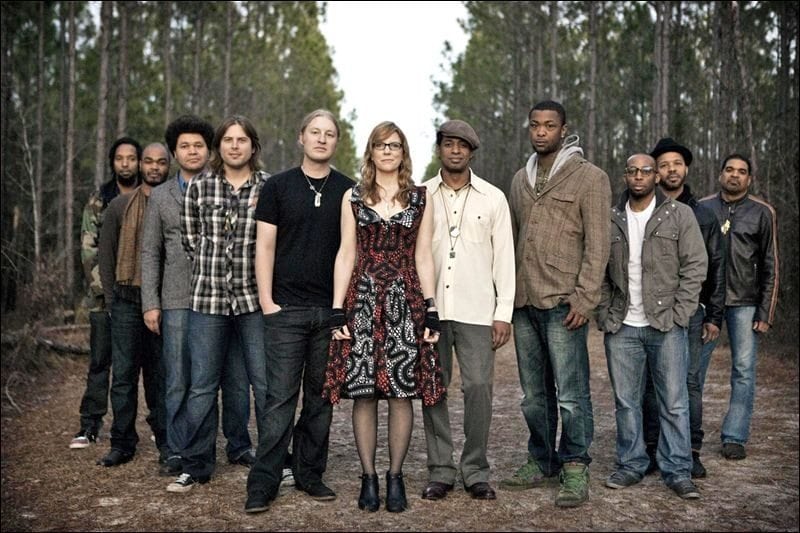
The band released their latest album, Let Me Get By, earlier this year to strong reviews and will certainly be drawing up that and other deep cuts for an exploratory two nights in the Queen City.
While the group is fronted and named after the marital pair and supremely talented Derek Trucks and Susan Tedeschi, the talent runs deep in the group. Kofi Burbridge and Derek’s former band the Derek Trucks Band is someone long deserving of a little limelight. We got the chance to sit down and hear about Kofi’s story and how that folds into the band’s upcoming stint.
NYS Music: What instruments do you play and what fueled your passion?
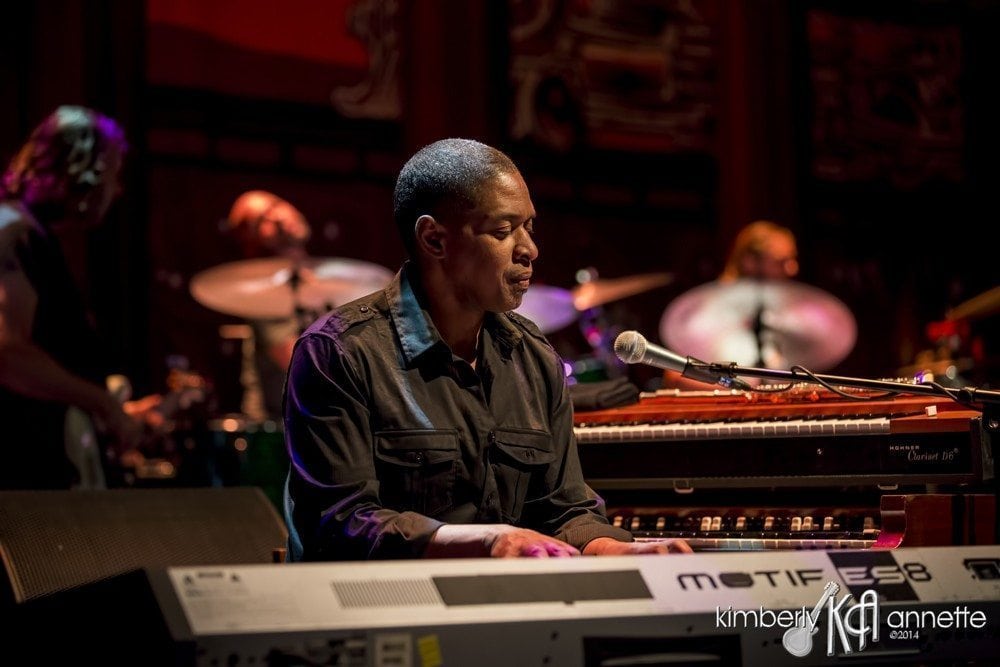
Kofi Burbridge: Flute and keyboards are primary. That’s what I make my living on, but I came up attempting to play a lot of other instruments – the bass being one of them. Oteil and I actually explored a series of instruments. We got lucky because we had a set of parents who saw that we were interested. Like any responsible pair, they made us get our work done first and then we could play. It showed them though that we were really passionate about getting into music, so they invested in lessons and things like that. We had the benefit of my dad’s extensive record collection as well. He’s not a musician per se, but an extreme connoisseur of music. We had this treasure waiting for us, not knowing it was treasure waiting for us.
NYS Music: When coming up and going to school in Atlanta, you wrote “Kam-Ma-Lay”, which later became a Derek Trucks Band song for the group’s third album, Joyful Noise, in 2002. What was it like seeing that come to life after being shelved for a while?
KB: It was a resurgence I would say. We (the band) were in a situation where we needed tunes and everyone was scrambling and bringing what they had to the table. I had been listening to Derek and the band for some time and knew Yonrico from working with him ten years prior to DtB. By the time I heard the band, they had this flavor that was really cool – lots of different genres. They obviously had the southern rock thing, but with straight ahead jazz and some Latin flavor as well. I felt “Kam-Ma-Lay” might be a good one for this particular recording. That was a big time fun tune to do and everyone got really into it. I had the sections of the tune and Derek put the melody on top.
NYS Music: You mentioned Yonrico Scott (former DtB drummer), what was it like working with him?
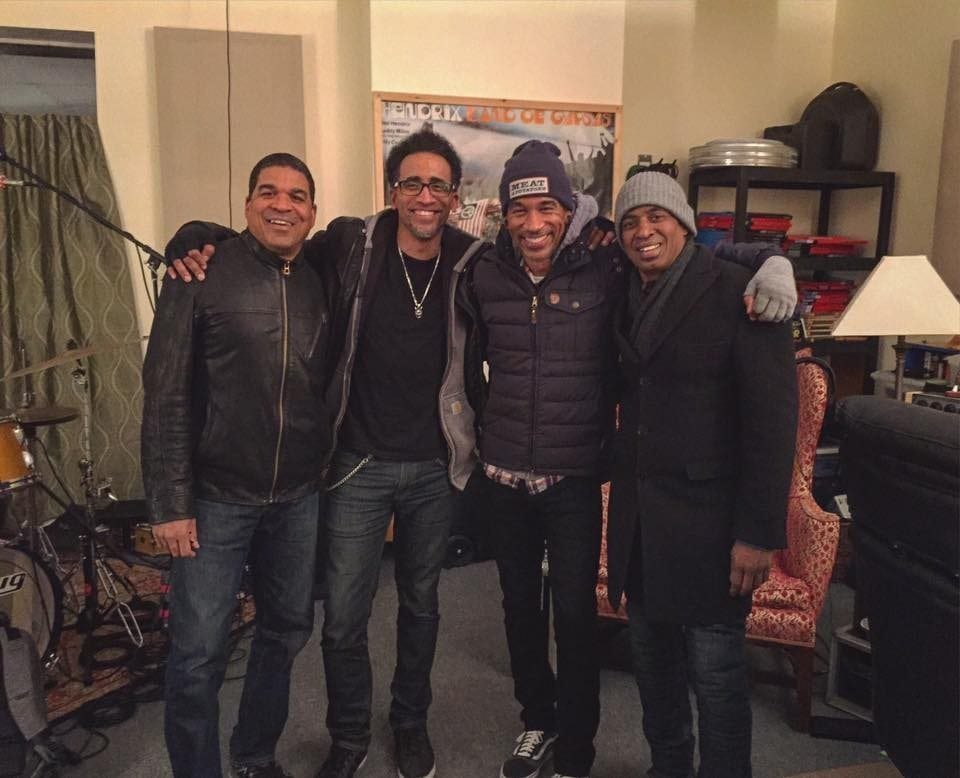
KB: He brings a positive force to the space every time. That was his aim and he’s always bringing joy – and I use that word specifically to describe his style. He also really likes to nail his stuff down. He is so much fun to play with and fires up the whole band. It’s like you’re going to a party when you’re playing with him and the cat’s always got pocket.
NYS Music: Todd Smallie is no slouch either right?
KB: Well, you know, he was one of the first ones I noticed in the band. I mean they were all throwing down big time, but I was like, “check this bass player out – moving that thing all over the place to these tunes.” He’s part of pioneering that whole style. He was one of the people who showed you could approach the bass the same way you could approach the guitar. It’s a fret board, you know? It really opened up the approach on bass – so yeah, when I saw Todd I told Oteil he had to see him.
NSY Music: What’s the biggest difference between what the Derek Trucks Band was doing and what Tedeschi Trucks Band is doing now?
KB: It’s hard to say. There are more people in TTB, so we’re featuring moments at a different pace. You only have so much time to say the things you want to say. Couple that with more of a song environment with Susan’s interactions and what she brings to the show and we also have the horn section which adds a completely different tonality and allows for different styles. There’s a whole lot more to bring in comparison to DtB, but I would say DtB had way more freedom in terms of moments to improv. I remember Derek throwing solos all around. There was a point I remember Derek saying, jokingly, “Hey man I’m getting tired of soloing so much.” All along the way, Derek has wanted to up his game and I think that’s what he’s trying to show now at this stage in his development. He really is a fantastic band leader and lets you play what you want to play if it’s appropriate for what he’s going for. I’ve never had this much creative freedom with any band. It’s the most I’ve been able to open up in any band situation, especially in one like this with so many people.
NYS Music: What can fans expect with the first two-night run of Tedeschi Trucks Band in Buffalo?
KB: Whenever we do get two nights, it’s a lot of fun. We get the chance to play a show, get into the city some more, and come back to another show. One of the trickiest things for a bandleader is to feature so many elements within one night. We can really stretch out over two and go deeper.
NYS Music: So tell us more about this Brothers project with your brother Oteil, and Neal and Alan Evans.
KB: Yeah, we’re really excited about that as well. Alan, Neal and Oteil were on the Jam Cruise and they must have had a ball because all of a sudden Al got the feeling and said we have to do this. Personally, I’ve been trying to figure out how to manage my time on and off the road. I had to put my foot down on myself and get busy while I’m off the road. Right after I came off this last run with TTB in Australia and Japan, I flew up to Al’s studio in Massachusetts. We had two good days and came up with four tracks. It was much needed and I’m so glad we kicked it off. I can’t wait for the finish. Hopefully there will be some shows, but I’m not sure that’s on the burners just yet.
NYS Music: What is the feel of the recording?
KB: Definitely some heavy funk to it, but like I said it’s still in the oven. I’m 100% sure it’s going to be everything that we want and a great kickoff for us. There were lots of ideas being thrown on the table and it was just fantastic.
NYS Music: Is there a release timeline yet?
KB: It’s hard for me to say. I think Al actually has a better answer for that than me since he’s handling the logistics of it.
NYS Music: What other projects do you have going on?
KB: I’m working on a personal project myself and trying to get in the studio to get something done this year and released in 2017. That’s really important to me right now. It’s another bigger project on my burner right now and will cover flute and keys. It will probably be more of a writing project, but hard to say since I’m still putting a lot of the pieces together. It will definitely include a lot of people that I currently work with.
NYS Music: Ending on a topical note, what are your thoughts on Prince’s passing and how did his music and the recent events impact you?
KB: He was definitely a part of my generation. He was 57 and I’m 54, so it definitely touches home on just a basic human level. There have been so many people at this age passing, not just musicians but friends as well. It’s kind of a major wake-up call at the moment since it was so unexpected. It’s a very scary thing.
When I went to his show just a few years back, it was the first time I had ever seen him. I had been waiting to hear all of my favorites like “Little Red Corvette” and some other older ones. I had no idea what I was about to see since Prince had gone through so many incarnations and bands. I mean, the man had so much music. I thought it was probably going to be everything, and it was truly all of that. It was an excellent show. He came out sparkling; I mean the dude was way past ten! He loved the fact that he was performing. That was the biggest thing that I got out of the show. He was happy to be on stage and to be performing the music. It really fired him up. It fired up the entire audience and everyone was into it. What really blew my mind, and was the major icing on the cake, was that he remained there after the show and continued to play on the piano! You could just hang if you wanted. I’m like, this man has storage. He has terabytes of music. It was amazing! It’s serious love.
moe. drummer Vinnie Amico took some time out before a recent show at the Hollow in Albany with Floodwood and Gratefully Yours for an interview with NYS Music’s Neil Benjamin Jr.
Vin gave some answers about the future of moe.down (spoiler alert: It’s not dead!). He also discussed moe.’s just-announced Jam Cruise appearance, the Floodwood lineup change, his history of playing the Grateful Dead, his many sit-ins, his degree in economics, and plenty more!
Tim Merrill of Sugar Foot Photography sat down with Ryan Dempsey, keys player for Vermont’s hottest “three dimensional” rock band, to talk Twiddle tour, influences, favorite bands, and even a bit of politics.
Check out the video interview below.
Catch Twiddle next in New York May 7 at the Capital Theatre in Port Chester, and July 8 at Brewery Ommegang in Cooperstown.

 Chelsea Erin Wright: The Frendly Gathering 2016 has been incredible for me so far. Experiencing the evolution of Frendly since the very first one in Vermont, has been ahhh-mazing!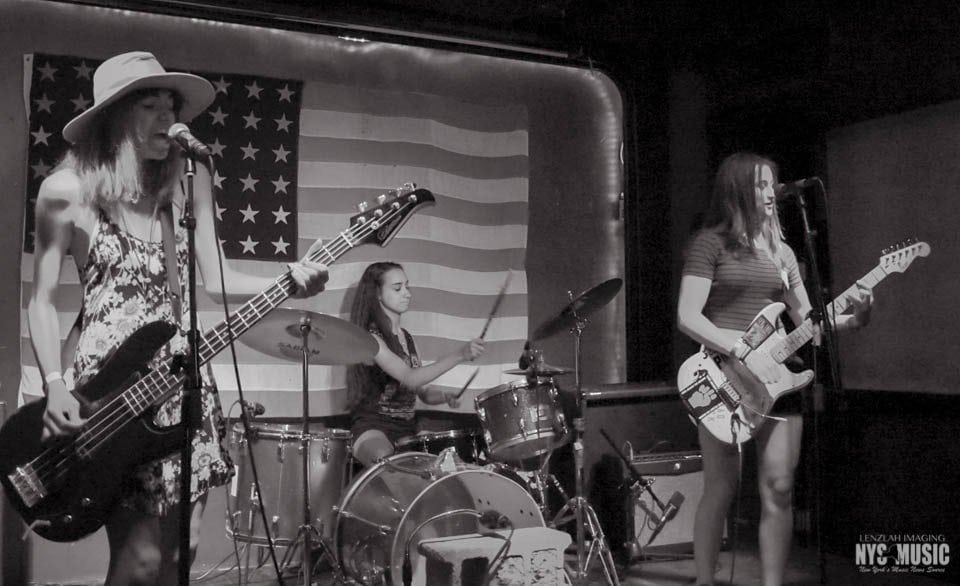
 And this talented musical artist and young entrepreneur is ahead of his time in the best way possible, stealing the spotlight and not taking it for granted. His headlining U.S. tour began on May 18
 NYSM: Let’s go back to how it all started. You began covering songs on YouTube and then auditioned for the The X Factor, so how did being a YouTuber help your career?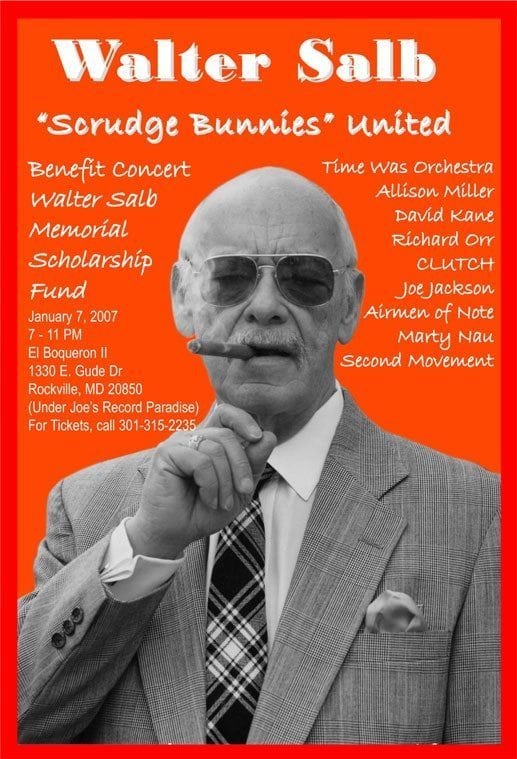

 NYS Music: What instruments do you play and what fueled your passion?
 NYS Music: You mentioned Yonrico Scott (former DtB drummer), what was it like working with him?
 NYS Music: What can fans expect with the first two-night run of Tedeschi Trucks Band in Buffalo?