ShwizZ‘s bad side is better than most bands’ best sides. Hell, I think their bad side is better than their own good. Listening to the NYC-based band’s new double-album release, My Good Side/ My Bad Side for the first time, I couldn’t help but wait to listen to it again.
The first listen was to satiate my thirst; once I hit play, I devoured both albums. The second time through was for pleasure; minute intricacies revealed themselves around each corner of the compilation and lead to aural ecstasy.
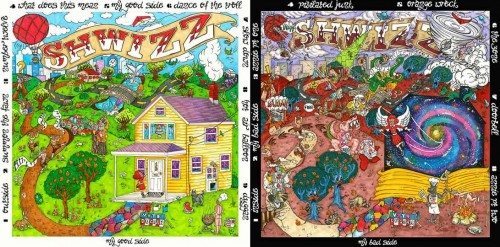
Praise should be dealt out in heaps for this production. Aptly titled tunes feature deftly mastered compositions and perfectionist attention to detail. “Annie Pt. 1,” on My Bad Side, is a beautifully somber song with Pink Floyd’esque roots that later flow into the intro of Part 2, which evolves into a ShwizZy glory jam. Meanwhile, throughout the Bad Side, a shadow of Umphrey’s McGee’s primordial beast surfaces again and again—listen to the breakdown in “Orange Wreck” or the Prowler-like pick-me-up to “Doorbell”. That jam turns video-gamey in a “I just double-fisted the 1-up green mushroom and power-up red mushroom” kind of way. Dream Theater’s keyboardist Jordan Rudess cameos on My Good Side’s “Duggan,” but Dream Theater’s influences are just as evident in My Bad Side‘s “The Zone.”
ShwizZ’s Good Side aptly demonstrates the band’s diversity. The double-set’s eleventh track, “Number Twelve” is simply put, an incredible rock song. It features heavy shredding, great transitions, and immaculate composition. “What Does This Mean” may be the most palatable tune of the bunch. Tight verses, heavy breakdowns, and furious instrumentation are supplemented by the relatable, sing-along’able chorus. Like both albums, this tune’s ebb and flow will leave you feeling insatiated; the only thing that would make it better is more.
It’s hard to define ShwizZ’s genre. “Slow Down” is a groovy funk-fest that evolves into a percussion-infused jazz odyssey. “Orange Wreck” features a section of tango and they literally “Summon the Fawn” with an orchestral masterpiece early on in My Good Side. The guitar, bass, drums, keys, sax, even triangle are all highlighted throughout the albums; everyone gets their shot and plays their part. They shift seamlessly between sexy grooves and grueling shafts. At times I sat still, enthralled by each note, captivated and wondering what was next. Other times, my shoulders began shaking as the vibrations ignited involuntary one-man dance parties.
Once in a while you listen to a new album from a rising artist and know they’re the real deal (Tauk’s Collisions comes to mind). Add ShwizZ’s My Good Side/My Bad Side to that list. They were a blip on my radar before, but now ShwizZ is squarely on the map. I love to say I told you so when I say, “these guys are here to stay.”
Keytracks: Orange Wreck, What Does This Mean, Duggan
The official album release party will be held on Saturday May 16 at The Knitting Factory in Brooklyn, New York.
 The McLovins had already released three full-length albums prior to Beautiful Lights, which are good listens and made for awesome live sets but were largely based off the jam-and-shred platform which made for a better live presentation. On their newest full-length album, the band steeped the tea for just the right amount of time and built off their foundation to refine their sound and focus on the songwriting aspect. One of the great things The McLovins have demonstrated with this album is their ability to write and record a solid four to six minute studio track that can render into a longer jam when performed live.
 Instrumentals can sometimes make or break a record, or might just be there like too much water added to a can of condensed soup. The title track and only instrumental track off Beautiful Lights particularly caught our attention. A cohesive, open-to-interpretation instrumental, this song is in some ways like an aural Rorschach test. Dim the lights, close your eyes and let it take you to your city’s evening star-lit overlook or in a sunny field running toward the next big thing on your horizon. If the jam band world had its version of “Eye of the Tiger” it would be this song. Paired with the following a capella tune “Cold Cold Iron” these two songs jet up as the divider between the two halves of the album.
 The title track to this release starts off with a big, dirty, head bang inducing guitar riff that will grab any listener’s attention whether they’re ready for it or not. Then when the sounds of Mateo Vosganian on drums and Rich Derbyshire on bass join in together, it’s clear that it’s time to crank the volume as loud as possible, because this band is about to show you a damn good time.
 Gleaning influence from none other than Bob Dylan, which certainly comes through in many of his tunes, Dan has also been singing and picking along with more locally well-known (to Upstate NY) musicians, including Jay Ungar and Molly Mason, who have taught him to appreciate the more acoustic and traditional yet simultaneously individual sides of folk music.
 Monophonic, by definition, means consisting of one sound, yet